BAE Systems to Support U.S. AV-8B Harrier II Fleet to 2029
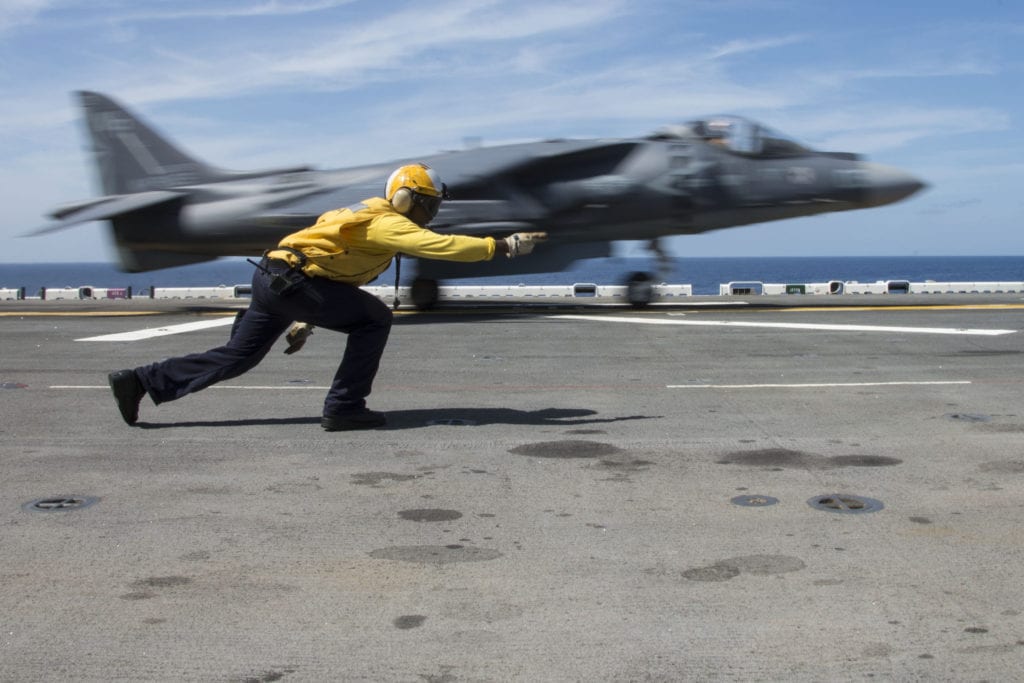
Aviation Boatswain’s Mate (Handling) 2nd Class Jarrel Bullock launches an AV-8B II Harrier off the flight deck of the amphibious assault ship USS Wasp (LHD 1) in this 2013 photo. U.S. Navy / Mass Communication Specialist Seaman Michael T. Forbes II

LONDON — BAE Systems and Vertex Aerospace have signed a nine-year agreement to enhance availability of the U.S. Marine Corps’ AV-8B Harrier II fleet, the company said in a Jan. 12 release.  

The U.S. Department of the Navy awarded Vertex Aerospace LLC the $123 million contracted maintenance, modification, aircrew and related services (CMMARS) task order in July 2020 to provide aircraft maintenance and contractor logistics support services for the U.S. Marine Corps’ AV-8B Harrier fleet.   

Vertex Aerospace selected BAE Systems as a subcontractor for the new logistics support contract, which will ensure increased efficiency of maintenance operations for the Harrier fleet using predictive maintenance techniques and smart stock optimization tools. Together, BAE Systems and Vertex Aerospace will support the crucial training and combat operations conducted from U.S. Navy’s aircraft carriers, amphibious assault ships, and forward operating bases.  

This contract builds on BAE Systems’ existing role in maintaining the AV-8B Harrier’s reaction control system and providing engineering and technical support. Engineers from BAE Systems will work alongside Vertex and the U.S. Marine Corps at stations in Cherry Point, North Carolina; Yuma, Arizona; and Madison, Mississippi. They will be supported by a specialist team in the U.K. with a proven pedigree of delivering maintenance and support contracts for the Royal Air Force.  

“The Harrier is one of the most iconic military aircraft ever created, with its British designed short take-off and vertical landing technology,” said Tom Fillingham, senior vice president – U.S. Programs, BAE Systems Air. “Our expertise with the aircraft goes back 40 years and this new contract with Vertex Aerospace ensures we can continue to apply our expertise to support the U.S. Marine Corps in their crucial operations.”  

Dave Nagy, director of flight solutions, BAE Systems Inc. Intelligence & Security, said, “We’re proud to support our customer’s mission through the AV-8B Harrier program. We are ensuring these aircraft maintain availability until the F-35 replaces the AV-8B. Working together with Vertex as a trusted partner on various U.S. Marine Corps programs, we are demonstrating our capabilities in aircraft modernization, countermeasure system upgrades, and integration activities.”   

“Extending our partnership with BAE Systems to support our U.S. Marine Corps’ important AV-8B pilot training mission just made sense,” said John “Ed” Boyington, CEO and president, Vertex Aerospace. With a combined 100 plus years of aerospace and defense experience, we understand the challenges warfighters face and remain keenly committed to improving aircraft readiness while maximizing efficiencies.” 


CNO: First Few New Frigates to Have Single Crews

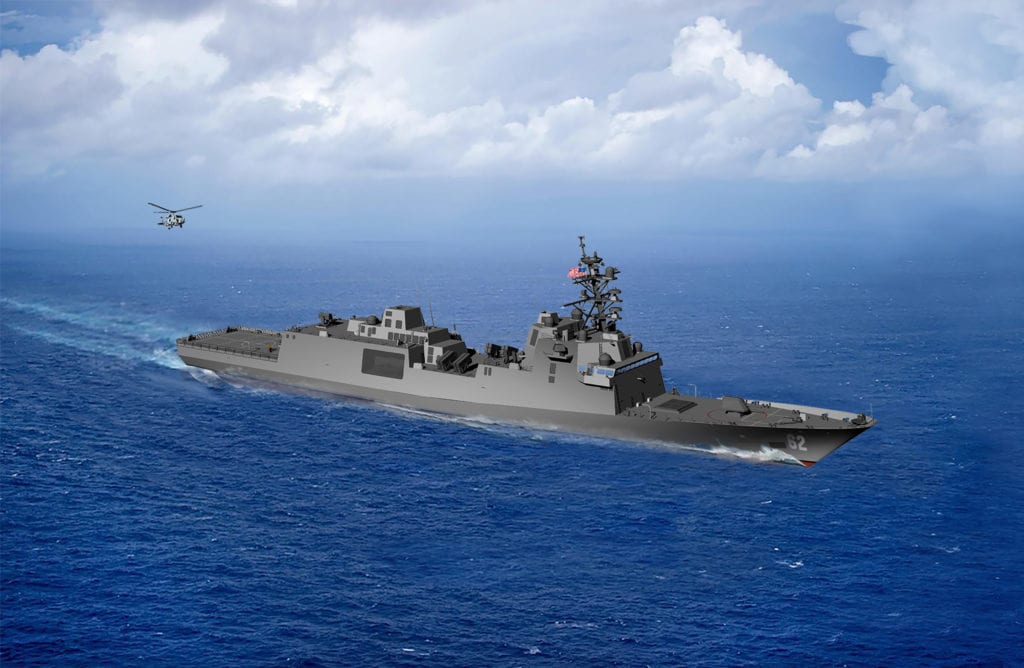
An artist’s rendering of the guided-missile frigate FFG(X). The new small surface combatant will have multi-mission capability to conduct air warfare, anti-submarine warfare, surface warfare, electronic warfare, and information operations. U.S. Navy

ARLINGTON, Va. — The chief of naval operations (CNO) said the new first few Constellation guided-missile frigate (FFG 62) will have single crews, a plan that will be in place while the Navy assesses its crew concept. The lessons learned during the littoral combat ship (LCS) program and its Blue/Gold crew concept will be used to inform the crew concept for the frigate. 

“I’m going to move very deliberately and slowly in the crewing concept,” said CNO Adm. Michael Gilday, speaking Jan. 11 during a Surface Navy Association convention webinar. “I’m heading down the line of a single crew for that ship, at least for the first few ships. We’ve got to get that right. This is the Navy’s ‘Space-X.’”  

“When we started building [the] frigate, we looked a lot at LCS, for example, the way we train on LCS, a really good model we’re going to leverage for FFG 62,” said Vice Adm. Roy Kitchener, commander, Naval Surface Forces, speaking to reporters in a Jan. 8 teleconference. “We did look at what we did on LCS, the Blue/Gold concept and how we’re going to fit them [the ships] out, and we think that is probably the way to get the most presence as we usually do.”  

“The crew on a frigate will be larger, so there’s kind of inherently more capability in that crew,” said Rear Adm. Paul Schlise, director of Surface Warfare in the Office of the Chief of Naval Operations, also speaking at the teleconference. “It’s not a minimally manned platform as LCS was, so any margin for having a few extra people around was largely taken out of the LCS in our attempts to make that crew as minimally manned as possible.”  

Schlise said the new frigate’s crew “will support being able to do more multi-mission sorts of things, whereas the LCS is more a single-mission, one-mission-at-a-time platform. And there’s some more ability for the crew to do its own maintenance. Planned maintenance will be done much more so by the ship’s force crew on a frigate, on the ‘Connie’ class, than on LCS.” 

Schlise said the LCS Blue/Gold crew concept is informing the FFG 62 crew concept.  

“There’s some ability to potentially deploy the ships for longer with a rotational crew model, and we are still learning about how to do that and what that right rotation is. So, it’s a little bit pre-decisional still with Connie,” he said. “At least the first few hulls — and I’m not going to give you a number because we haven’t decided yet — we will probably single-crew the first few hulls because there’s a lot of test and evaluation to go through with a new platform like that, and wringing out the new systems, going through all the testing required to bring a new platform fully into this fleet, to get it to IOC [Initial Operational Capability] and FOC [Full Operational Capability]. If we do modify that crewing model farther down the road, that is something that’s under consideration, and we’re looking to of course give the best [availability for operations] to the fleet commander that we can with the platforms.” 

The first new frigate, Constellation, is planned for IOC in 2026.  


HII Completes Assembly Building for Navy’s Orca XLUUV Hulls

Hampton Mayor Donnie Tuck, Virginia Governor Ralph Northam and HII Executive Vice President and President, HII Technical Solutions, Andy Green break ground on HII’s Unmanned Systems Center of Excellence in this September, 2020 photo. The first phase of the center is now complete with the construction of the first of two planned buildings. Huntington Ingalls Industries

NEWPORT NEWS, Va. — Huntington Ingalls Industries has completed the first phase of its Unmanned Systems Center of Excellence with the construction of a 22,000-square-foot facility, the company said in a Jan. 11 release. 

The first of two planned buildings on the 20-acre campus in Hampton, Virginia will be used to assemble hull structures for Boeing’s Orca Extra Large Unmanned Undersea Vehicle (XLUUV) program for the U.S. Navy. 

“We are thrilled to reach this critical milestone with the development of our Center of Excellence campus,” said Andy Green, executive vice president of HII and president of HII’s Technical Solutions division. “Opening this initial facility immediately expands our unmanned systems capability and helps support the increasing needs of our customers who defend our national security.” 

Construction began in September 2020, following a ground-breaking event with special guests, including Gov. Ralph Northam and other state and local government officials. 

Structural development of the main facility, a 135,000-square-foot building, is scheduled to be complete by the end of 2021. The purpose-built, state-of-the-art facility will be used for unmanned systems prototyping, production and testing. 

“HII has made significant investments in the unmanned systems industry during the last year, including this Center of Excellence,” said Duane Fotheringham, president of Technical Solutions’ Unmanned Systems business group. “This facility solidifies HII’s commitment to advancing development of unmanned systems for our current and future customers.” 

HII partnered with the Virginia Economic Development Partnership, the city of Hampton and the Hampton Roads Alliance to secure the project. More than 250 high-quality jobs will be created to support unmanned systems design and production at the facility. Employees began working in the first building on Dec. 28, 2020. 


Coast Guard Captures Alleged Murderer; Transfers Custody to U.S. Marshals

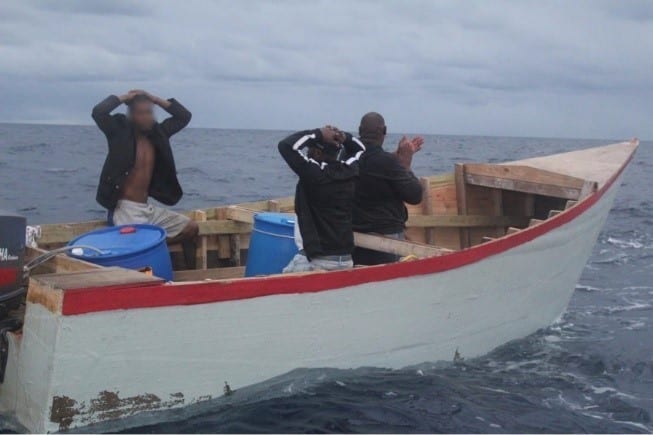
The crew of the Coast Guard Cutter Heriberto Hernandez interdicts a makeshift boat with three Dominican Republic nationals in the Mona Passage Jan. 5, 2021. One of the men was a fugitive with a standing warrant for an alleged murder who was transferred to the custody of U.S. Marshals agents in Mayaguez, Puerto Rico Jan. 7. U.S. Coast Guard photo

SAN JUAN, Puerto Rico – The crew of the Coast Guard Cutter Heriberto Hernandez transferred custody of a man wanted for an alleged murder to the U.S. Marshals Jan. 7 in Mayaguez, Puerto Rico, following the interdiction of a makeshift vessel in Mona Passage waters near Puerto Rico. 

Gustavo Guerrero-Reyes, 37, was arrested on an outstanding Puerto Rico state warrant, following his apprehension while traveling aboard a makeshift boat with two other men, whom all claimed to be Dominican Republic Nationals.  

The interdiction is the result of ongoing Caribbean Border Interagency Group multiagency efforts in their common goal of securing the borders of Puerto Rico against illegal threats. 

“This case was complex and the crew of the cutter Heriberto Hernandez did an outstanding job interdicting this voyage and working with our partners from U.S. Customs and Border Protection (CBP) and the U.S. Marshals, which led to the apprehension of a wanted fugitive with a standing warrant for murder,” said Cmdr. Beau Powers, Sector San Juan chief of response. “This case is a testament to the professionalism of all interdicting agencies in securing and defending the United States’ southeastern border.” 

Coast Guard watchstanders in Sector San Juan received a call Jan. 5 from a CBP Air and Marine Operations (AMO) agent, who reported the crew of an AMO maritime patrol aircraft detected a suspect vessel approximately 37 nautical miles north of Desecheo Island, Puerto Rico. Coast Guard watchstanders diverted the cutter Heriberto Hernandez to assess the situation.  

Once on scene, the cutter’s over the horizon small boat launched and approached the suspect vessel. The Coast Guard boat crew identified the 22-foot white colored makeshift vessel was of wooden construction, unseaworthy, and had no markings or indication of nationality.  The passengers onboard were also unable to provide a registration for the vessel. 

The crew of the Heriberto Hernandez embarked the three men for safety of life at sea concerns and conducted biometrics processing, which revealed one of the men wanted in connection to a murder allegedly committed in March 2020. 

The cutter Heriberto Hernandez rendezvoused with a Dominican Republic navy patrol boat Jan. 6 just off the Dominican Republic and transferred the two other passengers of the makeshift vessel for their return to the Dominican Republic. 

Cutter Heriberto Hernandez is a 154-foot fast response cutter homeported in Miami and San Juan, Puerto Rico. 


CNO: Divest Aegis Ashore Sites to Ground Forces

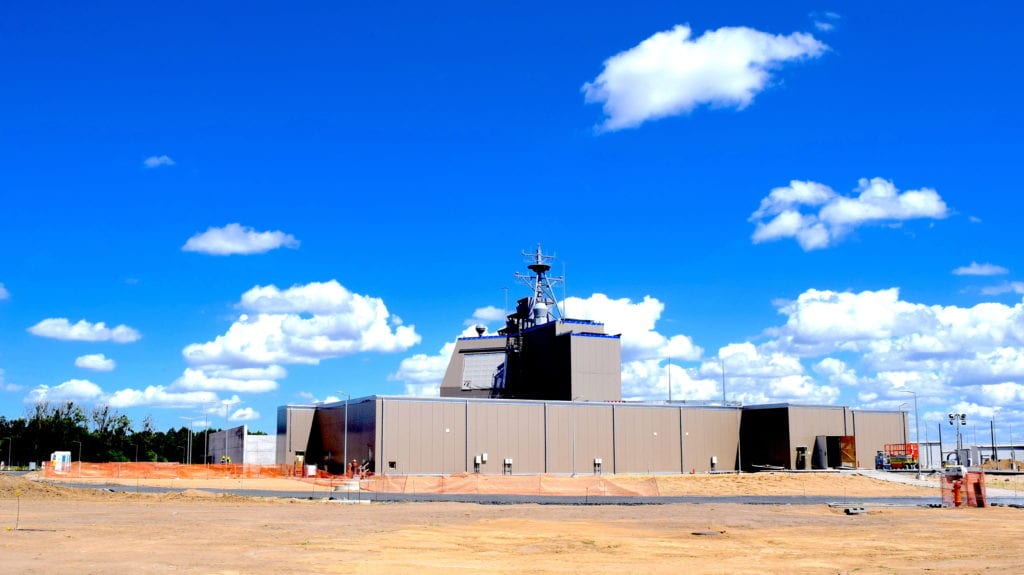
The new Naval Support Facility in Redzikowo, Poland, home to the Aegis Ashore Ballistic Missile Defense System. Pictured: the Aegis Ashore “Deckhouse” command and control center. U.S. Navy / Lt. Amy Forsythe

ARLINGTON, Va. — The chief of naval operations has proposed the U.S. Navy divest its Aegis Ashore ballistic-missile defense (BMD) sites to another service in order to focus on its core missions. 

In the Jan. 11 release of the Navigation Plan for the service, CNO Adm. Michael Gilday wrote of the need to divest capabilities to afford more lethality and sharpen focus. 

“To remain ahead of our competitors, we will divest ourselves of legacy capabilities that no longer bring sufficient lethality to the fight,” Gilday wrote in the document. “This includes divestment of experimental Littoral Combat Ship hulls, legacy Cruisers, and older Dock Landing Ships. It also includes divesting non-core Navy missions like Aegis Ashore. Transferring shore-based ballistic missile defense sites to ground forces enables Sailors to focus on their core missions at sea and frees up resources to increase our lethality.” 

Gilday also spoke of the need of the Navy to divest the Aegis Ashore sites during his Jan. 11 address to the Surface Navy Association convention webinar, without adding more detail.  

The Navy has built and operates two Aegis Ashore sites in Europe, one in Romania and the other in Poland. The sites include an Aegis Combat System and missile launchers that can fire Standard SM-3 missiles. The two sites, part of the European Defense Initiative to shield Europe from missile threats from such countries as Iran, are augmented by BMD patrols in the Mediterranean Sea by Arleigh Burke-class guided-missile ships based in Rota, Spain. 

Plans of Japan to base two Aegis Ashore sites in Japan to defend against missile threats from such nations as North Korea were canceled in 2020, ostensibly because of concerns that missile booster stages would fall on populated areas. Japan also operates guided-missile destroyers equipped with the Aegis Combat System and SM-3 missiles. 

In June 2018, then-CNO Adm. John Richardson advocated for the Navy to divest the BMD role in its cruisers and destroyers patrolling in the Sea of Japan to Aegis Ashore sites in Japan, saying the ships would be better used in more dynamic roles and the demands of geographically restricted patrols took a toll on ship maintenance and crew readiness. 

In 2020, Adm. Philip Davidson, commander, Indo Pacific Command, listed his top acquisition priority as being the installation of Aegis Ashore in Guam to defend the island and its facilities from ballistic missile launched from North Korea. 

“My No. 1 priority, and the most important action we can take to readily and most fully implement the National Defense Strategy, as a first step, is a 360-degree persistent integrated air defense capability of what I call Homeland Defense System Guam,” Davidson said.  

Davidson advocates deploying the Baseline 10 Aegis Ashore missile defense system to Guam to supplement the Terminal High-Altitude Area Defense, or THAAD, system already in place on the island.   

Gilday was not specific to which service — “ground forces’’ — the Aegis Ashore sites should be transferred, but the U.S. Army is the most likely candidate because it provides BMD with its Patriot and THAAD missiles.  


CNO Releases Navigation Plan 2021

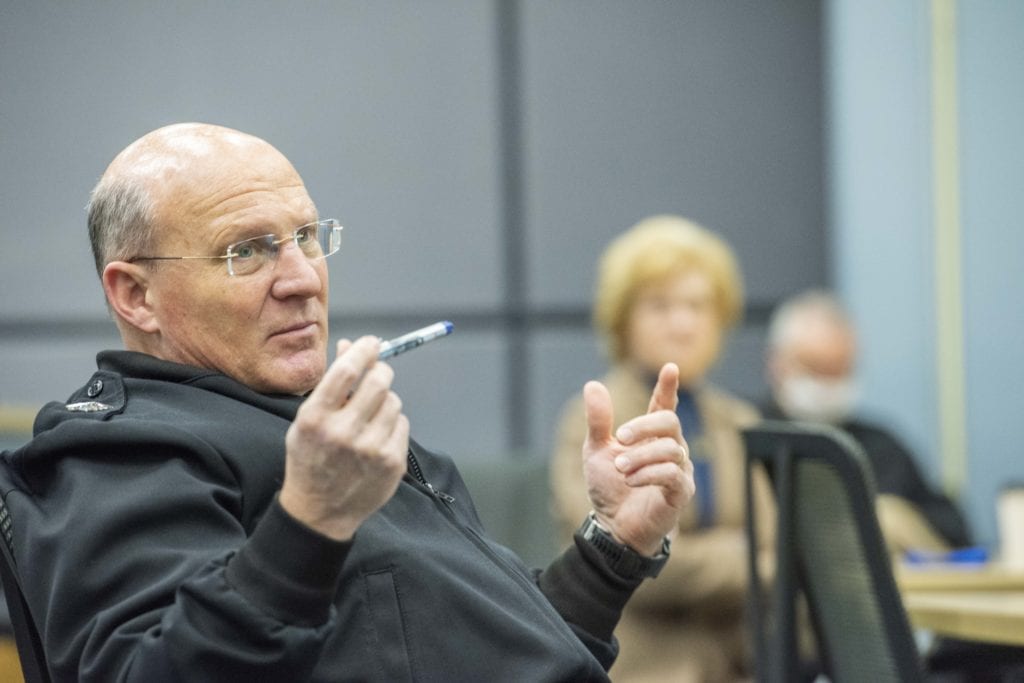
Chief of Naval Operations Adm. Mike Gilday, shown here at the Naval Postgraduate School in December, has released his Navigation Plan to the fleet. U.S. Navy / Javier Chagoya

WASHINGTON — Chief of Naval Operations (CNO) Adm. Mike Gilday announced the release of his Navigation Plan to the fleet during virtual remarks at the Surface Navy Association Symposium Jan. 11. 
 
“America is a maritime nation — our security and stability depend on the seas,” Gilday said. “The U.S. Navy is America’s away team, and alongside our allies and partners, we defend freedom, preserve economic prosperity, and keep the seas open and free. Today, we are engaged in a long-term competition. China and Russia are rapidly modernizing their militaries to challenge the international order that has benefited so many for so long. To defend our nation and interests around the globe, we must be prepared to flawlessly execute our Navy’s timeless roles of sea control and power projection. Joining with the Marine Corps and Coast Guard, we will generate decisive integrated all-domain naval power. There is no time to waste; our actions in this decade will set the maritime balance of power for the rest of the century.” 

This Navigation Plan nests under the recently-released Tri-Service Maritime Strategy and outlines how the U.S. Navy will grow its naval power to control the seas and project power across all domains, both now and in the future. It builds off the progress made under FRAGO and lays out what must be done this decade to deliver the naval power America needs to compete and win. This will be done by focusing on four key areas: 

  • SailorsDevelop a Seasoned Team of Naval Warriors 
    Objective: A dominant naval force that can outthink and outfight any adversary. Our Sailors will remain the best trained and educated force in the world. We will cultivate a culture of warfighting excellence rooted in our core values. 
  • Readiness: Deliver a More Ready Fleet 
    Objective: A Navy that is manned, trained, and equipped to deploy forward and win in day-to-day competition, in crisis, and in conflict. We will consistently deliver maintenance on-time and in full, refurbish our critical readiness infrastructure, master all-domain fleet operations, and exercise with like-minded navies to enhance our collective strength. 
  • Capabilities: Delivering a More Lethal, Better-Connected Fleet 
    Objective: A Navy capable of projecting synchronized lethal and non-lethal effects across all domains. We will deploy the Naval Operational Architecture by the middle of this decade; an array of counter-C5ISRT capabilities; weapons of increasing range and speed; and a directed-energy system capable of defeating anti-ship cruise missiles. 
  • CapacityDeliver a Larger, Hybrid Fleet 
    Objective: A larger, hybrid fleet of manned and unmanned platforms — under, on, and above the sea — that meets the strategic and operational demands of our force. We will deliver the Columbia-class program on time; incorporate unmanned systems into the fleet; expand our undersea advantage, and field the platforms necessary for Distributed Maritime Operations. 

“For 245 years, in both calm and rough waters, our Navy has stood the watch to protect the homeland, preserve freedom of the seas, and defend our way of life,” Gilday said. “The decisions and investments we make this decade will set the maritime balance of power for the rest of this century. We can accept nothing less than success. I am counting on you to take in all lines and get us where we need to go — and to do so at a flank bell.” 

To read CNO’s Navigation Plan in its entirety, click here

To download a one-page infographic, click here


Lockheed Martin Delivers HELIOS Laser Weapon System to Navy for Testing

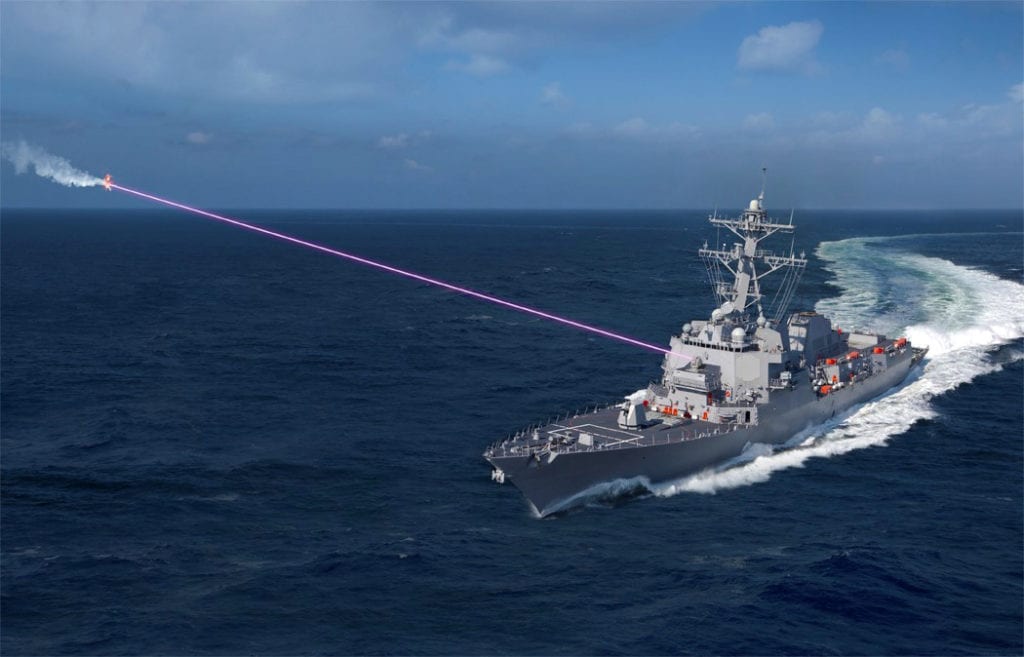
An artist’s rendering of Lockheed Martin’s HELIOS system. Lockheed Martin.

MOORESTOWN, N.J. — This year, the U.S. Navy will field the first acquisition program to deploy the High Energy Laser with Integrated Optical-dazzler and Surveillance, or HELIOS, a laser weapon system with high-energy fiber lasers for permanent fielding by the U.S. Department of Defense.

HELIOS will initially be integrated on a West Coast-based Flight IIA Arleigh Burke-class guided missile destroyer with the Aegis Combat System, but can be adapted to other types of ships and combat systems, says Lockheed Martin, which was awarded the HELIOS contract in 2018.

HELIOS is the first increment of the Surface Navy Laser Weapon System. The initial system features a laser of around 60 kilowatts to counter fast inshore attack craft or unmanned aircraft.

Increment two will boost the laser power to around 300 kilowatts, company business development analyst Kris Biggs said Jan. 13 in a presentation at the Surface Navy Association’s virtual annual conference, although he noted specifications haven’t been released to industry. Increment three will build off HELIOS “with an expected focus on even higher energy laser levels,” Biggs said.

Lockheed Martin completed the Critical Design Review and Navy Factory Qualification Test milestones for the system in 2020.  


New Pentagon Counter Drone Strategy: Unify Solutions Search, Avoid Duplicated Efforts

1st Lt. Taylor Barefoot, a low altitude air defense officer with Marine Medium Tiltrotor Squadron 163 (Reinforced), 11th Marine Expeditionary Unit, programs a counter-unmanned aircraft system on a Light Marine Air Defense Integrated System (LMADIS) during a predeployment training exercise at Marine Corps Air Ground Combat Center Twentynine Palms, Calif., Nov. 13, 2018. U.S. Marine Corps / Lance Cpl. Dalton S. Swanbeck

ARLINGTON, Va. — The Defense Department’s new strategy to thwart attacks and spying by small unmanned aircraft systems calls for protecting the force at home as well as overseas, while coordinating technology development across the services to avoid redundant programs that waste time and money.

In development since November 2019, when the Army was picked to unify counter-UAS efforts across the services, the strategy addresses both the potential threats from foreign adversaries and the hazards posed by reckless drone operators domestically.

The Army, Navy, Air Force and Marine Corps have all been developing systems to detect, deter, disable or destroy enemy drones. However, as the worldwide use and misuse of small, unmanned aircraft has grown exponentially, a coordinated effort to counter the risk — not only with technology but other solutions like doctrine, training and policy changes [ was needed, according to the report outlining the new strategy.

Most current solutions aim to sever the link between a remotely piloted drone and its operator, Army Major Gen. Sean Gainey, the director of the Pentagon’s Counter-UAS Office (JCO), told an online discussion of the new strategy Jan. 8 at the Center for Strategic and International Studies, Washington think tank.

“But where we see the threat going in the future,“ Gainey said, is toward “autonomous, massing swarming capability, [drones] integrating AI [artificial Intelligence] and potentially leveraging 5G” cell phone technology.   

The JCO will create integrated plans, technology, training concepts and doctrine that focus “appropriate resources on countering the UAS threat, while minimizing unnecessary duplication and redundancy,” said Gainey.

In addition to coordinating countermeasure steps across the U.S. military and with allies and partner nations, the Pentagon is also coordinating domestic efforts with the departments of Justice and Homeland Security, which includes the U.S. Coast Guard.

The widening use of small drones by non-state actors and terrorists has led some to call small UAS “the new IEDs” (improvised explosive devices).  Mindful of the expanding commercial use of small unmanned aircraft, Nicole M. Thomas, the JCO’s division chief for strategy and policy, noted “there are legitimate uses of drones,” although incompetent or deliberate misuse of a UAS could be a hazard.

Thomas said the JCO is completing details of the implementation plan, expected to be released by the end of January. “Those will all be action plans of things we’re going to do to make the strategy a reality,” she added.

In mid-January, the JCO will invite industry to demonstrate their “low collateral effectors,” non-lethal, low collateral damage capabilities, including jammers, at a common test range during the first week of April “and we’ll select the best ones, and move forward with that as the joint solution” Gainey said.


Raytheon to Deliver New Submarine Communications System

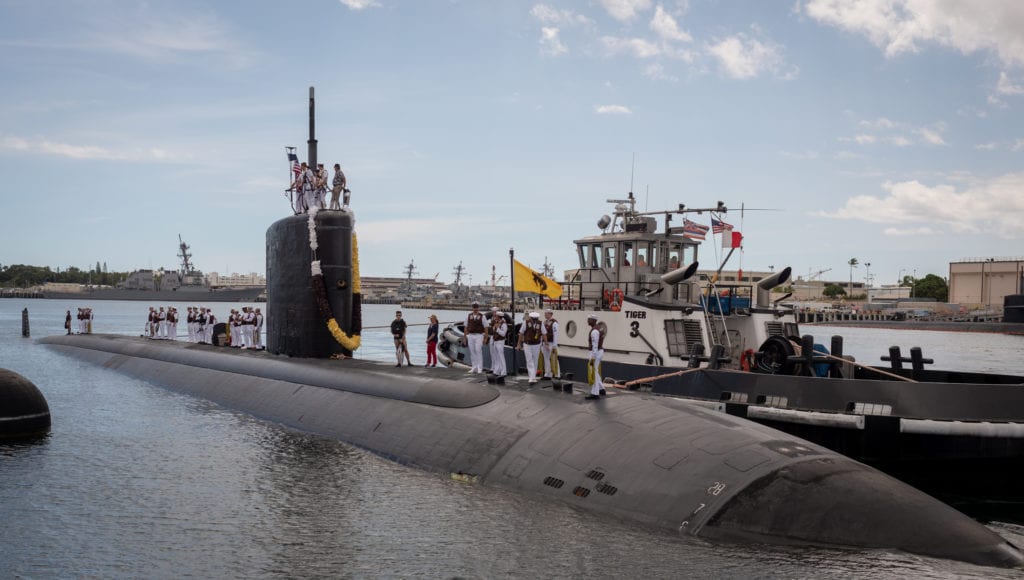
The Los Angeles-Class fast-attack submarine USS Cheyenne (SSN 773) and its crew arrive at Joint Base Pearl Harbor-Hickam, after completing their latest deployment, April 26, 2019. Raytheon Intelligence & Space has been awarded a $90 million contractor for Submarine High-Data Rate antenna systems. U.S. Navy / Mass Communication Specialist 1st Class Daniel Hinton

ARLINGTON, Va. — Raytheon Intelligence & Space, a Raytheon Technologies business, was awarded a $90 million contract by the U.S. Navy for 23 Submarine High-Data Rate antenna systems, the company said in a Jan. 11 release. Contracted in 2020, the work is expected to be completed on the new antennas by January 2024. 

The SubHDR system is used to provide submarines with high-capacity communications. The system vastly improves a submarine’s mission capability and the quality of life for sailors by affording them high-data rate communications with the world outside of the sub without sacrificing the submarine’s stealth. 

“Connecting people securely is essential to the success of any operation,” said Denis Donohue, vice president, Communications and Airspace Modernization Systems for Raytheon Intelligence & Space.

“The SubHDR system provides secure connectivity for submarines that supports mission-critical information delivery to the right people at the right time.” 

SubHDR links submariners to the Global Broadcast Service, the Milstar satellite constellation and the Defense Satellite Communications System, via a unique mast antenna that connects them to the above-sea world.  

The SubHDR System gives submarines high-data rate, multi-band SATCOM capability. Operating via military satellites, SubHDR enables underwater forces to be full participants in coordinated fleet battle group and joint task force network centric operations. The mast-mounted SATCOM system transmits secure wideband multimedia, secure and non-secure internet access, voice and data traffic, imagery and video teleconferencing. 


On First Voyage, USCGC Stone Crew Interdicts Narcotics in Caribbean

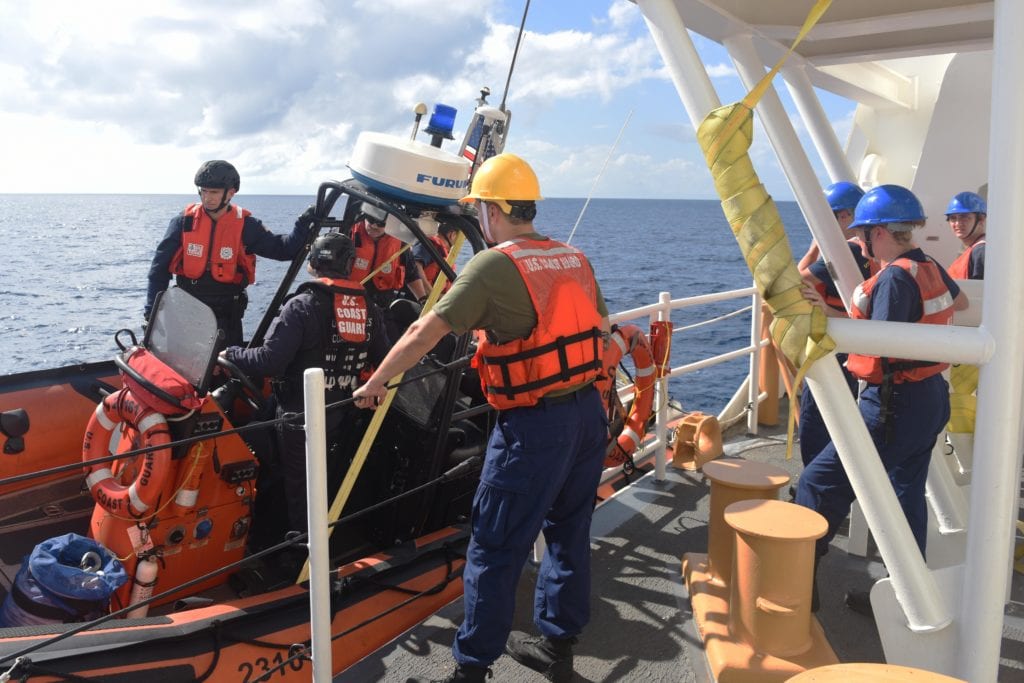
The crew on the USCGC Stone (WMSL 758) prepare to launch one of the ship’s small boats in the Caribbean Sea on Jan. 6, 2021. The Stone sent a boarding team on the boat to intercept a vessel suspected of engaging in illegal activity. U.S. Coast Guard / Petty Officer 3rd Class John Hightower

PORTSMOUTH, Va. — While in transit to conduct joint operations off the coast of Guyana as part of Operation Southern Cross, USCGC Stone (WMSL 758) encountered and interdicted a suspected narcotic trafficking vessel south of the Dominican Republic Jan. 7, the Coast Guard Atlantic Area said in a Jan. 11 release.   
   
Having stopped the illicit activity, Stone handed off the case to the USCGC Raymond Evans (WPC 1110), a fast response cutter from Key West, Florida, and continued its patrol south.  
   
Early on Jan. 7, acting on information from a maritime patrol aircraft, the Stone crew approached the vessel of interest and exercised U.S. Coast Guard authorities to stop their transit and interdict illicit maritime trade.  
   
The USCGC Raymond Evans arrived on the scene shortly after. A Coast Guard boarding team from the Raymond Evans conducted a law enforcement boarding, testing packages found aboard the vessel, revealing bales of cocaine estimated at 2,148.5 pounds (970 kilograms) total.  
 
Stone’s crew remained on scene during the search of the vessel to assist if need. Following the boarding, the Raymond Evans crew took possession of the contraband and detained the four suspected narcotics trafficking vessel members. They are working with the U.S. Coast Guard 7th District and Department of Justice on the next steps.  

“I’m very proud of the crew for completing this evolution safely and making an immediate impact on our first patrol,” said Capt. Adam Morrison, commanding officer of USCGC Stone (WMSL 758). “This case illustrates that Stone is a competent partner, and our crew is ready for the front-lines. We look forward to our upcoming engagements, first with Guyana.” 
   
Vice Adm. Steven Poulin, commander of U.S. Coast Guard Atlantic Area, said USCGC Stone “is a highly-capable multipurpose platform and ready to conduct missions to save lives, support lawful activities on the high seas, and highlight and build Coast Guard partnerships with other nations.

“I am not surprised that Stone interdicted drug smugglers – it is what the captain, crew, and every U.S. Coast Guard member is prepared to do every day underway.  Stone’s crew is exhibiting the highest professional competence, reinforcing that Stone is well-suited to help our partners in the South Atlantic expose and address illicit activities in the maritime domain. These transnational criminal activities – be it illegal fishing or the trafficking of people, drugs, money, etc.  – challenge global security, and only together can we combat these threats.” 

“Our teammates aboard USCGC Stone are helping keep our shared neighborhood, the Western Hemisphere, safe, successfully stopping illicit narcotics smuggling, while continuing their equally important mission to counter predatory and irresponsible IUU fishing, a growing threat to our partner nations’ sovereignty and our collective regional security,” said Rear Adm. Andrew J. Tiongson, director of operations, U.S. Southern Command. 

Operation Southern Cross is a multi-month deployment to the South Atlantic countering illegal, unregulated, and unreported fishing while strengthening relationships for maritime sovereignty and security throughout the region.