Future Attack Submarine Utah Christened at Electric Boat
By Richard R. Burgess, Senior Editor
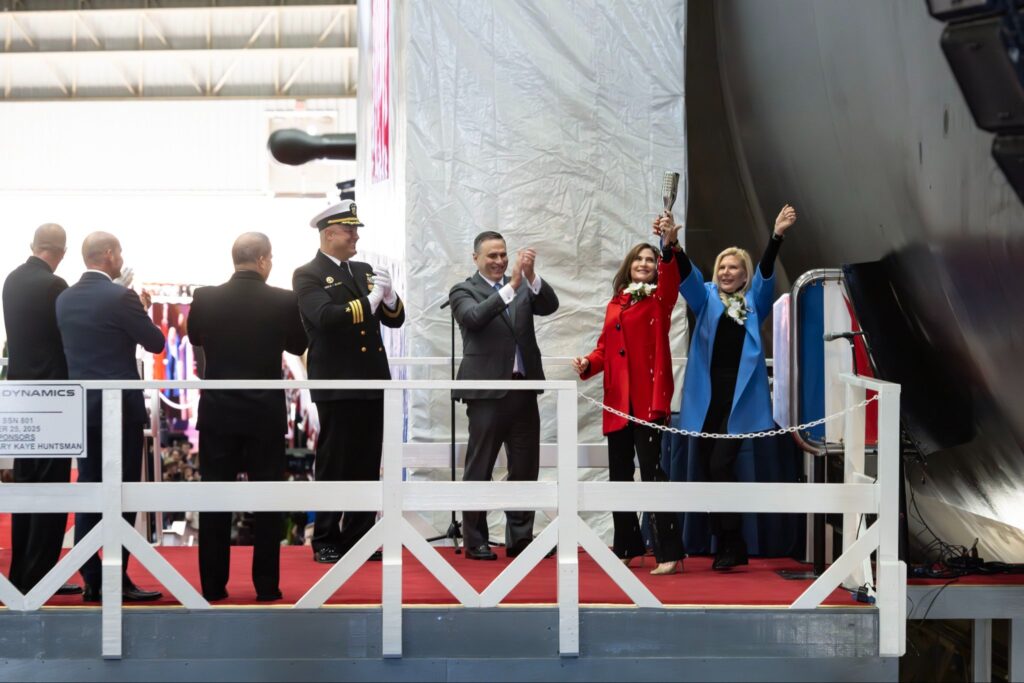
ARLINGTON, Va. — The future Virginia-class nuclear-powered attack submarine Utah (SSN 801) was christened during ceremonies at the General Dynamics Electric Boat shipyard in Groton, Connecticut, on October 25, 2025.
According to a posting on X @GDElectricBoat “The Virginia-class assembly building at shipyard was all decked out on October 25 for the christening of PCU Utah (SSN 801). EB shipbuilders, the ship’s crew, U.S. Navy personnel and government officials joined both live and virtually to celebrate this significant milestone commemorated by a joint swing. Mrs. Sharon Lee (left) and Mrs. Mary Kaye Huntsman, co-sponsors of Utah, broke a bottle of sparkling cyser — a honey and apple cider wine from Utah — on the ship’s hull to commemorate the christening.”
When commissioned, the USS Utah will be the 10th and final Block 4 version of the Virginia-class submarines to be built by General Dynamics Electric Boat and HII’s Newport News Shipbuilding.
Coast Guard Exceeds Fiscal Year 2025 Recruiting Goals, Achieves Highest Numbers Since 1991
WASHINGTON – The Coast Guard announced Friday it exceeded its fiscal year 2025 (FY25) recruiting goals, achieving the highest accession numbers since 1991.
The Coast Guard accessed 5,204 active-duty enlisted service members in FY25, which was 121% of its FY25 target of 4,300. This success was the second year in a row that the Coast Guard met its active-duty enlisted recruiting goals after the Service brought in 4,422 new service members last year.
In addition to the success of the active-duty enlisted recruiting efforts, the Service commissioned 371 new officers, to achieve 101% of the overall goal. This represents the largest officer target achieved in recorded history.
In the reserve component, the Coast Guard accessed 777 reservists, which was 104% of the official target of 750. This was the third year in a row that the Coast Guard met its recruiting goals for the Coast Guard reserve.
To support these recruiting efforts, the Coast Guard opened 7 new recruiting offices in FY25. These offices are located in:
Miami, Florida
Los Angeles, California
Long Island, New York
Austin, Texas
Grand Rapids, Michigan
Cincinnati, Ohio
Davenport, Iowa
All enlisted members begin their Coast Guard careers at Training Center Cape May in Cape May, New Jersey, where they complete basic training to prepare for service. Officer accessions occur on board the Coast Guard Academy in New London, Connecticut, where candidates are trained and commissioned for service as Coast Guard officers.
“The Coast Guard far exceeded our recruiting goals in Fiscal Year 2025, showing that more Americans want to serve in the Coast Guard than ever before,” said Adm. Kevin Lunday, acting commandant of the Coast Guard. “Thanks to our recruiters for their great success. We aren’t just growing – we are bringing in the best talent from across the United States and building the workforce of the future.”
These results align with the goals of Force Design 2028, a strategic initiative to modernize the Coast Guard’s workforce, enhance readiness and grow its military force by 15,000 members by FY28 to support fleet expansion and meet emerging mission demands.
Industry leaders Unite to Deliver Combat System Capability for SSN-AUKUS
From General Dynamics Mission Systems
CHANTILLY, Va. – Four major defense companies have proposed the establishment of an AUKUS Combat Systems Collaborative Team in contemplation of a potential role for Australia’s SSN-AUKUS conventionally armed nuclear-powered submarines, under a Memorandum of Understanding (MoU) signed Wednesday, Nov. 5.
BAE Systems, Raytheon Australia, General Dynamics Mission Systems and Thales propose to lead the design and lay the foundations for manufacture and integration of combat systems for SSN-AUKUS under agreements to be negotiated with the Commonwealth of Australia and United Kingdom government. SSN-AUKUS will be based on the UK’s next-generation design and incorporate technology from all three nations. The combination of technology from all three nations is intended to deliver a world-class submarine that meets Australia’s long-term defense requirements.
The collaboration draws on over 150 years of collective experience in the design, integration, and delivery from industry leaders across three nations, an expertise that is intended to meet the demands of delivering a cutting-edge combat system for SSN-AUKUS in a way that reduces both programmatic and workforce risks across the program while accelerating speed to capability.
Under the MOU, the parties have agreed to work collaboratively to design a best of class tri-national Combat System as a shared solution for Australia and the UK in support of SSN-AUKUS. This system builds on General Dynamics Mission Systems’ existing AN/BYG-1 combat control system that is cofunded by the U.S. and Australia and leverages the existing industrial base and workforce supporting both the U.S. Navy and the RAN.
AN/BYG-1 is an open-architecture system which integrates tactical control, payload and weapons control and information assurance. The system is installed on Australia’s Collins class submarines, as well as the U.S. Navy’s Virginia, Los Angeles, Ohio, Columbia, and Seawolf-class submarines.
The Collaborative Team intend to optimize Australian involvement in Combat System design and delivery, while facilitating skills, technology and knowledge transfer across the AUKUS nations to strengthen Australian industry for the SSN-AUKUS program.
Craig Lockhart, Chief Executive Officer of BAE Systems Australia, said:
“This Memorandum of Understanding is another strategic step forward to developing the most effective and advanced combat system for SSN-AUKUS, simultaneously strengthening Australia’s operational sovereignty and industrial capability.
“By aligning with our industry and trilateral partners, this signing will accelerate and enhance combat system development that is interoperable by design, reaffirming our role as a trusted partner to the Commonwealth of Australia and Royal Australian Navy.”
Ohad Katz, Managing Director of Raytheon Australia, said:
“As Australia’s sovereign submarine combat system partner, Raytheon Australia and our workforce bring more than 25 years of expertise in design, integration and sustainment, including upgrades and updates, of the Collins Class submarine combat system to this team, establishing the base for a truly sovereign capability ready to deliver the RAN’s most ambitious naval program.
“As the RAN moves to a multi-class submarine fleet, leveraging the existing workforce, with proven processes that sustain Collins will ensure continuity, confidence, and low-risk delivery.”
Laura Hooks, vice president and general manager of Maritime and Strategic Systems, at General Dynamics Mission Systems, said: “We are excited to formalize a collaborative path forward as we work together to strengthen critical defense capabilities in the Indo-Pacific region.
“The MOU acknowledges that the team successfully delivering submarine combat system capability to the three nations via separate efforts today should be entrusted to sustain and integrate combat systems aboard Virginia and AUKUS submarines in the future, ensuring continuity, confidence and low-risk delivery. It sets a standard of teamwork that will allow us to more efficiently explore future business opportunities in the United States, United Kingdom, and Australia.”
Steven Lockley, Chief Operating Officer of Underwater Systems, Defence Mission Systems, Thales UK said: “Success on international programs such as AUKUS requires strong international partners in order to deliver maximum customer value and sustained capability. Thales is pleased to continue its long-term Combat Systems relationships with BAES and Raytheon Australia and look forward to also working with a new partner in General Dynamics Mission Systems. Together, we will deliver a hugely capable and sustainable AUKUS Combat System maximising the attributes of our companies across the AUKUS countries.”
General Dynamics Mission Systems is the prime contractor for the US Navy’s AN/BYG-1 Combat Control System, Common Weapon Launcher (CWL), and Torpedo Guidance and Control Subsystems.
BAE Systems is the prime contractor for the design and manufacture of the Royal Navy’s UK submarine fleet and will produce the design of the SSN-AUKUS submarines and build the UK’s SSN-AUKUS submarines in Barrow, UK. BAE Systems Australia Submarines, alongside ASC Pty Ltd, has been selected by the CoA to build Australia’s SSN-AUKUS submarines in Adelaide, Australia based on that UK SSNAUKUS design.
Thales, a supplier of integrated sonar systems for submarines, surface ships and airborne platforms, has been appointed as the Main Sonar Design Authority and Integrator, and Sonar Contracting Authority (MSDA&I and SCA) for the UK SSN Programme by BAE Systems UK as the Combat Systems Integrator (CSI).
Raytheon Australia is a combat system integrator and naval sustainment partner for the Royal Australian Navy (RAN) submarine and surface ship combat systems and is the combat system manager and integrator for the RAN Collins Class Submarines and a key partner in the joint US/Australian AN/BYG-1 Submarine Combat Control System.
General Dynamics Mission Systems, a business unit of General Dynamics (NYSE: GD), provides mission critical solutions to the challenges facing our defense, intelligence and cyber security customers across all domains. Headquartered in Chantilly, Virginia, General Dynamics Mission Systems employs approximately 12,000 people worldwide. For more information about the General Dynamics Mission Systems broad portfolio of capabilities, visit gdmissionsystems.com.
Department of the Navy Honors 250 Years of the U.S. Navy and Marine Corps on Veterans Day
U.S. Marines with I Marine Expeditionary Force present the ceremonial birthday cake during I MEF’s 250th Marine Corps Birthday Ball at Harrah’s Resort Southern California in Valley Center, California, Nov. 1, 2025. (U.S. Marine Corps photo by Lance Cpl. Nan Yang)
From Headquarters, U.S. Marine Corps, Nov. 5, 2025
WASHINGTON, D.C. — This Veterans Day, the Department of the Navy commemorates 250 years of American seapower with “Above, Below, and Beyond,” a two-hour Presidential special airing Sunday, Nov. 9, 2025, on Fox Nation.
A once-in-a-generation broadcast, the special takes viewers behind the scenes of the world’s preeminent maritime force; revealing never-before-seen footage, rare access, and first-hand accounts from Sailors, Marines, and the families who stand the watch with them.
Using never-before-seen footage, viewers will see dynamic Navy and Marine Corps operations across air, land, sea, space, and cyber; a rare look at how our sea services deliver peace through strength.
Filmed across the nation and around the globe, the special moves from the decks of aircraft carriers to the depths of submarine commands, offering an inside view of the operations that keep the Navy–Marine Corps team the most lethal and vital force in America’s arsenal so when the world looks to the sea, it sees our flag, and behind it a team that is disciplined, lethal, and dominant.
It also spotlights the men and women of American industry: the shipyard workers, welders, pipefitters, electricians, engineers, and suppliers, whose craftsmanship turns steel into ships and keeps the Fleet at sea.
Viewers will witness seapower at speed—carrier strike groups executing blue-water power projection, amphibious forces driving ship-to-shore operations in contested littorals, and elite naval aviators flying precision profiles inside the Navy’s TOPGUN training squadron.
The two-hour special shows the world that the United States Navy – Marine Corps Team has been the enduring, forward deployed force that keeps danger far from our shores. Across these two hours, the Navy–Marine Corps team will show why the United States commands the seas, secures global trade, and sets the course for the future.
We show the world that ‘freedom isn’t free’ is not just a tagline.
“In 1775, the Founders made a bet; that America’s future would be written at sea. For 250 years, Sailors and Marines have written freedom’s story from the front lines of history,” said John C. Phelan, Secretary of the Navy. “To be a superpower, you must be a seapower. In this tribute, we show the world and our adversaries that America’s Navy–Marine Corps team and their families is what makes America a superpower. This honors both those in uniform and the families who give them strength. The next century of American seapower won’t be defined by a single platform, but by the character of our people.”
Featuring participation from the President, Vice President, Secretary of War, Secretary of the Navy alongside active-duty service members and veterans, “Above, Below, and Beyond” spans every domain of modern seapower.
This special reminds the world that freedom is not free; it’s defended by the strength of America’s Navy and Marine Corps team. We safeguard something infinitely greater than our might. Their resolve keeps the future open and ensures the blessings our Founders promised: life, liberty, and the pursuit of happiness.
Viewers will see carrier strike groups protecting vital sea lanes; Marines conducting expeditionary training alongside allies; and the shipbuilders, engineers, logisticians, and families whose quiet professionalism sustains the Fleet. It is a living portrait of American seapower: past, present, and the future we are building now.
“For 250 years, America’s Navy and Marine Corps have stood the watch—bold, resilient, and always ready—protecting our Nation and defending the ideals of freedom across every domain,” said Adm. Daryl Caudle, Chief of Naval Operations. “This tribute honors not only our history, but the extraordinary Sailors and Marines who continue to shape our future with innovation, courage, and an unbreakable commitment to service.”
“The Marine Corps’ 250th anniversary is a testament to our enduring legacy as the Nation’s expeditionary force, always ready to answer the Nation’s call,” said Gen. Eric Smith, Commandant of the Marine Corps. “As we celebrate this historic milestone, we honor our past and those who have gone before us. We reaffirm our commitment to our culture, one another, our Corps, and our Nation.”
For more than two centuries, the Navy–Marine Corps team has ensured freedom of navigation, safeguarded global commerce, and provided the Nation unmatched capability to deter aggression and respond to crisis. With two-thirds of trade and 80% of goods moving by sea, the maritime security provided by our Navy- Marine Corps team is the backbone of prosperity and deterrence.
Today, they continue to adapt—advancing shipbuilding, unmanned systems, hypersonics, AI, and cyber defense so America’s maritime dominance endures into the two hundred and fifty years and beyond.
GE Aerospace and Shield AI to Collaborate on Propulsion for X-BAT Vehicle Program
From GE Aerospace
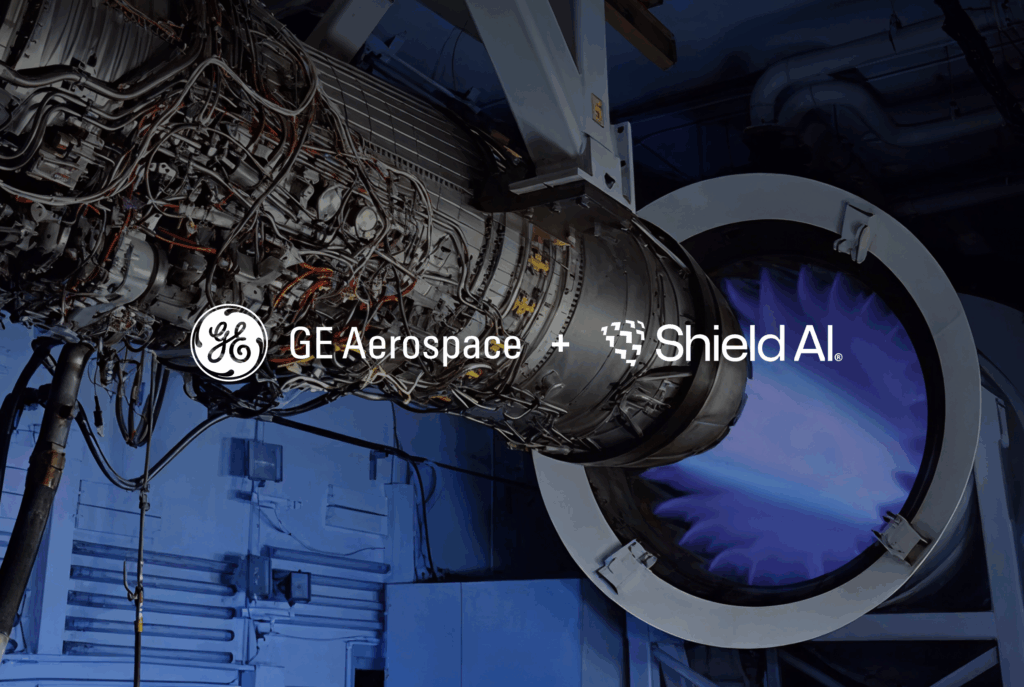
CINCINNATI – November 5, 2025 – GE Aerospace (NYSE: GE) and Shield AI have agreed to collaborate on propulsion technologies for Shield AI’s new X-BAT vehicle program. Through the Memorandum of Understanding (MOU), the F110-GE-129 engine, featuring the advanced Axisymmetric Vectoring Exhaust Nozzle (AVEN), has been selected to power the X-BAT. GE Aerospace will provide propulsion and testing support for the X-BAT program.
“We’re excited to pair GE Aerospace’s proven experience in developing and scaling propulsion systems with Shield AI’s vehicle development to move faster from concept to capability,” said Amy Gowder, president and CEO, Defense & Systems at GE Aerospace. “Together, we’re helping redefine how advanced propulsion technologies are integrated into autonomous systems built for the mission. Collaborating with Shield AI underscores GE Aerospace’s commitment to advancing propulsion for next-generation autonomous systems.”
Unveiled on October 21 in Washington, D.C., X-BAT is an AI-piloted vertical take-off and landing (VTOL) fighter jet by Shield AI engineered for contested and austere environments. Powered by Shield AI’s proven Hivemind autonomy software, X-BAT delivers scalable, survivable combat mass in contested environments and can operate independently or as a drone wingman.
“GE Aerospace’s F110 engine is one of the most successful and reliable fighter engines in history and has the operability characteristics that X-BAT’s VTOL design demands. GE Aerospace has been a great partner, and we are excited by the potential of our combined team,” said Armor Harris, senior vice president of aircraft engineering at Shield AI.
By pairing GE Aerospace’s expertise in propulsion development, testing, and certification with Shield AI’s proven autonomous aircraft technology, the partnership will accelerate development and readiness for future unmanned applications.
The GE Aerospace F110 engine has more than 11 million flight hours under its wing, the most thrust in its class, and recently celebrated a milestone of 40 years of continuous production and improvement. The Axisymmetric Vectoring Exhaust Nozzle (AVEN) for X-BAT provides thrust vectoring capability for vertical flight and enhances maneuverability in horizontal flight.
This announcement builds on GE Aerospace’s growing portfolio of partnerships that align with our commitment to advance technologies to support the future of flight and propulsion. As demand grows for affordable, reliable propulsion solutions across both manned and unmanned defense applications, GE Aerospace remains focused on solutions that meet the mission needs of today while shaping the future of flight.
Coast Guard Sets Record with Amount of Cocaine Seized in FY25
From Headquarters, U.S. Coast Guard, Nov. 6, 2025
WASHINGTON — The U.S. Coast Guard announced Thursday it seized nearly 510,000 pounds of cocaine in the Eastern Pacific Ocean and Caribbean during fiscal year 2025 (FY25), the largest amount in the Service’s history.
On average, the Coast Guard seizes 167,000 pounds of cocaine annually. The amount seized in FY25 is over three times that amount, and equivalent to 193 million potentially lethal doses (1.2 grams), enough to endanger over half of the U.S. population.
“The Coast Guard’s top priority is to achieve complete operational control of the U.S. border and maritime approaches,” said Adm. Kevin Lunday, acting commandant of the Coast Guard. “We own the sea, and this historic amount of cocaine seized shows we are defeating narco-terrorist and cartel operations to protect our communities and keep dangerous drugs off our streets.”
Detecting and interdicting narco-terrorism on the high seas involves significant interagency and international coordination. U.S. Southern Command’s Joint Interagency Task Force-South, based in Key West, Florida, detects and monitors both aerial and maritime transit of illegal drugs. Once interdiction becomes imminent, the law enforcement phase of the operation begins, and control of the operation shifts to the U.S. Coast Guard throughout the interdiction and apprehension.
The Coast Guard is the United States’ lead federal agency for maritime drug interdiction. We are part of the Department of Homeland Security team protecting our nation and are at all times a military service and part of the joint force defending it.
BMT, Teledyne Marine Announce Memorandum of Understanding
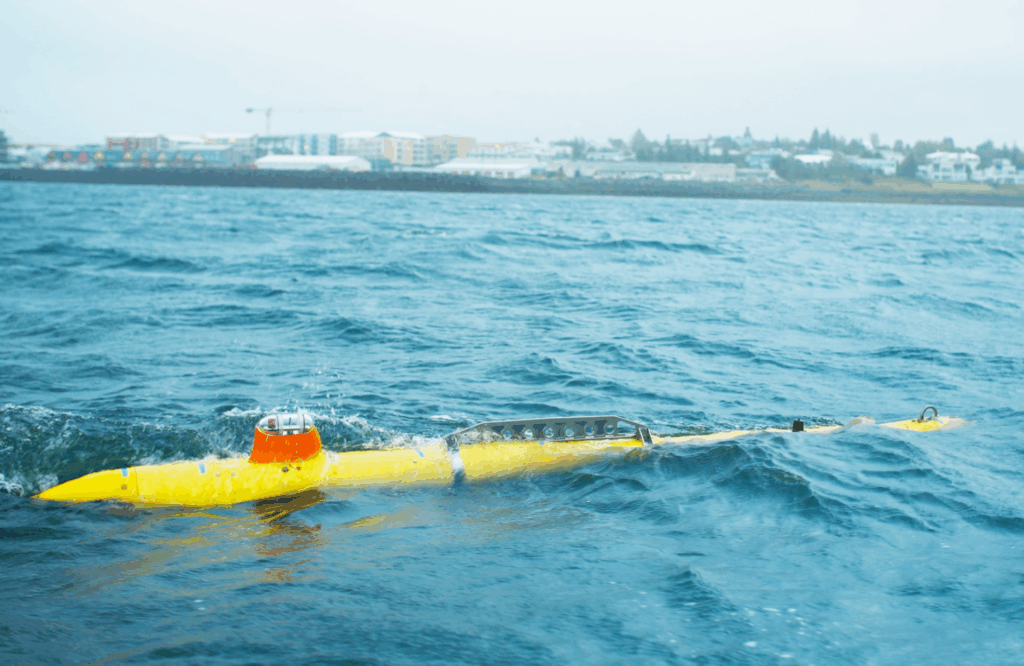
LONDON, UK, Nov. 6, 2025 – BMT is delighted to announce a Memorandum of Understanding (MoU) with The Teledyne Marine Vehicles group which includes Iceland-based Teledyne Gavia and North Falmouth, MA based Teledyne Webb Research, laying the foundation for strategic alignment and close collaboration on future projects in the maritime autonomy space.
This MoU builds on an established relationship, through which BMT has provided specialist technical consultancy to Teledyne Marine Vehicles in support of underwater autonomy programmes in both the UK and internationally. This includes expertise in through-life support and cyber security, as well as the delivery of a Safety and Environmental Case Review (SECR) for the UK Ministry of Defence, ensuring the platform’s operational safety and environmental compliance.
Will Alexander, BMT’s Maritime Autonomous Systems Lead, explains:
“BMT and Teledyne Marine bring extensive complementary expertise into this market, empowering us to think innovatively and overcome challenges as the strategic shift to integrate autonomous systems across naval operations continues at pace.
As an independent consultancy with deep domain expertise, BMT offers comprehensive technical support in maritime autonomous systems across the asset lifecycle. From the design stage through development, testing, assurance and operation we support customers leverage new technology to deliver cost effective, safe and sustainable marine operations.”
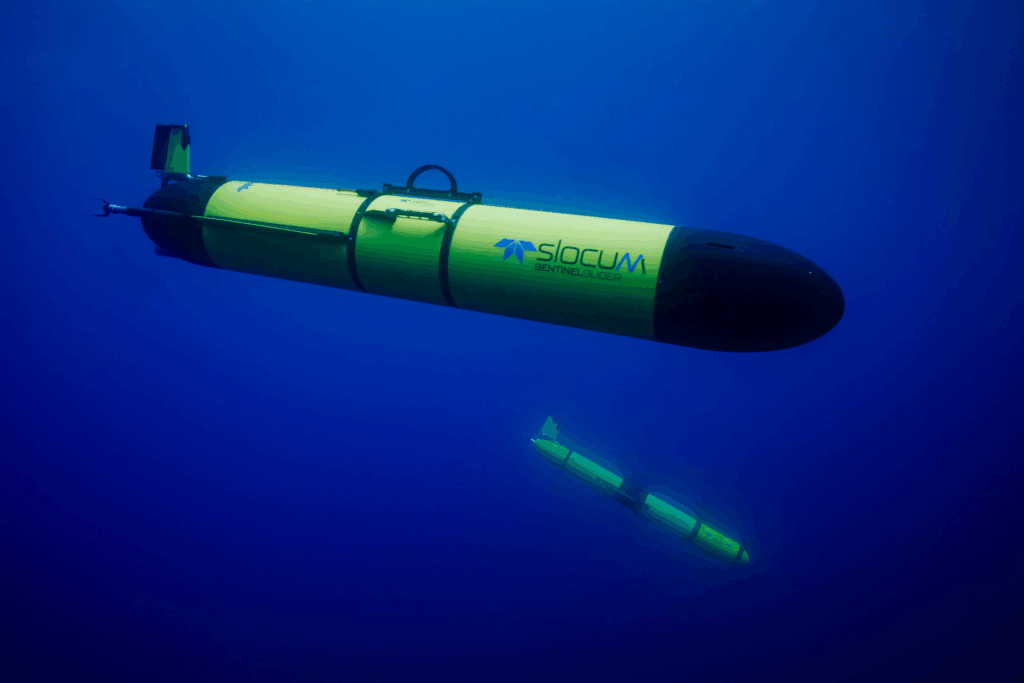
Teledyne Marine has established itself as a market leader in the production of Autonomous Underwater Vehicles (AUVs), including the Gavia, Osprey, and SeaRaptor class AUVs and Slocum gliders and APEX floats, which are currently in use with the UK Royal Navy and deployed widely with other military, commercial, and scientific users worldwide.
Arnar Steingrimsson, VP of Sales, Marine Vehicles, of Teledyne Marine, adds:
“We greatly value the close working relationship that Teledyne has had with BMT on successful UUV projects for the UK Ministry of Defence and other NATO members. Industry collaboration is the key to managing today’s rapidly evolving market dynamics and meeting increased demand from naval users. Teledyne looks forward to building on the work to date with BMT to better serve our joint NATO and international unmanned systems customers.”
Paul Haycock, BMT’s Senior Account Manager – Defence Industry, concludes:
“This collaboration reflects both companies’ shared commitment to addressing today’s challenges to shape a more innovative and resilient future. With a wealth of combined underwater domain experience, we are perfectly positioned to help our customers address evolving threats, enhance their operational capabilities and leverage maritime autonomy for reconfigurable, cost-efficient, scalable and adaptable fleet operations.”
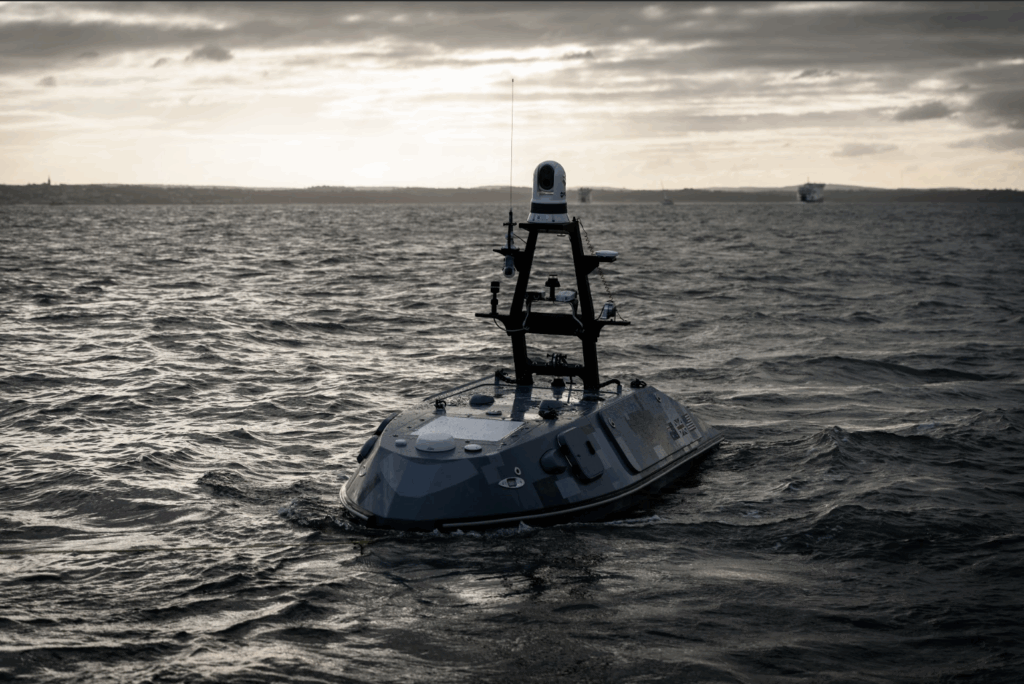
Aligned with the vision of AUKUS Pillar 2, SSC has self-funded the design and build of three advanced platforms - MARS, VICTA, and CADDIS. Encompassing stated AUKUS priorities such as Maritime Autonomy, Rapid Capability Delivery and Manned/Unmanned teaming (MUM-T), SSC and Greenroom technologies have already been demonstrated and validated in Australia and the United States, proving their ability to deliver real operational impact for the warfighter.
The new agreement will advance the MARS platform through integration of Greenroom Robotics’ world-leading autonomous technology, while opening further opportunities for joint development in Australia.
The MARS platform has undergone extensive testing in Tasmania Australia, a region uniquely positioned for maritime innovation. Tasmania’s nine deregulated waterways provide a unique environment for prototype development, allowing testing in a diverse range of environments with multiple depths and water speeds. This flexibility has accelerated validation and refinement, moving the platform rapidly towards broader deployment.
As Indo-Pacific maritime environments become increasingly complex, this partnership brings together leading-edge technologies and operational experience to enhance AUKUS’ shared maritime security and resilience.
Camilla Martin, CEO of SubSea Craft, said:
“This teaming agreement is another step in strengthening the AUKUS ecosystem and will be crucial to our success as a credible partner to the AUKUS nations. Agility is key. To meet the pace that the warfighter deserves, it is vital we work with leading technology companies, pooling knowledge and expertise in support of those on the frontline.”
Through collaboration with partners like Greenroom, SSC is building more than individual platforms, it is contributing to an AUKUS-wide innovation ecosystem, where technologies are designed in the UK, co-developed in Australia, and integrated with US payloads. This approach ensures that capabilities are not only cutting-edge, but mission-relevant, scalable and available when most needed.
Harry Hubbert, Co-Founder and Chief Operating Officer of Greenroom Robotics, said the partnership sets a new standard for next-generation naval interoperability.
“We are proud that Greenroom’s advanced maritime autonomy has been chosen to power SubSea Craft’s pioneering MARS platform,” said Mr Hubbert. “The rapid delivery of proven capability is critical for protecting our maritime environments. This partnership will deliver force multiplier effects to secure our vast oceans.” He added that “the MARS uncrewed surface vessel enables powerful human-machine teaming, helping to keep people, our forces most valuable assets, out of harm’s way.”
HII’s REMUS UUV Marks 18 Years Serving Australia
From HII
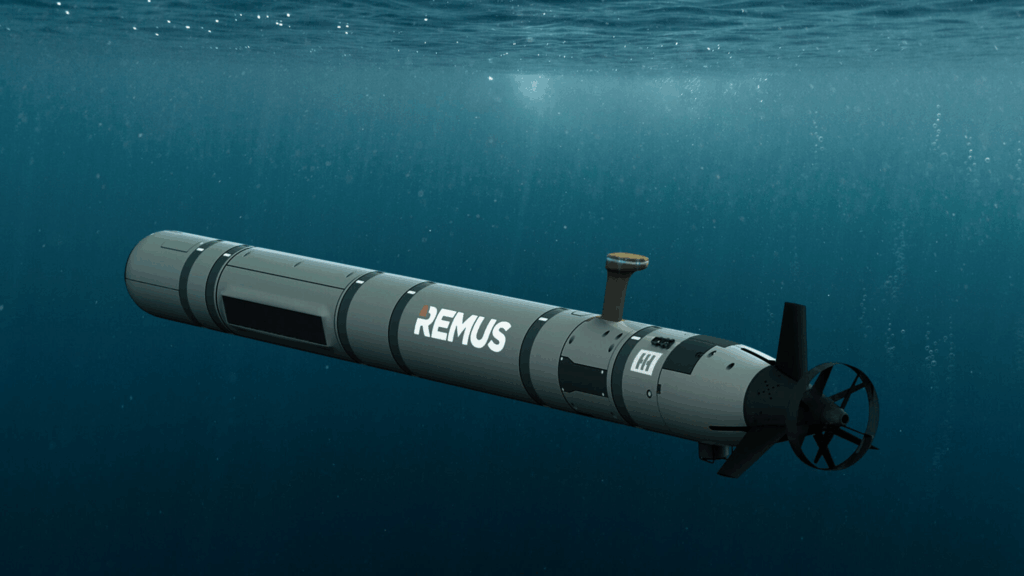
SYDNEY, Nov. 04, 2025 (GLOBE NEWSWIRE) — HII (NYSE: HII) is celebrating 18 years of REMUS unmanned underwater vehicle (UUV) operations in Australia at the Indo Pacific International Maritime Exposition in Sydney.
REMUS first entered the Australia market in 2007 when the Royal Australian Navy acquired REMUS 600.
“BlueZone Group is proud of our enduring partnership with HII in delivering the REMUS UUV to Australia. This proven and advanced platform continues to deliver reliable performance and plays a vital role in strengthening national and regional autonomous underwater capabilities,” said Neil Hodges, managing director of BlueZone Group.
The BlueZone Group, based in Newcastle, New South Wales, is an official Australian sales partner, logistics integrator, and depot maintenance provider for HII, supporting regional growth, customer engagement, and equipment sustainment.
The milestone highlights REMUS’ global leadership in autonomous undersea systems and its critical role in advancing regional maritime science, security, innovation and research.
“REMUS is a force multiplier beneath the surface — quiet, flexible and reliable,” said Duane Fotheringham, president of HII’s Unmanned Systems group. “As we mark 18 years of REMUS operations in Australia, we are also building the future by delivering smarter, more integrated unmanned systems that help our partners maintain undersea dominance in a rapidly shifting domain.”
For almost two decades, Australian military and agencies have relied on REMUS technology for a wide range of missions — from naval training and mine countermeasures to scientific research and environmental monitoring.
As security challenges in the Indo-Pacific evolve, REMUS continues to provide a high-impact, low-risk solution for autonomous operations. It’s proven, adaptable, and ready for what’s next.
A Platform with Staying Power
As Indo Pacific Expo 2025 showcases the future of maritime capability, REMUS stands out as the UUV with proven performance, global trust, and expanding capabilities for future missions.
The REMUS family supports modern naval operations with unmatched versatility. Its autonomous systems can operate independently or alongside crewed vessels. In a recent breakthrough, REMUS vehicles were successfully launched and recovered from the torpedo tubes of Virginia-class submarines — extending mission reach, reducing exposure risk, and enhancing stealth.
The U.S. Navy’s current Lionfish UUV is based on HII’s REMUS 300 platform, a modular, open-architecture SUUV (Small unmanned underwater vehicle) engineered for multi-mission adaptability. The program was developed in collaboration with the U.S. Navy and the Defense Innovation Unit (DIU) to accelerate the adoption of dual-use commercial technologies in Department of Defense programs.
Modular, Mission-Ready, and Built to Last
REMUS’ open-architecture design enables rapid integration of new payloads, allowing for mission-specific configurations and future upgrades — key to staying relevant while controlling costs.
To date, more than 750 REMUS vehicles have been delivered to over 30 nations, including 14 NATO members. Remarkably, over 90% of all REMUS systems deployed in the past 23 years remain in service, testament to their durability and lifecycle value, both critical in defense acquisition.
Setting the Standard Across Sectors
Known for its endurance, modularity, and precision, REMUS leads in defense, commercial and scientific missions. From shallow-water reconnaissance to deep-sea exploration, it adapts to complex environments with minimal footprint and maximum effect.
HII continues to invest in next-generation capabilities and strategic partnerships. In a recent move, HII and Babcock announced a strategic agreement to integrate REMUS UUVs with submarine weapon handling and launch systems — unlocking new deployment options in contested maritime environments.
A Versatile Family of Systems
The REMUS line includes multiple variants, each designed for specific mission profiles and operating depths. The numbering reflects operational depth and generation:
REMUS 130: Compact and optimized for shallow-water operations and quick deployment.
REMUS 300: Offers greater range and payload capacity in a lightweight form; serves as the basis of the U.S. Navy’s Lionfish program.
REMUS 620: Features modular upgrades, modernized electronics, battery life of up to 110 hours, and a range of 275 nautical miles. Recently achieved a major milestone by supporting submarine launch and recovery operations for the U.S. Navy Submarine Force.
REMUS 6000: Capable of operating at depths up to 6,000 meters, typically used for deep-sea recovery and complex scientific missions.
All models share a common architecture, allowing operators to scale capabilities while maintaining system familiarity.
REMUS: A Track Record of Excellence
Defense: Used by 14 NATO navies — including the U.S., U.K., Norway and Germany —for mine warfare, ISR (intelligence, surveillance, and reconnaissance), and seabed mapping.
Search & Recovery: Key missions include the search for Air France Flight 447, post-tsunami response in Japan, and discovery of the USS Indianapolis (CA 35).
Science & Environment: Supports environmental monitoring, marine archaeology, and oceanographic research. National Oceanic and Atmospheric Administration (NOAA) is currently deploying REMUS 620 systems to map seafloor habitats impacted by the Deepwater Horizon oil spill.
U.S. Department of Transportation Draws Record Turnout at U.S. Merchant Marine Academy’s Industry Day
180 participants were onsite to learn about the Academy’s Campus Modernization Plan and federal contracting opportunities in engineering, design, construction, and modernization services
From the U.S. Department of Transportation Office of Public Affairs
KINGS POINT, NEW YORK – The U.S. Department of Transportation drew a record turnout at the U.S. Merchant Marine Academy’s Industry Day, welcoming 180 participants from 90 firms to learn about the Academy’s Campus Modernization Plan (CMP) and upcoming federal contracting opportunities. President Trump’s Executive Order on Restoring Maritime Dominance dedicated an entire section to the modernization of the Academy.
“Modernizing our historic campus is not just about new buildings — it’s about investing in America’s future and restoring our maritime dominance,” said Captain Tony Ceraolo, Acting Superintendent at U.S. Merchant Marine Academy. “I’m proud to see so many great minds from the private sector coming together to want to help create a campus that will inspire innovation, make our nation more competitive, and prepare the next generation of American leaders.”
U.S. Army Corps of Engineers presented the CMP and the upcoming federal contracting opportunities in engineering, design, construction, and modernization services. Participants were also given a tour of the historic campus and joined a Q&A session.