Decision on Crozier’s Fate Next in the Hands of Pentagon Officials
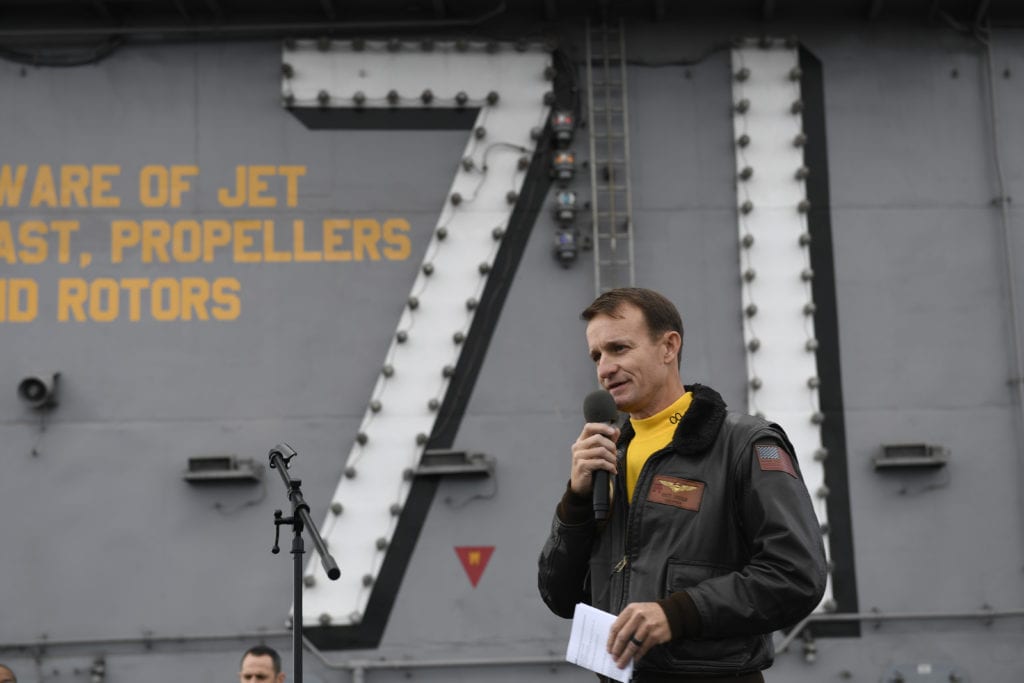
Capt. Brett Crozier, then-commanding officer of the aircraft carrier USS Theodore Roosevelt, addresses his crew during an all-hands call on the ship’s flight deck last November. U.S. Navy/Mass Communication Specialist 3rd Class Nicholas Huynh

ARLINGTON, Va. — Defense Department officials are reportedly split on reinstatement of Capt. Brett Crozier following his ouster as commander of the aircraft carrier USS Theodore Roosevelt earlier this month by then-Navy Secretary Thomas Modly.

After the end of a preliminary investigation into Crozier’s dismissal, top U.S. Navy officials announced April 24 that a recommendation on Crozier’s fate had been delivered to Modly’s replacement, acting Navy Secretary James McPherson, and that McPherson was still in talks with Defense Secretary Mark Esper on the question of restoring Crozier to his previous position.

See: Navy Provides Medical Care to Infected Sailors of USS Kidd, Will Disinfect Ship

See: Military Consumers React to Life During Pandemic

However, several media outlets have reported April 24 and since that McPherson and Chief of Naval Operations Adm. Mike Gilday recommended that Crozier be restored to his former command.

Another outlet said Chairman of the Joint Chiefs of Staff U.S. Army Gen. Mark Milley wanted to pump the brakes and recommended a longer and more detailed investigation before Crozier’s status is determined.

Rep. Adam Smith (D-Wash.), chairman of the House Armed Services Committee, emphatically weighed in April 24 in favor of Crozier’s reinstatement. “The secretary of defense needs to reinstate Capt. Brett Crozier as commanding officer of the USS Theodore Roosevelt,” Smith said in his statement.
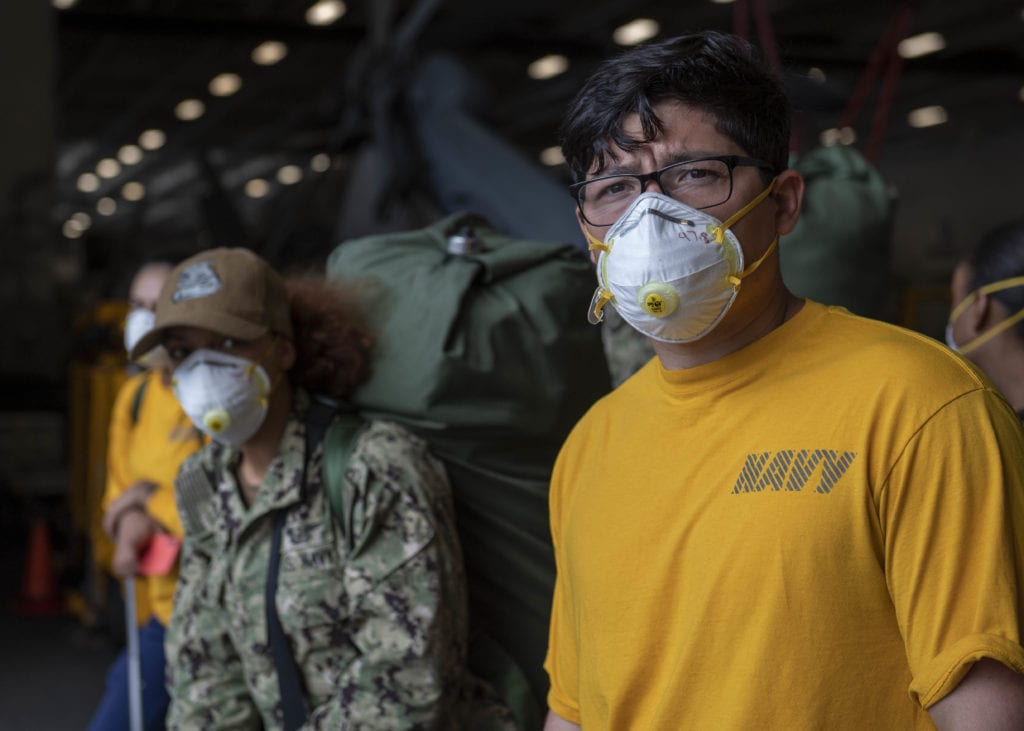
Roosevelt Sailors stand by to depart the ship for quarantine after completing watch-standing duties on April 25. Upon arriving in Guam on March 27, the ship established an emergency command center, initiated a roving and deep cleaning team and started educating the crew on social distancing and protective procedures and behaviors. U.S. Navy/Mass Communication Specialist 1st Class Chris Liaghat

The Navy was less committal, at least publicly, that day — so a final decision may take days or weeks longer. President Trump may also reportedly weigh in.

“This afternoon, Secretary Esper received a verbal update from the acting secretary of the Navy and the chief of naval operations on the Navy’s preliminary inquiry into the COVID-19 outbreak on the [Roosevelt],” Jonathan Rath Hoffman, public affairs assistant to Esper, said April 24.

“After the secretary receives a written copy of the completed inquiry, he intends to thoroughly review the report and will meet again with Navy leadership to discuss next steps. He remains focused on and committed to restoring the full health of the crew and getting the ship at sea again soon.”

Gilday directed Vice Chief of Naval Operations Adm. Robert Burke to investigate the circumstances and climate of the entire Pacific Fleet “to help determine what may have contributed to a breakdown in the chain of command,” Modly said April 2, the day he announced that Crozier was relieved of his command.

A day earlier, at a press briefing on the Roosevelt virus outbreak, Gilday spoke of “a potential comms breakdown, wherever it occurred,” adding “we’re not looking to shoot the messenger here, we want to get this right.”

Crozier was fired by Modly after a March 30 letter the captain wrote to top Navy officers and fellow naval aviators leaked to a San Francisco newspaper, the San Francisco Chronicle, which published a story the next day. The publication of the letter sparked an outcry and worldwide media attention over Crozier’s actions and the fate of the carrier’s crew.

“The secretary of defense needs to reinstate Capt. Brett Crozier as commanding officer of the USS Theodore Roosevelt.”

Rep. Adam Smith, House Armed Services Committee chairman

A week later, Modly added fuel to the fire with a profanity-laced speech criticizing Crozier in front of the nuclear carrier’s crew that went viral on social media. Modly had to resign the next day, April 7, in the wake of the expanding controversy.

At the time Crozier wrote his letter, three Sailors on the Theodore Roosevelt had tested positive for COVID-19, but many more were later found to be infected after the carrier made a scheduled port visit to Guam. As of April 25, the Navy reported that the entire crew had been tested for the virus, with 833 total positive and 4,105 negative results. A small number of results were pending, the Navy added. Of the total cases, 112 Sailors have recovered and 4,273 Sailors have moved ashore.

Two Sailors assigned to the Roosevelt were in U.S. Naval Hospital Guam under treatment for COVID-19 symptoms. None of those hospitalized for the virus was in the intensive care unit. However, one Sailor from the Roosevelt did die there earlier this month from complications of the infection, the Navy reported.

In his letter, the captain wrote that he believed the carrier had inadequate space to isolate or quarantine Sailors. He also pleaded for faster intervention from his superiors to assist his crew. “We are not at war. Sailors do not need to die,” Crozier wrote. “If we do not act now, we are failing to properly take care of our most trusted asset — our Sailors.”

He was hailed as a hero by his crew — who were seen on video cheering him on during his departure from the ship in Guam — as well as some in and out of the military, while others criticized him for circumventing the Navy’s chain of command.

“What we’ve learned from the TR is very informative,” Hoffman said April 24 of the rapid rise of COVID-19 cases on the carrier.

That has led to a priority-based, tiered system of testing starting with critical national capabilities, like strategic nuclear deterrent units, working its way through fielded forces around the world, forward-deployed and redeploying forces and the rest of the force.

Meanwhile, an embarked medical team continues testing aboard the guided missile destroyer USS Kidd in the eastern Pacific, where 33 Sailors have tested positive for COVID-19. Two Sailors have been medically evacuated to the United States. Sailors aboard the Kidd are wearing PPE and N95 masks. The amphibious ship USS Makin Island, with a fleet surgical team, ICU capacity and ventilators and additional testing capability, is en route to rendezvous with the Kidd in case medical support is required at sea.

The Navy continues to lead all armed services with 1,659 cases of the novel coronavirus, followed by the Army with 995, the National Guard with 792, the Air Force with 347 and the Marine Corps with 304, according to the latest data released by the Defense Department on April 27. There have been only two deaths among military personnel.

Seapower Correspondent John M. Doyle contributed to this report.
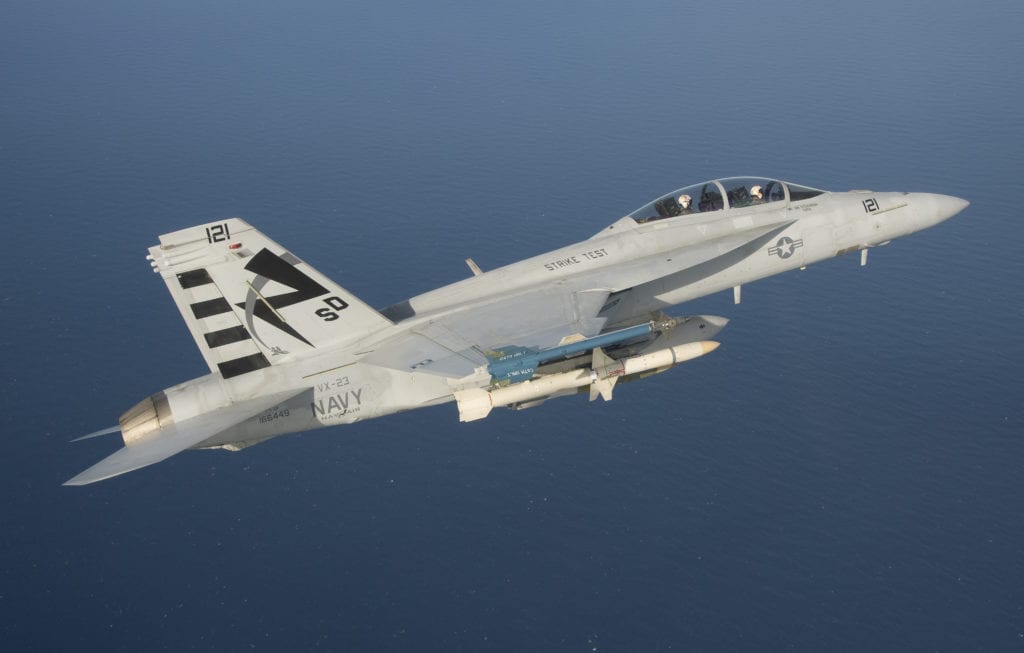


Navy Awards Orders 9th Full-Rate Production Lot of AARGMs

A 2012 photo of an F/A-18F Super Hornet assigned to the Salty Dogs of Air Test and Evaluation Squadron (VX) 23 conducting a captive carry flight test of an AGM-88E Advanced Anti-Radiation Guided Missile at Naval Air Station Patuxent River, Maryland. U.S. Navy / Greg L. Davis

LOS ANGELES — The U.S. Navy has awarded Northrop Grumman Corp. $165 million for Lot 9 full-rate production (FRP) of the AGM-88E Advanced Anti-Radiation Guided Missile (AARGM), the company said in an April 23 release. Assets will include all-up round missiles and captive air training missiles for the U.S. Navy and foreign military sales. 

“AARGM provides the U.S. Navy and allies unmatched protection to detect and defeat surface-to-air-threats regardless of threat tactics and capabilities,” said Gordon Turner, vice president, advanced weapons, Northrop Grumman. 

Northrop Grumman’s AARGM is a supersonic, air-launched tactical missile system, upgrading legacy AGM-88 HARM systems with advanced capability to perform suppression and destruction of enemy air defense missions. AARGM is the most advanced system for pilots against today’s modern surface-to-air threats, according to the company. It is able to engage land- and sea-based air-defense threats, as well as striking, time-sensitive targets. 

AARGM is a U.S. Navy and Italian air force international cooperative major defense acquisition program with the U.S. Navy as the executive agent. AARGM is currently deployed and supporting operational requirements for the U.S. Navy and U.S. Marine Corps. The missile is integrated into the weapons systems on the FA-18C/D Hornet, FA-18E/F Super Hornet, EA-18G Growler aircraft and the Tornado Electronic Combat and Reconnaissance aircraft utilized by the Italian air force. 


Coast Guard, Panamanian Authorities Stop Drug-Smuggling Operation Near Panama

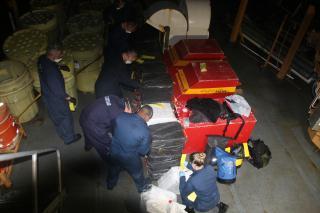
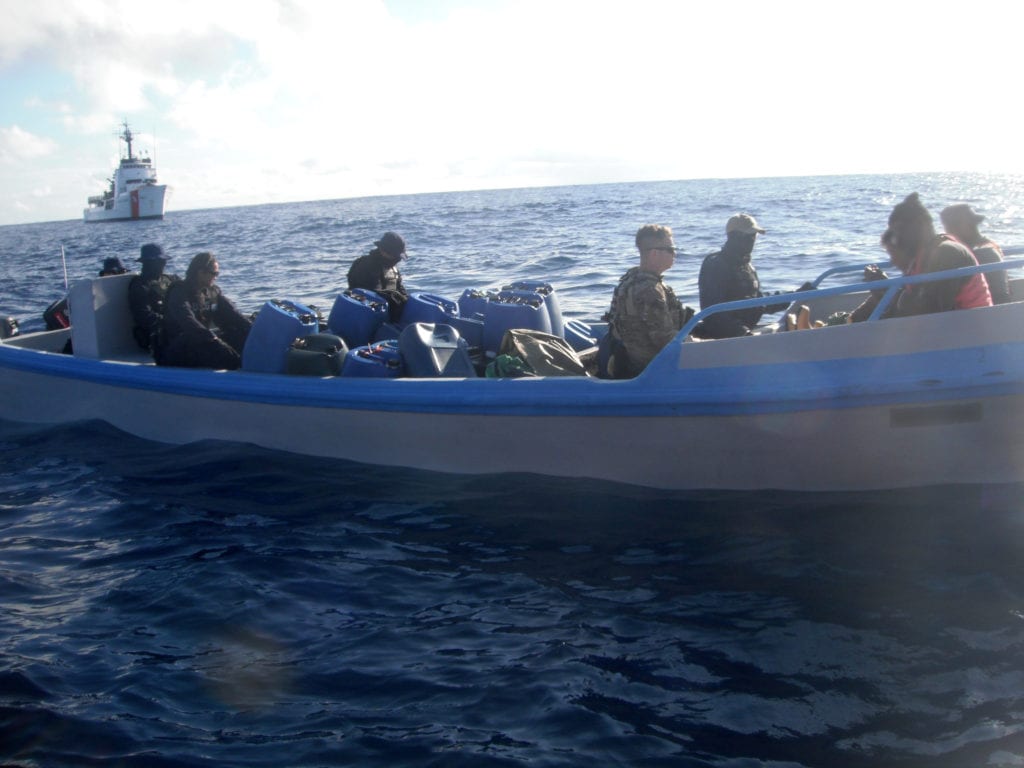
A Coast Guard Cutter Escanaba small boat crew recovered 40 bales of cocaine April 13, 2020. U.S. COAST GUARD / Coast Guard Cutter Escanaba

MIAMI — The Coast Guard stopped a drug smuggling operation April 13 in international waters northeast of Panama, the Coast Guard 7th District said in an April 23 release. 

A Coast Guard Helicopter Interdiction Tactical Squadron MH-65 Dolphin helicopter crew, forward deployed with the Coast Guard Cutter Escanaba (WMEC-907), spotted a suspect fishing vessel with five people aboard. The cutter Escanaba crew sent a small boat crew to the scene. 

The cutter Escanaba small boat crew recovered 40 bales of cocaine, and a nearby Panamanian law enforcement boat crew recovered 43 bales, taking a total approximately $60 million wholesale that would have otherwise funded transnational criminal organizations. The 40 bales recovered by the Escanaba crew were transferred to the Coast Guard Cutter Raymond Evans (WPC-1110) crew. 

“During this uncertain time, our U.S. military forces continue to aggressively interdict narcotics being smuggled in our hemisphere,” said Vice Adm. Scott Buschman, Coast Guard Atlantic Area commander. “Like the crew of the Escanaba, we will continue to protect our nation’s maritime borders, ensure our security and carry out all Coast Guard’s missions.” 

On April 1, U.S. Southern Command began enhanced counternarcotics operations in the Western Hemisphere to disrupt the flow of drugs in support of presidential national security objectives. The interdictions, including the actual boardings, are led and conducted by the members of the U.S. Coast Guard. 


General Atomics’ EMALS and AAG Support Successful Ford Flight Deck Certification

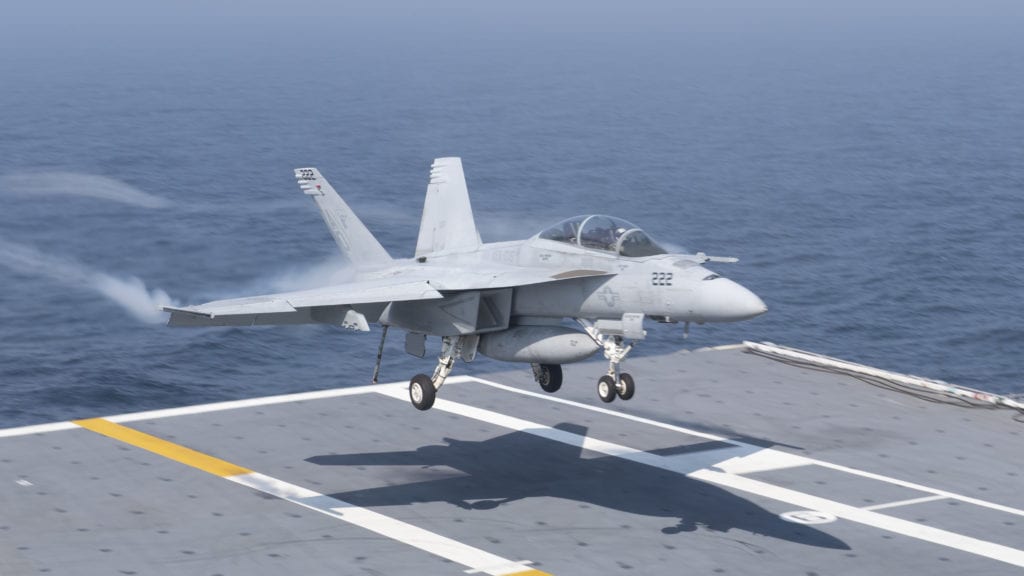
An F/A-18F Super Hornet, attached to the “Gladiators” of Strike Fighter Squadron (VFA) 106, lands on the flight deck of the aircraft carrier USS Gerald R. Ford (CVN 78) during flight operations, March 28, 2020. Ford is underway in the Atlantic Ocean conducting carrier qualifications. U.S. NAVY / Mass Communication Specialist Seaman Apprentice Sawyer Connally

SAN DIEGO — General Atomics Electromagnetic Systems (GA-EMS) announced April 23 that successful USS Gerald R. Ford (CVN 78) Flight Deck Certification (FDC) has been completed with the support of the electromagnetic aircraft launch system (EMALS) and advanced arresting gear (AAG) system. The number of aircraft to have landed and taken off from CVN 78 now totals more than 2,000. CVN 78 used fleet squadrons from Carrier Air Wing Eight, as well as pilots from Strike Fighter Squadron 106 and Carrier Airborne Early Warning Squadron 120 to obtain hundreds of sorties over a two-week period with all arrested landings and catapult launches completed safely.  

“We continue to see EMALS and AAG perform according to specifications to execute cats and traps with the objective of reaching the robust evolution rates necessary for combat,” stated Scott Forney, president of GA-EMS. “We are working closely with the Navy and CVN 78 crew to ensure operational performance is achieved. We remain extremely proud of our team, the squadrons’ pilots and the ship’s crew for all their hard work and dedication and look forward to continuing success as CVN 78 undergoes these continued at sea periods.” 

FDC is a qualification of the ship’s various aviation systems and includes the crews’ qualification to operate the numerous systems. FDC was completed March 20 following day and night launch and recovery exercises with F/A-18E/F Super Hornets. FDC is intended to qualify and prove ship and crew capabilities under operational conditions that can occur while on deployment. 

On Jan. 31, CVN 78 completed aircraft compatibility testing, a significant milestone that exhibited EMALS and AAG’s ability to launch and recover five types of aircraft in varying configurations — four of which for the first time. CVN 78 proved to accommodate the current naval air wing, including F/A-18E/F Super Hornet, E-2D Advanced Hawkeye, C-2A Greyhound, EA-18G Growler and T-45C Goshawk aircraft.  

GA-EMS is delivering EMALS and AAG for the future USS John F. Kennedy (CVN 79) and USS Enterprise (CVN 80).  


Coast Guard, Dominican Navy Interdict Migrants, Arrest Smugglers

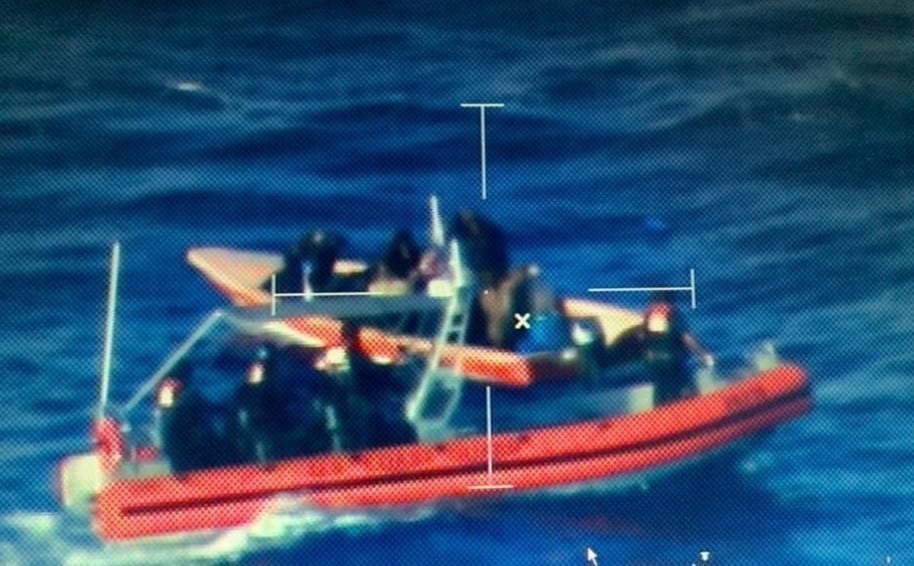
Coast Guard Cutter Joseph Doyle’s cutter boat on scene with a 25-foot illegal migrant vessel interdicted on April 20 south of Isla Saona, Dominican Republic. U.S. Coast Guard

SAN JUAN, Puerto Rico — The crew of the U.S. Coast Guard Cutter Joseph Doyle and a Dominican Republic navy vessel combined efforts on April 20 during the interdiction of an illegal migrant voyage transporting 15 migrants in waters south of Isla Saona, according to a Coast Guard 7th District release. 

The interdiction, which was part of a joint effort between the Coast Guard, the Dominican navy and U.S. Immigrations and Customs Enforcement-Homeland Security Investigations, led to Dominican authorities arresting Edgar Batista Matos and Manauris Andujar Manon, who reportedly are associated with human smuggling activities and the organization of illegal migrant voyages. 

During a patrol in the Caribbean on April 20, the crew of a Coast Guard HC-144 Ocean Sentry aircraft detected a suspect migrant vessel south of Isla Saona. While patrolling nearby waters, the cutter Joseph Doyle responded to the sighting and interdicted the 25-foot make-shift vessel that was carrying 15 migrants, 13 men and two women of Dominican nationality. Shortly thereafter, a responding Dominican Republic Navy vessel arrived on scene and the crew took custody of the migrants and towed the interdicted vessel back to the Dominican Republic. 

Following the interdiction, Dominican naval authorities informed the Coast Guard that the known smugglers were found to be among the interdicted migrants. 

“This successful interdiction and arrest of two smugglers was the result of the strong partnership and collaboration that exists between the Coast Guard and Dominican Republic navy,” said Capt. Eric King, commander of Coast Guard Sector San Juan. 

“The results achieved today, despite the challenging operational environment presented by the global COVID-19 pandemic, reflect the commitment and daily efforts carried out by both countries to protect our borders from existing maritime threats and safeguard the lives of migrants who face the danger of an uncertain and potentially perilous voyage.”  

The Joseph Doyle is a 154-foot fast-response cutter homeported in San Juan.


Senate Bill Would Fund Second Virginia-Class Sub in 2021

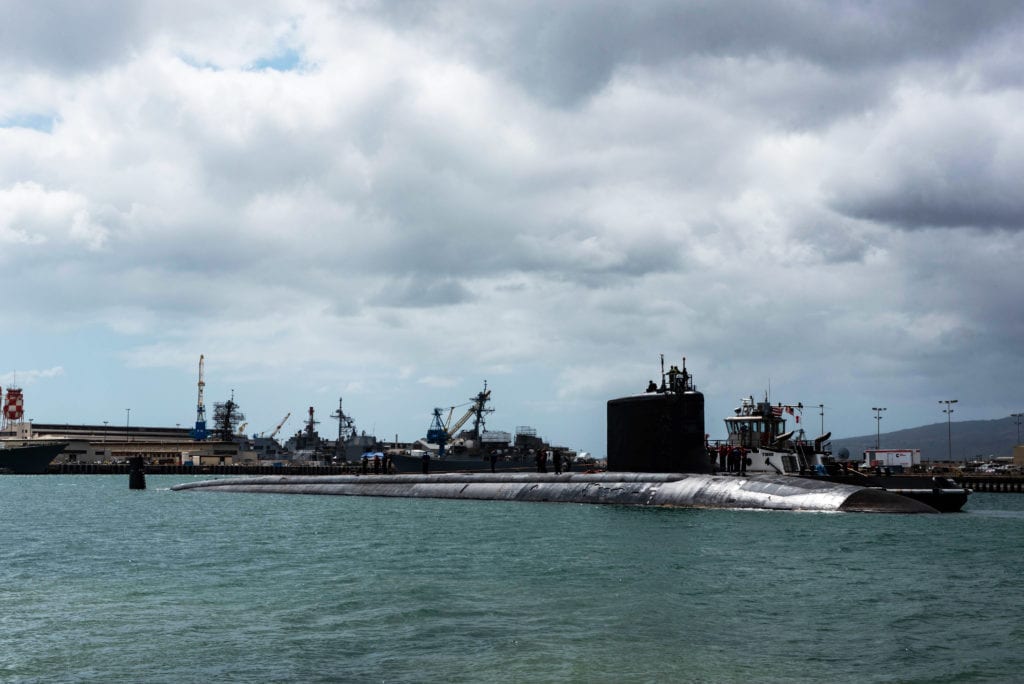
The Virginia-class fast-attack submarine USS North Carolina departs Joint Base Pearl Harbor-Hickam on March 25 for a regularly-scheduled deployment. A member of the Senate Armed Services Committee has introduced a $43 billion bill that would fund, among other things, a second Virginia-class sub in fiscal year 2021. U.S. Navy/Mass Communication Specialist 1st Class Michael B. Zingaro

ARLINGTON, Va. — A member of the Senate Armed Services Committee has introduced a $43 billion bill to strengthen U.S. forces in the Indo-Pacific to counter Chinese competition and that would fund, among other things, some of the U.S. Navy’s priorities on its unfunded list, including a second Virginia-class attack submarine. 

Sen. Tom Cotton (R-Ark.) introduced the Forging Operational Resistance to Chinese Expansion (FORCE) Act on April 22, which his office said is a “critical investment in the United States’ ability to compete with China.” 

The bill would include “$6.1 billion to regain the advantage in the Indo-Pacific region; $9.2 billion in capability increases for Great Power Competition; $11 billion for mitigating coronavirus impacts to procurement programs; $3.3 billion for mitigating coronavirus impacts to [the] defense industrial base; $1.5 billion for hospital ship recapitalization; [and] $12.0 billion to enhance national resilience and critical infrastructure.” 

The bill would provide $3.9 billion to upgrade naval lethality, a summary of the bill said, including funds for:  

  • A second fiscal 2021 Virginia-class submarine. 
  • Virginia-class submarine industrial base expansion. 
  • Subsea and seabed warfare capability for the Virginia class.   
  • Advanced procurement for the Columbia-class ballistic-missile submarine 
  • Additional Naval Strike Missiles and their launchers. 
  • Integration of the long-range air-to-surface missiles on all combat aircraft. 
  • Additional sonobuoys for anti-submarine warfare. 
  • Marine Corps modernization, including ground-based anti-ship missiles. 

The bill also would fund adding hypersonic weapons on compatible fighter aircraft and accelerating development of directed energy weapons and cyber offensive and defensive capabilities. 

Also provided in the bill would be $4.88 billion to the Navy and Marine Corps to “provide emergency aid for those programs that are most vulnerable” to mitigate the effects of the COVID-19 pandemic, including funds for shipbuilding and conversion; the Columbia-class submarine industrial base; aircraft procurement; operations and maintenance; and research, development, test and evaluation.  

Cotton’s bill also specifically provides “funding for the Navy to replace the [hospital ships] USNS Comfort and USNS Mercy with new American-built vessels. This would be an opportunity to provide American jobs and grow the American industrial base for the future,” the bill summary said. 

The summary of the bill can be found here.


Cutter Returns Home After Seizing $21.5 Million in Cocaine During Patrol

A Coast Guard Cutter Steadfast boarding team searches a suspected smuggling vessel on March 15 interdicted by the crew, resulting in 1,252 pounds of cocaine seized, worth an estimated $21.5 million, and three suspected smugglers detained. U.S. Coast Guard

ASTORIA, Ore. — The crew of the U.S. Coast Guard Cutter Steadfast returned home on April 17 to Astoria following a 65-day counter-narcotic patrol to the eastern Pacific Ocean, the Coast Guard Pacific Area reported. 

The cutter intercepted and boarded five suspected smuggling vessels, including one go-fast-style panga, while patrolling international waters off the coasts of Mexico and Central America. Steadfast’s crew apprehended three suspected smugglers and seized 1,252 pounds of cocaine worth an estimated $21.5 million. 

“I am inspired daily by the tenacity and professionalism of this crew,” said Cmdr. Dan Ursino, the Steadfast’s commanding officer. “Their resilience to remain focused, in light of the global health crisis and uncertainty back home, has been nothing short of remarkable. Knowing the importance and impact of keeping these harmful substances from reaching our streets help to keep us going.” 

On April 1, U.S. Southern Command began enhanced counter-narcotics operations in the Western Hemisphere to disrupt the flow of drugs. Numerous U.S. agencies from the Departments of Defense, Justice and Homeland Security cooperated in the effort to combat transnational organized crime. The Coast Guard, U.S. Navy, Customs and Border Protection, FBI, Drug Enforcement Administration and Immigration and Customs Enforcement, along with allied and international partner agencies, play a role in counter-drug operations.  

Steadfast also continued to participate in the Columbia River Maritime Museum’s Mini Boat Project, which connects students from local Oregon elementary schools with their peers in Japan. Students learn about the significance of ocean currents and weather while building miniature boats to send across the ocean to one another. During this patrol, Steadfast launched two boats, Boat-A-Lohti and Philbert, about 200 miles off the southern tip of Baja, Mexico. Follow along here

Commissioned in 1968, Steadfast is one of two Reliance-class cutters homeported in Astoria. Reliance-class cutters are 210-feet long, 34-feet wide and have a 1,100 long-ton displacement. The ships hold a crew of 76 and have served the nation for more than 50 years.


Pentagon Plans Testing, Screening, Manufacturing Push in COVID-19 Battle

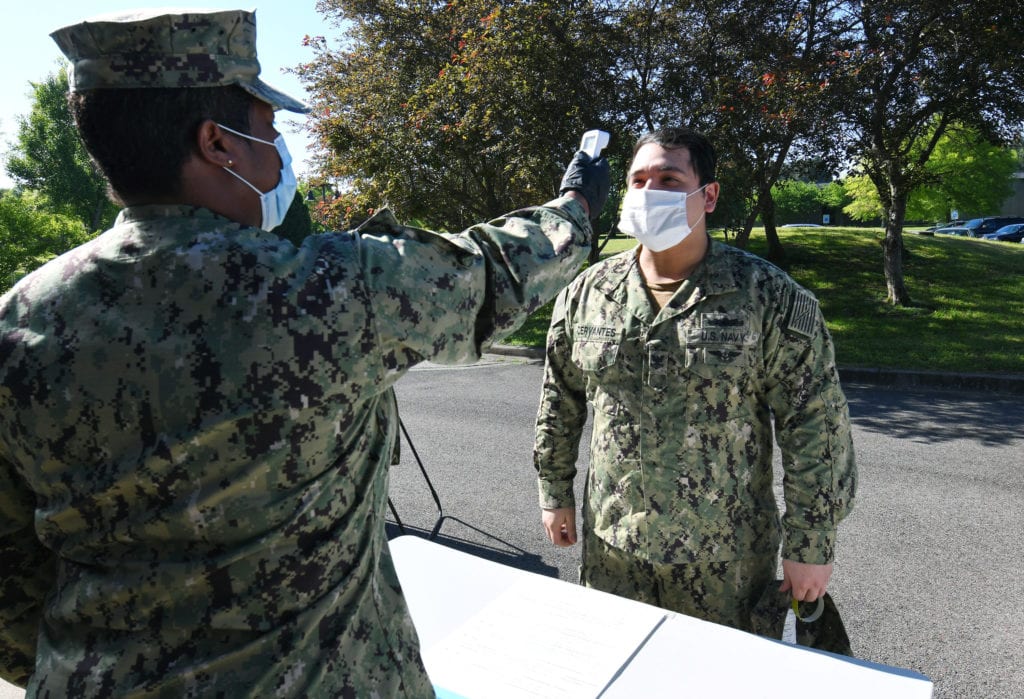
Master Chief Personnel Specialist Nikita Maher (left) uses a touchless thermometer on Personnel Specialist 2nd Class Francisco Cervantes at an entrance checkpoint of Goetsch Hall at Navy Personnel Command in Millington, Tennessee. U.S. Navy/Chief Mass Communication Specialist Michael Russell

ARLINGTON, Va. — The Defense Department is rolling out new strategies for screening the force for the novel coronavirus to halt the spread, spot those needing medical treatment early and still enable the military to fulfill its mission, according to two top Pentagon officials.

“As we learn more about the virus, we will continue to evolve our approach,” Deputy Defense Secretary David Norquist told a Pentagon press briefing that was live-streamed on April 22.

He noted that hundreds of thousands of active-duty and civilian personnel are teleworking. However, for thousands more who cannot practice social distancing because they work in constrained spaces like new recruits in training or Sailors and Marines on ships or submarines at sea, there is a new general process to screen for COVID-19.

For those groups, the first of four containment steps is screening with the use of questionnaires and thermometers to identify at-risk individuals. Next comes 14 to 21 days of quarantine, depending on a unit’s risk tolerance, to identify those who are infected but not yet showing symptoms. A third step calls for conducting swab tests and temperature checks, prior to leaving quarantine, to identify those who have since become infected but remain asymptomatic. Finally, as a unit moves to its mission, Norquist said, “we’ll keep this group together but limit its outside interaction to prevent the introduction of infection.”

“As we learn more about the virus, we will continue to evolve our approach.”

Deputy Defense Secretary David Norquist

Procedures like face coverings, hand washing, maintaining clean workspaces and continued monitoring will all still apply as units move forward while therapeutic treatments and vaccines are still being developed, he said.

COVID-19 had infected more than 802,000 people in the U.S. and had killed 44,575 as of April 21, according to the U.S. Centers for Disease Control and Prevention. The Pentagon reported on April 22 that 3,578 cases of COVID-19 have been detected among U.S. military and civilian personnel, dependents and contractors; 25 have of those have died. The U.S. Navy continues to have the largest number of cases — 1,298 — compared to 841 for the Army, 337 for the Air Force, 259 for the Marine Corps and 713 for the National Guard.

Meanwhile, under the authorities granted by the Defense Production Act, the government is moving to increase production of critical N95 masks to 39 million in the next 90 days and to 141 million over the next six months, Norquist said. The Pentagon is working with vendors to increase swab production from three million a month to 20 million, also boosting production of personal protective equipment for medical personnel, reagents for testing kits and active pharmaceutical ingredients.

As testing supplies become more prevalent, testing will be conducted through a priority-based, tiered system recently approved by Defense Secretary Mark Esper, Air Force Gen. John Hyten, the vice chairman of the Joint Chiefs of Staff, told the press briefing.

Tier 1 will focus on critical national capabilities, like strategic nuclear deterrent units. Tier 2 will focus on engaged, fielded forces around the world. Tier 3 is for forward-deployed and redeploying forces and Tier 4 includes the remainder of the military.

Hyten was asked if he thought it was unwise for the Army Corps of Engineers to continue building treatment facilities, with hundreds of beds, in big city convention centers, even as existing ones are under-used.

“For gosh sakes, no! That’s what I want to see,” he said. If the beds are all filled, that means local hospitals have been overwhelmed. “You always want to have excess capacity, not too little capacity,” he added.


Trump Authorizes Navy to Fire on Harassing Iranian Craft

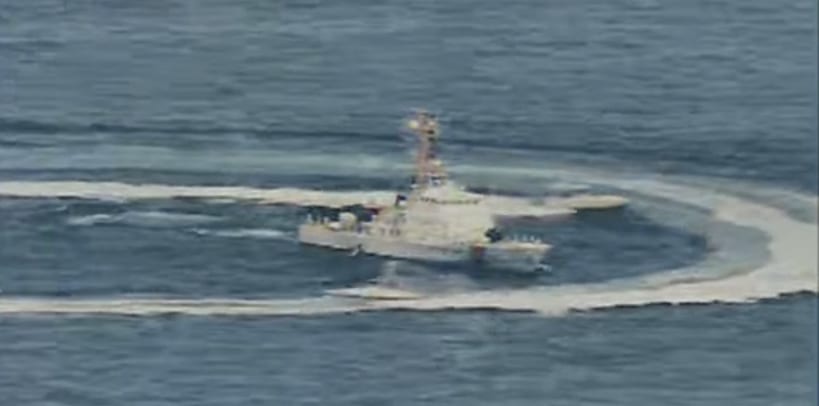
Iranian vessels harass a U.S. ship by crossing its bow and stern. U.S. forces are conducting joint interoperability operations in the U.S. 5th Fleet area of operations in the northern Persian Gulf. U.S. Navy

ARLINGTON, Va. — President Trump has authorized the U.S. Navy to fire on Iranian boats that harass American ships, following a recent episode where armed Iranian craft came dangerously close to and harassed Navy and U.S. Coast Guard vessels engaged in an exercise in the northern Persian Gulf.  

“I have instructed the United States Navy to shoot down and destroy any and all Iranian gunboats if they harass our ships at sea,” Trump said in an April 22 tweet. 

Under routine rules of engagement, U.S. ships are inherently authorized to fire in self-defense, but this new authority gives the ships’ commanders permission to fire if they are being harassed by the Iranian craft. 

“If we see a hostile act, if we see hostile intent, we have the right to respond up to and including lethal force and, if it happens in the Gulf, if it happens in any way, we will respond with overwhelming lethal force, if necessary, to defend ourselves. It’s really that simple.”

Air Force Gen. John Hyten, vice chairman of the Joint Chiefs of Staff

“On April 15, 11 Iranian Islamic Revolutionary Guard Corps Navy (IRGCN) vessels repeatedly conducted dangerous and harassing approaches of the USS Lewis B. Puller, USS Paul Hamilton, USS Firebolt, USS Sirocco, USCGC Wrangell and USCGC Maui while the U.S. vessels were conducting joint integration operations with U.S. Army AH-64E Apache attack helicopters in the international waters of the North Arabian Gulf,” the U.S. 5th Fleet said in a release. 

“The IRGCN vessels repeatedly crossed the bows and sterns of the U.S. vessels at extremely close range and high speeds, including multiple crossings of the Puller with a 50-yard closest point of approach and within 10 yards of Maui’s bow,” the release added. 

“The U.S. crews issued multiple warnings via bridge-to-bridge radio, five short blasts from the ships’ horns and long-range acoustic noise maker devices but received no response from the IRGCN. After approximately one hour, the IRGCN vessels responded to the bridge-to-bridge radio queries, then maneuvered away from the U.S. ships and opened distance between them.”  

The Iranians occasionally have used their small, fast, armed and highly maneuverable boats in swarms to harass naval and merchant ships in the Persian Gulf and last year captured merchant ships flagged in the United Kingdom and other nations. 

Many U.S. ships are armed with Mk38 25 mm chain guns and M2 .50-caliber machine guns — in addition to larger-caliber guns on some ships — for countering fast attack craft, while many helicopters based on U.S. ships are armed with Hellfire and Advanced Precision Kill Weapon System guided missiles that are effective against such craft. 

In January 2016, Iranian boats seized two U.S. Navy riverine command boats and detained the crews after the U.S. boats strayed into Iranian waters off Farsi Island in the Persian Gulf. The crews and boats later were released. 

“The IRGCN’s dangerous and provocative actions increased the risk of miscalculation and collision, were not in accordance with the internationally recognized Convention on the International Regulations for Preventing Collisions at Sea ‘rules of the road’ or internationally recognized maritime customs and were not in accordance with the obligation under international law to act with due regard for the safety of other vessels in the area,” according to the 5th Fleet release. 

Questioned at an April 22 Pentagon news conference, Deputy Defense Secretary David L. Norquist said that “all of our ships retain the right of self-defense and people need to very careful in their interactions to understand the inherent right of self-defense.” 

“Every capability that we deploy — every ship that deploys into harm’s way — has the inherent right of self-defense, as the secretary just described,” said Air Force Gen. John Hyten, vice chairman of the Joint Chiefs of Staff, who also spoke at the news conference. 

“What that means: if we see a hostile act, if we see hostile intent, we have the right to respond up to and including lethal force and, if it happens in the Gulf, if it happens in any way, we will respond with overwhelming lethal force, if necessary, to defend ourselves. It’s really that simple. Nobody should doubt that the commanders have the authority right now to respond to any hostile act or hostile intent.” 

“I like that the president warned an adversary,” Hyten said. “That’s what he’s doing — he’s providing a warning. ‘If you want to go down that path, we will come, and we will come large, so don’t go down that path.’ He’s saying it in clear, certain terms. We understand that direction, and every commander that is deployed has the ability to execute that.” 

Norquist said he thought the intent of the president’s tweet was clear. “When you talk about harassment, you’re talking about actions designed to provoke, actions designed to threaten. It’s a very clear message that the Iranians should understand.” 

Hyten added: “You can’t let a fast boat get into a position where they can threaten your ship. We have very specific guidance on how we can use lethal force.”


Bollinger Delivers Articulated Tug and Barge Unit to Crowley Fuels

LOCKPORT, La. — Bollinger Shipyards Lockport delivered an articulated tug-barge (ATB) unit capable of transporting multiple clean petroleum products in the Alaska market to Crowley Fuels, the Alaska-based petroleum transportation, distribution and sales unit of Crowley Maritime Corp.   

Crowley Shipping provided vessel construction management services in Bollinger Marine Fabricators, Bollinger’s Amelia, Louisiana, facility from the final design phase through delivery. The company’s Seattle-based naval architecture and marine engineering firm, Jensen Maritime, provided the functional design. Bollinger’s engineering team provided the integration, detail design and construction package.   

“On behalf of our skilled workforce, along with a strong operational support group, the Bollinger team is proud to have built this ATB for Crowley Fuels,” said Ben Bordelon, Bollinger Shipyards president and CEO. “Contracts like this to build Jones Act-classed ATB units, create and protect many jobs for U.S. mariners, shipyards and ancillary vendors, and that strengthens our local and regional industrial base.” 

The Alaska-class ATB unit consists of one twin Z-Drive, 7,000-horsepower ocean tugboat paired with an ocean barge. 

The ATB was designed and built to meet ice class and polar code requirements, which include increased structural framing and shell plating and extended zero discharge endurance. The double-hulled design also features a barge form factor to achieve high-cargo capacity on minimal draft.  

The tug is fitted with two GE 8L250 main engines that meet U.S. Environmental Protection Agency’s Tier 4 emissions standards. The generators on the tug and barge meet EPA Tier 3 and IMO Tier II emissions standards. In addition, a closed loop, freshwater ballast system will eliminate the need to discharge tug ballast water into the sea.