Coast Guard Launches Operation River Wall to Control Border Along Rio Grande
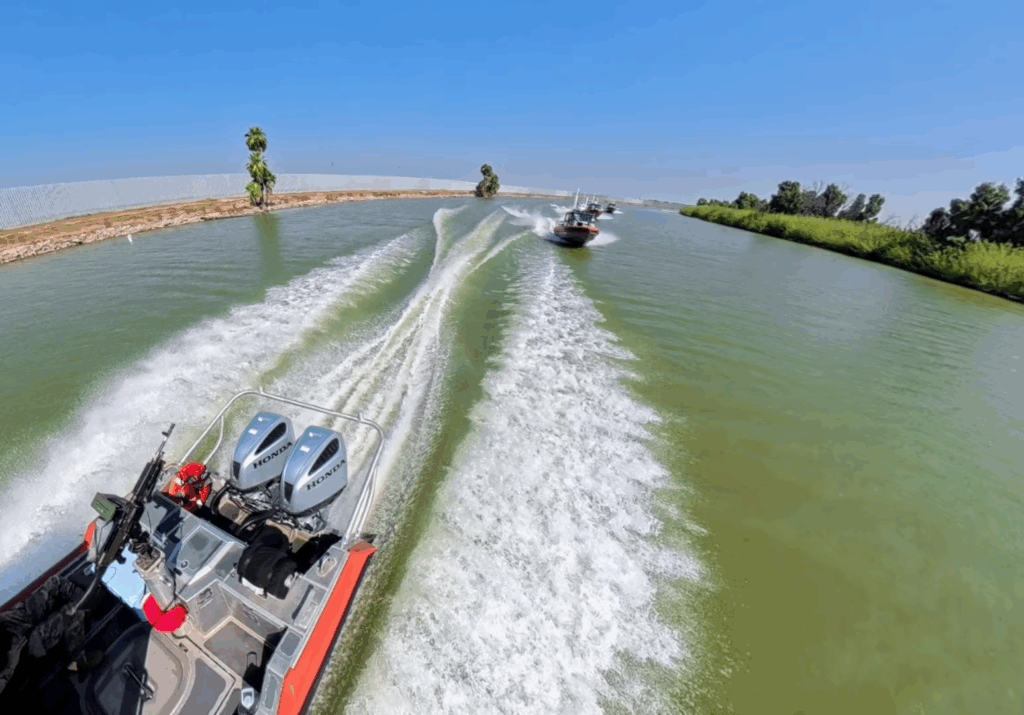
Coast Guard crews patrol the Rio Grande near Mission, Texas Oct. 18, 2025. The Coast Guard is taking immediate and decisive action to control, secure, and defend U.S. borders and maritime approaches, as well as facilitate commerce vital to economic prosperity and strategic mobility and successfully respond to crises or contingencies that may come with little or no warning. (U.S. Coast Guard video)
From Headquarters, U.S. Coast Guard, Oct. 20, 2025
WASHINGTON – The Coast Guard announced today the deployment of additional forces to the Rio Grande River in eastern Texas, starting on Oct. 9, 2025, to ensure operational control of the border where the President has declared a national emergency. This surge operation – known as Operation River Wall – will bolster ongoing Coast Guard efforts to control, secure and defend approximately 260 miles of the Rio Grande River that makes up the U.S. border there. Leveraging its unmatched expertise, authorities and capabilities, the Coast Guard will deter, interdict, and defeat illegal immigration, drug smuggling, and other threats to our communities.
“U.S. Coast Guard is the best in the world at tactical boat operations and maritime interdiction at sea, along our coasts, and in riverine environments,” said Adm. Kevin E. Lunday, Acting Commandant of the Coast Guard. “Through Operation River Wall, the Coast Guard is controlling the U.S. southern border along the Rio Grande River in eastern Texas.”
As part of this mobilization, the Coast Guard is deploying additional response boats, shallow watercraft, command and control assets, and tactical teams in support of national security objectives. This represents an unprecedented commitment of Coast Guard personnel and resources to the Rio Grande region.
The Coast Guard is leading operations, working with U.S. Border Patrol and the Department of War under U.S. Northern Command, to control, secure, and defend the U.S. border along the Rio Grande River in Cameron and Hidalgo counties in eastern Texas, extending to the sea.
HII Hosts HD Hyundai Heavy Industries Leaders at Ingalls Shipbuilding
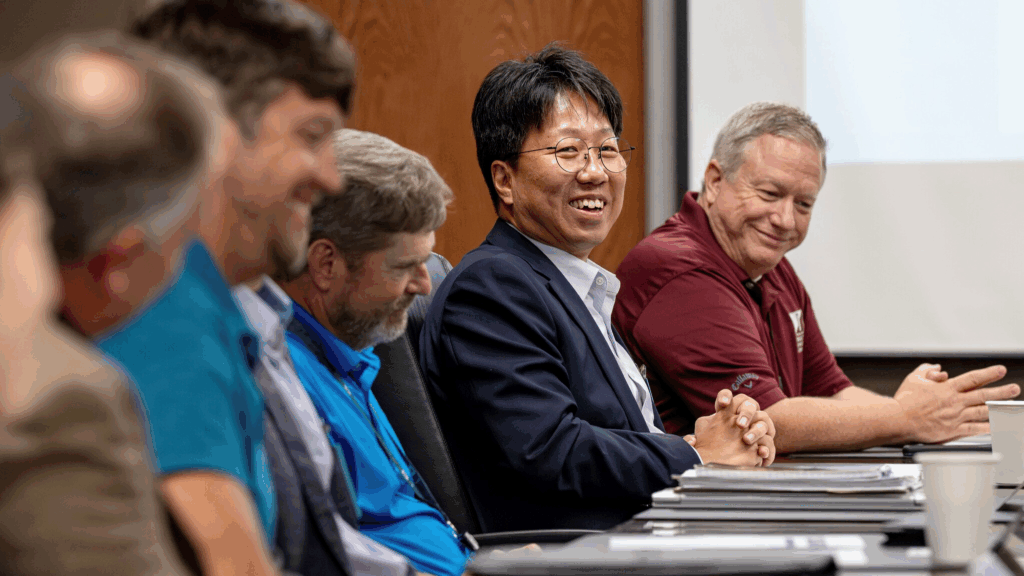
PASCAGOULA, Miss., Oct. 20, 2025 (GLOBE NEWSWIRE) — HII (NYSE: HII) hosted leaders from HD Hyundai Heavy Industries (HHI) at the company’s Ingalls Shipbuilding division this month for a three-day engagement to advance joint goals of the memorandum of understanding signed by the two companies in April. During the visit, leaders from HII and HHI exchanged insights on shipbuilding technology and manufacturing processes, discussing both commercial and military shipbuilding opportunities.
“As our partnership with HHI continues to evolve, this visit allowed us to demonstrate the expertise of our Ingalls shipbuilders and the significant investment made in technology in our shipyard over the last several years,” Ingalls Shipbuilding President Brian Blanchette said. “I look forward to seeing how the ideas generated during this visit will develop in the coming months to create additional opportunities to increase efficiency and accelerate the delivery of critical ships for the U.S. Navy’s fleet.”
During the visit, the group toured the shipyard, observed the state-of-the-art robotic technologies and other modern production capabilities being utilized by Ingalls. This particular visit provided first-hand insight into how innovation is driving greater efficiency and consistency in shipbuilding.
“This visit has been a great opportunity for us to see how HII has been advancing its expertise in shipbuilding, and we look forward to discussing insights that will further deepen our collaboration,” said Sangbong Lee, senior vice president at HHI. “We have high expectations for how our partnership will evolve and hope to share innovative approaches that will deliver significant value to our customers.”
Joining the visit to further evaluate future joint maritime opportunities was Eric Chewning, HII’s executive vice president of maritime systems and corporate strategy. Focused on expansion of domestic and international partnerships he said, “leveraging advanced technologies in support of our customers cannot happen fast enough and this partnership is a powerful step in the right direction to not only enhance throughput at Ingalls, but to strengthen and expand the U.S. shipbuilding industrial base.”
The collective efforts applied under the strategic partnership aim to leverage the combined expertise and resources of both companies to advance technological innovation, maximize production efficiency, and strengthen the global defense industry. Specializing in multiple classes of ships, HII and HHI are two of the world’s leading shipbuilders.
Coast Guard Recapitalizes Command and Control Aircraft
From Headquarters, U.S. Coast Guard, Oct. 18, 2025
WASHINGTON — The U.S. Coast Guard executed a planned and critical recapitalization of its long-range command and control aircraft Oct. 17.
These aircraft are required to provide official travel for the secretary of homeland security, deputy secretary homeland security, commandant of the Coast Guard, vice commandant and Atlantic and Pacific commanders as specified by the Office of Management and Budget (OMB) and Department of Homeland Security policy.
“The timing of this investment underscores the Coast Guard’s vital need to modernize its command and control capabilities to meet today’s rapidly evolving operational demands. As maritime activity increases and national security challenges grow more complex, maintaining reliable air mobility is essential to ensuring continuity of operations and mission success,” said Adm. Kevin Lunday, acting commandant.
This purchase replaces planes that were as much as 20 years old and experiencing several unplanned maintenance issues. Since January 2025, U.S. Coast Guard long-range command and control aircraft experienced 30 days of unplanned maintenance, with six missions requiring unplanned cancellation.
“Modernizing the Coast Guard’s aging and obsolete aviation fleet is essential to ensuring our ability to successfully conduct national security missions. The purchase of these aircraft will meet our operational requirements for safe, reliable, on-demand military transport with integrated and secure command and control capabilities,” said Lunday.
The Service has been operating command and control aircraft for over 65 years, reflecting a long-standing commitment to maintaining airborne command capability as a cornerstone of national maritime safety and security. Robust command and control capabilities, including top secret/secure compartmented information communications, are required for senior leaders to coordinate multi-agency operations across a vast international area of responsibility. The unique command and control capabilities provided by the long-range command and control aircraft enable real-time communication, situational awareness, operational continuity and the ability to direct assets to where they are needed.
In accordance with guidance from the White House and OMB, including OMB Circular A-126, all travel by agency heads qualifies as required use travel. As with the secretaries of state and war, the attorney general and directors of the Federal Bureau of Investigation and Central Intelligence Agency, the White House determined in March 2004 the duties of the secretary of homeland security were such that they require instantaneous secure communications with the White House, the Department of Homeland Security and other agencies. This guidance also determined that in an emergency, the secretary of homeland security must be able to return to Washington, D.C., or proceed to other destinations on an expedited basis.
“It’s incredibly disappointing that politicians and the media are playing politics with the funding of the Coast Guard,” said Mr. Sean Plankey, senior advisor to the secretary for the Coast Guard. “This is a matter of safety and mission readiness. It’s well known that senior military officials and cabinet members need secure command and control and rapid long-range mobility. Flippant comments are great for clicks and fundraising emails, but don’t reflect the reality of protecting the American people 24 hours a day, seven days a week and 365 days a year.”
President Donald Trump has provided the U.S. Coast Guard unprecedented support through the One Big Beautiful Bill Act to enable the Coast Guard to be the finest maritime fighting force in service to the nation. The Coast Guard remains committed to investing in the most capable and cost-effective equipment for our service men and women. These acquisitions are in line with the policies and requirements for all military combatant commanders, department and service secretaries.
GA-ASI Selected to Support U.S. Navy CCA Design Effort
From General Atomics Aeronautical Systems Inc.
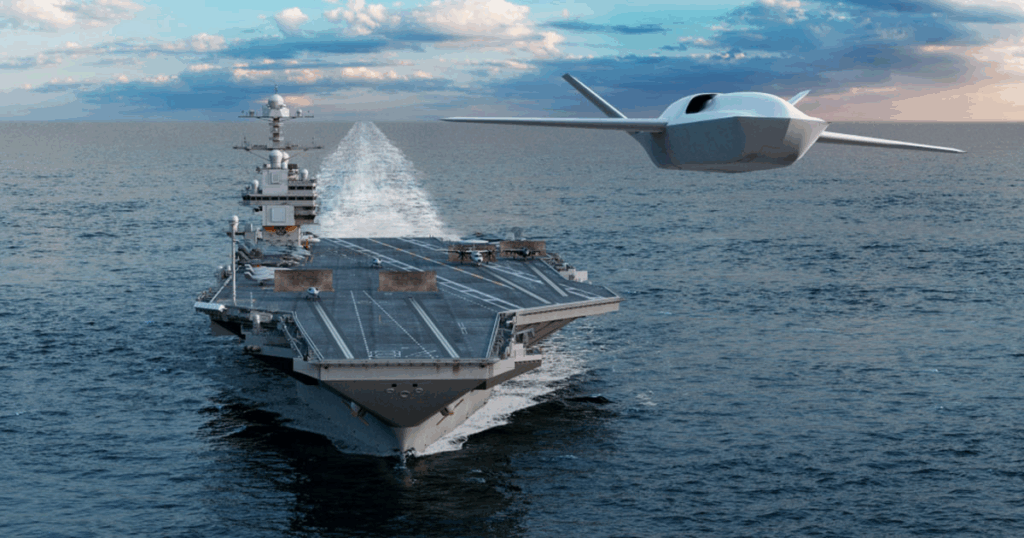
SAN DIEGO – 17 October 2025 – General Atomics Aeronautical Systems, Inc. (GA-ASI) has been contracted by the U.S. Navy to develop conceptual designs for a Collaborative Combat Aircraft (CCA) to support the carrier air wing of tomorrow.
GA-ASI was selected to work on Navy CCA designs emphasizing a modular approach to platform selection, capable of being rapidly reconfigured and upgraded to meet changing mission requirements, including operations on and from aircraft carriers. GA-ASI’s approach supports the Navy’s revolutionary acquisition strategy of smaller, frequent purchases that enable rapid technology insertion rather than traditional long-lifecycle programs
GA-ASI’s Navy CCA contract follows its selection to design and fly the U.S. Air Force’s first CCA, the YFQ-42A. A production-representative unmanned fighter, YFQ-42A was the first Air Force CCA to begin flight testing in August, another historic achievement for the company.
“We’re honored by the vote of confidence from the U.S. Navy and we’re eager to put what we’ve built to work for the future fleet,” said GA-ASI President David R. Alexander. “No one has more experience than we do with unmanned combat aircraft and we’re leveraging that to help the Navy get this capability onto the flight deck fast.”
CCAs are highly capable, semi-autonomous jet fighters that complement and enhance traditional, human-piloted combat aircraft. Produced in high quantities at comparatively low cost, they let commanders shift risk away from human flight crews, enhance the sensing and other capabilities of legacy aircraft formations, increase lethality of the air wing, and maximize operational flexibility across the board.
GA-ASI has configured all its unmanned combat air vehicles (UCAV) to be AMS-GRA compliant, including XQ-67A, YFQ-42A and MQ-20 Avenger®. GA-ASI rapidly reconfigured and upgraded its modular XQ-67A Off-Board Sensing Station, an autonomous-capable unmanned jet built under contract from the Air Force Research Laboratory that achieved first flight in 2024. GA-ASI has pioneered unmanned jet operations for more than 17 years, beginning with the MQ-20 Avenger in 2008, and has extensive experience working with the U.S. Navy and other nations on carrier-based unmanned aircraft operations.
The Navy’s CCA design will emphasize seamless coordination among manned fighters, uncrewed vehicles and support platforms; accommodate elevated risk profiles and reduce risk to crewed platforms; support and enhance 4th- and 5th-generation aircraft and complement 6th-generation aircraft; and maximize operational flexibility, cost efficiency and mission effectiveness.
At the UK’s Farnborough Air Show in 2024, GA-ASI announced its company-developed concept for ship-based CCA operations, codenamed Gambit 5. GA-ASI’s Gambit Series envisions multiple CCA variants rapidly reconfigured from a common Gambit Core, enabling substantial commonality for rapid and affordable production at scale.
GA-ASI has recorded numerous recent aviation milestones with its aircraft at sea. In 2023, the short takeoff and landing demonstrator known as Mojave launched from and landed aboard the British aircraft carrier HMS Prince of Wales. In 2024, Mojave took off from the South Korean amphibious assault ship Dokdo and flew to a naval base ashore.
GA-ASI has developed more than two dozen different types of unmanned aircraft and delivered more than 1,200 units to customers, building more than 100 aircraft per year at its 5 million-square-foot manufacturing facility in Poway, Calif. GA-ASI aircraft have amassed 9 million total flight hours and more than 50 GA-ASI aircraft are aloft around the world every minute of every day.
Joint Task Force Established to Lead SOUTHCOM Counter-Narcotics Operations
From U.S. Southern Command, Oct. 10, 2025
MIAMI, Fla. – U.S. Southern Command (SOUTHCOM) announced the establishment of a new Joint Task Force (JTF) under II Marine Expeditionary Force (II MEF) today to synchronize and augment counter-narcotics efforts across the Western Hemisphere.
The JTF will integrate the expeditionary capabilities of II MEF with Joint Force and U.S. interagency partners, represented by the Homeland Security Task Force.
“Transnational criminal organizations threaten the security, prosperity, and health of our hemisphere,” said Adm. Alvin Holsey, Commander, SOUTHCOM. “By forming a JTF around II MEF headquarters, we enhance our ability to detect, disrupt, and dismantle illicit trafficking networks faster and at greater depth – together with our U.S. and partner-nation counterparts.”
Key objectives of the new JTF include:
Identifying narcotics trafficking patterns to interdict illegal shipments of narcotics before they reach the U.S. and partner-nation territories using intelligence, surveillance, and reconnaissance aircraft.
Expanding real-time intelligence fusion among U.S. military, federal law enforcement, and partner-nation agencies.
Conducting joint training to improve interoperability among U.S. military services and increase rapid-response posture.
Enhancing partner-nation counter narcotics operations capacity through advisory teams and combined operations.
“Our team is trained, equipped, and ready to lead this Joint Task Force,” said Lt. Gen. Calvert Worth, Commanding General, II MEF and designated JTF Commander. “This is principally a maritime effort, and our team will leverage maritime patrols, aerial surveillance, precision interdictions, and intelligence sharing to counter illicit traffic, uphold the rule of law, and ultimately better protect vulnerable communities here at home.”
The JTF will report directly to SOUTHCOM. Its creation underscores SOUTHCOM’s commitment to a whole-of-government, multinational approach to defeat and dismantle criminal networks that exploit our shared borders and maritime domains.
Updates will be released as they become available.
NATO’s Biggest Naval Exercise Proves Undetectable Ship-to-Ship Laser Communication
Astrolight’s POLARIS laser communication terminal (Source: NATO DIANA)
At NATO’s largest unmanned maritime exercise, Astrolight’s POLARIS laser communication terminal kept a jam-proof ship-to-ship link through rain and fog over horizon-limited distances, proving a secure, undetectable solution for radio-silent, GPS-denied environments.
October 17, 2025. Lithuanian space and defense tech company Astrolight has successfully demonstrated undetectable, unjammable, and high-bandwidth laser-based ship-to-ship communication with its POLARIS terminal during REPMUS’25, NATO’s largest unmanned maritime exercise recently.
During the REPMUS (Robotic Experimentation and Prototyping using Maritime Uncrewed Systems)/Dynamic Messenger mission, hosted by the Portuguese Navy, POLARIS laser terminals maintained a stable, jam-proof horizon-limited laser-based link between two vessels: NRP Dom Francisco de Almeida and NRP Dom Carlos I. During testing, the link wasn’t detected by a single sensor of other participating ships, drones, and land assets.
“With persistent and rising GPS jamming attacks in NATO territories, we needed to test it in real-life conditions as soon as possible. Exercise results showed that our laser technology is a reliable and operable alternative to radio frequency-based communication – now it’s time to scale,” said Dalius Petrulionis, CTO and co-founder of Astrolight, who led POLARIS’ testing at sea.
Astrolight’s terminals also transmitted gigabytes of data at latencies and speeds that allow for more than 10 concurrent, real-time HD video streams, even through rain and fog, during the day and night.
“Astrolight team spent two weeks living and working with the Portuguese Navy aboard two of their ship fleets, installing their POLARIS laser terminals. They established undetectable ship-to-ship laser communications, exceeding their initial targets by 200%, and proving that first-time experiments can go better than planned when the technology is well-developed,” NATO Defense Innovation Accelerator for the North Atlantic (DIANA) shared on its socials.
Jamming is a serious problem at sea because it can distort satellite navigation, confuse radar and ship-tracking displays, and interrupt radio and satellite communications. In such cases, crews switch to less secure backup methods like noisy radio or signal lamps that increase a ship’s electromagnetic signature and make it easier to detect.
“Participating in REPMUS, NATO’s largest naval exercise, marks an important milestone for innovators within the NATO DIANA programme. It is the perfect opportunity for these companies to demonstrate the value their solutions can provide in an operational context, while also making the most of end-user insights and feedback as they move closer to adoption and deployment. We were proud to see six different DIANA innovators participating this year, including Astrolight, and we are confident that they will all rise to the challenge. Their technologies exemplify the kind of innovation DIANA was created to support – cutting-edge technologies with real operational potential, positioned to deliver real-world impact,” said James Appathurai, Managing Director at NATO DIANA.
The demonstration of Astrolight’s POLARIS in Portugal builds on prior tests with the Lithuanian Navy.
NATO’s REPMUS/Dynamic Messenger exercise combines REPMUS, the top event for maritime robotics and unmanned tech, and Dynamic Messenger, a program for testing innovative naval systems. They bring together NATO Allies, partners, academia, and industry experts, and provide a realistic setting to evaluate new maritime capabilities and promote their integration into NATO operations.
“Every technological breakthrough was once an innovation in testing. Running ours alongside NATO in a real, tactical setting proves that we already have top-tier defense tech. The REPMUS/Dynamic Messenger exercise is an important milestone on our path to delivering resilient, jam-resistant communications to NATO’s Navy in these turbulent times for national security,” concluded Dalius Petrulionis.
Northrop Grumman Delivers First Airborne Laser Mine Detection System Pod to Korea
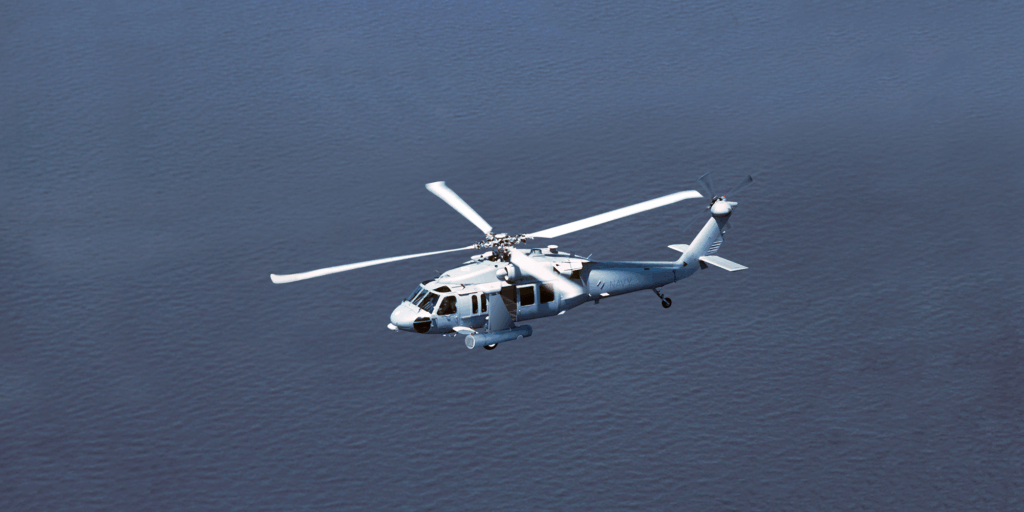
Northrop Grumman in collaboration with Korea Aerospace Industries delivers the first ALMDS pod for the Republic of Korea’s MCH-1 helicopter. (Photo Credit: Korea Aerospace Industries)
From Northrop Grumman, Oct. 15, 2025
MELBOURNE, Fla. – Oct. 15, 2025 – Northrop Grumman Corporation (NYSE: NOC) has delivered the first Airborne Laser Mine Detection System (ALMDS) sensor pod to the Republic of Korea, furthering the country’s advanced mine detection solutions.
Northrop Grumman was awarded a contract by Korea Aerospace Industries (KAI) in 2023 to supply cutting-edge ALMDS technology and comprehensive technical support for the engineering, manufacturing and design phase of the Republic of Korea’s Korean Mine Countermeasures Helicopter (KMCH) program.
ALMDS is a proven and effective capability that provides rapid detection and classification of mines in coastal waters and is operated today by the U.S. Navy and the Japan Maritime Self-Defense Force.
ALMDS is capable of untethered day or night operations, allowing it to attain high area search rates, and provide users accurate target geolocation to support the neutralization of detected mines from a variety of helicopter platforms.
Janice Zilch, vice president, multi-domain command and control programs, Northrop Grumman: “ALMDS exemplifies Northrop Grumman’s ability to deliver trusted technology for critical missions, consistently performing where it matters most. Our collaboration with KAI shows our commitment to advancing defense capabilities together with Korean industry and delivering vital capabilities, ensuring the safety and security of our allies.”
Details:
Northrop Grumman’s AN/AES-1 ALMDS is manufactured in the United States and detects, classifies and locates floating and near-surface moored mines. Northrop Grumman has delivered 24 ALMDS units to the U.S. Navy and four units to the Japan Maritime Self-Defense Force, demonstrating Northrop Grumman’s leadership in discriminating technology as a cutting-edge solution for a complex challenge.
Northrop Grumman is a leading global aerospace and defense technology company. Our pioneering solutions equip our customers with the capabilities they need to connect and protect the world, and push the boundaries of human exploration across the universe. Driven by a shared purpose to solve our customers’ toughest problems, our employees define possible every day.
Coast Guard Seizes 100,000 Pounds of Cocaine Through Operation Pacific Viper
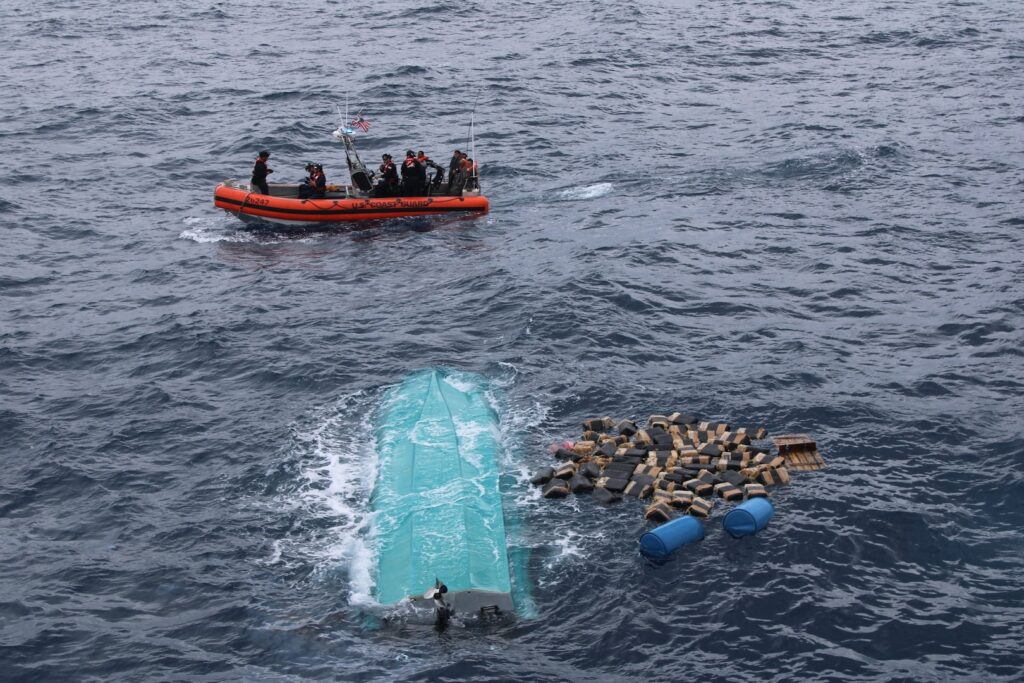
The crew of the U.S. Coast Guard Cutter Seneca (WMEC 906) recovers bales of cocaine after a suspected drug smuggling vessel capsized in the Pacific Ocean, Sept. 17, 2025. Seneca’s crew worked alongside interagency partners to interdict illicit narcotics in the international waters in the Eastern Pacific Ocean. (U.S. Coast Guard photo)
WASHINGTON – The U.S. Coast Guard announced Tuesday it has seized more than 100,000 pounds of cocaine in the Eastern Pacific Ocean since launching Operation Pacific Viper in early August, averaging over 1,600 pounds interdicted daily.
These drug seizures, and the apprehension of 86 individuals suspected of narco-trafficking, were the result of 34 interdictions since early August.
Through Operation Pacific Viper, the Coast Guard is accelerating counter-drug operations in the Eastern Pacific Ocean, where significant transport of illicit narcotics continues from Central and South America. In coordination with international and interagency partners, the Coast Guard is surging additional assets — cutters, aircraft and tactical teams — to interdict, seize and disrupt transshipments of cocaine and other bulk illicit drugs. Operation Pacific Viper continues the Coast Guard’s efforts to protect the Homeland, counter narco-terrorism and disrupt Foreign Terrorist Organizations and Transnational Criminal Organizations and cartels seeking to produce and traffic illicit drugs into the United States.
“The Coast Guard’s seizure of over 100,000 pounds of cocaine, in such a short timeframe, is a remarkable achievement,” said Rear Adm. Jeffrey Novak, deputy commander of U.S. Coast Guard Pacific Area. “When we say the Coast Guard is accelerating counter-narcotics operations, we mean it. Alongside our partners and allies, our maritime fighting force is scouring drug smuggling routes in the Eastern Pacific and dismantling narco-terrorist networks. We are complementing the Coast Guard’s unique law enforcement authorities with cutting-edge capabilities to stop the flow of deadly drugs that threaten U.S. communities. As we mark our interdiction of 100,000 pounds, we are already working towards the next milestone.”
Detecting and interdicting narco-terrorism on the high seas involves significant interagency and international coordination. U.S. Southern Command’s Joint Interagency Task Force-South, based in Key West, Florida, detects and monitors both aerial and maritime transit of illegal drugs. Once interdiction becomes imminent, the law enforcement phase of the operation begins, and control of the operation shifts to the U.S. Coast Guard throughout the interdiction and apprehension. Interdictions in the Eastern Pacific Ocean are performed by members of the U.S. Coast Guard under the authority and control of the Coast Guard’s Southwest District, headquartered in Alameda, California.
The Coast Guard is the United States’ lead federal agency for maritime drug interdiction. We are part of the Department of Homeland Security team protecting our nation and are at all times a military service and part of the joint force defending it.
Sev1Tech Awarded $49M U.S. Navy SeaPort NxG Contract
Support for NIWC Atlantic’s Expeditionary Enterprise Systems and Services (E2S2) Divisions will enable IT modernization, system efficiency and force readiness
WOODBRIDGE, Va., October 15, 2025 – Sev1Tech, a leader in providing information
technology (IT), engineering, program management, C5ISR and cybersecurity systems
integration and support services, was awarded a $49 million contract under SeaPort NxG by the U.S. Navy’s Naval Information Warfare Center Atlantic.
Sev1Tech will provide full system lifecycle support including cyber engineering, network operations and security support services for NIWC Atlantic’s Expeditionary Enterprise Systems and Services (E2S2) Division.
NIWC Atlantic delivers integrated information warfare solutions across all warfighting domains, safeguarding national security and empowering the Fleet and warfighter to succeed in today’s dynamic information warfare battlespace.
Sev1Tech’s Maritime Division will provide C4ISR, Cyber and IT systems and engineering
services to meet the information warfare needs of the U.S. Marine Corps. Sev1Tech will support the rapid development, delivery and operations of critical cloud and local infrastructure services, manpower systems, logistic and network implementation, monitoring, and sensor-based services to Garrison and forward-deployed units. These capabilities will significantly enhance warfighter operational readiness, ensuring they have the advanced technology and support necessary to maintain information superiority and achieve mission success.
“Sev1Tech has proudly supported NIWC for over 20 years with reliable, mission-ready
solutions,” said Joe Re, Maritime Division General Manager at Sev1Tech. “The cyber-secure
systems and networks we support will enable naval information warfare superiority and drive modernization of enterprise infrastructure, cloud architectures and application migration across expeditionary systems and services.”
Expanding Sev1Tech’s footprint in Charleston, South Carolina, the contract will equip NIWC Atlantic with a strategic advantage in challenging CONUS and OCONUS mission environments. The contract includes one base year with four option years.
Royal Navy’s newest submarine goes under water for the first time
From Andrew McDowell, BAE Systems, Oct. 13, 2025
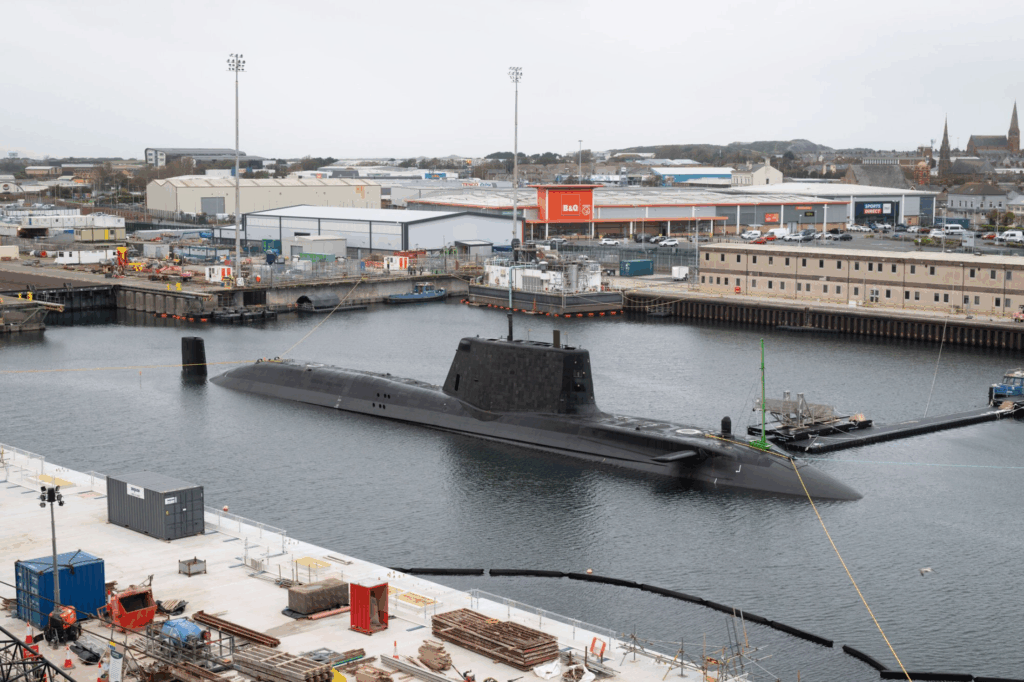
BARROW, Cumbria, United Kingdom — The UK’s newest nuclear submarine has successfully submerged for the first time at BAE Systems in Barrow, Cumbria.
The Royal Navy crew achieved the major milestone as part of HMS Agamemnon’s ‘trim dive’, a three-day period of testing in the town’s Devonshire Dock to prove the 7,400-tonne, 97-metre-long attack vessel’s stability and safety.
The process, which comes shortly after King Charles III officially commissioned the Astute class submarine into the Royal Navy, is a key moment in the lead up to its departure from Barrow to join her sister boats in the fleet, based at His Majesty’s Naval Base, Clyde.
“This trim dive is the culmination of months of hard work. I’d like to thank all teams involved for their commitment and professionalism,” said Pete Tumelty, Astute Programme Director, BAE Systems’ Submarines business. “We’re incredibly proud of the contribution we’re making to the nation’s security and Barrow’s long and distinguished heritage as the home of UK submarine design and build.”
“The trim and basin dive is a key step in the commissioning of HMS Agamemnon. This period enables us to set the boat’s internal weight, prove her water-tight integrity, test sensors and put some of our systems through their paces ahead of sailing for the first time,” said Commander David ‘Bing’ Crosby, HMS Agamemnon commanding officer. “It takes a great deal of planning and preparation to achieve this key step and all involved should be very proud of the part they have played.”
Alongside the build of seven Astute class submarines – of which HMS Agamemnon is the sixth – BAE Systems is also constructing four Dreadnought class boats in partnership with the wider Defence Nuclear Enterprise.
The Dreadnought vessels, due to enter service from the early 2030s, are the replacement for the Vanguard-class submarines, which currently deliver the Continuous At Sea Deterrent (CASD) for the Royal Navy. The critical role underpins the nation’s defence as the ultimate security guarantee and sees at least one of the boats deployed in an unknown location at sea every minute of every day.
“The successful completion of HMS Agamemnon’s trim dive marks a pivotal milestone in our mission to safely deliver available and capable submarines to the Royal Navy in defence of our nation,” said Henry Musgrave, Head of Astute Delivery Team, Submarine Delivery Agency. “This achievement reflects the exceptional collaboration between the SDA and our partners across the Defence Nuclear Enterprise, demonstrating our unwavering commitment to supporting the UK’s nuclear deterrent as a national endeavor.”
Design work is also continuing on the future nuclear-powered AUKUS attack submarines as part of an agreement between the UK, the US and Australia.
BAE Systems has grown its submarines workforce from 10,700 in 2023 to 15,000 today to support the healthy order book and it is expected to reach 17,000 in the coming years.