USS Mustin Returns to Forward-Deployed Naval Forces in Yokosuka
From Chief Mass Communication Specialist Taylor DiMartino, Commander, Destroyer Squadron 15 Public Affairs, March 23, 2026
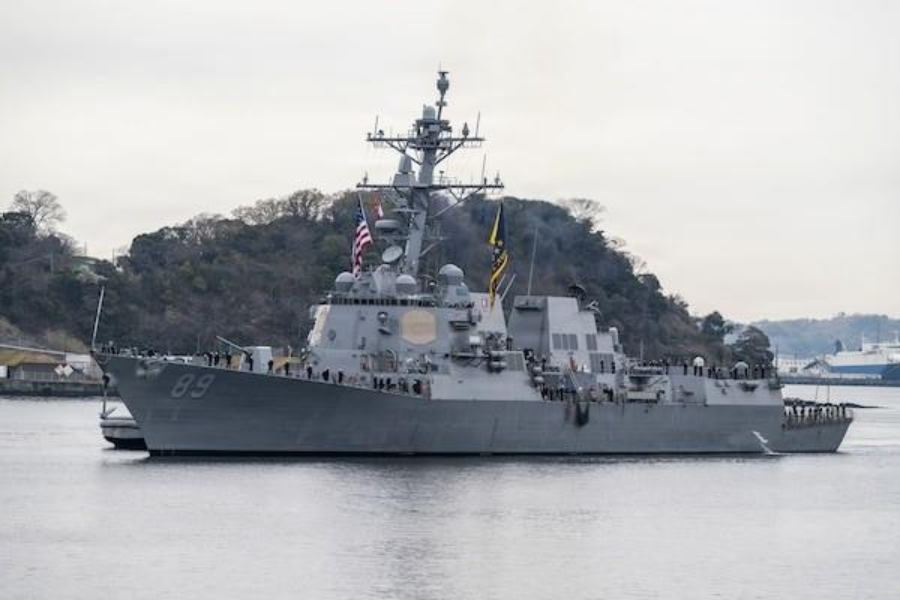
Arleigh Burke-class guided-missile destroyer USS Mustin (DDG 89) arrived at Commander, Fleet Activities Yokosuka (CFAY) March 23, 2026, marking its return to U.S. 7th Fleet after nearly five years in San Diego. The ship was previously forward-deployed to Yokosuka from 2006 to 2021.
Mustin recently completed a major modernization period while in the U.S., enhancing its combat capabilities and ensuring it, and its crew, are ready to meet the dynamic challenges of the region.
“Mustin Nation is proud to return to Japan,” said Mustin commanding officer, Cmdr. Christina Appleman. “Our arrival has a special meaning for our Sailors and their families. We are rejoining a phenomenal team here in the 7th Fleet, and are eager to work alongside our allies and partners in the region. We bring with us the spirit of our ship’s motto, ‘Always Be Bold,’ and are ready to ensure security and stability in the Indo-Pacific.”
Capt. David Huljack, commanding officer of Destroyer Squadron (DESRON) 15, welcomed Mustin’s return, highlighting its importance to the squadron’s mission.
“Welcoming USS Mustin back to the DESRON 15 family is a significant moment for us,” said Huljack. “This ship and its crew bring a renewed strength and vital capability to our surface force.Their return to the tip of the spear is a clear demonstration of our commitment to maritime security and stability in the Indo-Pacific.”
Commissioned July 26, 2003, Mustin is a multi-mission platform capable of conducting a wide range of operations, from maritime security and anti-submarine warfare to ballistic missile defense. The destroyer is named for the Mustin family, which has a long and distinguished history of service in the U.S. Navy.
The ship’s return to Yokosuka is a testament to the U.S. Navy’s enduring commitment to the security and stability of the Indo-Pacific region.
Commander, Fleet Activities Yokosuka provides critical support to U.S. 7th Fleet, the largest of the U.S. Navy’s forward-deployed fleets. CFAY’s strategic location and extensive facilities are vital for maintaining readiness and supporting maritime operations throughout the Western Pacific.
Mustin is forward-deployed and assigned to DESRON 15, the Navy’s largest DESRON and the U.S. 7th Fleet’s principal surface force.
U.S. 7th Fleet, the U.S. Navy’s largest forward-deployed numbered fleet, routinely interacts and operates with allies and partners in preserving a free and open Indo-Pacific.
HII Celebrates 2025 Graduates of The Newport News Shipbuilding Apprentice School
From HII
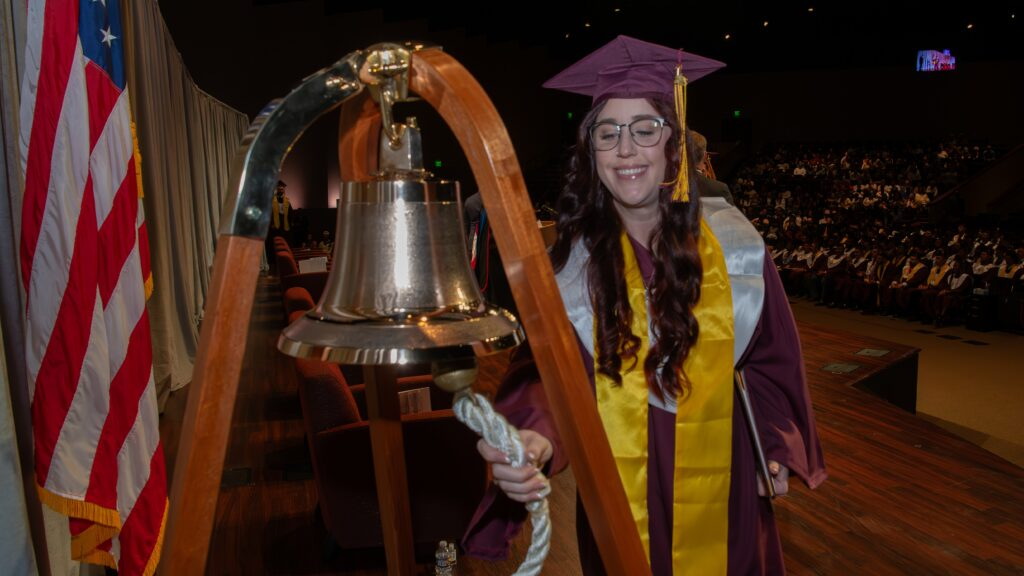
NEWPORT NEWS, Va., March 21, 2026 (GLOBE NEWSWIRE) — HII (NYSE: HII) hosted commencement exercises today, celebrating 128 graduates of the company’s Newport News Shipbuilding Apprentice School. The ceremony was held at Liberty Live Church in Hampton.
Linda McMahon, U.S. secretary of education, delivered the keynote commencement address.
“On the eve of America’s 250th anniversary, I am reminded of how much we have relied on skilled workers to build and sustain our nation,” McMahon told graduates. “Today, you join that proud tradition. This path you have chosen is one of purpose, opportunity, and lasting impact, and it will help carry our country forward for generations to come.”
HII hosted McMahon at NNS Friday for a tour of the shipyard and The Apprentice School. McMahon also participated in a roundtable discussion with shipbuilders focused on workforce development and national security.
At graduation Saturday, NNS President Kari Wilkinson addressed the graduates as the shipyard’s newest leaders.
“What an incredible accomplishment this day represents, and it is one deserving of the highest praise and celebration,” Wilkinson said. “Thank you for your commitment and your dedication and for being on this team of professionals doing the work of the nation.”
Founded in 1919, The Newport News Shipbuilding Apprentice School has been accredited since 1982 by the Council on Occupational Education. Certification to grant associate degrees and confer degrees on its own came in July 2020, after the school was approved by the State Council of Higher Education for Virginia to operate as a postsecondary institution.
Alex Edwards received the Homer L. Ferguson Award, which recognizes the apprentice graduating with the highest average in combined required academic and craft grades.
Edwards began his career with HII in 2018 as an electrician at NNS. He entered The Apprentice School in 2022 to further his education and expand his career options. He currently works as a deck electrician on aircraft carrier USS John C. Stennis (CVN 74), which is undergoing refueling and complex overhaul at NNS.
During his address, Edwards acknowledged the support the class has received from family and friends and asked graduates to reflect on their achievements, while focusing on accomplishing their next goals.
“Each of us now has a degree that is a reminder to us that we can accomplish a goal that we commit ourselves to,” Edwards said. “My question to each of you is: What is the next goal you are going to commit to? I believe that each of us can achieve the goals we set if we commit 100 percent of ourselves to them.”
The following is a profile of the graduating class:
Thirteen graduates earned highest honors, a combination of academic and craft grades that determine overall performance. Thirty-two earned high honors and 13 earned honors.
One hundred and five graduates earned an Associate of Applied Science in maritime technology degree.
Sixty-nine graduates completed Frontline FAST, an accelerated skills training program for potential foremen.
Thirty graduates were inducted into The National Society of Leadership Success.
Six graduates are military veterans or are currently serving in the armed services as reservists and guardsmen.
The Apprentice School accepts more than 200 apprentices per year. The school offers four- to eight-year, tuition-free apprenticeships in 19 trades and six optional programs. Apprentices work a 40-hour week and are paid for all work, including time spent in academic classes.
Joint Statement Reaffirming a Shared Commitment to Defense Industrial Resilience
From the Department of War, March 20, 2026
We, the National Armaments Directors and senior government officials of the member nations of the Partnership for Indo-Pacific Industrial Resilience (PIPIR), convened for our 2nd Annual Plenary meeting, virtually, on March 18, 2026, to reaffirm our commitment to accelerating defense industrial cooperation.
We reaffirmed the PIPIR Statement of Core Vision and Terms of Reference, discussed the collective challenges and opportunities to defense industrial cooperation in the Indo-Pacific, and endorsed the 2026 roadmap for PIPIR workstream initiatives.
We also endorsed the accession of Thailand and the United Kingdom to PIPIR, welcoming them as the 15th and 16th members, respectively, to join our Indo-Pacific and Euro-Atlantic partnership. Collectively, we are committed to strengthening defense industrial resilience to promote the continued regional security, economic security, and prosperity of the Indo-Pacific.
We discussed current capacity shortfalls and resilience challenges in the global defense industrial base that impede our ability to meet combined operational needs but acknowledged positive momentum through PIPIR in addressing barriers to increased armaments cooperation. We further reaffirmed our commitment to exploring avenues across the Partnership to strengthen defense industrial base integration to de-risk supply chains, expand forward sustainment capacity, remove policy and regulatory impediments to cooperation, and accelerate production of key systems and components.
We discussed the significant progress that has been achieved through PIPIR since its establishment, recalling the announcement of two marquee initiatives by the U.S. Secretary of War at the Shangri-La Dialogue in May 2025, including the development of a forward repair capability for P-8 radar systems in Australia and the development of standards for small unmanned aerial systems across the Indo-Pacific. We agreed to the following next steps for these marquee initiatives:
Expanding the scope of the regional sustainment hub in Australia to support additional P-8 operators in the Indo-Pacific, a project recently announced at the Shangri-La Dialogue in May 2025.
Endorsing four Statements of Intent to foster cooperation on small unmanned aerial systems’ battery and small motor development through executing an industry survey and sharing results among participants, pursuing reciprocal standards and a common procurement policy, and identifying efforts towards a future battery project.
We agreed that PIPIR continues to make tangible progress toward addressing barriers and accelerating defense industrial collaboration to promote a stronger, more resilient, more integrated, defense industrial base. We also reaffirmed the importance of multilateral frameworks such as PIPIR to help facilitate the rapid delivery of relevant capabilities to our combined defense forces. In doing so, we took measure of the progress made since our last plenary on these efforts:
Building on the success of the Multinational Armaments Resilience Seminar, the first Indo-Pacific focused multinational armaments cooperation course, to be executed on a yearly basis, and co-hosted by the Department of War’s Asia-Pacific Center for Security Studies and rotating PIPIR members.
Continuing our campaign of learning through multiple industrial base-focused subject-matter expert exchanges, tabletop exercises, and collaborative learning events.
We also discussed and endorsed several new lines of effort that will strengthen the Partnership by creating more opportunities for collaboration and will advance defense industrial resilience in the Indo-Pacific and globally:
Committing to a project that will explore feasibility and opportunity to establish a forward-deployed F100/F110 engine repair hub in Japan, which, will support regional sustainment for F-15 and F-16 platforms operated by the United States Air Force and partner nations.
Progressing the effort to establish a CH-47 Chinook T-55 engine repair hub in the Republic of Korea, a project recently announced at the US-ROK Logistics Cooperations Committee in July 2025.
Establishment of a new Solid Rocket Motor (SRM) production initiative between the US and Japan, chaired by Japan.
Expanding energetics and munitions development by assessing the potential for interest and funding for the 30mm-by-173mm ammunition load, assemble, and pack line effort with the Philippines.
Supporting regional co-production opportunities by exploring modular UAV projects across many mission sets.
Instituting new tools and techniques, such as a project development guide, that provides a methodology to identify and assess future collaborations resulting in enhanced project efficiency and efficacy, information sharing, and transparency among governments, industry partners, and stakeholders.
Advanced Shipbuilding ‘Factory of the Future’ Opens in Alabama
Facility will help accelerate submarine production
From the Navy Office of Information, March 20, 2026
Funded in part by Navy investments provided in the One Big Beautiful Bill Act (OBBBA), the advanced manufacturing company Hadrian officially opened a new facility in Cherokee, Alabama March 20th that will boost production of U.S. Navy nuclear submarines.
The 2.2 million square foot site will host a highly-automated “factory of the future,” known as F4, which will mass produce components for Virginia-class attack submarines and Columbia-class ballistic missile submarines. The Navy’s $900 million investment of OBBBA funds combine with $1.5 billion in private capital for a total investment of more than $2.4 billion. According to Hadrian, up to 1,000 high-paying manufacturing jobs are being created in the venture.
“Both chambers of Congress delivered the generational investment required to rebuild our shipbuilding capacity, bring those jobs back to Alabama and put American skilled laborers back at the center of American strength,” said Secretary of the Navy John C. Phelan. “I look forward to building on this progress together in the months ahead, because we are just getting started. This factory is the first of three facilities designed to address the most critical bottlenecks in the maritime industrial base.”
Using advanced manufacturing techniques, workers at the new factory will be able to mass produce components that are needed to build Virginia-class and Columbia-class submarines. A dedicated production plant focused on these components frees up submarine shipyards in Rhode Island, Connecticut and Virginia to focus more resources on submarine module production, increasing capacity in the submarine industrial base.
“We call this distributed shipbuilding, and it’s a key tenet of our plan to achieve required shipbuilding production rates,” said Mr. Jason Potter, Performing the Duties of Assistant Secretary of the Navy for Research, Development & Acquisition (ASN RDA). “These factories of the future might be several states away from the yards where the ships are ultimately built, but by taking on this work they reduce bottlenecks, having a profound effect on the speed of delivery.”
The Factory 4 project is estimated to take 18-24 months from initiation to full-rate production, including stand-up of automated production facilities, qualification of components, compliance qualifications like submarine safety program (SUBSAFE), and low-rate initial production. By the third year, the facilities will operate sustainably through delivery of submarine product lines.
Congressman Aderholt Joined U.S. Navy Secretary and Alabama Delegation: Ribbon Cutting on $2.4 Billion Submarine Factory in Cherokee
From the Office of Congressman Robert Aderholt, March 23, 2026
CHEROKEE, Ala. – On Friday, Congressman Robert Aderholt (AL-04) spoke alongside local and national leaders at a landmark ribbon-cutting ceremony for a new $2.4 billion public-private defense industrial facility in Cherokee, Alabama.
The facility in Barton Riverfront Industrial Park is part of a broader public-private effort to strengthen the U.S. maritime industrial base, representing more than $2 billion in combined investment and up to 1,000 new manufacturing jobs for the area.
“It was a privilege to help open an event that has been years in the making, an effort that many worked toward and believed in. This 2.2 million square foot facility will now be a symbol of U.S. defense, anchoring shipbuilding and maritime production in Northwest Alabama. Proving that maritime dominance is not just a coastal priority.
This project didn’t happen by accident. It happened because people believed in this community, and because we made a deliberate effort to bring opportunities back to places that had been overlooked.
This facility is only part of a much larger opportunity, and I intend to keep working until that full potential is realized. Because that’s what this community has always done. America needs sea power more than ever, and Alabama is up to the challenge. We will build a 21st century collaborative campus here that no conventional shipyard or industrial park can rival.
With the leadership of President Trump and Republican majorities in Congress, we passed the One Big Beautiful Bill, legislation focused on restoring American strength. And I worked to ensure that communities like ours were part of that vision. Alongside my colleagues in the Alabama delegation, we helped turn that vision into reality right here at home.
By investing in workforce training and building the right partnerships, we made sure Alabama’s Fourth Congressional District would be ready when opportunity came and ready to compete for the kind of jobs that strengthen both our economy and our national security. And Friday, we saw that work pay off.
This facility will help bring thousands of manufacturing jobs and new opportunities to Northwest Alabama. But just as importantly, it will help restore America’s ability to produce the tools necessary to defend freedom and maintain strength at sea.
I want to thank Secretary of the NavyJohn C. Phelan, Senator Tuberville, Senator Britt, Senator Wicker, and Armed Services Chairman Mike Rogers. We all worked diligently in the crafting of the One Big Beautiful Bill to make this happen today. But government alone doesn’t build something like this. Thank you to AE Industrial Partners and AE Shoals, Hadrian, Retirement Systems of Alabama, and the Shoals Economic Development Authority for believing in this vision and making a generational investment.
This is just the beginning of a stronger region, a stronger workforce, and a stronger United States of America.”
Northrop Grumman’s Talon IQ Flies Shield AI’s Hivemind Software
Northrop Grumman’s Talon IQ – onboard Scaled Composites’ Model 437 – demonstrated a successful mission autonomy flight with Shield AI’s Hivemind software in Mojave, Calif. (Photo Credit: Northrop Grumman)
Northrop Grumman’s Talon IQ Flies Shield AI’s Hivemind Software
MOJAVE, Calif. – March 19, 2026 – Northrop Grumman’s (NYSE: NOC) Talon IQ™ testbed completed its first partner mission autonomy flight with Shield AI’s Hivemind software, showcasing a readytofly platform that accelerates innovation, cuts development costs and eliminates the need to build a dedicated airframe for every new autonomy solution.
Partner-Powered Autonomy: During the flight, Shield AI’s Hivemind software successfully commanded the aircraft, executing combat air patrol and target engagement maneuvers. Talon IQ then seamlessly swapped back to Northrop Grumman’s own Prism autonomy software.
OpenArchitecture and Compliance: The flight demonstrated how Talon IQ’s plugandplay design can host thirdparty AI platforms and meet U.S. Government Reference Architectures (GRAs), the standards that ensure defense technology components interoperate securely and reliably.
Greater Speed, Lower Cost: Hivemind took to the sky after a singleday hardwareintheloop test, proving an AI package can move from lab to realworld flight rapidly with Talon IQ and its GRA-compliant ecosystem.
Experts:
“We are accelerating autonomous flight innovation with Talon IQ. By integrating Shield AI’s Hivemind into our testbed, we’ve demonstrated an open architecture platform that propels plug and play mission autonomy forward at unprecedented speed,” said Tom Jones, corporate vice president and president, Northrop Grumman Aeronautics Systems.
“Autonomy only scales if it can move quickly from lab to flight,” said Christian Gutierrez, vice president of Hivemind Solutions at Shield AI. “Talon IQ provides a strong environment for maturing mission autonomy, and this integration shows how Hivemind can transition onto new aircraft with minimal modification, accelerating the path to operational capability. We appreciate Northrop Grumman’s collaboration and the opportunity to demonstrate mission autonomy within the Talon IQ ecosystem.”
Details on Talon IQ:
Talon IQ™ is the nextgeneration autonomous testbed ecosystem in Northrop Grumman’s Project Talon portfolio. Utilizing the Scaled Composites Model 437 aircraft, it provides an openarchitecture, modular ecosystem that lets partners develop, integrate and flighttest missionautonomy software on proven flightautonomy hardware.
Northrop Grumman’s own Prism mission autonomy software has already commanded the same Model 437 airframe, establishing Talon IQ as a flightproven platform. The system is deliberately designed as a collaborative ecosystem that accelerates modular missionautonomy solutions and enables rapid iteration to meet the evolving demands of future customers.
Details on Hivemind software:
Hivemind is Shield AI’s platform-agnostic, GRA-compliant mission autonomy software that assumes the role of a human pilot or operator, enabling unmanned systems to sense, decide, and act. Unlike traditional autopilots that simply follow preplanned routes, Hivemind can reroute around or engage dynamic obstacles, execute collaborative tactics with peer systems and piloted aircraft, respond to unexpected conditions, and complete missions safely and effectively as part of a human-machine team.
Marine Corps Leaders Visit Ingalls Shipbuilding to Advance Veteran-to-Workforce Pipeline
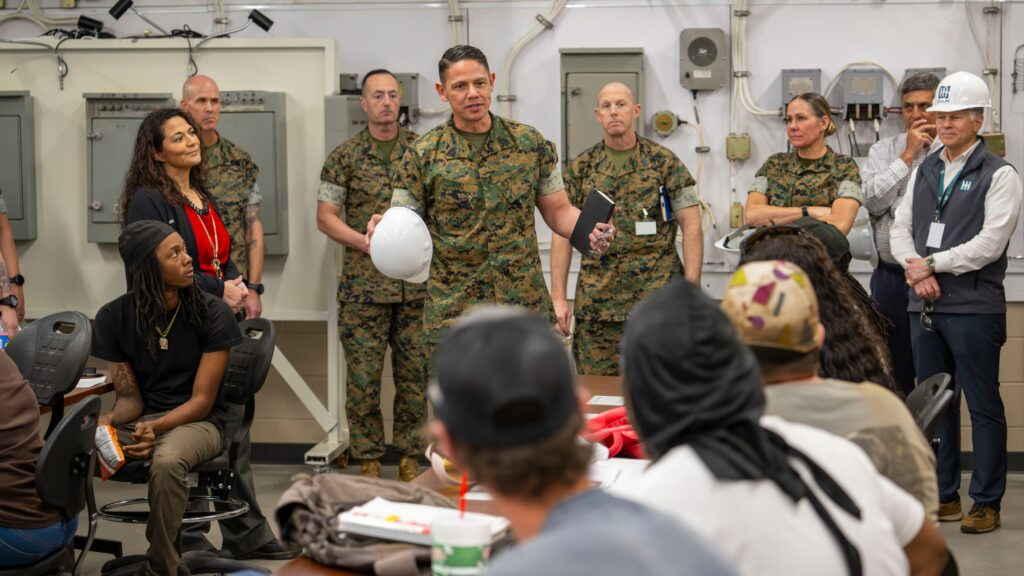
PASCAGOULA, Miss., March 19, 2026 (GLOBE NEWSWIRE) — HII’s (NYSE: HII) Ingalls Shipbuilding division recently welcomed senior enlisted leaders from the U.S. Marine Corps for a visit focused on strengthening pathways between Marines completing active service and long-term careers in the shipbuilding industry. The visit underscored the longtime partnership between Ingalls and the Marine Corps, particularly through Ingalls’ role as the nation’s primary builder of amphibious warships.
“Marines bring discipline, technical aptitude and a service mindset, all qualities that can translate directly into the complex work of shipbuilding,” Ingalls Shipbuilding President Brian Blanchette said. “Those strengths are vital to delivering world-class warships to the U.S. Navy fleet, and we’re honored to work with the Marine Corps to expand pathways for Marines transitioning to civilian careers as we continue building the amphibious platforms that keep them mission ready.”
During the visit, Marine Corps leaders met with Ingalls leadership and toured the Maritime Training Academy, where they learned about the company’s apprenticeship and career development programs. They also visited several areas of the shipyard, including the amphibious assault ship Bougainville (LHA 8), gaining a firsthand look at the craftsmanship and technical expertise required to build the platforms that many Marines call home during their worldwide service.
“Our goal is to set Marines up for success after they hang up the uniform,” said Sgt. Maj. Carlos A. Ruiz, the 20th sergeant major of the Marine Corps. “This visit was instrumental in collaborating on a direct pipeline for Marines to transition seamlessly into the shipbuilding industry, using tangible and intangible skills gained through their military service.”
Ingalls’ decades-long history of designing and constructing amphibious warships creates a natural alignment for Marines seeking post-service careers in shipbuilding, as Marine Corps missions depend on the platforms produced at the shipyard. With more than 6,700 veterans employed across its divisions, HII recognizes that U.S. veterans bring essential leadership, technical expertise and operational insight that strengthen the shipbuilding workforce and support delivery of the world’s most powerful ships and all-domain solutions for the nation’s military.
Coast Guard Offloads Over $49.3 Million in Illicit Drugs Interdicted in Eastern Pacific Ocean
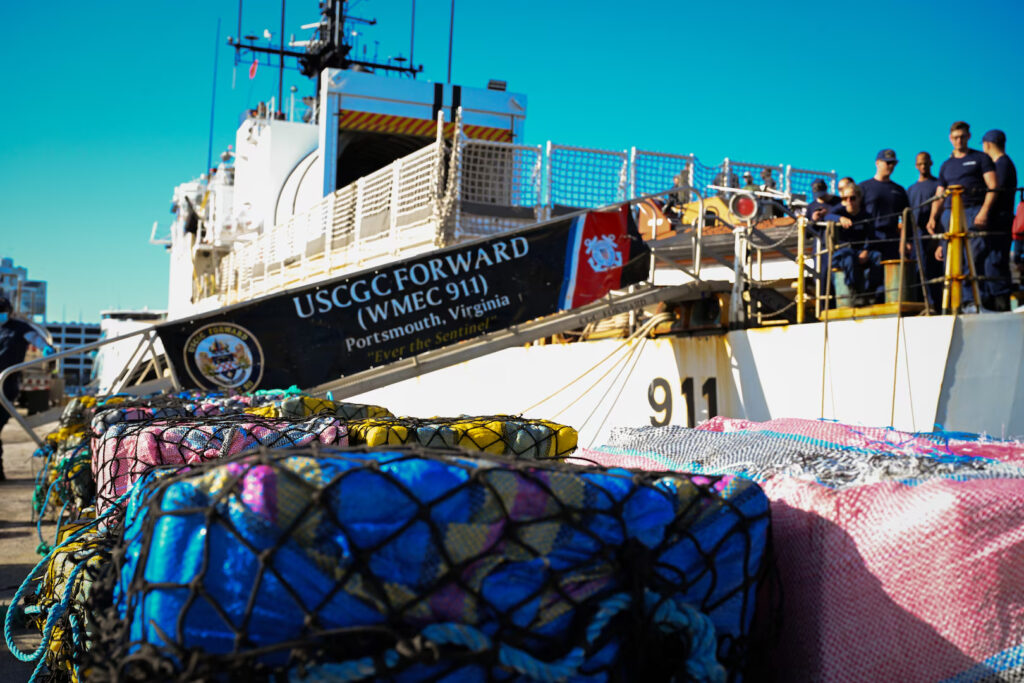
USCGC Foward’s (WMEC-911) crew offload illicit drugs valued at more than $49.3 million at Port Everglades, Florida March 19, 2026. This offload was a result of two interdictions in the international waters of the Eastern Pacific Ocean by the crews of USCGC Spencer (WMEC-905) and Forward interdicting approximately 6,750 pounds of cocaine. (U.S. Coast Guard photo by Seaman Christopher Moret)
From U.S. Coast Guard Southeast District, March 19, 2026
MIAMI – U.S. Coast Guard Cutter Forward’s crew offloaded approximately 6,570 pounds of cocaine worth more than $49.3 million at Port Everglades, Thursday.
The seized contraband was the result of two interdictions in the international waters of the Eastern Pacific Ocean.
On Feb. 7, a maritime patrol aircraft located a suspicious vessel, and Coast Guard Cutter Spencer’s embarked Helicopter Interdiction Tactical Squadron aircrew employed airborne use-of-force tactics to disable the vessel. Spencer’s boarding team interdicted the vessel and seized approximately 6,435 pounds of cocaine.
On March 8, a maritime patrol aircraft located a suspicious vessel, and Forward’s embarked HITRON aircrew employed airborne use-of-force tactics to disable the vessel. Forward’s crew interdicted the go-fast vessel, recovering approximately 130 pounds of cocaine.
“I’m incredibly proud of the crew for adding to the success of Operation Pacific Viper,” said Cmdr. Andrew Grantham, Forward’s commanding officer. “The Coast Guard and our partners are working tirelessly to stop narco-terrorists and criminal organizations before their dangerous and illegal cargos reach American shores.”
The following assets and crews were involved in the interdiction operations:
80% of interdictions of U.S.-bound drugs occur at sea. This underscores the importance of maritime interdiction in combatting the flow of illegal narcotics and protecting American communities from this deadly threat. U.S. Southern Command’s Joint Interagency Task Force-South based in Key West conducts the detection and monitoring of aerial and maritime transit of illegal drugs. Once interdiction becomes imminent, the law enforcement phase of the operation begins, and control of the operation shifts to the U.S. Coast Guard throughout the interdiction and apprehension. Interdictions in the Eastern Pacific Ocean are performed by members of the U.S. Coast Guard under the authority and control of the Coast Guard’s Southwest District, headquartered in Alameda, California.
To protect the Homeland from ongoing trafficking of illicit narcotics from South America to the United States, the Coast Guard is accelerating our counter-drug operations in the Eastern Pacific Ocean in support of Operation Pacific Viper. Since launching this operation in early August, the Coast Guard has seized over 200,000 pounds of cocaine, and apprehended 150 suspected drug smugglers.
The Coast Guard continues increased operations to interdict, seize and disrupt transshipments of cocaine and other bulk illicit drugs by sea. These drugs fuel and enable cartels and transnational criminal organizations to produce and traffic illegal fentanyl, threatening the United States.
These interdictions deny criminal organizations illicit revenue. They provide critical testimonial and drug evidence as well as key intelligence for their total elimination. These interdictions relate to Homeland Security Task Force Tampa, investigations in support of Operation Take Back America, which identifies, disrupts, and dismantles the highest-level criminal organizations that threaten the United States using a prosecutor-led, intelligence-driven, multi-agency approach.
ThayerMahan Launches SeaGuard, a UUV Defeat System to Defend Ports and Infrastructure
From ThayerMahan
GROTON, Conn., March 19, 2026 /PRNewswire/ — ThayerMahan, a leader in unmanned maritime security and acoustic intelligence solutions, today announced the official launch of SeaGuard™, the company’s operationally validated, non-kinetic defeat system built to protect high-value maritime assets and infrastructure from the rapidly growing spectrum of Uncrewed Underwater Vehicle (UUV) threats.
SeaGuard enters the market as the first fully mature, fieldtested, scalable system of its kind, engineered to disrupt and defeat underwater threats without explosives or harmful emissions, addressing urgent security requirements for defense and commercial operators worldwide.
“From my time in uniform to my role today, one truth has remained constant: the underwater domain evolves rapidly, and the threats evolve even faster,” said Vice Admiral Mike Connor, U.S. Navy (Ret.), Chairman & CEO of ThayerMahan. “SeaGuard is purpose-built to help operators stay ahead of that curve. It represents a leap forward in how we protect vital maritime assets from unmanned undersea threats – reliably, safely, and at scale.”
Recent global incidents have shown the critical asymmetric threat presented by UUVs, with lowcost, commercially accessible or locally developed systems able to penetrate defended harbors, approach highvalue assets, and target critical infrastructure, to significant demonstrated effect. As maritime security environments become increasingly congested and contested, traditional detection-only solutions are no longer sufficient to counter the expanding threat profile. SeaGuard provides a missioncritical protection layer for military facilities, deepwater ports, port complexes, LNG terminals, cable landing stations, and other vulnerable subsea locations.
“As the threat landscape shifts from theoretical to unmistakably real, SeaGuard gives government and commercial operators a proven, non-kinetic shield for the critical infrastructure our economy and national security rely on,” said Dr. Kevin Lopes, CAPT USCG (Ret.), Vice President of Marketing & Sales at ThayerMahan. “This isn’t just a solution for naval bases – it’s a mission-ready system for commercial ports and strategic assets worldwide. SeaGuard’s operationally validated performance means operators no longer need to rely on detection alone or accept unnecessary risk. They now have a field-tested, scalable capability they can deploy quickly, sustain easily, and trust completely to protect what matters most.”
SeaGuard’s operational performance has been proven across multiple evaluated exercises, where it demonstrated the ability to disrupt and defeat UUVs, deter diver and swimmer intrusion, and shield high-value assets from tampering or sabotage. These demonstrations also confirmed its endurance, maintainability, and mission-ready architecture.
“SeaGuard is the culmination of the ThayerMahan team’s incredible effort and ingenuity,” said Andy Meecham, Chief Technology Officer at ThayerMahan. “In trials, SeaGuard consistently produced repeatable, measurable defeat effects across a wide range of conditions, validated through multienvironment testing, independent technical assessment, and sustained endurance runs. It is the only system of its kind ready to deploy today, demonstrating Technology Readiness Level 8+ performance, and we built it from the start to integrate with other port monitoring and protection systems.”
SeaGuard was designed to be modular, scalable, and rapidly deployable. Depending on operational requirements, it can be installed in expeditionary or permanent configurations. The system is safe for the environment and marine life and can be tailored to any Navy, port authority, or infrastructure operator’s security needs.
“SeaGuard deploys where and how you need it, and our team ensures that happens fast,” said Christian Glander, President ThayerMahan Offshore and CAPT USCG (Ret.). “Years of large-scale operations have prepared us to rapidly install SeaGuard across a diverse range of locations. Port security and homeland defense depend on timely, effective underwater protection, and we are ready now to support both missions.”
About SeaGuard™ ThayerMahan’s SeaGuard is an operationally validated non-kinetic UUV denial and delay system. A scalable, modular security solution, SeaGuard delivers unmatched underwater threat mitigation for military and commercial port facilities, moored strategic assets, and critical infrastructure. When paired with advanced sensors such as ThayerMahan’s TransparenSea®, SeaPicket®, and Outpost® acoustic intelligence solutions, SeaGuard™ provides a detect-to-defeat chain.
About ThayerMahan’s Acoustic Intelligence Solutions ThayerMahan is the premiere provider of end-to-end unmanned acoustic intelligence solutions. TransparenSea® software, technology, and analysis drive ThayerMahan’s superior acoustic awareness, with edge processing, digital signal processing, and API integrations to watch floors and C2 systems. Outpost® and SeaPicket® deliver fixed and mobile undersea domain awareness from scalable, fully mature, productized platforms.
American Waterways Operators Issues Statement on 60-day Jones Act Waiver Announcement
ARLINGTON, Va., March 18, 2026 /PRNewswire/ — The American Waterways Operators, the national trade association of the American tugboat, towboat and barge industry, today released the following statement on the Trump Administration’s announcement of its decision to issue a 60-day waiver of the Jones Act:
“The Jones Act is fundamental to America’s supply chain reliability and national security, and this broad 60-day waiver of this vital law puts both at risk. The breadth of this waiver is especially concerning, as it will unnecessarily impact transportation markets where domestic vessel capacity is not lacking. Allowing foreign vessels to transport cargo on U.S. waterways will introduce the price volatility of today’s international market into our domestic commerce, creating instability in our thriving domestic supply chain and undermining American jobs while having no appreciable effect on the price of gasoline.
At a time of heightened concern about terrorist threats on American soil, the Jones Act also serves as a security bulwark against foreignflag vessels with foreign crews transporting critical cargo between America’s inland and coastal ports, and ensures that American mariners remain the indispensable eyes and ears supporting the U.S. Coast Guard’s homeland security mission.
Our nation counts on the Jones Act mariners of the American tugboat, towboat and barge industry to power the American economy and help keep our communities and waterways safe. Waiving the Jones Act does not serve those interests.”
About the American Waterways Operators
The American Waterways Operators is the tugboat, towboat and barge industry’s advocate, resource and united voice for safe, sustainable and efficient transportation on America’s waterways, oceans and coasts. Industry vessels serve as a vital part of America’s supply chain and national security, moving the nation’s commerce on U.S. inland and intracoastal waterways, the Atlantic, Pacific and Gulf Coasts, and the Great Lakes.
Maritime Theater Missile Defense Forum Advances Interoperability, Relevance at Critical Time
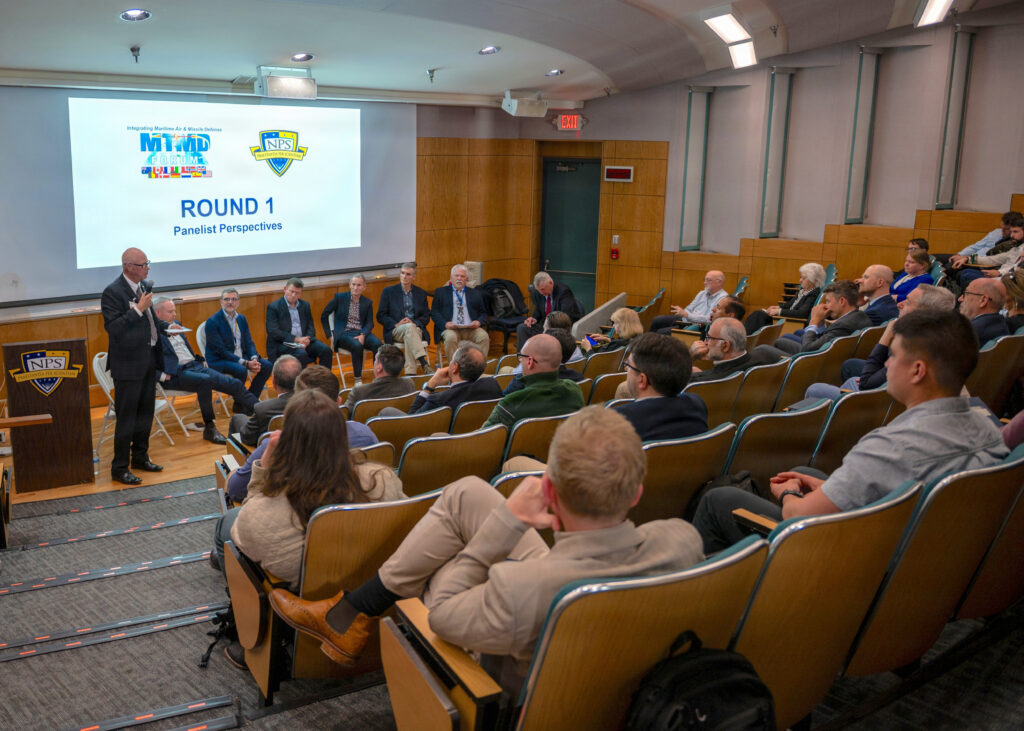
Experts across varied aspects of integrated air and missile defense engage in a panel discussion during the Maritime Theater Missile Defense Forum (MTMD-F) at the Naval Postgraduate School (NPS), March 4, 2026. The MTMD-F returned to NPS for a series of engineering and program management meetings essential to advancing their critical mission. (U.S. Navy photo by Mass Communication Specialist Seaman Apprentice Zadi Watkins)
From Naval Postgraduate School Public Affairs, March 19, 2026
Effective integrated air and missile defense (IAMD) requires an unparalleled level of international cooperation and interoperability, concepts on full display in current operations. The system of systems necessary to be effective, however, requires much more than just collaborative coalition operations.
Effective IAMD also takes a persistent collaborative effort of interdisciplinary research and development with many partners, and exhaustive analyses across a broad swath of highly technical disciplines. It also demands the agility to work through stovepipes and unforeseen challenges, in addition to anticipating strategic futures.
Meeting this challenge is the Maritime Theater Missile Defense Forum (MTMD-F), an international cooperative of 12 allied nations’ navies charged with achieving interoperability in all aspects of maritime theater air and missile defense. Building upon previous meetings in Monterey in 2006, 2013, 2017 and 2020, the forum and its team of engineers, technicians and National Points of Contact returned to Naval Postgraduate School (NPS) campus in February and March 2026 for a series of engineering and program management meetings essential to advancing their critical mission.
The importance of that mission, and its relevance to Chief of Naval Operations Adm. Daryl Caudle’s recently released Fighting Instructions, is why NPS placed a high priority on supporting the multi-week forum of both classified and unclassified program management and technical interchanges, said NPS president retired U.S. Navy Vice Adm. Ann Rondeau.
“The conversations you will have this week — about integrated air and missile defense, sensor fusion, battle management, hypersonic threats, and coalition interoperability — are no longer just about future force design concepts. They reflect present operational reality,” Rondeau said in welcoming the MTMD-F to campus.
“IAMD capability development must begin years before the commencement of operations,” added retired U.S. Navy Capt. John Hammerer, IAMD warfare chair at NPS. “Essential developmental efforts spanning the disciplines of systems engineering, modeling and simulation, acquisition, interoperability testing, and operational testing begin years before real world operations.”
NPS, and the technical leaders the institution graduates, are critical to this development, Hammerer says.
“Take U.S. Navy efforts to use directed energy for terminal defense, highlighted in the CNO’s Fighting Instructions,” he continued. “NPS graduate Cmdr. Brian Curran, a Meyer Scholar who earned his PhD in laser physics, is now using that acquired expertise to lead [Program Executive Office Integrated Warfare Systems] (PEO IWS) to accelerate fielding of shipboard lasers.”
The MTMD-F keeps essential development on track across multiple technical teams and lines of effort. Leading each navy’s efforts is the MTMD-F’s National Point of Contact (NPOC) forum. Belgian Navy Capt. Philippe De Cock, the current NPOC chair, says the forum’s focus on innovation, analysis and expertise in maritime IAMD — qualities shared at NPS — are critical enablers to its mission.
“The forum was born from a shared appreciation that only a small, agile partnership of nations with subject matter expertise could move quickly enough to anticipate trends and solve the critical problems of maritime missile defense interoperability facing allied nations,” De Cock said. “The concentration of subject matter expertise for data analysis and maritime IAMD operations makes the forum-NPS partnership mutually beneficial.”
“NPS is an ideal venue for forum collaboration,” echoed U.S. Navy Capt. John Mastriani, U.S. NPOC. “The combination of secure facilities, adaptive layout and combat systems engineering expertise make this a highly productive place for the forum’s technical projects, working groups and leadership to meet.”
Current NPS students and faculty were able to engage with MTMD-F representatives, gaining a deeper perspective on the technical, procedural and operational challenges that enable interoperability in maritime missile defense. NPS’ popular Meyer Scholar program, initiated by Hammerer, prepares officers to contribute to this essential capability by advancing their technical understanding of naval combat systems, from concept to employment.
“Meyer Scholars take on this work in addition to their normal coursework,” Rondeau said. The program combines NPS’ rigorous graduate education with a focused combat systems curriculum, operationally relevant seminars, industry visits and research tied to real-world warfare system challenges.
“Meyer Scholars are trained to lead interoperability rather than chase it, by understanding the technical, tactical, and programmatic dimensions of integrated air and missile defense, and to translate emerging technologies into fleet-ready capabilities,” she said.
Looking ahead, student and faculty participation in MTMD-F discussions identified potential pathways for further NPS contributions to IAMD interoperability and collaboration. The forum highlighted promising opportunities for IAMD-related research at NPS in areas such as:
Support for the post-mission analysis of combat systems performance following At Sea Demonstration/Formidable Shield (ASD/FS), Pacific Dragon (PD), and Hardware in the Loop (HWIL) test events.
The Ballistic Missile Defense Integration (BMDi) Project, which accelerates the development of BMD support, sensor and weapon capabilities.
The Interoperability and Common Tactical Picture (IaCTP) Project, which promotes the development of a common operating picture across an international task group by analyzing and promoting standardization in datalink systems implementation.
The Force Level Operational Architecture Technical Standard (FLOATS) Project, a platform-agnostic standard for combat-systems data exchange.
The Force Threat Evaluation and Effects Coordination (FTE2C) Project, an effort to develop and compare decision support systems and coordinate kinetic and non-kinetic effects across the Coalition Task Group.
As Rondeau stressed to the group, the importance of these developments could not be a more evident call to action.
“The missile defense mission is active, consequential, and demanding of your excellence in both technology and leadership,” she said. “That reality sharpens the purpose of this essential forum and follow-on actions for national security and homeland defense.”