Saronic Announces New Downtown New Orleans Office to Accelerate Autonomous Shipbuilding 

From Saronic, March 18, 2026 

Saronic today announced it is opening a nearly 15,000 square foot office in downtown New Orleans. The new space will serve as a key engineering and technical hub to support the company’s expanding shipbuilding operations in Louisiana. By establishing a strong presence in the city, Saronic is deepening its roots in one of the nation’s most historic and capable maritime regions – one with a strong, highly skilled maritime workforce.  

The new office will house hardware engineers, naval architects, marine engineers, and experts in system testing to support the design and development of Marauder, Saronic’s 180-foot autonomous ship. These vessels are produced at scale at the company’s shipyard in Franklin, Louisiana, which is undergoing a substantial expansion to further strengthen the state’s role in helping drive next-generation maritime manufacturing. The office will provide vital technical connectivity across Saronic’s Louisiana operations, linking advanced engineering and design functions with production and manufacturing capabilities in Franklin. 

The company expects to hire more than 350 skilled workers across its operations in Louisiana this year. To help build a strong talent pipeline, Saronic is partnering with universities and technical institutions, offering internships and early-career opportunities for students pursuing jobs in engineering, naval architecture, and other marine disciplines. The company is also working with Louisiana Economic Development to build and integrate training programs into the workforce development process across the region.  

“Louisiana has been at the center of American shipbuilding for generations, and New Orleans gives us direct access to the people and technical skills that make that possible,” said Dino Mavrookas, Co-Founder and CEO of Saronic. “This facility builds on our growing investment in the state and strengthens the connection between our teams and Gulf Coast operations, allowing us to move faster as we field and deploy autonomous surface vessels and ships for both defense and commercial partners.” 

“This is a strong win for New Orleans and for our growing maritime and engineering economy. Saronic’s decision to open their facilities in downtown New Orleans shows that companies see our city as a place where innovation, maritime expertise, and world-class talent come together,” said Deputy Mayor Jenny Mains. “This investment brings high-quality technical and engineering opportunities for our workforce and aligns with Mayor Helena Moreno’s 100-day plan to attract the next generation of industries and jobs to our city.” 

Hiring for Key Roles in Louisiana 

Across all of Saronic’s operations, the company is united by a culture of ownership, accountability, and mission-driven innovation. Full-time employees share in the company’s success through equity participation and receive a comprehensive benefits package designed to support both personal and professional growth. Team members are offered comprehensive health coverage, a 401(k) plan with company matching, generous paid time off and holidays, and fully paid parental leave. Saronic also provides supplemental benefits that support family building, overall wellness, and long-term financial security. 


Master Boat Builders Signs Contract with Austal USA to Fabricate Modules for T-ATS Program 

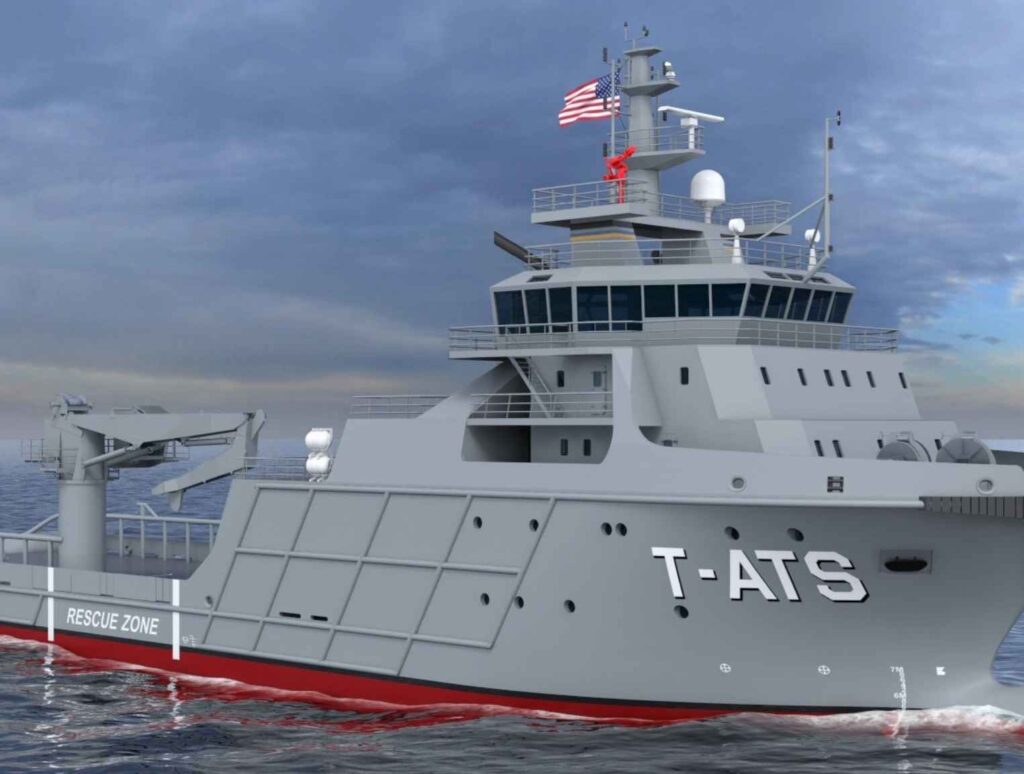
Photo from Master Boat Builders

Agreement marks the first formal production contract under the companies’ strategic outsourcing partnership  

From Master Boat Builders Inc. 

CODEN, Ala. - Master Boat Builders, Inc. (“Master Boat”) announced it has signed a contract with Austal USA to fabricate modules for the U.S. Navy’s Navajo-class Towing, Salvage, and Rescue Ship (T-ATS) program. The contract establishes Master Boat as a key subcontractor contributing to the construction and delivery of critical vessels that enhance the Navy’s and the Trump Administration’s push to diversify and strengthen the domestic shipbuilding industrial base through distributed production.  

The partnership between the two Alabama-based shipyards reflects a significant milestone for Master Boat as it expands its participation in government defense shipbuilding programs. Under the agreement, Master Boat will provide specialized shipbuilding support and fabrication services that will contribute to the construction of advanced naval vessels designed to perform a range of missions including open-ocean towing, salvage operations, humanitarian assistance, and environmental response.   

“This contract is a direct result of the partnership we built with Austal USA last year, and it validates what we’ve been saying all along – regional shipyards like ours can take on complex defense work and deliver,” said Garrett Rice, President of Master Boat Builders. “We’re not competing with the major yards. We’re adding capacity that the Navy needs right now. Our proximity to Austal USA, our experienced workforce, and our new investment in dedicated defense infrastructure all position us to support this program and others that follow.”  

Under the contract, Master Boat will fabricate two T-ATS hull modules at its Coden, Alabama, shipyard, located approximately 30 minutes from Austal USA’s Mobile facility. The modules will be constructed to Austal USA’s production design and specifications, and through the collaboration, Master Boat will gain valuable experience working within U.S. Navy technical standards and production requirements of large-scale programs. The partnership also supports workforce development and strengthens regional shipbuilding capacity along the Gulf Coast. Upon completion, the modules will be transported to Austal USA’s Mobile shipyard for final erection and outfitting.   

“Master Boat has proven itself as a capable and reliable partner, and this contract is a natural next step in our collaboration,” said Gene Miller, Interim President of Austal USA. “By distributing module fabrication to a qualified yard right here on the Gulf Coast, we’re expanding throughput, reducing schedule risk, and strengthening the industrial base that supports our warfighters. This is the model the Navy has asked the industry to pursue, and we’re delivering on it.”  

The contract follows Master Boat’s announcement to construct a new $60 million, 150,000-square-foot manufacturing facility dedicated exclusively to government and defense shipbuilding programs. Located directly across Bayou Coden from the company’s existing yard, the 20-acre site will feature a state-of-the-art assembly building optimized for serial production of steel and aluminum ships and modules for Navy and Coast Guard programs. Prior to the new facility’s completion, T-ATS module fabrication will take place at Master Boat’s existing facility. Master Boat currently employs more than 400 people at its Coden shipyard and expects the new defense facility to support approximately 200 additional jobs upon completion. The companies also continue to co-invest in workforce development initiatives to train and equip the next generation of Gulf Coast shipbuilders.  

The T-ATS program is designed to replace aging fleet ocean tugs and rescue and salvage ships with a modern, multi-mission platform capable of towing disabled vessels, conducting salvage and recovery operations, supporting diving missions, and assisting with humanitarian and disaster response. Austal USA has already launched the first two 263-foot ships in the program, demonstrating continued progress in delivering these important capabilities to the Navy. Master Boat’s role in the program contributes to the broader maritime industrial base that supports naval shipbuilding across the United States. The collaboration between regional shipyards and suppliers strengthens domestic manufacturing capacity and ensures the timely delivery of mission-critical vessels to the fleet.  


Hegseth Draws Distinction Between Epic Fury, Previous Conflicts 

March 19, 2026 |  By Matthew Olay, DoW News  

During a Pentagon briefing today on Operation Epic Fury, Secretary of War Pete Hegseth said the current conflict with Iran differs from the long wars in Iraq and Afghanistan. 

“[Some people] want you [the American people] to think, just 19 days into this conflict, that we’re somehow spinning toward an endless abyss, or a ‘forever war,’ or a quagmire. Nothing could be further from the truth,” Hegseth said. 

“Hear it from me, one of hundreds of thousands who fought in Iraq and Afghanistan, who watched previous [administrations] squander American credibility — this is not those wars,” he continued. 

The secretary went on to say the current campaign in Iran is laser-focused and decisive, and the U.S. objectives of destroying Iran’s missiles and missile launchers, eradicating the country’s navy and ensuring Iran never gets a nuclear weapon remain unchanged. 

As evidence of the progress being made over close to three weeks, Hegseth said all Iranian ballistic missile and one-way drone attacks are down 90% since combat operations began Feb. 28. 

Additionally, he said U.S. Central Command forces have damaged or sunk more than 120 Iranian naval vessels, including all 11 of the regime’s submarines. 

Air Force Gen. Dan Caine, chairman of the Joint Chiefs of Staff, joined Hegseth at the briefing and provided an update on battle damage. 

“Centcom remains on plan to achieve our military objectives, and [we] remain unrelenting in our pursuit of Iranian missile capabilities, [drone] capabilities … [Iran’s] navy and … their industrial base,” Caine said. 

In the air, Caine said the U.S. military yesterday dropped 5,000-pound penetrator bombs into underground Iranian storage facilities housing coastal defense cruise missiles and other additional support equipment. 

He also said that Centcom forces are flying further to the east and penetrating deeper into Iranian airspace to hunt and kill one-way attack aircraft, limiting Iran’s ability to project power outside its borders. 

Additionally, Caine said A-10 Thunderbolt II attack aircraft are hunting and killing fast attack watercraft in the Strait of Hormuz, and AH-64 Apache helicopters have joined the fight on the battlespace’s southern flank. 

During the briefing, both Hegseth and Caine paid tribute to the U.S. airmen who lost their lives in a KC-135 Stratotanker crash in Iraq, March 12. 

Both leaders were at Dover Air Force Base in Delaware yesterday for the return of the six fallen service members’ remains. 

Hegseth said the overwhelming sentiment he and Caine heard from the family members of the fallen was that the campaign in Iran must be completed to honor the ultimate sacrifice those airmen made. 

“My response, along with that of [President Donald J. Trump], was simple: Of course, we will finish this. We will honor their sacrifice. Their sacrifice only [hardens] our commitment,” Hegseth said. 


Navy Reshapes Warfighting Acquisition System

Establishes 5 Portfolio Acquisition Executive Organizations 

From the Navy Office of Information, March 16, 2026 

Washington, DC – The Department of the Navy (DON) today announced the establishment of five Portfolio Acquisition Executive organizations: PAE Industrial Operations, PAE Marine Corps, PAE Maritime, PAE Strategic Systems Programs and PAE Undersea. With these directives, the Navy is fully engaged in making the PAE model the new operational standard for the acquisition enterprise, injecting urgency and a ruthless focus on accelerated delivery. 

The organizational changes are key initiatives of Secretary Hegseth’s directive to transform to a warfighting acquisition system and a key tenet of Secretary Phelan’s Golden Fleet initiative to change how the Navy is doing business to drive accountability and performance. 

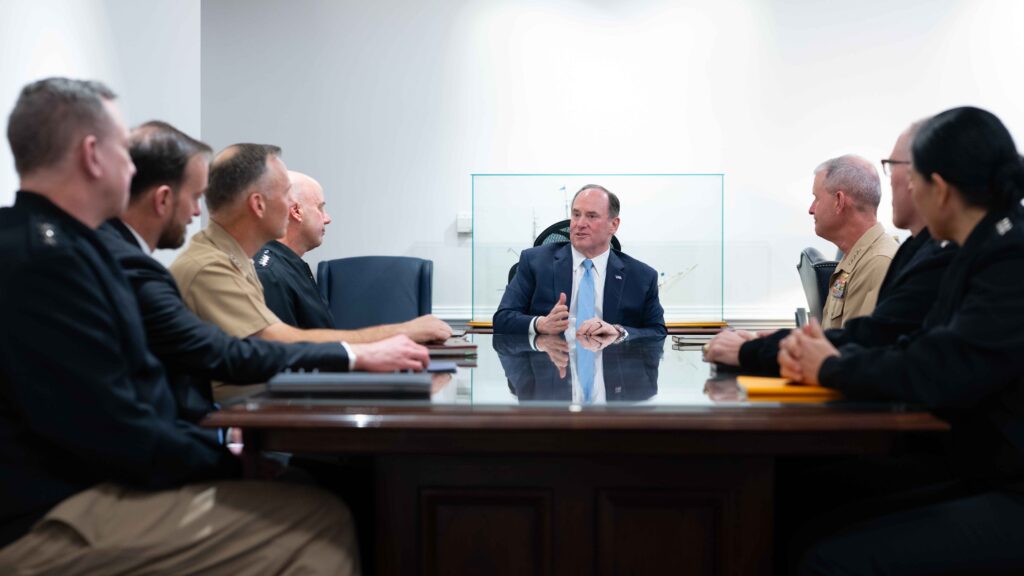
“In a time where our warfighters are on the frontline and the nature of warfare is changing at a rapid pace, the Department of the Navy needs a warfighting acquisition system that better responds to those at the tip of the spear,” said Secretary of the Navy John C. Phelan. “Every acquisition decision ties directly to deterrence, and if deterrence fails, decisive victory. With the establishment of PAEs, we are instilling a war-fighting mindset to accelerate delivery to the fight.” 

Under the PAE model, leaders are empowered —and expected— to make disciplined, data-driven trade-offs across cost, schedule, and performance, with a clear priority on time to field. Additionally, each PAE is responsible for understanding and actively managing the industrial base supporting their portfolio, including production capacity, supply chain risk, and opportunities to expand or diversify suppliers. 

The Department of the Navy has empowered five senior acquisition leaders as the interim Portfolio Acquisition Executives, making them the single accountable official for key portfolios: 

PAE Industrial Operations: Vice Adm. James P. Downey 

PAE Marine Corps: Lt. Gen. Eric Austin 

PAE Maritime: Mr. Christopher Miller 

PAE / DPRM Strategic Systems Programs: Vice Adm. Johnny Wolfe 

PAE Undersea / DRPM Submarines: Vice Adm. Robert Gaucher 

These reforms will create a warfighting acquisition system that aligns authority with responsibility, reduces unnecessary bureaucracy, empowers program managers, and delivers capability to the Navy and Marine Corps at speed and scale. 

“PAEs will have direct authority not only for program offices but also over associated technical, contracting, and sustainment functions, providing true cradle-to-grave control to deliver fully integrated capability,” said Mr. Jason Potter, Performing the Duties of Assistant Secretary of the Navy for Research, Development and Acquisition (ASN RDA). “We are moving from a compliance-based bureaucracy to having outcome-focused organizations, fundamentally changing how we do business.” 

Department of the Navy acquisition reform efforts have progressed aggressively since the establishment of the DON Rapid Capabilities Office (DON-RCO) and establishment of PAE Robotics and Autonomous Systems in December 2025, which Vice Adm. Seiko Okano, Principal Military Deputy to ASN(RDA), says is helping to establish a culture of speed and measured risk across the warfighting acquisition system. 

“Our acquisition workforce is critical to our warfighting capability, and not being deployed does not excuse us from having a warfighting ethos,” said Vice Adm. Seiko Okano. “Each PAE will operate with a digital first mind-set – we will align on data and eliminate non-value-added layers of program reviews and bureaucracy to identify risks earlier and enable faster and more informed decision making.” 

Additionally, each PAE will operate with a dedicated Rapid Capability Cell, closely linked to the Department of the Navy’s Rapid Capabilities Office. These cells will focus on rapidly identifying opportunities to adopt commercial technology, conduct rapid prototyping, and accelerate fielding when urgent operational needs arise. 

Transition study efforts continue across the aviation, industrial infrastructure, mission systems, and munitions programs. These efforts are progressing and will be announced as they are formally established. 


Coast Guard interdicts 11 aliens near Imperial Beach 

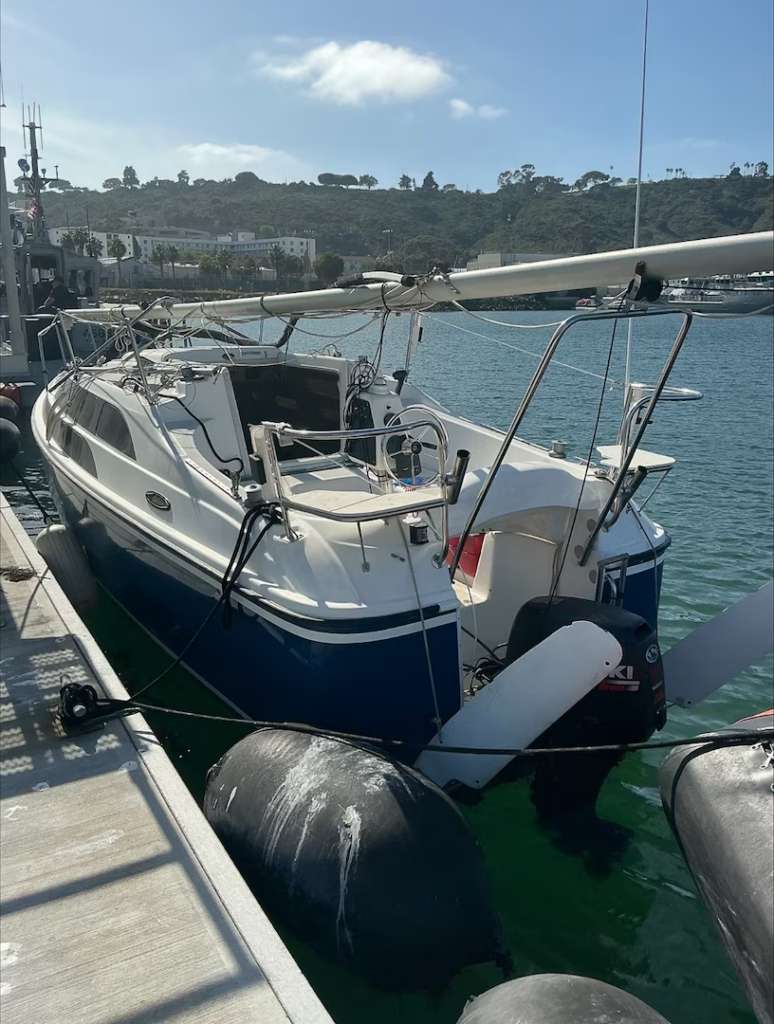
The Coast Guard interdicted 11 suspected aliens approximately 7 miles west of Imperial Beach, Sunday. At approximately 12:57 p.m., crew members aboard the Coast Guard Cutter Sea Otter (WPB-87362) observed a vessel transiting into U.S. waters and dispatched a boarding team to intercept. 

U.S. Coast Guard Southwest District, March 16, 2026 

SAN DIEGO — The Coast Guard interdicted 11 suspected aliens approximately 7 miles west of Imperial Beach, Sunday.  

At approximately 12:57 p.m., crew members aboard the Coast Guard Cutter Sea Otter (WPB-87362) observed a vessel transiting into U.S. waters and dispatched a boarding team to intercept.  

The Sea Otter’s boarding team interdicted the vessel and identified 11 suspected aliens aboard, all claiming Mexican nationality.  

A Coast Guard Station San Diego boat crew assisted by transporting the vessel and all 11 suspected aliens to Border Patrol at Ballast Point.  


USS Gonzalez Departs Norfolk for Deployment

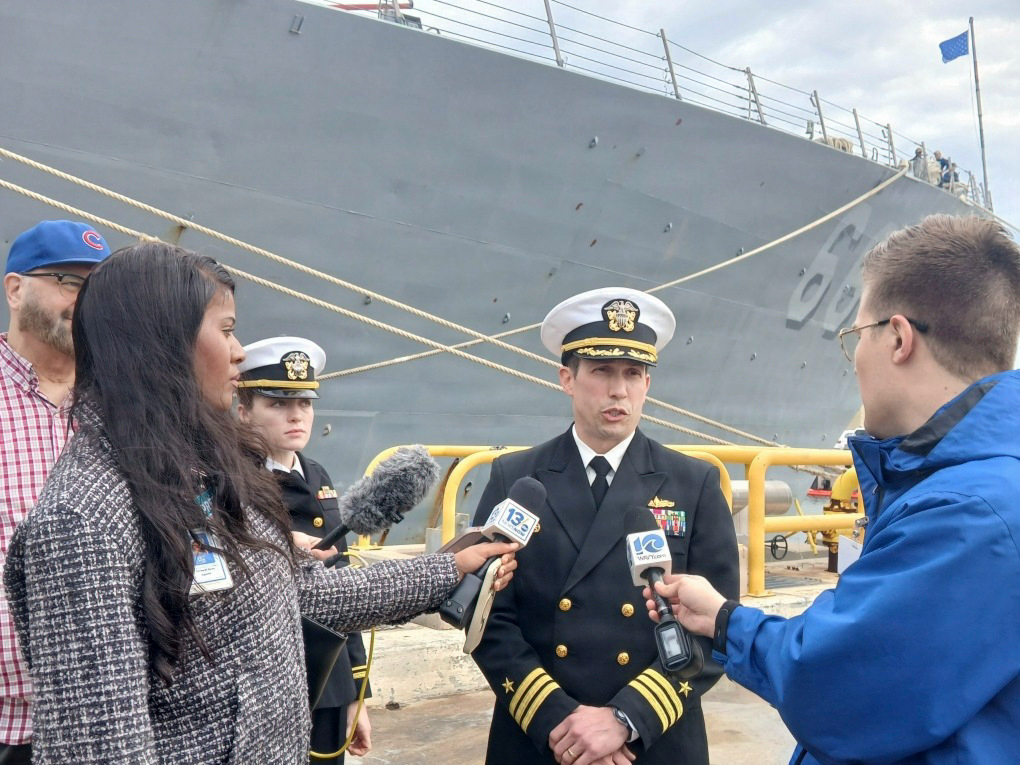
NAVAL STATION NORFOLK, Va. (March 16, 2026) – Cmdr. Michael Shenk, commanding officer of the Arleigh Burke-class guided-missile destroyer USS Gonzalez (DDG 66), speaks to local news media outlets prior to the ship’s departure from Naval Station Norfolk to begin operations in support of its scheduled deployment. The ship’s departure comes after months of training, maintenance, and certification events. (U.S. Navy photo by Chief Mass Communication Specialist Matthew Jackson) 

From U.S. 2nd Fleet, 17 March 2026 

NORFOLK, Va. – Arleigh Burke-class guided missile destroyer USS Gonzalez (DDG 66) got underway from Naval Station Norfolk March 16, 2026, to begin operations in support of its scheduled deployment. 

The ship’s departure comes after months of training, maintenance, and certification events. 

“The crew is ready and this ship brings significant combat capabilities to the fight,” emphasized Capt. John Benfield, commodore of Destroyer Squadron 22. “They are prepared to act at a moment’s notice to deter or defeat any threat as necessary.” 

Gonzalez, stationed in Norfolk, Va, with a crew of approximately 300 Sailors, is a multi-mission guided-missile destroyer with air warfare, anti-submarine warfare, naval surface fire support, and surface warfare capability. 

“A truly incredible amount of training and energy went into ensuring our crew was prepared for this deployment,” said Cmdr. Michael Schenk, commanding officer, USS Gonzalez. “Additionally, the guidance and assistance provided by Surface Force Atlantic, Carrier Strike Groups Four and Ten, Surface Group Mid-Atlantic, Destroyer Squadron Twenty-Two, and the Mid-Atlantic Regional Maintenance Center exemplified the full team support behind this ship being ready for any challenge we may face. Thank you to our families and the Norfolk community for your continued support as we head out to sea.” 

Gonzalez is the U.S. Navy’s 16th Arleigh Burke-class destroyer. The ship was named for Marine Sgt. Alfredo Cantu Gonzalez, a Medal of Honor recipient in the Vietnam War. The keel was laid down on Feb. 3, 1994, at Bath Iron Works in Bath, Maine, and christened on Feb. 18, 1995. 

U.S. 2nd Fleet, reestablished in 2018 in response to the changing global security environment, develops and employs maritime ready forces to fight across multiple domains in the Atlantic and Arctic in order to ensure access, deter aggression and defend U.S., allied, and partner interests. 

For more U.S. 2nd Fleet news and photos, visit facebook.com/US2ndFleet, https://www.c2f.usff.navy.mil/, X – @US2ndFleet, and https://www.linkedin.com/company/commander-u-s-2nd-fleet. 


Bell Completes SPINE Upgrades on First Two H-1 Aircraft

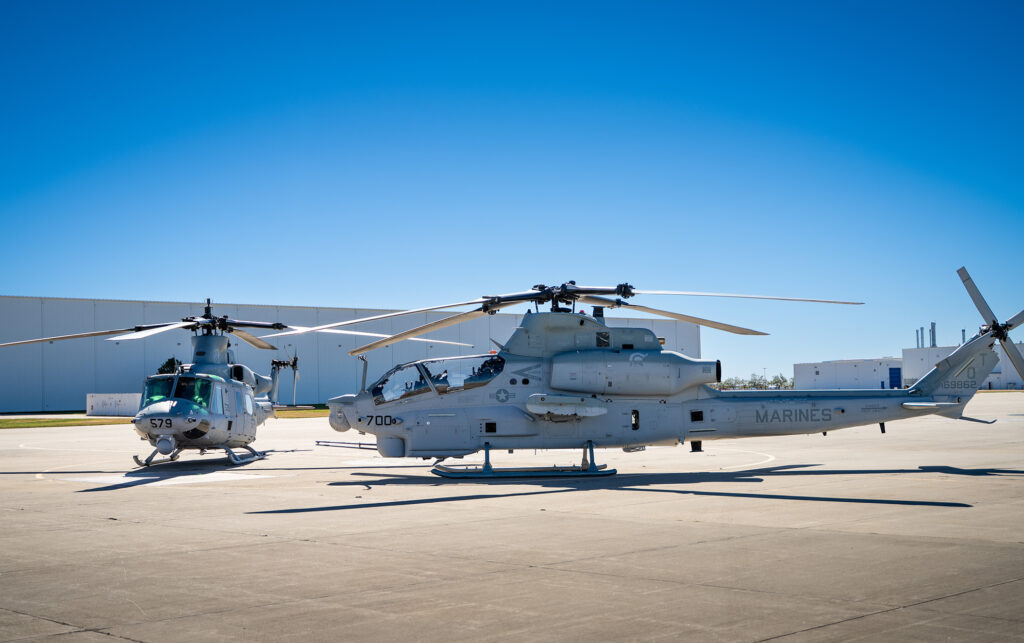
The first AH-1Z and UH-1Y to be completed under the Structural and Power Improvements for NextGen Effects (SPINE) program, formerly SIEPU, have left the Amarillo Assembly Center 

From Bell Textron 

AMARILLO, Texas. (March, 17 2026) – Bell Textron Inc., a Textron Inc. (NYSE: TXT) company, has announced the completion of the first AH-1Z and UH-1Y aircraft to receive full upgrades to their structure and power delivery mechanisms under the US Marine Corps’ SPINE program. The program was recently renamed from Structural Improvement and Electrical Power Upgrade (SIEPU) to the Structural and Power Improvements for NextGen Effects (SPINE) program to emphasize the importance of this essential modernization effort and to highlight the increased survivability and lethality SPINE will enable throughout the lifetime of the H-1 fleet.  

The completed aircraft departed the Amarillo Assembly Center and are now at Naval Air Station (NAS) Patuxent River for continued flight testing. These tests will determine the final SPINE configuration to be modified in Amarillo and fielded to the USMC in future contracted efforts.​ 

The SPINE program will enable the H-1 fleet to utilize enhanced weapons systems and other future capabilities and is part of the H-1 program’s modernization plan to increase lethality and enhance survivability by improving modern warfighting capabilities.   

“To have these first two aircraft completed under the SPINE program is a huge moment for us,” said Scott Sims, H-1 program director, Bell. “At Bell, crew safety and aircraft effectiveness remain the number one priority on everything we do. These upgrades will ensure that our H-1 aircraft remain the most capable aircraft available, while operating at the forefront of modern missions. They will continue to excel at the job they were designed to do for many years to come.” 

Bell’s effort to modify these first two aircraft began at the company’s Drives System Center (DSC) and Repair and Overhaul Center (ROC) and culminated in the aircraft electrical and structural modifications that took place over the last 19 months at the Amarillo Assembly Center. Successful execution has been a result of years of work between U.S. Government, Bell, and industry partners. The completion of the first modification effort at the Amarillo Assembly Center sets the stage for future growth as Bell looks to support modification of the Marine H-1 fleet over the next decade. 

“In the competitive world that the H-1 lives and thrives in, it’s vital to remain competitive with current and future capabilities and to excel in every environment where these aircraft are deployed,” said Danielle Markham, program manager, Bell.  

“The SPINE program represents the next step in the H-1 evolution, ensuring the platform has structural strength, electrical capacity, and digital foundation needed to operate as a fully interoperable member of the modern joint force.”  


13th MEU Forms Complete Marine Air-Ground Task Force with Full F-35 Squadron 

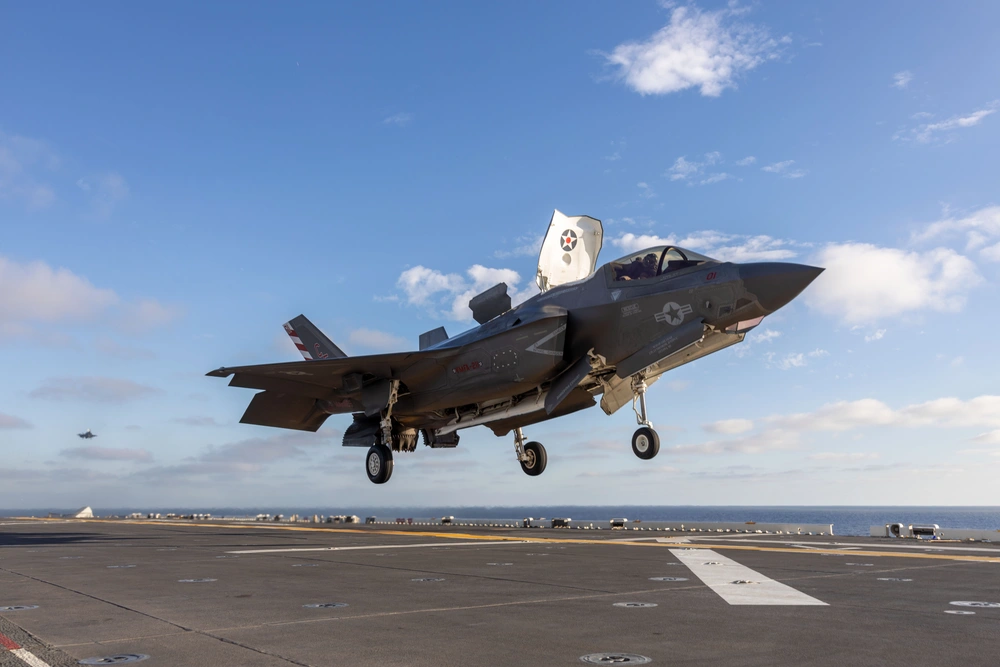
A U.S. Marine Corps F-35B Lightning II aircraft assigned to Marine Fighter Attack Squadron (VMFA) 211, Marine Aircraft Group 13, 3rd Marine Aircraft Wing, conducts a vertical landing on the flight deck of the amphibious assault ship USS Tripoli (LHA 7) as part of Steel Knight 24 while underway in the Pacific Ocean, Dec. 3, 2024. (U.S. Marine Corps photo by Sgt. Luc Boatman)

From the 13th Marine Expeditionary Unit, March 16, 2026 

CAMP PENDLETON, Calif. – The 13th Marine Expeditionary Unit (MEU) has officially formed as a complete Marine Air-Ground Task Force with the addition of its major subordinate elements, bringing the MEU’s full capability together under one command. 

The 13th MEU Command Element welcomed Battalion Landing Team (BLT) 2/4, which will serve as the Ground Combat Element; Combat Logistics Battalion (CLB) 13, which will serve as the Logistics Combat Element; and Marine Medium Tiltrotor Squadron (VMM) 364 (Reinforced) and Marine Fighter Attack Squadron (VMFA) 211, which together form the Aviation Combat Element. VMFA-211 will provide a full squadron of F-35B Lightning II aircraft, significantly expanding the aviation capabilities of the unit. 

Together, these units form a Marine Air-Ground Task Force (MAGTF), enabling command and control of ground, aviation, and logistics capabilities and forming a single, rapidly deployable force capable of executing a wide range of missions from the sea. 

“Compositing the 13th MEU brings together the full capabilities of a Marine Air-Ground Task Force,” said Col. Richard Alvarez, commanding officer of the 13th MEU. “That integration gives national leaders another flexible, lethal, sea-based force ready to respond when needed.” 

As the Ground Combat Element, BLT 2/4, provides the infantry forces of the MEU and serves as the principal ground maneuver element of the MAGTF. 

The Aviation Combat Element, comprised of VMM-364 (Rein.) and VMFA-211, provides the MEU with a full spectrum of Marine Corps aviation capabilities in support of MAGTF operations. 

CLB-13, the Logistics Combat Element, provides a broad range of sustainment capabilities that allow the MEU to operate and sustain itself in any environment. 

“The strength of The Fighting 13th has always been its Marines and Sailors,” said Sgt. Maj. Gerald Furnari, the senior enlisted advisor of the 13th MEU. “Every generation that serves in this unit adds to its legacy, and today’s team stands ready to answer the nation’s call.” 

The composite of the MEU marks the beginning of an intensive training cycle during which the command, ground, aviation, and logistics elements will train together before deploying aboard U.S. Navy amphibious ships as part of an Amphibious Ready Group. 

The 13th MEU was established at Camp Pendleton on Feb. 1, 1985, as the 13th Marine Amphibious Unit, and was redesignated as the 13th Marine Expeditionary Unit on Feb. 5, 1988. Known as “The Fighting 13th,” the unit has deployed around the world in support of combat operations, crisis response missions, and humanitarian assistance efforts. 


NIWC Pacific AI Program to Guide Next-Generation Chip Development 

From Darian Wilson, Naval Information Warfare Center, March 16, 2026 

SAN DIEGO – A Naval Information Warfare Center (NIWC) Pacific artificial intelligence program is poised to help guide the development of a new generation of American-made microchips, following a high-level summit hosted by the University of Arizona on Feb. 18. 

A new coalition of leaders from academia, venture capital, and the semiconductor industry has identified a NIWC Pacific AI program as a lead use case for developing revolutionary chips that would merge electronics and photonics. The effort aims to create processors that could dramatically reduce power consumption and heat while increasing processing power, a critical need for deploying advanced AI in resource-constrained military environments. 

The “Summit on Photonics Heterogeneous Integration” brought together approximately 25 experts from top universities and tech companies to rally behind a national security imperative. A presentation on a NIWC Pacific AI initiative was given by John Wood, lead systems engineer for the NIWC Pacific Command and Control Department. “Bringing together this ecosystem of academic and industry leaders is a pivotal moment,” said Wood. “When we presented the vision for our in-house AI program, it helped crystallize the national security imperative driving this innovation. We’re not just talking about faster chips; we’re talking about securing a technological advantage for the nation.” 

The NIWC Pacific program, which is developing a future AI commander-assist system, was seen as an ideal testbed. According to Wood, its near-term development goals and low initial production volume make it a perfect springboard for demonstrating the new chip technology. 

The proposed hybrid chips are designed to solve two major hurdles for AI adoption on military platforms: high power draw and immense heat dissipation. By integrating light-based photonics directly with electronics, these new designs are expected to run faster and far more efficiently. This could make it feasible to run complex AI applications aboard ships and other platforms where power and cooling are inherently limited. A key goal of the coalition is to design and fabricate the new chips entirely in the United States, strengthening supply chain security for critical defense components. 

“For the Navy, this is another exciting step toward making heavy AI processing a reality aboard our ships,” said Wood. “These new chips could be the key to deploying advanced AI capabilities directly to the fleet, right where they’re needed most.” 

The group plans to hold semi-annual summits, alternating between the University of Arizona and Stanford, to track progress and tackle challenges, according to Wood. The long-term goal is to mature the technology through the NIWC Pacific use case before scaling it for widespread adoption in both military and mainstream AI processors. 

NOTICE: AI tools were used to improve readability of this information. Factual accuracy of all content was verified by relevant DoD personnel in compliance with DoD policies. 


HII’S Ingalls Shipbuilding Celebrates Apprentice School Graduates 

From HII 
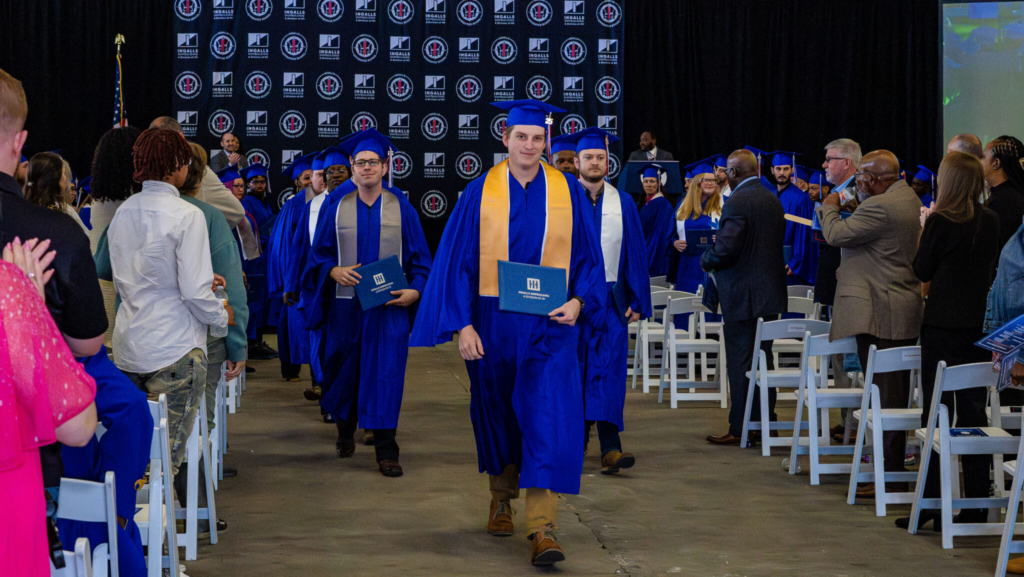
PASCAGOULA, Miss., March 14, 2026 (GLOBE NEWSWIRE) — HII’s (NYSE: HII) Ingalls Shipbuilding division celebrated 70 apprentice school graduates during a ceremony at the shipyard today. The event honored the newest class to complete the Department of Labor-registered program, which combines classroom instruction, paid on-the-job training and industry-recognized credentials. 

“The future of shipbuilding depends on skilled craftsmen and women who care deeply about their work, and today’s graduates should wear that responsibility with pride,” said Ingalls Shipbuilding President Brian Blanchette. “What they have learned is more than a trade, it is the discipline to do what’s right even when no one is watching. And the timing could not be more important; Our Navy is counting on the commitment and capability they bring to the ships our nation depends on.” 

Since its founding in 1952, the Ingalls Apprentice School has graduated more than 4,000 shipbuilders and today supports more than 750 students who contribute directly to Ingalls’ operations. The school provides specialized training in 15 U.S. Department of Labor–registered trades, equipping apprentices with the technical skills, strong work ethic and hands-on experience needed to advance into journeyman roles. Apprentices earn competitive wages and receive a comprehensive benefits package beginning 30 days after starting the program. 

Annually, Ingalls recognizes apprentices who excel in academics, craftsmanship, leadership and dedication. This year, joiner apprentice Sawyer Briggs set the standard for his class and was named Overall Apprentice of the Year. 

“I’m proud of the journey that has brought me to this point in my career at Ingalls,” said Briggs. “This program prepared me with the skills and confidence needed to build the ships that support our Navy and our nation, and I take great pride in the craftsmanship we deliver every day.” 

Ingalls Shipbuilding, the largest manufacturing employer in Mississippi, has designed, built and maintained amphibious ships and destroyers for the U.S. Navy for more than 87 years. The apprentice school is widely regarded as the backbone of Ingalls’ workforce, with many graduates advancing from craft roles into leadership positions and senior management throughout their careers at the shipyard. 

Learn more about the Ingalls Apprentice School at: www.hii.com/careers/ingalls-apprentice-school/