Airbus Completes Second Aerial Logistics Connector Demo 

From Airbus U.S. Space & Defense, May 20, 2025 

Airbus U.S. Space and Defense recently completed its second program demonstration in support of the U.S. Marine Corps Aerial Logistics Connector contract at Marine Corps Air Station Yuma. 

The demonstration evaluated the performance characteristics of the UH-72B Lakota platform, validated the aircraft’s ability to load and carry specialized cargo, and showcased how the aircraft can be modified to meet Marine Corps requirements for an Aerial Logistics Connector system that supports expeditionary advanced base operations. 

“This demonstration was another illustration of how our MQ-72C system can support a range of missions and payloads that Marines will need to perform operations in austere environments,” said Rob Geckle, Jr., Chairman and CEO of Airbus U.S. Space and Defense. “We believe this aircraft will redefine the future of Marine Corps aviation.”  


Airbus U.S. is entering the second year of the Aerial Logistics Connector Middle Tier of Acquisition (MTA) Rapid Prototyping Program, which aims to provide the service with aircraft prototypes to demonstrate capabilities to the warfighter through a series of operational demonstrations and experiments. 

Additional demonstrations will continue throughout the rest of 2025 that inform future acquisition decisions for the opportunity to build a prototype aircraft. 

In May 2024, Naval Air Systems Command (NAVAIR) awarded Airbus U.S. Space & Defense a Phase I Other Transactional Authority Agreement, through Naval Aviation Systems Consortium, based on its unmanned UH-72 Logistics Connector concept, a variant of the proven UH-72 Lakota platform. 

The Aerial Logistics Connector effort is one of several efforts across the Department of Defense to deliver logistical support in distributed environments during peer or near-peer conflicts. 

With over 1.7 million flight hours and over 490 aircraft delivered across the U.S. Army, U.S. Navy and foreign allies, the UH-72 Lakota provides unmatched range and versatility in support of missions that include search and rescue, disaster response, homeland security, drug interdiction, firefighting and MEDEVAC. 


USS Charleston Deploys to U.S. Northern Command Area of Responsibility 

From U.S. Fleet Forces Command Public Affairs. May 21, 2025 

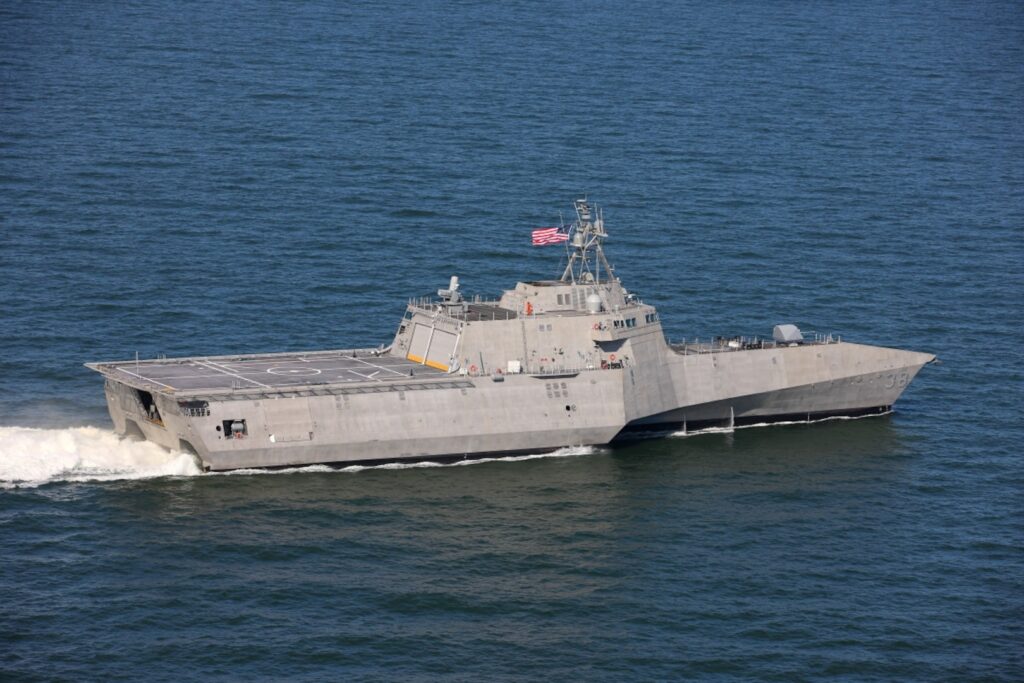
NORFOLK, Va. – The Independence-variant littoral combat ship USS Charleston (LCS 18) departed Naval Base San Diego to support U.S. Northern Command (USNORTHCOM) southern border operations, May 20. 

Charleston takes over duties previously carried out by the Arleigh Burke-class guided-missile destroyer USS Stockdale (DDG 106) and will conduct similar operations in support of USNORTHCOM’s border security objectives. 
 
Charleston’s departure reinforces the Navy’s role in the Department of Defense’s coordinated effort in response to Presidential executive orders and directives. Charleston’s sea-going capacity contributes to USNORTHCOM’s ability to protect the United States’ territorial integrity, sovereignty, and security, through a coordinated, multi-domain strategy. 
 
Charleston will continue operations with an embarked U.S. Coast Guard Law Enforcement Detachment (LEDET). These Coast Guard teams bring specialized expertise in maritime interdiction, enabling the ship to address a range of challenges, from countering illegal activities to supporting humanitarian efforts and homeland security operations. 
 
Charleston is homeported in San Diego as part of Littoral Combat Ship Squadron 1. Littoral combat ships are fast, optimally-manned, mission-tailored surface platforms that operate in near-shore and open-ocean environments, winning against 21st-century threats. LCS integrate with joint, combined, manned and unmanned teams to support forward-presence, maritime security, sea control, and deterrence missions around the globe. 
 
Now, while operating in the USNORTHCOM area of responsibility, Charleston will respond to national priorities and a Presidential declaration emphasizing the military’s role in securing U.S. borders. As the DoD’s lead for implementing border-related executive orders, USNORTHCOM continues to support critical Department of Homeland Security capabilities gaps, with Charleston marking a vital contribution to these efforts. 
 
USFFC is responsible for manning, training, equipping and employing more than 125 ships, 1,000 aircraft, and 103,000 active-duty service members and government employees, and providing combat-ready forces forward to numbered fleets and combatant commanders around the globe in support of U.S. national interests. 
 
USFFC also serves as the Navy’s Service Component Commander to both USNORTHCOM and U.S. Strategic Command, providing naval forces in support of joint missions as Commander, Naval Forces Northern Command (NAVNORTH) and Commander, Naval Forces Strategic Command (NAVSTRAT). USFFC is the Strategic Command Joint Force Maritime Component Commander (JFMCC STRAT) and executes Task Force Atlantic in coordination with U.S. Naval Forces Europe. 


Noem Delivers USCG Academy Commencement Address, Announces New Coast Guard Leadership

From Headquarters, U.S. Coast Guard, May 21, 2025 

NEW LONDON, Conn. — Secretary of Homeland Security Kristi Noem announced Force Design 2028 (FD2028) Wednesday during the Coast Guard Academy commencement ceremony. 

This initiative provides a blueprint to transform the Coast Guard into a stronger, more ready and capable fighting force. 

Speaking at the ceremony, Noem expressed respect for the Service and committed to advocating for funding support. Noem’s FD2028 executive report outlines a vision for the Coast Guard’s future. 

“Now, more than ever, the American people need a strong and capable Coast Guard,” said Noem. “The Coast Guard must not simply evolve. It must revolutionize how it functions and operates to ensure decisive advantage over adversaries. This requires a fundamental change. Force Design 2028 is the bold blueprint needed to drive urgent action and win.” 

Noem also announced President Donald J. Trump’s nomination of Adm. Kevin E. Lunday to serve as the 28th commandant of the Coast Guard. Lunday will continue serving as acting commandant until confirmed by the U.S. Senate. 

The 28th commandant will lead the Coast Guard through a historic period of change. Under their leadership, we will establish the first Coast Guard service secretary and facilitate the implementation of FD2028. FD2028 will re-shape how the Coast Guard functions and operates to ensure decisive advantage over adversaries. 

“Now is the time for fundamental change,” said Lunday. ”Secretary Noem has said that we must reinvigorate the Coast Guard or risk strategic failure. I am honored to lead our Coast Guard men and women in this historic effort to renew the service for the future.” 

FD2028 outlines several key initiatives and campaign areas: 

  • Establish a service secretary: This initiative establishes a legislatively authorized, secretary of the Coast Guard nominated by the president and confirmed by the Senate. This secretary would report directly to the secretary of homeland security and provide civilian leadership, oversight, accountability and advocacy, with authorities comparable to secretaries of other military services. 

  • People: Recognizing that the workforce is at the core of the Service, FD2028 seeks to grow the Coast Guard’s military workforce by at least 15,000 members by the end of fiscal year 2028 to restore readiness and support a growing fleet and new capabilities. Initiatives include transforming the workforce by aligning with the president’s executive order on “Restoring America’s Fighting Force” and instituting a physical fitness test, modernizing enlisted accessions and investing in recruiting incentives, investing in officer leader growth through various programs, revitalizing the Coast Guard Reserve with a focus on mobilization readiness and streamlining policies and processes for the civilian workforce. 

  • Organizational Design: FD2028 will reform the Coast Guard’s organizational structure to become more effective, enabling a leaner, more agile and strategically focused Headquarters by streamlining processes and eliminating redundancies. Key initiatives include designing the future force to win by embracing strategic planning and establishing a futures development and integration function, creating program executive offices for a systems-focused approach to acquisitions and sustainment, establishing a Deployable Specialized Forces command for improved integration and interoperability, strengthening Coast Guard Cyber Command to address cyber and space threats, transferring operational and service-delivery functions out of Headquarters. 

  • Technology: FD2028 will position the Coast Guard to become a leader in the adoption and use of advanced technology, human-machine teaming and data. Initiatives include creating Coastal Sentinel, a next-generation integrated sensor network leveraging artificial intelligence for unprecedented threat identification, supporting a revitalized U.S. maritime industry by replacing antiquated systems for vessel registration and mariner credentials, supporting workforce growth with a modern human resources information technology system incorporating artificial intelligence, delivering an improved logistics system for conditions-based maintenance, and establishing a rapid response prototype team to quickly identify, adopt and deliver advanced technology capabilities. 

  • Contracting and acquisitions (C&A): This campaign aims to streamline C&A processes to better respond to emerging threats, strengthen industry coordination and prioritize speed and flexibility. The service will reform acquisition practices to deliver needed capabilities—including icebreakers and unmanned systems—while managing risk. Planned changes include establishing a disciplined requirements process, assigning senior acquisition authority to the secretary of the Coast Guard, creating a senior procurement executive role, outsourcing procurement activities for effectiveness and designating single points of accountability to empower program managers.  

FD2028 represents an opportunity at a critical moment in history to transform the Coast Guard. Within 30 days, the commandant will deliver an execution plan, followed by the commencement of a force posture and operational concepts campaign within 150 days, and the first of semiannual updates within 180 days. 

“Force Design 2028 is the Coast Guard’s way forward,” said Lunday. ”Under the leadership of Secretary Noem, we are moving out today to aggressively implement this transformational change.” 

Read the FD 2028 executive report here

The Coast Guard is America’s premier maritime law enforcement agency. It is part of the Department of Homeland Security and, at all times, a military service and part of the joint force defending the nation. For over 234 years, the American people have depended on its missions and the unique value the Coast Guard provides to assure our economic prosperity and national security. With its ships, aircraft, boats and nearly 55,000 military members and civilian employees, every day the Coast Guard: controls the U.S. border and maritime approaches; protects America’s ports and waterways; conducts military operations to defend the Nation; saves lives; enforces federal law; leads in national emergencies; and maintains the flow of maritime commerce to ensure America’s economic prosperity. 

More information about the U.S. Coast Guard can be found at www.uscg.mil. Follow @USCG on X and Instagram, like us on Facebook, subscribe on YouTube and follow LinkedIn — connect with us. 


U.S. Coast Guard Barque Eagle to Visit Los Angeles During Fleet Week 

CGC Eagle parades into Los Angeles Harbor under the watchful eye of a CG Dolphin helicopter and 41-foot Utility Boat. (Photo by Michael Brodey, USCG Aux.)

From U.S. Coast Guard Pacific Area, May 19, 2025 

LOS ANGELES — U.S. Coast Guard Barque Eagle (WIX 327) will participate in Los Angeles Fleet Week festivities during Memorial Day weekend, May 23 – 26. 

Eagle will be moored at Berth 50/51 in San Pedro’s Outer Harbor, where it will offer free public tours during the following dates and times: 

  • Friday, May 23 (10 a.m. to 3 p.m.) 

  • Saturday, May 24 (10 a.m. to 3 p.m.) 

  • Sunday, May 25 (10 a.m. to 3 p.m.) 

Visitors will need to join a digital queue and be assigned a time to get in line before their visit. They will then take a shuttle bus to the ship. For more information, go to the Los Angeles Fleet Week’s web page at: https://lafleetweek.com/events_schedule/ships/ 

At 295 feet in length, Eagle is the largest tall ship flying the stars and stripes and the only active square-rigger in United States government service. Constructed in 1936 by the Blohm and Voss Shipyard in Hamburg, Germany, and originally commissioned as the Horst Wessel by the German Navy, Eagle was a war reparation for the United States following World War II. Eagle is a three-masted barque with more than 22,300 square feet of sail and six miles of rigging.  Eagle has served as a classroom at sea to future Coast Guard officers since 1946, offering an at-sea leadership and professional development experience as part of the Coast Guard Academy. 

Los Angeles marks the third port call of Eagle’s 14-week journey along the West Coast. Many Coast Guard Academy practices are steeped in what the Academy mission refers to as “the sea and its lore,” traditions that date back to the golden age of sail, when vessels like Eagle made up the Navy and Revenue Cutter Service, the precursor of the modern United States Coast Guard. Eagle also serves as a goodwill ambassador for the United States and Coast Guard, making calls at foreign ports to foster relations with partner nations. 

For a continuous stream of information about Eagle, including port cities, tour schedules, current events, as well as cadet and active duty crewmember photographs, follow the United States Coast Guard Barque EAGLE Facebook page or on Instagram @barqueeagle.  All U.S. Coast Guard imagery is in the public domain and can be shared widely. 


USS Alexandria Returns to Naval Base Point Loma Following Seven-Month Deployment 

NAVAL BASE POINT LOMA (May 15, 2025) Cmdr. Christopher Rose, center, commanding officer of the Los Angeles-class fast-attack submarine USS Alexandria (SSN 757), observes mooring operations as the boat returns to Naval Base Point Loma following a 7-month deployment to the U.S. Indo-Pacific Command area of responsibility, May 15, 2025. (U.S. Navy photo by Mass Communication Specialist 1st Class Aaron T. Smith) 

From Petty Officer 1st Class Tiarra Brown, May 19, 2025 

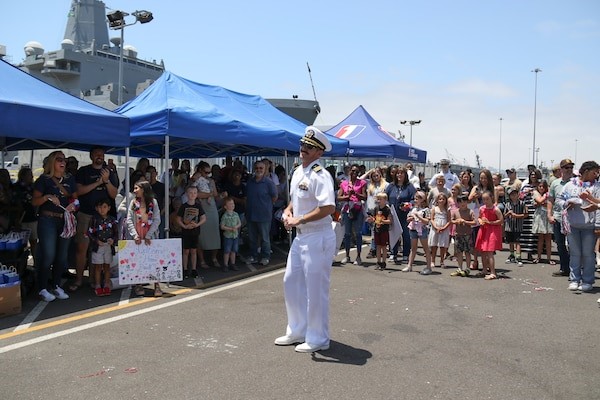
SAN DIEGO — The Los Angeles-class fast-attack submarine USS Alexandria (SSN 757) returned home to Naval Base Point Loma following a successful seven-month deployment to the U.S. Indo-Pacific Command area of responsibility, May 15, 2025. 

The Alexandria deployed in 2024 from its homeport of Naval Base Point Loma, California, on a regularly scheduled deployment in support of national security objectives. The submarine’s operations throughout the Pacific Ocean underscore the United States’ commitment to an Indo-Pacific that is free and open, connected, prosperous, secure, and resilient. 
 
“This crew went above and beyond, no matter what was asked of them,” said Cmdr. Chris Rose, Alexandria’s commanding officer. “Deploying on submarines is a demanding but rewarding and consequential task. I could not be prouder of my crew’s resolve over the past seven plus months in demonstrating every day what makes our boats and our crews the apex predators of the maritime domain.” 
 
While deployed, the Alexandria demonstrated the capability and professionalism of the Joint Force, conducting an integrated exercise with U.S. Marine Corps personnel assigned to Third Reconnaissance Battalion during and immediately after a scheduled port visit to Guam. 
 
“This crew did a phenomenal job in all aspects of this deployment,” said Master Chief Machinist’s Mate (Auxiliary) Mitchell Gatton, Alexandria’s chief of the boat. “I am especially proud of the 35 submarine warfare devices earned by Alexandria Sailors, which to me underscores the crew’s commitment to continued growth and development.” 

 
Between operations and taskings, the crew also made a scheduled port visit to Busan, South Korea, underscoring the strategic and critical relationship between the United States and South Korea. Port visits like this reflect the United States’ commitment to the Indo-Pacific region, and complement the many exercises, training, operations and other military cooperation activities conducted by U.S. submarine forces with our Republic of Korea Navy allies. 
 
This visit also provided an opportunity for Alexandria’s crew to gain a deeper understanding of Korean culture while enhancing interpersonal relationships with counterparts. 
 
“I really enjoyed Busan, South Korea because I have never been to that part of the world,” said Fire Control Technician 3rd Class Justin Guerra. “Port visits give us that time to explore new places, get some well-earned rest, and experience the culture, food, and hospitality of our Allied and partner nations.” 
 
Upon arriving home, and in support of a time-honored Navy tradition, Electronics Technician, Submarine, Navigation 3rd Class Dylan Caruthers was the first Alexandria Sailor to depart the boat for the “first kiss.” 
 
“I am thrilled to be home with my family and I’m proud of all the great work we accomplished on deployment,” said Torpedoman’s Mate 3rd Class Ezekiel Hamner. “This morning when I heard the order to station the maneuvering watch and send line handlers topside, it really hit that we were at the end of our deployment. It was an awesome feeling.” 
 
The USS Alexandria is the third ship to bear the name Alexandria. The unit’s motto is “Twice as Strong,” which denotes the fact that it is named for Alexandria, Virginia and Alexandria, Louisiana. She is the 46th Los Angeles-class fast-attack submarine and was commissioned June 29, 1991. 
 
The Alexandria is assigned to Commander, Submarine Squadron 11, home to four Los Angeles-class fast-attack submarines, which are capable of supporting various missions, including anti-submarine warfare, anti-ship warfare, strike warfare and intelligence, surveillance and reconnaissance. 


Coast Guard Cutter Forward Returns Home After Seizing More Than $23M in Cocaine

From U.S. Coast guard Atlantic Area, May 19, 2025 

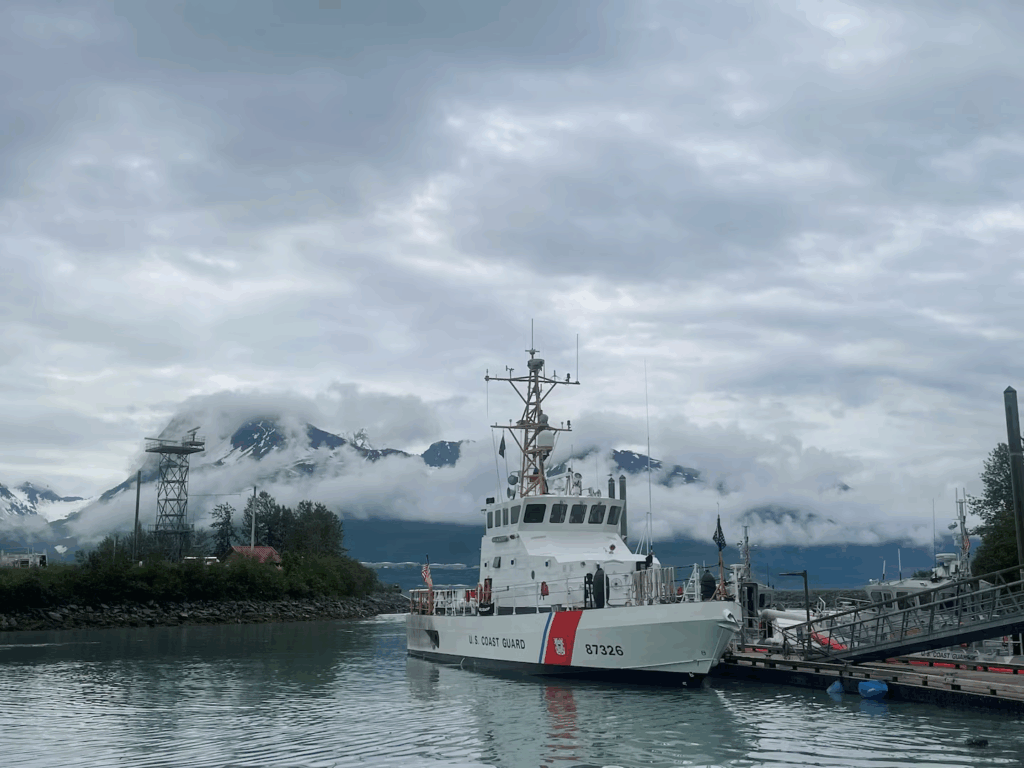
PORTSMOUTH, VA — The crew of Coast Guard Cutter Forward (WMEC 911) returned to their home port in Portsmouth, Monday, following a 79-day patrol in the Eastern Pacific Ocean.  

Forward’s crew deployed in support of Joint Interagency Task Force – South (JIATF-S) to conduct counter-drug operations while underway in the Eleventh Coast Guard District’s area of responsibility. Through detection, monitoring and interdiction efforts, crew members directly reduced the flow of illicit narcotics into the United States. Forward’s crew worked alongside additional units to include Coast Guard Cutters Kimball (WMSL 756), Thetis (WMEC 910), and the Coast Guard Tactical Law Enforcement Team – South (TACLET-S) to stop suspected drug smuggling while patrolling off the Pacific coast of Central and South America.  

While at sea, the cutter interdicted a vessel engaged in drug-trafficking. After it was detected by a maritime patrol aircraft, a Coast Guard boarding team that included members from TACLET-S launched to pursue the vessel, which led to the apprehension of four suspected drug traffickers. A second small boat crew was launched to locate and recover 37 bales of cocaine that were jettisoned by the suspected traffickers, resulting in the seizure of 2,039 pounds of cocaine worth more than $23 million.  

“Transnational criminal organizations are smart and sophisticated, and our crews meet that challenge head-on,” said Cmdr. Andrew Grantham, commanding officer of Forward. “Throughout this demanding patrol, our team performed with professionalism and determination. However, as a 35-year-old cutter, Forward faces increasing limitations that can impact mission effectiveness – including lost opportunities to interdict known threats. As the Commandant has stated, we continue to feel the strain of sustaining aging assets. Continued investment in new capabilities will ensure we remain ready to counter evolving threats in the maritime domain.”  
 
On May 17, the crew of Forward rescued two people and their disabled 60-foot sailboat nearly 90 miles offshore of Charleston, South Carolina. Forward’s crew towed the sailboat to coastal waters, where a Station Charleston boat crew and a commercial salvage vessel took over and safely transported the two sailors and their boat to shore. No injuries were reported. 

During the deployment, Forward’s crew engaged with Ecuadorian navy officials and valued partners in the Galápagos Islands during a port of call on San Cristóbal Island, Ecuador. Forward hosted the delegation aboard the cutter, providing a tour to highlight Coast Guard capabilities in support of U.S., Ecuadorian, and international joint objectives.  

Support from TACLET-S, which is based in Miami, improves mission capability. As part of the Coast Guard’s deployable specialized forces, LEDETs deliver boarding officer teams for high-risk maritime interdiction operations. These units are highly skilled and experienced in counter-drug missions and enforcing U.S. law at sea.   

JIATF-S, in conjunction with partner nations, works to target, detect and monitor illicit drug trafficking within the joint operating area. The organization facilitates the interdiction and apprehension of illicit traffickers to dismantle transnational criminal organizations while reducing the flow of drugs to the public. Once interdiction becomes imminent, the law enforcement phase of the operation begins, and control of the operation shifts to the U.S. Coast Guard throughout the interdiction and apprehension. Interdictions in the Eastern Pacific Ocean are performed by members of the U.S. Coast Guard under the authority and control of the Coast Guard’s Eleventh District, headquartered in Alameda, California.    

Forward is a 270-foot, Famous-class medium endurance cutter. The cutter’s primary missions are counter-drug and migrant interdiction operations, as well as search and rescue in support of U.S. Coast Guard operations throughout the Western Hemisphere. The cutter falls under the command of U.S. Coast Guard Atlantic Area, which is based in Portsmouth, Virginia.    

For information on how to join the U.S. Coast Guard, visit Go Coast Guard.com to learn about active duty and reserve, officer and enlisted opportunities. Information on how to apply to the U.S. Coast Guard Academy can be found here.   

For more, follow us on Facebook, Instagram and X.     


Ultra Maritime and General Atomics Announce Strategic Partnership

From Ultra Maritime, May 20, 2025 

COLUMBIA CITY, Indiana – General Atomics Aeronautical Systems, Inc. (GA-ASI) and Ultra Maritime are proud to announce a strategic partnership to substantially advance the state of the art in unmanned airborne detection and tracking of enemy submarines. By combining the world’s most advanced and prolific unmanned aerial system (UAS), GA-ASI’s MQ-9B SeaGuardian®, with the world’s only miniaturized, low power sonobuoys and receivers, the strategic partnership will make it possible for the U.S. and its allies to use sophisticated techniques to track submarines in hostile, GPS-denied environments.  

As adversary submarines proliferate and become stealthier, unmanned underwater vehicles grow in number and GPS jamming becomes more prevalent, the need for assured and affordable anti-submarine warfare (ASW) solutions is more critical than ever. While unmanned technologies are the clear best solution to this challenge, limitations to date in suitable ASW technologies have prevented real world solutions from emerging. This strategic partnership will provide a significant new capability where small form factor sonobuoys and receivers, aboard a long-range unmanned aircraft, can provide autonomous, low cost ASW in a GPS-denied environment.  

The GA-ASI MQ-9B SeaGuardian provides unmatched multi-domain intelligence, surveillance, reconnaissance and targeting (ISR&T). GA-ASI will integrate the MQ-9B SeaGuardian with Ultra Maritime’s exclusive small form factor (half size) sonobuoys to double UAS capacity. These sonobuoys will provide Multi-static Active (MSA) capabilities achieving unprecedented wide-area search. Furthermore, Ultra Maritime’s new acoustic receivers will be half the traditional size, making them ideal for UAS deployment. The receivers will enable more effective ASW in GPS-denied environments and will monitor more sonobuoys per MQ-9B mission through advanced communications technology. The solution is fully funded by internal research and development, and an integrated operational demonstration of this capability will occur in the Indo Pacific and other theaters beginning in 2025.  


Keel Laid for Future USS Quentin Walsh

From the Navy Office of Information, May 20, 2025 

BATH, Maine — The keel for the future USS Quentin Walsh (DDG 132), an Arleigh Burke-class Flight III guided missile destroyer, was laid during a ceremony on May 20, at Bath Iron Works (BIW). 

The keel laying represents the start of a ship’s construction. During the ceremony, the keel is authenticated when the ship’s sponsor welds their initials into the keel plate, with the assistance of a BIW welder. 

The ship’s sponsor is Madison Ann Zolper, great-granddaughter of the ship’s namesake, Coast Guard Capt. Quentin R. Walsh, who was awarded the Navy Cross for his heroic actions during World War II. 

Walsh received the Navy Cross for his leadership during the 1944 Battle of Cherbourg, where his 53-man reconnaissance unit captured 750 German soldiers and liberated 52 American prisoners of war. After World War II, he served during the Korean War and held various roles at Coast Guard headquarters. After his Coast Guard career, he worked as a teacher and parole officer in Maryland and became known for his dedication to community preservation. 

“We are honored to mark the beginning of the construction for the future USS Quentin Walsh and celebrate his legacy with his family,” said Capt. Jay Young, Arleigh Burke-class Destroyer program manager, Program Executive Office, Ships (PEO Ships). “DDG 132 will provide our Navy with critical strategic capabilities to support Fleet readiness.” 

Arleigh Burke-class Flight III destroyers feature the AN/SPY-6(V)1 Air and Missile Defense Radar and incorporate upgrades to the electrical power and cooling capacity plus additional associated changes to provide enhanced warfighting capability to the fleet. 

The keel laying of future USS Quentin Walsh (DDG 132) symbolizes the Navy’s 250-year commitment to innovation and maritime dominance. From seabed to space, the Navy delivers power for peace – always ready to fight and win. This milestone marks the Navy’s enduring legacy and commitment to shaping the future of maritime power. 

PEO Ships, one of the Department of Defense’s largest acquisition organizations, is responsible for executing the development and procurement of all destroyers, amphibious ships and craft, and auxiliary ships, including special mission ships, sealift ships, and support ships. 


RTX’s Raytheon Awarded $580M Production Contract for Next Generation Jammer Mid-Band 

An NGJ-MB pod is mounted outboard under the starboard wing of this EA-18G Growler electronic attack aircraft.  

From RTX, May 16, 2025 

Electronic attack capability will counter new and emerging adversary threats 

MCKINNEY, Texas, May 16, 2025 /PRNewswire/ — Raytheon, an RTX (NYSE: RTX) business, has been awarded a $580 million follow-on production contract from the U.S. Navy for the Next Generation Jammer Mid-Band (NGJ-MB) system. 

Under the contract, Raytheon will provide additional production NGJ-MB pod shipsets, including pods for the Royal Australian Air Force, as well as spares and peculiar support equipment. 

“Offensive Electronic Attack provides a tremendous combat capability, protecting strike packages, kinetic weapons and high-value airborne assets across a broad range of missions,” said Barbara Borgonovi, president of Naval Power at Raytheon. “With this contract, we’ll ensure that our naval aviators in all theaters are better prepared to counter adversary threats and support the Joint Fight.” 

NGJ-MB is a cooperative development and production program with the Royal Australian Air Force. It is an airborne electronic attack system consisting of two pods containing active electronically scanned arrays that radiate in the mid-band frequency range. The U.S. Navy employs NGJ-MB on the EA-18G Growler to target advanced radar threats, communications, data links and non-traditional radio frequency threats. 

Work under this contract will take place in Forest, Mississippi; McKinney, Texas; El Segundo, California; and Andover, Massachusetts through 2028. 


GA Integrates OPTIX Software for USMC Common Intelligence Picture WTI Course 

From General Atomics Aeronautical Systems, Inc. 

SAN DIEGO – 19 May 2025 – General Atomics Aeronautical Systems, Inc. (GA-ASI) has successfully integrated the advanced Optix software—developed by General Atomics Integrated Intelligence, Inc. (GA-i3)—into the U.S. Marine Corps (USMC) Common Intelligence Picture (CIP) for a multi-service Weapons and Tactics Instructor (WTI) course.  

This milestone marks a significant enhancement in the USMC’s Intelligence, Surveillance, and Reconnaissance (ISR) capabilities, delivering a unified operational view critical to the training of future aviation leaders. For the USMC, this integration directly supports the deployment and effectiveness of the GA-ASI-supplied MQ-9A Medium-Altitude, Long-Endurance (MALE) Unmanned Aircraft System within the Marine Air-Ground Task Force (MAGTF).  

Achieved through close collaboration with Marine Aviation Weapons and Tactics Squadron One (MAWTS-1) and Marine Operational Test and Evaluation Squadron One (VMX-1), the integration brought together engineers from GA-ASI and GA-i3 alongside USMC unmanned aviation operations experts. Their combined efforts enabled the seamless deployment of the Optix software during the rigorous WTI 2-25 training cycle.  

USMC MQ-9A operations during the exercise took place at Yuma, Arizona, and the Strategic Expeditionary Landing Field (SELF) at Twenty-Nine Palms, California—the Marine Corps’ only expeditionary runway in the U.S. The live-fire training environment provided an invaluable opportunity to evaluate the MQ-9A’s role in complex combat scenarios.  

By introducing Optix into this high-demand setting, Marines gained access to real-time data fusion, a shared operational picture, and enhanced collaborative decision-making—tools critical for modern battlefield success.  

“The integration of Optix software represents a key step toward the effective deployment of the MQ-9A MUX MALE platform within the MAGTF and joint operations,” said Doug Brouwer, Senior Director for USMC Programs at GA-ASI. “It enables near real-time situational awareness and improves the decision-making process across the battlespace.”  

Andrew Majchrowicz, Project Manager for Department of Defense Programs at GA-i3, added: “Equipping Marines with advanced ISR tools like Optix enhances the common intelligence picture and operational readiness in live-fire environments. This is a critical milestone in our shared goal of enabling joint-force effectiveness and full operational integration of the MQ-9A.”  

The successful deployment of Optix within the WTI course underscores General Atomics’ continued commitment to delivering cutting-edge solutions that empower the U.S. military with unmatched intelligence and operational capabilities for future multi-domain operations.