Bell to Build X-Plane for Phase 2 of DARPA Speed and Runway Independent Technologies (SPRINT) X-Plane Program
From Bell Textron Inc., July 9, 2025
Bell awarded funding for X-plane build phase of SPRINT program
Fort Worth, TX (July 9, 2024) — Bell Textron Inc., a Textron Inc. (NYSE: TXT) company, has been down-selected for Phase 2 of Defense Advanced Research Projects Agency (DARPA) Speed and Runway Independent Technologies (SPRINT) X-Plane program with the objective to complete design, construction, ground testing and certification of an X-plane demonstrator.
“Bell is honored to have been selected for the next phase of DARPA’s SPRINT program and is excited to demonstrate a brand-new aircraft with the first-ever stop/fold technology,” said Jason Hurst, executive vice president, Engineering. “This is an achievement we’ve been working towards for over 10 years, as we’ve leveraged our nearly 90-year history of X-plane development to bring new technology to our warfighters.”
The goal of the program is to provide these aircraft with the ability to cruise at speeds from 400 to 450 knots at relevant altitudes and hover in austere environments from unprepared surfaces. In Phase 1A and 1B, Bell completed conceptual and preliminary design efforts for the SPRINT X-plane. Phase 2 includes detailed design and build culminating in flight test during Phase 3.
In preparation for X-plane development, Bell has completed significant risk reduction activities including demonstrating folding rotor, integrated propulsion, and flight control technologies at Holloman Air Force Base as well as wind tunnel testing at the National Institute for Aviation Research (NIAR) at Wichita State University. Bell has a rich history of breaking barriers and high-speed vertical lift technology development, pioneering innovative VTOL configurations like the X-14, X-22, XV-3 and XV-15 for NASA, the U.S. Army and U.S. Air Force, and continues to build on the legacy of the Bell X-1.
MANILA, Philippines – The commander of U.S. Marine Corps Forces, Pacific and the Commandant of the Philippine Marine Corps will co-host the 11th annual Pacific Amphibious Leaders Symposium in Manila, July 8-10, 2025.
PALS 25 brings together senior Marine Corps, naval infantry, and military leaders from allied and partner nations in the Indo-Pacific. The event is an important opportunity to enhance personal and professional relationships amongst the region’s amphibious and maritime community through face-to-face engagements.
PALS continues to be guided by the motto, “Stronger together,” emphasizing the importance of cooperation and coordination when facing a range of challenges, from natural disasters to complex security situations.
“PALS provides a valuable opportunity to strengthen partnerships across the Indo-Pacific, ensuring that when challenges arise, we’re aligned and ready to act,” said Lt. Gen. James Glynn, commander, U.S. Marine Corps Forces, Pacific. “It’s about building trust, fostering collaboration, and preparing for the complex scenarios we may face. In this region, we know that collective strength is our greatest asset, and through events like PALS, we ensure that we’re ready to respond together, as one.”
PALS provides a forum for amphibious leaders to exchange ideas and share best practices, improving the collective ability to work together across a range of missions and scenarios. The experience and expertise assembled at PALS facilitates collaboration among allies and partners from around the world in support of a free-and-open Indo-Pacific region.
The PALS 25 schedule consists of key leader engagements, panel discussions, and briefs to engage senior leaders on critical topics such as leveraging emerging technologies for littoral operations, logistical challenges in disaster relief missions, and the role of information operations in the modern maritime environment. In addition to these discussions, delegations will present on technology-based solutions for maritime domain awareness and intelligence, surveillance, and reconnaissance, as well as amphibious force contributions to multinational security cooperation.
“We are fortunate that the PALS participants bring a wealth of knowledge and diverse experiences, which is a vital asset as we shape our own force development and modernization plans,” said Maj. Gen. Vicente Blanco, Commandant, Philippine Marine Corps. “The Philippines takes pride in co-hosting this distinguished gathering, and as we face future challenges, let us approach them with renewed purpose, strengthened partnerships, and united resolve.”
Established by MARFORPAC in 2015, PALS continues to gather a growing list of nations. Since the symposium’s development, several ally and partner militaries co-hosted, including Japan, Republic of Indonesia, Republic of Korea, and for the first time this year, Republic of the Philippines. The growing list of co-hosts demonstrates the depth of commitment among allies and partners to a more capable combined force across the Indo-Pacific.
U.S. Marine Corps Forces, Pacific is the largest operational command in the Marine Corps. Pacific Marines serve as an expeditionary force-in-readiness, and they operate as air-ground-logistics teams and are forward positioned and actively employed throughout the Indo-Pacific every day.
RTX’s Raytheon demonstrates autonomous capabilities of its Barracuda mine neutralizer
Testing proves maturity as program moves closer to initial operational capability
From RTX
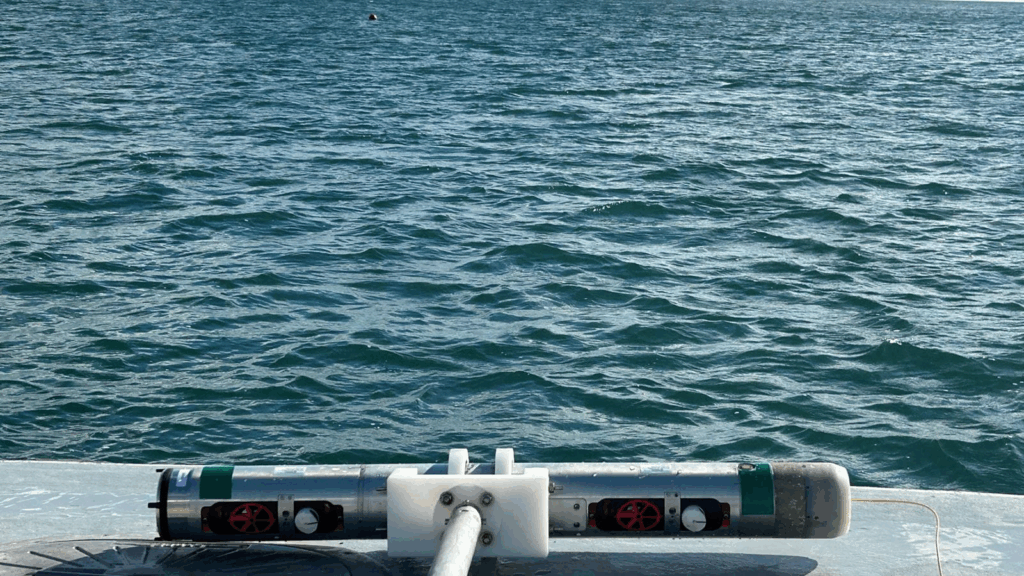
PORTSMOUTH, R.I. (July 8, 2025) — Raytheon, an RTX (NYSE: RTX) business, has successfully demonstrated its Barracuda mine neutralization vehicle in an untethered, semi-autonomous operation for the first time during recent open water testing in Narragansett Bay.
During the demonstration, Raytheon’s Barracuda proved its ability to autonomously navigate, communicate, detect and identify targets, and operate independently underwater.
“This recent testing demonstrates the significant strides we’ve made in advancing mine countermeasure technology,” said Barbara Borgonovi, president of Naval Power at Raytheon. “Barracuda’s capabilities will dramatically improve safety and efficiency for the U.S. Navy, keeping sailors out of harm’s way while effectively addressing underwater threats.”
Barracuda is the newest U.S. Navy program of record for mine neutralization. It is the first untethered, semi-autonomous mine neutralization system capable of tracking and identifying bottom, volume and near-surface mines with man-in-the-loop delivering a final decision for neutralization. The program started in research and development within Raytheon’s Advanced Technology business segment – a group of innovators that matures technologies that are incorporated into Raytheon products including franchise programs such as LTAMDS and SPY-6.
In line with the Navy’s acquisition plan, Raytheon’s Barracuda is on track to achieve initial operational capability and low-rate initial production by 2030.In addition to executing mine neutralization missions, the company is investing in developing a larger and more advanced variant to meet different mission sets such as subsea and seabed warfare.
Lockheed Martin and HavocAI Collaborate to Revolutionize Maritime Defense with Autonomous Medium Unmanned Surface Vehicles
From Lockheed Martin
This strategic collaboration will accelerate the development and scaling of Medium Unmanned Surface Vehicles (mUSVs).
PROVIDENCE, R.I., July 8, 2025 /PRNewswire-PRWeb/ — In a significant step forward for maritime defense, HavocAI, a leading innovator in maritime autonomy, and Lockheed Martin Ventures, the venture capital arm of Lockheed Martin Corporation, today announced a strategic collaboration to accelerate the development and scaling of Medium Unmanned Surface Vehicles (mUSVs).
The joint effort positions the companies to transform the future of maritime warfare by combining HavocAI’s cutting-edge autonomy stack with Lockheed Martin’s extensive defense expertise and advanced weapons integration capabilities.
“The future of maritime warfare is autonomous, and the mUSV is at the forefront of this revolution,” said Paul Lwin, Founder and CEO at HavocAI. “By collaborating with Lockheed Martin, we can integrate advanced weapons systems and deliver complete solutions that meet the evolving needs of our warfighters. This collaboration is a significant step forward for HavocAI and demonstrates our commitment to innovation and customer satisfaction.”
The partnership comes as the U.S. Department of Defense increasingly recognizes autonomous maritime platforms as critical to maintaining naval superiority and addressing emerging threats in contested waters. The federal commitment is substantial, with recent legislation calling for historic levels of funding for medium unmanned surface vehicle manufacturing, unmanned undersea vehicle development, and maritime robotic autonomous systems and enabling technologies. The collaboration positions HavocAI to rapidly scale production of mUSVs while leveraging Lockheed Martin’s deep relationships across the defense industrial base to capitalize on these significant funding opportunities.
“Maintaining superiority in maritime defense is fundamental to ensuring deterrence in contested waters. Autonomous capabilities make investment now more important than ever, to help the United States and its allies remain on the cutting-edge of defense technology at sea,” said Chis Moran, Vice President and General Manager of Lockheed Martin Ventures. “The mUSV is a game-changer for maritime defense, offering enhanced range, payload capacity, and mission versatility. By combining HavocAI’s innovative autonomy stack with our ability to integrate the best of American technology and deliver at scale, we can give warfighters a decisive edge in future conflicts.”
HavocAI has established itself as a pioneer in the development of autonomous surface vessels for military applications, with active contracts spanning the U.S. Navy, U.S. Army, and Defense Innovation Unit (DIU). The company has produced over 50 of its 14′ autonomous boats to date, with the Department of Defense purchasing more than two dozen vessels for operational deployment.
HavocAI recently completed successful autonomy sea trials of its 42′ vessel. The company plans to introduce a 100′ mUSV by the end of 2025, continuing its important advances in both innovation and scalability.
USS Gabrielle Giffords Arrives in Seattle in Homeport Change
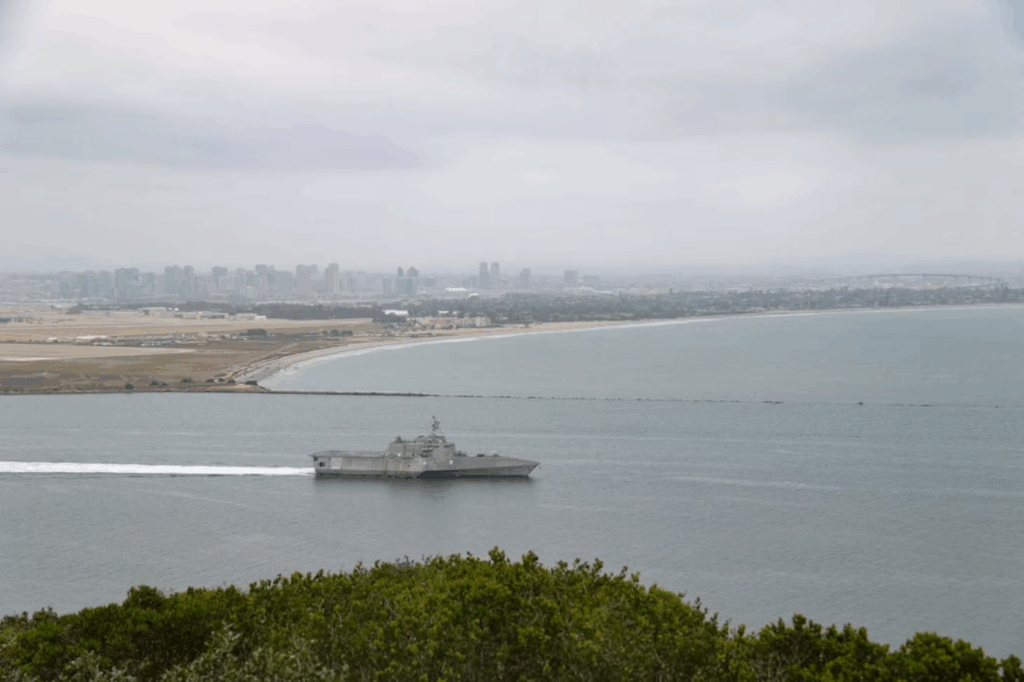
Independence-variant littoral combat ship USS Gabrielle Giffords (LCS 10) transits San Diego Bay past Point Loma, June 23, 2025. The ship recently returned from a deployment to the 7th Fleet area of operations (U.S. Navy photo by Mass Communication Specialist 2nd Class Kassandra Alanis)
From Commander, Naval Surface Force, U.S. Pacific Fleet, June 28, 2025
SEATTLE – The Independence-variant littoral combat ship USS Gabrielle Giffords (LCS 10) departed Naval Base San Diego June 23 and arrived at its new homeport of Seattle June 28, following an 18-month rotational deployment to the U.S. 7th Fleet area of operations.
While on deployment, the Gabrielle Giffords conducted presence operations and engagements with allies and partners throughout the region to maintain a secure and prosperous Indo-Pacific.
“Gabrielle Giffords has arrived safely in Washington, and we are grateful for a welcoming community.” said Capt. Jose Roman, commodore, Littoral Combat Ship Squadron One.
In the early months of 2024, the Gabrielle Giffords conducted operations with the Philippine Navy offshore patrol vessel BRP Gregorio del Pilar (PS 15) in the South China Sea. The Gabrielle Giffords, while part of Destroyer Squadron 7 in the U.S. 7th Fleet area of operations, increased interoperability with allies and partners and served as a ready-response force in support of a free and open Indo-Pacific region.
The Gabrielle Giffords participated in CARAT Thailand 2024 alongside the Royal Thai Navy and the Republic of Singapore Navy. CARAT, in its 30th iteration, promoted regional security cooperation, maintained and strengthened maritime partnerships, and enhanced maritime interoperability. It included anti-submarine warfare training, air defense exercises, and surface action group coordination.
The Gabrielle Giffords has both a Blue crew and a Gold crew, which alternate being “on-hull” aboard the ship and “off-hull” conducting training in San Diego. The ship successfully sustained a longer-than-usual deployment because of the hard work of both crews.
Littoral combat ships (LCS) are fast, optimally manned, mission-tailored surface combatants that operate in near-shore and open-ocean environments, deterring 21st-century threats. LCS integrate with joint, combined, manned, and unmanned teams to support forward presence, maritime security, sea control, and deterrence missions around the globe.
For more news from Commander, Littoral Combat Ship Squadron 1, visit https://www.surfpac.navy.mil/comlcsron1/ or follow on Facebook at www.facebook.com/COMLCSRONONE/
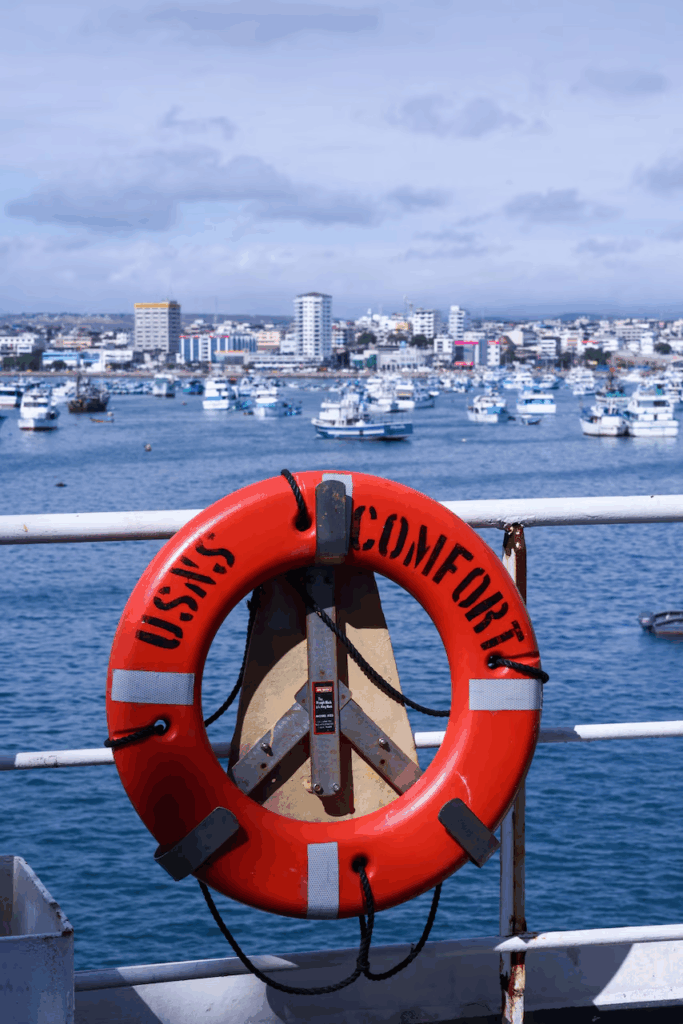
The Mercy-class hospital ship USNS Comfort (T-AH 20) arrived in Manta, Ecuador for the third mission stop of Continuing Promise 2025 (CP 25), July 4, 2025.
“We look forward to building upon our relationship with Ecuador through medical care and exchanges, community relations events, and experiencing the vibrant culture of Manta,” said Capt. Ryan Kendall, commodore, Destroyer Squadron 40 and CP 25 mission commander. “Our combined efforts to enhance readiness and strengthen our partnership will lead to a safer, more secure region.”
This visit marks the fifth Continuing Promise visit to Ecuador, as well as the fifth visit aboard Comfort. While in Ecuador, Comfort team will conduct direct patient medical care aboard Comfort and at various medical sites throughout the region. Services provided in conjunction with medical representatives from Ecuador will include general medicine, dentistry, optometry, ophthalmology, pediatric care, internal medicine, women’s health, cardiology, dermatology, physiotherapy, and various subject matter expert exchanges focused on humanitarian aid and disaster relief.
“We are pleased to welcome the USNS Comfort to Ecuador,” said Mr. Lawrence Petroni, Chargé d’Affaires, U.S. Embassy in Ecuador. “This ship’s visit to Manabí exemplifies the United States’ enduring partnership with Ecuador and our comprehensive approach to security cooperation. Beyond delivering essential medical care, the mission will fortify communities by supporting local programs that steer youth away from organized crime through service, education, and health initiatives. These efforts reinforce our shared commitment to lasting regional stability.”
In addition to medical and dental care, veterinarians from the U.S. Army 248th Medical Detachment Veterinary Service Support will conduct canine tactical combat care seminars as well as a cattle ranching symposium.
The Comfort team will also participate in community relations projects including beautification of Verdi Cevallos Hospital and Gil Pinto School, beach cleanups, and soccer and volleyball games to build camaraderie beyond the scope of medical aid.
“Being able to bring Sailors to experience these foreign interactions helps strengthen our team aboard the Comfort,” said Religious Program Specialist Seaman Apprentice Julian Ventura. “I hope these engagements that help foreign communities also help our Sailors find their purpose as we build relationships during Continuing Promise.”
Ventura shares a similar outlook to Steel Worker 2nd Class Jonas Bresette, who is assigned to Comfort from Naval Mobile Construction Battalion (NMCB) 11. NMCB 11’s, also known as Seabees, mission is focused on construction and engineering to support military operations and disaster relief efforts worldwide.
“After our recent work in Panama, the shift of dynamic will be focused on more hands-on training with our Ecuadorian counterparts, in addition to working alongside them,” said Bresette,
the detachment safety supervisor for NMCB 11. “I’m very excited to be able to explore the native culture and experience the city of Manta.”
In Ecuador, the Seabees plans to complete engineering and utilities projects at the Escuela Republica Del Ecuador and Unidad Educativa El Porvenir schools in Manta.
CP25 marks the 16th mission to the region since 2007 and the eighth aboard Comfort. The mission will foster goodwill, strengthen existing partnerships with partner nations, and encourage the establishment of new partnerships among countries, non-federal entities, and international organizations.
CP is committed to assisting host nation efforts to provide vital medical care in the South American region that have limited access and promoting independence in case of medical disasters and emergencies through subject matter expect exchanges.
U.S. Naval Forces Southern Command/U.S. 4th Fleet supports U.S. Southern Command’s joint and combined military operations by employing maritime forces in cooperative maritime security operations to maintain access, enhance interoperability, and build enduring partnerships in order to enhance regional security and promote peace, stability and prosperity in the Caribbean, Central and South American region.
Learn more about USNAVSOUTH/4th Fleet news and photos, visit facebook.com/NAVSOUS4THFLT, https://www.fourthfleet.navy.mil/, X – @ NAVSOUS4THFLT, and https://www.linkedin.com/company/u-s-naval-forces-southern-command-u-s-4th-fleet
Delaware Returns Home from Deployment
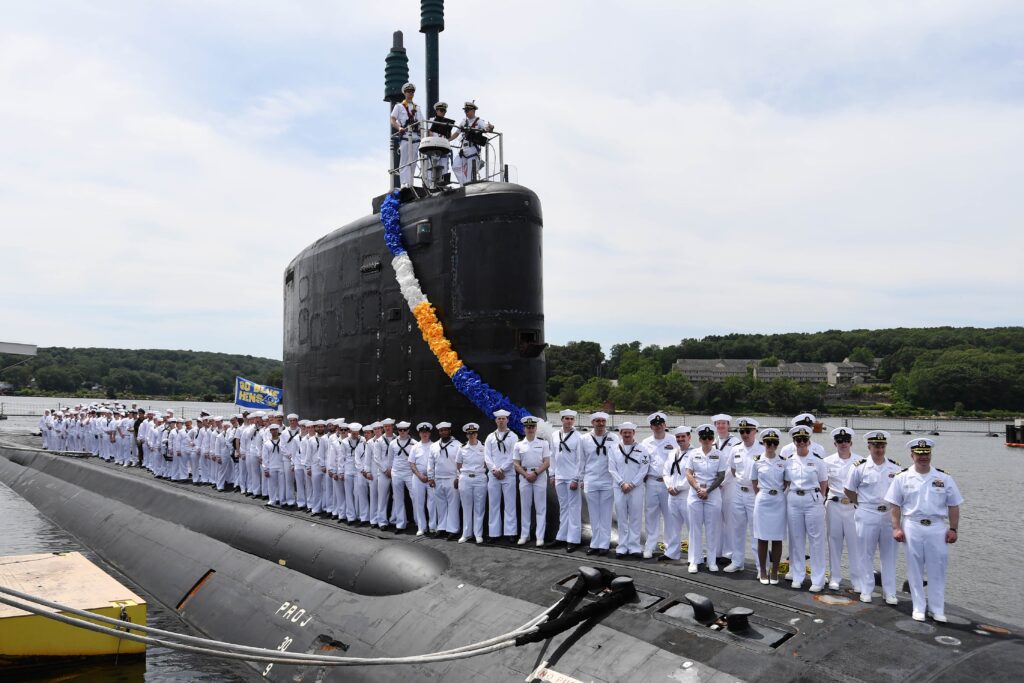
NAVAL SUBMARINE BASE NEW LONDON, Conn. (July 5, 2025) The crew of the Virginia-class fast-attack submarine USS Delaware (SSN 791) gathers top-side for a command photo as the boat returns to Naval Submarine Base New London, Conn., July 5, 2025, following a six-month deployment to the U.S. European Command area of responsibility. (U.S. Navy photo by MCC Darren M. Moore)
GROTON, Connecticut – The Virginia-class fast-attack submarine USS Delaware (SSN 791), under the command of Cmdr. Jason Patton, returned to Naval Submarine Base New London Saturday, July 5, completing a six-month deployment to U.S. European Command area of responsibility.
Cmdr. Jason Patton praised his crew and their commitment to projecting power across the globe.
“The crew of USS Delaware is a group of outstanding professional submariners,” said Patton, from Laramie, Wyoming. “We were deployed for 205 days and we spent 194 of those at sea accomplishing our nation’s tasking. That wouldn’t have been possible without teamwork, dedication, and tenacity from every Sailor onboard. I’m extremely proud of their accomplishments and lucky to be a part of such a great crew.”
Patton also credited the crew’s accomplishments to those who were not underway with them.
“I would be remiss for mentioning the crew’s accomplishments without acknowledging the world class support from our loved ones back home,” Patton said. “While we battled the rough seas and cold they fought through countless home emergencies, car problems, and parenting moments. We are grateful for their steadfast resolve and are ecstatic to be home with them again.”
Delaware steamed more than 42,000 nautical miles and made port calls to Haakonsvern, Norway.
During its deployment, Delaware completed the first-ever forward deployed submarine torpedo tube launch and recovery of a Yellow Moray (REMUS 600) unmanned underwater vehicle (UUV). The integration of robotic and autonomous systems is expected to enhance operational flexibility and capabilities of future submarine missions, providing the ability to extend reach at both shallower and deeper depths than a manned submarine can access.
Fifty-four personnel earned their submarine warfare devices – commonly referred to as “dolphins” – during the deployment and two Delaware Sailors had new babies.
Sonar Technician (Submarine) 3rd Class Landon Nichols, from Summerville, South Carolina, and his wife, Anna Nichols, were honored with the ceremonial first kiss on the pier.
Chief Electronics Technician (Nuclear) Douglas Ames, from Sudan, Texas, was awarded the ceremonial first hug with his wife, Jessica Ames.
Commissioned April 4, 2020, Delaware is the 18th Virginia-class attack submarine and is the seventh U.S. warship named after the first state of Delaware. Due to COVID -19 restrictions at the time, the official commissioning date was April 2, 2020, while the boat was underway, making it the first U.S. naval warship to be commissioned while submerged. It has a length of 377 feet with a beam of 34 feet and can operate at more than 25 knots submerged.
The Virginia-class of nuclear-powered fast attack submarines are designed for a broad spectrum of open-ocean and littoral missions. Fast-attack submarines are multi-mission platforms enabling five of the six Navy maritime strategy core capabilities – sea control, power projection, forward presence, maritime security and deterrence. They are designed to excel in anti-submarine warfare, anti-ship warfare, strike warfare, special operations, intelligence, surveillance and reconnaissance, irregular warfare and mine warfare. Fast-attack submarines project power ashore with special operations forces and Tomahawk cruise missiles in the prevention or response to regional crises.
Lockheed Martin Delivers AN/SPY-7(V)1 Radar Antennas to Japan
MOORESTOWN, N.J. July 7, 2025 – Lockheed Martin (NYSE: LMT), successfully delivered the first Aegis System Equipped Vessel (ASEV) shipset comprised of four AN/SPY-7(V)1 radar antennas to the Japan Ministry of Defense (JMOD). The delivery was facilitated through Mitsubishi Corporation under a Direct Commercial Sale arrangement after rigorous acceptance testing.
“The successful on-time delivery of all antennas for the first ASEV showcases the maturity and scalability of the SPY-7 radar as well as production capacity, while also demonstrating Lockheed Martin’s dedication and expertise in system integration,” said Chandra Marshall, vice president of Multi-Domain Combat Solutions at Lockheed Martin.
The JMOD is acquiring two ASEVs, and both are on track for commissioning in Japan Fiscal Year 2027 and 2028. Marshall continued, “We will continue full system integration and testing with all four antennas at the Production Test Center in Moorestown, New Jersey this year, prior to equipment delivery to Japan, which will significantly reduce integration risk and enable commissioning on schedule.”
The SPY-7 Advantage
With advanced detection and tracking capabilities, SPY-7 effectively counters complex threats, enabling simultaneous engagement of multiple targets and delivering a robust 21st century security capability that enhances the effectiveness of naval forces in an increasingly uncertain and dynamic environment.
In addition to Japan’s ASEVs, the SPY-7 radar is also being produced for Canada’s River-Class Destroyers, Spain’s F-110 Frigates, and the land-based version has been deployed by the Missile Defense Agency for the Guam Defense System (TPY-6) and the Long-Range Discrimination Radar. The selection of Lockheed Martin’s solid-state radar by both the U.S. and multiple international allies demonstrates the world-class capability and maturity of the radar. In December 2024, Lockheed Martin’s land-based version of the SPY-7 radar, known as TPY-6, successfully intercepted a mid-range ballistic missile as part of the Aegis Guam System during a flight experiment Flight Experiment Mission-02.
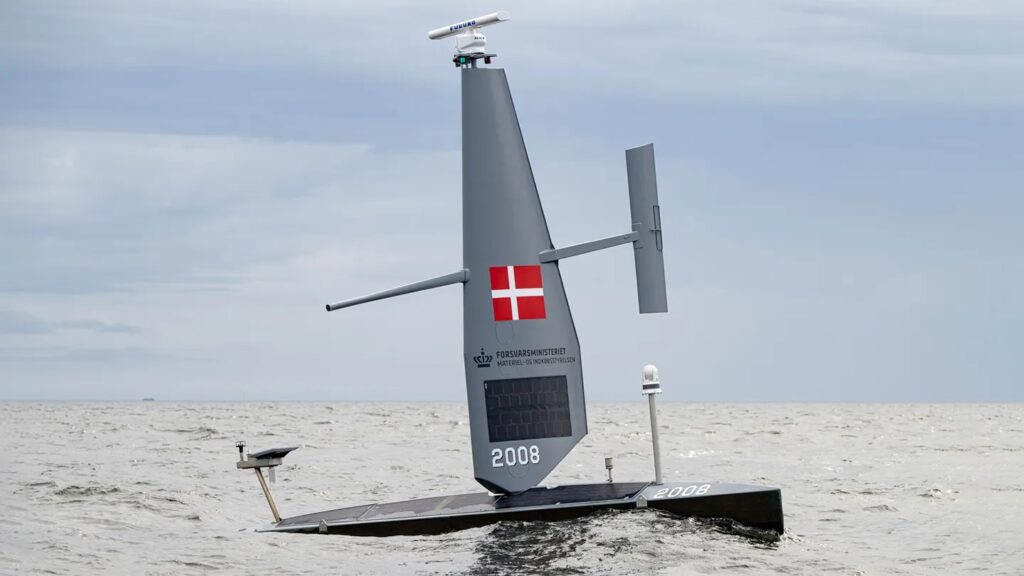
COPENHAGEN, Denmark–Saildrone, the global leader in maritime autonomy, has successfully concluded its participation in NATO Task Force X’s multi-domain demonstration in the Baltic Sea—a landmark deployment showcasing the capability, reliability, and international utility of its Saildrone Voyager uncrewed surface vehicles (USVs).
From June 16 to 27, 2025, four Saildrone Voyagers operated in both the Gulf of Finland and the western Baltic Sea as part of NATO’s innovative Task Force X Baltic initiative. Led by NATO Allied Command Transformation (ACT), in coordination with NATO Maritime Command (MARCOM) and the Centre for Maritime Research and Experimentation (CMRE), the demonstration aimed to integrate uncrewed systems into active Allied maritime operations.
“We are honored to have participated in the NATO Task Force X Baltic Initiative. After eight years of operating Saildrone USVs in the Bering Sea, we are well placed to deal with the conditions in the Baltic Sea, which has very similar latitude, water depths, and sea conditions,” said Saildrone founder and CEO Richard Jenkins. “Task Force X Baltic has been fantastic to work with, and we look forward to future missions with NATO partners.”
Throughout the operation, the Saildrone Voyagers maintained a 100% persistent presence on station, delivering 24/7 wide-area surveillance and real-time maritime domain awareness, including continued operations during recent passage of near-gale to gale-force winds and rough seas with waves over 2 meters (6.5 feet) through the area of operation. Saildrone detected and tracked hundreds of vessels daily, and successfully identified the exercises’ “red forces.” Additionally, Saildrone identified real-world dark targets in the area, including Russian “shadow fleet” and military vessels.
Another important success of the deployment was pairing Saildrone’s long-range radar and persistent surveillance capability with high-speed unmanned maritime assets. The Voyagers’ ability to detect contacts of interest at extended range enabled rapid-response investigations by fast-moving uncrewed vessels, demonstrating a layered, autonomous force structure capable of responding to dynamic maritime scenarios in real time.
The four Voyager USVs were deployed from Køge, Denmark, earlier this month. Saildrone operates on a contractor-owned and operated model, meaning it provides end-to-end mission operations and data delivery as a service. This approach enables rapid deployment, scalability, and reduced burden on government or commercial partners.
Saildrone data is integrated into the customer’s common operating picture (COP) and is also available via the Saildrone Mission Portal. Saildrone’s global pilot team worked closely with NATO Maritime Command, delivering responsive, dynamic high-volume tasking to meet the operational objectives of the exercise.
The Baltic Sea demonstration forms part of NATO’s Dynamic Messenger innovation pathway. Task Force X Baltic continues to advance NATO’s ability to rapidly integrate commercial-off-the-shelf autonomous systems, increasing scalability while preserving high-value crewed assets for critical missions.
Saildrone’s impressive performance in the Baltic Sea further validates the Voyager USV platform’s primacy in defense and security applications, even in the harshest of conditions.
Coast Guard Responds with Unified Command to Flooding Near Kerrville, Texas
AUSTIN, Texas – The Coast Guard, along with a unified command, is responding to an area affected by flash flooding near Kerrville, Texas.
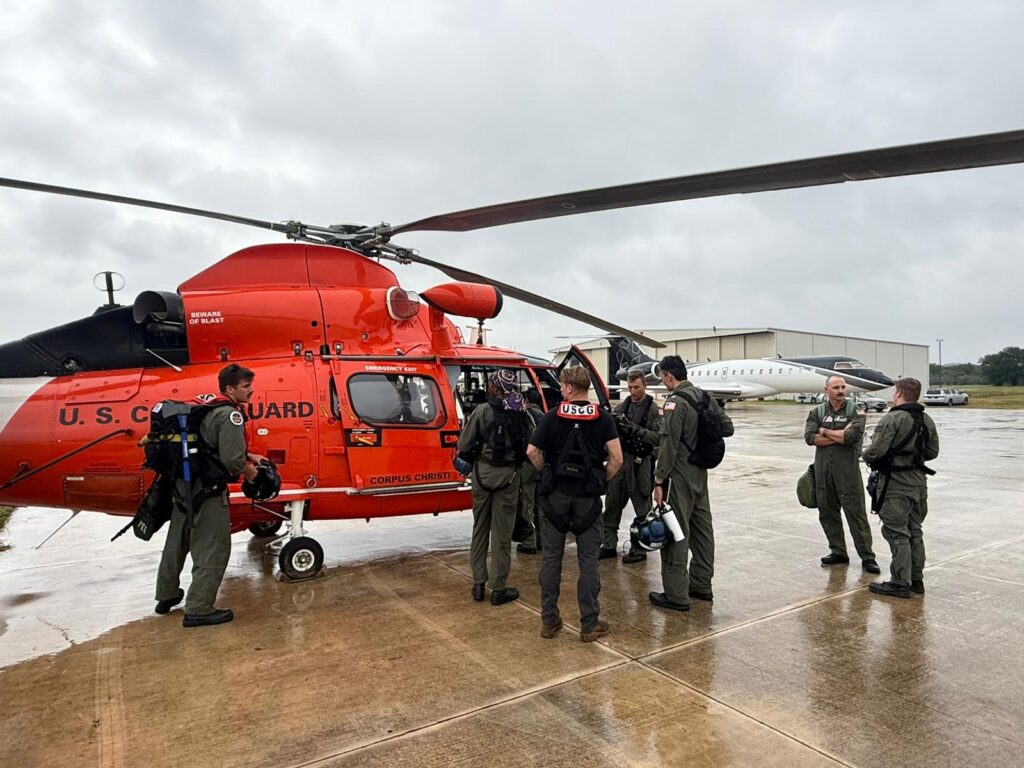
Sector New Orleans watchstanders received a report July 4th at approximately 5:57 am from Texas A&M Task Force 1 personnel requesting assistance for rescue operations in response to flooding near Kerrville, Texas.
An MH-65 Dolphin helicopter aircrew and an HC-144 Ocean Sentry Aircraft aircrew was launched from Air Station Corpus Christi along with an Air Station Houston MH-65 Dolphin helicopter aircrew to provide assistance with rescue operations.
The Coast Guard has conducted 12 flights to the affected area, and rescued 15 campers from Camp Mystic in Hunt, Texas, yesterday. A Coast Guard rescue swimmer remained with victims of the flooding, providing medical assistance to and aiding with the evacuation efforts of 230 victims into assisting agencies air assets.
Additionally, today, three people were rescued, and four were assisted from a mobile home community in Leander, Texas.
Agencies also responding to the flooded area are:
Texas Task Force 1
Texas Dept of Public Safety
Texas National Guard
Texas Parks and Wildlife
Country STAR Flight
Local Police Department
“The preservation of life during this incident is our top priority,” said Capt. Ulysses S. Mullins, The Coast Guard Heartland District Chief of Staff, “which is why the Coast Guard is working with the State of Texas alongside other responding agencies to ensure that every asset on scene is able to coordinate, communicate and respond as safety and quickly as possible”
Any media networks seeking information about the Coast Guard’s rescue and response operations are encouraged to contact the Texas Public Affairs Detachment Duty line at 832-293-1293.