U.S. Fourth Fleet Holds UNITAS 2025 Final Planning Conference
By U.S. Naval Forces Southen Command / U.S. 4th Fleet Public Affairs, June 27, 2025
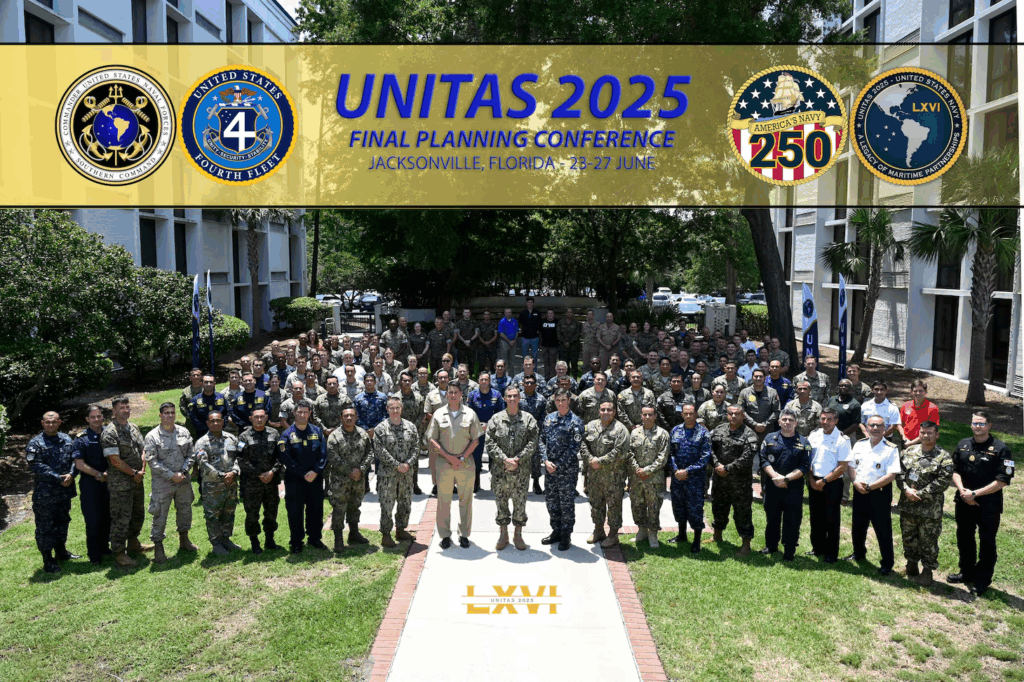
JACKSONVILLE, Fla. – U.S. Naval Forces Southern Command/U.S. 4th Fleet hosted the UNITAS 2025 final planning conference (FPC) from June 23-27, building upon the momentum established during the main-planning conference held in April and initial planning conference held in February. The FPC brought together representatives from the U.S. and partner nations to finalize plans for UNITAS 2025, the 66th iteration of the world’s longest-running multinational maritime exercise.
UNITAS 2025, scheduled for Sept. 15-Oct. 6, will take place off the East Coast of the United States, with shore-based events at Naval Station Mayport, Marine Corps Base Camp Lejeune, North Carolina, Naval Station Norfolk, Virginia, and Naval Air Station Oceana, Dam Neck Annex. The exercise will feature a variety of maritime and littoral operations, including a live-fire sinking exercise (SINKEX) and amphibious landings.
“The final planning conference has allowed us to solidify the objectives and operational details for UNITAS 2025, which will precede the year-long events commemorating the U.S. Navy’s 250th birthday,” said Rear Adm. Carlos Sardiello, commander of U.S. Naval Forces Southern Command/U.S. 4th Fleet. “The collaborative spirit and dedication displayed by all participating nations ensures that this exercise will further strengthen our maritime partnerships and enhance interoperability.”
More than 250 representatives from over 20 countries and all branches of the U.S. military participated in person and virtually, including Argentina, Belize, Brazil, Canada, Chile, Colombia, Dominican Republic, Ecuador, El Salvador, France, Germany, Greece, Guatemala, Honduras, Jamaica, Japan, Mexico, Panama, Paraguay, Peru, Singapore, Spain, and the United States.
During the conference, participants finalized the desired training events, confirmed participating units and personnel, and reviewed logistics and communications plans. UNITAS is designed to enhance relationships and improve interoperability among participating nations.
UNITAS 2025 will showcase maritime technology, including unmanned and hybrid fleet systems, building on last year’s integration of unmanned undersea vehicles. The exercise will culminate in high-end war fighting events.
“The final planning conference exceeded expectations, setting the stage for UNITAS 2025 to be our most ambitious and comprehensive exercise yet,” said Patrick Cooper, UNITAS 2025 planner. “While coordination will continue leading up to the exercise, the next time we all come together in person will be at the opening ceremony when we put all this hard work into action.”
U.S. Naval Forces Southern Command/U.S. 4th Fleet serves as the maritime partner for Caribbean, Central and South American maritime forces, working to improve unity, security and stability in the region.
For more USNAVSOUTH/4th Fleet news and photos, visit facebook.com/NAVSOUS4THFLT, https://www.fourthfleet.navy.mil/, X – @ NAVSOUS4THFLT, and https://www.linkedin.com/company/u-s-naval-forces-southern-command-u-s-4th-fleet
Senior Military Leaders Praise Destroyer Sailors During Souda Bay Visit
By U.S. Naval Forces Europe Public Affairs, June 29, 2025
SOUND BAY, Greece – Chairman of the Joint Chiefs of Staff, Air Force Gen. Dan Caine, and U.S. Naval Forces Europe-Africa Commander, Adm. Stuart B. Munsch, visited the Arleigh Burke-class guided-missile destroyer USS Thomas Hudner (DDG 116) during a port call in Souda Bay, Greece, June 29.
During the visit, the senior leaders met with Thomas Hudner Sailors, who have been conducting operations in the Eastern Mediterranean for the past two weeks with four other U.S. Navy destroyers. They thanked the crew for their operational activities in support of Department of Defense and U.S. Navy taskings.
“I am incredibly proud of these sailors and grateful for their service. They have made tremendous contributions to America’s, and the region’s, security.” Caine said. “No other military in the world can do what we can do, and we’re blessed to have Sailors like these around the globe who make it possible.”
U.S. 6th Fleet positioned five Arleigh Burke-class guided-missile destroyers in the Eastern Mediterranean Sea in order to provide defensive support to Israel against Iranian attacks and promote regional stability.
The destroyers, including USS Arleigh Burke (DDG 51), USS The Sullivans (DDG 68), USS Oscar Austin (DDG 79) and USS Paul Ignatius (DDG 117), are equipped with the Aegis Weapon System designed for ballistic missile defense and intercepted multiple Iranian ballistic missiles since June 14.
“Thomas Hudner represents the best and the highest standard of our Navy,” Munsch said. “Deploying from our homeland and operating forward to defend our nation and our interests abroad has been a hallmark of our Navy for over two centuries. The naval forces operating in the European theater and beyond have shown that our Navy is prepared, postured, and ready for the challenges we face.”
Since departing Mayport, Florida, in February, Thomas Hudner and its crew have been conducting various operations including integrated exercises, theater security engagement, and maritime security operations.
Included in Thomas Hudner’s previous operations which have already spanned four geographic theaters in a single deployment, the ship represented the Navy during the 81st anniversary of the D-Day landings in Normandy earlier this month.
For over 80 years, NAVEUR/NAVAF has forged strategic relationships with allies and partners, leveraging a foundation of shared values to preserve security and stability. Headquartered in Naples, Italy, NAVEUR/NAVAF operates U.S. naval forces in the EUCOM and AFRICOM areas of responsibility.
VMFA-224 Redesignates as Marine Corps’ Newest F-35B Squadron
U.S. Marine Corps Sgt. Maj. Steven E. Buckom, from North Carolina, command senior enlisted leader, Marine All-Weather Fighter Attack Squadron (VMFA(AW)) 224, passes the Marine Corps colors to Lt. Col. Jarrod Allen, from California, the outgoing commanding officer of VMFA(AW)-224, during a squadron redesignation and change of command ceremony at Marine Corps Air Station Beaufort, South Carolina, June 26, 2025. The ceremony represented the squadron’s transition from an all-weather F/A-18D Hornet squadron to an F-35B Lightning II squadron and signified the transfer of responsibility, authority, and accountability from Allen to Lt. Col John P. Stuart. (U.S. Marine Corps photo by Lance Cpl. Gavin K. Kulczewski)
From Communication Strategy and Operations Office, 2nd Marine Aircraft Wing
Jun2 27, 2025
MARINE CORPS AIR STATION BEAUFORT, S.C. – Marine All-Weather Fighter Attack Squadron (VMFA(AW)) 224 redesignated to Marine Fighter Attack Squadron (VMFA) 224 during a change of command and redesignation ceremony at Marine Corps Air Station Beaufort, South Carolina, on Thursday, June 26.
The event marked the squadron’s historic transition from operating the F/A-18D Hornet to becoming an F-35B Lightning II Joint Strike Fighter squadron, concluding more than 32 years as a Hornet squadron and as a Marine all-weather fighter attack squadron.
In addition to the redesignation, the ceremony also served as a change of command, representing a transfer of responsibility, authority, and accountability from Lt. Col. Jarrod Allen, the former commanding officer, VMFA(AW)-224, to Lt. Col. John Stuart, the current commanding officer of VMFA-224.
“For over 30 years, the Fightin’ Bengals have superbly executed the mission of a Marine all-weather fighter attack squadron,” said Allen. “As the Bengals redesignate, it ends an era of the All-Weather designation that began with the Night Fighter designation in 1943. I could not be prouder of the Marines and Sailors who upheld the high standards of excellence during the final days of this chapter.”
With origins dating back to 1942, the “Bengals,” or “Fightin’ Bengals,” have a storied legacy in Marine Corps aviation. The squadron supported operations in World War II, the Vietnam War, Operations DESERT SHIELD and DESERT STORM, and the Global War on Terror. Throughout its history, the squadron consistently adapted to emerging aviation technologies to meet evolving modernization demands, including numerous hardware and software upgrades to the F/A-18 Hornet. After conducting its final F/A-18 flight on April 28, 2025, the Bengals now look ahead as they transition to the F-35B.
The F-35 is a fifth-generation fighter jet with advanced stealth, agility and maneuverability, sensor and information fusion, and provides the pilot with real-time access to battlespace information. It is designed to meet an advanced threat while improving lethality, survivability, and supportability. The F-35B Lightning II is the short-takeoff and vertical-landing (STOVL) F-35 variant. This capability allows the aircraft to operate from amphibious assault ships and expeditionary airstrips less than 2,000 feet long.
Stuart also reflected on the squadron’s legacy.
“The newly unfurled battle colors of VMFA-224 are adorned with streamers that represent the unit’s history, accomplishments, and the legacy left by those who came before,” said Stuart. “As the squadron transitions into the fifth generation of fighter aircraft with the F-35B, that legacy will be an omnipresent reminder of why we must constantly prepare for whatever comes next.”
As the Marine Corps’ newest F-35B squadron, VMFA-224 continues to prepare its personnel, equipment, and procedures for F-35 operations. The squadron expects to receive its first F-35B in late 2025 and is working towards receiving its Safe for Flight certification.
“The next thing for the Fightin’ Bengals is to build upon the rock-solid foundation we’ve inherited and produce a stealth fighter squadron unmatched in tactical excellence, maintenance efficiency, quality, and Marine Corps ethos,” said Stuart. “Rest assured, when our nation calls upon the Bengals to do its bidding, the adversaries of our country and her allies will understand what it means to ‘Fear the Ambush.’”
VMFA-224 is a subordinate unit of 2nd Marine Aircraft Wing, the aviation combat element of II Marine Expeditionary Force.
USCGC Stratton Concludes Joint Operations with Japan, Philippine Coast Guards
The Legend-class U.S. Coast Guard Cutter Stratton (WMSL 752) steams alongside the Japan Coast Guard Patrol Vessel Asanagi (PLH-43) and the Philippine Coast Guard vessel BRP Teresa Magbanua (MRRV-9701) during a trilateral search and rescue exercise in Kagoshima, Japan, June 20, 2025.
From U.S. Coast Guard 14th District, June 26, 2025
KAGOSHIMA, Japan – U.S. Coast Guard Cutter Stratton (WMSL 752) departed Kagoshima June 20, following in-port and at-sea engagements with Japan Coast Guard (JCG), Philippine Coast Guard (PCG), and Japan government officials.
This event marks a significant milestone as the first time the trilateral search and rescue exercise with the Philippine Coast Guard, occurred in a region outside the Philippine territorial seas, emphasizing the growing cooperation among the three nations.
While in-port, Stratton leadership met with the Japan Coast Guard commander of the 10th Regional Headquarters, chief of Kagoshima Coast Guard Office, mayor of Kagoshima City, and governor of Kagoshima Prefecture. Stratton crewmembers attended facility tours of Nanatsujima Japan Coast Guard Base, hosted reciprocal cutter tours for PCG and JCG members, and participated in dinner receptions hosted by the participating countries.
Following the in-port engagements, Stratton, JCG vessel Asanagi, and PCG vessel BRP Teresa Magbanua conducted a trilateral search-and-rescue exercise (SAREX) in Kagoshima Bay. The SAREX focused on maximizing the capabilities of each vessel to enhance interoperability, strengthen the relationships among the three Coast Guards, and promote joint operational readiness.
During the exercise, crewmembers participated in crew exchanges to observe operations aboard other cutters. The SAREX consisted of a simulated man overboard, employing Stratton’s ScanEagle unmanned aerial system for search and detection. Additionally, a JCG helicopter deployed a rescue swimmer to recover a live person in the water as part of the exercise.
“This joint operation reinforces the close partnership between the United States, Japan, and Philippines,” said Stratton Commanding Officer Capt. Brian Krautler. “By operating together, we strengthen our collective forces, ensuring readiness against threats to maritime safety and security. We are honored to have participated in these joint operations to promote the safety and security of the Indo-Pacific region.”
The exercise culminated in a joint firefighting exercise, where all vessels worked together to extinguish a simulated fire on a JCG patrol vessel. The conclusion of the successful SAREX demonstrated the ability of the three Coast Guards to collectively respond and effectively operate together in complex maritime emergencies.
Stratton’s crew is scheduled to engage with regional partners and participate in joint operations to support and enhance maritime governance, safety and security throughout their Western Pacific patrol.
Stratton is assigned to Destroyer Squadron (DESRON) 15, the Navy’s largest DESRON and the U.S. 7th Fleet’s principal surface force. DESRON 15 regularly assumes tactical control of the surface units operating in the area.
Commissioned in 2012, Stratton is one of 10 legend-class National Security Cutters and one of four homeported in Alameda, California. National Security Cutters are 418-feet long, 54-feet wide, and have a 4,600 long-ton displacement. They have a top speed of 28 knots, a range of 12,000 nautical miles, and sail with a crew of up to 170. National Security Cutters routinely conduct operations throughout the Pacific, where their unmatched combination of range, speed, and ability to operate in extreme weather provides the mission flexibility necessary to conduct vital strategic missions.
The namesake of U.S. Coast Guard Cutter Stratton is Capt. Dorothy Stratton, the first female commissioned officer in the Coast Guard. Captain Stratton led the service’s all-female reserve force during World War II, commanding more than 10,000 personnel. The ship’s motto is “We Can’t Afford Not To.”
From Marine Rotational Force – Darwin, June 27, 2025
MANILA, Philippines —In a demonstration of allied resolve, interoperability, and command agility, U.S. Marines with Marine Rotational Force – Darwin (MRF-D) 25.3, serving as I Marine Expeditionary Force (MEF) Forward, coordinated a simulated maritime strike operation in support of real-world movements and training across the Philippine archipelago during Exercise KAMANDAG 9, June 1, 2025. In a show of multinational capability, the regimental level headquarters of the forward deployed MRF-D 25.3 Marine Air-Ground Task Force (MAGTF) planned, coordinated and executed a true Combined Joint All Domain Operation (CJADO).
The CJADO, centered around multi-phased “constructive kill” (CK) scenarios in support of real-world maneuver, showcased how a purpose-built and forward-deployed MAGTF synchronized fires and effects from joint and combined forces across multiple echelons and domains. A CK involves vectoring simulated fires onto notional targets to enhance training value for the combined forces in the Philippines. Spanning hundreds of nautical miles and integrating Philippine, U.S., Japanese and Republic of Korea maneuver forces, the training validated how precision fires, intelligence, communications, littoral maneuver, and distributed command and control can defend key maritime terrain in response to crisis or contingency.
“This is what combined operations looks like at the highest level — forward-postured, allied-enabled, and terrain-informed,” said U.S. Marine Corps Col. Jason C. Armas, commanding officer of Marine Rotational Force – Darwin 25.3 MAGTF. “What we achieved here wasn’t just a constructive kill. It was a deliberate act of allied integration, command agility, and maritime dominance. We showed unambiguously that the Marine Corps can apply precision fires and maneuver at scale, across vast distances, and in lockstep with our partners. This sets the precedent. This is how we fight.”
Adjacent to the MRF-D MAGTF, 3rd Marine Littoral Regiment (MLR) utilized the Navy Marine Expeditionary Ship Interdiction System (NMESIS) to conduct simulated maritime strikes in support of combined 3rd MLR and Philippine Marine maneuver forces in Batanes. To the South, the MRF-D MAGTF directly coordinated with the U.S. Army’s 1st Multi-Domain Task Force (MDTF) to execute simulated simultaneous strikes in support of real-world training with U.S., Philippine, Japanese, and Korean maneuver forces on Palawan. 1st MDTF’s simulated long-range precision fires neutralized notional maritime threats in the waters to the west of Palawan and north of Luzon, creating maneuver corridors for the joint and combined force during KAMANDAG 9.
1st MDTF’s simulated strikes set conditions for the coordinated insertion of a rifle company with 2nd Battalion, 1st Marine Regiment, MRF-D 25.3, and the Philippine Marine Corps’ 3rd Marine Brigade, including subordinate Marine Brigade Landing Teams (MBLTs), along the western coastline of Palawan and near the port of Berong. Enabled by the successful second simulated strike, Soldiers with the Amphibious Rapid Deployment Brigade (ARDB), Japanese Ground Self-Defense Force (JGSDF), and Philippine Marines with 3rd Marine Brigade launched a bilateral ship-to-shore movement via Combat Rubber Raiding Crafts (CRRC) simulating a humanitarian disaster relief (HADR) insertion. Once ashore, forces began identification, triage and movement of simulated casualties to a Japanese Role I medical center and then a Role II medical center with MRF-D’s Combat Logistics Battalion 1 (CLB-1).
Adjacent to the HADR, the combined infantry force from MRF-D and the PMC established fortified positions on the Berong beachhead in preparation for a defense against simulated amphibious adversary landing forces following the successful joint MDTF strike. A few days later, that bilateral force conducted a counter-landing live-fire against that same simulated adversary force from fortified positions along the beach near Quezon, marking the culmination of the full kill chain — from sensing, to striking, to defending.
“The Philippine Marine Corps integrates joint and combined sensors to enhance its kill chain, enabling precision engagement and control of key maritime terrain and sea lines of communication,” said Maj. Sivel Sarmiento, an operations officer with the PMC. “This training under KAMANDAG’s constructive kill framework sharpens situational awareness and accelerates target acquisition in support of maritime denial operations.”
The success of the CJADO wasn’t just about fires or maneuver — it was made possible by the MAGTF enablers operating behind the scenes. Joint and combined ISR assets, including maritime surveillance platforms and unmanned systems, provided the data needed to find, fix, and track targets throughout the archipelago. MRF-D’s intelligence and communications teams, supported by defensive cyber operators, ensured that targeting data, movement coordination, and effects synchronization continued uninterrupted. The joint fires timeline was stitched together digitally in real time.
“The MRF-D MAGTF Defensive Cyberspace Operations-Internal Defensive Measures (DCO-IDM) element, organically embedded within the MAGTF’s Fires and Effects Coordination Center (FECC),” said 1st Lt. Jared Haynie, officer in charge of the DCO-IDM team with MRF-D 25.3. “As an integrated, organic MAGTF asset, the team’s focused defensive operations enabled uninterrupted execution of critical events during the CJADO and provided a postured incident response surge capability for the greater cyber community in the event of exploitation or compromise.”
All phases of the CJADO were enabled by MRF-D’s FECC, serving as the central node for timing, integration, and synchronization of MAGTF effects from command-and-control nodes in the Philippines and Australia. The FECC coordinated seamlessly with 1st MDTF planners and the Philippine Navy and Marine Corps personnel to deliver multi-axis, cross-domain effects across more than 1,000 kilometers of archipelagic terrain. Philippine Navy and Coast Guard vessels observed operations in key Philippine maritime corridors, integrating Philippine naval assets in building maritime domain awareness and completing the combined observation picture.
What took place during KAMANDAG 9 was a strategic demonstration of how the United States, the Philippines, and their allies support continued peace and stability within the Indo-Pacific. It showed how a regimental-sized Marine headquarters — when enabled by supporting elements and allies and partners — can synchronize multi-domain fires, work with allied formations, and maneuver inside key maritime terrain in support of Archipelagic Coastal Defense Concept objectives and Philippine sovereignty.
“This CJADO proves that deterrence is not abstract,” said Col. Armas. “It’s observable. It’s measurable. And it’s executable in terrain that matters, alongside allies who can see, decide, and act faster than any adversary. Was this a rehearsal? No. It was a real-time demonstration of how we, as allied and partner forces, outpace, outmaneuver, and outthink those who would threaten peace and security in the Indo-Pacific.”
Airbus and Parry Labs Partner on U.S. Marine Corps’ Unmanned Aerial Logistics Connector
WASHINGTON (June 26, 2025) — Airbus U.S. Space & Defense and Parry Labs, a leading provider of edge software platforms have announced a multi-year partnership for the Airbus MQ-72C Aerial Logistics Connector (ALC), an unmanned variant of the UH-72 Lakota.
This collaboration demonstrates the combined capability Parry Labs and Airbus provide in rapidly delivering autonomy, command and control, and mission capabilities using modern digital and hardware solutions. The initial effort with ALC will establish an immediate foundation for accelerated capability delivery for U.S., Coalition, and commercial aircraft.
Under the terms of the agreement, Parry Labs will deliver a commercial off-the-shelf (COTS) Edge Software Platform, Stratia, which aligns commercial aviation standards with modern autonomy and mission system capabilities. Parry will also provide edge computer hardware and proven ground control station that scales to multiple form factors to include integration with the Marine Air Ground Tablet (MAGTAB).
“We are excited to partner with Parry Labs as part of our Aerial Logistics Connector team,” said Robert Geckle, Chairman and CEO of Airbus U.S. Space & Defense. “Parry’s proven digital system integration expertise – specifically UAS command and control interfaces – will help ensure the MQ-72C will be able to conduct unmanned operations in austere environments and redefine how the Marine Corps counters the threats of tomorrow.”
The Airbus U.S. and Parry Labs partnership will continue to evolve missionization capabilities over the next several years, ultimately enabling more advanced levels of autonomous flight across the Marine Corps and broader Joint Force.
“We are able to bring modern mission system capabilities in a simple unified data and systems environment to programs like ALC,” said JD Parkes, Parry Labs’ Chief Executive Officer.
The Airbus team is entering the second year of the Aerial Logistics Connector program, which is using the Middle Tier of Acquisition – Rapid Prototyping pathway. The program aims to provide the service with aircraft prototypes to demonstrate capabilities to the warfighter through a series of operational demonstrations and experiments.
The Aerial Logistics Connector effort is one of several across the Department of Defense to deliver logistical support in distributed environments during peer or near-peer conflicts.
U.S. Coast Guard Cutter Healy Departs Seattle for Months-Long Arctic Deployment
U.S. Coast Guard Cutter Healy (WAGB 20) transits the Puget Sound en route to the Arctic region, June 19, 2025. The Healy will conduct high latitude science and research missions in the Arctic. (U.S. Coast Guard photo by Petty Officer 2nd Class Briana Carter)
From U.S. Coast Guard Pacific Area, June 25, 2025
SEATTLE — The U.S. Coast Guard Cutter Healy (WAGB 20) departed Seattle Thursday, beginning its annual Arctic deployment.
The crew aboard Healy, a 420-foot icebreaker, will support two distinct high-latitude missions to study the formation and movement of sea ice and the pathways followed by Atlantic and Pacific waters in the Arctic, and ocean circulation patterns in the East Siberian and Laptev seas.
The first mission will be a collaboration with the Office of Naval Research (ONR) to deploy and service instruments for its Arctic Mobile Observing System (AMOS). The system advances autonomous, mobile observing methodologies to enable studies of sea ice dynamics and improve understanding of the circulation of water masses in the Arctic. AMOS focuses on developing technologies and approaches for creating a scalable observing system for sustained, persistent presence in the ice-covered Arctic.
In partnership with the U.S. National Science Foundation (NSF), Healy’s second mission will include recovering, servicing, and deploying long-term subsurface mooring arrays and conducting multidisciplinary surveys in support of the Nansen and Amundsen Basins Observational System (NABOS).
Healy last supported AMOS and the NABOS missions in 2023.
“We are eager to return to the Arctic,” said Healy’s Commanding Officer, Capt. Kristen Serumgard. “Healy is uniquely positioned to advance scientific understanding of the Arctic environment, directly supporting security and defense of the nation’s northernmost borders and maritime approaches.”
Serumgard assumed command of Healy earlier this month, having previously served as chief of operational forces at the Coast Guard’s Atlantic Area Command.
Healy is the United States’ largest icebreaker and the Coast Guard’s only icebreaker designed and equipped with scientific instruments to support high-latitude Arctic research. The research enhances domain awareness of how the physical, operational and strategic environments will evolve, informing national strategic foresight on the Arctic and future Coast Guard operations.
In addition to facilitating science and technology operations, Healy conducts a range of Coast Guard missions, such as search and rescue, ship escorts, environmental protection and enforcement of laws and treaties.
USNS Comfort Arrives in Colón, Panama
By U.S. Naval Forces Southern Command / U.S. Fourth Fleet Public Affairs – Continuing Promise Detachment, June 26, 2025
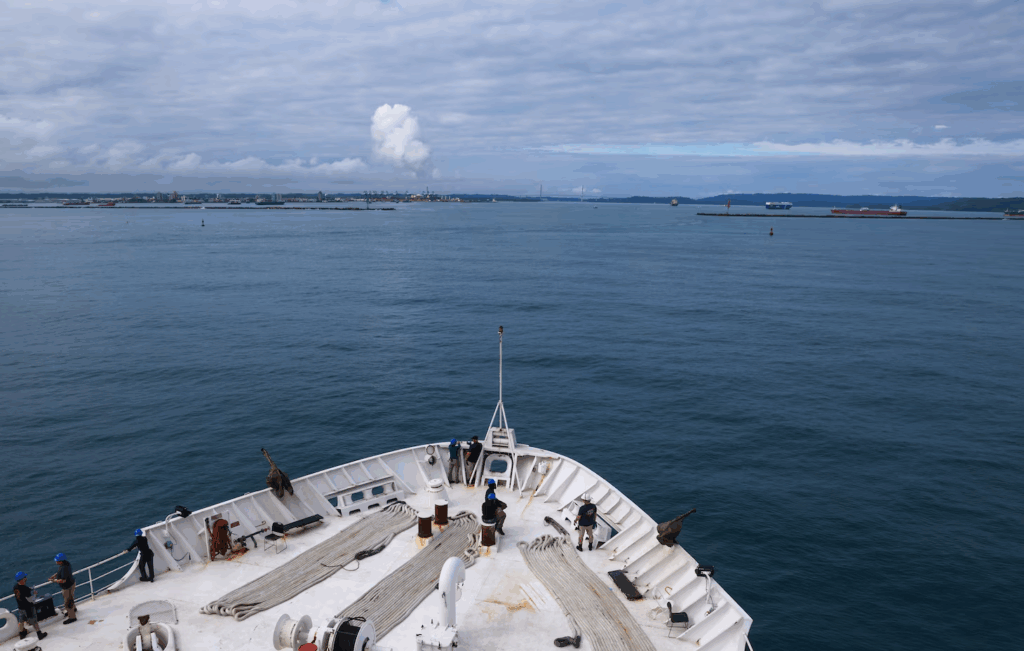
COLÓN, Panama – The Mercy-class hospital ship USNS Comfort (T-AH 20) arrived in Colón, Panama as part of Continuing Promise 2025 (CP25), June 25, 2025.
“The bond between our nations is built on mutual respect and shared values,” said Capt. Ryan Kendall, commodore, Destroyer Squadron 40 and CP25 mission commander. “Through medical assistance, training, and cultural exchanges, we’re honored to stand alongside the people of Panama and deepen the friendship that connects our countries.”
While in Panama, the Comfort team will work alongside Panamanian medical personnel to provide direct patient care and technical expertise in community clinics, improve medical readiness, strengthen partnerships, and enhance the combined capabilities of the U.S. and Panama to respond to public health disasters and humanitarian crises.
“Continuing Promise 2025 is a humanitarian mission that embodies our spirit of collaboration. The arrival of the USNS Comfort represents a hand of friendship that is here to assist Panama and work together to provide health care to those in need,” said U.S. Ambassador to Panama Kevin Marino Cabrera, ahead of the start of the mission activities.
The medical and dental team aboard Comfort will work in hand-in-hand with Panama’s Ministry of Health to provide a variety of medical care, including general surgery, pediatric surgery, ophthalmology, plastic surgery, dental care, dermatology, adult medicine, pediatrics, optometry, radiology, pathology and laboratory.
Additionally, a team from the U.S. Army 248th Medical Detachment Veterinary Service Support will provide small animal care to include spaying, neutering, and vaccinations.
Comfort is also planning multiple community relations events in Panama, including beach clean-ups, community soccer games, and band concerts that aim to strengthen relations with Panama and assist the community beyond medical services.
“When we build bonds with the local community, it shows the crew how impactful our mission is, and it shows the Panamanians how much we care about them,” said Cmdr. Robert S. Spivey, chaplain assigned to Comfort.
U.S. Navy construction personnel, known as “Seabees,” will also provide construction renovation and engineering support at Escuela Estados Unidos de America.
This visit marks the second mission stop of CP25, a humanitarian civic assistance mission focused on fostering goodwill, strengthening existing partnerships, and building new relationships among partner nations, non-federal entities, and international institutions. CP25 represents the 16th mission to the region since 2007 and the eighth conducted aboard Comfort. This visit is also the eighth CP mission stop in Panama and the fifth time Comfort has visited the country, reflecting the enduring ties and shared commitment between Panama and the United States.
U.S. Naval Forces Southern Command/U.S. 4th Fleet supports U.S. Southern Command’s joint and combined military operations by employing maritime forces in cooperative maritime security operations to enhance interoperability, and build enduring partnerships in order to enhance regional security and promote peace, stability and prosperity in the Caribbean, Central and South American region.
AIRO Completes Naval Special Warfare Training Mission
Company Sees Continued Momentum With Expanded Missions and New Contracts
From AIRO, June 26, 2025
ALBUQUERQUE, N.M. & MONTREAL & STØVRING, Denmark & WASHINGTON–(BUSINESS WIRE)– AIRO (Nasdaq: AIRO), a leader in advanced aerospace and defense technologies, today announced the successful conclusion of a highly specialized 90-day training support mission for Naval Special Warfare (NSW), building off strong revenue growth in 2024 and first half of 2025 in its military training division.
AIRO | Training Segment “Coastal Defense”
As a premier provider of special warfare subject matter experts and airborne assets, AIRO continues to deliver elite training solutions for the U.S. Navy and U.S. Marine Corps’ Joint Terminal Attack Controller (JTAC) program. Operating across California, Idaho, and Nevada, AIRO deployed its fleet of fighter jets and specially modified Cessna twin-engine aircraft to execute hundreds of Close Air Support (CAS) mission hours. These operations were conducted under multiple award Indefinite Delivery Indefinite Quantity (IDIQ) contracts, including the Terminal Attack Controller Trainer (TACT) and Naval Special Warfare Air Support contracts.
“AIRO is honored to be recognized as a trusted provider of training solutions for the U.S. Department of Defense and allied clients around the globe, especially during today’s tumultuous geopolitical environment,” said Dr. Chirinjeev Kathuria, Executive Chairman of AIRO. “Our recent award as a mandated participant of the $5.7 billion Combat Air Force/Commercial Air Service (CAF CAS II) IDIQ contract underscores that trust and reinforces our commitment to delivering innovative, mission-ready solutions. With more than 60 ongoing armed conflicts worldwide, we remain focused on preparing our forces for the evolving challenges of asymmetrical battlefronts, tactics, and locations.”
Building on last year’s momentum, AIRO entered 2025 with sustained and growing support, conducting extensive Close Air Support (CAS) and Intelligence, Surveillance and Reconnaissance (ISR) missions as part of both routine training and a major Air National Guard exercise. AIRO continues to expand its Training segment to support military readiness through advanced airborne platforms, operational excellence and deep subject matter expertise.
Furthermore, AIRO has also recently launched additional training missions under new contracts with the U.S. Department of Defense, reinforcing its critical role in enhancing operational readiness and inter-service coordination, including its new contract marking 10 years of continuous support to NSW. In total, AIRO has secured more than $30 million in contract awards in direct support of NSW, delivering critical capabilities such as ISR aircraft, Full Motion Video (FMV) broadcast, live and simulated munitions, CAS and Call for Fire training, and dynamic unmanned ground target vehicles for live-fire exercises to enhance the realism and effectiveness of military training.
AIRO’s expertise also extends to allied partners. Most recently, the team prepared for an international exercise requiring the provision of Remotely Controlled Vehicles (RCVs) to serve as moving ground-based targets. These vehicles will be engaged with inert munitions to support target acquisition and engagement training. The customer is expected to lease over 50 targets and utilize up to eight of AIRO’s elite RCV Control Teams to support the exercise, further demonstrating our global reach and commitment to advanced, realistic training solutions.
“We are proud to continue delivering high-caliber training support to our military partners,” said Joe Burns, CEO of AIRO Group. “Our expert aircrews and specialized aircraft, under our notable brand ‘Coastal Defense’ remain at the forefront of CAS and ISR operations, ensuring our warfighters receive the most realistic and effective training available. AIRO’s training operations underscore our broader commitment to supporting tier-one operators behind the scenes and ahead of the fight.”
About AIRO
AIRO (Nasdaq: AIRO) is a technologically differentiated aerospace, autonomy, and air mobility platform targeting 21st century aerospace and defense opportunities. AIRO is organized into four operating segments, each of which represents a critical growth vector in the aerospace and defense market: Drones, Avionics, Training, and Electric Air Mobility.
U.S. Coast Guard, USS Sampson Conduct Drug Interdiction In Eastern Pacific
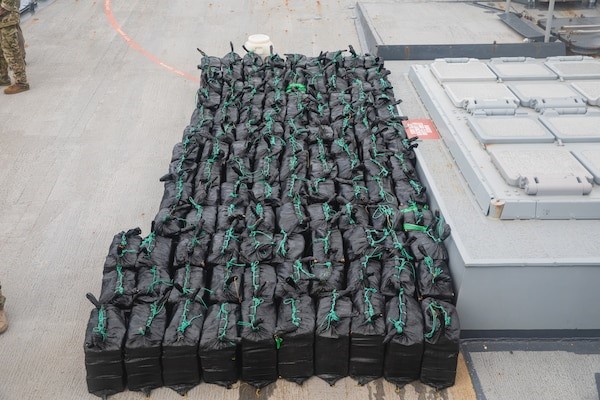
PACIFIC OCEAN – Members of a U.S. Coast Guard Law Enforcement Detachment and U.S. Navy Sailors assigned to the Arleigh Burke-class guided-missile destroyer USS Sampson (DDG 102) seized approximately 7,850 pounds of contraband during a visit, board, search and seizure operation, June 22, 2025 (Official U.S. Navy photo).
From U.S. Fleet Forces Command, June 26, 2025
PACIFIC OCEAN – U.S. Coast Guard and U.S. Navy interdicted three suspected drug smugglers and more than 7,850 pounds of cocaine, with an assessed wholesale value of approximately $58.1 million, in the Eastern Pacific on Sunday morning.
At 5:34 p.m., a Navy helicopter aircrew from the Arleigh Burke-class guided-missile destroyer USS Sampson (DDG 102) observed a vessel displaying suspicious behavior. A small boat was launched from the Sampson with a Coast Guard Law Enforcement Detachment (LEDET) 105 crew members aboard.
LEDET 105 crew members discovered three suspected drug smugglers aboard the vessel, all claiming non-U.S. nationality. The packages aboard the vessel tested positive for cocaine. All three individuals aboard were taken into custody aboard the Sampson.
The vessel, determined to be without nationality, was later sunk as a hazard to navigation.
U.S. Northern Command is working together with the Department of Homeland Security to provide military forces and capabilities at the southern border. Sampson is employed under U.S. Northern Command’s maritime homeland defense authorities with a Coast Guard Law Enforcement Detachment embarked to enable maritime interdiction missions to prevent the flow of illegal drugs and other illegal activity.