WASP ARG-24TH MEU (SOC) Begin Deployment
From U.S. Fleet Forces Command, 01 June 2024 

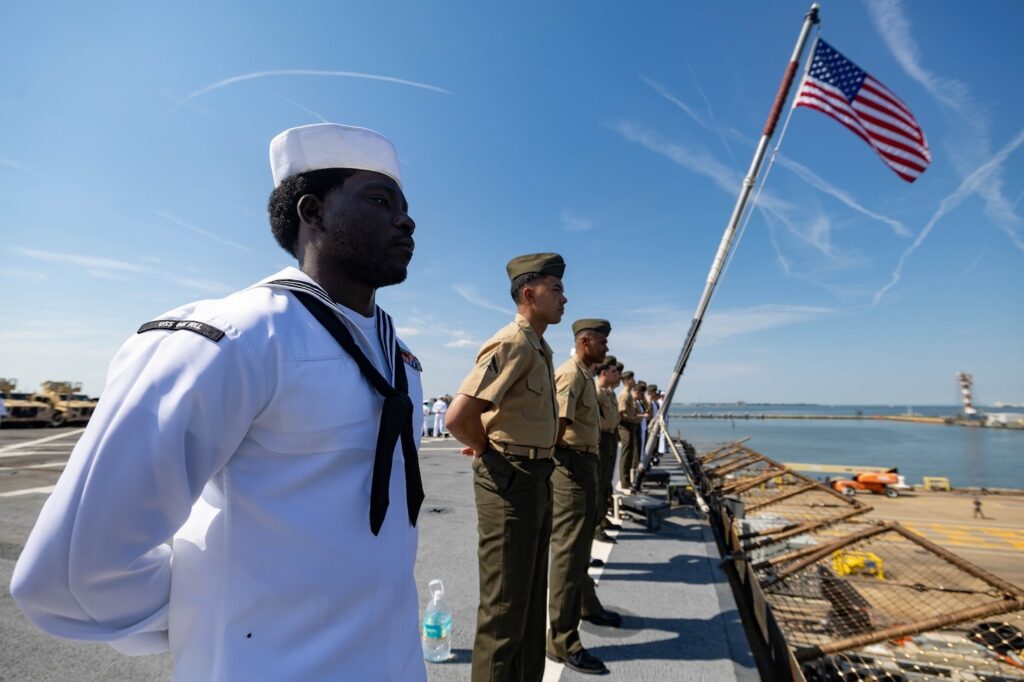
ATLANTIC OCEAN – Sailors and Marines assigned to the Wasp (WSP) Amphibious Ready Group (ARG)-24th Marine Expeditionary Unit (MEU) Special Operations Capable (SOC) began deployment operations in the Atlantic, June 1. 
 
The deployment is a scheduled rotation of forces that fosters maritime security and increased theater cooperation. The ARG provides a forward naval expeditionary presence with vast, specialized crisis response capabilities to support geographic combatant commander, numbered fleet commander, and joint special operations task force commander. 
 
“The Wasp ARG is ready,” said Capt. Nakia Cooper, commodore of Amphibious Squadron 4. “I’m confident in the skill and unwavering commitment of our team. Through robust training and real-world events, we have demonstrated professionalism and proficiency at every level. We are ready to support combatant commanders around the globe in any capacity deemed necessary.” 
 
WSP ARG certified to deploy following a composite training unit exercise, which concluded May 12. The ARG consists of three Hampton Roads-based ships: amphibious assault ship USS Wasp (LHD 1), amphibious transport dock ship USS New York (LPD 21), and dock landing ship USS Oak Hill (LSD 51), totaling more than 4,500 Sailors and Marines across the force. 
 
“The Marines and Sailors of the 24th MEU (SOC) demonstrated their tactical acumen throughout our pre-deployment training program, and we are ready to execute in any clime or place,” said Col. Todd Mahar, commanding officer, 24th MEU (SOC). “We are excited to deploy with our Wasp ARG teammates and take our naval warfighting capabilities forward to support national security objectives.” 
 
Coupled with the WSP ARG, the 24th MEU (SOC) serves as a premier stand-in force with a full complement of all-domain capabilities to operate persistently within the littorals or weapons engagement zones of an adversary. The 24th MEU (SOC) serves as one of the Nation’s primary crisis response forces capable of conducting amphibious operations, crisis response, and limited contingency operations, including enabling the introduction of follow-on forces and designated special operations, in support of theater requirements of the geographic combatant commander. 
 
U.S. 2nd Fleet, reestablished in 2018 in response to the changing global security environment, develops and employs maritime forces ready to fight across multiple domains in the Atlantic and Arctic in order to ensure access, deter aggression and defend U.S., allied, and partner interests. 
 
To learn more about WASP ARG and 24th MEU “Team of Teams,” visit their DVIDS feature page at https://www.dvidshub.net/feature/wasparg24thmeu. 
 
You can find Amphibious Squadron 4, Wasp Amphibious Ready Group on Facebook and DVIDS. 
 
You can find the 24th Marine Expeditionary Unit on Facebook, Twitter (@the24MEU), Instagram (@24MEU), and DVIDS. 
 
You can find USS Wasp on Facebook and Instagram (@usswas


Marine Corps Launches Talent Acquisition Pilot for Cyber, Signals Intel  

QUANTICO, Va. — Manpower and Reserve Affairs announced the Marine Corps Talent Acquisition Pilot (MCTAP) program today, a groundbreaking initiative aimed at identifying and recruiting highly skilled individuals to fill critical roles within the active and reserve components of the 1721 Cyberspace Warfare Operator military occupational specialty and the active component of the 2629 Signals Intelligence Collection Manager MOS.  The two-year pilot program commences June 2024.  

As a 21st century fighting organization, the Marine Corps must creatively and critically address how to employ talent. The MCTAP explores a pathway for exceptionally talented Americans to join the service at a rank appropriate for their education and experience, up to Gunnery Sergeant, in two pre-determined fields.     

“The time and investment in identifying, acquiring, and developing talent is significant, especially in these fields,” said Lt. Gen. James Glynn, deputy commandant, Manpower and Reserve Affairs. “This initiative enhances readiness and contributes to lethality by leveraging proven private sector talent to rapidly meet critical areas of capability.”  

All applicants accepted into the pilot with no prior Marine Corps experience will complete Marine Corps recruit training and earn the title of Marine.  Applicants who previously served in the Marine Corps as successful graduates of recruit training will not be required to retrain.   

“For those who have acquired the skills outlined in this MARADMIN and feel called to serve the Nation in uniform, I look forward to your applications,” said Glynn. “Join our prestigious team; we have a place for you.”  

Read Marine Administrative Message 253/24 for more information and how to apply.  


F-35B Crashes in New Mexico En Route Test Assignment

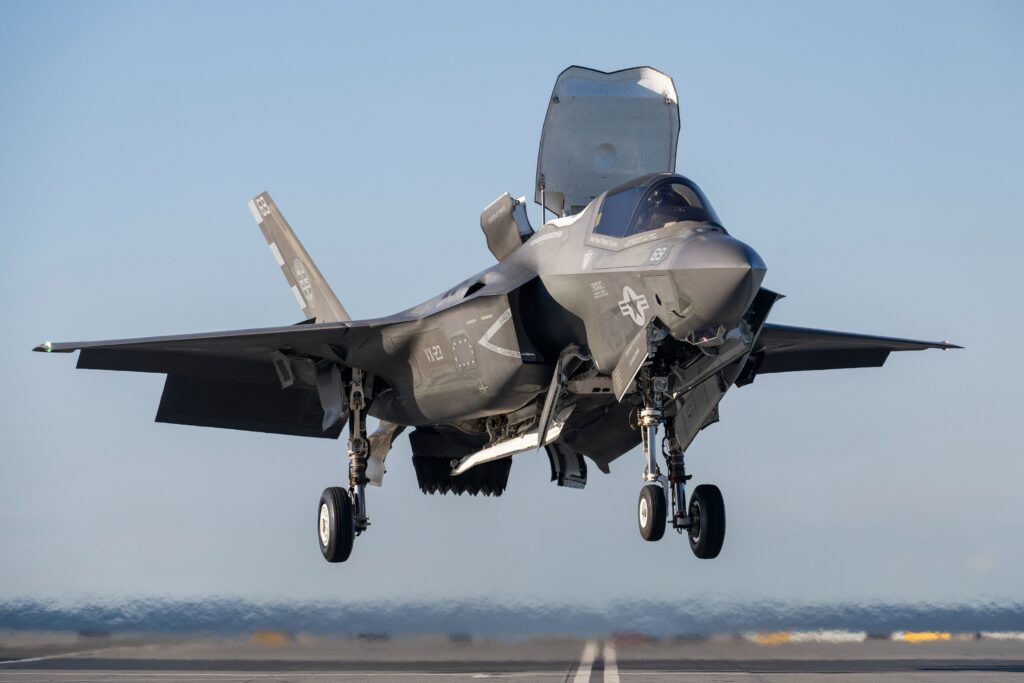
ATLANTIC OCEAN (Oct. 18, 2023) U.S. Marine Corps Maj. Alex Horne, assigned to Air Test and Evaluation Squadron (VX) 23, conducts flight operations from the Royal Navy aircraft carrier HMS Prince of Wales (R09) in the Atlantic Ocean, Oct. 18, 2023. (U.S. Navy photo by Kyra Helwick)

By Richard R. Burgess, Senior Editor 

ARLINGTON, Va. — An F-35B Lightning II strike fighter crashed shortly after takeoff from Kirtland Air Force Base, New Mexico, on May 28. The pilot ejected and was hospitalized with serious injuries. 

The Marine Corps F-35B was en route to deliver to Edwards Air Force Base, California, for assignment to test duties. The aircraft was flying from the Lockheed Martin factory in Fort Worth, Texas, for delivery to Edwards.  

According to press reports, the pilot was an Air Force officer assigned to the Defense Contract Management Agency’s Fort Worth office. 

Marine Operational Test and Evaluation Squadron One, headquartered at Marine Corps Air Station Yuma, Arizona, has a detachment at Edwards Air Force Base for F-35 test and evaluation. 

Rep. Rob Wittman, chairman of the Tactical Air and Land Forces subcommittee of the House Armed Services Committee issued a statement on the mishap: 

“I am incredibly grateful to the first responders who promptly aided the pilot after this crash and relieved to hear the pilot is in stable condition. I am praying for the pilot and their family as they undergo treatment for serious injuries. 

“Any crash of our military aircraft is of utmost concern. While we know that expanding F-35 test capacity is the first step to fundamental F-35 transformation, this incident exacerbates the already urgent need to expand it. That’s why I authored an amendment in this year’s National Defense Authorization Act to increase F-35 test capacity by 50%, ensuring that the U.S. military can accelerate tests associated with our nation’s largest defense acquisition program. 

“This incident will undoubtedly cause a technical setback for F-35 modernization and warrants an extensive and thorough investigation to determine the exact cause of this crash.” 


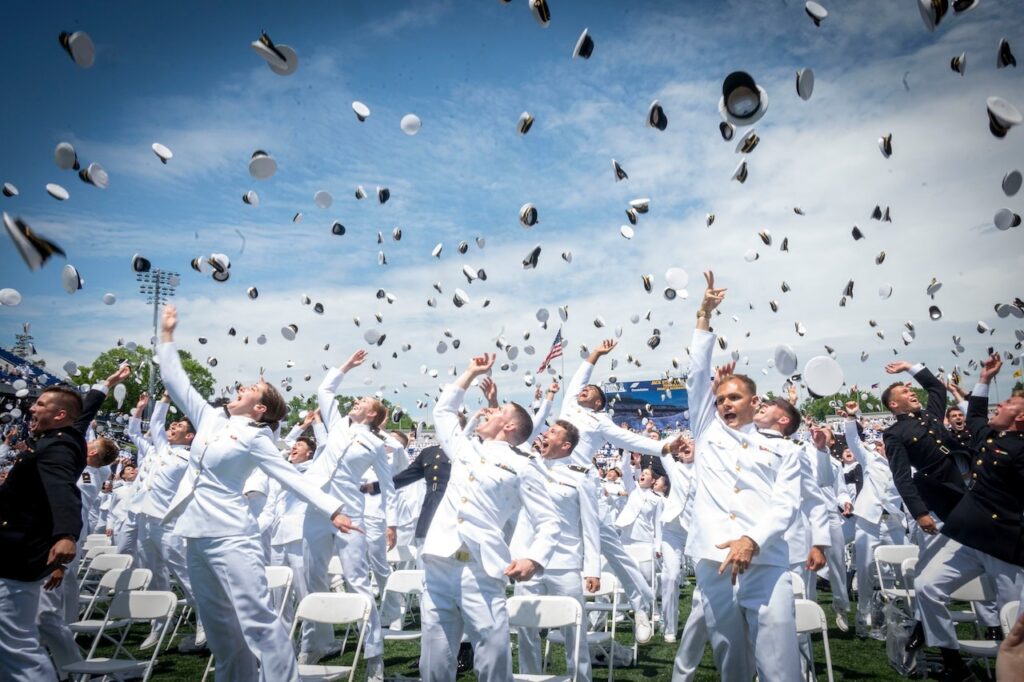
Austin: New Officers Ready to Lead in Complex World

May 24, 2024 | By Jim Garamone, DOD News 

Even as new Navy ensigns and Marine Corps second lieutenants were being commissioned at the U.S. Naval Academy, U.S. Central Command issued a release on the latest threat to mariners in the Red Sea.  

“At approximately 7:26 a.m. on May 23, Iranian-backed Houthis launched two antiship, ballistic missiles into the Red Sea,” the Centcom release said. “There were no injuries or damage reported by U.S., coalition or commercial ships. This continued malign and reckless behavior by the Iranian-backed Houthis threatens regional stability and endangers the lives of mariners across the Red Sea and Gulf of Aden.”  

This is just one of the threats that the new officers will confront as they begin their military careers. It’s an example of the challenges these young officers must face as they join the ranks. 

Secretary of Defense Lloyd J. Austin III told the graduating service members in Annapolis, Maryland, that their experiences at the Naval Academy have made them ready to confront the challenges of the future. 

“I hope that you will see your years here as a long lesson in grit, adaptability and discipline,” the secretary said. “You put in the ‘reps and sets’ to succeed as a team and grow as teammates. And that’s what we’ll continue to expect of you — today and every day. 

“The United States has the most capable Navy and Marine Corps in the world. … And make no mistake, we’re going to keep it that way. And you’re going to keep it that way.” 

The graduating class arrived at the academy at the height of the COVID-19 epidemic. They had to adapt to a new learning situation and new procedures in order to graduate. “You have lived by your class motto: ‘From Adversity, Victory’,” Austin said. “And during a once-in-a-generation pandemic, that’s exactly what you showed.”   

This is the second year in a row that Austin, a graduate of the U.S. Military Academy at West Point, New York, has officiated at the Naval Academy’s graduation. “Last year, I told the class of 2023 that they would learn that the lifeblood of the rules-based international order is actually seawater,” he said. “And over the past year, we’ve seen how important your mission is. Sea power is a beacon projecting American power and American principles to the world. Our allies and partners depend on it, and our foes and rivals envy it.”   

The Navy and Marine Corps are upholding U.S. principles from the South China Sea to the Red Sea. Austin said the United States is seeing new challenges to the open world of rules, rights and responsibilities built with U.S. leadership after World War II. “In times like these, freedom of navigation rides on the bow waves of U.S. Navy ships,” he said. “As officers, you will help us increase American security and model American values worldwide. Our sailors and Marines let the U.S. military project power anywhere on Earth.” 

The new ensigns and second lieutenants will join the services working to “secure the world’s sea lanes for the free flow of ships, commerce and ideas,” Austin said. “We’re depending on you to sail, fly and operate wherever international law allows. We’re depending on you to deepen old alliances and forge new friendships. And we’re depending on you to deter conflict and to keep the peace.”  

Yes, the new officers must be prepared for war, but they must do more. Austin quoted Navy Adm. Arleigh Burke, who in 1961 said that Navy officers must “understand not only how to fight a war, but how to use the tremendous power which they operate to sustain a world of liberty and justice.” 

“And you will be tested. Just ask last year’s graduates,” the secretary said.   

The secretary spoke with ensigns of the class of 2023 who are aboard the USS Carney. “They helped defend freedom of navigation in the Red Sea,” he said. “They helped those in distress at sea. They helped degrade the capabilities of the Iranian-backed Houthi militia. And they helped shoot down missiles and UAVs . In fact, the Carney conducted 51 engagements in six months, which is the most direct Navy engagement with a foe since World War II.   

“And the message of those ensigns on the Carney to the class of 2024 is this: You are ready.”   

The secretary said they will lead sailors and Marines through tension and uncertainty. 


Marine Corps set to receive new Light Assault Weapon System 

The M72 Fire from Enclosure (FFE) system with A8 and A10 munition. (Courtesy photo from Nammo) 

From Marine Corps Systems Command, May 20, 2024 

MARINE CORPS BASE QUANTICO, Va. — Marine Corps Systems Command is pleased to 

announce the acquisition of the M72 Light Assault Weapon Fire from Enclosure Munition. 

The M72 LAW Fire from Enclosure (FFE) is a compact, lightweight, single-shot weapon system. It incorporates an improved launcher featuring an enhanced in-line trigger mechanism and improved sling design. The M72 FFE comprises two configurations: the M72A8 anti-armor and the M72A10 multi-purpose, anti-structure munition. The M72A8 contains a high- 

explosive charge warhead that improves armor penetration, while the M72A10 provides Marines with increased capability for eliminating structures. 

The M72 FFE is designed to deliver versatility and reliability, enabling Marines to counter threats effectively in close-range 

combat. Its performance is optimized for urban environments, vehicles, and complex terrain, ensuring operational effectiveness in these challenging scenarios. 

The M27A FFE variants will replace the current LAW weapon system capability. The new system allows Marines to fire multiple shots daily from inside a room and has less flash and back blast than an M9 pistol. The reduced visibility increases the lethality and safety of Marines. 

“This new capability removes the Marine from exposure to enemy engagement by introducing the FFE capability, said Mr. Scott Adams, Product Manager, Ammo. “The FFE and the reduced thermal signature provides the Marine with an added layer of protection.” 

The MCSC team worked closely with their Army counterparts to procure this new capability. All shoulder-fired rocket ammunition is procured through the U.S. Army Joint Munitions Command, the Single Manager for Conventional Ammunition. This enables the services to combine orders to realize cost savings by leveraging economic order quantity prices. 

The M72 FFE rocket underscores the Marine Corps’ ongoing efforts to lighten the warfighter’s load and increase lethality. PdM Ammo expects to begin fielding the M72A FFE in calendar year 2024. 


GA-ASI and USMC Complete MQ-9A WTI Training with SkyTower I Pod

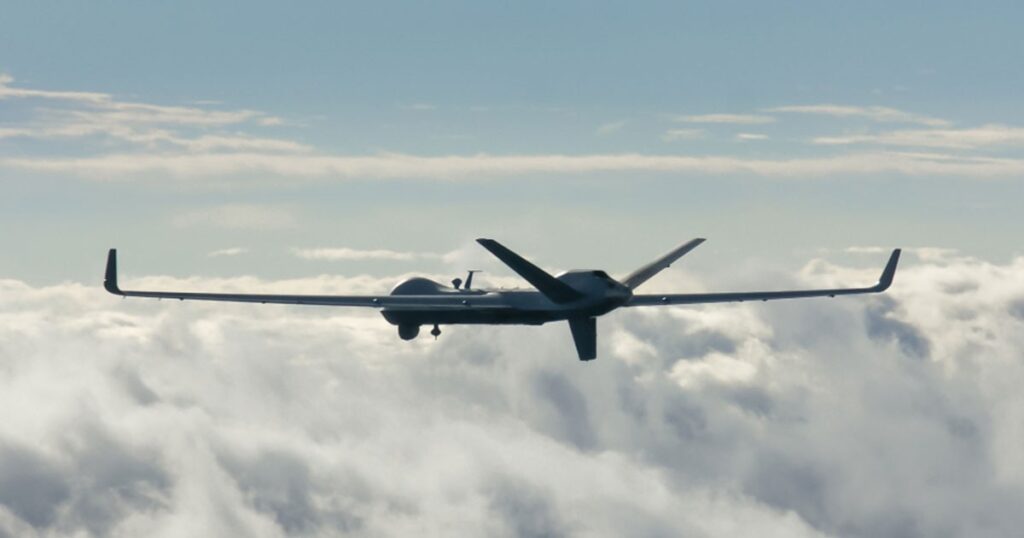
SAN DIEGO – 16 May 2024 – General Atomics Aeronautical Systems, Inc. (GA-ASI) and the U.S. Marine Corps (USMC) teamed up to conduct flight training on the operation of the MQ-9A Block 5 Unmanned Aircraft System (UAS) for the Marine Aviation Weapons and Tactics Squadron One (MAWTS-1) at Marine Corps Air Station in Yuma, Arizona. The students participated in Weapons and Tactics Instructor (WTI) Course 2-24, which is a comprehensive course designed for select pilots and enlisted aircrew that incorporates Marine Corps planning along with implementation of advanced air and ground tactics.  

The seven-week course, which was completed on April 20, 2024, for the first time included the employment of GA-ASI’s SkyTower I pod, which is a USMC-specific payload for MQ-9A that provides airborne communication extension capabilities in various waveforms. SkyTower I provides an Airborne Network Extension to the Marine Air-Ground Task Force (MAGTF) that is a commercial-quality WiFi network, as well as a relay/repeater function connecting geographically disconnected teams. 

“Congratulations to the newest graduates of WTI,” said GA-ASI Vice President of DoD Strategic Development Patrick Shortsleeve. “GA-ASI is proud to support the training of the MAWTS-1 aircrews in the use and utility of the MQ-9A platform, especially now with our SkyTower capabilities.” 

The WTI course is renowned for its advanced graduate-level training, particularly in refining tactical skills and strategies for aviation operations. It is an integral part of developing and implementing cutting-edge aviation weapons and tactics, both in terrestrial and maritime settings. 

In recent training scenarios, the Marines had the opportunity to hone their skills using a GA-ASI-supplied MQ-9A. The platform provides valuable hands-on experience in operating advanced UAS, enhancing their proficiency in utilizing MQ-9A effectively for various missions. 

Graduates of the WTI program are poised to become go-to experts within their squadrons for the employment of MQ-9A Block 5, leveraging their comprehensive training and specialized knowledge. The program ensures that graduates are well-prepared to lead and execute missions utilizing this sophisticated platform with precision and efficiency. 

This training is a critical part of the MAGTF Unmanned Expeditionary (MUX) Medium-Altitude, Long-Endurance (MALE) program meeting Full Operational Capability (FOC). GA-ASI is a committed partner in helping the USMC meet this critical program milestone.  

GA-ASI has delivered 13 MQ-9A UAS to the USMC so far. The USMC awaits delivery of seven additional aircraft, which will fulfill their goal of three squadrons by 2025. 


Airbus Offers Unmanned UH-72 Helicopter for Marine Corps Aerial Logistics 

Photo Credit: Airbus

ARLINGTON, Va. — Naval Air Systems Command awarded Airbus U.S. Space & Defense a Phase I Other Transactional Authority Agreement, through Naval Aviation Systems Consortium, in support of the United States Marine Corps Aerial Logistics Connector.  

The award is part of a Middle Tier of Acquisition (MTA) Rapid Prototyping Program which aims to provide the Marine Corps with prototypes to demonstrate the aircrafts capabilities to the warfighter through a series of operationally experiments. The Airbus U.S. UH-72 Unmanned Logistics Connector, a variant of the proven Lakota platform, is intended to provide logistical support during expeditionary operations within contested environments. 

“Our unmanned UH-72 logistics connector leverages nearly two decades of U.S. military capability and offers Marines a versatile, affordable and enduring solution to address logistics missions around the globe,” said Rob Geckle, chairman and CEO of Airbus U.S. Space & Defense. “We look forward to supporting the Marine Corps with this latest modernization of the Lakota platform.” 


Leidos and Elroy Air to Demonstrate Autonomous Aerial Resupply Drone for U.S. Marine Corps

RESTON, Va. (May 14, 2024) – Leidos (NYSE:LDOS), a FORTUNE 500 innovation company, and Elroy Air, an autonomous aircraft systems and software development company, have been approved to demonstrate an autonomous Medium Aerial Resupply Vehicle – Expeditionary Logistics (MARV-EL) prototype for the Navy and Marine Small Tactical Unmanned Aircraft Systems program office (PMA-263). The flight test activities are scheduled for July 2024. The development and testing are part of a contract awarded last year to develop and demonstrate an uncrewed aircraft system that can autonomously resupply forward-deployed ground forces for the U.S. Marine Corps. 

“Leidos is pleased to team with Elroy Air to bring this critical capability to the warfighter,” said Tim Freeman, Leidos senior vice president and Airborne Systems business area manager. “Approval to proceed to test is a major milestone and is the result of months of hard work by the team. We look forward to demonstrating how the Leidos and Elroy Air MARV-EL solution will help deliver a logistics advantage to the Marines and other branches of the military.” 

Leidos and Elroy Air are slated to demonstrate Elroy Air’s Chaparral system at the U.S. Army Yuma Proving Ground in Yuma, Arizona. The Chaparral is a “lift-plus-cruise” hybrid-electric vertical take-off and landing (hVTOL) cargo aircraft. The Chaparral system leverages the benefits of wing-borne flight driven by electric propulsion and turbo-generation for efficient autonomous operations and longer-range missions. It is designed with an advanced carbon composite airframe and modular automated payload capabilities to help reduce the personnel required versus legacy aircraft and enable zero-touch logistics. 

“We’re excited to work with Leidos to provide these critical capabilities to U.S. and allied forces,” said Elroy Air CEO and co-founder Dave Merrill. “We’ve been designing Chaparral from the beginning to move cargo and resupply troops in the battlespace without putting crews in harm’s way. We look forward to demonstrating these capabilities and working toward serving the U.S. Marine Corps’ goals for expeditionary logistics.” 

MARV-EL is a PMA-263 effort designed to provide commanders with a responsive capability to sustain Marine Corps Forces conducting expeditionary advanced base and other distributed operations. MARV-EL, using autonomous operations, should be the “middle-weight” unmanned logistics asset, providing combat sustainment to Marines when ground or manned aviation assets are unavailable due to threat, terrain, weather, or competing priorities. 


Amphibious Combat Vehicles Mark Operational Debut in Pacific

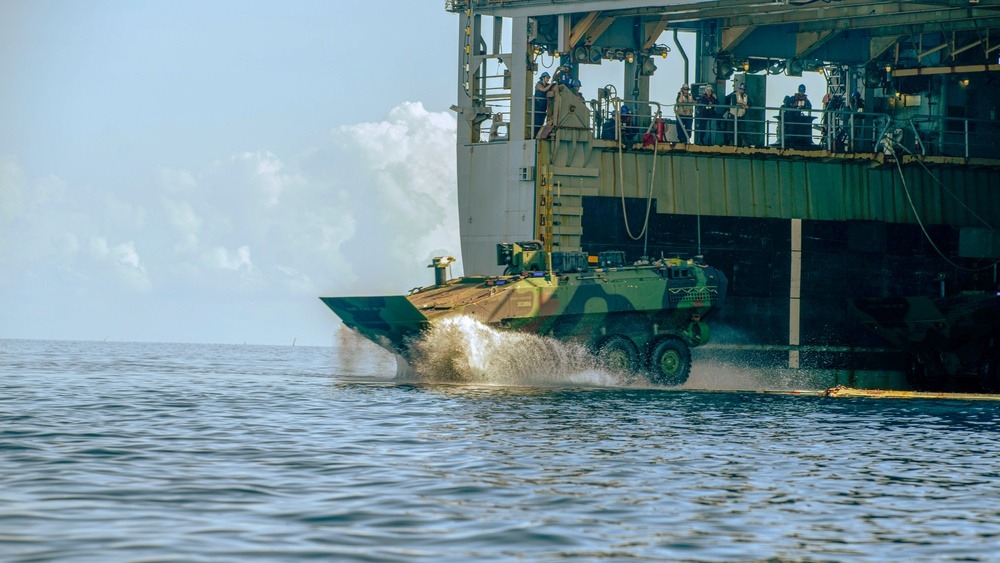
A U.S. Marine Corps amphibious combat vehicle attached to Alpha Company, Battalion Landing Team 1/5, 15th Marine Expeditionary Unit, splashes off the amphibious dock landing ship USS Harpers Ferry (LSD 49) during Exercise Balikatan 24 in Naval Detachment Oyster Bay, Palawan, Philippines, May 4, 2024. (U.S. Marine Corps photo by Lance Cpl. Peyton Kahle) 

From Communication Strategy and Operations, 15th Marine Expeditionary Unit 

May 6, 2024 

OYSTER BAY, Philippines – The 15th Marine Expeditionary Unit’s Amphibious Combat Vehicles Platoon conducted a live-fire, waterborne gunnery range exercise in Oyster Bay, Philippines, May 4, 2024, marking the first overseas employment of the ACVs during their initial deployment.  

The ACV platoon launched from aboard amphibious dock landing ship USS Harpers Ferry (LSD 49) before organizing into assault sections to close with and engage multiple shore-based targets, using their Remote Weapons Systems to control externally-mounted Mark 19 40 mm grenade machine guns.  

Section leaders within the ACV Platoon, which is part of Alpha Company, Battalion Landing Team 1/5, used the opportunity to coordinate and control the simultaneous fires of all of their section’s weapons while afloat to maximize the effect against the targets ashore. The ACV provides unique capabilities to the amphibious force, increasing command and control capability, mobility ashore, and a stabilized weapon system to support maneuver.  

“The hard work and dedication of our Marines is what made today’s training successful,” said U.S. Marine Corps Col. Sean Dynan, commanding officer of the 15th MEU. “Today’s training is a proof of concept across the Marine Corps for successful ACV employment in its intended environment.”  

The ACVs fired 40 mm training rounds that mark targets with orange chalk upon impact, instead of using high explosives in Oyster Bay.  

Upon completion of the gunnery exercise, the ACV platoon and all ACVs reembarked aboard Harpers Ferry.  

This waterborne gunnery range took place while the 15th MEU continues to participate in other bilateral training events during Exercise Balikatan 24, which incorporates several combined joint all-domain operation events that increase U.S.-Philippine bilateral interoperability and lethality across land, air, sea, space, and cyberspace domains. The exercise is a tangible demonstration of U.S. and Philippine cooperation to strengthen the Alliance in an increasingly complex Indo-Pacific security environment.  

The ACV Platoon, along with Alpha Co. and other elements from across the 15th MEU, deployed from Southern California March 19 aboard Harpers Ferry.  

During this first deployment, 15th MEU will continue to provide insights for ACV employment, embarkation, maintenance requirements, logistics trains, and integration with our allies and partners. These insights are vital for the service to ensure we continue to provide our Marines with the most operationally ready and capable platforms.  

The 15th MEU is under the command and control of Combined Task Force 76/3, employed by U.S. 7th Fleet to operate with allies and partners in preserving a free and open Indo-Pacific.  


KONGSBERG turret delivers firepower to U.S. Marine Corps’ ACV-30

From Kongsberg Aerospace & Defense, April 30, 2024 

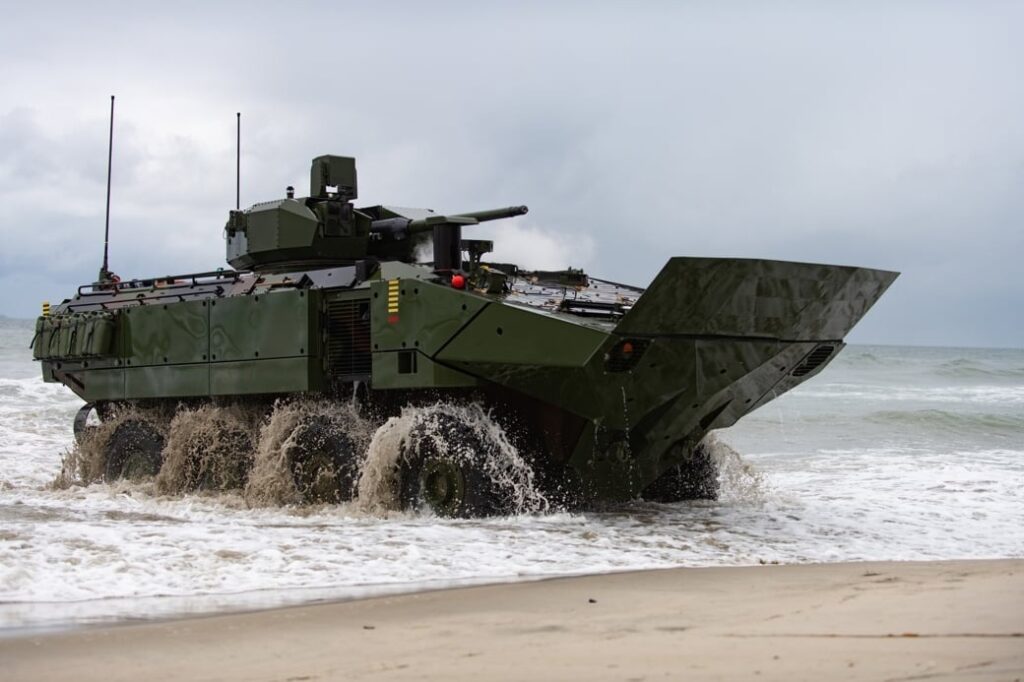
A new Amphibious Combat Vehicle that is undergoing testing by the U.S. Marine Corps includes a PROTECTOR remote turret (RT-20) from Kongsberg Defence & Aerospace.    

BAE Systems delivered the first production representative test vehicle (PRTV) of the new Amphibious Combat Vehicle 30mm Cannon (ACV-30) to the customer earlier this year.  ACV-30 is the third variant in the ACV family of vehicles designed, developed, and built since BAE Systems was selected as the prime contractor for the program in 2018. 

“We are proud to be working with BAE Systems and partners on a vehicle and weapon system that will increase the USMC firepower and the capacity to the Marines. The PROTECTOR RT-20 is a modern remotely operated turret with highly accurate firepower for wheeled, tracked, and robotic combat vehicles. The modularity and digitalization of the system has growth potential to incorporate new technologies to deter and defeat future threats,” said Jørgen Bull, Vice President, land systems at Kongsberg Defence & Aerospace. 

The vehicle mounts a stabilized, medium caliber Remote Turret System manufactured by KONGSBERG that provides the lethality and protection Marines need while leaving ample room for troop capacity and payload while keeping the crew under armor.  

The remote turret eliminates the space requirement of legacy turreted cannon systems and provides more room to transport troops and associated mission essential equipment and reduces weight for better mobility. 

BAE Systems’ customizable ACV variants provide true open-ocean and ship-to-objective capability, land mobility, survivability, and growth potential to meet the evolving operational needs of Marines around the world.    

“Delivering capability like the ACV-30 to the U.S. Marine Corps remains critical in the ever-changing battle space,” said Garrett Lacaillade, vice president of the amphibious vehicles product line for BAE Systems. “The collaboration we have with Kongsberg on this PRTV enables our customer to see and test a modern and lethal firepower technology on the battlefield.”