12th Marine Regiment Re-Designated to 12th Marine Littoral Regiment 
Release from Headquarters Marine Corps 

***** 

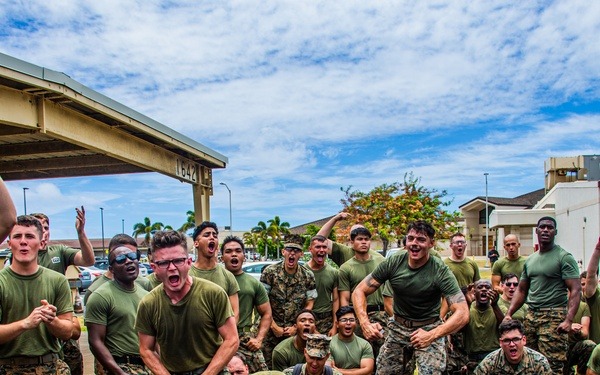
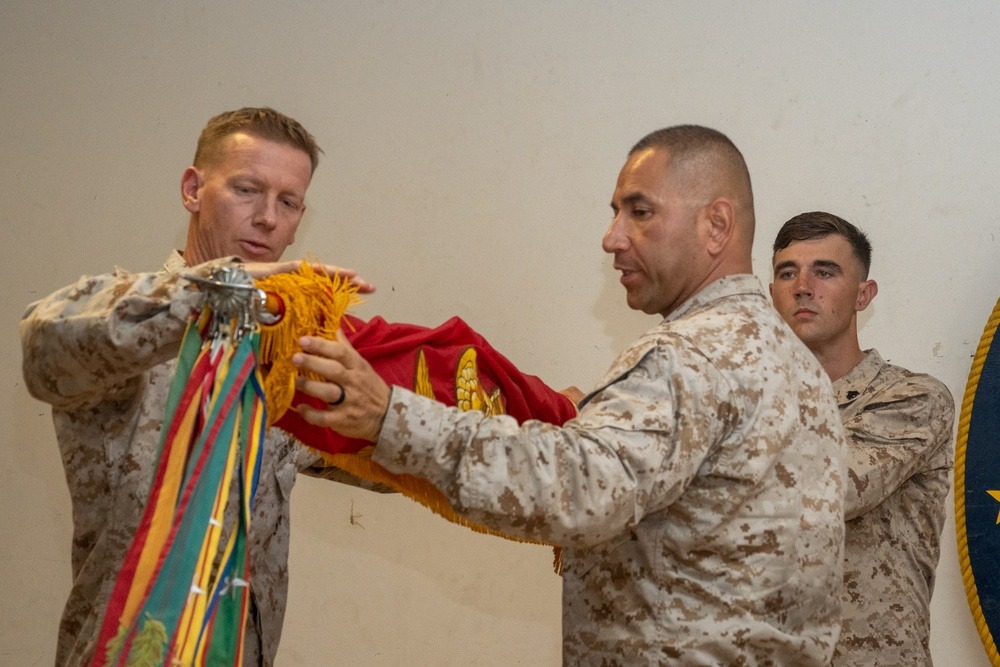
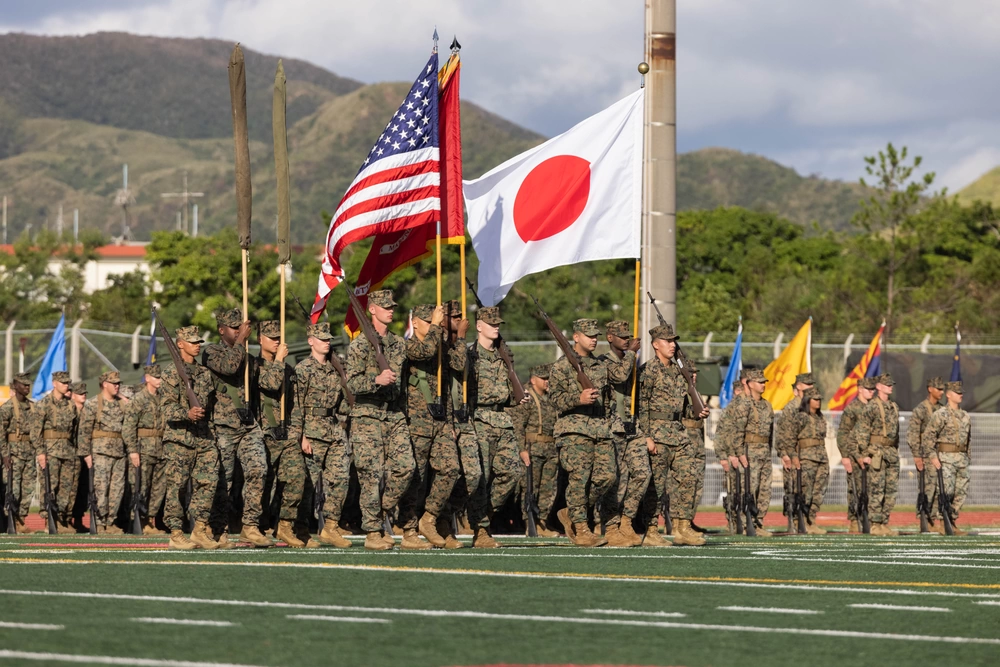
CAMP HANSEN, OKINAWA, Japan – 12th Marine Regiment redesignated to 12th Marine Littoral Regiment (MLR) on November 15, 2023, during a ceremony at Camp Hansen, Okinawa, Japan. This redesignation is the first step in the process outlined in January’s Security Consultative Committee (“2+2”) announcement that reinforces the enduring commitment of the U.S. to the defense of Japan and to peace and stability in the Indo-Pacific.  

“Today marks a significant milestone in the storied history of the 12th Marine Regiment as they redesignate to the 12th Marine Littoral Regiment,” said Maj. Gen. Christian Wortman, commanding general of the 3d Marine Division. “12th MLR is poised to meet the challenges of today and tomorrow, with a vigilant eye on the horizon and a steadfast resolve to protect our nation and support the defense of Japan.” 

While forward stationed in Okinawa, Japan, 12th Marine Littoral Regiment will integrate with the Joint Force and the capabilities of our allies and partners, supporting deterrence efforts, and remaining prepared to respond to potential crises.  

“12th MLR represents a vital evolution of our mission and capabilities.,” said Col. Peter Eltringham, commanding officer of 12th Marine Littoral Regiment. “We’re proud to be here in the First Island Chain, and a force prepared to respond to contingencies wherever and whenever required. It is our pledge to guard and advance the 12th Marines legacy of honor, fidelity and valor, now as the 12th MLR.” 


Tactical Resupply UAS ready for the fleet 

Six production models of the TRV-150C Tactical Resupply Unmanned Aircraft System (TRUAS) arrive at Littoral Logistics Battalion Three (LLB-3), Marine Corps Base Hawaii. The Navy and Marine Corps announced Initial Operational Capability (IOC) for TRUAS Oct. 27. (Marine Corps Photo)

Release from Naval Air Systems Command 

***** 

Nov 1, 2023 

Naval Air Station Patuxent River, Md. — The Navy and Marine Corps announced Initial Operational Capability (IOC) for the TRV-150C Tactical Resupply Unmanned Aircraft System (TRUAS) Oct. 27 at Marine Corps Base Hawaii. 

The first six production systems arrived last week at the Marines Third Littoral Logistics Battalion (LLB-3) in Kaneohe Bay, Hawaii, which means that LLB-3 is sufficiently manned, trained and ready to deploy with the TRV-150C. 

“This achievement means the fleet is ready and fully capable of deploying and using this game-changing system, which will enable Marines to perform forward deployed contested logistics missions,” said Gregg Skinner, Navy and Marine Corps Small Tactical Unmanned Aircraft Systems program manager (PMA-263), whose Unmanned Logistics Systems-Air (ULS-A) team oversees the TRUAS program. 

Prior to declaring IOC, support staff from the Air Test and Evaluations Squadron Two Four (UX-24) from Naval Air Warfare Center Webster Outlying Field in Maryland arrived at MCB Hawaii along with an instructor from the Training and Logistics Support Activity Pacific, to conduct final operator qualification with LLB-3. After reviewing the differences between prototype and production systems, the trainers and operators successfully completed 36 training flights to ensure that the unit was ready to deploy. 

PMA-263 awarded the production contract for the TRV-150C in April 2023 following a rapid prototyping initiative that brought the system from inception to the fleet in less than four years. 

“This was a total team effort in accomplishing this milestone in record time,” Skinner said. “Special thanks to the PMA263 Team, Training and Logistics Support Activity Pacific, Air Test and Evaluations Squadron Two Four (UX-24), and the Survice Engineering Company (TRUAS prime contractor) for their hard work and dedication aimed at getting this much needed Force Design 2023 capability in the hands of the Warfighter.” 

TRUAS is a land based, autonomous UAS that provides organic logistics to Marine squads through automated launch, waypoint navigation, and automated landing and payload drop. The system provides battlefield logistics capability to distribute critical supplies at Expeditionary Advanced Bases, where the risk to manned aircraft would deny manned aviation resupply operations out to the last tactical mile. 

“The contested logistics environment challenges the ability of our Marines to distribute necessary supplies to the right place at the time of need,” said Col. Aaron Angell, Logistics Combat Element Division director.  “TRUAS gives a logistics unit the organic ability to immediately respond with a precision ground launched air delivery system.  This is leap-ahead technology that we will learn to continue to shape future unmanned aerial logistics platforms.” 


Service Chiefs from US Navy, Royal Navy, and US Marine Corps Sign Revised Strategic Charter, Strengthening the Special Relationship 

Release from Vice Chief of Naval Operations Public Affairs 

***** 

Oct. 18, 2023 

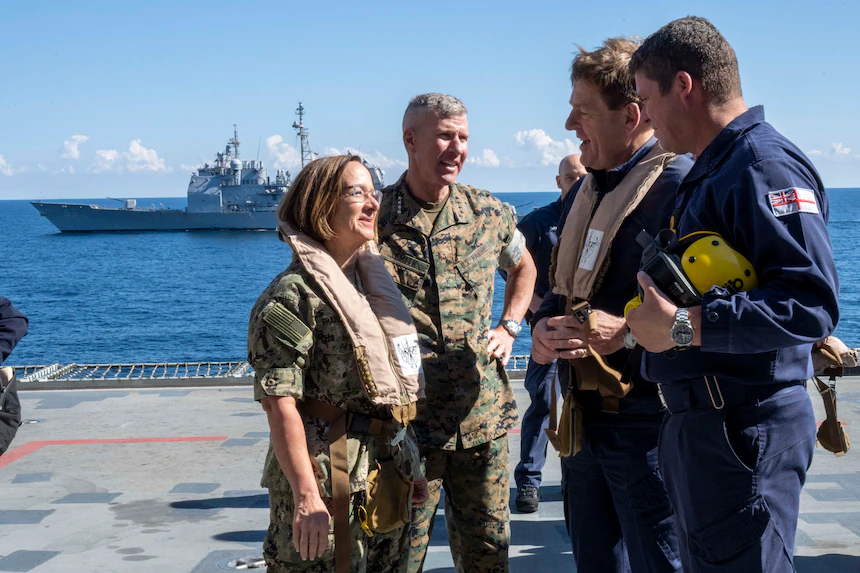
ATLANTIC OCEAN – Vice Chief of Naval Operations Adm. Lisa Franchetti and Commandant of the Marine Corps Gen. Eric Smith embarked HMS Prince of Wales (PWLS) and met with Royal Navy First Sea Lord and Chief of Naval Staff Adm. Sir Ben Key to sign an updated strategic charter, Oct. 18. 

The charter, known as “Delivering Combined Seapower” or DCS, is a bilateral tri-service strategic approach plan that supports cooperation, collaboration, and integration among U.S. and U.K. maritime services.  

First signed in 2014, DCS was introduced to build and sustain interoperability between the U.S. and U.K. fleets. 

The updated document includes a shared vision to enable the next level of interoperability the joint force requires, acceleration of U.S.-U.K. interchangeability, and underscores the collective dedication to safeguarding global maritime interests and promoting a rules-based international order. 

“‘Delivering’ is the key word here,” said Franchetti.  “The U.S. and U.K are providing real, operationally relevant capabilities that are making a difference on the oceans every single day.  This document reflects the significant progress we’ve made since the original charter nine years ago and clearly articulates how we will advance and expand our interchangeability and deliver combined seapower going forward.” 

Key emphasized the importance of this renewed alliance, “This Charter is testament to the enduring strength of the relationship between our navies and marines. By aligning our strategies and capabilities, we strengthen our ability to deter threats, respond to crises, and promote stability across the world’s oceans. This partnership will undoubtedly enhance our collective effectiveness, create opportunities to work ever more closely together, and promote our shared values.” 

Although the U.S. Marine Corps has participated in U.S.- U.K. DCS Strategic Dialogues, this revision marks the first time the U.S. Marine Corps has been formally incorporated into the charter. 

“I’m proud to be in this endeavor with Adm. Franchetti and Adm. Key,” said Smith. “Both countries’ Marines and Sailors have long-enjoyed a unique bond. We need to continue moving toward full interoperability, which includes maximizing our information sharing, training on each other’s platforms, and finding novel ways to integrate at the staff and warfighter level. This charter is a real step forward toward that goal.”  

 
Throughout the days’ events the leaders observed a demonstration of F-35B operations onboard HMS PWLS, and discussed maritime strategies, warfighting concepts, and future force design.  

The U.S. and U.K. naval forces regularly operate together around the globe, and Franchetti and Smith last met with Key in September at the 25th International Seapower Symposium in Newport, Rhode Island.  


HII AWARDED $244 MILLION CONTRACT TO INTEGRATE MINOTAUR SOFTWARE PRODUCTS INTO MARITIME PLATFORMS

Release from HII

***** 

Contract Extends HII’s ISR Mission Support Across Domains 

MCLEAN, Va., (Oct. 17, 2023) — HII (NYSE: HII) announced today that its Mission Technologies division was awarded a $244 million task order to integrate Minotaur software products into maritime platforms for the U.S. Navy, U.S. Marine Corps and U.S. Coast Guard. 

HII was awarded this contract under the Department of Defense (DoD) Information Analysis Center’s (IAC) multiple-award contract (MAC) vehicle.  IAC MAC task orders are awarded by the U.S. Air Force’s 774th Enterprise Sourcing Squadron to develop and create new knowledge for the enhancement of the Defense Technical Information Center repository and the research and development and science and technology community. 

Under the Naval Air Systems Command task order, HII will perform research, development, test and evaluation to facilitate the integration of Minotaur Family of Services products into the services’ maritime platforms to meet intelligence, surveillance and reconnaissance warfighting requirements. 

Minotaur products support the warfighter by enhancing sensor performance and presenting data from multiple types of sensors, including radar and C5ISR equipment, into a single common operating picture and transmitting that data to other platforms and units during operations. 

HII has been the first and only industry prime developer of Minotaur since the program was first awarded to industry in 2020. 

The contract has a five-year period of performance, with work conducted at contractor facilities in various U.S. locations. 

“HII has been at the forefront of Minotaur software development for nearly a decade,” said Andy Green, executive vice president of HII and president of Mission Technologies. “It’s a privilege to continue this mission-critical work and to concurrently deliver the advantage to three branches of the Armed Forces.” 

“We are pleased that the Navy has selected this proven technology to meet the combined requirements of next-generation Navy, Marine Corps and Coast Guard ISR platforms,” said Todd Gentry, president of Mission Technologies’ C5ISR business group. “We have assembled an outstanding team and look forward to expanding our longstanding partnership with the Navy and supporting the tri-service maritime strategy.” 


24th Marine Expeditionary Unit Composites for Deployment

U.S. Marine Corps Col. Todd Mahar, commanding officer, 24th Marine Expeditionary Unit (MEU), speaks during the 24th MEU’s composite ceremony on Camp Lejeune, North Carolina, Oct. 12, 2023. The 24th MEU Command Element gained the subordinate elements of Battalion Landing Team 1/8, serving as the ground combat element; Combat Logistics Battalion 24, serving as the logistics combat element; and Marine Medium Tiltrotor Squadron (VMM) 365 (reinforced), serving as the aviation combat element. (U.S. Marine Corps photo by Lance Cpl. John Allen)

By Sgt. Jacqueline Peguero-Montes, 24th Marine Expeditionary Unit , 12 Oct 2023  

MARINE CORPS BASE CAMP LEJEUNE, N.C. – The 24th Marine Expeditionary Unit formed as a Marine Air-Ground Task Force, signified with a composite ceremony, Oct. 12, 2023 at Camp Lejeune. 
 
The 24th MEU Command Element gained the major subordinate elements of: Battalion Landing Team 1/8, serving as the Ground Combat Element; Combat Logistics Battalion 24, serving as the Logistics Combat Element; and Marine Medium Tiltrotor Squadron (VMM) 365 (Reinforced), serving as the Aviation Combat Element. 
 
“This composite ceremony signifies that we are a MAGTF,” said Col. Todd Mahar, commanding officer of the 24th MEU. “We are the team of teams coming together to enter our pre-deployment training program alongside our Navy brothers and sisters. Together, we will train and prepare for a worldwide deployment at a moment’s notice.” 
 
The composite ceremony marks the official start of the 24th MEU’s pre-deployment training program. The training cycle will soon transition from Marine Corps mission-specific training to Navy/Marine Corps joint training evolutions alongside Amphibious Squadron 4 prior to its deployment. For its sea-based training, the 24th MEU will embark aboard the Wasp Amphibious Ready Group, providing the nation with a flexible, maneuverable, and adaptable option for deterrence, sea denial, and crisis response. 
 
“We are ready to begin the pre-deployment training program, with our amphibious ready group partners, as we train and prepare for worldwide deployment at a moment’s notice,” said Col. Mahar in his remarks to the formation. “The next six months of the PTP will prepare us for anything that comes our way; however, we have the watch now, and are prepared to respond to a crisis requiring the MEU.” 
 
First activated in 1971 as the 34th Marine Amphibious Unit, the unit was later redesignated as the 24th MEU in 1988. The 24th MEU has participated in humanitarian operations and conflicts including Operation Southern Watch, Resolve Resolute, Operation Iraqi Freedom, Operation Enduring Freedom, and Operation Unified Response. The 24th MEU most recently deployed in 2021 and supported the evacuation at Hamid Karzai International Airport, Afghanistan. 
 
The 24th MEU bears a profound honor and solemn duty as a crisis response force, dedicated to upholding timeless traditions and being ever-prepared to answer the nation’s call, even in the most unforeseen and challenging circumstances. 


12th Marine Regiment to be Re-Designated 12th Marine Littoral Regiment

Release from Headquarters, U.S. Marine Corps 

***** 

WASHINGTON, D.C. – To support the United States and Japan’s commitment to a free and open Indo-Pacific, 12th Marine Regiment will redesignate to 12th Marine Littoral Regiment (MLR) on November 15, 2023. The redesignation will mark the next historic chapter in the Marine Corps’ commitment to designing a force that is prepared to effectively respond to the challenges of the contemporary global security environment and serves as a testament to the regiment’s role in the Marine Corps’ global employment.  

This redesignation follows the Joint Statement of the Security Consultative Committee (“2+2”) which announced that 12th Marines would remain in Okinawa and redesignate to 12th MLR by 2025. The statement affirmed the MLR’s purpose to “bolster deterrence and provide a stand-in force that is able to defend Japan and quickly respond to contingencies.”  

The Marine Corps remains committed to the basic tenets of the 2012 Defense Policy Review Initiative Realignment Plan. No new units will be added to Okinawa under the agreement. This is strictly a redesignation of an existing unit on Okinawa in accordance with Marine Corps modernization efforts. 

12th Marine Regiment is currently participating in exercise Resolute Dragon 23.2, which takes place from October 14-31 across multiple locations in Japan. During Resolute Dragon, 12th Marines will distribute in a similar manner to what is designed for the MLR: They will deploy to Japan’s Southwest Islands, Kyushu, and Hokkaido, provide sensing capabilities in a simulated battlespace, and integrate joint force firepower with our Japanese ally’s capabilities.  


Marine Corps XQ-58A Valkyrie completes first flight

Release from Headquarters Marine Corps 

***** 

HEADQUARTERS MARINE CORPS, Va. – The Marine Corps XQ-58A Valkyrie, a highly autonomous, low-cost tactical unmanned air vehicle successfully completed its first test flight October 3, 2023, at Eglin Air Force Base, Florida. The Marine Corps partnered with the Office of the Undersecretary of Defense for Research and Engineering (OUSD(R&E)), the Naval Air Systems Command and Naval Air Warfare Center Aircraft Division (NAWCAD) to facilitate the ongoing research, development, test and evaluation of the Marine Corps XQ-58A Valkyrie.  

This joint collaboration was supported by the 40th Flight Test Squadron, 96th Test Wing and the NAWCAD. This flight marks a key milestone in the Marine Corps’ Penetrating Affordable Autonomous Collaborative Killer – Portfolio (PAACK-P) program. Future test flights inform Marine Corps XQ-58A Valkyrie requirements for the Marine Air-Ground Task Force Unmanned Aerial System Expeditionary (MUX) Tactical Aircraft (TACAIR).   

“This XQ-58A test flight and the data collected today not only help to inform future requirements for the Marine Corps,” said Scott Bey, a prototyping and experimentation portfolio manager at OUSD(R&E). “It fuels continued joint innovation and experimentation opportunities and demonstrates the agility that can be achieved through partnership.”  

The aircraft performed as expected. The XQ-58A has a total of six planned test flights with objectives that include evaluating the platform’s ability to support a variety of intelligence, surveillance, and reconnaissance (ISR) missions; the effectiveness of autonomous electronic support to crewed platforms; the potential for AI-enabled platforms to augment combat air patrols; and continuing to mature other manned-unmanned teaming (MUM-T) capability objectives.  

The Marine Corps received the first of two XQ-58A unmanned aerial systems (UAS) on March 14, 2023, to support platform prototyping and integration efforts for the PAACK-P program.  

“The Marine Corps constantly seeks to modernize and enhance its capabilities in a rapidly evolving security environment,” said Lt. Col. Donald Kelly, Headquarters Marine Corps Aviation Cunningham Group and Advanced Development Team. “Testing the XQ-58 Valkyrie determines requirements for a highly autonomous, low-cost tactical UAS that compliments the need for agile, expeditionary and lethal capabilities in support of both the Marine Corps’ stand-in force operations in austere environments and the Joint Force.”  


VMM-364 transfers Horn of Africa mission to VMM-261

*****

10.03.2023

Story by Petty Officer 2nd Class Rion Codrington 

Camp Lemonnier, Djibouti  

AMP LEMONNIER, Djibouti (October 1, 2023) – Marine Medium Tiltrotor Squadron 364 reinforced (VMM-364) handed off their mission as the Aviation Combat Element in the Horn of Africa to VMM-261 (REIN) following a transfer of authority ceremony at Camp Lemonnier, Djibouti, Oct. 1. 
 
Both squadrons are forward deployed to Camp Lemonnier to provide 24/7 crisis response in support of Combine Joint Task Force – Horn of Africa in order to enhance partner nation capacity, promote regional stability, deter conflict, and protect U.S. and partner force interests. 
 
“Every one of you play an integral role in the success of our mission here,” said U.S. Army Maj. Gen. Jami Shawley, commanding general of Combined Joint Task Force-Horn of Africa. “It is your collective efforts, determination, and unwavering commitment to one another that we can overcome all obstacles.” 
 
During their deployment, VMM-364 executed 2,300 flight hours, supporting the transportation of over 2 million pounds of cargo, and thousands of passengers in multiple named operations. 
 
“Not only have the Purple Foxes made a difference here in theater, but helped provide an important layer of defense and deterrence for freedom and democracy around the world,” said U.S. Marine Corps Lt. Col. John Miller, commander of VMM-364. 
 
VMM-261 has a history in providing humanitarian aid, and assault support for amphibious and shore operations such as Operation Urgent Fury in Grenada. 
 
“Since our inception in 1951, the Raging Bulls have an impressive metric of success, giving our superiors what they need, when they need it,” said U.S. Marine Corps Maj. Benjamin Weiss, executive officer of VMM-261. 
 
With the turnover finalized, VMM-261 hopes expand of the successes of VMM-364, said Weiss. 
 
“As the successors to VMM-364, we aim to improve upon their foundation and maintain or exceed their capacity to support the joint force.” said Weiss. “It is our intent to set the standard and support CLDJ, it’s tenants commands and the region.” 
 
CLDJ is an operational installation that enables U.S., allied, and partner nation forces to be where and when they are needed to ensure security in Europe, Africa, and Southwest Asi 


Marine Corps deactivates historic F/A-18 training squadron

MIRAMAR, CA, UNITED STATES 

09.29.2023 
3rd Marine Aircraft Wing

MARINE CORPS AIR STATION MIRAMAR, Calif. — The 3rd Marine Aircraft Wing deactivated VMFAT-101, an historic F/A-18 Hornet training squadron, here on September 29, 2023. 
 
Since 1969, instructor pilots of the VMFAT-101 “Sharpshooters” have qualified combat aviators and sent them to operational squadrons worldwide. 
 
The squadron commemorated the event by “flying the barn” – launching 18 aircraft in a single flight. More than 300 Marines, Sailors, veterans, family members, and community supporters then gathered for a sundown ceremony to commemorate the squadron’s history and contributions to Marine Corps readiness. 
 
“Pilots come to VMFAT-101, cut their teeth, and are transformed into aviation warriors,” said Col. William J. Mitchell, commanding officer of MAG-11. 
 
Since October 2019, VMFAT-101 has trained Navy and Marine Corps aviators as the only remaining F/A-18 Hornet Fleet Replacement Squadron in the Department of the Navy. 
 
“Thousands of aircrew have passed through the halls of VMFAT-101 – fighter pilots, fighter radar intercept officers, fighter weapon systems officers, and it’s bigger than that,” said Brig. Gen. Robert B. Brodie, Assistant Wing Commander of 3rd MAW. “This squadron has trained more maintenance Marines than any other in the Marine Corps. It’s a holistic approach to ensure we are ready to fight and win.” 
 
The training mission of VMFAT-101 will transfer to the “Death Rattlers” of VMFA-323, a 3rd MAW operational squadron at MCAS Miramar. As outlined in the 2022 Marine Corps Aviation Plan, the Hornet will continue to operate and provide combat capability until its complete transition to the F-35 Lighting II in 2030. 
 
Brodie is an F/A-18 pilot and served as commanding officer of VMFAT-101 from 2011 to 2013. He and Lt. Col. Ryan J. Franzen, the final commanding officer of VMFAT-101, were joined by ten former VMFAT-101 commanding officers and two spouses representing their late husbands. 
 
“We’re standing on the shoulders of giants,” said Franzen. “You helped shape the ‘Sharpshooter’ legacy.” 


GDEB, HII, Partners to Advance Additive Manufacturing on a Virginia-Class Submarine 

Composite of releases from General Dynamics Electric Boat and HII

***** 

GROTON, Conn., and NEWPORT NEWS, Va. (September 25, 2023) — General Dynamics Electric Boat, a business unit of General Dynamics, and HII’s Newport News Shipbuilding division announced Sept. 25 that the companies have advanced efforts to integrate additive manufacturing technology, also known as 3-D printing, into the shipbuilding process for nuclear-powered submarines. The use of certified 3D-printed parts has the potential to accelerate construction and delivery of submarines to the U.S. Navy by cutting lead times for critical components. 

The companies have focused on the availability and deployment of marine-based alloys, such as copper-nickel, to provide an alternative to traditional copper-nickel castings. Recently, a copper-nickel deck drain assembly was identified as a candidate for the 3-D printing solution. Working with shipbuilding partner Electric Boat, and supplier AMMCON on the model and proof of concept, NNS successfully created a copper-nickel deck drain part using additive manufacturing. AMMCON is providing final machining and assembly of the part, before it is installed on Virginia-class submarine Oklahoma (SSN 802), to be delivered by NNS. 

“As a leader in additive manufacturing for shipbuilding, we are aggressively looking for opportunities to find ways to incorporate this technology into mainstream shipbuilding,” said Dave Bolcar, NNS vice president of engineering and design. “This collaborative project leverages authorizations made by the Navy that streamline requirements for low-risk additive manufacturing parts. It is possible due to the foresight and longer-term development efforts by our engineers to deploy additive manufacturing marine alloys for shipbuilding.”  

“Our submarine design and engineering teams are focused on working with our supply and construction partners to speed the adoption of innovative technologies,” said Megan Roberts, vice president of quality, waterfront engineering, radiological controls and fleet support for Electric Boat. “These first efforts to install additive-manufactured parts on submarines demonstrate the technology’s potential to dramatically reduce lead times for critical components, which will enable us to deliver more submarines faster, supporting the Navy’s fleet demands.”  

“We are honored to contribute to the ongoing success of the Virginia-class submarine program in this innovative way,” said AMMCON President Darrell Grow. “As a longtime supplier for nuclear-powered submarines, our team understands the importance of these national security assets and remains committed to delivering the critical parts needed for their delivery.”   

As the lead design yard for the Virginia class, Electric Boat will continue work to incorporate additive-manufactured components into the construction stream. The highly digitized process could lead to cost savings and reduced construction schedules for Navy submarines.  

This latest advancement in 3D printing follows HII’s announcement in March that NNS received certification and approval as a vendor for additive manufacturing components on Naval Sea Systems (NAVSEA) platforms. The highly digitized process could lead to cost savings and reduced production schedules for naval ships.