Experiences from the Vietnam, Iraq Conflicts Shape How Naval Aviation Will Fight Next
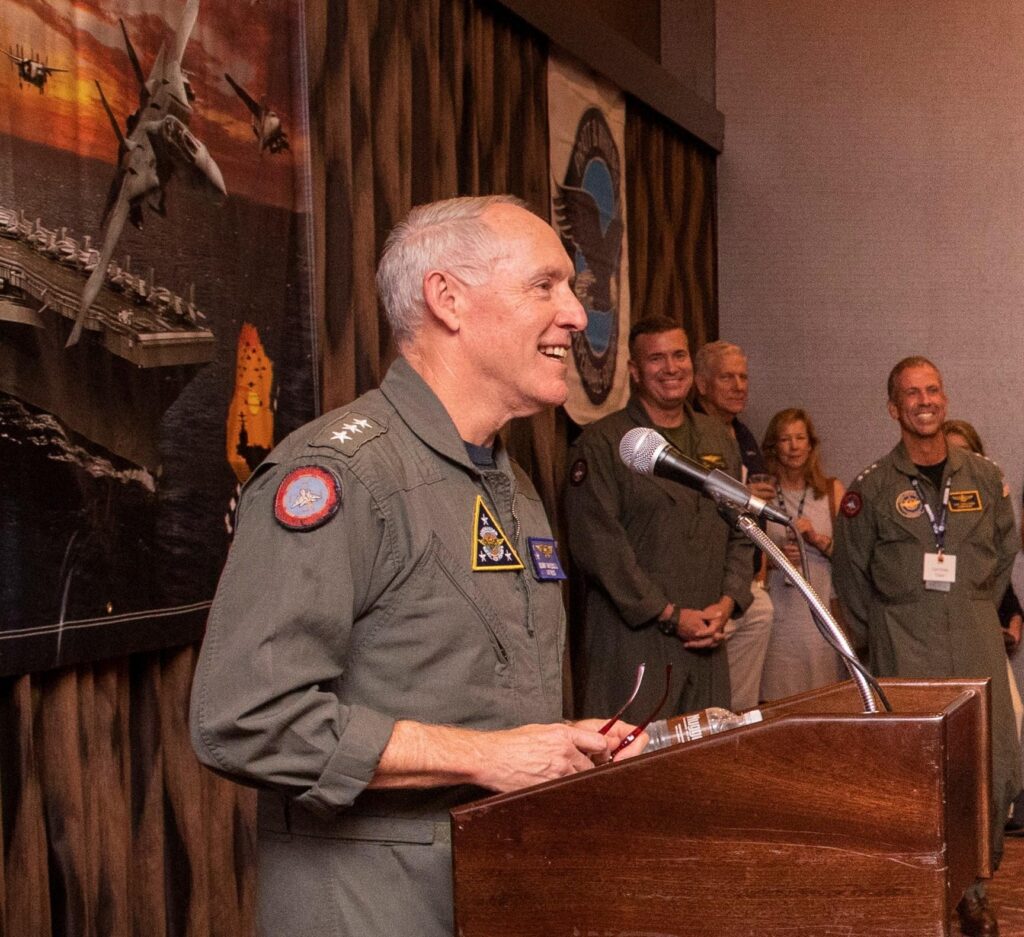
SPARKS, Nevada (Aug. 24, 2023) Commander, Naval Air Forces Vice Adm. Kenneth Whitesell speaks at the Naval Aviation Enterprise (NAE) Update to Industry Partners alongside Marine Corps Deputy Commandant for Aviation Lt. Gen. Michael Cederholm (behind left) and Commander, Naval Air Systems Command Vice Adm. Carl Chebi during Tailhook 2023.

Release from Naval Air Systems Command 

***** 

Sparks, Nev.–The Tailhook Association’s 2023 symposium—Hook ’23—took place August 24- 26, 2023, ending with a banquet keynoted by the Commander of U.S. Indo-Pacific Command (INDOPACOM), Adm. John Aquilino, and Commander, Naval Air Forces (CNAF), Vice Adm. Kenneth Whitesell. The three-day event featured dialogue from across carrier aviation, providing opportunities for naval aviators to honor their past as well as to discuss the requirements for current readiness and the future force. 

As senior leaders and senior naval aviators, Aquilino and Whitesell participated in multiple events throughout the three-day symposium, listening to the needs of the fleet and sharing with them high-level perspectives. 

Aquilino emphasized that Naval Aviation members have to “be ready … We are doing everything, every day, to prevent conflict. That’s what we do.” He added that a war in the Pacific would be detrimental to every nation on earth. The United States doesn’t want that but would win if necessary. “The integrated joint force of the United States is not something you’re ready to take on today, tomorrow or any day,” Aquilino stated. 

The camaraderie and unmatched abilities of Naval Aviation were common threads throughout Hook ’23. Whitesell stated, “It is up to us, every person in this room, to make the Navy and Naval Aviation an elite culture that America’s brightest, toughest and most innovative youth choose to join … it relies on us to maintain the mindset of duty, preparedness and sacrifice–a culture evidenced in past heroes, who have truly set the example.” 

This year’s theme focused on Operation Iraqi Freedom (OIF), with two panels exploring how Naval Aviation has progressed in the two decades since that conflict began, the lessons learned from those who flew operations and how the experiences of that generation form the new generation of warfighters. One panel featured speakers who were junior officers during the conflict while the other featured senior leaders from the conflict.  

Naval Aviation played a pivotal role in OIF’s success and in supporting joint and coalition forces on the ground. “There’s a constant steady push for integration across the force from seabed to space,” said Naval Air Warfare Development Center, Deputy Commanding Officer, Capt. Michael “Snap” Langbehn. Operating from aircraft carriers and amphibious assault ships, pilots and aircrew provided crucial air support, reconnaissance and strike capabilities that significantly contributed to the campaign’s achievements.  

For many of the people involved in OIF, the confidence in them to execute combat operations safely showcased the level of training and skill needed to be an immediate asset. “There was an amazing amount of trust that was put into us; we went from flight school to flying combat missions in a short amount of time,” said the Commander of Carrier Air Wing One, Capt. Brad “Keds” Converse.  

During the most emotionally powerful panel, four Vietnam Prisoners of War (POWs) shared stories and lessons from captivity. In a large ballroom filled to standing room only, attendees listened to the compelling narratives of Capt. Rod Knutson, Capt. Irv Williams, Mr. Dave Everett and Capt. Jack Ensch as they described how they endured as POWs in the infamous Hanoi Hilton and came back to live meaningful, productive lives of contribution. 

“We didn’t stop fighting when we were captured,” Williams said. “We were proud to serve. We are proud of this country.” 

Another cornerstone of the symposium was the Aviation Flag Panel. In addition to Aqulino and Whitesell, panelists were: U.S. Marine Corps Deputy Commandant for Aviation Lt. Gen. Michael Cederholm; Commander, Naval Air Systems Command (NAVAIR), Vice Adm. Carl Chebi; Commander, Naval Air Force Atlantic, Rear Adm. Douglas Verissimo; the Navy’s N98, Rear Adm. Michael Donnelly; Deputy Chief of Naval Personnel, Rear Adm. Michael Baze; and Chief of Naval Air Training, Rear Adm. Richard Brophy. They answered questions from the crowd and provided updates to a number of projects and initiatives.  

Donnelly spoke about how carriers are a lynchpin in Naval Aviation. The ability to get the carriers in the new Ford-class delivered on-time is essential, and the Navy is working closely with industry to optimize the process. 

Other topics touched included the Air Wing of the Future including the incorporation of the F-35 Joint Strike Fighter, an improved pipeline for new students training to be naval aviators and the continued press for improving quality of life/quality of service.  

Chebi encouraged aviators to come to his command, NAVAIR, as part of the test community. They need the best and the brightest, he said, to test the future capabilities of Naval Aviation. 

Other programming from the symposium included panels about resourcing, the Naval Safety Command, careers and industry as well as a winging ceremony in which several new aviators pinned on their wings of gold–a meaningful experience for everyone in the community. For additional information from Hook ‘23 and pictures from the winging, POW panel and more, visit then follow the NAE on LinkedIn at https://www.linkedin.com/company/naval-aviation-enterprise, on Facebook @NAEready and on X @NAE_Readiness. 
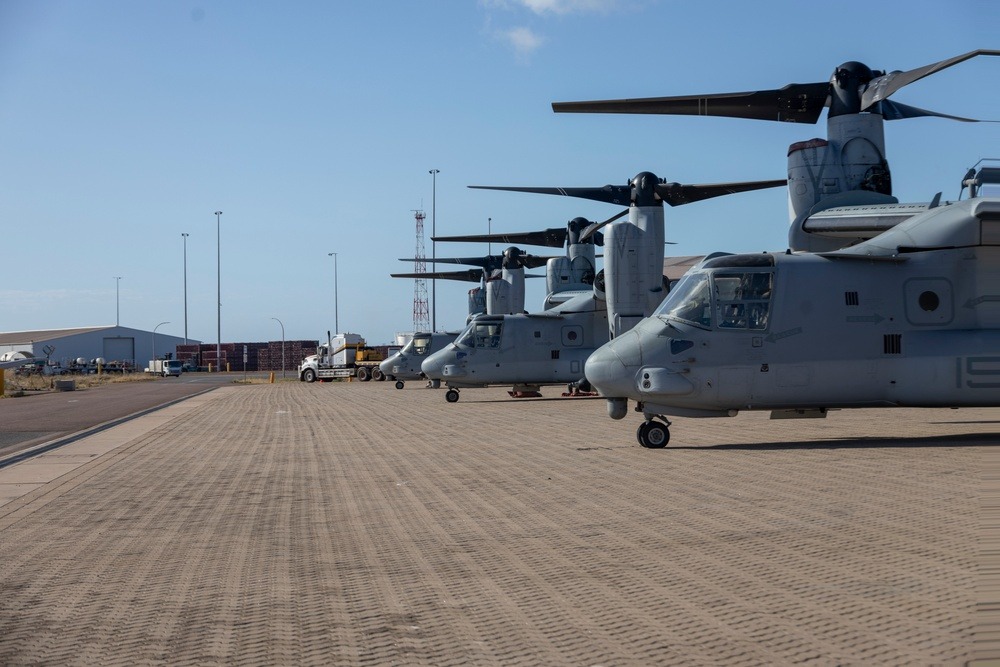


MARINE ROTATIONAL FORCE – DARWIN MV-22B OSPREY TILTROTOR AIRCRAFT CRASH

Release from Marine Rotational Force – Darwin 

***** 

DARWIN, AUSTRALIA — Marine Rotational Force – Darwin can confirm a U.S. Marine Corps MV-22B Osprey crash on Melville Island, north of Darwin, Northern Territory, Australia while transporting troops during a routine training exercise. The incident took place at approximately 9:30 a.m. There were a total of 23 personnel on board. Three have been confirmed deceased while five others were transported to Royal Darwin Hospital in serious condition. 
 
The Marines aboard the aircraft were flying in support of Exercise Predators Run. Recovery efforts are ongoing. The cause of the incident is under investigation. Further details will be provided as the situation develops. 


Marine Aviator Killed in F./A-18D Hornet Crash 

EL CENTRO, Calif. (Sept. 28, 2020) Marines with Marine All Weather Attack Squadron 224 (VMFA 224), Marine Aircraft Group 31, 2nd Marine Aircraft Wing, prepare F/A-18s for flight operations aboard Naval Air Facility El Centro, Calif. on Sept. 28, 2020. (U.S. Marine Corps photo by Lance Cpl. Nicholas Buss) 

***** 

ARLINGTON, Va. — A Marine Corps aviator was killed in the crash of his F/A-18D Hornet strike fighter on Aug. 24. 

The two-seat Hornet, with only the pilot on board, crashed near Marine Corps Air Station Miramar, California, at 11:54 PST, according to a release from the 2nd Marine Aircraft Wing. The name of the pilot will not be released until the next of kin has been notified. The mishap is under investigation. 

The aircraft was assigned to Marine All-Weather Fighter Attack Squadron (VMFA (AW)) 224, based at MCAS Beaufort, South Carolina. The squadron is one of only two VMFA(AW) squadrons remaining in the Marine Corps, the other being VMFA(AW)-533. The Marine Corps is in transition from the F/A-18 Hornet to the F-35B/C Lightning II strike fighter. 


Navy Expeditionary Combat Forces Enable Distributed Maritime Operations During LSE 2023 

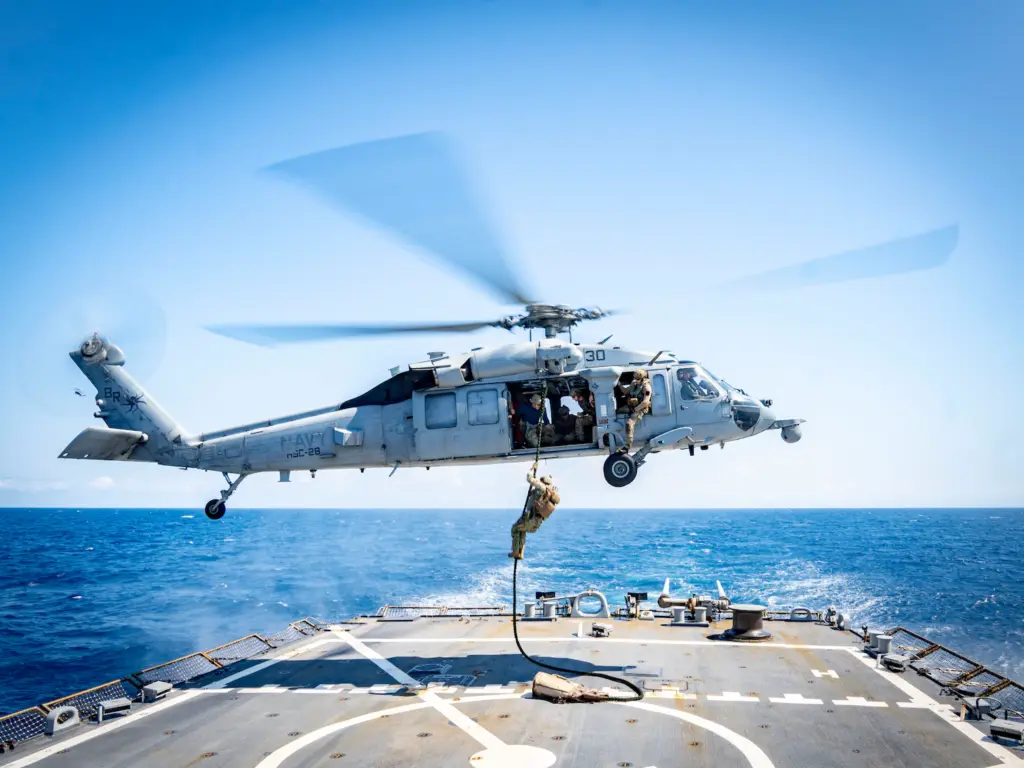
ATLANTIC OCEAN (Aug. 12,2023) Navy Expeditionary Combat Command Sailors assigned to Mobile Diving and Salvage Unit (MDSU) 2 fast-rope onto the Arleigh Burke-class guided-missile destroyer USS Porter (DDG 78) for a simulated expeditionary battle damage assessment and repair during a general quarters drill, August 12, 2023. Porter is participating in U.S. Fleet Forces Command’s Large Scale Exercise 2023, which provides a venue to test and refine current and new technologies and platforms to reinforce our current position as a supreme maritime force and provide feedback used to inform future innovation. (U.S. Navy photo by Interior Communications Electrician 3rd Class Hailey A. Servedio)

Release from U.S. Fleet Forces Command 

***** 

23 August 2023 

VIRGINIA BEACH, Va. – Sailors and Marines assigned to Navy Expeditionary Combat Command (NECC) refined their warfighting concepts and tactics in live, virtual, and constructive training events throughout the month of August during Large Scale Exercise (LSE) 2023. 
 
NECC’s operations center provided command and control of NECC’s forces throughout the exercise, working closely to support Fleet commanders in 2nd, 6th and 7th Fleets. 
 
NECC forces operating in the continental U.S. demonstrated their ability to provide expeditionary re-arming, refueling, port damage repair, airfield damage repair, mine countermeasures and battle damage assessments ashore in Virginia, North Carolina and Florida and at sea in the U.S. 2nd Fleet operational area. 
 
Expeditionary Re-Arming 
 
The training events kicked off with Navy Expeditionary Logistics Support Group (NAVELSG) further refining their ability to reload a destroyer’s missile tubes using a crane from an auxiliary ship, August 3. NAVELSG Sailors assigned to Navy Cargo Handling Battalion’s expeditionary reload team assisted the crews of the Arleigh Burke-class destroyer USS Porter (DDG 78) and Military Sealift Command’s (MSC) dry cargo ammunition ship USNS William McLean (T-AKE 12) in performing a MK 41 Vertical Launch System (VLS) re-arm using simulated ordnance, pier-side, at Naval Station Norfolk. The expeditionary ordnance reload teams also conducted re-arming efforts in Mayport, Florida, during the exercise. 
 
“Expeditionary logistics allow the Navy to quickly return to maintaining maritime dominance,” said Rear Adm. Brad Andros, commander, NECC. “Operating in support of Military Sealift Command during Large Scale Exercise 2023 provides our expeditionary reload teams the opportunity to train to different platforms so that they can continue to sustain capacity and increase the persistent combat power of naval forces.” 
 
Expeditionary Port Damage Repair 
 
Navy Expeditionary Combat Forces leveraged an aging pier on Naval Station Norfolk August as a training site to not only practice their ability to conduct expeditionary port damage repair operations (ExPDRO) but also improve real-word infrastructure for future fleet use. 
 
Prior to beginning the repair, Navy divers from Mobile Diving and Salvage Unit (MDSU) 2 conducted harbor clearance and a pier survey with remotely operated vehicles to ensure a safe working environment, and the Maritime Expeditionary Security Force conducted patrol boat operations, providing security of the entry and exit points for our forces. 
 
Sailors conducting ExPDRO revive sea ports of debarkation through diving, salvage, expeditionary dredging and expedient construction operations to remove impediments to shipping, repair piers, quay walls and other waterfront infrastructure in contested environments to support maneuverability and resupply of forces. The 22nd Naval Construction Regiment oversaw the successful ExPDRO event, commanding and controlling Underwater Construction Team (UCT) 2, who provided underwater construction capabilities, and Naval Mobile Construction Battalion (NMCB) 11, who used a task-tailored waterfront construction company who specializes in maritime construction to provide topside construction capabilities. Improvements for the pier included constructing new reinforcements with trussing, restoring and painting cleats, wrapping piles, and underwater pier bracing. 
 
“Repairing sea ports of debarkation is incredibly important for enabling distributed maritime operations,” said Andros. “Our forces were able to demonstrate their ability to repair piers quickly and effectively so that the Fleet can return to the fight. This capability enables expeditionary logistics and resupply of expeditionary advanced base forces.” 
 
Expeditionary Airfield Damage Repair and Expeditionary Refueling 
 
Navy Expeditionary Combat Forces also conducted airfield damage repair efforts onboard Seymour Johnson Air Force Base in Goldsboro, North Carolina. To exercise integration with the amphibious surface fleet and U.S. Marine Corps, Seabees from NMCB 11 embarked the amphibious transport dock ship USS New York (LPD 21) with construction vehicles and supplies and conducted a beach landing onto Onslow Beach at Marine Corps Base Camp Lejeune with the support of landing craft, air cushions. 
 
Once they landed, they refueled and convoyed to Seymour Johnson Air Force Base where they met Navy explosive ordnance disposal (EOD) technicians from EOD Mobile Unit (EODMU) 6 and began airfield damage repair efforts which included surveying the airfield, identifying explosive hazards, clearing the area of simulated ordnance and repairing craters and spalls to return the airfield back to full functionality. 
 
Sailors from Navy Cargo Handling Battalion’s expeditionary refueling team also integrated with Marines from Marine Wing Support Squadron 272 to establish a forward arming and refueling point for fixed wing aircraft at Seymour Johnson Air Force Base that enabled sea-to-shore and shore-to-sea expeditionary logistics capabilities, a critical node in ensuring distributed maritime operations. 
 
Expeditionary Mine Countermeasures and Battle Damage Repair 
 
An expeditionary mine countermeasures company from EODMU 12 comprised of a command and control element, an unmanned systems platoon and an explosive ordnance disposal mine countermeasures platoon, embarked aboard the amphibious dock landing ship USS Gunston Hall (LSD-44) to provide expeditionary mine countermeasures “q-route” clearance in the 2nd Fleet operational area. They used a combination of unmanned systems and EOD technicians to locate, identify and eliminate simulated explosive threats with underwater detonations so that the ship could safely operate in a simulated contested environment. 
 
Sailors from MDSU 2 demonstrated their ability to rapidly deploy, conduct damage assessments, and “fight the ship” alongside Sailors from the USS Porter (DDG 78) during a simulated emergency response scenario on the ship. This capability, known as expeditionary battle damage assessment and repair, is designed to increase surface combatant resiliency and get the Navy’s ships back in the fight to continue their missions. The initial entry team from MDSU 2 conducted a fast rope insertion onto the Porter from a helicopter where they integrated into shipboard damage control and engineering efforts while also establishing communication back to their higher headquarters ashore. They then dispersed throughout the ship to check repair efforts, identify water intrusion points, and conduct clearance and explosive hazard mitigation. 
 
Andros said he was incredibly proud of his Sailors and the warfighting concepts that were refined during LSE 2023 so that the Navy Expeditionary Combat Force can continue to support the Navy in fighting, winning, and deterring potential aggressors. 
 
“Our Sailors are trained to operate globally and thrive in littoral environments to reinforce America’s maritime dominance,” said Andros. “The capabilities of the Navy Expeditionary Combat Force were on full display during Large Scale Exercise 2023, and I look forward to future iterations as we build upon our ability to rearm, refuel, resupply, repair and revive naval forces to stay in the fight.” 
 
Navy Expeditionary Combat Command mans, trains, equips, organizes, and sustains warfighting readiness for the Navy’s explosive ordnance disposal, construction, maritime expeditionary security, expeditionary logistics support, and expeditionary intelligence forces so that Navy and Joint Force commanders can apply our unique capabilities to their missions. 
 
LSE 2023 demonstrates the Navy’s and Marine Corps’ ability to employ precise, lethal, and overwhelming force globally across six maritime component commands, seven numbered fleets, and 22 time zones. LSE 2023 merges real-world operations with virtually constructed scenarios to create a realistic training environment that allows Sailors and Marines to train how they will fight, regardless of geographic boundaries. 
 
For more information about NECC and our units, visit our website: https://www.necc.usff.navy.mil/ 


NOAA cuts ribbon on renovated Ketchikan, Alaska port facility 

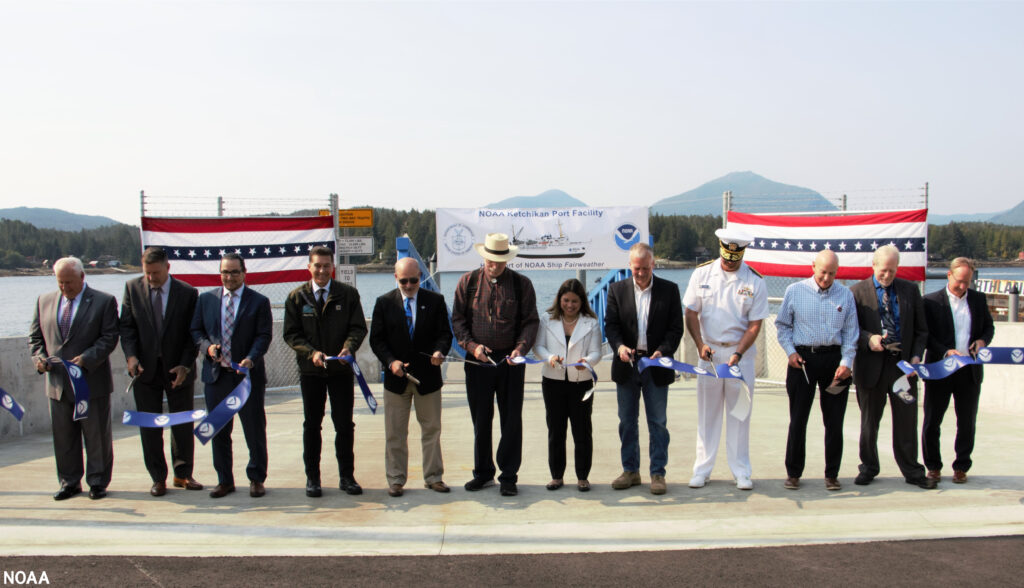
A long line of special guests, including NOAA Administrator Dr. Rick Spinrad (5th from the left), participate in a ribbon-cutting ceremony for the NOAA-renovated port facility in Ketchikan, Alaska, on August 21, 2023. (Image credit: NOAA Office of Marine and Aviation Operations)

Release from NOAA 

***** 

August 21, 2023 

Today, federal, tribal, state and local officials joined NOAA leadership to cut the ribbon on the agency’s newly renovated port facility in Ketchikan, Alaska. The celebration was held to dedicate the facility and recognize the important partnerships in the area. 

The facility will provide vessel support for NOAA research ships. The facility will also support NOAA Ship Fairweather, which is homeported in Ketchikan. 

“Having a home base for NOAA to operate from in Alaska is integral to our science, and mission to ensure safe navigation and the growth of our blue economy,” said NOAA Administrator Rick Spinrad, Ph.D. “This facility incorporates the latest green technology and is climate-ready with a state of the art floating pier to accommodate not only Ketchikan’s tidal flux, but future sea level changes.” 

NOAA Marine and Aviation Operations awarded an $18.7 million contract in April 2021 to Alaska-based Ahtna Infrastructure & Technologies, LLC to make major improvements to the facility. The project, which was partially funded by the state of Alaska, includes the construction of a new office building, floating pier, and boat ramp. Additional improvements include updated power, sewer, communications, and water utility systems for servicing visiting ships. 

“This state of the art facility positions us to better support emerging technologies, such as uncrewed systems, and be more efficient in our operational readiness for Alaska-focused science,” said Rear Adm. Chad Cary, deputy director of the NOAA Commissioned Officer Corps and NOAA Marine and Aviation Operations. “It also positions us closer to the Arctic, which will continue to grow in importance for our fisheries and seafloor mapping missions.” 

The 15 research and survey ships operated, managed and maintained by NOAA Marine and Aviation Operations, comprise the largest fleet of federal research ships in the nation. NOAA ships range from large oceanographic research vessels capable of exploring the world’s deepest ocean, to smaller ships responsible for charting the shallow bays and inlets of the U.S. The fleet supports a wide range of marine activities, including fisheries surveys, nautical charting and ocean and climate studies. NOAA ships are operated by NOAA Corps officers and civilian professional mariners


Navy, Marine Corps Conclude Large Scale Exercise 2023 

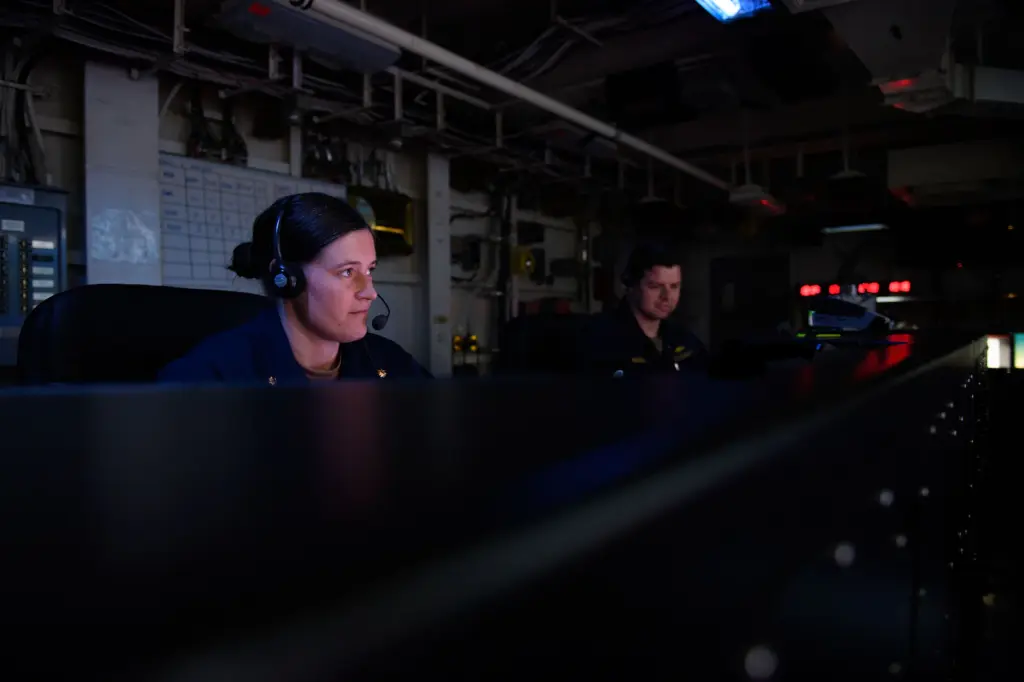
NORFOLK, Va. (Aug. 9, 2023) Lt. Cmdr. Christine Tyndall, from San Jose, California, and Lt. Steven McGhan, from Merritt Island, Florida, stand watch during Large-Scale Exercise (LSE) 2023 aboard the Nimitz-class aircraft carrier USS Dwight D. Eisenhower (CVN 69). LSE 2023 is a live, virtual, and constructive, globally-integrated exercise designed to refine how we synchronize maritime operations across multiple fleets, in support of the joint force. (U.S. Navy photo by Mass Communication Specialist 2nd Class Mo Bourdi/Released)

Release from U.S. Fleet Forces Command 

***** 

18 August 2023 

NORFOLK, Va. – More than 25,000 Sailors and Marines across the globe participated in the U.S. Navy and U.S. Marine Corps-led Large Scale Exercise (LSE) 2023, Aug. 9-18. 
 
One of the largest exercises for the maritime services, LSE 2023 is a live, virtual and constructive, globally-integrated exercise designed to refine the synchronization of maritime operations. 
 
During a media roundtable, the commanders of U.S. Fleet Forces Command, U.S. Pacific Fleet, U.S. Naval Forces Europe and Africa, and Marine Forces Command highlighted LSE 2023 as the leading exercise in how the Navy and Marine Corps further improves their ability to fight on land, air, sea, space, and cyberspace in order to maintain a military force that is most effective in peacetime and more powerful in war. 
 
“We have a responsibility and a duty to be able to respond globally to threats and vulnerabilities to peer adversaries and competitors,” said Adm. Daryl Caudle, commander U. S. Fleet Forces Command. “And the way you get great at that is to practice with exercises like LSE 2023.” 
 
LSE 2023 spanned 22 time zones and included participants from U.S. Fleet Forces Command, U.S. Pacific Fleet, U.S. Naval Forces Europe-Africa Command, Marine Forces Command, U.S. Marine Corps Forces Europe and Africa, U.S. Marine Corps Forces Pacific, and seven U.S. numbered Fleets: Second, Third, Fourth, Fifth, Sixth, Seventh, and Tenth. 
 
The integration of fleet operations with emerging technologies played a key role in refining and validating Distributed Maritime Operations (DMO) capabilities. 
 
“The United States is a global power that has global interests. We have allies and partners around the world. We routinely sail, fly, and operate in international spaces,” said Adm. Stuart Munsch, commander, U.S. Naval Forces, Europe and Africa. “You put that all together, and we have a responsibility to be able to operate globally, effectively, and that’s what we’re doing. We demonstrate that to assure our allies and partners, and we demonstrate it to deter adversaries.” 
LSE 2023 reinforced a culture of learning and increased warfighting readiness by merging real-world operations with virtually constructed scenarios to create a realistic training environment that allowed Sailors and Marines to train the way we fight, regardless of geographic boundaries. 
 
“This is an exercise where we can bring all of our experiences together and learn from each other,” said Lt. Gen. Brian Cavanaugh, commander, Marine Forces Command. “I’ve learned a tremendous amount from Admirals Caudle, Paparo, and Munsch, as well as General Jurney and General Sofge, and you don’t get that until you come together and do an exercise like this. The challenges we encountered during LSE 23 only help us in our continuum of learning – from the tactical unit, up through the highest levels of decision making.” 
 
LSE 2023 incorporated live units underway ranging from aircraft carriers to submarines, shore logistic support units, and more than 30 virtual units. This included pier-side participation from ships as well as training facilities and staff headquarters from around the world. 
 
From the strategic level with combatant commanders down to the hands-on training on the tactical level, this exercise encompassed a wide range of training for the Navy and Marine Corps. 
 
“We are a global, responsive Navy operating dynamically within the joint force, ready to respond to threats against our nation,” said Adm. Samuel Paparo, commander, U.S. Pacific Fleet. “Our competitors are increasingly cooperating and operating further afield. This underscores the importance of exercises like LSE to hone our ability to find, track and monitor potential threats and coordinate globally.” 
 
The U.S. Navy and U.S. Marine Corps will incorporate lessons learned from LSE 2023 into the planning of its next large scale exercise iteration which will take place in 2025. 
 
To read the full transcript from the media roundtable with LSE 2023 commanders visit:

https://www.usff.navy.mil/Press-Room/Press-Releases/Article/3498119/large-scale-exercise-2023-commanders-interview-transcript/ 


Farewell, FLIP! Renowned Navy-Owned Research Platform Retired after 60 Years of Service 

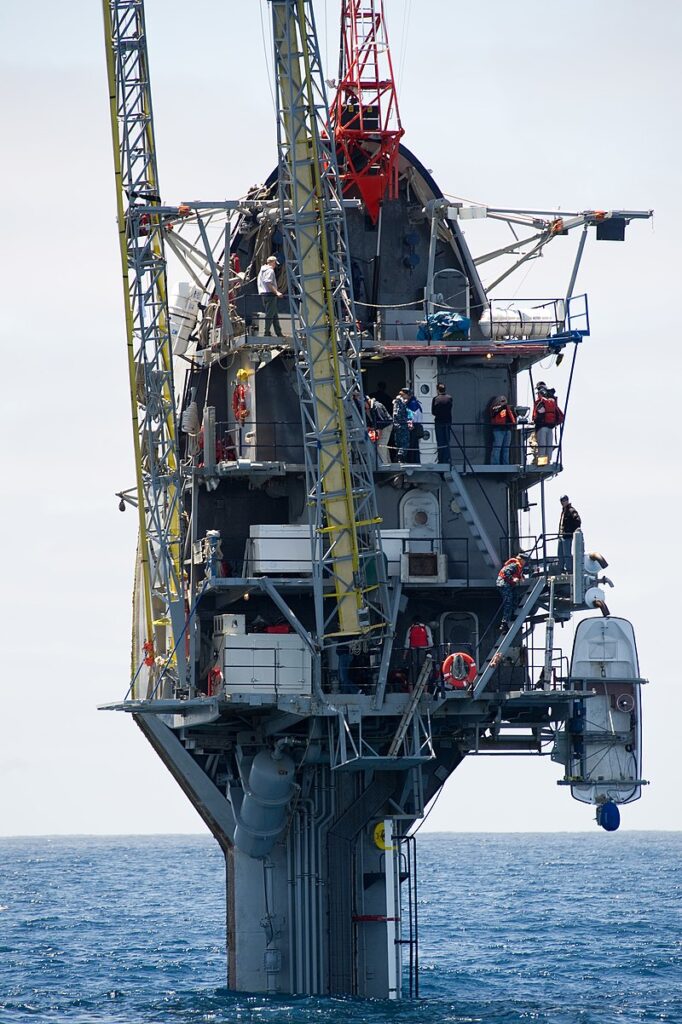
120630-N-PO203-310 SAN DIEGO, Calif. (Jun. 30, 2012) Only 55 feet remain visible after the crew partially floods the Floating Instrument Platform, or FLIP’s, ballast tanks causing the vessel to turn stern first into the ocean. The 355-foot research vessel, owned by the Office of Naval Research (ONR) and operated by the Marine Physical Laboratory at Scripps Institution of Oceanography at University of California, conducts investigations in a number of fields, including acoustics, oceanography, meteorology and marine mammal observation. (U.S. Navy photo by John F. Williams/Released)

Release from the Office of Naval Research 

***** 

Aug. 16, 2023 
By Warren Duffie, Jr., Office of Naval Research

ARLINGTON, Va.- A dynamic era in naval oceanography recently ended as the iconic Floating Instrument Platform – popularly known as FLIP – was officially retired from service. 
 
Built in 1962 with funding from the Office of Naval Research (ONR), FLIP helped generations of scientists and oceanographers better understand the mysteries of the sea, including internal waves, air-sea interaction and long-range sound propagation. Sadly, age and exorbitant life-extension costs resulted in the platform being disestablished.  
 
On Aug. 3, a solemn gathering of well-wishers watched as FLIP was towed, at sunset, to a dismantling and recycling facility. Last month, a formal good-bye ceremony was hosted by the Marine Physical Laboratory at the University of California, San Diego (UCSD). 
 
Still, FLIP – which was owned by the U.S. Navy and managed by Scripps Institution of Oceanography at UCSD – boasts a proud legacy and represents a golden age of oceanography that saw a renewed focus on ocean exploration, the creation of new fields of study, and greater public appreciation of the scientific and strategic importance of the ocean. 
 
“Over its career, FLIP was a key mission enabler for ONR’s basic and applied programs in meteorology, oceanography and ocean acoustics,” said Dr. Thomas Drake, head of ONR’s Ocean Battlespace Sensing Department.  
 
“Whether investigating air-sea interaction, ocean mixing, boundary layer dynamics or acoustic thermometry, FLIP’s unique properties and capabilities enabled the collection of exquisite datasets that served as the gold standard for numerous process studies and extensive model development, ultimately increasing our understanding of the maritime environment.” 
 
Shaped like a spar buoy, the 355-foot FLIP resembled a giant baseball bat. When horizontal, FLIP was towed out to sea where on-board hydraulics and ballast tanks “flipped” the platform (in about 30 minutes) to the vertical – producing a stable, mobile at-sea experimental laboratory, capable of riding out swells while providing sensor data 300 feet into the water column. 
 
FLIP could carry a research team of 11 people and a crew of five, and sustain research operations for up to 30 days without resupply. Also, everything mounted on the platform turned 90 degrees when it “flipped” at sea. All fixtures – from generators to toilets – turned at right angles, and there were separate passageways, doors and platforms for every major space inside and outside. 
 
Because FLIP had no propulsion system of its own, it had to be towed by ship to a location. This quiet design made FLIP perfect for recording ocean acoustics and sounds as well as observing tidal forces, internal waves and small-scale turbulence. Such data gathering fostered greater knowledge of ocean currents and acoustics, air-sea interactions and marine mammal sounds. 
 
In addition, FLIP was crucial to groundbreaking naval basic and applied research, much of which was sponsored by ONR. This includes oceanography, meteorology, ocean acoustics and the development of hydrophones (underwater microphones) – as well as how the upper part of the ocean interacts with the lower part of the atmosphere and how that interface affects things like sonar. 
 
Another aspect of FLIP’s design that enabled it to be relevant for six decades was its lack of built-in sensors that could become obsolete. This allowed generations of researchers and scientists to install cutting-edge equipment and technology for testing. 
 
Retired Scripps physical oceanographer Dr. Rob Pinkel logged many hours on FLIP cruises, starting in 1969 as a graduate student. 
 
“In total, I spent about three years at sea aboard FLIP over the course of my career,” he said. “I enjoyed working with the crew and my research group to achieve something special. When all of the instruments were performing properly and the data were coming in, it was like operating a very rich gold mine.” 
 
Naval Postgraduate School Professor Dr. Qing Wang led an ONR-sponsored research cruise aboard FLIP in 2017 to study air-sea interaction: “FLIP was such an impressive research platform that enabled us to do very detailed, thorough work. It truly was a game-changer in terms of naval scientific research and will be missed.” 
 
Rob Sparrock, a program officer in ONR’s Oceanographic Research Facilities division, said, “Losing FLIP is unfortunate, but the loss will be mitigated by new unmanned assets and networks of smaller buoys being developed. FLIP’s legacy also lives on in current research platforms such as the French Polar POD, whose design is inspired by FLIP.” 
 
Though retired, FLIP will live on at Scripps. One of its booms (crane-like arms for suspending instruments) will be installed on the Scripps research pier in La Jolla and used to deploy instruments. Also, artifacts from the platform will be displayed in a permanent exhibit at Scripps’ Birch Aquarium. 


VMGR-153 provides Transportation of JTF-50 Personnel and Equipment from Oahu to Maui 

Release from Marine Corps Base Hawaii 

***** 

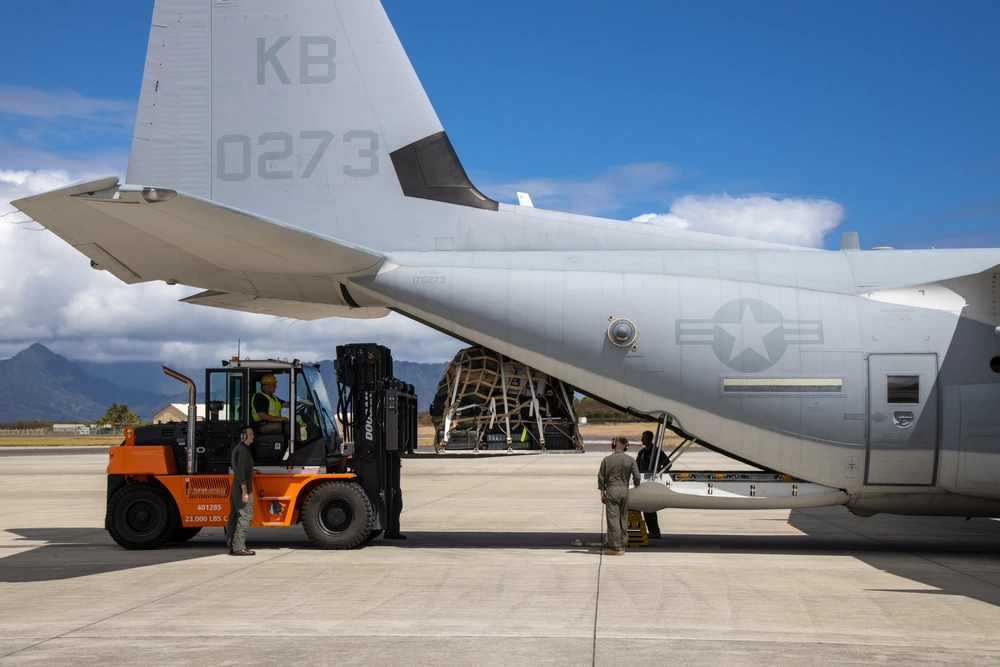
U.S. Marines with Marine Aerial Refueler Transport Squadron 153 (VMGR-153) load cargo onto a KC-130J Hercules assigned to VMGR-153, Marine Aircraft Group 24, 1st Marine Air Wing, at Marine Corps Air Station Kaneohe Bay, Marine Corps Base Hawaii, August 14, 2023. At the request of U.S. Army Pacific, and in accordance with U.S. federal law, Hawaii based U.S. Marines with VMGR-153 provided transportation to Joint Task Force 50 personnel and equipment from Oahu to Maui. Joint Task Force 50 is the command and control element which will coordinate DoD response efforts upon request from appropriate government authorities. (U.S. Marine Corps photo by Lance Cpl. Logan Beeney) 


Mahoney Nominated for Assistant Commandant of the Marine Corps

***** 

ARLINGTON, Va. — Secretary of Defense Lloyd J. Austin III announced Aug. 14 that the president has nominated Marine Corps Lieutenant General Christopher J. Mahoney for appointment to the grade of general, with assignment as assistant commandant of the Marine Corps, Washington, D.C.  Mahoney is currently serving as deputy commandant for Programs and Resources, Headquarters, U.S. Marine Corps, Washington, D.C. 

Lieutenant General Mahoney is a native of South Weymouth, Massachusetts, and graduated from Holy Cross in June 1987. He completed The Basic School (TBS) and the Infantry Officer’s Course (IOC), at Quantico, Virginia, graduating in March 1988. 

After flight training in Florida and Texas and his qualification as an A-6E Intruder pilot, Mahoney deployed to the Indo-Pacific with VMA (AW)-224, The Bengals. He completed transition training to the F/A-18 at El Toro and made multiple deployments with VMFA (AW)-224 and VMFA-122 to the Indo-Pacific, Italy, and Iraq flying out of MCAS Beaufort, South Carolina, and MCAS Miramar, California. Additionally, Mahoney served a tour as an instructor at the Marine Aviation Weapons and Tactics Squadron-1 (MAWTS-1) at MCAS Yuma, Arizona. 

He has commanded twice at the squadron level as well as at the Group Level. He has served on Joint duty with the Joint IED Defeat Organization at the National Training Center, Fort Irwin, California, as the chief of staff and has served on the Headquarters Marine Corps Staff as the executive assistant to the Deputy Commandant for Programs and Resources. 

His General Officer duties to date include a posting as the deputy commander of Marine Forces Pacific, the director of Strategy and Plans at Headquarters Marine Corps, deputy commander, United States Forces, Japan, and as the commanding general, 3rd Marine Aircraft Wing. 

Mahoney is currently serving as deputy commandant for Programs and Resources, Headquarters Marine Corps. 

Mahoney is a graduate of the Weapons and Tactics Instructor Course (WTI), the Marine Division Tactics Course (MDTC), and the Naval Fighter Weapons School (TOPGUN). He is a qualified forward air controller and parachutist. He attended the Australian Command and Staff College and the Air War College at Maxwell Air Force Base. He holds Masters Degrees from the University of Canberra in Australia and the Air University with the highest academic distinction. General Mahoney has over 5000 hours of flight time, in the A-6, F-5, F/A-18, and the F-35. 


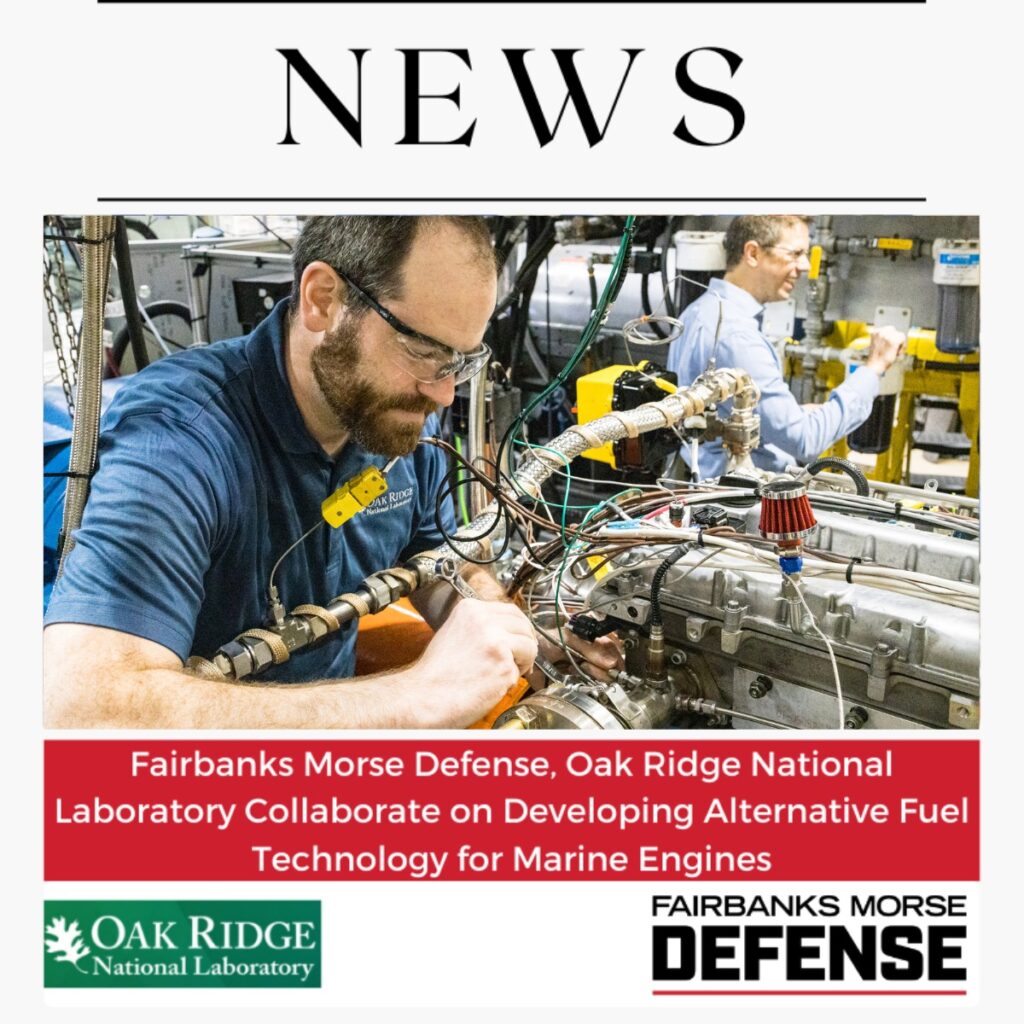
Fairbanks Morse Defense, Oak Ridge National Laboratory Collaborate on Developing Alternative Fuel Technology for Marine Engines 

Release from Fairbanks Morse Defense 

***** 

BELOIT, Wis. – August 8, 2023 – Oak Ridge National Laboratory (ORNL), the Department of Energy’s largest multidisciplinary laboratory, and Fairbanks Morse Defense (FMD), a portfolio company of Arcline Investment Management, have entered into a Memorandum of Understanding (MOU) to collaborate on the development and integration of alternative fuel technologies aimed at reducing the marine engine’s reliance on fossil fuels. FMD will incorporate the research and development conducted at ORNL into its engine design technology.  

Marine engines heavily rely on diesel fuel, which constitutes a significant annual expense for the Department of Defense (DOD). However, global decarbonization efforts are expected to limit the availability of diesel fuel and drive-up costs. In anticipation of this shift, the DOD is exploring options to transition its marine engine technology to low-lifecycle carbon fuels (LLCF) such as methanol, ammonia, hydrogen, and biodiesel. 

“Oak Ridge is a leader in decarbonization research, clean energy technology development, and defense manufacturing,” said Moe Khaleel, Associate Laboratory Director for National Security Sciences. “Collaborating with a trusted national security partner like Fairbanks Morse Defense will enable us to translate our scientific expertise into deployable technologies for the Department of Defense.” 

Under the terms of the MOU, ORNL will leverage its research and development expertise, while FMD will contribute its power and propulsion design and manufacturing proficiency to promote the use of LLCFs in marine engines. FMD will define the performance and durability requirements and design testing components, while ORNL will provide research support in combustion strategies for LLCFs, high-temperature materials, additive manufacturing, elastomer compatibility, and corrosion. 

“As climate change impacts our global waterways, these changing and unpredictable impacts directly affect our ability to protect the freedom of the seas,” said George Whittier, FMD CEO. “We’re fully committed to supporting the Department of Defense’s 2030 decarbonization goals with fuel and engine technologies that will create a more sustainable future for the Navy, and we look forward to working with ORNL to explore these possibilities.” 

Additional partnership intentions from the MOU include the following:  

  • Collaborating on program development to identify and secure external research and development opportunities. 

  • Establishing a single-cylinder research engine laboratory dedicated to exploring breakthroughs in areas such as safe fuel handling, LLCF combustion strategy, and experimental engine hardware configurations. 

  • Supporting alternative fuel combustion development strategy through modeling studies that employ advanced analytics such as computational fluid dynamics simulations using high-performance computing resources.