Pacific Marines F-35cs Fly From California To Australia For First Time
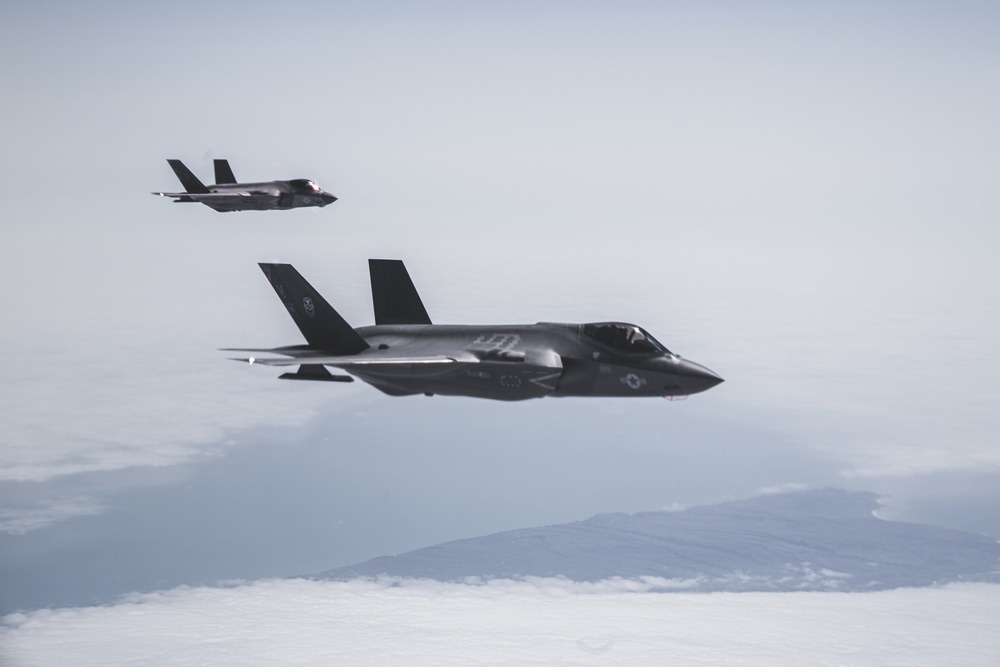
U.S. Marine Corps Lt. Col. Michael O’Brien, center, the commanding officer of Marine Fighter Attack Squadron (VMFA) 314, Marine Aircraft Group (MAG) 11, 3rd Marine Aircraft Wing (MAW), and Maj. Robert Ahern, an F-35C Lighting II pilot assigned to VMFA 314, prepare to conduct aerial refueling over the Pacific Ocean, June 17, 2023. VMFA-314 flew four F-35C Lightning IIs from Marine Corps Air Station Miramar, California to Williamtown, Australia to train alongside Allies and partners in the Indo-Pacific region. Ahern is a Mechanicsburg, Pennsylvania, native, and O’Brien is a Harrisburg, Pennsylvania, native. (U.S. Marine Corps photo by Lance Cpl. Gadiel Zaragoza)

Release from U.S. Marine Corps Forces Pacific 

***** 

June 23, 2023 

ROYAL AUSTRALIAN AIR FORCE BASE WILLIAMTOWN, NSW, Australia – This week, U.S. Marine Corps F-35C Lightning II aircraft flew from California to Australia for the first time for training and operations in the region. Four jets from Marine Fighter Attack Squadron (VMFA) 314, Marine Aircraft Group (MAG) 11, 3rd Marine Aircraft Wing (MAW) departed Marine Corps Air Station Miramar, California, June 17, and arrived at Royal Australian Air Force (RAAF) Base Williamtown, New South Wales, Australia, June 22.

The jets flew a total of approximately 7,800 miles, conducting four stopovers en route. They were supported with cargo and personnel transport by a U.S. Marine Corps KC-130J Super Hercules from Marine Aerial Refueler Transport Squadron (VMGR) 352, MAG-11, 3rd MAW, and supported with refueling by U.S. Air Force KC-135 Stratotankers from the 171st Air Refueling Wing, Pennsylvania Air National Guard, and 141st Air Refueling Wing, Washington Air National Guard.

“The VMFA-314 Black Knights are beyond excited to bring the first land-based I MEF fifth-generation stealth fighters all the way from California to Australia. Over the past year, we’ve trained in our own Marine Corps F-35Cs with the Royal Australian Air Force F-35As and E-7 Wedgetails in the U.S., and now it is time to train with our valued Allies on their side of the globe,” said Lt. Col. Michael O’Brien, commanding officer, VMFA-314.

VMFA-314 trained with RAAF No. 3 Squadron and their F-35As in Hawaii in December 2022 during exercise Pacific Edge 23. The two units also trained together in the Joint Simulation Environment at Naval Air Station Patuxent River, Maryland, in February 2023.

The VMFA-314 detachment is slated to conduct unit-level and bilateral integrated training at RAAF Base Williamtown through mid-July.

“This movement and the training to come not only demonstrate the force mobilization capability of the F-35C, but the advanced stage of tactical and logistical interoperability between the RAAF and USMC. We have a long history of security cooperation dating back to World War II, and we are now focused on strengthening our relationship while integrating our most capable, cutting-edge platforms as well,” O’Brien said.  

The Marines and aircraft of VMFA-314 are the first element of a larger U.S. Marine Corps footprint from I Marine Expeditionary Force based in San Diego, California, slated to arrive for training in the region.

Textron Puts Its Cottonmouth ARV to the Test for the Marine Corps

***** 

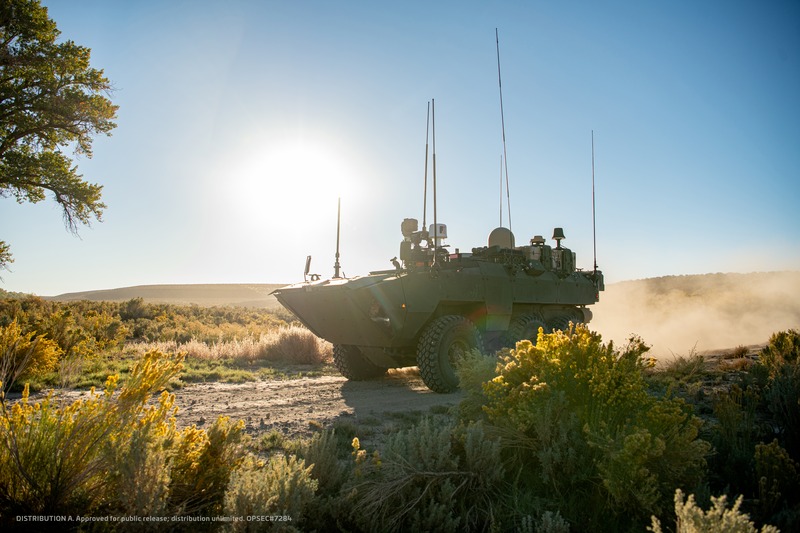
ARLINGTON, Va. — Textron has been demonstrating the capabilities of its Cottonmouth candidate for the U.S. Marine Corps’ Advanced Reconnaissance Vehicle (ARV) competition and has been granted funding to continue testing through calendar year 2023.

The ARV is to be an amphibious, wheeled armored vehicle to replace the Corps’ current Light Armored Vehicle in its reconnaissance battalions. It is to be equipped as a node in the command-and-control network during expeditionary operations and is to be able to serve as a battlefield quarterback, deploying sophisticated full-spectrum sensors and unmanned systems — including unmanned aerial vehicles and unmanned surface vessels—and manned/unmanned teaming.

Textron built and demonstrated an earlier concept demonstrator vehicle, called Alpha, mainly to demonstrate its automotive performance in terrain. The company followed with a company-owned Cottonmouth prototype, in which integration of government-furnished systems was accomplished. The prototype Cottonmouth was mission delivered to the Nevada Automotive Test Center for testing by the Marine Corps in December 2022.

During 2020-2021, Textron built the Alpha prototype with company funding.

“We ran the same test profile that we believed the Marines were going to run on what became our prototype deliverable for their testing under the contract agreement,” said David Phillips, Textron’s senior vice president, Land and Sea Systems, in a June21 interview with Seapower. “We had de-risked it from the standpoint of automotive, rugged, reliable, ran it through all of the cross-country, smoke testing, various different soil types, so that we could submit our proposal to the Marine Corps with actual data, not just paper.”

In September 2021, Textron began fabrication of the deliverable prototype at its Slidell, Louisiana, facility, and began systems integration work at its Hunt Valley, Maryland facility, where “we were able to test out components before actually installing them in the vehicle. The biggest difference between the Alpha prototype — which was mainly automotive — and what delivered and are testing now is the integration of all the capability: all the government furnished radios, communications equipment, computers, cyber, all of the things that make the vehicle a system,” Phillips said.

In September 2022, Textron delivered a “replica systems integration lab” to the Naval Information Warfare Systems – Atlantic in Charleston, South Carolina.

The prototype Cottonmouth was mission delivered to the Nevada Automotive Test Center for testing by the Marine Corps in December 2022.

“The vehicles have performed very well with the Marines,” Phillips said, of the automotive and durability testing it went through. “It accumulated a thousand miles across the variety of relevant Marine Corps mission profiles.”

Phillips said that the prototype’s electronic systems currently are being tested by the Marine Corps Tactical Systems Support Activity, including “sensing and disseminating data across the battlefield, and beyond the battlefield to the fleet and higher headquarters.”

The ARV prototype was able to operate and communicate with a Group 2 unmanned aerial system at a distance of 50 kilometers, he said, noting that the prototype has accrued 500 hours of testing of the electronic systems.

The vehicle’s swim characteristics “in the plunging surf” were successfully tested at Camp Pendleton, California. In the water the ARV is propelled by waterjets geared to the vehicle’s Cummings diesel engine, said Zach Bupp, Textron’s program director, Land Systems.

The Textron ARV is a “clean-sheet design,” Phillips said, saying that it was the best way for the Marine Corps to have its Tier 1 and 2 requirements met, as well as the “vast majority of their lower-tier requirements.”

He characterized the Textron design as revolutionary rather than evolutionary.

Phillips said that size and weight are critical requirements because of transportability, noting that four Textron ARVs — at 37,00 pound each — could be carried on of the Navy’s LCAC 100-class ship-to-shore connectors.

The Textron ARV rides on six wheels rather than eight, which Philips said reduced the weight and complexity of the vehicle and prosed no problems with operations in the terrain in which it was tested.

He also said his company is doing trade studies of subsystems that could be installed on the Cottonmouth to create a family of systems that could be deployed in an ARV-centric reconnaissance battalion.

Philips said the government’s Milestone B decision for selection and to authorize low-rate initial production is expected during the first or second quarter of calendar year 2025.


Northrop Grumman Enhances G/ATOR with New Performance Capabilities 

Northrop Grumman successfully completed Full-Rate Production Lot One of G/ATOR and will deliver 46 awarded systems to the Marine Corps. (Photo Credit: Northrop Grumman)

*****

Release From Northrop Grumman Corporation

BALTIMORE – June 14, 2023 – Northrop Grumman Corporation (NYSE: NOC) continues to enhance the functionality  of AN/TPS-80 Ground/Air Task-Oriented Radar (G/ATOR) with new performance upgrades that will extend the range and add advanced capabilities following the completion of Full Rate Production lot one to the U.S. Marine Corps. While in production, G/ATOR has proven to be an agile expeditionary air defense capability suitable for air base defense. Based on the success of the fielded systems, new performance upgrades that will extend the range and capability are planned for next year for the Multifunction radar systems in production. 

“The advanced functionality significantly increases the range of the current system, enhances cruise missile defense capability and establishes G/ATOR as the most agile ground-based surveillance and integrated fire control system available today,” said Melissa Johanson, director, advanced land sensors, Northrop Grumman. “We are committed to outpacing modern adversary threat systems for partner and allied forces with advanced surveillance and fire control capability.” 

G/ATOR combines five of the Marine Corps’ single-mission radars into one multi-mission system for total air and missile defense surveillance. This provides a new level of protection and situational understanding for warfighters and enables them to make better decisions when it matters most. The Marine Corps has been granted funding from Congress for eight additional G/ATOR systems. To date, 21 of the awarded 46 Northrop Grumman systems have been fielded. 

G/ATOR is one piece of the solution providing joint forces with an operational picture and deep breadth of data to operate in today’s contested environment, in support of the U.S. Marine Corps’ Force Design 2030 strategy. 


U.S., Iraq, Kuwait Conduct Third Joint Patrol in Arabian Gulf 

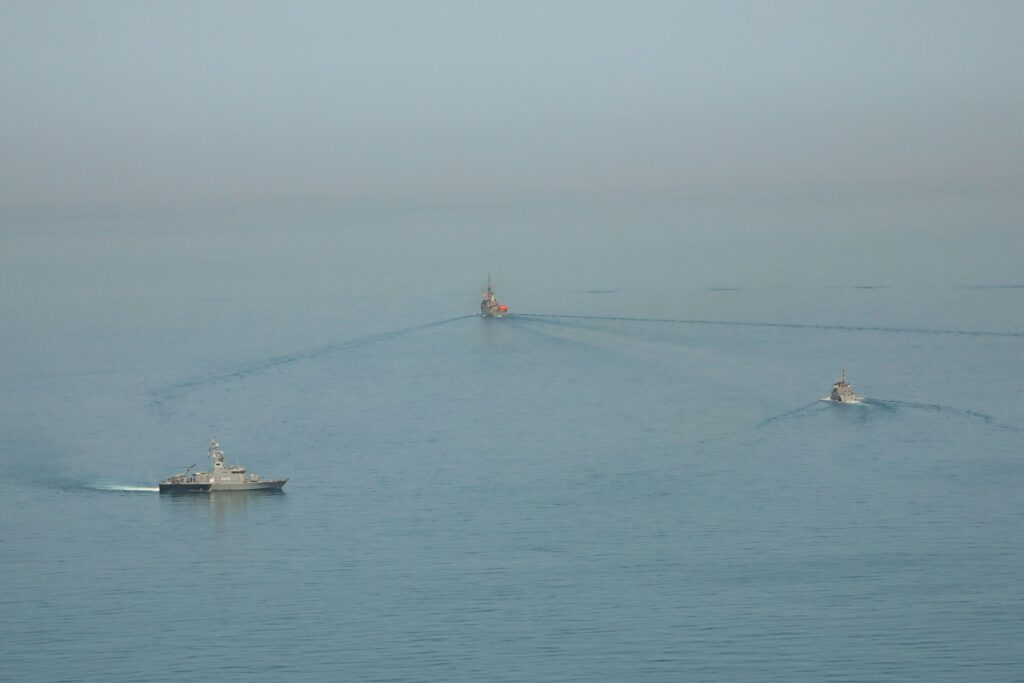
ARABIAN GULF (June 6, 2023) Mine countermeasures ship USS Gladiator (MCM 11), Iraq patrol boat P-312 and Kuwait missile-attack craft Failaka (P3715) sail together in the Arabian Gulf, June 6, 2023. (Photo by Cpl. Jensen Guillory)

Release from U.S. Naval Forces Central Command Public Affairs  

***** 

By U.S. Naval Forces Central Command Public Affairs | June 09, 2023 

MANAMA, Bahrain — Maritime forces from Iraq, Kuwait and the United States completed a joint patrol in the Arabian Gulf, June 6, marking the third time in less than a year the three nations sailed together to promote regional maritime security. 

U.S. Navy mine countermeasures ship USS Gladiator (MCM 11) operated with patrol boat P-312 from Iraq as well as Kuwait’s missile-attack craft Failaka (P3715). The three nations previously conducted similar exercises in the Arabian Gulf in December and August last year. 

Gladiator is a mine countermeasures ship designed to clear mines from vital waterways. The ship is forward-deployed to Bahrain where U.S. 5th Fleet is headquartered. 

The U.S. 5th Fleet operating area includes 21 countries, the Arabian Gulf, Gulf of Oman, Red Sea, parts of the Indian Ocean and three critical choke points at the Strait of Hormuz, Bab al-Mandeb and Suez Canal. 


FLEET BATTLE PROBLEM 2023-1 COMMENCES; FOCUSES ON INTEGRATED MARITIME CAPABILITIES WITH U.S. NAVY AND U.S. MARINE CORPS 

Release from U.S. Fleet Forces Command 

***** 

By U.S. Fleet Forces Command And U.S. Marine Forces Command Public Affairs 

09 June 2023 

NORFOLK, Va. – U.S. Fleet Forces Command and U.S. Marine Forces Command will conduct Fleet Battle Problem 2023 (FBP 23-1) June 9-13 on land and off the coast of Camp Lejeune, North Carolina and the Virginia Capes to further develop integrated maritime capabilities with the II Marine Expeditionary Force and U.S. 2nd Fleet. 
 
FBPs occur multiple times a year to practice and assess new warfighting concepts that culminate in large and complex events, such as Large Scale Exercise (LSE). FBP 23-1 will focus on integrated naval capabilities, distributed logistics, and capabilities in support of Expeditionary 
Advanced Base Operations (EABO). 
 
“Across the spectrum of the Navy’s operational level of war learning continuum, Fleet Battle Problems employ real-world equipment and conditions to create challenging and realistic environments designed to enable our Navy and Marine Corps team to assess innovative capabilities and explore new operational concepts,” said Adm. Daryl Caudle, commander, U.S. Fleet Forces Command. “These Battle Problem events are an investment toward developing an integrated maritime force ready to keep pace with the latest technologies, innovative tactics, and 
warfighting concepts needed to overmatch our adversaries.” 
 
FBP 23-1 allows the Navy and Marine Corps to maintain and improve EABO and Littoral Operations in a Contested Environment (LOCE). Both LOCE and EABO contribute to naval operating concepts, such as Distributed Maritime Operations (DMO), that place a growing emphasis on Navy-Marine Corps integration. 
 
“The Navy-Marine Corps team continues to innovate and adapt to current and potential threats,” said Lt. Gen. Brian Cavanaugh, the commanding general of Marine Forces Command. “Working together in events like Fleet Battle Problem strengthens our warfighting team, builds on our 
integration and simply makes us a better Naval force ready to answer our Nation’s call.” 
 
Events like Fleet Battle Problem 23-1 improve how the Navy and Marine Corps work together to form a strong and cohesive Maritime Force capable of projecting American power from sea to shore at home and around the world. 


Marine Corps Systems Command Begins Fielding Cutting-edge Ultra Light Tactical Vehicle

Release from Marine Corps Systems Command

*****

June 6, 2023 

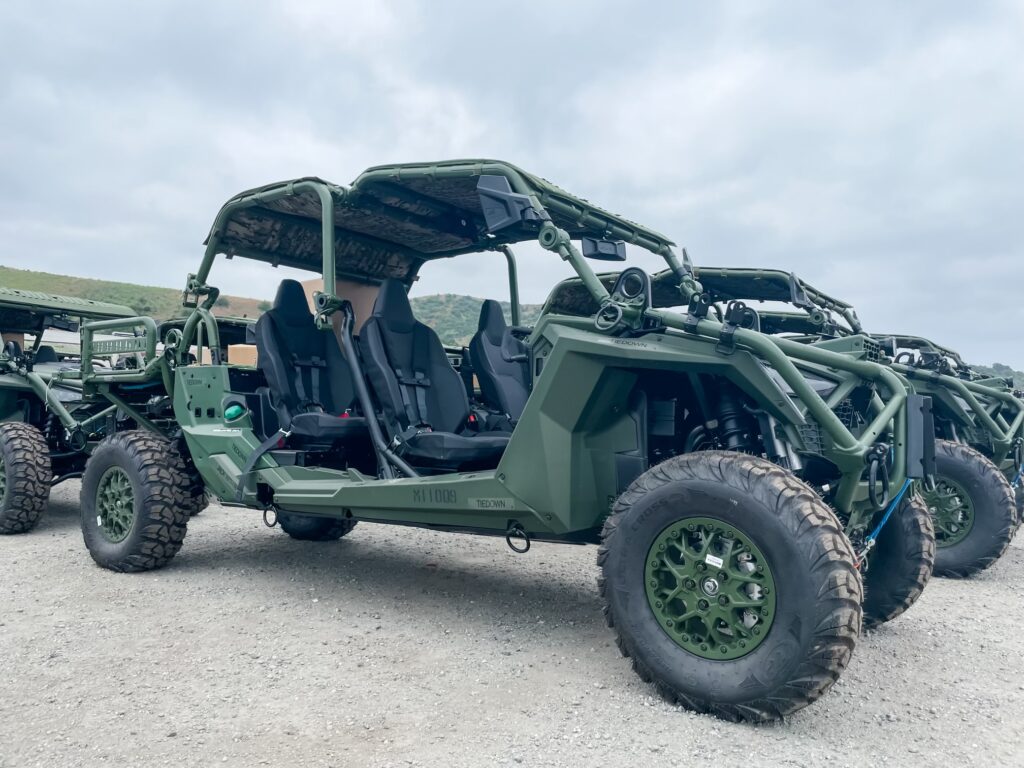
MARINE CORPS BASE QUANTICO, Va. — Marine Corps Systems Command has begun fielding the new Ultra Light Tactical Vehicle, or ULTV, reaching initial operational capability and marking a significant milestone in the Corps’ Force Design 2030 modernization efforts. This state-of-the-art tactical vehicle is set to enhance infantry, reconnaissance, and logistics mobility and sustainability, providing the modern warfighter with an advanced, lightweight solution tailored for operations in an anti-access/area denial environment.  

“Fielding the ULTV serves as a signal that the Corps is keeping in stride with the ambitious roadmap laid out in Force Design 2030,” said Col. John Gutierrez, portfolio manager for Logistics Combat Element Systems. “This new capability will ultimately help forge a more agile and resilient Corps—one which is empowered to overcome the evolving complexities of modern warfare.”  

Fielding operations will proceed in conjunction with the First Marine Expeditionary Force, based at Camp Pendleton, California. The first ULTVs have already arrived at I MEF, with 1st Battalion, 5th Marines receiving the initial vehicle set. An ongoing, structured roll-out will continue throughout the MEF, culminating in August, followed by additional fielding events across the Marine Corps.  

The ULTV, a modular, off-road utility vehicle, is currently replacing the Utility Task Vehicle, or UTV, which has reached the end of its lifecycle. With its ability to be rapidly configured, the ULTV supports diverse infantry needs, ranging from logistical support and casualty evacuation to command and control and electronic warfare missions. Furthermore, the ULTV can be internally transported in the MV-22 and CH-53E/K, further facilitating rapid deployment. 

“The ULTV is more than just a tactical vehicle; it enhances our capabilities across the board, ensuring the success of our mission and the safety of our Marines,” said Program Manager for Light Tactical Vehicles Jennifer Moore. “The ability to rapidly configure the ULTV to suit diverse mission needs– from logistical support to electronic warfare– enhances our capabilities in previously unimagined ways.” 


Makin Island ARG, 13th MEU Return to Home Port San Diego

Photo By 
Gunnery Sgt. Chad Pulliam
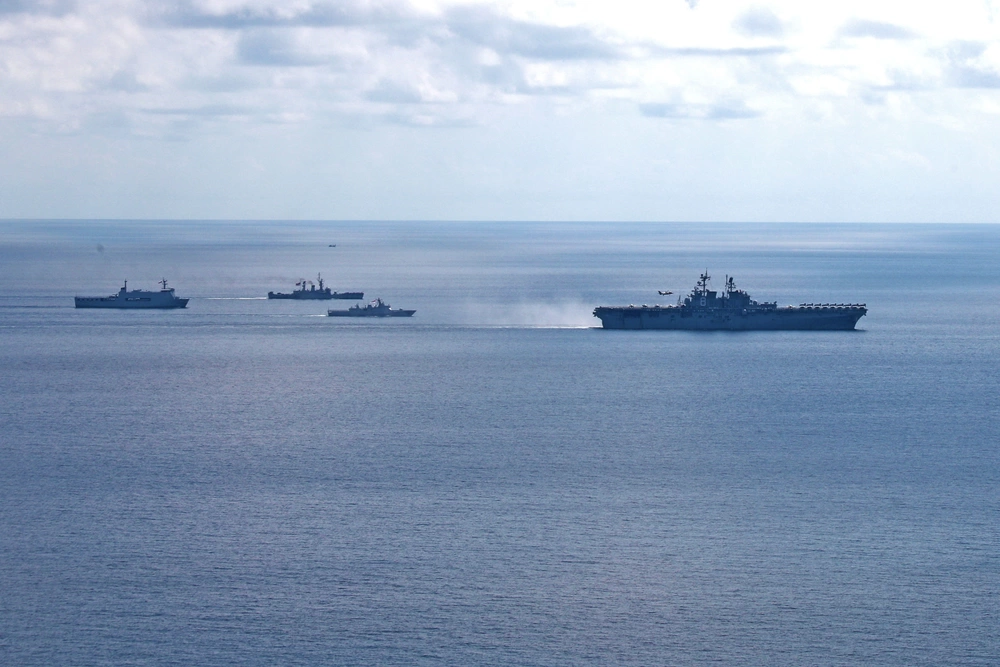
 | PACIFIC OCEAN (Dec. 18, 2022) – A U.S. Marine Corps F-35B Lightning II pilot with Marine Fighter Attack Squadron (VMFA) 122, 13th Marine Expeditionary Unit, performs a vertical landing aboard amphibious assault ship USS Makin Island as Indonesian servicemembers view the landing from Indonesian Navy vessels during Cooperation Afloat Readiness and Training/ Marine Exercise (MAREX) Indonesia 2022, Dec. 18. CARAT/MAREX Indonesia is a bilateral exercise between Indonesia and the United States designed to promote regional security cooperation, maintain and strengthen maritime partnerships, and enhance maritime interoperability. In its 28th year, the CARAT series is comprised of multinational exercises, designed to enhance U.S. and partner navies’ and marine corps abilities to operate together in response to traditional and non-traditional maritime security challenges in the Indo-Pacific region. (U.S. Marine Corps photo by Gunnery Sgt. Chad J. Pulliam)

Release from Expeditionary Strike Group Three  

*****

SAN DIEGO, CA, UNITED STATES 

06.06.2023 

Courtesy Story 

Expeditionary Strike Group Three  

The Makin Island Amphibious Ready Group, led by commander, Amphibious Squadron 7 and comprised of amphibious assault ship USS Makin Island (LHD 8) and amphibious transport docks USS Anchorage (LPD 23) and USS John P. Murtha (LPD 26), with the embarked 13th Marine Expeditionary Unit, returns to San Diego this week following a seven-month deployment to the U.S. 3rd and 7th Fleet areas of operations. 

“Our goal was to achieve interoperability with our allies and partners and promote a free and open Indo-Pacific. We accomplished that mission and brought every single Sailor and Marine home safely,” said U.S. Navy Capt. Andria Slough, commanding officer of Makin Island. “While the world witnessed our ARG-MEU team strengthening partnerships, I had a front-row seat to the tremendous amount of skill, dedication and hard work of 2,500 people each day of deployment. It’s awe-inspiring to watch Sailors and Marines at their very best!” 

The Makin Island ARG and the 13th MEU successfully integrated capabilities of approximately 4,500 Sailors and Marines, supported allied interoperability during seven exercises, and traveled more than 47,000 nautical miles across the Indo-Pacific while deployed. Makin Island embarked all elements of the Marine Air-Ground Task Force, consisting of the 13th MEU Command Element; the Ground Combat Element, Battalion Landing Team 2/4; the Logistics Combat Element, Combat Logistics Battalion 13; the Aviation Combat Element, Marine Medium Tiltrotor Squadron (VMM) 362 (Reinforced), and Marine Fighter Attack Squadron (VMFA) 122, which included a full squadron of 10 F-35B Lightning IIs. 

The ARG-MEU team began the deployment with Cooperation Afloat Readiness and Training exercises alongside regional partners and allies. The CARAT 2022 maritime exercise series promoted regional security cooperation, maintained and strengthened maritime partnerships, and enhanced interoperability among participating forces. Makin Island executed CARAT missions with Indonesia in December and Singapore in January, and Anchorage and John P. Murtha spent time training with members of the Sri Lanka and Timor-Leste militaries, respectively. 
 
From February to March 2023, the Makin Island ARG and the 13th MEU participated in the 42nd iteration of exercise Cobra Gold with the Royal Thai Navy and Marine Corps. Cobra Gold is one of the largest multilateral theater security cooperation exercises in the Indo-Pacific and reflects the U.S. commitment to allies and partners, providing a continuous and reliable platform to train, prepare, and enhance regional stability and interoperability. Participants included Japan, Malaysia, the Republic of Indonesia, the Republic of Korea, and the Republic of Singapore, as well as participants from more than 20 other nations. 
 
“I am so proud of all our Marines and Sailors as we return from this action-packed, seven-month deployment after exceeding all of our goals,” said U.S. Marine Corps Col. Samuel Meyer, commanding officer of the 13th MEU. “Through our Navy and Marine Corps integration, we worked with our partners and allies, creating personal bonds that will last a lifetime. From the CARAT series with Indonesia, Singapore, Timor-Leste, and Sri Lanka to our three large exercises with Thailand, Republic of Korea and the Philippines, we further strengthened these critical relationships that will continue to grow with routine ARG-MEU deployments to the region.” 
 
The ARG-MEU participated in bilateral Exercise Ssang Yong 2023 alongside the ROK Navy and Marine Corps from March to April, reinforcing U.S. commitment. Operational exercises such as SY23 demonstrate the alliance remains ironclad, contributes to regional security, and promotes stability in northeast Asia and the Indo-Pacific region as a whole. During Ssang Yong, the 13th MEU disembarked the entirety of Battalion Landing Team 2/4 to participate in military operations in urban terrain training, close-quarters battle training, and various live-fire ranges with our ROK counterparts. 
 
The Makin Island ARG and the 13th MEU wrapped up the deployment by participating in exercise Balikatan 2023 with the Armed Forces of the Philippines in April. The 17,600 participants made it the largest iteration of the exercise to date. Together, the two militaries trained side-by-side, developing interoperability and improved capability in the areas of maritime security, amphibious operations, live-fire training, urban and aviation operations, cyber defense, counterterrorism, and humanitarian assistance and disaster relief preparedness. 
 
An integral part of U.S. Pacific Fleet, U.S. 3rd Fleet operates naval forces in the Indo-Pacific and provides the realistic, relevant training necessary to flawlessly execute our Navy’s role across the full spectrum of military operations that range from combat operations to humanitarian assistance and disaster relief. U.S. 3rd Fleet works together with our allies and partners to advance freedom of navigation, the rule of law, and other principles that underpin security for the Indo-Pacific region. 
 
Marine Expeditionary Units (MEU) embarked on Amphibious Ready Groups (ARG) are characterized by their sea-based forward presence and expeditionary nature. As the Nation’s premier crisis response force, the ARG/MEUs provide a flexible and lethal force ready to perform a wide range of military, humanitarian, and diplomatic operations around the globe without the need for access, basing and overflight. Operating in international waters, this Navy-Marine Corps team also provides flexible deterrence options in key sea lines of communication and adjacent littorals near strategic chokepoints and can seize and hold maritime terrain in the defense of national interests. 
 
Expeditionary Strike Group 3 comprises three amphibious squadrons, 15 amphibious warships, and eight naval support elements including approximately 18,000 active-duty and reserve Sailors and Marines. As the deputy commander for amphibious and littoral warfare, U.S. 3rd Fleet, the ESG 3 commander also oversees Mine Countermeasures Group 3 and the 14 littoral combat ships and two subordinate divisions under Littoral Combat Ship Squadron 1. ESG 3 is postured in support of U.S. 3rd Fleet as a globally responsive and scalable naval command element, capable of generating, deploying, and employing naval forces and formations for crisis and contingency response, forward presence, and major combat operations focusing on amphibious operations, humanitarian and disaster relief and support to defense civil authorities, and expeditionary logistics. 


Marine Corps Announces the 20th Sergeant Major of the Marine Corps 

Release from Communications Directorate, Headquarters Marine Corps 

*****

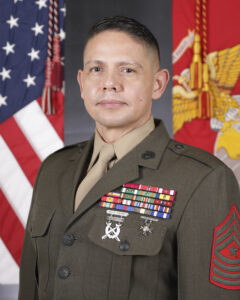
WASHINGTON – Sergeant Major Carlos A. Ruiz has been selected to serve as the 20th Sergeant Major of the Marine Corps. 

Sgt. Maj. Ruiz is currently serving as the Command Senior Enlisted Leader for U.S. Marine Corps Forces Reserve and U.S. Marines Corps Forces South. He will replace Sergeant Major of the Marine Corps Troy E. Black during a relief and appointment ceremony slated for Aug. 8, 2023. 

Sgt. Maj. Black has served as the 19th Sergeant Major of the Marine Corps since July 26, 2019. Following the ceremony, he will relinquish his post as the highest-ranking enlisted Marine and principal enlisted advisor to the Commandant. 

Sgt. Maj. Ruiz is a native of Phoenix, Arizona. He joined the Marine Corps Nov. 2, 1993, and attended recruit training at Marine Corps Recruit Depot San Diego, California. He began his career as a Marine Corps warehouse clerk with 3rd Supply Battalion, 3rd Force Service Support Group, in Okinawa, Japan. He continued his career as an enlisted leader serving across the Corps to include 1st Service Support Group; 3rd Battalion, 4th Marine Regiment; 3rd Battalion, 5th Marine Regiment; and 4th Marine Logistics Group. 

He has deployed in support of Operation Iraqi Freedom, Operation Enduring Freedom and operations with the 31st Marine Expeditionary Unit.   

Outside of the Marine Corps operating forces, Sgt. Maj. Ruiz has served as a recruiter in Los Angeles, a drill instructor with 3rd Recruit Training Battalion, MCRD San Diego, and as an instructor, drill master and chief instructor for Drill Instructor School, MCRD San Diego.   

Sgt. Maj. Ruiz will serve as Commandant of the Marine Corps’ preeminent enlisted advisor with a protocol equivalency of a three-star general officer. 

The Sergeant Major of the Marine Corps typically serves a four-year term, though service in the position is at the discretion of the Commandant. 

The post of Sergeant Major of the Marine Corps was established in 1957 as the senior enlisted advisor to the Commandant of the Marine Corps, the first such post in any of the branches of the United States Armed Forces.  


Marine Corps Generals to Integrate with Navy Numbered Fleet Staffs

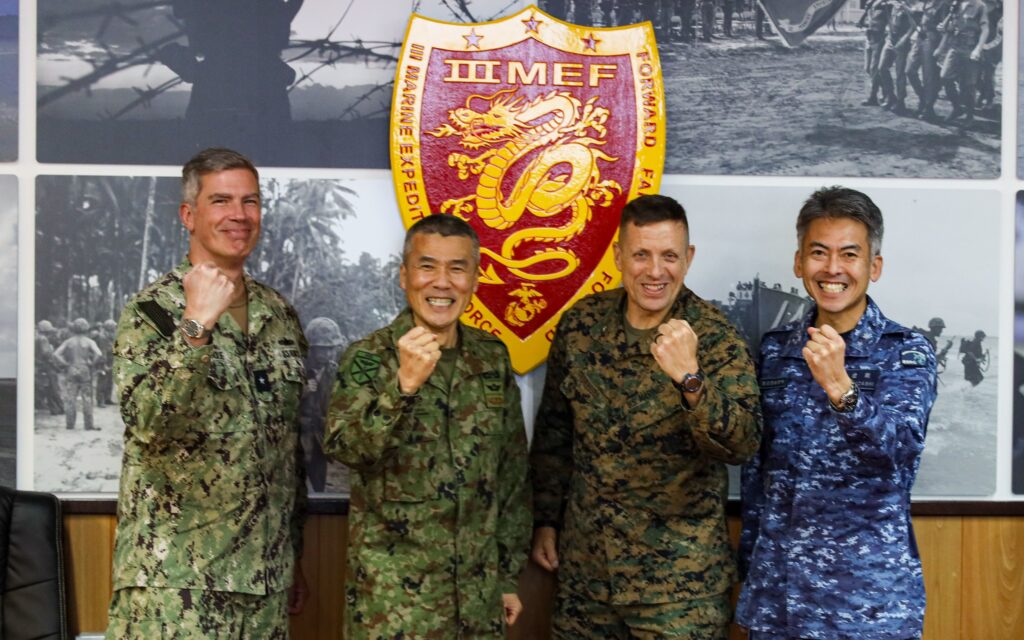
CAMP COURTNEY, Okinawa (Feb.16, 2023) U.S. Navy Rear Adm. Derek Trinque, commander Task Force 76/3, left, Japan Maritime Self-Defense Force Rear Admiral Motoyuki Kanezashi, commander, Amphibious and Mine Warfare Force, left-center, Japan Ground Self-Defense Force Maj. Gen. Shingo Nashinoki, commander, Amphibious Rapid Deployment Brigade, right-center, and U.S. Marine Brig. Gen. Fridrik Fridriksson, deputy commander TF 76/3, right, pose for a photo during Iron Fist 23 aboard Camp Courtney, Okinawa, Japan, Feb. 16, 2023. This visit took place during Exercise Iron Fist and provided an overview of TF 76/3, focusing on the command-and-control structure and command position, and how it improves the commander’s ability to control forces and command from ashore without the need to embark. Iron Fist is a U.S. Marine Corps Forces Pacific-directed, 31st Marine Expeditionary Unit-executed, bilateral training exercise between the U.S. Marine Corps and the Japan Ground Self-Defense Force and aims to improve staff planning, enhance core competencies in amphibious operations and interoperability, and maintain a positive military-to-military relationship between Japan and the United States. (U.S. Marine Corps photo by Staff Sgt. Andrew Ochoa)

***** 

ARLINGTON, Va. — The U.S. Marine Corps is planning to establish integrated staffs with two U.S. Navy numbered fleets next year, according to the latest update to is Force Design 2030 concept. 

The Corps plans to integrate a brigadier general in the headquarters staffs of U.S. Sixth Fleet and the U.S. Seventh Fleet.   

“We need to formalize the process for establishing integrated Navy-Marine Corps staffs with numbered fleets while giving the MEF CGs [Marine Expeditionary Force commanding generals] the ability to adapt organizations to the specific needs of their partner numbered fleets,” said General David H. Berger in the latest Force Design 2030 document. “Whenever feasible, and in coordination with the efforts of the appropriate combatant commanders, these integrated staffs should also include key ally and partner representation to strengthen our integrated deterrence, offering a mature approach to campaigning. 

“NLT 1 September 2024, Commander, Marine Corps Forces Pacific (COMMARFORPAC) and Commander, Marine Corps Forces Europe and Africa (COMMARFOREUR/ AF) will formalize the establishment of O-7 staffs within Sixth and Seventh Fleet headquarters.” 

Lieutenant General Karsten S. Heckl, deputy commandant for Combat Development and Integration and commanding general, Marine Corps Combat Development Command, speaking June 2 to reporters in press conference, said the move would be in accordance with the commandant’s guidance to returning to a Fleet Marine Force. 

“A big piece of that is getting the staffs right,” Heckl said. “We realize now more than ever that in this operating environment — now that we’re back to great power competition, without question — it is important that these staffs be properly, fully integrated, or we’re going to have problems. 

“A mentor of mine told me 30 years ago that if you get the command and control of any problem figured out, you’ve got 90% of it solved, and that’s what we’re doing here” he said.   

Brigadier General Kyle Ellison, commanding general of the Marine Corps Warfighting Lab, also speaking at the press conference, stressed that such a staff would be integrated to the point that it could have a Navy rear admiral in command with a Marine Corps brigadier general as deputy, or vice versa. He mentioned Task Force 79 — III Marine Expeditionary Force — and Task Force 76 — the 7th Fleet’s amphibious force — as a “completely integrated staff with an integrated maritime operations center right there on Camp Courtney [Okinawa]. 

“It’s critically important to recognize that it’s not just the O-7,” Ellison said. “It’s integrating the staffs so you have a truly naval staff to execute naval operations in support force. That is exciting in that typically happens only when you are task-organized and for a specific mission. Now we’re standing it up and experimenting with it as a permanent structure, and that’s happening as we speak as an 18-month experimentation that was agreed upon by two three-stars — commander of III MEF and the 7th Fleet commander.” 


FRCE delivers final Harrier trainer to Marine squadron 

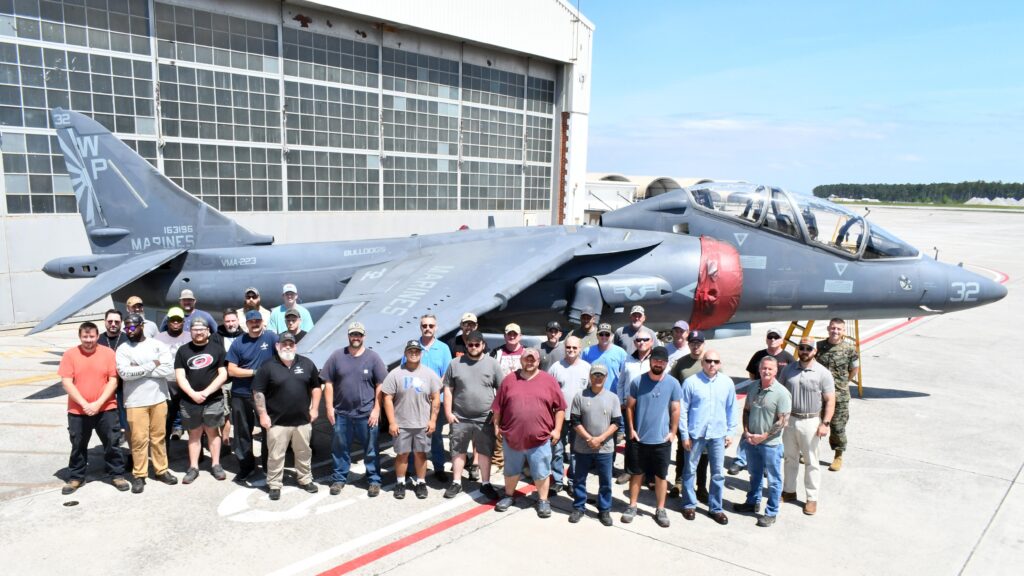
The AV-8 team poses in front of the last TAV-8B Harrier trainer to be completed by Fleet Readiness Center East (FRCE) before it was delivered to Marine Attack Squadron (VMA) 223 at Marine Corps Air Station Cherry Point. The Marine Corps is replacing the aging AV-8 Harrier platform with the more high-tech F-35 Lightning II. FRCE is expected to complete its AV-8 workload by the end of Fiscal Year 2024

Release from Naval Air Systems Command 

***** 

Published: 

Jun 2, 2023 

MARINE CORPS AIR STATION CHERRY POINT, N.C.–Fleet Readiness Center East (FRCE) has reached another milestone toward the drawing down of its AV-8B Harrier program, with the completion of its last TAV-8B trainer aircraft. The two-seater trainer was delivered May 11 to Marine Attack Squadron (VMA) 223, located at Cherry Point. 

The Marine Corps is moving to replace the Harrier with the short takeoff-vertical landing F-35B Lightning II by 2027, which means FRCE’s AV-8 program will soon transition to supporting other platforms. 

Many of the aircraft maintenance professionals on FRCE’s Harrier program have spent a significant part of their careers repairing and maintaining AV-8 aircraft. They say that’s why it’s tough to see another piece of the program’s workload come to an end. 

“I’ve been at FRC East for almost 32 years, and this aircraft is almost 35 years old, which means it was flying before I came here,” said Jeff Broughton, AV-8 planner at FRCE. “I’ve spent 20 years on this program, so you can imagine how many times I’ve seen this aircraft come through for Planned Maintenance Interval events. I worked on it once while I was a mechanic and twice while I was a planner, so you get to know the history of the aircraft each time it comes through.” 

Broughton said the Harrier program has established an impressive record of working under budget and ahead of schedule, and its final TAV-8B is no exception. According to Broughton, FRCE’s total combined work on this particular aircraft over the years was estimated to take nearly 11,000 work hours, but a tally of all the work actually completed on the aircraft came in at only 8,100 hours. Even on its last trip through the depot, it was delivered back to the fleet eight days early. 

“Our FRCE AV-8 team prides itself on being ahead of schedule and under budget most of the time,” Broughton said. “We might be considered out of sight, out of mind as a sundowning program, but the team is proud of being good stewards of the customer’s money and being on or ahead of schedule to keep the customer happy.” 

With three more scheduled PMI inductions over the next year and a half, the AV-8 team will be disassembling, inspecting, repairing, reassembling and testing those aircraft. They are dismantling retired aircraft and removing good parts to be refurbished and returned to the supply system to be used on the aircraft remaining in the fleet.  Artisans also continue to support the Marines with onsite in-service repairs. 

Currently, FRCE’s AV-8 program is scheduled to complete its final aircraft in September 2025. By that point, the personnel assigned to that team will be pursuing the next steps in their careers. 

“We have a highly experienced team here, and many of them have been on this program for a long time,” said Mike Stewart, AV-8 shop supervisor at FRCE. “They are extremely knowledgeable and can handle any issues with the AV-8.” 

Many will go on to support growing and incoming workload, such as the F-35, CH-53K and C-130 platforms. Stewart said these programs will benefit from the quality work and strong customer relationships formed by the AV-8 team, especially as the Marine Corps’ former AV-8 squadrons have transitioned to flying the F-35. 

“We have spent years building a good foundation with the AV-8 community, and now they will be our future customers with the F-35,” Stewart said. “The program may be ending, but we’ve paved a clear path for future endeavors with the customer for a long time to come.” 

As a long-time member of the AV-8 team, both as a Marine and later as a civilian artisan at FRCE, F-35 and AV-8 Branch Head Ike Rettenmair,  said he is proud of what the Harrier program has accomplished and looks forward to what lies ahead for the fleet. 

“You always hate to see a platform sundown, but technology is changing, our threats are changing, and it is time to move to the F-35 and the capability it will bring to the warfighter,” Rettenmair said. “FRCE will continue to support team Harrier as we have always done, until the final Harrier lands on the runway, regardless of when that will be.” 

FRCE is North Carolina’s largest maintenance, repair, overhaul and technical services provider, with more than 4,000 civilian, military and contract workers. Its annual revenue exceeds $1 billion. The depot provides service to the fleet while functioning as an integral part of the greater U.S. Navy; Naval Air Systems Command; and Commander, Fleet Readiness Centers.