Langley Confirmed to Head Africa Command as Four-Star General
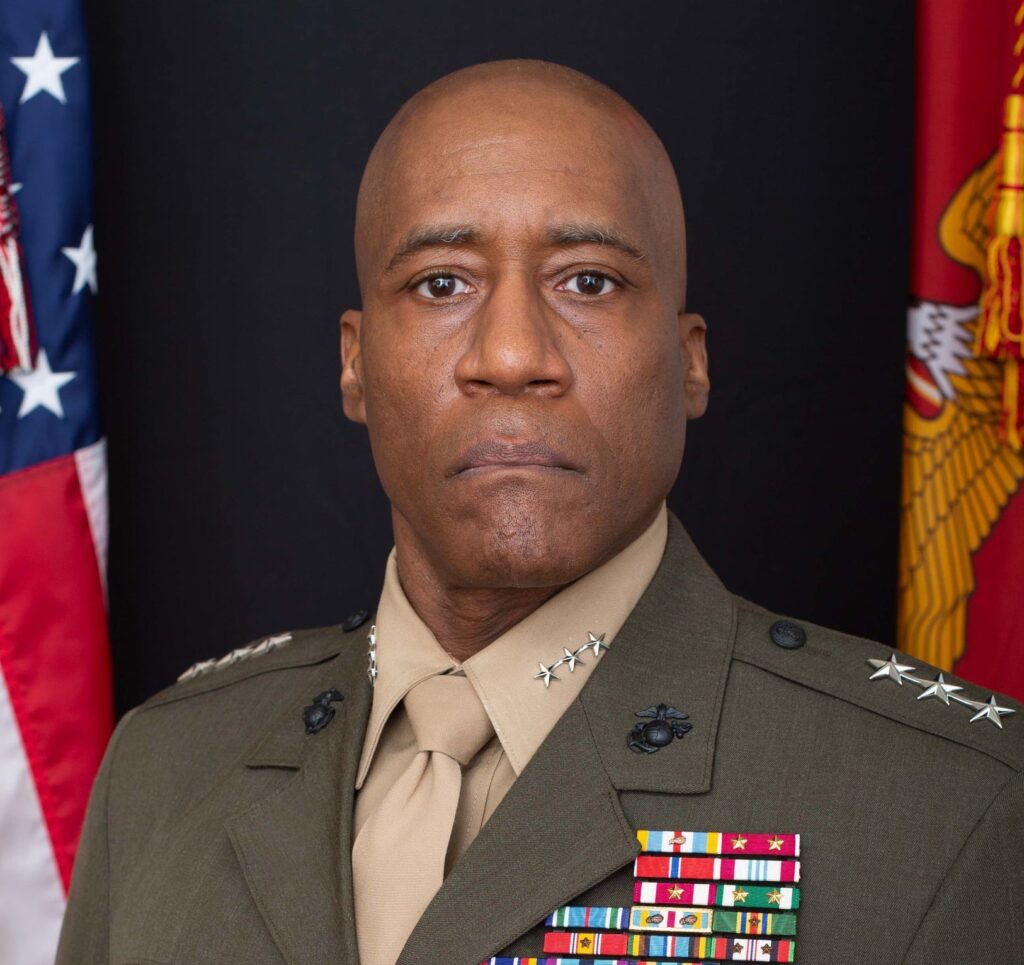
Lt. Gen. Michael Langley. U.S. MARINE CORPS
WASHINGTON — Lt. Gen. Michael Langley has been confirmed by the U.S. Senate to be the first African-American four-star general in the U.S. Marine Corps, Senate Majority Leader Chuck Schumer announced Aug. 1.
Langley was nominated to the be commander of U.S. Africa Command in Stuttgart, Germany, on June 9. He will be promoted to general at a ceremony in Washington, D.C., on Saturday, Aug. 6, the Marine Corps announced Aug. 2. Langley is currently serving as commander, U.S. Marine Corps Forces Command; commanding general, Fleet Marine Force Atlantic; and commander, Marine Corps Forces North, Norfolk, Virginia.
“He’s been a Marine for more than 35 years. He’s led an impressive career. And he’s now the first Black four-star general in the history of the Marines,” Schumer posted on Twitter.
“It is a great honor to be the president’s nominee to lead U.S. Africom,” Langley said at his July 21 nomination hearing before the Senate Armed Services Committee. “I am grateful for the trust and confidence extended by him, the secretary of defense, the chairman of the joint chiefs of staff and the commandant of the Marine Corps.”
A native of Shreveport, Louisiana, Langley graduated from the University of Texas at Arlington and commissioned in 1985. He commanded at every level from platoon to regiment, including Battery K, 5th Battalion, 11th Marines in support of Operation Wildfire in the Western United States; battalion and regimental commands in 12th Marines forward deployed in Okinawa, Japan; and both the 201st Regional Corps Advisory Command-Central and Regional Support Command – Southwest in support of Operation Enduring Freedom in Afghanistan.
As a general officer, his command assignments include deputy commanding general, II Marine Expeditionary Force and commanding general, 2d Marine Expeditionary Brigade; commander, Marine Forces Europe and Africa; and deputy commanding general, Fleet Marine Force, Atlantic and deputy commander, Marine Forces Command and Marine Forces Northern Command.
Langley holds multiple advanced degrees including Masters in National Security Strategic Studies from the U.S. Naval War College and Strategic Studies from the U.S. Army War College.
Marine Corps Resumes Limited ACV Water Operations
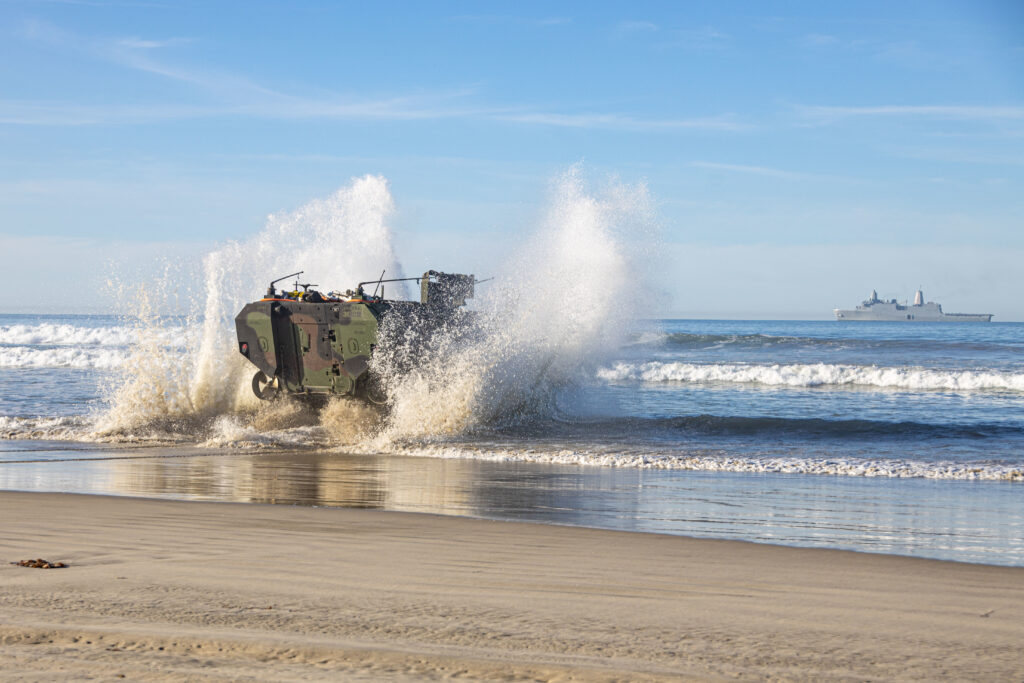
U.S. Marines assigned to the 3rd Assault Amphibian Battalion, 1st Marine Division, conduct waterborne training with an Amphibious Combat Vehicle from shore to loading amphibious transport dock ship USS Anchorage (LPD 23) at Marine Corps Base Camp Pendleton, California, Feb. 12. U.S. MARINE CORPS / Lance Cpl. Willow Marshall
ARLINGTON, Va. — The Marine Corps has authorized water operations of its new Amphibious Combat Vehicle, but only in protected waters, Headquarters Marine Corps said July 26.
“On July 22, after initial review of the factors involved in the July 19 ACV incident, Headquarters Marine Corps authorized ACV water operations in protected waters only (Area 21, Del Mar Boat Basin) to sustain ACV crew proficiency and meet entry-level training requirements,” said Capt. Ryan Bruce, media officer at Headquarters Marine Corps, in the release. “ACV operations remain suspended for open ocean and surf.”
The Marine Corps suspended ACV water operations on July 20 after a July 19 training incident at Camp Pendleton, California. There were no injuries to the Marine and Sailors on board the ACVs involved.
“This is the right thing to do,” Lt. Gen. David J. Furness, deputy commandant of the Marine Corps for Plans, Policies, and Operations, said in announcing the pause on July 20. “A pause on ACV waterborne operations will give us time to conduct an investigation, learn from this event, and ensure our assault amphibian community remains ready to support our nation.”
“ACV land operations, to include live fire ranges, remain authorized,” Bruce said.
The ACV, built by BAE Systems, is replacing the AAV7 assault amphibious vehicle and its variants in Marine Corps amphibious assault battalions.
Marine Corps Pauses ACV Waterborne Operations
U.S. Marines assigned to the 3rd Assault Amphibian Battalion, 1st Marine Division, conduct waterborne training with an Amphibious Combat Vehicle from shore to loading amphibious transport dock ship USS Anchorage (LPD 23) at Marine Corps Base Camp Pendleton, California, Feb. 12. U.S. MARINE CORPS / Lance Cpl. Willow Marshall
ARLINGTON, Va. — Out of an abundance of caution, Lt. Gen. David J. Furness, the deputy commandant of the Marine Corps for Plans, Policies, and Operations, has directed the pause of all waterborne Amphibious Combat Vehicle operations in light of the July 19 ACV training incident at Camp Pendleton, Headquarters Marine Corps announced in a July 20 release.
The incident did not result in injuries to the Marines and sailors aboard the ACVs.
The pause of waterborne operations will allow for an investigation into the incident and ensure the assault amphibian community can review best practices and procedures to remain capable, safe, and ready, the Corps announced.
“This is the right thing to do,” said Furness. “A pause on ACV waterborne operations will give us time to conduct an investigation, learn from this event, and ensure our assault amphibian community remains ready to support our nation.”
The Marine Corps will continue to conduct ACV land operations, to include live-fire training, during this pause.
Marine Forces Reserve Conduct Integrated Training Exercise in California
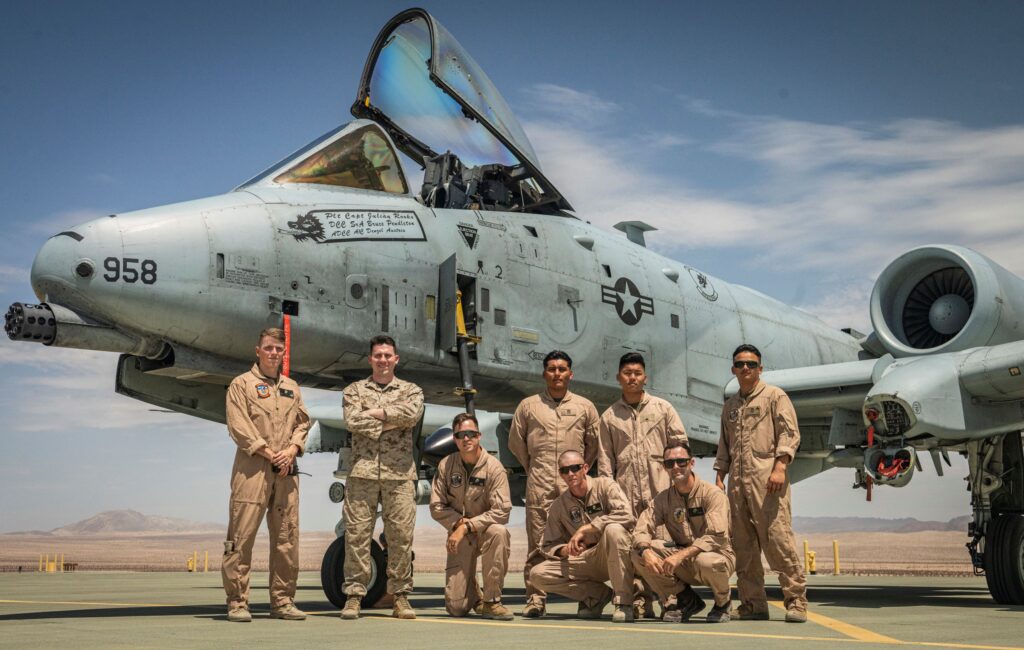
U.S. Marines with Marine Wing Support Squadron 473, 4th Marine Aircraft Wing, pose for a group photo in front of an A-10 Warthog during Integrated Training Exercise 4-22 at Marine Corps Air-Ground Combat Center, Twentynine Palms, California, on July 18. U.S. MARINE CORPS / Sgt. Matthew Teutsch
TWENTYNINE PALMS, Calif. — More than 4,300 Marines and Sailors from Marine Forces Reserve are mobilizing from across the country as part of Marine Air-Ground Task Force 23 to conduct Integrated Training Exercise 4-22 at Marine Corps Air-Ground Combat Center here from July 18 to Aug. 2, Headquarters Marine Corps said in a July 20 release.
ITX is a live-fire exercise combining infantry, artillery, aircraft, combat logistics and all the supporting elements to train battalion and squadron-sized units in the tactical application of combined-arms maneuver, offensive and defensive operations during combat.
“As the Marine Corps Reserve’s premier annual training event, ITX provides us opportunities to rehearse mobilizing geographically dispersed forces for a deployment; to increase our combat readiness and lethality; and to exercise command and control of battalions and squadrons across the full spectrum of warfare,” said Col. Quintin Jones, MAGTF-23 commanding officer. “MAGTF-23 has been planning and preparing for this exercise for months and we are ready to face the challenges that come with ITX.”
This year’s iteration of ITX will be led by 23rd Marine Regiment Headquarters, based in San Bruno, California, and is the command element. The ground combat element is made up of 3rd Battalion, 23rd Marines, headquartered in Bridgeton, Missouri, and 2nd Battalion, 25th Marines, headquartered in Garden City, New York. The aviation combat element is formed from Marine Aircraft Group 41, headquartered in Fort Worth, Texas, and the logistics combat element is made up from Combat Logistics Battalion 23, headquartered at Joint Base Lewis McCord, Washington.
“As outlined in the recent Force Design 2030 annual update, we are incorporating active-duty Marine units into the Reserve MAGTF to increase Total Force integration and proficiency,” said Jones. “As iron sharpens iron, having the active component working alongside the Reserve component helps forge an operationally ready Reserve for employment across the full spectrum of crisis and global engagement.”
Active component Marines from Charlie Company, 1st Battalion, 7th Marines, based at Marine Corps Air-Ground Combat Center Twentynine Palms, California, and augments from 10th Marines, based at Marine Corps Base Camp Lejeune, North Carolina, will be fully integrated with MAGTF-23.
At the conclusion of ITX 4-22, MAGTF-23 will have attained a heightened level of readiness and will be the first Marine Forces Reserve unit called upon in the event of a global contingency.
Good Retention Cushioning Recruiting Challenges, Marine Assistant Commandant Says
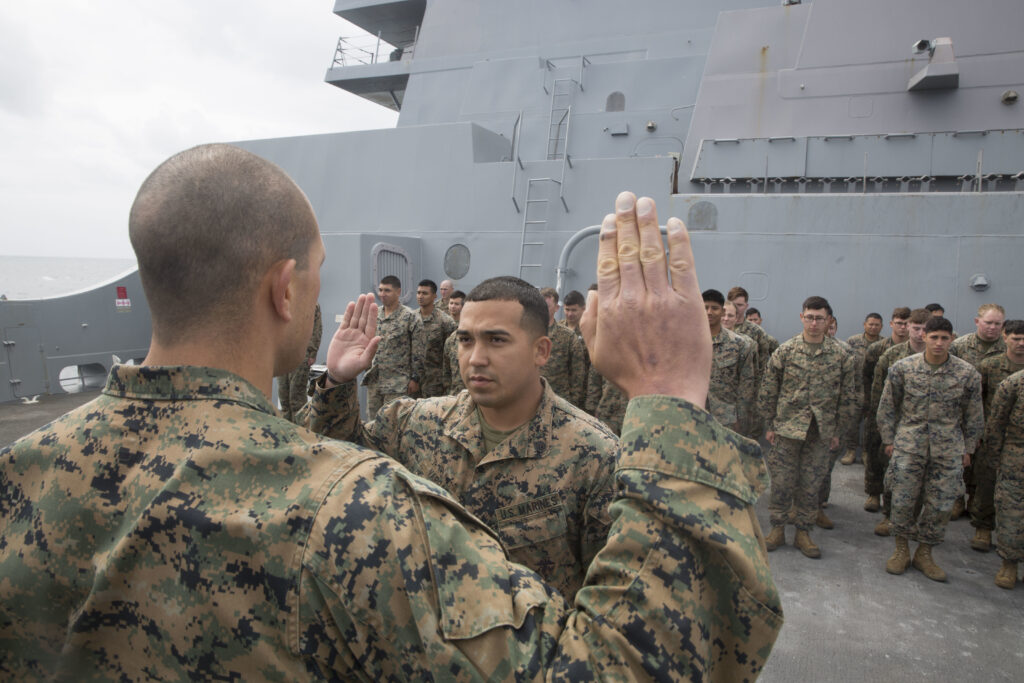
Staff Sgt. Albert Vargas, a landing support chief with Combat Logistics Battalion 13, 13th Marine Expeditionary Unit, re-enlists aboard the San-Antonio class amphibious transport dock ship USS Anchorage (LPD 23), May 1, 2018. U.S. MARINE CORPS / Cpl. Austin Mealy
WASHINGTON — The U.S. Marine Corps is focusing on retention of serving Marines as a way to mitigate the challenges of recruiting in today’s American society, the Corps’ assistant commandant said in recent public forums.
“Our recruiting challenges this year across the board are, in fact, difficult, which is why we’re so focused on retention rather than recruiting,” said Gen. Eric Smith, assistant commandant of the Marine Corps, testifying July 19 before the House Armed Services Committee subcommittee on Readiness. “We will make or come very close to making our recruiting mission in ’22. It will come to a degree at the expense of the pool that we have ready for ’23. Any time you have less time in the delayed entry program, you will have a higher attrition rate at recruit training, which is unacceptable. So, the focus for us is retention, and then ensuring that the American people see the value proposition of service in the United States Marine Corps and the United States military writ large.”
Smith addressed the retention and recruiting challenge the day before during a July 18 webinar hosted by the Center for Strategic and International Studies and the U.S. Naval Institute and sponsored by HII.
“We cannot recruit our way out of our future challenges, but we can retain our way out,” he said. “If we have an individual who seeks to serve their nation, makes it through entry-level training, gets additional training, we want to keep that person. Why would I want them to go away, and them I have to go seek another person? That just adds to the problem. So, you can’t recruit your way out, but you can retain your way out.”
Smith, whose son currently serves as a Marine recruiter, discussed the value of the Marine brand.
“People say, ‘Other services are giving really big bonuses, $50,000 to $60,000; why aren’t you?’” he said. “Our biggest bonus we ever give — and we don’t give many to enlisted — is about $8,000, because the bonus is, you get to call yourself a U.S. Marine. And that’s not false bravado; it’s who we are, a brand; that’s who we recruit.
“What we do is we make sure that we are out there as a face,” Smith said. “71% of our enlistment contracts are [from] face-to-face contact from seeing a Marine with operational experience who is tough, tested, fit, ready to fight, who’s out there in the public square to engage with students. What I think we can do and need to do for students and those who’ve already graduated is work closely with the Department of Education, administrators and educators to really enforce the value proposition of service.”
The assistant commandant said the Corps needs to “counter the narrative that the Marine Corps service in general is not fulfilling. We’re a valuable thing and it’s a valuable service to the nation.”
He pointed out a streamlining of the re-enlistment process has taken place.
“A year ago, there were 22 steps to take to re-enlist,” he said. “That’s down to one. We use technology to streamline [re-enlistment]. If you wish to re-enlist and you’re a qualified Marine, the answer is yes.”
Smith said the Corps should ask a potential re-enlistee, “What would it take to keep you? It’s about managing talent as opposed to, ‘Here’s the cookie cutter.’”
He said the cookie cutter approach “will not work in the future environment where so many in our society are not qualified for enlistment or don’t wish to enlist.”
Artillery Rapid Mobility Key to Survival, Marine Assistant Commandant Says
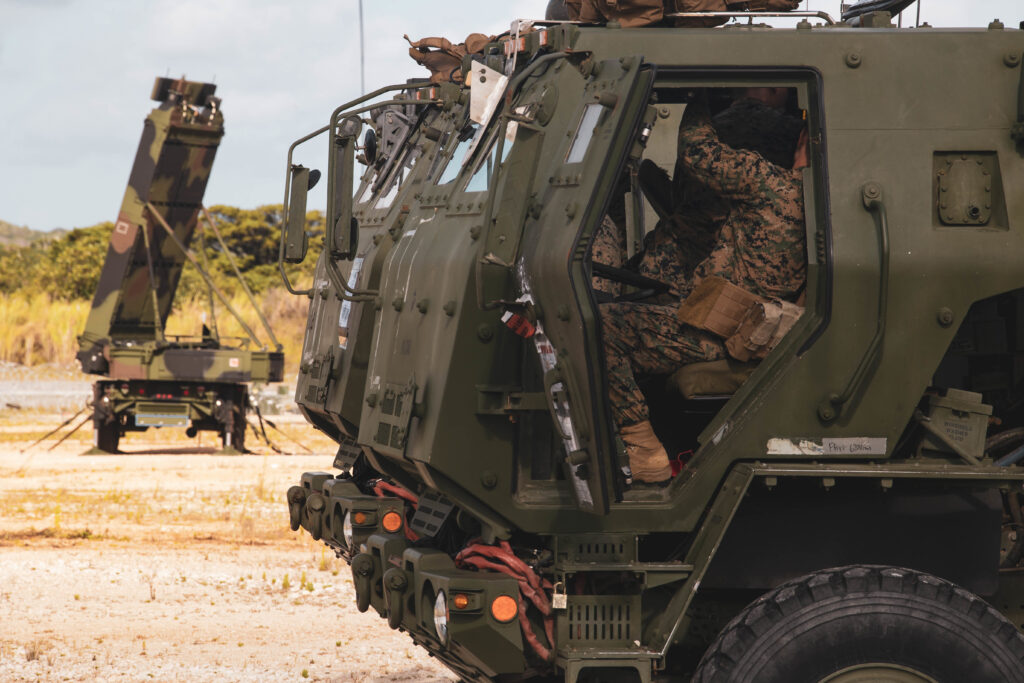
U.S. Marines with 5th Battalion, 11th Marine Regiment, 1st Marine Division, set up high mobility artillery rocket systems (HIMARS) in front of an AN/TPS-80 Ground/Air Task Oriented Radar set to detect, identify and track airborne threats, during Valiant Shield 22, at Andersen Air Force Base, Guam, June 13. U.S. MARINE CORPS / Lance Cpl. Tyler Andrews
WASHINGTON — The Russian invasion of Ukraine is showing the value of the High Mobility Artillery Rocket System (HIMARS) in providing long-range precision fires while shifting positions to avoid counter-battery fire, a senior Marine Corps general said, showing its advantages over towed tube artillery and supporting the investment of HIMARS in Force Design 2030.
“What we’re focused on is long-range fires, and longer-range fires is better,” said Gen. Eric Smith, assistant commandant of the Marine Corps, speaking July 18 during a webinar hosted by the Center for Strategic and International Studies and the U.S. Naval Institute and sponsored by HII. “You want to be able to out-stick your adversary. The introduction of HIMARS for us is absolutely vital, as is our NMESIS — Navy-Marine Expeditionary Ship Interdiction System — [with the] Naval Strike Missile, which [has a] range in excess of 100 miles.
“The capability that is brought by long-range fires is what we seek,” Smith said. “Towed artillery has a max range. It also has a mobility issue because towed things like boats, U-Hauls, things that are on a trailer are not as mobile as individual vehicles. That’s why the [HIMARS] is so good.”
Smith that artillery must be highly mobile to avoid detection and targeting by drones.
“You have to be able to fire and move immediately,” Smith said. “You no longer have six minutes, which is [the capability of] a really well-oiled gun crew from ‘pull last round’ till ‘you’re on the move.’ What we have to see now is that there are autonomous loitering munitions that are looking for that signature. And as soon as they see that signature — we call it a POO, a point of origin — they’ve already got lethal authority to strike that. You don’t have six minutes to move, whereas with a HIMARS you can shoot and be gone literally in seconds, less than a minute. So that is a key lesson learned for long-range fires.
Smith said the artillery has to contend with ubiquitous, inexpensive drones and you have to drop your signature, either because you radiate or you are physically seen, because you are targeted almost immediately.
Under Force Design 2030, the Marine Corps is increasing its HIMARS batteries and reducing its M777 155mm tube artillery batteries. Having decided initially to reduce the number of tube artillery batteries to five, experimentation led the Corps to increase the number of tube artillery batteries to seven.
The Defense Department has shipped a number of HIMARS and M777 systems to the Ukrainian armed forces to aid in their resistance to the Russian invasion.
GA-ASI to Supply 8 MQ-9A Extended-Range UAS for Marine Corps
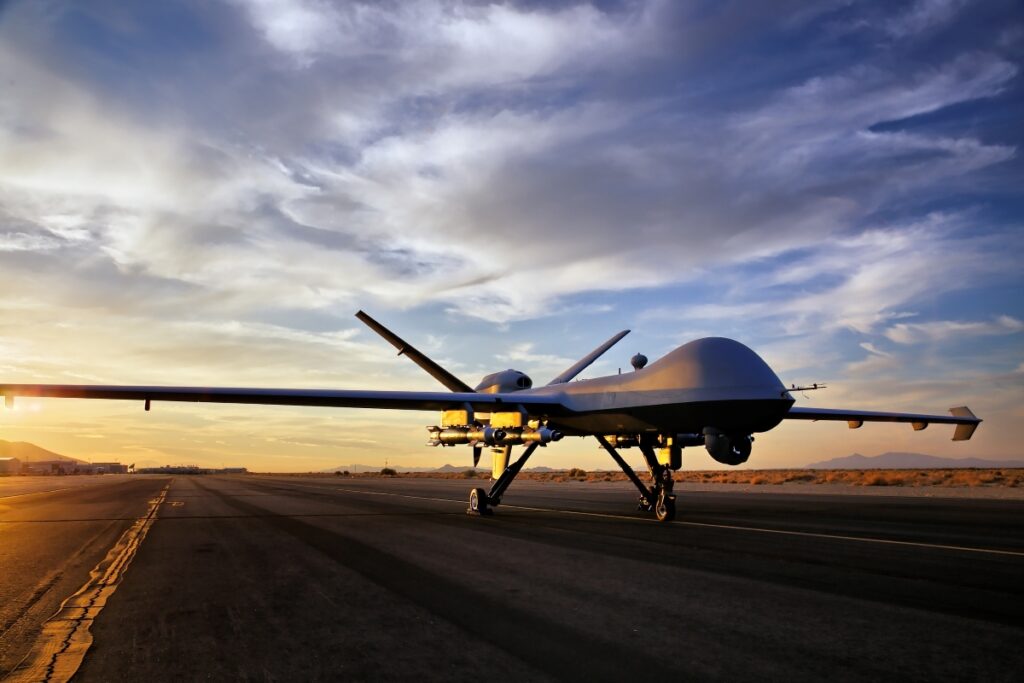
General Atomics Aeronautical Systems Inc. will provide eight MQ-9A Extended Range aircraft as part of the ARES contract, the company announced July 17. GA-ASI
SAN DIEGO — General Atomics Aeronautical Systems Inc. was awarded a contract for eight MQ-9A Extended Range unmanned aircraft systems as part of the Agile Reaper Enterprise Solution (ARES) contract from May 27, 2022, the company said in a July 17 release.
GA-ASI anticipates awards later this year for ground control systems, spares and ground support equipment as part of the first increment of the Marine Air Ground Task Force Unmanned Expeditionary program of record.
GA-ASI will begin first delivery of aircraft and support equipment this winter to facilitate the fleet standup in late summer 2023 for U.S. Marine Corps’ Marine Unmanned Aerial Vehicle Squadron (VMU) 3 located at Marine Corps Air Station Kaneohe Bay, Hawaii. As part of the Marine Corps’ Force Design 2030 efforts, VMU-3 will operate these MQ-9A ERs with their unique sensors and network capabilities to support training for the Marine Littoral Regiment.
“We look forward to rapid deployment of these MQ-9A ERs for our USMC customer,” said Patrick Shortsleeve, GA-ASI vice president of DoD Strategic Development. “This capability will be a key ISR contributor for the Marine Air Ground Task Force — and ultimately for U.S. Indo-Pacific Command — as we pace ourselves to outmaneuver our adversaries.”
The MQ-9A Extended Range is designed with field-retrofittable capabilities such as wing-borne fuel pods and reinforced landing gear that extends the aircraft’s endurance to more than 30 hours, while further increasing its operational flexibility. It provides long-endurance, persistent surveillance capabilities, with full-motion video and synthetic aperture radar/moving target indicator/maritime mode radar. An extremely reliable aircraft, MQ-9A ER is equipped with a fault-tolerant flight control system and triple redundant avionics system architecture.
US Marine Corps Successfully Tests Iron Dome-Based Air Defense Prototype
The U.S. Marine Corps has tested Rafael’s Iron Dome ground launcher and Tamir interceptor with its Medium-Range Interceptor Capability prototype, G/ATOR radar and Common Aviation Command & Control System. RAFAEL
HAIFA, Israel — The U.S. Marine Corps conducted a successful live-fire test of Israel-based Rafael’s Iron Dome ground launcher and Tamir interceptor missile integrated with the USMC Medium-Range Intercept Capability prototype, Rafael said July 18.
The test included the Marine Corps’ Ground/Air Task Oriented Radar and Common Aviation Command & Control System.
“This demonstration proves that we do now have a relevant capability,” said Don Kelley, program manager for ground based air defense at PEO Land Systems, immediately following the successful test.
“Once again, Rafael’s systems have proven that they are capable of seamless, optimized integration with other defense systems,” said Brig. Gen. (Res.) Pinhas Yungman, executive vice president and head of Rafael’s Air Defense Systems Directorate.
“This test has proven the Iron Dome Tamir Interceptor and associated ground components can be integrated quickly and efficiently in any relevant defense architecture and intercept various aerial threats successfully in complex and advanced scenarios,” said Moshe Patel, head of the Israel Missile Defense Organization within Israel’s Ministry of Defense. “We look forward to further partnerships with the U.S. Armed Forces on air and missile defense.”
Sikorsky Delivers Third Production CH-53K To U.S. Marine Corps
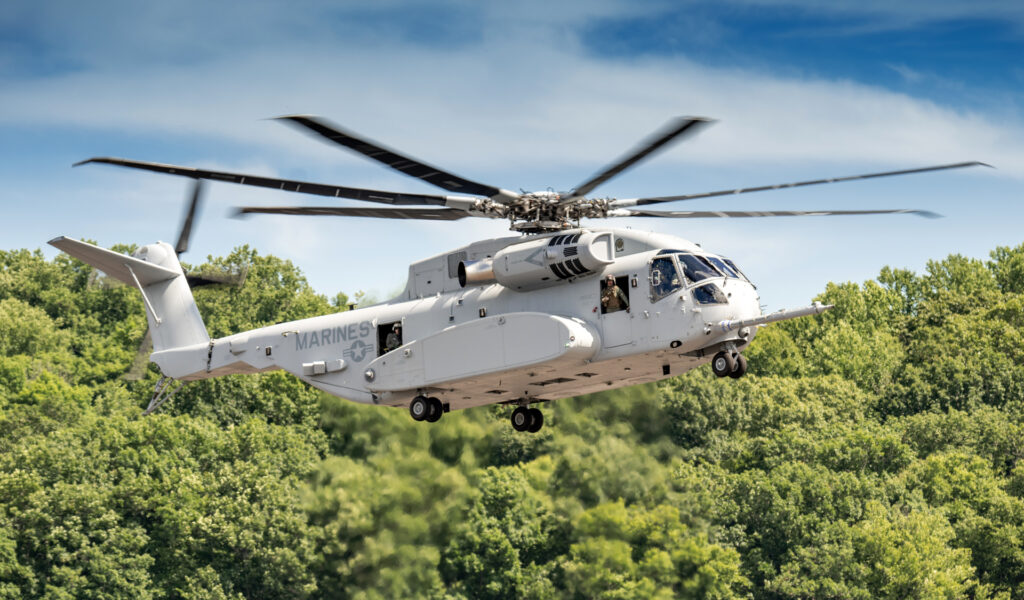
Sikorsky delivered a seventh CH-53K Helicopter to the U.S. Marine Corps. The heavy lift helicopter will be based at Marine Corps Air Station New River in Jacksonville, North Carolina. SIKORSKY
STRATFORD, Conn. — Sikorsky, a Lockheed Martin company, delivered the third low-rate initial production CH-53K King Stallion helicopter ahead of contract schedule to the U.S. Marine Corps, the company said July 14.
This aircraft, built in Sikorsky’s digital factory, is the first CH-53K from the Lot 2 LRIP contract awarded by the U.S. Navy in 2019, and the seventh overall delivered to the fleet. The CH‑53K’s heavy-lift capabilities exceed all other U.S. Department of Defense rotary wing platforms and is the only heavy-lift helicopter that will remain in production through 2032 and beyond.
This CH-53K heavy lift helicopter joins the six in operation at Marine Corps Air Station New River in Jacksonville, North Carolina. The CH-53K is the only sea-based, long range, heavy lift helicopter in production and will immediately provide three times the lift capability of its predecessor.
“This Connecticut-built CH-53K aircraft is a credit to our employees and their skills embracing digital tools and other advanced technologies to continue the Sikorsky legacy of building modern, safe, reliable rotorcraft. Our nationwide supply chain supports the active production line as we prepare to deliver two more CH-53K helicopters later this year,” said Bill Falk, director, Sikorsky CH-53K program. “We look forward to continuing our progress toward next year’s full rate production decision.”
The CH-53K helicopter was born in a digital environment, and now its digital thread connects design, manufacturing, training, and sustainment teams. This network, that includes everything from work instructions to maintenance manuals, is based on the helicopter’s single, continuous data thread that stays consistent from initial design all the way through sustainment. Today, all of Sikorsky’s aircraft programs are born in a digital environment. The power of this digital thread drives affordability, producibility and reliability across the aircraft lifecycle.
Earlier this year Sikorsky secured a contract to build 12 CH-53K heavy lift helicopters for Israel under a U.S. Navy Foreign Military Sales agreement.
The signed letter of offer and acceptance between the U.S. government and Israel states first deliveries of the baseline aircraft are planned for 2025.
The CH-53K helicopters will replace the Israeli Air Force fleet of modified CH-53D Yasur helicopters, which have been in Israel’s inventory for over 50 years.
Marine I-CsUAS Works to Defend Against Drones
Program Executive Officer Land Systems recently started fielding the Installation-Counter small Unmanned Aircraft Systems, depicted in this simulated graphic, to select Marine Corps installations. U.S. MARINE CORPS / Andrew Reynolds
MARINE CORPS BASE QUANTICO, Va. — The battle to keep Marines and their critical assets safe is constantly evolving. As technology advances, so does the need to field more cutting-edge equipment to counter threats, such as those posed by small unmanned aerial systems.
With these challenges in mind, Program Executive Officer Land Systems is fielding the Installation-Counter small Unmanned Aircraft Systems, the Marine Corps Systems Command Office of Public Affairs and Communication said July 14.
Known as I-CsUAS, the system is designed to protect Marine Corps installations by detecting, identifying, tracking and defeating small UAS.
“The Marine Corps, and DoD in general, required the capability to defend against SUAS years ago,” said Don Kelley, program manager for Ground-Based Air Defense at PEO Land Systems. “The threat of SUAS is only proliferating every day. The bottom line is, we need to provide this capability to our Marines as rapidly as possible.”
I-CsUAS features an integrated system equipped to carry out all phases necessary to counter small unmanned aerial systems such as commercially available drones, said Kelley. The system will primarily provide a service to ensure Marines or security forces have the capability to defend installations against sUAS at all times.
Maj. Kyle Yakopovich, fixed site project officer for Program Manager Ground Based Air Defense at PEO Land Systems, said I-CsUAS is intended to defeat commercial off the-shelf Group 1 and Group 2 UAS. I-CsUAS also provides detection, tracking and identification capabilities.
“What makes this system interesting is it fuses multiple modalities together into a single system,” Yakopovich said. “This allows us to more accurately detect, track and identify [small unmanned aircraft systems].”
Yakopovich said the program’s system is equipped with a few different components for better detection and ultimately, defense. The Long-Range Sentry Tower is comprised of a radar system and an optical sensor, and works in conjunction with a passive radio frequency detection capability to present the operator with a visual depiction of the threat’s flight path. While each of the towers’ sensor components are already widely in use, Yakopovich said I-CsUAS is special because it uses machine learning and artificial intelligence to constantly and autonomously analyze the sensor data faster and more accurately than a human operator. The system enhances the capability to detect, track, and identify the threat while reducing the amount of manpower previously required to perform these actions.
Yakopovich also said the I-CsUAS also has a separate non-kinetic defeat capability that has proven itself capable in other programs within PM GBAD. Using this capability, a Marine who has detected an intruding sUAS is able to disrupt the sUAS communication link. This enables Marines operating the LRST-42 or LSTR-82 tower will be able to determine the drone’s point of origin.
PM GBAD’s Fixed Site Product Manager Jessica McCauley said the Marine Corps plans to use this technology to defend critical assets, following the requirement set forth in Title 10 of the U.S. Code, which outlines the role and responsibilities of our nation’s armed forces.
“The I-CsUAS protects the facility by detecting, tracking identifying the drone and empowering law enforcement to defeat it,” McCauley said. “We are delivering a system to select installations, providing them the ability to conduct that kill chain in order to protect critical assets against small UAS threats.”
“These small commercial off-the-shelf drones — they’re everywhere,” Yakopovich said. “You can’t walk into a park without seeing them, and our enemies know how to use them. If you follow the news you can read articles about these drones being used as weapons of war in places like Ukraine, and those drones are capable of doing similar damage here at home. We’re delivering these systems to CONUS locations and defending certain assets aboard those installations that have been deemed critical to national security.
“Use your imagination of how much damage and chaos could be done by these small commercial off-the-shelf drones by attacking or otherwise harassing domestic Marine Corps installations. That’s why we’re doing this — to protect those assets and to enable the warfighter to do what the warfighter should be doing, which is keeping his focus oriented toward the enemy.”