Marine Corps successfully tests Medium Range Intercept Capability Prototype

Program Executive Officer Land Systems Ground-Based Air Defense Program Manager Don Kelley shows the expeditionary launcher of the Medium-Range Intercept Capability prototype to Marine Corps senior leaders following a successful test demonstration of the system at White Sands Missile Range, New Mexico, June 30. U.S. ARMY / John Hamilton

White Sands Missile Range, N.M. — The Marine Corps’ Medium-Range Intercept Capability prototype successfully hit several simultaneously-launched cruise missile representative targets during the live-fire test at the White Sands Missile Range in New Mexico on June 30., Program Executive Officer Land Systems announced July 8.

The MRIC prototype provides Marine Corps point defense in an expeditionary package. The system is one of several initiatives critical to Force Design 2030, addressing an emergent capability gap for the Marine Corps. PEO Land System’s Ground-Based Air Defense program oversees the system.

“This demonstration proves that we do now have a relevant capability,” said Don Kelley, program manager for GBAD at PEO Land Systems, immediately following the successful test.

MRIC, which counts the Corps’ Ground/Air Task-Oriented Radar and Common Aviation Command and Control System among its primary subsystems, also incorporates technology from Israel’s proven Iron Dome system. The live-fire test was designed to validate the primary subsystems’ integrations and the system’s overall capability to provide critical information to senior Marine Corps leadership as they decide the path forward for the MRIC prototype.

During the test, the G/ATOR successfully tracked each target, from immediately after launch and passed the tracks through the CAC2S to the Israeli Iron Dome components. This allowed the MRIC system to simultaneously neutralize multiple missiles encircling the system from various angles. At its peak, numerous in-air targets, each with its own unique flight trajectory and velocity, surrounded the MRIC prototype. Upon firing, MRIC successfully hit each target using the Tamir missile.

The June event built upon the previous live-fire test in December, during which the program office launched multiple targets in sequence, with MRIC intercepting each target before the next one launched. This time around, multiple targets were launched simultaneously. Prior to the event, Kelley said engineers at Naval Surface Warfare Center Dahlgren ran independent simulations of what would happen during the live-fire test. The results, Kelley said, correlated closely to the modeled simulations.
Berger: Marine Corps Reinforcements to NATO Good Example of Stand-In Force Concept 

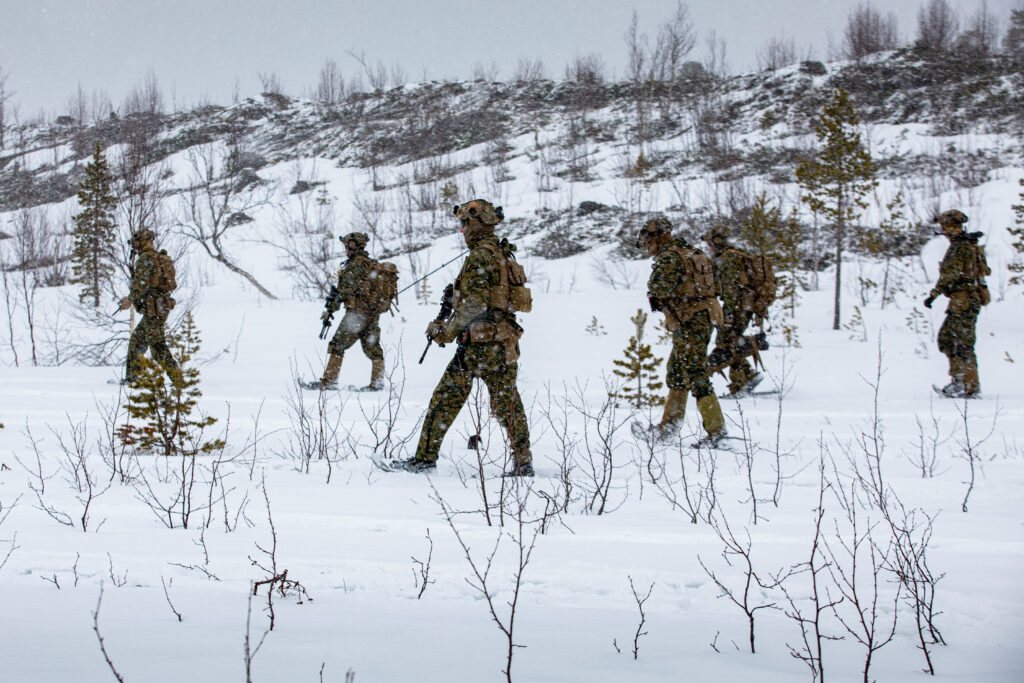
U.S. Marines with Golf Company, Battalion Landing Team 2/6, 22nd Marine Expeditionary Unit, participate in a live-fire range in Setermoen, Norway, April 26. U.S. MARINE CORPS / Cpl. Yvonna Guyette

ARLINGTON, Va. — The rapid deployment of Marine Corps forces exercising in Norway to a real-world situation in eastern Europe to shore up NATO presence was a good example of a stand-in force operating inside a weapons engagement zone, the Marine Corps commandant said. 

Speaking July 7 in a webinar of the Hudson Institute, a Washington think tank, Gen. David H. Berger, commandant of the Marine Corps, said the 2,000-plus Marines sent from the U.S. East Coast to Norway for a scheduled major exercise, as well as others to an unrelated reconnaissance/counter exercise, were able to rapidly redeploy deeper in Europe in support of NATO forces when Russia invaded Ukraine in February.   

The Marine Corps forces Europe at the time included a squadron of F/A-18C Hornet strike fighters and an air control squadrons detachment with a Ground/Air Task-Oriented Radar, plus information and intelligence units. KC-130J tanker/transport aircraft also were dispatched to the area. 

The Marine units were in a “very forward posture inside the collection and weapons engagement zone, operating persistently all the time, not trying to hide, showing them that we’re there,” Berger said. 

“The creativity of them [the deployed Marines] in terms of mobility and also understanding things like satellite vulnerability windows, the basics of camouflage — in other words, knowing when they can see me and how do I use that from an information perspective effectively,” he said. “How do I confuse them [the adversary], how do I convince them that they’re seeing is what they want to see but it’s not really accurate?” 

Berger praised the deployed Marines, noting their “just marvelous, magnificent, creative work by a bunch of Marines, all as stand-in force, all withing the range of weapons systems.” 

He noted that a similar demonstration from the Indo-Pacific region, where Marines were moving around between the first and second island chains by ship and ashore “constantly making sure the adversary knew we were there, constantly moving small elements, constantly repeating closing kill chains over and over — constructive ones — trying to cut the timeline down, down, down. Once you get it down and you’re comfortable, start interdicting [our] different communications paths to make it harder on ourselves. 

“The idea is just ‘give it to the operating forces, the fleet, and let them run with it,’” he said. “They will inform us what worked best in their neighborhood. I’m very comfortable what’s working in the Middle East may be a little bit different flavor and what’s happening in Europe may be different than what’s happening in the Pacific. We need to be flexible enough to allow for that, and we can. 

“This isn’t a ‘go there for exercise and come home’,” the commandant said. “It’s ‘stay in their face the whole time.’”    


Marine Corps Mourns the Passing of Medal of Honor Recipient Hershel ‘Woody’ Williams 

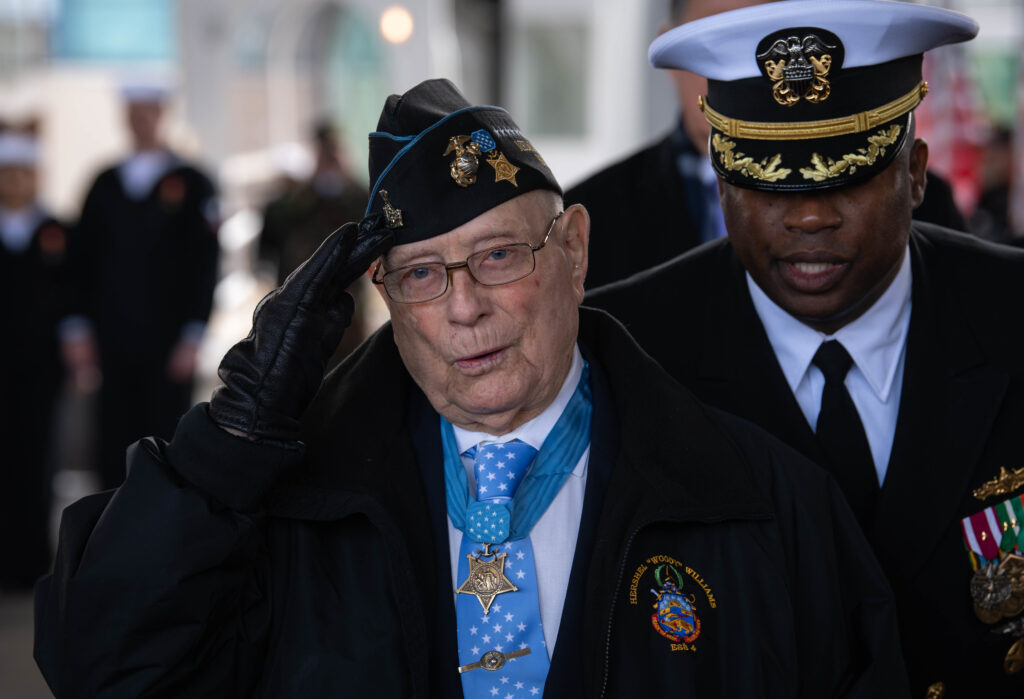
Hershel “Woody” Williams salutes as he is introduced to the stage along with other members of a ship commissioning committee, March 7, 2020 in Norfolk, Virginia. Williams died on June 29. U.S. MARINE CORPS / Lance Cpl. Fernando Moreno

ARLINGTON, Va. — The Marine Corps mourns the passing of Hershel “Woody” Williams, the Corps said in a June 29 release.

Woody exemplified the warfighting spirit of all Marines — a combat-proven leader whose lifelong dedication to all service members and Gold Star families began with his heroic actions at the Battle of Iwo Jima. His legacy as a warrior and an advocate for veterans will live on among all Marines, and he will be deeply missed, the Corps said. 

Marine Corps retired Chief Warrant Officer 4 Hershel Woodrow “Woody” Williams, the last living World War II Medal of Honor recipient, passed away early on June 29. Williams was surrounded by his family at the VA Medical Center in Huntington, West Virginia.  

Born on Oct. 2, 1923, in Quiet Dell, West Virginia, Williams enlisted in the Marine Corps Reserve May 26, 1943, and advanced to the rank of Chief Warrant Officer 4 before his retirement in 1969 after 17 years of service. During WWII, Woody served in New Caledonia, Guadalcanal and Guam before landing in Iwo Jima where his actions earned him the Medal of Honor. 

From Commandant of the Marine Corps Gen. David H. Berger and Sgt. Maj. Troy E. Black: 

“On behalf of all Marines, Sgt. Maj. Black and I are heartbroken to learn of Woody’s passing. From his actions on Iwo Jima to his lifelong service to our Gold Star Families, Woody has left an indelible mark on the legacy of our Corps. As the last of America’s “greatest generation” to receive the Medal of Honor, we will forever carry with us the memory of his selfless dedication to those who made the ultimate sacrifice to our great nation. The Marine Corps is fortunate to have many heroes, but there is only one Woody Williams. Semper Fidelis, Marine.” 

Williams is remembered through the naming of several locations throughout his native West Virginia. Most recently, on March 7, 2020, the Lewis B. Puller-class expeditionary mobile base USS Hershel Woody Williams (ESB 4) was commissioned in Norfolk, Virginia, commemorating Williams’ legacy. 

Williams’ Medal of Honor citation can be found here: https://www.usmcu.edu/Research/Marine-Corps-History-Division/Information-for-Units/Medal-of-Honor-Recipients-By-Unit/Cpl-Hershel-Woodrow-Williams/ 


Marine Corps Publishes Marine Corps Doctrinal Publication 8 – Information  

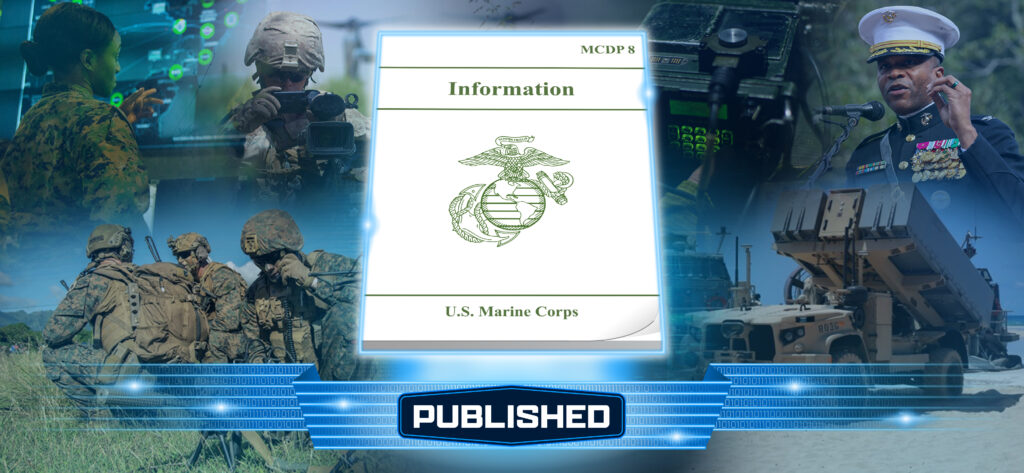
PENTAGON, Virginia — Gen. David Berger, 38th commandant of the Marine Corps, signed “Marine Corps Doctrinal Publication (MCDP) 8, Information,” publishing the Corps’ newest doctrine, June 29, the Marine Corps said in a release. 

The release of MCDP 8, Information marks the establishment of the first capstone service doctrine to describe the purpose and mechanics of the Marine Corps’ seventh warfighting function, information.  

The Deputy Commandant for Information developed the publication in coordination with Doctrine Branch, Policy and Standards Division, Training and Education Command.  

“Information is key to gaining advantage in all domains, whether during kinetic actions on the battlefield or during day-to-day operations in competition,” Berger said. “It’s especially critical when our Marines need to sense and make sense of the operating environment in support of the joint force or to exploit opportunities and take action against our adversaries.” 

The purpose of MCDP 8, Information is to introduce a conceptual framework for understanding and employing the information warfighting function in addition to providing Marines with increased flexibility in their operational approaches across all phases of the competition continuum, in all warfighting domains.  

“MCDP 8, Information is written within context of Force Design 2030: threat-informed, concept-based and accountable to a campaign of learning,” said Lt. Gen. Matthew Glavy, deputy commandant for information. “To maximize the information warfighting function we must make it a component of 21st century combined arms — such that we generate, preserve, deny and project information in full integration with fire and maneuver.” 

MCDP 8, Information is comprised of four chapters describing the nature of information, the theory of information, effective use of information and institutionalizing information.  

“Any service, or service member, regardless of what their tactical implementation of information is, can apply the core concepts outlined in MCDP 8, Information,” said Eric Schaner, senior information strategy and policy analyst, Plans and Strategy, DC I. “Our intent is to increase overall understanding that information is a warfighting function that can be applied through combined arms and maneuver to support commander’s objectives.” 


Pacific Amphibious Leaders Collaborate on Regional Cooperation 

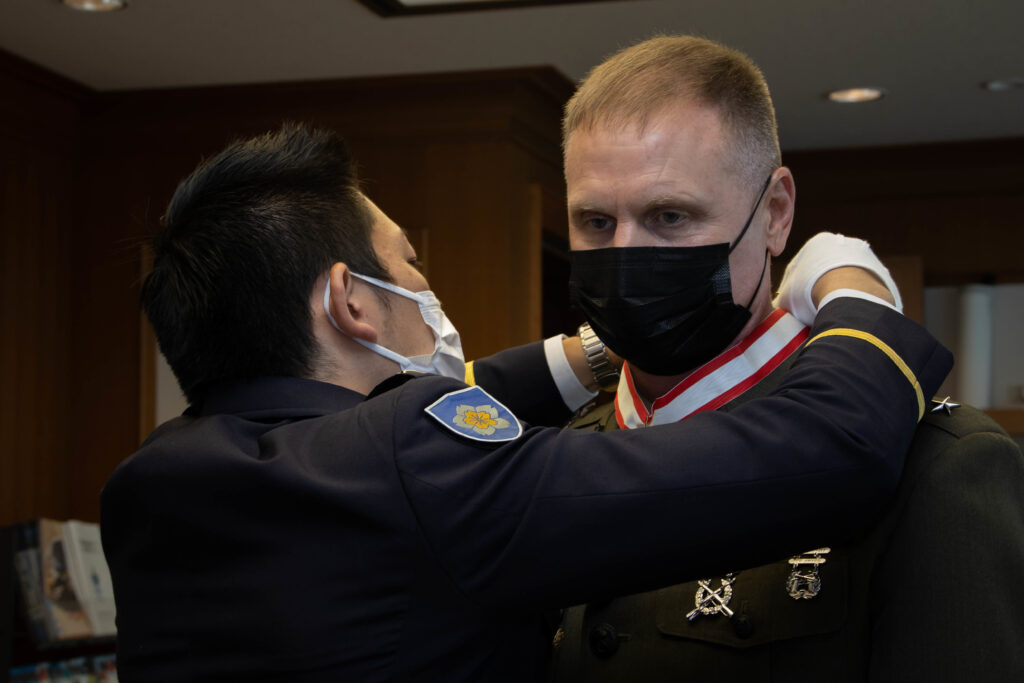
U.S. Marine Corps Lt. Gen. Steven R. Rudder, commander, U.S. Marine Corps Forces, Pacific, is awarded the Order of the Rising Sun after the Pacific Amphibious Leaders Symposium 2022, Tokyo, Japan, June 17. U.S. MARINE CORPS / Lance Cpl. Haley Fourmet Gustavsen

TOKYO — Lt. Gen. Steven R. Rudder, commander, U.S. Marine Corps Forces, Pacific, and General Yoshida Yoshihide, chief of staff, Japan Ground Self-Defense Force, cohosted the eighth iteration of the Pacific Amphibious Leaders Symposium in Tokyo June 13-16, U.S. Marine Corps Forces, Pacific said June 16.  

The symposium brought together senior leaders from 18 participating delegations from across the Indo-Pacific, Central America, South America, and Europe to foster dialogue and strengthen relationships in support of a secure and stable Indo-Pacific.  It was the first symposium to be hosted by the JGSDF, and the first to be conducted in person since 2019. PALS in 2020 and 2021 were conducted virtually due to the COVID-19 pandemic.  

The event consisted of panels, discussions, bi-lateral and tri-lateral engagements and a capabilities demonstration. Participants shared ideas, best practices and recent experiences with amphibious operations. They collaborated on common interests and engaged in meaningful dialogue to advance amphibious interoperability and crisis response capabilities.    

“Our outcome was that we established deeper relationships with those partners and allies that were here,” Rudder said. “We were also able to talk about naval integration and joint interoperability, and how we can further regional cooperation.” 

PALS is the premier annual gathering of regional amphibious forces. Each of the participating delegations share something in common: they all have a coastline bordering the Indian or Pacific Ocean, or have populations that are affected by disasters arising from their proximity to the sea, such as typhoons and tsunamis, or their proximity to the “Ring of Fire,” which produces earthquakes and volcanic eruptions.   

PALS serves as a physical demonstration of the United States’ commitment to its regional allies and partners, and builds on the interactions, developments and dialogues from previous years. These relationships result in increased collective readiness, improved interoperability, and better training. These advances pave the way for enhanced security and stability throughout the Indo-Pacific region. 

“PALS 2022 disseminates a powerful message that we do not allow unilateral changes to the status quo by force,” Yoshida said in his closing remarks.  

The United States’ sustained commitment to the Indo-Pacific region aims to increase cooperation, enhance regional security, and maintain an environment of peace and prosperity. 

“There is no nation that can do it all by themselves,” Rudder said in the closing address. “Everyone has a piece to offer.”  


Marine Gen. Smith: ’Expeditionary Foraging’ a Component of Light, Mobile Logistics 

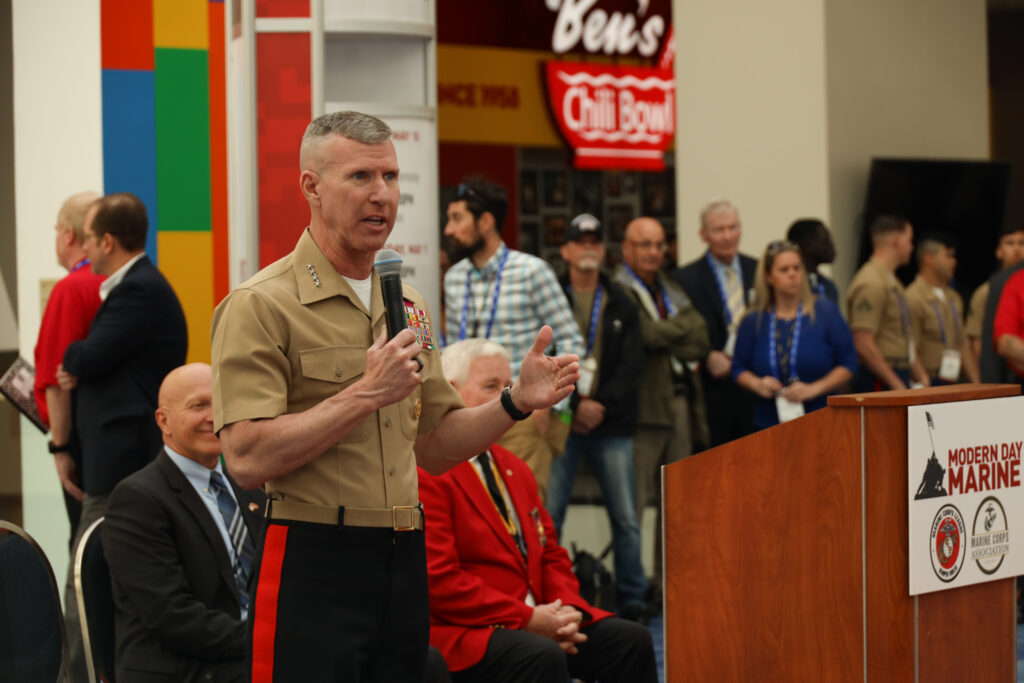
U.S. Marine Corps Gen. Eric M. Smith, the assistant commandant of the Marine Corps, speaks at the ribbon cutting ceremony at Modern Day Marine 2022 in Washington D.C. on May 10. U.S. MARINE CORPS / photo by Cpl. Ellen Schaaf

ARLINGTON, Va. — The Marine Corps warfighting concept of Expeditionary Advance Base Operations needs light, mobile logistics to operate inside an enemy’s weapon engagement zone, the Corps’ assistant commandant said. Among other types of support, those logistics include “expeditionary foraging.” 

Gen. Eric M. Smith, speaking on Force Design 2030 in a June 15 webinar of the Stimson Center, a Washington think tank, used the term “expeditionary foraging” to describe contracting with local merchants and vendors to supply disaggregated forces with goods and services that cannot be supplied by sealift or stockpiled because of the need to preserve mobility.   

The term “foraging” brings to the mind of an American military historian an image of a soldier in the 19th century “requisitioning” — often stealing — chickens or other food sources from a local farmer to feed a moving army. The term “forage” was even applied to the type of caps — forage caps — worn by soldiers of the era. 

Smith has no such thing in mind with the concept of expeditionary foraging. He cited the need to reorganize the 18 Marine combat logistics battalions to “deal with small, 80-to-100-Marine units who are strategically placed in order to facilitate fleet and joint maneuver. They have to be able to support those disaggregated units. 

“Those disaggregated units have to need less,” Smith said. “We have a little pushback on this. It’s called ‘expeditionary foraging.’  

“Expeditionary foraging is what we do today,” he said. “When we go to the Philippines, we have a contracting officer for a large exercise like Balikatan. That contracting officer pays a Filipino citizen for the use of a vehicle, for food, for water. We do that now. Why would we not do that in conflict? We will be in competition with an adversary for those same assets.  

“But first you contract it if you can,” he said. “And then you utilize those assets that exist within any nation before you bring it yourself. It’s standard infantry business. … Expeditionary foraging doesn’t mean you’re out there with a tin cup asking for a handout. We do it now with contracting officers. One of the things we’re working to do is to place those contracting officers forward with those units. They can contract for gravel, trucks, petroleum, all those things that, the more I procure locally, the less I have to bring.” 

Smith said the logistics commands of the Army, Navy, and Marine Corps are still needed to support forward-deployed forces, but “we have to blunt [the enemy] in the first few days, so, yes, we take risks to do that. … We can’t build ‘iron mountains’ [of munitions and supplies] anymore. Those days have ended.”      


Marine Corps Orders More AeroVironment Puma 3 AE Unmanned Aircraft Systems

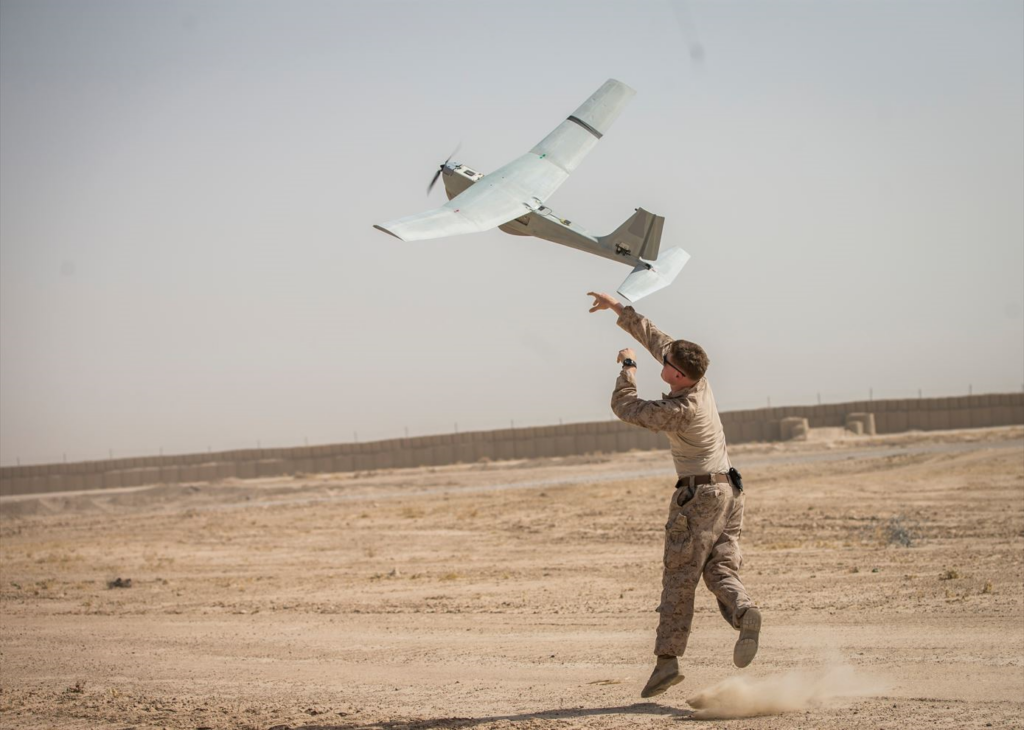
An Aerovironment Puma 3 AE small unmanned aircraft system can be launched by hand, bungee, rail or vehicle. AEROVIRONMENT

ARLINGTON, Va. — AeroVironment Inc. received a $6.2 million firm-fixed-price contract award for Puma 3 AE small unmanned aircraft systems and spares on May 3, for the U.S. Marine Corps, the company said in a June 14 release. Delivery is anticipated to be completed in July 2022.

“Puma 3 AE has proven itself as the ideal solution for low-altitude intelligence, surveillance and reconnaissance missions in any operational environment and continues to serve as the backbone of the U.S. Marine Corps Medium Range/Medium Endurance Forces,” said Trace Stevenson, AeroVironment vice president and product line general manager for SUAS.

AeroVironment’s Puma 3 AE delivers mission critical capabilities in all environments. Puma 3 AE has a wingspan of 9.2 feet (2.8 meters), weighs 15 pounds (6.8 kilograms) and can operate up to 37.2 miles (60 kilometers) with AeroVironment’s Long-Range Tracking Antenna. Multi-mission capable, operators can easily swap Puma 3 AE’s payloads quickly, selecting between the Mantis i45 and the enhanced night variant, Mantis i45 N. Puma 3 AE is launchable by hand, bungee, rail, or vehicle, and is recoverable by deep-stall landing, providing class-leading capabilities in challenging environments around the world.

AeroVironment’s SUAS comprise the majority of all unmanned aircraft in the U.S. Department of Defense inventory, and its rapidly growing international customer base numbers more than 50 allied governments, including Ukraine.


Langley Nominated to Head U.S. Africa Command 

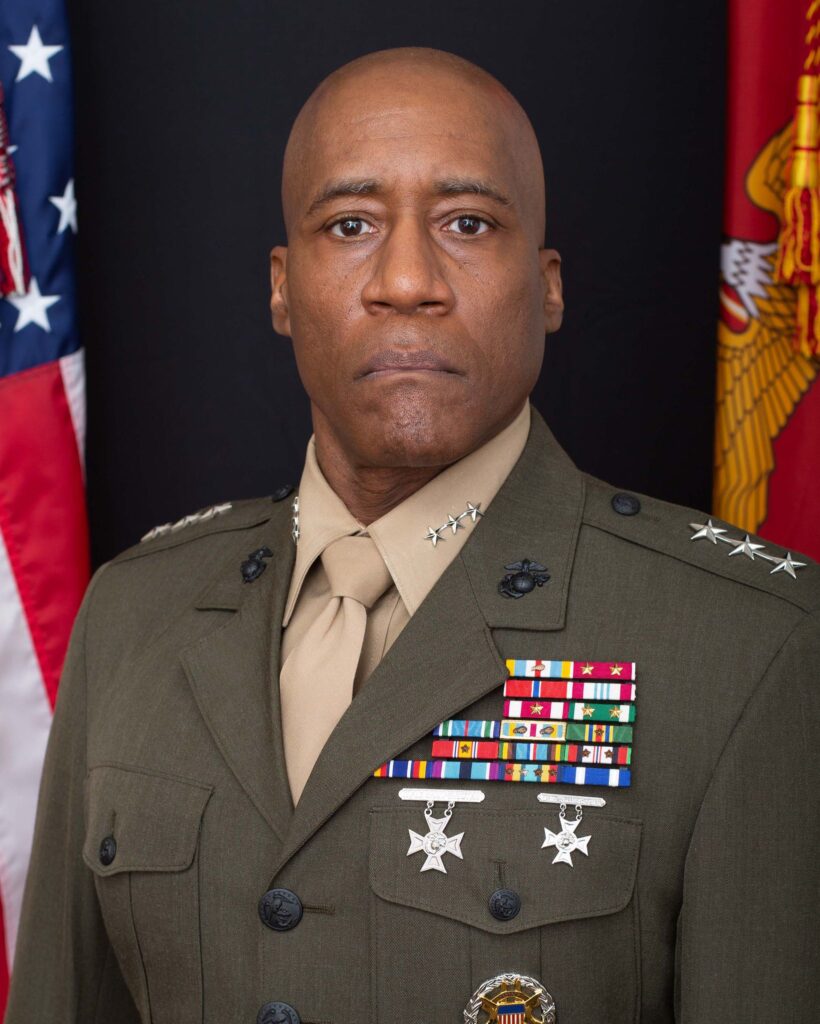
Gen. Michael E. Langley. U.S. MARINE CORPS

ARLINGTON, Va. — Secretary of Defense Lloyd J. Austin III announced June 9 that the president has nominated Marine Corps Lt. Gen. Michael E. Langley for appointment to the grade of general, with assignment as commander, U.S. Africa Command in Stuttgart, Germany.

Langley is currently serving as commander, U.S. Marine Corps Forces Command; commanding general, Fleet Marine Force Atlantic; and commander, Marine Corps Forces North, Norfolk, Virginia. 

A native of Shreveport, Louisiana, Langley graduated from the University of Texas at Arlington and commissioned in 1985. He commanded at every level from platoon to regiment, including Battery K, 5th Battalion, 11th Marines in support of Operations WILDFIRE in Western United States; battalion and regimental commands in 12th Marines forward deployed in Okinawa, Japan; and both the 201st Regional Corps Advisory Command-Central and Regional Support Command – Southwest in support of Operation Enduring Freedom in Afghanistan.  

As a general officer, his command assignments include deputy commanding general, II Marine Expeditionary Force and commanding general, 2d Marine Expeditionary Brigade; commander, Marine Forces Europe and Africa; and deputy commanding General, Fleet Marine Force, Atlantic and Deputy commander, Marine Forces Command and Marine Forces Northern Command. 

Langley’s staff and joint assignments include serving as a division officer for Marine Corps Institute, Marine Barracks 8th and I; deputy G-1, 1st Marine Division deployed in support of Operation RESTORE HOPE in Somalia; naval surface fire support requirements officer in the Expeditionary Warfare Division (N75) and joint integration officer in the Surface Warfare Division (N76), Office of the Chief of Naval Operations; policy action officer in the Strategic Plans and Policy Directorate, J-5; Iraq desk officer in the Joint Staff Response Cell, J-3 Operations Directorate; deputy executive assistant to the Chairman of the Joint Chiefs of Staff; assessments branch head, Programs and Resources, Headquarters, Marine Corps; assistant division commander of 3d Marine Division; deputy director for Operations, J-3, Joint Staff; assistant deputy commandant for Programs and Resources, Headquarters, Marine Corps; and director for Strategy, Plans, and Policy, J-5, U.S. Central Command. 

Langley’s formal military education includes U.S. Marine Corps Amphibious Warfare School and College of Naval Command and Staff.  He holds multiple advanced degrees including Masters in National Security Strategic Studies from the U.S. Naval War College and Strategic Studies from the U.S. Army War College. 

Langley assumed the duties of commanding general, Fleet Marine Force, Atlantic and commander, Marine Forces Command and Marine Forces Northern Command on Nov. 3, 2021. 


Navy Orders Two CH-53K Helicopters for Marine Corps 

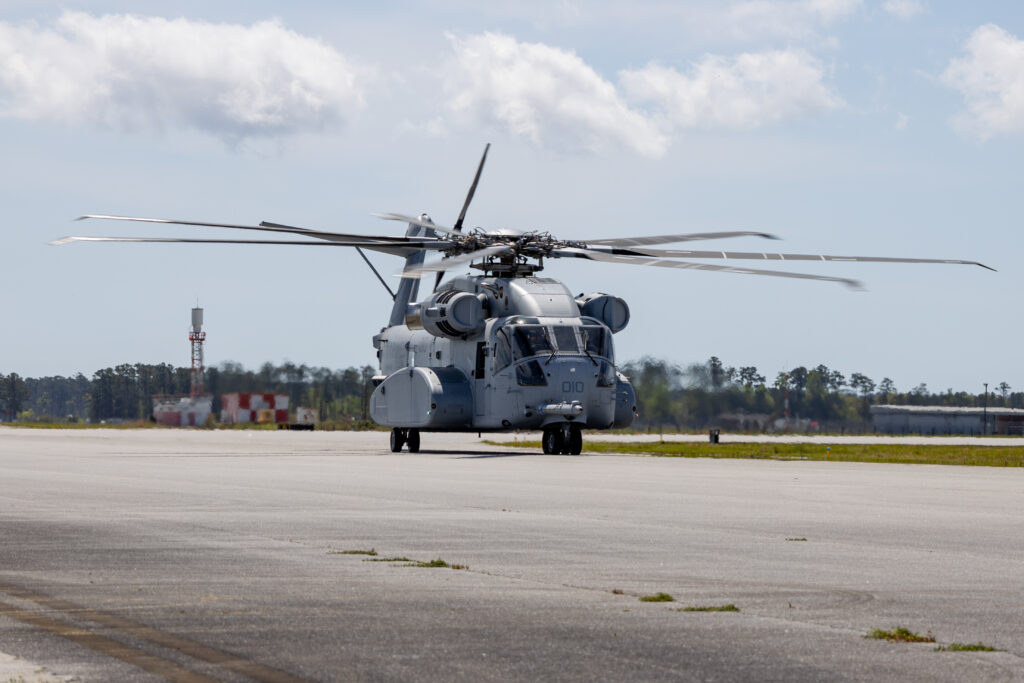
U.S. Marines with Marine Heavy Helicopter Squadron (HMH) 461 taxi in a CH-53K King Stallion after its first operational flight at Marine Corps Air Station New River, North Carolina, April 13. U.S. MARINE CORPS / Lance Cpl. Elias E. Pimentel III

ARLINGTON, Va. — The U.S. Navy has placed an order for two more CH-53K King Stallion heavy-lift helicopters for the Marine Corps. 

The Naval Air Systems Command awarded a $185.7 million contract modification to Sikorsky Aircraft Corp., a Lockheed Martin company, to add two CH-53Ks to low-rate production Lot 6, the Defense Department said May 31. 

These two helicopters were in the Marine Corps’ fiscal 2022 unfunded priorities list and were added to the 2022 budget appropriation by Congress. Lot 6 originally included nine CH-53Ks under a Feb. 3 contract award for $685 million.  

The King Stallion achieved Initial Operational Capability in April 2022 when Marine Heavy Helicopter Squadron 461 received its fourth CH-53K. 

The Marine Corps program of record is 200 CH-53Ks to replace the fleet of CH-53 Super Stallion helicopters. The Lot 6 helicopters are expected to be completed by December 2025. 


U.S. Marine Corps C-UAS Program Kicks Off U.S. Production 

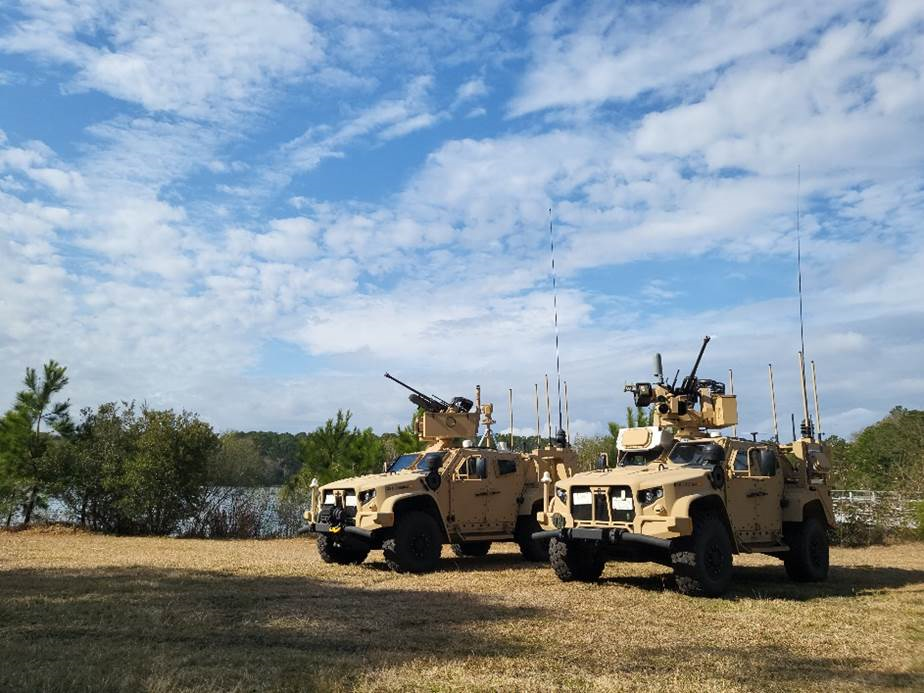
The Marine Air Defense Integrated System Remote Weapon Station. KONGSBERG

JOHNSTOWN, Pa. — Production of the Marine Air Defense Integrated System (MADIS) Remote Weapon Station (RWS) has successfully moved from Kongsberg, Norway, to Kongsberg Protech Systems USA in Johnstown, Pennsylvania, with the inaugural system completing assembly and testing in March.

Additional systems are also being built for MADIS as part of the U.S. Marine Corps’ Ground Based Air Defense modernization effort. 

“Kongsberg’s Johnstown facility consistently yields remote weapon station manufacturing excellence, having produced more than 20,000 systems over the last 15 years,” said Jason Toepfer, project manager, MADIS RWS, Kongsberg Protech Systems. “Our highly trained and skilled staff partnered with engineers and staff from Norway to successfully transition the production of all MADIS RWS to the Pennsylvania facility as part of our schedule and contract with the U.S. Marine Corps. The successful build of this inaugural system exemplifies our rigorous processes, joining the 5 prototype and test assets we’ve produced for the Marine Corps in Norway. This also kicks off MADIS RWS production here in the U.S., a move that allows us to better support this customer and deliver this critical lethality enhancement.”  

The Kongsberg RS6 RWS for MADIS RWS includes the XM914E1 30mmx113mm percussion-primed cannon with a co-axial M240C (7.62mm) machine gun, an integration kit for the Stinger Air-To-Air Launcher and provisions for future C-UAS defeat systems.

MADIS is part of the U.S. Marine Corps’ plan to upgrade their two active Low-Altitude Air Defense battalions. The first 30mm remote weapon system to be qualified on the Joint Light Tactical Vehicle platform, MADIS RWS mounts on JLTVs and fights as a complimentary pair, designated as Mk1 and Mk2. The MADIS Mk1 features Stinger missiles and neutralizes fixed and rotary-wing aircraft. Mk2 fulfills the Counter-Unmanned Aircraft System mission requirement, while also providing radar and command-and-control for the pair.  

The U.S. Marine Corps awarded Kongsberg the indefinite delivery / indefinite quantity other transaction authority production contract in Sept. 2021. It has a ceiling of $94 million and includes a series of low-rate initial production systems, full-rate production units, spares and training. This production contract award followed a Sept. 2020 OTA contract award from the Marine Corps to Kongsberg for test articles and activities, which included Design Verification Testing, after a competitive process. 

The Kongsberg RS6 RWS for MADIS leverages technology and competence drawn from multiple counter-unmanned aircraft systems (C-UAS) and air defense programs. The system leverages commonality with the family of Protector RWS delivered and fielded with the U.S. Army and Marine Corps.