General: Marine Corps Future Force to Include VTOL Family of Systems 
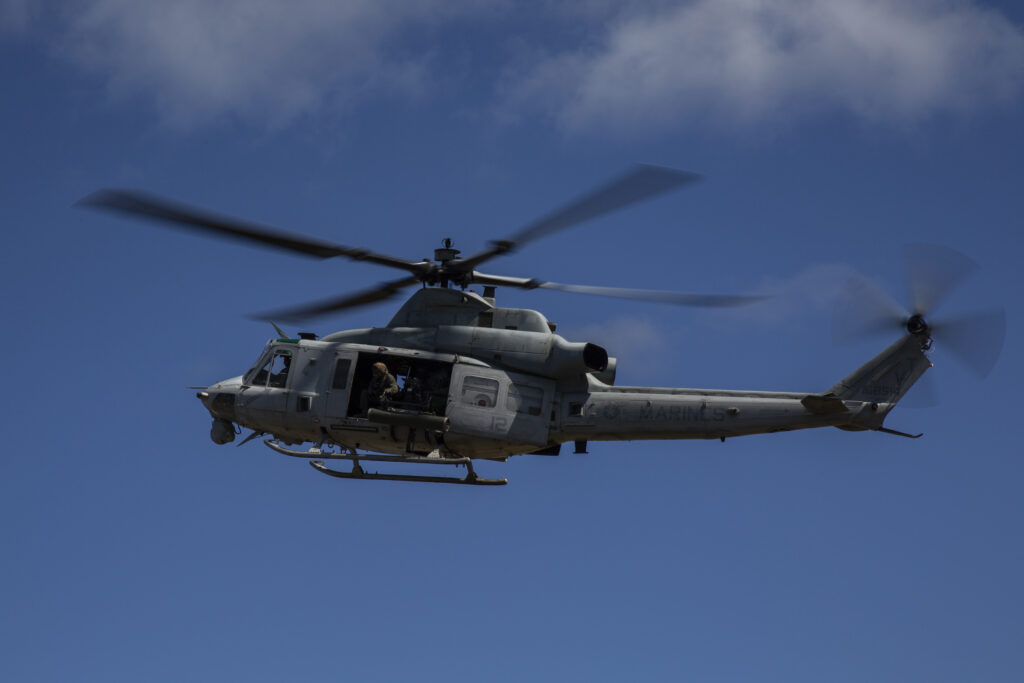
A U.S. Marine UH-1Y Venom helicopter prepares to land at a forward arming and refueling point at Marine Corps Base Hawaii on Feb. 3. Marine Corps plans to replace its rotary wing aircraft is evolving into a concept called VTOL family of systems. U.S. MARINE CORPS / Cpl. Dalton J. Payne

ARLINGTON, Va. — The U.S. Marine Corps’ plan to develop future replacements for its rotary wing aircraft is evolving to a concept called VTOL FOS, or vertical takeoff and landing family of systems, a senior Corps aviation official said. 

Brig. Gen. Matthew Mowery, assistant deputy commandant for aviation, speaking Feb. 9 at the National Defense Industrial Association’s Expeditionary Warfare Conference, said the Corps’ plans to replace its AH-1Z and UH-1Y helicopters in the future has evolved over several iterations over the past few years, especially as Commandant Gen. David Berger’s Force Design 2030 was introduced. 

Mowery said the initial effort was centered on involvement in the Army’s Future Vertical Lift program, specifically its Capability Set 3. As the various services branched out, the Marine Corps’ effort became the Attack-Utility Replacement Aircraft, or AURA. 

Mowery said the Corps “started thinking differently” about the AURA with the emergence of Force Design 2030, and now has folded AURA into the VTOL FOS. The data generated from the Marine Corps’ Future Vertical Lift analysis of alternatives, which concluded in 2019, laid the groundwork for analysis and to develop the capability development document. The Marine Corps issued a request for information in September 2019 and a “broad agency announcement for the introduction of advanced technologies in model-based systems engineering and condition-based maintenance in 2020,” the Corps said in information provided to Seapower.  

The VTOL FOS program “will develop a weapon system or systems that fills capability and performance gaps identified by the Marine Corps,” the Corps told Seapower in November 2021. “The VTOL family of systems will be designed for optimal manning and for manned-unmanned teaming with the MAGTF [Marine Air-Ground Task Force] Unmanned Aircraft System Expeditionary capability. Additionally, it will include a common mission system architecture to enable interoperability across the MAGTF. The Marine Corps’ driving requirement is attached escort in tomorrow’s battlespace during distributed expeditionary operations from the sea. Speed, maneuver envelope, all-weather capability and survivability will facilitate full integration of this aircraft into the MAGTF. To meet these goals, the VTOL family of systems will operate above legacy helicopter performance attributes like airspeeds, combat range, altitude and endurance with a full payload.  

“The VTOL family of systems program will require a comparable mission radius and loiter time to match MV-22Bs, as well as time on station to support distributed air combat element operations,” the Corps said. “The VTOL family of systems will have a greater capability to employ a more diverse set of weapon systems and operate in a larger spectrum of environments by using fused, onboard sensor data and terrain avoidance systems. Amphibious operations and shipboard compatibility will be a key attribute to this air vehicle.” 
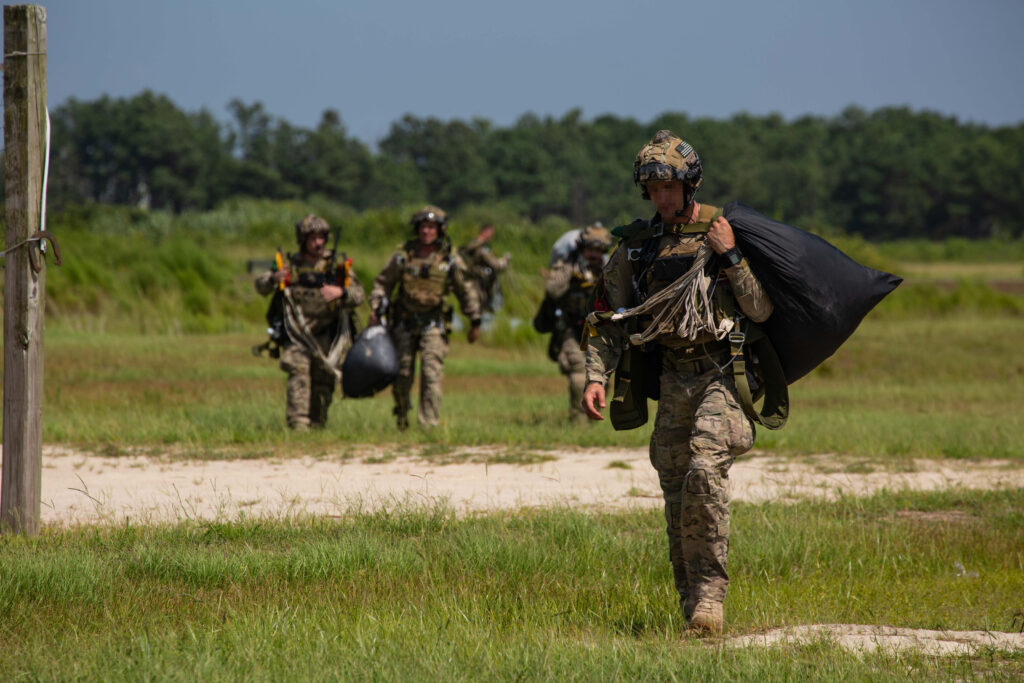


Commandant Sees Bigger Role for Marine Raiders in Great Power Competition

Marine Raiders rehearse advanced military free fall jumps at Camp Lejeune, N.C., Sept. 1, 2021. Military free fall sustainment training is necessary for a Marine special operations team to stay proficient and ready at all times for future operations. U.S. MARINE CORPS / Cpl. Ethan Green

ARLINGTON, Va. — Like the rest of U.S. Special Operations Command, Marine Raiders will have a bigger role to play in the military’s competition with a rising China and resurgent Russia, the Marine Corps commandant says.

After 20 years with a heavy focus on counter insurgency and counter terrorism in Iraq, Afghanistan and other flashpoints around the globe, “I do see a bigger role for them and probably an adjusted role,” Gen. David Berger said Feb. 8 at the National Defense Industrial Association’s virtual Expeditionary Warfare Conference.

“Now, how do we use special operations forces in great power competition?” Berger said, adding he thought Marine Special Operations Command would follow a similar path as the rest of the Marine Corps in the near future, “Back to naval roots. How does it support the naval expeditionary forces forward?”

Among their roles, Marine Raider units train, advise and assist friendly host nation forces, including naval and maritime military and paramilitary forces. The aim is to help local forces support their governments’ internal security and stability, counter subversion and reduce the risk of violence from internal and external threats, according to the MARSOC website.

“Their great value,” Berger said “is their persistent presence forward” as well as their deeper cultural understanding and language skills in the places they operate. “Conventional forces don’t normally have any of that. They also don’t have the finer, nuanced, higher level skills that MARSOC Marines have, and I’m not talking about kicking down a door,” he said.

Instead, he meant Raiders’ skills in collecting information and intelligence in a discreet manner while deployed far forward. “If you married that up with a higher performing infantry battalion or conventional force, you will have the best of all worlds,” he said.

In late January, Marines from the 3rd Marine Raider Battalion worked with the 8th Marine Regiment’s 1st Battalion on close-quarters battle training, including hallway and stairwell clearing procedures and sensitive site exploitation. The three-day training session at Camp Lejeune, North Carolina, sought to improve cooperation among the conventional Fleet Marine Force and Special Operations Forces.

Going forward, Berger believed MARSOC, like the entire Corps, would have to adjust their focus from 90% counterinsurgency and counter terrorism to “a much better balance of integrated deterrence, campaigning, crisis response, in other words, meeting us somewhere in the littorals, where the Corps’ skillset strength is.”


Navy, Marine Corps Dismissals for Declining COVID-19 Vaccination on the Rise

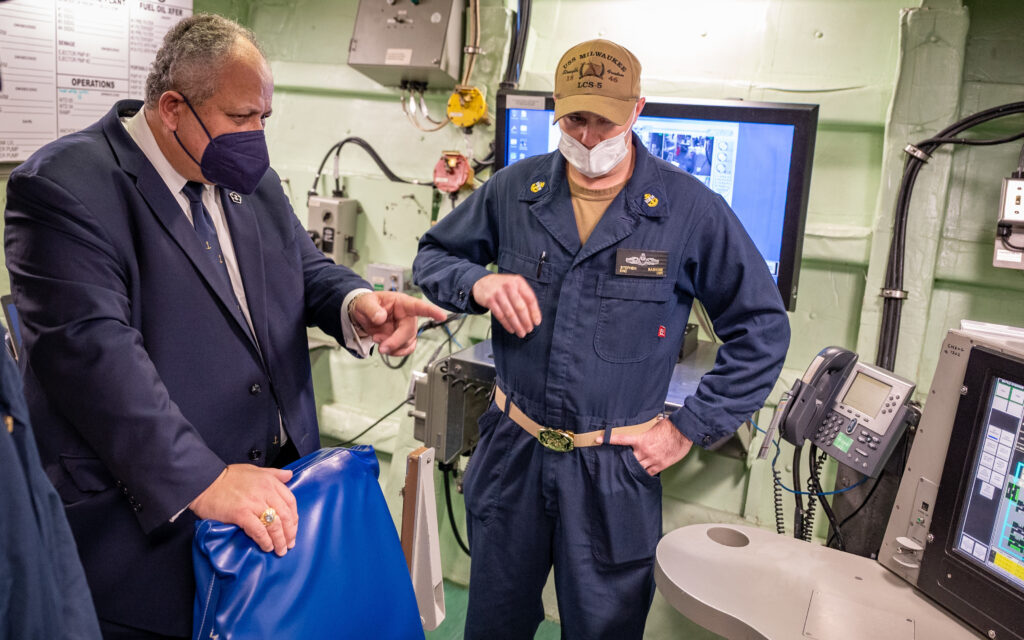
Secretary of the Navy Carlos Del Toro talks with Chief Engineman Stephen Bashore, aboard the Freedom-variant littoral combat ship USS Milwaukee (LCS 5) in Ponce, Puerto Rico, Jan. 25. U.S. NAVY / Mass Communication Specialist 2nd Class T. Logan Keown

ARLINGTON, Va. — The number of U.S. Marines and Sailors dismissed from the services for refusing vaccination against COVID-19 has grown to well over 600, officials say.

On Feb. 2, the Navy announced it has dismissed 118 Sailors, 96 active duty and 22 recruits who had served less than 180 days. All have received honorable discharges, according to the Navy. No reservists have been dismissed to date.

The next day, the Marine Corps reported 469 uniformed personnel have been separated from the service for incomplete vaccination. According to Marine Corps guidance, any active duty Marine who did not receive a final vaccination dose, by Nov. 14, 2021, or reservist by Dec. 14, 2021 “is considered unvaccinated.” 

According to Defense Department statistics, 194,689 active duty and reserve Marines were fully vaccinated by Feb. 2 and 384,586 Sailors and reservists met full vaccination requirements. Both the Navy and Marine Corps, as well as the Pentagon, consider COVID-19 a readiness issue requiring full vaccination for all military personnel.

Secretary of the Navy Carlos Del Toro became the latest Pentagon official to test positive for COVID-19 on Jan. 31. Defense Secretary Lloyd Austin, Marine Corps Commandant Gen. David Berger and the chairman of the Joint Chiefs of Staff, Army Gen. Mark Milley, all tested positive in early January.

Del Toro, who was fully vaccinated and had received a booster shot, said he would quarantine for a minimum of five days in accordance with the guidelines of the Centers for Disease Control and Prevention. He planned to attend key meetings and discussions virtually and when necessary, be represented by Meredith Berger performing the duties of undersecretary of the Navy.

The Navy has granted 269 Sailors medical exemptions to mandatory vaccination, all but 10 of them temporary. The nine medical exemptions granted reservists were all temporary. By Feb. 2, the Navy also granted 60 administrative exemptions for active duty Sailors and 23 for reservists. However, not a single request for exemption from vaccination on religious grounds, has been granted to any of the 3,288 active duty Sailors and 773 reservists who requested one.

The Marine Corps reported a combined 665 administrative or medical exemptions had been approved by Feb. 2. Of 3,538 requests for religious accommodation to skip the vaccine mandate, 3,414 have been processed and only three requests were approved. The Marines are the only armed service, so far, to issue a religious exemption for the vaccine mandate. In a letter to Rep. Darrell Issa (R-California), first reported by Military.com, a Marine Corps official explained that even those three Marines granted religious accommodation were, in effect, no longer serving or soon leaving the Marine Corps.

The high rejection numbers for exemption requests, particularly for religious accommodation, have sparked numerous complaints to members of Congress that they are being handled in a pro forma review with nearly identical rejection letters.

That prompted Issa, a highly vocal critic of the Pentagon’s vaccination mandate, to write Marine Corps Commandant Gen. David Berger Jan. 17 for an explanation of the exemption process. In a statement released by his office, Issa said the vaccine mandate “is ending careers of distinction, ruining lives of service, and weakening America’s force readiness. This isn’t how the military wants to treat its own — it’s how the president and his team show their unprecedented hostility to our men and women in uniform. I will not stand for this betrayal.”

Issa and 14 other House Republicans have written House Appropriations Committee Chair Rosa DeLauro (D-Connecticut) urging funding for the vaccination mandate be prohibited in any pending defense spending bill.

In a Jan. 21 letter to Issa, J.J. Daly, deputy legislative assistant in the Marines’ Office of Legislative Affairs, explained that of the three Marines who received a religious exemption, two were “on terminal leave” and the other “has transitioned into the Department of Defense Skill Bridge Program, a 180-day training program in private industry.” Marine Corps leadership determined that “the likelihood of their vaccination status impacting military readiness and health and safety was remote because the requestors are no longer serving with Marine Corps commands.”

He noted chaplains counsel every Marine who submits a religious accommodation request and provide advice to the adjudication authority for each request. However, “the ultimate question is whether or not approving the request will have an adverse impact on military readiness, unit cohesion, good order and discipline, or health and safety. This is a decision that requires consideration of factors that fall outside the expertise of a trained chaplain,” Daly wrote.


Navy Orders Nine Additional CH-53K Helicopters for the U.S. Marine Corps    

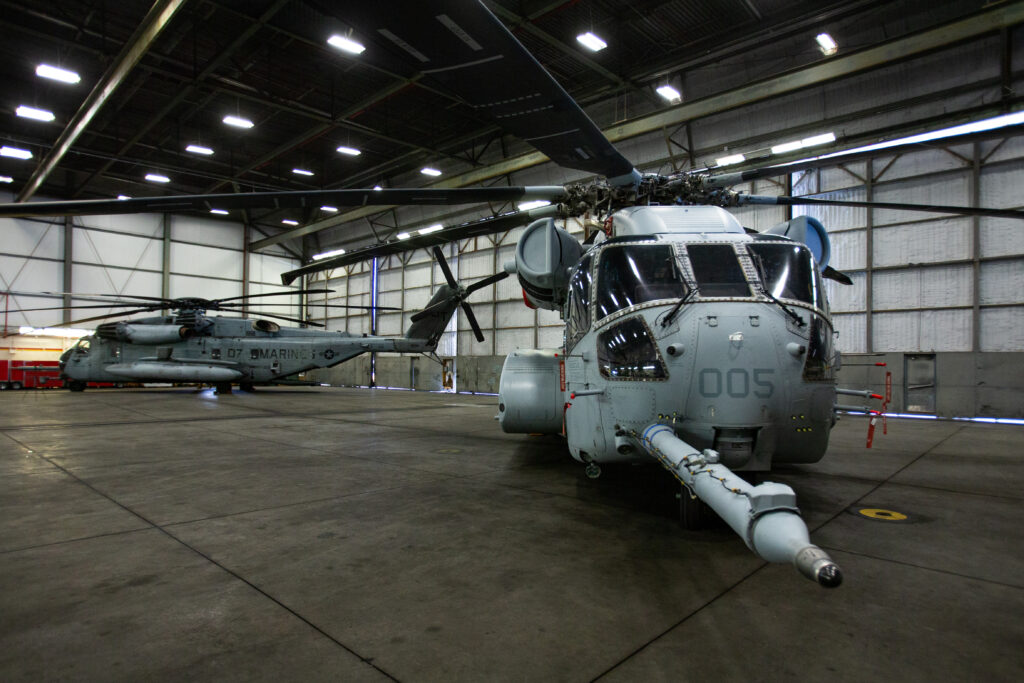
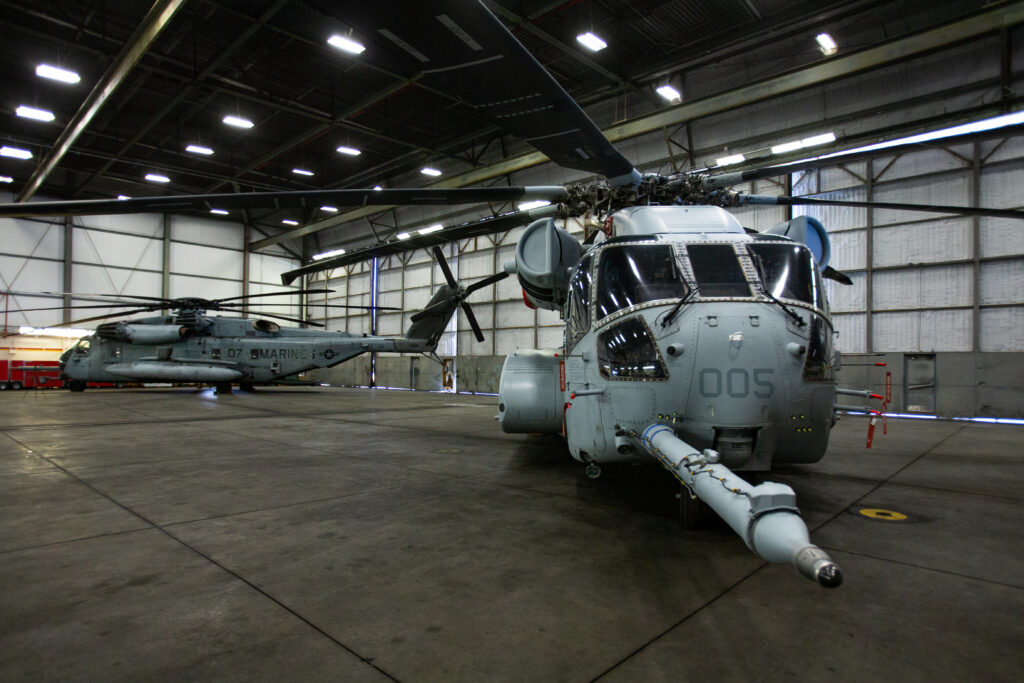
A CH-53K King Stallion (right) and a CH-53E Super Stallion are staged during a redesignation ceremony at Marine Corps Air Station New River, North Carolina, Jan. 24, 2022. U.S. MARINE CORPS / Lance Cpl. Elias E. Pimentel III

STRATFORD, Conn. — Prioritizing affordability and utilizing advanced manufacturing techniques, Sikorsky, a Lockheed Martin company, will build nine additional CH-53K aircraft at a lower unit price than previous lot buys, resulting in significant savings for the U.S. government and taxpayers, the company said Feb. 3. The company’s experienced supply chain coupled with its active digital approach drives speed and affordability throughout design, development, production, and sustainment.  

The CH-53K will further support the U.S. Marine Corps in its mission to conduct expeditionary heavy-lift assault transport of armored vehicles, equipment, and personnel to support distributed operations deep inland from a sea-based center of operations, critical in the Indo-Pacific region. 

These nine helicopters are part of 200 aircraft program of record for the U.S. Marine Corps with deliveries beginning in 2025. 

“By embracing resilient, predictive logistics and sustainment, we are enabling CH-5K crews to make smarter, faster decisions, to increase reliability, and improve readiness and material availability at reduced burden to the fleet,” said Bill Falk, Sikorsky Director, CH-53K programs. “After 50 years of supporting the CH-53E, Sikorsky has a deep understanding of the heavy-lift mission and an enduring partnership with the U.S. Marines Corps enabling our team and our proven supply chain to offer tailored solutions resulting in more efficient missions.” 

The aircraft will be built at Sikorsky headquarters in Stratford, Connecticut, leveraging the company’s digital build and advanced technology production processes. 

The factory is active with seven CH-53K aircraft in build and there are 47 more aircraft in various stages of production. 

Sikorsky has made significant investments in workforce training, tooling, and machinery to increase the number of aircraft built and delivered year over year. 

In total, Sikorsky has delivered five operational CH-53K King Stallion heavy-lift helicopters to the U.S. Marine Corps in Jacksonville, North Carolina, with four more planned for delivery this year. 

The CH-53K program operated by the U.S. Marine Corps entered Initial Operational Test and Evaluation in 2021 and is set to conclude in 2022. 

Sikorsky has a strong foundation to support the CH-53K because the company already provides the U.S. Marines with predictive maintenance on the legacy CH-53E by utilizing the Fleet Common Operating Environment enabling the shift from reactive to predictive maintenance. 

The CH-53K aircraft is equipped with Integrated Vehicle Health Management System, which will transition the U.S. Marines from fixed-interval to on-condition maintenance resulting in lower maintenance crew hours, reduced life cycle costs, and increased aircraft readiness. 

Lockheed Martin is working with the U.S. Navy on a performance-based logistics contract that expands from the CH-53E to add the CH-53K with a contract award expected this year. 


Marines Test JAGM on Land Targets  

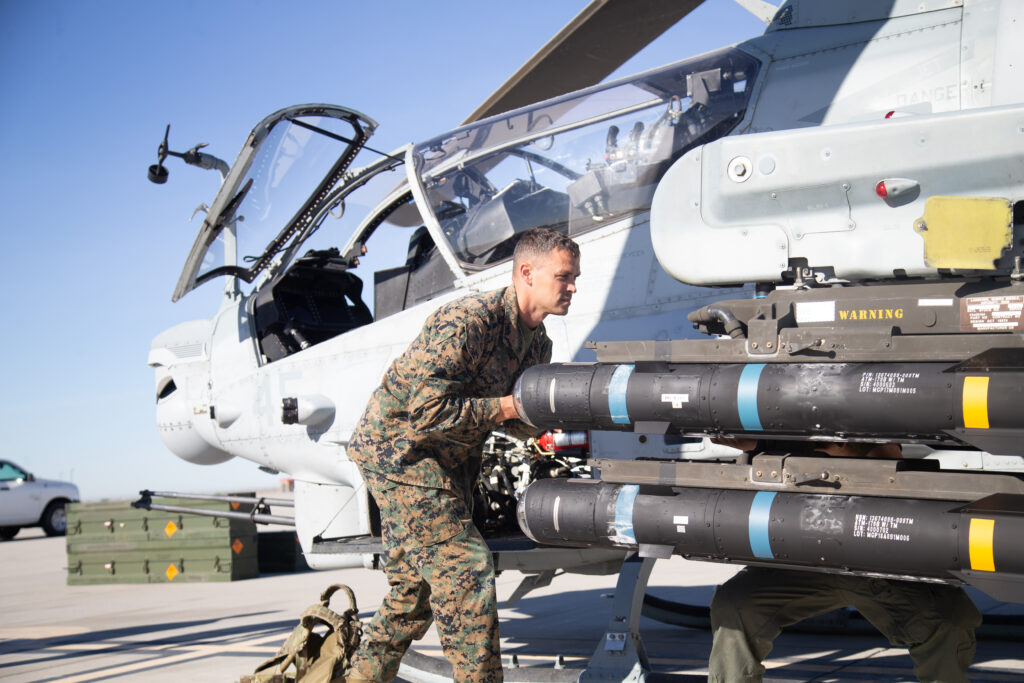
U.S. Marine Corps Chief Warrant Officer 3 Michael Brawn, aviation ordnance officer, Marine Operational Test and Evaluation Squadron 1 (VMX-1), loads a joint air-to-ground missile onto an AH-1Z Viper during an operational test at Marine Corps Air Station Yuma, Arizona, Dec. 6, 2021. U.S. MARINE CORPS / Cpl. Gabrielle Sanders

WASHINGTON — Marines from Marine Operational Test & Evaluation Squadron 1 (VMX-1) conducted an operational test and evaluation of the Joint Air-to-Ground Missile from an AH-1Z Viper, Dec. 6, 2021, at Marine Corps Air Station Yuma, Arizona, the Marine Corps said in a Jan. 31 release.  

VMX-1 continues testing and analyzing the capabilities of the JAGM on land targets after they evaluated the effectiveness of the missile on maritime targets in November 2021 at Eglin Air Force Base in Florida.   

Personnel from Air Test and Evaluation Squadron Two One (HX-21), Naval Air Systems Command Direct and Time Sensitive Strike program office (PMA-242), Army Program Executive Office Missiles and Space, as well as industry partners were on location to observe and analyze the data from the test event. This event can lead to significant improvements in lethality of attack helicopters by arming them with newer munitions equipped with two sensor technologies and optimizes missile performance on land targets.    

“I am proud of all the work and professionalism demonstrated by the joint team striving to hit major milestones of the JAGM initial operational test and evaluation,” said VMX-1 Commanding Officer Col. Byron Sullivan. “The analysts, coordinators, and controllers meticulously pour over all the data captured so this weapon system can bring the necessary firepower to the warfighter.” 

The team observed the test of eight separate shots against armored and light armored vehicles in a variety of operational scenarios. Ultimately, the data collected is analyzed to determine overall system effectiveness and refine the tactics, techniques and procedures of employing this weapon in expeditionary advanced base operations, such as strike operations and close air support.   

“Watching the joint team perform the JAGM test is like observing a highly-skilled professional football team with seasoned offensive coordinators calling the right plays for an offense that flawlessly executes play after play,” said Maj. Thomas Hutson, the Assault Support department head at VMX-1 and member of the JAGM test team. 

This test is part of a larger effort to upgrade the AH-1Z and UH-1Y aircraft, in alignment with the Commandant’s vision of force modernization to maintain a competitive edge against potential adversaries.    

The mission of VMX-1 is to conduct operational test and evaluation of Marine Corps aviation platforms and systems. 


Marine Squadron First to Complete Transition to CH-53K 

A CH-53K King Stallion (right) and a CH-53E Super Stallion are staged during a redesignation ceremony at Marine Corps Air Station New River, North Carolina, Jan. 24, 2022. U.S. MARINE CORPS / Lance Cpl. Elias E. Pimentel III

MARINE CORPS AIR STATION NEW RIVER, N.C. — The CH-53K King Stallion heavy-lift helicopter now equips an operational Marine heavy helicopter squadron, the 2nd Marine Aircraft Wing said Jan. 25.   

A Jan. 24 ceremony at New River marked the transition of Marine Heavy Helicopter Squadron 461 (HMH-461) from the CH-53E Super Stallion to the CH-53K. 

“Today our Marine Corps got a little stronger,” said Maj. Gen. Michael Cederholm, commanding general of 2nd Marine Aircraft Wing, described the significance of HMH-461’s transition to the CH-53K. “It is only appropriate that 2nd Marine Aircraft Wing, and in particular Marine Corps Air Station New River, would be the first to receive the newest land and sea-based heavy helicopter because this is the home of the Marine Corps’ assault support. Placing the CH-53K King Stallion into the hands of our warfighters will ensure we capitalize on the unique qualities and characteristics of the 53K and will allow 2nd MAW to continue to provide the best aviation support to the Marine Air-Ground Task Force right now, and well into our future.” 

The CH-53K is designed to lift nearly 14 tons (27,000 pounds) at a mission radius of 110 nautical miles, in high and hot environments. It can lift almost triple the baseline CH-53E lift capability. It is also designed to have a smaller shipboard footprint, lower operating costs per aircraft and less direct maintenance man hours per flight hour. The CH-53K is expected to externally lift two up-armored high mobility multipurpose wheeled vehicles, light armored vehicles and dual joint light tactical vehicles. It features a cabin section 12 inches wider than the CH-53E that can internally load two AMC 463L pallets or five AMC 463L half-pallets or internally load a Humvee.  

The CH-53K leverages a next-generation glass cockpit Common Avionics Architecture System open-architecture design; utilizes triple redundant fly-by-wire flight controls adding additional survivability, safety and maintenance improvements; includes fourth-generation high-efficiency composite rotor blades with swept anhedral tips; and leverages a low-maintenance elastomeric rotor head. 

“Quite simply, 2nd MAW will be able to move more troops and equipment, at higher altitudes, faster speeds, and in more austere environments than ever before,” Cederholm said. “We continue to become a more modernized and lethal force so, when the time comes, we will deliver on II Marine Expeditionary Force’s motto: ‘Come to Fight — Come to Win.’ I am so proud of the Marines and Sailors of 2nd MAW and find it appropriate that they are a part of this moment in Marine Corps aviation history.”   

The Marine Corps plans to stand up eight active-duty squadrons, one training squadron and two reserve squadrons to support operational requirements. The CH-53K is currently on track to deploy to the fleet as needed by the Marine Corps in fiscal 2024. 


General: Undersea Domain Critical to Marines’ Role as Maritime Chokepoint Defenders

Marines participate in a squad competition at Camp Gonsalves, Okinawa, Japan, Jan. 6, 2022. U.S. MARINE CORPS / Lance Cpl. Jonathan Willcox

ARLINGTON, Va. — The Marine Corps’ role in distributed maritime operations will require technology that can identify underwater threats as well as dangers posed by surface vessels and long range aircraft and missiles, a top commander says.

Speaking Jan. 13 at the Surface Navy Association’s annual symposium in Arlington, Lt. Gen. Karsten S. Heckl, head of the Marine Corps Combat Development Command and deputy commandant for Combat Development and Integration, explained the Marines’ evolving expeditionary warfare role in the Navy strategy for dealing with potential adversaries in the Indo-Pacific region.

The Expeditionary Advanced Base Operations concept envisions littoral operations by specialized  mobile, low signature units within larger distributed maritime operations areas. New Marine Littoral Regiments “uniquely designed to maneuver and persist inside a contested maritime environment,” will have a primary mission “to conduct sea control and denial operations as part of a larger naval expeditionary force,” Heckl said. Equipped with rockets, missiles and other long range fires, as well as surface and amphibious craft to increase their mobility, EABO units will control access to choke points while limiting an adversary’s ability to target them.

But “if you’re telling me that we’re going to occupy and control — sea control, sea denial — critical maritime slots, that means probably more critical than anything, the undersea domain,” Heckl said.

Drawing on his experience as a former commander of I Marine Expeditionary Force, Heckl said, “there are things that exist today to sense underwater. Not expensive, persistent, in fact for the price of probably one P-8 I could sense the majority of the first island chain.”

The subsurface is very important, Heckl said. “We are continuing efforts on that in conjunction with [Marine Corps commandant’s] force design.” A “kill web” of Navy and Marine Corps sea-based and land-based sensors and shooters that gives “a fleet commander the capability to sense a critical slot or a critical piece of maritime terrain, and not have to use a capital asset is pretty significant.”


Marine Corps ACVs Set to Return to Unrestricted Amphibious Operations

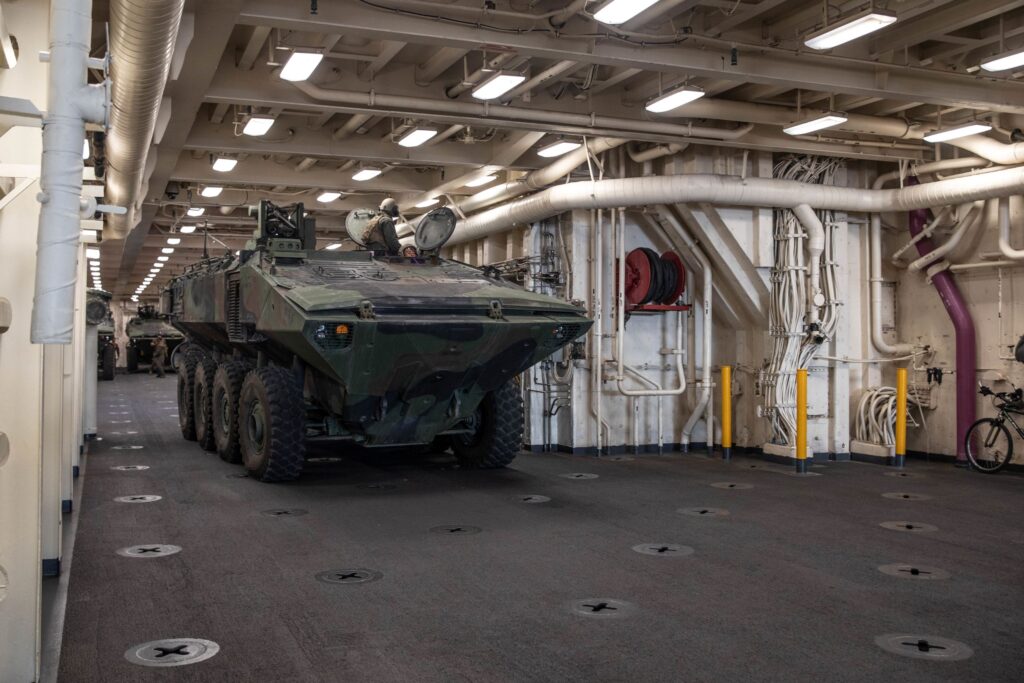
A U.S. Marine Corps amphibious combat vehicle, with 3d Assault Amphibian Battalion, 1st Marine Division, is loaded onto the amphibious assault dock landing ship USS Anchorage (LPD 23) during a strategic mobility exercise Oct. 19, 2021. U.S. MARINE CORPS / Corps Cpl. Cameron Hermanet

ARLINGTON, Va. — Marine Corps Amphibious Combat Vehicles are set to return to unrestricted waterborne operations following the development of a new tow rope solution designed to address previous issues with the vehicle’s towing mechanism, the Marine Corps said Jan. 6. 

In September 2021, the Marine Corps suspended ACV operations in unprotected waters while it worked to resolve the towing issues that were identified in several after action reports from the field.  

“Amphibious operations, including the use of amphibious ship-to-shore connectors, is a foundational aspect of Marine Corps operations and is critical to the future force and its ability to remain the Nation’s premier expeditionary force in readiness,” said Lt. Gen. David Furness, deputy commandant for plans, policies and operations. 

Once equipped with and trained to employ the new tow rope solution, units are authorized to use the ACV to conduct unrestricted amphibious operations, including self-recovery operations in the open ocean and through the surf zone. 

Prior to the receipt and installation of the new replacement tow ropes, ACV operation remains restricted to land mobility, gunnery operations, and amphibious operations in protected waters.  

In addition to the new equipment and training requirements are the 18 tasks that units must complete, validate and certify prior to the resumption of waterborne operations. These tasks stem from the comprehensive investigation into the facts and circumstances surrounding the July 2020 AAV tragedy. 

The tasks cover a variety of requirements, including ensuring training and qualifications for crew and embarked personnel are properly equipped, vehicles have passed required inspections and operations are conducted with safety boats, sea state assessments and positive communication. 


USS Abraham Lincoln Deploys with First Marine Corps F-35C Squadron

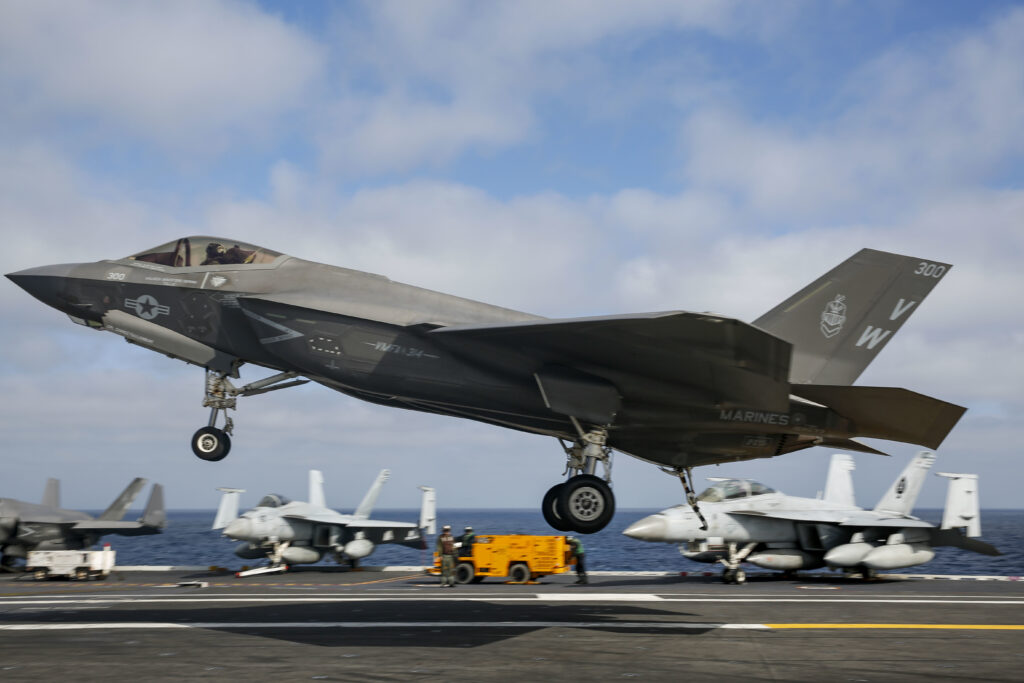
An F-35C Lightning II, assigned to the “Black Knights” of Marine Fighter Attack Squadron (VMFA) 314, prepares to land on the flight deck of the aircraft carrier USS Abraham Lincoln (CVN 72). Abraham Lincoln is underway conducting routine operations in the U.S. 3rd Fleet. U.S. NAVY / Mass Communication Specialist 3rd Class Michael Singley

SAN DIEGO — The USS Abraham Lincoln (CVN 72) departed on a regularly scheduled deployment Jan. 3 as the centerpiece of a carrier strike group that included the Marine Corps’ first F-35C Lightning II squadron.  

The Abraham Lincoln Carrier Strike Group (CSG) is led by the command staff of CSG 3 and consists of Nimitz-class aircraft carrier USS Abraham Lincoln (CVN 72), Carrier Air Wing Nine (CVW-9), the Ticonderoga-class guided-missile cruiser USS Mobile Bay (CG 53), and the Arleigh Burke-class guided-missile destroyers of Destroyer Squadron 21 (DESRON 21) — USS Fitzgerald (DDG 62), USS Gridley (DDG 101), USS Sampson (DDG 102) and USS Spruance (DDG 111). 

CVW-9 includes Marine Fighter Attack Squadron 314 (VMFA-314), the Corps’ first F-35C squadron. The deployment marks the second carrier deployment of the F-35C.  

The Marine Corps plans to field a total of four F-35C squadrons and have committed two of them to the Tactical Air Integration program of deploying with CVWs. 

The USS Carl Vinson (CVN 70) currently is deployed to the Indo-Pacific region with the Navy’s first fleet F-35C squadron, Strike Fighter Squadron 147 (VFA-147), on board. 

CVW-9 also includes VFA-14, equipped with F/A-18F Super Hornet Strike Fighters; VFAs 14 and 151, equipped with F/A-18Es; Electronic Attack Squadron 133 (VAQ-133), with EA-18G Growler electronic attack aircraft; Airborne Command and Control Squadron 117 (VAW-117) with E-2D Advanced Hawkeye aircraft; Helicopter Sea Combat Squadron 14 (HSC-14) with MH-60S Seahawk helicopters; Helicopter Maritime Strike Squadron 71 (HSM-71) with MH-60R Seahawk helicopters; and a detachment of Fleet Logistics Multi-Mission Squadron 30 (VRM-30), equipped with the CMV-22B Osprey carrier-onboard delivery aircraft.  
 
“The entire CSG 3 team is trained and ready to deter and, if necessary, win conflicts as called upon by our nation’s leaders,” said Rear Adm. J.T. Anderson, commander, Carrier Strike Group 3, in a release from U.S. 3rd Fleet. “As we leave today on this routine, scheduled deployment, I know the Sailors and Marines of this team will continue to serve this great nation and its people. It is our honor to do so.”  


MRIC Live Fire Tests Deemed a Success, Marine Corps Says

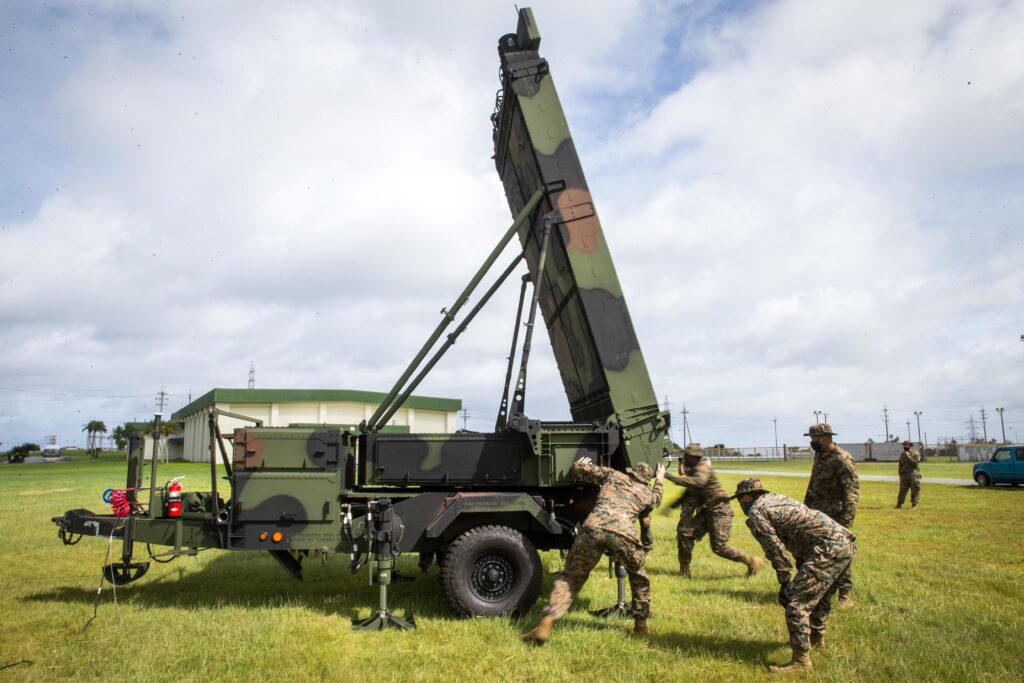
U.S. Marines with 12th Marine Regiment, 3rd Marine Division, adjust a Ground and Air Task Oriented Radar system at Marine Corps Air Station Futenma, Okinawa, Japan, Aug. 10, 2020. The G/ATOR is part of the Corps’ Medium Range Intercept Capability, tested Dec. 16. U.S. MARINE CORPS / Cpl. Savannah Mesimer

The U.S. Marine Corps’ Medium Range Intercept Capability prototype, developed as part of a mid-tier acquisition rapid prototyping effort, successfully engaged targets Dec. 16, 2021, at White Sands Missile Range, the Corps announced.

This first round of tests is part of a series of live fire events scheduled for fiscal year 2022 all of which will be carried out against relevant and increasingly more challenging cruise missile profiles. This test series will stress the system and define the system’s proficiency and potential.

The MRIC prototype is being developed by the Ground Based Air Defense program office at Program Executive Officer Land Systems in support of a Fleet Marine Forces modernization initiative. The effort will inform counter-air defense requirements and any subsequent acquisition activities.

“The MRIC is a missile system which detects, tracks, identifies and defeats enemy cruise missiles threats and other manned and other unmanned aerial threats,” said program manager Don Kelley. “It is planned to provide ground based air defense for permanently fixed and operationally semi-fixed sites.”

The MRIC currently integrates existing Marine Corps systems — specifically, the Ground/Air Task Oriented Radar and Common Aviation Command and Control System — with the Israeli Iron Dome mini-Battle Management Control and Tamir missile.

The project team built upon the lessons learned from an initial demonstration in Aug. 2019. Since then, MRIC has been formally designated a middle tier acquisition–rapid prototype program.

Additional live fire testing is planned during the remainder of fiscal 2022. Pending results, the Marine Corps will decide whether to potentially certify the prototype for deployment, establish an MRIC program of record or both.