U.S. Navy Accepts Delivery of USNS Earl Warren

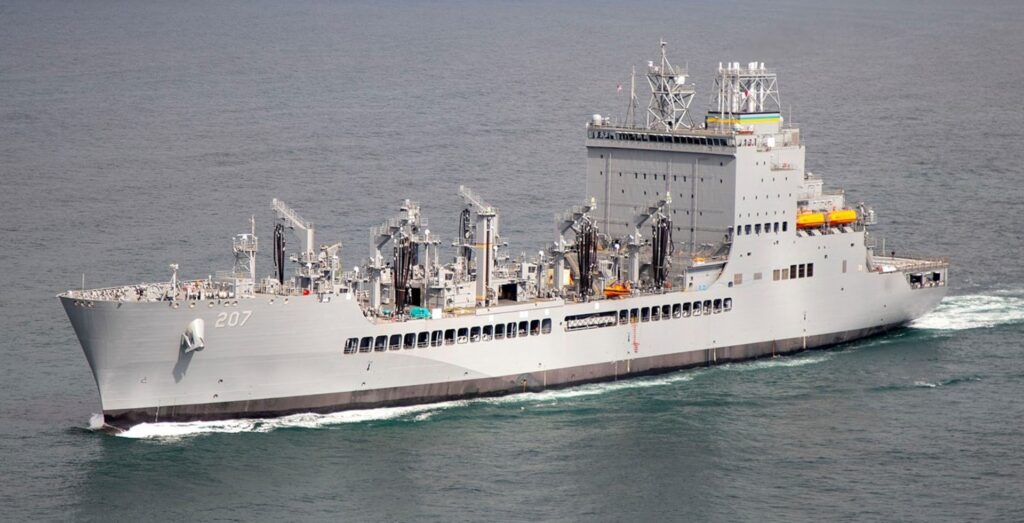
USNS Earl Warren (T-AO 207) during a testing event. (U.S. Navy photo) 

By Team Ships Public Affairs, May 7, 2024 

SAN DIEGO – John Lewis-class fleet replenishment oiler, USNS Earl Warren (T-AO 207) was delivered to the Navy, May 7. 

Delivery follows the successful completion of Integrated Sea Trials to test the readiness and capability of the ship and to validate requirements. 

“Delivery of the third ship in the class will bring more refueling capability directly to the fleet, including replenishment underway capacity,” said John Lighthammer, program manager, Auxiliary and Special Mission Shipbuilding Program Office. “The civilian mariners who crew this ship will have the tools they need to operate in often rapidly changing environments.” 

The John Lewis-class ships are based on commercial design standards and will recapitalize the current T-AO 187-class fleet replenishment oilers to provide underway replenishment of fuel to U.S. Navy ships at sea. These ships are part of the Navy’s Combat Logistics Force. 

General Dynamics NASSCO, the shipbuilder, is also in production on future T-AOs USNS Robert F. Kennedy (T-AO 208), USNS Lucy Stone (T-AO 209) and USNS Sojourner Truth (T-AO 210). Future TAOs USNS Thurgood Marshall (T-AO 211), USNS Ruth Bader Ginsburg (T-AO 212), and USNS Harriet Tubman (T-AO 213) are under contract. 

As one of the Defense Department’s largest acquisition organizations, Program Executive Office Ships is responsible for executing the development and procurement of all destroyers, amphibious ships and craft, auxiliary ships, special mission ships, sealift ships and support ships. 


May 7 Central Command Update

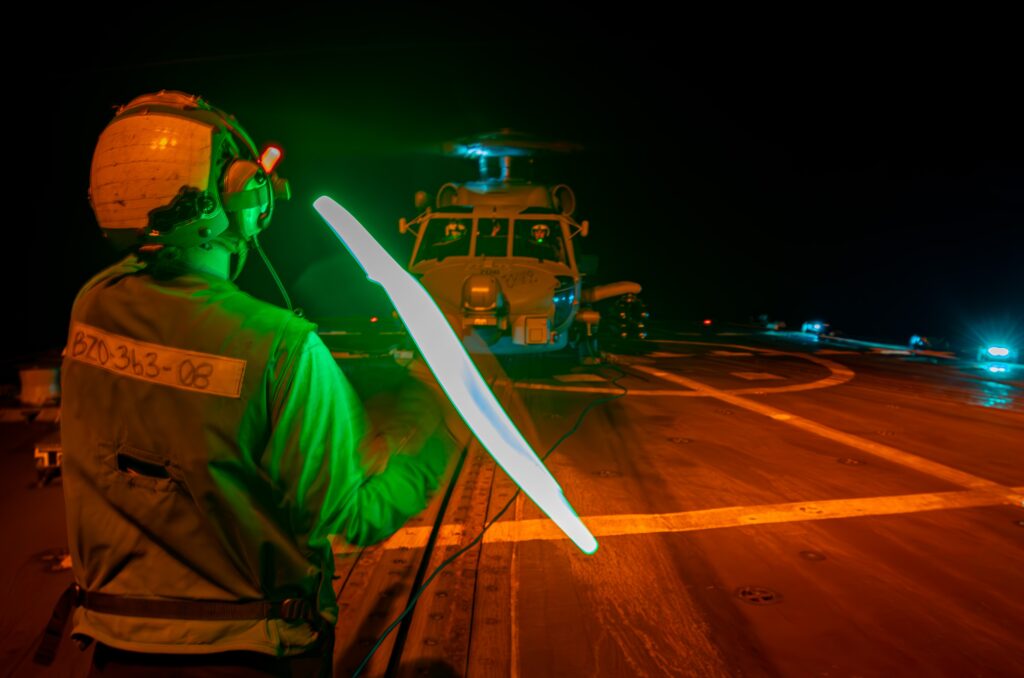
RED SEA (April 10, 2024) An aviation machinist’s mate signals to an MH-60R Sea Hawk helicopter tfrom Helicopter Maritime Strike Squadron (HSM) 74 aboard the Arleigh Burke-class guided-missile destroyer USS Gravely (DDG 107) in the Red Sea, April 10, 2024. (Official U.S. Navy photo) 

U.S. Central Command, May 07, 2024 

 
TAMPA, Fla. – Between approximately 11:02 p.m. and 11:48 p.m. (Sanaa time) on May 6, Iranian-backed Houthi terrorists launched three uncrewed aerial systems (UAS) over the Gulf of Aden from Houthi controlled areas in Yemen. A coalition ship successfully engaged one UAS, U.S. Central Command (USCENTCOM) forces successfully engaged the second UAS, and the final UAS crashed in the Gulf of Aden. There were no injuries or damages reported by U.S., coalition, or merchant vessels.    

Later, at approximately 5:02 a.m. (Sanaa time) on May 7, Iran-backed Houthi terrorists launched an anti-ship ballistic missile (ASBM) over the Gulf of Aden. There were no injuries or damages reported by U.S., coalition, or merchant vessels. 

It was determined that these weapons presented an imminent threat to both coalition forces and merchant vessels in the region. These actions are taken to protect freedom of navigation and make international waters safer and more secure for U.S., coalition, and merchant vessels. 


Floating Piers, Cargo Ship With Aid for Gaza Face Weather Delays

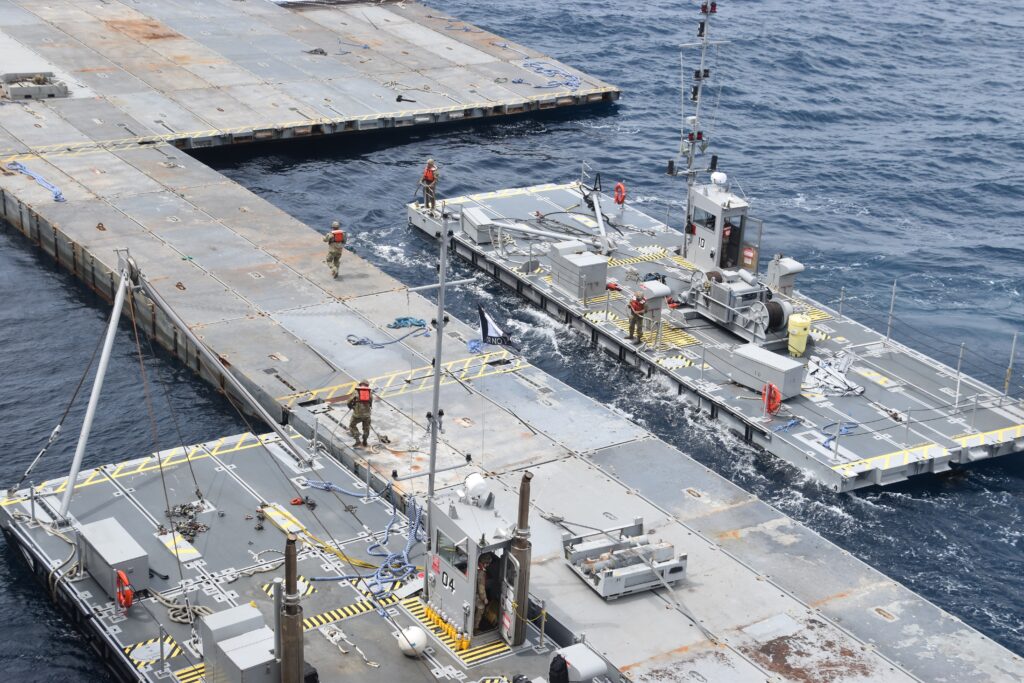
MEDITERRANEAN SEA (April 26, 2024) U.S. military personnel work on construction of the floating Joint Logistics Over the Sea (JLOTS) pier in the Mediterranean Sea off the coast of the Gaza Strip, April 26, 2024. The pier will support the delivery of humanitarian aid to the people of Gaza. (U.S. Navy photo)

May 7, 2024 | By C. Todd Lopez, DoD News  

Construction of the Joint Logistics Over-the-Shore, or JLOTS, system on the Mediterranean Sea, which will streamline delivery of humanitarian aid to Gaza, is now complete, the deputy Pentagon press secretary said today. 

“The U.S. military has completed the offshore construction of the Trident pier section, or ‘the causeway,’ which is the component that will eventually be anchored to the Gaza shore,” said Sabrina Singh during a briefing today. “As I mentioned last week, construction of the floating pier section has also been completed. So as of today, the construction of the two portions of the JLOTS — the floating pier and the Trident pier — are complete and awaiting final movement offshore.”  

At the same time, she said, the cargo ship MV Sagamore is at port in Cyprus being loaded with humanitarian aid supplies bound for Gaza.  

“The Sagamore is a cargo vessel that will use the JLOTS system and will make trips between Cyprus and the offshore floating pier as USAID and other partners collect aid from around the world,” she said.  

Singh explained that the Sagamore, a commercial ship registered in the U.S., will be loaded with humanitarian aid in Cyprus and will then travel from Cyprus to a temporary floating pier several miles off the coast of Gaza. There, at sea, cargo will be unloaded from the Sagamore onto trucks that are onboard Army-owned landing craft utility ships, or LCUs, and logistic support vessels, or LSVs.  

The Army ships will then travel toward Gaza where they will meet up with the Trident pier. There, the trucks onboard the LCUs and LSVs will drive onto the pier and onto the shore of Gaza where the humanitarian aid supplies can then be staged for delivery inside Gaza.  

It’s expected that initially about 90 truckloads of supplies will transit the causeway each day and make their way into Gaza. When the operation reaches full capacity, as many as 150 trucks will make their way into Gaza daily.  

“I think what you’re going to see at the very beginning is a ‘crawl, walk, run’ scenario,” Singh said. “We’re going to start with an additional small amount of aid trucks to flow in to make sure that the system works, that the distribution works, and then you’ll see that increase … when we get to full operational capacity.” 

While the JLOTS system may eventually deliver substantial capacity, Singh said it’s neither the only way nor the best way to get much-needed supplies into Gaza.  

“The best way through those land routes, and we do want to see those opened up,” she said. “We do want to see aid continue to flow in through those land crossings. This is just one It’s meant to help augment, to help complement, other ways that aid can get in.”  

The Gaza Strip, which is about 25 miles long, lies entirely inside Israel and shares a border to the south with Egypt. There are three locations along its border where humanitarian supplies could move into Gaza from either Egypt or Israel. Those locations include the Erez crossing in northern Gaza and the Kerem Shalom crossing in southern Gaza. Both of those crossings connect Gaza to Israel. The Rafah crossing is on the Gaza border with Egypt.  

Since March 2, U.S. Central Command, in coordination with the Royal Jordanian Air Force, has carried out nearly 40 humanitarian missions to airdrop nearly 1,200 tons of humanitarian assistance into Gaza.  

While the JLOTS construction is now complete, that capability has not yet been deployed due to weather conditions, Singh said. Right now, the two piers are floating on the Mediterranean Sea off the coast of Israel near the Port of Ashdod — about 18 miles north of Gaza. Weather conditions, Singh said, prevent moving either of them to their final location.  

“Late last week, Centcom temporarily paused moving the floating pier and Trident pier toward the vicinity of Gaza due to sea state considerations,” she said. “Today there are still forecasted high winds and high sea swells, which are causing unsafe conditions for the JLOTS components to be moved.” 


NOAA Breaks Ground on New Marine Operations Center Facility in Newport, Rhode Island

By Keeley Belva, NOAA, May 6, 2024 

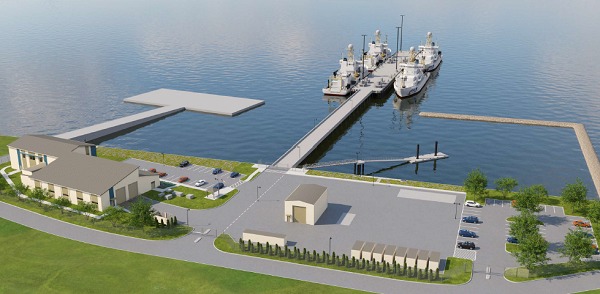
Today, the Department of Commerce’s National Oceanic and Atmospheric Administration (NOAA) held a groundbreaking ceremony for a new facility on Naval Station Newport in Rhode Island that will serve as the future home of the NOAA Marine Operations Center-Atlantic

In December, the U.S. Navy, on behalf of NOAA, awarded $146,778,932 to Skanska USA to build the new NOAA facility. The design and construction of the facility is funded in part by the Inflation Reduction Act, the largest climate investment in history, as part of President Biden’s Investing in America agenda. 

The facility will include a pier to accommodate four large vessels, a floating dock for smaller vessels, space for vessel repairs and parking and a building to be used for shoreside support and as a warehouse. Construction is anticipated to be completed in 2027. This project will operate under a Project Labor Agreement, consistent with EO 14063, issued by President Biden.  

“Thanks to the leadership of President Biden and the hard work of Rhode Island’s elected leaders we are making transformative investments in Rhode Island and all across the country,” said U.S. Secretary of Commerce Gina Raimondo. “President Biden’s Investing in America Agenda made it possible for NOAA to construct this new facility and make advances in critical climate and ocean research, while also cementing NOAA’s relationships with the Navy and the community of Newport. This facility will support science and a healthy economy well into the future. 

“I’m proud to say that this new facility has been designed to take future changes in our climate into consideration,” said NOAA Administrator Rick Spinrad, Ph.D.. “It will be LEED certified and will soon be the homeport for one of our newest, lower-emissions vessels, working towards the goal to minimize NOAA’s own impact on the environment.” 

“The new, state-of-the-art Marine Operations Center-Atlantic facility is critical to NOAA’s mission and delivering on our commitments to regional, international and other diverse partners,” said NOAA Corps Rear Admiral Nancy Hann, Director of the NOAA Commissioned Officer Corps and NOAA Marine and Aviation Operations. “Newport has always been a welcoming community to NOAA, and we are appreciative of the support from local, state and congressional leaders, as well as our mission partners at Naval Station Newport.” 

NOAA’s fleet of 15 research and survey ships are operated, managed and maintained by NOAA Marine and Aviation Operations. Ranging from large oceanographic research vessels capable of exploring the world’s deepest ocean, to smaller ships responsible for charting the shallow bays and inlets of the U.S., the fleet supports a wide range of marine activities, including fisheries surveys, nautical charting and ocean and climate studies. NOAA ships are operated by NOAA Corps officers and civilian professional mariners. 

“NOAA is the top scientific weather and oceans agency and I was pleased to help Rhode Island land MOC-A. Naval Station Newport’s location and the years of strategic federal investments we’ve made here are really paying off. Bringing NOAA’s premiere research fleet and Atlantic operations center to the Ocean State means hundreds of jobs for Rhode Island and a brighter future for our Blue Economy,” said Senator Jack Reed. 

“I am very pleased to celebrate the groundbreaking of NOAA’s new Atlantic Marine Operations Center right here in Rhode Island. The research conducted here will help us better understand the effects of climate change on the oceans and support job growth for years to come,” said Senator Sheldon Whitehouse. “This day would not have been possible without Senator Reed’s longtime dedication to relocating the Center to the Ocean State.” 

“The National Oceanic and Atmospheric Administration’s growing footprint in the Ocean State will be a massive jobs and economy boon for years to come,” said Congressman Gabe Amo. 

“The work to construct and staff the Marine Operations Center-Atlantic, right here on Naval 
Station Newport, will improve our national security — and non-military — operations. I am 
grateful for the leadership of Senators Jack Reed and Sheldon Whitehouse, Secretary Gina 
Raimondo, and all our state and local partners here today to break ground on new climate- 
resilient infrastructure that continues Rhode Island’s fight against climate change.” 

“Rhode Island is proud to be selected as the home of the new NOAA Marine Operations Center-Atlantic,” said Governor Dan McKee. “This facility will bolster our efforts to build climate-resilient infrastructure and support our blue economy. We’re grateful to President Biden, Secretary Raimondo and our congressional delegation for their support of this project which will put Rhode Islanders to work in good-paying jobs and pay dividends for generations to come.” 


May 6 Red Sea Update

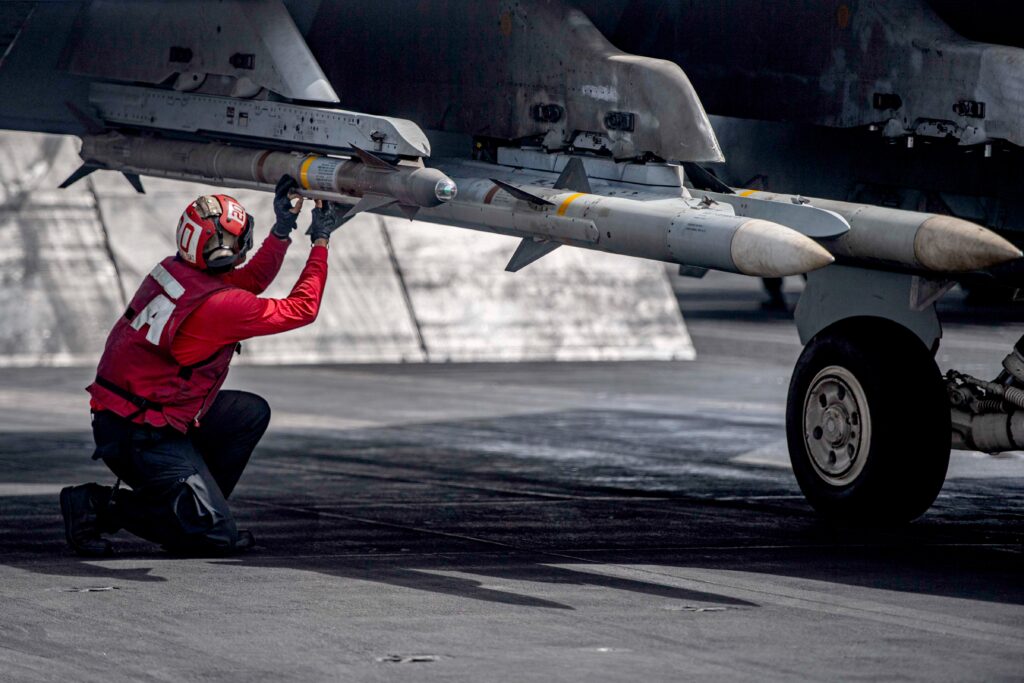
RED SEA (April 19, 2024) An Aviation Ordnanceman inspects ordnance on an F/A-18E Super Hornet, attached to the “Rampagers” of Strike Fighter Squadron (VFA) 83, during flight operations aboard the Nimitz-class aircraft carrier USS Dwight D. Eisenhower (CVN 69) in the Red Sea, April 19. (Official U.S. Navy photo)

From U.S. Central Command 

May 6, 2024 

TAMPA, Fla. – At approximately 10:47 a.m. (Sanaa time) on May 6, 2024, U.S. Central Command (USCENTCOM) forces successfully engaged and destroyed one uncrewed aerial system (UAS) launched by Iranian-backed Houthi terrorists over the Red Sea.   

It was determined the UAS presented an imminent threat to U.S., coalition forces, and merchant vessels in the region. These actions are taken to protect freedom of navigation and make international waters safer and more secure for U.S., coalition, and merchant vessels. 


U.S. Navy Christens Newest Unmanned Surface Vessel, Vanguard

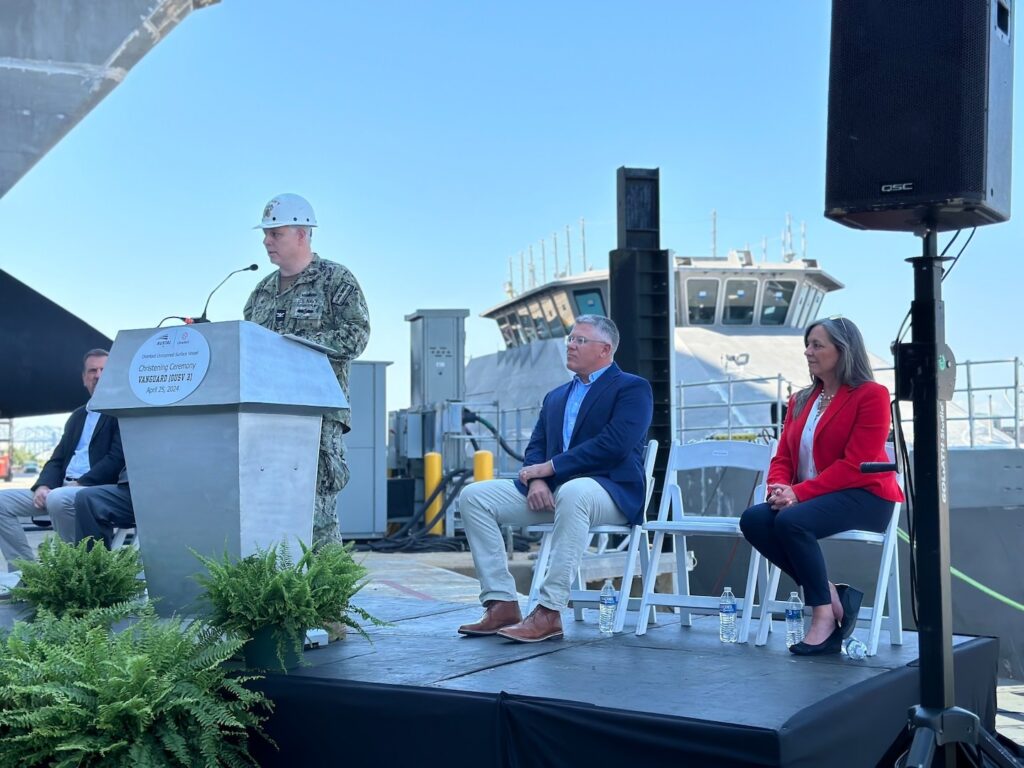
Capt. Scot Searles, Unmanned Maritime Systems Program Manager, addresses attendees during the Vanguard christening ceremony, 25 April. (U.S. Navy photo)

By Program Executive Office Unmanned and Small Combatants (PEO USC) Public Affairs, May 6, 2024 

WASHINGTON – The U.S. Navy christened Vanguard, the newest Unmanned Surface Vessel (USV) during a recent ceremony in Mobile, Alabama.   
  
Vanguard is the Navy’s first USV purpose-built from the keel up for unmanned operations and is part of the Pentagon-sponsored Overlord program.   

“Vanguard represents a significant leap forward in unmanned technology,” said Rear Adm. Kevin Smith, Program Executive Officer, Unmanned and Small Combatants. “The addition of Vanguard will enable the expansion of unmanned testing, experimentation and development, accelerating the transition to the hybrid fleet.”  

The Overlord program has played a pivotal role in accelerating and advancing the use of unmanned technology across the Navy. The Pentagon-funded effort launched the Navy’s experimentation with USVs and the resulting prototypes now fulfill a vital role in preparing the fleet to adopt USVs in operations. The knowledge and experience gained from the program is driving the development and requirements for the Navy’s future Large USV (LUSV) program. LUSVs are intended to be low cost, high endurance, modular USVs that can employ a variety of payloads. The USV prototypes are integral to the Navy’s mission of expanding unmanned operations and growing a manned-unmanned hybrid fleet.   

“Vanguard’s name could not be more fitting. The state-of-the-art technology she will employ is revolutionary and will be at the forefront of establishing new standards for our fleet,” said Capt. Scot Searles, Unmanned Maritime Systems program manager. “We are thrilled to achieve this important milestone and are looking forward to Vanguard leading the way as she enhances our nation’s naval power and strategic capabilities.”  

Austal USA and L3Harris jointly led the development and construction of Vanguard. Once outfitting and testing is complete, Vanguard will transit to San Diego and join sister ships Mariner and Ranger as part of the Navy’s Unmanned Surface Vessel Division One (USVDIVONE), responsible for the tactical development of USV concepts of operations and training.   

PEO USC designs, develops, builds, maintains and modernizes the Navy’s unmanned maritime systems; mine warfare systems; special warfare systems; expeditionary warfare systems; and small surface combatants.  


U.S. Navy Celebrates Expanding Talent Pipeline for Submarine Industrial Base

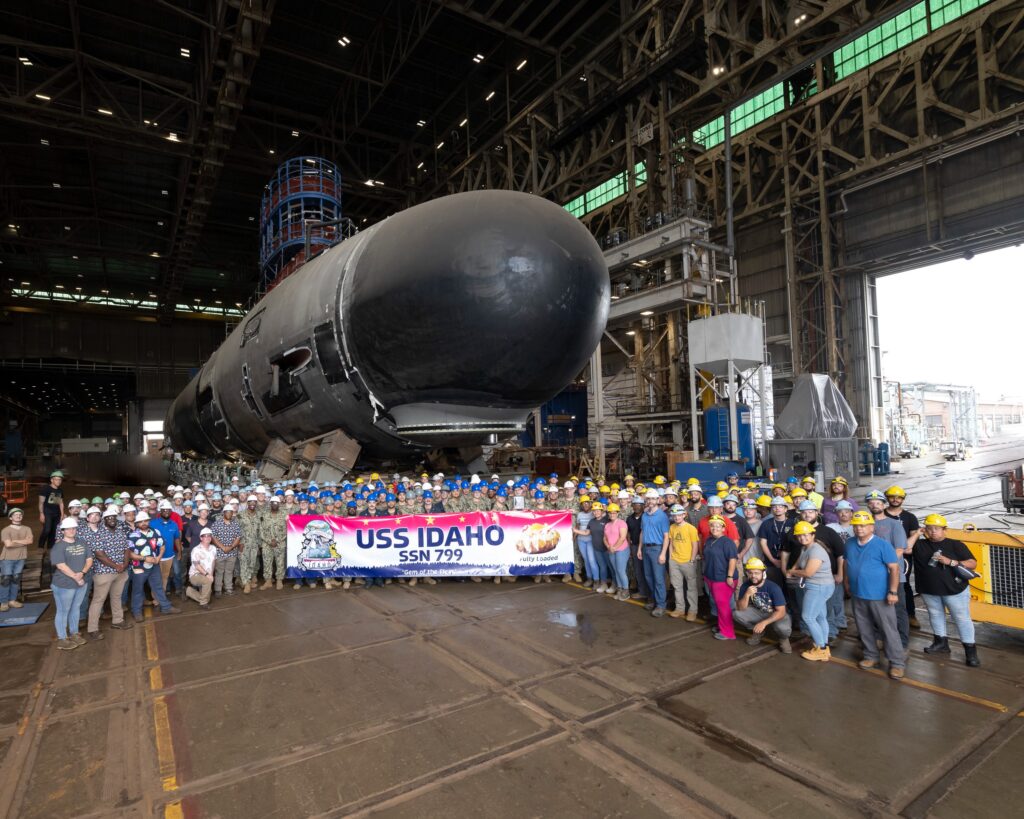
Credit: General Dynamics Electric Boat 

From Naval Sea Systems Command, May 3, 2024 

WASHINGTON – This May, the U.S. Navy’s Submarine Industrial Base (SIB) program is hosting a series of Talent Pipeline Project (TPP) Signing Day events across key maritime hubs to recognize the latest wave of skilled workers joining the Defense Industrial Base. 

These events, taking place in Pittsburgh, Philadelphia, Hampton Roads, Boston, and Long Island, mark the culmination of the SIB program’s multiyear effort to develop robust talent pipelines in these regions. Working with partners in industry, academia, and local government, the SIB program has launched training and recruitment initiatives to cultivate the next generation of welders, pipefitters, electricians, and other critical tradespeople. These five programs represent tremendous enterprise collaboration and include more than 290 defense industry and 140 academic partners. 

The May Signing Days will celebrate more than 2,100 individuals who are now embarking on careers at small and medium-sized defense industrial base suppliers – the vital network of companies that provide components, materials, and services critical to new construction and sustainment of our maritime forces. Local shipbuilding companies, elected officials, and community leaders will be on hand to celebrate the graduates and welcome them into this critical defense industry. 

“These Signing Days highlight the many meaningful careers paths to be found in submarine manufacturing and the good-paying jobs being created in communities across the country,” said Rear Adm. Scott Pappano, Program Executive Officer for Strategic Submarines. “These events represent merely the beginning as we work to grow and sustain the submarine industrial base for the long term,” Pappano said, highlighting the importance of these programs. 

The TPPs are critical to the Navy’s efforts to recapitalize its submarine fleet and maintain a strong, resilient industrial base. The SIB program must address persistent workforce challenges with plans to build one Columbia-class and two Virginia-class submarines per year by 2028. 

“I am thankful for the young men and women taking part in these events and those who will support their country and embark on an extraordinary career path through the Talent Pipeline Programs,” said Pappano. “These women and men are critical to the defense of our nation.” 

With the U.S. Navy needing to hire over 140,000 skilled workers over the next decade to meet submarine production goals and to maintain the current submarine fleet, programs like the SIB’s Talent Pipeline are essential. 

“Those who embark on a career in the Submarine Industrial Base are to be applauded for responding to their nation’s call to preserve freedom of the seas and our American way of life,” said Pappano. 

The Navy is invested in cultivating this new generation of submarine builders. The SIB program expanded its Talent Pipeline initiatives this year, adding events in Long Island and Boston. In April, the SIB hosted a Demand Signal Roundtable in Newport Beach, Calif., as a way to expand the talent pipeline initiative into the Southern California region as it seeks to develop a deep, capable workforce for America’s undersea fleet. 

As the U.S. faces evolving global security threats, a strong, resilient submarine force remains a cornerstone of American naval power. The SIB program’s investment in workforce development is crucial to ensuring the submarine industrial base can meet the Navy’s ambitious production goals in the years ahead. 


Navy to Christen Future Expeditionary Sea Base USS Robert E. Simanek 

From the Chief of Information, 3 May 2024 

The Navy will christen the future USS Robert E. Simanek (ESB 7) as the newest Expeditionary Sea Base ship (ESB) during a 9:00 a.m. PST ceremony on Saturday, May 4, in San Diego, California. 

The christening ceremony’s principal address will be delivered by the Honorable Sean Coffey, General Counsel of the Navy.  Remarks will also be provided by the Honorable Scott Peters, U.S. Representative, California’s 50th District; Master Chief Britt Slabinski, President of the Congressional Medal of Honor Society and Medal of Honor Recipient; Vice Admiral Yvette Davids, Superintendent of the U.S. Naval Academy; Brigadier General Robert Weiler, Assistant Division Commander, First Marine Division; and Mr. David Carver, President of General Dynamics NASSCO. The ship’s sponsor is Ann Simanek Clark, Private first class Simanek’s daughter. 

The first of its name, the ship honors United States Marine Corps Private First Class Robert E. Simanek, Ret., who was awarded the Medal of Honor for his actions during the Korean War at Outpost Irene, Korea. Pfc. Simanek was presented the Medal of Honor by President Eisenhower on October 27, 1953. 

The future USS Robert E. Simanek (ESB 7) is a highly flexible platform used across various military operations. When commissioned, the ship will be employed as a mobile sea-based asset. It will be a part of the critical access infrastructure supporting the deployment of forces, equipment, supplies, and warfighting capability. Specifically, ESB 7 will support missions such as Mine Countermeasures, Special Operations, Unmanned Aircraft Surveillance and Reconnaissance, Counter-Piracy, Humanitarian Aid, and Crisis Response.  

General Dynamics NASSCO built and delivered the following ships to the fleet: USNS Montford Point (T-ESD 1), USNS John Glenn (T-ESD 2), USS Lewis B. Puller (ESB 3), USS Hershel “Woody” Williams (ESB 4), USS Miguel Keith (ESB 5), and USS John L. Canley (ESB 6). Follow-on ship Hector A. Cafferata Jr. (ESB 8) is under construction. 


Navy Announces Flag Officer Assignments

MAY 3, 2024 

The secretary of the Navy and chief of naval operations announced May 3 the following assignments: 

Rear Adm. Heidi K. Berg will be assigned as deputy commander, Navy Space Command; and deputy commander, Fleet Cyber Command, Fort Meade, Maryland. Berg is currently serving as assistant deputy chief of naval operations for Operations, Plans, and Strategy, N3/N5B, Office of the Chief of Naval Operations, Washington, D.C. 

Rear Adm. Nicholas M. Homan will be assigned as deputy director, Intelligence, Surveillance, and Reconnaissance Operations; and director, Joint Intelligence, Surveillance, and Reconnaissance Operations Center, J-3, Joint Staff, Fort Meade, Maryland. Homan is currently serving as director, J-2, U.S. Central Command, MacDill Air Force Base, Florida.  
  
Rear Adm. Kevin P. Lenox will be assigned as director, J5, U.S. Cyber Command, Fort Meade, Maryland. Lenox is currently serving as commander, Carrier Strike Group Three, Bremerton, Washington.  

Rear Adm. Darryl L. Walker will be assigned as president, Naval War College, Newport, Rhode Island. Walker is currently serving as commander, Combined Joint Task Force, Cyber, Tenth Fleet, Fort Meade, Maryland. 

Rear Adm. (lower half) Benjamin R. Nicholson, selected for promotion to rear admiral, will be assigned as assistant deputy chief of naval operations for Operations, Plans, and Strategy, N3/N5B, Office of the Chief of Naval Operations, Washington, D.C. Nicholson is currently serving as commander, Expeditionary Strike Group Two, Virginia Beach, Virginia. 
  
Rear Adm. (lower half) Kristen Acquavella will be assigned as commander, Naval Supply Systems Command Weapons Systems Support, Philadelphia, Pennsylvania. Acquavella is currently serving as director, Logistics, Fleet Supply and Ordnance, N4, U.S. Pacific Fleet, Pearl Harbor, Hawaii. 

Rear Adm. (lower half) Eric J. Anduze will be assigned as deputy director for Joint Training, Joint Staff, Suffolk, Virginia. Anduze is currently serving as deputy commander, Combined Joint Task Force, Horn of Africa, Djibouti, Africa.  

Rear Adm. (lower half) Kurtis A. Mole will be assigned as deputy commander, Joint Forces Headquarters-Cyber (Navy); and deputy commander, Fleet Cyber Command, Fort Meade, Maryland. Mole is currently serving as deputy commander, Tenth Fleet, Fort Meade, Maryland. 

Capt. Kevin J. Brown, selected for promotion to rear admiral (lower half), will be assigned as commander, Naval Medical Forces Atlantic, with additional duties as director, Tidewater Market/chief of Medical Service Corps, Portsmouth, Virginia. Brown is currently serving as commanding officer, Navy Medical Readiness and Training Command/Naval Medical Center Camp Lejeune, Camp Lejeune, North Carolina. 

Capt. Todd F. Cimicata, selected for promotion to rear admiral (lower half), will be assigned as commander, Logistics Group, Western Pacific; and commander, Task Force Seven Three, Singapore. Cimicata is currently serving as chief of staff, Naval Air Forces/Naval Air Force, U.S. Pacific Fleet, San Diego, California. 

Capt. Jorge R. Cuadros, selected for promotion to rear admiral (lower half), will be assigned as commander, Naval Facilities Engineering Systems Command Atlantic; and director, Fleet Installations and Environmental Division (N46), U.S. Fleet Forces Command, with additional duties as fleet civil engineer (N01CE), U.S. Fleet Forces Command, Norfolk, Virginia. Cuadros is currently serving as chief of staff, Naval Facilities Engineering Systems Command, Washington, D.C. 

Capt. Marcos A. Jasso, selected for promotion to rear admiral (lower half), will be assigned as deputy director, Plans, U.S. Space Command, Peterson Air Force Base, Colorado. Jasso is currently serving as director for Operations, N3, Maritime Operations Center, U.S. Pacific Fleet, Pearl Harbor, Hawaii. 

Capt. Cassidy C. Norman, selected for promotion to rear admiral (lower half), will be assigned as director, Joint/Fleet Operations, U.S. Fleet Forces Command, Norfolk, Virginia. Norman is currently serving as chief of staff, Naval Air Force Atlantic, Norfolk, Virginia. 


30 Injured in LCAC Incident During Training

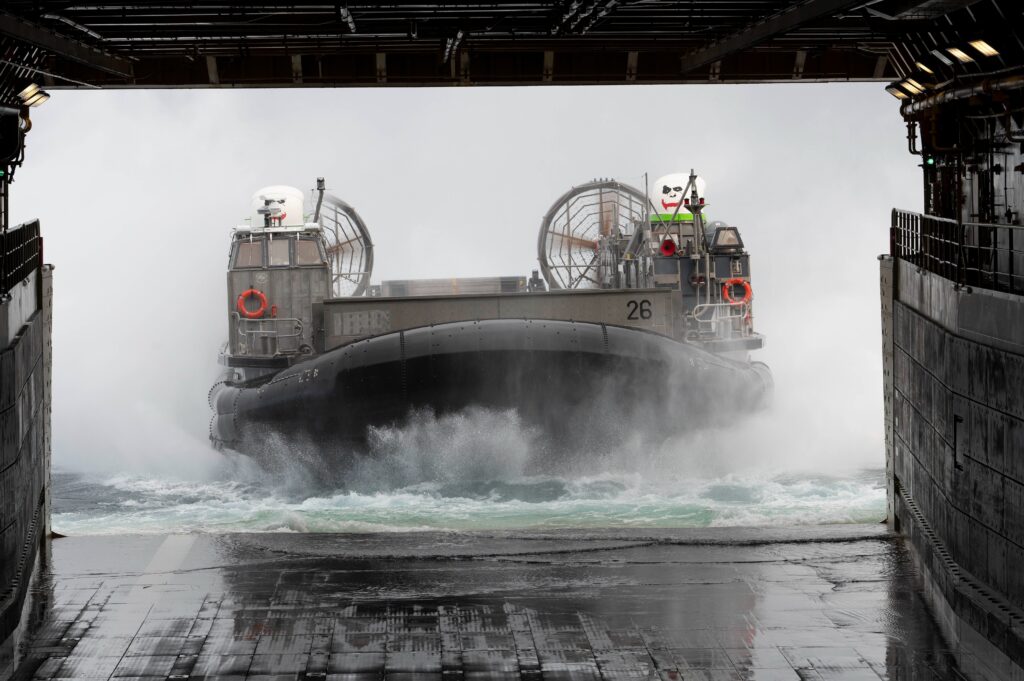
An LCAC departs the well deck of a San Antonio-class amphibious transport dock ship. (U.S. Navy photo by MC2 Jesse Turner)

02 May 2024 

From Commander, U.S. 2nd Fleet, Public Affairs 

NORFOLK, Va. – On the evening of May 1, an incident occurred involving two landing craft, air cushions (LCAC) from USS Wasp (LHD 1) and USS New York (LPD 21) off the coast of Jacksonville, Fla. 

30 Sailors and Marines were injured. Five Sailors were medically evacuated for further care at Savannah Memorial University Medical Center. Four of the five Sailors have been released from the hospital after treatment. One Sailor remains under medical care and is being assessed for further treatment. 

Sailors and Marines with minor injuries were treated aboard Wasp and New York. 

Sailors and Marines assigned to the Wasp Amphibious Ready Group and 24th Marine Expeditionary Unit (MEU) were conducting a training exercise when the incident occurred. 

The recovery and investigation processes are ongoing, and more information will be provided by U.S. 2nd Fleet once available. For any inquiries, contact [email protected]