U.S. Navy Destroyer Conducts Freedom of Navigation Operation in the South China Sea
Release from Commander, U.S. 7th Fleet Public Affairs 

***** 

27 November 2023 

From Commander, U.S. 7th Fleet Public Affairs 

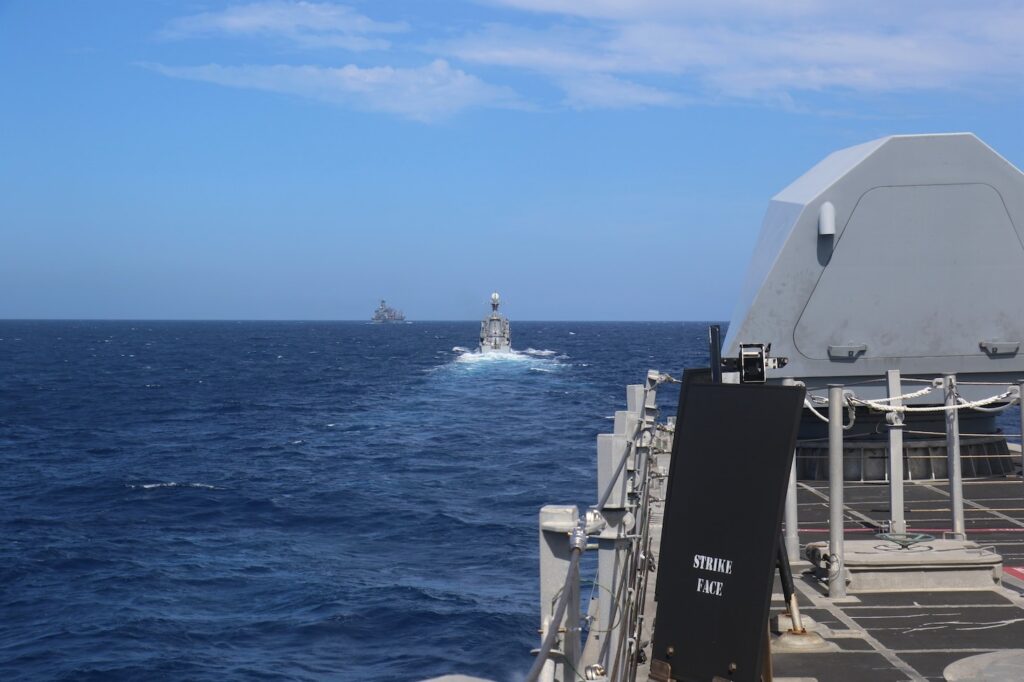
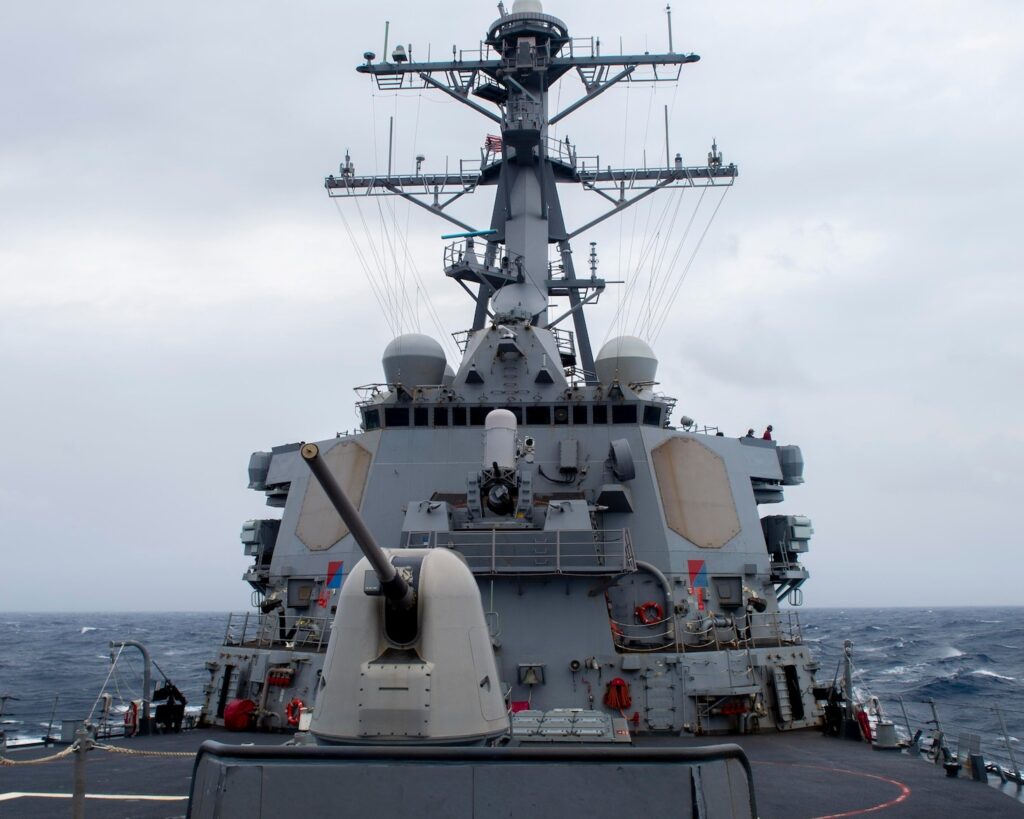
On November 25, USS Hopper (DDG 70) asserted navigational rights and freedoms in the South China Sea near the Paracel Islands, consistent with international law. At the conclusion of the operation, USS Hopper (DDG 70) exited the excessive claim area and continued operations in the South China Sea. This freedom of navigation operation (“FONOP”) upheld the rights, freedoms, and lawful uses of the sea recognized in international law by challenging restrictions on innocent passage imposed by the People’s Republic of China (PRC), Taiwan, and Vietnam. 

ShapeThe PRC, Vietnam, and Taiwan each claim sovereignty over the Paracel Islands. All three claimants require either permission or advance notification before a military vessel or warship engages in “innocent passage” through their territorial sea, in violation of international law. Under customary international law as reflected in the Law of the Sea Convention, the ships of all States – including their warships – enjoy the right of innocent passage through a territorial sea. The unilateral imposition of any authorization or advance-notification requirement for innocent passage is unlawful. By engaging in innocent passage without giving prior notification to or asking permission from any of the claimants, the United States challenged these unlawful restrictions imposed by the PRC, Taiwan, and Vietnam. The United States demonstrated that innocent passage is not subject to such restrictions.   

Unlawful and sweeping maritime claims in the South China Sea pose a serious threat to the freedom of the seas, including the freedoms of navigation and overflight, free trade and unimpeded commerce, and freedom of economic opportunity for South China Sea littoral nations. 

The United States challenges excessive maritime claims around the world regardless of the identity of the claimant. Customary international law reflected in the 1982 Law of the Sea Convention protects certain rights, freedoms and lawful uses of the sea enjoyed by all nations. The international community has an enduring role in preserving the freedom of the seas, which is critical to global security, stability, and prosperity. 

The United States upholds freedom of navigation for all nations as a principle. As long as some countries continue to claim and assert limits on rights that exceed their authority under international law, the United States will continue to defend the rights and freedoms of the sea guaranteed to all. No member of the international community should be intimidated or coerced into giving up their rights and freedoms.  

U.S. forces operate in the South China Sea on a daily basis, as they have for more than a century. They routinely operate in close coordination with like-minded allies and partners that share our commitment to uphold a free and open international order that promotes security and prosperity. All of our operations are conducted safely, professionally, and in accordance with customary international law. The operations demonstrate that the United States will fly, sail, and operate wherever international law allows – regardless of the location of excessive maritime claims and regardless of current events.  


CNO and MCPON Conduct Trip to Indo-Pacific to Underscore Commitment to Allies, Visit Sailors

Release from CNO Public Affairs 

***** 

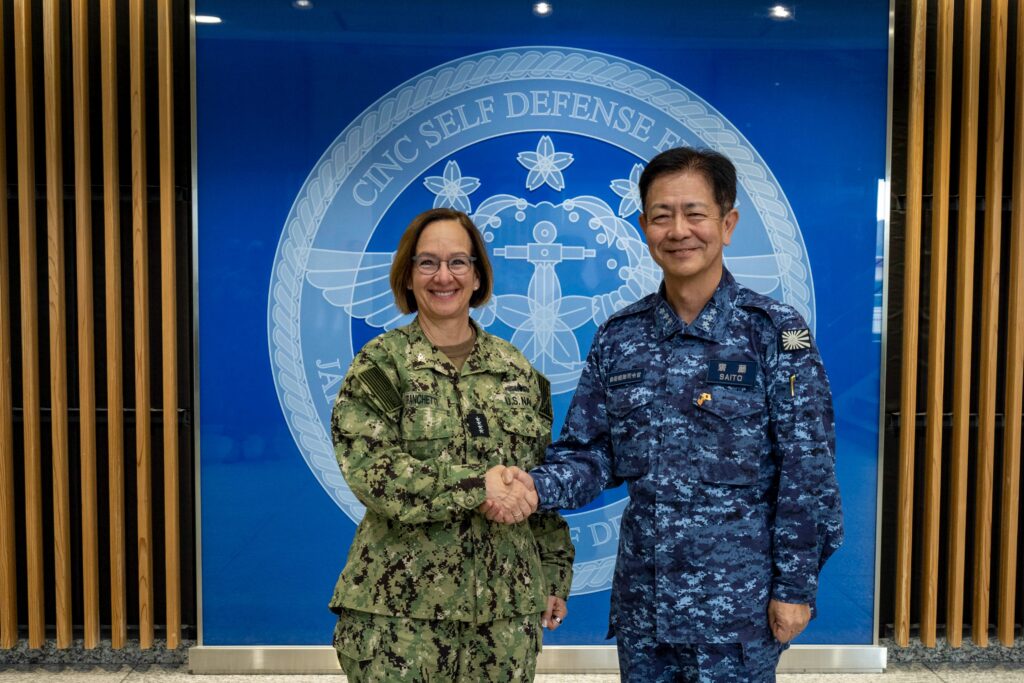
WASHINGTON, DC – Chief of Naval Operations Adm. Lisa Franchetti and Master Chief Petty Officer of the Navy James Honea traveled to Guam, Japan and the Republic of Korea (ROK) to underscore the U.S. Navy’s unwavering focus on the Indo-Pacific and to engage with forward deployed Sailors, Nov. 20-25. 

Franchetti and Honea began their trip in Guam with an all-hands call. The dialogue covered topics like quality of service initiatives and recruiting, it also centered on Franchetti’s focus on the important role of our forward-postured forces serving at Joint Region Marianas and on applying a warfighting lens to everything the Navy does. 

“I am incredibly proud of the work you do, providing options, flexibility, and decision space to our Nation’s leaders. What you do matters every day to our Navy and to our Nation,” said Franchetti. “Each of you are forward-deployed supporting our allies and partners and reinforcing our strategic relationships in this very critical region of the world. As I begin my tenure as CNO I’m focused on ensuring you have what you need to preserve the peace, respond in crisis, and, if called, win decisively in war.”  

MCPON echoed Franchetti’s sentiments on strengthening the Navy team. 

“I’d ask that everyone in this room be very clear on what their priorities are, focus on what matters, then ask yourself, ‘how can I get better? How can I help my shipmates be better?’” Honea said.  “I charge all of you to be a citizen and belong – make your teams better. Make our Navy better.” 

The next stop on their Indo-Pacific tour was Japan, where they met officials and military leaders, to include Japan’s Defense Minister, Kihara Minoru; Yokosuka Mayor Kamiji Katsuaki; Chief of Staff, Joint Staff Gen. Yoshida Yoshihide, and Chief of Staff of the Japan Maritime Self-Defense Force Adm. Sakai Ryo. During these engagements Franchetti discussed the strength of the U.S.- Japan alliance and the importance of the Navy-to-Navy relationship in facing the challenges to a free and open Indo-Pacific. 

Throughout her discussions, CNO emphasized the value of planning, exercising and operating together to enhance interoperability between the two fleets. She further expressed how the strong network of allies and partners across the Indo-Pacific ensures the stability and security of the region and facilitates the preservation of the rules-based international order. 

“Our Navy is the world’s premier all-domain warfighting force, made even more effective through our strong relationships with allies and partners in the Indo-pacific region,” said Franchetti.  

Following the key leader engagements, CNO and MCPON spent Thanksgiving serving the holiday meal and dining with the crew aboard the Navy’s only forward-deployed aircraft carrier USS Ronald Reagan (CVN 76). Additionally, they visited crew members forward-deployed aboard the Arleigh Burke-class destroyer USS John Finn (DDG 113).  

“MCPON and I chose to visit this region for my first trip as CNO to underscore the significance of our maritime operations and alliances in the Indo-Pacific; we chose to visit at this time to recognize our Sailors serving overseas and deployed during the holiday season,” said Franchetti.  

Busan, ROK was the final leg of the trip, where CNO and MCPON met with the ROK Chief of Naval Operations Adm. Yang Yong-mo and ROK MCPON Eom Ha-il. 

During her discussions with Yang, Franchetti noted that for seven decades the U.S. – ROK relationship has proven to be among the most capable, cooperative, and durable bilateral partnership in the world, bolstering peace and security on the Korean Peninsula and in the Indo-Pacific. 

This stop also marked CNO and MCPON’s first return to ROK since serving there together from 2014 to 2015 as then Commander, Naval Forces Korea and Command Master Chief. MCPON remarked on their shared history and consistent focus on the Navy’s most strategic asset – Sailors. 

“Our titles may have changed, but our vision remains the same – to support and develop Sailors that are strong leaders and experts. Sailors who will live, teach, and enforce standards to make each other and our Navy stronger every day,” said Honea.  

Franchetti underscored that point when speaking to Sailors aboard USS Carl Vinson (CVN 70), who are conducting a port visit in Busan during their Western-Pacific deployment.  

“Our Navy can have the best equipment, ships, submarines, and aircraft, but without Sailors they go nowhere and do nothing,” said Franchetti. “Our people – our Sailors and our Civilians – are our true secret weapons.  They give us a decisive edge, and because of them, our Navy remains the preeminent fighting force on, under, and above the seas.” 

This was CNO and MCPON’s first international trip together since her confirmation.  


Leonardo DRS Hybrid Electric Drive Propulsion System Successful in Republic of Korea Navy Sea Trials of First Ulsan-Class Frigate

Release from Leonardo DRS Inc. 

***** 

November 20, 2023 

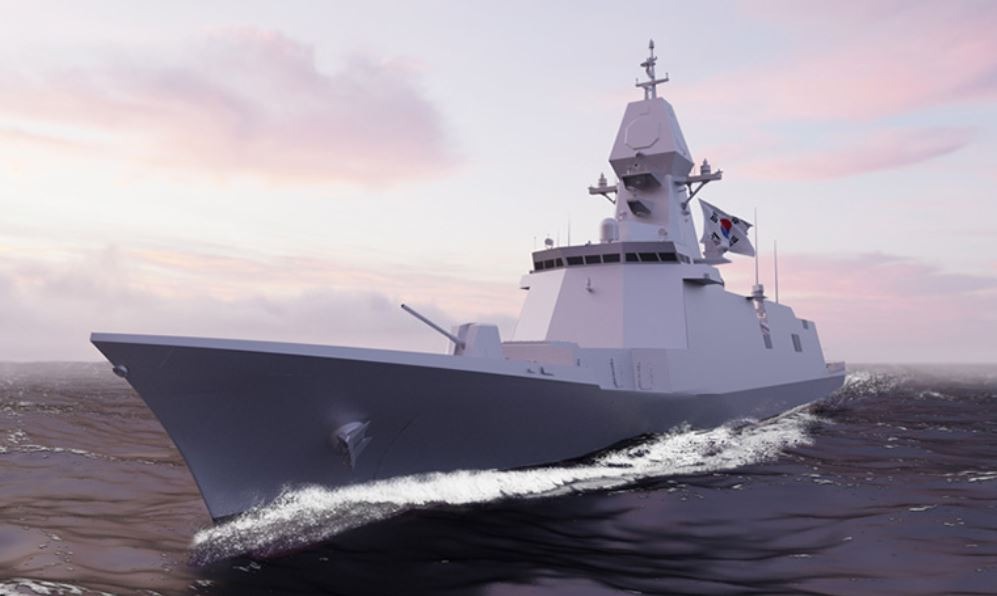
ARLINGTON, Va.– Leonardo DRS, Inc. (NASDAQ: DRS) announced today the successful completion of comprehensive sea trials of the first Ulsan-Class Future Frigate experimental Batch-3 (FFX-III) for the Republic of Korea Navy (ROK Navy). DRS provides the hybrid electric drive propulsion system for the ship, featuring quiet, compact, advanced permanent magnet propulsion motors, supporting the ship’s anti-submarine warfare (ASW) mission with less noise generation and superior fuel economy. This sea trial follows the delivery of eight shipsets for the Daegu-Class FFX-II. 

“The successful and timely testing was an important phase of this program, which demonstrates our continued success and collaboration with Hyosung Corporation, Korean shipbuilding HD Hyundai Heavy Industries (HD HHI), and the ROK Navy,” said Jon Miller, Leonardo DRS Naval Power Systems Senior Vice President and General Manager. “I’m proud of our engineering team, who demonstrated superb expertise, technical skill, and professionalism to prove the system, operation, and overall performance of the first Ulsan-Class FFX-III Frigate.” 

The 10-day sea trial, which took place in August 2023, marked a significant milestone in the development and testing of the Ulsan-Class FFX-III. Conducted in the Sea of Japan, the trial showcased the vessel’s exceptional performance, economy, safety features, and its ability to meet and exceed all performance requirements. The ROK Navy plans to begin deployment of the ship immediately. DRS will proceed with production of five additional shipsets in FFX-III 

DRS is a leading provider of hybrid electric drive systems and next-generation electrical power conversion and propulsion technology for the U.S. Navy and allies around the world, with major systems for next-generation submarines and surface ships. Investments in the company’s market-leading propulsion and power generation technology have created opportunities to use proven electric drive capabilities for future naval platforms. DRS solutions are leading the way in providing power flexibility to support the increased power requirements of current and future naval platforms. 


U.S. 7th Fleet and Armed Forces of the Philippines Begin Maritime Cooperative Activity

Release from Commander, U.S. 7th Fleet Public Affairs  

***** 

Nov. 22, 2023 

By Commander, U.S. 7th Fleet Public Affairs 

SOUTH CHINA SEA – U.S.7th Fleet (C7F) and Armed Forces of the Philippine (AFP) units began a maritime cooperative activity (MCA) in the South China Sea, Nov. 23.   

The MCA is designed to enhance interoperability between the two militaries and further advance combined capabilities in the maritime domain. 

C7F units participating in the MCA are the Independence-variant littoral combat ship USS Gabrielle Giffords (LCS 10), assigned to Destroyer Squadron 7, and a P-8A Poseidon maritime patrol and reconnaissance aircraft, assigned to the “Fighting Tigers” of Patrol Squadron (VP) 8.  

AFP units participating are two FA-50PH aircraft, an A-29B Super Tucano aircraft, and three Philippine Navy ships: BRP Conrado Yap, BRP Jose Rizal, and BRP Gregorio del Pilar. 

U.S. 7th Fleet is the U.S. Navy’s largest forward-deployed numbered fleet, and routinely interacts and operates with allies and partners in preserving a free and open Indo-Pacific region.  


P-8 Mishap in Hawaii Is Possible First Loss in Aircraft’s Career

By Richard R. Burgess, Senior Editor 

***** 

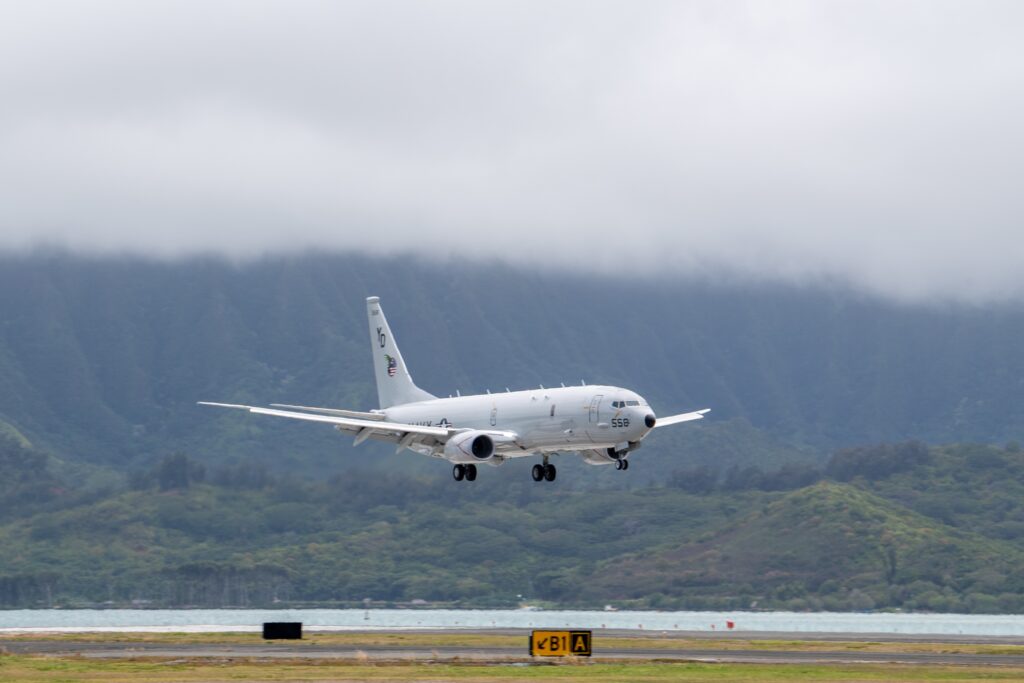
ARLINGTON, Va. — A U.S. Navy P-8A Poseidon maritime patrol aircraft ran off a runway at Marine Corps Air Station Kaneohe Bay, Hawaii on Nov. 20, likely resulting in the first loss of one of the aircraft in the 10 years since it achieved initial operational capability. 

“At approximately 2 p.m. local (Hawaii), a U.S. Navy P-8 Poseidon overshot the runway on landing at Marine Corps Air Station, Kaneohe Bay, and ended up in nearby water,” the U.S. Third Fleet public affairs office said in a Nov. 20 release. “All personnel safely evacuated the aircraft. First responders and emergency crews acted immediately to conduct an initial assessment and employed a temporary floating barrier, which is used to protect the environment.”  

The P-8A, shown in news photographs sitting partially submerged in the surf of Kaneohe Bay — is assigned to Patrol Squadron Four (VP-4), based at Naval Air Station Whidbey Island, Washington. No P-8s are permanently based at Kaneohe Bay but frequently rotate in for exercises and for detachments in support of homeland defense.   

The P-8 equips 12 U.S. fleet and two reserve patrol squadrons. The Poseidon made its first operational deployment nearly a decade ago, in December 2013, with VP-16. Until now, none have been destroyed in mishaps. The Navy has not yet made a determination if the P-8A in Kaneohe Bay suffered strike damage. 

“An investigation will be initiated,” the 3rd Fleet release said. “More details will be released as they become available.” 


USS Ronald Reagan (CVN 76) returns to Yokosuka 

Release from USS Ronald Reagan 

***** 

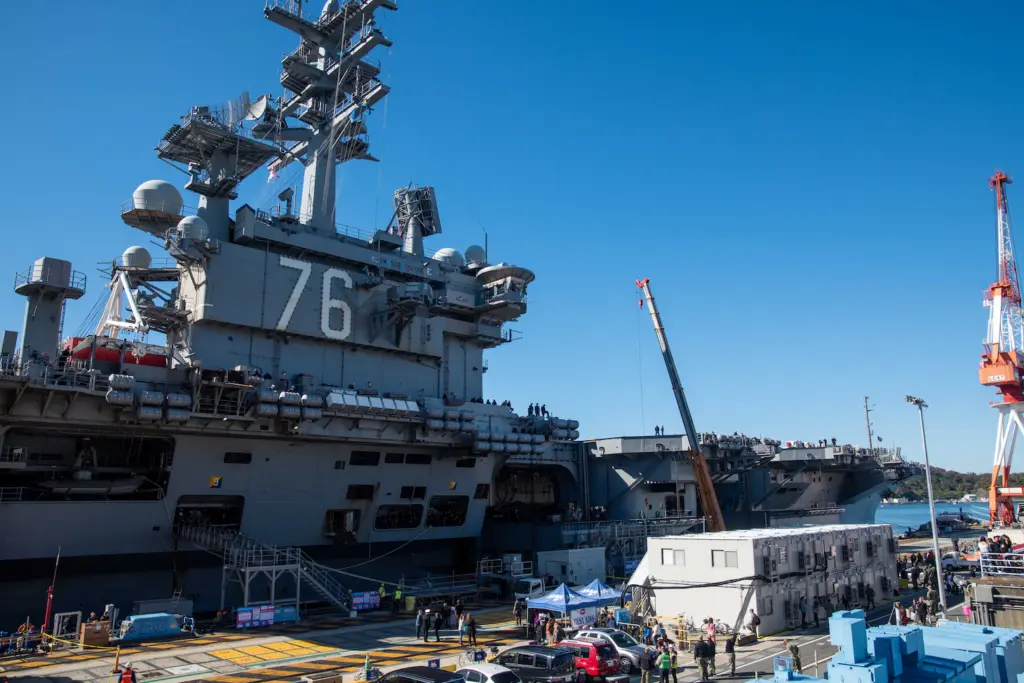
YOKOSUKA, Japan  –  The U.S. Navy’s only forward-deployed aircraft carrier, USS Ronald Reagan (CVN 76), returned to its forward-deployed port in Yokosuka, Japan, following a six-month deployment in the Indo-Pacific region, Nov. 19. 
 
During the ship’s final full deployment as the forward-deployed aircraft carrier, which spanned from early May to late November, Ronald Reagan participated in numerous multi-national integrated military exercises, with participants including the Japan Maritime Self-Defense Force, Royal Australian Navy, Republic of Korea Navy, and the Indonesian Navy. In November, the Nimitz-class supercarrier also participated in a multi-large deck event with USS Carl Vinson (CVN 70), Carrier Strike Group 1, and Japanese Hyuga-class helicopter destroyer, JS Hyuga (DDH 181). 
 
“In their hard work and professionalism throughout this deployment, Ronald Reagan Sailors have stood firm behind our partners and allies,” said Capt. Daryle Cardone, commanding officer of Ronald Reagan. “Our mission of maintaining a free and open Indo-Pacific is enabled by the trust we continue to build through exercises at sea and cultural exchanges ashore.” 
 
Ronald Reagan travelled 56,219 nautical miles and conducted daily flight operations with fixed and rotary-wing aircraft amounting to 1,838 launches and recoveries, and 2,157 rotary wing sorties. Ronald Reagan also conducted maritime security operations, maritime strike training, and replenishments-at-sea and fuelings-at-sea. 
 
During the deployment, the ship made port visits to Vietnam, Republic of Korea and the Philippines, with Sailors participating in 12 community relation events, resulting in 2,016 hours of volunteer service. Sailors also had the opportunity to learn about each countries’ culture through cultural exchange events and tours hosted by the ship’s Morale, Welfare, and Recreation. 
 
In port, Ronald Reagan will continue to provide presence and act as a deterrence through continuous training and proficiency in warfighting, as well as conduct routine maintenance and upkeep of the ship and her systems. 
 
Upon liberty call, Sailors disembarked the ship in dress blues in an orderly but excited manner. Families and friends filled the pier, holding signs and searching for their Sailor among the thousands of crew members exiting. 
 
“Our Sailors have more than earned their time back home,” said Cardone. “In addition to time with loved ones, their time in port is a chance to invest in the incredibly valuable partnership we have with the Japanese people. We are thankful for our relationship and we will continue to forge those bonds, whether at sea or ashore.” 
 
The Ronald Reagan Carrier Strike Group is deployed to the U.S. 7th Fleet area of operations in support of a free and open Indo-Pacific region. As the U.S. Navy’s largest forward-deployed fleet, 7th Fleet interacts with 35 other maritime nations to build partnerships that foster maritime security, promote stability, and prevent conflict. 


HII is Awarded Contract for DDG 51-Class Follow Yard Support 

Release from HII 

***** 

PASCAGOULA, Miss., Nov. 17, 2023 (GLOBE NEWSWIRE) — HII (NYSE: HII) announced today that its Ingalls Shipbuilding division received a cost-plus-award fee contract from the U.S. Navy for follow yard support of the Navy’s Arleigh Burke-class (DDG 51) destroyer program. 

This contract, which allows for the continuation of key technical management and support functions that enable coordinated production of DDGs under existing construction contracts, includes four option years with a total potential contract value of $185 million if all options are exercised. 

“This is another exciting opportunity for our shipbuilders to demonstrate their versatility in handling all aspects of shipbuilding,” Ingalls Shipbuilding DDG 51 Program Manager Ben Barnett said. “We are honored to provide this support to our Navy customer and the nation’s defense.” 

Arleigh Burke-class destroyers are highly capable, multi-mission ships and can conduct a variety of operations, from peacetime presence and crisis management to sea control and power projection. Guided missile destroyers are the backbone of the U.S. surface fleet and are capable of fighting multiple air, surface and subsurface threats simultaneously. 

A photo accompanying this release is available at: https://hii.com/news/hii-ddg-51-class-follow-yard-support-award-2023/ 


CMF’s French-led Combined Task Force 150 Seizes $34 Million in Illegal Narcotics at Sea 

CMF’s French-led Combined Task Force 150 Seizes $34 Million in Illegal Narcotics at Sea

Release from Combined Maritime Forces Public Affairs  

***** 

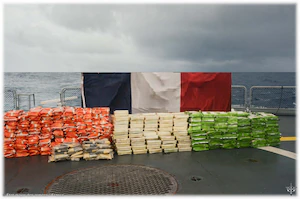
MANAMA, Bahrain — A French navy ship working with Combined Maritime Forces seized about $34 million worth of illegal drugs from a stateless vessel while operating in the international waters of the Indian Ocean, Nov. 4. 

The frigate, working under the command of Combined Task Force (CTF) 150, seized 722 kilograms of methamphetamines from the vessel during an interdiction operation. 

“This new seizure shows once again the operational effectiveness of Combined Maritime Forces assets and nations. It illustrates that nations from all around the world are committed to regional maritime security in the Indian Ocean,” said French navy Capt. Yannick Bossu, CTF-150 commander. 

This event marks the fourth time in recent months the French-led CTF 150 has interdicted illicit narcotics at sea. In those previous operations, CTF ships seized more than 3,800 kilograms of methamphetamines, heroin, and hashish from stateless vessels during interdiction operations, with a street value of more than $60 million. 

CTF 150 is one of five task forces under Combined Maritime Forces, the largest multinational naval partnership in the world. CTF 150 focuses on maritime security operations outside in the Gulf of Oman, Arabian Sea, and Indian Ocean. 

Since 2021, Combined Maritime Forces has seized more than $1 billion in illegal drugs while patrolling waters across the Middle East. 

The 38-nation naval partnership upholds the international rules-based order by promoting security and stability across 3.2 million square miles of water encompassing some of the world’s most important shipping lanes. 


U.S. 4th Fleet Conducts Inaugural Maritime Planning Symposium 

Release from USNAVSOUTH/4TH FLEET PUBLIC AFFAIRS 

***** 

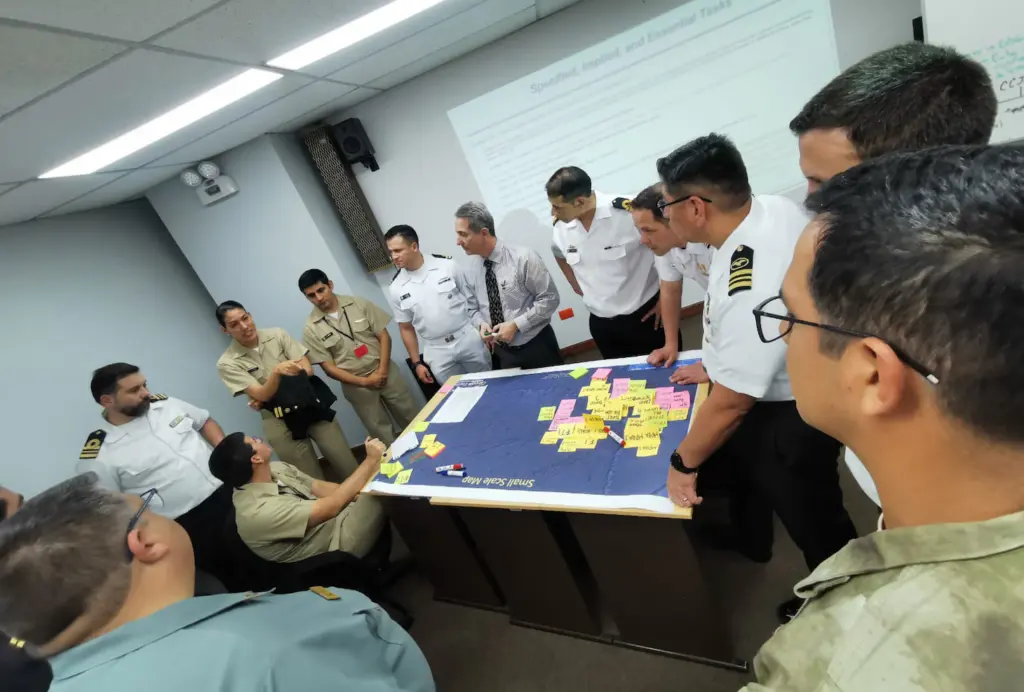
CALLAO, Peru  –  25 naval officers from eight partner nations recently completed the first-ever U.S. 4th Fleet Maritime Planning Symposium at the Peruvian Naval War College (Escuela Superior de Guerra Naval) in Callao, Peru. 
 
Supported by the College of Operational Warfare – International Maritime Staff Officer Course at the U.S. Naval War College, professors Sean Carroll and Raymond Tortorelli and U.S. 4th Fleet planners led this inaugural maritime planning symposium in Peru to introduce and work through the Military Decision Making Process – Multinational. Navies from Argentina, Brazil, Canada, Chile, Colombia, Ecuador, Peru, and Uruguay sent junior officers to participate in the seminar. 
 
“In the U.S. Navy, we get many reps and sets in maritime planning early on in our careers,” said Lt. Cmdr. Cassie Redner, U.S. 4th Fleet Maritime Operations Center (MOC) Training Officer. “This symposium gives an opportunity for partner nation naval junior officers to get some experience with the Military Decision Making Process – Multinational by working through a scenario so that when they participate in operations and exercises they have already spent time working together and learning together. This effort seeks to increase proficiency and improve interoperability earlier in the officers’ careers.” 
 
Professors Carroll and Tortorelli led symposium participants through a UNITAS-like scenario and worked through the steps of the Military Decision Making Process – Multinational. The planning process helps staff members conduct essential planning in support of missions that naval forces execute at sea. 
 
“We intend to make this an annual symposium, offering our partner navies an opportunity to host,” said Rear Adm. Jim Aiken, Commander, U.S. Naval Forces Southern Command/U.S. 4th Fleet. “Our desire is to have a continuum to build a cadre of partner nation naval officers who understand and are able to execute maritime planning for exercises and operations. This is our latest step in that effort, and we thank the Peruvian Naval War College for hosting this first symposium.” 
 
U.S. Naval Forces Southern Command/U.S. 4th Fleet supports U.S. Southern Command’s joint and combined military operations by employing maritime forces in cooperative maritime security operations to maintain access, enhance interoperability, and build enduring partnerships in order to enhance regional security and promote peace, stability and prosperity in the Caribbean, Central and South American region. 
 
Learn more about USNAVSOUTH/4th Fleet at https://www.fourthfleet.navy.mil, https://www.facebook.com/NAVSOUS4THFLT and @NAVSOUS4THFLT. 


SECNAV Del Toro Leads Inaugural Meeting of the Government Shipbuilders Council

***** 

17 November 2023

As part of his commitment to strengthen the Nation’s shipbuilding and maintenance, Secretary of the Navy Carlos Del Toro kicked off the inaugural meeting of the Government Shipbuilders Council (GSC) at the Coast Guard Yard in Baltimore, Nov. 16.

To improve the way U.S. government does business in ship acquisition and ship maintenance, Secretary Del Toro underscored the council’s mission to address common and singular challenges among those that contract in shipbuilding; identify opportunities to leverage each organization’s resources to maximize government savings in costs, time and resources; share best practices and lessons learned; and support strategic decision making to strengthen the shipbuilding industrial base.

“Together, we represent four different cabinet departments—Defense, Transportation, Homeland Security, and Commerce—and five separate government shipbuilders. This Council is a tremendous example of the whole-of-government effort we need to rebuild our nation’s comprehensive maritime power—a strategic imperative requiring a new Maritime Statecraft,” said Secretary Del Toro. “Collectively, our organizations are at the heart of what it will take to restore our Nation’s competitive shipbuilding and repair landscape—including private and public investments in world-class manufacturing and shipbuilding facilities—and the highly-skilled workforce necessary to keep them running.”

In September, Secretary Del Toro called for a new maritime statecraft to prevail in an era of intense strategic competition, during remarks at the John F. Kennedy School of Government at Harvard University. He said it must be bold and “renew our commitment as a nation to recapitalizing national maritime power.”

“We must establish programs that build capacity in fields like naval architecture, engineering, and lifecycle management, as well as technical expertise in nuclear welding, robotics, software management, and additive manufacturing,” Secretary Del Toro told the GSC members. “As we’re developing these skillsets throughout our shipbuilding workforce, we must continue to leverage our nation’s advantage in technology and innovation in the maritime domain.”

Secretary Del Toro added that agility in ship production and design requires developing new, digital tools for our workforce to improve efficiency and capacity. He also encouraged GSC members to convene at shipyards, other institutions, or academies where future maritime leaders are trained.

“For example, last month, I visited the U.S. Coast Guard Academy on our Navy’s birthday to demonstrate our partnership, my commitment to maritime statecraft, and our whole-of-government effort to tackle these challenges,” said Secretary Del Toro.

Before departing, Secretary Del Toro reiterated to the GSC that he will “tirelessly work to raise awareness to the challenges we all face in shipbuilding and ship repair and will continue advocate on your behalf so that together we can restore the maritime power of our nation.”

Initial members of the GSC will include:

Navy: Deputy Assistant Secretary of the Navy (DASN) for Ships, and Military Sealift Command (MSC), Director of Ship Management

Coast Guard: Assistant Commandant for Acquisition (CG 9) and Assistant Commandant for Engineering & Logistics (CG-4)

Army: Program Executive Officer, Combat Support & Combat Service Support (CS & CSS)

National Oceanic and Atmospheric Administration: Director of Marine and Aviation Operations

Maritime Administration: Associate Administrator for Strategic Sealift

Office of Secretary of Defense (OSD): Deputy Assistant Secretary of Defense, Materiel Readiness