USS Chung-Hoon Shifts Homeport to San Diego

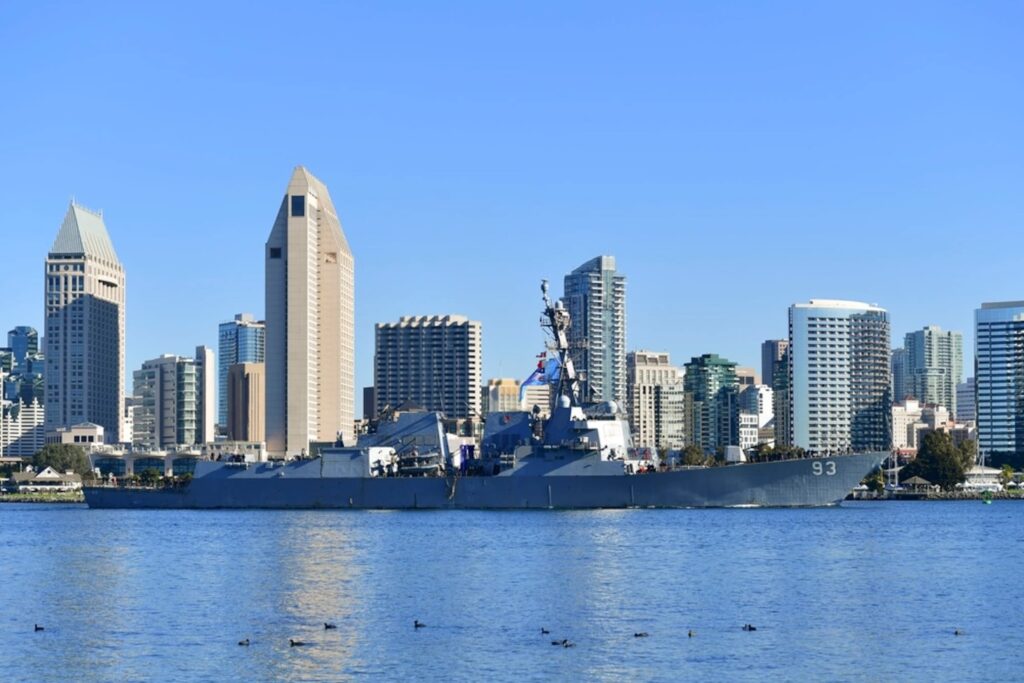
SAN DIEGO (Nov. 9, 2023) The Arleigh Burke-class guided missile destroyer USS Chung-Hoon (DDG 93) sails toward Naval Base San Diego following a change of homeport from Joint Base Pearl Harbor-Hickam, Hawaii. 

Release from By Commander, U.S. 3rd Fleet Public Affairs 

*****

By Commander, U.S. 3rd Fleet Public Affairs 

09 November 2023 

 
SAN DIEGO, CA — The Arleigh Burke-class guided missile destroyer USS Chung-Hoon (DDG 93) arrived at Naval Base San Diego Nov. 9, concluding the ship’s homeport shift from Joint Base Pearl Harbor-Hickam, Hawaii to Naval Base San Diego. 
 
Chung-Hoon, assigned to U.S. 3rd Fleet, recently completed a deployment to the U.S. 7th Fleet area of operations and has been relocated to San Diego to complete a mid-life modernization. 
 
The modernization will broaden Chung-Hoon’s warfighting capabilities and is part of a larger guided-missile destroyer modernization program. 
 
“We will certainly miss the Aloha spirit but hope to bring some of it with us to San Diego.,” said Cmdr. Kevin Schaeffer, Chung-Hoon’s commanding officer. “The support we received from the entire Pearl Harbor waterfront was always fantastic, and we will miss the team that has been supporting us since our commissioning. Our Chung-Hoon ohana has made lifelong memories, both personally and professionally, during our 20 years in Hawaii. We are excited to start this new chapter in San Diego.” 
 
An integral part of U.S. Pacific Fleet, U.S. 3rd Fleet operates naval forces in the Indo-Pacific and provides the realistic, relevant training necessary to execute the U.S. Navy’s role across the full spectrum of military operations – from combat operations to humanitarian assistance and disaster relief. U.S. 3rd Fleet works together with Allies and partners to advance freedom of navigation, the rule of law, and other principles that underpin security for the Indo-Pacific region. 


Navy Leaders from FVEY Nations Meet to Collaborate, Strengthen Relationship

Release from the U.S. Navy 

***** 

10 November 2023 

By Lt. Cmdr. Anthony Ivester 

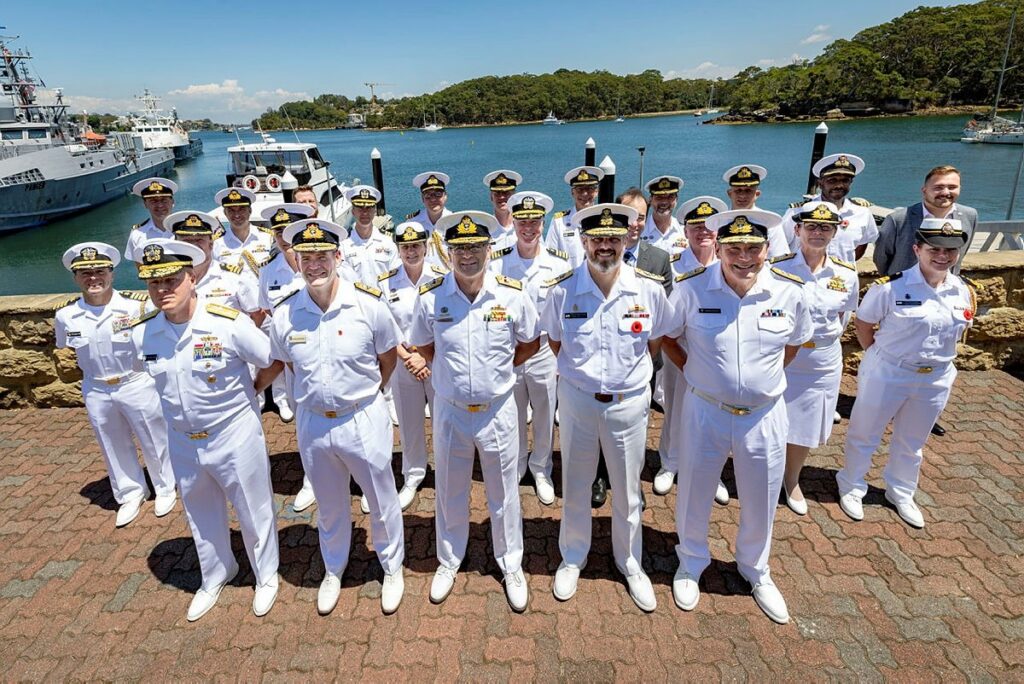
SYDNEY – Leaders from the navies of Australia, Canada, New Zealand, the United Kingdom, and the United States met in Sydney to discuss strategic partnerships, exchange valuable insights, and address key challenges faced in the ever-evolving global maritime landscape, Nov. 10, 2023. 

The event fostered collaboration, strengthened alliances, and enhanced maritime security among the intelligence-sharing nations, known as FVEYs or the Five Eyes Alliance.  

“This meeting was a testament to our unwavering commitment to protect our shared interests, and provided a unique opportunity to enhance cooperation, exchange knowledge, and collectively address the challenges that lay ahead,” said Rear Adm. Tom Moninger, the U.S. Navy’s Director for Plans, Policy & Integration. 

The meeting proved to be a significant milestone in strengthening the FVEYs’ collective efforts towards ensuring regional and global security, providing a platform for leaders to share best practices, forge closer ties, and explore joint initiatives that will further bolster maritime security and stability. 

“With the escalation of conflict in the world, it is more important than ever to gather with our FVEY partners to exchange invaluable insights and collectively address the rising challenges of the moment. Together, we reaffirm the enduring strength of our defence partnerships and our commitment to working together in securing the seas for a safer and more stable future,” said Royal Canadian Navy Rear-Admiral Chris Robinson, Commander Maritime Forces Pacific. 

Deputy Chief of the Royal Australian Navy, Rear Admiral Jonathan Earley CSC, RAN, hosted the historic gathering, and emphasized that the meeting served as a catalyst for further collaboration among the FVEYs.  

“We are confident that the outcomes of this meeting will strengthen our collective resolve to ensure the safety and security of our maritime domains,” said Earley. 

Formally established shortly after the end of World War II, the FVEYs partnership continues to play a significant role in global security, aiming to uphold the rules-based international order. 


Decommissioning work on historic nuclear support facility, SSSB, draws to a close

Release from Naval Sea Systems Command 

***** 

Nov. 8, 2023 

By Program Executive Office Aircraft Carriers Public Affairs 

WASHINGTON. – Along the waterfront in the Alabama Shipyard, LLC, near Mobile, Ala., decommissioning work has drawn to a close on a remarkable hull, which quietly and safely served the nuclear-powered aircraft carriers and cruisers of the U.S. Navy for more than 50 years.  

The Navy’s Surface Ship Support Barge (SSSB) served as the primary platform supporting the complex refueling, defueling, and associated maintenance operations for reactor components from U.S. Navy nuclear-powered surface ships at Newport News Shipbuilding, from 1964 to 2016.  Dismantlement and disposal of SSSB began in 2020 and concluded this summer. On September 30th, the dismantlement site was turned back over to Alabama Shipyard, marking final completion of the project. 

“This historic platform was an integral part of the Navy’s nuclear-powered ship maintenance efforts for decades,” notes RDML Casey Moton, Program Executive Officer for Aircraft Carriers. “The Navy-industry team leading the dismantlement has honored that legacy, displaying the same innovative spirit that has been driving the safe modernization and revolutionary construction of the nation’s aircraft carriers over the last 60 years.” 

Dismantlement and Disposal 

In June 2020, NAVSEA awarded a three-year, $129 million contract for SSSB’s dismantlement and disposal to APTIM Federal Services, LLC, with work to be accomplished at Alabama Shipyard, LLC.  APTIM completed the process of demolishing the final components of the platform to include the former spent fuel water pool – a 32-foot-deep compartment on the barge that comprised 2,500 tons of steel-reinforced, high-density concrete. 

Ray Duff, assistant program manager for CVN Inactivation/Disposal, who leads the Government’s team on this project within NAVSEA, highlighted the major accomplishments of the project, which completed site work in June 2023, and received approval to turn over the SSSB dismantlement area back to the host shipyard on 30 September 2023.  No spent fuel has been present on SSSB since its decommissioning in 2016, but the remaining 1% of the platform’s low residual radioactivity contained in the spent water pool and associated system components required careful remediation.  

“Our focus throughout the project was to remove and secure the hazardous material while keeping every worker safe and protecting the public and the environment,” explained Duff, “and we succeeded.” 

APTIM’s team of hazardous remediation experts logged 237,389 hours to complete the dismantlement and dispoal, working within a specially fabricated structure under strict environmental monitoring, with zero OSHA lost time or recordable incidents.  The team methodically surveyed, identified, and separated components, and then packaged and transported hazardous waste for disposal at Waste Control Specialists, LLC, a regulated facility in Andrews, Texas, capable of handling such materials.  Approximately 8,080 tons of waste material were safely packaged and shipped to Waste Control Specialists, and 426 tons of ferrous and non-ferrous metals were recycled. 

From World War II tanker to nuclear-age platform 

SSSB began its service at sea, as the mid-section of the tanker ship SS Cantigny, built in 1945 by the Sun Shipbuilding Company, in Chester, Pennsylvania.  The T2-SE-A1-type tanker was named after the 1918 Battle of Cantigny, the first major American offensive of World War I, fought near the village of Cantigny, on the Somme River in France. 

In 1964, Newport News Shipbuilding and Drydock Company converted Cantigny’s mid-body section to a nuclear support facility, initially called the Prototype Waterborne Expended Fuel Container (PWEFC).  PWEFC provided an operational capability similar to the spent fuel pool in a commercial nuclear power reactor, and during the course of its long life supported refueling operations for many nuclear-powered cruisers and aircraft carriers—including early refuelings of ex-Enterprise (CVN 65). 

In the late 1980s, Newport News Shipbuilding refurbished PWEFC with significant upgrades, replacing the original hull and tank structure and installing new longitudinal bulkheads.  Then a decade later, the Navy completed additional repairs and upgrades, extending the platform’s service life by 50 years, and renamed her the Surface Ship Support Barge—otherwise known as the “Triple S-B.” 

A Legacy of Safety and Service 

In cooperation with NAVSEA, using an interagency agreement, the U. S. Nuclear Regulatory Commission (NRC) provided NAVSEA with technical expertise during planning, execution, and termination of the project, evaluating APTIM’s work plan to ensure workplace safety and to mitigate any possible impacts to the environment or to the public. 

Based on NRC review and recommendation for approval of the dismantlement work plan, Naval Reactors, also referred to as the Naval Nuclear Propulsion Program, transferred custody of SSSB to APTIM for dismantlement on June 10, 2021.  SSSB left Hampton Roads on May 19, 2021, and arrived at the Port of Mobile on June 1, 2021, where self-propelled modular transporters moved the 268-foot barge to a land-based facility in the Alabama Shipyard—its final port of call. 

SSSB’s legacy of safety and service spans 52 years in Newport News Shipbuilding, supporting defueling operations for the Navy’s nuclear-powered cruisers and aircraft carriers.  In addition to ex-Enterprise, SSSB was instrumental in extending the service lives of the USS Nimitz (CVN 68), USS Dwight D. Eisenhower (CVN 69), USS Carl Vinson (CVN 70), USS Theodore Roosevelt (CVN 71), and USS Abraham Lincoln (CVN 72) as part of those ships’ mid-life refueling and complex overhauls (RCOH). 

Capt. Mark Johnson, manager of the PEO CVN In-Service Aircraft Carrier Program Office, notes that while SSSB’s decommissioning signals the end of an era, it also marks the Navy’s infusion of technological advancements in executing RCOHs. 

“The Navy now has the capacity to manage and package spent fuel modules into robust shipping containers as required in real time, without the need to first house the materials in an intermediate facility, such as the SSSB spent fuel water pool,” said Johnson.  “It’s an advancement that safely streamlines refueling activities, consistent with expediting readiness across the maintenance enterprise, with the goal of delivering warships back to operators in the fleet.” 


BAE Systems to develop custom microelectronics for next-generation radar, electronic warfare, and communication applications

Release from BAE Systems 

***** 

FAST LabsTM research and development organization awarded a $5 million contract from the Office of Naval Research 

NASHUA, N.H. — Nov. 8, 2023 — The Office of Naval Research (ONR) has awarded BAE Systems’ FAST LabsTM research and development organization a $5 million contract for the COALESCE (Common-architecture Amplifier for Low-cost, Efficient, SWaP-Constrained Environments) program. 

In this effort, BAE Systems’ FAST Labs, will develop advanced Gallium Nitride (GaN)-based monolithic microwave integrated circuit (MMIC) and module electronics. The program’s objective is to develop the world’s highest efficiency high power amplifier module in its frequency band. The radio-frequency (RF) modules will then transition to small form factor U.S. Navy payloads, enabling longer range and greater effectiveness in active electronic warfare applications.  

“The COALESCE program closes the gap between commercial electronics and customized electronics to meet the Department of Defense’s space and power requirements and enable next-generation solutions,” said Ben McMahon, technology development manager at BAE Systems’ FAST Labs. “Together with the Office of Naval Research, we will deliver these electronic solutions to increase survivability for our warfighters.”  

BAE Systems will provide capabilities above and beyond what can be found commercially, and its solution is designed specifically for harsh DoD operating environments. The technology’s high power and ultra-small form factor will enable next-generation radar, electronic warfare, and communication applications.  

MMICs and modules for the program will be fabricated at BAE Systems’ Microelectronics Center Foundry in Nashua, New Hampshire. The FAST Labs organization in Merrimack, New Hampshire will work to ensure the technology is relevant across multiple DoD branches, applications, and businesses. 


Navy Accepts Delivery of Ship to Shore Connector, Landing Craft, Air Cushion 108

Release from Naval Sea Systems Command 

***** 

Nov. 7, 2023 

By Team Ships Public Affairs 

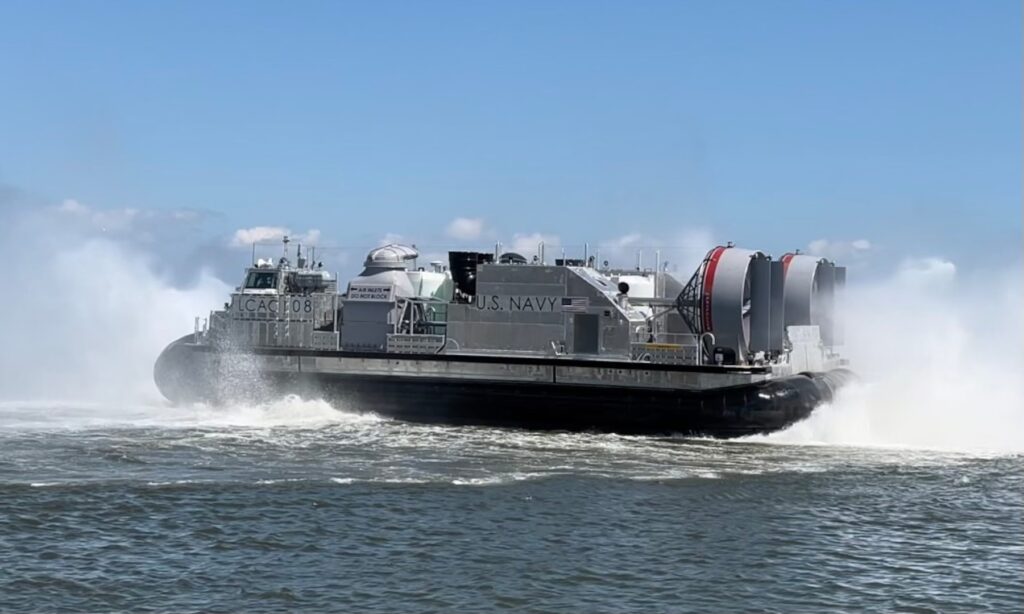
NEW ORLEANS  –  The Navy accepted delivery of the next-generation landing craft, Ship to Shore Connector (SSC), Landing Craft, Air Cushion (LCAC) 108, from Textron Systems, Nov. 3. 

The delivery comes after successful completion of acceptance trials conducted by the Navy’s Board of Inspection and Survey, which tested the readiness and capability of the craft to effectively meet its requirements. Delivery represents the official transfer of the ship from the shipbuilder to the Navy. 

“These next-generation craft provide our Navy and Marine Corps team with essential agility and speed to complete their missions,” said Capt. Jason Grabelle, program manager for Amphibious Assault and Connectors Programs, Program Executive Office (PEO) Ships. “SSC provides the fleet with agility and speed to assist with current and future mission requirements.” 

LCACs are built with configurations, dimensions, and clearances similar to the legacy LCACs they replace – ensuring that this latest air cushion vehicle is fully compatible with existing, well deck-equipped amphibious ships, the Expeditionary Sea Base and the Expeditionary Transfer Dock. LCACs are capable of carrying a 60 to 75-ton payload. They primarily transport weapon systems, equipment, cargo, and assault element personnel through a wide range of conditions, including over-the-beach. 

Textron Systems is currently in serial production on LCACs 109-120. 

As one of the Defense Department’s largest acquisition organizations, PEO Ships is responsible for executing the development and procurement of all destroyers, amphibious ships, special mission and support ships, boats and craft. 


Saildrone Issued First-ever Classification for a Commercial Autonomous, Uncrewed Vehicle from the American Bureau of Shipping

Release from Saildrone 

***** 

The Saildrone Voyager, a 10-meter USV used for near-shore bathymetry and maritime security, is a proven platform and a force multiplier providing near-real-time data across the world’s oceans. 

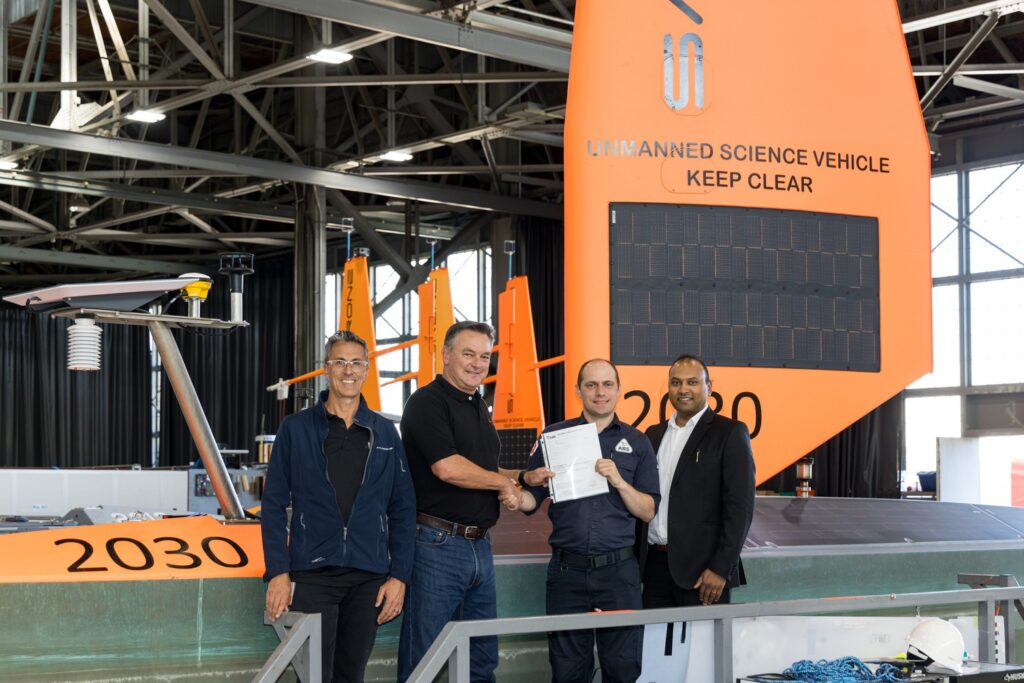
(November 7, 2023 – ALAMEDA) – Saildrone, the leading company in ocean data collection using autonomous vehicles, announced today that it has received the first-ever classification for an autonomous, uncrewed surface vehicle (USV) from the American Bureau of Shipping (ABS). 

The Saildrone Voyager, the mid-class vehicle in Saildrone’s rapidly expanding fleet, is the first-ever commercial USV to receive classification. ABS has been setting rigorous standards for safety and excellence as one of the world’s leading classification organizations and is at the forefront of marine and offshore innovation. 

Classification is a major milestone for Saildrone, allowing the Voyager to operate in the ports and waters of countries that require vessels to be classed by organizations such as ABS, and demonstrates Saildrone’s commitment to safety, standardization, and reliability in its technology and operations. 

“Saildrone has spent three years maturing the Voyager design to be the industry leader in capability, reliability, and safety in the uncrewed vehicle sector,” said Richard Jenkins, CEO and founder of Saildrone. “This classification from the American Bureau of Shipping defines the new gold standard for uncrewed systems and underscores the maturity of our technology.” 

The Voyager carries an impressive payload for coastal ocean mapping operations, including high-resolution MBES and Innomar SBP systems, and is the only survey USV that can deliver long-duration multibeam mapping surveys meeting the highest industry standards. Its ISR sensor suite includes a smart camera array, digital radar, and sub-surface passive acoustics.  

Saildrone USVs are equipped with a suite of sensors and instruments, enabling them to collect a wide range of ocean data above and below the sea surface. They are primarily powered by wind and solar energy, making Saildrone USVs an environmentally friendly solution for long-duration ocean data missions. 

“Uncrewed drone vehicles have huge potential to change the way we operate at sea and are a first step towards commercial autonomous vessels. ABS is a leader in this space, working with key partners all over the world to support the development and adoption of the technologies and strategies autonomous shipping will be built on. Saildrone Voyager is exciting technology and a key milestone on the road to more autonomous operations and we are proud to be able to use our experience to support it,” said Patrick Ryan, ABS Senior Vice President and Chief Technology Officer. 

Earlier last summer, ABS granted Approval in Principal, which helps clients evaluate the feasibility of their designs, for the Voyager and the larger 20-meter (65-foot) Surveyor platform. 

With the classification for the Voyager now in place, Saildrone is expanding data delivery for scientific organizations, government agencies, and commercial partners. By harnessing the power of renewable energy and autonomous technology, Saildrone is revolutionizing the way ocean data is collected and utilized for science, commercial, and defense applications worldwide. 


Two U.S. Navy carriers join Japan destroyer on Multi-Large Deck Event in Philippine Sea

Release from Commander, U.S. 7th Fleet

*****  

By Carl Vinson Carrier Strike Group and Ronald Reagan Carrier Strike Group Public Affairs 

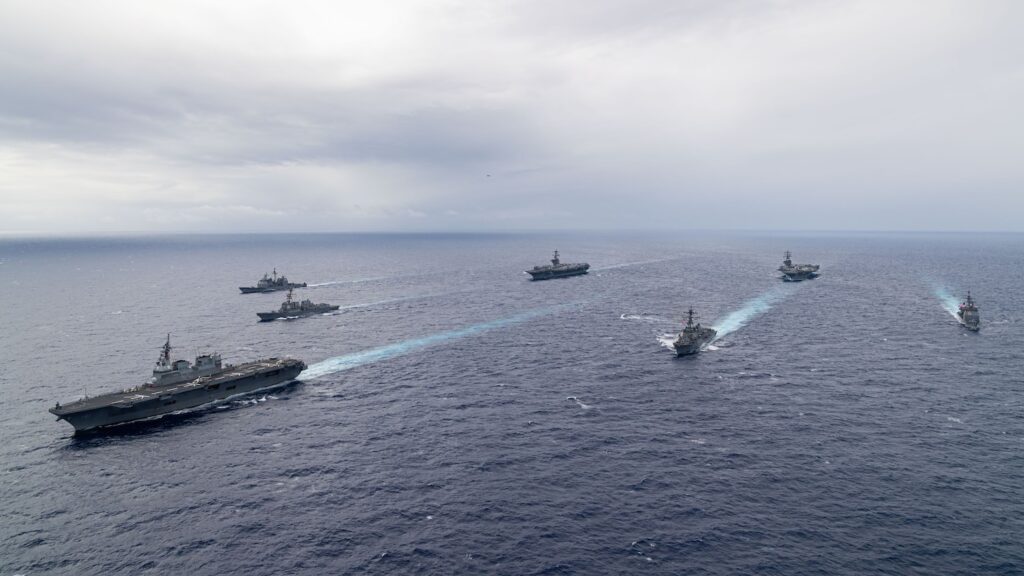
PHILIPPINE SEA   –  The Carl Vinson Carrier Strike Group, Ronald Reagan Carrier Strike Group and the Japan Maritime Self-Defense Force (JMSDF) conclude a Multi-Large Deck Event (MLDE) in the Philippine Sea, Nov. 4-8, 2023. 

MLDE provided the two maritime forces an opportunity to engage in joint operations to include enhanced maritime communication operations, air warfare operations and cross-deck flight operations to strengthen maritime integrated-at-sea operations and combat readiness. 

The event saw the participation of U.S. Navy Carrier Strike Groups, led by their flagships USS Carl Vinson (CVN 70) of Carrier Strike Group (CSG) 1, USS Ronald Reagan (CVN 76) of Carrier Strike Group (CSG) 5, and JMSDF’s Hyuga-class helicopter destroyer JS Hyuga (DDH 181). 

“Our ability to rapidly aggregate maritime forces and work collectively alongside the Ronald Reagan strike group and Japan Maritime Self-Defense Force enhances our combined readiness,” said Rear Adm. Carlos Sardiello, commander, CSG 1. “Multi-Large Deck Event demonstrates collective resolve by rehearsing with our Allies as an assurance of our commitment to regional security and stability. It is also a symbol of a willingness to extend a helping hand of partnership to willing and likeminded nations.” 

The ships and aircraft of the two naval forces, with more than 10,000 Sailors, conducted coordinated surface and air operations in a complex maritime environment to demonstrate the U.S. Indo-Pacific Command Joint Force’s ability to deliver a powerful maritime force. 

“Through the exercise, we improved our tactical capabilities and interoperability with the U.S. Navy,” said JMSDF Rear Adm. Kazushi Yokota, commander of Escort Flotilla 3. “The Japan-U.S. Alliance is essential not only for the defense of Japan, but also for peace and prosperity of the Indo-Pacific region.” 

Coordinated maritime engagements and operations in the Philippine Sea are part of the U.S. Navy’s routine presence in the Indo-Pacific. U.S. naval forces, with our network of partners and Alliances, are indispensable to ensuring maritime security and the flow of unimpeded lawful commerce in the region. 

“It’s a testament to the strong relations we maintain with like-minded Allies across the region—and the world—that we are able to bring together a tightly coordinated and united international force like this,” said Rear Adm. Pat Hannifin, commander of Task Force 70 and CSG 5.” 

The last time CSG 1 participated in a large deck event dates back to January 2022 in the South China Sea with the Abraham Lincoln Carrier Strike Group. 

In June, CSG 5 joined USS Nimitz (CVN 68) and JMSDF helicopter destroyer JS Izumo (DDH 183) for multi-large deck training in the Western Pacific alongside surface ships from the French and Royal Canadian navies. 

CSG 1 consists of Nimitz-class aircraft carrier USS Carl Vinson (CVN 70), Carrier Air Wing (CVW) 2, Ticonderoga class guided-missile cruiser USS Princeton (CG 59) and Destroyer Squadron (DESRON) 1, which includes Arleigh Burke-class guided-missile destroyers USS Hopper (DDG 70), USS Kidd (DDG 100), USS Sterett (DDG 104), and USS William P.  Lawrence (DDG 110). 

CSG 5 consist of Nimitz aircraft carrier USS Ronald Reagan (CVN 76); Carrier Air Wing (CVW) 5; cruisers USS Antietam (CG 54) and USS Robert Smalls (CG 62), as well as destroyer USS Shoup (DDG 86) and elements of Destroyer Squadron (DESRON) 15 staff. 

The Ronald Reagan Carrier Strike Group is forward-deployed to Yokosuka, Japan, and operates in the U.S. 7th Fleet area of operations. U.S. 7th Fleet is the U.S. Navy’s largest forward-deployed numbered fleet, and routinely interacts and operates with Allies and partners in preserving a free and open Indo-Pacific region. 

For more news from CSG 1, visit http://www.dvidshub.net/unit/CSG1 

For more news from CSG 5, visit https://www.dvidshub.net/unit/TF70CSF-5 


AI-Powered Drones: A Revolutionary Solution to Navy Corrosion Challenges 

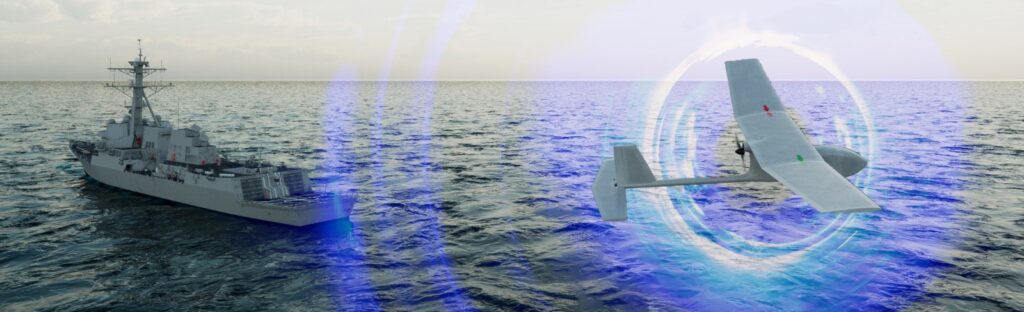
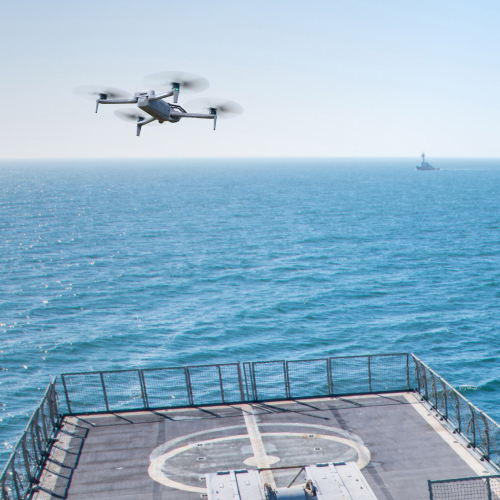
Unmanned aerial vehicles have played an important role in combat since the late 1960s, particularly in reconnaissance missions. Today, with the help of AI, small, autonomous drones such as Skydio’s sUAS platforms can leverage this reconnaissance capability to combat one of the most stubborn challenges to fleet readiness: corrosion. These smart drones can  simplify the detection of this  $7 billion dollar annual problem for the U.S. Navy, and also reduce the cost of controlling it.  

A Smarter Approach to Predictive Maintenance

Corrosion can be mitigated to some extent, but it can never be eliminated. Furthermore, the rate of corrosion on any given ship on any given mission cannot be accurately predicted. This means that scheduled preventive maintenance often takes place either too early, which wastes money, or too late, which can put the structural integrity of a ship’s hull at risk, while  giving ships an appearance not reflective of the United States as a world naval power. 

In contrast, condition-based maintenance aligned to the most current condition of a hull ensures optimal timing for maintenance. This is where autonomous drones come into play. Visual data gives commanders and naval engineering teams a corrosion assessment in near-real time, so they can accurately determine the timing and the level of maintenance required for optimized maintenance operations.

The Value of Visual Data

Today, hull inspections are still often conducted by sailors on painter boards. This antiquated  approach has three problems. First, it takes crew members away from their primary tasks at a time when many ships are already undermanned. Second, the results of personal observations are conveyed verbally or in written form, and words are limited. The level of detail and the potential urgency could be subject to misinterpretation, depending on the individuals providing and receiving the reports. Third, personal observation is a slow and tedious process.

The visual data drones provide is more precise than words, and is available in near-real time. This speed, convenient  for inspections, is crucial during or after  kinetic or dynamic events. The AI-powered platform can obtain immediate damage assessments. Detailed visual data can be forwarded to  shipyards prior to the ship’s arrival, allowing for optimal planning, so resources are properly allocated, aligned and timed; reducing maintenance backlogs and getting ships back to sea faster. 

AI-Powered Obstacle Avoidance

Manually flown small drones have a well-earned reputation for being difficult to fly. Skydio’s sUAS platforms use AI to deliver new consistency to flight operations, enabling safe, secure, repeatable and reproducible results in anyone’s hands. Software-defined obstacle avoidance simplifies and automates pilot operations while reducing training time for the operators to be proficient to fly their missions. More personnel can be trained faster, complex flying missions can be executed and critical infrastructure can be inspected safely and routinely. Other AI-powered features include automated workflows that produce textured models on the drone in just minutes, with no additional computers or systems needed – and no special training burdens.  Machines should aid human team-mates, rather than adding unaccounted for burdens, and the right autonomous drones can do exactly that for ship commanders, sailors, and maintainers, ultimately changing the landscape of naval maintenance. 

About Skydio

Founded in 2014, Skydio is the leading US manufacturer of autonomous drones utilizing breakthrough AI. Skydio designs, assembles, and supports its products in the US from its San Mateo, CA headquarters, offering the highest standards of supply chain and manufacturing security. 


OHIO-CLASS SUBMARINE ENTERS THE U.S. 5TH FLEET AREA OF OPERATIONS 

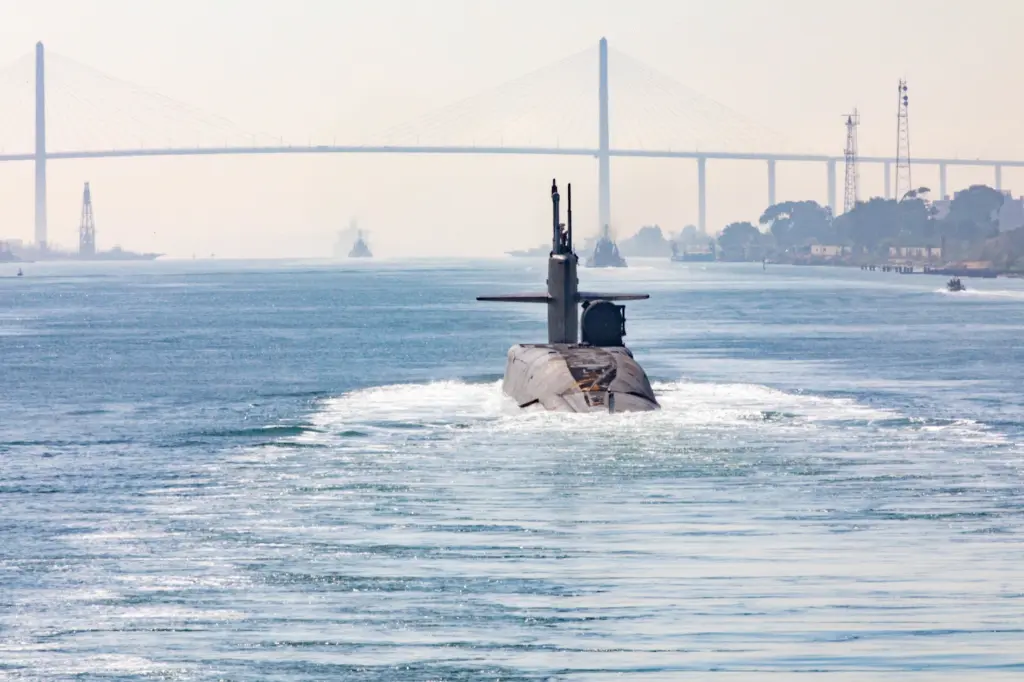
An Ohio-class submarine approaches the Mubarak Peace Bridge while transiting the Suez Canal, Nov. 5. The boat is deployed to the U.S. 5th Fleet area of operations to help support maritime security and stability in the Middle East region. (U.S. Navy photo by Mass Communication Specialist 1st Class Jonathan Word)

Release from U.S. Naval Forces Central Command Public Affairs 

***** 

06 November 2023 

MANAMA, Bahrain – An Ohio-class submarine arrived in the U.S. 5th Fleet area of operations, Nov. 5. 
 
The submarine’s rapid deployment in the U.S. Central Command area of responsibility demonstrates the flexibility and dynamic ability to deter potential adversaries, reassure partners, enhanced maritime security, and ensure freedom of navigation and the free flow of commerce. 

U.S. Naval Forces Central command is responsible for approximately 2.5 million square miles of area including the Arabian Gulf, Gulf of Oman, North Arabian Sea, Gulf of Aden, and the Red Sea. The U.S. Naval Forces Central Command’s mission is to conduct maritime security operations, theater security cooperation efforts, and strengthen partner nations’ maritime capabilities to promote security and stability in the U.S. 5th Fleet area of operations. 


Kratos XQ-58A Valkyrie Completes U.S Marine Corps PAACK-P Program Flight 

Marines XQ-58A showing off its unique graphics scheme in flight

Release from Kratos Defense & Security 

***** 

November 2, 2023 at 4:15 PM EDT 

SAN DIEGO, Nov. 02, 2023 (GLOBE NEWSWIRE) – Kratos Defense & Security Solutions, Inc. (Nasdaq: KTOS), a Technology Company in the Defense, National Security and Global Markets and an industry-leading provider of high-performance, jet-powered unmanned aerial systems, today announced the Marine Corps XQ-58A Valkyrie, a highly autonomous, low-cost tactical unmanned air vehicle successfully completed its first test flight October 3, 2023, at Eglin Air Force Base, Florida. Kratos partnered with the Marine Corps, the Office of the Undersecretary of Defense for Research and Engineering (OUSD (R&E)), the Naval Air Systems Command and Naval Warfare Center Aircraft Division to facilitate the ongoing research, development, test and evaluation of the Marine Corps XQ-58A Valkyrie. 

This joint collaboration was supported by the 40th Flight Test Squadron, 96th Test Wing and the Naval Air Warfare Center Aircraft Division. This flight marks a key milestone in the Marine Corps’ Penetrating Affordable Autonomous Collaborative Killer – Portfolio (PAACK-P) program. Future test flights inform Marine Corps XQ-58A Valkyrie requirements for the Marine Air-Ground Task Force Unmanned Aerial System Expeditionary (MUX) Tactical Aircraft (TACAIR). 

“This XQ-58A test flight and the data collected inform future requirements for the warfighter, while fueling innovation and experimentation opportunities within Marine Corps modernization and industry partnership,” said Scott Bey, portfolio manager of OUSD (R&E), Mission Capabilities, Prototypes and Experiments. 

The aircraft performed as expected. The XQ-58A has a total of six planned test flights with objectives that include evaluating the platform’s ability to support a variety of intelligence, surveillance, and reconnaissance (ISR) missions; the effectiveness of autonomous electronic support to crewed platforms; the potential for AI-enabled platforms to augment combat air patrols; and continuing to mature other manned-unmanned teaming (MUM-T) capability objectives. 

“The Marine Corps constantly seeks to modernize and enhance its capabilities in a rapidly evolving security environment,” said Lt. Col. Donald Kelly, Headquarters Marine Corps Aviation Cunningham Group and Advanced Development Team. “Testing the XQ-58 Valkyrie determines requirements for a highly autonomous, low-cost tactical UAS that compliments the need for agile, expeditionary and lethal capabilities in support of both the Marine Corps’ stand-in force operations in austere environments and the Joint Force.” 

Flying since 2019, Kratos’ XQ-58A Valkyrie is a high-performance tactical UAV capable of long-range flights at high-subsonic speeds currently in production in Oklahoma City. The Valkyrie can serve as a loyal wingman, conduct single UAS operations, or operate in swarms. Combined with its affordability, survivability, long-range, high-subsonic speeds, maneuverability, and ability to carry flexible mission kit configurations and mix of lethal weapons from its internal bomb bay and wing stations, the XQ-58A provide extreme flexibility for the multiple Department of Defense customers that have it under contract today. 

With design and production approaches leveraged and evolved from Kratos’ jet drone target aircraft, the high-performance Valkyrie falls well within the attritable cost class as defined by the House-passed 2024 National Defense Authorization Act (NDAA)—another key discriminator and a key enabling technology to achieve the Department of Defense’s mass mission. 

Steve Fendley, President of Kratos Unmanned Systems Division, said, “We are incredibly proud to have kicked off this first flight of the unique Marines Valkyrie mission configuration with such a successful result and look forward to continuing the partnership and cooperative team working relationship with the Marine Corps, the 40th Flight Test Squadron, 96th Test Wing and the Naval Air Warfare Center Aircraft Division.” 

Kratos’ American-made, affordable, high-performance jet aircraft offer affordable solutions to the production, deployment, and engagement of affordable mass for U.S. military defense. Kratos’ unique approach and portfolio of in-production and flying UAVs directly align with the Department of Defense’s most recent technology, strategy, and affordability thrusts by delivering systems well within the prescribed cost thresholds which can deploy and operate from even the most remote regions around the world.