Unmanned Surface Vessel Division One Makes Its First Port Visit in Yokosuka, Japan 

The unmanned surface vessel Ranger transits the Pacific Ocean during Integrated Battle Problem (IBP) 23.2, Sep. 7, 2023. IBP 23.2 is a Pacific Fleet exercise to test, develop and evaluate the integration of unmanned platforms into fleet operations to create warfighting advantages. (U.S. Navy photo by Mass Communication Specialist 2nd Class Jesse Monford)

From By U.S. 7th Fleet Public Affairs

*****

21 September 2023 

YOKOSUKA, Japan – The unmanned surface vessels (USVs) Ranger and Mariner from Unmanned Surface Vessel Division ONE (USVDIV-1) arrived at Fleet Activities Yokosuka on Sept. 18 as part of a scheduled port visit during Integrated Battle Problem (IBP) 23.2. 

IBP 23.2 launched this August and is the third multi-domain unmanned capabilities exercise under U.S. Pacific Fleet’s Experimentation Plan following IBP 23.1 earlier this year. The event will focus on testing and developing capabilities and concepts for medium and large USVs to advanced manned-unmanned teaming in the Indo-Pacific. 
  

“Unmanned and autonomous technologies are key to growing our distributed maritime operations framework.” said Rear Adm. Blake L. Converse, deputy commander of U.S. Pacific Fleet, who visited the USVs last month on Joint Base Pearl Harbor-Hickam. “By proliferating our presence in the Pacific and increasing the fleet’s situational awareness and lethality, we give ourselves more options to make better decisions at all levels of leadership.” 
 

Before arriving in Yokosuka, USVDIV-1 also participated in the Navy and Marine Corps’ Large Scale Exercise 2023.During the exercise, USVs have integrated with Carrier Strike Group One to expand its maritime domain awareness in support of the Nimitz-class aircraft carrier USS Carl Vinson (CVN-70). 

“Through the integration of unmanned platforms in our operations, we continue to forge a culture of learning and innovation within our Navy and with joint partners to deliver warfighting advantage.” said Rear Adm. Carlos Sardiello, commander, Carrier Strike Group 1. “Testing and integrating emerging technologies in a demanding, real-world operational environment is vital to providing feedback that informs our progress in this domain.” 
 

The exercise allows USVDIV-1, the command in tactical control of the exercise, to work closely with type commanders to develop concepts of operations for unmanned platforms. 

“Our approach is focused on integrating, exercising, and refining tactics, techniques, and procedures for immediate application into real world operations with the fleet.” said Cmdr. Jeremiah Daley, commanding officer of USVDIV-1.  

“Since standing up USVDIV-1 as a pre-commissioning unit in 2021, we continue to turn fleet feedback from exercises into adapting technology and requirement generation in order to provide realistic and impactful capabilities that future USV programs of record will bring to the Navy.” 
 

The port visit marks the first time any U.S. Navy USV has visited Japan as IBP 23.2 is the first exercise to employ USVs in the 7th Fleet area of responsibility. Following the visit, IBP 23.2 will continue to test, develop and evaluate the integration of unmanned platforms into fleet operations alongside partners and allies to create warfighting advantages and ensure regional security and stability in the Indo-Pacific. 


MDSU-1 DIVES THE ARCTIC WITH U.S. COAST GUARD 

BEAFORT SEA (August 11, 2023) A military diver swims behind the icebreaker USCGC Healy (WAGB 20) during a scientific mission in the Beaufort Sea with USCG divers of Regional Dive Locker West and Navy divers of Mobile Dive and Salvage Unit (MDSU) 1 Aug. 11, 2023. Together, the Coast Guard and Navy conducted 42 military dives, totaling 656 minutes of bottom time to depths of 40 feet in the Arctic Ocean. As a component of Explosive Ordnance Disposal Group One, MDSU-1 provides ready, expeditionary, rapidly deployable mobile diving and salvage companies to conduct harbor and waterway clearance, salvage, underwater search and recovery, and underwater emergency repairs in any environment. (U.S. Navy Courtesy Photo)

Release from U.S. Fleet Forces Command 

***** 

BEAUFORT SEA – Navy Divers assigned to Mobile Dive and Salvage Unit (MDSU) 1 trained in one of the most remote parts of the world this summer – under the polar ice cap of the Arctic Circle. 

Chief Navy Diver Zachary Hanson, MDSU-1 master diver and his team got underway aboard the icebreaker USCGC Healy (WAGB 20) in Seattle to conduct ice diving operations alongside U.S. Coast Guard divers. During their time aboard, Hanson and his team also provided training on the decompression chamber they brought with them. 

“They [the Coast Guard] don’t have a decompression chamber, but they’re getting one,” said Hanson. “We let them use ours for this mission conducted for the Office of Naval Research (ONR), and we helped train the Coastguardsmen divers on the operation, maintenance and transport of a decompression chamber.” 

Joint training operations like this help build interoperability between services in addition to innovating new tactics, techniques and procedures in an environment as challenging as the Arctic Circle. 

ONR and Healy’s mission was to observe arctic ice. They used stationary weather buoys equipped with multiple devices to monitor the ocean, weather and the ice to better understand the Arctic environment, its importance to the world, and how to defend it. 

During the mission, Hanson learned about the Arctic’s diverse biosphere, which works to sustain life both above and below the massive ice sheet. 

“Most people would think the Arctic wouldn’t have any life under the ice, but when we were under there, we saw jellyfish and some kind of shrimp or krill,” said Hanson. 

The MDSU-1 team is uniquely qualified to support this type of mission. Hanson and his team used dry suits designed to protect divers against hypothermia while submerged in 30-degree water. The team also used a dual manifold/dual regulator system to ensure they could continue to breathe from their tanks if one of their regulators froze over and a special tool that helped keep everyone safe underwater. 

“We’ve got an ice screw we can use if one of us gets lost under the ice,” Hanson said. “Basically, you push it into the ice and hang onto it. With the strobe light on the back of our tanks, it’s easy to see someone because the water under the ice is so clear.” 

Looking at polar ice from above the water, it might be easy to forget the ice is floating because it reflects up to 80% of sunlight, according to the National Oceanic Atmospheric Administration. However, the light shining through the ice causes a brightening effect. 

“It’s got to be the clearest water I’ve ever dived in my life,” Hanson said. “This time of year, there’s sunlight 24 hours a day, and from under the ice, the light is a perfect white, like a kind of fluorescent light. This is because the ice is diffusing the sunlight and mixes with the perfect blue of the water, but when you’re looking at deep water, the blue is only in your peripheral vision. Everything you look at straight on turns black. It’s very surreal.” 

According to Hanson, most arctic dives are incredibly remote, and while some could argue the Beaufort Sea is as remote as it gets, the MDSU-1 divers had a unique lifeline right at hand. 

“We’re trained to call the Coast Guard if a diver gets in trouble,” Hanson said. “But in this case, we were diving right off the side of a Coast Guard cutter, so we might have been in a super remote place, but the exact people we count on for help were right there.” 

As a component of Explosive Ordnance Disposal Group (EODGRU) 1, MDSU-1 provides ready, expeditionary, rapidly deployable mobile diving and salvage companies to conduct harbor and waterway clearance, salvage, underwater search and recovery, and underwater emergency repairs in any environment. 


Australian P-8A Poseidon Fleet to Receive Upgrades 

Release from Naval Air Systems Command 

***** 

Sep 20, 2023 

NAVAL AIR SYSTEMS COMMAND, PATUXENT RIVER, Md.–Australia recently announced the Royal Australian Air Force’s (RAAF) fleet of P-8A Poseidon Maritime Patrol and Response aircraft will be upgraded to Increment Three Block Two, the latest capability upgrade available for the aircraft. The upgrade will enhance anti-submarine warfare, strike and intelligence capabilities. 

“The Maritime Patrol and Reconnaissance Aircraft Program Office (PMA-290) works closely every day with our Australian teammates to promote international security and enhance interoperability, and this upgrade will set us up for future success in these endeavors,” said Capt. Eric Gardner, program manager of PMA-290. 

The first aircraft is expected to begin upgrades in 2026 with the final aircraft to be completed in 2030. The upgraded P-8A Poseidon aircraft will continue to be operated by RAAF’s No. 11 Squadron at RAAF Base Edinburgh, South Australia. 

The RAAF declared initial operating capability for the P-8A in March 2018. The fleet currently consists of 12 aircraft. In December 2020, the Commonwealth announced the acquisition of an additional two aircraft through its existing cooperative program with the U.S. Navy. The upgrade will ensure the RAAF P-8A’s operational effectiveness into the 2030s. Through cooperative programs such as the P-8A, the U.S. and Australian militaries continue to enjoy more than 100 years of “mateship.” 

PMA-290 manages the acquisition, development, support, and delivery of the Navy’s maritime patrol and reconnaissance aircraft. 


HII’s Ingalls Shipbuilding Authenticates Keel Of Amphibious Assault Ship Fallujah (LHA 9) 

Release from HII 

***** 

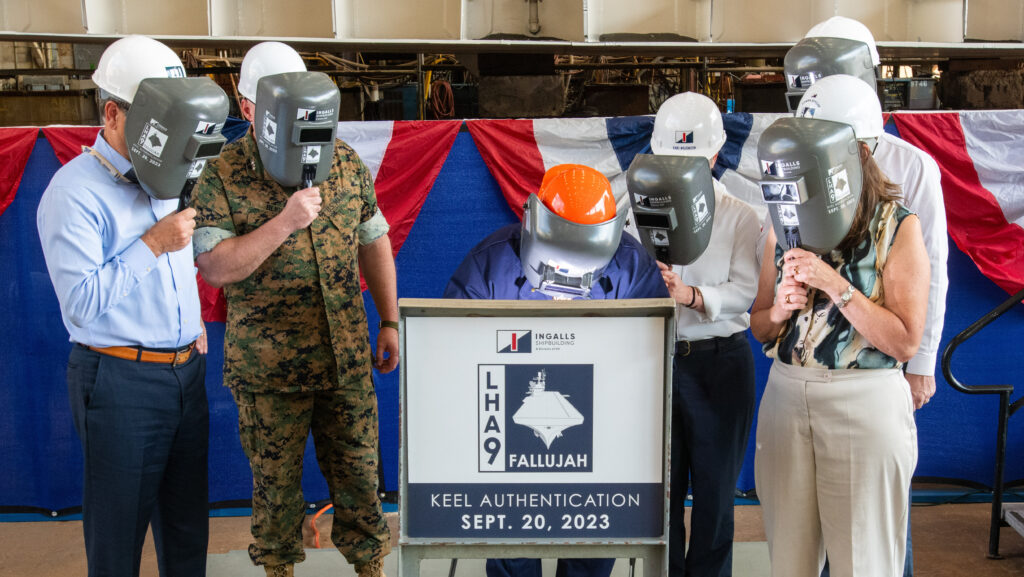
PASCAGOULA, Miss., Sept. 20, 2023 (GLOBE NEWSWIRE) — HII’s (NYSE: HII) Ingalls Shipbuilding division authenticated the keel today for the America-class amphibious ship Fallujah (LHA 9). The ship’s sponsor, Donna Berger, former first lady of the Marine Corps and spouse of Gen. David H. Berger, 38th commandant of the Marine Corps, was in attendance to declare the keel “truly and fairly laid.” 

During the authentication ceremony Ingalls Welder Seveta Gray welded the initials of the sponsor onto a ceremonial keel plate that will remain with the ship throughout its life. 

“Ingalls is honored to mark this important milestone with our shipbuilders and so many of our critical partners here today,” Ingalls Shipbuilding President Kari Wilkinson said. “Whether representing namesake, customer, community or shipyard, today’s keel event demonstrates the unique connection we have to one another through this industry and through our respective devotion to service.” 

Photos accompanying this release are available at: https://hii.com/news/hii-ingalls-shipbuilding-authenticates-keel-fallujah-lha-9

Ingalls was pleased to host Under Secretary of the Navy Erik Raven who also provided remarks at the ceremony. 

“The USS Fallujah, like her predecessors the USS America, USS Tripoli and USS Bougainville, will one day join the amphibious fleet, and serve as the centerpiece for amphibious ready groups and Marine Expeditionary Units,” Raven said. “L-class ships like the future USS Fallujah make our Navy and Marine Corps a potent fighting team, forward-postured around the globe, ready to respond to crisis and disaster.” 

The future USS Fallujah (LHA 9) is the fourth America-class large-deck amphibious assault ship built at Ingalls Shipbuilding and the second ship in the class to be built with a well deck. Similar to Bougainville, Fallujah will retain the aviation capability of the America-class design while adding the surface assault capability of a well deck and a larger flight deck configured for F-35B Joint Strike Fighter and MV-22 Osprey aircraft. These large-deck amphibious assault ships also include top-of-the-line medical facilities with full operating suites and triage capabilities. 

The America class is a multi-functional and versatile ship that is capable of operating in a high density, multi-threat environment as an integral member of an expeditionary strike group, an amphibious task force or an amphibious ready group. 

Ingalls has delivered 15 large-deck amphibious ships to the U.S. Navy. The shipyard delivered the first in the new America class of amphibious assault ships (LHA 6) in 2014. The second ship in the America class, USS Tripoli (LHA 7), was delivered to the Navy in early 2020 and Bougainville (LHA 8) and Fallujah (LHA 9) are currently under construction. 


Targeting Capability a Priority for Navy’s Triton UAV 

****** 

By Richard R. Burgess, Senior Editor

ARLINGTON, Va. — Equipping the Navy’s MQ-4C Triton high-altitude, long-endurance unmanned aerial vehicle (UAV) with a targeting capability is a priority that would enhance the system’s capabilities to support distributed maritime operations, the UAV’s builder said.  

The MQ-4C with the multi-intelligence Integrated Functional Capability 4 (IFC-4) achieved Initial Operational Capability (IOC) earlier this month when Unmanned Patrol Squadron 19 (VUP-19) deployed a detachment to Guam to establish an orbit. The squadron had deployed a two-aircraft detachment to Guam in 2020 for Early Operational Capability (EOC) with the IFC-3 configuration.  

Rho Cauley Bruner, Northrop Grumman’s Triton program director, said in an interview with Seapower that her program office is now “fully immersed in delivering [the IFC-4] configuration” in both retrofits to earlier-produced Tritons and “now we’re at that stage in the production line where we’re building the IFC-4 configuration from the ground up.”   

“As we look to the future, one of the things that’s really important to us is to have the system be as readily modifiable to accommodate threats as they develop and technologies as they mature, so, in partnership with the U.S. Navy, we continue to execute our strategy for advanced development,” Bruner said. “That would enable advanced capabilities insertion and mission expansion to keep pace with the threat. 

Triton sensors and other mission systems were deployed on a surrogate aircraft—a flying test bed—for targeting missions during Exercise Northern Edge. 

“The goal of that was to demonstrate persistent long-range targeting capability,” Bruner said. “That demo was done around the Gulf of Alaska and really did demonstrate that Triton has incredible potential to enhance that Distributed Maritime Operations concept that has been evolving over the last several years. 

“Adding the targeting capability to Triton [is] going to be a priority for our customer,” she said. 

The Navy’s program of record currently is 27 MQ-4Cs, including the three development aircraft (including one formerly owned by Northrop Grumman for development), the two initial IFC-3 EOC aircraft, and 22 production versions. Australia, a key partner in the Triton program, is procuring four Tritons for the Royal Australian Air Force. 

Bruner said that “we believe that six to seven Tritons would be optimal to help Australia conduct surveillance in its areas of interest.” 

The U.S. Navy plans to establish three orbits with its Triton UAV force and establish a second squadron, VUP-11, in fiscal 2026.  


General Dynamics Electric Boat awarded $517 million for Virginia-class submarine parts

Release from General Dynamics Electric Boat 

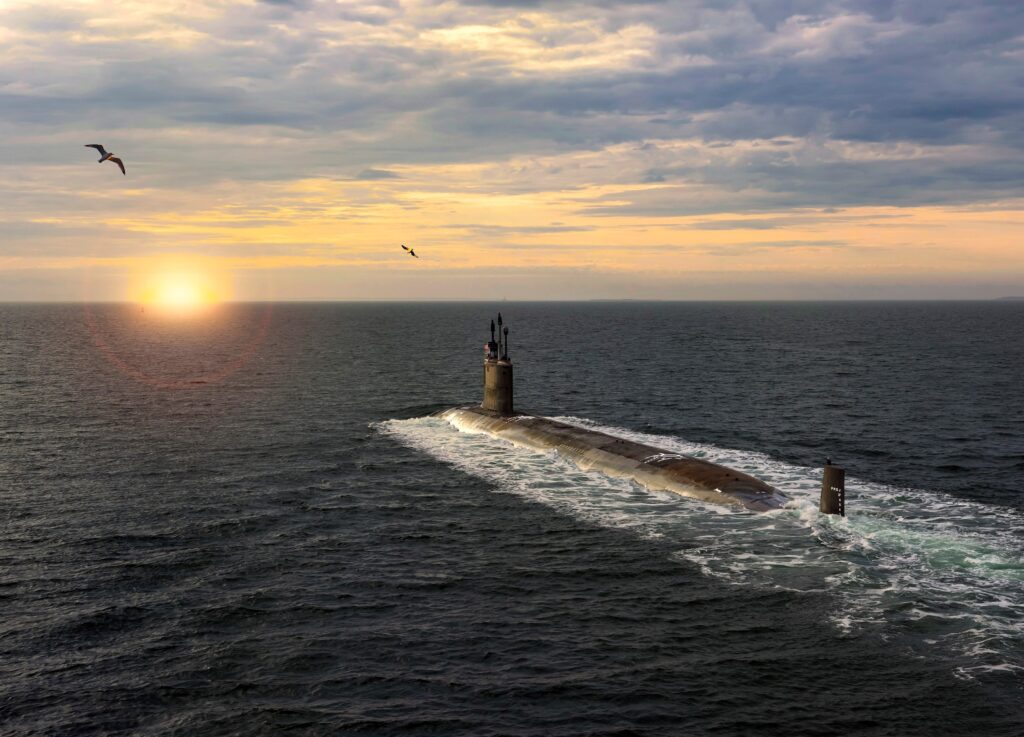
GROTON, Conn. (Sept. 20, 2023) – General Dynamics Electric Boat, a business unit of General Dynamics (NYSE: GD), announced today it was awarded a $517.2 million delivery order against a previously issued basic ordering agreement for procurement and delivery of initial Virginia-class attack submarine spare parts to support maintenance availabilities. Work will be performed in Groton and Pawcatuck, Connecticut. 

“The shipbuilders of Electric Boat are proud to continue our role providing lifecycle maintenance support to the U.S. Navy’s operational submarine fleet in keeping with our mission to provide sailors with the advantage that helps protect our nation,” said Kevin Graney, president of General Dynamics Electric Boat.  

General Dynamics Electric Boat designs, builds, repairs and modernizes nuclear submarines for the U.S. Navy. Headquartered in Groton, Connecticut, the company employs approximately 21,000 people. More information about General Dynamics Electric Boat is available at gdeb.com


Australia Awards L3Harris AUD$328 Million Maritime Underwater Tracking Range Contract 

Release from L3Harris 

***** 

PERTH, Australia, Sept. 20, 2023 — The Australian Department of Defence awarded L3Harris Technologies (NYSE:LHX) a contract, valued at up to AUD$328 million, to deliver new Maritime Underwater Tracking Ranges (MUTR) for the Royal Australian Navy (RAN). 

The SEA1350 Phase 3 MUTR program will provide undersea warfare support including a sub-surface tracking capability to aid current and future Australian Defence Force assets, warfighting tactics and proficiency. This program also enables sovereign readiness by safeguarding Australia’s maritime approaches and sea lines of communication. 

“We’re committed to growing Australian defence capabilities by leveraging our global technology and experience to develop Australia’s sovereign maritime underwater tracking range approach,” said Alan Clements, Corporate Vice President and Australia Country Executive, L3Harris. “This is an important competence now and into the future as we continue to modernize and enhance maritime platforms and systems.” 

Through a series of sensors, the tracking ranges will capture and relay information on the location and movement of assets that are operating within the tracking field. The MUTR will facilitate exercises in deep ocean and littoral waters, involving surface and sub-surface assets simultaneously. The ranges are integral to the Commonwealth being able to swiftly test and evaluate the readiness of platforms and their weapon systems, especially in support of Australia’s strategic shipbuilding program. 

L3Harris will build the MUTR in Western Australia and will provide the RAN with sub-surface tracking capability and optimized preparedness. The MUTR will support Australia’s emphasis on anti-submarine warfare capability and enable littoral test and evaluation enhancements through the next decade. 


French-Led Combined Task Force 150 seized more illegal narcotics in the Arabian Sea

Release from U.S. Naval Forces Central Command Public Affairs  

***** 

By U.S. Naval Forces Central Command Public Affairs | September 20, 2023 

MANAMA, Bahrain — On September 7, UK warship HMS Lancaster (F229), operating in support of the French-led Combined Task Force (CTF) 150 seized more than 450kg of illegal drugs including heroin and hashish in the Arabian Sea. 

With a street value of approximately $9.5 million this is the first narcotics seizure since the French Navy took over command of CTF 150 from the UK in July. The Combined Maritime Forces (CMF) remain committed to disrupting criminal and terrorist activities by restricting their freedom of maneuver in the maritime environment. 

Capt Yannick Bossu, CTF 150 Commanding officer said, “This seizure demonstrates once again the operational effectiveness of CTF 150 and illustrates the UK and France’s commitment to maritime security alongside their regional and international partners.” 

Cmdr Chris Sharp, HMS Lancaster Commanding Officer remarked, “This success again demonstrates how international partners can work together in stopping illegal maritime activity which funds terrorist activity. This was a great success shared by all those involved.” 

CTF 150 is one of the five operational forces of CMF, a 38-nation maritime partnership headquartered in Bahrain. CMF strengthens the maritime security in this strategic area, by countering activities that finance terrorism and international crime. This is the twelfth time that France commanded CTF 150. 

 
https://www.cusnc.navy.mil/


Australia Announces Procurement of Fourth MQ-4C Triton UAV

By Richard R. Burgess, Senior Editor

ARLINGTON, Va.—The Australian Defence Force (ADF) will procure a fourth MQ-4C Triton high-altitude, long-endurance unmanned aerial vehicle UAV), the Australian government announced in a Sept. 19 release.

The Triton’s builder, Northrop Grumman Corporation, is scheduled to deliver Australia’s first Triton and its ground and support systems in 2024. The UAVs will be operated from RAAF Tindal, in the Northern Territories by 9 Squadron, which will be headquartered RAAF Edinburgh, South Australia. 

“Defence Industry Minister Patna Conroy said the purchase of the additional Triton will enhance operations from Australia’s northern bases, a priority under the Defence Strategic Review,” the release said. 

Northrop Grumman continues production of the latest configuration of the Triton, the multi-intelligence Integrated Functional Configuration 4 (IFC-4) for the U.S. Navy. Earlier this month, the U.S. Navy declared Initial Operational Capability for the Triton, which has been deployed to Guam to establish its first orbit. The Triton deployed to Guam in 2020 for Early Operational Capability. The Navy’s program of record for the Triton calls for 27 aircraft, including the development aircraft. 

Australia also plans to upgrade its fleet of 14 P-8A Poseidon maritime patrol aircraft between 2026 and 2030 with “enhancements to anti-submarine warfare, maritime strike and intelligence collection capabilities,” the release said. 


USS Marinette (LCS 25) Commissions the Wright Way

Release from Littoral Combat Ship Squadron Two (LCSRON 2) Public Affairs 

***** 

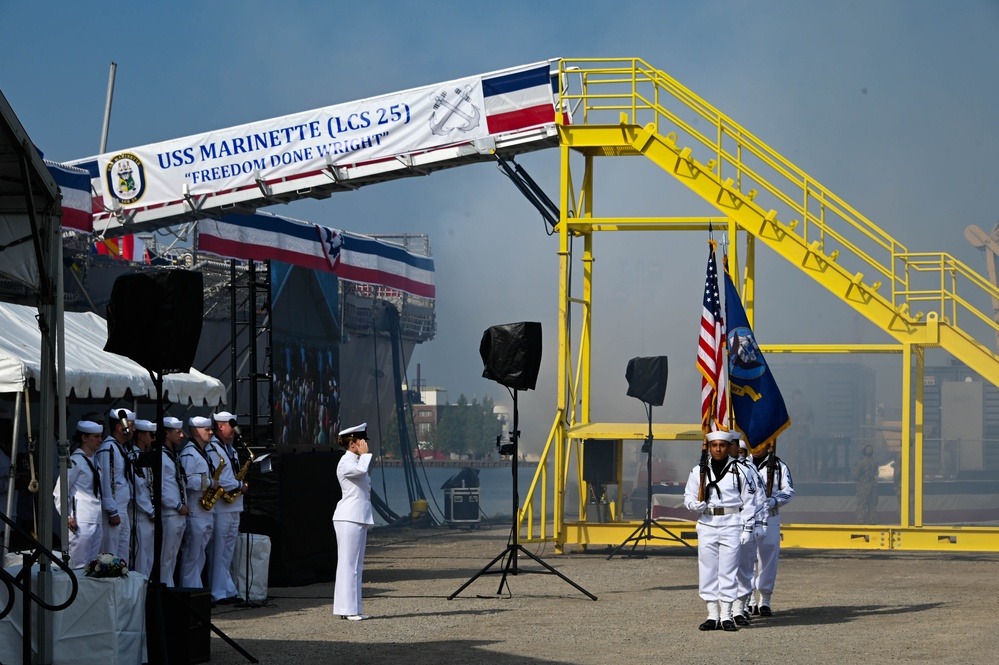
Menominee, Michigan. — The U.S. Navy commissioned its newest Freedom-variant littoral combat ship USS Marinette (LCS 25) September 16, 2023, in Menominee, Michigan. 
 
“It is a day filled with pride for many many men and women who spent countless hours building this great Navy ship right here in Marinette. It is an honor and a privilege to stand before you on this momentous occasion as we welcome this remarkable ship into the proud and historic lineage of the nation’s fleet.” said the Honorable Steve Genisot, Mayor of Marinette, Wisconsin. “On behalf of the city of Marinette, you are the heart and soul of this ship. We’re privileged to look forward to this distinct moment, may she sail proudly and return home safely.” 
 
Guest speakers for the event also included the Honorable Mike Gallagher, U.S. Representative, Wisconsin’s 8th District, who delivered the commissioning ceremony’s principal address. Remarks were also provided by the Honorable Jennifer Granholm, ship’s sponsor, the Honorable Russell Rumbaugh, Assistant Secretary of the Navy for Financial Management and Comptroller; Vice Adm. Darse E. Crandall, Jr., Judge Advocate General of the Navy; the Honorable Jean Stegeman, Mayor of Menominee, Michigan; the Honorable Steve Genisot, Mayor of Marinette, Wisconsin; and Mr. Chauncey McIntosh, Vice President and General Manager, Lockheed Martin Integrated Warfare Systems and Sensors. 
 
“We remain steadfast and committed to dedicate this LCS platform and our continued partnership with the United States Navy to innovate for the future and to improve and evolve this warfighting capability,” said McIntosh. “I know that it is her crew that will bring her to life and carry on the spirit of Marinette and Menominee.” 
 
The ship sponsor, The Honorable Jennifer Granholm, Secretary, U.S. Department of Energy, gave the first order to “man our ship and bring her to life.” 
 
“I am honored to be one of her many parents and I was very humbled when I was asked to be her sponsor. I am particularly proud that she is named after a great city,” Granholm reflected. “May the USS Marinette join the mighty Navy American fleet! Thank you to those of you out here to crafted our warrior, who laid our keel, who welded her to precision. May she carry with her on her missions around the globe the spirit of her namesake.” 
 
USS Marinette (LCS 25) was built by the Lockheed Martin and Fincantieri Marinette Marine in Marinette, Wisconsin, the ship was authorized on March 31, 2016, and named on Sept. 22, 2016. It was christened Nov. 20, 2021, and completed acceptance trials the following year. The ship was delivered to the U.S. Navy on Feb. 6, 2023. 
 
“These men and women aboard USS Marinette are the absolute best and brightest and truly represent the thousands of Sailors standing watch around the world today.” said Cmdr. Shane Brewer, Marinette’s commanding officer. “This crew has truly embodied our motto Freedom Done Wright and have embraced our namesake city; I couldn’t be prouder of them.” 
 
The ceremony featured early successes, cap milestones, fair wishes and following seas while showcasing a weeklong series of events celebrating the ship, its crew, community and namesake city. 
 
USS Marinette is the first U.S. Navy ship to bear and honor Marinette, Wisconsin. USS Marinette is the only Navy vessel that has been built christened and commissioned in its namesake city. 
 
LCS is a fast, agile, mission-focused platform designed for operation in near-shore environments yet capable of open-ocean operation. It is designed to defeat asymmetric “anti-access” threats such as mines, quiet diesel submarines and fast surface craft. They are capable of supporting forward presence, maritime security, sea control, and deterrence. 
 
USS Marinette will be homeported at Naval Station Mayport, Florida.