Naval Surface Force, U.S. Pacific Fleet, Public Affairs
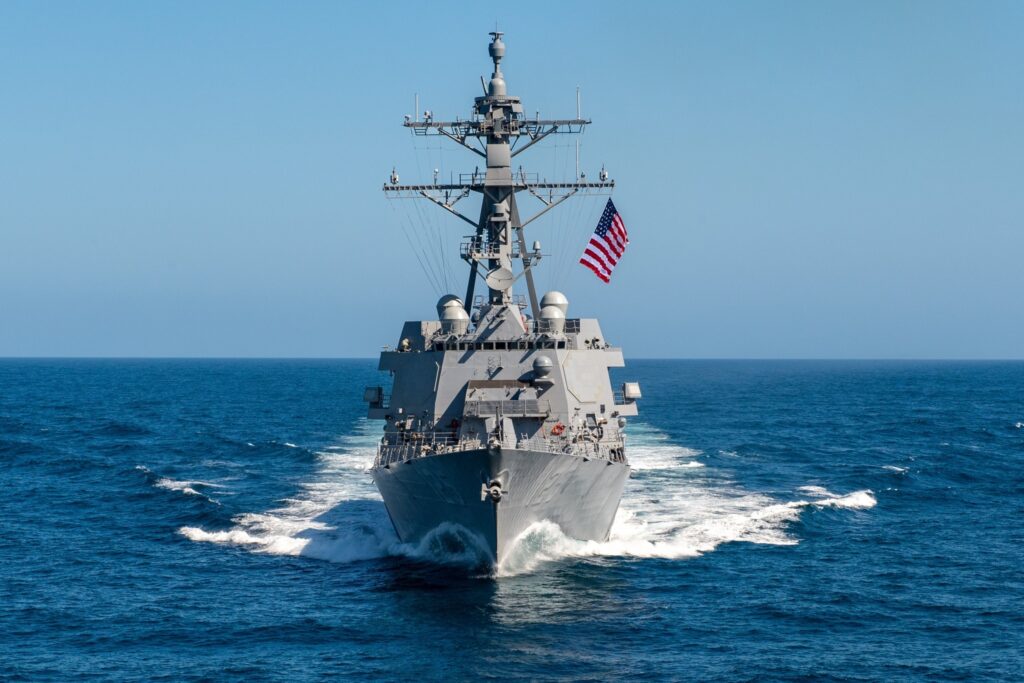
The future USS Jack H. Lucas (DDG 125) will join the active fleet on October 7, with a commissioning ceremony in Tampa, Florida. DDG 125 will be the Navy’s first Flight III destroyer with notable technological upgrades. The Flight III upgrades are centered on the AN/SPY-6(V)1 Air and Missile Defense Radar and incorporates upgrades to the electrical power and cooling capacity.
Guided-missile destroyers provide multi-mission offensive and defensive capabilities. Destroyers can operate independently or as part of carrier strike groups, surface action groups, and expeditionary strike groups. They are capable of conducting anti-air warfare (AAW), anti-submarine warfare (ASW), and anti-surface warfare (ASuW).
The ship’s name was selected on Sept. 17, 2016 by then Secretary of the Navy Ray Mabus to serve as a constant reminder to the immense impact actions taken by any one Sailor or Marine can truly have.
DDG 125 is named for Pfc. Jack Lucas, who served in the U.S. Marines during World War II, earning the Medal of Honor for his heroism at Iwo Jima, when he was just 17 years old. He is the youngest Marine, and the youngest serviceman in World War II, to be awarded the United States’ highest military decoration for valor. In 1961, he returned to military service as a captain in the U.S. Army and trained younger troops headed for Vietnam. Lucas passed away on June 5, 2008 in Hattiesburg, Mississippi.
Ruby Lucas, widow of the ship’s namesake, and philanthropist Cathy Reynolds are the ship’s sponsors.
This will be the first Naval warship to bear the name Jack H. Lucas.
Following commissioning, USS Jack H. Lucas will transit to its homeport of San Diego.
Force Design 2030: Acquisition for the Future Battlefield
QUANTICO, Va. — The 2018 National Defense Strategy warns that U.S. adversaries are actively challenging the long-standing rules-based international order, thus “creating a security environment more complex and volatile than any we have experienced in recent memory.”
Building on the Pentagon’s observations, Gen. David H. Berger, then-commandant of the Marine Corps, released his seminal 2019 Commandant’s Planning Guidance, in which he proposed sweeping changes aimed at transforming the Corps from its established land-focused role in the Middle East into a naval expeditionary force-in-readiness primed for active engagement in contested maritime spaces within the Indo-Pacific region.
This ultimately led to the initiation of Force Design 2030—a strategic overhaul aimed at transforming the Marine Corps into a more agile, technologically advanced force, prioritizing stand-in forces, littoral operations, modernization, force sizing and composition, training, and international cooperation.
For the acquisition community, the shift to Force Design 2030 opens doors for creativity and innovation, as seen in the development and fielding of cutting-edge gear by Marine Corps Systems Command and Program Executive Officer Land Systems.
As Marine Corps Systems Command’s Executive Director, Dr. Todd Calhoun, recently told Quantico’s acquisition workforce, “As we prepare to face potential future adversaries, it is becoming increasingly evident that acquisition is the pacing element of Force Design 2030.”
In reimagining the Corps for future battlefields, Force Design 2030 centers on a leaner, agile force equipped for naval expeditionary warfare and prepared for an unpredictable future.
“Force Design 2030 is more than a strategy – it’s a vision for the future of the Marine Corps, one that takes into account the evolving challenges of the modern battlefield,” said Brig. Gen. David C. Walsh, commander of MARCORSYSCOM. “As we shift focus towards the Indo-Pacific, it’s imperative we equip our Marines with the cutting-edge tools and technologies that give us an edge in this new operational landscape.”
A significant aspect of this transformation is the realignment and reduction in ground and aviation forces, signaling a transition from traditional ground combat and emphasizing naval expeditionary warfare and its distinct demands.
In parallel, the strategy underlines the deployment of cutting-edge technologies like unmanned aerial and ground systems, advanced air defenses, and anti-ship missiles to enhance the Corps’ ability to sense, strike, and counter targets.
These capabilities are acquired through a process of continuous experimentation and an emphasis on user feedback, particularly from the fleet.
“Our requirements are well-defined, but there’s been an intriguing rediscovery process within the acquisition community,” shared Program Executive Officer Land Systems Stephen Bowdren. “We’ve come to understand that, as important as our requirements are, the unique needs and experiences of each Marine are just as critical. We’re not merely fulfilling a requirement; we’re also taking into account the user experience and focusing on ensuring the success of our warfighters.”
Walsh is confident that MARCORSYSCOM will continue to prepare the warfighter to fight and win in any clime or place.
“While China stands as our primary adversary, our commitment remains unwavering to protect American interests across the globe,” he said. “The strategic rationale behind our approach is clear: equipping our forces with the capabilities to effectively engage in this highly challenging theater ensures that we have the necessary tools to respond to crises, conflicts, and responsibilities wherever they may arise worldwide.”
As Ukraine’s successful use of the American High Mobility Artillery Rocket System has shown in Eastern Europe, American capabilities remain versatile—especially against our stated adversaries.
“Nevertheless, we must acknowledge the magnitude and breadth of the challenges confronting us, in both military and economic terms, that pose the most substantial threat we’ve faced in generations,” Bowdren explained. “That said, I wouldn’t say we were ever unprepared for this challenge. We just never want a fair fight. We want a completely unfair fight if it comes to that. Our part in that effort is to develop, build, deliver, and sustain dominant warfighting capabilities for our Marines.”
Evolving Acquisition for Future Battlefields
While Force Design 2030 reimagines the operational role of the warfighter, it also opens the door for innovative acquisition, putting bleeding-edge gear in the hands of Marines.
“Change and evolution are hardwired into the DNA of the Marine Corps,” said Calhoun. “The shift towards the Indo-Pacific under Force Design 2030 brings new challenges and opportunities in acquisition. Our commitment is to drive innovation and smart procurement strategies that ensure our Marines have the best tools and technologies to adapt, succeed and ultimately dominate in this evolving landscape.”
Three years into Force Design 2030’s ten-year timeline, the modeling and experimentation stage, which permitted the divestment of legacy gear, is complete. That means the focus lies solidly on equipping the warfighter—both at home and in the field.
“One of the big shifts that we did this year from a planning and possibly a programming perspective is that we said divestments are complete. We are no longer looking to figure out what do we need to get rid of in order to modernize,” Brig. Gen. Stephen Lightfoot, director of Marine Corps’ Capabilities Development Directorate told reporters in June.
So far, this has meant a shift towards acquiring state-of-the-art gear allowing Marines to beat their adversaries on the battlefield while operating independently in small, distributed forces—often for extended periods with limited outside support.
This has led to the development of capabilities like the expeditionary fueling systems, multi-wave radio systems, an updated vehicular fleet, and the Corps’ first medium-range air defense capability since HAWK. On the MARCORSYSCOM side, one program that stands out is the Long Range Unmanned Surface Vessel—or LRUSV.
Lauded as one of the Corps’ first semi-autonomous vessel programs, the LRUSV aligns with the Commandant’s latest Force Design 2030 update, where Berger envisioned a future in which “amphibious warfare ships will offer even more capability, serving as ‘motherships’ for a variety of manned, unmanned, and human-machine teamed systems.”
“Through Middle Tier of Acquisition rapid prototyping authorities, the team was able to assess the market, place vendors on agreement, and quickly deliver LRUSVs, autonomy software, sensors, and C2 equipment,” said Col. Paul Gillikin who, until recently, served as program manager for Fire Support Systems.
“Due to our strong vendor-program office team, we had a boat in the water one year from agreement award despite COVID supply chain impacts. The benefits of the LRUSV prototyping effort allows the Marine Corps to understand the concept, costs, and [Doctrinal, Organizational, Training, Materiel, Leadership and education, Personnel, Facilities and Policy] implications before the Service becomes fully invested,” he continued.
This rapid prototyping process ultimately allowed Gillikin’s team to get LRUSV on the water and in the hands of Marines for testing quickly, allowing for increased Marine feedback throughout the acquisition process.
Col. Craig Clarkson, commanding officer at Marine Corps Tactical Systems Support Activity, adds perspective to this emphasis on feedback, stating, “Force Design 2030 is not simply a blueprint for the future; it’s a call for dynamic engagement with the Fleet. Their firsthand experiences, tactical insights, and invaluable feedback are integral to our acquisition process and help shape our understanding of what is needed to fight and win on the modern battlefield.”
Similarly, PEO Land Systems has been successful in bringing back the Corps’ air defense capabilities through its Ground-Based Air Defense systems. The Medium-Range Intercept Capability, or MRIC, is one example of this programmatic success.
“A striking example of successful acquisition support to Force Design 2030 execution can be seen in our Ground-Based Air Defense system,” said Bowdren. “Just five years ago, our primary air defense weapon was the Stinger Man-Portable Air-Defense System. Today, we’ve implemented systems like the Marine Air Defense Integrated System, the Light Marine Air Defense Integrated System, MRIC, and we’re seeing the emergence of Installation Counter-small Unmanned Aircraft Systems. In a very short period of time, we’ve established a comprehensive suite of capabilities designed to counter the full range of aerial threats to Marines.”
The transformation undergone by the Marine Corps is manifest in the groundbreaking gear that equips Marines. The past three years have been marked by a radical overhaul, with MARCORSYSCOM and PEO Land Systems leading the acquisition charge towards force modernization.
The journey, though charted with unerring foresight and audacity, continues to evolve. Experimentation, an integral part of this process, has allowed for the rapid adaptation and refinement of systems to best serve Marines’ operational needs. The input and feedback from Marines, those on the ground, have been invaluable in this phase, fine-tuning advancements to the unique demands of the modern battlefield.
Through the vision of Force Design 2030, MARCORSYSCOM and its supported Program Executive Offices have updated the Corps’ equipment and embraced a new generation of warfare—utilizing bleeding-edge gear and cutting-edge tactics that redefine the landscape of conflict. The transformation promised by FD 2030 is underway, and with it, the Marine Corps is poised to ensure America’s continued military superiority, no matter the time or place.
Draper Breaks Ground on Strategic Enhanced Ground Test Facility
Draper begins work on a new campus in Florida to support the nation’s defense, security and space exploration interests.
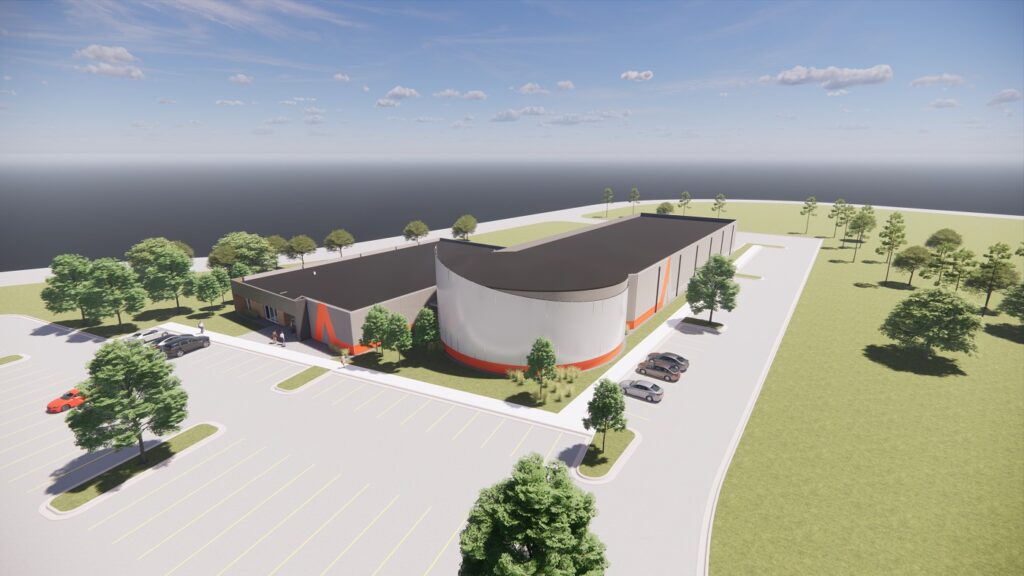
CAMBRIDGE, Mass., Aug. 29, 2023 /PRNewswire-PRWeb/ — Draper will further demonstrate its commitment to the Strategic Deterrence Mission and to the nation’s defense, security, and space exploration interests today with the groundbreaking ceremony for its Strategic Enhanced Ground Test Facility (SEGTF) in Riverfront Center, Titusville, Fla.
As part of the infrastructure investment, the Draper Strategic Enhanced Ground Test Facility will enable testing of critical Guidance, Navigation & Control technologies with the support of a world-class centrifuge and associated Navy Test Facilities resident at Cape Canaveral. Approximately 50 Draper employees will be initially located in the SEGTF.
The ceremony will be held at 8:30 a.m. EDT at the Draper Strategic Enhanced Ground Test Facility site located at 6280 Riverfront Center Boulevard, Titusville, Fla.
Highlighting the occasion will be remarks from Vice Admiral Johnny R. Wolfe, Jr., USN, Director, Strategic Systems Programs; Draper CEO and President Dr. Jerry M. Wohletz; Draper Vice President and General Manager of Navy Strategic Systems Robert Bacon; and Draper Board of Directors Chairman David Shedd.
“As the U.S. Navy’s strategic guidance prime contractor, Draper has designed and supported the guidance system for every fleet ballistic missile deployed since the program began in 1955,” Wohletz said. “This new facility enables Draper to continue to deliver on that legacy while preparing for major nuclear triad modernization efforts and underscores Draper’s commitment to national security.”
The Draper Strategic Enhanced Ground Test Facility will have approximately 37,000 square feet. This facility will house Draper employees, providing core capabilities in simulation, hardware-in-the-loop and system test to continue to enable a ‘test-as-you-fly’ approach for exquisite guidance components required in high accuracy, reliability and survivability applications. This range of services will provide local hiring opportunities. The long-term vision expands Draper’s campus footprint and includes future expansion to support over 150 employees.
“We look forward to continuing this important mission with our industry partners,” said Vice Admiral Johnny R. Wolfe, Jr., USN, Director, Strategic Systems Programs. “Draper has long pioneered innovative test approaches for Strategic Weapons Systems and this facility will continue that legacy.”
Robert Bacon, Vice President and General Manager of Navy Strategic Systems at Draper, said, “The Draper Strategic Enhanced Ground Test Facility continues our commitment to provide the Navy with a highly capable, reliable, flexible test infrastructure that replicates environments only seen in costly missile tests. These proven approaches are critical as we look to develop and deploy capabilities at a pace we have not seen in decades across the Strategic mission domain.”
Construction of the building is scheduled for completion in summer of 2026. Draper will serve as the sole tenant of the Draper Strategic Enhanced Ground Test Facility. North American Properties was the property seller and will be serving as the property development partner.
Experiences from the Vietnam, Iraq Conflicts Shape How Naval Aviation Will Fight Next
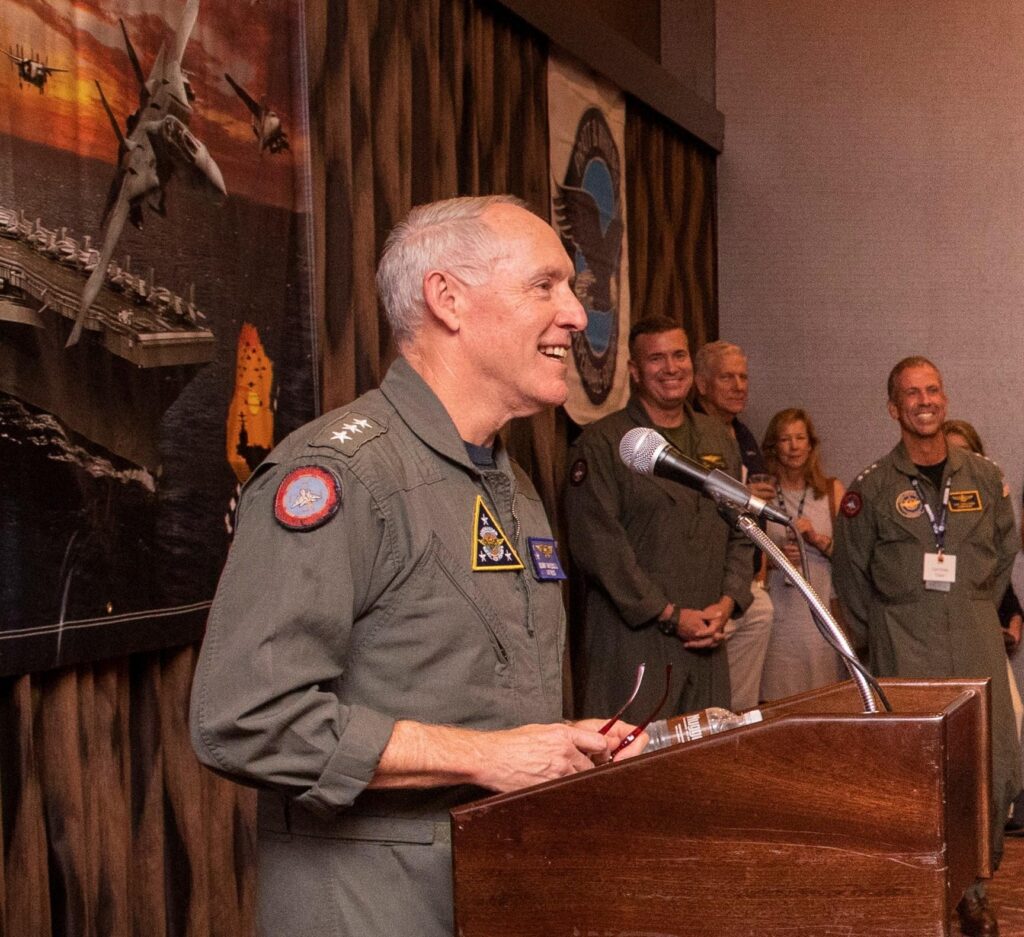
SPARKS, Nevada (Aug. 24, 2023) Commander, Naval Air Forces Vice Adm. Kenneth Whitesell speaks at the Naval Aviation Enterprise (NAE) Update to Industry Partners alongside Marine Corps Deputy Commandant for Aviation Lt. Gen. Michael Cederholm (behind left) and Commander, Naval Air Systems Command Vice Adm. Carl Chebi during Tailhook 2023.
Sparks, Nev.–The Tailhook Association’s 2023 symposium—Hook ’23—took place August 24- 26, 2023, ending with a banquet keynoted by the Commander of U.S. Indo-Pacific Command (INDOPACOM), Adm. John Aquilino, and Commander, Naval Air Forces (CNAF), Vice Adm. Kenneth Whitesell. The three-day event featured dialogue from across carrier aviation, providing opportunities for naval aviators to honor their past as well as to discuss the requirements for current readiness and the future force.
As senior leaders and senior naval aviators, Aquilino and Whitesell participated in multiple events throughout the three-day symposium, listening to the needs of the fleet and sharing with them high-level perspectives.
Aquilino emphasized that Naval Aviation members have to “be ready … We are doing everything, every day, to prevent conflict. That’s what we do.” He added that a war in the Pacific would be detrimental to every nation on earth. The United States doesn’t want that but would win if necessary. “The integrated joint force of the United States is not something you’re ready to take on today, tomorrow or any day,” Aquilino stated.
The camaraderie and unmatched abilities of Naval Aviation were common threads throughout Hook ’23. Whitesell stated, “It is up to us, every person in this room, to make the Navy and Naval Aviation an elite culture that America’s brightest, toughest and most innovative youth choose to join … it relies on us to maintain the mindset of duty, preparedness and sacrifice–a culture evidenced in past heroes, who have truly set the example.”
This year’s theme focused on Operation Iraqi Freedom (OIF), with two panels exploring how Naval Aviation has progressed in the two decades since that conflict began, the lessons learned from those who flew operations and how the experiences of that generation form the new generation of warfighters. One panel featured speakers who were junior officers during the conflict while the other featured senior leaders from the conflict.
Naval Aviation played a pivotal role in OIF’s success and in supporting joint and coalition forces on the ground. “There’s a constant steady push for integration across the force from seabed to space,” said Naval Air Warfare Development Center, Deputy Commanding Officer, Capt. Michael “Snap” Langbehn. Operating from aircraft carriers and amphibious assault ships, pilots and aircrew provided crucial air support, reconnaissance and strike capabilities that significantly contributed to the campaign’s achievements.
For many of the people involved in OIF, the confidence in them to execute combat operations safely showcased the level of training and skill needed to be an immediate asset. “There was an amazing amount of trust that was put into us; we went from flight school to flying combat missions in a short amount of time,” said the Commander of Carrier Air Wing One, Capt. Brad “Keds” Converse.
During the most emotionally powerful panel, four Vietnam Prisoners of War (POWs) shared stories and lessons from captivity. In a large ballroom filled to standing room only, attendees listened to the compelling narratives of Capt. Rod Knutson, Capt. Irv Williams, Mr. Dave Everett and Capt. Jack Ensch as they described how they endured as POWs in the infamous Hanoi Hilton and came back to live meaningful, productive lives of contribution.
“We didn’t stop fighting when we were captured,” Williams said. “We were proud to serve. We are proud of this country.”
Another cornerstone of the symposium was the Aviation Flag Panel. In addition to Aqulino and Whitesell, panelists were: U.S. Marine Corps Deputy Commandant for Aviation Lt. Gen. Michael Cederholm; Commander, Naval Air Systems Command (NAVAIR), Vice Adm. Carl Chebi; Commander, Naval Air Force Atlantic, Rear Adm. Douglas Verissimo; the Navy’s N98, Rear Adm. Michael Donnelly; Deputy Chief of Naval Personnel, Rear Adm. Michael Baze; and Chief of Naval Air Training, Rear Adm. Richard Brophy. They answered questions from the crowd and provided updates to a number of projects and initiatives.
Donnelly spoke about how carriers are a lynchpin in Naval Aviation. The ability to get the carriers in the new Ford-class delivered on-time is essential, and the Navy is working closely with industry to optimize the process.
Other topics touched included the Air Wing of the Future including the incorporation of the F-35 Joint Strike Fighter, an improved pipeline for new students training to be naval aviators and the continued press for improving quality of life/quality of service.
Chebi encouraged aviators to come to his command, NAVAIR, as part of the test community. They need the best and the brightest, he said, to test the future capabilities of Naval Aviation.
Other programming from the symposium included panels about resourcing, the Naval Safety Command, careers and industry as well as a winging ceremony in which several new aviators pinned on their wings of gold–a meaningful experience for everyone in the community. For additional information from Hook ‘23 and pictures from the winging, POW panel and more, visit then follow the NAE on LinkedIn at https://www.linkedin.com/company/naval-aviation-enterprise, on Facebook @NAEready and on X @NAE_Readiness.
U.S. Navy Awards Sikorsky Contract to Build 35 CH-53K Helicopters
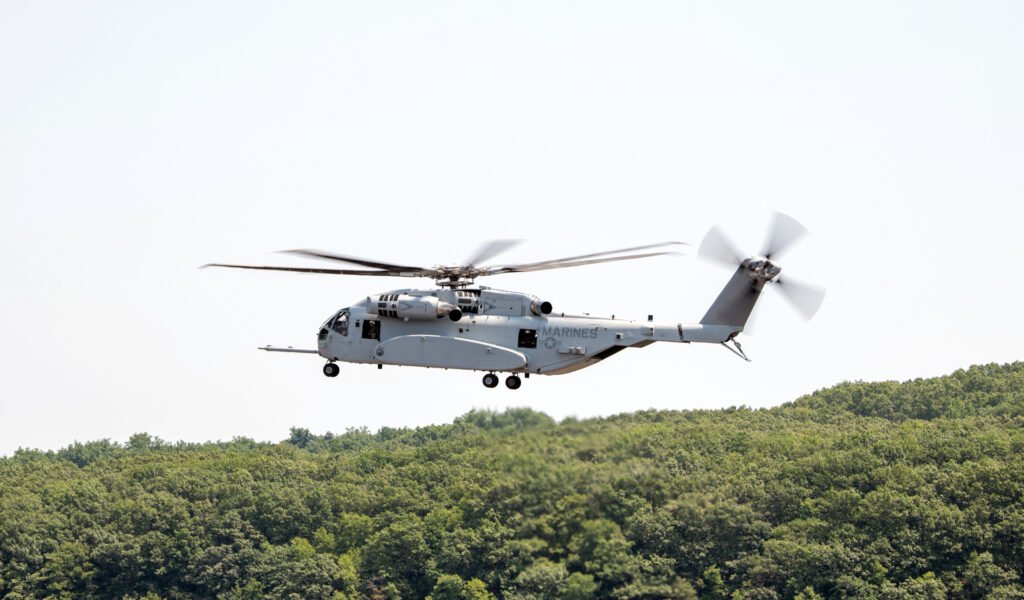
U.S. Marines conduct a CH-53K test flight at Sikorsky in Stratford, Conn. The heavy lift helicopter will be based at Marine Corps Air Station New River in Jacksonville, North Carolina. Photo courtesy of Sikorsky, a Lockheed Martin company.
The $2.7 billion contract is the largest for the King Stallion
STRATFORD, Conn., Aug. 24, 2023 — The U.S. Navy awarded Sikorsky, a Lockheed Martin company, a $2.7 billion contract to build and deliver 35 additional CH-53K helicopters – the largest procurement to date for this multi-mission aircraft.
“This contract award for 35 CH-53K helicopters stabilizes Sikorsky’s nationwide supply base, creates additional production efficiencies, and provides the U.S. Marine Corps with transformative 21st century technologies,” said Paul Lemmo, president of Sikorsky. “Our long-standing partnership led to this best value contract award providing the capability and readiness the Marines need.”
The agreement includes 12 U.S. Marine Corps Lot 7 aircraft, 15 U.S. Marine Corps Lot 8 aircraft, and eight aircraft for Israel.
Sikorsky will begin delivering these aircraft in 2026.
This contract significantly advances Sikorsky and the U.S. Navy on the path toward a multi-year agreement and the 200-aircraft Marine Corps Program of Record.
Eight More CH-53K Special Ops Helicopters for Israeli Air Force
This contract award includes eight additional CH-53K helicopters for the Israeli Air Force and follows the initial production announcement in 2022 for the first four aircraft under a U.S. Navy Foreign Military Sales agreement.
The multi-mission CH-53K will support Israeli special operations programs, as well as provide the Israeli Defense Forces with a platform that has the speed, safety, survivability, and gross weight capability to support all of its missions including troop and cargo transport and search and rescue.
Focus on Full-Rate Production
The U.S. Navy declared Full-Rate Production for the CH-53K program in December 2022. This is expected to increase production to more than 20 helicopters annually in the coming years.
Sikorsky is procuring long-lead items and critical materials to support ramp up of CH-53K production in its digital factory.
“Our skilled employees are using digital tools to build more efficiently as these helicopters roll off the production line and into the hands of the Marines,” said Dana Fiatarone, vice president, Sikorsky Marine Corps Systems. “The performance of the CH-53K in the fleet validates its capabilities to provide a strategic advantage and shows that even more is possible with this aircraft.”
The CH-53K operated by Marines in the fleet continue to achieve milestones: • U.S. Marines exceed 1,000 operational flight hours in the CH-53K. • CH-53K completed second successful sea trial. • U.S. Marines transferred supplies from KC-130 into a CH-53K
#OnlytheKCan
The CH 53K is a multi-mission helicopter with heavy-lift capabilities that exceed all other U.S. Department of Defense rotary-wing aircraft and is the only heavy-lift helicopter that will remain in production through 2032 and beyond. The CH-53K can carry a 27,000-pound external load over 110 nautical miles in high/hot conditions, which is more than triple the external load-carrying capacity of the legacy CH-53E in the same conditions.
The CH-53K King Stallion is designed to conduct expeditionary assault transport of armored vehicles, equipment, and personnel to support distributed operations deep inland from a sea-based center of operations, critical in the Indo-Pacific region. The CH-53K is a digitally-designed, market-available aircraft, enabling a range of operations such as humanitarian relief, firefighting, and search and rescue.
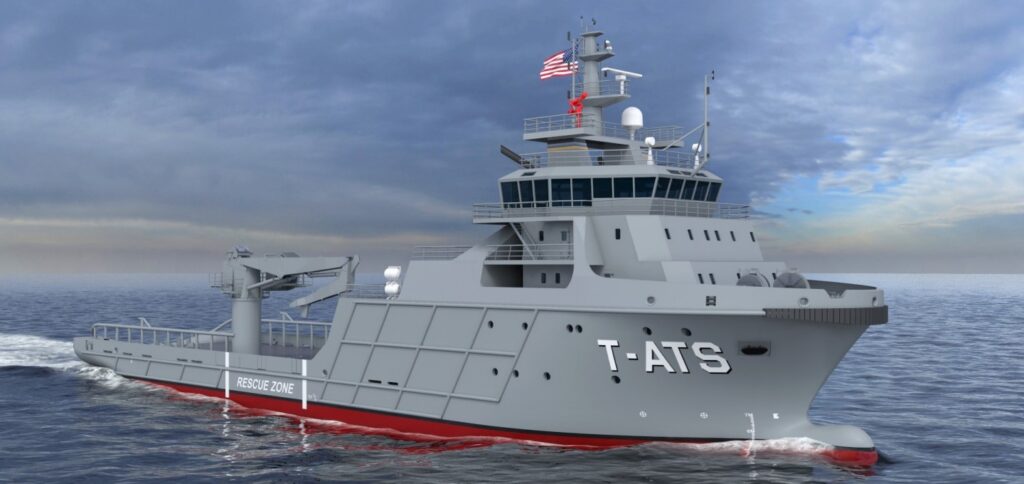
The Navy will christen the Navajo-class towing, salvage, and rescue ship, the future USNS Navajo (T-ATS 6), during a 10 a.m. EDT ceremony Saturday, August 26, in Houma, Louisiana.
The Honorable Arlando Teller, Assistant Secretary for Tribal Affairs, U.S. Department of Transportation, will deliver the principal address. Remarks will also be provided by the Honorable Meredith Berger, Assistant Secretary of the Navy for Energy, Installations, and Environment; Vice Adm. Craig Clapperton, Deputy Chief of Naval Operations for Warfighting Development; Rear Adm. Jeffrey Spivey, Deputy Commander, Military Sealift Command; Mr. Justin Ahasteen, Executive Director, Navajo Nation Washington Office; and Mr. Ben Bordelon, President and Chief Executive Officer, Bollinger Shipyards. In a time-honored Navy tradition, the ship’s sponsor, Ms. Jocelyn Billy, will christen the ship by breaking a bottle of sparkling wine across the bow. Billy is a member of the Navajo Nation, Miss Navajo Nation 2006, and is a strong advocate for Navajo Nation veterans.
The future USNS Navajo is the first ship in its class and will be operated by the Navy’s Military Sealift Command. The vessels will replace the existing Powhatan-class T-ATF fleet ocean tugs and Safeguard-class T-ARS rescue and salvage ships in service with the U.S. Military Sealift Command.
The Navajo-class is a new series of towing, salvage and rescue ships (T-ATS) being constructed for the U.S. Navy. The Navajo-class is a multi-mission common hull platform that will be deployed to support a range of missions such as towing, rescue, salvage, humanitarian assistance, oil spill response and wide-area search and surveillance operations using unmanned underwater vehicles (UUV) and unmanned aerial vehicles (UAV).
Media may direct queries to the Navy Office of Information at (703) 697-5342.
The ceremony will be live streamed at: www.dvidshub.net/webcast/32578. The link becomes active approximately ten minutes prior to the event at 10:00 a.m.
USS Essex Change of Command
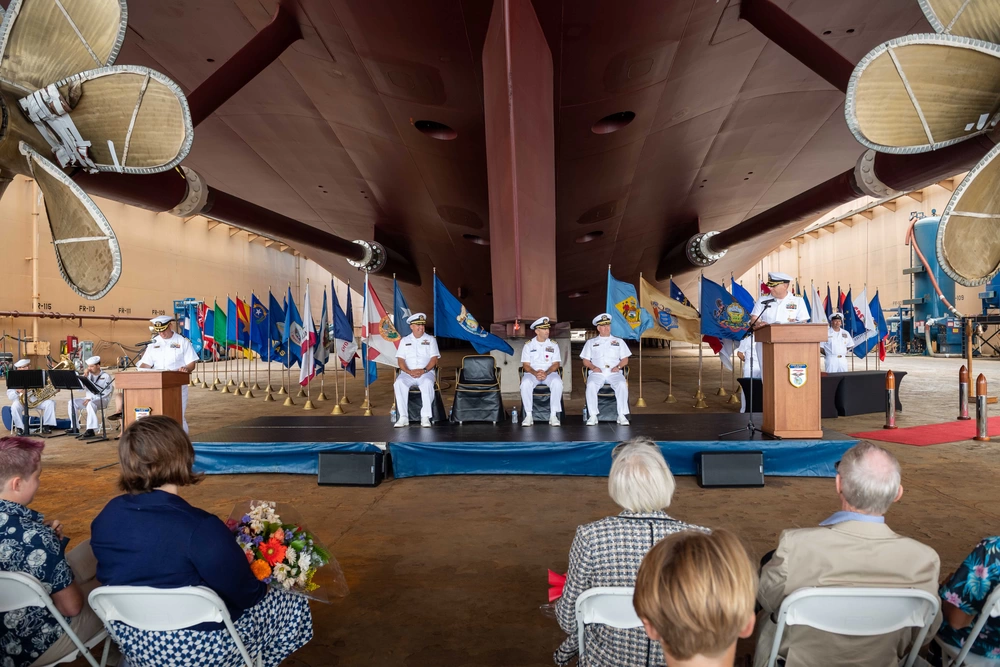
(L-R) Commander Jeffery Parks, Chaplain; Capt./ Aaron J. Taylor; RADM Randall W. Peck; and Capt. Wayne P. Liebold (at podium on right) Commander Jeffery Parks, Chaplain; Capt. Wayne P. Liebold; Capt. Aaron J. Taylor; RADM Randall W. Peck
By: Irv Cuevas
Change of Command (COC’s) are not uncommon in the Navy, and are frequently held on ships whether at sea, in port, or at shore stations around the world.
But how many such tradition-bound ceremonies are staged beneath the hull of a vessel while in dry-dock? That’s exactly what happened August 10 under the more than 800 foot hull of the USS Essex LHD-2, undergoing upgrades and maintenance at BAE Systems in San Diego, Calif.
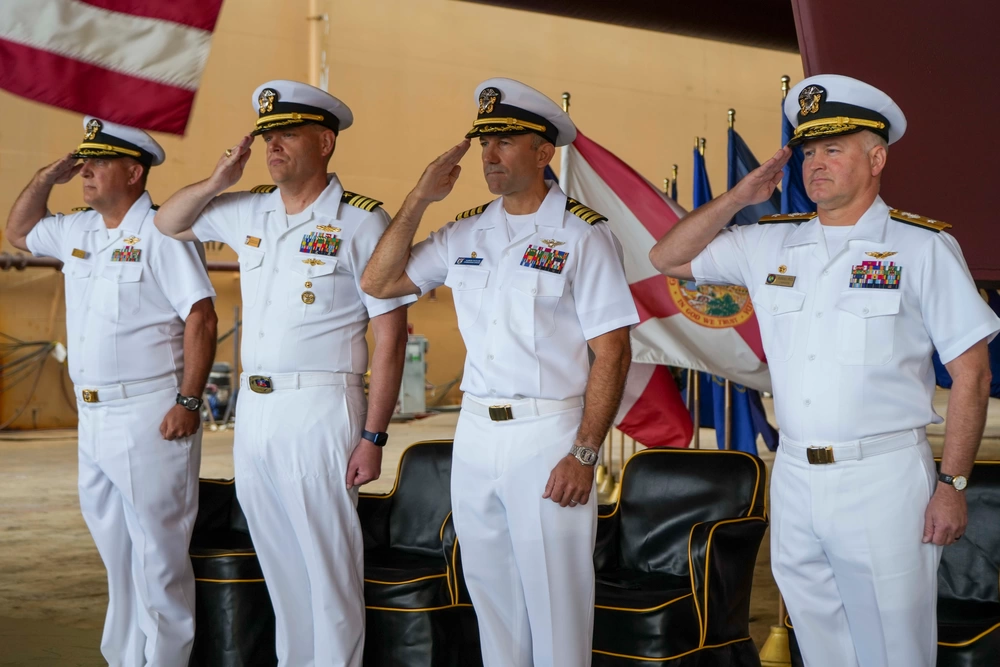
Staged in a colorful setting under the giant propellors and hulls, Captain Aaron J. Taylor relinquished command to Captain Wayne P. Liebold. Rear Admiral Randall W. Peck conducted the pomp and circumstance and as is customary; crew members in dress whites prominently observed as they got a new Skipper.
The heart of the ceremony was the formal reading of official orders by Captain Liebold, formerly Essex’s XO, and those by Captain Taylor next headed to a Pacific Fleet position based in Pearl Harbor.
Command passed by the time-honored utterance by the relieving officer, “I relieve you, Sir.” The officer being relieved responded, “I stand relieved.”
Thus, a new chapter begins for the Essex, known as the “Iron Gator.” She was soon to “return to the water” and resume fleet operations when fully shipshape once again.
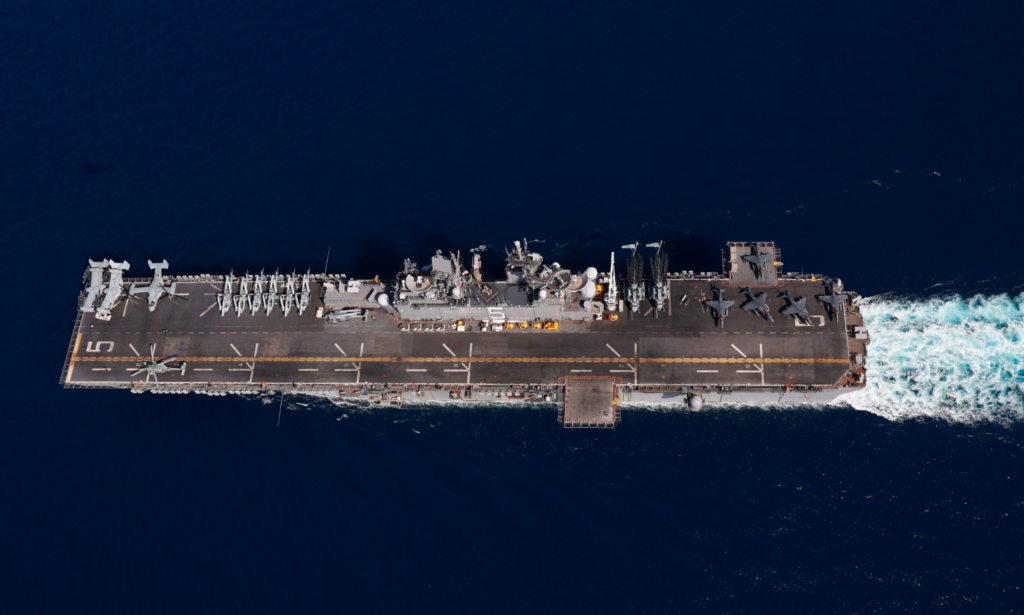
The Essex is a Wasp-class assault vessel commissioned in October 1992, with a crew compliment of 1,200 sailors and 2,200 Marines. Essex’s aerial capabilities include F35’s, Harriers, Ospreys, heavy-lift helicopters, and can handle LCAC’s for troop movements.
During her long service, Essex embarked on a wide range of Naval operations with USN and foreign vessels and assisted in a number of humanitarian assistance/disaster relief service.
Naval Special Warfare (NSW) Surface Support Craft (SSC) and U.S. Coast Guard Special Purpose Craft, Law Enforcement II (SPC-LE2) Vessels – Contract Update
Release from Silver Ships
*****
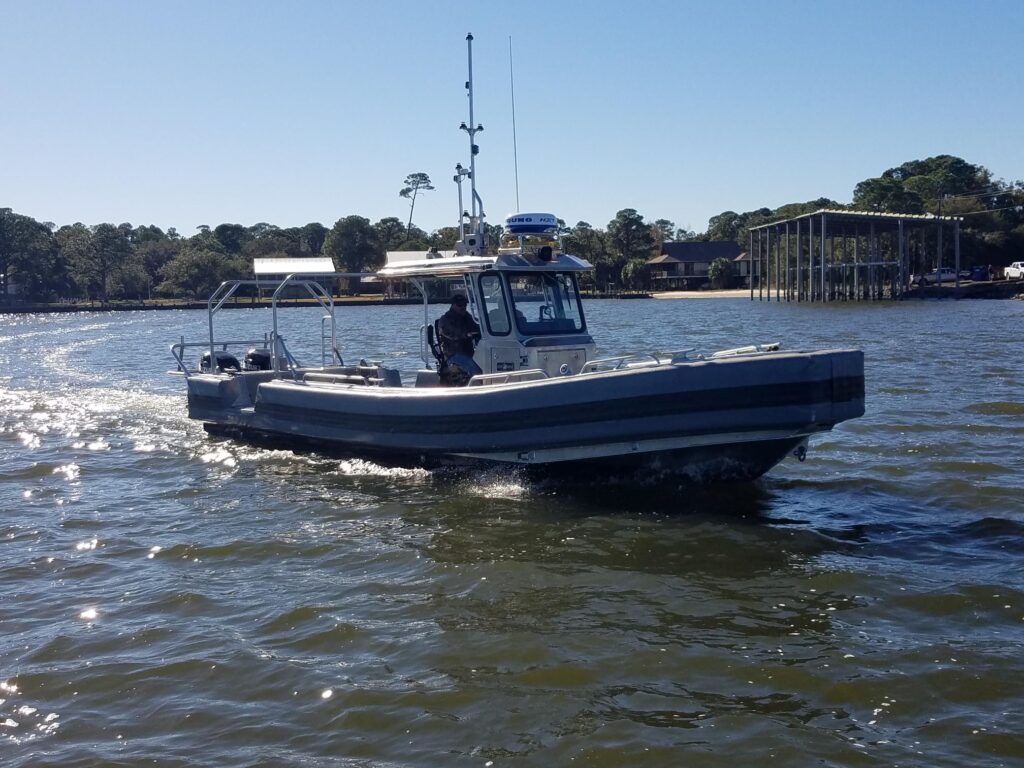
Mobile, Ala. (August 23, 2023) –Silver Ships recently completed the first deliveries under the Naval Sea Systems Command of seven 11-meter Open Center Console (OCC) vessels and two 8-meter Open Center Console (OCC) vessels, under the Naval Special Warfare Surface Support Craft Contract. The Navy has also conducted Pre-Delivery Inspection and Testing (PDIT) of three vessel variants included in the contract.
The NSW SSC Contract entails construction of five different vessel variants of the Ambar series Rigid Hull Inflatable Boats (RHIBs). The NSW Surface Support Craft (SSC) are 8 and 11-meter aluminum deep-vee hulled boats with a protective collar. Silver Ships’ 8 and 11-meter craft have a multipurpose deck for carrying various payloads or mission gear. Variants of the SSC include both open center console (OCC) and cabin versions, in addition to the SPC-LE2 variant. These craft are used from inland bays and waterways to deep water over-the-horizon transits, in all operating conditions and weather. The Navy SSC vessels will support the Naval Special Warfare community via ocean diver and swimmer support, medical transport, vessel towing and water airdrop training, among other missions.
Silver Ships has also delivered the first SPC-LE2 vessel variants to Coast Guard Station Miami Beach, FL, Coast Guard Station South Padre Island, TX and the USCG Maritime Law Enforcement Academy in Charleston, SC. The 11-meter Coast Guard SPC-LE2 vessels are armed and will be operated in varying conditions along the length of the borders of the United States and the Caribbean. Typical SPC-LE2 missions involve intercepting suspicious vessels entering U.S. waters and will also be used for port security and other missions. Additional vessel variant under advanced design and production is the 11-meter cabin version.
The $8.2 million delivery order is a Firm-Fixed-Price Indefinite Delivery, Indefinite Quantity (IDIQ) single award contract (N00024-21-D-2205) by the Naval Sea Systems Command for the construction and delivery of up to 110 Naval Special Warfare (NSW) Surface Support Craft (SSC) and U.S. Coast Guard Special Purpose Craft, Law Enforcement II (SPC-LE) vessels, in addition to other accessories, parts and training. The contract includes options that, if exercised, would bring the cumulative value of the contract to $51.6 million and production work would continue through 2026-2027.
“We are very pleased with early production and testing of the NSW SSC and SPC-LE2 boats. More importantly, our Navy and Coast Guard customers have inspected the first of three variants and are pleased with vessel performance. Initial inspections and testing were completed in a spirit of teamwork, continuous learning and improvement. We will continue to closely team with these partners as we increase production to meet contract requirements in the next several years,” said Shawn Lobree, Silver Ships Federal Contracts Manager and project lead.
Silver Ships began building SSCs for the Navy in 2006 and has constructed more than 650 RHIBs for all branches of the U.S. military over the past 20 years. All of the boats are highly versatile, rugged and designed to be operated in open ocean and near-coastal environments.
For more information about Silver Ships vessels and other military vessel projects, visit silverships.com.
NavSea Improves Readiness of USS Bataan with New 3D Printing Capability
“This success story shows the self-sufficiency we can achieve when our Sailors are provided with cutting-edge technology,” said Rear Adm. Joseph Cahill, commander, Naval Surface Force Atlantic (SURFLANT). “The impact technology like this can have on operational readiness, particularly in a combat environment where logistics capabilities will be challenged, is critically important.”
The part, a sprayer plate, is part of a DBAC which is used to force pressurized air through saltwater tanks and discharge the accumulated saltwater. The tanks are filled to lower a ship’s draft for amphibious operations. Producing the sprayer plate while at-sea enabled the ship to mitigate the time spent obtaining a replacement assembly.
“Rapidly learning how to utilize AM shipboard and scaling these capabilities is a key enabler to us sustaining our platforms and weapons systems,” said Rear Adm. Jason Lloyd, deputy commander for NAVSEA’s Naval Systems Engineering & Logistics Directorate. “I am excited to see how Bataan embraced this technology to enhance readiness at the point of need.”
The printer, installed under a joint effort between SURFLANT and the NAVSEA Technology Office, includes the Phillips Additive Hybrid system, which integrates a Meltio3D laser metal wire deposition head on a Haas TM-1 computer numerical control mill. The Haas TM-1 platform has been proven to operate reliably in an afloat environment aboard several aircraft carriers. Integrating the Meltio 3D deposition head with the Haas TM-1 provides both an additive and subtractive manufacturing capability within the same system, increasing efficiency and reducing waste when compared with typical machining.
The repair effort, led by Machinery Repairman First Class Mike Hover, began by creating a computer aided design (CAD) model of a sprayer plate from a functional sprayer plate from one of the ship’s other DBAC systems. After creating a preliminary CAD model, Hover leveraged NAVSEA’s ‘Apollo Lab’ construct established for engineering and fleet support and training.
NAVSEA established the “Apollo Lab” in 2018 for engineers to better support forward-deployed sailors. The Apollo Lab, led by NAVSEA field activity Naval Surface Warfare Center, Carderock Division, Johns Hopkins University Applied Research Laboratory (JHU APL), and Building Momentum, provides distributed, reach-back engineering support by civilian engineers for AM equipment. Apollo Lab also supports the fleet by designing AM components to be made by sailors at sea.
Bryan Kessel, a mechanical engineer at Naval Surface Warfare Center, Carderock Division, refined the CAD file, worked with JHU APL to develop the software instructions to guide operation of the metal 3D printer and securely transferred those instructions back to the ship to produce and install the sprayer plate.
NAVSEA is the largest of the Navy’s six system commands, responsible for the procurement, maintenance and modernization of ships, submarines and systems for the U.S. Navy. NAVSEA’s Technology Office is leading multiple areas of research and development in evaluation of AM equipment, using data not only from deployed assets, but also shore side lab activities, to gain a critical understanding of how the equipment will perform under shipboard conditions. These evaluations will ensure that the current and future shipboard implementations of this equipment are fabricating parts repeatedly and reliably, thus allowing Sailors to address an increasing number of applications.
USS Augusta to Commission in Eastport, Maine
***** 08.22.2023
Commander, Naval Surface Force, U.S. Pacific Fleet
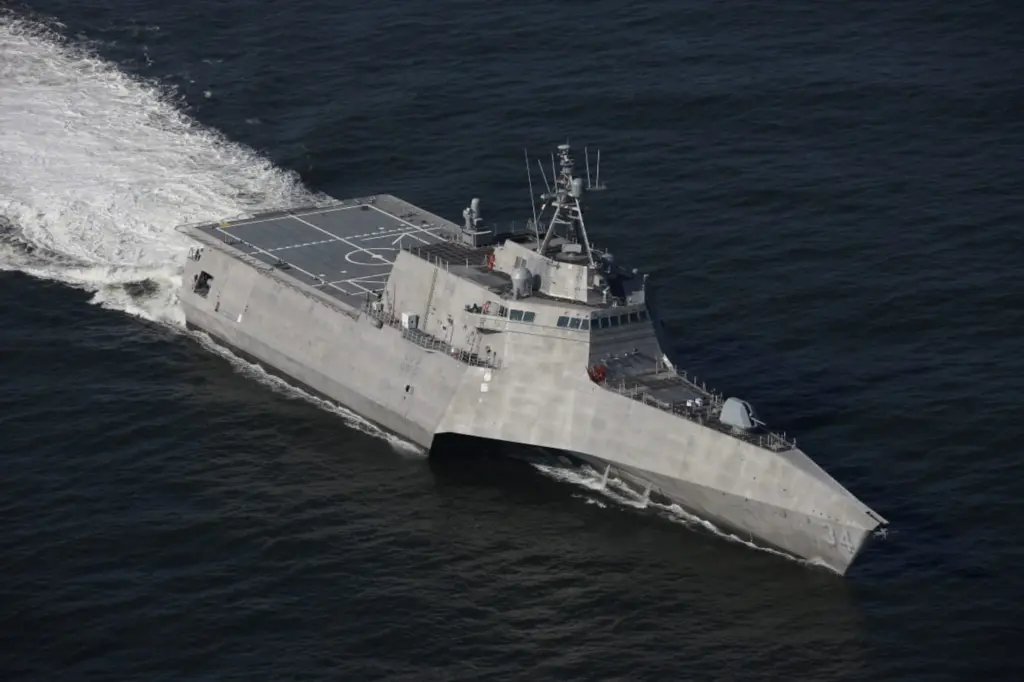
The future Independence-variant littoral combat ship USS Augusta (LCS 34) will join the active fleet with a commissioning ceremony at Eastport, Maine on September 30.
LCS are fast, agile, mission-focused platforms that operate in near-shore environments, winning against 21st-century coastal threats. These surface warfare combatants with mine warfare capabilities integrate with joint, combined, manned and unmanned teams to support forward-presence, maritime security, sea control and deterrence missions around the globe.
The selection of Augusta as the ship’s namesake, the easternmost state capital in the U.S., recognizes the value of Maine’s maritime history and landscape. The state’s rugged Atlantic coast is home to fishermen, lobstermen, and a thriving maritime industry that is testament to Maine’s enduring contributions to the nation.
Chief Justice Leigh Saufley, President and Dean of University of Maine School of Law, will be the sponsor, giving the order to “bring our ship to life.”
USS Augusta is the second ship named in honor of the city of Augusta, Maine.
The Los Angeles-class submarine Augusta (SSN 710) was commissioned in January 1985, at Submarine Base, New London, Connecticut and served for 24 years. It was sponsored by Mrs. Diana D. Cohen, wife of Sen. William S. Cohen of Maine who later served as the Secretary of Defense from 1997–2001.
SSN 710 took part in Operations Enduring Freedom and Iraqi Freedom launching UGM-109 Tomahawk Land Attack Missiles (TLAM) against Iraqi military targets on March 21, 2003. Cmdr. Mike A. Haumer, Augusta’s commanding officer, received the Bronze Star for his “extraordinary leadership and operational skills” in command of the boat during the fight.
Following the commissioning, USS Augusta will transit to its homeport of San Diego.