U.S., UK Navies Respond to Merchant Vessel Distress Call in Strait of Hormuz
Release from U.S. Naval Forces Central Command Public Affairs  

***** 

By U.S. Naval Forces Central Command Public Affairs | June 04, 2023 

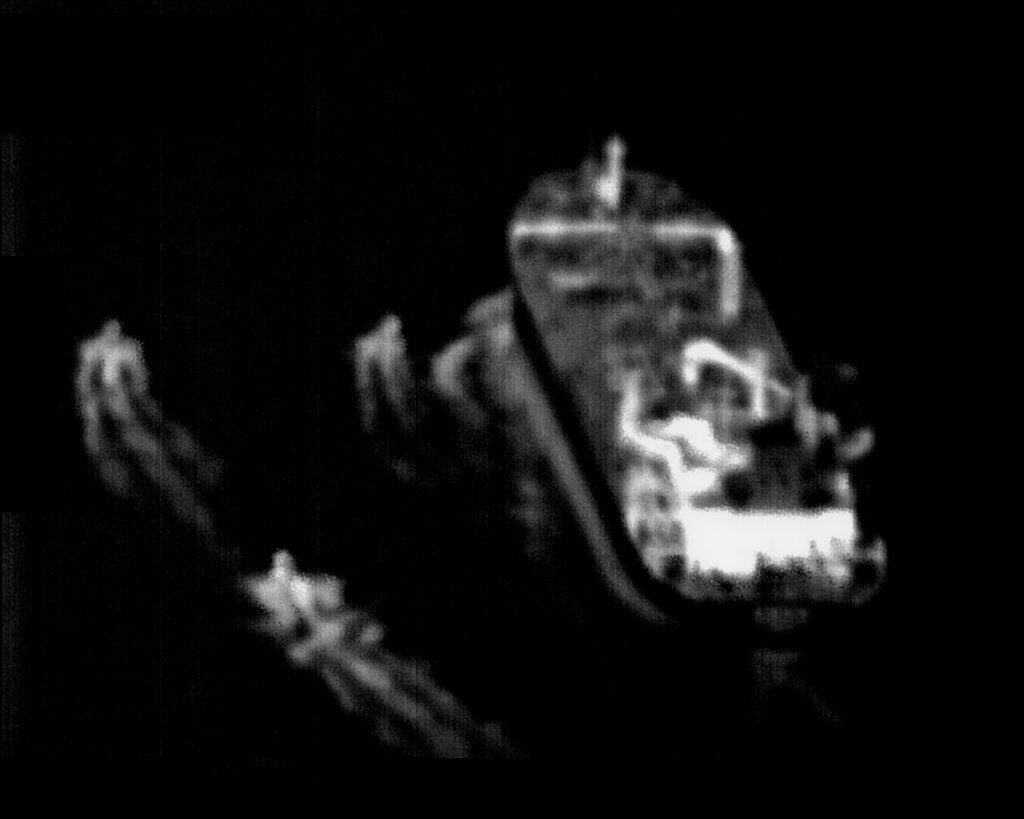
STRAIT OF HORMUZ — United States and United Kingdom Royal Navy forces responded to a distress call from a merchant vessel transiting the Strait of Hormuz, June 4, as Iranian fast-attack boats harassed the commercial ship. 

The internationally flagged merchant vessel made a radio distress call at 4:56 p.m. local time while transiting the narrow strait. The civilian crew reported three fast-attack craft with armed personnel approached and followed the merchant vessel at close distance. The fast-attacked craft were assessed to be from the Iranian Islamic Revolutionary Guard Corps Navy. 

U.S. Navy guided-missile destroyer USS McFaul (DDG 74) and UK Royal Navy frigate HMS Lancaster (F 229) both received the distress call, and Lancaster launched a helicopter to provide surveillance. U.S. 5th Fleet also directed a P-8A Poseidon maritime patrol aircraft to monitor the scene. 

The situation deescalated approximately an hour later when the merchant vessel confirmed the fast-attack craft departed the scene. The merchant ship continued transiting the Strait of Hormuz without further incident. 

U.S. 5th Fleet remains vigilant and is bolstering defense around the key strait with partners to enhance regional maritime security and stability. 


Integer Technologies Contracted to Create Strategic Technology Roadmaps for the Office of Naval Research

Release from Integer Technologies 

***** 

Roadmaps to outline S&T framework for power and energy solutions and define ways to increase the diversity of the STEM workforce.  

COLUMBIA, S.C.—May 22, 2023—Integer Technologies announced today that the Office of Naval Research (ONR) has selected the South Carolina-based engineering firm to create three unique roadmaps—a Naval Power Systems (NPS) Science and Technology (S&T) Roadmap, an Expeditionary Energy (E2) S&T Roadmap, and a Naval Diversity Equity and Inclusion Workforce Development (NDEI-WD) Roadmap.  

“This assessment of needs for both technology and workforce development will help to inform the Office of Naval Research’s strategy in science & technology research and people,” said Integer Chief Operating Officer Josh Knight, Ph.D. “We are ready to lead this comprehensive collaboration between government, academia, and industry that will address future fleet capability needs and plan transformative innovation.”   

The Naval Power Systems (NPS) Science and Technology (S&T) Roadmap will identify basic and applied research needs across multiple power and energy (P&E) technology areas, and the Expeditionary Energy (E2) S&T Roadmap will outline a similar research framework for the energy systems that will support future expeditionary force operations conducted by the Navy and Marine Corps.  

The two S&T roadmaps will also address how investments in P&E research can support the Navy’s broader goals and meet the existential challenges that wait on the horizon. These include identifying how technology development can build climate resilience into Navy platforms and how that development can accommodate increasing risks to international supply chains.   

“In the coming decades, the U.S. Navy Fleet and Expeditionary Forces will see an influx of new technologies that enable the successful completion of their evolving national security and humanitarian missions,” said Knight. “It is crucial that the power and energy systems deployed with the future forces are able to support those advanced solutions.”  

In addition to investing in a broad range of technology development efforts, the Naval Research Enterprise (NRE) cannot accomplish its mission without a diverse workforce to complete it. The Navy, along with other groups in academia and industry, have implemented multiple strategies to increase the diversity of their workforce. The Naval Diversity Equity and Inclusion Workforce Development (NDEI-WD) Roadmap will outline an ONR-wide strategy for stabilizing and strengthening the science, technology, engineering, and math (STEM) workforce across the NRE.  


USINDOPACOM Statement on Unsafe Maritime Interaction

Release from U.S. Indo-Pacific

From U.S. Indo-Pacific Command Public Affairs 

In accordance with international law, USS Chung-Hoon (DDG 93) and HMCS Montreal (FFH 336) conducted a routine south to north Taiwan Strait transit June 3 through waters where high seas freedoms of navigation and overflight apply. During the transit, PLA(N) LUYANG III DDG 132 (PRC LY 132) executed maneuvers in an unsafe manner in the vicinity of Chung-Hoon. The PRC LY 132 overtook Chung-Hoon on their port side and crossed their bow at 150 yards. Chung-Hoon maintained course and slowed to 10 kts to avoid a collision. The PRC LY 132 crossed Chung-Hoon’s bow a second time starboard to port at 2,000 yards and remained off Chung-Hoon’s port bow. The LY 132’s closest point of approach was 150 yards and its actions violated the maritime ‘Rules of the Road’ of safe passage in international waters. 


Keel Authenticated for Future USS Pittsburgh 

Release from Naval Sea Systems Command 

***** 

By Team Ships Public Affairs 

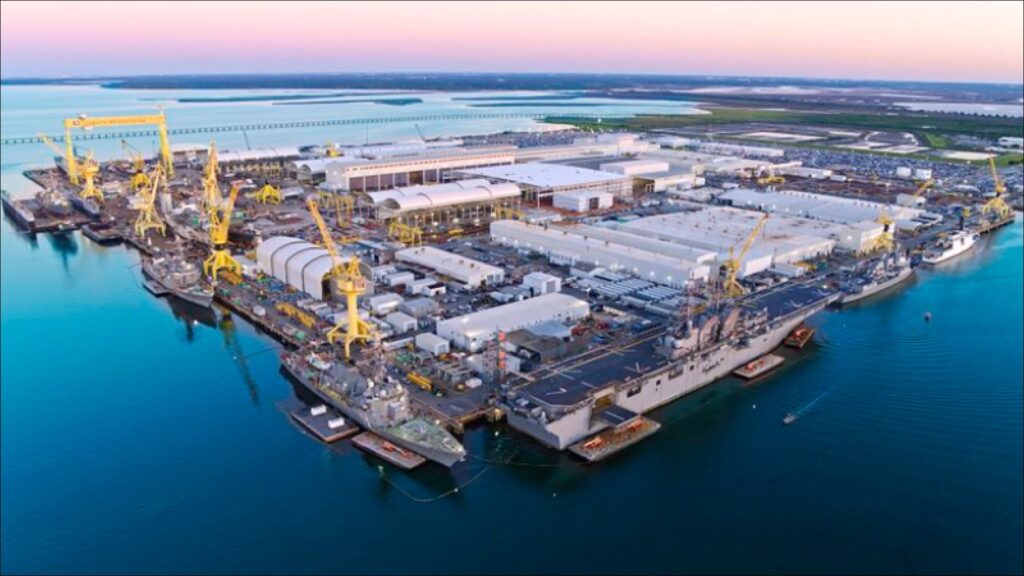
Pascagoula, MS – The keel for the future USS Pittsburgh (LPD 31), a San Antonio-class amphibious transport dock, was ceremonially laid at Huntington Ingalls Industries’ Ingalls Shipbuilding division, June 2. 

The ship is the fifth Navy vessel to be named for the city of Pittsburgh, Pennsylvania and its surrounding region, which play a central role in our national defense infrastructure. The most recent USS Pittsburgh (SSN 720) was a Los Angeles-class submarine, which served the Navy from December 1984 to August 2019. 

The contemporary keel-laying ceremony represents the joining together of a ship’s major modular components at the land level, and is a significant milestone in ship production. The keel is authenticated with the ship sponsors’ initials etched into a ceremonial keel plate that is later incorporated into the ship. The LPD 31 sponsor is Mrs. Nancy Urban. The speaker at the keel laying was Rear Adm. Tom Anderson, Program Executive Officer, Ships. 

“Shipbuilding is a team sport and is one of the most technically complex and challenging things we do in the defense industrial base. I would like to acknowledge the professionalism, skill and perseverance of the HII shipbuilders,” said Anderson. “Thank you for spending yourselves in the worthy cause of bringing the future USS Pittsburgh into being.” 

The San Antonio class is designed to support embarking, transporting, and landing Marines and their equipment by conventional or air-cushioned landing craft. The ship’s capabilities are further enhanced by its flight deck and hangar, enabling the ship to operate a variety of Marine Corps helicopters and the Osprey tilt-rotor aircraft (MV-22). Because of the ships’ inherent capabilities, they are able to support a variety of amphibious assault, special operations, expeditionary warfare, or disaster relief missions, operating independently or as part of amphibious readiness groups, expeditionary strike groups, or joint task forces. 

“The future USS Pittsburgh’s keel laying is a momentous occasion and the Navy and its industry partners look forward to working together during the construction process,” said Capt. Cedric McNeal, program manager, Amphibious Warfare Program Office, Program Executive Office (PEO) Ships. “Ultimately, LPD Flight II ships will provide capability and power projection to support a myriad of employment scenarios as a key component of the Amphibious Force structure for decades to come.” 

Ingalls Shipbuilding division is also currently in production on the future USS Richard S. McCool Jr. (LPD 29) and the future USS Harrisburg (LPD 30). 

As one of the Defense Department’s largest acquisition organizations, PEO Ships is responsible for executing the development and procurement of all destroyers, amphibious ships, sealift ships, support ships, boats and craft. 


Kraken Robotics Announces $9.5 Million Contract with the Navy of a Large Asia Pacific Country

Release from Kraken Robotics 

************** 

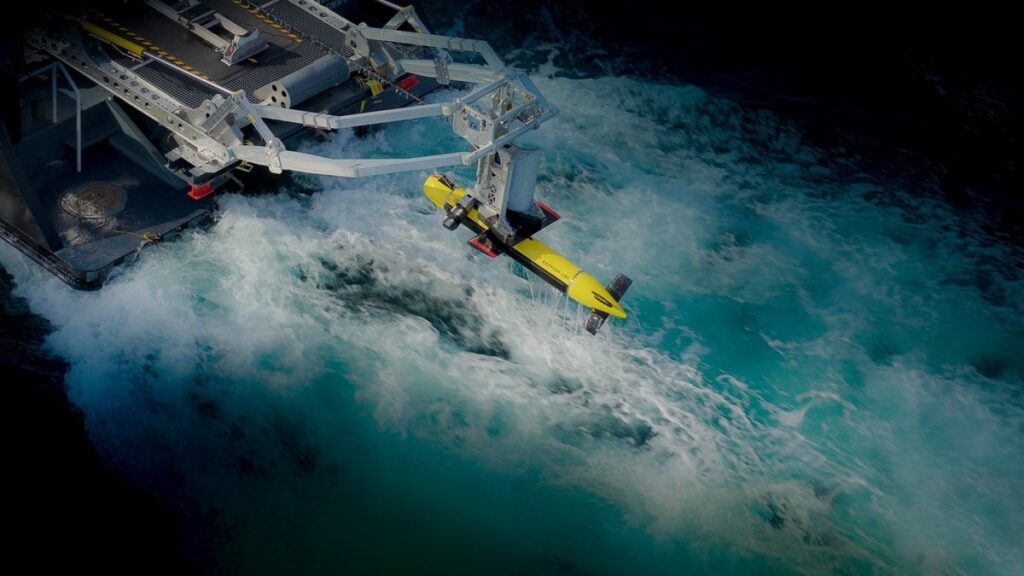
ST. JOHN’S, NEWFOUNDLAND, May 31, 2023 /GLOBE NEWSWIRE/ — Kraken Robotics Inc. (TSX-V: PNG, OTCQB: KRKNF) announces a $9.5 million contract to supply high-resolution seabed mapping sonar equipment to a navy in Asia-Pacific. The customer cannot be named at this time. Under the scope of the contract, Kraken will deliver its KATFISH™ high-speed minehunting solution. The contract also includes a variety of support and sustainment options, including training, spares and operational support. 

Under the acquisition contract, Kraken will deliver its KATFISH towed Synthetic Aperture Sonar, Tentacle® Winch and Autonomous Launch and Recovery System (ALARS) in Q2, 2023. Kraken’s equipment will be integrated onboard a vessel of opportunity selected by the customer. Continuing to build off successful KATFISH deliveries with various NATO navies, this represents Kraken’s first KATFISH system sale in the Asia-Pacific region. 

This contract follows the results of a successful in-country demonstration of KATFISH™ for the customer in Q1 of this year. Kraken’s team worked in concert with a local survey company to complete a 200 km seabed survey that provided real-time ultra- high-resolution imagery and bathymetry of the seafloor along coastal waters. 

Kraken is seeing continued opportunities for growth in all regions of the world as several trends are driving demand for Kraken’s synthetic aperture sonar technology. These include: 

  • A heightened focus on maritime security and protection of subsea infrastructure. 
  • An industry upgrade cycle and a gradual shift to smaller unmanned surface vessels for mine hunting. There are over 300 manned mine hunting vessels that are more than 20 years old and need to be upgraded over the next 5-10 years. Many of these will be replaced with smaller, unmanned vessels. 

  • Strong growth in the commercial market from growing requirements for high resolution data for seabed surveys and subsea asset inspection in the offshore oil and gas and offshore wind sectors. 


ABOUT KATFISH 

The KATFISH is a high-speed seabed survey system providing ultra-high resolution seabed imagery and bathymetry for defense and commercial customers. The acoustic imagery and bathymetry collected by KATFISH systems provides customers with actionable intelligence about subsea assets and infrastructure such as subsea pipelines and fiber optic cables, as well as important hydrographic information about the safety of key transit routes for ocean going assets. Kraken has integrated KATFISH to a variety of manned and unmanned vessels of opportunity, providing both standalone turnkey seabed mapping as well as optional integration to a customer’s combat mission management systems. 


NAVY RELEASES DRAFT ENVIRONMENTAL ASSESSMENT FOR HOMEPORTING OF COLUMBIA CLASS SUBMARINES AT NAVAL SUBMARINE BASE KINGS BAY

Release from U.S. Fleet Forces Command 

***************** 

26 May 2023 

NORFOLK, Va. – The Navy has released a Draft Environmental Assessment (EA) for the homeporting of the Columbia Class submarines at Naval Submarine Base (NSB) Kings Bay. 
  
The Navy proposes to establish facilities and functions at NSB Kings Bay to support the homeporting of Columbia Class submarines as replacements for the retiring Ohio Class submarines currently homeported at NSB Kings Bay. Under the Proposed Action, the Navy would construct eight facilities, modify five facilities, and demolish three facilities across three locations on NSB Kings Bay. Facility changes and development activities would be phased over a period of five years and completed coincident to the first Columbia Class submarines in 2028. The Proposed Action does not modify any existing dry-docks or conduct any in-water activity. 
  
During the 2028 – 2042 transition period from the Ohio Class to the Columbia Class and at completion, the Columbia Class (SSBNs) will be phased in as the Ohio Class are phased out, and thus total numbers of submarines homeported at NSB Kings Bay during this time will not exceed the number of Ohio Class submarines currently homeported at the base. 
  
The personnel numbers associated with the Columbia Class submarines are expected to be comparable to those associated with the Ohio Class submarines. Personnel numbers are also not anticipated to increase. Therefore, the Proposed Action will not increase the number of personnel employed at NSB Kings Bay, although an increase in temporary workers will result during the demolition, modification, and construction of 16 facilities and various functions scheduled for completion in 2028. 
  
This Environmental Assessment evaluates the potential environmental impacts associated with the Proposed Action alternative and the No Action Alternative to the following resource areas: air quality, water resources, geological resources, cultural resources, biological resources, utilities and infrastructure, public health and safety, and hazardous materials and wastes. 
  
The Proposed Action is needed because the Ohio Class SSBNs are reaching the end of their service lives and need to be replaced before degrading to unacceptable conditions. Even with additional maintenance, these submarines would continue to suffer from reduced reliability and increased costs associated with the obsolescence of legacy Ohio system components. 
  
The Draft EA is available for review at Www.Nepa.Navy.Mil/columbia-class. The Navy has prepared this Draft Environmental Assessment (EA) to inform the public of the Proposed Action and to allow the opportunity for public review and comment. The Draft EA will be released for public comment for 30 days.  The Navy invites public comments on the Draft EA, which will help the Navy arrive at the best possible informed decision about the proposal. Comments may be submitted during the public comment period from May 26 through June 25, and be postmarked no later than June 25 to ensure consideration in the Final Environmental Assessment. Written comments may be submitted on the website, or mailed to: ATTN: Ms. Sara Goodwin, code: EV22.SG, 6506 Hampton Blvd, Norfolk, VA 23508-1212. 


Navy F-5 Jet Crashes Near Key West

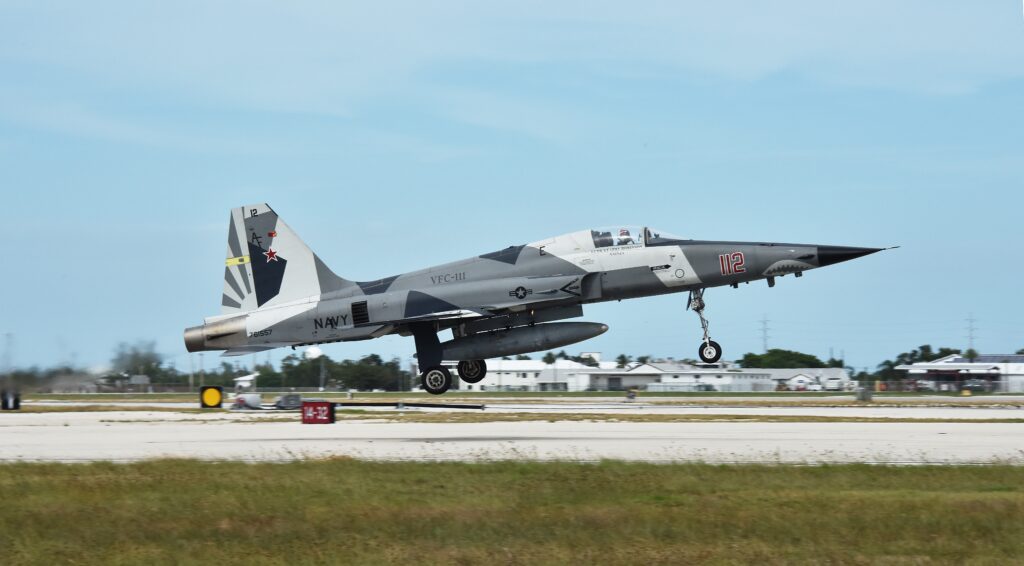
KEY WEST, Fla. (Nov. 6, 2020) An F-5N Tiger-II from the “Sun Downers” of Fighter Squadron Composite (VFC) 111 takes off from Naval Air Station Key West’s Boca Chica Field during the last day of training before the potential bad weather resulting from Tropical Storm Eta. Naval Air Station Key West is the state-of-the-art facility for combat fighter aircraft of all military services, provides world-class pierside support to U.S. and foreign naval vessels, and is the premier training center for surface and subsurface military operations. (U.S. Navy photo by Danette Baso Silvers)

Release from NAS Key West

************************** 

ARLINGTON, Va. — A U.S. Navy F-5N Tiger II jet crashed near Key West. Florida, on May 31, the Navy said. 

Naval Air Station (NAS) Key West said in a Facebook post that the aircraft’s pilot “ejected from an F-5N aircraft approximately 25 miles from Boca Chica Field at approximately 9:20 a.m. today. A NAS Key West Search and Rescue crew launched an MH-60S helicopter and rescued the pilot, who is being transported to a Miami-area hospital for further evaluation.” 

The pilot and F-5N were assigned to Fighter Squadron Composite (VFC) 111, which is a reserve adversary squadron based at NAS Key West. Adversary squadrons provide training in combating enemy aircraft to fleet units. The Navy and Marine Corps have four such squadrons on strength.  

The Navy is investigating the cause of the mishap. 


Boeing and ST Engineering Sign P-8 Sustainment MoU

From left: Torbjorn (Turbo) Sjogren, Vice President and General Manager, Government Services, Boeing Global Services; Sarbjit Singh, President, Defence Aerospace, ST Engineering. (Photo: Boeing)

Release from Boeing

********* 

– Joint effort will identify opportunities to collaborate in systems integration, training, local parts distribution, support and sustainment work for the P-8 

SINGAPORE, May 29, 2023—Boeing [NYSE: BA] signed a Memorandum of Understanding (MoU) with ST Engineering to outline potential areas of collaboration in systems integration, training, local parts distribution, support and sustainment work for the P-8A Poseidon. 

Boeing and ST Engineering have identified opportunities to collaborate in a number of areas and will explore these in more detail, including jointly developing a P-8 service center in Singapore with the provision of engineers and aircraft maintenance technicians to support maintenance and engineering services. 

The P-8A is a long-range, multi-mission aircraft that delivers unmatched antisubmarine warfare, anti-surface warfare, intelligence, surveillance and reconnaissance, and humanitarian assistance and disaster relief capabilities. 

The P-8A, a military derivative of the Next-Generation 737-800, combines superior performance and reliability with an advanced mission system that ensures maximum interoperability in the future battle space. With more than 160 aircraft in service, the P-8 has executed more than 600,000 mishap-free flight hours around the globe. 

Militaries that operate or have selected the P-8 include the U.S. Navy, the United Kingdom’s Royal Air Force, Royal Australian Air Force, Royal New Zealand Air Force, Indian Navy, Royal Norwegian Air Force, Republic of Korea Navy and German Navy.  


Raytheon Technologies to deliver Full Rate Production for TCTS Increment II Air Combat Training System for U.S. Navy 

Release from Raytheon Technologies 

***** 

May 25, 2023 

CEDAR RAPIDS, Iowa, May 25, 2023 /PRNewswire/ — Collins Aerospace, a Raytheon Technologies business (NYSE: RTX) announced today it will deliver on the full rate production contract awarded by the U.S. Navy for Tactical Combat Training System – Increment II (TCTS II), Air Combat Training System (ACMI) for the U.S. Navy. The contract includes both airborne and ground subsystems and will support fielding requirements at various U.S. Navy training ranges. 

“TCTS II addresses today’s peer threat, enabling aircrews to train and improve joint tactics, techniques and procedures in an NSA-certified secure environment,” said John Sapp, vice president and general manager, Integrated Solutions for Collins. 

Validated flight tests on F/A-18 and EA-18G aircrafts, TCTS II’s long-range, air-to-air and air-to-ground networking capability supported real time data exchanges. The system features an open architecture design, highly encryption capability, computing power, and robust datalink. TCTS II will be the foundation for next-generation training scenarios that will use a combination of live, virtual and constructive entities.   

“In our testing, we were able to demonstrate key discriminators of our TCTS II solution including integration into existing infrastructure, tactical intercepts and real-time mission completion notifications,” said Sapp. 

TCTS II is planned to replace the U.S. Navy’s legacy ACMI tracking systems with a single system to support training, from tactical aircrew unit level training events to force exercise events, including mobile and fixed locations worldwide. 

Developed and built by Collins Aerospace and teammate Leonardo DRS, TCTS II is a scalable and flexible open architecture system that enables highly secure air combat training among 4th and 5th Generation U.S. aircraft, and international aircraft. 


HII Redelivers USS George Washington (CVN 73) to U.S. Navy 

Release from HII 

***** 

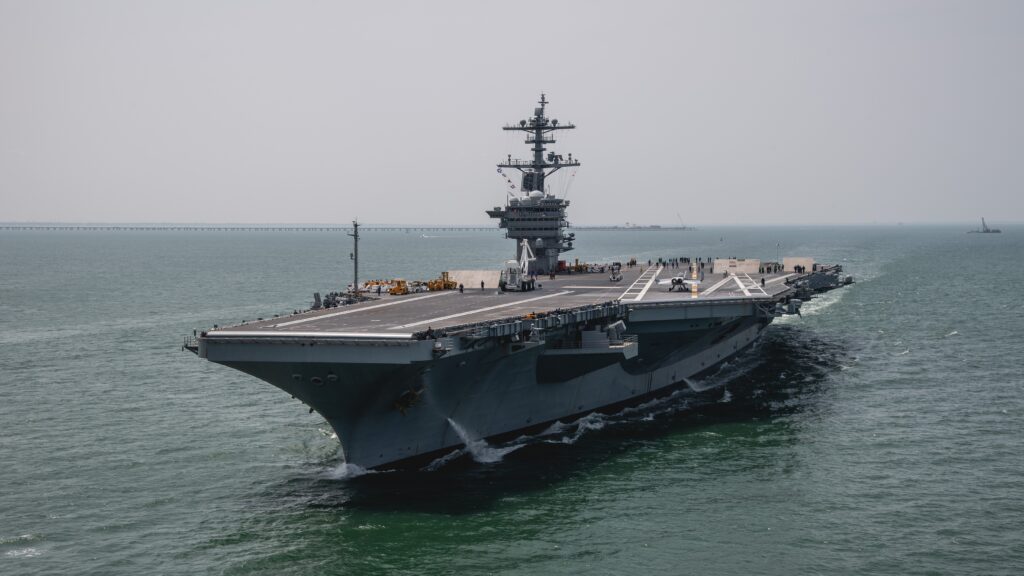
NEWPORT NEWS, Va., May 25, 2023 (GLOBE NEWSWIRE) — HII (NYSE: HII) announced today that its Newport News Shipbuilding division has redelivered the nuclear-powered aircraft carrier USS George Washington (CVN 73) to the U.S. Navy. The redelivery took place after successful sea trials that tested the ship’s systems following its refueling and complex overhaul (RCOH) at NNS. 

“Redelivering George Washington to the Navy is the end result of incredible teamwork between our shipbuilders, the CVN 73 crew, our government partners and all of our suppliers,” said Todd West, NNS vice president, in-service aircraft carrier programs. “George Washington has gone through a transformation and now returns to the fleet as a fully recapitalized ship, ready to support any mission and serve our nation for another 25 years.” 

Sea trials test the carrier’s systems and operations at sea, including high-speed operations. The trials team, comprising sailors, shipbuilders and government representatives, puts the ship through a series of tests designed to prove system performance and demonstrate all the carrier’s capabilities at sea. 

A photo accompanying this release is available at: https://hii.com/news/hii-redelivers-uss-george-washington-cvn-73-to-u-s-navy

“Getting our warship redelivered and back out to sea to take its place as the premier CVN in the world’s greatest Navy is a direct result of the tenacity and grit displayed by our warfighters,” said Capt. Brent Gaut, Washington‘s commanding officer. “To our incredible Sailors, contractors and shipyard workers: I am proud of you, and I sincerely hope you feel an extreme sense of pride as well, especially in light of our once-in-a-lifetime achievement. You all share an equal part in the legacy of getting our warship back into Navy service at a pivotal moment in our great nation’s history. Our collective intent is to show the world what we can do, and what we must do in support of America’s strategic and operational objectives.” 

The RCOH process is performed only once during the ship’s lifetime and involves upgrades to nearly every space and system on the ship. Tanks, the hull, shafting, propellers, rudders, piping, ventilation, electrical, combat and aviation support systems are repaired, upgraded and modernized. Work also includes defueling and refueling the ship’s two nuclear reactors as well as repairs, maintenance, and upgrades to the propulsion plant. 

NNS is the only shipyard with the skilled workforce and facilities equipped for this project. USS George Washington is the sixth Nimitz-class carrier to undergo RCOH. The RCOH represents 35 percent of all maintenance and modernization in an aircraft carrier’s service life. 

Work continues at NNS on the RCOH for USS John C. Stennis (CVN 74), with steady progress so far this year, including the installation of the main mast.