Saildrone Scales Production of New Mid-size USV 
Release from Saildrone 

***** 

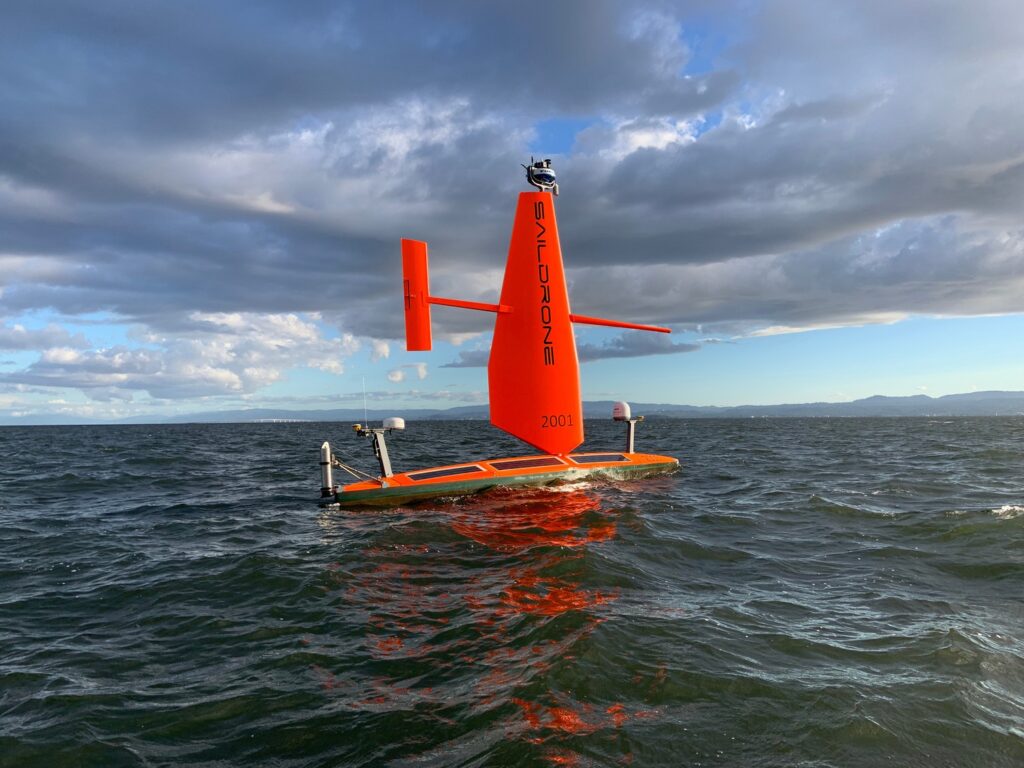
To meet the growing demand for advanced data-collection capabilities at sea, Saildrone has developed the 33-foot Voyager designed for near-shore ocean mapping and maritime security missions. 

(March 28, 2023 – ALAMEDA, CA) – Saildrone, the world leader in providing near real-time maritime intelligence using small uncrewed systems, announced today a new, mid-size class of uncrewed surface vehicles (USVs). The 33-foot (10 m) Voyager is specifically designed for near-shore ocean and lakebed mapping, and to meet the challenges of IUU (illegal, unreported, and unregulated fishing), ISR (intelligence, surveillance, reconnaissance), law enforcement and maritime safety, drug interdiction, and border and harbor security. 

Saildrone’s three USV models—the Voyager along with the 23-foot (7 m) Explorer and 65-foot (20 m) Surveyor—have been developed to balance mission payload flexibility and endurance. The Voyager’s larger size, compared to the Explorer, allows for a more persistent datalink, increased power available for ocean mapping and ISR payloads, and versatile payload integration options.  

The ocean mapping sensor suite includes multibeam sonar equipment capable of seafloor mapping of depths to 900 feet (300 m), and the ISR sensor suite includes a smart camera array, digital radar, and sub-surface passive acoustics. Primarily powered by wind and solar, the Voyager also features an electric propulsion alternative, useful for low-wind and near-shore operations. 

“With our Voyager platform, Saildrone helps to eliminate maritime gaps above and below the ocean surface, reducing risk to mission and risk to force. We want to be a force-multiplier for our partners and allies when it comes to ISR capabilities,” said Richard Jenkins, Saildrone founder and CEO. 

To date, Saildrone has built 100 23-foot Explorer-class USVs at its headquarters in Alameda, CA. To meet the increasing demand for the new Voyager platform, Saildrone has elected to outsource the production of the wing, hull, and keel to composite specialists: Janicki Industries will manufacture the wing and keel in Washington, and Seemann Composites will manufacture the hull in Mississippi. Saildrone will continue to produce, install, and service internal components in Alameda.  

“One of the truly exceptional aspects of working at a company like Saildrone is the fact that hardware and software engineering, manufacturing, mission operations, and G&A are all housed under one roof—in a former airplane hangar on a site known for aviation and naval innovation,” said Saildrone COO Mark Cuyler. “But with the rapidly increasing demand for ocean data collection across the fleet, it is necessary to outsource some of our production. Saildrone is proud to work with great US-based companies like Janicki and Seemann, whose expertise in the marine composites industry will help us to more rapidly meet the demanding challenges of the world’s oceans.” 

Saildrone has been conducting sea trials of the Voyager in the San Francisco Bay and offshore of California since late 2022, and the first operational maritime security and ocean mapping missions will begin this spring. The company is currently producing new Voyagers at a rate of one per week. 

The data collection capabilities of Saildrone’s autonomous vehicles have been proven in numerous operational missions, covering almost 1 million nautical miles from the Arctic to the Antarctic. The company looks forward to its continued and close partnership with the US Government and its allies in boosting maritime security around the globe. 

Visit Saildrone at 2023 IPF, March 28-30, at the Baltimore Convention Center and at the Navy League’s Sea Air Space 2023 at the Gaylord National Convention Center in National Harbor, MD. 



Fairbanks Morse Defense Launches Accelerator Program to Support Emerging


Release from Fairbanks Morse 

***** 

Defense contractor dedicating mentors and additional resources to  

foster promising mission-critical technologies 

BELOIT, Wis. – March 28, 2023 – Fairbanks Morse Defense (FMD), a portfolio company of Arcline Investment Management (Arcline), has launched the FM Defense Accelerator program to identify and nurture emerging technologies with mission-critical applications for the future of maritime defense. The defense contractor is now accepting applications for participants.  


“As a principal supplier of best-in-class maritime defense technology, we are well positioned to recognize and foster pioneering solutions that have the potential to solve challenges faced by the industry,” said FMD CEO George Whittier. “The FM Defense Accelerator is open to eligible entrepreneurs with a great idea, a plan for bringing it to fruition, and an appetite to work with us and benefit from our expertise and relationship with the Navy, Coast Guard, and Military Sealift Command (MSC).” 


Once selected, participants will work with FMD mentors selected from the defense contractor’s Technology Center of Excellence specifically for their expertise. In addition to the dedicated mentors assigned to FM Defense Accelerator participants, program benefits include the following:  


  • Individual programs created specifically for each technology ranging from three months to several years 
  • Access to broader FMD resources, including technical experts and a worldwide service network 
  • Brand exposure opportunities and marketing support 

  • Route to market advice and support 


Once a technology reaches a predetermined development milestone, it has the opportunity to be demonstrated at various industry events, giving FM Defense Accelerator participants exposure to representatives from the Navy, Coast Guard, MSC, and other key stakeholders.  


FMD has recently been working with technology collaborators through the Technology Center of Excellence, and a selection of these companies will be transitioned into the FM Defense Accelerator program.  


The FM Defense Accelerator will be featured at the FMD booth (837) at the Sea-Air-Space Exposition from April 3rd to 5th, 2023, at National Harbor, MD, along with live demonstrations of naval defense technologies being developed by FMD and its technology collaborators.  


Companies interested in applying for a place on the program can visit the landing page at https://rb.gy/f4qogd to complete the online application.    


About Fairbanks Morse Defense (FMD) 

Fairbanks Morse Defense (FMD) builds, maintains, and services the most trusted naval power and propulsion systems on the planet. For more than 100 years, FMD has been a principal supplier of a growing array of leading marine technologies, OEM parts, and turnkey services to the Navy, Coast Guard, Military Sealift Command, and Canadian Coast Guard. FMD stands ready to rapidly support the systems that power military fleets without compromising safety or quality. In times of peace and war, the experienced engineers, sailors, and technicians of FMD demonstrate our commitment to supporting the mission and vision of critical global naval operations wherever and whenever needed. FMD is a portfolio company of Arcline Investment Management.  


To learn more, visit www.FairbanksMorseDefense.com 


Senate Seapower Chair: Committee Will Drill Down on Navy’s Amphib Issue

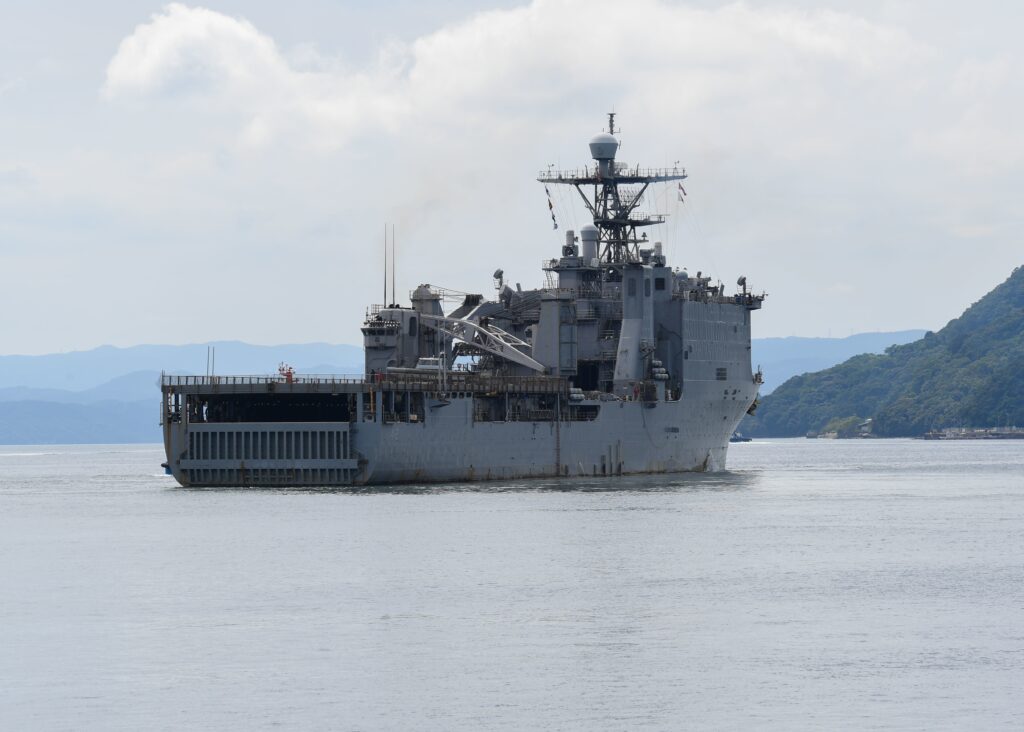
SASEBO, Japan (Sept. 15, 2021) The amphibious dock landing ship USS Germantown (LSD 42) departs Commander, Fleet Activities Sasebo, Japan (CFAS), Sept. 15, 2021. Germantown will shift home ports from Sasebo to San Diego after serving as a forward-deployed ship in U.S. 7th Fleet since Jan. 5, 2011. (U.S. Navy photo by Mass Communication Specialist 3rd Class Jasmine Ikusebiala)

***** 

WASHINGTON — The new chairman of the Senate’s Seapower subcommittee said he plans to drill down on the issue of the Navy’s requirement for 31 large and medium amphibious warships and why the 2024 budget does not apparently support that requirement, which is law. 

“I’m still mystified with the reticence of the president’s budget with respect to meeting our 31 amphib requirement,” said Sen. Tim Kaine, D-Virginia, speaking March 2 in his first online press conference since becoming chairman of the Senate Armed Service Committee’s Seapower subcommittee. 

In the 2024 budget proposal, the Navy plans to decommission three old Whidbey Island-class dock landing ships (LSDs) but declined to fund any more Flight II San Antonio-class amphibious platform dock ships (LPDs) over the next five years. 

The 2023 National Defense Authorization Act requires the Navy to sustain a force level of 31 large and medium amphibious warships. 

“Last year, when we had the hearing, all three — the SECNAV, the [Marine Corps] commandant, the CNO — all said, ‘Look, we’re all on the same page,” Kaine said. “There’s no difference between us. They promised that a study would be forthcoming soon. That showed that the requirement that the Marines need to basically meet their objectives and our national security objectives is 31 amphibs.” 

“The president’s budget doesn’t suggest that they’re making that kind of investment to get us to 31,” he said. “I’ve heard testimony from our Navy and Marine leadership enough to know that the 31 amphibs is the requirement and somebody’s going to have to do a pretty amazing job to convince me otherwise at this point. They have been so consistent on that for a significant period of time.” 

Kaine said, “The Navy should know that we’re really going to dig into this. We have been convinced that the number is 31 and we’ve yet to be told by anybody that it’s not 31. So, is there a mismatch between the SECNAV, commandant, and CNO? And with the OSD [Office of the Secretary of Defense] is there a mismatch with OMB [Office of Management and Budget]? I don’t know exactly where the mismatch is, but I think it’s above the Navy. I think the Navy and Marines are completely on board on this. The consistency of this testimony has been notable. If that’s the case, you’re going to see a really strong bias on the committee to make sure [the Navy] has the funds for 31 and not drop below it. 

The senator said he has seen “tentative suggestion” that the level of 31 could be reached if the funds were made available next beginning next year “But that is sending a confusing message that suggests that they’re not really committed to 31. I think the committee is committed to 31.”  


Navy, Coast Guard Begin Oceania Maritime Security Initiative Patrol

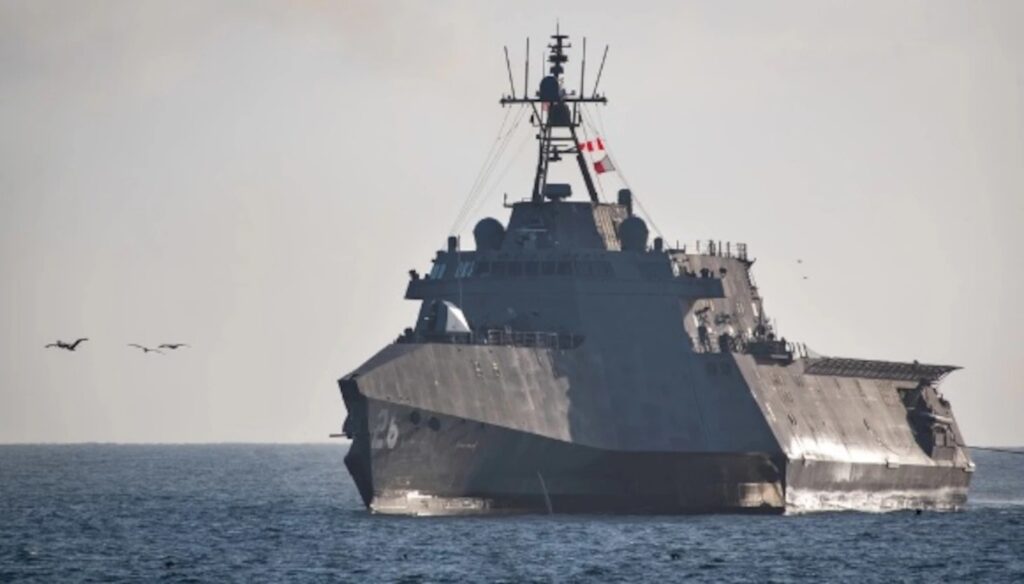
USS Mobile (LCS 26) heads towards Naval Surface Warfare Center, Port Hueneme Division in California for a ship groom on the afternoon of Nov. 28. LCS 26, an Independence-class littoral combat ship, was commissioned in 2021 and is homeported in San Diego. (U.S. Navy photo by Eric Parsons/Released)

Release from Commander, U.S. Third Fleet Public Affairs 

***** 

24 March 2023 

SAN DIEGO - The U.S. Navy and U.S. Coast Guard began their joint patrol in the Western Pacific under the Oceania Maritime Security Initiative (OMSI) to reduce and eliminate illegal, unregulated, unreported fishing, combat transnational crimes, and enhance regional security, March 20.  

“OMSI is imperative to ensure that the Western and Central Pacific Fisheries Commission Convention (WCPFC) agreement is upheld within the Indo-Pacific region,” said Cmdr. Richard Skinnell, Mobile’s commanding officer. “This initiative allows us the opportunity to work jointly with other branches of the military as well as our allies and partners.” 

 
OMSI, a Secretary of Defense program, improves maritime security and domain awareness by enabling Coast Guard law enforcement personnel to conduct maritime law enforcement operations from Navy ships. These joint and combined operations ensure the U.S. military honors its security commitments to allies, partners, and friends. 

 
“Collaborating with our partners throughout Oceania is essential in ensuring a free and open Blue Pacific,” said Cmdr. Jeff Bryant, chief of enforcement, U.S. Coast Guard District Fourteen. It is a privilege and we are proud to support the Federated States of Micronesia through dedicated partnership in the effort to maintain maritime governance and preserve maritime sovereignty.” 

 
The WCPFC international fisheries agreement prioritizes the long-term conservation and sustainable use of highly migratory fish stocks in the Western and Central Pacific Ocean. 

 
“The U.S. Coast Guard is always ready and looking forward to executing the OMSI mission alongside our U.S. Navy partners,” said Bryant. 
Independence-variant littoral combat ship USS Mobile (LCS 26), with an embarked Coast Guard law enforcement detachment from the Pacific Tactical Law Enforcement Team, supports maritime law with partner nations by enforcing the WCPFC agreement and by suppressing illicit activities. Independence-variant LCS is the platform of choice for this mission due to its fast and agile maneuvering capabilities, large flight deck with manned and unmanned aviation assets and surface warfare mission set. 

 
An integral part of U.S. Pacific Fleet, U.S. 3rd Fleet operates naval forces in the Indo-Pacific and provides the realistic, relevant training necessary to flawlessly execute our Navy’s role across the full spectrum of military operations–from combat operations to humanitarian assistance and disaster relief. U.S. 3rd Fleet works together with our allies and partners to advance freedom of navigation, the rule of law, and other principles that underpin security for the Indo-Pacific region.


7th Fleet Destroyer conducts Freedom of Navigation Operation in South China Sea

Release from U.S. 7th Fleet Public Affairs 

***** 

NEWS | March 23, 2023 

7th Fleet Destroyer conducts Freedom of Navigation Operation in South China Sea 

By U.S. 7th Fleet Public Affairs 

PARACEL ISLANDS, South China Sea  –   

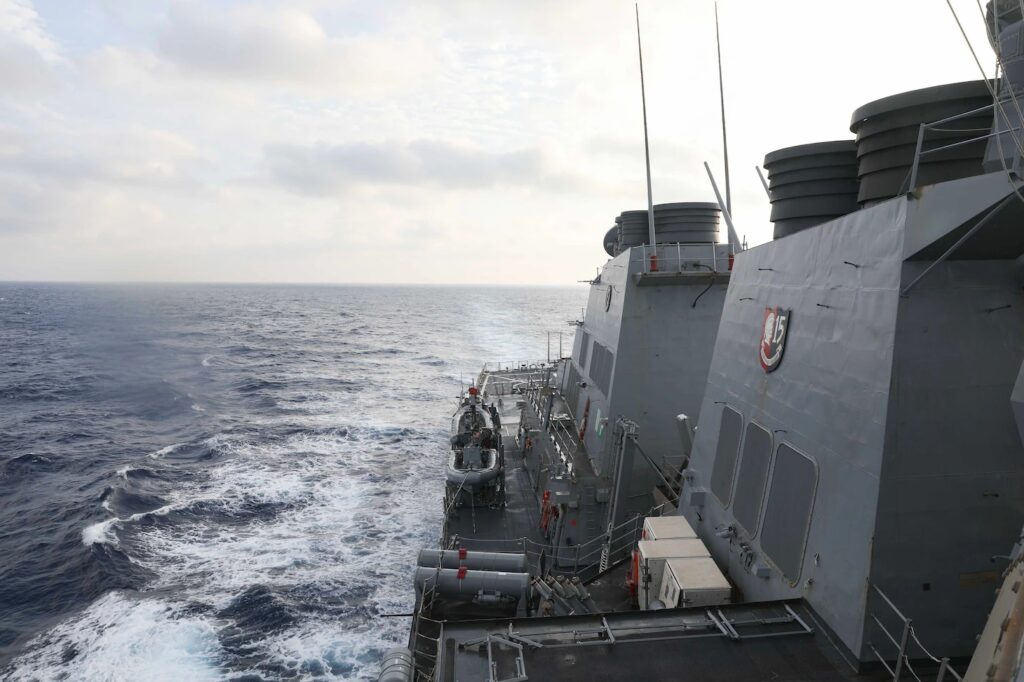
On March 24 (local time) Arleigh Burke-class guided-missile destroyer USS Milius (DDG 69) asserted navigational rights and freedoms in the South China Sea near the Paracel Islands, consistent with international law. At the conclusion of the operation, Milius exited the excessive claim and continued operations in the South China Sea. This freedom of navigation operation (“FONOP”) upheld the rights, freedoms, and lawful uses of the sea recognized in international law by challenging the restrictions on innocent passage imposed by the People’s Republic of China (PRC), Taiwan, and Vietnam and also by challenging PRC’s claim to straight baselines enclosing the Paracel Islands. 

Unlawful and sweeping maritime claims in the South China Sea pose a serious threat to the freedom of the seas, including the freedoms of navigation and overflight, free trade and unimpeded commerce, and freedom of economic opportunity for South China Sea littoral nations. 

The United States challenges excessive maritime claims around the world regardless of the identity of the claimant. The customary international law of the sea as reflected in the 1982 Law of the Sea Convention provides for certain rights and freedoms and other lawful uses of the sea to all nations. The international community has an enduring role in preserving the freedom of the seas, which is critical to global security, stability, and prosperity. 

The United States upholds freedom of navigation for all nations as a principle. As long as some countries continue to claim and assert limits on rights that exceed their authority under international law, the United States will continue to defend the rights and freedoms of the sea guaranteed to all. No member of the international community should be intimidated or coerced into giving up their rights and freedoms. 

The PRC, Taiwan, and Vietnam each claim sovereignty over the Paracel Islands. In violation of customary international law, all three claimants require either permission or advance notification before a military vessel or warship engages in “innocent passage” through the territorial sea. Under customary international law as reflected in the Law of the Sea Convention, the ships of all States –including their warships –enjoy the right of innocent passage through the territorial sea. The unilateral imposition of any authorization or advance-notification requirement for innocent passage is unlawful. By engaging in innocent passage without giving prior notification to or asking permission from any of the claimants, the United States challenged these unlawful restrictions imposed by the PRC, Taiwan, and Vietnam. The United States demonstrated that innocent passage is not be subject to such restrictions. 

The United States also challenged the PRC’s 1996 declaration of straight baselines encompassing the Paracel Islands. Regardless of which claimant has sovereignty over these islands, it is unlawful to draw straight baselines around the Paracel Islands in their entirety. Customary international law as reflected in the Law of the Sea Convention is both clear and comprehensive regarding the circumstances under which States can depart from “normal” baselines.  The PRC-claimed straight baseline violates international law of the sea as reflected in Article 7 of the Law of the Sea Convention. Furthermore, international law does not permit continental States, like the PRC, to establish baselines around entire dispersed island groups. With these baselines, the PRC has attempted to claim more internal waters, territorial sea, exclusive economic zone, and continental shelf than it is entitled to under international law. By conducting this operation, the United States demonstrated that these waters are beyond what the PRC can lawfully claim as its territorial sea, and that the PRC claimed straight baselines around the Paracel Islands are inconsistent with international law. 

U.S. forces operate in the South China Sea on a daily basis, as they have for more than a century. They routinely operate in close coordination with like-minded Allies and partners that share our commitment to uphold a free and open international order that promotes security and prosperity. All of our operations are conducted safely, professionally, and in accordance with customary international law. The operations demonstrate that the United States will fly, sail, and operate wherever international law allows –regardless of the location of excessive maritime claims and regardless of current events.


Navy demonstrates new crash crane in operational setting

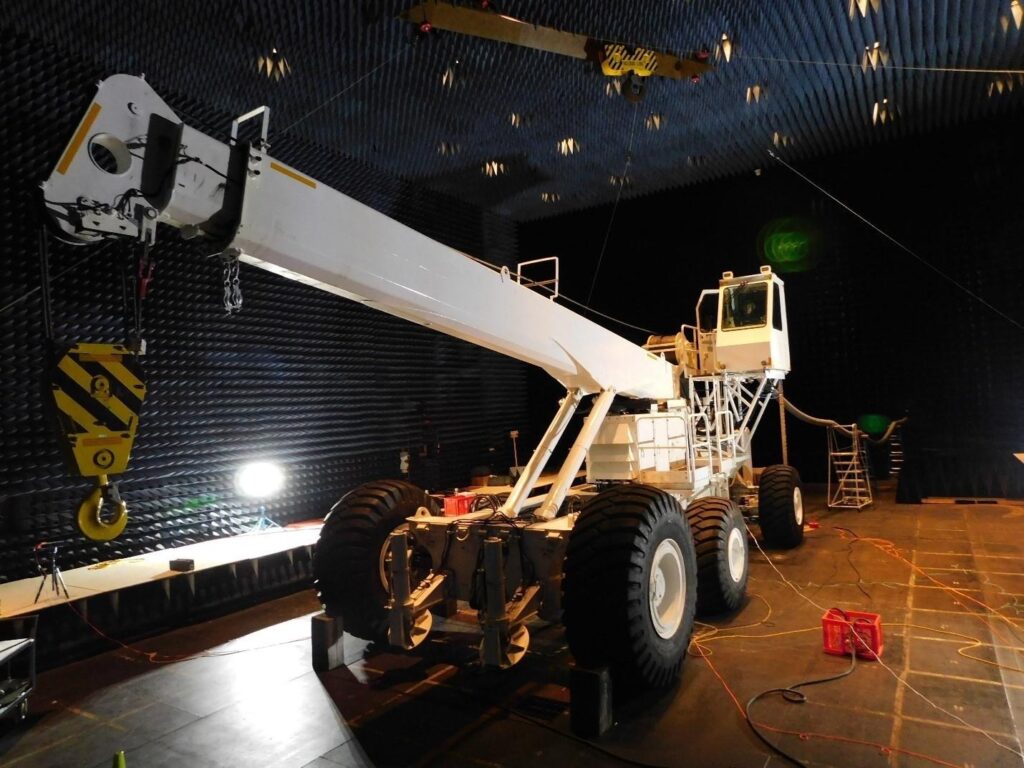
The Navy’s Common Aviation Support Equipment program office (PMA-260) successfully completed the Crash and Salvage Crane (CSC) Maintainability Demonstration (MDEMO) at the Fleet Readiness Center Norfolk February 3. Pictured is the new Carrier CSC when it was in Patuxent River for testing. (U.S. Navy Photo) 

Release from Naval Air Systems Command 

***** 

Published: 

Mar 23, 2023 

NAVAL AIR SYSTEMS COMMAND, PATUXENT RIVER, Md.– 

The Navy’s Common Aviation Support Equipment program office (PMA-260) successfully completed the Crash and Salvage Crane (CSC) Maintainability Demonstration (MDEMO) at the Fleet Readiness Center (FRC) Norfolk, Virginia Feb. 3.  

The MDEMO is an important milestone in the acquisition process, ensuring that the new crane is sustainable, maintainable, and ready for reliable operation in the Fleet. The demonstration verified the Mean Time to Repair (MTTR) for Intermediate Level maintenance is within the required and specified limits.  

“The new CSC design will ensure the warfighter has the safest, most modern, maintainable and reliable equipment possible for years to come, and we are looking forward to bringing this improved capability to the Fleet” said Capt. Robert Burgess, PMA-260 program manager.  

CSCs are critical pieces of equipment because no flight operations are allowed on ships without an operational CSC running on standby. They are used for lifting and moving disabled aircraft on aircraft carriers and landing helicopter dock ship flight decks. These new versions, designed by industry partner Allied Systems Company, replaces the legacy carrier and amphibious assault crash cranes.   

The legacy CSCs were designed decades ago and have been a workhorse in the Fleet for many years, having exceeded their anticipated life expectancy. They have become increasingly difficult to maintain due to obsolescence issues. The new variants correct those deficiencies and are much easier to maintain.  

During the MDEMO, Fleet sailors from two aircraft carriers removed and replaced 30 components while performing unscheduled maintenance tasks following the technical manual instructions. The event’s success supports progression into production of the cranes for delivery to the Fleet.  

“NAWCAD Lakehurst engineering timed the tasks and determined the MTTR requirement was met, and FRC personnel supported the assembly and proof load testing of the crane,” said Cmdr. Tommie Crawford, PMA-260 common ground support equipment team lead. “The team’s dedication, maintenance intellect and shared experience were instrumental to the success of the event.     

The new CSCs are on track to deliver to the Fleet February 2024.  

About PMA-260  

The Navy’s Common Aviation Support Equipment program office (PMA-260) manages the procurement, development and fielding of common aviation support equipment required for the operation and maintenance of aircraft, aircraft weapons, related aircraft weapons subsystems, and miscellaneous ground support equipment. Additionally, PMA-260 manages the Metrology and Calibration program, the Foreign Object Damage mitigation effort, and the Mobile Facilities (MF) Programs. MFs are used to support Navy Expeditionary and Marine Aviation Logistics Squadron intermediate-level maintenance.    


NIWC Atlantic Provides IT Solutions to the USNS Comfort

Release from Naval Information Warfare Center Atlantic. 

***** 

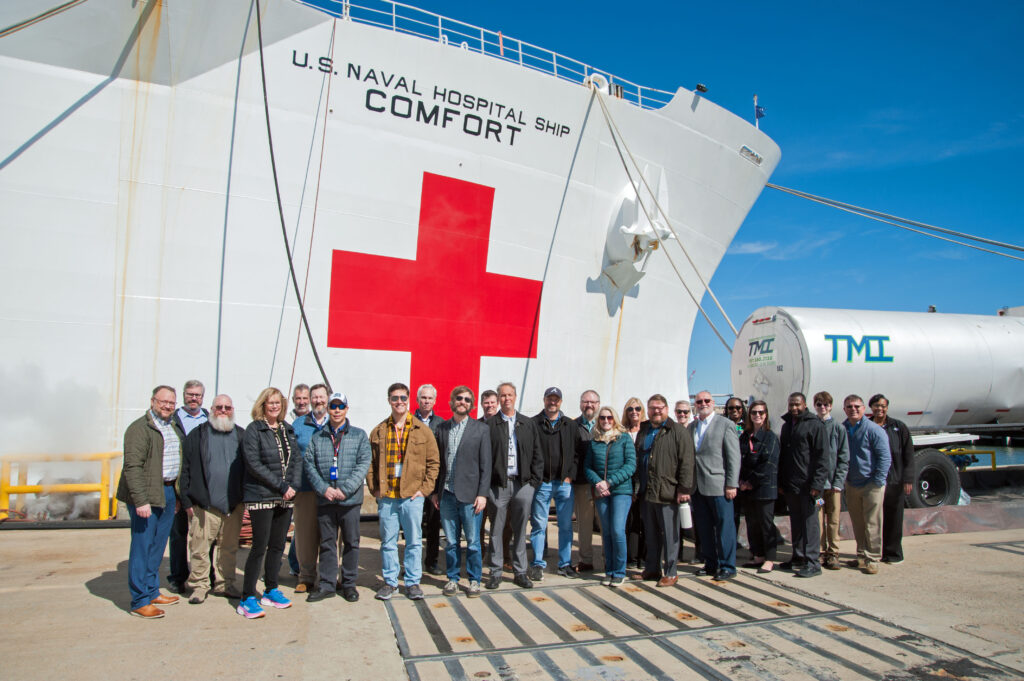
CHARLESTON, S.C. — Naval Information Warfare Center (NIWC) Atlantic employees toured the USNS Comfort (T-AH 20), one of only two hospital ships, in early March to gain better insight of the information technology (IT) on-board with the goal of providing technological solutions. 

“While touring the USNS Comfort, we were able to see the current onboard medical treatment facility IT infrastructure and the infrastructure challenges medical staff encounter while providing patient care including maintaining health record documentation and delivery of pharmacy services, radiology procedures, and laboratory testing,” said Shawn Belcher, Defense Health Readiness Engineering (DHRE) lead. “As new hospital ships are constructed, we will provide input so that current and future critical IT infrastructure security needs are met, ensuring that the very best care for patients and care providers is available.” 

The three-hour tour aboard USNS Comfort allowed employees to see IT equipment that NIWC Atlantic supports and interact with the shipboard users to better understand how support and services can be improved in the future. 

“During the tour, we were able to get eyes on all areas of this hospital ship with humanitarian and combat mission related capabilities as well as the significant IT, power, and heat challenges faced in the delivery of care,” said Bruce Carter, Shore Command and Control, Intelligence, Surveillance, Reconnaissance and Integration Department head. “We are committed to teaming with appropriate organizations and helping them find solutions for these technical obstacles as well as address any that arise in the future during the construction of new of medical ships.” 

The USNS Comfort provides emergency, on-site care for humanitarian missions, primarily in South America, and U.S. combatant forces deployed in war or other operations. Last summer, the ship went on a two-month humanitarian deployment to South and Central American countries where medical staff treated more than 13,000 patients. Prior to any deployment, NIWC Atlantic has multiple IT tasks to accomplish aboard the ship including verifying that user accounts are active and that the electronic health record system is functioning properly as well as providing equipment and technology training for patient administration personnel, pharmacy, radiology, and laboratory technicians that will be used aboard the USNS Comfort during deployment.  

“Engaging with our customers and Sailors to gain a better understanding of their technology challenges is our top priority,” said Capt. Nicole Nigro, NIWC Atlantic commanding officer. “We take every opportunity to interact with the fleet, in their environment, to learn first-hand their limitations so we can provide them with the best solutions and capabilities possible.” 


PEO Ships and NSWC Philadelphia Mark Major Milestone with the Next Generation Guided-Missile Destroyer (DDG(X)) Land Based Test Site 

Release from Naval Surface Warfare Center Philadelphia Division

***** 

By Gary Ell 

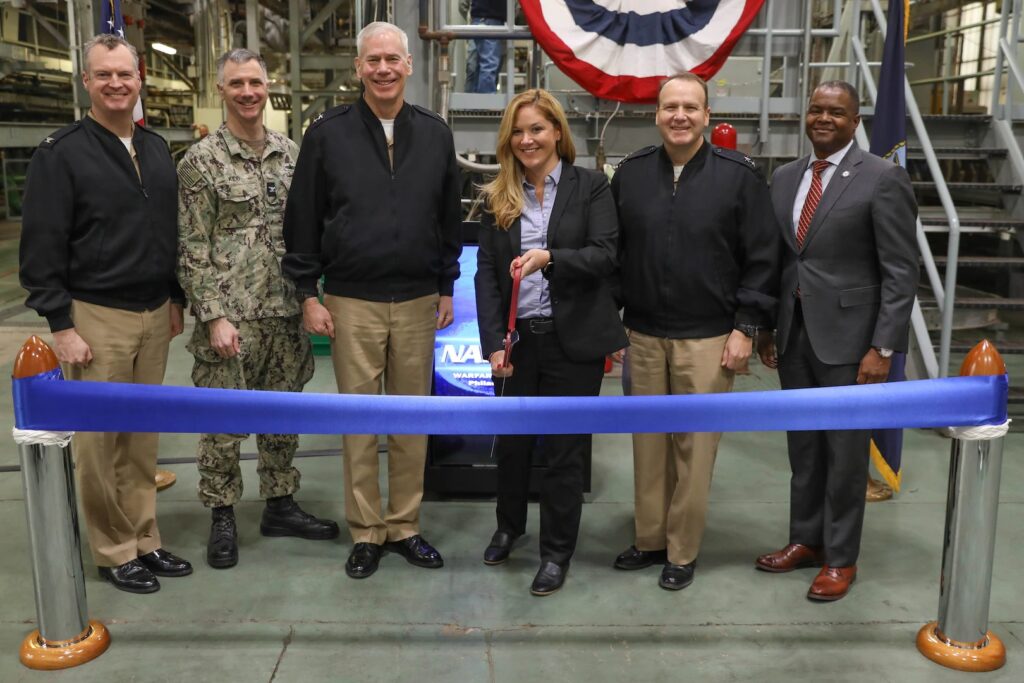
Philadelphia – Program Executive Office (PEO) Ships and Naval Surface Warfare Center, Philadelphia Division (NSWCPD) marked a major milestone with the new DDG(X) Land Based Test Site (LBTS) during a ribbon cutting ceremony on March 21, 2023. The test site program will be used to support and improve reliability and capability, and will also assist with risk reduction efforts and technical oversight for DDG(X) critical systems. 
 
“Today we mark the beginning of a unique test site that will be used to advance the design, reliability and capability of our Nation’s next-generation guided-missile destroyer, the DDG(X), the successor to the supremely successful DDG 51 Arleigh Burke-class,” NSWCPD Commanding Officer Capt. Joseph Darcy said. “The DDG(X) Land Based Test Site is an evolutionary engineering test and evaluation asset that will help build the future: Our Nation’s newest and most advanced destroyers.” 
 
Darcy also focused on the critical role people bring to the development of such advanced U.S. Navy technology. 
 
“NAVSEA’s dedicated and diverse workforce designs, builds, delivers, and maintains the most powerful Navy in the world,” Darcy said. “Our team at NSWCPD has an unrivaled passion to support the Fleet at a time when naval presence and capability is essential to our national security.” 
 
The keynote speaker for the event, Rear Adm. Fred Pyle, Director, Surface Warfare Division (N96), Office of the Chief of Naval Operations and DDG(X) resource sponsor, spoke on the significance of the programmatic milestone. 
 
“Since 1972, many successful applications of land-based testing have proven highly successful for the Navy. Ship classes such as Spruance, Oliver Hazard Perry, Arleigh Burke, and Zumwalt used sites like these to understand new technologies in both the combat system and the HM&E domains,” Pyle said. 
 
Pyle continued, “The LBTS allows us to deliberately reduce risk in advance of construction and write requirements from a place of knowledge instead of uncertainty. We are aligned with Congress on the needs for this important test site, because we know the most expensive place to have discovery is in the shipyard during construction. We need and want to avoid that and these investments allow us to do that.” 
 
“Right here in this complex, you can see Philadelphia’s involvement in DDG 51 acquisition and sustainment from lead ship to our recent DDG 125 crew training in support of Flight III. Our DDG(X) Land Based Test Site will continue that legacy,” NSWCPD Technical Director Nigel C. Thijs (SES) said during his closing remarks. 
 
Along with increased capability and capacity, DDG(X) will provide significant increases in range, efficiency, and time-on-station, providing Fleet Commanders with increased operational flexibility while also decreasing the demand on Fleet logistics. 
 
“Taking an evolutionary vice revolutionary approach, incorporating lessons learned from other major shipbuilding programs and integrating elements of the DDG 51 Class allows DDG to efficiently and smoothly transfer into production as the country’s next enduring guided missile destroyer,” DDG(X) Program Manager Katie Connelly said, “DDG(X) will provide the flexibility and margins needed for readiness today and for decades to come.” 
 
NSWCPD is also home to the DDG 51 Class Land Based Engineering Site (LBES), which is a full scale propulsion system testing experience. LBES testing has been a specialty of NSWCPD since 1943. 
 
“We’ve leveraged experience across our land based test and engineering sites to integrate our significant knowledge of and history with DDG 51 with the lessons learned from more recent test site builds,” Thijs said. “We will continue to share knowledge gleaned from motor and other equipment under test evolutions by holding deliberate engagements across the LBES enterprise to foster a culture of learning and are committed to continually self-assessing and correcting.” 
 
DDG(X) is currently in concept refinement, prior to entering the preliminary design phase. 
 
As one of the Defense Department’s largest acquisition organizations, PEO Ships is responsible for executing the development and procurement of all destroyers, amphibious ships, special mission and support ships, boats and craft. 
 
NSWCPD employs approximately 2,800 civilian engineers, scientists, technicians, and support personnel. The NSWCPD team does the research and development, test and evaluation, acquisition support, and in-service and logistics engineering for the non-nuclear machinery, ship machinery systems, and related equipment and material for Navy surface ships and submarines. NSWCPD is also the lead organization providing cybersecurity for all ship systems. 


Two-Carrier Buy for Navy Beats Inflation, Suppliers Say

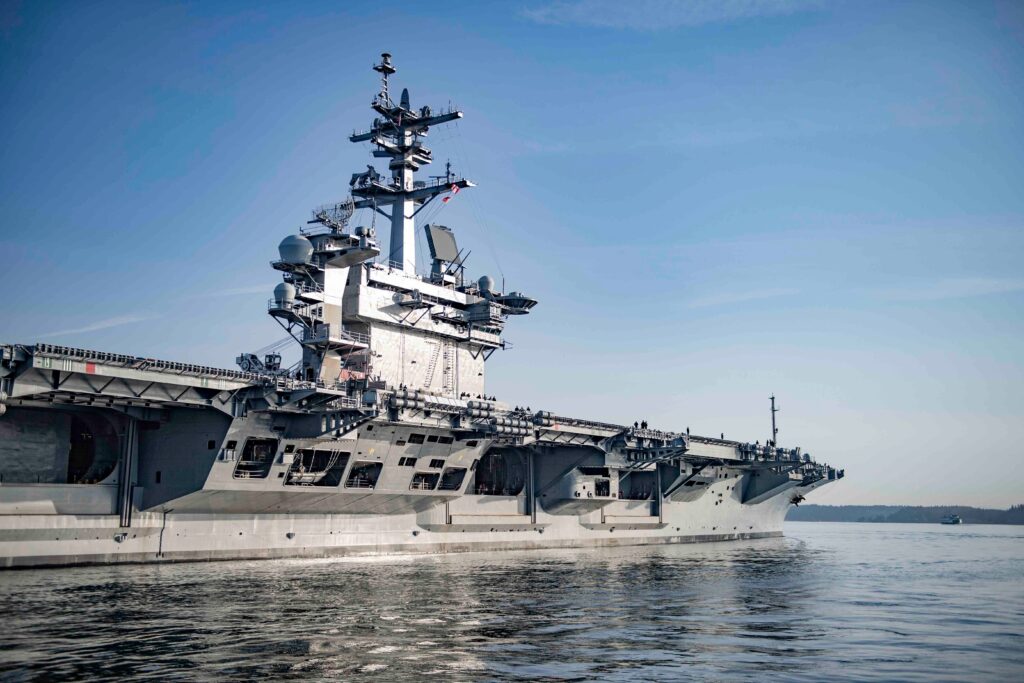
BREMERTON, Wash. (March 17, 2023) The Nimitz-class aircraft carrier USS Theodore Roosevelt (CVN 71) transits the Puget Sound after departing Bremerton, Washington, March 17, 2023. Theodore Roosevelt is conducting a change of homeport to San Diego following an 18-month docking planned incremental availability at Puget Sound Naval Shipyard and Intermediate Maintenance Facility. (U.S. Navy photo by Mass Communication Specialist 2nd Class Gwendelyn L. Ohrazda)

***** 

WASHINGTON — Building two aircraft carriers in a single procurement is economical for the Navy not only in terms of economic order quantities but also in mitigating the effects of inflation. 

Rick Giannini, chairman of the Aircraft Carrier Industrial Base Coalition, an organization of suppliers of components and materials to the building of aircraft carriers, told Seapower in a March 20 interview that the dual procurement of CVN 80 and CVN 81 saved the Navy an estimated $4 billion, and probably considerably more than that because of advance order of materials and components before the increased inflation of the past two years. 

Giannini said that a recent survey of the suppliers showed that inflation is a major concern of the suppliers. 

“Any one of the suppliers that received those advance procurement funds in the two-carrier order “removed [inflation] from the equation,” said Giannini, who also is the former CEO of Milwaukee Valve, one of the suppliers of components to aircraft carriers. “I know our company alone was able to procure two shipsets worth of products, locked in the prices, paid in advance with those funds because of the procurement funding in advance. The value was tremendous compared to prior prices. When you evaluated against what the inflationary cost of those products would be, if we were buying them today, it’s a tremendous advantage.” 

Giannini said that with the current two-ship buy, the suppliers that don’t have advance funding “are struggling with inflationary factors and, like the rest of the country, many of us are struggling to keep and hire competent folks.”   

“We are focused right now on advocating for the next two carriers [CVN 82 and 83] and the funding for the current carriers,” he said. “We continue to talk about stability and predictability. What that really boils down to is the simple message: 2-3-4, which is two carriers with a minimum three-year advance planning funding and built at four-year centers. 

“If we can continue with that it will be a major advantage to our Navy, as it has been for [CVNs] 80 and 81,” he said. “The two-year buy is going to be a major value to the Navy and the shipyards. 

Giannini also pointed out that the mid-life Refueling and Comprehensive Overhauls (RCOH) of aircraft carriers “are a critical part of the industrial supply base. It provides a lot of opportunity for us and it’s a critical part of the whole program, keeping carriers in service. 

“Knowing the RCOH is going to happen is always a good thing — exactly which parts they need to complete that carrier overhaul [are] a lot less known quantities than the original build,” he said. “That always puts a little more pressure on the industrial base. Knowing that it’s going to happen is critical.  

The ACIBC includes 2,000 suppliers across 44 states and 276 congressional districts. 

A recent survey showed that 97% of the suppliers agreed that an increase in centers of carrier procurement from four to five years would negatively impact their business. 

“The supply base has really stepped up and thrived on this last buy for [CVNs] 80 and 81 and [is] performing at a much better level than we have in the past, particularly compared to the first two carriers [CVNs 78 and 79],” Giannini said. “It puts inflation at bay, which is a top concern.” 

The stability of procurement also helps suppliers hire and retain workers with critical skills, he said. 

“Having the advance funding does allow us to be as efficient as possible in building and procuring the materials,” said Lisa Papini, president and CEO of Dante Valve and currently ACIBC vice chair, who is succeeding Giannini as chair and was present for the interview. 


Rolls-Royce awarded second contract to supply mtu generator sets for U.S. Navy frigate program 

Release from mtu 

***** 

mtu Series 4000 marine gensets to be manufactured in the US; adding facility upgrades, additional jobs at two production locations 

Seamless transfer of state-of-the-art naval genset technology from Germany to US 


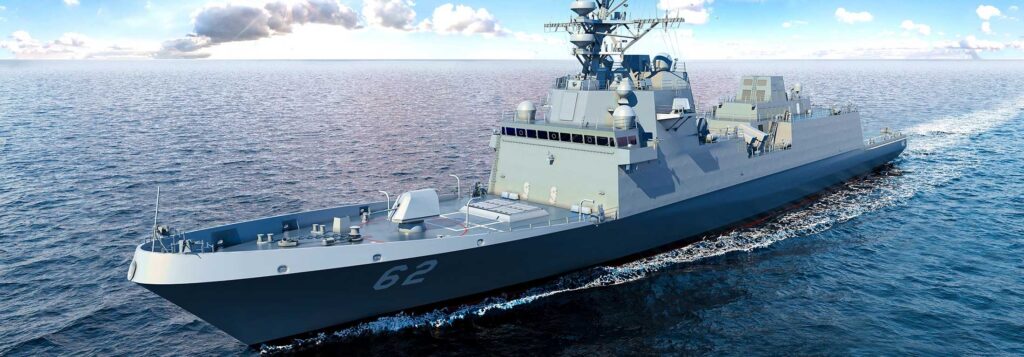
The Power Systems division of Rolls-Royce (LSE:RR., ADR: RYCEY) has been selected to supply a further four of its mtu naval generator sets for the USS Congress (FFG-63), the second ship in the U.S. Navy’s Constellation Class Guided-Missile Frigate program, previously known as the FFG(X) program. Rolls-Royce has made significant investment at its production facilities in Aiken, S.C. and Mankato, Minn. to support the program and manufacture the gensets in the US. 


Rolls-Royce is currently supplying mtu gensets for the lead ship in the Constellation Class program, the USS Constellation (FFG 62), relying on its established team in Friedrichshafen, Germany, to fulfil the project. For the second ship, the FFG-63, the company has successfully transferred advanced technology and detailed manufacturing processes to the US, investing in new facility improvements and creating new jobs to enhance its Aiken and Mankato plants. This investment will not only accommodate the specific needs of the FFG(X) program but also support future potential US naval business. Among the significant investments made at the facilities are new assembly tooling and material handling equipment, upgraded hoist systems, adapted test cells and building expansion, in addition to the creation of up to 20 new jobs. 


Adam Wood, Managing Director, Rolls-Royce Solutions America, said: “We’re not only proud to continue our support of our partners in the U.S. Navy but are also thrilled to bring the manufacturing of our mtu naval gensets to the US. Working with our colleagues in Germany for a seamless technology transfer to our Aiken and Mankato facilities has strengthened our ability to meet the high expectations of this project and better position us to compete for future government programs.” 


The USS Congress (FFG-63) is a multi-mission warship designed for operation in littoral and blue water environments to conduct air, anti-submarine, surface and electronic warfare, in addition to information operations. The four generator sets, each rated at 3000 kWe, are based on the proven and most power-dense mtu 20V 4000 M53B engine and will provide a total power output of 12 MW for propulsion and on-board power supply. 


Fincantieri Marinette Marine (FMM) of Marinette, Wisc. was awarded the build contract for the project. The completed vessel will be powered by a combined diesel-electric and gas turbine, allowing for energy-efficient diesel power generation for propulsion at normal cruising speeds with extended range, while enhancing anti-submarine capability in its extremely quiet diesel-electric configuration. When completed, the ship will be nearly 500 feet in length, accommodate up to 200 crew and be capable of speeds in excess of 26 knots, with a range of 6,000 nautical miles at 16 knots. 


Imagery is available for download from: Media Center (mtu-solutions.com)