Navy and Army Conduct Second Hypersonics Flight Campaign
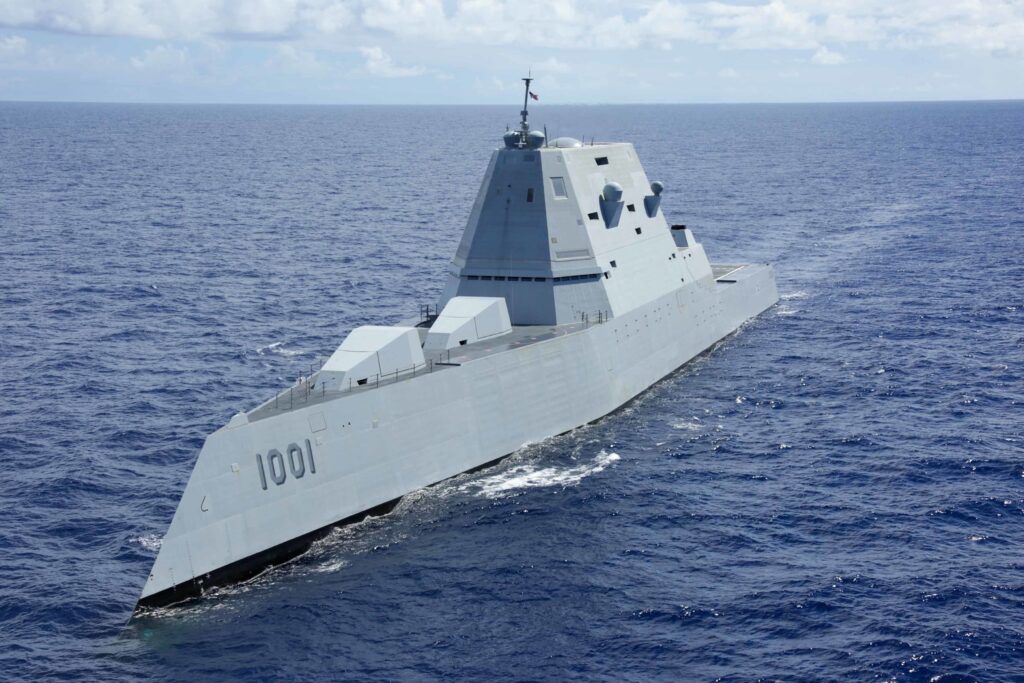
The Zumwalt-class guided-missile destroyer USS Michael Monsoor (DDG 1001) sails in formation during Rim of the Pacific (RIMPAC) 2022. U.S. NAVY / Mass Communication Specialist 3rd Class Aleksandr Freutel

WASHINGTON — The Navy Strategic Systems Programs (SSP) and the Army Hypersonic Project Office (AHPO) successfully conducted the second High Operational Tempo for Hypersonics flight campaign on Oct. 26 at 2:30pm EST, the U.S. Navy Strategic Systems Programs Office public affair office said in a release.  

This flight campaign was executed by Sandia National Laboratories (SNL) from the National Aeronautics and Space Administration (NASA) Wallops Flight Facility. This test will be used to inform the development of the Navy’s Conventional Prompt Strike (CPS) and the Army’s Long Range Hypersonic Weapon offensive hypersonic strike capability. The CPS and AHPO programs are on track to support the first fielding of a hypersonic capability to the Army in fiscal 2023. The Missile Defense Agency (MDA) took part in the campaign to gather data for its work developing systems that will defend against hypersonic weapons.   

One precision sounding rocket launch was conducted containing hypersonic experiments from partners, including CPS, MDA, AHPO, the Joint Hypersonic Transition Office, SNL, Johns Hopkins University/Applied Physics Laboratory, MITRE, Oak Ridge National Laboratory and several defense contractors. A second sounding rocket will be launched this week to complete the campaign. These rockets contained experimental payloads that provided data on the performance of materials and systems in a realistic hypersonic environment. 

During weapon system development, precision sounding rocket launches fill a critical gap between ground testing and full system flight testing. These launches allow for frequent and regular flight testing opportunities to support rapid maturation of offensive and defensive hypersonic technologies. The data collected from the latest sounding rocket campaign will drive warfighting capability improvements for both Navy and Army to ensure continued battlefield dominance. 

The CPS Program, the lead for the common hypersonic missile design and development, has implemented a weapon system development plan that includes a series of recurring Technology Insertion points that will ensure the United States offensive hypersonic capability continues to evolve and enhance beyond the initial capabilities fielded to the first Army Battery. The Technology Insertion process will allow for the routine incorporation of new capabilities and system improvements, as they become available, in order to rapidly maximize the warfighting capability delivered to our Soldiers and Sailors. The frequency and affordability of the sounding rocket launches allows for the Navy and Army Programs to mature these technologies prior to finalizing the weapon system design. For example, the October 2021 inaugural High Operational Tempo for Hypersonics flight campaign demonstrated a capability that was deemed sufficiently mature to pursue its incorporation in the next Technology Insertion.  

This test is a vital step in the development of a Navy-designed common hypersonic missile, consisting of a Common Hypersonic Glide Body and booster, which will be fielded by both the Navy and Army with individual weapon systems and launchers tailored for launch from sea or land. The Navy and Army will continue to work in close collaboration to leverage joint testing opportunities. 

Delivering hypersonic weapons is one of the DoD’s highest priorities. Hypersonic weapons, capable of flying at speeds greater than five times the speed of sound (Mach 5), are highly maneuverable and operate at varying altitudes. The DoD is working in collaboration with industry, government national laboratories, and academia to field hypersonic warfighting capability in the early-to mid-2020s. 

The Army and Navy routinely share data with MDA that supports its work on hypersonic defenses.   


Navy to Consolidate Fire Scout UAVs on West Coast

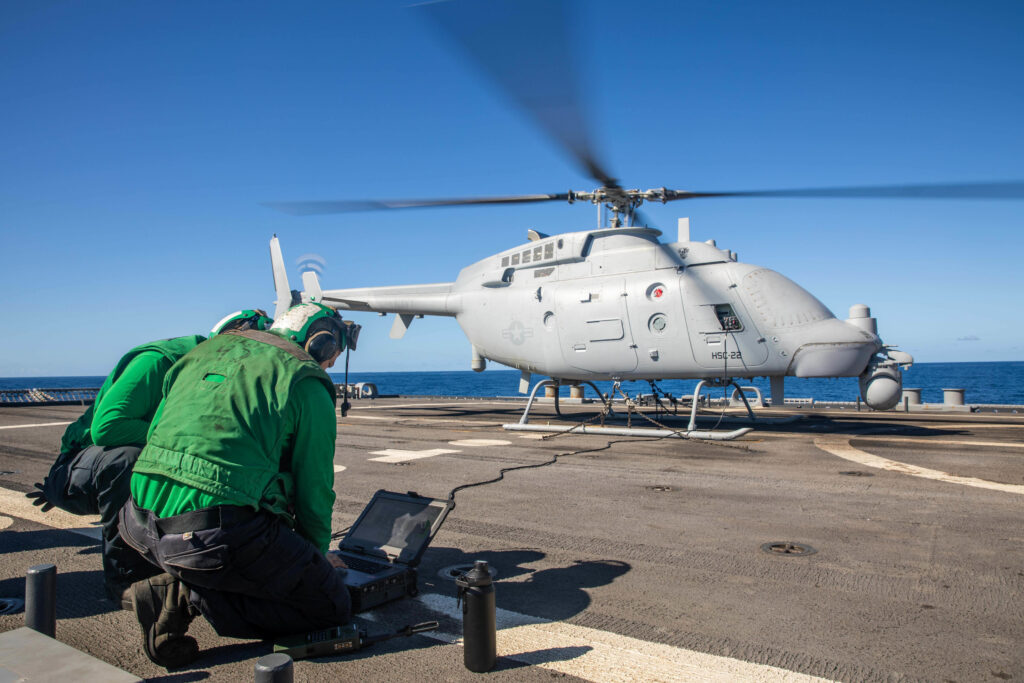
Aviation Electronics Technician 1st Class Nathan Thomas and Aviation Electrician’s Mate 2nd Class Tristan Persky, assigned to the “Sea Knights” of Helicopter Sea Combat Squadron (HSC) 22, Detachment 5, prepare an MQ-8C Fire Scout for takeoff on the flight deck of the Freedom-variant littoral combat ship USS Milwaukee (LCS 5) Jan. 29, 2021. U.S. NAVY / Mass Communication Specialist 2nd Class Danielle Baker

ARLINGTON, Va. — The Navy plans to consolidate operations of its Fire Scout unmanned helicopters to the West Coast in 2023, a Navy spokesman said. 

The MQ-8 Fire Scouts have been by detachments of Helicopter Sea Combat Squadron 22 (HSC-22) on the East Coast and by HSC-21 and HSC-23 on the West Coast. The squadrons operated Fire Scouts alongside their MH-60S Seahawk helicopters. 

“The Navy plans to pivot all MQ-8 operations to the West Coast in [fiscal 2023] with HSC-21 transitioning from the MQ-8B to the more capable MQ-8C. HSC-23 already operates the MQ-8C,” said Cmdr. Zach Harrell, spokesperson for Commander, Naval Air Forces, in an email to Seapower. 

According to a Sept. 27 Navy directive, the East Coast squadron, HSC-22, will be de-activated effective June 30, 2023. 

“Currently, there are no plans to expand Fire Scout operations to other helicopter sea combat (HSC) squadrons,” Harrell said. 


CSG-4 Exercise Enhances Gerald R. Ford Inaugural Deployment with NATO Allies

The first-in-class aircraft carrier USS Gerald R. Ford (CVN 78) transits the Atlantic Ocean, Oct. 20, 2022. The Gerald R. Ford Carrier Strike Group (GRFCSG) is deployed in the Atlantic Ocean, conducting training and operations alongside NATO Allies and partners. U.S. NAVY / Mass Communication Specialist 2nd Class Jackson Adkins

NORFOLK, Va. — The Gerald R. Ford Carrier Strike Group and ships from three North Atlantic Treaty Organization (NATO) countries completed a three-week exercise orchestrated by Carrier Strike Group (CSG) 4 called Task Force Exercise (TFEX) 23-2 from Oct. 5-23, Carrier Strike Group Four (CSG-4)Public Affairs said in an Oct. 24 release. 

During TFEX 23-2, USS Bulkeley (DDG 84) and James E. Williams (DDG 95) joined exercise events to prepare for independent-duty deployments later this year. USS Bainbridge (DDG 96) and USS Mason (DDG 87) supported CSG-4 throughout the exercise by augmenting several training scenarios.  
  
The exercise occurred concurrently with the beginning of Ford Strike Group’s inaugural deployment. 
   
Rear Adm. Jeffrey “Caesar” Czerewko, commander, CSG-4, reiterated the significance of the training exercise, especially the unique interoperability opportunities alongside the Ford Strike Group and allies. 
   
“Carrier Strike Group 4 develops scenarios in an agile and informed manner to best prepare our warfighters for anything they may encounter while deployed at-sea,” said Czerewko. “The Task Force Exercise with the Gerald R. Ford Carrier Strike Group and coalition partners provided an unmatched opportunity to integrate together in the Atlantic. The scenarios offered all participants a building block approach to planning and executing missions culminating in successful demonstrations of lethal performance in a high-end fight.” 
   
The three participating countries outside the United States were Canada, Germany and Spain. Their ships included: ESPS Alvaro De Bazan (F 101), HMCS Fredericton (FFH 337), and FGS Hessen (F 221). 
   
The scenarios offered during the exercise included dynamic maneuvers, simulated strait transits, flight operations, weapons systems testing, communication drills, and cyber response. 
   
“All entities within Carrier Strike Group 12 benefited tremendously from this CSG-4-led exercise,” said Rear Adm. Greg Huffman, commander, CSG-12. “As the Gerald R. Ford Carrier Strike Group continues on its first deployment, the relationships built and capabilities refined with our NATO partners will continue to enhance our flexibility while operating forward.” 
   
The Ford Strike Group includes: Carrier Strike Group (CSG) 12, Carrier Air Wing (CVW) 8, Destroyer Squadron (DESRON) 2, USS Gerald R. Ford (CVN 78), USS Normandy (CG 60), USS Ramage (DDG 61), USS McFaul (DDG 74), and USS Thomas Hudner (DD 116). 
   
CSG-4 is a team that consists of experienced Sailors, Marines, government civilians and reservists, who mentor, train and assess U.S. 2nd Fleet combat forces to forward-deploy in support and defense of national interests. CSG-4’s experts shape the readiness of U.S. 2nd Fleet Carrier Strike Groups (CSG), Expeditionary Strike Groups (ESG), Amphibious Readiness Groups (ARG) and independent deploying ships through live, at-sea and synthetic training, as well as academic instruction. Along with its subordinate commands, Tactical Training Group Atlantic (TTGL) and Expeditionary Warfare Training Group Atlantic (EWTGL), CSG-4 prepares every Atlantic-based CSG, ARG and independent deployer for sustained forward-deployed high-tempo operations. 


Navy Conducts Final AQM-37 Target Launch

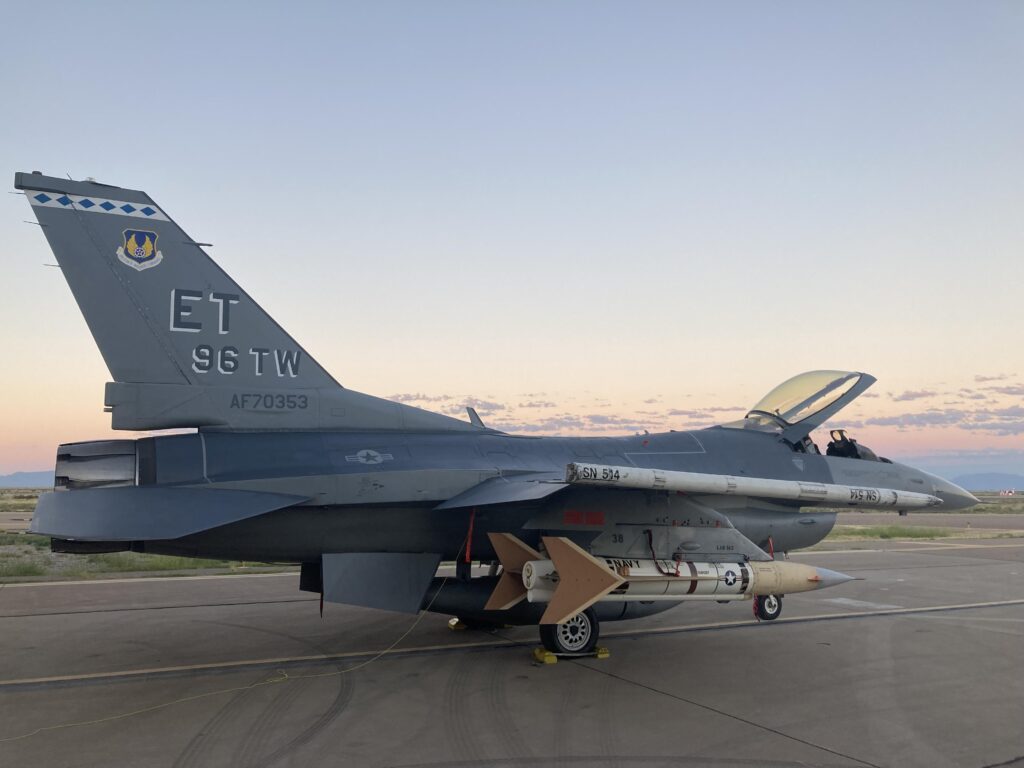
The Navy prepares to launch the final AQM-37 targets Sept. 22 in support of the U.S. Army’s Integrated Fires Mission Command operations at White Sands Missile Range, New Mexico. U.S. ARMY

PATUXENT RIVER, Md. — The Navy launched the last two remaining AQM-37 targets Sept. 22 in support of the U.S. Army’s Integrated Fires Mission Command operations at White Sands Missile Range, New Mexico, the Naval Air Systems Command said in an Oct. 25 release. 

“The final launch of the AQM-37 represents the closing of a chapter for the Aerial Targets Program Office (PMA-208) and our industry partners, but also intensifies our focus and provides us the opportunity to start and sustain new chapters with more advanced technology and capabilities that closer resemble the threats we face,” said Don Blottenberger, PMA-208 program manager. 

Since 1962, more than 5,000 AQM-37 targets have been delivered and launched in various training and system development operations across the globe. The system replicated both air-to-air and air-to-surface threats and was able to fly simulated ballistic-missile profiles at altitudes of up to 300,000 feet. 

“The legacy of the AQM-37 and those who were involved in its development and sustainment through the decades will not be forgotten,” said Blottenberger. “Its 60-year lifespan is a testament to its capability, reliability and the critical role it has played in the security and preparedness of both our own, and our international partners’ armed forces.” 

Over six decades, the target played an instrumental role in the testing and deployment of new systems including short range air-to air missiles including the Air Intercept Missile (AIM-9) Sidewinder, ship-borne short range anti-aircraft missiles including the Sea Sparrow Missile (RIM-7) and ships equipped with missile defense (AEGIS) systems. The targets supported both domestic and international partners including NATO nations and was commonly used in conjunction with the U.S. Air Force, most often launched from the F-16 Fighting Falcon. 

Just recently, the Air Force’s 412th Test Wing launched seven AQM-37 targets from F-16s to support testing of E-2D Advanced Hawkeye and F-35 Lightning II capabilities at Navy Exercise Gray Flag at the Point Mugu Sea Range. The AQM-37’s involvement in this exercise and countless others, enhanced capability and supported mission readiness for joint forces. 

“Our supersonic technical team has done fantastic work over the last several years to get the final targets launched and put to use in a way that supports development and testing for our military,” Blottenberger said. “The team saved the Navy close to $1 million by avoiding demilitarization of the last several targets by using them for the Navy Gray Flag Exercise and other test and evaluation events.” 

PMA-208 provides threat representative aerial targets for fleet training and weapons systems test and evaluation.


L3Harris Invests in Seasats to Accelerate New Autonomous Maritime Capabilities to the Navy

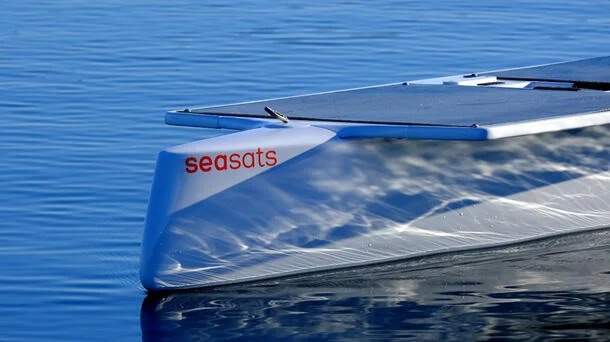
L3Harris Techonolgies announced its strategic investment in Seasats for their low-cost, solar-powered maritime autonomous surface vehicles. L3HARRIS

MELBOURNE, Fla. — L3Harris Technologies has made a strategic investment in Seasats, a privately-owned company involved in the design and production of low-cost, solar-powered maritime autonomous surface vehicles (ASV) for military and commercial use, L3Harris said in a release. 

L3Harris is making its investment to fuel collaborative development and accelerate production of Seasats’ X3 micro-ASV, whose unique design and low-signature waterline makes it difficult to detect by sight and radar. The X3 features stealthy performance and reliable six-month endurance in all weather conditions for a fraction of the price of current small maritime ASVs, and provides a complement to L3Harris’ large and medium-sized ASV offerings. 

“Our U.S. Navy customers are pursuing innovative solutions to reliably and efficiently patrol the waters from the Red Sea into the Persian Gulf and we understand their urgent need for proliferated maritime ASV architectures,” said Daniel Gittsovich, vice president, Corporate Strategy and Development, L3Harris. “Our investment and collaboration with Seasats provides a proven, multi-capability solution for global maritime security challenges.” 

Inexpensive, versatile and ideally suited to host a variety of maritime payloads, the X3 is well positioned to enhance the counter-piracy, mine clearing, intelligence, surveillance and reconnaissance, and electronic warfare solutions L3Harris already provides its customers. 

Seasats can also serve commercial clients by pairing platforms and sensors to enable advanced hydrographic surveys, infrastructure monitoring, and scientific discovery. Future collaboration and technology sharing between L3Harris and Seasats has the potential to increase the autonomous capabilities, artificial intelligence and endurance of the X3 while cutting production time up to 75 percent. 

“The L3Harris team recognized the value in pairing their payloads and sensors with our versatile platform because together they create an operations-ready solution for a wide range of critical military and commercial uses,” said Mike Flanigan, CEO of Seasats. “Our previous tests and demonstrations with the Navy were enthusiastically received and we are looking forward to making collaborative improvements with L3Harris as we prepare for operational capabilities testing with Task Force 59 in the Arabian Peninsula next year.” 

The U.S. Navy 5th Fleet commander, Vice Adm. Brad Cooper, recently announced a goal to have at least 100 unmanned surface vessels patrolling the Arabian Peninsula by mid-2023. Earlier this year the Navy invited Seasats to participate in its “Digital Horizon 2022” exercise designed to develop maritime domain awareness and accelerate the Navy’s robotic and artificial intelligence maritime capabilities.


Naval Stakeholders Assess Lessons Learned from Ukraine Conflict for Future War at Sea

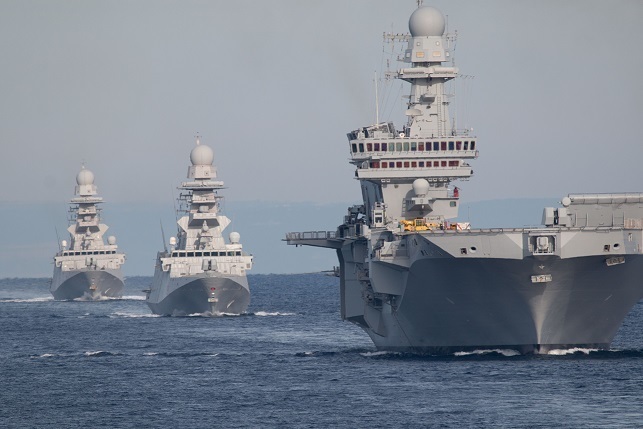
Ships from multiple NATO nations including Italy, Spain, Germany and the United States, participate in Exercise Mare Aperto 22-2, a high-end exercise sponsored by the Italian Navy aimed at strengthening and enhancing the combat readiness of participating assets in the conduct of maritime operations. U.S. NAVY / Mass Communication Specialist 2nd Class Ezekiel Duran

PARIS — Naval stakeholders are continuing to learn lessons from the ongoing conflict in Ukraine, and are considering the implications of these lessons for future naval warfare.

In workshop briefings given at the Euronaval 2022 exhibition in Paris, France, in mid-October, navies and naval industry alike discussed lessons ranging from strategic to operational to technological contexts.

Capt. Yann Briand, a French Navy officer serving as strategic policy branch head in France’s Ministry of Defence, set out several lessons France is learning from the Ukraine war.

“The first one is that it recalls the fundamentals of naval combat at sea — that is to say, violence, velocity, and attrition,” Briand said. Second, he underscored the wider strategic context of “the central role of nuclear deterrence” in the crisis.

“Another point — one not specific to the French navy, but the same for all the world’s navies — is we are in close contact with our competitors,” Briand said. In other words, he continued, “at sea, there is the possibility to send different political messages in a very subtle way.”

“You use a fire-control radar, you come very close to another ship: all this is something you can do at sea that you cannot do on land.”

This process works due to professional approaches on all sides, he said. However, he noted, instability persists.

Finally, Briand said, “Alliances and partnerships are more than very useful,” with countries and their navies not able to address all such challenges alone.

The lessons learned are also indicative of a wider shift in the nature of security.

“In the last 30 years, the stability of France and Europe was based on laws, regulations and treaties; now, it is more based unfortunately on physical defense — weapons, fighters, aircraft carriers,” Briand said.

Richard Keulen, a former Royal Netherlands Navy officer and frigate commander and now Dutch shipbuilding company Damen Naval Division’s director for Naval Sales Support, mirrored this perspective.

“The Baltic and Black Sea show us that Europe is flanked by important and disputed waters. Europe is depending for its prosperity and freedom to maneuver on a mare librum, in the Mediterranean also, the wider Atlantic, and even waters east of Suez.”

“So, innovation in defense is extremely important, as clearly witnessed for example in the Ukraine war,” Keulen said. “We have seen the pictures.”

“We saw the extensive use of drones. We saw the sinking of the [Russian Slava-class cruiser] Moskva. We also witnessed the extension into northern waters of hybrid warfare towards the seabed.”

In the Baltic Sea, the two Nordstream gas pipelines both suffered ruptures recently, although the cause of the ruptures has not been confirmed publicly. Such incidents prompted regional concerns about the security of sea lines of communication, including on the seabed.

“This latter phenomenon for example raises concerns and awareness in the Netherlands and its neighboring countries in the North Sea area, around the busiest waters in Europe,” Keulen said.


Keel Authenticated for Future USS Robert E. Simanek

The keel for the future USS Robert E. Simanek (ESB 7), a Lewis B. Puller-class Expeditionary Sea Base (ESB), was laid at General Dynamics National Steel and Shipbuilding Company (GD-NASSCO) shipyard in San Diego, Oct. 21. GENERAL DYNAMICS NASSCCO

The keel for the future USS Robert E. Simanek (ESB 7), a Lewis B. Puller-class Expeditionary Sea Base (ESB), was laid at General Dynamics National Steel and Shipbuilding Company (GD-NASSCO) shipyard in San Diego, Oct. 21, Team Ships Public Affairs said in a release.

The ship is named for Private First Class Robert Ernest Simanek, who was awarded the Medal of Honor for shielding fellow Marines from a grenade at the Battle of Bunker Hill during the Korean War. The Medal of Honor was presented to him by President Dwight D. Eisenhower in a White House ceremony in 1953.

Simanek recently passed away on August 1, 2022. In addition to the Medal of Honor, he received a Purple Heart award, the Korean Service Medal with two bronze service stars, the United Nations Service Medal and the National Defense Service Medal. His daughter, Ann Simanek, is the sponsor of the ship and attended the keel laying ceremony.

“We are honored this ship will celebrate the late Robert E. Simanek’s legacy as a Medal of Honor recipient and Korean War veteran and his dedication to our country,” said Tim Roberts, Strategic and Theater Sealift program manager, Program Executive Office Ships. “ESBs provide a critical capability to the fleet and provide for increased flexibility.”

Expeditionary Sea Base ships are highly flexible platforms used across a broad range of military operations supporting multiple operational phases. Acting as a mobile sea base, they are a part of the critical access infrastructure that supports the deployment of forces and supplies to provide prepositioned equipment and sustainment with adaptable distribution capability.

These ships support Aviation Mine Countermeasure and Special Operations Force missions. In addition to the flight deck, the ESB has a hangar with two aviation operating spots capable of handling MH-53E equivalent helicopters, accommodations, workspaces and ordnance storage for embarked force, enhanced command, control, communications, computers and intelligence (C4I). These ships support embarked force mission planning and execution and has a reconfigurable mission deck area to store embarked force equipment, including mine sleds and Rigid Hull Inflatable Boats (RHIBs).

In 2019, the Navy decided to commission all Expeditionary Sea Base ships to allow them to conduct a broader and more lethal mission set compared to original plans for them to operate with a USNS designation. A Navy O-6 commands ESBs and a hybrid-manned crew of military personnel and Military Sealift Command civilian mariners. This crew makeup provides combatant commanders with increased operational flexibility in employing the platform.

Construction of the future USS John L. Canley (ESB 6) and the Navy’s John Lewis Class Fleet Replenishment Oilers (T-AO) are ongoing at GD-NASSCO.


USS Milwaukee Deploys to Support Regional Cooperation and Security

Family members wave to their loved ones as Freedom-variant littoral combat ship USS Milwaukee (LCS 5) Departs Naval Station Mayport 18 Oct. Milwaukee is one of four ships assigned to Surface Division 21. U.S. NAVY

MAYPORT, Fla. — The Freedom-variant littoral combat ship USS Milwaukee (LCS 5), along with the “Dragon Whales” of Helicopter Sea Combat Squadron (HSC) 28 Detachment 9 and embarked U.S. Coast Guard Law Enforcement Detachment (LEDET), departed from Naval Station Mayport Oct. 18, starting its second deployment this year to support U.S. 4th Fleet area of operations, said Lt. Anthony Junco of Commander, Littoral Combat Ship Squadron Two in an Oct. 19 release. 

Milwaukee will support counter-illicit trafficking in the Caribbean and the Eastern Pacific. Milwaukee’s operations will also involve exercises and exchanges with partner nations, supporting U.S. 4th Fleet efforts to enhance capability and improve interoperability e while reinforcing the Fleet’s position as the regional partner of choice. 
 
Deploying an LCS to the region demonstrates the U.S. commitment to regional security. The ship’s size, speed and agility make LCS ideal for narcotics interdictions, partner engagements and port access. 
 
“This crew is excited to take the ship on another deployment to 4th Fleet. We have some new Sailors that are looking forward to see new parts of the world, and the Sailors who deployed last time are ready to execute their mission once again,” said Cmdr. Brian A. Forster, commanding officer of Milwaukee. “The interoperability and exercise with our partner nations were the highlight of last deployment and we look forward to doing the same. Building peace through partnership is a core aspect of any deployment and the Sailors of USS Milwaukee are looking forward to working with our allies.” 
 
Manned by more than 100 Sailors, Milwaukee’s crew will consist of surface warfare mission-package personnel, a U.S. Coast Guard law enforcement detachment and an aviation detachment, who will operate the embarked MH-60S helicopter. 
 
USS Milwaukee is operationally assigned to U.S. 2nd Fleet and is one of four littoral combat ships under Surface Division 21. 


Middle East Naval Coalition Expands with Seychelles as 10th Member

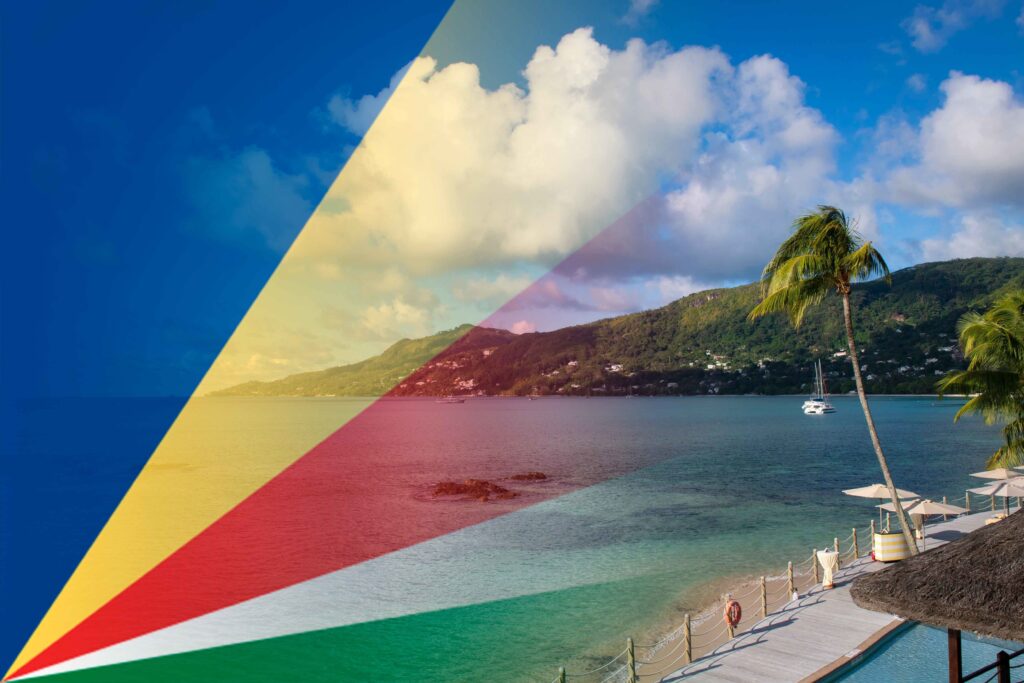
Graphic image depicting the flag of the Indian Ocean island nation of the Seychelles and its shoreline, Sept. 23. U.S. ARMY / Sgt. Terry Vongsouthi

MANAMA, Bahrain — U.S. Naval Forces Central Command (NAVCENT) announced Oct. 19 the Indian Ocean island nation of the Seychelles has joined the International Maritime Security Construct (IMSC), a multinational maritime coalition established in 2019 to deter attacks on commercial shipping in the Middle East. 

Seychelles becomes the tenth member of IMSC and its operational arm, Coalition Task Force Sentinel, which also welcomed Romania in March. Headquartered in Bahrain, IMSC is led by NAVCENT. 
 
“We are very excited to now welcome Seychelles, another great maritime partner in the region,” said Vice Adm. Brad Cooper, commander of NAVCENT, U.S. 5th Fleet and Combined Maritime Forces. “Having representation from countries all over the world makes us a stronger team.” 
 
IMSC was formed in July 2019 in response to increased threats to merchant mariners transiting international waters in the Middle East. Coalition Task Force Sentinel was established four months later to deter state-sponsored malign activity and reassure the merchant shipping industry in the Bab al-Mandeb and Strait of Hormuz. 

“Through our presence across the Middle East, we continue to strengthen our coalition and build new partnerships while reassuring those who operate in this region,” said United Kingdom Royal Navy Commodore Ben Aldous, commander of IMSC and Coalition Task Force Sentinel. 

In addition to Seychelles and Romania, IMSC’s member-nations include Albania, Bahrain, Estonia, Lithuania, Saudi Arabia, the United Arab Emirates, United Kingdom and United States. 

Seychelles is also a member of Combined Maritime Forces, another major naval partnership based in the Middle East led by Cooper. 


Textron Systems to Provide Second U.S. ESB with Shipboard UAS Operation

Aerosonde Unmanned Arial Surveillance (UAS) vehicle, Buck G, awaits to launch aboard the Expeditionary Sea-Base USS Hershel “Woody” Williams (ESB 4) in the Atlantic Ocean, Sept. 25, 2020. U.S. MARINE CORPS / Sgt. Megan Roses

HUNT VALLEY, Md. — Textron Systems Corporation, a Textron Inc. company, has been awarded a contract valued at up to $22 million by the U.S. Navy’s Naval Air Systems Command (NAVAIR) to provide UAS operational support to the USS Miguel Keith (ESB 5), the company said in an Oct. 20 release. The contract begins in fiscal 2023 and has a total potential performance period of five years. This award builds on the four-year extension of USS Hershel “Woody” Williams (ESB 4) earlier this year and joins two guided-missile destroyers, bringing the total number of U.S. Navy ships supported by the Aerosonde UAS system to four.  

Under this contract, Textron Systems will deploy its Aerosonde UAS to provide extended range intelligence, surveillance and reconnaissance (ISR) services with enhanced mission payloads aboard the ESB 5. The company’s Field Service Representatives will work alongside the sailors onboard to provide support for a variety of maritime missions.  

“There are numerous vessels of opportunity with the Navy that can benefit from consistent multi-INT ISR,” said Wayne Prender, senior vice president, Air Systems. “Through this fee-for-service contract, the Navy can continue to mature future shipboard ISR requirements while supporting existing real-world missions. We are already seeing the benefits for DDG- and ESB-class ships, and we continue to optimize our services to deliver the unique operational and logistical capabilities our customers demand in order to accomplish their mission and keep our sailors safe.” 

The Aerosonde system has amassed more than 585,000 flight hours while serving multiple U.S. and international allies. It is designed for expeditionary land- and sea-based operations in austere environments and is equipped for multiple payload configurations. For more than 10 years, Textron Systems has provided turnkey, fee-for-service operations, providing hands-on operational support for customers around the world.