First Steel Cut for Navy’s Constellation-Class Frigate 
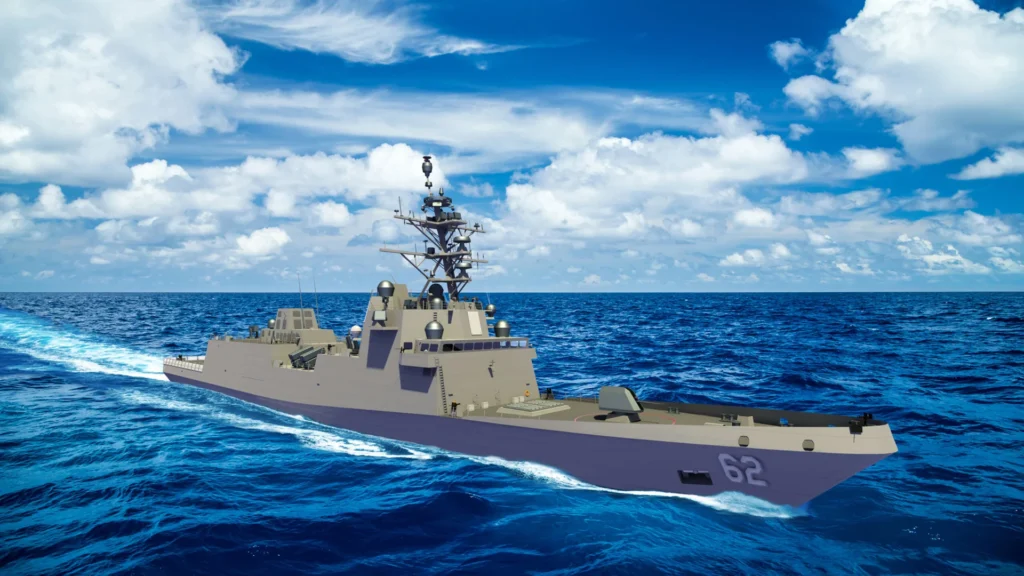
An artist’s conception of the future USS Constellation. FINCANTIERI MARINETTE MARINE

ARLINGTON, Va. — The construction of the U.S. Navy’s next class of guided-missile frigates officially began Aug. 31 with the first steel for the ship cut in a small ceremony at the Fincantieri Marinette Marine Shipyard in Marinette, Wisconsin. 

The future USS Constellation (FFG 62) will be the lead ship of a class of at least 20 frigates and is slated for delivery in 2026. The hull of the frigate will be based on the Italian FREMM-class frigate and will be equipped with proven weapons and combat systems.  

“There is no doubt that the future USS Constellation and the 19 follow-on ships will bring an out-sized punch to surface warfare patrols with our cruisers, destroyers and littoral combat ships as well as with our allied and partner navies,” said Tommy Ross, performing the duties of the assistant secretary of the Navy for Research, Development and Acquisition, speaking to reporters in an Aug. 29 roundtable at the Pentagon. “We need the capabilities these ships will bring now, and we will need them for decades.” 

Ross said the frigate program “reflects many hard lessons learned in proven shipbuilding practices, mature designs in combat systems such as Aegis Baseline 10 to modern life-cycle improvements like land-based testing, conditions-based maintenance, and a fully cyber-resilient architecture. The supporting infrastructure also is well developed.” 

The production go-ahead was given by Capt. Kevin Smith, the FFG 62 program manager, after completion of the critical design review in May and the production readiness review in July, said Rear Adm. Casey Moton, program executive officer for Unmanned and Small Combatants. 

“We’re excited to begin production,” Moton said. 

The admiral said the FFG program strove to reduce risk by using a proven parent design for the hull and non-developmental systems and government program-of-record combat and C4I (command, control, communications, computers and intelligence) systems.  

Ross said getting the first ship “up and going” and getting the builder’s shipyard “up in cadence” is step one in building the class of 20 frigates. 

“We are in a good place to meet the requirements we have in coming years,” he said. 

The Navy has the option of building more than the current program of 20 frigates but is not ready to move on that option, which Moton said would depend on requirements, industrial capacity, and the budget topline. 

The admiral stressed that the FFG 62 program is a team effort of the PEO, Fincantieri Marinette Marine, and Gibbs & Cox, which produced the 3D model digital design of the ship. He said the design team met and exceeded the goal of 80% completion at construction start. 

The Constellation will be a multi-mission warship that Ross said “gives commanders a lot more options.” 

Three Constellation-class FFGs — Constellation (FFG 62), Congress (FFG 63), and Chesapeake (FFG 64) currently are on order. In June, the Navy exercised a contract option to order FFG 64. Marinette Marine is now under contract for those first three FFGs with options for seven more.   

Although based on the FREMM frigate, the Constellation will have a longer hull and features modified to meet U.S. Navy standards on reliability, survivability, maintainability, habitability and lethality. The 496-foot-long steel ship will displace 7,300 tons and have a beam of 64.6 feet and a draft of 18 feet. It will be powered by a combination diesel electric and gas turbine propulsion system.  

The FFG will feature a Mk41 Vertical Launching System, canister-launched Naval Strike Missiles, Mk110 57 mm gun, RAM Mk49 launcher, CAPTAS-4 variable-depth sonar, TB-37 Multi-Function Towed Array, SQQ-89(V)16 undersea combat system, SLQ-25E Nixie, SLQ-32(V)6 SEWIP Block 2, SPY-6(V)3 FFG Radar, Aegis Baseline 10 combat system, one MH-60R helicopter, one MQ-8C unmanned aerial vehicle, and two 7-meter rigid-hull inflatable boats. Delivery of Constellation is anticipated for 2026. 

Smith said the ship was equipped to operate two MH-60Rs or two MQ-8C unmanned aerial vehicles if needed. 

The CAPTAS-4 variable-depth sonar (VDS) was selected to replace the Raytheon DART VDS, which was developed for the littoral combat ship’s anti-submarine warfare mission package and which Moton said had some “technical challenges principally in hydrodynamics and transducers.”  

Moton made the VDS decision in concert with the shipbuilder and noted the CAPTAS-4 was “pretty close in cost” with the DART VDS. 


George H.W. Bush CSG Relieves Harry S. Truman CSG in U.S. 6th Fleet 

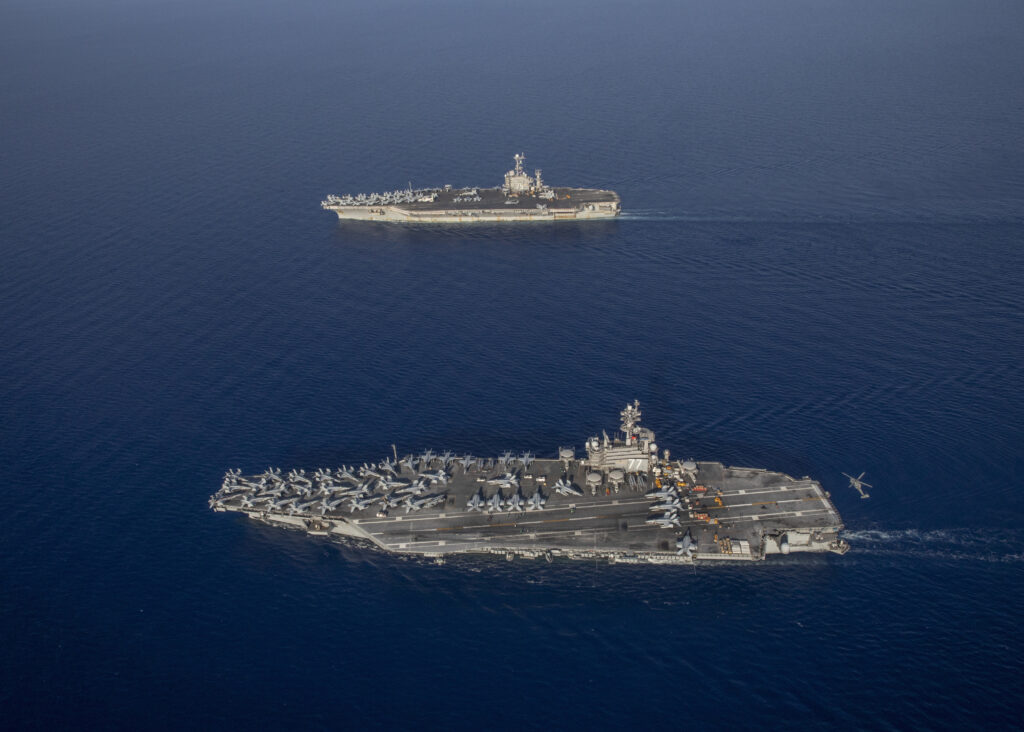
The Nimitz-class aircraft carrier USS George H.W. Bush (CVN 77), bottom, operates with the Nimitz-class aircraft carrier USS Harry S. Truman (CVN 75), Aug. 27. U.S. NAVY / Mass Communication Specialist Seaman Samuel Wagner

IONIAN SEA — The George H.W. Bush Carrier Strike Group (GHWBCSG) relieved the Harry S. Truman CSG (HSTCSG) in the Ionian Sea, Aug. 27, Carrier Strike Group 10 and CSG 8 Public Affairs said Aug. 31. 

The relief marked the presence of two U.S. Navy aircraft carriers operating with one another in the Mediterranean, as well as GHWBCSG’s official assumption of Commander, Task Force 60 responsibilities in the U.S. 6th Fleet area of operations. HSTCSG’s transit through the Strait of Gibraltar on Aug. 30 followed the dual carrier operations. 

“We have the watch,” said Rear Adm. Dennis Velez, commander, GHWBCSG, Carrier Strike Group 10. “The Truman and Bush Strike Groups represent a force that only a U.S. Navy carrier strike group can provide combatant commanders. The Truman Strike Group executed the mission, reassured our partners and allies, and gave our diplomats opportunities to negotiate from a position of strength. They served our nation and the region well. We are proud of our teammates and wish them well on their return to friends and family.” 

Velez and Rear Adm. Paul Spedero, Jr., commander, HSTCSG, CSG-8, met aboard USS George H.W. Bush (CVN 77) to discuss regional maritime security, task force operations, and building relationships with NATO allies to strengthen deterrence and defense efforts. 

“This has been a meaningful deployment for our strike group,” said Spedero. “We demonstrated our Navy’s resounding commitment to the NATO Alliance and to our partners in the region. Our Sailors set the stage for future operations and I look forward to seeing what the Bush’s strike group will accomplish during their deployment.” 

The GHWBCSG will work alongside the joint force, partners and allies throughout the region while in the Naval Forces Europe, Naval Forces Africa, U.S. 6th Fleet area of operations.  

While operating together the CSGs conducted a face-to-face turnover between commanders and transferred ammunition. Additionally, the strike group teams worked together to create a unique opportunity for family members embarked on either carrier to spend quality time with one another aboard George H.W. Bush. 

The GHWBCSG is an integrated combat weapons system that delivers superior combat capability to deter, and if necessary, defeat America’s adversaries in support of national security. GHWBCSG’s major command elements are USS. George H.W. Bush (CVN 77), Carrier Air Wing 7, Destroyer Squadron 26, the Ticonderoga-class guided-missile cruiser USS Leyte Gulf (CG 55), and the Information Warfare Commander. 

The ships of DESRON 26 within the GHWBCSG are USS Nitze (DDG 94), USS Truxtun (DDG 103), USS Farragut (DDG 99), and USS Delbert D. Black (DDG 119). 

The squadrons of CVW-7 embarked aboard George H.W. Bush are the “Jolly Rogers” of Strike Fighter Squadron (VFA) 103, the “Pukin Dogs” of VFA-143, the “Bluetails” of Carrier Airbone Early Warning Squadron (VAW) 121, the “Nightdippers” of Helicopter Sea Combat Squadron (HSC) 5, the “Sidewinders” of VFA-86, the “Nighthawks” of VFA-136, the “Patriots” of Electronic Attack Squadron (VAQ) 140, and the “Grandmasters” of Helicopter Maritime Strike Squadron (HSM) 46. 

Truman serves as the flagship of the HSTCSG and is commanded by Capt. Gavin Duff. Additional units include the nine squadrons of Carrier Air Wing (CVW) 1, commanded by Capt. Patrick Hourigan, to include Strike Fighter Squadron (VFA) 11 “Red Rippers;” VFA-211 “Fighting Checkmates;” VFA-34 “Blue Blasters;” VFA-81 “Sunliners;” Electronic Attack Squadron (VAQ) 137 “Rooks;” Carrier Airborne Early Warning Squadron (VAW) 126 “Seahawks;” Helicopter Sea Combat Squadron (HSC) 11 “Dragon Slayers;” Helicopter Maritime Strike Squadron (HSM)72 “Proud Warriors;” and a detachment from Fleet Logistics Support Squadron (VRC) 40 “Rawhides.” 

The staff and guided-missile destroyers of Destroyer Squadron 28 commanded by Capt. Blair Guy have included USS Cole (DDG 67) USS Bainbridge (DDG 96), USS Gravely (DDG 107), USS Jason Dunham (DDG 109), and USS Forrest Sherman (DDG 98). The strike group also consists of the Ticonderoga class guided-missile cruiser USS San Jacinto (CG 56), commanded by Capt. Christopher Marvin. 


U.S. Navy Foils Iranian Attempt to Capture Unmanned Vessel in Arabian Gulf   

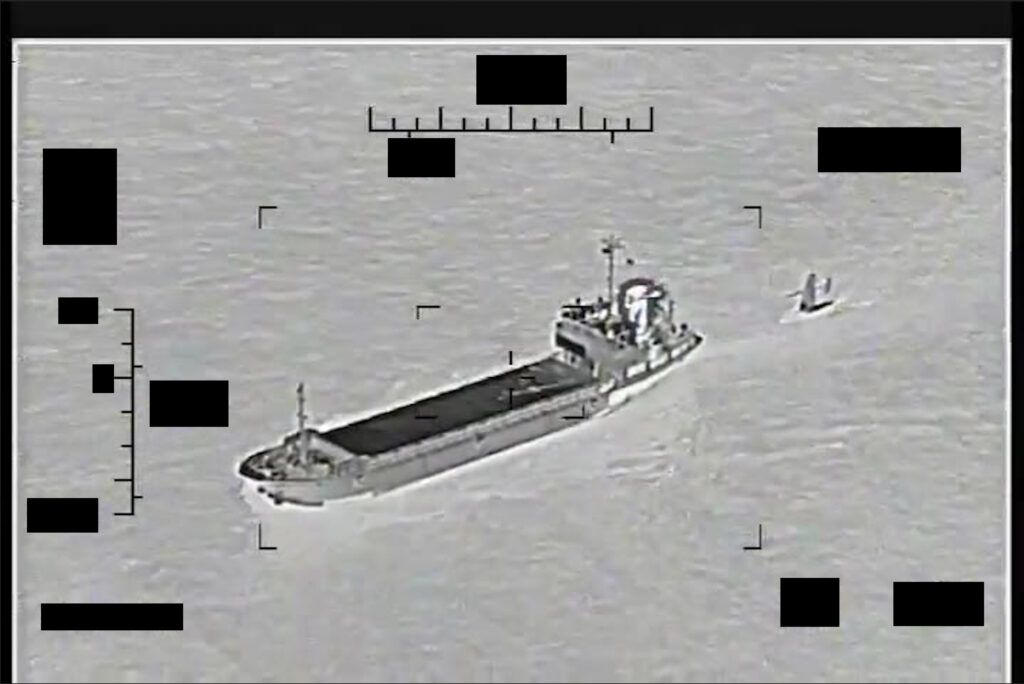
Screenshot of a video showing support ship Shahid Baziar, left, from Iran’s Islamic Revolutionary Guard Corps Navy unlawfully towing a Saildrone Explorer unmanned surface vessel in international waters of the Arabian Gulf, Aug. 30. U.S. NAVY

MANAMA, Bahrain — The U.S. Navy prevented a support ship from Iran’s Islamic Revolutionary Guard Corps Navy (IRGCN) from capturing an unmanned surface vessel operated by the U.S. 5th Fleet in the Arabian Gulf, Aug. 29-30, U.S. Naval Forces Central Command Public Affairs said in a release. 

While transiting international waters around 11 p.m. (local time), Aug. 29, U.S. 5th Fleet observed IRGCN support ship Shahid Baziar towing a Saildrone Explorer unmanned surface vessel in an attempt to detain it. U.S. Navy patrol coastal ship USS Thunderbolt (PC 12) was operating nearby and immediately responded. U.S. 5th Fleet also launched an MH-60S Sea Hawk from Helicopter Sea Combat Squadron 26, based in Bahrain. 

The actions taken by U.S. naval forces in response resulted in the IRGCN vessel disconnecting the towing line to the USV and departing the area approximately four hours later. The U.S. Navy resumed operations without further incident. 

“IRGCN’s actions were flagrant, unwarranted and inconsistent with the behavior of a professional maritime force,” said Vice Adm. Brad Cooper, commander of U.S. Naval Forces Central Command, U.S. 5th Fleet and Combined Maritime Forces. “U.S. naval forces remain vigilant and will continue to fly, sail and operate anywhere international law allows while promoting rules-based international order throughout the region.”  

The Saildrone Explorer USV the IRGCN attempted to confiscate is U.S. government property and equipped with sensors, radars and cameras for navigation and data collection. This technology is available commercially and does not store sensitive or classified information.  

U.S. 5th Fleet operates a network of manned and unmanned systems in accordance with international law. The integration of unmanned systems and artificial intelligence into fleet operations enhances maritime vigilance for U.S. forces and international partners in waters across the Middle East.   


Ingalls Shipbuilding Awarded DDG 1002 Combat Systems Availability Contract 

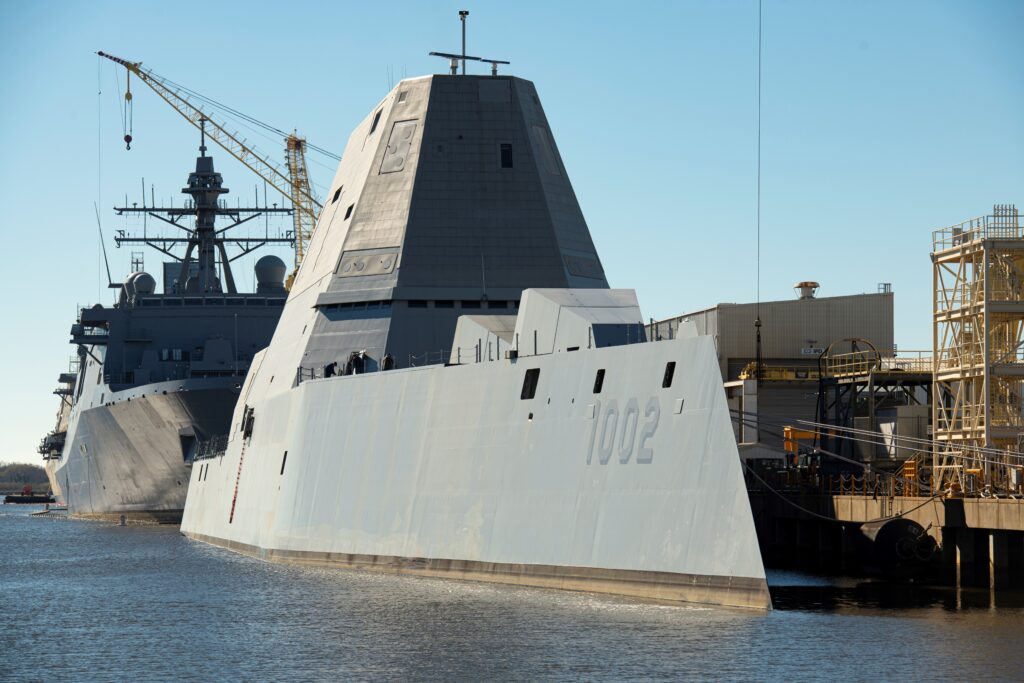
HII’s Ingalls Shipbuilding division will begin combat systems availability for the Zumwalt-class destroyer Lyndon B. Johnson. HII

PASCAGOULA, Miss. — HII’s Ingalls Shipbuilding division has been awarded a contract from the U.S. Navy to begin the combat systems availability for the Zumwalt-class destroyer, Lyndon B. Johnson (DDG 1002), the company said Aug. 29.

During this availability, Ingalls will complete the installation, activation and testing of the combat systems to ensure a fully functional system is ready to operate in the Navy fleet, as part of the Navy’s phased delivery approach. 

“HII is excited to support our Navy colleagues in bringing this new capability to the fleet,” Ingalls Shipbuilding President Kari Wilkinson said. “As a dedicated partner in the construction and system activation of Navy destroyers, Ingalls is eager to leverage our shipbuilders’ expertise and modernized facilities in supporting the Navy’s future generation systems and platforms.” 

The $41.6 million cost-incentive-fee contract allows Ingalls to begin program management, labor, materials and facilities to accomplish industrial efforts and fleet industrial efforts to support the ship’s combat system. 

The DDG 1002 features a state-of-the-art electric propulsion system, wave-piercing tumblehome hull, stealth design and is equipped with the most advanced warfighting technology and weaponry. This ship will be capable of performing a range of deterrence, power projection, sea control, and command and control missions while allowing Navy to evolve with new systems and missions. 


DRS Delivers Advanced Electric Propulsion Equipment for Lead Columbia-Class Submarine 

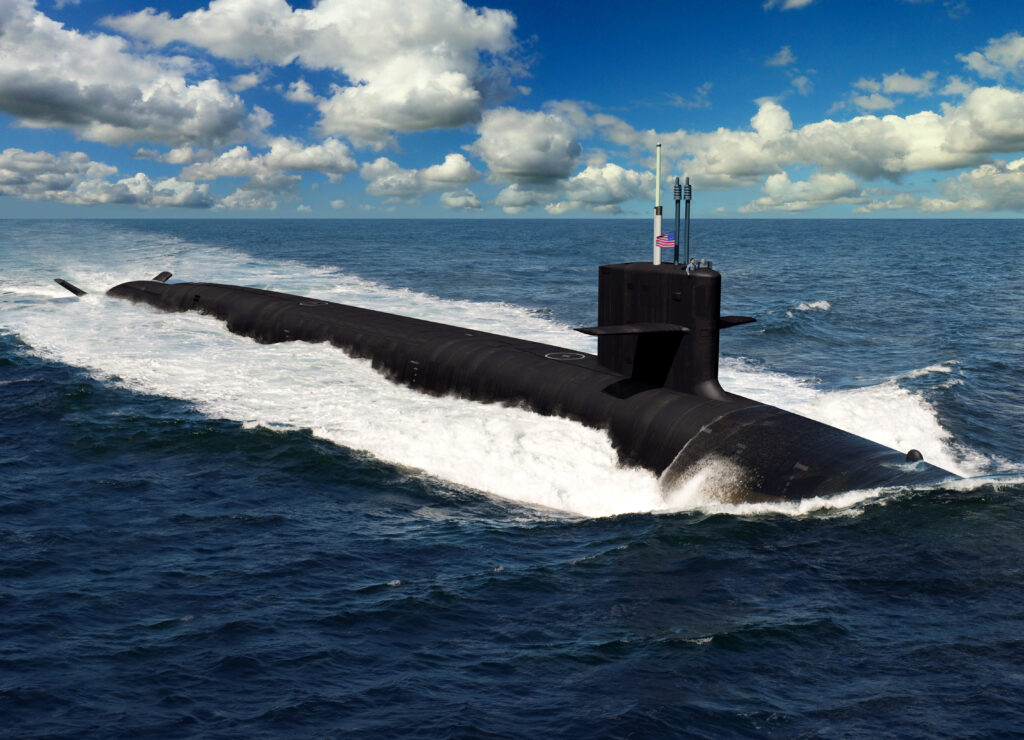
An artist’s rendering of the future Columbia-class ballistic missile submarines. U.S. NAVY

ARLINGTON, Va. — Leonardo DRS Inc. has successfully completed factory acceptance testing and shipment of the first production unit of the main propulsion motor for the U.S. Navy’s new Columbia-class submarine, the company announced Aug. 30. The motor was recently shipped to General Dynamics Electric Boat for integration into the lead ship of the class.   

DRS was chosen by Electric Boat and the U.S. Navy to design and manufacture the major Columbia Electric Drive Propulsion system components including the main propulsion electric motor. All prototype components of this system successfully completed full power endurance and other testing at the Navy’s land-based test facility in 2020, where operational testing continues. In addition to the main propulsion motor, other lead ship components are being manufactured and are also preparing to ship to Electric Boat. 

The Columbia class program goal is to design and build a class of 12 new ballistic missile submarines to replace the U.S. Navy’s current force of Ohio class SSBNs. The Navy has identified the Columbia-class program as its top priority program. The Columbia-class submarines will be larger than the current class in terms of submerged displacement and will become the largest submarine ever built by the United States.  

The DRS Naval Power Systems business was awarded contracts for the electric propulsion system components which included design, test, qualification, and production of the full-scale components for both a land-based test facility and first two ships of the class. Over the past several years, the Navy has completed successful land-based tests of DRS’ electric propulsion components. With significant testing completed, the program is transitioning to production with DRS presently manufacturing the components for the first two ships of the Columbia Class.  

“We are proud to play a key role in developing and providing this capability for the U.S. Navy on this critical national defense asset,” said Jon Miller, senior vice president and general manager of the DRS Naval Power business. “Our long history of providing innovative technology to the U.S. Navy and continuing this work for Electric Boat ensures our Sailors will be defending this country with the most advanced submarine in the world.” 


Keel Laying Commemorated for Future Aircraft Carrier USS Enterprise 

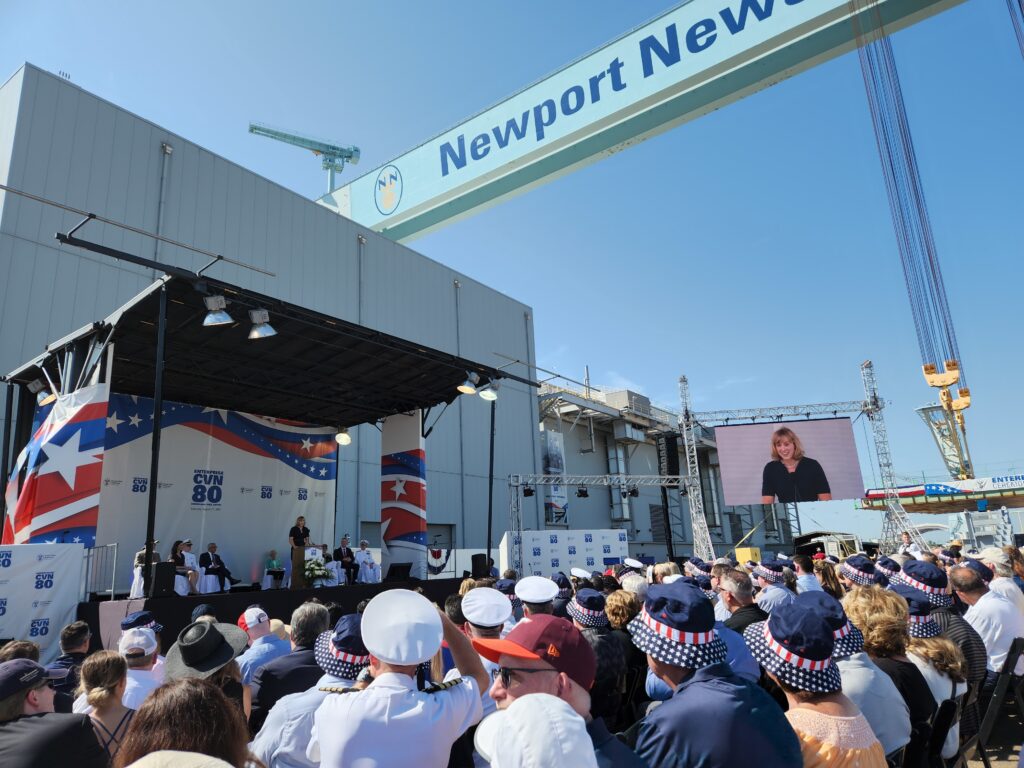
Katie Ledecky, CVN-80 co-sponsor and three-time Olympian delivers remarks at the future USS Enterprise (CVN-80) keel laying ceremony in Newport News, Virginia, Aug. 27. The future USS Enterprise will be the ninth U.S. Navy warship to bear the name. U.S. NAVY

NEWPORT NEWS, Va. — With the words, “I hereby declare the keel of the United States Ship Enterprise truly and fairly laid,” Olympians Simone Biles and Katie Ledecky chalked their initials on respective steel plates, which were then embossed by skilled welders and affixed to the keel of the future USS Enterprise (CVN 80), Aug. 28 at the HII-Newport News Shipyard, in Newport News, Virginia.
 
Ledecky attended the historic keel laying ceremony for the nation’s most advanced aircraft carrier in person, while Biles participated via a pre-recorded message from the World Champions Center in Spring, Texas, Program Executive Office Aircraft Carriers said in a release. Five years earlier, on Aug. 24, 2017, Biles and Ledecky attended CVN 80’s First Cut of Steel ceremony, marking the initial major construction milestone for the Enterprise — the third ship in the USS Gerald R. Ford (CVN 78)-class of aircraft carriers. 
 
On Saturday, after NNS welders Ephony King and Jonathan Rishor finished welding the athletes’ initials on small, steel plates, NNS Lead Rigger, Mike “Chile” Williams, passed a radio to Ledecky, who gave the command for NNS Crane Operator Charlie Holloway to lower the 688-ton keel unit into the dry dock. This section of the ship will support the forward half of the Enterprise, when the CVN 80 is fully assembled. The ceremonial plates will be affixed permanently to the ship’s keel. 
 
Work on the Enterprise has been progressing on schedule, since NNS loaded the Enterprise’s keel unit during the ship’s first “super-lift,” on April 5. With the first main structural member in place, workers have continued erecting the aircraft carrier in the dry dock by joining together a series of pre-outfitted modules. 
 
The future USS Enterprise will be the ninth U.S. Navy warship to bear the name, with the first being a sloop-of-war, commissioned in 1775, after its capture from the British during the American War of Independence. The last Enterprise (CVN 65), served as the world’s first nuclear-powered aircraft carrier from 1961–2017 and is currently moored nearby in the shipyard awaiting the results of an environmental impact statement and a Navy decision on disposal options. 
 
Under Secretary of the Navy Erik K. Raven delivered the keynote address. “The power of this ceremony — at this shipyard, in our country, on this day — is to mark another ship’s life being started to serve more generations of Americans, service members, friends, families, leaders, partners, and allies,” he said.
 
“Fittingly, in the presence of the previous Big E, we now lay the keel of the next Enterprise, the newest future naval warship, CVN 80.” 
 
The ship’s sponsors are internationally renowned. Ledecky is a three-time Olympian, participating in the 2012, 2016, 2020 Games, earning 10 medals. Biles is the most decorated U.S. women’s gymnast, with 32 World/Olympic medals.
 
The future USS Enterprise is scheduled to replace the USS Dwight D. Eisenhower (CVN 69), currently slated for inactivation in 2029. 


Iraq, Kuwait and U.S. Conduct Joint Patrol in Arabian Gulf 

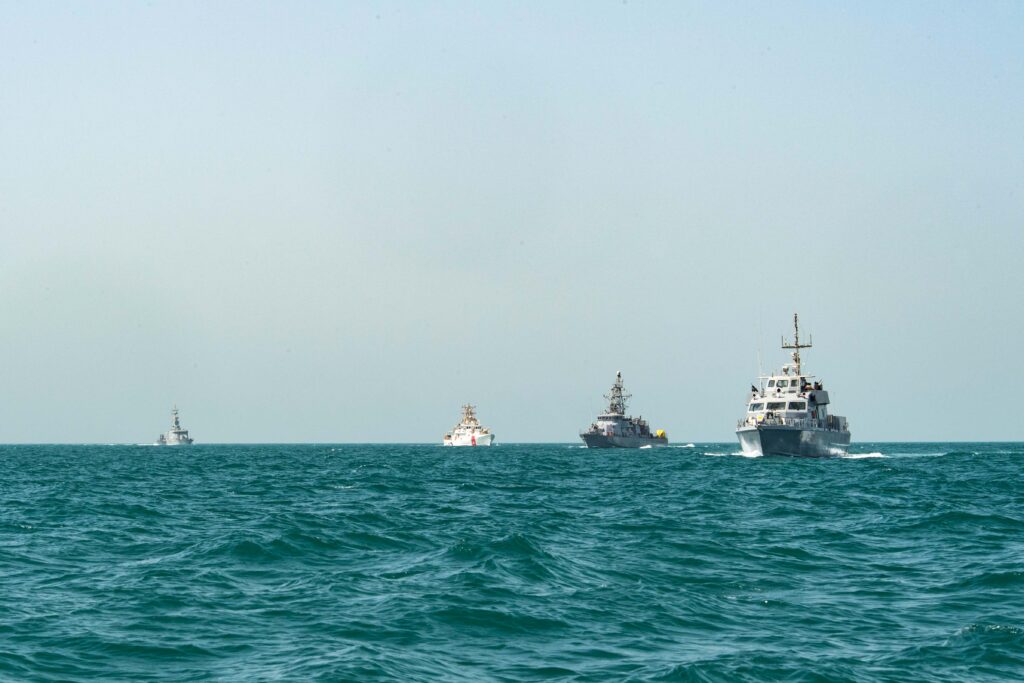
U.S. Navy coastal patrol ship USS Sirocco (PC 6), U.S. Coast Guard fast response cutter USCGC Charles Moulthrope (WPC 1141), Kuwait naval force ship Maskan (P 3717) and Iraq navy fast attack craft P-310 sail together during a joint patrol exercise in the Arabian Gulf, Aug. 25. U.S. NAVY / MC1 Anita Chebahtah

MANAMA, Bahrain — Maritime forces from Iraq, Kuwait and the United States conducted a joint patrol on Aug. 25 in the Arabian Gulf, U.S. Naval Forces Central Command said Aug. 28. Ships from the Iraq navy, Kuwait naval force, Kuwait coast guard, U.S. Navy and U.S. Coast Guard participated in maneuvering exercises and maritime security drills. 

U.S. ships included patrol coastal ship USS Sirocco (PC 6) and fast response cutter USCGC Charles Moulthrope (WPC 1141). Sirocco and Charles Moulthrope are forward-deployed to Bahrain where U.S. 5th Fleet is headquartered. 

“Trilateral engagements like this demonstrate the shared commitment of partner nations to safeguarding the seas,” said Capt. Robert Francis, commander of Task Force 55 whose staff oversees operations for U.S. 5th Fleet surface forces. 

Cooperation among regional partners at sea helps ensure maritime security and stability in nearby waters, he added. 

The U.S. 5th Fleet operating area includes 21 countries, the Arabian Gulf, Gulf of Oman, Red Sea, parts of the Indian Ocean and three critical choke points at the Strait of Hormuz, Bab al-Mandeb and Suez Canal. 


7th Fleet Cruisers Transit Taiwan Strait 

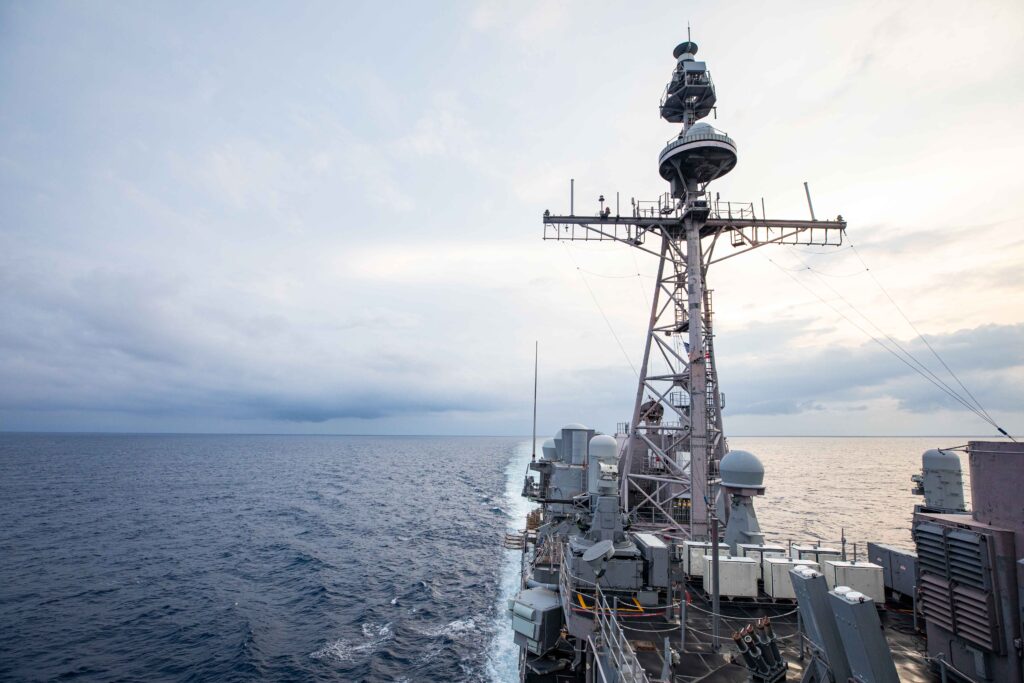
Ticonderoga-class guided-missile cruiser USS Chancellorsville (CG 62) transits the East China Sea during routine underway operations. Chancellorsville is forward-deployed to the U.S. 7th Fleet area of operations in support of a free and open Indo-Pacific. U.S. NAVY / Mass Communications Specialist 2nd Class Justin Stack

TAIWAN STRAIT — Ticonderoga-class guided-missile cruisers USS Antietam (CG 54) and USS Chancellorsville (CG 62) conducted a routine Taiwan Strait transit Aug. 28 (local time) through waters where high seas freedoms of navigation and overflight apply in accordance with international law, U.S. 7th Fleet Public Affairs said in a release. 

These ships transited through a corridor in the Strait that is beyond the territorial sea of any coastal state. The ship’s transit through the Taiwan Strait demonstrates the United States’ commitment to a free and open Indo-Pacific, the release said. The United States military flies, sails, and operates anywhere international law allows. 


CNO: U.S. Navy Brings to Bear ‘Global Maneuverability’   

The Chief of Naval Operations, Adm. Michael Gilday, second from right, visits Patrol Squadron Nine in Keflavik, Iceland, in June. U.S. NAVY / Lt. Joseph Reed

WASHINGTON — The chief of naval operations said the U.S. Navy’s forward presence and ability to move its forces, including its headquarter staffs, rapidly to an area where it is needed demonstrates its value to the maritime security of the nation and the world. 

“Do we have enough fleet headquarters to go around? One could argue that we don’t,” said CNO Adm. Michael Gilday, speaking on his Navigation Plan for the Navy Aug. 25 at The Heritage Foundation, responding to a question about the way the Navy’s numbered fleets are distributed around the world to respond to the actions of China and the need for the Navy to increase its operations in the Arctic. “One of the great things the Navy brings to bear — our headquarters included — is global maneuverability.”  

Gilday said his top regional focus is on the Pacific and the Atlantic, with the Indian Ocean “being a close third.” 

The admiral said “in terms of opportunities of the future, we absolutely have to look at the Arctic. As the ice cap continues to recede, think about trade routes in the next 25 years between Europe and Asia: fundamentally changing.” 

He pointed out NATO member Iceland is typically thought of in a trans-Atlantic fashion. 

“Think about it in a trans-polar fashion,” he said. “We need to think about that area much more deeply, particularly with both Finland and Sweden joining the alliance. I see opportunities in the high north that we need to continue to operate up there with allies and partners.” 

Gilday pointed that Iceland has graciously allowed Navy P-8 maritime patrol aircraft operate rotationally from Iceland, which hosted a maritime patrol aircraft presence during the Cold War.   

Regarding adding another numbered fleet, Gilday said he “would prefer to focus any monies I have on capabilities and more ships rather than more headquarters. What our Navy has done, as an example, with the newly formed U.S. 2nd Fleet out of Norfolk, is we’ve used them in an expeditionary manner. Their light, agile headquarters that has actually operated out of Iceland. They’ve travelled from Norfolk to operate on our command-and-control ship [the USS Mount Whitney] in the Mediterranean and in the high north up by Norway. They [also] have gone down to North Carolina and operated with the Marine Corps.” 


George H.W. Bush Carrier Strike Group Enters the Mediterranean Sea 

Ships from the George H.W. Bush Carrier Strike Group (GHWBCSG) transit the Atlantic Ocean following a straits transit training event. U.S. NAVY / Mass Communication Specialist Seaman Apprentice Samuel Wagner

STRAIT OF GIBRALTAR — The George H.W. Bush Carrier Strike Group, embarked aboard the Nimitz-class aircraft carrier USS George H.W. Bush (CVN 77), transited the Strait of Gibraltar and entered the Mediterranean Sea as part of a regularly scheduled deployment in the U.S. Naval Forces Europe-Africa area of operations on Aug. 25, the group’s public affairs office said. 

The strike group ships, squadrons and staff departed from the United States earlier this month, aggregating as a strike group in the Atlantic Ocean before beginning the transit through the Strait of Gibraltar. 

“We are here to provide the flexibility and combat power that only a U.S. Navy carrier strike group can provide combatant commanders,” said Rear Adm. Dennis Velez, commander, George H.W. Bush Carrier Strike Group, Carrier Strike Group 10. “The Sailors of the George H.W. Bush Carrier Strike Group are clear-eyed about our mission, ready to execute, and prepared to reassure our partners and allies while allowing our diplomats to negotiate from a position of strength, knowing the U.S. Navy is on station.” 

While in the NAVEUR-NAVAF area of operations, the strike group will work alongside allied and partner maritime forces, focusing on theater security cooperation efforts to further regional stability and demonstrate the strong maritime partnership between the U.S. and these allies and partners. This marks the first time that USS George H.W. Bush has operated in the region since its 2017 deployment, after which it entered an extensive maintenance period. 

Prior to deployment, the carrier strike group completed its final certification exercise with the Italian Navy destroyer ITS Caio Duilio (D 554) as part of the team. Later in the same exercise, the strike group came under the leadership of Naval Striking and Support Forces NATO to flex command and control between U.S. and NATO chains of command, highlighting integration and interoperability between partners and allies. 

Carrier strike groups are an inherently flexible naval force capable of deploying across combatant commands to meet emerging missions, deter and defend against potential adversaries, enhance security, reassure allies and partners, and guarantee the free flow of commerce in the region.