USS Bulkeley, Latest FDNF-E ship, Arrives in New Homeport Rota, Spain 
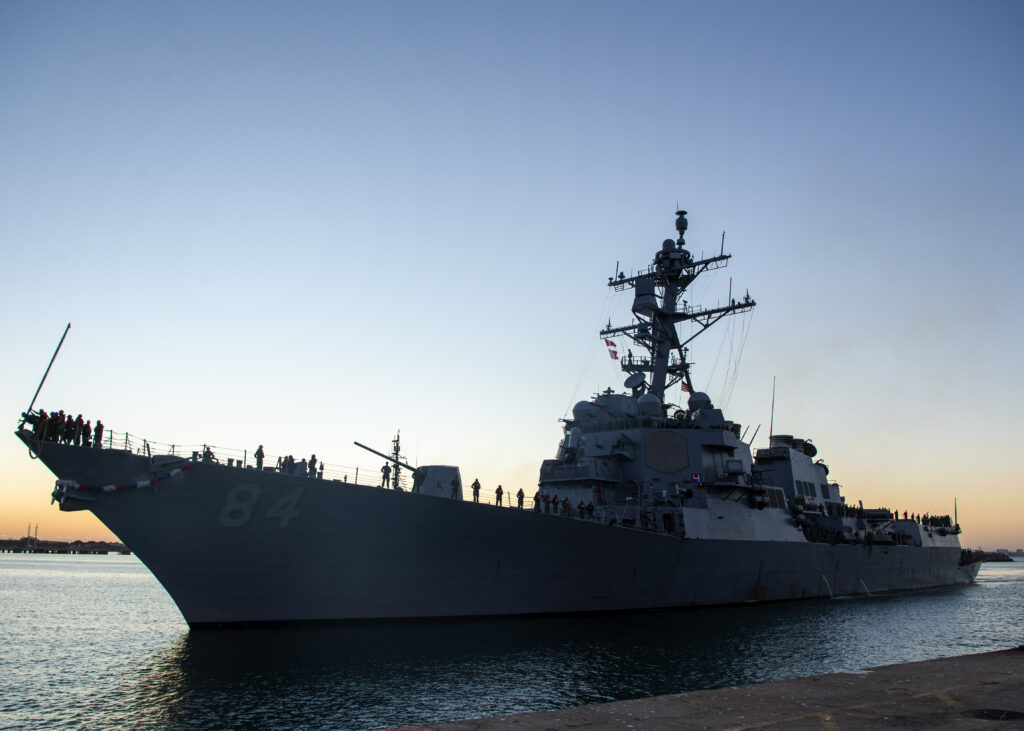
The Arleigh Burke-class guided-missile destroyer USS Bulkeley (DDG 84) pulls into port at Naval Station (NAVSTA) Rota, Spain after completing a homeport shift, Aug. 17, 2022. U.S. NAVY / Mass Communication Specialist 2nd Class Jacob Owen

NAVAL STATION ROTA, Spain — The Arleigh Burke-class guided-missile destroyer USS Bulkeley (DDG 84) arrived in its new homeport, Naval Station Rota, Spain, as the U.S. Navy’s last Forward Deployed Naval Forces–Europe (FDNF-E) destroyer scheduled to shift its homeport to Rota, Spain, Aug. 17, 2022, the ship’s public affairs office said in a release. 

Prior to arriving in Rota, Bulkeley visited Las Palmas, Spain, for a scheduled port visit. The visit marked Bulkeley’s arrival in the U.S. Naval Forces Europe-Africa (NAVEUR-NAVAF) area of operations and is the first port stop since the ship departed Naval Station Norfolk, Aug. 4, as part of the U.S. Navy’s long-range plan to rotate the Rota-based destroyers of the Forward Deployed Naval Forces-Europe (FDNF-E) force. 

“I could not be more proud of the crew,” said Cmdr. Arturo Trejo, Bulkeley’s executive officer. “The massive effort it takes to conduct a homeport shift is a representation of the hard work and brilliance everyday Americans and our allies do on a daily basis.” 

Arriving in a new homeport also brings unique opportunities to the Bulkeley crew. 

“The crew of Bulkeley is happy to arrive in our new home, and we are looking forward to a continued partnership with our host nation, Spain, as well as continuing to foster the strong relationship with our NATO allies,” said the ship’s Command Master Chief Jeremiah Hoyt. “We’ll have a few days to settle in, but we are ready to get back out and operate in the most dynamic environment in the U.S. Navy’s surface fleet.” 

Earlier this year, USS Paul Ignatius (DDG 117), another FDNF-E ship, shifted its homeport to Rota, Spain. With Paul Ignatius and Bulkeley’s arrival, fellow destroyers USS Porter (DDG 78) and USS Ross (DDG 71) will conclude their time stationed in Rota, heading back to the continental United States for their own home port shifts later this fall. These shifts mark the final scheduled homeport shifts in the long-planned FDNF-E rotation. These FDNF-E ships have the flexibility to operate throughout the waters of Europe and Africa, from the Cape of Good Hope to the Arctic Circle, demonstrating their mastery of the maritime domain. 

“The Wolfpack aboard USS Bulkeley is excited to finally be joining our allies as part of Forward Deployed Naval Forces – Europe,” said Capt. Mac Harkin, Bulkeley’s commanding officer. “We are grateful to our Spanish partners for welcoming us to Rota.” 

Bulkeley will operate under Commander, Task Force 65 and Destroyer Squadron 60 in support of NATO’s Integrated Air Missile Defense architecture. These FDNF-E ships have the flexibility to operate throughout the waters of Europe and Africa, from the Cape of Good Hope to the Arctic Circle, demonstrating their mastery of the maritime domain. 

Commissioned on Dec. 8, 2001, the ship is named in honor of Medal of Honor recipient Rear Adm. John Duncan Bulkeley, whose 55 years of naval service included action in both the Pacific and Atlantic theaters during World War II and the Korean War. Bulkeley was awarded the Medal of Honor for his actions as commander of Motor Torpedo Boat Squadron 3 in Philippine waters from December 7, 1941, to April 10, 1942. He died on April 6, 1996, and is buried at Arlington National Cemetery.
Pilot Safe after Ejection from Navy T-45C Crash near NAS Kingsville, Texas 

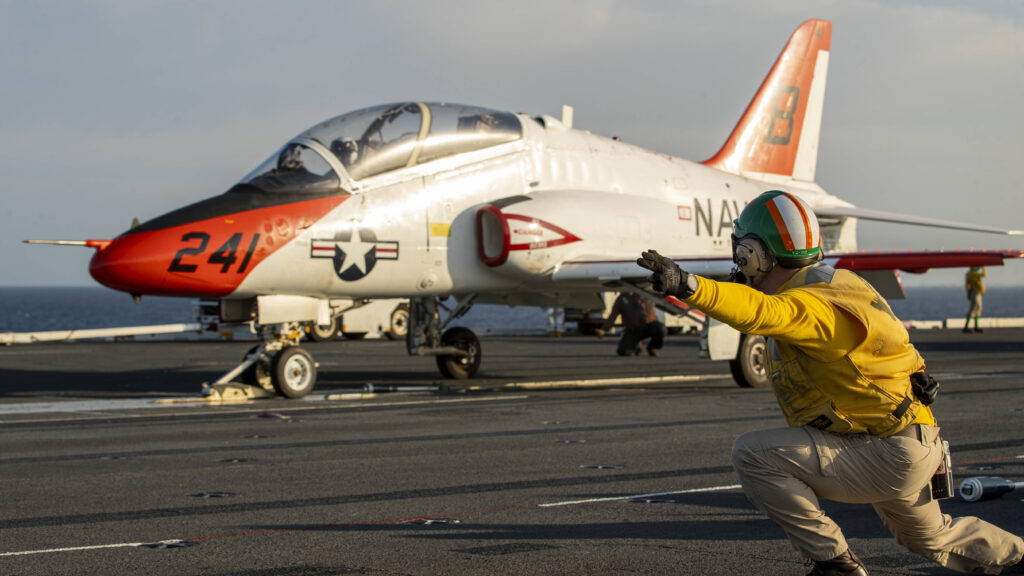
Lt. Joseph Dejunco, from Atlanta, assigned to the aircraft carrier USS Gerald R. Ford (CVN 78) air department, signals a T-45C Goshawk attached to Training Air Wing (TW) 2 to launch from the flight deck, March 17, 2021. U.S. NAVY / Mass Communication Specialist 3rd Class Riley McDowell

CORPUS CHRISTI — On Aug. 16 at approximately 12:00 p.m. CDT, a U.S. Navy T-45C Goshawk jet trainer aircraft assigned to Training Air Wing 2 at Naval Air Station Kingsville, Texas, crashed on approach to NAS Kingsville, the Chief of Naval Air Training Public Affairs Office said in a release.  

One instructor pilot was aboard and ejected from the aircraft. The pilot has been transported to Christus Spohn Hospital-Kleberg for further evaluation.  

The aircraft impacted an empty field on Navy property just north of the airfield. NAS Kingsville Emergency Services and Kingsville Sheriff’s Office responded to the scene. No civilians were harmed in this incident.  

The pilot was conducting a routine training flight that originated at NAS Kingsville. The incident is under investigation. 

This loss is the first for a T-45 this calendar year. Three were lost in 2021.


Keel Authenticated for Future USS Jeremiah Denton

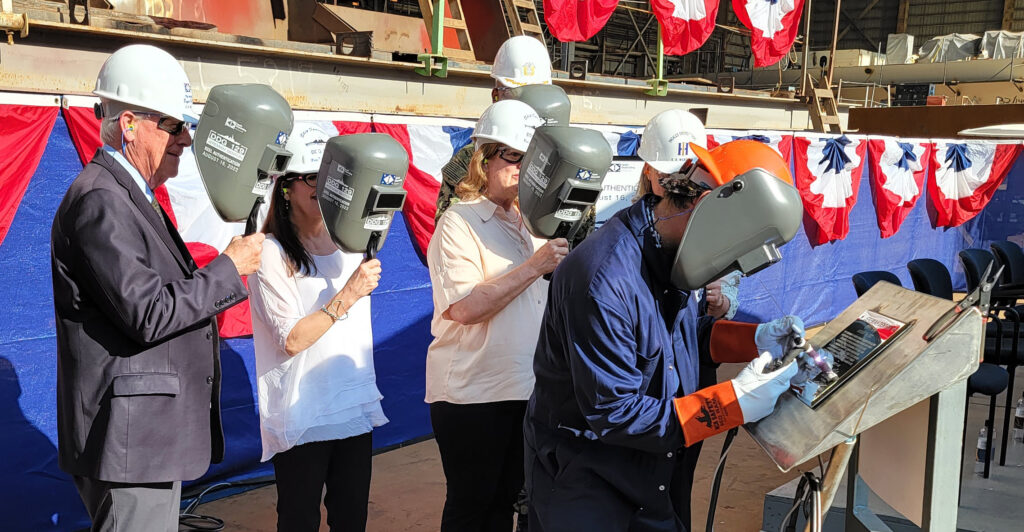
Ingalls welder Troy Maddox traces the sponsors’ initials on a keel plate that will be permanently placed in Jeremiah Denton (DDG 129) on August 16, 2022 at Huntington Ingalls Industries (HII) Ingalls Shipbuilding division, Pascagoula, Mississippi. Michael Duhe

WASHINGTON — The keel for the future USS Jeremiah Denton (DDG 129), a Flight III Arleigh-Burke class destroyer was ceremonially laid at Huntington Ingalls Industries (HII) Ingalls Shipbuilding division, August 16, Team Ships Public Affairs said in a release. 

The ship is named for former Senator Jeremiah Denton, Jr., a Vietnam War veteran who was awarded the Navy Cross for his heroism as a prisoner of war. Following his Navy career, he was elected to the U.S. Senate representing his home state of Alabama in 1980. 

The contemporary keel laying ceremony represents the joining together of a ship’s modular components at the land level. The keel is authenticated with the ship sponsors’ initials etched into a ceremonial keel plate as part of the ceremony. Co-sponsors of DDG 129 are the daughters of the namesake, Madeline Denton Doak and Mary Denton Lewis. 

“We are honored to build a ship named for the late Senator Denton and to have his family present to celebrate this important milestone on the path to delivering another Flight III destroyer to the Fleet,” said Capt. Seth Miller, DDG 51 class program manager, Program Executive Office (PEO) Ships. “The USS Jeremiah Denton is the Navy’s next great warship, which will provide power projection with the latest advanced combat capability.” 

The DDG 51 Flight III upgrade is centered on the AN/SPY-6(V)1 Air and Missile Defense Radar and incorporates upgrades to the electrical power and cooling capacity plus additional associated changes to provide greatly enhanced warfighting capability to the fleet. Flight III is the latest Flight upgrade in the more than 30-year history of the class, building on the proud legacy of Flight I, II and IIA ships before it. 

HII’s Ingalls Shipbuilding is also in production on the future USS Lenah Sutcliffe Higbee (DDG 123), the future USS Jack H. Lucas (DDG 125), the future USS Ted Stevens (DDG 128) and the future USS George M. Neal (DDG 131).


Joint Strike Fighter Lot 15 Ceiling Allows 28 F-35s for Navy, Marine Corps 

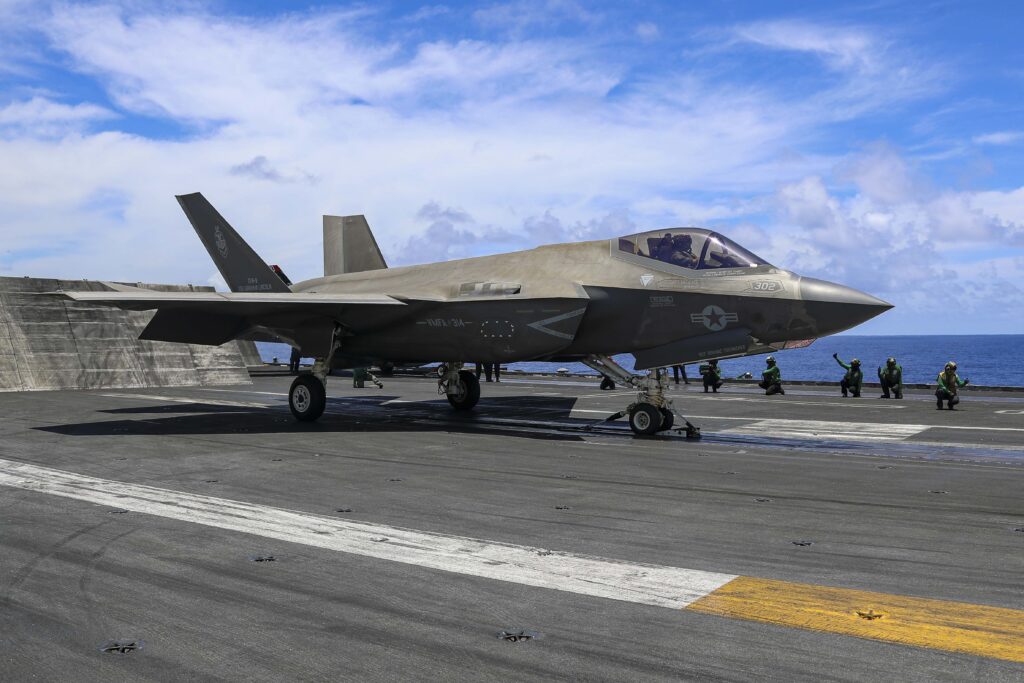
An F-35C Lightning II, assigned to the “Black Knights” of Marine Fighter Attack Squadron (VMFA) 314, prepares to launch from the flight deck of the Nimitz-class aircraft carrier USS Abraham Lincoln (CVN 72) while the ship is underway in the Philippine Sea. U.S. NAVY / Mass Communication Specialist 3rd Class Javier Reyes

ARLINGTON, Va. — The Defense Department has increased the ceiling for its contract for Lot 15 Joint Strike Fighters to 129, the department said in an Aug. 12 release.  

The Naval Air Systems Command awarded Lockheed Martin a not-to-exceed $7.63 billion firm-fixed-price, fixed-price incentive (firm target), un-definitized modification to a previously awarded advanced acquisition contract, the Defense Department said in the release. The modification increases the contract ceiling to procure 129 F-35s. 

Of the 129 F-35s, the total includes three F-35Bs and 10 F-35Cs for the U.S. Marine Corps and 10 F-35Cs for the U.S. Navy. The numbers notionally will enable the Navy and Marine Corps each to add one F-35C squadron to its force structure. 

The total also includes 49 F-35As for the U.S. Air Force; 32 F-35As and four F-35Bs for non-U.S. program partners; and 16 F-35As for Foreign Military Sales customers. The contract also includes 69 shipsets of hardware.   

The Navy currently has two F-35C fleet squadrons on strength, while the Marine Corps has one. The Corps also fields five fleet F-35B squadrons. 

Work on the contract is expected to be completed in October 2024. 


General Dynamics Electric Boat Awarded $236.2 Million Contract Modification for Support of Operational Submarines 

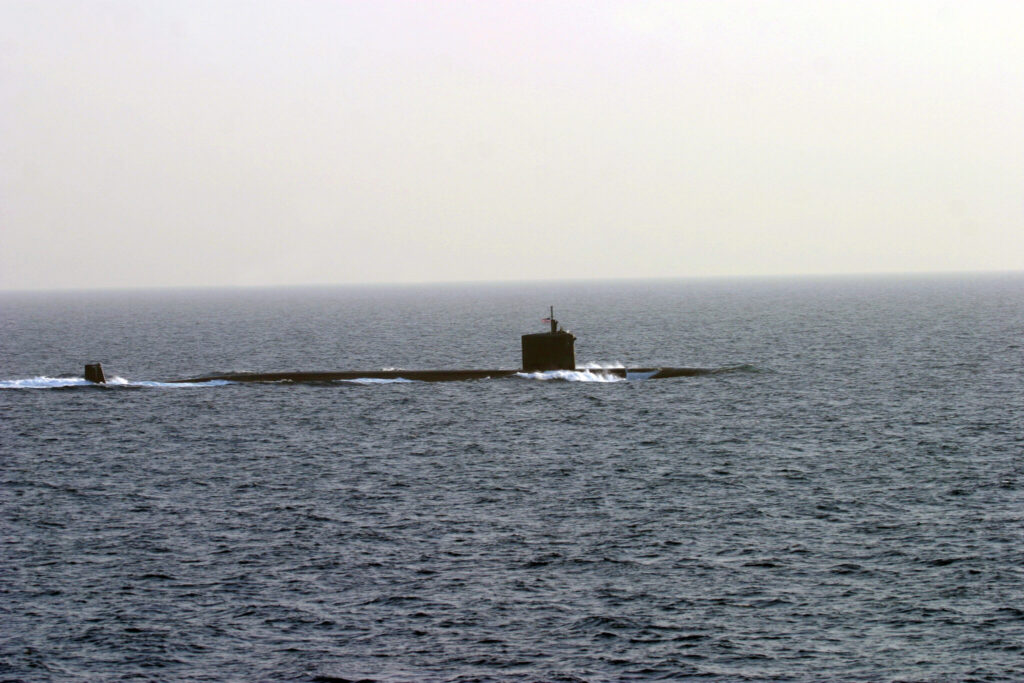
The Los Angeles-class attack submarine USS Hartford, shown underway in the Persian Gulf in 2009. U.S. NAVY

GROTON, Conn. — General Dynamics Electric Boat, a business unit of General Dynamics, was awarded a modification of the previously awarded U.S. Navy contract for engineering, technical, design and planning yard support for operational strategic and attack submarines, the company announced in an Aug. 12 release. 

The contract modification has a value of $236,182,606 million. Work will be performed in Groton, Connecticut; Kings Bay, Georgia; Bangor, Washington; Pearl Harbor, Hawaii; North Kingston, Rhode Island; and Newport, Rhode Island, and is expected to be completed by September 2023.  

“The shipbuilders of Electric Boat are proud to continue our role providing lifecycle maintenance and modernization support to the U.S. Navy’s operational submarine fleet in keeping with our mission to provide sailors with the advantage that helps protect our nation,” said Kevin Graney, president of General Dynamics Electric Boat.  

General Dynamics Electric Boat designs, builds, repairs and modernizes nuclear submarines for the U.S. Navy. Headquartered in Groton, Connecticut, the company employs approximately 18,000 people. 


ONR ‘SCOUTs’ for Creative Warfighting Solutions at Naval Academy Event 

ARLINGTON, Va. — A web of connecting sensors and buoys for conducting ISR (intelligence, surveillance, reconnaissance) in the maritime environment. Specialized GPS that can monitor fishing routes and pinpoint suspicious activity that might reveal the presence of drug smugglers. 

These were just two of the ideas presented by recent U.S. Naval Academy graduates during a “design thinking” event aimed at addressing a major challenge facing the Joint Interagency Task Force-South (JIATF-S) — limited resources to cover a huge area of operations to counter narcotics smuggling into the U.S.,” said Warren Duffie Jr., Office of Naval Research, in a release. 

The Academy event — which lasted from Aug. 2-5 and culminated in presentations to Chief of Naval Research Rear Adm. Lorin Selby and other stakeholders — was a partnership between the Office of Naval Research (ONR)-sponsored SCOUT initiative, JIATF-S and multiple warfare centers. 

“My job is to train people to think differently and challenge the current system,” said Selby, “and this generation is the one that will change things. We’re trying to change the conversation and talk openly about challenges, obstacles and opportunities to learn and improve.” 

The event was spearheaded by SCOUT, an ongoing, multiagency experimentation campaign that rapidly brings solutions to warfighter challenges. SCOUT is committed to getting nontraditional, commercial-off-the-shelf, government-developed and/or government-sponsored technologies to the fleet rapidly. 

Currently, SCOUT is helping JIATF-S, which works with U.S. Southern Command and partner naval forces to leverage all-domain technologies and unmanned capabilities to target, detect and monitor illicit drug trafficking in the air and maritime domains. This facilitates interdiction and apprehension to reduce the flow of drugs, as well as degrade and dismantle transnational criminal organizations. 

“We wanted to get fresh minds and perspectives to study the warfighting problems faced by JIATF-S,” said Dan Cabel, who heads up SCOUT. “What better minds than those at the Naval Academy, who will surely bring creative thinking and viewpoints to real-world challenges?” 

During the Academy event, the graduates divided into two teams and listened to JIATF-S operators and subject matter experts describe challenges and needs unique to their mission. From there, they grouped these issues into themes that would serve as the basis for generating ideas. Afterward, they held a Shark Tank-style round robin to pitch ideas and select the best four for final presentation. 

In addition to the ideas about connecting sensors and buoys and specialized GPS, other concepts included using artificial intelligence and machine learning to predict where drug runners might operate — as well as improve data gathering for asset allocation and case management. 

“An event like this is fantastic for exposing these Academy graduates, who are now newly minted Navy and Marine Corps officers, to operational issues and challenges they will face when leading our warfighters,” said Lt. Cmdr. Allison Mabrey, lead facilitator of the event.  “We can’t wait to see them bring their innovative ideas and skills to use in the fleet.” 

Next steps involve SCOUT and JIATF-S reviewing the four presentations and determining which aspects could be incorporated into experimentation exercises. The Academy graduates will be part of this implementation process. 

“This has been a fantastic experience,” said Ens. Skyler Schork, one of the presenters. “It’s not often that someone fresh out of the Academy gets to brief a two-star admiral. It’s inspiring to know that naval leadership is interested in the ideas and viewpoints of an ensign.”  

The Academy event was part of the larger SCOUT Experimentation Campaign, which will leverage the Naval Research and Development Establishment communities, capabilities and enterprise tools to solve warfighter-driven problems. The goal of SCOUT is a series of innovation sprint events, exercises and experimentations to encourage learning and innovation, in order to rapidly develop technologies and techniques to improve warfighting capability—and assist in quicker leadership decision-making. These events will ultimately culminate in a large-scale demonstration early next year. 


Abraham Lincoln Carrier Strike Group Returns from Indo-Pacific Deployment 

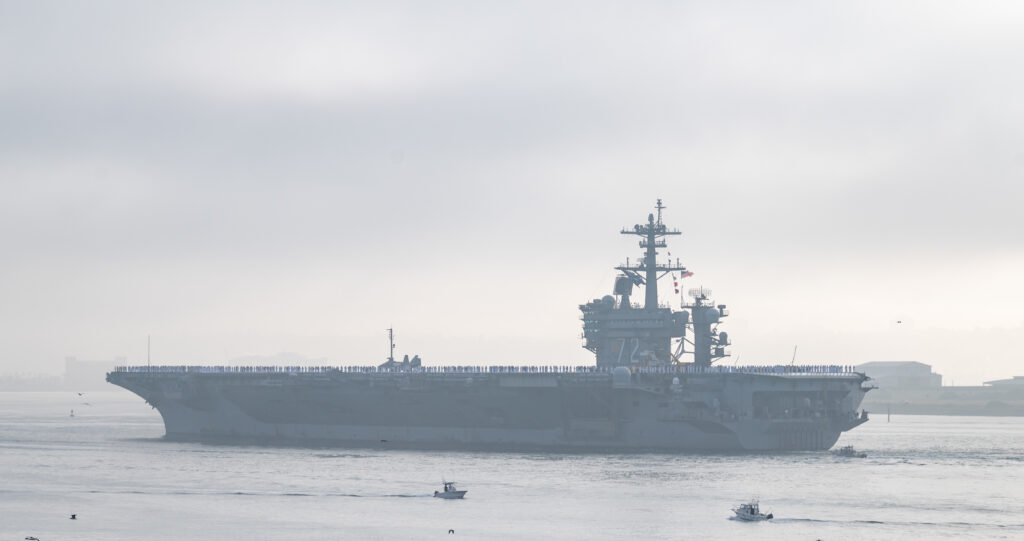
USS Abraham Lincoln (CVN 72) returns to Naval Station North Island Aug. 11 following a seven-month deployment. U.S. NAVY / Mass Communication Specialist 2nd Class Maria Llanos

SAN DIEGO — The Abraham Lincoln Carrier Strike Group returned home Aug. 11, marking the end of a seven-month deployment to U.S. 3rd and 7th Fleet area of operations, the USS Abraham Lincoln’s public affairs office said in a release. 

The strike group’s flagship, Nimitz-class aircraft carrier USS Abraham Lincoln (CVN 72), arrived at Naval Air Station North Island, while Ticonderoga-class guided missile cruiser USS Mobile Bay (CG 53) and Arleigh Burke-class guided missile destroyer USS Spruance (DDG 111) also arrived at Naval Base San Diego. USS Gridley (DDG 101) and USS Momsen (DDG 102) returned to Naval Station Everett, Washington. 

After departing their homeport in San Diego, the strike group conducted dual carrier operations in the South China Sea with the Carl Vinson Carrier Strike Group to demonstrate the U.S. Indo-Pacific Command’s ability to deliver a powerful maritime force with a combined 14,000 Sailors and Marines. 

While underway for 220 days, the strike group sailed over 65,000 nautical miles conducting deterrence and presence operations and multinational exercises, including maritime security operations, integrated training between surface and air units, long-range maritime strike, anti-submarine warfare, information warfare operations, maritime interdiction operations, personnel recovery, air defense operations, multiple ship navigation, formation maneuvering and refueling-at-sea operations. 

“Abraham Lincoln Sailors have worked exceptionally hard during this dynamic deployment and should be proud of their accomplishments,” said Capt. Amy Bauernschmidt, Abraham Lincoln commanding officer. “It is incredibly humbling to serve alongside these professionals and observe their dedication to the mission. Every day of our seven month deployment, this talented crew displayed grit, resilience and professionalism in the execution of their jobs. Their hard work made the difference as we operated alongside joint and combined forces to ensure a free and open Indo-Pacific.” 

The Abraham Lincoln Carrier Strike Group is the first carrier strike group to deploy with a U.S. Marine Corps F-35C Lightning II squadron, Marine Fighter Attack Squadron (VMFA) 314, and the second to deploy with a Navy CMV-22 Osprey squadron, Fleet Logistics Multi-Mission Squadron (VRM) 30. During the deployment, Carrier Air Wing (CVW) 9, embarked aboard Lincoln, executed more than 21,307 fixed-wing and helicopter flight hours comprising of 10,250 sorties, 8,437 launches and 8,487 aircraft arrestments. 

The strike group operated alongside other strike groups including the Ronald Reagan Carrier Strike Group, led by Nimitz-class aircraft carrier USS Ronald Reagan (CVN 76), and the Essex Amphibious Ready Group, led by Wasp-class amphibious assault ship USS Essex (LHD 2). 

The strike group consists of Abraham Lincoln, embarked staffs of CSG-3, CVW-9 and Destroyer Squadron (DESRON) 21, Mobile Bay, and destroyers USS Fitzgerald (DDG 62), Gridley, Sampson and Spruance. Fitzgerald will return to San Diego at a later date. 

The squadrons that make up Carrier Air Wing Nine 9 are fighter attack squadron (VFA) 41, VFA 151 and VFA 14; VMFA 314; VRM 30; electronic attack squadron (VAQ) 133; airborne early warning squadron (VAW) 117; helicopter sea combat squadron (HSC) 14; and helicopter maritime strike squadron (HSM) 71. 


George H.W. Bush Carrier Strike Group Deploys 

The aircraft carrier USS George H.W. Bush (CVN 77) transits the Atlantic Ocean, June 13. The George H.W. Bush Carrier Strike Group deployed on Aug. 10. U.S. NAVY / Mass Communication Specialist Seaman Samuel Wagner

NORFOLK, Va. — Commander, Carrier Strike Group 10, George H.W. Bush Carrier Strike Group (GHWBCSG) deployed aboard the Nimitz-class aircraft carrier USS George H.W. Bush (CVN 77) from Naval Station Norfolk, Aug. 10, the carrier strike group said in a release.

The aircraft carrier joins guided-missile cruiser USS Leyte Gulf (CG 55) and guided-missile destroyers USS Delbert D. Black (DDG 119), USS Farragut (DDG 99) and USS Truxtun (DDG 103) which recently departed from their homeports. Delbert D. Black is underway on its first deployment.

“We bring the full-range of U.S. and allied maritime power in support of national security and defense objectives wherever we sail,” said Rear Adm. Dennis Velez, commander, CSG-10, GHWBCSG. “Throughout our deployment we will continue to operate with and reassure our allies, maintain open sea lanes for trade and increased prosperity, and deter — or if necessary — destroy our adversaries.”

This marks the first deployment for George H.W. Bush (CVN 77) since 2017. The carrier completed an intensive maintenance availability after the 2017 deployment before returning to the operational fleet to begin a robust deployment readiness cycle in late 2021.

“George H.W. Bush Sailors are warriors, leaders, teachers, and ambassadors operating forward, representing their families, hometowns, and the American people wherever we operate,” said Capt. David-Tavis Pollard, commanding officer of George H.W. Bush. “President Bush said, ‘Let future generations understand the burdens and blessings of freedom. Let them say we stood where duty required us to stand.’ We know what an awesome responsibility we have to preserve liberty, justice, and freedom while embodying the principles of service, grit, humility, and resilience our namesake showed throughout his lifetime.”

The GHWBCSG is comprised of the Carrier Strike Group (CSG) 10 staff, George H.W. Bush, Carrier Air Wing (CVW) 7, Destroyer Squadron (DESRON) 26 staff and units, the Information Warfare Commander, and the Ticonderoga-class guided-missile cruiser USS Leyte Gulf (CG 55). In total, the strike group is a force of more than 6,000 Sailors, capable of carrying out a wide variety of missions around the globe.

The squadrons of Carrier Air Wing (CVW) 7 embarked aboard George H.W. Bush are the “Jolly Rogers” of Strike Fighter Squadron (VFA) 103, the “Pukin’ Dogs” of VFA-143, the “Bluetails” of Carrier Airborne Early Warning Squadron (VAW) 121, the “Nightdippers” of Helicopter Sea Combat Squadron (HSC) 5 located in Norfolk, Virginia; the “Sidewinders” of VFA-86 and the “Nighthawks” of VFA-136 located in Lemoore, California; the “Patriots” of Electronic Attack Squadron (VAQ) 140 based in Whidbey Island, Washington; and the “Grandmasters” of Helicopter Maritime Strike Squadron (HSM) 46 located in Mayport, Florida. 


Carrier Air Wing 9 Returns from Indo-Pacific Deployment 

An E-2D Advanced Hawkeye assigned to the “Wallbangers” Airborne Command and Control Squadron (VAW) 117 arrives at Naval Base Ventura County (NBVC) following a seven-month deployment to U.S. 3rd Fleet and 7th Fleet areas of operations with Carrier Air Wing (CVW) 9, embarked aboard USS Abraham Lincoln (CVN 72). U.S. NAVY

SAN DIEGO — Carrier Air Wing (CVW) 9, embarked aboard Nimitz-class aircraft carrier USS Abraham Lincoln (CVN 72), returned from a seven-month deployment to the U.S. 3rd and 7th Fleet areas of operations on Aug. 9, USS Abraham Lincoln public affairs said in a release. 

CVW-9 is the first carrier strike group to deploy with a U.S. Marine Corps F-35C Lightning II squadron, Marine Fighter Attack Squadron (VMFA) 314, and the second to deploy with a Navy CMV-22 Osprey squadron, Fleet Logistics Multi-Mission Squadron (VRM) 30.

During the deployment, Carrier Air Wing (CVW) 9 executed more than 21,307 fixed-wing and helicopter flight hours comprising of 10,250 sorties, 8,437 launches and 8,487 aircraft arrestments.

“Carrier Air Wing 9 Sailors and Marines worked together over the last seven months, providing a credible deterrent to any potential adversary in the Pacific,” said Capt. Lew Callaway, commander, CVW-9. “Naval aviators culminated 100 years of aircraft carrier aviation history operating fourth- and fifth-generation aircraft from a Nimitz-class aircraft carrier at sea. We are grateful for the chance to serve, and celebrate our return to home port, family, and friends.”

CVW-9 participated in dual carrier operations in the South China Sea with the Carl Vinson Carrier Strike Group, as well as joint exercise Valiant Shield in June 2022, and bilateral exercises Noble Fusion in February and Jungle Warfare in March, both with the Japanese Self-Defense Force. Most recently, CVW-9 trained alongside 26 participating nations during Exercise Rim of the Pacific 2022 in July.

“Words cannot express just how proud I am of the Sailors and Marines attached to CVW-9,” said Master Chief Petty Officer Craig Vavruska, command master chief, CVW-9. “They expertly applied their training and faced each mission with strength and resilience. Their families have a lot to be proud of.”

CVW-9 and Lincoln deployed Jan. 3 as part of the Abraham Lincoln Carrier Strike Group. Along with CVW-9 and Lincoln, the ABECSG also consists of the embarked staffs of Carrier Strike Group (CSG) 3, and Destroyer Squadron (DESRON) 21; the Ticonderoga-class guided-missile cruiser USS Mobile Bay (CG 53), and the Arleigh Burke-class guided-missile destroyers USS Fitzgerald (DDG 62), USS Gridley (DDG 101), USS Sampson (DDG 102) and USS Spruance (DDG 111).


NAVSAFECOM Addresses Deficiencies, Enhances Safe Diving Fleetwide 

Explosive Ordnance Disposal 3rd Class Branden Irwin dives in the Black Sea during exercise Breeze 2022, July 21. BULGARIAN NAVY / Lt. Deyan Stefanvov

NORFOLK, Va. — Divers across the naval enterprise will be safer, thanks in part to thorough assessments by the Naval Safety Command (NAVSAFECOM) resulting in an update to diving operations and maintenance by Naval Sea Systems Command, NAVSAFECOM Spokeswoman Amy Robinson said in an Aug. 5 release. 

The update was published July 11 and addresses findings and recommendations from the then-Naval Safety Center’s diving safety assurance letter sent to NAVSEA in December 2021. The letter covered assessments conducted from May to October 2021. 

“The goal of the diving safety assessments is to ensure every diving command is operating safely and within governing standards,” said Senior Chief Brett Husbeck, a diving analyst with NAVSAFECOM’s Expeditionary Warfare Directorate. “If something isn’t correct, we identify the issues and work to get them corrected, which will help prevent mishaps.” 

During the assessments, analysts detailed several deficiencies with global portable pressure testing chambers, also known as pressure pots, which Navy and Marine Corps divers use to calibrate, compare and test depth gauges. 

“In U.S. Navy diving, we strictly adhere to the procedures. If we don’t operate within the standards, someone will get hurt,” said the diving analyst. 

Husbeck, who has a background in welding, said one of the items analysts found during four out of seven assessments was severe rust inside the pressure testing chambers due to trapped moisture. 

“Over time, the rust can deteriorate the fittings and the welds, which could result in a catastrophic failure,” he said.  

From there, analysts traced materiel discrepancies identified during the assessments back to planned maintenance system deficiencies.  

These discrepancies, along with others associated with technical manuals and drawings, were noted in a safety assurance letter and forwarded to NAVSEA’s Supervisor of Salvage, including recommendations to mitigate risks to divers across the naval enterprise. 

Upon receipt, NAVSEA conducted a thorough review of the technical publications associated with pressure test chamber maintenance and operations, according to NAVSEA’s response letter. 

Using the information observed and derived from the diving safety assessments, NAVSEA addressed findings and implemented actions to ensure technical and maintenance information is available, accurate and corresponds to the correct pressure test chambers.  

“Upon completion, NAVSEA sent their response letter and the diving safety assurance letter to dive leaders throughout the enterprise to inform the fleet,” said Capt. Robert Marsh, NAVSEA supervisor of diving. 

Don Ciesielski, director of NAVSAFECOM’s Expeditionary Warfare Directorate, said, “NAVSAFECOM continuously works with other commands to not only keep Sailors and Marines safe, but also enable warfighting readiness throughout the fleet.” 

“From the assessments and safety assurance letter to the actions and response by NAVSEA, this process illustrates how NAVSAFECOM works with units throughout the naval enterprise to ensure our warfighters are combat-ready, while also mitigating risks to keep the fleet safe.” 

NAVSAFECOM serves as the naval enterprise lead for non-nuclear safety standards, expertise and oversight of the Navy and Marine Corps Safety Management System. The command’s mission is to preserve warfighting capability, combat lethality, and readiness by working with its stakeholders to identify, mitigate, or eliminate hazards to reduce unnecessary risk to people and resources.