Kearsarge ARG, 22nd MEU return to the Baltic Sea 

U.S. Navy Ensign Glennalyn Ajero, assigned to the San Antonio-class amphibious transport dock ship USS Arlington (LPD 24), stands watch in the pilot house as Arlington transits the Danish Straits to enter the Baltic Sea, Aug. 2. U.S. NAVY / Mass Communication Specialist 1st Class John Bellino

BALTIC SEA — The Kearsarge Amphibious Ready Group, with embarked 22nd Marine Expeditionary Unit, returned to the Baltic Sea, Aug. 2, to strengthen interoperability with key NATO allies and partners, the group’s public affairs said Aug. 3. 

Elements of the ARG-MEU include flagship Wasp-class amphibious assault ship USS Kearsarge (LHD 3), San Antonio-class amphibious transport dock ship USS Arlington (LPD 24), and Whidbey Island-class dock landing ship USS Gunston Hall (LSD 44), along with accompanying Arleigh Burke-class guided-missile destroyer USS Arleigh Burke (DDG 51). 

While in the Baltic Sea, approximately 4,000 Sailors and Marines of the combined ARG-MEU team will train and operate alongside allied and partner nations to preserve maritime security and stability in the region. Operating alongside allies and partners in the Baltic Sea again demonstrates the U.S. commitment to the region and to improving capability and capacity across like-minded nations. 

“Our experience in the Baltics earlier in the year was extremely positive and we’re looking to build upon the relationships that we established as well as establish some new ones,” said Col. Paul Merida, commanding officer of the 22nd MEU. “We are ready to train and operate alongside our allies and partners and, of course, we are always ready to respond to crisis if required.” 

This marks a return to the Baltic Sea for elements of the ARG-MEU team, including Gunston Hall and Kearsarge, as both ships participated in the Estonian-led exercise Siil 22 in May and the annual joint, multinational exercise Baltic Operations (BALTOPS), the premier maritime-focused exercise in the Baltic region, in June. Arlington will be operating in the Baltic for the first time, re-aggregated with the Kearsarge ARG-MEU team following operations in the Mediterranean Sea since April 2022. 

Prior to returning to the Baltic Sea, the ships of the ARG concluded their mid-deployment voyage repair and maintenance periods in Brest, France; Rijeka, Croatia; and Copenhagen and Kalundborg, Denmark. Maintenance availability periods, termed MDVRs, allow U.S. Navy ships to accomplish necessary and preventative repairs to continue their missions in the region while simultaneously strengthening relationships with host nations. 

“Following a successful mid-deployment voyage repair, the Kearsarge ARG and 22nd MEU remains committed to our allies and partners,” said Capt. Aaron Kelley, commander of the Kearsarge ARG and Amphibious Squadron 6. “As our ships frequently operate in the region, the ARG-MEU team remains ready and returns to strengthen relationships with new and familiar Baltic allies and partners while ensuring maritime security throughout the region.”

Navy Opens First Training Facility for Small Unmanned Aircraft Systems  

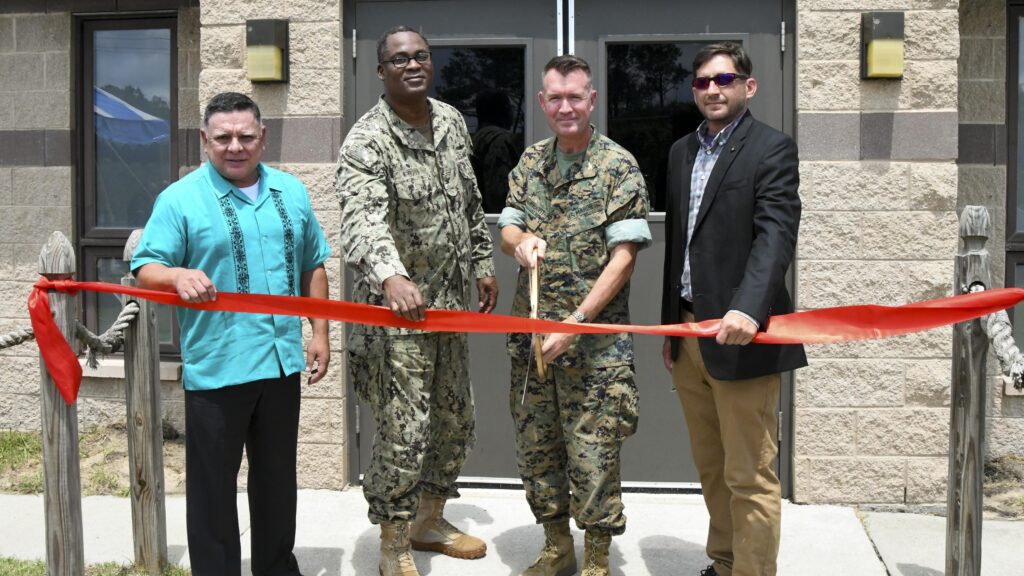
Col. Victor Argobright, Navy and Marine Corps Small Tactical Unmanned Aircraft Systems (PMA-263) program manager, officially opens the Navy Training and Logistics Support Activity East July 27 at Joint Expeditionary Base Little Creek-Fort Story in Virginia Beach, Va. From right to left, he is joined by Frank Ball, director of operations, Air/Ground Systems Engineering Amentum; JEBLCFS Commanding Officer Capt. Michael  Witherspoon, and Lee Hess Jr., Navy TALSA East project manager. U.S. NAVY

PATUXENT RIVER, Md. — The Navy opened a new facility at Joint Expeditionary Base Little Creek-Fort Story in Virginia Beach, Virginia, on July 27 that is dedicated to training Sailors who will operate the service’s Family of Small Unmanned Aircraft Systems (FoSUAS), the Naval Air Systems Command said Aug. 2. 

The facility, known as Training and Logistics Support Activity (TALSA) East, is the first dedicated Navy facility for unmanned aircraft operators to complete SUAS training. 

Previously, Naval SUAS operators received training directly from the original equipment manufacturer, through contractor-lead training, or at one of the four Marine Corps TALSAs when seats were available. 

“Navy UAS training takes a leap forward today with the opening of this first-of-its-kind facility,” said Marine Corps Col. Victor Argobright, PMA-263 program manager whose team will manage training at TALSA East. “Our FoSUAS team has been working diligently for nearly two years to provide high-quality training and certifications to our Navy personnel.” 

The TALSA is a central location for scheduling and formal entry-level SUAS courses that provide initial qualification training for systems currently in use by the operating forces. It also supports centralized storage of unit systems, supply, and maintenance services. 

Scheduling at Navy TALSA East is flexible and tailored to student requirements. The first official course in the new facility will begin Aug. 8 for SkyRaider R80D. 

“Being the first of its kind SUAS facility dedicated to  training and logistics is a force multiplier for our Navy and Marine Corps,” said Navy Capt. Michael Witherspoon, JEB Little Creek-Fort Story commanding officer. “This could not have been possible without the close coordination and collaboration of PMA-263, JEB Little Creek-Fort Story Public Works, the renovation team and the trainers here onboard the installation.  

Navy TALSA East currently supports training for The Vertical Take-Off and Landing SkyRaider R80D, Skydio X2D and PD-100 Black Hornet 3. The Naval Expeditionary Combat Command will join the Naval Special Warfare community in fiscal year 2023 to also use the training and logistics support that the TALSA provides. 


Indo-Pacific Maritime Security Exchange Provides Exclamation Point to RIMPAC

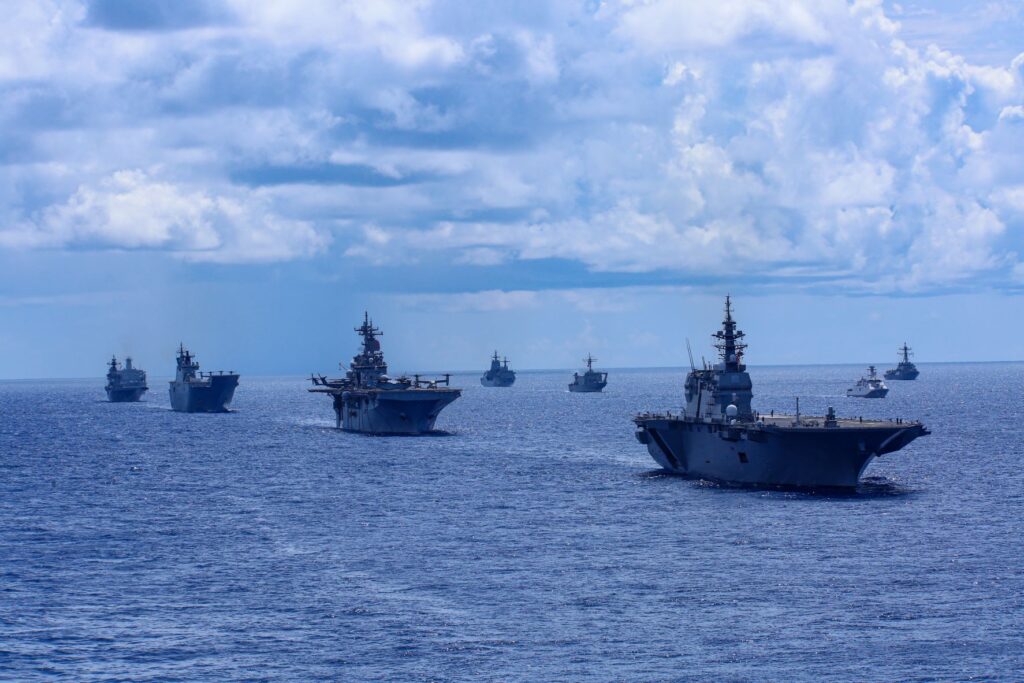
Ships sail in formation during sail in formation during Rim of the Pacific 2022, July 28. U.S. NAVY / Mass Communication Specialist 3rd Class Ian Thomas

HONOLULU — As this year’s biennal, multinational Rim of the Pacific naval exercise is drawing to a close, naval experts will gather in Honolulu to conduct the 2022 Indo-Pacific Maritime Security Exchange, or IMSE, essentially punctuating the end of RIMPAC with an exclamation point.

The conference is hosted by the Honolulu chapter of the Navy League and is being held at the Hawaii Convention Center Aug. 4-5.

According to retired Capt. Larry Osborn, a combination of three things makes IMSE unique — the location, the hybrid format and the enduring theme of building partnerships while focusing each year on a pertinent issue. The focus area for IMSE 2022 is “information sharing.”

As for location, “Honolulu, located in the mid-Pacific, is the only place where a U.S. combatant command is co-located with all its components,” said Osborn.

Produced as a hybrid event, Osborn said, “IMSE reaches across the Indo-Pacific and around the world with a live webinar broadcast while the in-person participants and attendees gather in a non-threatening, non-government venue to network informally and strengthen relationships.”

IMSE has no official  relationship with RIMPAC, but it’s not a coincidence that IMSE happens right after the exercise. The event will explore this “largest of all” multi-national exercise to learn how the maritime services from 26 nations share information and operate together effectively as a cohesive force.

Since it’s a RIMPAC year, there will be representatives of a number of Indo-Pacific militaries already here.  “We schedule IMSE to follow right after the RIMPAC closing to take advantage of the many foreign leaders present in Honolulu at that time,” Osborn said.

IMSE 2022 will feature a number of senior leaders from the region, to include remarks from the Australian and Korean heads of navy.  Adm. Sam Paparo, U.S. Pacific Fleet commander, will open the conference with a luncheon keynote. Discussion about the Quadrilateral Security Dialogue will include perspective from Indian, Japanese and U.S. senior leaders. Finally, a panel of ship commanding officers from the U.S., Malaysia, Australia, Korea, and the Philippines will share their RIMPAC experience.  

Anyone can register at imsehawaii.org to attend IMSE 2022 virtually via a live webinar or in person. Registration will stay open until the conference opening. Navy League members attending in person receive a discount.


USS Fort Lauderdale Commissioned in Namesake City

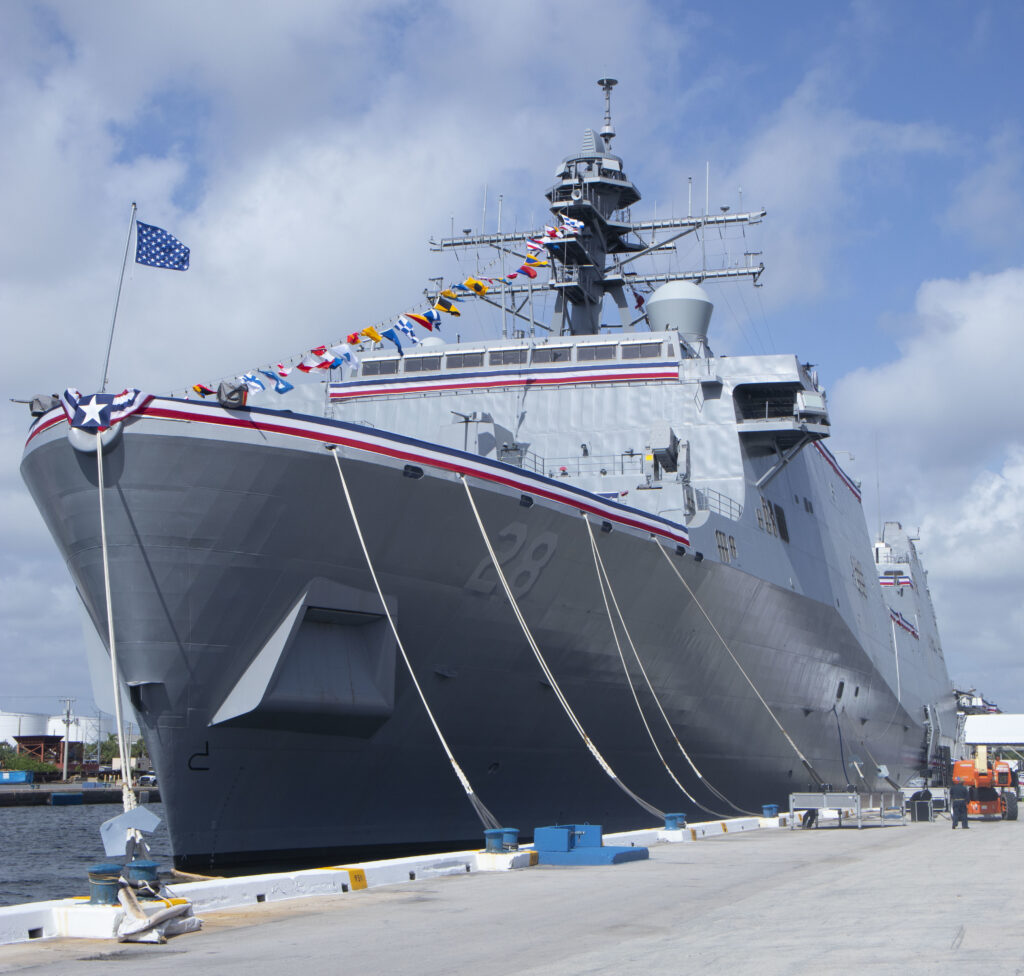
The future USS Fort Lauderdale (LPD 28) currently moored in Port Everglades, in its namesake city Fort Lauderdale, Florida, getting ready for its commissioning ceremony. U.S. NAVY / Sgt. Gavin Shelton, USMC

FORT LAUDERDALE, Fla. — The U.S. Navy commissioned its newest amphibious transport dock ship, USS Fort Lauderdale (LPD 28), on July 30 in its namesake Florida city, Commander, Naval Surface Forces Public Affairs said July 30. 
 
“To the Sailors and Marines who will serve aboard USS Fort Lauderdale, thank you and your families in advance for the service you will fulfill and sacrifices you may endure,” said Secretary of the Navy Carlos Del Toro, who spoke at the event. “The moment you bring this amphibious transport dock to life, you will strengthen the integrated deterrence capability of our entire joint force.” 
 
Guest speakers for the event also included Kari Wilkinson, president of Ingalls Shipbuilding; Gen. Eric Smith, assistant commandant of the Marine Corps and Fort Lauderdale Mayor Dean Trantlis. The principal speaker was U.S. Rep. Debbie Wasserman Schultz (D-Florida). 
 
“It is such an honor to be involved in the commissioning of the USS Ft. Lauderdale. It’s another chapter to the momentous history, friendship, and respect that the city has with the U.S. Navy,” Schultz said. “As chair of the Military Construction and Veterans Affairs Appropriations Subcommittee, my support for our military is unwavering. I will always stand by our service members and veterans, and honor those who continue to serve.” 
 
Ship sponsor Meredith A. Berger gave the first order to “man our ship and bring her to life.” 
 
“The Navy names ships for people, places, and ideas that are special. The Navy certainly picked a special place when naming the USS Fort Lauderdale,” she said. “I am honored to be the sponsor for this incredible ship.” 
 
Built by the Huntington Ingalls Industries in Pascagoula, Mississippi, Fort Lauderdale was launched March 28, 2020, and christened Aug. 21, 2021. The ship was delivered to U.S. Navy Nov. 30, 2021. 
 
“Finally, if there is one thing that history has shown us from the days of antiquity it is that the stakes of the competition for control of the seas are high and for our part, USS Fort Lauderdale stands ready to deliver on any day, and at any time,” said Capt. James Quaresimo, the ship’s commanding officer. “And those that may wish to challenge us — they should pause. For we are equipped with America’s unstoppable secret weapon that our enemies will never be able to duplicate and that is the fierce, dedicated and unstoppable, men and women of the United States Navy and Marine Corps.” 
 
The ceremony marks the official transition of the USS Fort Lauderdale into the fleet and caps a weeklong series of events celebrating the ship and its namesake city. 
 
Amphibious transport dock ships are warships that embark, transport and land elements of a landing force for a variety of expeditionary warfare missions.

USS Fort Lauderdale will be homeported at Naval Station Norfolk, Virginia. 


L3Harris, US Navy to Demo Maritime Autonomous Capabilities at RIMPAC 

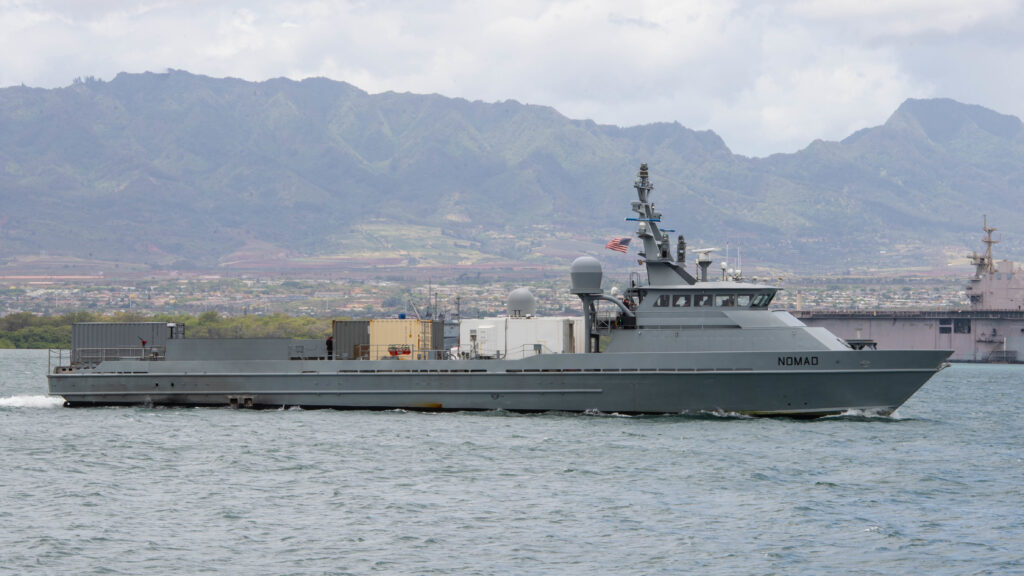
The large unmanned surface vessel Nomad arrives at Pearl Harbor to participate in Rim of the Pacific 2022. U.S. NAVY / Mass Communication Specialist 3rd Class Demitrius J. Williams

MELBOURNE, Fla. — L3Harris Technologies, in collaboration with the U.S. Navy, will demonstrate how unmanned surface vehicle technologies can provide critical support for traditional maritime forces during the Rim of the Pacific Exercise 2022, the company said Aug. 1.

RIMPAC is being held June 29 through Aug. 4 off the coast of Pearl Harbor, Hawaii. 

The Navy will operate its medium-displacement unmanned surface vehicle, Nomad, outfitted with numerous L3Harris autonomous technologies that enable it to perform strategic missions safely and accurately without the need for onboard support staff. The technology includes L3Harris control, electro-optical and communications systems. 

Nomad supports different maritime missions, including information, surveillance and reconnaissance, and maritime domain awareness missions It can operate in an autonomous mode, including maintaining vessel awareness and complying with international collision avoidance guidelines and can be remotely piloted from an onshore or ship-based ground control station. 

“RIMPAC provides a great opportunity to demonstrate how unmanned autonomous technology can support maritime forces,” said Rosemary Chapdelaine, president of Maritime at L3Harris. “Lessons learned from this exercise will enable us to continue developing and integrating autonomous capabilities in collaboration with the Naval Sea Systems Command, Unmanned Maritime Systems.” 

Twenty-six nations, surface ships, submarines, national land forces, aircraft and nearly 25,000 personnel are expected to participate in this year’s RIMPAC. 


Navy Accepts Delivery of Fleet Replenishment Oiler USNS John Lewis  

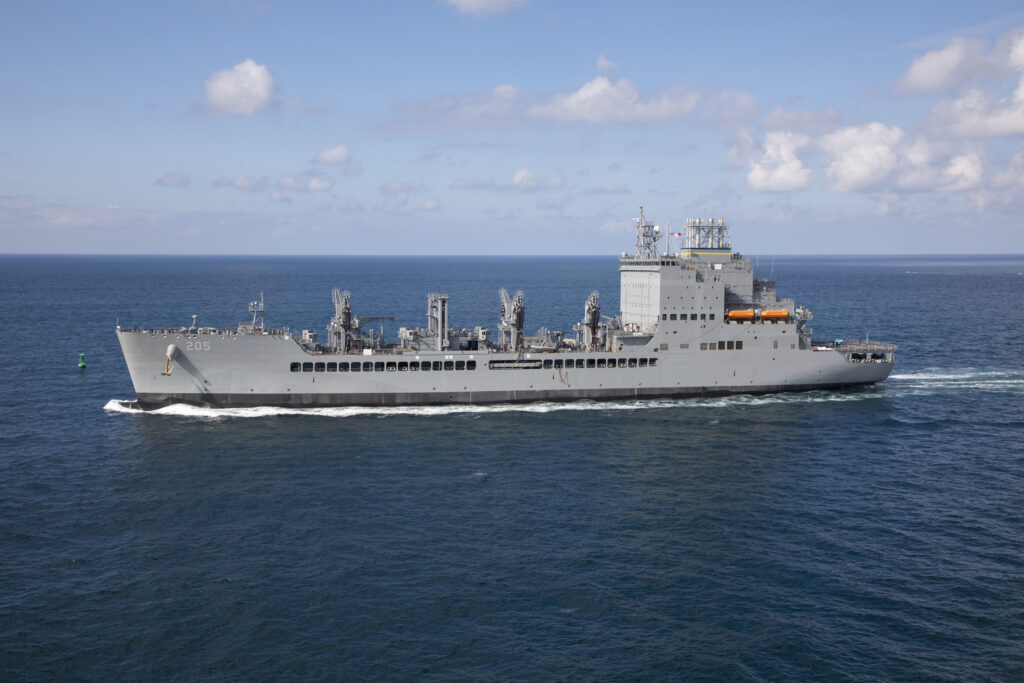
The USNS John Lewis (T-AO 206), the lead ship of a new class of fleet replenishment oilers. U.S. NAVY

WASHINGTON — The Navy accepted delivery of the lead ship of its new class of fleet replenishment oilers, USNS John Lewis (T-AO 205) on July 27, Team Ships Public Affairs said July 29. 

T-AO 205’s delivery follows the completion of acceptance trials with the Navy’s Board of Inspection and Survey to test the readiness and capability of the craft and to validate requirements. 

“USNS John Lewis will provide much needed capability to the fleet as the primary fuel pipeline at sea,” said John Lighthammer, program manager of the Auxiliary and Special Mission Shipbuilding Program Office. “This is the first of a 20-ship class providing the Sailors and merchant mariners another tool to support at-sea operations.” 

The new John Lewis-class T-AOs will be operated by Military Sealift Command to provide diesel fuel and lubricating oil, and small quantities of fresh and frozen provisions, stores, and potable water to Navy ships at sea, and jet fuel for aircraft. The new T-AOs will add capacity to the Navy’s Combat Logistics Force and become the cornerstone of the fuel delivery system. 


General Dynamics Electric Boat Awarded $698M Contract Mod to Overhaul USS Hartford

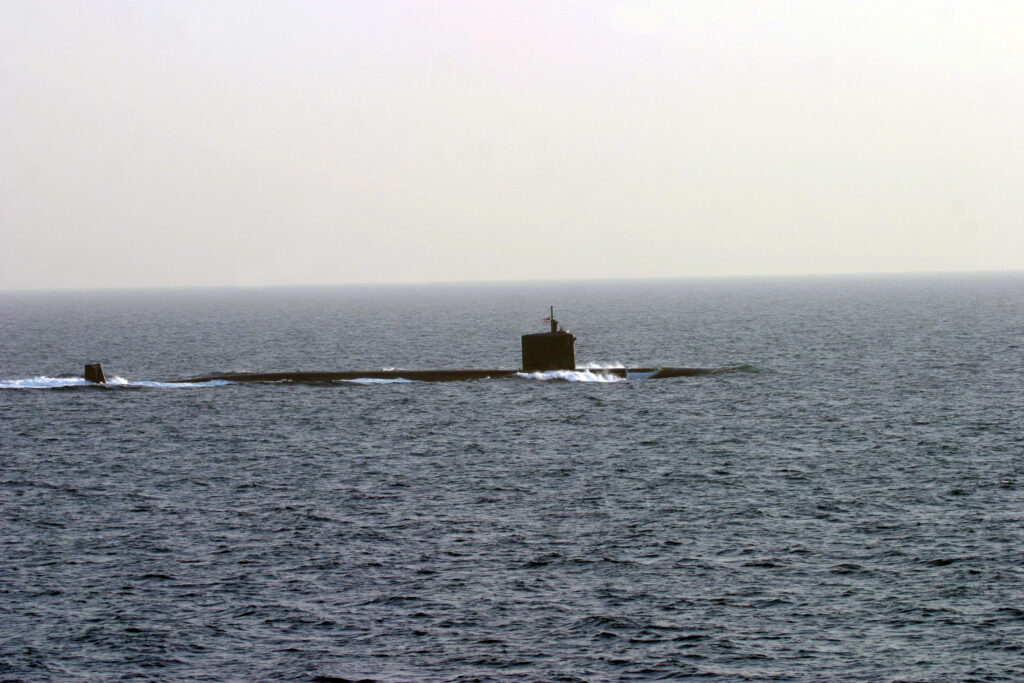
The Los Angeles-class attack submarine USS Hartford, shown underway in the Persian Gulf in 2009. U.S. NAVY

GROTON, Conn. — General Dynamics Electric Boat announced June 29 it was awarded a modification of the previously awarded U.S. Navy contract for the repair, maintenance and modernization of the submarine USS Hartford (SSN 768).

The contract modification has a value of $697.9 million. Work will be performed at the company’s shipyard in Groton, Connecticut, and is expected to be completed in October 2026.

USS Hartford is a Los Angeles-class submarine built by General Dynamics Electric Boat and commissioned in 1994.

 “This engineered overhaul of the USS Hartford will enhance its warfighting capability and extend the ship’s service life, returning a valuable asset to the U.S. Navy submarine fleet,” said Kevin Graney, president of General Dynamics Electric Boat.


Navy to Commission Amphibious Transport Dock Ship Fort Lauderdale 

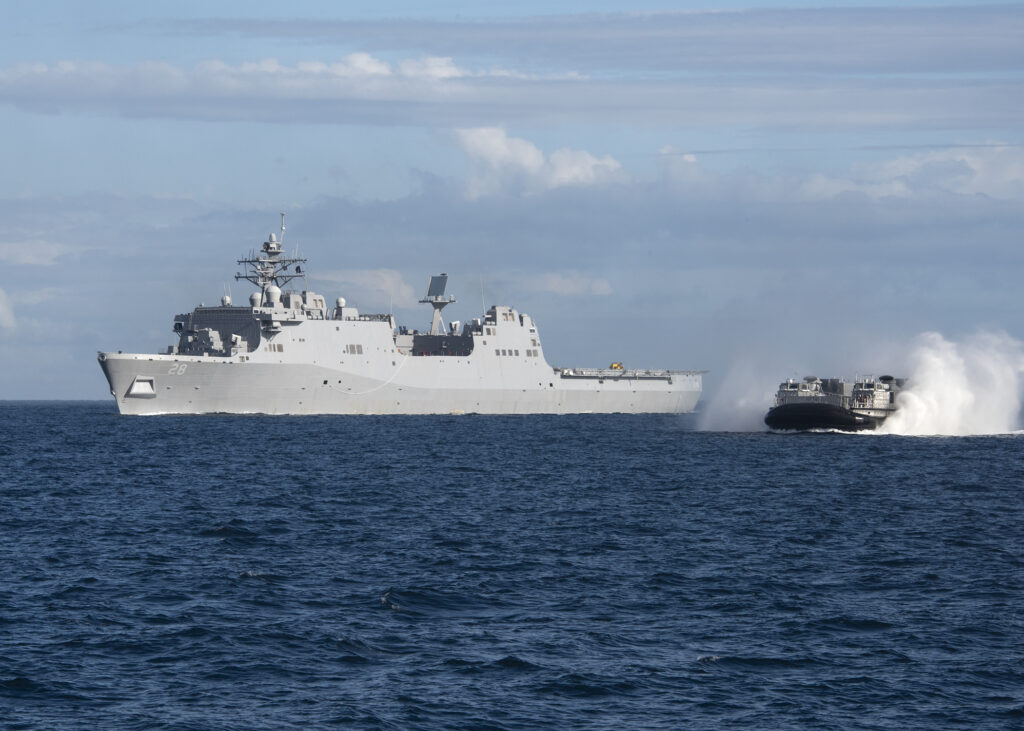
The Navy’s newest amphibious transport dock ship, USS Fort Lauderdale, transports the Navy’s newest connectors to their new homeport. U.S. NAVY

ARLINGTON, Va. — The Navy will commission its newest amphibious transport dock, the future USS Fort Lauderdale (LPD 28), during a 10 a.m. EDT ceremony Saturday, July 30, in Fort Lauderdale, Florida, the Defense Department said July 29.

The future USS Fort Lauderdale is the first naval ship to honor the city of Fort Lauderdale, Florida.

“Tomorrow we commission the future USS Fort Lauderdale, bringing a powerful war ship with a dedicated and determined crew to life,” said Secretary of the Navy Carlos Del Toro. “This ship will play an integral part in strengthening America’s partnerships and protecting our country’s security abroad.” 

The future USS Fort Lauderdale is the 12th San Antonio-class ship, designed to support embarking, transporting, and bringing elements of 650 Marines ashore by landing craft or air-cushion vehicles. A flight deck hangar further enhances the ship’s capabilities, which can support the MV-22 Osprey tilt-rotor aircraft.  

The ceremony will be live streamed at: USS Fort Lauderdale Commissioning. The link becomes active approximately 10 minutes prior to the event (9:50 a.m. EDT). 


Initial Operating Capability Declared for Unmanned Influence Sweep System

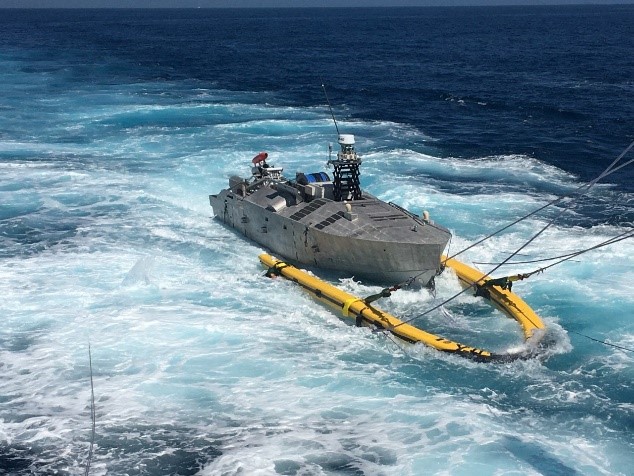
The Minecountermeasure Unmanned Surface Vehicle is recovered onboard USS Manchester (LCS 14) during Unmanned Influence Sweep System initial operational test and evaluation June 2021. U.S. NAVY

WASHINGTON, D.C. — Program Executive Office, Unmanned and Small Combatants (PEO USC) announced July 28 the Unmanned Influence Sweep System, a critical component of the Navy’s suite of mine countermeasure technologies, has achieved initial operating capability, or IOC. 
 
The Office of the Chief of Naval Operations declared UISS IOC on July 22. The program completed formal testing and delivered a system with logistics and training material with appropriately trained Fleet personnel to execute minesweeping as part of the Mine Countermeasures Mission Package. 
 
“UISS’s declaration of IOC is a monumental achievement for the Navy’s Mine Countermeasures Mission Package,” said Capt. Godfrey “Gus” Weekes, LCS Mission Modules (PMS 420) Program Manager. PMS 420 is the office that oversees the Unmanned Influence Sweep System within PEO USC. 
 
Capable of being operated from littoral combat ships, shore, or vessels of opportunity, the Unmanned Influence Sweep System provides acoustic and magnetic minesweeping coupled with the semi-autonomous, diesel-powered, aluminum-hulled Mine Countermeasures Unmanned Surface Vehicle. The MCM USV is an integral part of the mine countermeasures mission package and serves as the tow platform for both minesweeping and mine hunting missions. 
 
Notably, this is also the first IOC of an unmanned surface platform by the U.S. Navy, marking an important milestone in the evolution toward a hybrid fleet of manned and unmanned systems.

“Over the years, the program has worked tirelessly to mature and field the UISS system that will keep the Navy’s most valuable asset, our sailors, safer by keeping them out of the minefield. With this declaration, the program is inching closer toward system-wide IOC for the MCM MP,” Weekes said. 


U.S. Navy Holds UAS Wide-Area Mission Demonstration 

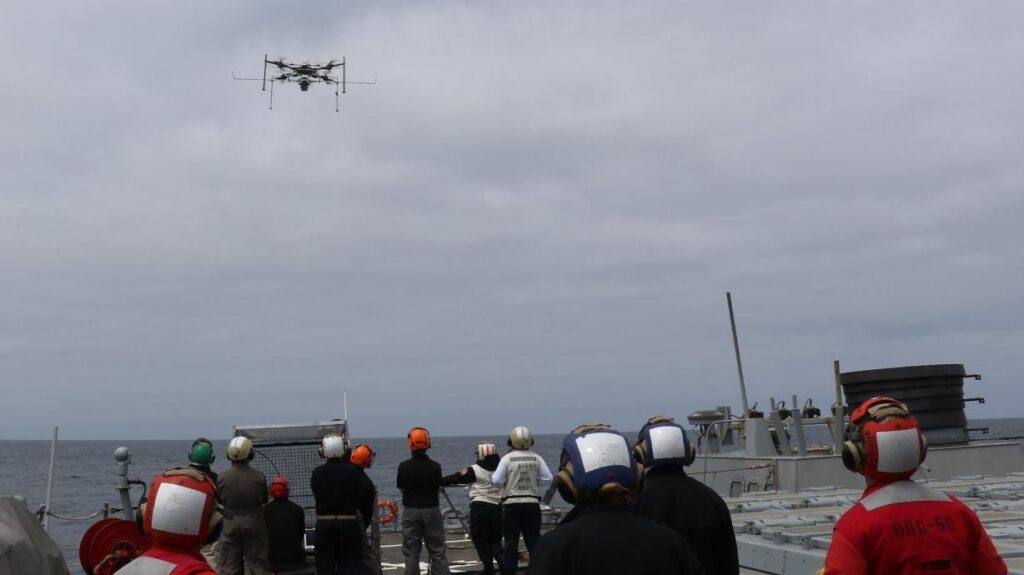
The Navy conducts a demonstration aboard USS Paul Hamilton (DDG-60) July 12 to identify and examine unmanned aircraft systems capable of wide-area missions from a Navy vessel at long ranges for extended periods while sending information back to the vessel. U.S. NAVY

PATUXENT RIVER, Md. — The Navy recently completed an unmanned aircraft system wide-area mission demonstration to assess capabilities that could benefit the fleet in the future, Naval Air Systems Command said July 27. 

The Navy and Marine Corps Small Tactical UAS program office (PMA-263), Naval Air Warfare Center Aircraft Division AIRWorks, and Navy Warfare Development Command led the sea-based demonstration July 11-15 aboard USS Paul Hamilton (DDG 60) in San Diego. 

Two vendors, Insitu Inc. and L3Harris, showcased multiple technologies designed to operate as a portable system in challenging conditions while providing the same wide-area coverage as a shore-based system. 

“This event was a great opportunity to evaluate unmanned capability in a relevant environment, learn how it can support and enhance operations, and get direct feedback from the fleet,” said Col. Victor Argobright, PMA-263 program manager. “A lot of work was done in a short time across the enterprise to make this happen.” 

Earlier this year, PMA-263 and AIRWorks teamed in collaboration with Innovation and Modernization Patuxent River, the Naval Air Warfare Center Aircraft Division partner for experimentation, technology demonstrations, and prototyping, and with Navy Warfare Development Command’s Fleet Experimentation team to identify and examine a UAS capable of performing wide-area missions from a Navy surface vessel at long ranges for extended periods while relaying accurate, relevant information back to the host vessel. 

The team downselected the vendors to participate in the demonstration based on their ability to provide a system able to operate without additional support systems, deploy without dedicated launch or recovery equipment and have maximum portability, self-sufficiency and modularity across UAS hardware and payloads. 

“The USS Paul Hamilton team was pleased to be a part of this demonstration,” said Cmdr. Jake Ferrari, the ship’s commanding officer. “To see the energy put behind providing capabilities associated with UAS aboard surface vessels is exciting. I look forward to future efforts that will provide an enduring fleet capability that is integrated into sustained operations.” 

The systems demonstrated wide-area surveillance capability across multiple mission sets. The government will review data gathered during the demonstration to further evaluate each system’s performance. 

“Both vendors stepped up to the challenge and the crew of the USS Paul Hamilton provided outstanding support and feedback,” said Argobright. “It’s teamwork like this that’s needed to get capability in the hand of sailors as quickly as possible. We will be leveraging this effort and working with Navy leadership on the next steps to make this happen.”  

As part of a multi-phased merit-based selection process, the demonstration may lead to Insitu or L3Harris being awarded an Other Transaction Authority prototype project under the authority of 10 U.S.C. 2371b later this year. OTAs are used by the DoD to carry out prototype, research and production projects.