Glamox wins contract to light US Navy’s latest Towing, Salvage, and Rescue Ship
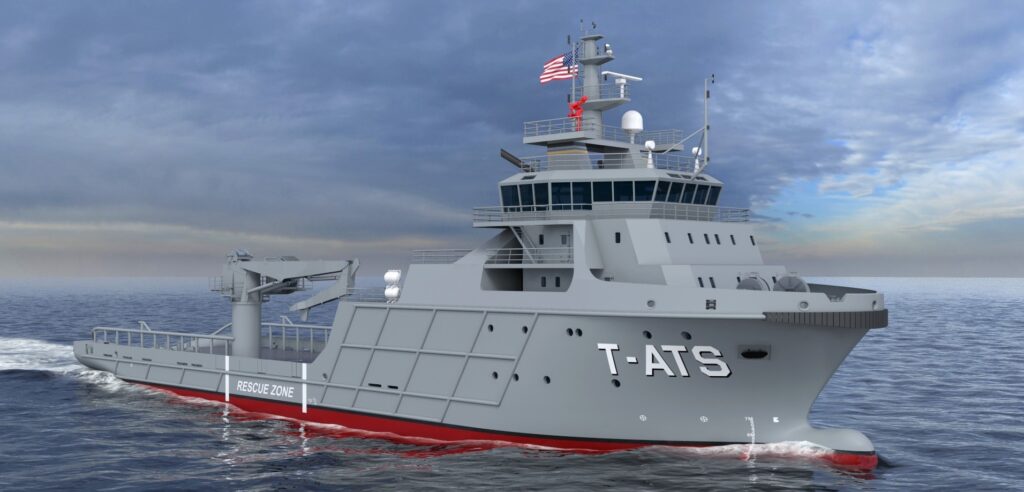
Artist’s impression of a Navajo-class T-ATS vessel. Photo Credit: Austal USA
Latest contract brings the total to eight Navajo-class vessels Glamox has lit
KATY, Texas, 4 February 2026:Glamox, one of the world’s leading lighting companies, has secured a contract from Austal USA to supply exterior and interior LED marine lighting for the future USNS James D Fairbanks (T-ATS 13), the latest Navajo-Class (T-ATS)Towing, Salvage, and Rescue ship being constructed for the US Navy (USN). This new contract brings the total to three T-ATS ships that Glamox is lighting for Austal USA. Previously, Glamox was awarded contracts to light five T-ATS vessels from Bollinger Houma Shipyards.
“We are proud to be supplying lighting for this workhorse of the seas, which will enter service in 2028. This latest order, along with orders from navies worldwide, highlights Glamox’s marine defence lighting capabilities, which range from lights for inshore rescue boats to large aircraft carriers,” said John O’Driscoll, General Manager of Glamox in North America.
T-ATS vessels will provide ocean-going towing, salvage and rescue capabilities to support fleet operations. They have a multi-mission common-hull platform capable of towing USN ships and will combine the capabilities of the retiring Rescue and Salvage Ship (T-ARS 50) and the Fleet Ocean Tug (T-ATF 166) vessels. The T-ATS series will be able to support current missions, including towing, salvage, rescue, oil spill response, humanitarian assistance, and wide-area search and surveillance.
The T-ATS vessels may also enable future rapid capability initiatives, such as supporting modular payloads with hotel services and appropriate interfaces. Their large, unobstructed 6,000 square feet (557 square metres) of deck space allows for the embarkation of a variety of stand-alone and interchangeable systems.
In addition to the T-ATS series, Glamox worked with Austal USA to supply lights for the auxiliary floating dry dock medium (AFDM) and navigation lights for the USN’s Landing Craft Utility (LCU) 1700-class vessels.
Four Days In, Hegseth, Caine Say U.S. Making Decisive Progress in Iran
March 4, 2026 | By Matthew Olay, DoW News
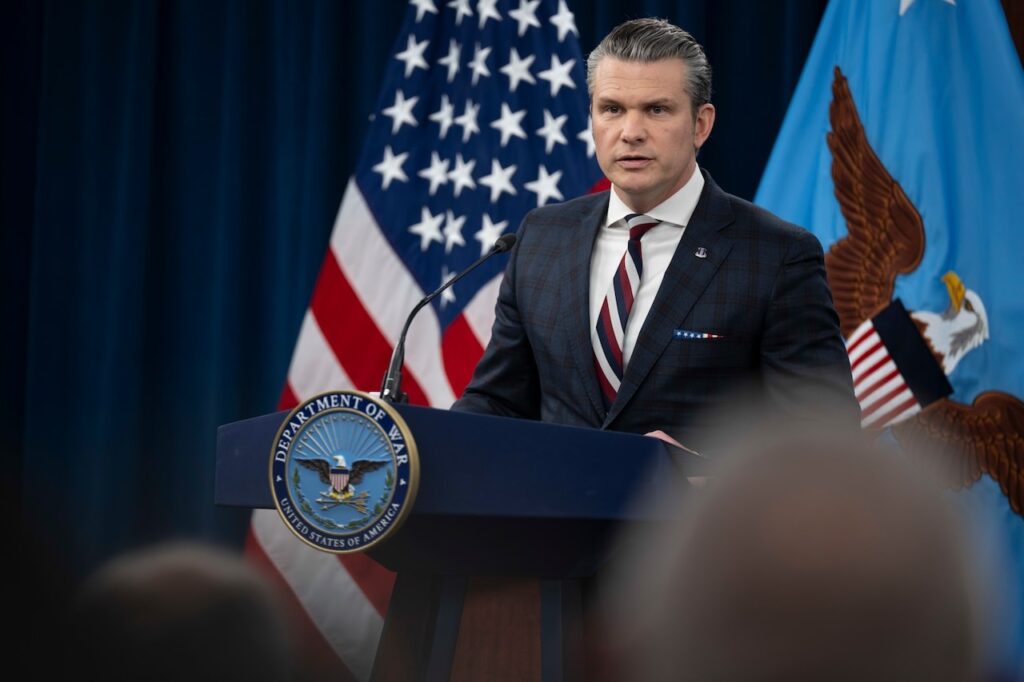
During the War Department’s second press conference since the U.S. and Israel’s launch of Operation Epic Fury against the Iranian regime Feb. 28, Secretary of War Pete Hegseth and Air Force Gen. Dan Caine, chairman of the Joint Chiefs of Staff, today said America is making decisive offensive progress in the conflict.
“I stand before you today with one unmistakable message about Operation Epic Fury: America is winning decisively, devastatingly and without mercy,” Hegseth told the media from the Pentagon’s press briefing room.
“We are only four days into this, and the results have been incredible — historic, really. … Only the United States could lead this [mission]. … But, when you add the Israeli Defense Forces — a devastatingly capable force — the combination is sheer destruction for our radical Islamist Iranian adversaries,” Hegseth said.
During his remarks, Caine reiterated that the U.S. and Israel’s joint, three-pronged mission in the region is to target and eliminate Iran’s ballistic missile systems, destroy the Iranian navy and ensure Iran cannot rebuild or reconstitute its combat capability or power — including ensuring the country never obtains nuclear weapons.
In terms of battle damage, Caine said there has been an 86% overall drop in Iran’s ballistic missile launches since the first day of fighting, and a 23% decrease in just the last 24 hours. Additionally, he added there has been 73% decrease in Iranian one-way attack drone shots fired from early on in the conflict.
In terms of air power, Hegseth said that the U.S. and Israeli forces are poised to have complete control of Iranian air space within the next few days.
“I hope all the folks watching understand what ‘uncontested airspace’ and ‘complete control’ means: It means we will fly all day [and] all night … finding, fixing and finishing the missiles and defense industrial base of the Iranian military; finding and fixing their leaders and their military leaders; flying over Tehran … [with] Iranian leaders looking up and seeing only U.S. and Israeli air power every minute of every day, until we decide it’s over — and Iran will be able to do nothing about it,” Hegseth said.
At sea, U.S. Central Command announced yesterday that more than 20 Iranian navy vessels have been destroyed, including the sinking of an Iranian combatant ship in the Indian Ocean by a U.S. Navy fast attack submarine.
It was the first time a U.S. submarine has used a Mark 48 torpedo to sink an enemy vessel since 1945, Caine noted.
“I want to remind everybody that this is an incredible demonstration of America’s global reach. To hunt, find and kill an out-of-area deployer is something that only the United States can do at this type of scale,” he said.
In discussing the Iranian regime’s predicament, Hegseth said he likens the situation to a football game, wherein Iran’s offense has already exhausted all of its scripted plays.
“But now that the game has started and the [U.S. and Israeli] defensive blitz is on, [Iran doesn’t] know what plays to call, let alone how to get in the huddle and call those plays,” Hegseth said.
He added, because so many of Iran’s senior leaders being killed on Operation Epic Fury’s first day, the military is unable to effectively communicate, let alone mount a coordinated and sustained offensive.
“This was never meant to be a fair fight, and it is not a fair fight. We are punching [the enemy] while they’re down, which is exactly how it should be,” Hegseth said, adding that Epic Fury has already unleashed twice the air power as the initial “shock and awe” phase of Operation Iraqi Freedom in 2003.
Looking ahead, Caine said that Centcom will continue to strike the regime’s infrastructure — including hunting and killing ballistic missile launchers and one-way attack capabilities — as well as continuing to attack Iran’s naval capabilities.
“We are just getting started,” Hegseth said.
Austal USA Launches Final EPF, the Future USNS Lansing
From Austal USA
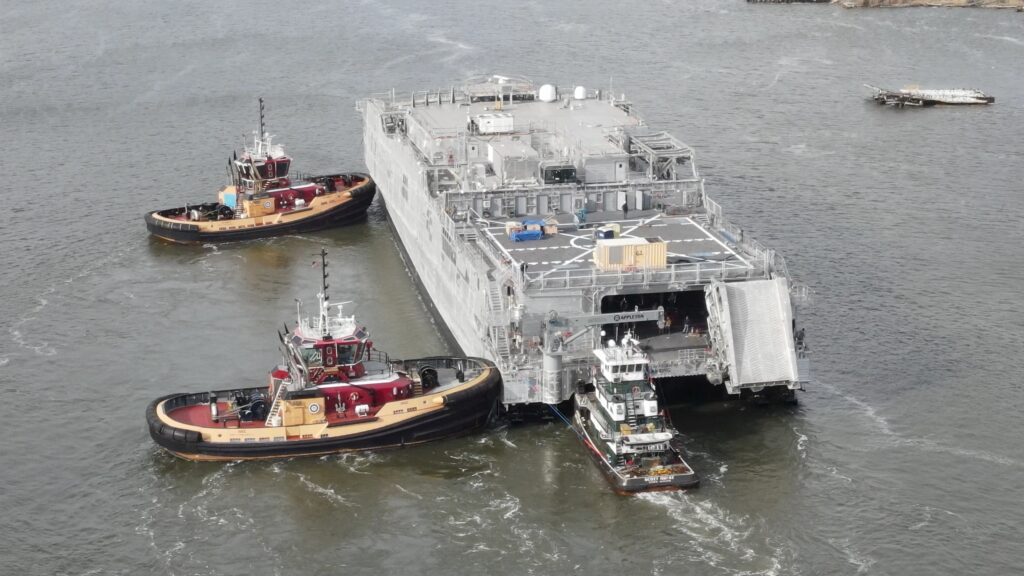
MOBILE, Ala. – Austal USA launched the company’s second ship in less than a week, the Navy’s final Expeditionary Fast Transport, future USNS Lansing (EPF 16) in Mobile, Ala., February 25, 2026. The U.S. Navy’s 16th Expeditionary Fast Transport (EPF), christened in early January, is now docked pier side for final outfitting and system activation in preparation for sea trials later this year.
During this launch process, self-propelled modular transporters (SPMT) lifted the ship almost three feet and moved it approximately 400 feet onto a deck barge moored adjacent to the final assembly bay. The barge moved the ship downriver where the ship was placed in a floating dry dock. The EPF was submerged in the dry dock enabling it to float for the first time, and it was returned back upriver to Austal USA’s new construction facility. This is the 26th ship launched at Austal USA using this proven process.
“The successful launch of this final Expeditionary Fast Transport is a true reflection of the power of teamwork and our commitment to applying lessons learned to every aspect of our work,” said Gene Miller, Austal USA Interim President. “Our test and activation teams, crane and rigging crews, and safety personnel worked seamlessly alongside our Navy partners and trusted vendors like Berard Transportation, Alabama Shipyard, and E.N. Bisso & Son tug services. These strong partnerships enable us to continuously refine our processes, identify areas for improvement, and efficiently achieve critical shipbuilding milestones to further support and strengthen the maritime industrial base.”
Production efforts on EPF 16 will shift to final outfitting and system activation to support future USNS Lansing, the Navy’s third EPF Flight II medical variant, getting underway for sea trials.
Gerald R. Ford Crew Demonstrates Resilience, Readiness During Extended Deployment
Photo: U.S. Navy.
From U.S. Fleet Forces Command
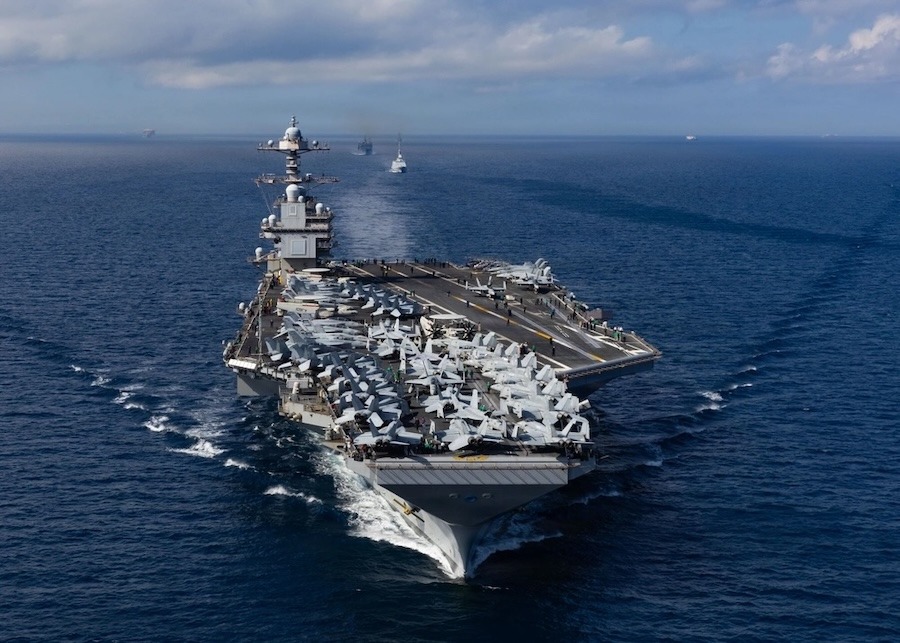
NORFOLK, Va. — More than eight months into an extended deployment, the Sailors of USS Gerald R. Ford (CVN 78) continue to demonstrate resilience, professionalism, and sustained morale while serving far from home.
Gerald R. Ford departed Naval Station Norfolk on June 24, 2025. Since that time, the ship and Carrier Strike Group 12 have continued to operate at a high state of readiness. Navy leaders acknowledge that extended time away from families carries real and measurable sacrifice.
“Extended deployments demand endurance,” said Adm. Daryl Caudle, Chief of Naval Operations. “They ask Sailors to miss births, anniversaries, and everyday moments at home. They ask families to shoulder additional responsibility. That sacrifice is real, and we do not take it lightly. The nation relies on these Sailors to remain forward and ready, and they continue to meet that responsibility with professionalism and pride.” Caudle emphasized that sustained readiness begins with people and empowering them to succeed.
“The morale aboard Gerald R. Ford remains strong because leadership is engaged, systems are operating, and Sailors understand the importance of their mission,” he said. “This crew is experienced, disciplined, and committed to one another. That cohesion matters during long deployments.”
Caudle has been in constant contact with Rear Adm. Paul Lanzilotta, commander of Carrier Strike Group 12, who said maintaining morale requires deliberate daily attention and frequent communication.
“Long deployments are challenging,” Lanzilotta said. “Fatigue accumulates and time away from home weighs on Sailors. Our responsibility as leaders is to ensure they are supported — with reliable shipboard services, clear communication, and consistent engagement. I have walked the decks of Gerald R. Ford repeatedly during this deployment. What I see is a crew that remains focused, capable, and proud of the work they are doing.”
In recent weeks, media reports have raised concerns regarding shipboard systems, including sanitation. Navy officials state that Gerald R. Ford’s systems are operating within expected parameters for a Ford-class aircraft carrier with more than 4,000 personnel embarked. During this deployment, Gerald R. Ford’s vacuum collection, holding, and transfer (VCHT) system has processed more than six million toilet flushes. Ship leadership reports that clog incidents are addressed promptly by trained damage control and engineering personnel, with minimal downtime.
“On a ship this size, with this many Sailors, clogs will occur,” said Capt. David Skarosi, commanding officer of USS Gerald R. Ford. “What matters is how quickly they are resolved. Our maintenance teams respond immediately, and the system continues to function as designed with no impact to operational readiness or our ability to meet our mission. I am engaged daily with any concerns regarding the health, wellbeing, and morale of the crew.”
“In most instances,” Skarosi added, “clogs are the result of items being flushed that should not be introduced into the system. When Sailors follow proper procedures, the system performs reliably. We continue to train new Sailors and reinforce those standards across the crew.”
Beyond sanitation systems, Gerald R. Ford continues to emphasize and sustain quality of life conditions. The ship’s reverse osmosis systems produce more than 400,000 gallons of potable water daily, supporting hot showers, laundry, food preparation, and drinking water requirements. The Supply Department has served more than four million meals since departure, supported by consistent underway replenishment operations delivering fresh produce, frozen goods, and dry stores.
Bandwidth availability for morale, welfare, and recreation internet access has expanded during the deployment through commercial satellite augmentation, including Starlink capability. That increased connectivity has improved Sailors’ ability to communicate with families, access news, and utilize approved streaming services during off-duty hours.
“Connectivity and routine matter,” Lanzilotta said. “When Sailors can speak with their families, read trusted news sources, maintain physical fitness, and rely on stable shipboard systems, it strengthens resilience.” Command-sponsored initiatives throughout the deployment have included morale and holiday events when operationally feasible, physical fitness competitions, movie nights, educational advancement programs, and expanded chaplain and counseling availability. Leadership routinely inspects berthing and workspaces to identify and correct quality of life concerns early.
“Our Sailors understand the importance of their service,” Caudle said. “They are away from home longer than planned because the nation needs them forward and ready. I want them to take great pride in that calling. The American people should be confident that USS Gerald R. Ford remains ready, and they should be proud of the men and women serving aboard her.”
Gerald R. Ford recently completed a port call to Souda Bay, Crete for a routine, scheduled resupply of food, fuel, and ammunitions. While in port, Sailors had the opportunity to rest and enjoy recreational activities on the island, serving as a significant morale boost.
USS Gerald R. Ford is the lead ship of her class and incorporates an advanced flight deck design, state-of-the-art launch and recovery systems, enhanced electrical capacity, and quality of life features designed to support sustained operations at sea. The new systems incorporated into Ford-class ships, such as the Electromagnetic Aircraft Launch System (EMALS) and advanced arresting gear (AAG), are designed to deliver greater lethality and joint interoperability. While the Navy is still analyzing the data, preliminary reports from the Sortie Generation Rate test program show that the flight deck design in conjunction with EMALS and AAG have contributed to an increased sortie generation rate compared to that of a Nimitz-class carrier. As of today, these systems are operating as designed, and the Ford continues with scheduled mission tasking.
Carrier Strike Group 12 includes USS Gerald R. Ford, embarked Carrier Air Wing Eight, and assigned guided-missile destroyers. The strike group remains fully mission capable and committed to maintaining the highest standards of safety, professionalism, and Sailor well-being.
PASCAGOULA, Ms. — The U.S. Navy will christen the future USNS Robert Ballard (T-AGS 67) during a ceremony at Bollinger Mississippi Shipbuilding in Pascagoula, Mississippi, Feb. 28 at 10:00 a.m. (CST).
The principal address will be delivered by Dr. Robert Ballard, the ship’s namesake. Additional speakers will include the Honorable Cindy Hyde-Smith, U.S. Senator, Mississippi; the Honorable Brendan Rogers, Assistant Secretary of the Navy for Energy, Installations and Environment; Rear Adm. Benjamin Nicholson, commander, Military Sealift Command; Rear Adm. Erin Acosta, commander, Naval Meteorology and Oceanography Command; and Mr. Ben Bordelon, president and CEO, Bollinger Shipyards.
In a time-honored tradition, ship sponsor Barbara Earle Ballard, spouse of the namesake and president of Odyssey Enterprises, will christen the ship by breaking a bottle of sparkling wine across the bow.
The ship is named in honor of Dr. Robert Ballard, a retired U.S Navy commander and a tenured professor of Oceanography at the University of Rhode Island’s Graduate School of Oceanography. Ballard is also a National Geographic Explorer at Large. Ballard is renowned for discovering the final resting place of the RMS Titanic.
The christening of the future USNS Robert Ballard underscores the Navy’s commitment to building America’s Golden Fleet. For 250 years, American naval power has projected strength globally. That mission continues – and intensifies. We operate forward 24/7, 365 days a year. This operational tempo demands continuous capability delivery, and the Golden Fleet is our answer.
Oceanographic survey ships have two multipurpose cranes and five winches, plus a variety of oceanographic equipment including multibeam echo-sounders, towed sonars and expendable sensors.
ARLINGTON, Va. — The U.S. Navy has announced its plan to retire 13 ships during fiscal 2026, including two ships held over from last year.
In a Feb. 20 message released by Rear Admiral M. D. Behning, acting deputy chief of naval operations for Warfighting Requirements and Capabilities, the planned retirements included six warships and seven auxiliary ships. Most of the retirements are planned for the summer.
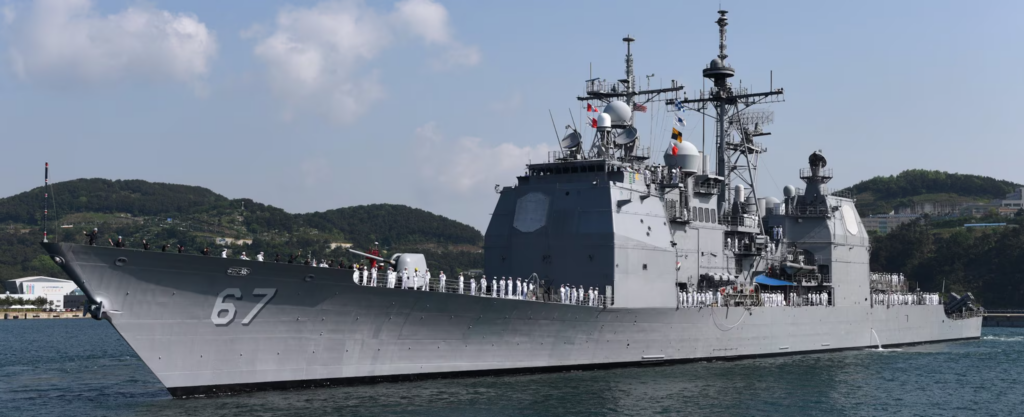
The two Ticonderoga-class guided missile cruisers on the list, USS Shiloh (CG 67) and USS Lake Erie (CG 70), originally were to be decommissioned in fiscal 2025. Shiloh had transferred to Pearl Harbor, Hawaii, from Yokosuka, Japan, but was kept in commission with the change in presidential administrations. Lake Erie was deployed to the U.S. 4th Fleet supporting Operation Southern Spear and had remain deployed as fiscal 2025 expired. The ships will be stored as support assets and their retirement by September will leave the fleet with five cruisers.
One Los Angeles-class attack submarine, Newport News (SSN 750), was inactivated in January. Its inactivation will be followed in August by that of USS Alexandria (SSN 757), leaving the fleet with 18 Los Angeles-class boats. The submarines will be scrapped.
One of the early Freedom-class littoral combat ships, USS Fort Worth (LCS 3), will be decommissioned by July and will be scrapped. A Whidbey Island-class dock landing ship, USS Germantown (LSD 42), will be decommissioned by September and retained as a support asset, leaving the fleet with five other ships of the class.
Three Henry J. Kaiser-class fleet replenishment oilers are being removed from service with Military Sealift Command in 2026: USNS Big Horn (T-AO 198) by March and USNS John Ericsson (T-AO 194) and Pecos (T-AO 197) by July. The Big Horn and Pecos are being transferred to the Maritime Administration, and the John Ericsson will be retained as a support asset. These retirements will leave the fleet with ten oilers of the class. The ships are being replaced by the John Lewis class T-AOs, which first deployed in 2025.
Three Watson-class large, medium-speed, roll-on/roll-off ships will be transferred to the Maritime Administration: USNS Pomeroy (T-AKR 316) by April, USNS Watkins (T-AKR 315) by July, and USNS Red Cloud (T-AKR 313) by September. The retirements will leave the Military Sealift Command with three ships of the class.
The singular VADM K.R. Wheeler (T-AG 5001) will be transferred from the Military Sealift Command to the Maritime Administration by July. It is equipped with an offshore petroleum distribution system uniquely designed to pump fuel ashore from up to eight miles.
Austal USA Launches 2nd Navy T-ATS, the Future USNS Solomon Atkinson
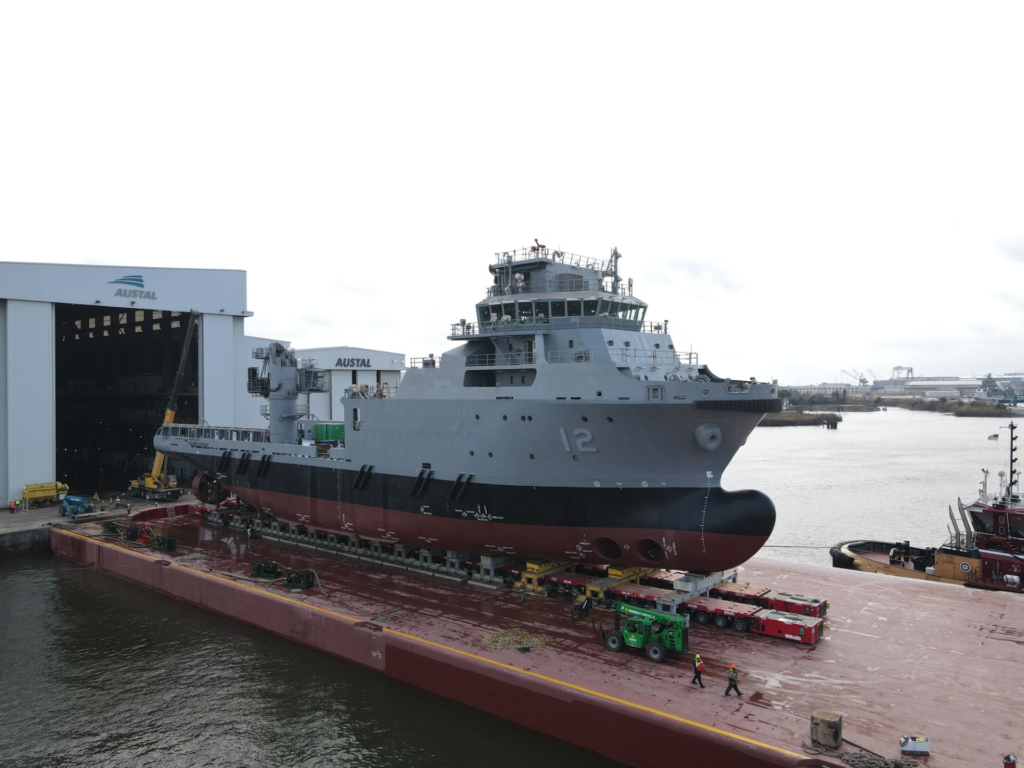
MOBILE, Ala. –Austal USA successfully launched the company’s first ship of the year and second Navy Towing, Salvage, and Rescue Ship (T-ATS), future USNS Solomon Atkinson (T-ATS 12), on February 23. Named after a Native American who was a plankowner of the Navy SEAL teams and one of the service’s most decorated Alaska Native sailors, Soloman Atkinson is one of three T-ATS under construction at Austal USA and the first of two ships launched at Austal USA’s Mobile, Ala. ship manufacturing facility within less than a week.
“It’s always exciting to see these giants we build roll out of the assembly bay,” said Gene Miller, Austal USA’s interim president. “The completion of this milestone is the result of the hard work and dedication of our talented workforce and the strength of our maritime industrial partnerships key to success in this proven launch process. I am so proud of all they have accomplished.”
T-ATS will provide ocean-going towing, salvage and rescue capabilities to support fleet operations. T-ATS will be a multi-mission common hull platform capable of towing U.S. Navy ships and will have 6,000 square feet of deck space for embarked systems. The large, unobstructed deck allows for the embarkation of a variety of stand-alone and interchangeable systems. The T-ATS platform will combine the capabilities of the retiring Rescue and Salvage Ship (T-ARS 50) and Fleet Ocean Tug (T-ATF 166) platforms. T-ATS will be able to support current missions including towing, salvage, rescue, oil spill response, humanitarian assistance, and wide-area search and surveillance. The platform also enables future rapid capability initiatives such as supporting modular payloads with hotel services and appropriate interfaces.
With the ship over 75 percent complete at the time of launch, future USNS Solomon Atkinson will now prepare for her next major milestone, engine light off, as she gets ready for sea trials and delivery.
Secretary of War inducts Naval Aviator and Medal of Honor recipient into the Pentagon’s Hall of Heroes
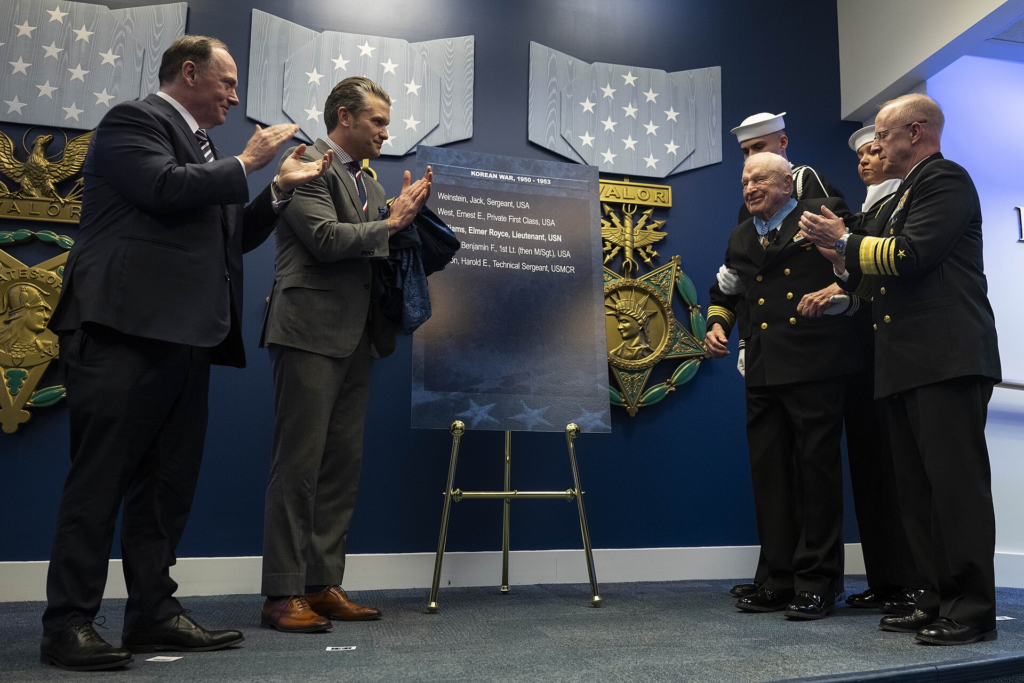
Secretary of War Pete Hegseth hosts Medal of Honor Recipient U.S. Navy Capt. Royce William’s Hall of Heroes induction ceremony at the Pentagon, Washington, D.C., Feb. 25, 2026. (DoW photo by U.S. Air Force Staff Sgt. Madelyn Keech)
From The Office of the Navy Chief of Information. Feb. 25, 2026
Last night President Donald J. Trump awarded retired Navy Capt. Elmer Royce Williams the Medal of Honor at the State of the Union address at the U.S. Capitol. Today, Secretary of War Pete Hegseth, Secretary of the Navy John Phelan, and Chief of Naval Operations Adm. Daryl Caudle inducted Williams into the Pentagon’s Hall of Heroes for his heroic actions during the Korean War.
“Captain Royce Williams did what warriors are called to do when the moment comes — he stood his ground, took the fight to the enemy, and protected his fellow Americans. Outnumbered, outgunned, and alone in the sky, he prevailed through sheer skill, courage, and will,” said Hegseth. “Today, we honor not just a remarkable dogfight, but a lifetime of quiet strength and service. Captain Williams embodies the fighting spirit of the United States Navy and the warrior ethos that keeps this Nation free.”
Williams was joined by an audience of family, friends, fellow Naval Aviators, and senior Navy leaders.
“Captain E. Royce Williams represents the very best of the United States Navy,” said Phelan. “On November 18, 1952, flying from USS Oriskany and outnumbered in the skies over North Korea, he chose to engage to protect the ships of Task Force 77 and the Sailors aboard them. In a 35-minute dogfight, he shot down three MiG-15s and severely damaged a fourth one. For decades, much of this story remained classified, but the facts never changed. His courage, airmanship, and devotion to duty saved lives and upheld the highest traditions of the Naval Service. Today, we are proud to formally recognize a Naval Aviator whose example will endure for generations.”
Yet when reflecting on that historic day and the recognition it brought, Williams did not speak of skill or courage, but of humility and faith.
“I know how momentous this moment is, and I never imagined myself or allowed myself to think it was going to happen to me,” Williams said. “I imagined it as God reaching in and dipping His hand in to pick somebody up for the most unusual reasons and displaying him in front of his fellow citizens.”
He continued, emphasizing that the honor was never something he expected or sought.
“And to be entirely amazed and appreciative for the accommodations and accolades. But that’s so unusual that you don’t fool around thinking that it’s ever going to come your way,” he said. “This is God doing something usual, with his finger in the pie, and with his influence. And what did I have to do with it? Well, I was the principal, in a way, that is receiving the recognition, but maybe some of that recognition misses the influence that really caused this special recognition.”
Williams was born in Wilmot, South Dakota and enlisted in the U.S. Army at 16 years old in Ortonville, Minnesota. Upon completion of basic training, he returned to Ortonville to train with his unit in a reserve status until he finished high school. Once he turned 17, Williams was eligible for the Naval Aviation Cadet program and joined the U.S. Navy where he began flight training in 1943. Among many other aviation platforms, Williams learned to fly the F9F-5 Panther jet and was assigned to active duty in the Korean War, during which he flew 70 missions. Williams went on to serve in the Vietnam War flying over 110 missions in the A-4 Skyhawk and F-4 Phantom from the USS Kitty Hawk (CV-63). Williams later served as the commanding officer of the command ship USS El Dorado (AGC-11) between September 1969 and January 1971. He retired from the U.S. Navy as a Captain in 1980.
His Medal of Honor is an upgrade of the Navy Cross he was previously awarded in January 2023, which was an upgrade to the Silver Star Medal he was previously awarded while assigned to the “Pacemakers” of Fighter Squadron 781 in 1953.
CACI’s Spectral Program with the U.S. Navy Achieves Milestone C
RESTON, Va.–(BUSINESS WIRE)– CACI International Inc (NYSE: CACI) today announced the Spectral program has successfully completed rigorous review by the U.S. Navy’s Program Executive Office for Command, Control, Communications, Computers, and Intelligence (PEO C4I), achieving Milestone C. CACI partnered with PEO C4I’s Program Manager Warfare Battlespace Awareness and Information Operations Program Office (PMW 120), to achieve this historic accomplishment, marking the start of the program’s low-rate initial production (LRIP) and deployment phase, a defining step toward placing this critical electronic warfare (EW) technology in the hands of U.S. sailors.
“This recent milestone enables the delivery of modern, cutting-edge technologies that empower our warfighters to defend the nation from our adversaries and maintain decision superiority across every domain, especially the electromagnetic spectrum,” said John Mengucci, CACI President and CEO. “Our bold investments in technology and our world-class engineering team have led us to this critical milestone, a momentous leap forward for the Navy. I thank the Navy for entrusting CACI to strengthen their ability to defend the nation and prevail in contested environments, when it matters most – when the stakes are highest, and lives are on the line.”
As part of Milestone C, CACI and PMW 120 have executed several Iterative Capability Tests proving the functionality of the system which led to this decision by Milestone Defense Authority. Under the Spectral program, CACI will rapidly, and at scale, develop and deploy the next generation of shipboard signals intelligence and electronic warfare capabilities, effectively protecting warfighters from electronic attacks and adversarial threats.
Through software-defined systems and open architectures, CACI optimizes platforms with advanced electromagnetic warfare technologies that detect and exploit signals across the spectrum — enabling sensing, communications, and information operations.
Topping Out Ceremony Marks Investment in Future of Submarine Readiness
Stakeholders, engineers, and construction crew members pose for a group photo in front of the new Nuclear Regional Maintenance Department facility at Naval Submarine Base Kings Bay, Ga., Jan. 29, 2026. The group gathered to celebrate a topping out ceremony, marking a major construction milestone for the project. (U.S. Navy Photo by Yan Kennon)
From Jeffrey Hamlin, NAVFAC Public Affairs
A topping out ceremony was held Jan. 29 to mark a major milestone in the construction of a new facility for the Nuclear Regional Maintenance Department (NRMD) at Naval Submarine Base (NSB) Kings Bay, Georgia.
Hosted by Naval Facilities Engineering Systems Command (NAVFAC) Southeast, the event celebrated the placement of the final steel beam on the structure, symbolizing significant progress toward completion of a centralized, state-of-the-art facility designed to support critical maintenance and repair operations for Trident-equipped submarines.
A topping out ceremony is a tradition that dates back centuries to celebrate when a structure reaches its final height. While some ceremonies involve hoisting a tree or flag, the focus here was on the final beam itself, which was signed by the project’s stakeholders, engineers, and construction crews. Its placement serves as a powerful tribute to their hard work and signifies the successful completion of the structural phase.
“This topping out, just over a year after breaking ground, is a testament to the skill and dedication of our team,” said NAVFAC Southeast Executive Officer Capt. Elizabeth Durika. “This facility is a critical investment in our nation’s strategic deterrence, and this progress brings us one step closer to providing a state-of-the-art space to ensure our submarine force remains ready for decades to come.”
The construction has progressed rapidly since the project began. Lt. Cmdr. John Nurthen, construction management team leader, highlighted the significant accomplishments of the construction team.
“The sheer scale of work accomplished on this site is remarkable. Our partners have moved mountains, literally,” said Nurthen. “We removed and excavated over four feet of rock and soil from the entire project site, replacing nearly 35,000 cubic yards of unsuitable soils to create a stable foundation. We have erected over 530 tons of structural steel, drilled and placed nearly 3,000 concrete piles, and poured over 100,000 square feet of structural concrete. This milestone is a credit to the incredible effort of every worker on this project.”
The new $136 million facility was announced at a groundbreaking ceremony on Jan. 15, 2025. Its purpose is to consolidate NRMD operations, which are currently scattered across NSB Kings Bay in temporary locations and shared facilities. The centralized hub will include nuclear repair shops, ship services support areas, and applied instruction spaces, significantly enhancing communication and collaboration for the maintenance and repair of Trident-equipped submarines.
“Today’s milestone represents far more than the final beam being set in place; it marks a major step toward providing our skilled civilians and Sailors with a state-of-the-art workspace to support and sustain the nuclear propulsion plants that power our nation’s number one strategic deterrent,” said James Haas, director of the Nuclear Regional Maintenance Department. Haas emphasized the human element behind the achievement, adding, “This facility is an investment in our future and in the people who carry out this mission every day. We are grateful for the dedication of everyone in turning this dream into a reality.”
The project is being managed by NAVFAC Southeast with BL Harbert International as the primary contractor. It is scheduled for completion by December 2028.
Naval Facilities Engineering Systems Command Southeast, headquartered in Jacksonville, Florida, provides planning, design, construction, contracting, environmental services, public works, real estate and facility maintenance for the U.S. Navy, Marine Corps, Army, Air Force, Space Force, and other federal agencies across the Southeast. Its area of responsibility covers installations from Charleston, South Carolina, to Corpus Christi, Texas, and extends south to Guantanamo Bay, Cuba.