Ronald Reagan Carrier Strike Group Operates in the South China Sea 
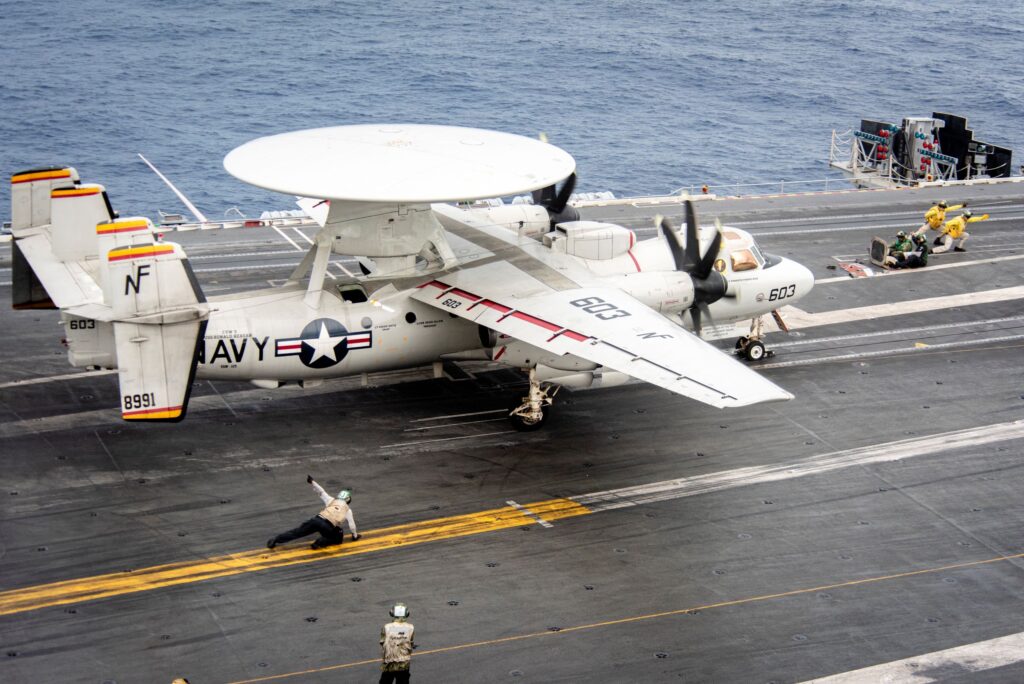
An E-2D Hawkeye attached to the “Tigertails” of Airborne Early Warning Squadron 125 prepares to take off from the flight deck of the USS Ronald Reagan (CVN 76). U.S. NAVY / U.S. Navy Mass Communication Specialist 2nd Class Markus Castaneda

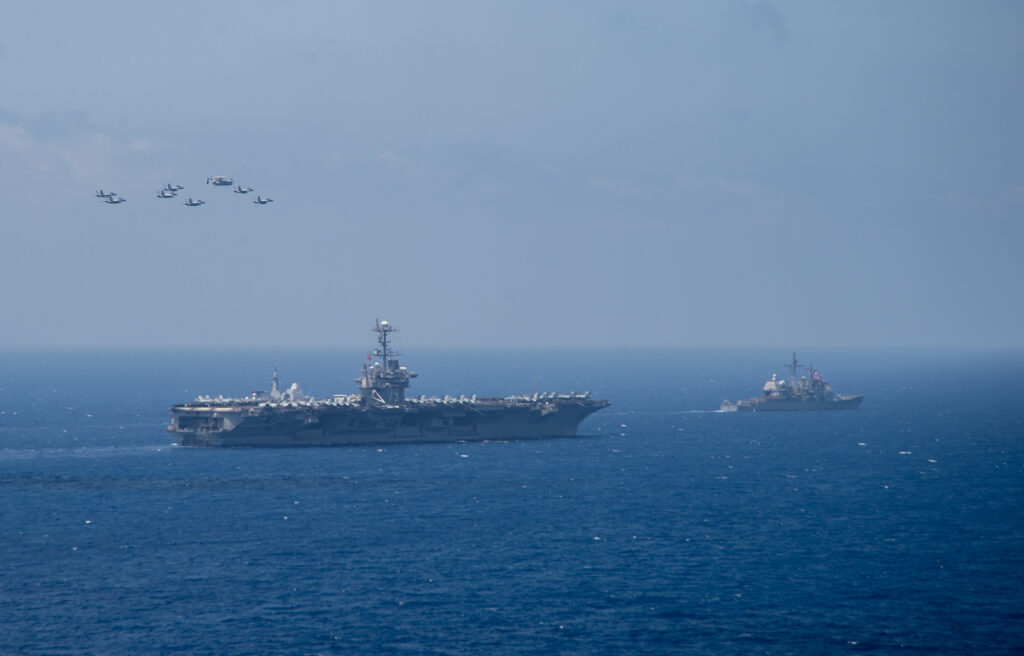
SOUTH CHINA SEA — The Ronald Reagan Carrier Strike Group is operating in the South China Sea for the first time during its 2022 deployment, July 13, CTF 70/CSG 5 Public Affairs said in a release. 
 
The carrier strike group includes the Navy’s only forward-deployed aircraft carrier USS Ronald Reagan (CVN 76), the embarked Carrier Air Wing 5, and embarked staffs of Task Force 70 and Destroyer Squadron 15, as well as the Ticonderoga-class guided-missile cruiser USS Antietam (CG 54) and the Arleigh Burke-class guided-missile destroyer USS Higgins (DDG 76). 
 
While in the South China Sea, the strike group is conducting maritime security operations, which include flight operations with fixed and rotary-wing aircraft, maritime strike exercises, and coordinated tactical training between surface and air units. Carrier operations in the South China Sea are part of the U.S. Navy’s routine operations in the Indo-Pacific. 
 
“Our strike group works consistently to stay capable and ready and we continue that focus during operations in the South China Sea to demonstrate our commitment to the region,” said Rear Adm. Michael Donnelly, commander, Task Force 70/Carrier Strike Group 5. “Building on the lessons and successes of exercises like Valiant Shield 2022, and our continuous opportunities to train and operate alongside allies and partners, we provide assured capability to uphold the rules-based international order in this body of water and anywhere else we will sail, fly and operate.” 
 
Throughout the 2022 deployment, Ronald Reagan and accompanying units have routinely integrated with ally and partner naval forces to build high-end warfighting readiness through air defense, anti-submarine warfare, maritime strike, and force protection exercises. In early June this included operations with Republic of Korea navy ships for Carrier Strike Group Exercise 2022. Later that month in the Philippine Sea, the Sailors of CSG 5 worked with more than 200 aircraft and an estimated 13,000 personnel from the U.S. Navy, Air Force, Army, Marine Corps and Space Force during the Valiant Shield exercise, a U.S.-only, biennial field training exercise focused on integration of joint training in a multi-domain environment. 
 
The strike group finished the month of June with a port visit to Guam, where Sailors were able to conduct several community relations events and enjoy recreation and tours across the island, marking the strike group’s first port visit since 2020. 
 
“Our presence in the South China Sea demonstrates America’s commitment to a free and open Indo-Pacific,” said Capt. Fred Goldhammer, the commanding officer of USS Ronald Reagan. “Every Sailor onboard contributes to this important and enduring mission as we operate in this region, in accordance with international law to ensure that all nations can do the same.” 
 
The Ronald Reagan Carrier Strike Group is forward-deployed to the U.S. 7th Fleet area of operations in support of a free and open Indo-Pacific region. 


CNO, Netherlands Navy Commander Discuss Partnership and NATO Alliance 

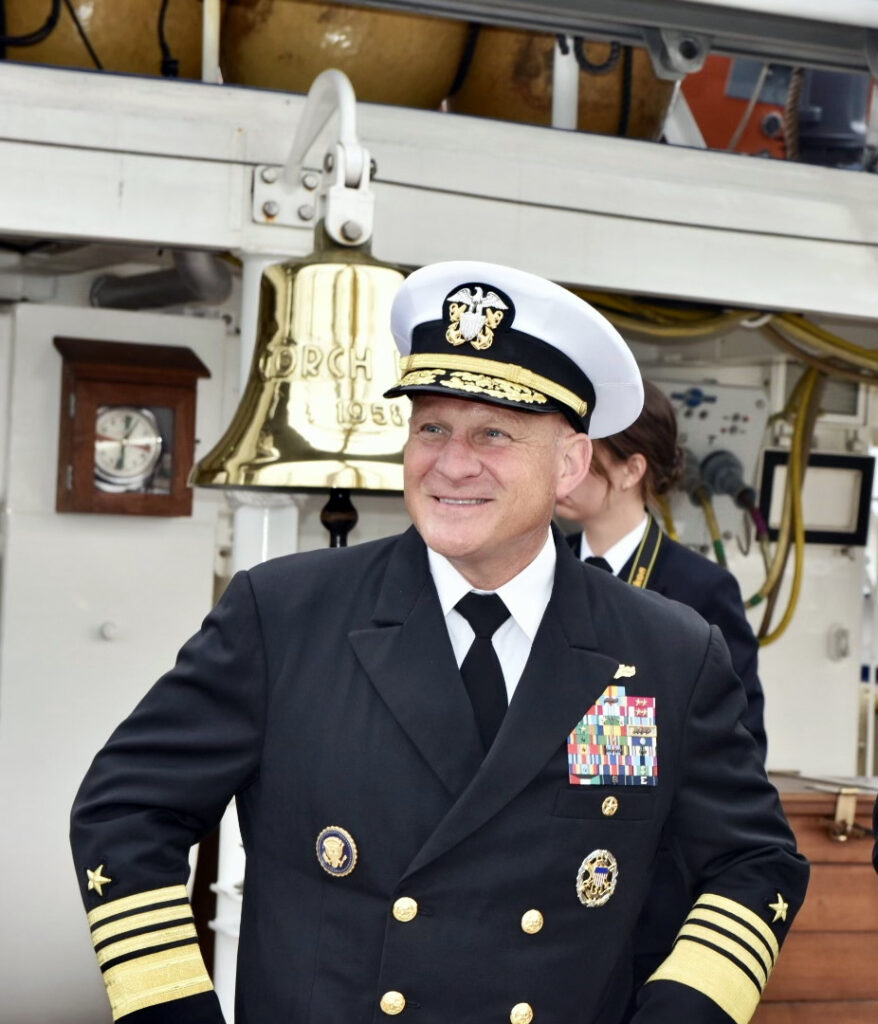
Chief of Naval Operations Adm. Mike Gilday visits the German training ship Gorch Fock during BALTOPS 22. U.S. NAVY / Cmdr. Courtney Hillson

WASHINGTON — Chief of Naval Operations Adm. Mike Gilday met with the commander of the Royal Netherlands Navy, Vice Adm. René Tas, at the Pentagon for an office call on July 12, the CNO’s public affairs office said in a release. 

The leaders discussed global maritime security, strategic competition and their shared commitment to continued cooperation, to include recent naval exercises involving both countries. 

“The Dutch are one of our oldest allies and global maritime partners, and I am grateful for our strong relationship,” said Gilday. “This visit was an important opportunity for us to build upon our solid foundation, look ahead to the future, and reinforce our commitment to unity and to the NATO alliance.” 

Gilday also noted the value and significance of the Royal Netherlands Navy’s maritime reach, the Dutch being one of a handful of European navies with a global presence stretching to the Indo-Pacific. 

“We share the same values and economic interests,” said Tas. “The well-being of our people can only be secured and defended by operating globally. The seas and oceans, just as cyber and space, don’t have borders.” 

The U.S. Navy and Royal Netherlands Navy regularly operate together around the world. Recently, they participated in exercises Formidable Shield and Obangame Express, and conducted joint operations, including USS The Sullivans’ (DDG 68) and HNLMS Evertsen’s (F805) participation in HMS Queen Elizabeth’s 2021 deployment. Last month, both navies participated in BALTOPS 22, the premier maritime-focused exercise in the Baltic Region.  

This meeting was the second in-person discussion between the two heads of navy. 


PEO Attack Submarines Holds Change of Command Ceremony 

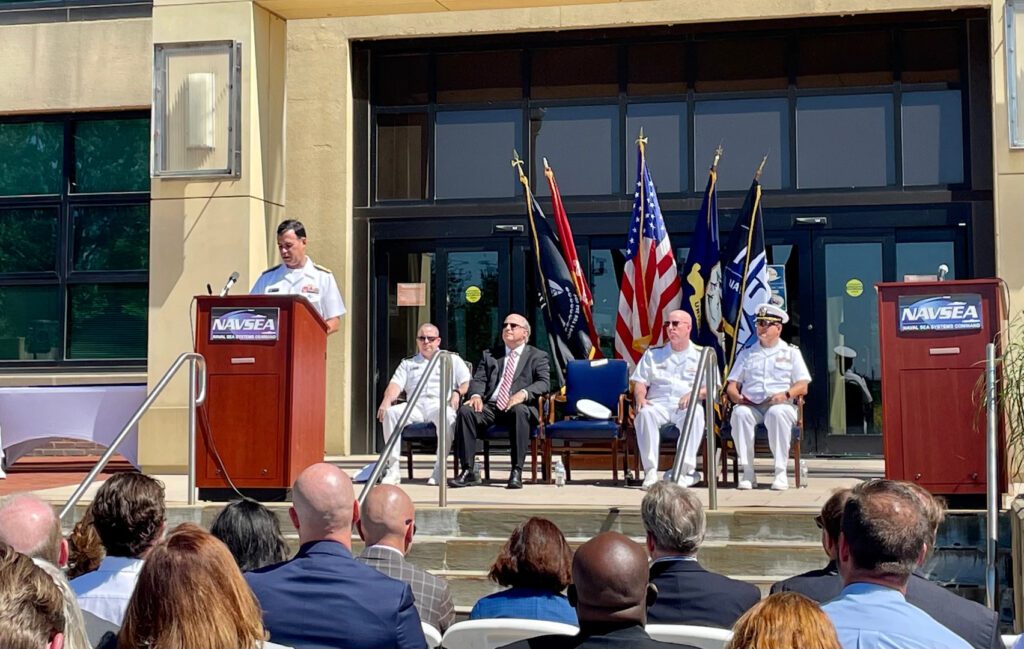
Rear Adm. Jonathan Rucker relieved Rear Adm. David Goggins as Program Executive Office Attack Submarines during a change of command ceremony at the Washington Navy Yard, June 30. U.S. NAVY

WASHINGTON — Rear Adm. Jonathan Rucker relieved Rear Adm. David Goggins as Program Executive Office Attack Submarines (PEO SSN) during a change of command ceremony at the Washington Navy Yard, June 30, Team Public Affairs said in a release. 
 
Vice Adm. William Houston, commander, Naval Submarine Forces, served as the principal speaker and expressed his gratitude for the job done by Goggins. 
 
“Your leadership allowed the submarine force to stay atop of our competitors as the world’s best, most lethal, and premier, first class organization that continues to dominate the undersea — and for that, a huge Bravo Zulu to you,” said Houston. “Your dedication to the mission, our people, and the Force is an outstanding example for all to follow.” 
 
Goggins reflected on the submarine workforce’s many accomplishments such as completing Virginia Block III Follow-On Test and Evaluation and delivering three nuclear-powered submarines and three SSNs from depot availabilities earlier this year. He also noted that submarine acquisition and sustainment is comprised of four key organizations; Team Submarine, Naval Reactors, Strategic Systems Programs and Chief of Naval Operations Undersea Warfare Division. 
 
“Today’s successes and the future success of Team Submarine, PEO SSN, are based on the alignment and collaboration between these key stakeholders,” said Goggins. 
 
Rucker is reporting to PEO SSN after serving as Columbia-class submarine program manager, the Navy’s number one acquisition program. During his tenure, the Columbia program office was awarded the David Packard Excellence in Acquisition Award for 2021 as the top program office in Department of Defense. 
 
Houston expressed the challenges that Rucker may encounter, saying, “You have a significant task ahead of you. The fiscal and geo-political landscape from which our nation navigates will only become more challenging, and you must make it your priority that the overmatch we currently enjoy does not evaporate.” 
 
Rucker’s recent assignments include serving as the assistant program manager (APM) for New Acquisitions, Advanced Undersea Systems Program Office; military assistant for the undersecretary for Defense for Acquisition, Technology, & Logistics (USD (AT&L)); APM for New Construction & Test and led construction and test efforts of 12 submarines. He then assumed command as program manager for Unmanned Maritime Systems, responsible for unmanned maritime systems across both the Surface and Undersea domains. 
 
“I am thankful to be a part of the PEO Fast Attack team. These submarines and undersea systems are built to ensure our undersea advantage,” said Rucker. 


Amphibious Transport Dock Fort Lauderdale Sails Away from Ingalls Shipbuilding 

Amphibious transport dock Fort Lauderdale (LPD 28) show departing from HII’s Ingalls Shipbuilding division on July 11. HII

PASCAGOULA, Miss. — San Antonio-class amphibious transport dock Fort Lauderdale (LPD 28) departed from HII’s Ingalls Shipbuilding division July 11 enroute to its commissioning site in Fort Lauderdale, Florida, HII said in a release. 

“Ingalls Shipbuilders take great pride in knowing that each and every amphibious ship that leaves this shipyard will support our Navy and Marine Corps team defending our nation,” said Ingalls Shipbuilding President Kari Wilkinson. “We at Ingalls remain committed to this partnership and consider it a privilege to serve those who serve.” 

Fort Lauderdale was delivered to the U.S. Navy in March following acceptance sea trials and is the 12th San Antonio-class ship delivered by HII. Additional San Antonio-class ships are under construction at Ingalls, including Richard M. McCool Jr. (LPD 29) and the first Flight II amphibious ship in the San Antonio class, Harrisburg (LPD 30). Later this year, fabrication will begin on the 15th San Antonio-class ship, Pittsburgh (LPD 31). 

“Watching Fort Lauderdale sail away to join the Navy’s fleet is a very proud moment for our entire LPD shipbuilding team and our skilled workforce,” said Mike Pruitt, Ingalls LPD program manager. “Our shipbuilders have done an outstanding job building a mission capable ship for these sailors and our country.” 

LPD 28 is scheduled to be commissioned July 30 in Fort Lauderdale. It is named to honor the Florida city’s historic ties to the U.S. Navy, which date back to the 1830s and include an important naval training center during World War II. 

Amphibious transport docks are a major part of the Navy’s 21st century expeditionary force, deployed with a U.S. Marine Corps Air-Ground Task Force for amphibious and expeditionary crisis response operations that range from deterrence and joint-force enablement to humanitarian assistance and disaster relief. 


Australian Defense Minister: AUKUS Subs a Huge Project to ‘Pull Off’ 

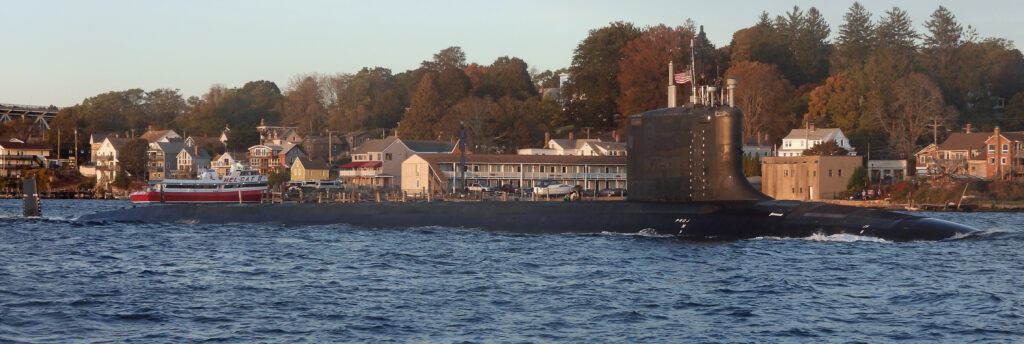
The Virginia-class submarine USS Vermont (SSN 792) transits the Thames River while conducting routine operations in 2020. The AUKUS agreement with Australia would provide the country nuclear submarine capability. U.S. NAVY / Petty Officer 3rd Class Christian Bianchi

WASHINGTON — The new Australian government said it has no illusions of the immensity of the AUKUS plan to build nuclear-powered submarines and the effort required to make it come to pass. 

Last September, Australia, the United States and the United Kingdom announced an agreement — AUKUS — to develop a nuclear-powered submarine capability for Australia.  

“It will be a huge national project to pull this off,” said Richard Marples MP, minister of defense and deputy prime minister of Australia, speaking July 11 at the Center for Strategic and International Studies, a Washington think tank. Marples was in Washington for a meeting with U.S. Defense secretary Lloyd Austin.  

“For a three-ocean nation, the heart of deterrence is undersea capability,” Marples said. “AUKUS will not only make Australia safer, it will make Australia a more potent and capable partner that the United States and the United Kingdom have agreed to work with Australia to meet our needs is not only a game changer, it illustrates why alliances help reinforce, not undermine, our country’s national sovereignty. And I want to recognize the Biden administration and the strong support in Congress for helping bring this agreement to life.  

“In determining the optimal pathway forward, the Australian government is acutely aware of the obligations of nuclear stewardship,” he said. “We are focused on the whole enterprise. Safely stewarding sensitive technology, building the workforce and industrial capacity to support the capability, and ensuring that this initiative sets the strongest possible non-proliferation standards.” 

Marples said Australia, with Collins-class diesel-electric submarines, faces the challenge of an increasing capability gap. 

“How do we get the new capability as soon as possible to minimize any capability gap and then what are we going to do to plug whatever gap exists?” he asked rhetorically. 

“To move to operating a nuclear-powered submarine fleet is as big a national challenge, not just in defense, but in terms of really the whole breadth of government that our country has been presented with, almost at every level, not just in terms of developing the capability but building the industrial base, building the regulation, building the government structures around it,” he said, also noting the cost. “We need to work out how we build this into a budget which has a significant debt associated with it. 

“At every level there are challenges,” he said. “That said, we mean to meet those challenges. This is a huge national challenge for the country but it’s one we’re going to meet.”  


F/A-18 Super Hornet Blown Overboard from USS Harry S. Truman  

Aircraft, attached to Carrier Air Wing One, fly alongside USS Harry S. Truman (CVN 75), left, and USS San Jacinto (CG 56) during an air and sea power demonstration, July 3. U.S. NAVY / Mass Communication Specialist 2nd Class Crayton Agnew

NAPLES, Italy — An F/A-18 Super Hornet assigned to Carrier Air Wing 1, embarked aboard USS Harry S. Truman (CVN 75), blew overboard on July 8 due to unexpected heavy weather in the Mediterranean Sea, U.S. Naval Forces Europe said July 10. 

According to a source, the Super Hornet was a two-seat F/A-81F and was assigned to Strike Fighter Squadron 211, based at Naval Air Station Oceana, Virginia Beach, Virginia.

The carrier was conducting a replenishment at sea, which was safely terminated through established procedures. All personnel aboard the ship are accounted for. 

One Sailor received minor injuries while conducting operations during the unexpected heavy weather. The Sailor is in stable condition and expected to make a full recovery. 

USS Harry S. Truman and embarked aircraft remain full mission capable. Details and the cause of the incident are under investigation. 


Navy Demos New Mine Countermeasure Prototype on MQ-8C Fire Scout 

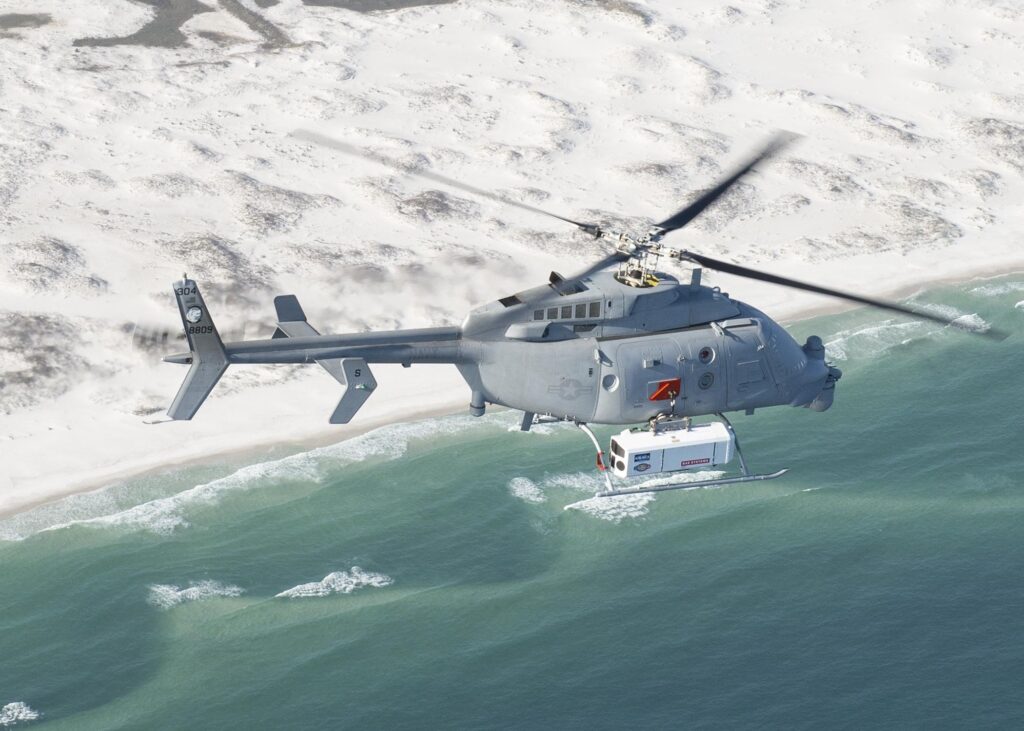
An MQ-8C Fire Scout demonstrates a new mine countermeasure prototype technology in May 2022 at Eglin Air Force Base, Florida, proving a capability that could allow the warfighter to rapidly detect and respond to threats. U.S. NAVY

PATUXENT RIVER, Md. — The Navy recently demonstrated a mine countermeasure prototype technology aboard the MQ-8C Fire Scout UAS at Eglin Air Force Base, Florida, proving a capability that could allow the warfighter to rapidly detect and respond to threats, Naval Air Systems Command said July 7.  

The objective of the demonstration was to gather performance data for both the MQ-8C Fire Scout and Single-system Multi-mission Airborne Mine Detection (SMAMD) System to inform future MCM integration efforts. 

“The team successfully demonstrated that the prototype SMAMD System effectively operates as designed aboard the MQ-8C Fire Scout unmanned helicopter in relevant real-world environments,” said Capt. Thomas Lansley, Fire Scout program director. “This cutting-edge technology could really enhance Fire Scout’s capability going forward.” 

The team conducted operations from the Naval Surface Warfare Center using drifting, tethered and moored mines throughout beach zone to deep waters. They gathered data day and night, across all water depths and in mild to difficult weather conditions.  

The demonstration also proved the reliable and repeatable high performance of the MQ-8C Fire Scout. The air vehicle handled the dual podded system with ease, being the first MCM capability flown on the MQ-8C as well as the heaviest payload carried to date. Fire Scout successfully operated in restricted and unrestricted air space alongside other aircraft platforms. 

The SMAMD System, developed by BAE Systems under a Future Naval Capability Program sponsored by the Office of Naval Research, is an airborne optical sensor suite that, in a single pass, detects and localizes mines and obstacles on land and at sea. With a low false alarm rate, SMAMD provides real-time detection sent via data link enabling warfighters to respond much quicker to threats than the current MCM technologies allow as post-mission analysis is required. 

This effort, led by ONR, included support from multiple organizations across the Navy and industry including the MQ-8 Fire Scout program office, the Program Executive Office Unmanned and Small Combatants, Naval Air Warfare Center Aircraft Division, Aircraft Prototype Systems Division, Webster Outlying Field, the Digital Analytics Infrastructure and Technology Advancement Group Prototyping, Instrumentation and Experimentation Department, and Air Test and Evaluation Squadron Two Four (UX-24). 

ONR and PMA-266 engaged NAWCAD AIRWorks to manage the demonstration taking advantage of AIRWorks’ project execution expertise and ability to connect warfare center resources. 

“The AIRWorks SMAMD Team was proud to be a part of demonstrating a future naval capability which provides real-time threat detection to the warfighter,” said AIRWorks’ project lead Kristina Hewitt-Thompson. “Through this effort, we were able to assist in risk reduction and provide critical data for future integration.” 

Throughout the project, the team facilitated execution of a complex demonstration including airworthiness and cyber certifications, design, fabrication and hardware integration along with flying qualities testing prior to the final demonstration at Eglin, she said. They assured close coordination between the U.S. Air Force, ONR, NAVAIR, NAVSEA and other stakeholder organizations to successfully achieve their objectives in less than 24 months and at a reduced cost. 


NAVCENT to Reward Individuals for Tips on Illegal Maritime Activity 

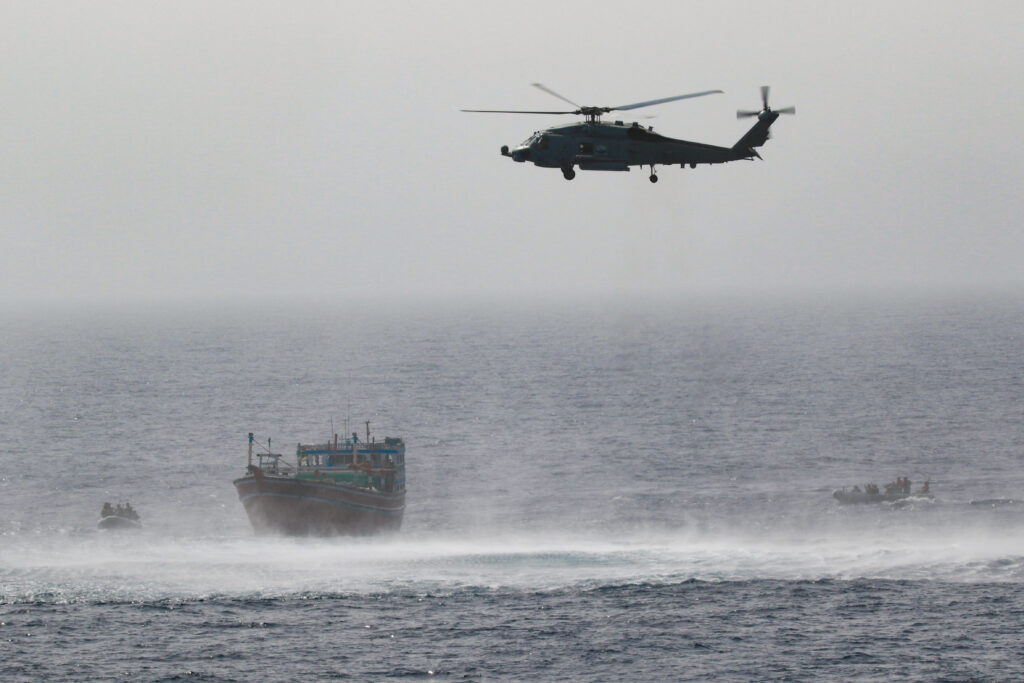
An MH-60R Seahawk from Helicopter Maritime Strike Squadron 35, Detachment 1, provides aerial support to an interdiction team from guided-missile destroyer USS Momsen (DDG 92) approaching a fishing vessel May 16. The vessel was seized while transiting international waters in the Gulf of Oman. U.S. NAVY / Mass Communication Specialist 3rd Class Lily Gebauer

BAHRAIN — U.S. Naval Forces Central Command announced July 5 it will begin rewarding individuals for voluntarily providing information that leads to the detection of illegal maritime activity and seizure of illicit cargo in waters across the Middle East. 

NAVCENT is establishing a program for the first time to reward individuals who voluntary report information that meets specific criteria under the Department of Defense Rewards Program. 

“Launching this program represents another example of our commitment to this region and its security,” said Vice Adm. Brad Cooper, commander of NAVCENT, U.S. 5th Fleet and Combined Maritime Forces. “This also enhances our vigilance and supports counterterrorism efforts, which are essential to safeguarding the free flow of commerce.” 

NAVCENT could potentially reward a maximum $100,000 payout for information or nonlethal assistance that supports counterterrorism operations or leads U.S. naval forces to successfully seize illicit cargo such as illegal weapons or narcotics. Rewards can also be non-monetary and include items like boats, vehicles, food or equipment. 

U.S. citizens are not eligible for rewards under the program. 

Last year, illicit cargo seizures in the Middle East skyrocketed after U.S. and multinational forces increased patrols in the Gulf of Oman and Arabian Sea. 

U.S. 5th Fleet warships seized nearly 9,000 illicit weapons, three times the amount seized in 2020. Additionally, the U.S.-led Combined Maritime Forces seized illegal drugs worth $500 million in street value, a higher amount than the previous four years combined. 

The U.S. 5th Fleet area of operations encompasses about 2.5 million square miles of water area and includes the Arabian Gulf, Gulf of Oman, Red Sea and parts of the Indian Ocean. The region is comprised of 21 countries and includes three critical choke points at the Strait of Hormuz, the Suez Canal and the Strait of Bab al-Mandeb at the southern tip of Yemen. 

Tips can be reported by calling +973 3914-5845. The phone line is staffed by personnel with regional language expertise. Individuals with information can also report online by going to https://dodrewardsprogram.net

For additional information on how to report a tip or reward eligibility criteria, go to NAVCENT’s website at https://www.cusnc.navy.mil/DoD-RP/


MQ-25 Team Completes First Lab Integration Event 

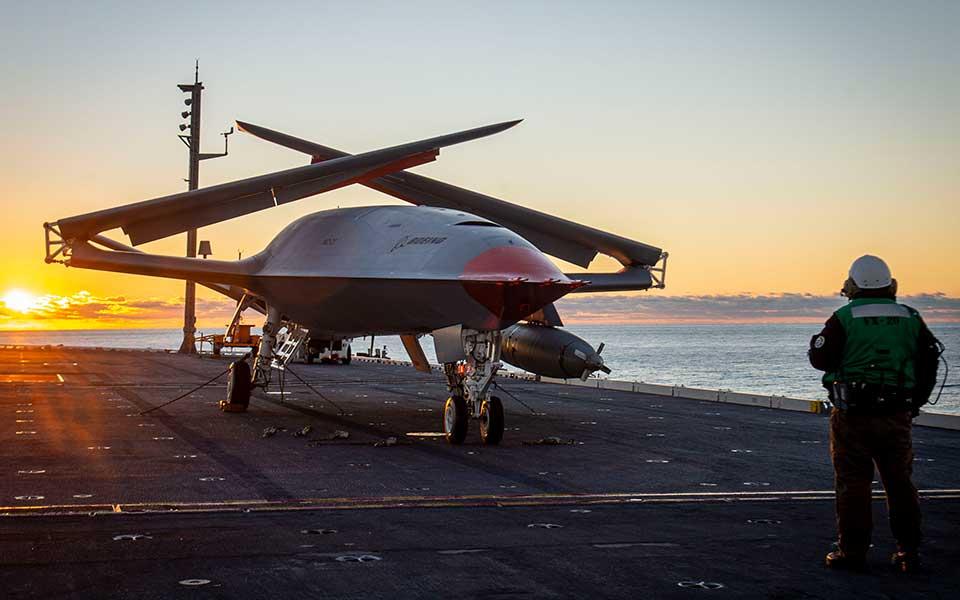
An MQ-25 unmanned aircraft on the flight deck of USS George H.W. Bush (CVN-77) for the Unmanned Carrier Aviation Demonstration in December 2021. BOEING

PATUXENT RIVER, Md. — The Navy’s Unmanned Carrier Aviation program office (PMA-268) conducted its first lab integration event June 28-30 at Patuxent River to demonstrate how the MQ-25’s ground control station will command the unmanned aircraft in the carrier environment, Naval Air Systems Command said June 30.  

The government team and its two prime industry partners led the effort at the program’s System Test and Integration Lab, where Lockheed Martin’s GCS controlled Boeing’s hardware-in-the-loop air vehicle for the first time. The Hardware-in-the-loop uses aircraft hardware and software to provide a realistic surrogate for the air vehicle. 

“This achievement is the result of weeks of preparation and dedication by highly skilled teams,” said T.J. Maday, MQ-25 labs and integration manager. “Bringing multiple systems together is never easy, but the joint government-industry team, coming together, understanding problems and finding solutions made this event successful. We learned how the system works as a whole and that early learning and discovery is key to keep the program moving forward.” 

Maday said the team set a goal to send a basic command between the ground control station and the hardware-in-the-loop system. To meet that objective, Boeing and Lockheed Martin needed to deliver functional software for the government to exercise the GCS, the hardware system and the network components allowing connectivity between the systems.  

“The team met the initial goal ahead of schedule and used the remaining time to exercise more functionality, like sending taxi commands,” Maday said. “They also simulated a lost link that verified the proper GCS display indicators, which is a critical function to ensure network connectivity between development environments.” 

This fall the team plans to simulate a complete flight using the hardware-in-the-loop air vehicle and will also demonstrate switching connections “links” to the aircraft as well as adding other aircraft hardware and software into the mix. 

“It’s great to see the combined team working side-by-side, learning and ultimately demonstrating success,” said Capt. Sam Messer, PMA-268 program manager. “This is how we get to IOC [initial operational capability] — we integrate, test, and learn early and at pace.” 

The MD-5 GCS is part of the Unmanned Carrier Aviation Mission Control System, the system-of-systems required for MQ-25A command and control. UMCS also includes carrier and shore site infrastructure modifications, Navy produced ancillary equipment, and integration with command, control, communications, computers and intelligence systems. 

MQ-25 will be the world’s first operational carrier-based unmanned aircraft to provide an aerial refueling capability to the fleet. 


The Navy Reserve is Looking for a Few Good Ideas

Sometimes the difference between a good idea and a great one is somebody to listen to it.

And that’s what the Navy Reserve has done to help generate great ideas to help the fleet, reserve force and Sailors everywhere.

Chief of Navy Reserve and Commander, Navy Reserve Force, Vice Adm. John B. Mustin, introduced i3 Waypoints as a way to fast-track transformative ideas from across the Navy directly to the highest levels of the Navy Reserve, without filters or bureaucratic barriers.

“Sailors and civilians on the front lines of challenges and roadblocks in their daily lives are invaluable sources of ideas for change,” Mustin said. “i3 Waypoints is an approach to inventing: innovate something entirely new; improve on something already established; or integrate several ideas, products or processes rendering the former completely obsolete.”

According to Capt. Colette Murphy, the CNR public affairs officer, “Waypoints challenged the entire U.S. Navy — from Selected Reserve, Training and Administration of the Reserve, Individual Ready Reserve, Active Duty and civilians, in all ranks, rates and grades — to propose new or better ways for the Navy Reserve to operate.”

Murphy said 107 i3 Waypoints ideas were submitted in just over five weeks. These submissions were then reviewed by a team led by Rear Adm. John A. Schommer, commander, Navy Reserve Forces Command. Five finalists were selected and presented their ideas on June 28 before a panel hosted by Vice Adm. Mustin, along with retired Vice Adm. “Woody” Lewis, Bruce Mosler, chairman of Global Brokerage & the Veterans Initiative Program at Cushman & Wakefield, the 2021 Reserve Sailor of the Year Chief Yeoman (select) Jasmyn Phinizy, and Navy Reserve Force Master Chief Tracy L. Hunt. 

Murphy said there were five finalist entries who appeared before the panel. One winner was selected, but more than one idea may be implemented. 

The winners will be announced July 11, along with a special video presentation on military media platforms.