CNO Visits Germany to Attend BALTOPS, Meets with Navy and Government Leaders
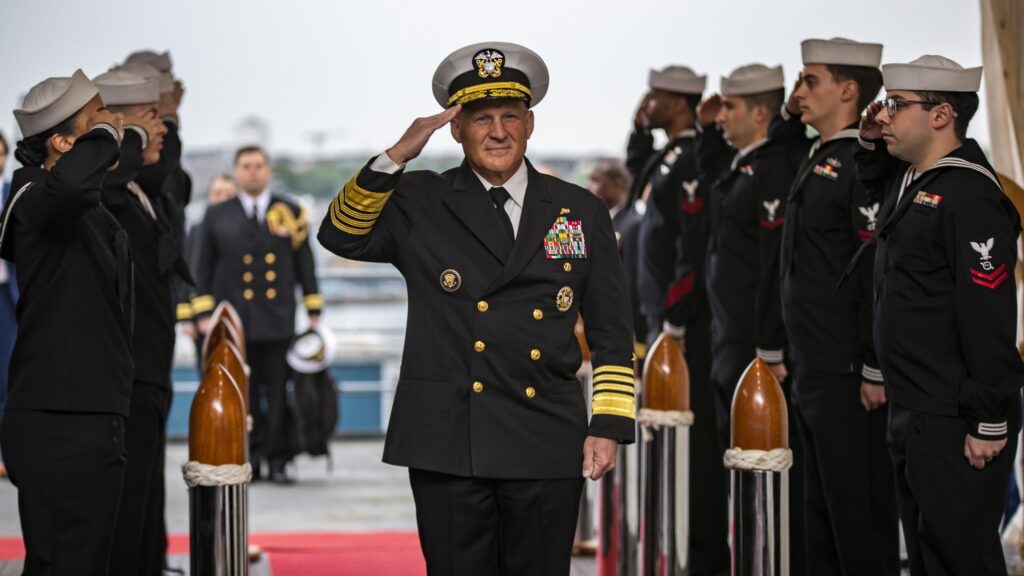
Chief of Naval Operations Adm. Mike Gilday arrives at the BALTOPS22 closing reception aboard the Blue Ridge-class command and control ship USS Mount Whitney (LCC 20) in Kiel, Germany, June 17. U.S. NAVY / Mass Communication Specialist 2nd Class Scott Barnes

KIEL, Germany — Chief of Naval Operations Adm. Mike Gilday traveled to Kiel, Germany June 15-18 for the conclusion of BALTOPS 22, The CNO’s Public Affairs office said June 18.

In its 51st iteration, BALTOPS is an annual coordinated exercise that reinforces interoperability with allies and partners and provides collective maritime security in the Baltic Sea.

Gilday visited the guided-missile destroyer USS Porter (DDG 78) at sea during the final days of the exercise.

“Our Sailors are our asymmetric advantage against any threat,” said Gilday. “Watching the incredible multi-domain coordination with our international partners, and seeing Sailors in action, is always inspiring.”  

This year, 14 NATO allies, two NATO partner nations (Finland and Sweden), more than 45 ships, 75 aircraft, and approximately 7,000 personnel participated in BALTOPS 22.

“The United States’ strong defense relationships with our Northern European allies and partners constitute our greatest strategic advantage in the region,” said Gilday. “BALTOPS achieves a multitude of objectives by demonstrating NATO interoperability, interchangeability, and readiness.”

He added that naval forces are participating in this exercise and are focused on interoperability with Sweden and Finland, as well as the other allied nations of NATO. “We are trained, proficient and ready, BALTOPS demonstrates just that and our commitment to defending NATO is ironclad.”

While in Kiel, Gilday met with Vice Adm. Jan Kaack, chief of the German navy, as well as Vice Adm. Frank Lenski, vice chief of the German navy, to discuss operational areas of mutual interest, NATO operations, and Transatlantic security.

“I sincerely welcome the continued commitment of the U.S. Navy in Europe. Since 1972, the BALTOPS exercise has been taking place in the Baltic Sea under US leadership — this year for the 51st time,” said Lenski. “Our ties with the U.S. Navy are strong and will remain so because the Baltic Sea is part of NATO’s northern flank. It is our vital interest to guarantee freedom and security in this area.”

The trip culminated with a BALTOPS reception aboard the U.S. 6th Fleet flagship USS Mount Whitney (LCC 20), where Gilday met with U.S and foreign naval leadership as well as members of the local community. This was Gilday’s first visit to Germany.
Navy Orders Third Constellation-Class Frigate from Fincantieri Marinette Marine  

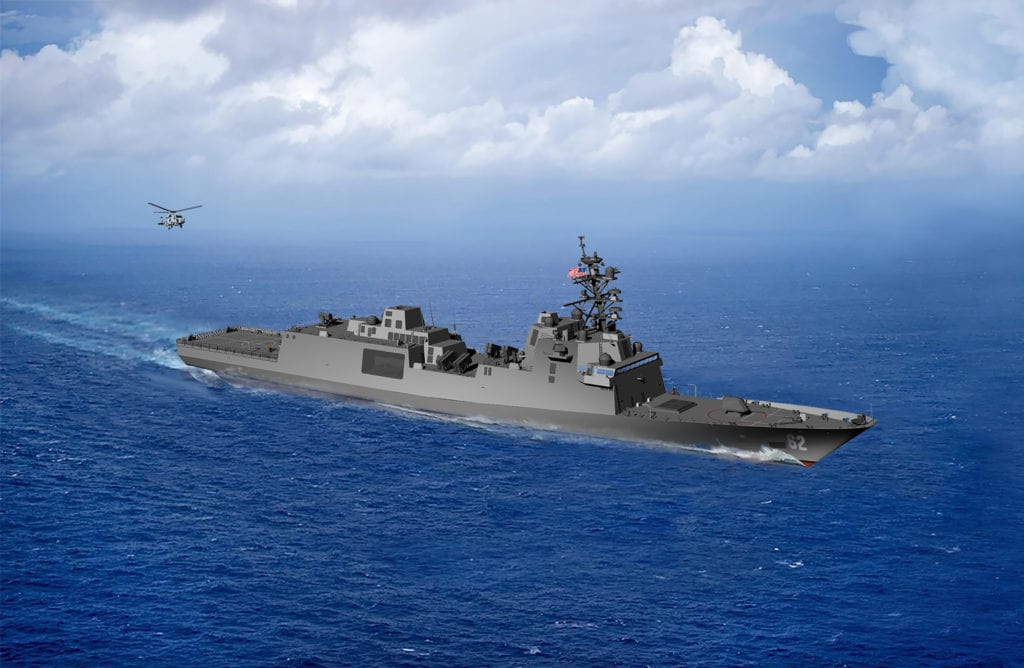
An artist’s rendering of the Constellation-class guided missile frigate. U.S. NAVY

ARLINGTON, Va. — The U.S. Navy has exercised a contract option to order the third Constellation-class guided-missile frigate (FFG) from Fincantieri Marinette Marine. 

The Naval Sea Systems Command awarded Marinette Marine Corp., Marinette, Wisconsin, was awarded a $536.9 million “fixed-price incentive (firm target) and firm-fixed-price modification to previously awarded contract” for the future USS Chesapeake (FFG 64), the Defense Department announced June 16. 

The order follows the $553.8 million contract option exercised on May 20, 2021, for the second ship of the class, the future USS Congress (FFG 63). 

The Marinette Marine shipyard is currently working on the detailed design for the first ship of the class, the future USS Constellation (FFG 62). Cutting of first steel is scheduled for later this year.  

The Navy has a requirement for 20 frigates. Marinette Marine is now under contract for the first three FFGs with options for seven more. 

The Constellation class FFG is based largely on the Italian FREMM frigate. 

Work on the latest contract option is expected to be completed by August 2028. 


USS Paul Ignatius, Newest FDNF-E Ship, Arrives in Homeport Rota, Spain 

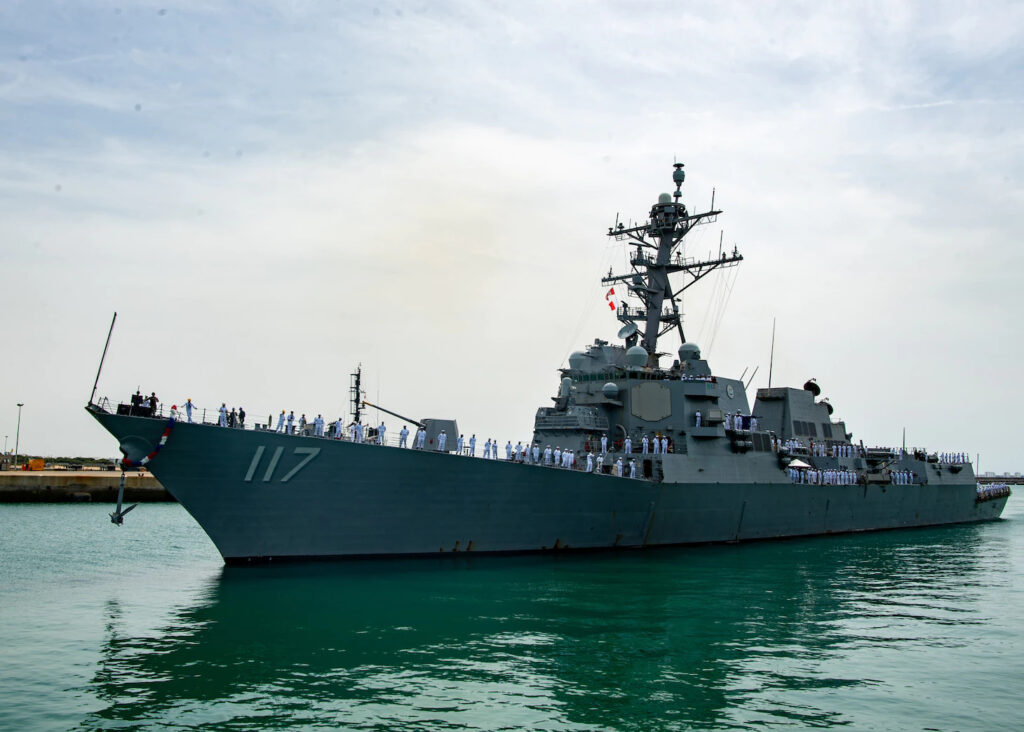
Arleigh Burke class guided-missile destroyer USS Paul Ignatius (DDG 117) pulls into port, completing its homeport shift to Naval Station Rota, Spain, June 17. U.S. NAVY / Mass Communication Specialist 2nd Class Jacob Owen

NAVAL SUPPORT ACTIVITY ROTA, Spain — The Arleigh Burke-class guided-missile destroyer USS Paul Ignatius (DDG 117) arrived in its new homeport of Naval Station Rota, Spain, on June 17 as the U.S. Navy’s newest Forward Deployed Naval Forces–Europe (FDNF-E) destroyer, 6th Fleet Public Affairs said in a release. 

Prior to arriving in Rota, Paul Ignatius operated alongside British, Canadian, French, German and Norwegian allies as part of exercises Cable Car and Green Light. The ship also conducted port visits in Ponta Delgada, Portugal and Bergen, Norway. In the Baltic Sea, Paul Ignatius integrated with the 2nd Marine Division and the Kearsarge Amphibious Readiness Group with embarked Amphibious Squadron Six and 22nd Marine Expeditionary Unit. The ship also conducted interoperability exercises with the USS Sioux City (LCS 11) during the inaugural deployment of a Freedom-class littoral combat ship to 5th and 6th Fleet areas of operation. 

“We certainly met and exceeded our goals,” said Cmdr. Aaron Arky, commanding officer of Paul Ignatius. “I couldn’t be more proud of the team as they superbly conducted undersea, air-defense and expeditionary operations during this patrol.” 

Commissioned in 2019, Paul Ignatius is the second of eight Flight IIA technology insertion ships, bringing enhanced capability and technological advancements to U.S. Naval Forces Europe and Destroyer Squadron 60. The ship is the 67th Arleigh Burke-class guided-missile destroyer, a class capable of conducting a variety of missions from sea control and power projection to peacetime presence and humanitarian assistance and disaster relief. 

The ship’s arrival in Rota brings substantial capabilities to the FDNF-E force already in place. Arriving to their new homeport also allows Paul Ignatius Sailors the opportunity to get acquainted with their new duty station and to reunite with their families, many of whom have already arrived in Rota. 

“The uniqueness of this homecoming cannot be understated, as we are both returning to our families and arriving at our new homeport,” said Arky. “The tremendous support network established by Naval Station Rota and Destroyer Squadron 60 has immensely helped the families and Sailors alike. For that, we are grateful.” 


Navy to Christen Guided-Missile Destroyer John Basilone 

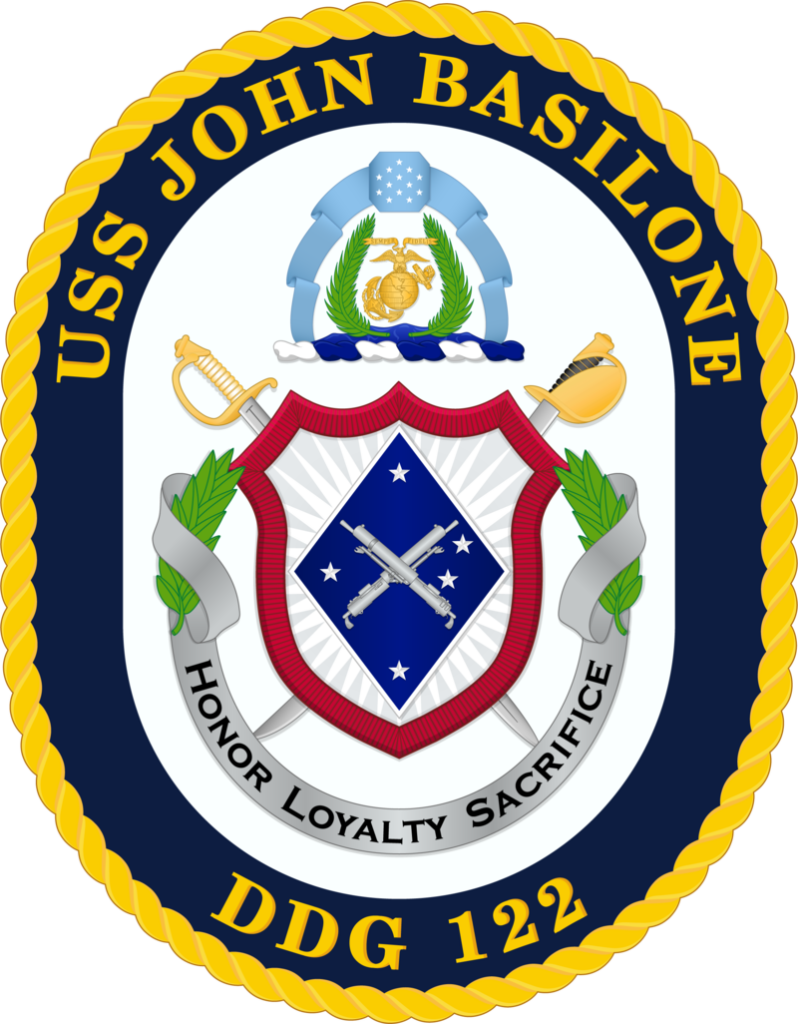
ARLINGTON, Va. — The Navy will christen the future USS John Basilone (DDG 122) during a 10:30 a.m. EDT ceremony on Saturday, June 18, at General Dynamics Bath Iron Works in Bath, Maine, the Defense Department announced June 17. 

Sgt. Maj. of the Marine Corps Troy Black will deliver the christening ceremony’s principal address. U.S. Sen. Susan Collins of Maine, Vice Adm. Francis Morley, principal military deputy to the assistant secretary of the Navy for research, development, and acquisition, Vice Adm. Scott Conn, deputy chief of naval operations for warfighting requirements and capabilities, Don Basilone, brother of the ship’s namesake and Charles Krugh, president of General Dynamics Bath Iron Works, will also provide remarks. The ship’s sponsors are Ryan Manion and Amy Looney Heffernan, president and vice president of the Travis Manion Foundation. Heffernan is unable to attend the event. In a time-honored Navy tradition, Manion will christen the ship by breaking a bottle of sparkling wine across the bow. 

The ship’s namesake, Gunnery Sgt. John Basilone, received the Medal of Honor for heroism displayed in the Battle of Guadalcanal during World War II, where he led his heavy machine gun sections in defense of a critical position and inflicted heavy casualties on the enemy. Basilone later returned to action at the Battle of Iwo Jima in February of 1944, where he single-handedly destroyed an enemy blockhouse and led a Marine tank under fire safely through a minefield. He was killed in action later that day and was posthumously awarded the Navy Cross for his unwavering devotion and valiant spirit of self-sacrifice. 

“The future USS John Basilone will serve as a constant reminder of the immense impact that actions taken by any one Sailor or Marine can truly have,” said Secretary of the Navy Carlos Del Toro. “Gunnery Sgt. Basilone is a national hero and this ship and crew will honor his legacy for decades to come.” 

This is the second ship to honor Basilone. The first, USS Basilone (DD 824), was a Gearing-class destroyer in service from 1945 to 1977.


Navy Awards HII $240M Advance Procurement Contract for LPD 32 

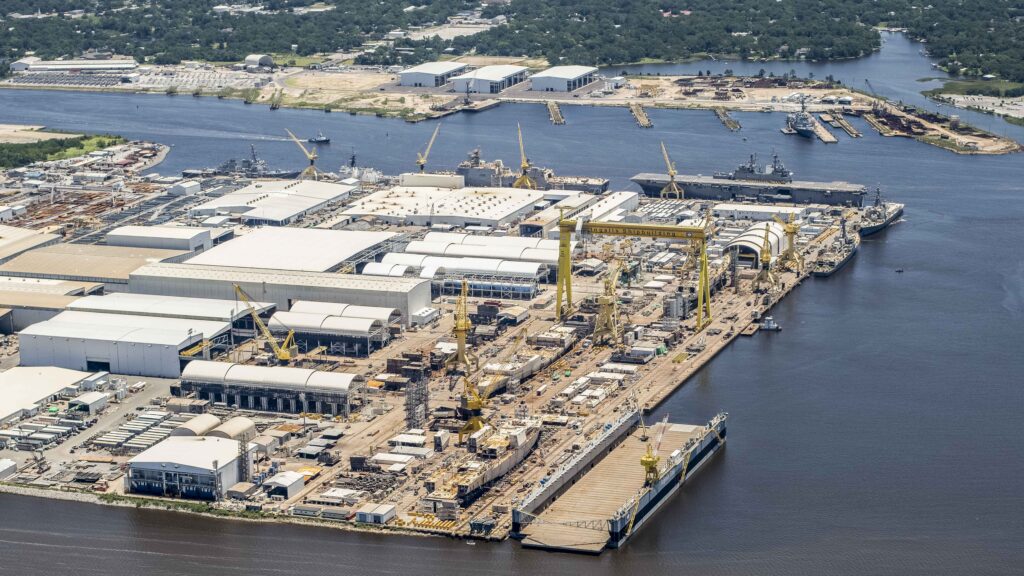
An aerial view of Ingalls Shipbuilding in Pascagoula, Mississippi. HII

PASCAGOULA, Miss. — HII’s Ingalls Shipbuilding division has received a $240 million, cost-plus-fixed-fee advance procurement contract from the U.S. Navy to provide long-lead-time material and advance construction activities for amphibious transport dock LPD 32, the company said June 16.

The ship will be the 16th in the San Antonio-class constructed at Ingalls Shipbuilding. 

“Our shipbuilders are proud to continue building these amphibious ships that are integral to the Navy fleet,” Ingalls Shipbuilding President Kari Wilkinson said. “The funds from this contract will be used to purchase long-lead time material and major equipment across a supplier network of nearly 400 companies in 30 states.” 

LPD 32 will be the third Flight II amphibious ship in the San Antonio class. LPD Flight II is the next generation amphibious ship to replace Whidbey Island (LSD 41) and Harpers Ferry (LSD 49) classes of dock landing ships. Ingalls has delivered 12 San Antonio-class ships to the U.S. Navy and has two more under construction, including Richard M. McCool Jr. (LPD 29) and Harrisburg (LPD 30). Fabrication of the 15th San Antonio-class ship, Pittsburgh (LPD 31), will begin later this year. 


Navy Contracts Northrop Grumman for Multi-Int Upgrades for MQ-4C Triton UAVs 

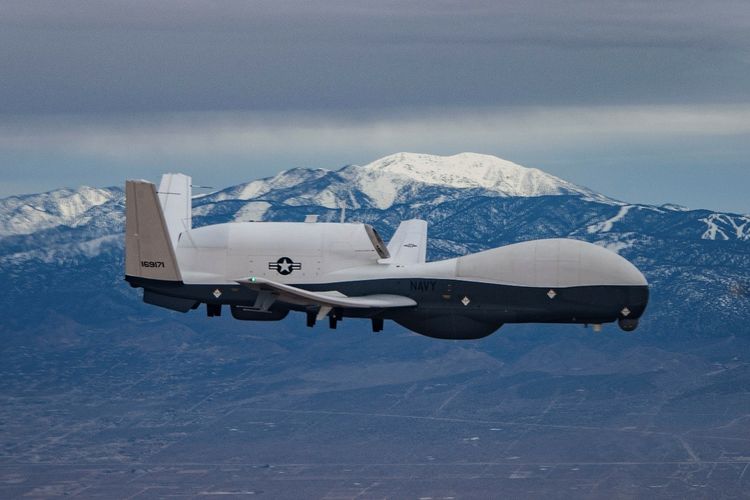
A Northrop Grumman Corp. MQ-4C Triton takes to the skies over the California desert as the Triton low-rate initial production schedule progresses. Known as B8, this is the first production Triton to be upgraded to the multi-intelligence configuration to meet the Navy’s critical maritime intelligence, surveillance, reconnaissance and targeting needs. B8 was delivered to Naval Air Station Patuxent River, Maryland, on Feb. 1. NORTHROP GRUMMAN

ARLINGTON, Va. — The Navy has awarded Northrop Grumman two contracts to upgrade MQ-4C Triton high-altitude, long-endurance unmanned aerial vehicles with a multi-intelligence collection capability. 

The Naval Air Systems Command awarded Northrop Grumman Systems Corp. of San Diego a $15.1 million contract modification to a previously awarded, fixed-price incentive contract to provide “additional labor and material to incorporate production engineering change proposals that modify MQ-4C Triton unmanned aircraft system production assets to an Integrated Functional Capability 4.0 [IFC-4] multiple intelligence configuration for the Navy and the government of Australia,” according to a June 14 Defense Department contract announcement. 

Another contract issued June 16 awarded the company $20.5 million to incorporate IFC-4 for MQ-4Cs construction numbers B13 through B15. 

The MQ-4C’s IFC-4 is designed to bring an enhanced multi-mission sensor capability as part of the Navy’s Maritime Intelligence, Surveillance, Reconnaissance and Targeting transition plan. The Triton in the IFC-4 configuration is designed to complement the Navy’s P-8A Poseidon maritime patrol aircraft and eventually will enable the Navy to retire its EP-3E Orion electronic reconnaissance aircraft. The initial operational capability for the Triton will be declared in 2023 when IFC-4-configured Tritons are deployed in enough quantity to field one complete orbit.  

The first production MQ-4C Triton unmanned aerial vehicle to be upgraded to the multi-intelligence configuration was delivered to the U.S. Navy at Naval Air Station Patuxent River, Maryland, on Feb. 1. The Triton, designated B8 by the manufacturer, Northrop Grumman, went through a 30-month modification period to the new configuration.  

The two MQ-4Cs that were deployed to Guam for the U.S. 7th Fleet’s Task Force 72 by Unmanned Patrol Squadron 19 (VUP-19) as part of the early operational capability deployment were in the baseline IFC-3 configuration. One has returned to VUP-19’s facility at Naval Station Mayport, Florida, to support training. 

Work on the new contract is expected to be completed in April 2025. 


CNO Visits Iceland, Discusses Maritime Security and Partnership    

An Icelandic Coast Guard rescue helicopter Airbus lands to transfer simulated evacuees to Keflavik Air Base during exercise Northern Viking 22 on April 10. U.S. NAVY / Mass Communication Specialist 2nd Class Cameron C. Edy

REYKJAVIK, Iceland — Chief of Naval Operations Adm. Mike Gilday travelled to Iceland June 13-15 as part of a week-long trip to Iceland and Germany, the CNO’s Public Affairs Office said June 15. 

Gilday visited Reykjavik and Keflavik Air Base, where he spoke with U.S. Sailors flying the P-8A Poseidon multi-mission maritime patrol and reconnaissance aircraft and Italian air force service members deployed supporting the NATO air policing mission with their F-35A aircraft. 

At Reykjavik, Gilday met with Ministry for Foreign Affairs Permanent Secretary Martin Eyjólfsson; Director General of Icelandic Coast Guard, Rear Adm. Georg Kristinn Lárusson; and other senior Icelandic officials.  Discussions focused on the U.S. defense relationship with Iceland and items of shared national security interests, to include Arctic security. 

“Iceland is the geostrategic linchpin for NATO in the Arctic region and I am grateful for their partnership and collaboration,” said Gilday. “The Arctic is an opportunity to work collaboratively with Allies and partners to keep this a secure and stable region, and we are committed to working together to address challenges and strengthen our collective deterrent against strategic challenges.”   

Gilday also toured the Icelandic Coast Guard Headquarters and Joint Rescue Coordination Center. 

“It’s a confident feeling to be aware of a great ally with large-scale resources available to back up and assist the Icelandic Coast Guard when and if the scope of its challenges exceeds the capability of the organization and the Icelandic safety system on the ocean around Iceland,” said Lárusson. “It is also very beneficial to receive training, education, and development assistance in fields in which the Iceland Coast Guard is not fully developed.” 

While visiting Keflavik, Gilday expressed appreciation for Iceland’s leadership role in enhancing regional cooperation, including maritime search and rescue activities.   

At Keflavik Air Base, he spoke with U.S. Navy Sailors from Patrol Squadron (VP) 9 and Patrol Squadron 46 and discussed the importance of their mission in the northern European theater. According to Gilday, the rotational Poseidon aircraft is an integral part of the NATO partnership between the U.S. and Iceland. 

“The Navy’s role has never been more consequential or more expansive, and we need a combat-credible naval force that can protect our interests in peace and can prevail in combat, while supporting our Allies and partners,” said Gilday. “The Sailors here in Iceland are just that, they remain postured, and ready, with a credible force to assure, deter, and defend in an increasingly complex security environment, which is possible because of the support and partnership we have with Iceland.” 

The U.S. Navy and Iceland conducted Exercise Northern Viking 2022 in April. Exercises like Northern Viking strengthen interoperability and readiness between the U.S., Iceland and Allied nations, and enable execution of multi-domain command and control of joint and coalition forces in the defense of Iceland and the Sea Lines of Communication in the Greenland-Iceland-United Kingdom Gap. 

After this visit, Gilday will travel to Europe to visit a ship participating in BALTOPS 22 and meet with other heads of navies, as well as government leaders. 


BALTOPS 22: A Perfect Opportunity for Research and Resting New Technology 

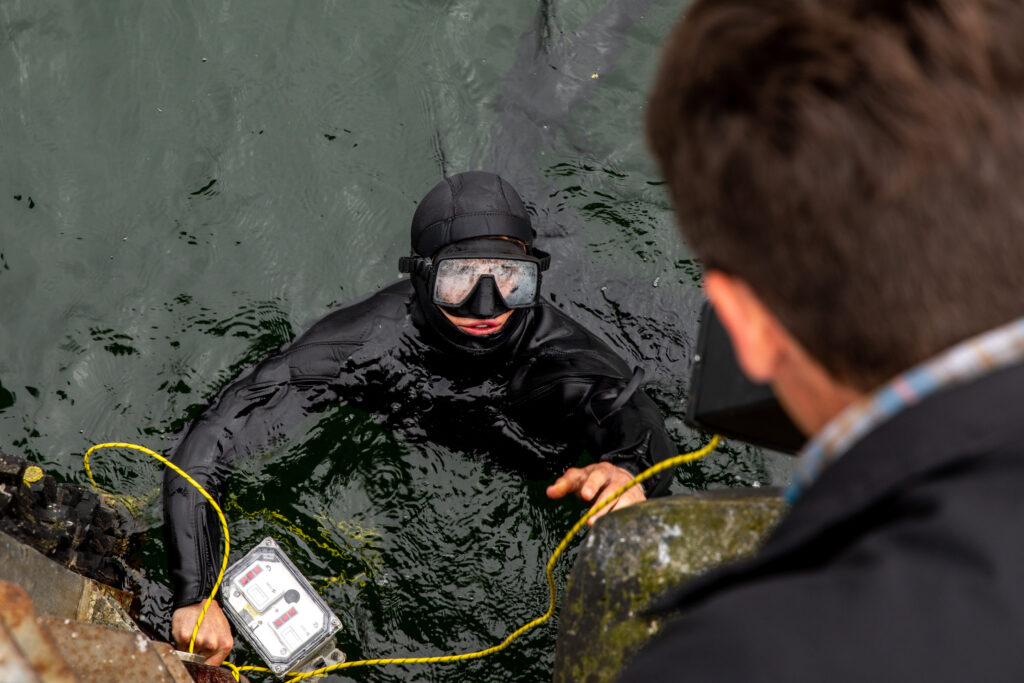
Lt. j.g. Chris Bianchi, assigned to Explosive Ordnance Disposal Mobile Unit (EODMU) 8, prepares mock explosives for a pierside training event during exercise BALTOPS 22, June 10. U.S. NAVY / Mass Communication Specialist 1st Class Daniel James Lanari

BALTIC SEA — A significant focus of BALTOPS every year is the demonstration of NATO mine hunting capabilities, and this year the U.S. Navy continues to use the exercise as an opportunity to test emerging technology, U.S. Naval Forces Europe-Africa Public Affairs said June 14. 
 
In support of BALTOPS, U.S. Navy 6th Fleet partnered with U.S. Navy research and warfare centers to bring the latest advancements in unmanned underwater vehicle mine hunting technology to the Baltic Sea to demonstrate the vehicle’s effectiveness in operational scenarios. 

Experimentation was conducted off the coast of Bornholm, Denmark, with participants from Naval Information Warfare Center Pacific, Naval Undersea Warfare Center Newport, and Mine Warfare Readiness and Effectiveness Measuring all under the direction of U.S. 6th Fleet Task Force 68. 
 
BALTOPS is an ideal location for conducting mine hunting experimentation due to the region’s unique environmental conductions such as low salinity and varying bottom types. It is also critical to evaluate emerging mine hunting UUV technology in the Baltic due to its applicability with allied and partner nations. This year experimentation was focused on UUV navigation, teaming operations, and improvements in acoustic communications all while collecting critical environmental data sets to advance the automatic target recognition algorithms for mine detection.  

“In prior BALTOPS we demonstrated advanced capabilities to detect, reacquire and collect images of mine contacts, and transfer those images in near real-time to operators through the use of a specialized Office of Naval Research UUV,” said Anthony Constable, Office of Naval Research science advisor to U.S. 6th Fleet. “This year, through the work of NIWC Pacific and NUWC Newport, we are showing that this capability can be integrated into programs of record by executing complex multi-vehicle UUV missions with modified U.S. Navy fleet assets.” 
 
An additional critical objective was to continue to increase the communication range and data transfer capability to give the operators more flexibility in mine hunting operations. Advancements in communication technology, demonstrated this year, have shown a significant improvement in operating ranges over currently used systems. This provides additional standoff flexibility to the U.S. Navy in conducting safe mine hunting operations. 
 
BALTOPS also provides a unique opportunity for the U.S. research, development and acquisition communities to exercise the current and emerging UUV technology in real-world operational environments. This year featured the current and future programs of record for mine hunting UUVs in the Mk18 and Lionfish systems. Both systems were put through the paces over 10 days of mine-hunting operations, collecting over 200 hours of undersea data. 
 
“The major benefit of the BALTOPS experimentation is to provide advanced mine hunting capabilities to the operator in the field. By exercising the future capabilities, U.S. 6th Fleet can provide valuable feedback to help guide the Navy acquisition community responsible for mine hunting UUV development and procurement,” said Lt. Joshua Lynn, U.S. 6th Fleet experimental lead for BALTOPS. “This year we have seen the near- and long-term future in mine hunting UUV technology and we are excited to see how quickly the technology and capabilities are improving.” 


USS Sioux City was ‘Built for 5th Fleet’

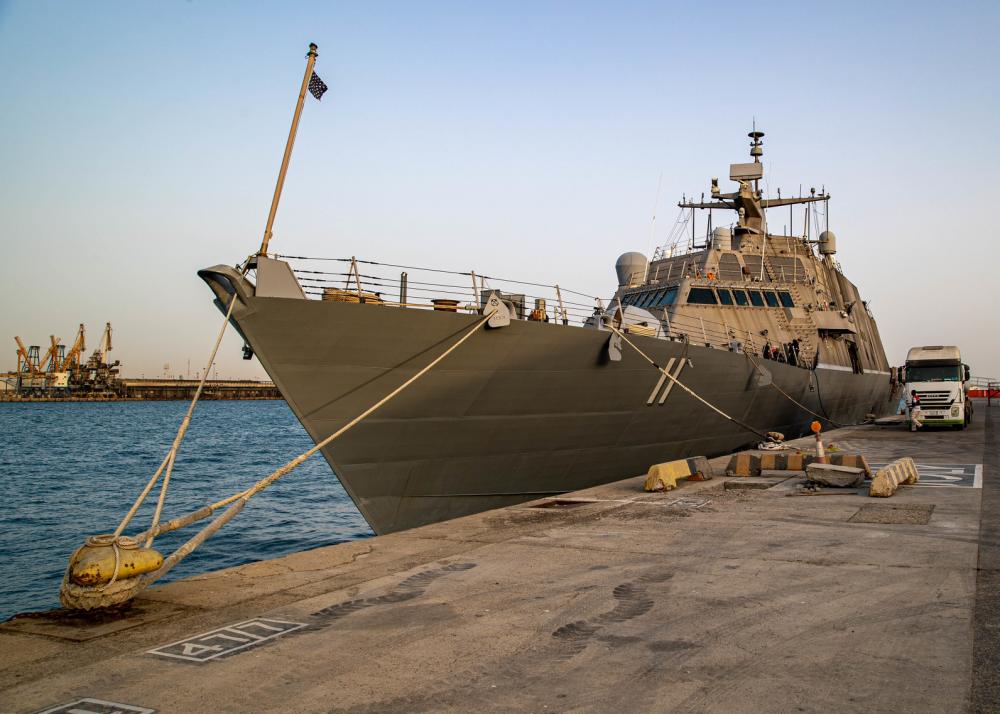
Littoral combat ship USS Sioux City (LCS 11) moored pierside in Jeddah, Saudi Arabia, May 31. Sioux City is deployed to the U.S. 5th Fleet area of operations to help ensure maritime security and stability in the Middle East region. U.S. NAVY / Mass Communication Specialist 3rd Class Nicholas A. Russell

USS Sioux City (LCS 11) has become the first littoral combat ship to deploy to the U.S. 5th Fleet area of responsibility. 

According to Capt. Rob Francis, the commander of Destroyer Squadron 50 and Task Force 55, the Freedom-class variant is perfect for this AOR.

The Mayport-based Sioux City was commissioned in 2018. It has more varied deployment experience than any other LCS. It deployed to the U.S. 4th Fleet last year, supporting interdiction operations in the Caribbean with a U.S. Coast Guard Tactical Law Enforcement embarked, and was served with the U.S. 6th Fleet during most of the month of May or its way to the Middle East.

The ship is equipped with the surface warfare mission package. An embarked detachment of a pair of MH-60S Seahawk helicopters from the Sea Knights of Helicopter Sea Combat Squadron (HSC) 22 is assigned to the Sioux City for its deployment.

The ship hasn’t arrived in the Arabian Gulf yet, but is operating in the Red Sea, Bab al-Mandeb and the Gulf of Aden as part of Combined Task Force 153.

“LCS isn’t like anything that has come out to 5th Fleet,” Francis said. “We recognize that that LCS was built for this AOR. We have a CO and a crew that’s 100% locked on to helping us understand how to integrate the Freedom class into our operations, because this is our future.”

Francis said the plan is to conduct patrols and maritime security operations.

“Right now, she’s conducting boardings, and doing the real-world mission we need her to do. She’s also providing air domain awareness for the CAOC, which is something the ship wasn’t designed for. We’ll exercise all of the ship’s capabilities. We want to find out what she can do.”

Francis also said the deployment is a test of the Navy’s support infrastructure in the region.

“We’ll do a planned maintenance availability when they get to here to Bahrain, and we’ll exercise every one of our support capabilities and facilities.” 

Francis acknowledged the concerns about LCS fuel consumption and readiness.

“We’ve heard the criticism that LCS has short legs. Okay, if you run it around at 40 knots all the time, that may be true. When she’s station keeping, however, it’s at an economical speed that offers good fuel consumption,” he said. “I don’t have an oiler following her around.” 

Francis said Sioux City has met expectations for readiness. 

“I look at all of my ships every single day, and Sioux City is green across the board.  If you ask me, I’d like three or four more out here tomorrow.”


SECNAV Names Future Arleigh Burke-class Destroyer USS J. William Middendorf 

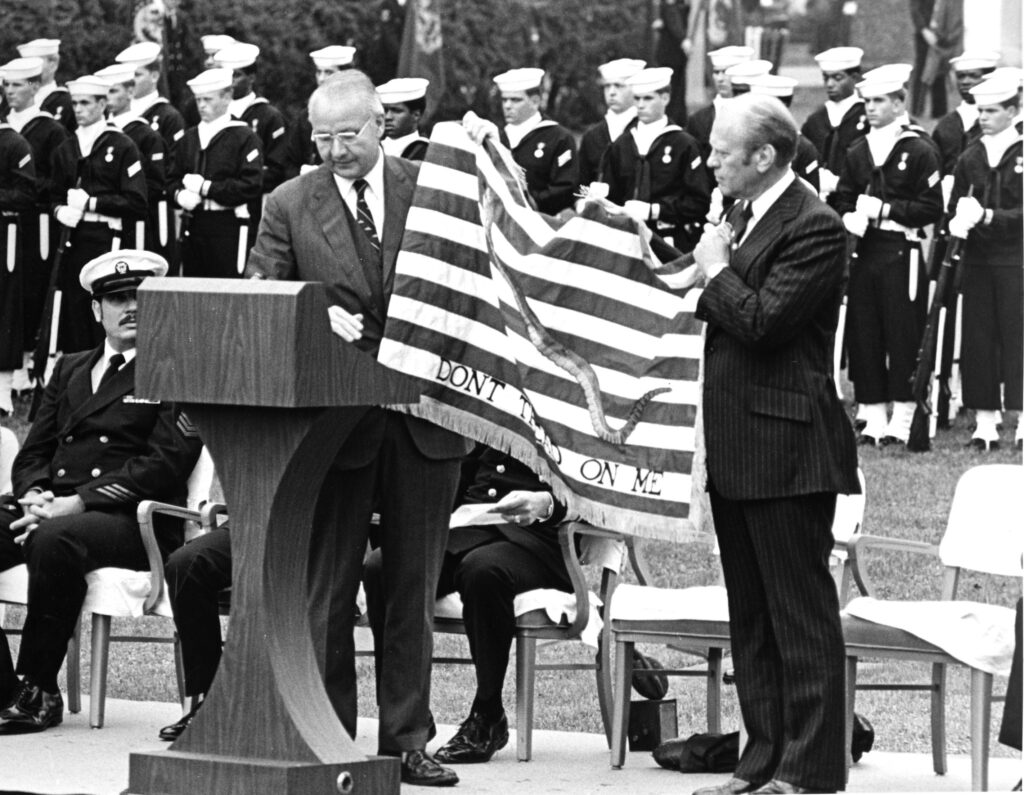
President Gerald R. Ford receives the prototype of the ceremonial Continental Navy Jack from Secretary of the Navy J. William Middendorf, II during a ceremony in Washington in October 1975. A smaller version of the flag was flown from the jack staff of every U.S. Navy ship in December 1976 as part of the Navy’s bicentennial celebration. U.S. NAVY / Chief Journalist Richard Montgomery

ARLINGTON, Va. — Secretary of the Navy Carlos Del Toro announced June 10 during the Naval War College commencement that future Arleigh Burke-class guided-missile destroyer DDG-138 will be named USS J. William Middendorf, the Defense Department said in a release.   

The future USS J. William Middendorf will honor former Secretary of the Navy and U.S. Ambassador J. William Middendorf II. The name selection follows the tradition of naming destroyers after U.S. naval leaders and heroes.   

In 2020, former Secretary of the Navy Richard Spencer announced his intention to name a ship after Middendorf but had not dedicated the name to an assigned hull number. Del Toro assigned the name to DDG-138, which was appropriated in the fiscal year 2022 budget.   

“I am pleased to honor Secretary Spencer’s previous decision to name a ship after Ambassador J. William Middendorf and I am incredibly proud to announce it here, at the Naval War College, during the commencement of our future leaders,” said Del Toro. “Middendorf’s spirit of innovation and questioning helped champion programs that are still defending our nation today. This namesake ship will continue to inspire that legacy.” 

Middendorf was born in 1924, in Baltimore, Maryland. Throughout 1944-1946, while serving in the Navy aboard landing craft support ship, USS LCS(L)(3)-53, he earned his Bachelor of Naval Science. After a discharge from naval service he earned an additional B.A. from Harvard University and then an M.B.A. from New York University. In 1969, he was appointed U.S. Ambassador to the Netherlands and continued in the position until 1973. He then served as undersecretary of the Navy with an appointment from President Richard Nixon. On April 8, 1974, Middendorf became the 62nd secretary of the Navy. During his tenure as Secretary of the Navy, he championed the Trident submarine program, Aegis Missile system, oversaw the creation of the famed Marine Corps Marathon, and was instrumental in the development of the F/A-18 Hornet. In addition to his career in public service, Middendorf is widely respected philanthropist and an accomplished author, artist, and composer.  

“I met with Middendorf recently, affirming my decision to move forward with the previous naming decision. His ongoing leadership and respect provides a worthy cause for the naming of a destroyer,” said Del Toro. “The men and women who will sail upon this vessel will undoubtedly be inspired and strengthened by legacy of the namesake, ultimately impacting actions and decisions that will further our nation and freedom across the globe.”