Navy Awards General Dynamics Electric Boat $313.9 Million for Columbia-Class Submarine Work  
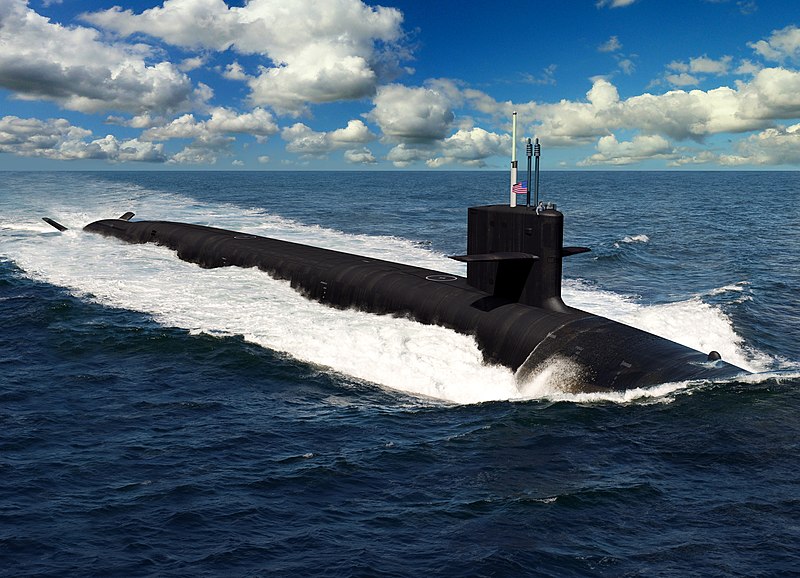
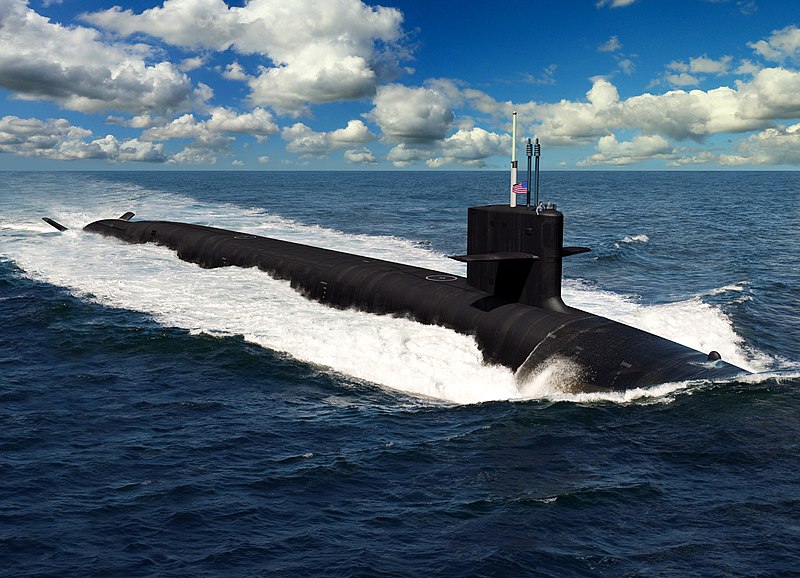
An artist’s rendering of the future Columbia-class ballistic missile submarines. U.S. NAVY

GROTON, Conn. — General Dynamics Electric Boat, a business unit of General Dynamics, has been awarded a modification to the previously awarded Columbia Integrated Product and Process Contract by the Naval Sea Systems Command, the company said May 19. The modification has a total value of $313.9 million.  

The contract modification will support submarine industrial base development and expansion for the construction of the Columbia-class fleet ballistic missile submarines as well as additional support for the manufacturing, procurement and delivery efforts for United Kingdom Strategic Weapon Support System kits. 

“Ballistic-missile submarines are the critical, survivable leg of our nation’s nuclear arsenal and Columbia is the Navy’s top acquisition priority,” said Kevin Graney, president of General Dynamics Electric Boat. “We are grateful for the steadfast trust and support the Navy and Congress have in Electric Boat as we continue the work we began 15 years ago to deliver Columbia and the next 60 years of deterrence for our nation.” 

Electric Boat will continue to work with its vendors and subcontractors to optimize efforts to ramp up production capability and support the increased demand associated with the Columbia program. 

At 560 feet long with a displacement of nearly 21,000 tons, the submarines of the Columbia class will be the largest ever built by the United States. The Columbia will have a fuel core that will power the submarine for its entire service life, eliminating the need for a mid-service refueling and increasing the time the ship can spend on deployment. Electric Boat will deliver the lead ship to the Navy in 2027. 


Navy to Commission Future Littoral Combat Ship Minneapolis-Saint Paul 

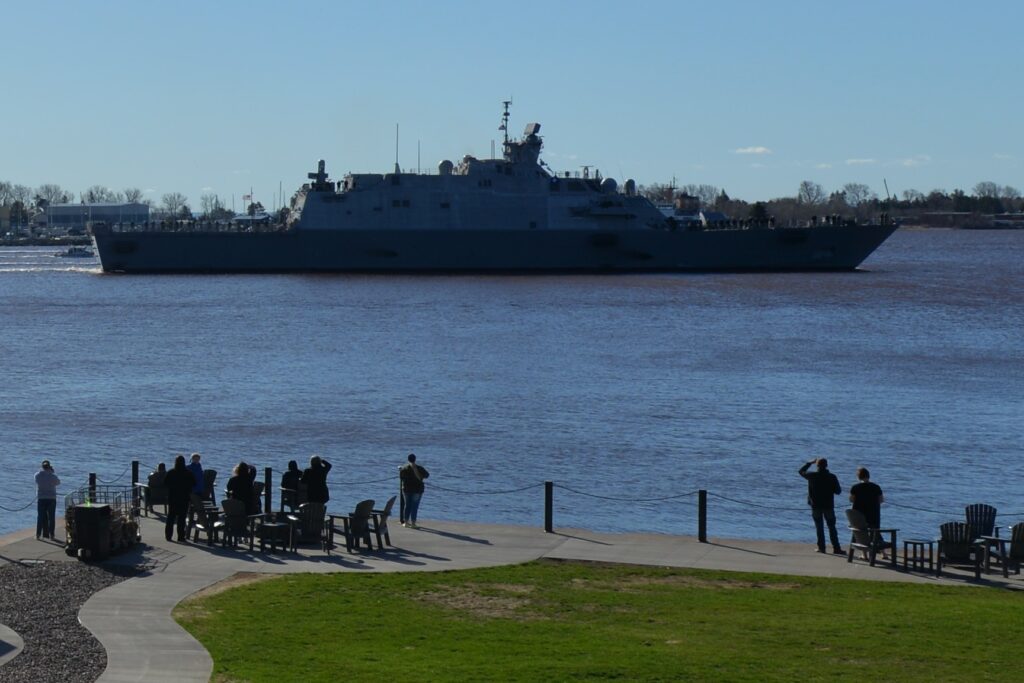
The future USS Minneapolis-Saint Paul (PCU LCS-21) arrives in Duluth, Minnesota on May 16. PCU LCS-21 is a United States Navy Freedom-class littoral combat ship that will be commissioned in the Port of Duluth on Saturday, May 21. U.S. AIR NATIONAL GUARD / 1st Lt. Crystal Kirchner

ARLINGTON, Va. — The Navy will commission the future USS Minneapolis-Saint Paul (LCS 21) as the newest Freedom-variant littoral combat ship during a 10 a.m. CDT ceremony Saturday, May 21, in Duluth, Minnesota, the Defense Department said May 20. 

USS Minneapolis-Saint Paul is the second naval ship to honor Minnesota’s Twin Cities, although each city has been honored twice before. 

The principal speaker is U.S. Rep. Betty McCollum. Additional speakers include Minnesota Gov. Tim Walz; U.S. Sen. Amy Klobuchar; U.S. Rep. Pete Stauber; Undersecretary of the Navy Erik Raven; Vice Adm. Scott Conn, deputy chief of naval operations for warfighting requirements and capabilities; and Jon Rambeau, vice president and general manager of Lockheed Martin Integrated Warfare Systems and Sensors. The ship’s sponsor is Jodi Greene, principle at the Mabus Group and former deputy undersecretary of the Navy for policy. She will give the first order to “man our ship and bring her to life.” 

“It is fitting that a littoral combat ship is named for Minneapolis-Saint Paul, honoring the rich history, hard work, and contributions of the people there,” said Secretary of the Navy Carlos Del Toro. “I am certain the crew who will man this ship will carry on the legacy of the Twin Cities and will play an important role in the defense of our nation and maritime freedom.” 

The first U.S. Navy warship named Minneapolis-Saint Paul was a Los Angeles-class submarine launched in 1983 that participated in Operation Desert Shield/Desert Storm. USS Minneapolis-Saint Paul (SSN 708) was the first submarine to carry Tomahawk missiles specifically designed for use in strikes against Iraq during the Gulf War. Having served for over two decades with distinction, the Navy decommissioned the submarine in 2007. 

USS Minneapolis-Saint Paul will homeport at Naval Station Mayport, Florida. 

The ceremony will be live-streamed at USS Minneapolis-Saint Paul Commissioning. The link becomes active approximately 10 minutes before the event (9:50 a.m. CST). 


MQ-25 Team Preps for first Air Vehicle, Control Station Integration Test Event 

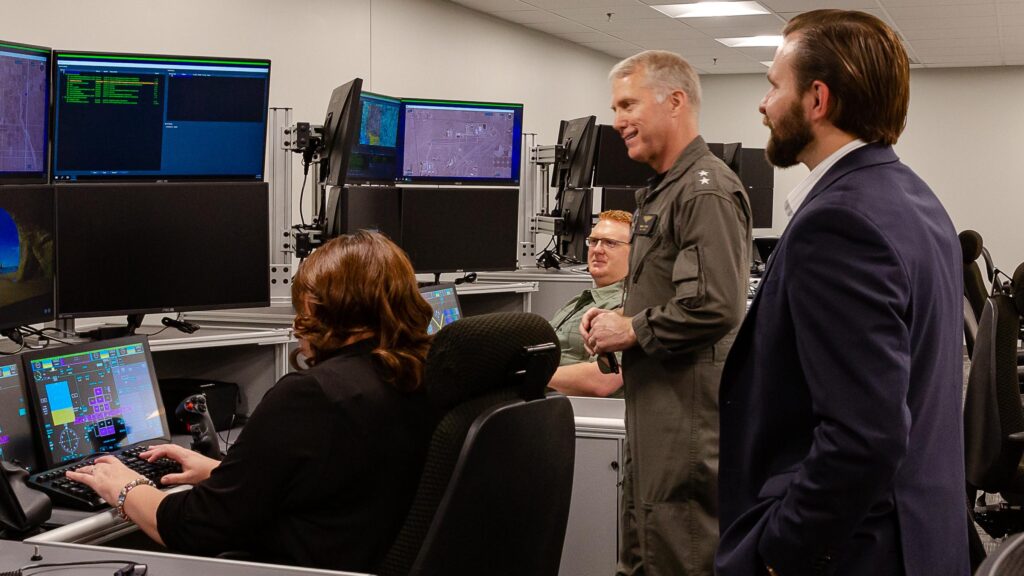
Rear Adm. Brian Corey, who oversees the  Program Executive Officer for Unmanned Aviation and Strike Weapons, observes an MQ-25 engineer demonstrate the functionality of the unmanned system’s MD-5 ground control station May 17 at the System Test and Integration Lab in Patuxent River, Maryland. U.S. NAVY

PATUXENT RIVER, Md. — The Navy’s Unmanned Carrier Aviation program office (PMA-268) is moving forward with integrating its two key elements — the MQ-25 air vehicle and the MD-5 ground control station — at the program’s System Test and Integration Lab at Patuxent River, Maryland, the Program Executive Office for Unmanned Aviation and Strike Weapons said May 18. 

PMA-268 is the lead systems integrator, working closely with its two prime industry partners, Boeing and Lockheed Martin Skunk Works, to ensure the expeditious integration of the MQ-25 Stingray air vehicle, the MD-5 GCS and aircraft carrier modifications required to support MQ-25 operations. 

The MD-5 GCS is part of the Unmanned Carrier Aviation Mission Control System, the system-of-systems required for MQ-25A command and control. UMCS also includes aircraft carrier and shore site infrastructure modifications, Navy produced ancillary equipment and integration with command, control, communications, computers and intelligence systems. 

Rear Adm. Brian Corey, who oversees the Program Executive Office for Unmanned Aviation and Strike Weapons, visited the lab May 17 for a firsthand look at the equipment required to operate MQ-25. 

“It is great to see momentum with GCS following the successful MQ-25 flight demonstrations last year,” he said to the government/industry team. “The air vehicle and GCS are equally important to this program and this is the team that is going to stitch it together.” 

Just recently, Lockheed Martin delivered the latest system developmental release to the Navy and plans to help integrate the MD-5 system with the air vehicle next month. 

“This will be the first time we are integrating an air vehicle and GCS from two different prime contractors,” said T.J. Maday, MQ-25 labs and integration manager. “And this is all being done with the government as the lead system integrator within the government lab.” 

Early integration allows for risk reduction and integration testing between the air vehicle and ground control station and provides the opportunity to ensure network connectivity between development environments are functional. 

Lockheed Martin also recently delivered two MD-5 ground control stations to Webster Outlying Field in Saint Inigoes, Maryland, to support MQ-25’s test transportable control stations. These will be the first assets to control the MQ-25’s initial Unmanned Carrier Aviation Mission Control System flight in 2023. 

The MQ-25 will be the world’s first operational, carrier-based unmanned aircraft. It will provide an aerial refueling capability that extends the range, operational capability and lethality of the carrier air wing.  


SECNAV Names Future Arleigh Burke-Class Destroyer Telesforo Trinidad 

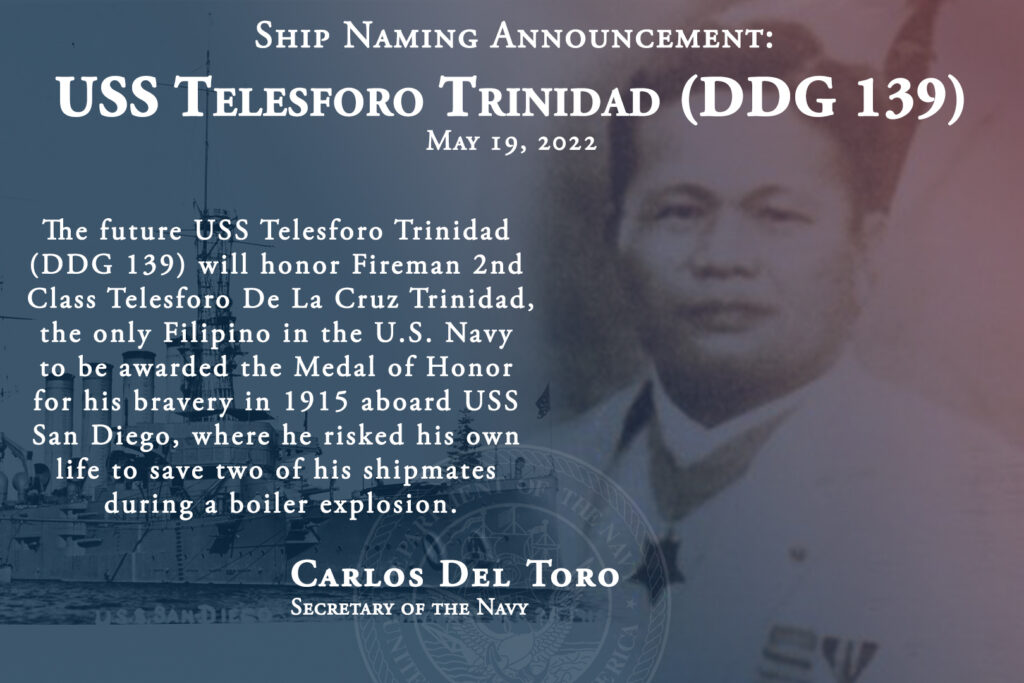
WASHINGTON — Secretary of the Navy Carlos Del Toro announced May 19 that a future Arleigh Burke-class guided-missile destroyer will be named USS Telesforo Trinidad (DDG 139), honoring Fireman 2nd Class Telesforo De La Cruz Trinidad, the only Filipino in the U.S. Navy to be awarded the Medal of Honor.  

“My first time learning about Petty Officer Trinidad’s story was as a midshipman at the Naval Academy and since being sworn in as secretary, I have wanted to honor his heroic actions by naming a ship after him,” said Del Toro. “This ship and her future crew will be a critical piece in strengthening our maritime superiority while also emphasizing the rich culture and history of our naval heritage.” 

Trinidad was born Nov. 25, 1890, in Aklan Province, Panay, Philippine Islands. On Jan. 21, 1915, Petty Officer Trinidad was serving aboard USS San Diego when the captain decided to conduct a four-hour full-speed and endurance trial to determine if the ship could still maintain its officially rated flank speed. Following the trial, an obstructed tube in one of the ship’s boilers gave way, creating a chain reaction. Trinidad re-entered the closed space to the No. 2 boiler to save Fireman 2nd Class R. W. Daly. As he was carrying Daly through the No. 4 fireroom, an explosion of No. 3 boiler hit Trinidad, which burned him in the face. After seeing Daly to safety and despite his injuries, Trinidad then assisted in rescuing another injured shipmate from the No. 3 fireroom. For his bravery, the U.S. Navy awarded him the Medal of Honor.   

“I am pleased to honor Trinidad’s life and legacy today — especially during Asian American Pacific Islander Heritage Month,” said Del Toro. “Having a ship named after such a significant figure highlights our diverse culture and that our people will always be our strategic advantage against any adversary. I hope the naming of this ship is a beacon for not only Asian Americans and Pacific Islanders but for all our Sailors, Marines and civilians who serve across the Department of the Navy. The service and sacrifice of these men and women have made our military and our nation stronger and better.” 


Keel-Laying for Columbia SSBN Set for June 4 

An artist’s rendering of the future U.S. Navy Columbia-class ballistic missile submarines. U.S. NAVY

WASHINGTON — The keel-laying ceremony for the first new-generation nuclear-powered ballistic-missile submarine (SSBN) will take place June 4. 

The keel-laying date for the future USS Columbia (SSBN 826) was mentioned by Rep. Joe Courtney, D-Connecticut, during a May 18 hearing of the Seapower and Projection Forces subcommittee of the House Armed Services Committee. The ceremonies will be held at the General Dynamics Electric Boat Shipyard at Quonset Point, Rhode Island. 

The date was announced to employees of Electric Boat the same morning. The missile compartment and other components are built at Quonset Point. Final assembly of the submarine will take place at the Electric Boat facility in Groton, Connecticut. 

HII’s Newport News Shipbuilding in Newport News, Virginia, builds 22% of the submarine, including the bow and stern.  

General Dynamics Electric Boat was awarded a $5.1 billion contract in September 2017 to complete the design of the lead boat and in November 2020, the company received a nearly $9.5 billion award for construction and test of the USS Columbia and lead work on the USS Wisconsin. Including the Columbia, hull numbers SSBN 826 through 837 have been reserved for the new class, which previously was known as the Ohio-class Replacement Program. 

The Columbia design features a new reactor with a core designed to last the life of the boat. The Columbia class also will feature an X-stern plane configuration with a waterjet propulsor, electric drive and integrated power system, a six-mast sail with sail planes and a large-aperture bow sonar. The subs will retain the Trident D5LE missile system.

Advance construction of the Columbia began in 2019 and delivery is expected in 2027. The first Columbia SSBN is scheduled to be on patrol in fiscal 2031 to maintain the undersea leg of the nation’s nuclear deterrent force.  

The Columbia class is to completely replace Ohio class SSBNs by 2039. 


LCS Successfully Completes First Land-Attack Missile Exercise 

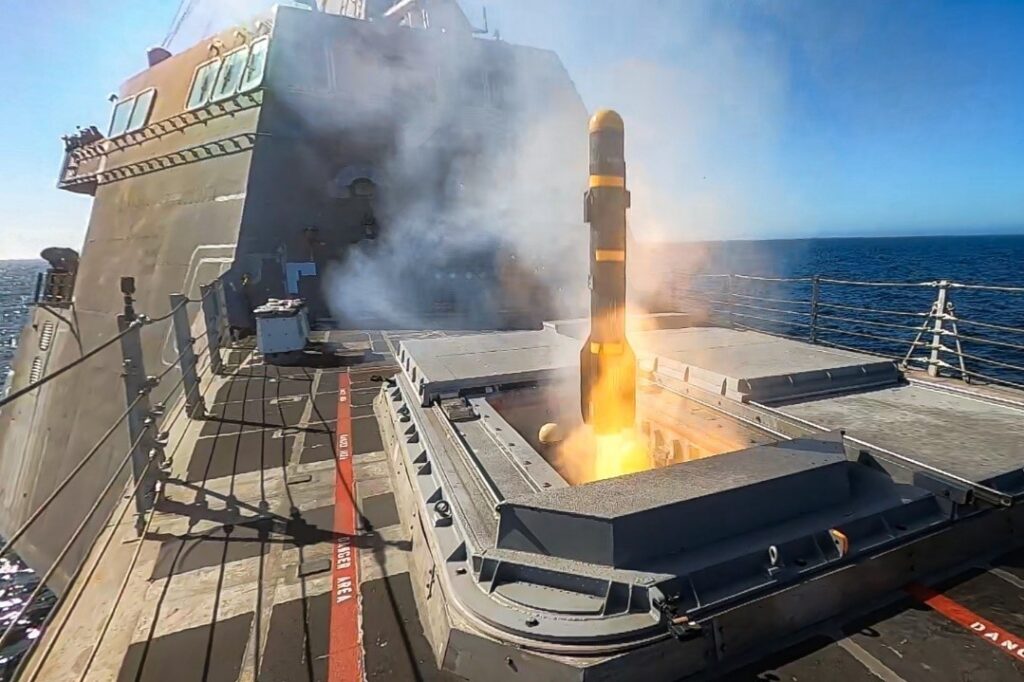
An AGM-114L Longbow Hellfire missile launches from the Surface-To-Surface Missile Module aboard Independence-variant littoral combat ship USS Montgomery (LCS 8). U.S. NAVY / Lt.j.g. Samuel Hardgrove

PACIFIC OCEAN — The U.S. Navy’s littoral combat ship class successfully launched sea-based missiles at a land-based target for the first time during a proof-of-concept exercise on May 12, said Lt.j.g. Sam Hardgrove in a May 16 release. 

Independence-variant littoral combat ship USS Montgomery (LCS 8) fired three AGM-114L Longbow Hellfire missiles to strike a land-based target several nautical miles away as part of the LCS surface-to-surface mission module, or SSMM. 
 
“This test proved the critical next step in increasing lethality of the littoral combat ship,” said Cmdr. Dustin Lonero, Montgomery’s commanding officer. “Using our speed and shallow draft, we are now uniquely optimized to bring this level of firepower extremely close to shore in support of our warfighters and operators on the beach.” 
 
The Longbow Hellfire missile already plays a key role in the up-gunned surface warfare mission package. Originally fielded by both variants of the littoral combat ship in 2019, the missile has repeatedly demonstrated the capability quickly defeat multiple swarming fast attack craft or fast inshore attack craft. Each LCS is capable carrying 24 missiles. 
 
“The SSMM is a fundamental cornerstone of LCS lethality and evolving capability to provide enhanced fire support in the littorals and over the horizon in support of the Navy and Marine Corps fighting force,” said Lt. Michael Jones, a warfare-tactics instructors from Surface and Mine Warfare Development Center. “The new ability for LCS to conduct maritime strikes bolsters the ship’s role in conducting shaping operations within amphibious and expeditionary warfare areas.” 
 
The Longbow Hellfire missile was commissioned in 1998 and has proven successful over its years of service across all U.S. military branches. Originally designed as an anti-tank weapon for the U.S. Army, its all-weather millimeter-wave sensing, semi-active laser guidance continues to prove extremely effective in the maritime domain against all manner of threats. 
 
“If you take a proven program of record and adapt its capability for the maritime warfare environment, you have a win for the taxpayer, improved interoperability between various services, and an increased lethality and competitive edge at sea,” said Chief Gunner’s Mate David Wynne, Montgomery’s weapons chief petty officer. 
 
Combining emerging technologies, an MQ-8C Fire Scout unmanned helicopter, from Helicopter Sea Combat Squadron (HSC) 23, remained airborne providing advanced targeting and bomb hit assessment capability. The Fire Scout already provides littoral combat ships an over-the-horizon intelligence, surveillance, reconnaissance and targeting capability. 


U.S. Navy DDG Seizes $39 Million in Drugs in Middle East 

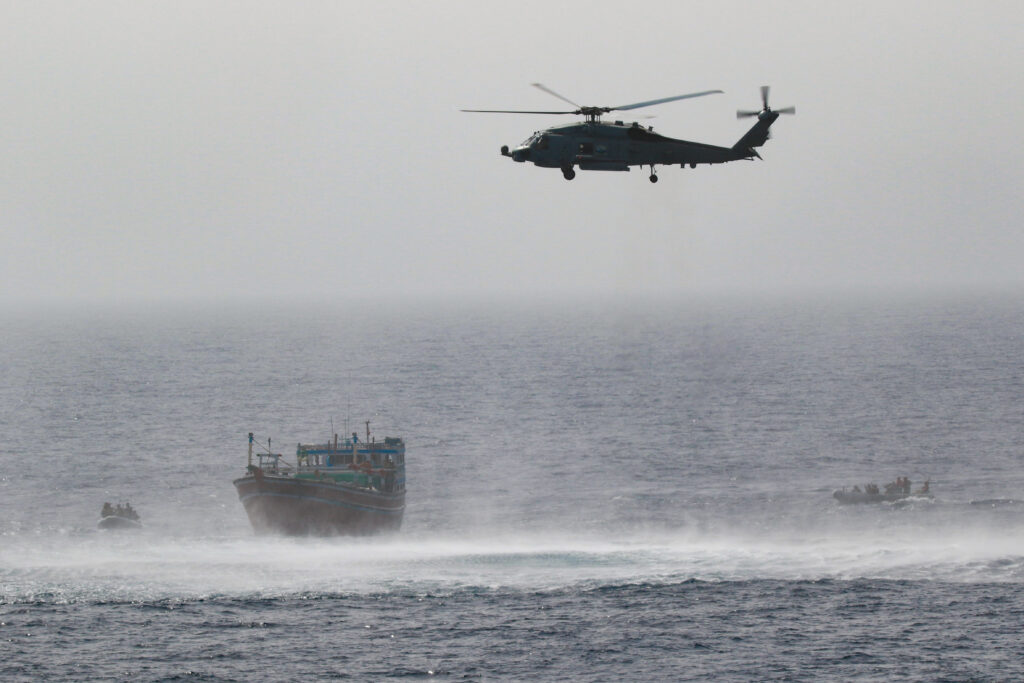
An MH-60R Seahawk from Helicopter Maritime Strike Squadron (HSM) 35, Detachment 1, provides aerial support to an interdiction team from guided-missile destroyer USS Momsen (DDG 92) approaching a fishing vessel May 16. The vessel was seized while transiting international waters in the Gulf of Oman. U.S. NAVY / Mass Communication Specialist 3rd Class Lily Gebauer

MANAMA, Bahrain — A U.S. Navy guided-missile destroyer seized 640 kilograms of methamphetamine worth $39 million from a fishing vessel while patrolling international waters in the Gulf of Oman, May 15-16, U.S. Naval Forces Central Command/U.S. 5th Fleet public affairs said May 17. 
 
A U.S. Coast Guard interdiction team from USS Momsen (DDG 92) discovered the illegal narcotics during a flag verification boarding in accordance with international law. The confiscated drugs and fishing vessel remain in U.S. custody. 
 
The vessel’s nine crew members identified themselves as Iranian nationals and will be transferred to a regional nation for repatriation. 
 
Momsen was operating in support of Combined Task Force 150, one of four task forces under the Combined Maritime Forces. The international naval force has increased regional patrols to locate and disrupt unlawful maritime activity. 
 
The vessel was interdicted while transiting international waters along a route historically used by criminal organizations to smuggle people, weapons, narcotics and charcoal. Crew members attempted to discard more than 60 bales of the seized drugs as Momsen approached. 
 
CTF 150 has conducted nine successful drug seizures in 2022, resulting in the confiscation of heroin, methamphetamine, amphetamine pills and hashish worth a combined value of $130 million. 
 
Combined Maritime Forces is the largest multinational naval partnership in the world. The organization includes 34 nations and is headquartered in Bahrain with U.S. Naval Forces Central Command and U.S. 5th Fleet. 


Navy Establishes Unmanned Surface Vessel Division One 

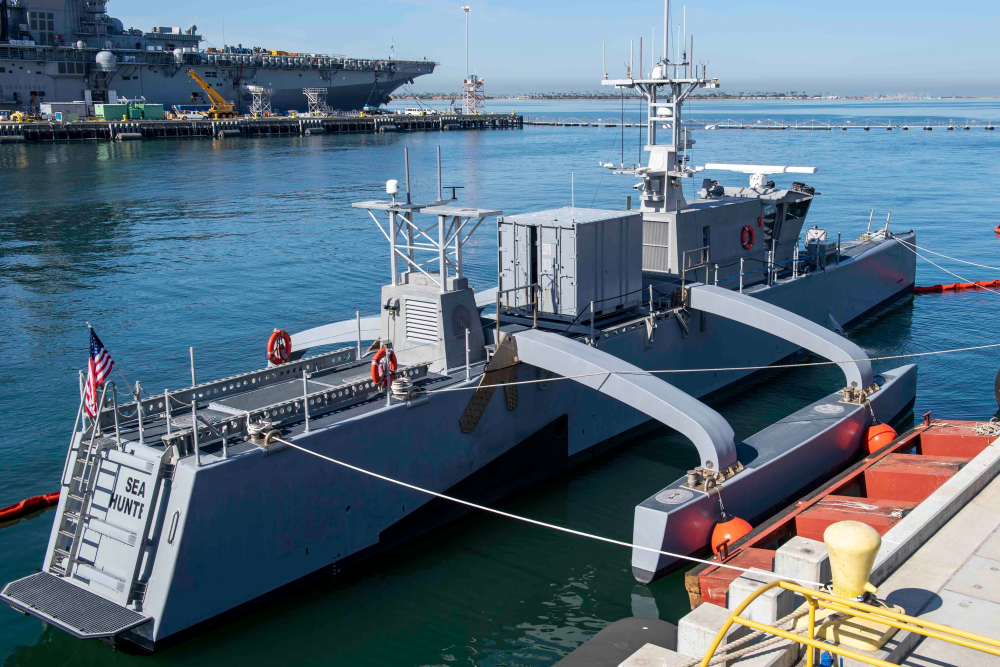
The medium-displacement unmanned surface vessel Sea Hunter sits pierside at Naval Base San Diego, during the Unmanned Surface Vessel Division One Establishment ceremony. USDIV One will focus on unmanned surface vessel experimentation and fleet advocacy for the surface force. U.S. NAVY / Mass Communication Specialist 2nd Class Kevin C. Leitner

SAN DIEGO – Commander, Naval Surface Force, U.S. Pacific Fleet established Unmanned Surface Vessel Division (USVDIV) One during a ceremony, May 13, which also included a change of command ceremony for Surface Development Squadron One, said Ens. Ronan Williams of the Force’s public affairs office in a May 13 release. 

During the combined ceremony, Cmdr. Jeremiah Daley assumed command of the newly established USVDIV One. 
 
“To meet the challenges of the 21st century, we must continue to innovate the surface force,” said Daley. “USVDIV One will accelerate the delivery of credible and reliable unmanned systems in conjunction with increasingly capable manned platforms into the fleet.” 
 
USVDIV One will oversee medium and large unmanned surface vessels including the Sea Hunter and its sister vessel, the Sea Hawk. The division will focus on unmanned surface vessel experimentation and fleet advocacy for the surface force. The division will be a cornerstone in building the foundational knowledge required for Sailors to operate and maintain the USV fleet and spearhead the development of the processes required for USV operations and sustainment. 
 
Vice Adm. Roy Kitchener, Commander, Naval Surface Force, U.S. Pacific Fleet, presided over the ceremony. 
 
“USVDIV One will be a catalyst for innovation as we employ unmanned surface capabilities in the Pacific Fleet,” said Kitchener. “The implementation of unmanned systems will increase decision speed and lethality to enhance our warfighting advantage.” 
 
Capt. Shea Thompson relieved Capt. Jeffrey Heames as commodore of SURFDEVRON One. 
 

“It’s been an honor and privilege to lead a team of surface warriors who are shaping the future of our force,” said Heames. “I know Capt. Thompson shares this enthusiasm and drive to innovate and transform the surface force into a formidable 21st century fighting organization.” 
 
Heames was SURFDEVRON One’s second commodore. Previously, he commanded USS Preble (DDG 88) and served as the Commodore for Destroyer Squadron 23. 
 
SURFDEVRON One is responsible for the maintenance, training, and manning oversight for medium and large USVs and the Zumwalt-class guided-missile destroyers, including the future USS Lyndon B. Johnson (DDG 1002). 


USS Hershel ‘Woody’ Williams Blue MILCREW Begins Deployment

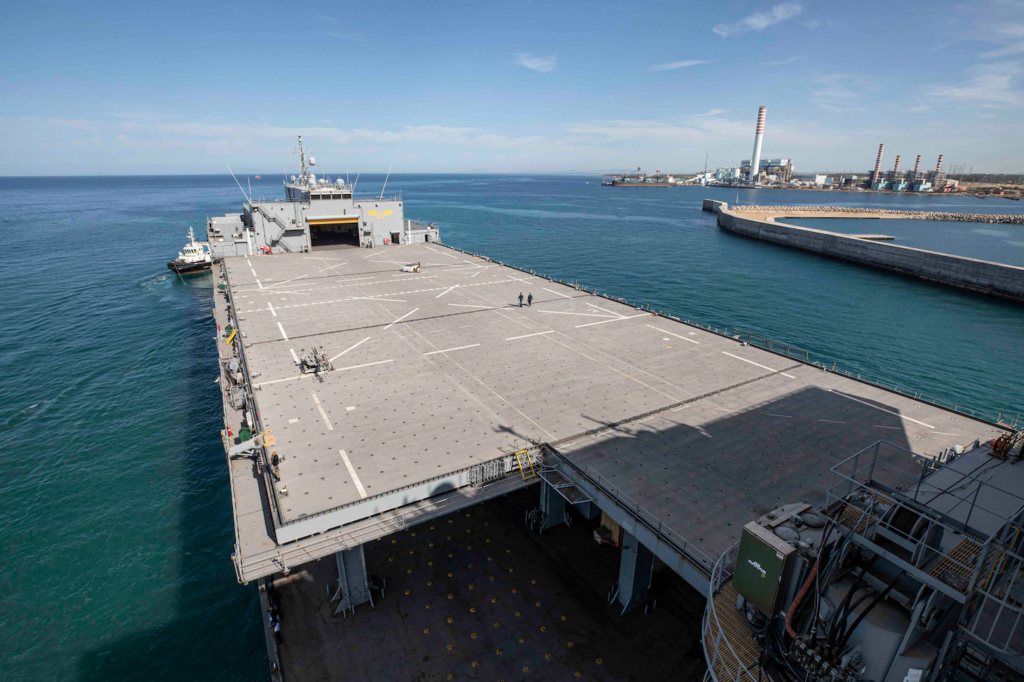
The Expeditionary Sea Base USS Hershel “Woody” Williams (ESB 4) departs Civitavecchia, Italy, to begin a deployment May 14, 2022. U.S. NAVY / Mass Communication Specialist 1st Class Fred Gray

CIVITAVECCHIA, Italy — The Blue military crew of the USS Hershel “Woody” Williams (ESB 4) and the ship’s Military Sealift Command Civilian Mariners departed Civitavecchia, Italy, to begin a scheduled deployment in the U.S. 6th Fleet area of operations, May 14, 2022, said Mass Communication Specialist 1st Class Fred Gray IV of the U.S. 6th Fleet in a May 16 release.

The Blue Crew took over for the Gold Crew while in Civitavecchia May 9. This crew swap follows Gold Crew’s five-month deployment, which included participation in exercise Obangame Express and security operation patrols with African partners along the west coast of Africa.

“We are rested and ready to get back on the open seas to execute our mission requirements,” said Capt. Chad W. Graham, commanding officer of Hershel “Woody” Williams Blue MILCREW. “The Hershel ‘Woody’ Williams is a unique platform that enables us to integrate and operate with internal and international partners improving interoperability, maritime domain awareness and building upon our existing relationships.”

During the deployment, the ship and crew will complete a mobility air qualification. They will also participate in a variety of exercises and operations with partner nations.

USS Hershel “Woody” Williams is the first warship permanently assigned to the U.S. Africa Command area of responsibility. The U.S. shares a common interest with African partner nations in ensuring security, safety and freedom of navigation on the waters surrounding the continent, because these waters are critical for Africa’s prosperity and access to global markets.

The ESB ship class is a highly flexible platform that operates across a broad range of military operations. Acting as a mobile sea base, they are part of the critical access infrastructure that supports the deployment of forces and supplies to support missions assigned.


USS Frank E. Petersen Jr. Commissioned in Charleston 

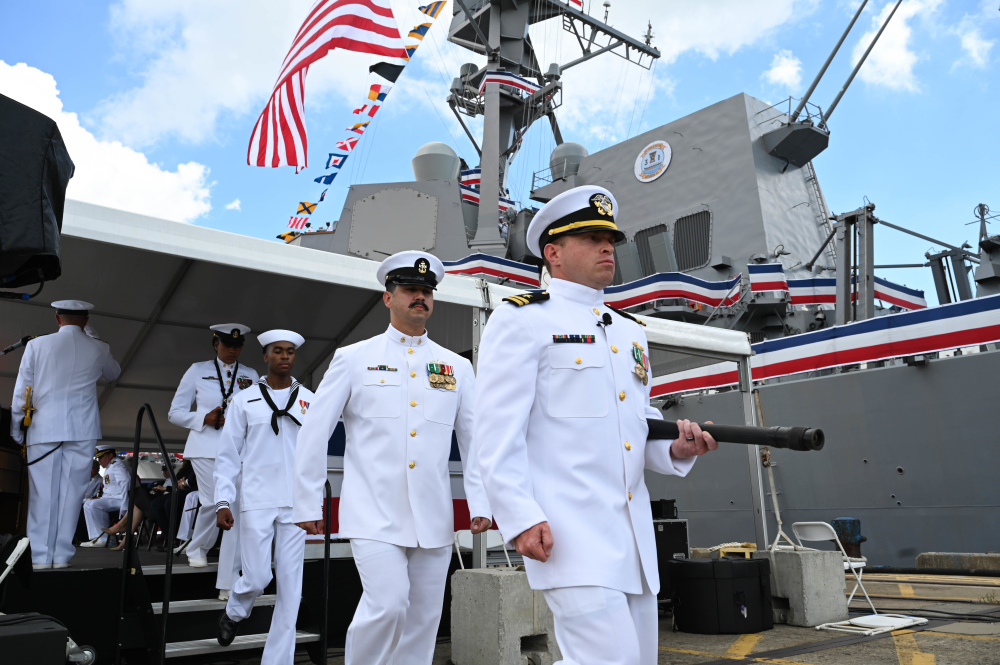
USS Frank E. Petersen Jr. is named after the first black U.S. Marine Corps aviator and the first black Marine to become a three-star general. U.S. NAVY

CHARLESTON, S.C. — The Navy commissioned its newest Arleigh Burke-class destroyer USS Frank E. Petersen Jr. (DDG 121), May 14 in Charleston, South Carolina, said a Navy spokesperson in a May 14 release.

Secretary of the Navy Carlos Del Toro attended the ceremony. He began by thanking the Petersen family for their lifetime of service to the nation. “All of us join you in honoring Lt. Gen. Frank E. Petersen Jr.”

Del Toro also recognized the plankowners bringing the ship to life. “As Secretary of the Navy I contribute all that I can to make sure that you and your families are equipped for the many challenges that lie ahead. That starts with making sure that you have the very best ship that our nation has to offer.”
 
The principal speaker was Carlos Campbell, naval aviator and former assistant secretary of Commerce for Economic Development, who served alongside Petersen and relayed stories exemplifying the general’s strength and dedication. Recalling Petersen’s ethic, Campbell said, “He received a frag wound, he was treated in the field, and returned to combat.”
 
Chief of Naval Operations Adm. Mike Gilday also attended the ceremony. “It’s fitting that a name synonymous with service and sacrifice be emblazoned on the steel of this American warship,” said Gilday. “Sailors aboard this mighty warship will deploy wherever, whenever needed, with General Petersen’s fighting spirit and tenacity, for generations to come.”
 
Gen. David Berger, commandant of the Marine Corps, also attended the ceremony. “General Petersen was a man of many firsts,” said Berger. “There’s a saying that ships take on the characteristics of their namesakes, and if that’s true, then God help any adversary to ever confronts the Frank E. Petersen Jr.”
 
Gayle Petersen, Lt. Gen. Petersen’s daughter, expressed thanks on behalf of her family and made a special recognition. “We would not be having this ceremony today if not for a gentleman named Robert Adams. When my dad was shot down in Vietnam he was rescued by Robert Adams.” Gayle continued, “I would like to thank all who had a hand in building this ship, from stem to stern.”
 
Guest speakers for the event included Rep. Nancy Mace, R-South Carolina; John Tecklenberg, mayor of Charleston, South Carolina; and George Nungesser, vice president of Program Management, Ingalls Shipbuilding.
 
The ship’s sponsors are D’Arcy Ann Neller, wife of former commandant of the Marine Corps, Gen. Robert Neller, and the late Dr. Alicia J. Petersen, Lt. Gen. Petersen’s wife at the time of his passing in 2015. Dr. Petersen passed away in September 2021. Both sponsors participated in the keel laying, mast stepping and christening ceremonies.
 
D’Arcy Ann Neller thanked the families. “Our service members can’t do what they do without you and your love and support. To the officers and crew: A ship without a crew is like a body without blood. You will all make this ship come alive.”
 
During the ceremony, USS Frank E. Petersen’s commanding officer Cmdr. Daniel Hancock reported the ship ready. Assisted by Lt. Gen. Petersen’s daughters, Gayle Petersen, Dana Petersen Moore, Lindsay Pulliam and Monique Petersen, Neller gave the traditional order to “Man our ship and bring her to life!”
 
Lt. Gen. Petersen continues a family legacy of service begun by his great grandfather. Private Archibald (Archie) Charles McKinney enlisted in 1863 and served in the Massachussetts 55th Regiment, Company E during the Civil War. McKinney’s trip home included traveling aboard a steamship, disembarking at the Port of Charleston.
 
The future USS Frank E. Petersen, Jr. honors Lt. Gen. Frank E. Petersen, Jr. Petersen was the first black U.S. Marine Corps aviator and the first black Marine to become a three-star general. Petersen served two combat tours, Korea in 1953 and Vietnam in 1968. He flew more than 350 combat missions and had more than 4,000 hours in various fighter and attack aircraft. Petersen passed away in Aug. 2015 at the age of 83.
 
Retiring in 1988 after 38 years of service, Petersen’s awards included the Defense Superior Service Medal, Legion of Merit with Combat “V,” Distinguished Flying Cross; Purple Heart, Meritorious Service Medal, Air Medal, Navy Commendation Medal with Combat “V;” and the Air Force Commendation Medal.
 
Arleigh Burke-class destroyers are the backbone of the U.S. Navy’s surface fleet. These highly capable, multi-mission ships conduct a variety of operations, from peacetime presence to national security providing a wide range of warfighting capabilities in multi-threat air, surface and subsurface.