DoD Releases Fiscal Year 2021 Freedom of Navigation Report
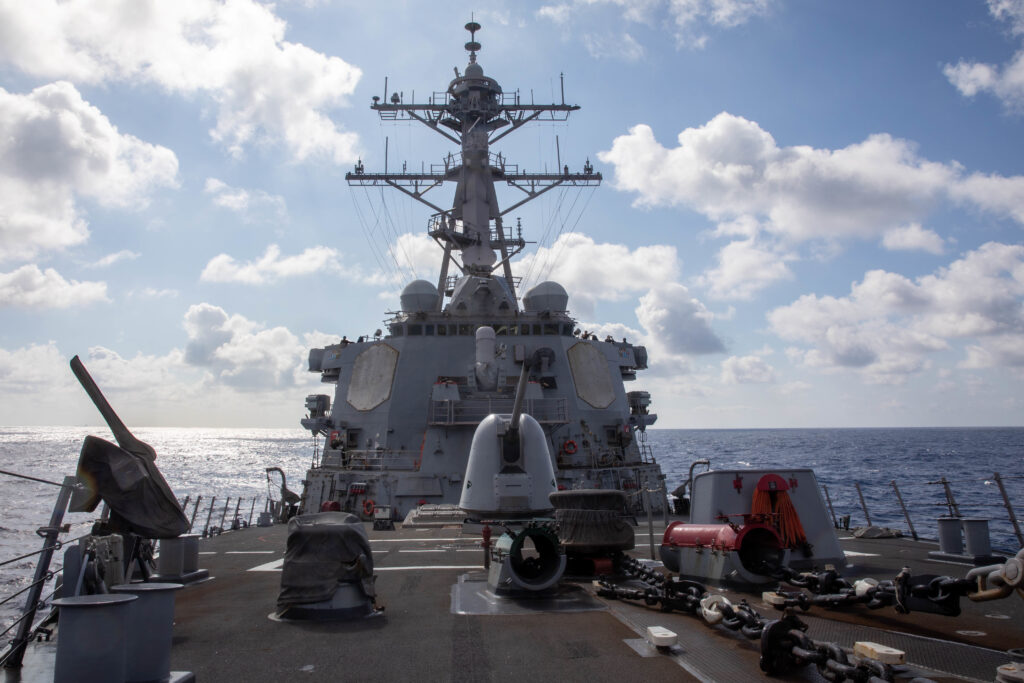
Arleigh Burke-class guided-missile destroyer USS Barry (DDG 52) transits the Taiwan Strait during a routine transit in 2021. U.S. NAVY / Mass Communication Specialist 3rd Class Justin Stack
ARLINGTON, Va. — The Department of Defense released on April 1 its annual Freedom of Navigation Report for fiscal year 2021. During the period from Oct. 1, 2020, through Sept. 30, 2021, U.S. forces operationally challenged 37 different excessive maritime claims made by 26 different claimants throughout the world.
Excessive maritime claims are inconsistent with international law as reflected in the Law of the Sea Convention. They include a variety of restrictions on the exercise of navigation and overflight rights and other freedoms. Unlawful maritime claims — or incoherent theories of maritime entitlements — pose a threat to the legal foundation of the rules-based international order. If left unchallenged, excessive maritime claims could limit the rights and freedoms enjoyed by every nation.
Upholding freedom of navigation as a principle supports unimpeded lawful commerce and the global mobility of U.S. forces. DoD’s freedom of navigation operations demonstrate the United States will fly, sail, and operate wherever international law allows.
DoD’s regular and routine operational challenges complement diplomatic engagements by the U.S. State Department and supports the longstanding U.S. national interest in freedom of the seas worldwide.
Each year, DoD releases an unclassified summarized FON Report identifying the broad range of excessive maritime claims that are challenged by U.S. forces. It also includes general geographic information to describe the location of FON assertions while still maintaining operational security of U.S. military forces.
CNO, Indonesian Navy Chief Meet; Discuss Maritime Security
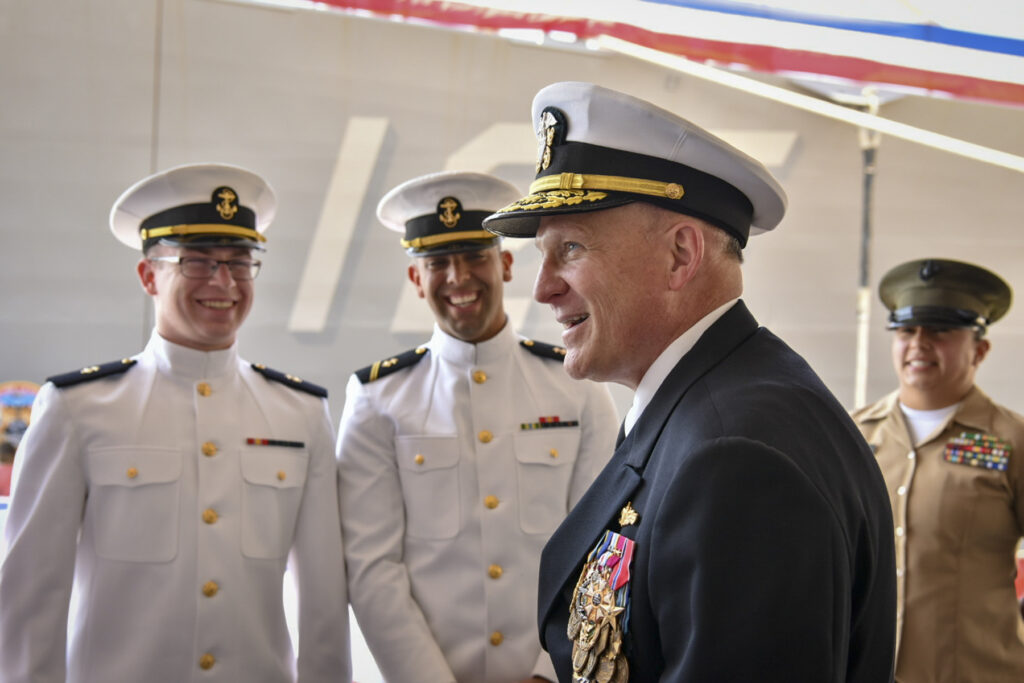
Chief of Naval Operations Adm. Mike Gilday, shown speaking to the U.S. Naval Academy’s Silent Drill Team at the christening ceremony for the future Jack H. Lucas (DDG 125) in Pascagoula, Mississippi, March 26. U.S. NAVY / Cmdr. Courtney Hillson
WASHINGTON — Chief of Naval Operations Adm. Mike Gilday met with Chief of the Indonesian Navy Adm. Yudo Margono, at the Pentagon, March 30, the CNO’s public affairs office said in a release.
This was their first meeting, during which the two leaders discussed the importance of maritime security and exchanged views on regional and global security issues.
“Working alongside our Allies and partners has never been so important. Today’s maritime challenges require interoperability and presence,” said Gilday. “Together we will continue to keep the maritime commons open and free as we promote the security, stability, and prosperity of the Indo-Pacific.”
The two leaders exchanged views about security issues in the Indo-Pacific, underscoring the importance of the U.S.-Indonesian bilateral relationship.
“The purpose of this visit is to enhance relationships and partnerships between the two navies that have been well established so far,” said Margono.
Gilday emphasized a commitment to continuing dialogue and building upon our strong bilateral defense relationship.
“For more than 70 years, Indonesia has been a valued partner,” said Gilday. “There is a strong strategic partnership between Indonesia and the U.S. and I am grateful for our long history of collaboration, cooperation, and training,” said Gilday.
Gilday and Margono also reviewed progress made in recent years in military-to-military cooperation to increase exercises and training, as well as regular defense policy dialogues.
U.S. and Indonesia operate together around the globe regularly. Indonesia has been part of the CARAT exercise series since it began in 1995. After 27 years of annual training events between the armed forces, CARAT Indonesia remains a model for cooperation that has evolved in complexity and enables both navies to refine operations and tactics in response to both traditional and non-traditional maritime security challenges.
The U.S.-Indonesian relationship is strengthened through training. For the first time, Indonesia has two midshipman attending the U.S. Naval Academy.
Q&A: Navy International Programs Office, Rear Adm. Anthony E. “Tony” Rossi, Deputy Assistant Secretary of the Navy, International Programs, Director, Navy IPO
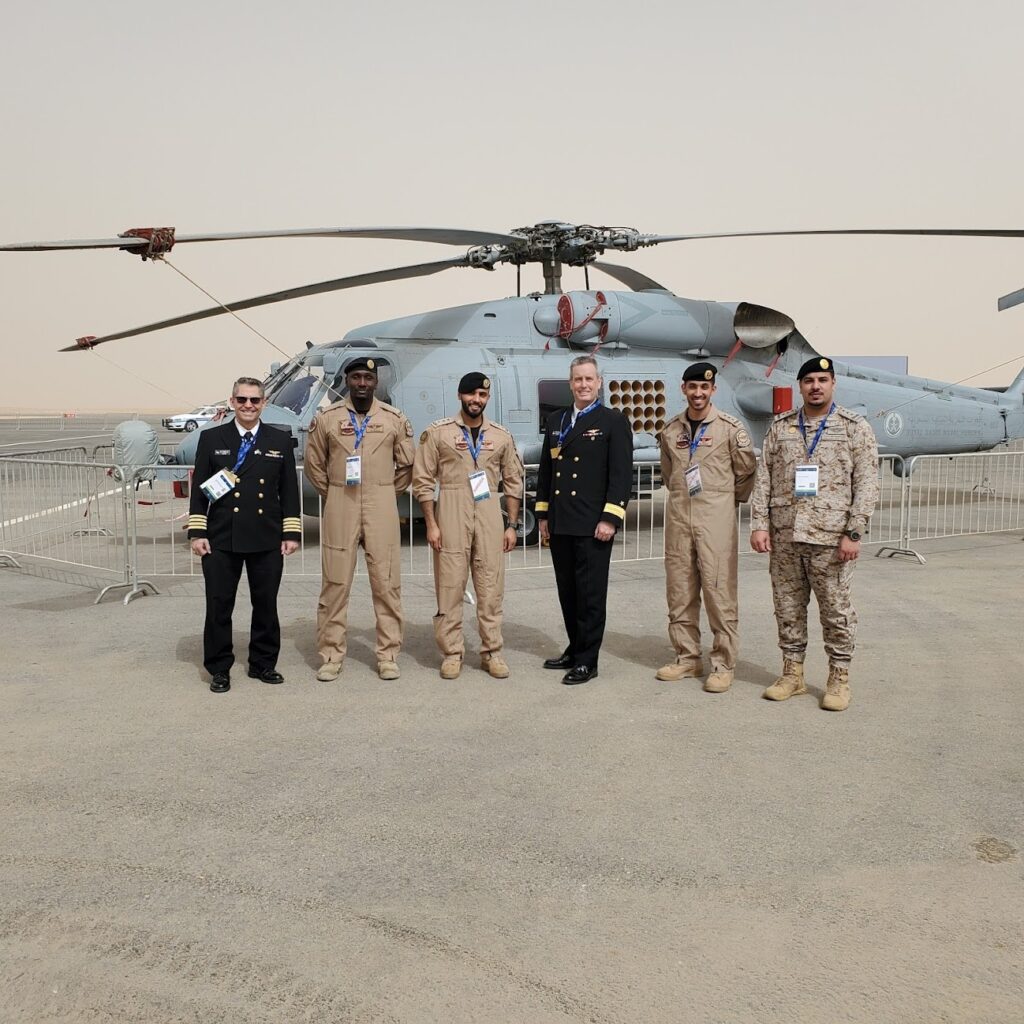
Rossi, center, stands in front of an Foreign Military Sales-delivered Royal Saudi Naval Forces MH-60R with the RSNF aircrew at the World Defense Show 2022 in Riyadh, Saudi Arabia. NIPO
The Navy International Programs Office manages and implements international security assistance programs, cooperative development programs and technology security policy. Led by Rear Adm. Anthony E. “Tony” Rossi and Steve Bowdren, Navy IPO is a reporting unit to the Assistant Secretary of the Navy for Research, Development and Acquisition and is an Echelon II Command to the chief of naval operations. It supports regional combatant commanders’ and Navy leadership’s efforts to build vigorous relationships with U.S. maritime security partners around the world. Rossi answered questions from Seapower Deputy Editor Brett Davis.
With all that’s going on in the world, it seems NIPO’s mission is more important than ever. To what extent do fast-moving threats, such as the war in Ukraine, affect your work?
Rossi: Our mission is to strengthen global maritime alliances, partnerships, and coalitions through security and technology cooperation. In today’s environment, multilateral relationships are more important than ever, particularly in areas of defense and security. As part of the Department of Defense, NIPO’s mission supports a whole-of-government approach to Russian aggressive actions toward Ukraine.
How does NIPO’s work strengthen U.S. security?
Rossi: NIPO is a key player in strengthening relationships with our allies and partners while enhancing interoperability and increasing maritime domain awareness. Investing in these relationships is critical in defending sovereignty from authoritarian influence and coercion.
How would you characterize the current state of interoperability between the U.S. and its allies?
Rossi: First, I think it’s important to define interoperability. I define it as platforms or systems that can operate together to complete a mission. That said, I think that the current state of interoperability between the U.S. and our allies and partners is always improving and expanding. Each year we hold cooperative exercises and execute cooperative deployments to test and prove our interoperability. For example, last year the U.S. Marine Corps conducted a first-ever cross-decked operation highlighting interoperability of the F-35B, underlining the strategic importance of the joint integration with the United Kingdom Carrier Strike Group. We also conducted multi-carrier operations in several theaters.
What are some ongoing challenges as you seek to create greater interoperability?
Rossi: As we continue to integrate more of our systems, the challenge lies within tying distributed sensors with distributed effectors that identify and stop potential threats over various networks and architectures. This not only is an ongoing challenge, but it hinders the ability for greater interoperability with our allies, given that they may have different systems, architectures or data standards. Even if our allies have the same systems as the U.S., there are other technical impediments that create a challenge, not to mention training and logistics that also need to be addressed to have a viable and sustainable interoperable capability.
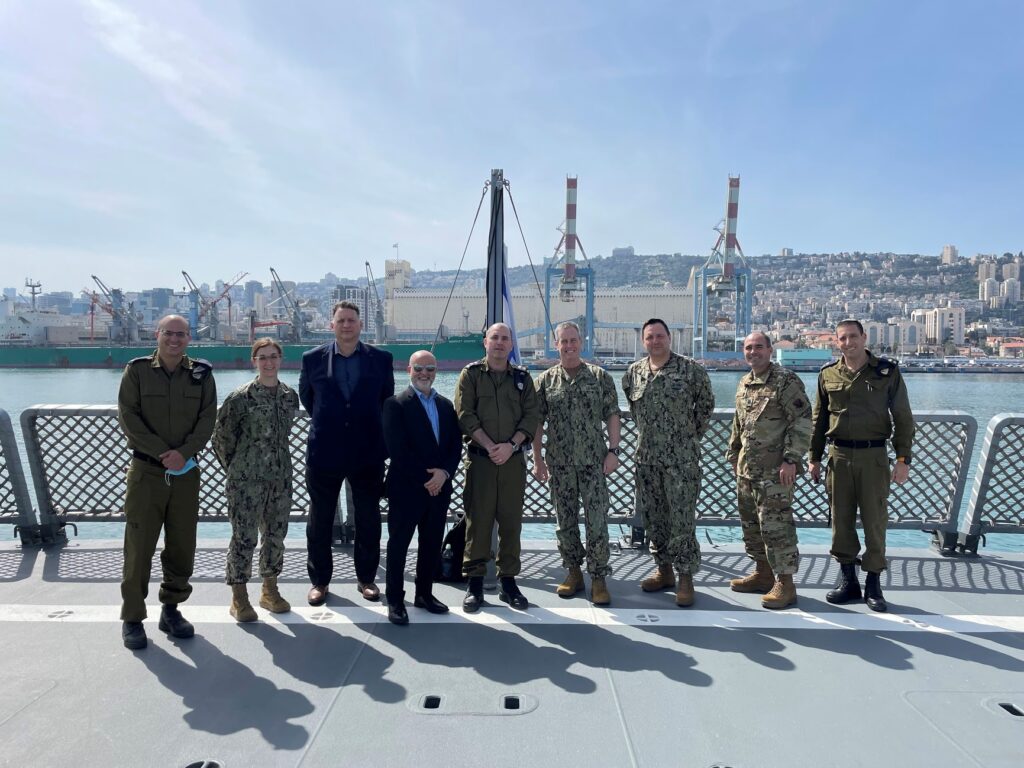
Rossi, center, stands with representatives from the Israeli navy, Ministry of Defense, Navy International Program Office, and Office of Defense Cooperation as they tour the Israel’s Haifa naval base. Supplied by NIPO
How important is it to have a full-spectrum approach for Foreign Military Sales, instead of just selling hardware?
Rossi: When FMS customers enter into an FMS case with the U.S., they aren’t just purchasing a system. They’re purchasing all the services that go with that system — training, spare parts, follow-on support, etc. We refer to this as the “total package approach,” and it is our absolute advantage and strength in competing internationally. Eighty percent of the total cost of a platform or system over its lifespan is sustainment, spanning from equipment deployment to equipment decommissioning. A crucial element of any FMS contract we offer is sustainment: the provision of parts, services and training to ensure our product stays fully mission capable throughout its life cycle. There are international examples where this is not the case — a client nation’s military receives shiny new equipment but is ultimately hamstrung by sustainment issues that hinder their ability to keep the equipment fully operational or render this capability moot.
What is the current operational tempo of the Foreign Military Sales program? Have there been more FMS transactions in recent months and years?
Rossi: If you look at FMS sales in the past few years, you would see the record-breaking $22 billion spike in 2018, which indicated the changing world as we transitioned out of the Cold War era. Since then, we have been averaging $11 billion-$12 billion in annual sales. In FY21, we had a 9% increase from the previous year, resulting in $12.41 billion in FMS execution. I would say that this has been maintained throughout the pandemic, and we are generally on track to reach it again this year. While we are maintaining our average, its important to note that FMS is a long and complex process, so most of these cases were in the queue before COVID-19. We have seen countries reassessing their arms imports since the pandemic both positively and negatively. For example, Germany entered into a $1.7 billion FMS contract for P-8A aircraft and accompanying services and equipment.
Are you getting more FMS requests for certain types of systems?
Rossi: Tactical fixed- and rotary-wing aircraft remain most prevalent in FMS sales cases. However, in recent years, some allies have shown interest in acquiring state-of-the-art multimission surface ships and combat systems. This appears largely cyclic in nature, as some ally fleet assets are reaching the end of their lifespan. In addition, there has been a constant demand for weaponry and associated support systems.
What steps have you taken to speed up the process for Foreign Military Sales, and which has proven the most effective?
Rossi: The “Speed” initiative has been an ongoing effort at NIPO. Over the years, NIPO has been able to assess the FMS process and determine ways to compress the timeline. We have successfully been able to expedite delivery of coalition capacity and capability from when the requirement is understood to when the article or service is delivered. We have done this by implementing “tactical” fixes to tighten the process, but our major achievement to date has been in the area of disclosure policy.
Typically, developing this policy, a one-to-two-year undertaking, has begun after formal sales approval has been received. We now get a jump on the process — when it is deemed likely that an ally’s sales case will be approved, we begin parallel development of disclosure policy. This could halve the time required for this phase of the FMS process.
We continue to reevaluate what we do and how we do it in the spirit of [Chief of Naval Operations Adm.] Gilday’s drive for the Navy to “get real, get better.”
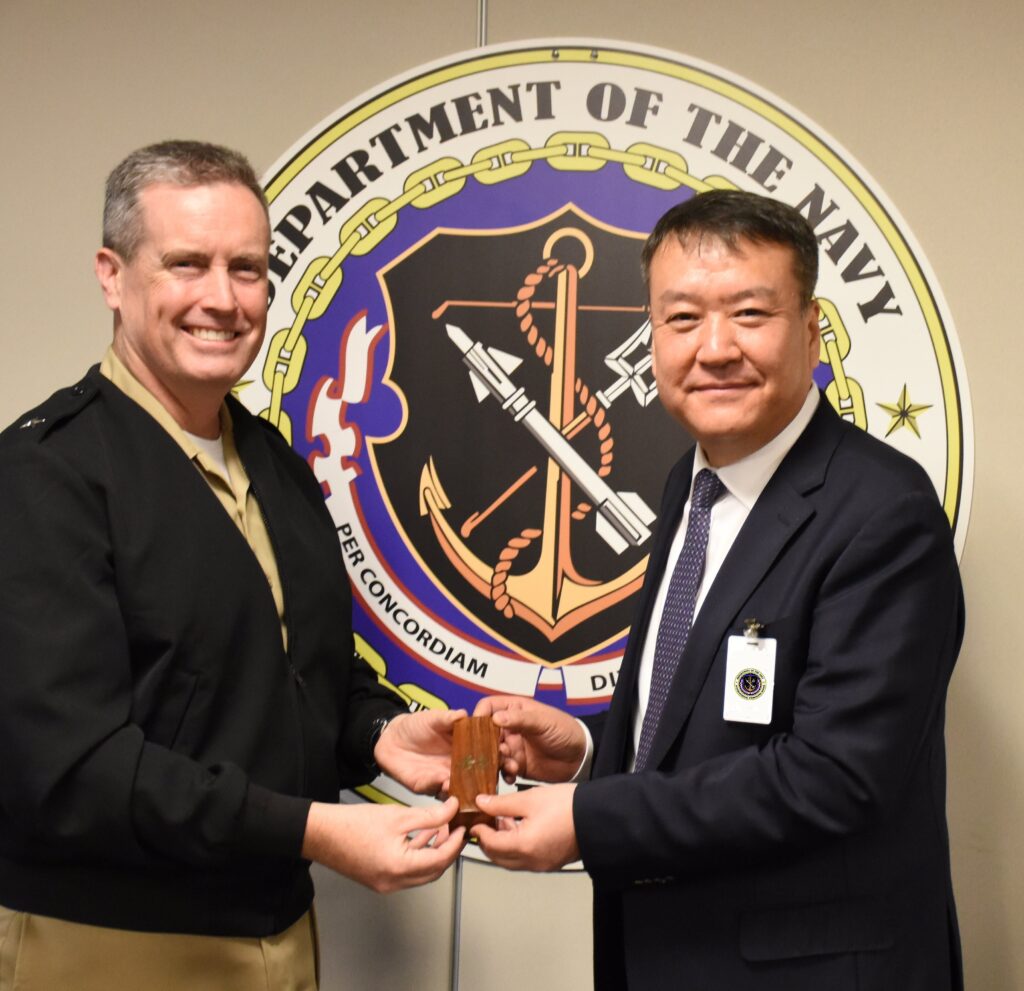
Rossi, left, met with Director General Bang Guckcheol from the Republic of Korea’s Defense Acquisition Program Administration, located at the Washington Navy Yard. NIPO
What impact has the worldwide pandemic had on your operations, and have you made any permanent changes in response to it?
Rossi: While we recognize that the COVID-19 pandemic disrupted some planned production and delivery, we have seen at the height of the pandemic countries sign large contracts for major arms. INDOPACOM [Indo-Pacific Command], EUCOM [European Command] and CENTCOM [Central Command] portfolios experienced the greatest volume: INDOPACOM expects over $6 billion in sales across nearly 500 FMS cases, EUCOM over $5 billion across over 500 cases and CENTCOM, $1.25 billion across 230 cases.
In terms of volume, we have actually seen about a 15-20% increase in sales and support during the pandemic. This includes LORs [letters of request] received, LOA/amendments [letters of offer and acceptance], third party transfer, international agreements, TS&FD [technology security and foreign disclosure] policy achieved, even partner/industry engagements.
As we emerge from COVID, the Navy as a whole is now assessing lessons from operating largely remotely over extended time, and there are many positives. I can tell you NIPO aptly met the challenges of working from home and was even able to ramp up to meet a surge in business. Now we, like many organizations, are looking to how we return to the workplace more while keeping what worked during COVID and changing what didn’t.
New Safety Command Isn’t Just About Safety, It’s About Readiness
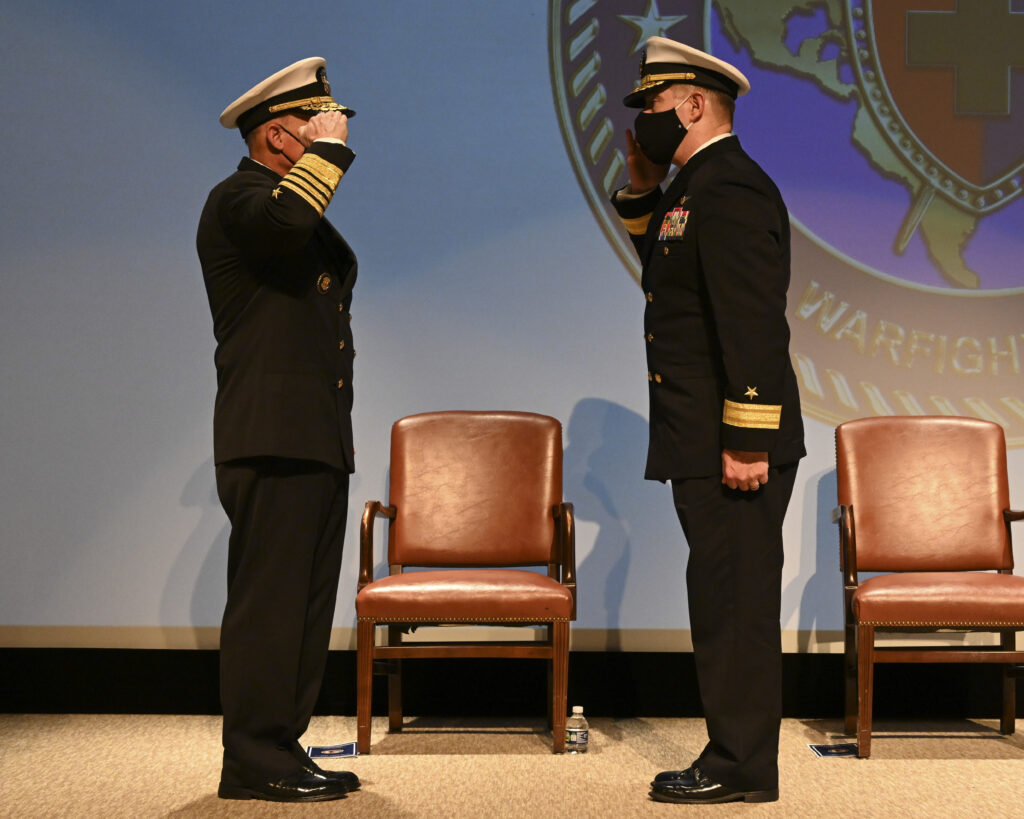
NORFOLK (Feb. 4, 2022) Rear Adm. F.R. Luchtman, right, reports to Chief of Naval Operations, Adm. Michael Gilday, as he assumes command of the Naval Safety Command during the establishment ceremony for the Naval Safety Command. The Naval Safety Command serves as the naval enterprise lead for non-nuclear safety standards, expertise and oversight of the Navy Safety Management System (SMS). The command will operate with the requisite authorities and responsibilities to establish a SMS that provides defense-in-depth and ensures the Naval enterprise is both safe to operate and operating safely. (U.S. Navy photo by Mass Communication Specialist 2nd Class (SW/AW) Weston A. Mohr)
“Our mission and our focus every day is to enable warfighting capability by reducing preventable mishaps, loss of life and damage to materiel,” says Rear Adm. F.R. “Lucky” Luchtman, commander of the new Naval Safety Command. “Everything we do is to save the lives of Sailors and Marines, whether they’re wearing a uniform or civilian clothes. That’s what keeps us motivated. We’re focused on Sailors and Marines every day.”
The Department of the Navy has had a safety management system, but there have been incidents and accidents that would indicate that the service’s SMS is “inconsistently effective,” according to Luchtman.
The new command assumed the functions of the Naval Safety Center but raised it to a command that reports directly to the chief of naval operations.
By elevating the Naval Safety Center to the Naval Safety Command, the service is making is a statement that it’s going to start looking at problems differently.
“It’s a refocus of our current missions. We want to get after leading indicators and become the regulation authority that can evaluate the effectiveness of the safety management system as a whole,” Luchtman said.
“Some things won’t change a whole lot,” he acknowledged. “For example, we have an investigations branch of world-class investigators that help us understand the root causes of mishaps wherever they occur, whether on the surface, below the surface, in the air or on the land. Their mission is not really going to change a whole lot. Within our knowledge management directorate, we have a center of excellence with respect to data analytics. We have tremendous capability and capacity look at leading indicators and how we can use those indicators to reduce preventable loss of life and materiel.”
Also within the data analytics and safety promotions directorate is safety promotions, which shares safety awareness dispatches; publishes some well-known publications such as Approach, Mech, GroundWarrior and Ride; and has a robust social media presence on LinkedIn, Twitter, Facebook, Instagram and a public-facing website it uses to target the message to the fleet.
“What will change is the modernization of our safety management system,” Luchtman said.
The SMS is a high-level framework that identifies and communicates risk and helps mitigate or eliminate it.
“Safety Command will implement the Navy’s safety management system, which is a formal organization-wide approach to enhanced risk management reduction, problem solving and, really importantly, critical thinking,” said Chief of Naval Operations Adm. Michael Gilday, speaking at the command’s Feb. 4 establishment ceremony. “It will move us away from reacting — reactively managing safety, to proactively managing risk by making sure accountability for risk is held at the appropriate level.”
Luchtman said, “We currently have an SMS, and we’re looking to modernize it and meet the international ISO 45001 standard for occupational health and safety. But we’ve done some analysis that shows that we’re just not learning from some of the lessons-learned from previous mishaps. We know that because as we look at causal factors over time, many of them appear again and again over time.
“We’re going after the gaps and seams to ensure our SMS functioning at 100% to reduce preventable mishaps. If we surmise that we’re not learning as effectively as we should, or as consistently as we could, we want to know why, and take corrective action. The Navy that proves it can learn and adapt is going to be better postured for that fight than the one that does not.”
Luchtman said leadership should be absolutely engaged in the SMS design and implementation. Under SMS is the Safety Management Program, which gets into the tactical level of policies and procedures. “Our goal is to identify risk, communicate risk and, at the appropriate level, mitigate or eliminate that risk via accountability.”
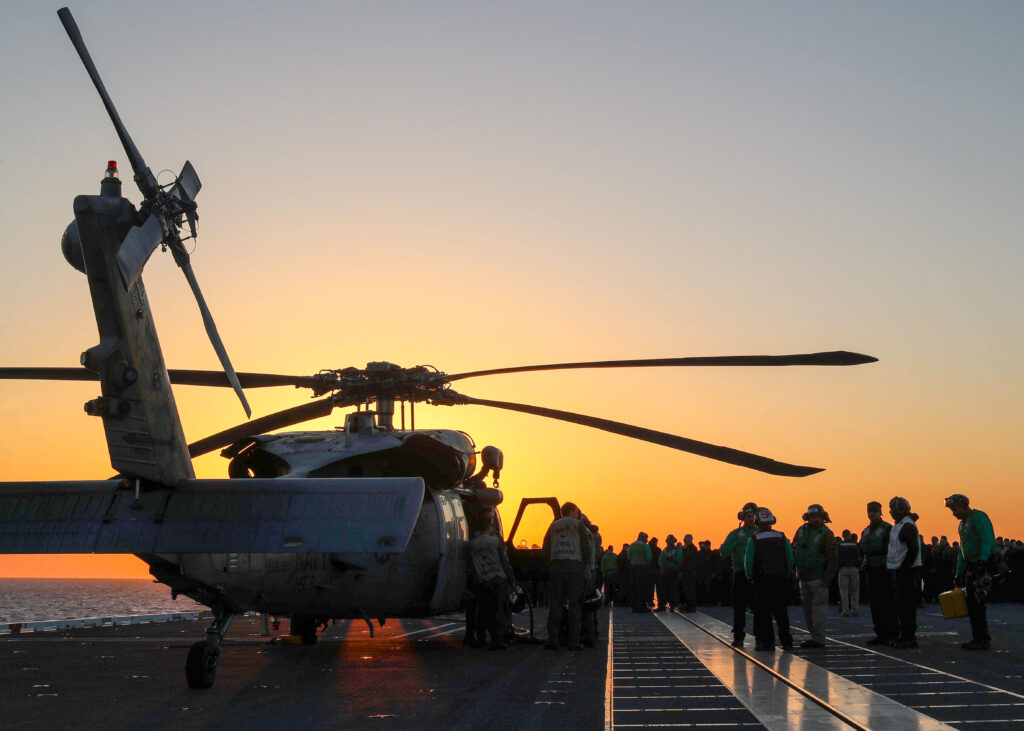
Sailors assigned to USS Gerald R. Ford (CVN 78) and Carrier Air Wing 8 prepare to conduct a foreign object debris walkdown on the flight deck, March 22. U.S. NAVY / Mass Communication Specialist 3rd Class Riley McDowell
Safety Assessment
Luchtman said the Navy is now stressing accountability to make sure safety management is effective.
“As we get our SMS to where we want it to be, then how can we assess it to make sure that it’s operating the way we want it to? That’s where the Naval Safety Command comes in,” he said.
The command will assess the effectiveness of the SMS through unit-level spot inspections focused on compliance, deviation from standard and self-assessment and self-learning.
“We’re going to walk onto a ship or submarine or into a squadron,” he said. “And we’re going to take compliance with guidance and policy that exists throughout the safety management system. And then we’re going to note deviation from those practices. And then we’re going to ask the question, why? That question really is foundational to everything we’re doing. It’s important to get those safety issues addressed right away, but that noncompliance can also be used as an indicator as to the health of the entire enterprise broadly.”
Gilday said the Safety Command, much like the Navy’s Board of Inspection and Survey, “is going to take a look at our commands, our units, our squadrons, our submarines, our ships’ ability not only to comply with safety instructions, but … the real magic is going to be their ability to take a deeper look at our commands’ ability to self-assess and to self-correct.”
The design for the fleet assessments is not final yet, Luchtman said.
Identifying Risk
When a unit deploys, there are factors that develop and evolve that affect risk — such as training, manning shortfalls or equipment status or casualties — that require an understanding of the aggregation of risk to make decisions about how best to continue the mission, he said. But risk is more encompassing than just safety.
“In our profession, risk follows us around 24 hours a day, seven days a week. We’re always making risk decisions involving challenges and opportunities. There’s no escaping it.”
“There is almost no aspect of naval operations that can be separated from risk,” Gilday said. “But risk can be controlled.”
Luchtman said his command will identify best practices that can be applied throughout the fleet.
“We’re really focused on units and their ability to properly assess where they are, and whether or not they’ve implemented changes at the local level to address those gaps. So, that’s the unit level assessment. But we’re also going to be assessing the effectiveness of the safety management system from a higher echelon perspective, including the large staffs at the fleets, type commands and systems commands, to make sure they can properly identify the risk that is out there.
“We want to ensure the upper echelons understand the aggregation of risk that is occurring below them, appropriately communicate that risk both up the chain and down the chain, and are holding at the appropriate level the accountability to address those concerns that are found in risk identification process. That process of assessing higher echelon is brand new for the Naval Safety Command,” Luchtman said. “We have not done that in the past.”
Luchtman said this journey started with the thesis that the Department of the Navy’s safety management system is inconsistently effective.
“We looked at how we solve the problem. We started doing our homework to look at industry best practices, our sister services and our international partners, and we realized that we can do a lot better. We have to be honest with ourselves and recognize our capabilities and our limitations, understand those gaps, and fill those gaps through the safety management system.”
He said there are two commodities at stake, the first being money.
“The Navy spends about a billion dollars a year on mishaps across the communities. Wouldn’t it be better to apply that money in areas of readiness, rather than replacing materiel or human life that we’ve lost because we weren’t in compliance with an effective safety management system?”
The other commodity is trust.
“Every preventable mishap erodes public trust. We need to be able to say with credibility that we understand our business, we understand where the risks are and we put into place mitigations to allow us to operate at the very highest level, while minimizing unnecessary loss to human life and materiel. And there’s also a level of trust with taxpayers and the American public. Nobody wants to see ships damaged, aircraft crashed or lives lost on the front page. We actually are a pretty safe enterprise considering the number of days we steam or the hours we fly,” Luchtman said. “We actually do it pretty well. But when we fail, it’s normally a high visibility event.
“We want to have the conversation not about safety, but about readiness and warfighting capability.”
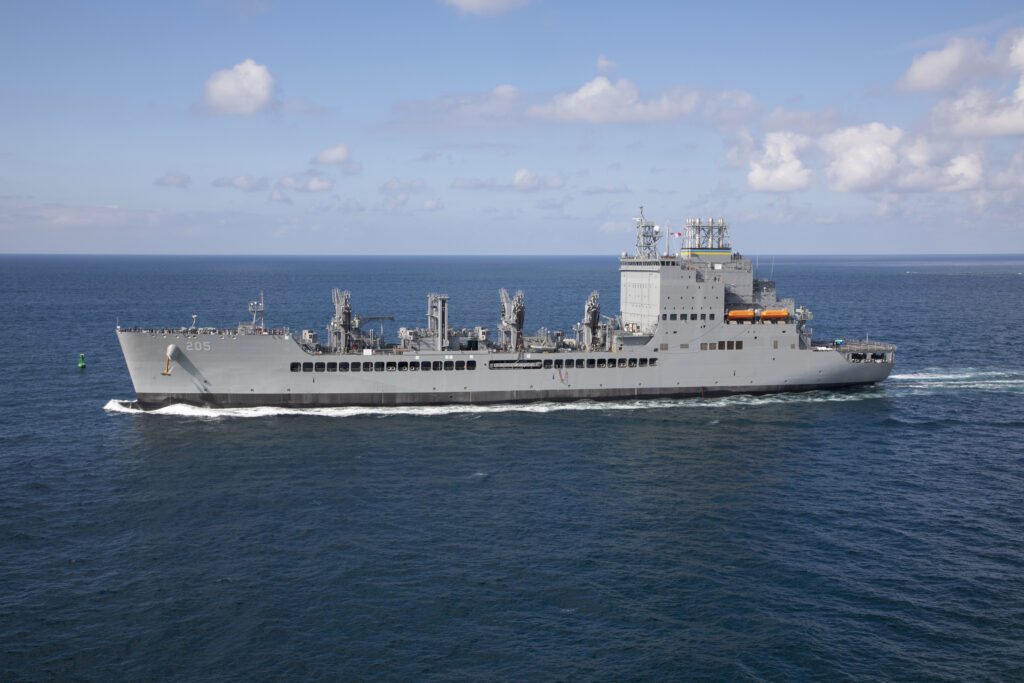
USNS John Lewis (T-AO 205), the Navy’s lead ship of its new class of fleet replenishment oilers. A future ship in the class will be named USNS Ruth Bader Ginsburg. GENERAL DYNAMICS NATIONAL STEEL AND SHIPBUILDING. CO.
WASHINGTON — Secretary of the Navy Carlos Del Toro announced March 31 that a future John Lewis-class replenishment oiler (T-AO) ship will be named USNS Ruth Bader Ginsburg to honor the former Supreme Court Justice and women’s rights activist.
The future USNS Ruth Bader Ginsburg (T-AO 212) will be the first U.S. Navy ship to bear her name.
“As we close out women’s history month, it is my absolute honor to name the next T-AO after the Honorable Ruth Bader Ginsburg. She is a historic figure who vigorously advocated for women’s rights and gender equality,” said Del Toro. “As Secretary of the Navy, it is my aim to ensure equality and eliminate gender discrimination across the Department of the Navy. She is instrumental to why we now have women of all backgrounds, experiences and talents serving within our ranks, side by side with their male Sailor and Marine counterparts.”
The name selection for the John Lewis-class replenishment oiler follows the naming convention of honoring people who have fought for civil and human rights. Born in 1933, Ruth Bader Ginsburg was a pioneering advocate for women’s rights turned Supreme Court Justice. Ginsburg made history as the second woman to serve on the U.S. Supreme Court when she was nominated by President Bill Clinton and confirmed in 1993. Of her 27-year tenure on the Supreme Court, she is most noted for her work toward issuing the majority opinion for United States v. Virginia, a landmark 1996 case that struck down Virginia Military Institute’s male-only admissions policy.
The future T-AO 212 is the eighth of the T-AO ships awarded to the Navy, with the first delivered in 2021. The class and lead ship T-AO 205 is named in honor of Rep. John Lewis (D-Ga).
Del Toro also named Justice Ginsburg’s daughter, Jane Ginsburg, as the ship’s sponsor.
T-AO ships are fleet oilers designed to transfer fuel to the Navy’s operating carrier strike groups. The oilers have the ability to carry a load of 162,000 barrels of oil, maintain significant dry cargo capacity, aviation capability and a speed of 20 knots. General Dynamics National Steel and Shipbuilding Company designed the vessels with double hulls that protect against oil spills as well as strengthened cargo and ballast tanks. The T-AO measures 742-feet in length with a full load displacement of 49,850 tons.
HELIOS Laser Weapon System Delivered for Installation on USS Preble
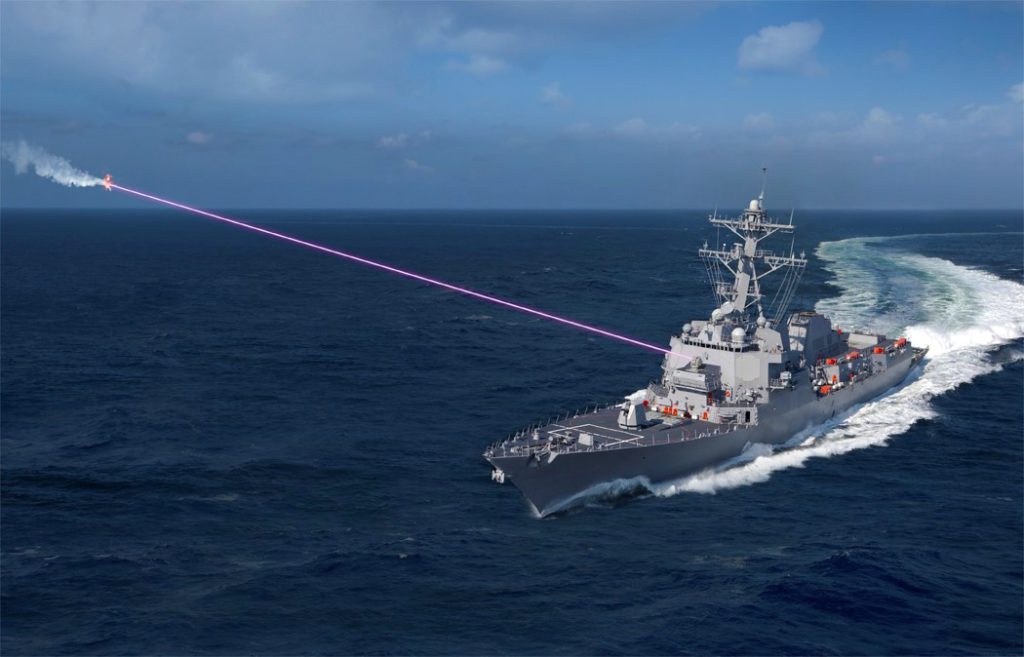
An artist’s rendering of Lockheed Martin’s HELIOS system. LOCKHEED MARTIN
ARLINGTON, Va. — The Navy’s newest laser weapon system has completed range testing at Wallops Island, Virginia, and is being installed on the U.S. Navy’s Flight IIA Arleigh Burke-class guided-missile destroyer USS Preble in San Diego.
The first High-Energy Laser with Integrated Optical Dazzler and Surveillance, or HELIOS, built By Lockheed Mission Systems and Sensors, has started phased delivery to the Preble at the BAE Systems yard in San Diego. It will be the first laser weapon system to be integrated with a ship’s Aegis Combat System and power and cooling systems, said Jon Rambeau, Lockheed Martin’s vice president and general manager for Integration for Systems and Sensors, during a March 30 interview with Seapower.
The 60-kilowatt HELIOS is scalable, Rambeau said, up to 120 kilowatts with minor modifications such as the addition of more fiber-optic laser modules. It has replaced the Preble’s forward Mk15 Close-In Weapon System.
“We believe the 60- to 120-kilowatt-range systems can be effective against an ASCM [anti-ship cruise missile],” Rambeau said. “We’ve done some modeling that demonstrates that, we believe, and also looking soon to be able to back that up with some real-world test data. Watch for some news that should be coming soon as we continue the test program.”
The 60-kilowatt HELIOS also can be used for surveillance and as a counter-unmanned aerial system dazzler. The HELIOS also is adaptable to the Ship Self-Defense System on aircraft carriers and newer amphibious warships.
“After better than a decade of that question being out there, ‘When are these systems going to demonstrate that they’re tactically relevant,’ we’re really right at the threshold of that to the point where the conversation is not going to be anymore, ‘Are those going to work?’ and ‘Are they going to be useful on the battlefield?’” Rambeau said. “Rather, the question is going to turn more to funding priorities, price points, the capacity of our industry primes, and the supply chain that could build these things in full quantities and at scale and then, ultimately, conversations around doctrine and how they would actually be employed in combat.
“It’s really exciting time in lasers and it has been a long time in coming,” he said.
The HELIOS contract was awarded to Lockheed Martin in January 2018. The company is also developing a layered laser weapon system for the U.S. Army.
Norfolk-based E-2D Advanced Hawkeye Crashes, Two Injured, One Fatality
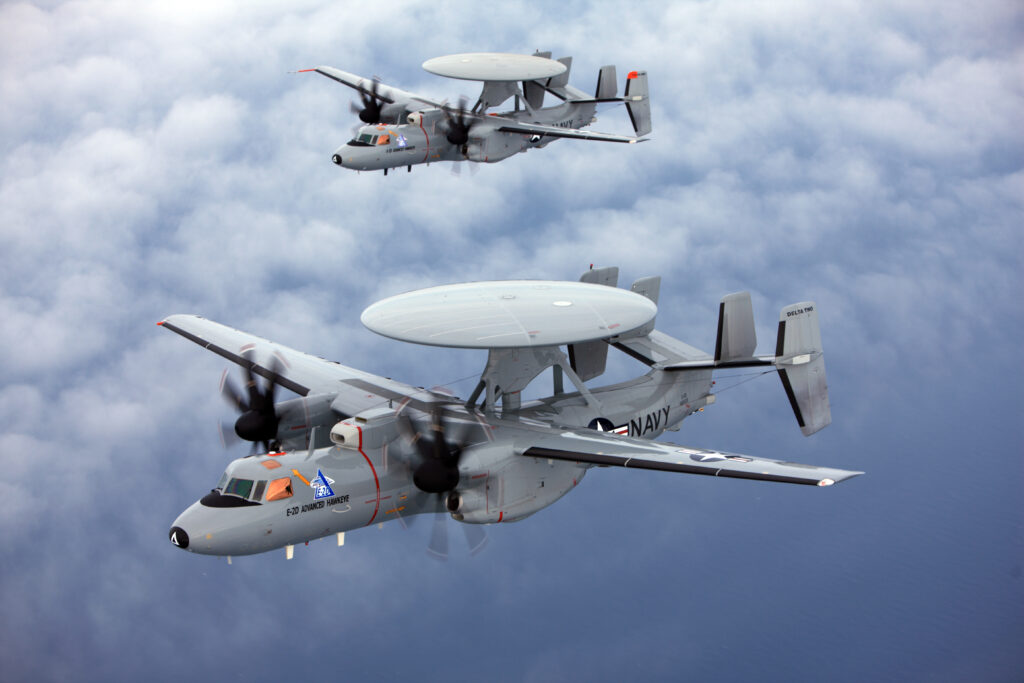
E-2D Advanced Hawkeye aircraft conduct a test flight near St. Augustine, Florida. U.S. NAVY
NORFOLK, Va. — A Navy E-2D Advanced Hawkeye assigned to an East Coast Airborne Command and Control Squadron (VAW) crashed in the vicinity of Wallops Island and Chincoteague, Virginia, March 30, the commander of Naval Air Force Atlantic public affairs said in a release. One crew member has died and two have been injured.
The E-2D crashed at approximately 7:30 p.m. Two crew members were rescued by Maryland State Police and transported to Wallops Island for follow-on medical treatment for non-life-threatening injuries. The names of injured crewmembers will not be released due to privacy concerns.
Unfortunately, the third crew member was found deceased in the aircraft. The Worcester County Fire Department Dive Team supported the search and recovery of the deceased. The name of the crew member killed will not be released at this time, pending primary next of kin notification.
NAVCENT Commander: Goal of 100 USVs in Area by Summer of 2023
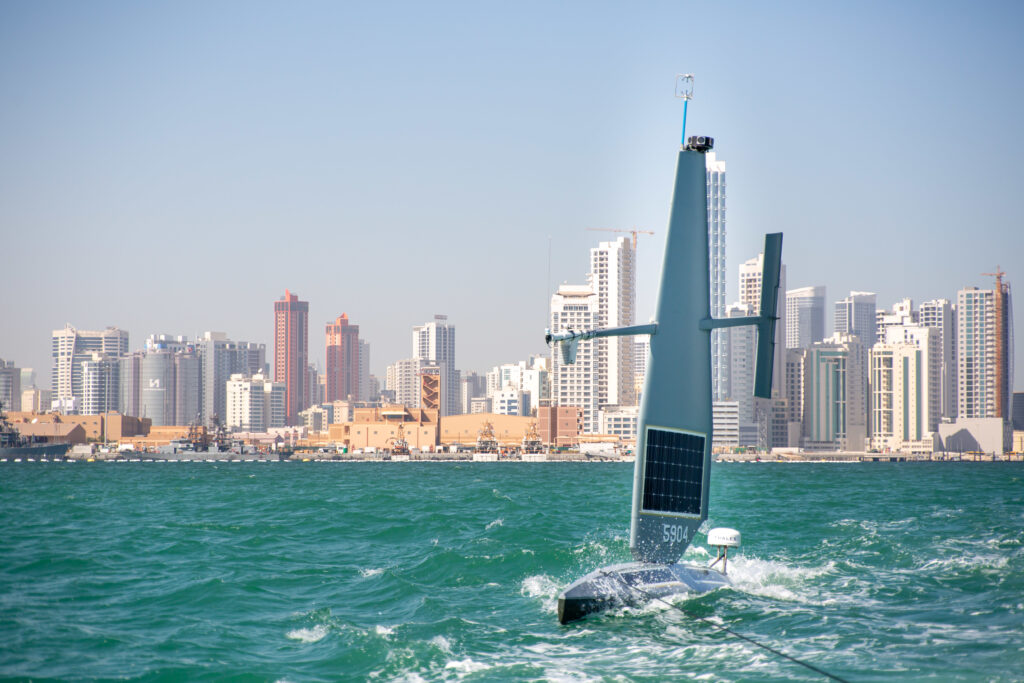
A Saildrone Explorer unmanned surface vessel is being towed out to sea in the Arabian Gulf off Bahrain’s coast, Jan. 27. U.S. Naval Forces Central Command began operationally testing the USV as part of an initiative to integrate new unmanned systems and artificial intelligence into U.S. 5th Fleet operations. U.S. ARMY / Specialist Natianna Strachen
ARLINGTON, Va. — The commander of the U.S. 5th Fleet/Naval Forces Central Command said he is pleased with the results of the experimentation with unmanned vessels and artificial intelligence in his area of operations and predicts a significant expansion of their use in his area of responsibility in the near future.
Vice Adm. Brad Cooper, speaking March 28 in an online discussion sponsored by the Washington think tank the Middle East Institute, said his task force for unmanned vehicle experimentation, Task Force 59, “has exceeded our every expectation.”
Unmanned systems are not new to the 5th Fleet; it has operated RQ-4A Global Hawk surveillance unmanned aerial vehicles and Mk18 mine countermeasures unmanned underwater vehicles for years. But Cooper said the maturation of unmanned surface vessels is relatively new and has enabled a great expansion in their use in the role of maritime domain awareness, allowing his command to “put more eyes out on the water.”
The admiral said by linking two USVs together, they could use “artificial intelligence to map the waters around them … detecting when something is unusual — smuggling, illegal fishing, you name it, and then sending the information back to the command center.
“That process has allowed us to expand our maritime domain awareness two or three times,” he said, noting that with more nations using USVs, the maritime domain awareness in the region could expand to 30 times the coverage.
“Our goal is to have 100 of these USVs patrolling around the waters of the Middle East by the summer of 2023,” Cooper said. “It a heavily partnered effort; it would mostly be an investment by partners. … We’re going to find ourselves in a pretty good spot because the capabilities speak for themselves.”
In January and February, about 80 unmanned systems were deployed in International Maritime Exercise 2022 in scenarios ranging over the Persian Gulf, North Arabian Sea, Gulf of Oman and the Red Sea.
Task Force 59 has accrued more than 7,000 hours of operating USVs. One type of USV stayed at sea for 45 days without need of additional fuel or maintenance.
For example, TF-59 has deployed high-endurance Saildrone USVs, which were controlled from Alameda, California, to patrol the Gulf of Aqaba. In another example, MARTAC provided five of its high-speed USVs for the experiments.
Cooper said for the price of one Arleigh Burke-class guided-missile destroyer, he could buy or lease around 2,000 Saildrone USVs.
HII’s REMUS 300 Selected as Navy’s Next-Generation Small UUV
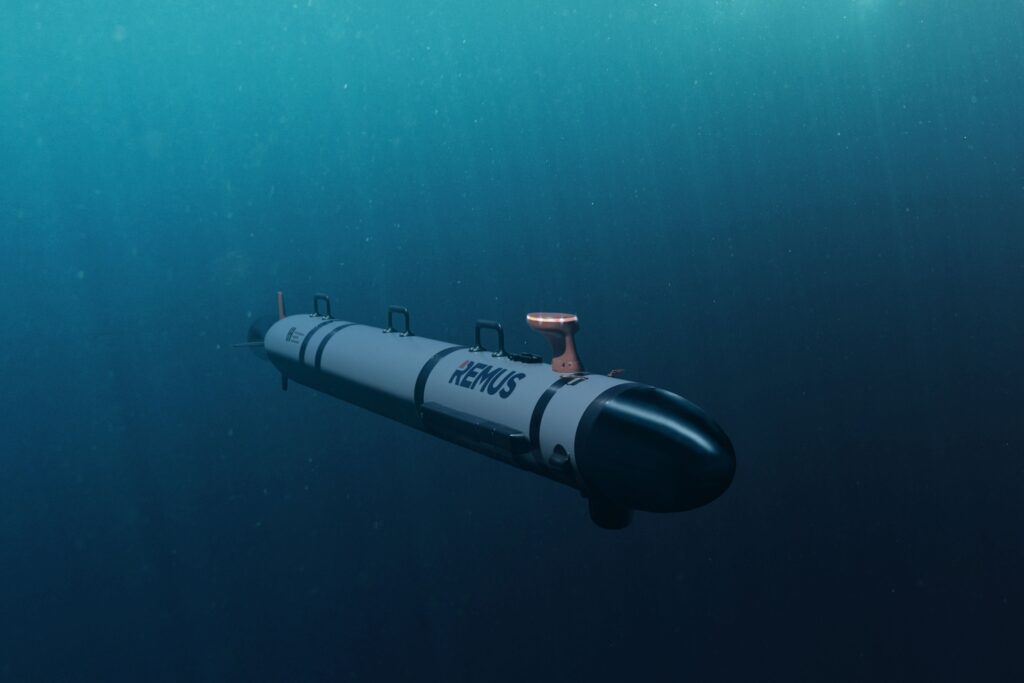
HII’s REMUS 300 unmanned underwater vehicle, selected as the U.S. Navy’s next-generation small UUV program of record. HII
MCLEAN, Va. — HII announced March 30 its advanced unmanned underwater vehicle, REMUS 300, was selected as U.S. Navy’s next generation small UUV program of record. REMUS 300 technology was designed to advance distributed maritime operations by conducting critical underwater missions.
The initial phase of the program includes the production and testing of REMUS 300 UUVs over the next year.
“HII is proud of our longstanding partnership with the U.S. Navy and now, to lead in this important direction on behalf of our customer,” said Chris Kastner, president and CEO of HII. “This program demonstrates the value of our investment in autonomous and unmanned systems, and our customer familiarity. We are confident that these technologies will both support the Navy mission and enhance effectiveness for the all-domain force.”
The vehicle incorporates advanced modularity and open architecture into a compact, man-portable design.
“REMUS UUVs have been extending the capabilities of the warfighter since they were first used in combat during Operation Iraqi Freedom in 2003,” said Duane Fotheringham, president of the unmanned systems business group in HII’s Mission Technologies division. “We’ve been enhancing, maturing and refining this technology since then, and are pleased the REMUS 300 meets needs for the Navy’s next generation UUV program.”
The SUUV program, also called Lionfish, is the next-generation Mk18 Mod 1 Swordfish program, which also utilizes HII’s REMUS technology. The selection follows a two-year rapid prototyping effort involving multiple user evaluations and spiral developments to refine the REMUS 300 design. The acquisition was facilitated by the Department of Defense’s Defense Innovation Unit and their commercial solutions opening process via the other transaction authority.
Navy Fleet Would Shrink Further Under 2023 Ship Decommissioning Plan
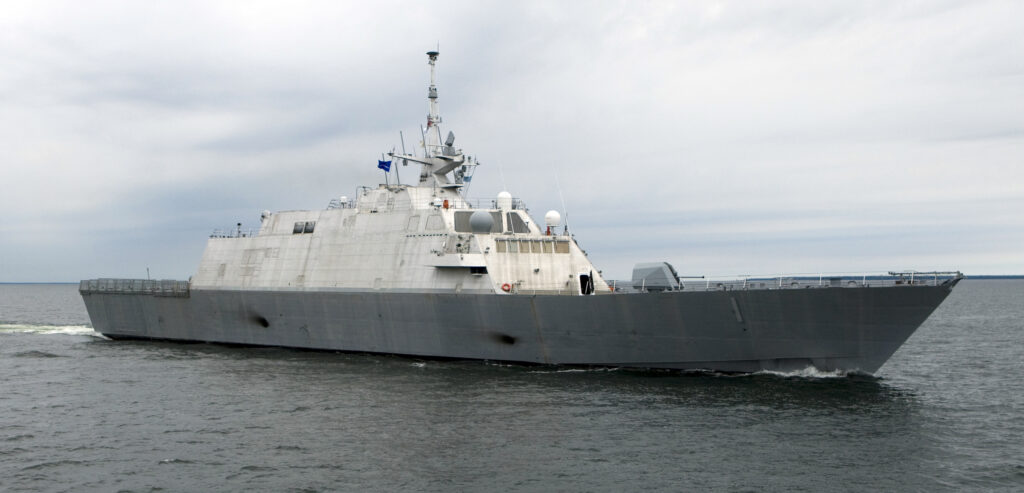
The first U.S. Navy Littoral Combat Ship, Freedom. The Navy plans to retire nine LCS, most or all from the Freedom class. U.S. NAVY
ARLINGTON, Va. — Normally the number of new U.S. Navy ships requested for the next a new fiscal year garners the most attention of reporters, but this time it was the number of ships the Navy is seeking to decommission that drew the most attention.
Under the Future Years Defense Plan, the size of the Navy’s battle force would shrink from 298 today to 280 in fiscal 2027. Chief of Naval Operations Adm. Michael Gilday has advocated divesting in order to invest, and this budget supports that concept.
During the Navy Department’s March 28 fiscal 2023 budget briefing at the Pentagon, Rear Adm. John Gumbleton, deputy assistant secretary of the Navy for Budget, said the Navy is requesting the retirement of 24 ships, compared with the construction of nine battle force ships.
Gumbleton listed the types of the 24 ships targeted for retirement:
9 littoral combat ships
5 Ticonderoga-class guided-missile cruisers
2 Los Angeles-class nuclear-powered attack submarines
2 Henry J. Kaiser fleet replenishment oilers
4 Whidbey Island- or Harpers Ferry-class dock landing ships
2 Montford Point-class expeditionary transfer dock ships
He said the retirements would save the Navy $3.6 billion over the Future Years Defense Plan.
Most, if not all, of the littoral combat ship retirements would be of the troubled Freedom variant and would save the Navy $50 million annually. Also, under the 2023 plan the LCS antisubmarine warfare mission package would not be installed on the remaining LCSs, with the ASW mission taken up by the new Constellation-class frigate.
The two Montford Point-class expeditionary transfer dock ships are less than 10 years old and their proposed retirement reflects changes in Marine Corps amphibious operational concepts toward more distributed maritime operations.
The Navy recently has pointed our more problems with the older Ticonderoga-class guided-missile cruisers to the level of safety concerns being a major issue.
The nine battle force ships requested for 2023 by the Navy include:
2 Virginia-class SSNs
2 Flight III Arleigh Burke-class guided-missile destroyers
1 Constellation-class guided-missile frigate
1 America-class amphibious assault ship
1 Flight II San Antonio-class amphibious transport dock ship
1 John Lewis-class fleet replenishment oilers
1 Navajo-class towing, salvage and rescue ship
For 2022, the Navy requested eight ships, but Congress increased the number to 13 in the enactment of that budget.
The 2023 budget would continue to fund the Columbia-class ballistic-missile submarine, the Ford-class aircraft carriers, and advance procurement for two Virginia-class nuclear-powered attack submarines.
Gumbleton said 2023 would be the last year for procurement of the San Antonio-class transport dock ship.
Also, under the Future Years Defense Plan, production of the Constellation-class guided-missile frigate would alternate one and two ships year by year.
Procurement of the light amphibious warship and the submarine tender replacement would begin in fiscal 2025, followed by the next-generation logistics ship in 2026. Research and development funding is provided for the large unmanned surface vessel and the extra large unmanned underwater vessel.
The 2023 budget also would fund the purchase of two used sealift ships for the Maritime Administration’s Ready Reserve Force.
The fiscal 2023 also requests funding for two LCAC 100-class ship-to-shore connectors and the service-life extension of two LCAC 01-class connectors; but does not request more new LCU 1700-class utility landing craft. The plan also would fund advance procurement funds for the refueling and comprehensive overhaul of the USS Harry S. Truman (CVN 75), which the Navy not long ago wanted to decommission to fund other priorities.
Rep. Rob Wittman (R-Virginia), ranking member of the House Armed Services Committee’s Seapower and Projection Forces panel, has been critical of the Navy’s “divest to invest” strategy, which is shrinking the fleet. He issued a statement March 28, excerpted below:
“I am particularly disappointed that even as we aim to grow our naval and projection forces, this budget continues the divest to invest strategy that will shrink our fleet once again, underinvest in the fifth-generation fighters we need to compete with peer adversaries, reduces our Air Force tanker force structure and once again prioritizes future technologies over the capacity and capabilities servicemembers need now to ensure we have a credible American military. I will work with my colleagues in Congress this year to ensure that we deliver a defense budget that genuinely invests in the national security of our nation.”