Navy Secretary Sees Climate Change, Illegal Fishing as Global Maritime Security Challenges
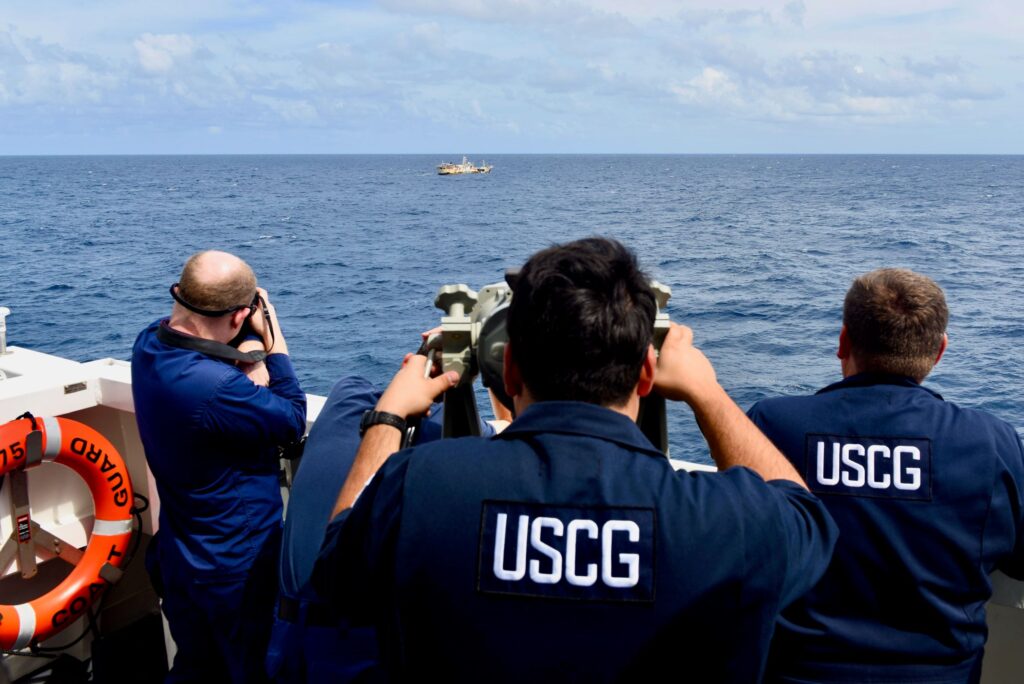
USCGC Stone (WMSL 758) patrols high seas observing fishing activity to support Operation Southern Cross in the South Atlantic, Feb. 6, 2021. U.S. COAST GUARD / Petty Officer 3rd Class John Hightower

ARLINGTON, Va. — Linking climate change’s impact on trade, fishing, energy and employment with the economic and environmental toll of illegal, unreported and unregulated fishing, U.S. Navy Secretary Carlos Del Toro says the world’s “blue economy” has never been more important or more challenging.

“From climate change to illegal and unreported fishing, the environmental challenges facing our oceans are global challenges that require truly a global response,” Del Toro told an ocean security forum at a Washington think tank Dec. 16.

The Navy secretary told a live audience at the Center for Strategic and International Studies, and others watching remotely, that the Navy-Marine Corps team “is determined to do our part.”

The World Bank defines the blue economy as the “sustainable use of ocean resources for economic growth, improved livelihoods, and jobs while preserving the health of ocean ecosystem.”

On climate change, Del Toro said the marine environment is under threat from receding shorelines, melting sea ice, extreme weather and “a more aggressive competition for resources” like fish stocks and underwater energy and mineral deposits.

Prompted by President Joe Biden and Defense Secretary Lloyd Austin’s concerns about the climate challenge, Del Toro said the Navy Department, among other actions, is implementing hybrid technology to power five classes of combat ships and eight classes of logistics ships, purchasing zero emission vehicles and assessing a renewable energy system at Marine Air Station Miramar, California, to reduce reliance on San Diego’s power grid.

Del Toro said IUUF is having “profoundly destabilizing effects on many regions. This is happening on an industrial scale as nations like China not only refuse to restrain their distant waters fishing fleet, but actively subsidize the devastation they’re actively causing,” he said.

IUUF has taken such a toll on the economies of small maritime nations and world fish stocks — while increasing geo-political tensions and spawning instability — that the U.S. Coast Guard says it’s a greater security threat today than piracy at sea.

The combined Navy, Marine Corps and Coast Guard Maritime Strategy includes IUUF as part of the threat posed by near peer competitors China and Russia. The document notes China’s “state-subsidized distant water fishing fleet steals vital resources from nations unable to defend their own exclusive economic zones.”

Del Toro noted Coast Guard law enforcement teams have been deployed aboard several Navy ships as part of the Oceania Maritime Security Initiative.

Also speaking at the forum, Coast Guard Commandant Adm. Karl Schultz said his agency has taken an increasing leadership role in building trust and partnerships with foreign maritime states, particularly with the small island nations of the Pacific who lack the resources to enforce sovereignty over their resources and waters. Ocean-going Coast Guard cutters have trained partner nation coastal protection forces and aided them with situational awareness.

He noted the National Security Cutter Stone (WMSL 758), on its first voyage sailed down the east coast of South America, partnering with the maritime forces of Guyana and Brazil, and later with Ecuador and Colombia on the Pacific coast.

The Coast Guard, with approximately 57,000 personnel, does not have the capacity to be “the world’s fish cops,” Schultz said, “but I think we could bring some leadership. We could stitch together partners. We have a recognized brand that’s sort of known across the globe.”
NAVSEA to Proceed with COBRA II Littoral Mine-Countermeasures System

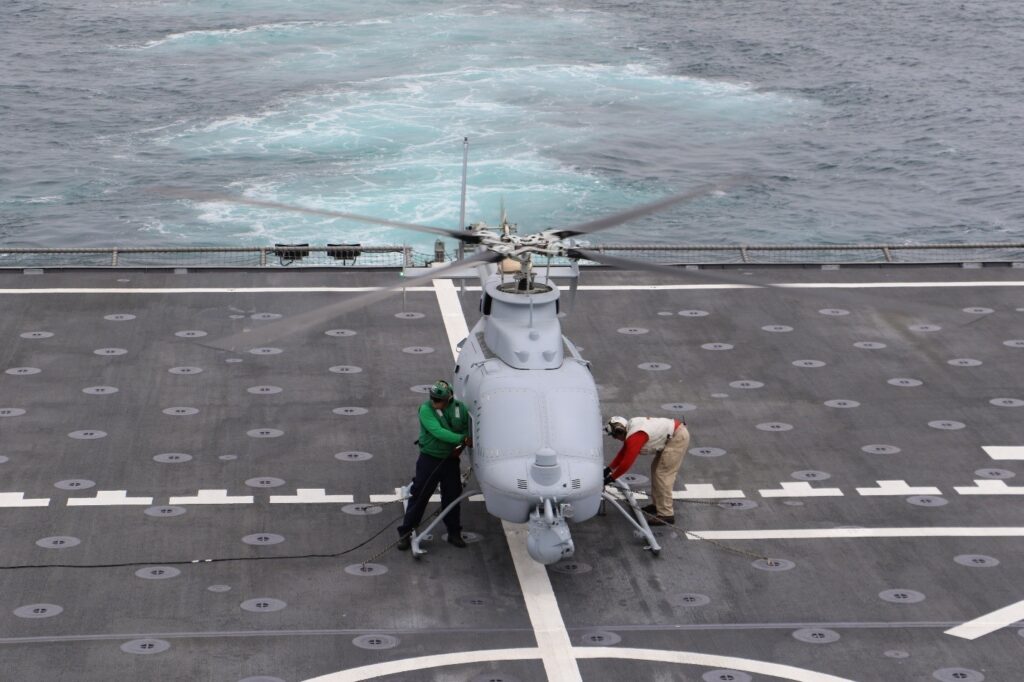
COBRA Block II is planned for installation on MQ-8C Fire Scout unmanned aerial vehicles, such as the one shown here on littoral combat ship USS Jackson (LCS 6) in April, 2021. U.S. NAVY / Ens. Alexandra Green

ARLINGTON, Va. — Naval Sea Systems Command announced it intends to solicit bids for a contract to design, develop and build a Block II version of the Coastal Battlefield Reconnaissance and Analysis system.  

The COBRA Block I is a mine- and obstacle-detection multispectral sensor that is a modular component of the mine warfare mission package for littoral combat ships. It is designed to detect mines from the beach through the surf zone. The COBRA is the intelligence, surveillance and reconnaissance technology component of the planned Assault Breaching System. In March 2009, COBRA Block I was rated mature enough to enter low-rate initial production. The COBRA was tested on an MQ-8B Fire Scout unmanned helicopter in October 2010. Initial operational capability was achieved in July 2017. Operational testing was completed in April 2018. The Block I was built by Arete Associates. 

Block II, planned for installation on the MQ-8C Fire Scout unmanned helicopter, will add night operation capability and full-detection capability of mines in the surf zone out to 200 feet of water depth during a single pass with a high coverage rate.  

The COBRA Block II system, when fully developed, will be a battlefield reconnaissance and analysis system designed to conduct aerial tactical reconnaissance in the littoral battlespace for the detection and localization of individual mine-like objects, minefields, minelines and obstacles in the surf zone and beach zone; for the detection and localization of surface and near-surface mine-like objects in very shallow water; and for the detection and localization of surface and near-surface mine-like objects, moored or drifting in shallow water through deep water in day or night, the NAVSEA announcement said. 

NAVSEA anticipates the contract award will be for up to three engineering and manufacturing development models and up to five low-rate initial production units of the COBRA Block II. 

NAVSEA anticipates releasing a request for proposals in the second quarter of fiscal 2022.   


MQ-4C Triton UAS Arrives in Florida as Australian Triton Takes Shape

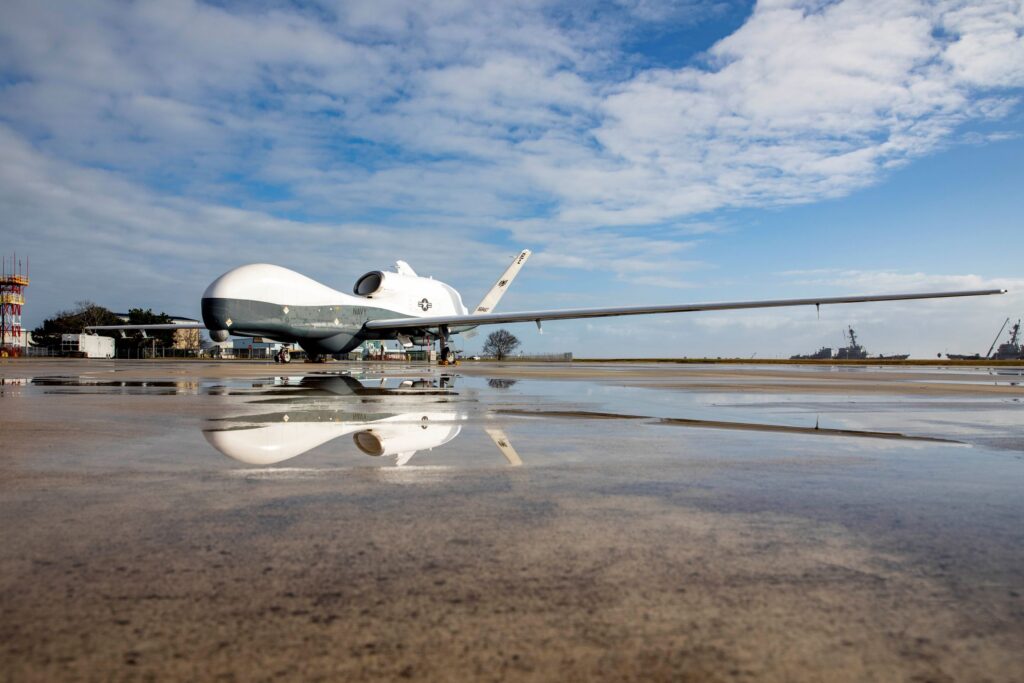
The Navy’s MQ-4C Triton unmanned aircraft arrived in Mayport, Florida, Dec. 16, as part of early operational capability efforts. U.S. NAVY

MAYPORT, Fla. — The Navy’s MQ-4C Triton unmanned aircraft system arrived in Mayport, Florida, Dec. 16, following its initial deployment in the Pacific theater, the office of Commander, Naval Force Atlantic said Dec. 17.

This air vehicle was one of two MQ-4C Triton UAS that operated from Andersen Air Force Base in Guam, after completing their first rotational deployment to Japan Oct. 12, 2021.

“The MQ-4C Triton demonstrates the significance of manned and unmanned integration to support national security interests,” said Cmdr. Brian Conlan, commander, Unmanned Patrol Squadron (VUP) 19. “The VUP-19 and MQ-4C Triton deployment to the 7th Fleet area of responsibility provided an opportunity to apply and refine the tactics, techniques, and procedures to expand our concept of operations and inform planning for future deployments around the world.”

VUP-19, the first Triton UAS squadron, operates and maintains two aircraft as part of an early operational capability to further refine the concept of operations, including expeditionary basing, and complement manned systems to better locate, identify, and track contacts of interest in the maritime domain.

The MQ-4 Triton’s arrival at Naval Station Mayport will support unit-level training and preparation for the next variant of MQ-4C.

The Navy conducted its first test flight of the MQ-4C Triton in its upgraded hardware and software configuration, known as integrated functional capability 4, July 29 at Naval Air Station Patuxent River, Maryland. IFC-4 brings an enhanced multi-mission sensor capability as part of the Navy’s maritime intelligence, surveillance, reconnaissance and targeting transition plan.

The MQ-4C Triton conducts intelligence, surveillance and reconnaissance missions that pair with the P-8A Poseidon and it brings increased persistence, capability, and capacity through its multi-sensor mission payload.

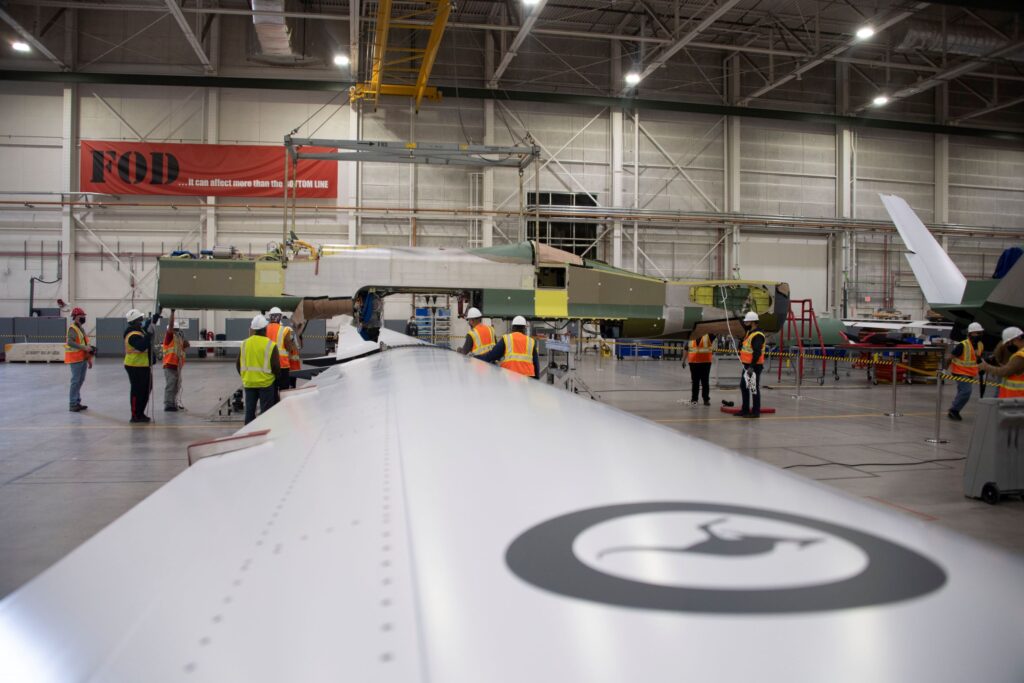
Australia’s first MQ-4C Triton fuselage is lowered onto the unique one-piece wing. NORTHROP GRUMMAN

Australian MQ-4C Triton Takes Shape

Meanwhile, Northrop Grumman Corp. recently completed a significant milestone in the production of Australia’s first MQ-4C Triton when the aircraft fuselage was mounted onto Triton’s unique one-piece wing, the company said. Once completed and delivered, Triton’s powerful payload and endurance will provide the Royal Australian Air Force the ability to detect and analyze threats that were previously undetectable.

“This production milestone further demonstrates our commitment to both sides of the cooperative program between the Royal Australian Air Force and the U.S. Navy,” said Rho Cauley-Bruner, Triton program manager at Northrop Grumman. “We are on schedule to deliver Triton’s powerful capability in support of Australia’s national security.”

Australia’s first Triton is on track to be delivered just as the U.S. Navy expects to achieve initial operating capability with its multi-intelligence Tritons, the same configuration Australia is receiving. The identical capabilities will allow the RAAF and U.S. Navy to share data and maintain an unblinking autonomous intelligence, surveillance, reconnaissance and targeting capability over some of the world’s most critical maritime regions.

“I am looking forward to seeing our first Triton roll off the production line and then commence flying in Australian skies in 2024,” said Group Captain Jason Lind, director of Intelligence, Surveillance, Reconnaissance and Electronic Warfare at RAAF headquarters. “This capability will extend Australia’s ability to see and understand our maritime approaches to the north and also as far south as Antarctica.”


PEO Columbia Recognized for Acquisition Excellence

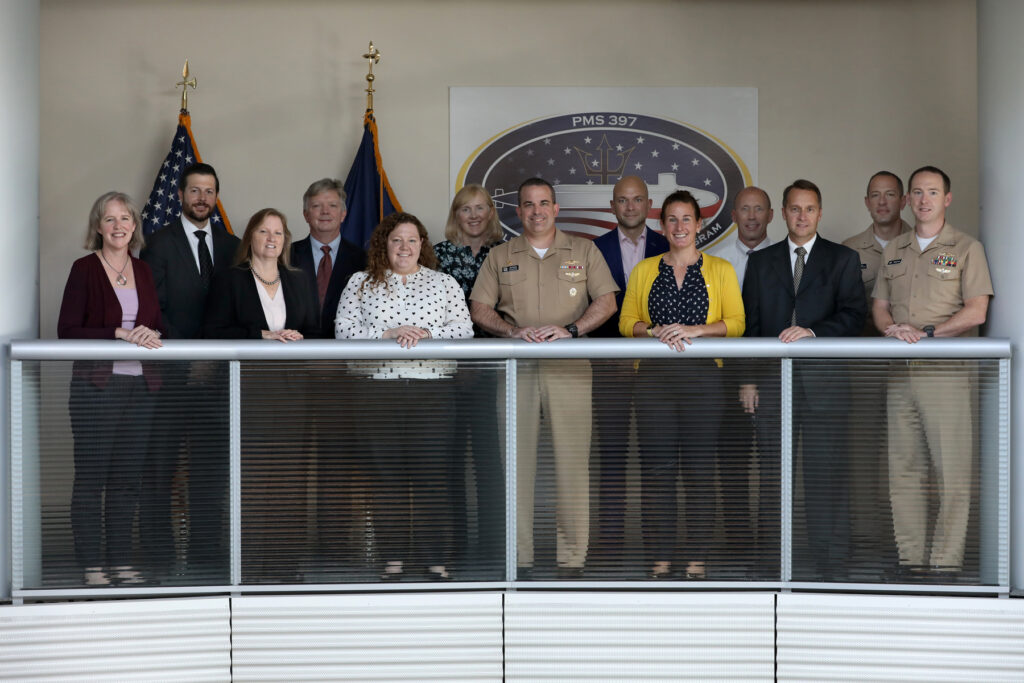
NAVSEA’s PMS 397 Columbia Class Submarine Program team photo for the Packard Award. U.S. NAVY / Laura Lakeway

WASHINGTON — Deputy Defense Secretary Kathleen H. Hicks named the Columbia-class submarine program office (PMS 397) winner of the 2021 David Packard Acquisition Excellence Award during the virtual 2021 Defense Acquisition Workforce Awards on Dec. 15.

The Columbia-class submarine program is developing the follow-on to the Ohio-class ballistic missile submarines (SSBNs) which currently serve as the cornerstone for the nation’s strategic deterrence force. The David Packard Excellence in Acquisition Award recognizes Department of Defense acquisition programs and their teams that have demonstrated exemplary acquisition excellence, innovation and reform.

“Our winners this year are the best of the best among our nation’s public service professionals,” said Hicks, adding that the work of the department’s acquisition professionals “is vital to supporting our nation’s military.”

The Columbia-class submarine program stood out from other DoD acquisition efforts by developing and executing acquisition, contracting, supply chain, workforce development and sustainment improvements. The Columbia-class team negotiated and awarded the first modern-era, two-submarine purchase for the first and second-of-class submarines.

“Traditionally, we buy the first-of-class submarine under a single contract. With Columbia, though, we’re confident that we can project the total costs for both the first and second hulls and therefore put both PCU Columbia (SSBN 826) and the SSBN 827 on a single contract to maximize efficiencies and help ensure the on-time delivery of these national assets. In doing so, we avoided about $1.5 billion in costs,” said Rear Adm. Scott Pappano, Program Executive Officer, Strategic Submarines.

According to Columbia-class program manager, Capt. Jonathan Rucker, “As the Department of Defense’s highest-priority acquisition program, the Columbia team and its industry partners continue to design, build, test, and sustain the nation’s high quality, sea-based strategic deterrent on schedule within budget. The program continues to try to be a leader within the acquisition community executing program efforts and supporting other programs through the acquisition community.”

Pre-commissioning unit Columbia is scheduled to deliver in 2027 and conduct its first strategic deterrence patrol in 2030.


USS Portland Tests High Energy Laser Weapon System in Gulf of Aden

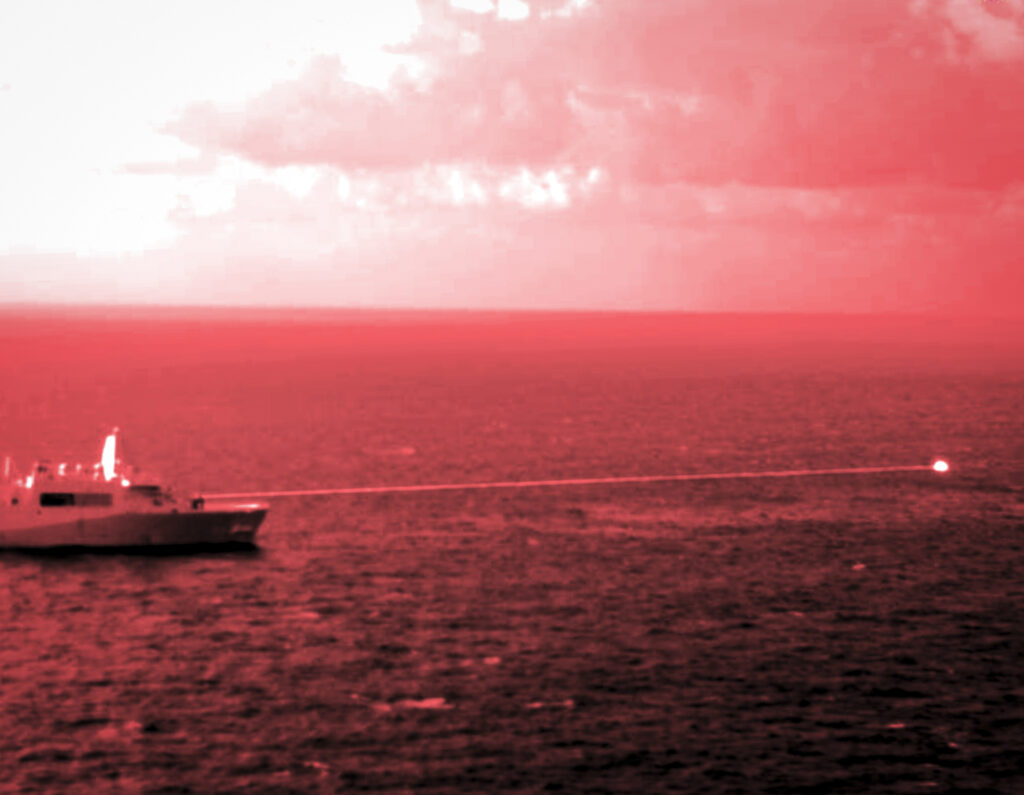
Amphibious transport dock ship USS Portland (LPD 27) conducts a high-energy laser weapon system demonstration on a static surface training target Dec. 14 while sailing in the Gulf of Aden. U.S. MARINE CORPS / Staff Sgt. Donald Holbert

MANAMA, Bahrain — Amphibious transport dock ship USS Portland (LPD 27) conducted a high-energy laser weapon system demonstration Dec. 14 while sailing in the Gulf of Aden, U.S. 5th Fleet Public Affairs said Dec. 15. 

During the demonstration, the Solid-State Laser – Technology Maturation Laser Weapons System Demonstrator Mark 2 MOD 0 aboard Portland successfully engaged a static surface training target. Portland previously tested the LWSD in May 2020 when it successfully disabled a small unmanned aerial system while operating in the Pacific Ocean. 
 
The Office of Naval Research selected Portland to host the laser weapon technology in 2018. The LWSD is considered a next-generation follow-on to the Laser Weapon System that afloat forward staging base USS Ponce (AFSB(I)-15) tested for three years while operating in the Middle East. 
 
Portland is part of the Essex Amphibious Ready Group that includes amphibious assault ship USS Essex (LHD 2), dock landing ship USS Pearl Harbor (LSD 52) and embarked Marines from the 11th Marine Expeditionary Unit. The units departed San Diego in August and began operating in the U.S. 5th Fleet region in September. 
 
The region’s geography, climate, and strategic importance offer a unique environment for technology innovation. U.S. 5th Fleet’s area of operations includes the world’s largest standing maritime partnership, Arabian Gulf, Red Sea, Gulf of Aden, Gulf of Oman and parts of the Indian Ocean. 


Navy Down-Select for Compact Rapid Attack Weapon Expected in February

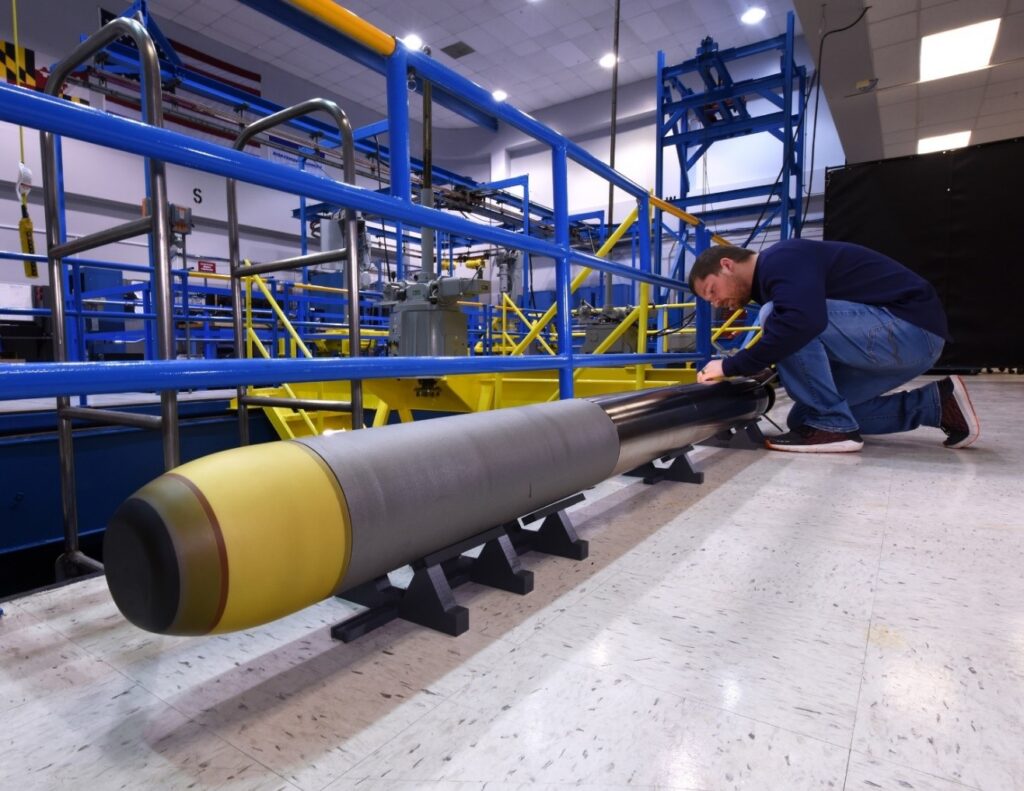
The U.S. Navy is expected to soon down-select for the Compact Rapid Attack Weapon, an offensive version of the Very Light-Weight Torpedo, shown here. NORTHROP GRUMMAN

ARLINGTON, Va. — The Navy’s down-select of a company to manufacture the Compact Rapid Attack Weapon is expected in February 2022, a defense industry official said. 

David Portner, Northrop Grumman’s senior program manager for undersea weapons, said during a Dec. 15 interview with Seapower he expects the contract for building the CRAW will be awarded in March 2022 after the down-select decision. Northrop Grumman in competing for the production contract.  

The CRAW is an offensive version of the Very Lightweight Torpedo developed by Penn State Applied Physics Lab. The defensive version is known as the Counter Anti-torpedo Torpedo, which differs from the CRAW only in its software. 

Northrop Grumman submitted its response to the October request for proposals at the end of November. At issue is the selection of the company with the best readiness and capability to build the CRAW in production quantities, taking the non-production-designed VLWT prototype — designed by Penn State Applied Physics Lab — into a production design and developing it as an All-Up Round CRAW suitable for manufacturing. Other Transactional Authority will be used to deploy the torpedo to the fleet.  

The nine-foot-long VLWT is one third of the size of the Mk54 — the Navy’s most advanced light-weight torpedo — and weighs just over 200 pounds, compared with the 608-pound Mk54. With this weight advantage, a platform can carry more torpedoes or carry the same number at longer ranges and give the platform more endurance. The VLWT could be carried by surface, airborne, and undersea platforms, manned and unmanned.  

Portner said in an earlier interview the VLWT could be carried by such anti-submarine aircraft as P-8A maritime patrol aircraft, MH-60R helicopters and MQ-8 Fire Scout unmanned aerial vehicles. During an Advanced Naval Technology Exercise in 2018, Northrop Grumman demonstrated the deployment of a VLWT from a surrogate helicopter simulating a Fire Scout.  

The torpedo is fitted with a parachute to reduce the shock of impact with the water. The VLWT also could be fitted with a glide wing kit similar to the one on Boeing’s HAAWC (High-Altitude Anti-submarine Weapon Concept), which is in development to extend the launch range and altitude as well as precision guidance for the Mk54 torpedo.  

Portner said the VLWT also could be deployed from a vessel such as a littoral combat ship by way of an unmanned surface vehicle or unmanned underwater vehicle. He said the light weight of the CRAW, compared with the MK54, would enable a platform to carry more weapons the same distance or the same number of weapons to a greater range or endurance.  

If selected, Northrop Grumman would build the CRAW components in Salt Lake City, Utah, with a key supplier in Colorado. Final integration would be accomplished in Annapolis. Maryland, Portner said.  


Navy Cuts Ribbon on Unmanned Vehicle Testing Facilities at Port Hueneme

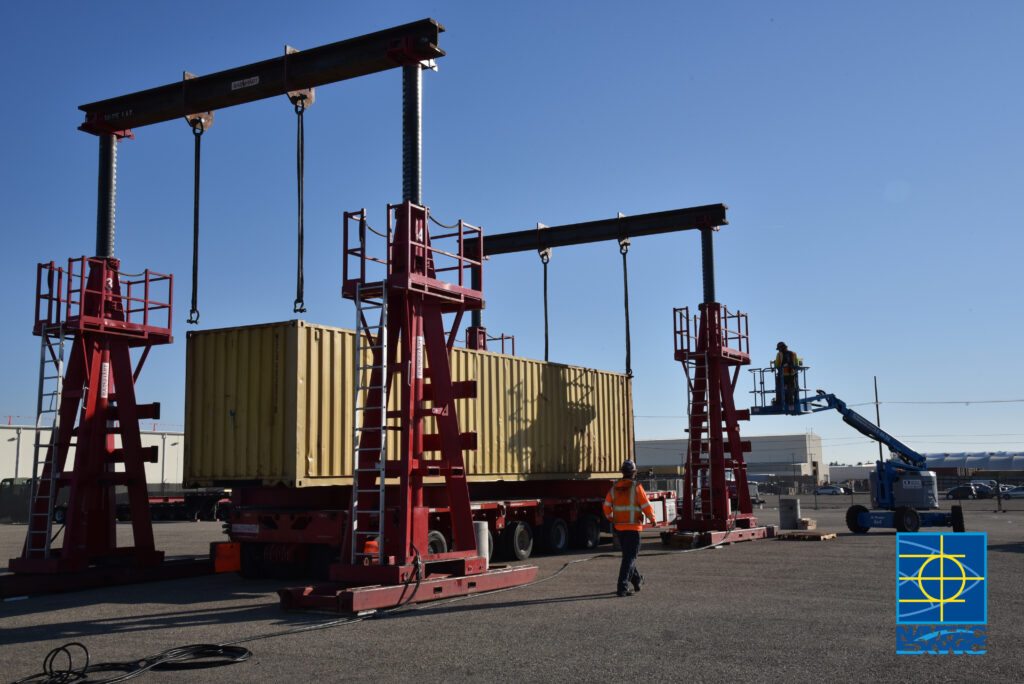
Teams at Naval Facilities Engineering and Expeditionary Warfare Center develop and execute a technical solution and demonstration for the assembly, transportation and disassembly of an 85-foot-long, 90-ton extra-large unmanned undersea vehicle at Naval Base Ventura County in Port Hueneme, California, in April 2021. U.S. NAVY / Palmer Pinckney II

NAVAL BASE VENTURA COUNTY, Calif. — The Navy conducted a joint ground-breaking and ribbon-cutting ceremony Dec. 8 for the first purpose-built and co-located facilities for unmanned maritime vehicle testing, Program Executive Office Unmanned and Small Combatants Public Affairs said in a Dec. 14 release. 

Located on Naval Surface Warfare Center Port Hueneme Division, at Naval Base Ventura County, the facilities will accommodate testing, evaluation, and technology demonstration for Extra-Large Unmanned Undersea Vehicle and Unmanned Surface Vessel prototypes. 

“These facilities will be the focal point of Navy learning and experimentation on the capabilities, operations and sustainment of Unmanned Maritime Vehicle prototypes to inform future programs,” said Capt. Pete Small, Program Manager, Unmanned Maritime Systems (PMS 406). 

PMS 406, within the Program Executive Office Unmanned and Small Combatants (PEO USC), oversees the XLUUV, Large USV, Medium USV programs and their advanced technology capabilities. 

The ribbon-cutting recognized completion of modifications to the existing Littoral Combat Ship Mission Package Support Facility (Building 1392) that will house the XLUUV prototypes, and personnel who will perform test and evaluation and training on the vehicles, which are in fabrication under a contract with Boeing. The ground-breaking recognized the start of construction of the modular administrative building for the newly established Unmanned Surface Vessel Division One and Unmanned Undersea Vehicles Squadron One personnel who will operate and maintain the unmanned vehicle prototypes. 

In addition to five Orca XLUUV prototypes, the NBVC Port Hueneme site will eventually accommodate one MUSV, two Sea Hunter USV and four Overlord USV prototypes. NBVC is ideally suited for these facilities with ready access to open-water instrumented ranges, multimodal expeditionary transportation capabilities, proximity to Navy and industry hubs, and synergies with other tenant commands. 


Reliability Most Challenging Aspect of Large, Medium USV Designs

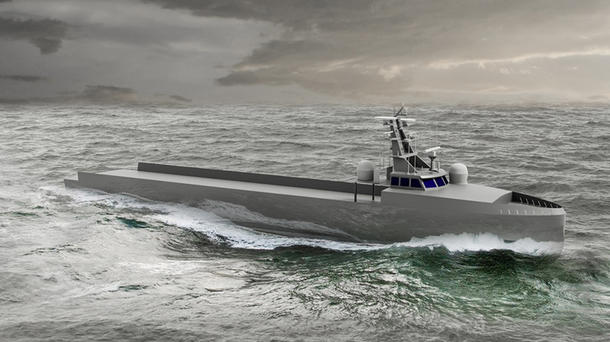
L3Harris’ concept of a medium unmanned surface vessel. L3HARRIS

ARLINGTON, Va. — The most challenging aspect of designing large unmanned surface vessels for the Navy is building reliability of its systems, a senior defense industry official said. 

“We can solve the autonomy challenge,” said Kevin Knowles, senior manager of strategic growth and USV team lead for Northrop Grumman Mission Systems, in a Dec. 14 interview with Seapower, discussing the company’s participation in the concept designs for the Navy’s Large USV and Medium USV. “How do we improve reliability, to put a ship to sea without a crew.” 

Knowles noted an Arleigh Burke-class guided missile destroyer has a crew of about 300, with a third of those devoted to keeping the ship running. Without a crew preforming the routine preventative maintenance and repairs, reliability of systems in a USV becomes even more paramount, he said. Even when optionally manned, most of the personnel on board would oversee force protection.  

The Navy is planning on adding to its fleet the LUSV and MUSV. The LUSV essentially will be a missile shooter, with banks of vertical launch systems. The smaller MUSV is intended for a reconnaissance and surveillance role, with an array of sensors, many of them in containers that can be switched out. 

Northrop Grumman is teamed with two of the design teams awarded concept design contracts for the LUSV. Not a shipbuilder, its contributions would be most notable in mission systems and payloads. The team lead primes are Austal USA, Huntington Ingalls, Lockheed Martin, Fincantieri, Bollinger and Gibbs & Cox.  

Knowles said a second challenge is the deliberate pace at which the Navy is proceeding with the programs, keeping the defense industry pressed to keep up. He noted some in Congress think the Navy is moving too fast, encouraging it to prove the technology before production. 

He said the Navy will use a land-based test site at the Naval Surface Warfare Center Philadelphia Division to integrate and test the propulsion and other systems planned for the LUSV. 

Developments in aviation also are being factored in as solutions to design challenges. Knowles said components of systems developed for the F-35 Lightning II strike fighter can be adapted to the USVs, offering the advantages of light weight and low energy usage. 

The LUSV and MUSV likely will emerge with a common control system, he said, possible with many aspects of the Common Control System in work for the Navy’s unmanned aerial systems. 

Another challenge for LUSVs and MUSVs is repair at sea. Such concepts as fly-away teams dispatched to the vessel could be considered.  

Knowles praised the Navy’s program office, PMS-406, for keeping the prime contractors informed with the latest data and requirements needed for their designs. 


U.S. Navy Establishes Submarine Squadron Two at Portsmouth Naval Shipyard

The first 13 personnel assigned to Submarine Squadron 2 pose for a photograph outside their command building on the day of the unit’s establishment Friday, Dec. 10. U.S. NAVY / Chief Petty Officer Joshua Karsten

KITTERY, Maine — The U.S. Navy established Commander, Submarine Squadron 2 in an official ceremony Friday, Dec. 10, at Portsmouth Naval Shipyard in Kittery, Maine, Submarine Readiness Squadron 32 said in a release. 

The move revives a tradition tied to the original Submarine Squadron 2, which was established in New London, Connecticut, in the late 1930s. In 1941, the Navy sent SUBRON 2 to the Pacific, where it operated during World War II. 
 
After the war, in October 1945, the squadron was back in New London, where it garnered the nickname “The Armada” because of the wide range of submarines under its oversight. 
 
The squadron oversaw some of the first and last built in the Los Angeles class fast attack submarines as well as the Navy’s only nuclear-powered deep submersible research vessel, NR-1. The first nuclear powered submarine, USS Nautilus (SSN 571) was one of nearly 100 submarines assigned to the squadron during its history as well. 
 
Among the submarines assigned to the squadron over the years were the “Fleet Boats” Grouper (SS 214), Flying Fish (SS 229), Finback (SS 230), and Raton (SS 270); diesel submarines Atule (SS 403), Quillback (SS 424) and Sarda (SS 488); and the support ship Chewink (ASR 3). 
 
The most recent previous iteration of Submarine Squadron 2 was disestablished in a ceremony in Groton, Connecticut, Jan. 13, 2012. 
 
Rear Adm. Michael Holland, now chief of staff for U.S. Northern Command, was the commodore of Submarine Squadron 2 at the time of its disestablishment. Holland returned as the keynote speaker for the establishment ceremony Friday. 
 
“The new establishment of Submarine Squadron 2 builds on a proud tradition dating back to the second World War,” said Vice Adm. William Houston, commander, U.S. Naval Submarine Forces, Submarine Force Atlantic and Allied Submarine Command. “Over seven decades in operation, this squadron wrote a history of innovation, flexibility and a fierce dedication to mission accomplishment. Now, Squadron 2 will come back with a new home and a vital new role to play, ensuring the readiness of our fast attack submarines as they complete periods of maintenance at Portsmouth Naval Shipyard and return to the fleet for deployment.” 
 
Capt. Daniel J. Reiss takes over as the commanding officer of the newly reestablished squadron, while Capt. Henry M. Roenke steps into the role of deputy commanding officer for readiness. Master Chief Petty Officer Frederick J. Richter is the command master chief, the senior enlisted service person at the squadron. 
 
Squadron 2 will step in to provide administrative, manning, logistical, training, operational planning and readiness support for Los Angeles- and Virginia-class fast attack submarines homeported at Portsmouth Naval Shipyard during periods of maintenance and improvement. 
 
Since 2012, Submarine Squadrons 12 and 4 provided operational oversight of submarines at Portsmouth Naval Shipyard from their location more than 150 miles away, at Naval Submarine Base New London, in Connecticut. 
 
Capt. Matthew Boland, commanding officer of Submarine Squadron 12, was on hand at the Friday event to ceremonially relinquish oversight of the submarines currently homeported at PNSY. 
 
“I’m honored and excited to help restore this storied squadron name alongside these dedicated submarine crews and the talented and hardworking team at Portsmouth Naval Shipyard,” said Reiss. “Squadrons 12 and 4 did incredible work supporting the shipyard submarines over the last decade. And now, there is benefit to having a dedicated squadron staff on-site, focused on the unique needs of crews in this stage of their readiness cycle. These Portsmouth-based submarine crews face different challenges than those in Groton, and my team is energized to face those challenges with them. We look forward to getting these crews and their boats back in the fight, stronger and tougher than when they arrived.” 


USFFC Holds Change of Command, Welcomes 43rd Commander

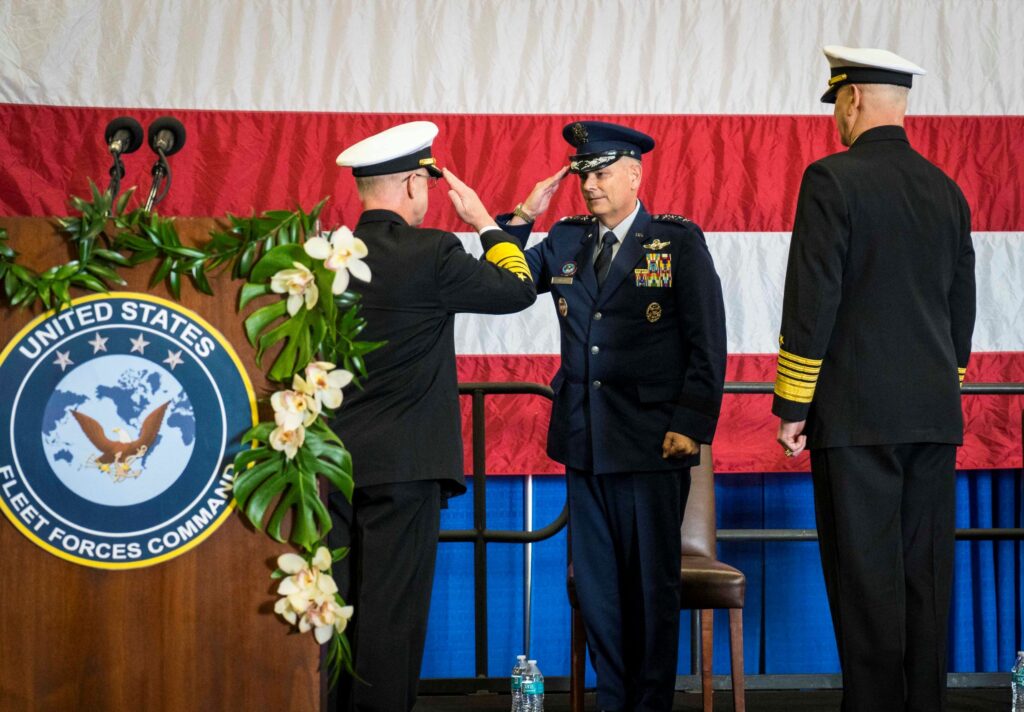
Adm. Christopher W. Grady, left, is relieved as commander, U.S. Fleet Forces Command by Adm. Daryl Caudle during the USFFC change of command ceremony aboard USS George H. W. Bush (CVN 77), Dec. 7. U.S. NAVY / Mass Communication Specialist 3rd Class Bryan Valek

NORFOLK — Adm. Christopher Grady was relieved by Adm. Daryl Caudle as commander, U.S. Fleet Forces in a ceremony aboard aircraft carrier USS George H. W. Bush (CVN 77) at Naval Station Norfolk, Virginia, Dec. 7, the command said. 

Dozens of civilian and military guests gathered to bid fair winds and following seas to Grady as he departs after more than three years in command, and to welcome Caudle as the new commander. Speakers included commander, U.S. Strategic Command Adm. Charles Richard and commander, U.S. Northern Command Gen. Glen VanHerck. 

Richard presided over the ceremony and said, “Adm. Grady’s leadership and innovation have brought to bear the full capability of the U.S. Navy in support of deterring our adversaries and assuring our allies and partners like never before. His visionary strategic approach is exactly what we need as we posture the joint force to meet today’s global challenges. I have full confidence that Adm. Caudle will pick up the ball and move it down the field.” 
   
“As the commander of Naval Forces Northern Command, Adm. Grady remained laser focused on the persistent proximate threats and the homeland defense challenges our nation faces during this period of increased global strategic competition with peers and near peers,” said VanHerck. “Adm. Grady’s numerous command tours have defined the standard across the fleet and throughout the Department of Defense for operational capability, mission success and a relentless approach to readiness.” 
   
Grady has been nominated by the White House to serve as the next vice chairman of the Joint Chiefs of Staff. Grady expressed his immense appreciation and pride to the Fleet Forces staff for the accomplishments they achieved under his charge. 
   
“Fleet Forces command is involved in nearly every aspect of the force-force generation, force development, force employment and in generating readiness to provide combatant commanders the resources that they need to defend our national interests at home and abroad,” said Grady. “Truly, the actions of every service member, government civilian, and contractor here at Fleet Forces, and across the waterfront, have played a critical role in supremely preparing the Navy and, to fight and win in today’s strategic environment.” 
   
Caudle joins the USFFC team after wrapping up his tour as the commander, U.S. Submarine Force, U.S. Atlantic Fleet. Caudle is the 43rd commander of USFFC. 
   
“Admiral Grady’s warfighting vision at Fleet Forces transformed our approach to fleet readiness, operationalized our team to support two combatant commanders and protected our homeland in the maritime domain,” said Caudle. “I’m truly honored to continue to build on the successes of the Fleet Forces team, continuing to ensure our fleet is ready to bring lethality and integrated deterrence anytime, anywhere across the globe.”