USS Daniel Inouye Commissioned at Pearl Harbor
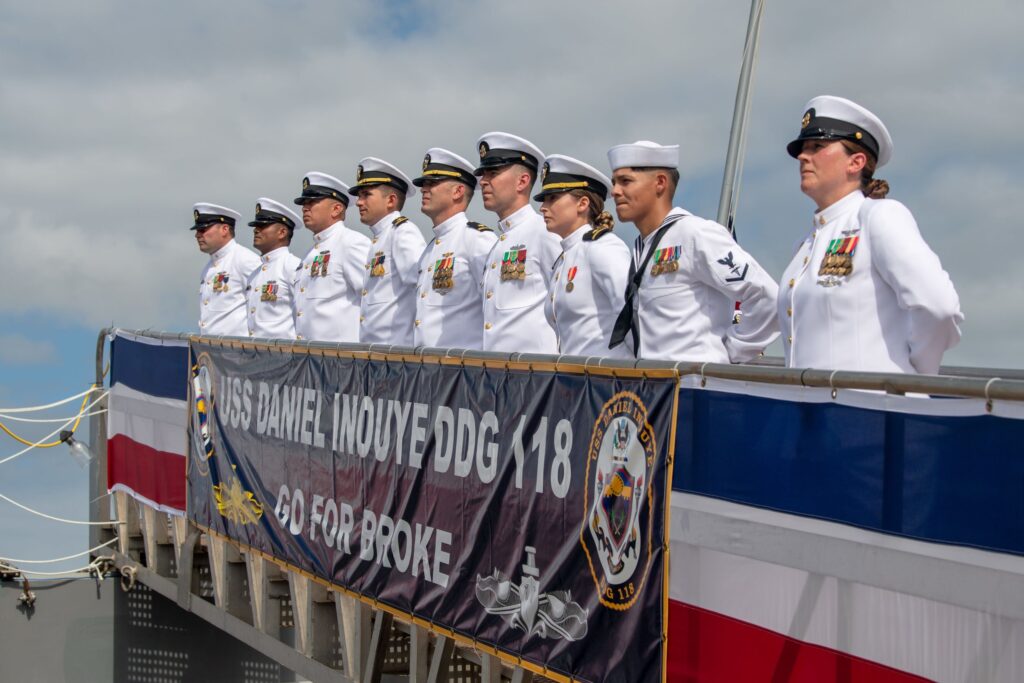
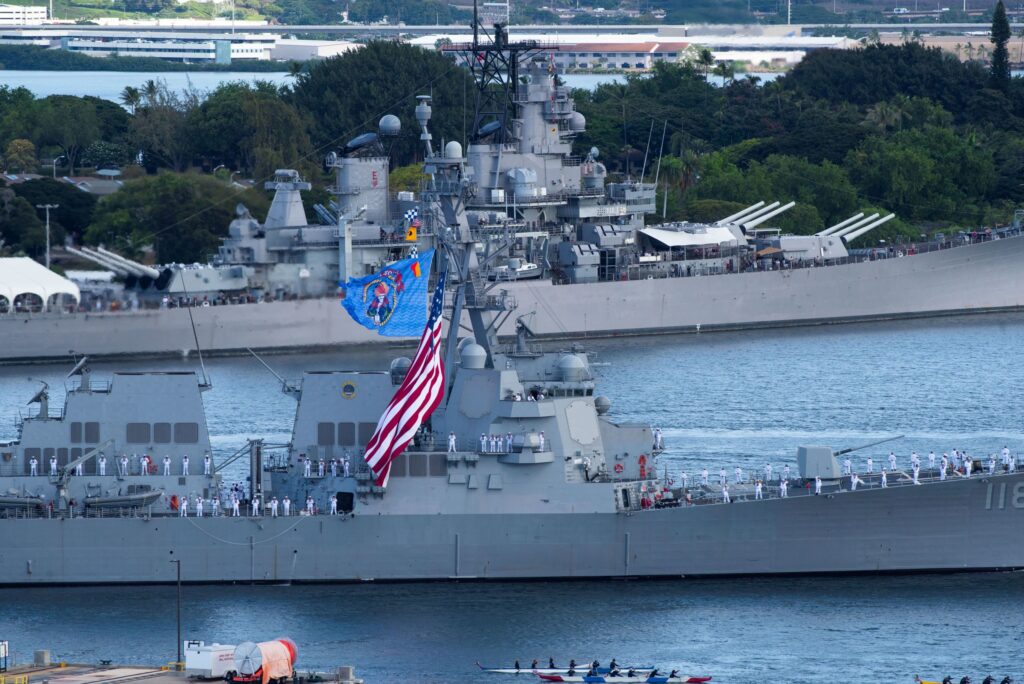
The U.S. Navy commissioned its newest guided-missile destroyer, USS Daniel Inouye (DDG 118), Dec. 8, at Joint Base Pearl Harbor-Hickam. U.S. NAVY

PEARL HARBOR, Hawaii — The U.S. Navy commissioned its newest guided-missile destroyer, USS Daniel Inouye (DDG 118), Dec. 8 at Joint Base Pearl Harbor-Hickam, according to U.S. Pacific Fleet Public Affairs. 

More than 1,000 guests including service members, veterans, and their families witnessed as the Navy’s 69th Arleigh Burke-class guided-missile destroyer joined the fleet. 
 
The ship honors the local hero and statesman, Sen. Daniel K. Inouye, a U.S. senator from Hawaii who served in Congress from 1962 until his death in 2012. During World War II, Inouye served in the U.S. Army’s 442nd Regimental Combat Team, one of the most decorated military units in U.S. history. For his combat heroism, which cost him his right arm, Inouye was awarded the Medal of Honor. 

Guest speakers for the included David Ige, governor of Hawaii, Secretary of the Navy Carlos Del Toro, and Adm. Samuel Paparo, commander, U.S. Pacific Fleet. Paparo and Del Toro spoke about the Inouye’s capabilities as a warfighting vessel in the Pacific fleet.
 
“This ship, the USS Daniel Inouye, will join the U.S. Pacific Fleet and the Indo-Pacom joint team,” said Paparo. “This ship and its crew are ready to assume its critical mission: The defense and safeguarding of the well-being and interests of our nation.” 
 
“As a former destroyer captain, I know firsthand about the ability, versatility and distributive power this ship will add to our deterrent capabilities,” said Del Toro. “There is absolutely no more of a fitting name for this ship than Sen. Inouye.” 
 
Prior to her passing on April 7, 2020, Inouye’s wife, Irene Hirano Inouye, executed her duties as the ship’s sponsor by establishing a strong bond with the crew during traditional shipbuilding milestones at Bath Iron Works. At the keel laying in 2018, she welded her initials into the keel of the ship. In 2019, she broke a bottle of champagne on the bow in a christening ceremony bestowing the name on the ship. During a “mast stepping” ceremony, she placed items special to the senator in the ship’s mast. 
 
During the ceremony, the senator’s granddaughter and ceremonial maid of honor, 11-year-old Maggie Inouye, gave the traditional order, “Man our ship and bring her to life!” 
 
After reporting the ship ready for duty, the ship’s commanding officer, Cmdr. DonAnn Gilmore recognized her crew’s hard work. 
 
“No captain could ask for more. You have embodied the motto ‘go for broke’ at every challenge,” said Gilmore. “I have to look no further than the rails of the ship behind me to renew my faith in humanity and to maintain my confidence in our country’s future.” 
 
The commissioning ceremony coincided with 80th Anniversary of Pearl Harbor Remembrance commemoration events and caps a weeklong series of events celebrating the ship and its namesake. On December 7, 1941, Inouye was a 17-year-old senior at Honolulu’s McKinley High School, and rushed to a Red Cross aid station to help civilians and Sailors wounded in the attack. 
 
USS Daniel Inouye, the first U.S. warship to bear its name, is nearly 510 feet in length and has a navigational draft of 33 feet.
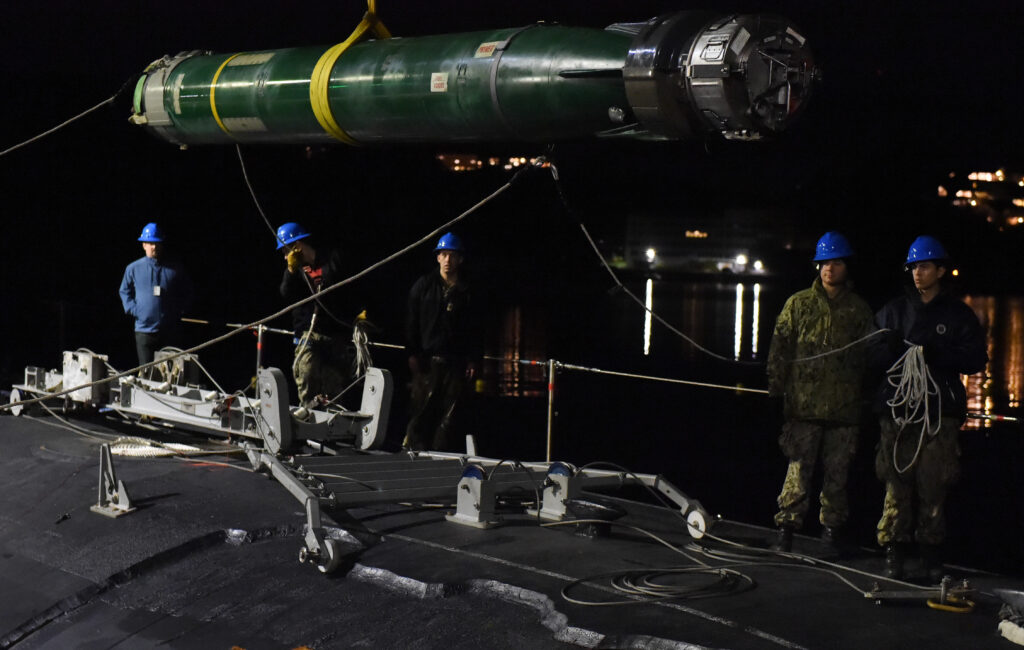


Navy Award SAIC $1.1 Billion Mk48 Torpedo Production contract

Sailors assigned to the Virginia-class, nuclear-powered, fast-attack submarine USS Minnesota (SSN 783) guide an MK-48 Advanced Capability torpedo during an expeditionary ordnance onload at the Haakonsvern Naval Base in Bergen, Norway, Oct. 18, 2019. U.S. NAVY / Chief Mass Communication Specialist Travis Simmons

RESTON, Va. — Science Applications International Corp. has been awarded a $1.1 billion contract to produce, assemble, test and deliver the U.S. Navy’s Mk48 Mod 7 torpedo afterbody tailcones and Mk29 Mod 0 warshot fuel tanks, the company said Dec. 6.  

Under the contract from the Program Executive Officer, Undersea Warfare Systems, Undersea Weapons Program Office (PMS 404), SAIC will provide all necessary facilities, resources and management necessary to meet the contract’s integration, production, test and delivery requirements. The afterbody tailcone is the section of torpedo containing propulsion and navigations systems, with 26 major sub-assemblies requiring the integration of greater than 500 pieces and parts in each. 

“SAIC is proud of our expanded work on integration, production, assembly, test and delivery contracts that support the Mk48 heavyweight torpedo system for the U.S. Navy,” said Bob Genter, president of SAIC’s Defense and Civilian Sector. “We are confident that our proven performance on the Mk48 will continue to provide the Navy with the sea-dominance weapon it requires.” 


Navy to Commission Guided-Missile Destroyer Daniel Inouye

The U.S. Navy’s newest guided-missile destroyer, the USS Daniel Inouye (DDG 118), sails through Pearl Harbor as Sailors man the rails, Nov. 18. U.S. NAVY / Jason Treffry

ARLINGTON, Va. — The Navy will commission the future USS Daniel Inouye (DDG 118), an Arleigh Burke-class destroyer, during a 10:00 a.m. (HST) ceremony at Joint Base Pearl Harbor-Hickham on Dec. 8. 

The future USS Daniel Inouye is named in honor of the late U.S. Sen. Daniel Inouye, who served as a Hawaii representative in the Senate from 1963 until he died in 2012.   

Secretary of the Navy Carlos Del Toro will deliver the keynote address at the ceremony. Remarks will also be provided by Hawaii Gov. David Ige; Rep. Kaiali’i Kahele (D-Hawaii); Honolulu Mayor Rick Blangiardi; Adm. Samuel Paparo, commander, U.S. Pacific Fleet; Ken Inouye, son of Sen. Inouye; and Ed Kenyon, director of new construction programs, General Dynamics Bath Iron Works.  

“The late Sen. Daniel Inouye spent his entire life in public service, both in uniform and out,” said Del Toro. “Sen. Inouye’s life is one to be emulated and the crew of this warship will not only be inspired by his legacy, but will stand the watch with the honor and dignity deserving of a ship bearing his name.” 

The ship’s sponsor Irene Hirano Inouye, Inouye’s wife, established a strong bond with the crew before her passing on April 7, 2020. At the keel laying in 2018, she welded her initials into the ship’s keel and, in 2019, broke a bottle of champagne on the bow in a christening ceremony. During a “mast stepping” ceremony, she placed items special to Inouye in the ship’s mast.

The commissioning ceremony coincides with the 80th Anniversary of Pearl Harbor Remembrance Commemoration events. On Dec. 7, 1941, Daniel Inouye was a 17-year-old senior at Honolulu’s McKinley High School and rushed to a Red Cross aid station to help civilians and Sailors wounded in the attack. 

On April 21, 1945, while serving with the 442nd Infantry Regiment Combat Team in Italy during World War II, an exploding grenade shattered his right arm during an assault. Despite the intense pain, he refused evacuation. He remained at the head of his platoon until they broke the enemy resistance and his troops deployed in defensive positions, continuing to fight until the regiment’s position was secured. Later in life, he received the Medal of Honor for his extraordinary heroism during the assault. 

Cmdr. DonAnn Gilmore, of Anniston, Alabama, is the ship’s commanding officer and leads a crew of 329 officers and enlisted Sailors. Gilmore is a graduate of The Pennsylvania State University. She previously commanded Mine Countermeasures Crew Exultant. 

“This crew put a tremendous amount of work into preparing to bring USS Daniel Inouye to life on Dec. 8. We all share a deep sense of pride and honor to represent our namesake, the late senator and U.S. Army Medal of Honor recipient Daniel Inouye and those he represented for 53 years in the House and Senate,” said Gilmore. “Through USS Daniel Inouye’s service to our nation, every Sailor aboard will strive to make ours the preeminent ship on the waterfront. We embody the ship’s motto, a battle cry adopted from Sen. Inouye’s Army unit, the 442nd Regimental Combat Team. We will ‘go for broke!’ as Daniel Inouye did on the battlefield and in halls of the Senate.” 

The ship is nearly 510 feet long and has a navigational draft of 33 feet. As a Flight IIA destroyer, DDG 118 is equipped with Aegis Baseline 9, which provides improved, integrated air and missile defense capabilities, increased computing power, and radar capable of quickly detecting and reacting to modern air warfare and ballistic missile defense threats. 
Built by General Dynamics Bath Iron Works in Bath, Maine, Daniel Inouye was christened June 22, 2019, and delivered to the Navy on March 8, 2021. USS Daniel Inouye’s homeport is Joint Base Pearl Harbor-Hickam, Hawaii. 

The ceremony will be livestreamed at: https://www.dvidshub.net/webcast/27385. The link becomes active approximately 10 minutes before the event (9:50 a.m. HST). 


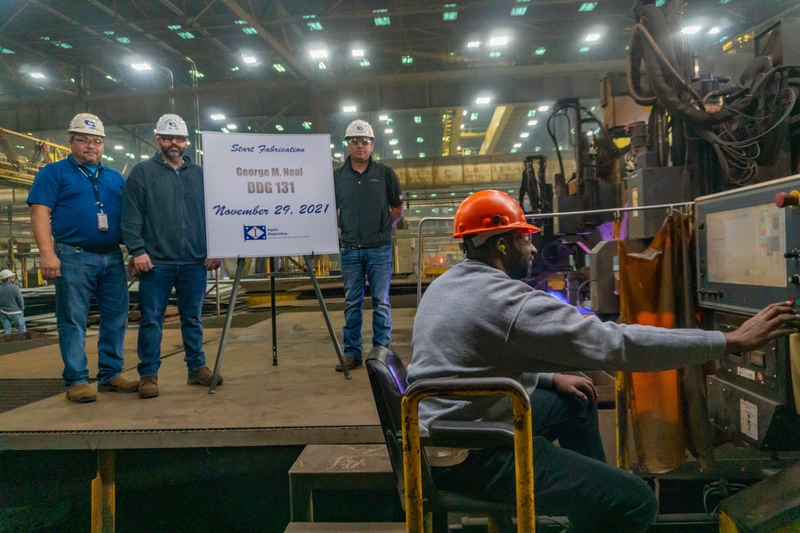
HII Begins Fabrication of Destroyer George M. Neal

Ingalls Burner specialist Jason Jackson, right, starts fabrication of the Arleigh Burke-class guided missile destroyer George M. Neal (DDG 131) in the Ingalls Shipbuilding Steel Fabrication Shop, observed by Bob Poppenhouse, Ingalls DDG 131 ship program manager; Matt Park, general foreman for Ingalls Fabrication Shop; and Lance Carnahan, director of Ingalls Hull department. INGALLS SHIPBUILDING / Shane Scara

NEWPORT NEWS, Va. — Huntington Ingalls Industries’ Ingalls Shipbuilding division officially started fabrication Dec. 6 of the Arleigh Burke-class (DDG 51) destroyer George M. Neal (DDG 131), the company said in a release. 

“Start of fabrication is our first opportunity to formally celebrate and reflect on our contributions as shipbuilders,” Ingalls Shipbuilding President Kari Wilkinson said. “We are very proud of what we do here for the country and endeavor to do our part in building and activating what will be the newest Flight III destroyer.” 

Ingalls has delivered 33 Arleigh Burke-class destroyers to the Navy. Other destroyers currently under construction include Lenah Sutcliffe Higbee (DDG 123), Jack H. Lucas (DDG 125), Ted Stevens (DDG 128) and Jeremiah Denton (DDG 129). 

The new destroyer’s name honors a Korean War veteran, Aviation Machinist’s Mate 3rd Class George M. Neal, who was awarded the Navy Cross for his heroic actions while attempting to rescue a fellow service member. Neal volunteered as crewman to fly in a helicopter deep into North Korean mountains to attempt the rescue of a Marine aviator who had been shot down and was trapped by the enemy. During the rescue attempt, under heavy enemy fire, Neal’s helicopter was disabled and crashed. He assisted his pilot and the rescued aviator in evading enemy forces for nine days before being captured and held as a prisoner of war. Neal was eventually released and returned to the U.S. with more than 320 fellow POWs in 1952. 


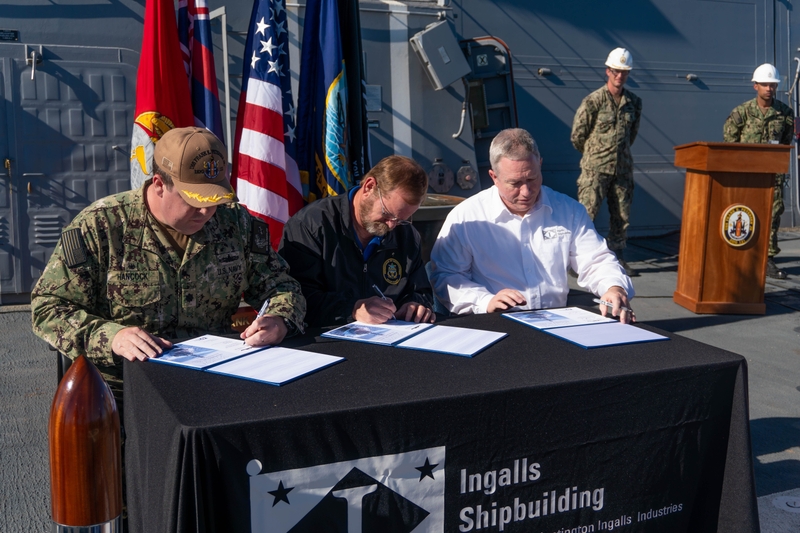
HII Delivers Guided Missile Destroyer Frank E. Petersen Jr. to U.S. Navy

Signing ceremonial documents declaring delivery of Frank E. Petersen Jr. (DDG 121) from Ingalls Shipbuilding to the U.S. Navy are, from left, Navy Cmdr. Daniel Hancock, prospective commanding officer DDG 121; Billy Oaks, superintendent, Aegis Combat System, Supervisor of Shipbuilding, Gulf Coast; and Donny Dorsey, Ingalls DDG 121 ship program manager. In the background are Cmdr. Sean Doherty, left, DDG program manager’s representative; and Chief Petty Officer Yamina Bolar, DDG 121 chief Aegis fire controlman. HUNTINGTON INGALLS INDUSTRIES / Shane Scara

NEWPORT NEWS, Va. — Huntington Ingalls Industries’ Ingalls Shipbuilding division delivered the Arleigh Burke-class guided missile destroyer Frank E. Petersen Jr. (DDG 121) to the U.S. Navy during a signing ceremony Nov. 30. This milestone officially transfers custody from HII to the U.S. Navy. 

“I am again very proud of our DDG team today,” said Kari Wilkinson, Ingalls Shipbuilding president. “Not only have they completed another major program milestone, but they have done so in the face of a pandemic. This team, and all of our shipbuilders across our entire portfolio, are what shipbuilding is all about.” 

Delivery of DDG 121 marked the 33rd destroyer Ingalls has built for Navy, with four more currently under construction, including Lenah Sutcliffe Higbee (DDG 123), Jack H. Lucas (DDG 125), Ted Stevens (DDG 128) and Jeremiah Denton (DDG 129). 

Arleigh Burke-class destroyers are highly capable, multi-mission ships and can conduct a variety of operations, from peacetime presence and crisis management to sea control and power projection, all in support of the United States military strategy. Guided missile destroyers are capable of simultaneously fighting air, surface and subsurface battles. The ship contains myriad offensive and defensive weapons designed to support maritime defense needs well into the 21st century. 

DDG 121 is named for Frank E. Petersen Jr., who was the U.S. Marine Corps’ first African-American aviator and general officer. After entering the Naval Aviation Cadet Program in 1950, Petersen would go on to fly more than 350 combat missions during the Korean and Vietnam wars. 


Construction Begins on Future USS Robert E. Simanek

Construction started on the fifth Expeditionary Sea Base, the future USS Robert E. Simanek (ESB 7), at General Dynamics National Steel and Shipbuilding Co. in San Diego Dec. 1. U.S. NAVY

SAN DIEGO — Construction started on the fifth Expeditionary Sea Base (ESB), the future USS Robert E. Simanek (ESB 7), at General Dynamics National Steel and Shipbuilding Co. in San Diego during a small ceremony, Dec. 1, Team Ships Public Affairs said in a release. 

The ESB ship class is highly flexible and used across a broad range of military operations supporting multiple operational phases, similar to the Expeditionary Transfer Dock class. Acting as a mobile sea base, they are part of the critical access infrastructure that supports the deployment of forces and supplies to provide prepositioned equipment and sustainment with flexible distribution. 

“ESBs are optimized to support the core capabilities of aviation facilities, berthing, special operations, equipment staging support, and command and control operations,” said Tim Roberts, Strategic and Theater Sealift program manager, Program Executive Office Ships. “The ESBs have demonstrated their ability to enhance the fleet’s flexibility and capability as they operate around the world. The addition of the future USS Robert E. Simanek will help continue to provide critical access in the maritime domain.” 

The ship is named in honor of Marine Corps veteran Robert E. Simanek, who was awarded the Medal of Honor after he threw himself on an enemy grenade shielding his fellow Marines during the Korean War. 

In 2019, the Navy made the decision to commission all Expeditionary Sea Base ships to allow them to conduct a broader and more lethal mission set, compared to original plans for them to operate with a USNS designation. ESBs are commanded by a Navy O-6 with a hybrid-manned crew of military personnel and Military Sealift Command civilian mariners. This designation provides combatant commanders greater operational flexibility as to how the platform is employed. 

GD-NASSCO has delivered three other ESBs and is currently constructing the future USS John L. Canley (ESB 6). 


Harry S. Truman Carrier Strike Group Departs on Deployment

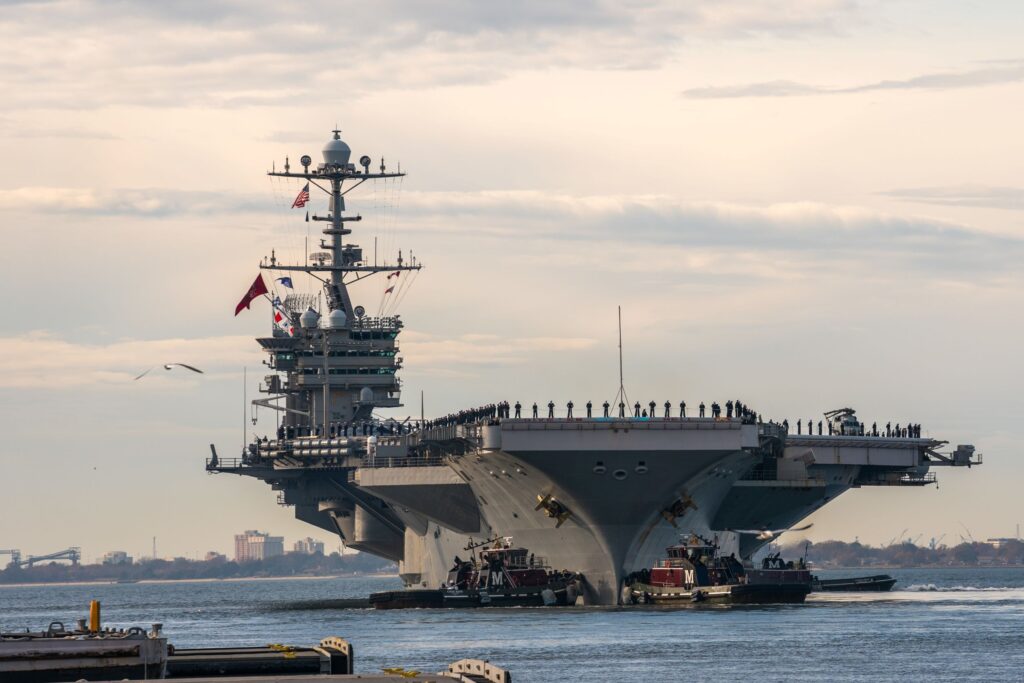
The Harry S. Truman Carrier Strike Group departed Naval Station Norfolk, Virginia, and Mayport, Florida for a regularly scheduled deployment Dec. 1. U.S. NAVY

ARLINGTON, Va. — The Harry S. Truman Carrier Strike Group (HSTCSG) departed Naval Station Norfolk, Virginia, and Mayport, Florida for a regularly scheduled deployment, Dec. 1, the USS Harry S. Truman Carrier Strike Group Public Affairs said in a release. 

Elements of the strike group, commanded by Rear Adm. Curt Renshaw, include flagship USS Harry S. Truman (CVN 75), commanded by Capt. Gavin Duff; the nine squadrons of Carrier Air Wing (CVW) 1; staffs of Carrier Strike Group (CSG) 8; and the Ticonderoga-class cruiser USS San Jacinto (CG 56). 
 
In addition, the strike group will include the guided-missile destroyers of Destroyer Squadron (DESRON) 28 commanded by Capt. Todd Zenner which includes USS Bainbridge (DDG 96), USS Cole (DDG 67), USS Gravely (DDG 107), and USS Jason Dunham (DDG 109). The Royal Norwegian Navy’s frigate HNoMS Fridtjof Nansen (F310) will join the strike group, and operate as part of the strike group throughout the entire deployment. 

The Harry S. Truman Carrier Strike Group will be conducting operations to support maritime security and stability in international waters across the globe. Carrier strike groups have a wide range of capabilities to respond wherever and whenever required through a variety of mission sets. Additionally, strike groups possess the flexibility and sustainability to fight major wars and ensure freedom of the seas. 
 
The deployment follows months of intense training and preparation to include the Board of Inspection and Survey as well as various international maritime exercises such as Group Sail and Composite Training Unit Exercise, an intense multilateral combined exercise that assessed the strike group’s abilities to conduct military operations at sea and project power ashore in late October. 

“The team within the strike group has come together in an impressive manner these last few months,” said Rear Adm. Curt Renshaw, commander, CSG 8. “They have become an integrated, multi-mission team capable of conducting the full spectrum of combat operations to ensure security in the maritime. I have no doubt that we are prepared for any challenge while on this deployment.” 

The strike group units will work alongside allied and partner maritime forces, focusing on theater security cooperation efforts, which help to further regional stability. 
 
“During this training cycle, we have learned how to train and fight side by side whether it is onboard the same ship, in the skies, or across the seas,” Duff said. “While we serve as the flag ship, we are never nearly as capable or as strong as we are when we deploy as a strike group.” 
 
HNoMS Fridtjof Nansen (F310) joined the strike group under the Cooperative Deployment Program, which emphasizes the strengthening of defense partnerships and capabilities between the United States and bilateral or multilateral partners. 
 
“HNoMS Fridtjof Nansen is ready and excited to embark upon this important deployment. The hospitality and professionalism [the] U.S. Navy has provided during our harbor stay and sea periods have been excellent, ensuring that we are an integrated asset of Carrier Strike Group 8. It is truly an honor for us to be the first Norwegian cooperative deployer in history. And this marks yet another milestone in the overall defense cooperation between Norway and our most important ally, USA,” said Commanding Officer Ruben Grepne-Takle. 
 
Squadrons of CVW 1 include Strike Fighter Squadrons (VFA) 11 “Red Rippers;” VFA-211 “Fighting Checkmates;” VFA-34 “Blue Blasters;” VFA-81 “Sunliners;” Electronic Attack Squadron (VAQ) 137 “Rooks;” Carrier Airborne Early Warning Squadron (VAW) 126 “Seahawks;” Helicopter Sea Combat Squadron (HSC) 11 “Dragon Slayers;” Helicopter Maritime Strike Squadron (HSM)72 “Proud Warriors;” and a detachment from Fleet Logistics Support Squadron (VRC) 40 “Rawhides.” 


Planning Underway for Pearl Harbor Naval Shipyard Detachment Guam

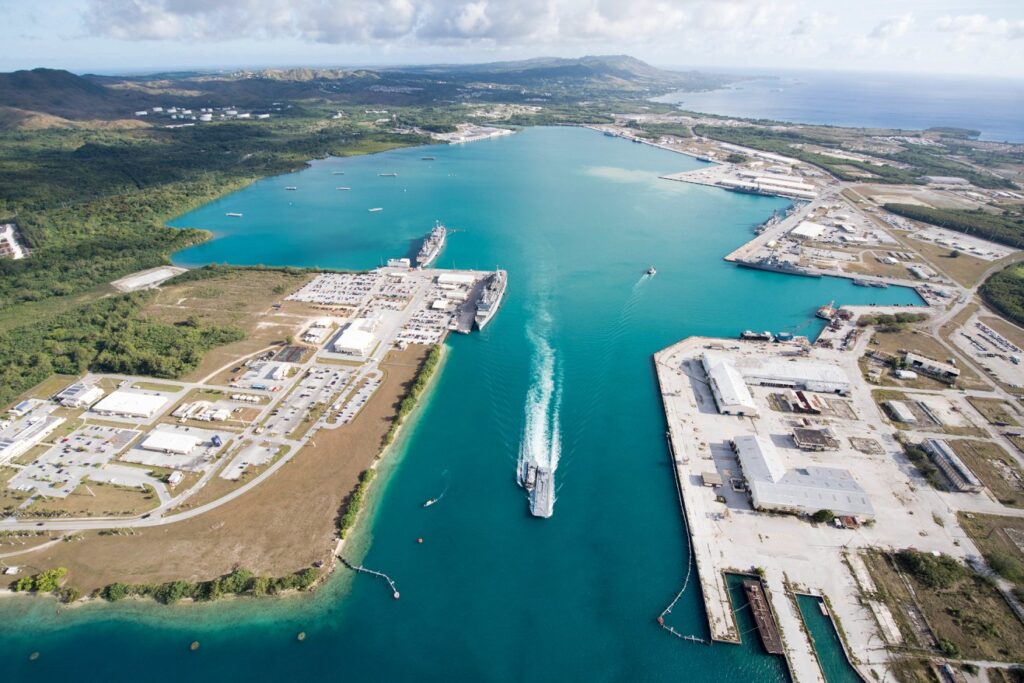
The U.S. Navy is planning to establish a detachment of the Pearl Harbor Naval Shipyard and Intermediate Maintenance Facility in Guam. NAVAL SEA SYSTEMS COMMAND

ARLINGTON, Va. — Planning is underway for the establishment in Guam of a detachment of the Pearl Harbor Naval Shipyard and Intermediate Maintenance Facility (PHNSY & IMF), the yard’s assistant project superintendent for Execution Planning said Nov. 30. 

The need for the detachment in Guam is to “close the existing maintenance gaps in executing submarine maintenance in Guam,” said Brandon Wright, the assistant project superintendent. 

The naval base in Apra Harbor, Guam, is the home to five Los Angeles-class attack submarines and two submarine tenders which support U.S. Pacific Fleet operations in the Western Pacific and Indian Ocean. The establishment of a PHNSY & IMF detachment underscores the growing importance of Guam in countering the growing Chinese naval power in the region. 

Wright said in September 2019 “a comprehensive 221-page study, released by Beth Kuanoni and her team, identified the workforce, training, facilities, and equipment requirements needed to provide the capacity and capabilities for a PHNSY & IMF detachment in Guam.” 

The detachment was approved in December 2019, which led to Phase I of the Guam 2025 Plan, Wright said, and the formation of the Guam Implementation Team (GIT). 

“Under the leadership of GIT director Alex Desroches, the team is identifying facility needs that include shop workspaces, administrative and management spaces, equipment, information technology, material spaces and storage. In parallel with the temporary facility build-up, military construction projects are in place for permanent detachment facilities with a target end date of 2028,” Wright said. 

“The biggest challenge is the grand scope of requirements necessary to stand up a shipyard detachment in a remote location,” Desroches said. “This includes everything from an organizational change request and approval through the Office of the Chief of Naval Operations to identifying and securing the resource requirements in the program objective memorandum and budget, to developing strategies to recruit and fill billets in Guam, and developing local processes for material, work execution and work certification.” 

When fully manned, the Guam detachment will include 170 civilian workers and 400 military personnel.  

“Civilian employees will provide management, guidance, training, mentoring and development of Sailors, who will be the primary wrench-turning workforce, Wright said.  

“The Guam Detachment is unique and we can’t use the current templates being used at Fleet Maintenance in Pearl Harbor, Portsmouth Naval Shipyard Detachment in Point Loma or the Puget Sound Naval Shipyard Detachment in Yokosuka,” Desroches said. “The primary workforce will consist of active-duty Sailors who have transferred from the ship tenders to the shipyard detachment, as well as expeditionary maintenance support needs and additional issues associated with Guam’s remote location. We are building a new organization from scratch that is at the tip of the spear, supporting five forward-deployed submarines with the highest optempo in the fleet.” 


NGC to Increase Inventory of AARGM for US Navy and German AF

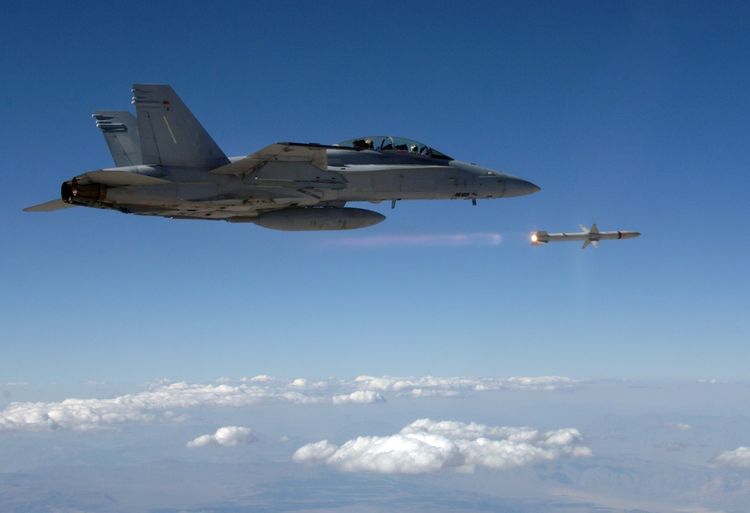
An AGM-88E2 AARGM is launched from an F/A-18 during testing. NORTHROP GRUMMAN

LOS ANGELES — Northrop Grumman has received a $153 million dollar contract award from the U.S. Navy for full-rate production of lots 10 and 11 of the AGM-88E2 Advanced Anti-Radiation Guided Missile (AARGM), the company said Dec. 1. The contract includes production of missiles for the U.S. Navy and German air force. 

“As threats continue to evolve, AARGM remains an affordable solution to continue protecting the U.S. Navy and our allies with their critical missions every day,” said Gordon Turner, vice president, advanced weapons, Northrop Grumman. “The ability to detect and defeat the rapid proliferation of today’s surface-to-air-threats, while remaining out of harm’s way, is paramount to mission success.” 

Northrop Grumman has produced more than 1,500 AARGM missiles for the international cooperative acquisition program with the U.S. Navy, serving as the executive agent, and the Italian air force. The missile provides a supersonic, air-launched tactical missile system that upgrades legacy AGM-88 HARM systems with advanced capability to perform suppression and destruction of enemy air defense systems. 

AARGM is the most advanced system for pilots against modern surface-to-air threats. Providing a combination of precision, survivability and lethality, the system is able to rapidly engage land- and sea-based air-defense threats as well as striking time-sensitive targets. 

As a prime contractor, Northrop Grumman also is developing the Advanced Anti-Radiation Guided Missile – Extended Range (AARGM-ER) in partnership with the U.S. Navy. The AARGM-ER will include a new rocket motor and warhead to provide an advanced capability to detect and engage enemy air defense systems. AARGM is currently deployed with the U.S. Navy and U.S. Marine Corps on the F/A-18C/D Hornet, F/A-18E/F Super Hornet, and U.S. Navy and Royal Australian Air Force EA-18G Growler aircraft; AARGM is also integrated on the Italian air force’s Tornado Electronic Combat aircraft. 


Navy Awards Austal Service Contract for Westpac LCSs

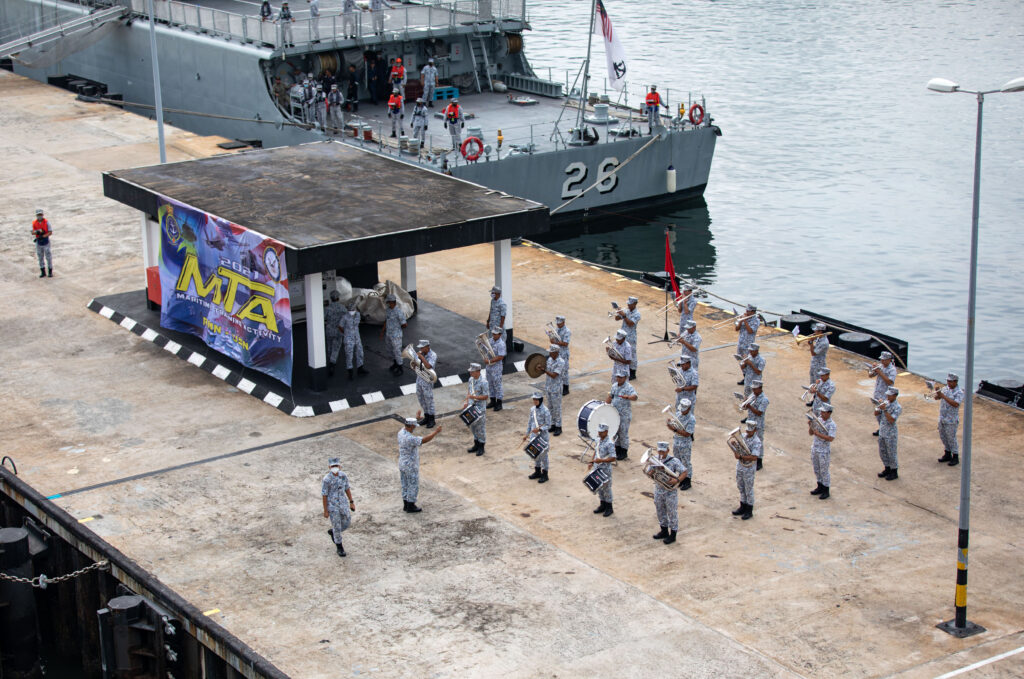
Royal Malaysian Navy Sailors play music as the U.S. Navy Independence-variant littoral combat ship USS Tulsa (LCS 16) arrives at Lumut, Malaysia, following Maritime Training Activity (MTA) Malaysia 2021. U.S. NAVY / Mass Communication Specialist 1st Class Devin M. Langer

Mobile, Ala. — Austal USA has received a contract from the U.S. Navy to provide services and support for littoral combat ships (LCS) deployed to the Western Pacific and Indian Ocean, the company said in a Nov. 24 release. 

This is the third major U.S. Navy service contract for Austal USA following the company’s significant investment in its service business and service centers in Mobile, Alabama, San Diego and Singapore over the last four years. 

The $72.5 million single award, indefinite-delivery/indefinite-quantity contract provides for emergent repair and continuous maintenance for littoral combat ships deployed to the Western Pacific and Indian Ocean and the countries and ports therein. If all options are exercised, the contract will be for five years and bring the total value to $215.8 million. 

This award, which supports Navy requirements within the Western Pacific and Indian Ocean, complements recent awards for littoral combat ship repair and maintenance on the east and west coasts, the Sustainment Execution-East and Sustainment Execution-West contracts. In addition to the three major contract awards, Austal USA recently announced the approval of a lease for a waterfront repair and maintenance facility in San Diego. This provides Austal the capability to support both variants of the littoral combat ship globally.    

“We’ve made it clear to our customer that we are committed to the continued service and support of the LCS throughout its lifecycle,” Austal USA President Rusty Murdaugh said. “We’ve demonstrated this commitment through our continued investment in our people, processes, and facilities — and our customer has responded with confidence.” 

Currently, the U.S. Navy has multiple Independence-variant LCS deployed to the Western Pacific. This contract positions Austal USA to be the prime contractor for all continuous and emergent maintenance on the LCS as they transit and operate in the region. 

In 2017, Austal USA established a service center in Singapore adjacent to the Changi Naval Base to support deployed LCS and Austal-built Expeditionary Fast Transports. Over the last four years, Austal USA’s service and support business has grown in size and scope with continued investment from the company. 

In 2018, the company expanded its presence in San Diego adding more engineering and technical expertise to support the continued delivery of the LCS homeported in San Diego. 

In September 2020, Austal USA purchased additional waterfront, facilities, and equipment along the Gulf Coast in Mobile, Alabama. The new Austal USA West Campus Ship Repair facility includes 15 acres of waterfront property; a pierfront capable of mooring vessels up to 1,000 feet; a 20,000-ton Panamax-class floating dry dock; 300,000 square feet of outside fabrication space; and 100,000 square feet of covered repair facilities.