Acting SECNAV Names Future Expeditionary Fast Transport Ship Point Loma
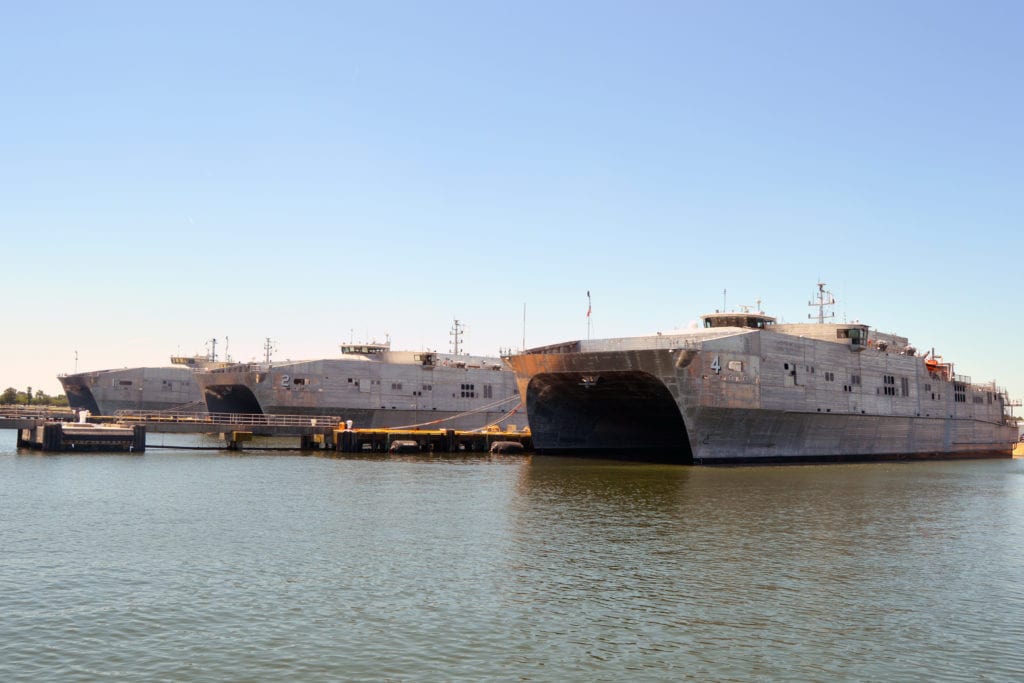
Expeditionary Fast Transport vessels USNS Spearhead (T-EPF 1), USNS Choctaw County (T-EPF 2) and USNS Fall River (T-EPF 4) at Joint Expeditionary Base Little Creek-Fort Story in 2015. A future Spearhead-lass EFP will be named USNS Point Loma after the San Diego seaside community. U.S. NAVY / Brian Suriani

ARLINGTON, Va. — A future Spearhead-class Expeditionary Fast Transport (EFP) ship will be named USNS Point Loma, the Navy said in a 16 July release. 

Acting Secretary of the Navy Thomas W. Harker announced July 16 that a future Spearhead-class Expeditionary Fast Transport (EFP) ship will be named to honor the San Diego seaside community of Point Loma. 

The future USNS Point Loma (T-EPF-15) will be the second naval vessel to bear this name, the first being a deep submergence support ship that was decommissioned in 1993. Currently, eight Navy vessels honor the state of, or a location in, California. 

“It is my honor to recognize the enduring support of the community and residents of Point Loma, who for generations have provided the Navy and Marine Corps with critical support and infrastructure integral to the Department of the Navy’s mission,” Harker said. “So many Sailors and Marines have called this community home, and like I, a California native, have seen and felt the support from this community. The crew of the future USNS Point Loma will honor this time-honored relationship and will continue to serve this community and the nation for generations to come.” 

The name selection follows the naval tradition of honoring small American cities or communities with ties to the Navy. The community of Point Loma has a long-standing naval presence, beginning in 1901 with the establishment of the Naval Coaling Station, La Playa, which later became Naval Supply Center San Diego, Point Loma Annex in 1943. The Naval Training Center San Diego in Point Loma served as a basic training facility for over seven decades, and the Fort Rosecrans National Cemetery is the site of a monument for Sailors killed in a boiler explosion on board USS Bennington (Gunboat No. 4) in 1905. 

Currently, Naval Base Point Loma comprises six installations and provides support to 70 U.S. Pacific Fleet afloat and shore-based tenant commands headquartered on the base. 

The future T-EPF-15 is the last of the 15 EPFs ordered by the Navy, with the first delivered in 2012. The Navy has accepted delivery of 10 EPFs with USNS Burlington (T-EPF 10) being the most recent delivery in November 2018. Austal USA in Mobile, Alabama, was awarded the contract to build T-EPF-15 in February 2021. 

EPFs are commercial-based catamarans designed to be highly capable and affordable, allowing flexibility to the fleet with their ability to access harsh ports with minimal external assistance. EPFs maintain a variety of roles including humanitarian assistance, maritime security and disaster relief, among others. The vessel is designed to operate in shallow-draft ports and waterways and includes a flight deck for helicopter operations and an off-load ramp that allow vehicles to drive off the ship. The future T-EPF-15 will also include an expeditionary medical capability.  

Along with announcing the ship’s name, Harker also recognized the future USNS Point Loma’s sponsor, Beth Asher, who in her role as the ship’s sponsor will represent a lifelong relationship with the ship and crew. 


Naval Special Warfare Welcomes CQT Class 115; First Woman Operator

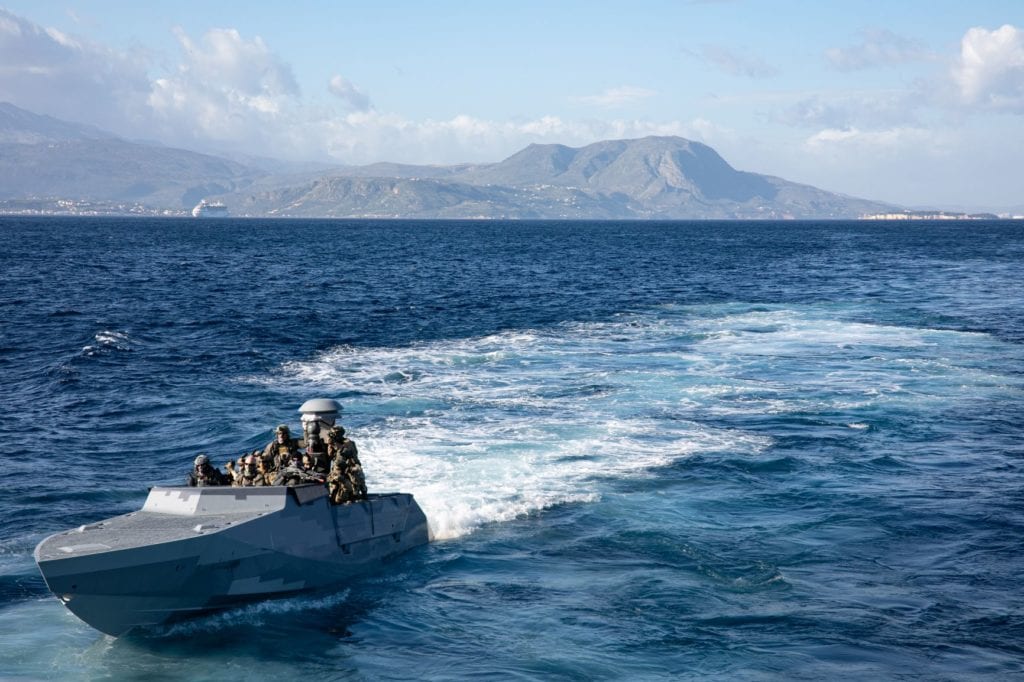
A combatant craft assault craft (CCA) in the Mediterranean Sea, May 26, 2021. U.S. NAVY / Mass Communication Specialist 2nd Class Eric Coffer

CORONADO, Calif. – Candidates of Crewman Qualification Training (CQT) Class 115 completed Naval Special Warfare’s (NSW) assessment and selection pipeline to become Special Warfare Combatant-craft Crewmen (SWCC), earning their pins and graduating, Thursday, July 15, 2021, the Navy Special Warfare Command said in a release. 

Graduates of any NSW assessment and selection pipeline have met the rigorous standards to enter their chosen profession, demonstrating they possess the character, cognitive and leadership attributes required to join the force. Historically, about 35 percent of SWCC candidates make it to graduation. 

Among the 17 graduates is NSW’s first woman operator. The SWCC assessment and selection pipeline challenges candidates through adversity, always upholding validated, gender-neutral and operationally relevant standards. 
 
“Becoming the first woman to graduate from a Naval Special Warfare training pipeline is an extraordinary accomplishment, and we are incredibly proud of our teammate,” said Rear Adm. H. W. Howard, commander, U.S. Naval Special Warfare Command. “Like her fellow operators, she demonstrated the character, cognitive and leadership attributes required to join our force.” 
 
Following graduation, the newly minted SWCCs will report to either a Special Boat Team or follow-on training. The continuum of qualification and training over the course of an NSW operator’s career includes continuously advancing skills in core and additional competencies. 
 
SWCC are experts in covert insertion and extraction, utilizing a unique combination of capabilities with weapons, navigation, radio communication, first aid, engineering, parachuting and special operations tactics. 
 
Naval Special Warfare Center, located on Naval Amphibious Base Coronado, provides initial assessment and selection and subsequent advanced training to the Sailors who make up the Navy’s SEAL and Special Boat communities. These communities support the NSW mission, providing maritime special operations forces to conduct full-spectrum operations, unilaterally or with partners, to support national objectives. For more information on the NSW pipeline, visit https://www.sealswcc.com/


Caudle Nominated to Lead U.S. Fleet Forces Command

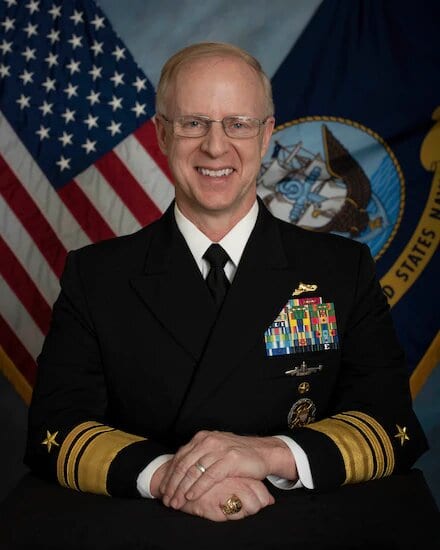
Vice Adm. Daryl L. Caudle, nominated for assignment as commander, U.S. Fleet Forces Command. U.S. NAVY

ARLINGTON, Va. — Secretary of Defense Lloyd J. Austin III announced July 15 the president has made the following nominations, including a new commander for U.S. Fleet Forces Command: 

Navy Vice Adm. Daryl L. Caudle for appointment to the rank of admiral, and assignment as commander, U.S. Fleet Forces Command, Norfolk, Virginia.  Caudle is currently serving as commander, Naval Submarine Forces; commander, Submarine Force, U.S. Atlantic Fleet; and commander, Allied Submarine Command, Norfolk, Virginia. If confirmed by the Senate, Caudle would relieve Adm. Christopher Grady. 

Marine Corps Lt. Gen. Eric M. Smith for appointment to the rank of general, and assignment as assistant commandant of the Marine Corps. Smith is currently serving as the deputy commandant for combat development and integration, Headquarters, U.S. Marine Corps; and commanding general, Marine Corps Combat Development Command, Marine Corps Base Quantico, Virginia.

Navy Vice Adm. James W. Kilby for reappointment to the rank of vice admiral, and assignment as deputy commander, U.S. Fleet Forces Command, Norfolk, Virginia.  Kilby is currently serving as deputy chief of naval operations for warfighting requirements and capabilities, N-9, Office of the Chief of Naval Operations, Washington, D.C. 

Navy Rear Adm. Frank D. Whitworth III for appointment to the rank of vice admiral, and assignment as director of intelligence, J-2, Joint Staff, Washington, D.C.  Whitworth is the incumbent director of intelligence, J-2, Joint Staff, Washington, D.C. 

Caudle is a native of Winston Salem, North Carolina and a 1985 graduate of North Carolina State University (magna cum laude) with a degree in Chemical Engineering. He was commissioned after attending Officer Candidate School in Newport, Rhode Island. 

Caudle holds advanced degrees from the Naval Postgraduate School, Master of Science (distinction) in Physics from Old Dominion University, and Master of Science in Engineering Management. He also attended the School of Advanced Studies, University of Phoenix, where he obtained a Doctor of Management in Organizational Leadership with a specialization in Information Systems and Technology. 

His doctoral dissertation research was conducted on military decision-making uncertainty regarding the use of force in cyberspace. He is also a licensed professional engineer. 

His early sea tours included assignments as division officer, USS George Washington Carver (SSBN 656G); engineer, USS Stonewall Jackson (SSBN 634B); engineer, USS Sand Lance (SSN 660); and executive officer of USS Montpelier (SSN 765). 

Caudle’s first command assignment was as commanding officer of USS Jefferson City (SSN 759). As deputy commander, Submarine Squadron 11, he served as Commanding Officer of USS Topeka (SSN 754) and USS Helena (SSN 725) due to emergent losses of the normally assigned commanding officers. He also commanded Submarine Squadron 3. 

His tours ashore include assignments as assistant force nuclear power officer, commander Submarine Force, U.S. Atlantic Fleet; Officer-in-Charge of Moored Training Ship (MTS 635); deputy commander of Submarine Squadron 11; assistant deputy director for information and cyberspace policy on the Joint Staff (J-5) in Washington, D.C.; and chief of staff, commander Submarine Force, U.S. Pacific Fleet. 

His other flag assignments include deputy chief for security cooperation, Office of the Defense Representative, Pakistan where he directly supported coalition forces for Operation Enduring Freedom; deputy commander, Joint Functional Component Command-Global Strike; deputy commander, U.S. 6th Fleet; director of operations U.S. Naval Forces Europe-Africa; commander, Submarine Group Eight, where he directed combat strikes using the first ever dual Carrier operations with allies in support of Operation Inherent Resolve. He also designed the plan and directed combat sorties for Operation Odyssey Lightning to counter violent extremists in Libya; and commander, Submarine Force, U.S. Pacific Fleet. 

Prior to this assignment, he was Vice Director for Strategy, Plans, and Policy on the Joint Staff (J-5) in Washington, D.C

Vice Admiral Caudle assumed his current duties in November 2019. As commander, Submarine Forces, he is the undersea domain lead, and is responsible for the submarine force’s strategic vision. As commander, Submarine Force Atlantic, he commands all Atlantic-based U.S. submarines, their crews and supporting shore activities. These responsibilities also include duties as commander, Task Force (CTF) 114, CTF 88, and CTF 46. 

As commander, Allied Submarine Command, he is the principle undersea warfare advisor to all North Atlantic Treaty Organization strategic commanders. 


SCO Plans for Overlord USV Transfer to Navy in January

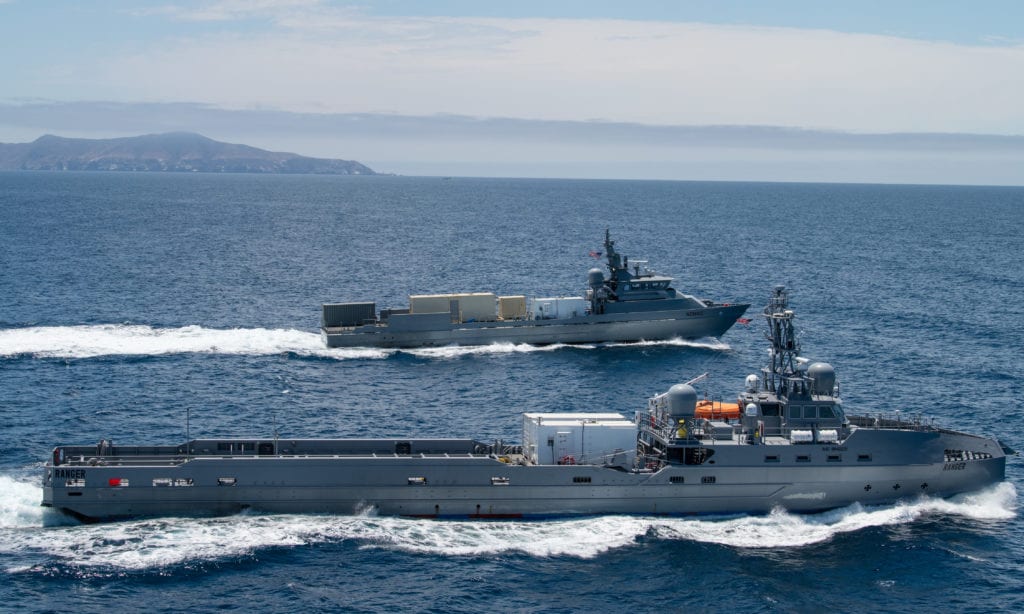
Aerial photos of USS Ranger and USS Nomad unmanned vessels underway in the Pacific Ocean near the Channel Islands on July 3, 2021. U.S. NAVY / Eric Parsons

ARLINGTON, Va. — The two Ghost Fleet Overlord autonomous unmanned surface vessels (USVs) designed to experiment with unmanned fleet technologies are scheduled to be turned over to the U.S. Navy early next year, likely January, and will be joined in 2022 by two more such vessels. 

The two USVs, named Ranger and Nomad, were developed by the Office of the Secretary of Defense Strategic Capabilities Office (SCO). They will be used by the Navy’s San Diego-based Surface Development Squadron One to mature technology and develop concepts of operations for unmanned combatants; tactics, techniques and procedures, and operator experience for USVs as the Navy develops it future Large USV and Medium USV.  

The Overlord USVs are repurposed vessels based on an oil rig offshore support vessel design, said Luis Molina, deputy director for Strategic Capabilities for the Department of Defense, speaking to reporters in a June 13 roundtable webinar. The support vessels were designed to be robust, requiring minimal crews. The Overlord vessels feature government-furnished equipment, including a common control system. 

Ranger made the transit from the Gulf of Mexico to San Diego via the Panama Canal in October, followed in May and June by Nomad. The ocean transits, planned in advance, were monitored and controlled by Sailors of Surface Development Squadron One in the shore-based Unmanned Operations Center in San Diego, where the controllers are able “to change missions in situ,” said Capt. Pete Small, the Navy’s program manager for Unmanned Maritime Systems, also speaking at the roundtable event. The Overlord USVs are equipped with sensors to “react to contacts along the way.” 

Small said the Navy is looking for “supervised autonomy” as the level of control over its USVs.   

Nomad, for example, sailed 4,421 nautical miles, 98% in an autonomous mode, according to a June 7 Defense Department release. Transit of the Panama Canal required the manual navigation by a skeleton crew on each ship in accordance with canal regulations.  

Molina said the SCO will continue to exercise the Overlord vessels until turnover the Navy to do “fleet demonstration exercises and operational vignettes.”    

“We’re currently targeting a January turnover date to the Navy,” Molina said. “But we’re working hand in hand with the Navy, and we have been for the last four years, so that handover and transition is expected to be fairly seamless. We are completing the integration of some of the systems on the ships.”   

Two more Overlord vessels are funded by the Navy and are scheduled for delivery by the end of 2022, Small said, which — together with the Sea Hunter and Sea Hawk USVs — will give the Navy six unmanned ships for experimentation. 


Navy Confident Strike Fighter Shortfall Will Be Gone by 2025, Admiral Says

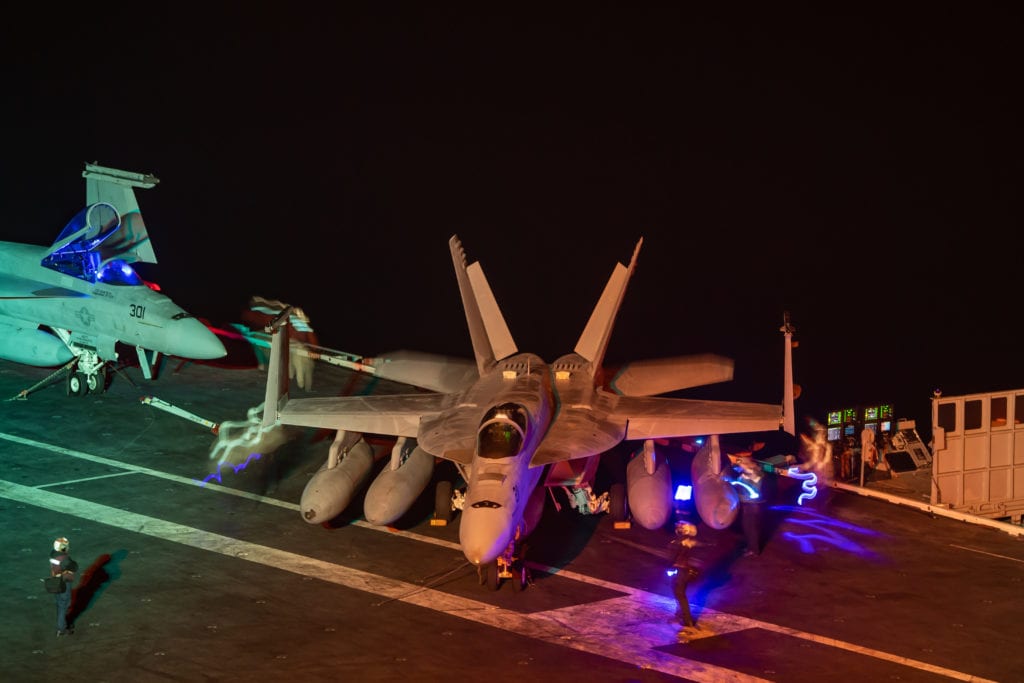
Sailors conduct pre-flight checks on an F/A-18E Super Hornet, assigned to the “Stingers” of Strike Fighter Squadron (VFA) 113, on the flight deck of Nimitz-class aircraft carrier USS Carl Vinson (CVN 70), July 9, 2021. U.S. NAVY / Mass Communication Specialist Seaman Sophia Simons

ARLINGTON, Va. — The Navy’s director of air warfare told the Congress that the Navy is on track to eliminate its shortfall of strike fighter aircraft by 2025. 

Testifying July 13 before the Tactical Air and Ground Forces subcommittee of the House Armed services Committee, Rear Adm. Andrew J Loiselle, the director of air warfare in the Office of the Chief of Naval Operations, was questioned by Rep. Vicky Hartzler, (R-Missouri) — in whose state the Boeing F/A-18E/F Super Hornet strike fighter is built — about the Navy’s decision not to seek additional procurement of more Super Hornets in fiscal 2022 and the effect on the Navy’s current strike fighter shortage. 

“We have taken the F-35C portion of our 44 strike fighters [per carrier air wing] and reduced that from two squadrons of F-35s down to a single squadron but then increased then number of [aircraft] from 10 to 14,” Loiselle said. 

The admiral pointed out that the Navy’s adversary aircraft requirements changed to replace some legacy F/A-18s with ex-Air Force F-16s and ex-Swiss Air Force F-5 fighters instead of Super Hornets. He also said the Fleet Readiness Center at Naval Air Station North Island, California, “has been able to return 28 Super Hornets from long-term down status and put those back in the fleet. 

“We believe that those improvements [will] reduce our strike fighter shortfall to zero by 2025 based on current year analysis,” Loiselle said. 

The admiral said the two Service Life Modernization (SLM) for the Super Hornets “will have the additional capacity at the 2025 period in question to take additional SLM [aircraft] should our current analysis be revised, and we require that additional capacity. We believe the infrastructure will support additional modifications to the Block III” version of the Super Hornet. 

Hartzler asked about the Super Hornets being inducted for SLM having more corrosion evident than was predicted, noting that alleviating the corrosion would add time to conduct an SLM. 

Loiselle said the SLM line was about halfway through modifying the first 30 of the Block II Super Hornets planned for the process, noting the first 30 aircraft were intended to enable the artisans to learn the needs of the aircraft.  

“I agree 100% that there was damage beyond expectations from a corrosion perspective on some of the initial aircraft,” he said. “However, Boeing has seen significantly improved condition in the aircraft that we are now submitting for SLM. So, with the number of Block II Super Hornets in our inventory, compared with the number of Block II Super Hornets that we intend to conduct SLM on, that allows us some selectivity in those [aircraft] we put through the modification line. We’re learning in this process and we’re now conducting inspections prior to induction looking at these hard areas to identify whether or not the corrosion present in those aircraft justifies inclusion in out SLM process or whether or not we might look at a different to conduct that on.  

“But right now, we’re continuing to learn and continuing to bring down the time associated with getting the aircraft through the SLM process,” he said. “We anticipate that by the 2025 timeframe we should be in full swing on two lines at one year per SLM aircraft at that point in time in 2023 and after, coming of the line in a full 10,000-hour modification in full Block III configuration.”

Loiselle also said the Navy “currently is executing a multi-year procurement of F/A-18s — 78 total. We’ve got 70 left to deliver and [those will be delivered] between now and fiscal year ’25. So they are continuing to add to our total of F/A-18s. That’s why I think we can get to SLM and modifications of current F/A-18s after that time frame.” 

He noted the Navy lists an unfunded priority of five F-35Cs to accelerate transition to its desired mix of fourth- and fifth-generation fighters.   


SECNAV Nominee Calls Chinese Adventurism His Main Threat Concern

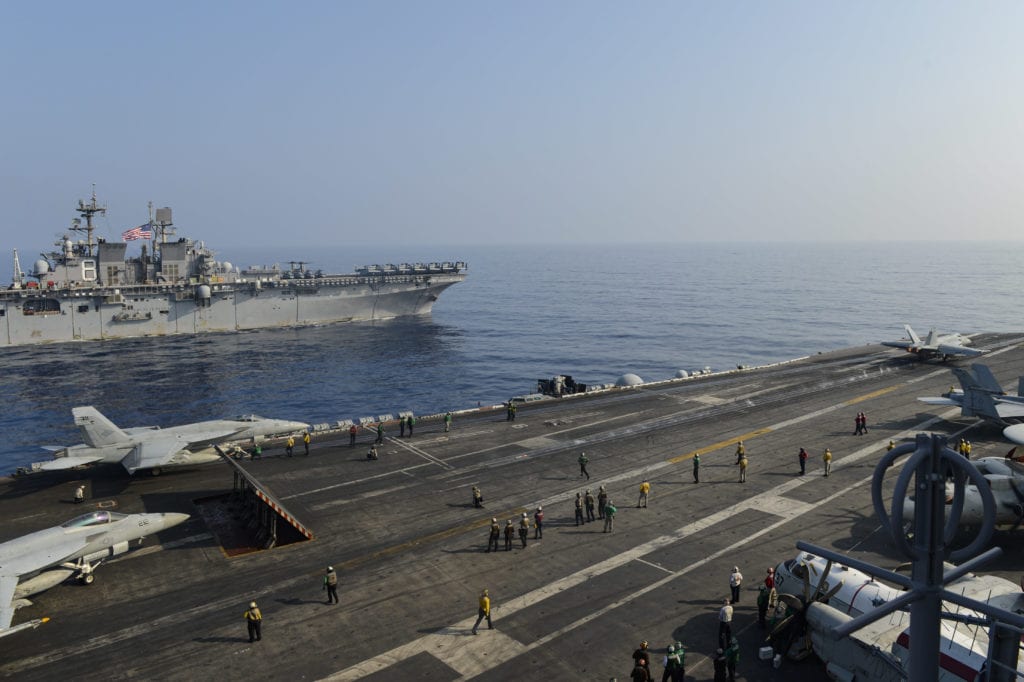
The Theodore Roosevelt Carrier Strike Group transits in formation with the Makin Island Amphibious Ready Group in the South China Sea April 9, 2021. The Theodore Roosevelt Carrier Strike Group, Makin Island Amphibious Ready Group and the Ticonderoga-class guided-missile cruiser USS Port Royal (CG 73) are conducting expeditionary strike force operations during their deployments to the 7th Fleet area of operations. U.S. NAVY / Mass Communication Specialist Seaman Faith McCollum

ARLINGTON, Va. — Former U.S. Navy surface warfare officer Carlos Del Toro, the Biden administration’s choice to be the next secretary of the Navy, told a Senate hearing July 13 that he will be “exclusively focused on the China threat.”

At a confirmation hearing before the Senate Armed Services Committee with four other nominees for senior Pentagon posts, Del Toro, a U.S. Naval Academy graduate and former destroyer commander, was quizzed on several topics from lagging shipbuilding plans and aging shipyards to the challenge of projecting power in the Arctic without sufficient deep water ports, sturdy-hulled Navy ships or Coast Guard ice breakers to operate in the far north.

However, several Republican lawmakers, who view the Navy’s $211.7 billion fiscal 2022 budget — with $22.6 billion for shipbuilding, a 3% reduction from $23.3 billion in 2021 — as too little to maintain Navy readiness, zeroed in on the People’s Republic of China and the challenge it presents as a pacing competitor and a threat to Taiwan.

Noting China’s “global adventurism” presented both a national security threat and an economic threat, Del Toro said it was “incredibly important to defend Taiwan, in every way,” adding that a comprehensive approach should be taken to provide Taiwan with “as much self-defense measures as humanly possible.”

Asked by Sen. Rick Scott of Florida about Indo-Pacific wargame scenarios indicating the United States and its allies would not be able to defend Taiwan, Del Toro noted that as a graduate of the Naval War College as well as Annapolis he was well acquainted with war gaming programs but has not been privy to recent classified studies. However, if confirmed as Navy secretary, Del Toro said he intended “to dive into that immediately, so I can better understand that threat and match that threat.”

Del Toro added, “I’m going to be exclusively focused on the China threat and exclusively focused on moving our maritime strategy forward in order to protect Taiwan and all of our national security interests in the Indo-Pacific theater.”

Both Democrats and Republicans were concerned about the fiscal 2022 plans to decommission 15 ships, including four littoral combat ships and seven Ticonderoga-class guided missile cruisers, while requesting funds to build just one destroyer. Sen. Roger Wicker (R-Mississippi) noted those changes would drop the fleet size to 290 ships, below the 355-ship fleet mandated by 2018 legislation.

Del Toro said he fully supported the 355-ship goal, and with the shift to “a more dominant maritime strategy in the Indo-Pacific” to deter China, the Navy and Marine Corps will need more resources to field “the combat effectiveness we will need.” He committed to working to make that case with Defense Secretary Lloyd Austin and the White House in developing the Navy’s fiscal 2023 budget request.

SASC Chairman Jack Reed (D-Rhode Island) noted at the hearing’s start that “deferred ship maintenance, reduced steaming and flying hours, and cancelled training and deployments have created serious readiness problems,” and “cost overruns and delays in schedules have plagued both public and private shipyards.”

Citing his experience in the Navy and a small business owner for 17 years, Del Toro said he understood the responsibility of the Navy secretary “to ensure the return on investment that American taxpayers make in supporting our Navy.”

It was “incredibly important to ensure, that requirement creeps don’t interfere with the continuing cost of projects,” he said, adding that having the right program managers in place and the right oversight from their leadership to ensure projects stay on track was a key element as well as paying immediate attention when challenging problems are first identified and taking necessary actions to correct them.

“It takes a team to make that happen, they have to have the support from their senior leadership and the military as well for it to be an effective solution,” he said.


General Atomics Continues On-Time Delivery of EMALS, AAG for CVN 79, CVN 80

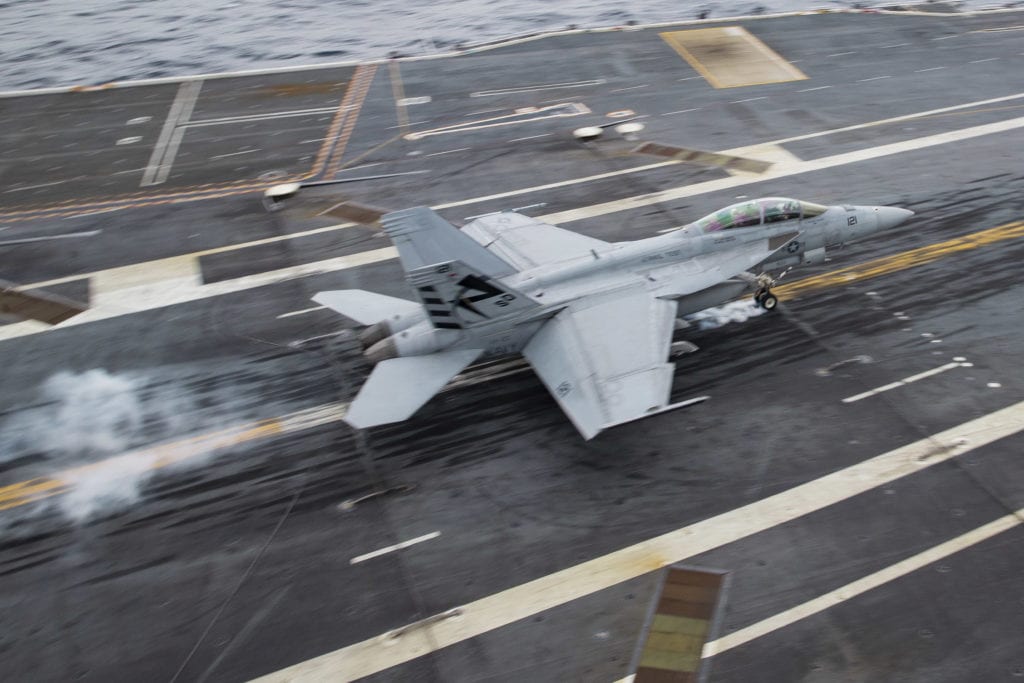
An F/A-18F Super Hornet, assigned to Air Test and Evaluation Squadron (VX) 23, lands on USS Gerald R. Ford’s (CVN 78) flight deck. Ford was conducting Aircraft Compatibility Testing to further test its Electromagnetic Aircraft Launch Systems and Advanced Arresting Gear. U.S. NAVY / Mass Communication Specialist Seaman Jesus O. Aguiar

SAN DIEGO — General Atomics Electromagnetic Systems (GA-EMS) announced July 12 it continues on-time delivery of the Electromagnetic Aircraft Launch System (EMALS) and Advanced Arresting Gear (AAG) for installation on the future Gerald R. Ford-class aircraft carriers USS John F Kennedy (CVN 79) and USS Enterprise (CVN 80). GA-EMS’ EMALS and AAG installed aboard USS Gerald R. Ford (CVN 78) recently completed successful at-sea operational testing during an 18-month Post Delivery Trial and Test (PDT&T) period.  

“The effects of the pandemic during the past year have presented everyone with some incredible challenges, and we are proud of our team’s dedication and focus on delivering EMALS and AAG equipment for Ford-class carriers even under the most difficult of circumstances,” said Scott Forney, president of GA-EMS. “Under multiple contracts with the Navy, we continue to support CVN 78 sustainment requirements, and deliver EMALS and AAG for the next two Ford-class carriers now under construction, CVN 79 and CVN 80.”  

“Multiple contract awards help us efficiently maximize manufacturing plans to ensure there are no gaps in production and we are able to maintain a stable supply chain and workforce to meet the deliverables schedule,” continued Forney. “We’ve delivered 97% of EMALS and AAG equipment for CVN 79, meeting the installation schedule. We also remain on track to support the CVN 80 construction schedule, having built, tested and delivered more than 25% of EMALS and AAG CVN 80 equipment to date. With that said, we remain poised to provide these same critical technologies as the Navy determines the EMALS and AAG contract and schedule requirements for the fourth Ford-class aircraft carrier, USS Doris Miller (CVN 81).” 

GA-EMS recently announced that EMALS and AAG aboard CVN 78 achieved 8,157 successful aircraft launches and recoveries during the ship’s Independent Steaming Events. Over 400 pilots, including new student aviators, achieved their initial carrier qualifications or recertified their proficiency using EMALS and AAG. Both systems successfully completed Aircraft Compatibility Testing, which confirms the ability to launch and recover aircraft in the current naval air wing. The systems also provide greater flexibility over legacy systems to accommodate the future air wing, including both manned and unmanned aircraft.  


Raytheon to begin Next-Generation Jammer Mid-Band Production for U.S. Navy

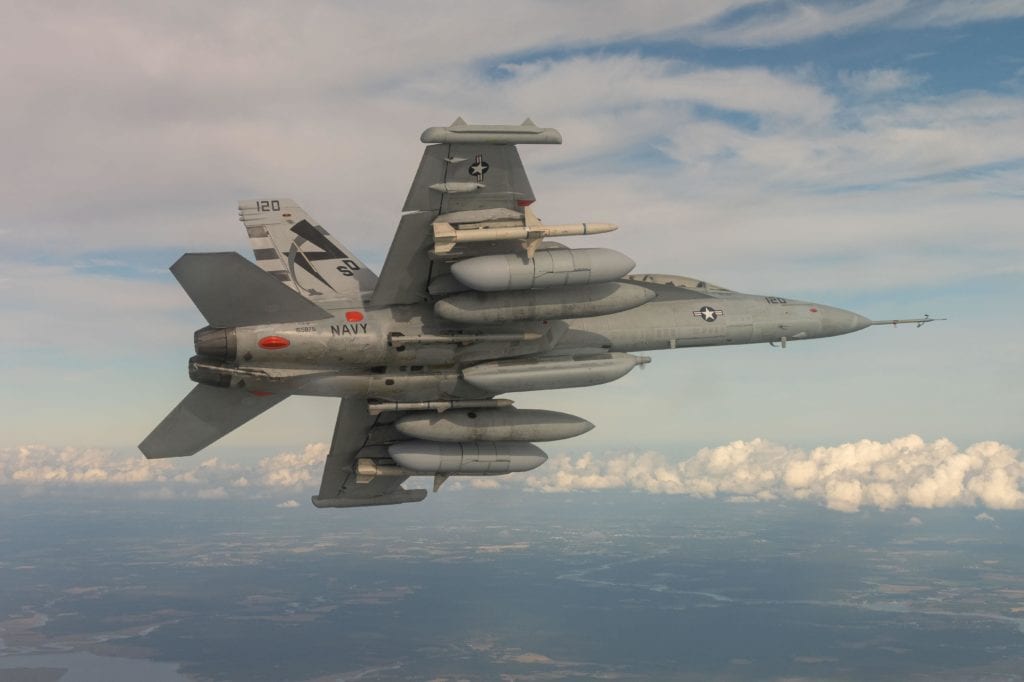
An EA-18G Growler from Air Test and Evaluation Squadron (VX) 23, located at Naval Air Station Patuxent River, Maryland, conducts a Next Generation Jammer Mid-Band (NGJ-MB) flight test over Southern Maryland recently. U.S. NAVY / Steve Wolff

EL SEGUNDO, Calif. — Raytheon Intelligence & Space, a Raytheon Technologies business, has been awarded a $171.6 million contract for Low-Rate Initial Production Lot I, or LRIP I, of the U.S. Navy’s Next Generation Jammer Mid-Band (NGJ-MB), the company said in a July 8 release. The award advances the program from the development stage into production and deployment. 

NGJ-MB is the Navy’s advanced electronic attack system that offensively denies, disrupts and degrades enemy technology, including air-defense systems and communications. NGJ-MB uses the latest digital, software-based and Active Electronically Scanned Array technologies. This allows operators to non-kinetically attack significantly more targets and at greater distances. 

“With its power and ability to jam multiple radars simultaneously, NGJ-MB will fundamentally change the way the Navy conducts airborne electronic attack,” said Annabel Flores, vice president of Electronic Warfare Systems for RI&S. “NGJ-MB will increase the survivability and lethality of fourth-and fifth-generation fighters, making naval aviation that much more effective.” 

The award follows last week’s Milestone C decision, advancing the program into the production and deployment phase. NGJ-MB has completed more than 145 hours of developmental flight-testing using mission systems and aeromechanical systems. The program has also completed over 3,100 hours of anechoic chamber and lab testing at Naval Air Station Patuxent River, Maryland, and Naval Air Station Point Mugu, California. Chamber tests evaluated the system’s performance both on and off the EA-18G Growler aircraft, in addition to jamming techniques and reliability testing. 


Navy Details 2022 Ship Retirement Schedule

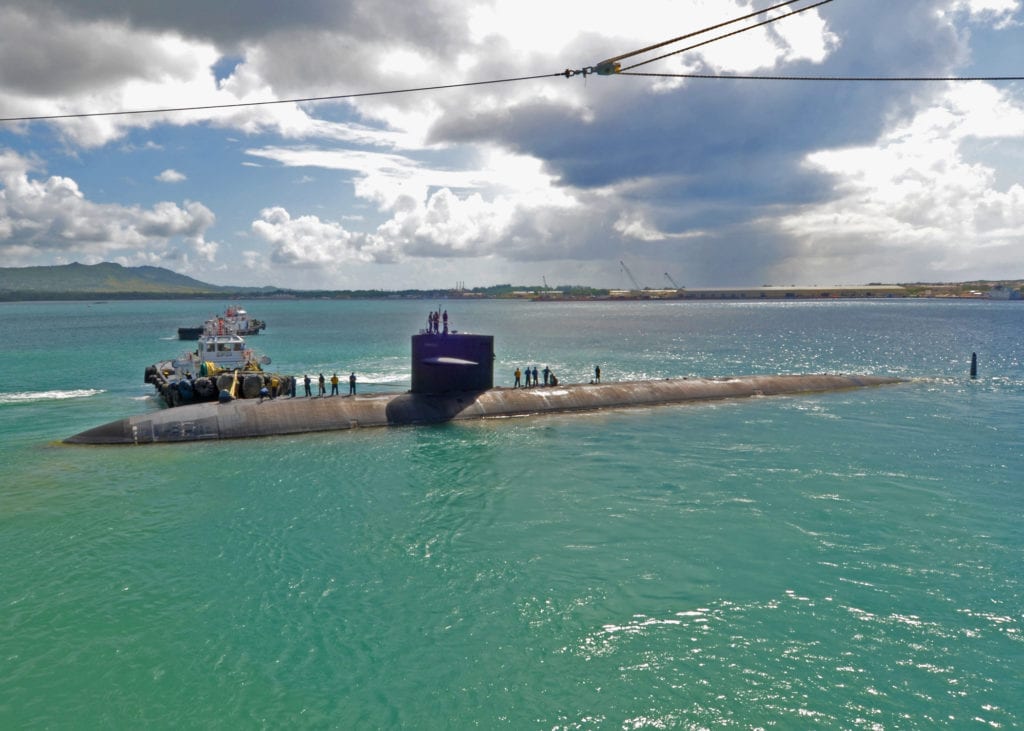
The Los Angeles-class attack submarine USS Oklahoma City (SSN 723), shown here in 2012, has been listed for recycling according to the Navy’s planned ship retirement schedule for fiscal 2022. U.S. NAVY / Mass Communication Specialist Seaman Chris Salisbury

ARLINGTON, Va. — The U.S. Navy has determined its planned ship retirement schedule for fiscal 2022. The list includes 22 ships, including 15 battle force ships. 

In a July 2 administrative message, the Office of the Chief of Naval Operations announced the plans to decommission 19 ship ships from the fleet and remove from service three ships from the Military Sealift Command.  

The list includes two Los Angeles-class attack submarines (SSNs); seven Ticonderoga-class guided-missile cruisers (CGs); five Cyclone-class coastal patrol ships (PCs) and four littoral combat ships (LCSs) — three Freedom-class and one Independence-class LCS. The PCs are forward deployed to the Persian Gulf; they are not considered battle force ships.     

The Navy is proposing to retire seven Ticonderoga-class CGs during fiscal 2022, including two — USS Hue City and USS Anzio — which were not previously planned for retirement. The material condition of the cruisers’ hull and mechanical systems has attracted considerable concern while the cost of keeping the cruisers in service has risen.   

Vice Adm. Jim Kilby, deputy chief of naval operations for Warfighting Requirements and Capabilities, testified June 17 before the Seapower and Projection Forces subcommittee of the House Armed Services Committee that retaining the seven CGs would cost roughly $5 billion across the Future Years Defense Plan. Retaining the ships for two years would cost more than $2.87 billion. He said the cost to modernize Hue City and Anzio alone would cost approximately $1.5 billion.  

Extending the service lives of the cruisers “is costing more than we thought it would be,” he said. “Initially it was $2.4 billion, but we’re adding a lot of money to do that.”   

The proposed cruiser retirements have been criticized by some in Congress as antithetical to growing the fleet to meet the demands of great power competition. 

The decommissioning of some littoral combat ships also has attracted congressional attention, given that they are relatively new ships. 

Congressional mark-ups of defense bills may challenge some of the proposed retirements.  

The ships to be retired and the dates in 2022 by which they scheduled for retirement are listed below:

Ship Name                            Projected Inactivation          Inactive Status

(All dates in 2022 except where noted)

USS Tempest (PC 2)                        March 29                               Foreign Military Sales

USS Typhoon (PC5)                        March 14                               Foreign Military Sales

USS Squall (PC 7)                            April 10                                 Foreign Military Sales

USS Firebolt (PC 10)                      March 1                                 Foreign Military Sales

USS Whirlwind (PC 11)                   April 24                                  Foreign Military Sales

USS San Jacinto (CG 56)                 Sept. 30                                 Reserve

USS Lake Champlain (CG 57)         March 31                                Reserve

USS Monterey (CG 61)                   Feb. 22                                   Reserve

USS Hue City (CG 66)                     March 31                                Reserve

USS Anzio (CG 68)                          March 31                                Reserve

USS Vella Gulf (CG 72)                    Feb. 18                                   Reserve

USS Port Royal (CG 73)                  March 31                                Reserve

USS Fort Worth (LCS 3                  March 31                                 Reserve

USS Coronado (LCS 4)                   March 31                                Reserve

USS Detroit (LCS 7)                       March 31                                Reserve

USS Little Rock (LCS 9)                 March 31                                 Reserve

USS Whidbey Island (LSD 41)       April 30                                   Reserve

USS Providence (SSN 719)            Dec. 2 (2021)                          Recycle

USS Oklahoma City (SSN 723)      June 21                                   Recycle

USNS Apache (T-ATF 172)            June 30                                   Disposal

USNS 1st LT Harry L. Martin (T-AK 2015)     Dec. 30                    Disposal

USNS LCPL Roy M. Wheat (T-AK 3016)          Dec. 31                  Disposal


Navy Completes Refits for Three Oceanographic Research Ships to Add Years of Service

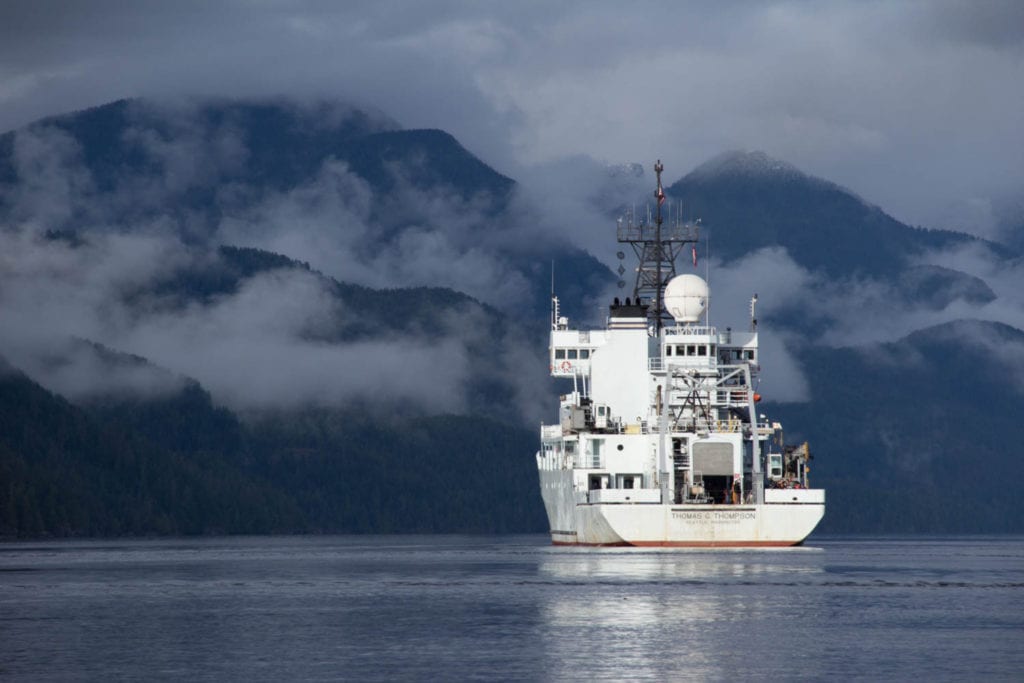
Research Vessel (R/V) Thomas G. Thompson (AGOR 23) in Nootka Sound. UW OCEANOGRAPHY – UNIVERSITY OF WASHINGTON

The Navy has completed refitting three of its oldest but largest oceanographic research ships (AGORs), permitting them to serve for an additional 15 years. The global-class ships, R/V Thomas G. Thompson (AGOR 23), R/V Roger Revelle (AGOR 24) and R/V Atlantis (AGOR 25), entered service between 1991 and 1998 and were built for a 30-year service life.

The final ship, Atlantis, will complete its overhaul on July 10. Rob Sparrock, program manager for research ships with the Office of Naval Research (ONR), said the Navy’s investment of $150 million for all three of the research ships was a good value. “We’ve extended their service lives by at least 15 years, so we got 45 years of service for less than the cost of one new ship with a 30-year service life.”

Sparrock manages six Navy-owned oceanographic research vessels; the historic deep-submersible vehicle Alvin; and the Floating Instrument Platform, or FLIP, which are charter-leased to U.S. academic research institutions to operate and maintain in support of Navy and U.S. ocean research objectives.

ONR also employs other oceanographic platforms, such as unmanned underwater vehicles and unmanned air vehicles, which are used to collect field data through the Naval Research Facilities program.

The Thomas G. Thompson  was delivered to the Office of Naval Research on July 8, 1991 and is operated by the University of Washington. A permanent civilian crew is assigned to the ship, but various researchers deploy in support of their specific programs and are typically funded by the National Science Foundation, Navy, NOAA and other federal/state agencies.

Because her expected service life was 30 years, she would have been retired this year.  Instead, Vigor Industrial shipyard in Seattle was contracted to renovate the ship, which began in June of 2016 at a cost of $52 million. 

Sparrock said the ships were upgraded with new diesel engines, which are more reliable and environmentally friendly, as well as quieter, an important attribute in oceanographic research. The ships now have better laboratory and work spaces, along with improved habitability, new berthing spaces and a gym.

“They’re 25 to 30 years old, but we’ve made them ‘newer’ and greener than most research vessels,” he said.

During the refit, the propulsion system was largely replaced with new diesel generators, overhauled propulsion motors, and new switchboards, control systems and alarms. Electrical cable and pipework were replaced as well as the air conditioning, refrigeration, sewage and freshwater systems. New research and navigation instruments were also added.

The two newest Navy Ocean-class AGORs, R/V Neil Armstrong and R/V Sally Ride, are five and six years old, respectively. By conducting the service life extensions on the oldest on the Navy’s 15 research ships, Sparrock said the Navy’s ocean-going fleet is “good for another 10 to 15 years.”

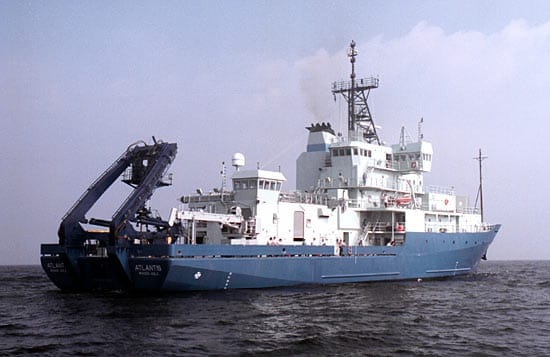
R/V Atlantis. WOODS HOLE OCEANOGRAPHIC INSTITUTION

The AGORs are operated by partner academic institutions. A fourth ship of the class, the NOAAS Ronald H. Brown, was built for and operated by the National Oceanic and Atmospheric Administration. All four ships were built at VT Halter Marine in Pascagoula, Mississippi.

While Atlantis can perform the same kinds of research as the other Globals, and will sometimes deploy without the deep submergence vessel, only Atlantis can support Alvin.  They’re a pair. “Atlantis will perform 280 to 300 days of underway science a year, with 100-plus days devoted to Alvin work.” Sparrock said.

Atlantis is operated by Woods Hole Oceanographic Institution (WHOI), and is the mothership to the Navy’s deep-diving Alvin bathyscaph. Although Alvin first entered service in 1964, it has been systematically modernized and upgraded over the years to remain quite youthful, and has made more than 5,000 dives.

“She’s been rebuilt so often that it’s not a 60-year-old platform we’re refurbishing, said Sparrock. “Most recently, we upgraded her to have a 6,500-meter depth capability.”

Sparrock said Alvin is the last of the Navy’s deep ocean research submersibles, and has a long history of finding lost nuclear weapons, discovering previously unknown hydrothermal vents and associated sea life, and locating the Titanic.  “It’s a fascinating tool of the Academic Research Fleet,” Sparrock said. “Alvin is a national treasure.”

In addition to the Global-class ships, there are also regional-class and local-class ships, which perform missions in coastal waters. The National Science Foundation and State Institutions also own ships in the Academic Research Fleet. Scheduling for the 18 vessels of the U.S. Academic Research Fleet is coordinated by the University-National Oceanographic Laboratory System (UNOLS), an organization representing 59 academic institutions and national laboratories that conduct in oceanographic research and work together to coordinate the oceanographic ship and research facility schedules.

NOAA’s Ronald H. Brown and the U.S. Coast Guard medium icebreaker USCGC Healy are not part of the academic research fleet per se, but participate in UNOLS scheduling.