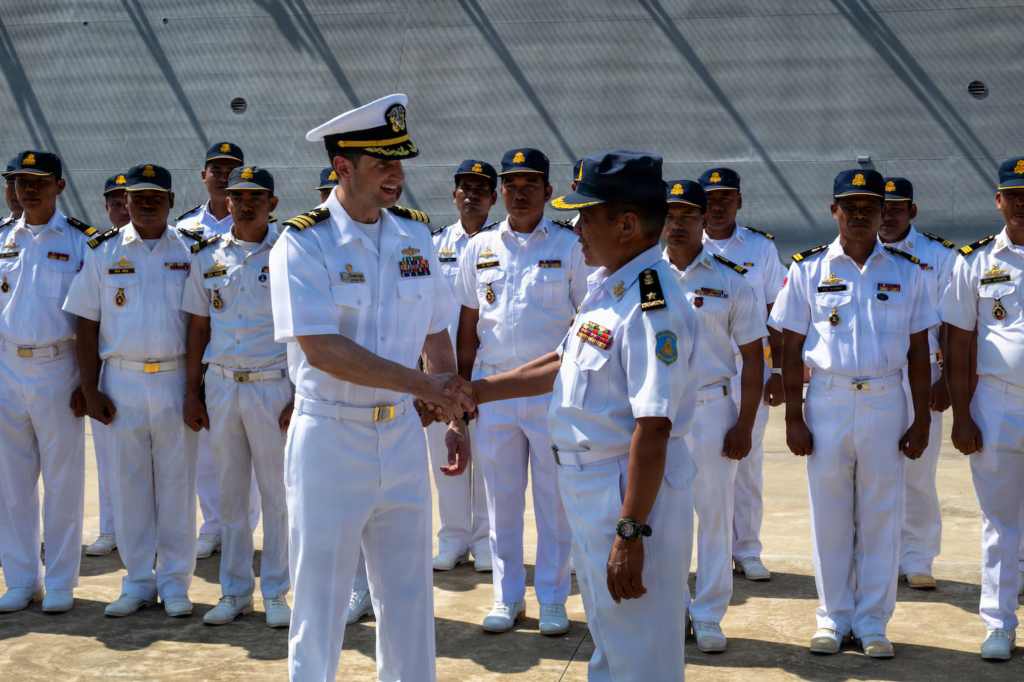
REAM NAVAL BASE, Cambodia (Jan. 24, 2026) A Royal Cambodian Navy Delegation welcomes Independence-Variant littoral combat ship USS Cincinnati (LCS 20) to Ream Naval Base, Cambodia, Jan. 24. Cincinnati is operating in the U.S. 7th Fleet area of operations to ensure maritime security and stability in the Indo-Pacific region. (U.S. Navy photo by MC2 Class Nicholas Rodriguez)
By Destroyer Squadron 7 Public Affairs, Jan. 24, 2026
REAM NAVAL BASE, Cambodia – Independence-variant littoral combat ship USS Cincinnati (LCS 20) arrived in Ream Naval Base for a temporary port visit, Jan. 24, 2026.
Cincinnati’s visit to Cambodia celebrates the continued partnership between the United States and Cambodia, reaffirming our shared commitment to regional security, peace and prosperity. While in port, the crew will conduct ship tours, hold subject matter expert exchanges, and meet with key leaders to further enhance maritime partnership between the two nations.
“It is an honor to be welcomed by the Cambodian people at Ream Naval Base,” said Capt. Matt Scarlett, commodore, Destroyer Squadron (DESRON) 7. “We are always excited to work alongside our partners and continue to build a free and open Indo-Pacific for all nations.”
This visit also demonstrates the deepening cooperation and expanding friendship between the U.S. and Royal Cambodian navies. Cambodia and the United States work shoulder-to-shoulder to uphold a free and open Indo-Pacific.
As we mark the 250th anniversary of the founding of the United States, we reflect not only on our ideals, but also on the enduring role of diplomacy in shaping our nation’s journey and global impact. This visit is a testament to our long-standing partnership with Cambodia and our shared vision for the future. Cincinnati’s visit also follows Independence-variant littoral combat ship USS Savannah’s (LCS 28) port visit to the Kingdom of Cambodia in December 2024.
As the U.S. Navy’s forward-deployed DESRON in Southeast Asia, DESRON 7 serves as the primary tactical commander of littoral combat ships deployed to the U.S. 7th Fleet area of responsibility.
U.S. 7th Fleet, the Navy’s largest forward-deployed numbered fleet, routinely interacts and operates with allies and partners in preserving a free and open Indo-Pacific region.
Shore Boss Assesses Readiness, Quality of Life at NSA Singapore
From Commander, Navy Installations Command Public Affairs, 23 January 2026
SINGAPORE — Vice Adm. Scott Gray, commander, Navy Installations Command (CNIC), visited Naval Support Activity (NSA) Singapore Jan. 23, 2026, continuing a series of engagements across the Indo-Pacific focused on strengthening shore readiness and operational support to the fleet.
The visit supported a broader effort to evaluate how Navy installations enable global power projection, sustain forward forces and remove friction for operational commanders.
While in Singapore, Gray met with Rear Adm. Todd Cimicata, commander, Logistics Group Western Pacific and Task Force 73, and Capt. Silas Bouyer, commanding officer, Singapore Area Coordinator (SAC), to discuss installation capabilities, regional logistics posture and infrastructure priorities.
“NSA Singapore is one of those places where the mission never slows down, and the margin for error is small,” said Gray. “I’m here to see firsthand what our teams need to keep ships moving, keep Sailors supported and keep the fleet ready to respond at speed.”
Gray toured key areas of the installation, including SAC unaccompanied housing facilities, which primarily house junior enlisted Sailors when they are ashore. As part of the Secretary of War’s Barracks Task Force initiative and the Navy’s “Sailors First” principle, CNIC continues to drive improvements in barracks safety, habitability and cleanliness across the shore enterprise.
“If a Sailor can’t rest, reset and feel good about where they live, it shows up in the mission,” said Gray. “These walkthroughs are about spotting real issues, holding ourselves accountable and making sure our standards match what our people deserve.”
Gray also visited Changi Naval Base, where he toured the pier complex, ship repair facilities and Destroyer Squadron 7 spaces. The discussions centered on the strategic value of forward-positioned logistics and maintenance hubs in sustaining naval forces throughout the Indo-Pacific.
“When maintenance, parts, fuel and people come together seamlessly overseas, commanders gain options and flexibility,” said Gray. “That advantage only exists if we continue to invest, modernize and operate with urgency and discipline.”
CNIC enables and sustains naval forces from the shore by designing and delivering integrated shore capabilities to the fleet, fighter and family. Gray oversees 10 Navy regions and 70 installations worldwide.
CNFJ/RJ’s primary responsibility is to provide shore readiness to the fleet, liaise with the Japanese government and strengthen ties with the Japan Maritime Self-Defense Force. Navy Region Japan manages installations in Atsugi, Misawa, Okinawa, Sasebo, Yokosuka, Diego Garcia and Singapore.
CTF 68 Builds Maritime Advantage with NATO Allies During Exercise Freezing Winds 2025
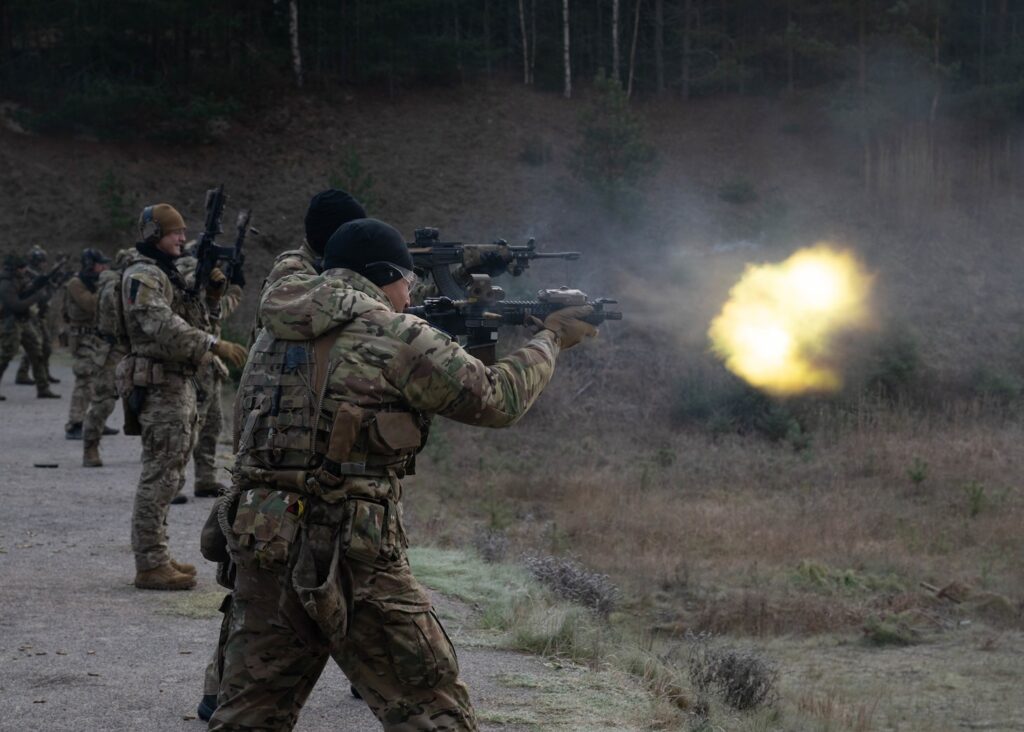
UPINNIEMI, Finland (Nov. 25, 2025) U.S. Navy explosive ordnance disposal technicians from Explosive Ordnance Disposal Mobile 8, Commander Task Group 68.1, and Finnish Navy sailors conduct a live-fire exercise as a part of Freezing Winds 25 in Upinniemi, Finland, Nov. 25, 2025. (U.S. Navy Photo by MC2 Juan J. Ruiz-Lazcano)
BALTIC SEA – U.S. Navy expeditionary forces assigned to Commander, Naval Expeditionary Combat Forces Europe-Africa/Commander, Task Force 68 (CTF 68) recently concluded operations in support of Exercise Freezing Winds 2025, a Finnish-led multinational training event designed to bolster collective readiness, interoperability, and security across the North Baltic Sea.
Operating in concert with NATO Allies and U.S. Marines from Marine Rotational Force – Europe, CTF 68 contributed command and control, explosive ordnance disposal, and maritime logistics support across multiple domains. The exercise served as a proving ground for joint force operations in cold-weather environments and underscored the U.S. Navy’s commitment to enhancing allied maritime security throughout the Baltic region.
“Operating alongside our NATO Allies and U.S. Marines in the challenging conditions of the Baltic Sea sharpens our readiness and reinforces our shared commitment to collective defense,” said Capt. Jeremy Wheat, commodore of Task Force 68. “This exercise strengthens our ability to respond as a unified force, no matter the environment or mission.”
A key focus during Freezing Winds was improving freedom of movement in contested environments, which was made possible in part by the efforts of explosive ordnance disposal technicians from Explosive Ordnance Disposal Mobile Unit (EODMU) 8, assigned to Task Group 68.1. Their role involved simulated route clearance, underwater searches, and demolition operations near critical infrastructure and maritime logistics nodes. All of which were part of scenarios designed to test real-world response to sea mines and unexploded ordnance in congested littorals.
“Our role during Freezing Winds was to ensure freedom of movement by mitigating explosive threats along resupply corridors and maritime infrastructure, especially in areas affected by simulated mining and unexploded ordnance,” said Lt. Luke Robertson, platoon officer-in-charge from TG 68.1. “Training with NATO Allies in these conditions enhances our ability to operate forward and respond to real-world threats in complex environments.”
To support these clearance efforts and maintain the tempo of operations, logistics teams from Navy Cargo Handling Battalion (NCHB) 5, assigned to Task Group 68.5, provided the connective tissue needed to move fuel, cargo, and personnel across the battlespace. Supporting the combined force, TG 68.5 conducted cargo handling, aerial port coordination, and fuel delivery under freezing conditions proving the battalion’s capacity to sustain forward-deployed operations in the High North.
“Our mission was to provide combat service support by moving fuel, cargo, and munitions anywhere they’re needed from high-latitude airfields to expeditionary seaports,” said Lt. Michael Flickinger, TG 68.5 site officer-in-charge. “The environment was challenging, but working side-by-side with Finnish and U.S. Marine logistics teams allowed us to validate scalable, mobile support concepts.”
Exercise Freezing Winds 2025 also contributed to NATO’s broader effort to boost defense readiness across the Baltic Sea, a vital region for global commerce and energy transit. The inclusion of expeditionary units from CTF 68 added a crucial logistics and access-focused dimension to high-end naval and amphibious training.
“The ability of our expeditionary units to integrate into Allied operations, as demonstrated in Freezing Winds, is what makes CTF 68 so unique,” Wheat added. “We bring scalable, responsive capability that extends the reach and impact of the entire naval force.”
Wheat said that in an era marked by renewed focus on strategic deterrence in the High North, exercises like Freezing Winds enabled CTF 68 to contribute directly to integrated defense posture and the Alliance’s maritime advantage.
Exercise Freezing Winds 2025 demonstrated the value of persistent, forward-deployed presence and reinforced the importance of logistics, access, and integration as enablers of joint and allied maritime advantage. “Through exercises like Freezing Winds, CTF 68 continues to maintain a persistent, forward-deployed presence delivering scalable expeditionary capabilities that advance Alliance readiness and regional stability,” said Wheat.
Commander, Task Force 68 commands all Navy Expeditionary Combat Forces in Europe and Africa and provides critical capabilities including logistics, explosive ordnance disposal, maritime engineering, port operations, and expeditionary security in support of U.S. 6th Fleet and NATO objectives.
HII Marks One Year of Newport News Shipbuilding Charleston Operations
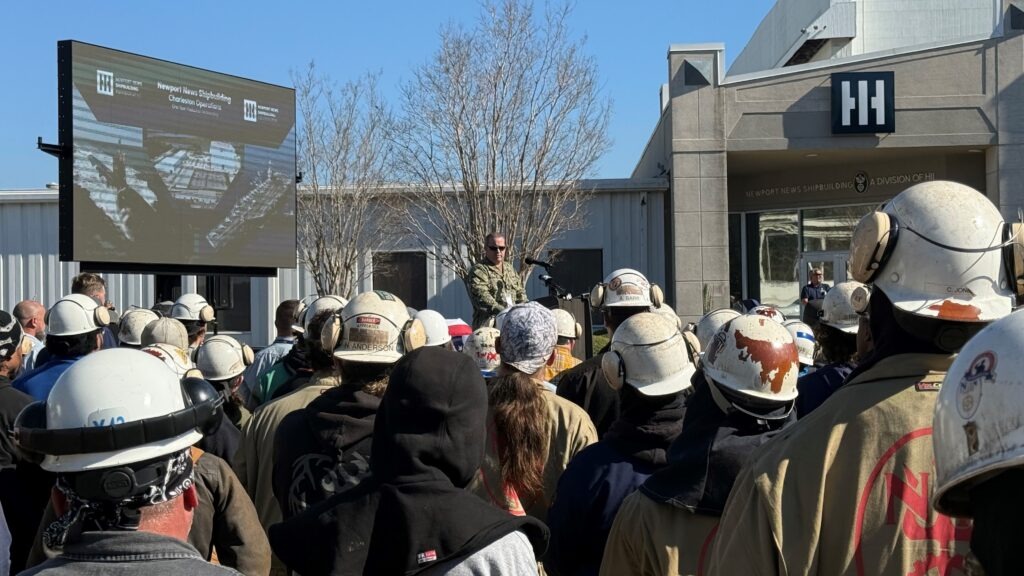
GOOSE CREEK, S.C., Jan. 22, 2026 (GLOBE NEWSWIRE) — HII (NYSE: HII) today marked one year of Newport News Shipbuilding (NNS) Charleston Operations in Goose Creek. The company hosted community and Navy leaders at the facility and a town hall event for all NNS Charleston Operations shipbuilders.
“Today, we celebrate our teammates here in South Carolina for the incredible difference you are making and will continue to make,” NNS President Kari Wilkinson said. “Whether you work in South Carolina or Virginia, we are one team on an important mission with the power to change the course of history — one component, one unit, one module, one boat or one ship at a time.”
Since the asset acquisition closing in January 2025, NNS has continued to ramp up production at this important facility in support of its U.S. Navy programs. The South Carolina team was able to deliver its first unit within the first 40 days as NNS Charleston Operations, and has exceeded production targets for 2025.
“You are crucial as we continue to ramp up submarine and carrier shipbuilding,” Rear Adm. Jonathan Rucker, program executive officer, attack submarines, told shipbuilders at the town hall. “Part of increasing shipbuilding is what we call distributed shipbuilding or outsourcing, (which means) leveraging the people here and those around the country to be able to increase our capacity to build the submarines and aircraft carriers and ships that our nation needs. I can’t thank you enough for what you do day in and day out.”
NNS Charleston Operations is located on 45 acres along the Cooper River with more than 480,000 square feet of covered manufacturing space. It is strategically located within South Carolina’s rapidly growing maritime ecosystem, having both barge and rail access, capacity to expand, and growing access to the highly skilled maritime trades workforce.
The work underway in South Carolina is part of HII’s distributed shipbuilding initiative to increase shipbuilding throughput and meet the increased demand for ships. In addition to NNS Charleston Operations, HII is partnering with 23 shipyards and fabricators beyond the company’s traditional labor market. HII also forged partnerships with international manufacturers to explore meaningful ways to expand capacity, including evaluation of adding an additional shipyard in the U.S.
Leonardo DRS Opens Advanced Naval Power and Propulsion Facility in Charleston, South Carolina
Investment Underscores Continued Commitment to Support U.S. Navy and Defense Industrial Base
ARLINGTON, VA, January 23, 2026 ̶ Leonardo DRS, Inc. (NASDAQ: DRS) today announced the official opening of its new, state-of-the-art naval power and propulsion manufacturing and testing facility in the Charleston, South Carolina region. The more than 140,000-square-foot facility is a major investment to expand domestic production capacity in support of U.S. Navy submarine and shipbuilding programs, including systems for the Columbia-class ballistic missile submarine program.
The purpose-built facility provides advanced manufacturing, final assembly, integration, and testing space dedicated to large components for Leonardo DRS’s naval electric power and propulsion systems. In addition to electric propulsion and power generation systems, the site supports naval steam turbine system design, manufacturing, and testing.
“This strategic investment is a national asset and represents our commitment to supporting the U.S. Navy’s efforts to increase production capacity across the submarine and shipbuilding industrial base,” said Jon Miller, senior vice president and general manager of the Leonardo DRS Naval Power Systems business unit. “This advanced multi-purpose facility enables us to increase production capacity, streamline our production processes, and rapidly respond to evolving fleet requirements.”
John Baylouny, president and CEO of Leonardo DRS, added: “The Department of War has been clear about the need to strengthen and expand the defense industrial base, and this investment answers that call. By increasing capacity and modernizing our manufacturing infrastructure, we are ensuring the U.S. military has reliable access to the critical capabilities it needs, when and where they are needed.”
As the Navy fields more power-intensive weapons, sensors, and computing systems, scalable integrated power architectures are essential to mission success. The Charleston facility positions Leonardo DRS to deliver those architectures at scale and with the schedule reliability required for next-generation surface combatants and submarines.
HII Completes Builder’s Sea Trials for USS Zumwalt
From HII
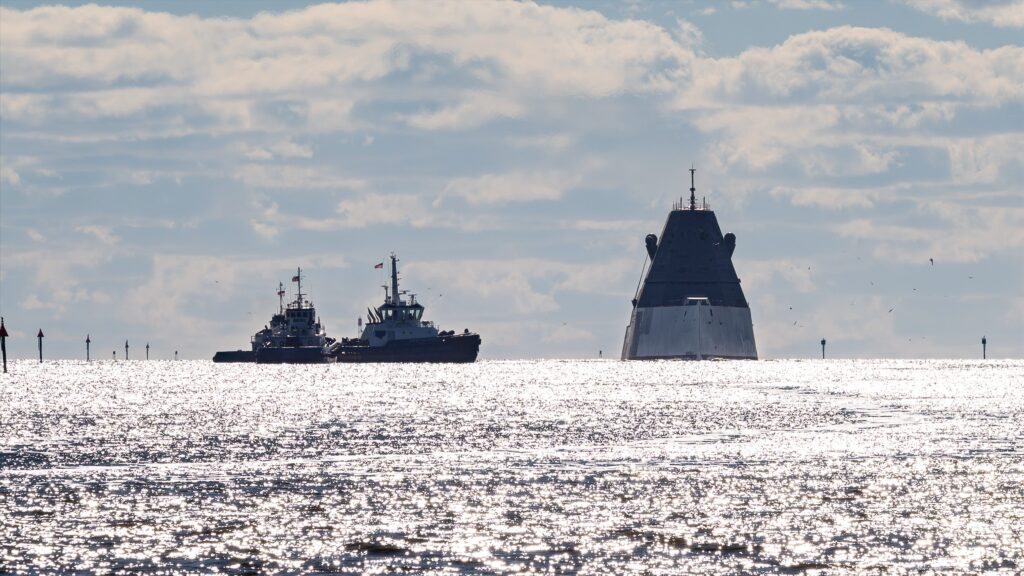
PASCAGOULA, Miss., Jan. 21, 2026 (GLOBE NEWSWIRE) — HII’s (NYSE: HII) Ingalls Shipbuilding division successfully completed builder’s sea trials for USS Zumwalt (DDG 1000). The Ingalls and Navy team conducted a comprehensive series of at-sea tests following an extensive modernization availability as the Navy’s first Conventional Prompt Strike (CPS) platform.
“We have achieved a pivotal milestone with our Navy and industry partners to advance this complex modernization work that will set a precedent for the Zumwalt class,” said Brian Blanchette, Ingalls Shipbuilding president. “I’m very proud of the team effort and their critical role to advance the U.S. Navy’s first warship with hypersonic capabilities.”
USS Zumwalt, the lead ship of the Zumwalt-class destroyers, arrived at the Pascagoula shipyard in August 2023 for modernization. Shortly after arrival, the ship was moved onto land where the Ingalls team completed major technology upgrades. This included integrating the Conventional Prompt Strike (CPS) weapon system and replacing the original twin 155mm Advanced Gun Systems with new missile tubes. In December 2024, USS Zumwalt was undocked and underwent further preparations for operational readiness.
Additionally, USS Lyndon B. Johnson (DDG 1002) is also undergoing CPS weapon system integration at Ingalls and USS Michael Monsoor (DDG 1001) is scheduled to receive the CPS system during a future availability.
Zumwalt-class destroyers feature a state-of-the-art electric propulsion system, wave-piercing tumblehome hull, stealth design and is equipped with the most advanced warfighting technology and weaponry. These ships will be capable of performing a range of deterrence, power projection, sea control, and command and control missions while allowing Navy to evolve with new systems and missions.
NAWCAD WOLF innovation ensures radar system readiness
Innovation at the Naval Aviation Warfare Center Aircraft Division Webster Outlying Field (NAWCAD WOLF) Air Traffic Control and Landing Systems (ATC&LS) division is saving time and money for the warfighter by providing organic sustainment services for the Navy’s primary Shipboard ATC air surveillance radar system, the AN/SPN-43C, in support of the Naval Air Traffic Management Systems Program Office (PMA-213).
From Naval air Warfare Center Aircraft Division, St. Inigoes, Md., Jan. 22, 2026
Innovation at the Naval Aviation Warfare Center Aircraft Division Webster Outlying Field (NAWCAD WOLF) Air Traffic Control and Landing Systems (ATC&LS) division is saving time and money for the warfighter by providing organic sustainment services for the Navy’s primary Shipboard ATC air surveillance radar system, the AN/SPN-43C, in support of the Naval Air Traffic Management Systems Program Office (PMA-213).
Faced with diminishing support from the original equipment manufacturer for the aging AN/SPN-43 radar system—a cornerstone of U.S. Navy aircraft carrier operations since the 1960s—NAWCAD WOLF developed advanced in-house capabilities to repair and overhaul critical components. These efforts have addressed obsolescence challenges head-on, keeping the radar system reliable and effective in supporting complex flight operations.
“Ensuring the operational readiness of our critical systems is a top priority for the Navy, and the AN/SPN-43 radar system is no exception,” said Capt. Walter Massenburg, PMA-213 program manager. “The innovative efforts of NAWCAD WOLF exemplify the dedication and ingenuity required to sustain mission-critical capabilities in the face of obsolescence challenges. Their proactive approach not only extends the service life of this essential system but also reinforces the Navy’s commitment to maintaining mission readiness and operational excellence.”
A key element of NAWCAD WOLF’s initiative is the complete overhaul of the AN/SPN-43C pedestal and antenna assembly—a critical subsystem responsible for the precise rotation and stabilization of the radar antenna. Historically a major source of system downtime and maintenance challenges, the pedestal underwent a transformative process involving full disassembly, detailed inspections, repair or replacement of worn components, and reassembly, followed by rigorous testing to ensure peak performance. This proactive maintenance strategy has extended the service life of the AN/SPN-43C, reduced catastrophic failures within the pedestal by 70 percent, and significantly improved system reliability while lowering maintenance costs.
“We continuously refine our processes to increase project efficiency with testing and minimizing outsourcing while developing methods to keep repairs organic,” said AN/SPN-43C government project lead, Tom Ackerson. “With our government team providing organic in-service engineering support, we keep both the repair time and cost low.”
NAWCAD WOLF also acquired, at no cost, data rights for vital radar receiver components, enabling the team to independently manufacture, repair and modify these parts. This capability mitigates the risk of obsolescence and ensures a reliable supply of spare components, further enhancing the system’s sustainability.
Today, NAWCAD WOLF performs the majority of all repair and overhaul activities for the AN/SPN-43C organically, in-house. This capability reduces reliance on external vendors, shortens turnaround times, and provides greater control over quality and cost.
“The ATC&LS division serves as organic repair depot for 92 items in support of the AN/SPN-43C radar,” said NAWCAD WOLF executive director, Blaine Summers. “The ability to repair these items versus procuring new items provides a great cost savings to PMA-213 and the Navy.”
By sustaining the AN/SPN-43C’s operational readiness, NAWCAD WOLF ensures the system remains effective until its planned replacement, the AN/SPN-50, is fully fielded in the coming years.
Marine Group Boat Works Awarded $633,005 Navy Grant to Certify Welders in Shipbuilding
San Diego Shipyard Creates Grant-funded Welding Scholarship that Pays Workers to Learn How to Weld, Secures a Job Following Completion of Their Certification
From Marine Group Boat Works, Jan. 22, 2026
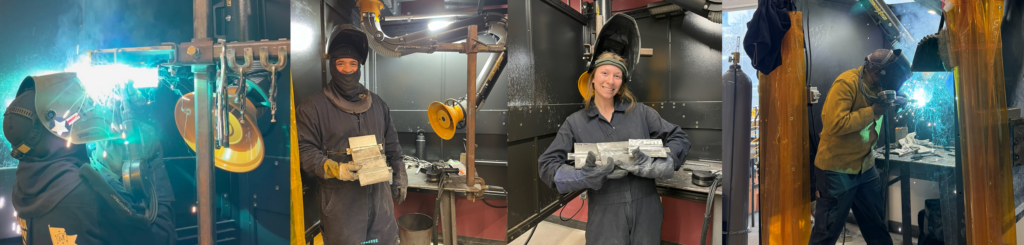
SAN DIEGO (January 22, 2026) – Marine Group Boat Works (MGBW), a full-service shipyard based in San Diego, has been awarded a Navy Grant to establish a maritime welding program designed to expand the skilled labor workforce supporting the U.S. Navy’s growing shipbuilding and repair demands. Marine Group was awarded this grant to address workforce constraints by increasing the number of highly skilled welders certified to NAVSEA standards, thereby enhancing production resources for Navy surface ships and critical maritime assets. The Navy Grant covers 75 percent of the total program costs with Marine Group matching the remaining 25 percent.
“For years, the maritime industry has struggled with figuring out who will replace the existing generation of Navy boatbuilders,” said Todd Roberts, CEO of Marine Group. “This Navy grant has allowed us to take matters into our own hands by coming up with a viable solution to the workforce problem.”
Marine Group partnered with the Maritime Institute in San Diego to develop and deliver a highly customized curriculum, combining accredited technical instruction with the rigorous quality and safety standards required for Navy shipbuilding and repair projects. The shipyard then offers a scholarship that pays new and existing eligible employees to learn how to weld while covering the costs of course materials and instruction throughout the entire NAVSEA welding certification process. Upon successful certification, graduates transition into full-time welding positions at Marine Group which comes with competitive pay, medical and 401K benefits.
“Maintaining skilled workers has not been the issue for us because of the amazing benefits a career in maritime provides,” said Roberts. “It’s finding ones who are open to a job outside the status quo of going to a four-year college and giving them the resources and training they need to get started.”
The primary objective of the program is to certify as many welders as possible to NAVSEA standards, ensuring graduates are immediately qualified to weld on Navy vessels. The program has already demonstrated exceptional results, with the first class of participants achieving a 100 percent passing rate, and all students fully certified and currently assigned to one of Marine Group’s boatbuilding projects—two Jordan patrol boats for the Navy’s Foreign Military Sales and a Range Support Vessel for the Navy’s Program Executive Office. Coupled with Marine Group’s average retention rate of 92%, which is about 35 percent higher than the maritime industrial base’s average (cited as low as 57% for skilled workers according to the Navy’s Talent Pipeline Program), the investment in its production team will increase shipyard efficiency while simultaneously adding to the industry’s workforce. Certifications give employees greater confidence in their ability to successfully handle more complex welding tasks and transferable skills that will benefit them throughout their career in manufacturing wherever they go.
“At the core, the program brings awareness to the benefits of working on the waterfront and that you can easily make great money and support a family just by working with your hands,” said Roberts. “The success of the inaugural class and the increase in applicants interested in the program validates our approach and underscores the importance of industry partnerships in meeting the Navy’s future workforce needs.”
Marine Group remains committed to advancing workforce development initiatives that support national defense, strengthen domestic shipbuilding capabilities, and provide long-term career opportunities within the maritime industry. For information on the welding program and how to apply, check the following information page: https://www.marinegroupbw.com/welding/
U.S. Navy Installations, Fleet Commands Strengthen Readiness with Annual Force Protection Exercise
From Commander, Navy Installations Command, Jan. 22, 2026
Exercise Reinforces Integrated Defense, Warfighting Readiness, and Homeland Security
WASHINGTON, D.C. - From January 26 to February 6, 2026, Navy installations across the continental United States will participate in the annual Citadel Shield-Solid Curtain (CS-SC26) exercise. Conducted by Commander, U.S. Fleet Forces Command (USFFC) and Commander, Navy Installations Command (CNIC), this two-week exercise is a cornerstone of the Navy’s commitment to generating a combat-ready fleet prepared to defend the homeland and prevail in conflict.
“Force protection is everyone’s responsibility whether in competition or crisis, and Citadel Shield-Solid Curtain is a critical test of our preparedness and responsiveness,” said Adm. Karl Thomas, commander, U.S. Fleet Forces Command. “This exercise tests more than just our security forces, and is a measure of our entire force to say something if they see something, an opportunity to flex our command and control structure, and validates that our platforms and people are ready to respond decisively against a variety of threats.”
CS-SC26 is designed to forge warfighters and ready our platforms for a complex security environment. The exercise begins with Citadel Shield, a field training exercise led by CNIC that focuses on the readiness and response of Navy Security Forces. It is followed by Solid Curtain, a command post exercise spearheaded by USFFC that integrates command-and-control elements to synchronize the Fleet’s response to threats against shore-based infrastructure. Together, these events test and validate the Navy’s ability to deter and respond to threats in real-time.
As in past exercises, the training will improve defenses against improvised explosive devices, small unmanned aerial systems, and active shooter threats to name a few. This year’s exercise, however, has been enhanced to prepare installations to defend against modern and emerging threats. Scenarios will emphasize operational protection, surveillance detection, protection of critical infrastructure, and response to potential kinetic attacks, which aim to strengthen commanders’ understanding of risks to respond to real-world events quickly and effectively.
The exercise will also execute the Ashore Navy Security Operations Exercise Program (NSOXP), which will enhance threat detection from both land and sea. The NSOXP is a structured training system providing commanders with standardized force protection scenarios and evaluation tools to assess watch standers and small units, ensuring readiness for real-world threats.
The exercise scenarios are designed to be both realistic and challenging, testing the seamless interoperability between Navy commands, other military services, and our essential municipal agency partners.
“Our forces must adapt faster than our adversaries,” said Vice Adm. Scott Gray, commander, Navy Installations Command. “By realistically simulating complex threat environments, we ensure our Navy security forces and partners are forged into a unified, all-domain team. This training is critical to protecting our people, our infrastructure, and the Fleet’s ability to project power from a secure home front.”
Citadel Shield-Solid Curtain is a regularly scheduled training event, not a response to any specific threat. Its purpose is to ensure the Navy is ready to fight and win, anywhere, anytime.
While the exercise may lead to some increased traffic or minor delays in base access, every effort is made to minimize disruptions to local communities. Residents near installations may observe or hear security-related activities. Local law enforcement and first responders have been coordinated with to ensure safety and smooth operations throughout the exercise.
For more details on any potential local impacts, residents are encouraged to visit their respective Navy installation’s website and social media channels.
Penn State Project with NSWC Dahlgren Division Explores Safer, Smarter Ordnance Handling
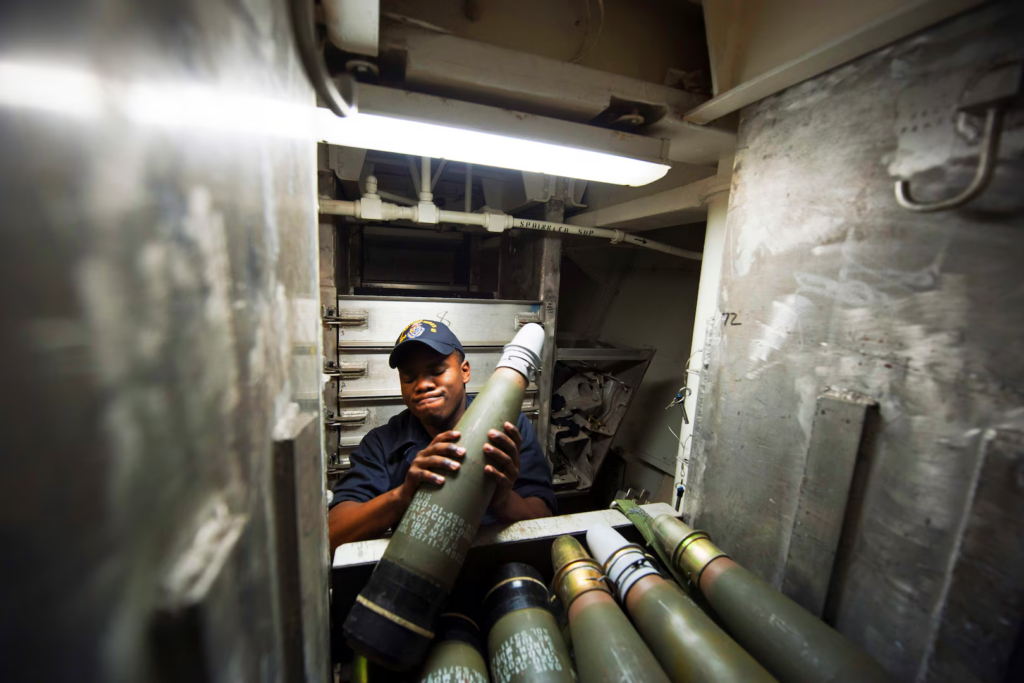
ATLANTIC OCEAN – U.S. Navy Gunner’’s Mate Seaman Desmond Summers removes a Mark 45 5-inch round from an ammunition bin aboard the guided missile destroyer USS Arleigh Burke (DDG 51) Feb. 26, 2014, in the Atlantic Ocean. Onboard today’s naval warships, some of the most critical weapons tasks still depend on human muscle. Automating projectile handling could make the task safer and more efficient. (U.S. Navy photo by Mass Communication Specialist 2nd Class Carlos M. Vazquez II/Released)
By Kristin Davis, NSWCDD Corporate Communications, Jan. 21, 2026
DAHLGREN, Va. – While modern naval warships field advanced weapons systems, many essential ordnance-handling tasks still depend on human muscle. Sailors manually move heavy projectiles and propellant charges through cramped, hot and constantly moving spaces.
The work is labor-intensive – and inherently dangerous.
Engineers at Naval Surface Warfare Center Dahlgren Division are exploring how commercial robotics systems can be adapted to automate projectile handling, making the process both safer and more efficient. While some technology already exists, the end-of-arm tool – a component that directly interfaces with the ordnance – must be customized for each weapon system, said Matt Lehr, Mechanical Design and Integration lead for the Gun Weapon Systems Mechanical Design Branch of the Integrated Engagement Systems Department at NSWCDD.
This past fall, NSWCDD partnered with Penn State, sponsoring a capstone project in which engineering students took on the task of developing such a tool. They had one semester to research existing robotic grippers and effectors, design a custom end-of-arm tool, build and test prototypes and refine their product.
The project brought a fresh perspective to NSCWDD engineers working to make ammunition handling safer, faster and more sustainable for today’s fleet – while giving students the chance to tackle a real-world defense challenge.
There were surprises along the way – and ultimately, success.
But before any of that work could begin, the project started the same way many real-world engineering challenges do: with a team of strangers.
Hands-on innovation
None of the students knew each other at first.
“Starting a big project with random people you don’t know was definitely a new experience,” said Jackoy Gayle, an electrical engineering senior at Penn State.
But they quickly organized into team roles and divided up tasks based on their experience and areas of expertise. Victoria Walker, a mechanical engineering student who has analyzed acoustic data from unmanned underwater vehicles and built a robotic dog, would serve as project manager.
Walker was immediately drawn to the project. She plans to study robotics in graduate school and has already worked on unmanned underwater vehicles for Naval Surface Warfare Center Carderock Division. Still, the end-of-arm tool was different from anything she’d worked on before.
“At Carderock, it was a lot of code processing and data. This was very hands-on,” she said.
It was also the first time Walker and the other students had relatively free rein to engineer a solution to a problem.
“In school, we receive really structured projects,” she said. “Dahlgren gave us parameters and told us to come up with what we thought would work best. We started by coming up with a ton of different solutions for the end-of-arm tool.”
Among them: an electromagnetic gripper to retrieve projectiles from their inventory and place them into a loading system. They nixed the idea; such a gripper would only be compatible with certain materials.
“We talked to others at the university and settled on a vacuum gripper,” Walker said.
It was an out-of-the-box solution that surprised Lehr.
“I was initially skeptical of the vacuum approach,” Lehr said. “But it allowed the team to keep the design compact, which is needed for the system to be able to deposit the projectile into the narrow receptacle of the handling system.”
The engineering challenges weren’t theoretical – they showed up immediately in the lab. Gayle, the electrical engineering student, discovered that the electronic prototyping platform he utilized was rated for 5 volts but the equipment he needed to run was more than twice that. He solved the problem by using a relay. When air began to leak through the vacuum system once it reached a certain level, he resized the tubing. And with no real-life projectile to work with, Gayle earned a metal shop certification so he could resize their dummy ammunition.
From concept to proof of capability
Over the course of the semester, students had regular meetings with NSWCDD engineers as they designed and 3D-printed a custom vacuum manifold fitted with suction cups, paired with a simple vacuum system and pressure reservoir. Early prototypes successfully lifted a 40-pound model projectile. Later versions successfully handled a 70-pound model — the equivalent of a Mark 45 5-inch gun round.
To take it a step further, the team integrated the tool with a robotic arm, demonstrating that it could lift and place a projectile into a loading bay — a key step toward automating future magazine-to-gun workflows. From Lehr’s perspective, the students more than met the intent of the project.
“They did a wonderful job and accomplished a lot within the time and budget they were given,” he said. “They developed a prototype end-of-arm tool, integrated it with a robot, demonstrated projectile manipulation and proved the design could pick up a round in both vertical and horizontal orientations.”
In a fitting finale to the project that bridged academic innovation with real-world Navy impact, the team attended the Capstone Project Showcase at Penn State College of Engineering’s Learning Factory, where their end-of-arm tool took second place.
“We’re really proud of it,” Walker said. “It worked, we were able to demonstrate it worked, and we were able to show that on a specific robot. We’re proud of how far we came, and I think another team in the future could make it even better.”
Looking ahead
If the project is funded for further refinement, the prototype could be improved to ensure it would be capable of operating in harsh environments, Lehr said. “We would also add redundancy features to ensure there is no possibility of a mishap in the event of a fault.”
While many other portions of automation must be developed before fielding a complete system, this project represents an important first step toward reducing risk and physical strain for Sailors.
“This type of technology could be used in the deep magazine to withdraw projectiles and feed them into the ammunition hoist,” Lehr said. “This would allow the system to keep up a high rate of fire over long durations without fatiguing the crew.”
Similar robotic tooling could one day be applied to propelling charges and other ordnance, forming the backbone of semi-automated or fully-automated weapons handling systems across the fleet.
If matured and fielded, the impact on Sailors and the Navy could be significant.
“The goal is to provide Sailors with tools that reduce their workload,” Lehr said. “From a Navy standpoint, automation can reduce the demands for crew size, allowing more assets to be fielded for a given force and enabling that force to be prioritized for other tasking.”
For the Penn State engineering students, the experience offered a rare opportunity to work on technology that could one day be used by Navy warfighters.
“I’m grateful for the team, the support we had from NSWCDD and the chance to work on something that really matters,” Gayle said.