Leidos Completes Delivery of Seahawk MDUSV to U.S. Navy
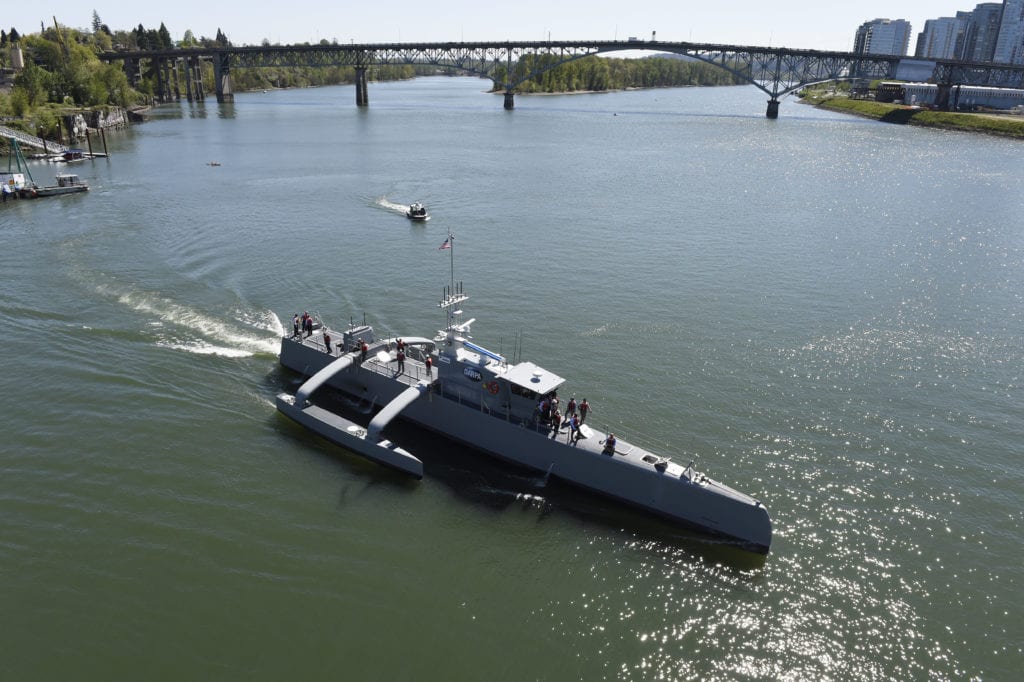
Leidos has completed delivery of a cutting-edge autonomous vessel, the Seahawk, an upgraded design from the earlier Sea Hunter vessel shown here getting underway following its christening ceremony in 2016. U.S. NAVY / John F. Williams
RESTON, Va. — Leidos has completed delivery of a cutting-edge autonomous vessel to the U.S. Navy, known as Seahawk, the company said in an April 7 release. The Office of Naval Research awarded Leidos the cost-plus-fixed fee contract to build the vessel, with an approximate value of $35.5 million, in December 2017. Work was principally performed on the Mississippi Gulf Coast.
“As technology continues to accelerate and adversaries become more sophisticated, our customers must constantly evolve,” said retired Rear Adm. Nevin Carr, Leidos vice president and Navy strategic account executive. “We are honored to provide this latest technological advancement to America’s sailors who fight to keep the seas open and free.”
Seahawk is a long-range, high-availability autonomous surface vessel with a composite trimaran hull. This medium-displacement unmanned surface vehicle (MDUSV) will enhance capabilities for naval operations. Like Leidos’ MDUSV Sea Hunter, Seahawk is substantially larger than other U.S. Navy USVs and has significantly increased capabilities compared to smaller USVs in terms of range, seakeeping and payload capacity. Seahawk is designed to operate with little human involvement, thus providing a forward-deployed and rapid-response asset in the global maritime surveillance network.
“We didn’t just put an autonomous navigation system onto an existing ship,” said Dan Brintzinghoffer, Leidos vice president for Maritime Solutions. “Every mechanical and electrical system on Seahawk has unique configurations designed to run for months at a time without maintenance or a crew.”
The trimaran’s displacement (fully loaded) is 145 long tons. This includes 14,000 gallons of fuel that can power the twin diesel engines for a substantial length of time. Seahawk’s upgraded design follows an evaluation of over 300 lessons learned from Sea Hunter. These upgrades were based on joint evaluations by Leidos and the Navy and include upgraded electrical systems, a payload mounting system and test operator control station.
Seahawk will join Surface Development Squadron One in San Diego, California.
CNO: Programs Must Advance the Navy’s Core Missions
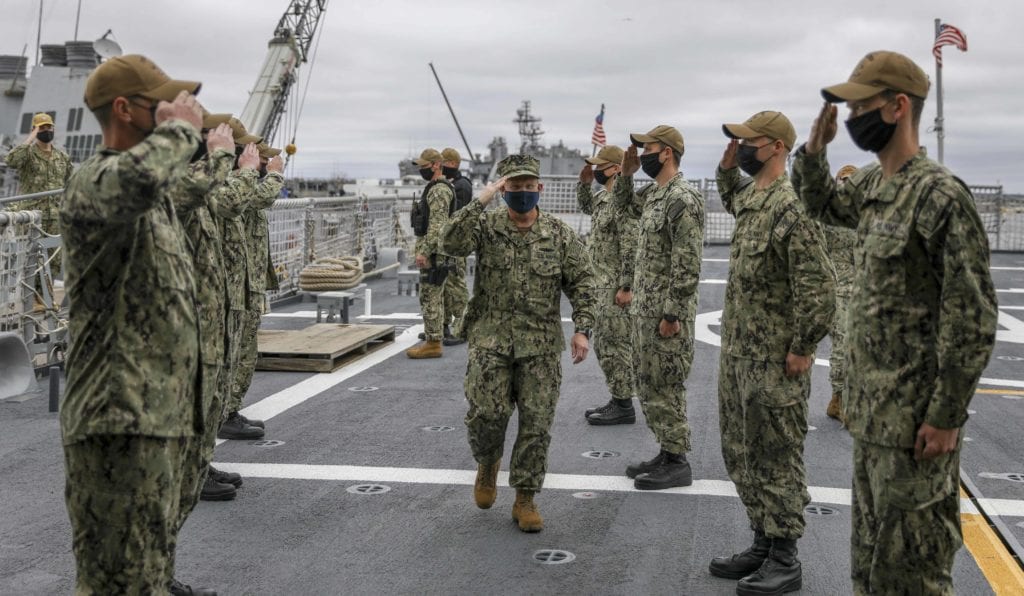
Chief of Naval Operations (CNO) Adm. Mike Gilday, center, renders a salute to Sailors as he embarks the Freedom-class littoral combat ship USS Billings (LCS 15) in Florida in March. U.S. NAVY / Mass Communication Specialist 3rd Class Austin Collins
ARLINGTON, Va. — The Navy’s top officer emphasized the need to focus on the Navy’s reasons for being to avoid tangents that ultimately detract from its role in the defense of the nation.
Chief of Naval Operations Adm. Michael Gilday, speaking in a webinar of the Center for a New American Security, a Washington think tank, said the Navy missions of sea control and power projection are so obvious as to be trite to emphasize, but needed constant attention to perform.
“There have been cases in the past of where you lose sight of those ends — what your main thing is — you can get off track and put precious resources against big programs that don’t advance the Navy or any service with respect of those ends,” Gilday said.
“The things that we’re going to spend money on are going to make us more lethal and more effective with respect to sea control and power projection, and that goes hand-in-glove with the Distributed Maritime Operations concept and how that fits into the broader Joint Warfighting Concept that the chairman of the Joint Chiefs is working with his staff that I expect the secretary of defense to ultimately endorse.”
Gilday emphasized that recent studies of the force structure said the nation needed a larger, more capable Navy.
“Over the past two decades, we have tended not to put strategic investments behind the fleet than we probably should have, so we put ourselves in a situation where we’re falling behind,” he said, noting that while the size of the fleet matters, it was “easy to get seduced by numbers. What we really need to be focused on is capabilities, particularly what capabilities the Navy can close for the joint force.”
The CNO said the Navy’s shipbuilding plan, which was based on the Naval Force Structure Study, “was really focused on operationally relevant metrics — things like lethality, survivability, operational reach — things that are going to allow the Navy to synergistically be much more effective within the joint force.”
The admiral also said factors that can’t be ignored include “total ownership cost, maintenance cost, technical risk of new programs versus operational risk of in the transition of sun-downing legacy programs, industrial base capacity and what the art of the possible is or is not with respect to certain platforms.
“In the end, what we become more focused on with respect to the analysis that we’ve done is the composition of the fleet with respect to capabilities that then translates into platforms,” Gilday said.
The CNO said the force structure studies show more emphasis on undersea capabilities and smaller ships that are more distributed than on larger ships, and more emphasis on offensive hypersonics, directed energy weapons and logistics ships.
“That analysis is sound,” he said. “My take on discussions inside the Pentagon with OSD [the Office of the Secretary of Defense] as we close on the [fiscal 2022] budget, we are grounding decisions on that analysis that was done last year under [Defense] Secretary [Mark] Esper. “That analysis is not static. We have ongoing experiments, fleet battle problems, exercises, war games and analysis.”
Gilday said in a few weeks, the Navy will conduct an exercise off California that will “further inform our understanding of where we need to go with unmanned capabilities, and then the numbers.”
Chinese, Russian Naval Build-ups Keep U.S Navy ‘Elbowing’ for Advantage, Navy’s Intel Director Says
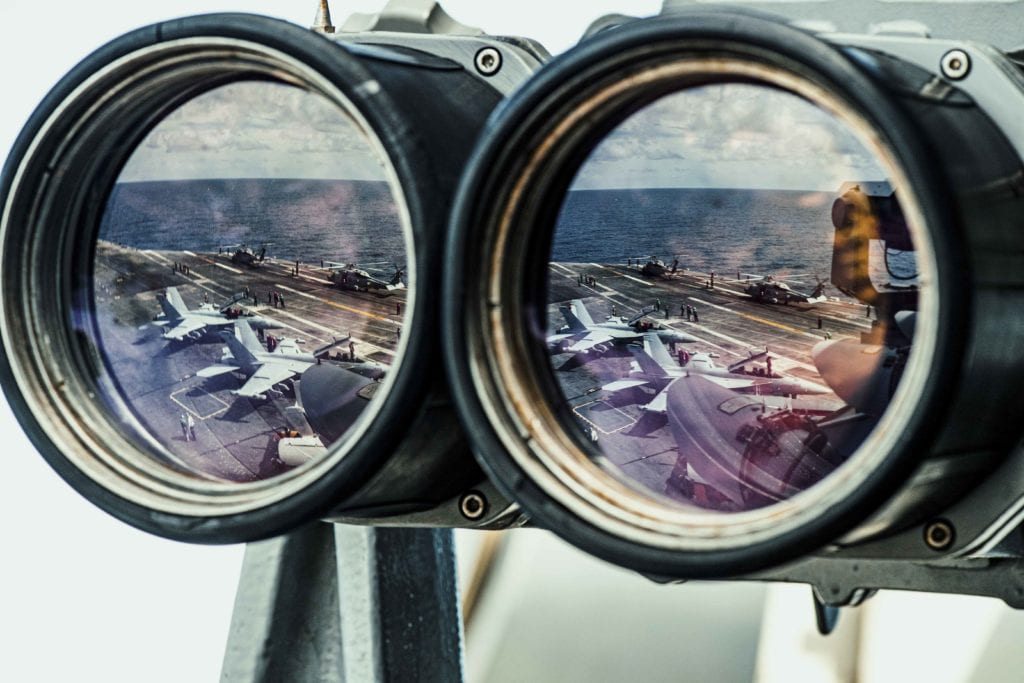
U.S. Sailors prepare for flight operations on the flight deck of the aircraft carrier USS Theodore Roosevelt (CVN 71) April 6, 2021, in the South China Sea. The Theodore Roosevelt Carrier Strike Group is on a scheduled deployment to the U.S. 7th Fleet area of operations. As the U.S. Navy’s largest forward-deployed fleet, 7th Fleet routinely operates and interacts with 35 maritime nations while conducting missions to preserve and protect a free and open Indo-Pacific Region. U.S. NAVY / Mass Communication Specialist 3rd Class Alexander B. Williams
ARLINGTON, Va. — The naval build-ups and more frequent activity of the Chinese and Russian navies in recent years is keeping the U.S. Navy’s intelligence activities busily engaged in collection and analysis.
“Business is good; there’s lots of opportunity out there,” said Vice Adm. Jeffrey Trussler, deputy chief of naval operations for Information Warfare and director of Naval Intelligence, speaking April 6 at a Navy League Special Topic Breakfast sponsored by General Dynamics, commenting on the need for increased attention to the near-peer competitors.
“Day to day, talk about information overload!” Trussler said. “The daily questions that might come out of ‘What if?’ [are] non-stop. In this 21st century, information is available. We want to develop capabilities that best position us, best give us advantage in the competitive space. We want to develop capabilities that might cause adversaries pause and say, ‘Not today.’”
Trussler said the Navy’s job is to be ready.
“We don’t want a kinetic event,” he said. “We would love to prevent it, showing that strength, understanding what their vulnerabilities are, what their capabilities are, how we might counter [them], how we might demonstrate that we’re ready, we know where you are, and what you [doing]. That’s the cat and mouse that goes on right now.”
The admiral said the Navy needs to be ready from day one if deterrence fails.
“Day one doesn’t happen because of what we do day minus one,” he said. “That is what Navy intel, in alignment and in conjunction with the larger intelligence community, is looking for: those opportunities and vulnerabilities at day minus one, or day minus two … before weapons fly.
“In the 21st century, before weapons fly, there is a lot that is going to be happening in the domains that are hard to get your arms around of at sea,” he said. “That’s the elbowing that goes on right now for information advantage, a little different than what was going on in the Cold War, a little more human-oriented advantage for information that’s taking place day after day in the cyber world.”
Trussler said that the intelligence community is trying to stretch the timeline of warning as much as possible.
“We’d like it to be of days,” he said. “If not, we’d like it to be in hours, but it may be only minutes or seconds, so that’s why we’ve got to develop the systems and the processes that can take advantage of that at the speed that commanders need to make decisions and hold that advantage.”
NNSY Welcomes MTS Sam Rayburn for Inactivation
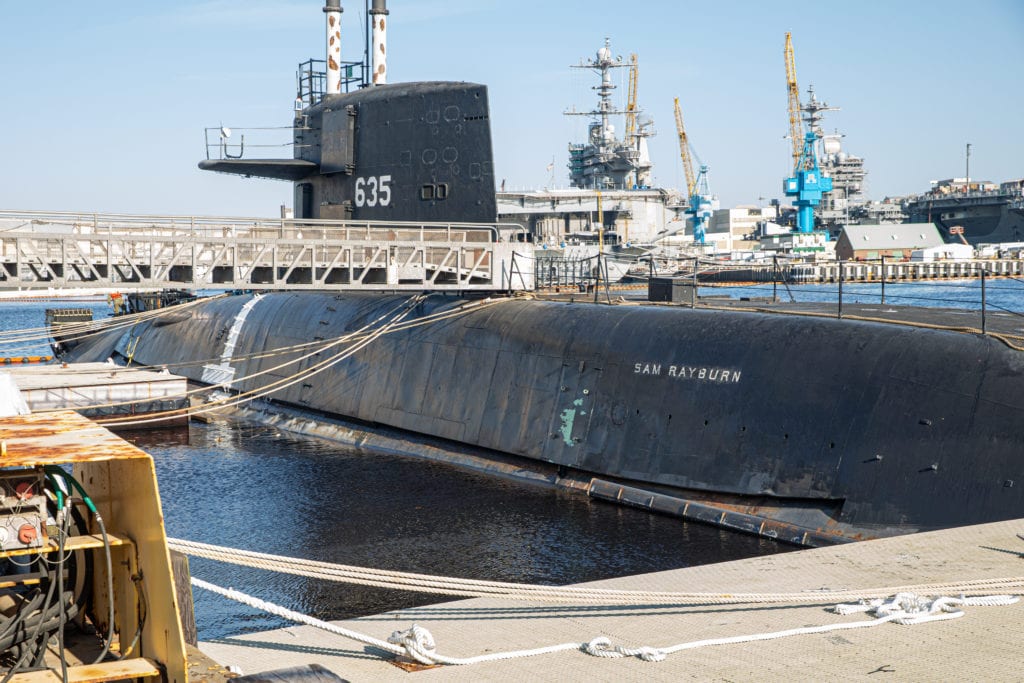
Norfolk Naval Shipyard welcomed the Moored Training Ship Sam Rayburn (MTS 635) in advance of its inactivation April 3. Along with MTS Daniel Webster (MTS-626), Rayburn is being replaced by the next-generation training vessels MTS La Jolla (MTS 701) and USS San Francisco (SSN 711). Danny De Angelis
NORFOLK, Va. — Norfolk Naval Shipyard (NNSY) welcomed the Moored Training Ship Sam Rayburn (MTS 635) April 3 in advance of its inactivation.
Rayburn (formerly SSBN 635) served as a MTS at Nuclear Power Training Unit – Charleston for more than 30 years training Sailors in the operation, maintenance and supervision of nuclear propulsion systems. Along with MTS Daniel Webster (MTS 626), Rayburn is being replaced by the next-generation training vessels MTS La Jolla (MTS 701) and USS San Francisco (SSN 711).
Providing unique opportunity for the NNSY workforce, Rayburn marks the Navy’s first inactivation of a MTS. Upon completion of this work, Rayburn will be towed to Puget Sound Naval Shipyard for recycling. NNSY will also perform Webster’s inactivation.
“USS Sam Rayburn has proudly served the U.S. Submarine Force and Navy Nuclear Propulsion Program since 1964, and we now welcome it to America’s Shipyard,” said Shipyard Commander Capt. Dianna Wolfson. “Performing the first inactivation of a Moored Training Ship will develop another important facet in our service to the fleet, and we look forward to excelling in our mission as one team.”
Throughout Rayburn’s three-decade stint as a training vessel, NNSY has performed maintenance on it as needed, sometimes in Portsmouth when a dry docking was required, and other times onsite in Charleston, sending upwards of 200 employees to perform Pierside Extended Maintenance Availabilities and support depot level repairs during continuous maintenance availabilities.
Commending Norfolk Naval Shipyard’s Charleston (NNSY-CHS) team for its record of planned maintenance and emergent repairs, Adm. James Caldwell, director, Naval Reactors, said, “NNSY-CHS’s efforts directly contributed to the Naval Nuclear Propulsion Training Program’s (NNPTP) ability to meet or exceed annual fleet requirements for qualified operators for the past several years, allowing the nuclear Navy to achieve 100 percent fleet manning for the first time in 10 years. This recognition speaks to the direct leadership, dedication and follow through of a passionate team striving for consistent impactful results.”
During this time of modernization for the NNPTP, the NNSY-CHS team has been concurrently working retirements of Rayburn and Webster; delivering and supporting work of the new vessels; and modernizing the site to enhance future training needs.
“Preparing and towing the MTS 635 represents the next step in modernizing the nuclear training program here in Charleston,” said MTS Project Superintendent Chrystal Brady. “By retiring the MTS 635, NPTU Charleston can move forward with the final preparations to receive the MTS 711 later this year. The NNSY Charleston team continues to demonstrate dedication to the mission of the site. To care for and deliver this asset, many personal sacrifices have been made over the years to deliver on maintenance schedules and, most recently, to ensure an on-time tow. Our team takes great pride in the way we represent NNSY and the Navy every day.”
Exemplifying Wolfson’s “One Mission-One Team” mantra, sending Rayburn to Portsmouth required constant communication and coordination between NNSY and its Charleston team hundreds of miles away. “There were several key parts to this plan for Norfolk Naval Shipyard — the safe departure from Charleston, tow, and safe arrival at Norfolk Naval Shipyard,” said Pat Ensley, NNSY Submarine program manager. “This was a great team effort to accomplish this mission. The detailed preparations for departure took significant planning and execution to complete the preparations for tow.”
Following La Jolla, which completed its conversion at NNSY in November 2019, San Francisco is now in the final stages of becoming a Moored Training Ship for towing to Charleston. These conversions are the closest NNSY has come to new ship construction since the 1950s, requiring two complete hull cuts, separating each boat into three pieces, recycling the center section, and adding three new hull sections, adding 76 feet to the overall length on both vessels.
This article is by Michael Brayshaw, NNSY Lead Public Affairs Specialist
Fleet Forces Re-Designation to Atlantic Fleet On Hold, CNO Says
Chief of Naval Operations Adm. Mike Gilday, right, during a February visit to San Diego. Gilday says the plan to bring back the name U.S. Atlantic Fleet is on hold pending the ongoing Global Force Posture Review. U.S. NAVY / Theresa McKenrick
ARLINGTON, Va. — The Navy’s plan to bring back the name “U.S. Atlantic Fleet” is on hold, the Navy’s top officer said.
“Right now, implementation is on hold, based on the findings of the ongoing Global [Force] Posture Review,” said Chief of Naval Operations (CNO) Adm. Michael Gilday, speaking April 5 to the Defense Writer’s Group, answering a question about the planned re-designation of U.S. Fleet Forces Command to U.S. Atlantic Fleet.
The Global Force Posture Review was announced by Feb. 4 by Defense Secretary Lloyd Austin.
“At the direction of the president, the [Defense] Department will therefore conduct a global force posture review of U.S. military footprint, resources, strategy and missions,” Austin said. “It will inform my advice to the commander-in-chief about how we best allocate military forces in pursuit of national interests. The review will be led by the acting under secretary of defense for policy, in close consultation with the chairman of the Joint Chiefs of Staff.”
Gilday said on Jan. 11 in a webinar of the Surface Navy Association convention that then-President Donald Trump signed off on the proposal of then-Navy Secretary Kenneth Braithwaite to re-designate U.S. Fleet Forces Command as the U.S. Atlantic Fleet. No timetable for the change was announced, but Fleet Forces Commander Adm. Chris Grady then was engaged in the planning for the CNO’s review.
The move to the return of the Atlantic Fleet moniker was deliberate. Braithwaite announced the re-designation plan Dec. 2 during testimony before the Senate Armed Services Committee’s Readiness and Management Support sub-committee, noting the changing world requires the Navy to evolve to meet the threat.
“Our existing structure operates on the premise that we still live in a post-9/11 state, where NATO’s flanks are secure, the Russian fleet is tied to the pier and terrorism is our biggest problem,” Braithwaite said. “That is not the world of today. As the world changes, we must be bold, evolved and change with it. Instead of perpetuating a structure designed to support Joint Forces Command, we are aligning to today’s threat.
“To meet the maritime challenges of the Atlantic theater, we will rename Fleet Forces Command as the U.S. Atlantic Fleet and will refocus our naval forces in this important region on their original mission, to controlling the maritime approaches to the United States and those of our allies. The Atlantic Fleet will confront the re-assertive Russian navy, which has been deploying closer and closer to our East Coast with a tailored maritime presence, capability and lethality,” Braithwaite said.
USS John Finn Returns from First Deployment
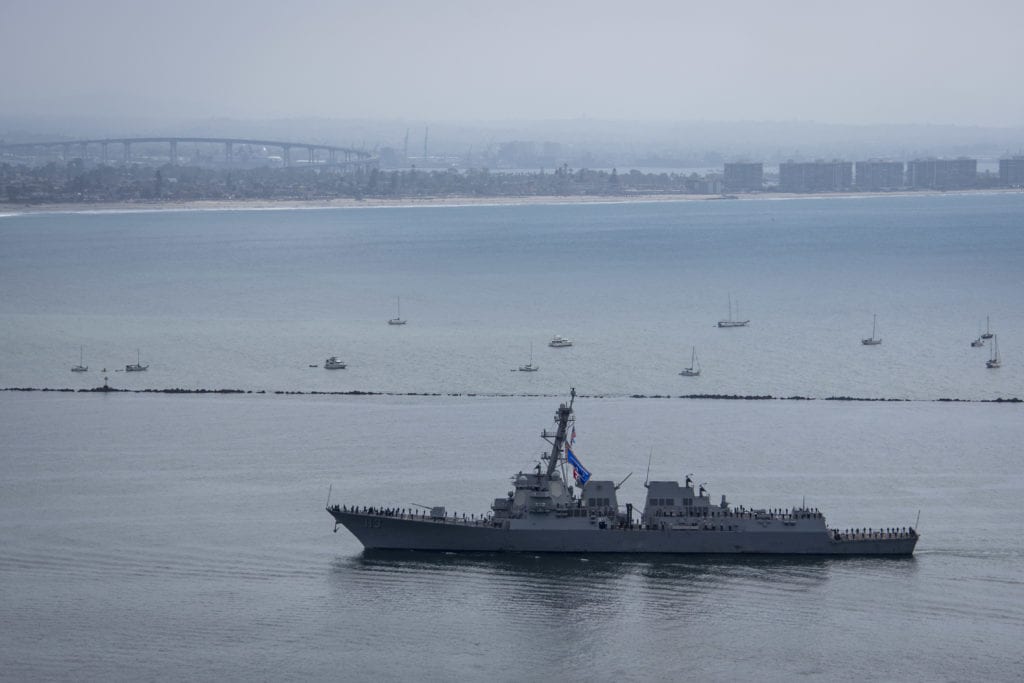
Arleigh Burke-class guided-missile destroyer USS John Finn (DDG 113) returns to Naval Base San Diego. John Finn, a part of the Theodore Roosevelt Carrier Strike Group, returned to Naval Base San Diego April 2, after the ship’s first deployment to U.S. 7th Fleet in support of maritime security operations to ensure a free and open Indo-Pacific. U.S. NAVY / Mass Communication Specialist 2nd Class Jessica Paulauskas
SAN DIEGO — Arleigh Burke-class guided-missile destroyer USS John Finn (DDG 113) returned to San Diego April 2 after its first deployment, U.S. 3rd Fleet Public Affairs said in a release.
John Finn departed with the Theodore Roosevelt Carrier Strike Group (TRCSG) for a scheduled deployment to the Indo-Pacific region Dec. 23.
“John Finn provided presence and maintained the freedom of the seas while deployed,” said Cmdr. Bralyn E. Cathey, commanding officer of John Finn. “My crew and ship were proud to show the flag abroad while executing myriad missions and exercises during our maiden deployment.”
The destroyer’s primary mission was conducting maritime security operations to ensure a free and open Indo-Pacific region. While operating in U.S. 7th Fleet, John Finn participated in freedom of navigation operations, conducted bilateral operations and coordinated maneuvering exercises with the Japan Maritime Self-Defense Force, executed multiple transits and operations within the Philippine archipelago, and sailed through the international waters of the Taiwan Strait.
“John Finn’s performance during her maiden deployment has been nothing short of phenomenal,” said Rear Adm. Doug Verissimo, commander, Carrier Strike Group Nine. “The captain and his crew should be incredibly proud of the job their team did, seamlessly integrating into the strike group and exceeding every expectation. I’m so proud to have them as a member of Team Fury.”
John Finn participated in dual carrier operations in February with TRCSG and Nimitz Carrier Strike Group that showcased the tactical capabilities of two carrier strike groups operating jointly.
Navy Awards Raytheon Contract for AQS-20C Mine-Hunting Sonars
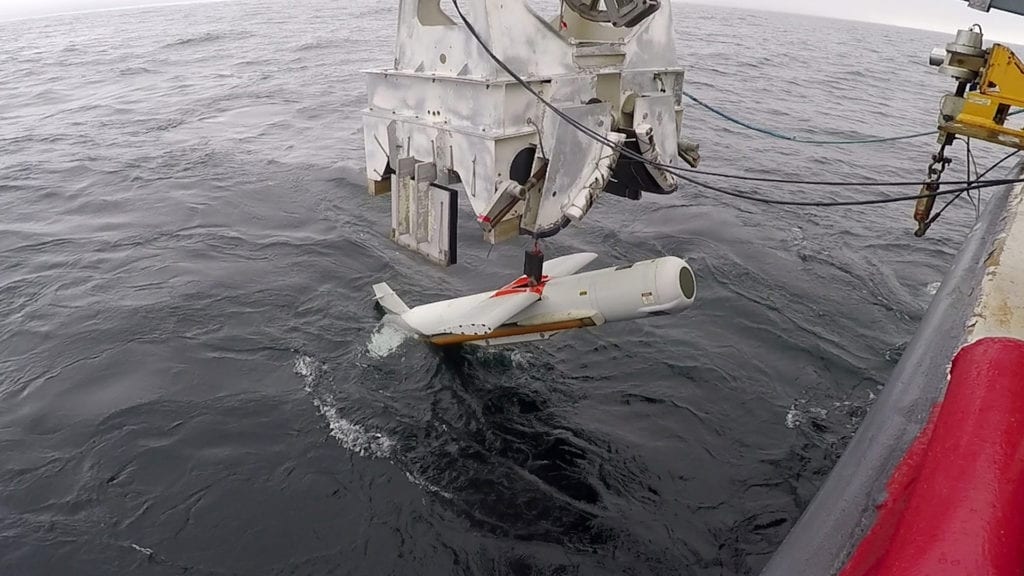
The AN/AQS-20C Towed Mine-hunting Sonar is streamed into Gulf of Mexico waters of the Naval Surface Warfare Center Panama City Division (NSWC PCD) Gulf test range. Developmental Testing was completed on Feb. 12, 2019. The testing marks completion of incorporating the ‘Charlie’ variant sonar sensor modernization. U.S. NAVY / Eddie Green
ARLINGTON, Va. — The U.S. Navy has awarded Raytheon Technologies a contract to upgrade some AQS-20A towed sonars to the AQS-20C configuration.
The Naval Sea Systems Command awarded Raytheon a $66.5 million firm fixed-price contract for engineering, design, development, production, integration and testing to physically upgrade 10 legacy AQS-20A mine hunting sonars to the AN/AQS-20C configuration.
The AQS-20 is a variable-depth, underwater mine-detection sonar designed to give a strike group an organic capability to detect, classify and localize bottom, close-tethered and volume mines. The AQS-20A also is fitted with an electro-optical sensor to identify underwater objects.
The sonar is deployed while the helicopter is in a hover and then towed undersea to scan the water in front and to the sides of the aircraft, as well as the sea bottom for anti-shipping mines. The sonar and EO sensor provide high-resolution images of mines and mine-like objects as well as high-precision location information. The AQS-20A is a component of the Remote Multi-Mission Vehicle and the Airborne Mine-Neutralization System in the mine warfare mission package of the LCS. It entered LRIP in 2005; 25 units were delivered.
The AQS-20C features four imaging sonars — including a synthetic aperture sonar that provides the highest possible resolution for acoustic identification — and an imaging laser system that hunt for mines in the entire water column over a large area in a single pass. The system detects, classifies, localizes and identifies mines on the seabed, near-bottom moored mines, volume mines and near-surface mines. Classification is accomplished within the body of the system using advanced algorithms and signal processing. With the Barracuda mine neutralizer, an AQS-20C can complete the search to engage in a single pass.
The AQS-20C is being integrated on the MCM Unmanned Surface Vehicle for mine hunting from an LCS. Delivery of 10 units began in summer 2018. Developmental test began in late 2018. IOC was achieved in late 2018. Developmental test with the LCS was completed in 2019. Raytheon Co. had delivered 10 AQS-20Cs to the Navy by January 2020.
Navy Orders Unmanned Influence Sweep System from Textron
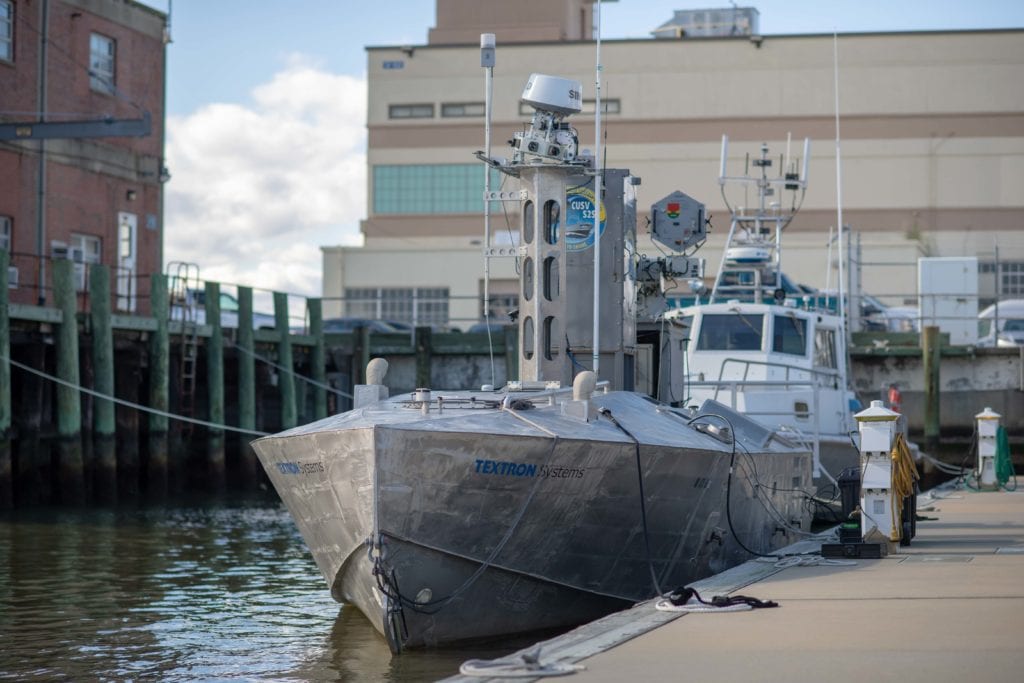
A developmental, early variant of the Common Unmanned Surface Vehicle (CUSV) autonomously conducts maneuvers on the Elizabeth River during its demonstration during Citadel Shield-Solid Curtain 2020 at Naval Station Norfolk. A development of the vehicle, the Mine Countermeasures USV, is part of the Unmanned Influence Sweep System. U.S. NAVY / Mass Communication Specialist 2nd Class Grant G. Grady
ARLINGTON, Va. — The Navy has ordered another Unmanned Influence Sweep System (UISS) unmanned surface vehicle (USV) from Textron, the Defense Department announced.
The Naval Sea Systems Command awarded Textron Systems a $12.9 million contract for one low-rate initial production (LRIP) UISS, the Navy’s first USV program of record. The UISS was approved for LRIP in February 2020, after which the Navy placed an order for three systems. This latest award brings the LRIP lot to four systems.
The UISS is a stand-off, semi-autonomous system designed with the capability to counter acoustic and/or magnetic mines. It includes a magnetic cable that tows a modified Mk104 sound source towed by a Mine Countermeasures USV (MCM USV). The Mk104 uses cavitation to create sound while the cable establishes a magnetic field to detonate mines. Developmental test and operational assessment was completed in November 2019. The UISS is to be deployed in the mine countermeasures package for LCSs and also on vessels of opportunity.
The MCM USV is a development of Textron’s Common USV (CUSV), a multi-mission vehicle capable of carrying multiple payloads including side-scan sonar, mine neutralization, non-lethal weapons, and intelligence, surveillance and reconnaissance sensors.
Logistics and Partnerships Sustain Ships at Sea
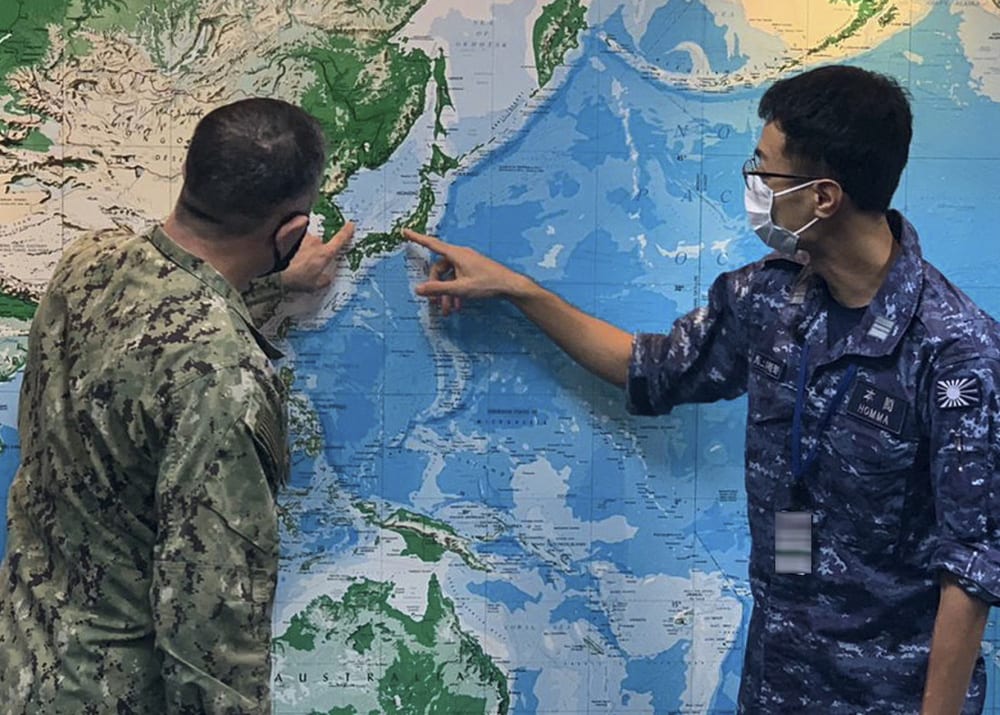
U.S. Navy Lt. Cmdr. Cory Eggers, left, replenishment officer with Commander, Logistics Group Western Pacific (COMLOG WESTPAC) and Japan Maritime Self-Defense Force Lt. Cmdr. Shuzo Homma discuss potential replenishment-at-sea locations in the COMOG WESTPAC conference room. This photo has been altered for security purposes by blurring out identification badges. U.S. NAVY / Lt. Teddy Haghverdi
To maintain a naval presence throughout the vast Indo-Pacific area of operations requires a logistics network that can supply and sustain naval ships while they are at sea. Singapore-based Commander, Logistics Group Western Pacific (COMLOG WESTPAC)/Task Force 73 (CTF 73), is the U.S. 7th Fleet’s provider of combat-ready logistics, operating government-owned and contracted ships to keep those ships armed, fueled and fed.
That includes the scheduling and coordination of the combat logistics force (CLF).
The Military Sealift Command operates three different classes of CLF ships. The 45,000-ton, 689-foot USNS Lewis and Clark class of Dry Cargo/Ammunition Ships (T-AKEs) deliver ammunition, food, fuel, parts and supplies and material to the fleet. The Henry J. Kaiser Class T-AOs are 677 feet long and displace more than 40,000 tons, carrying 180,000 barrels of aviation and diesel fuel for ships and aircraft deployed at sea. The 49,000-ton, 754-foot Supply-class of Fast Combat Support ships (AOE) can keep up with the carrier strike groups to bring 177,000 barrels of oil; 2,150 tons of ammunition; 500 tons of dry stores; and 250 tons of refrigerated stores to Navy task forces.
CTF 73 supports almost every exercise and operation that occurs in 7th Fleet, whether directly or indirectly. “The vastness of Seventh Fleet and shear number of ships demand teamwork between CTF 73 and Military Sealift Command Far East,” said Lt. Catherine Anthony, surface operations officer at Commander, Logistics Group Western Pacific. “Logistics is what enables our fleet to sustain at sea. Without our ability to [replenish at sea], combatants would be tethered to port, and we would not have the same power projection, flexibility, and mobility we as a Navy have become accustomed to.”
CTF 73’s mission also includes supporting, and being supported by, U.S. allies and partners in the region.
One of the closest of those partners is the Japan Maritime Self-Defense Force (JMSDF). Evidence of that cooperation is establishment and assignment of a JSMDF liaison officer (LNO), Lt. Cmdr. Shuzo Homma, at COMLOG WESTPAC/CTF 73. Homma works directly with the staff’s replenishment officer to ensure the interchangeability and combined logistics operations between the two services involving Military Sealift Command and JMSDF ships.
As LNO, Homma coordinated with Military Sealift Command Far East to execute numerous underway replenishments for U.S. and JMSDF ships.
“If we can achieve more-advanced and interchangeable logistics in the areas where both the U.S. Navy and JMSDF operate, we can achieve better efficiencies in the use of our CLF assets and extend our ability to support units further from logistics hubs,” said Homma.
Replenishment operations involve refueling at sea and the delivery of provisions via connected or vertical replenishments. Homma points to a replenishment-at-sea (RAS) between the JMSDF Masyuu-class supply ship JS Oumi (AOE 426) and the Arleigh Burke-class guided missile destroyer USS John S. McCain (DDG 56) as a prime example of what the two navies can accomplish together.
“That was the first RAS that delivered cargo and fuel to a U.S. ship that was engaged in operations from a JMSDF oiler,” said Homma. “In order to accomplish this event, we needed to work on both operational and legal issues related to ACSA [Acquisition and Cross-Servicing Agreement]. We were able to load U.S. supply parts and U.S. subsistence on a JMSDF logistics ship and deliver them during a RAS event. This is a process that could take weeks and we did it in days.”
The positioning of a JMSDF LNO at CTF 73 is a combined U.S. Pacific Fleet/JMSDF effort developed by the JMSDF/U.S. Navy Logistics Interoperability and Integration Strategic Framework. The goal is to build better interoperability and interchangeable logistics between JMSDF and U.S. Navy forces in the 7th Fleet area of operations.
“Our combined logistics capabilities play a big role in our navies’ abilities to operate effectively, efficiently and interchangeably in the Indo-Pacific,” said Lt. Cmdr. Cory Eggers, CTF 73’s fleet replenishment officer. “Having a JMSDF LNO here in Singapore and being able to work together, in person, to put the pieces together and overcome logistical challenges has absolutely enhanced our efforts.”
“Interoperable and interchangeable logistics require trust. We can move fuel and parts with speed, but only as far and fast as our network can take us. This partnership builds the collective strength, speed and operational reach of our supply chains,” said Capt. Chuck Dwy, assistant chief of staff for logistics at COMLOG WESTPAC, who was instrumental in developing the LNO program.
“The LNO program reflects the trust we place in partners at every level,” said Rear Adm. Joey Tynch, commander of COMLOG WESTPAC/CTF 73.
Navy Orders 11 P-8A Aircraft for $1.6 Billion
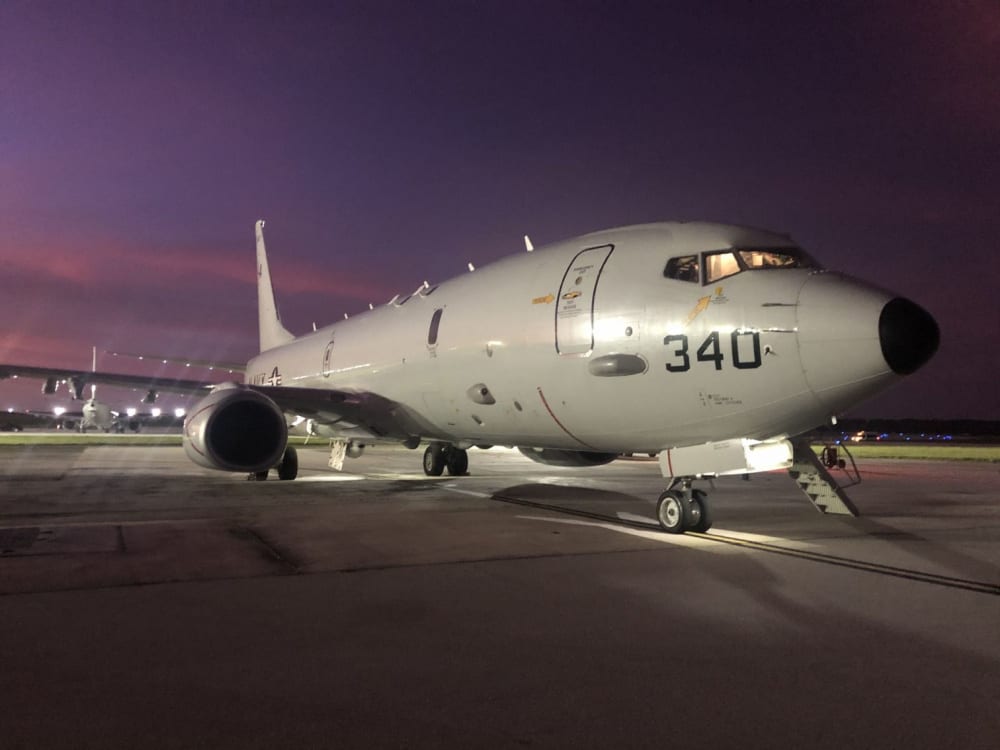
The U.S. Navy has awarded a $1.6 billion contract to Boeing for 11 P-8A Poseidon maritime patrol reconnaissance aircraft. U.S. NAVY
ARLINGTON, Va. — The U.S. Navy has awarded a $1.6 billion production contract to Boeing for 11 P-8A Poseidon maritime patrol reconnaissance aircraft, nine for the U.S. Navy and two for the Royal Australian Air Force (RAAF).
The Naval Air Systems Command contract modification was announced March 31 by the Defense Department.
The contract brings the total number of U.S. Navy P-8A aircraft under contract to 128 and the RAAF total to 14. Australia has been a cooperative partner in the P-8A joint program since 2009.
Other nations have ordered Poseidons through Foreign Military Sales. The United Kingdom is procuring nine; Norway, five; New Zealand, four; and South Korea, six.
Through direct commercial sales, India has received or has ordered a total of 12 P-8I versions, which it calls Neptunes.
“The P-8A continues to be an invaluable asset and these additional aircraft will help deliver expanded maritime patrol and reconnaissance capabilities to the fleet,” said Capt. Eric Gardner, program manager for the U.S. Navy’s Maritime Patrol and Reconnaissance Program Office, quoted in a March 31 Boeing release.
“We continue to hear feedback from deployed Navy squadrons who tell us the P-8A is exceeding expectations,” Stu Voboril, vice president and program manager for Boeing’s P-8A program, said in the release. “Our focus is on delivering the world’s best maritime patrol aircraft. That only happens when teams truly collaborate, listen and focus on customer priorities.”