Navy, Marine Corps Release Unmanned Campaign Plan
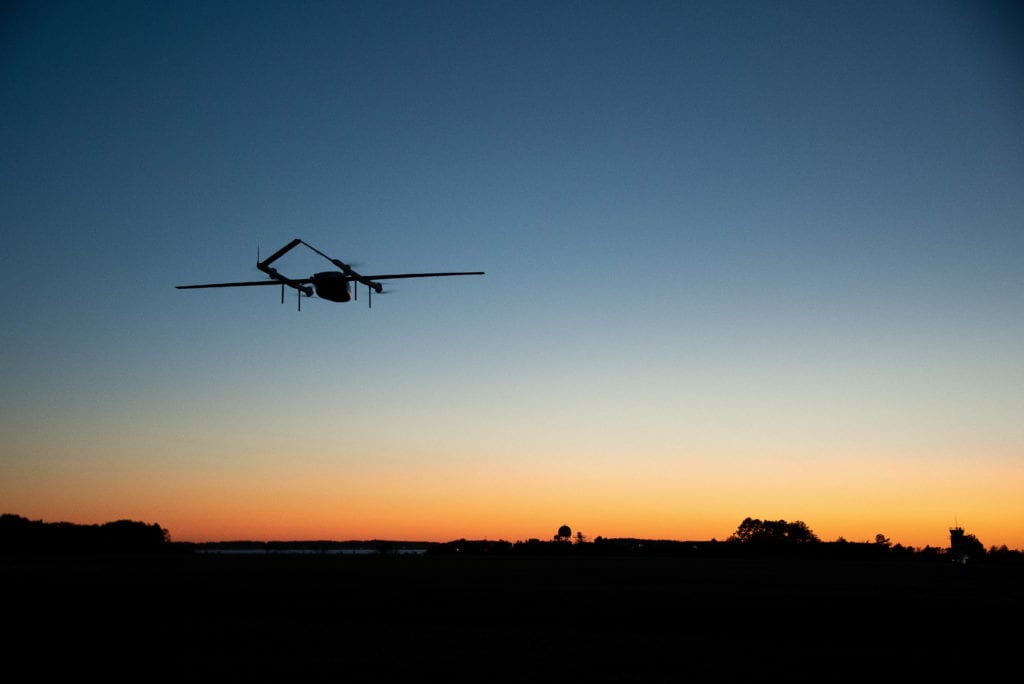
An autonomous vehicle dubbed Blue Water Maritime Logistics UAS flies over Unmanned Air Test and Evaluation (UX) 24 during a demonstration flight at Naval Air Station Patuxent River November 4, 2020. U.S. Navy

WASHINGTON, D.C. — The U.S. Navy and Marine Corps released on March 16 the Unmanned Campaign framework, which presents their strategy for making unmanned systems a trusted and integral part of warfighting. 

Through a capabilities-based approach, the services seek to build a future where unmanned systems are at the front lines of U.S. competitive advantage. 

The framework has five goals: Advance manned-unmanned teaming effects within the full range of naval and joint operations; build a digital infrastructure that integrates and adopts unmanned capabilities at speed and scale; incentivize rapid incremental development and testing cycles for unmanned systems; disaggregate common problems, solve once, and scale solutions across platforms and domains; create a capability-centric approach for unmanned contributions (platforms, systems, subsystems) to the force. 

The framework provides a strategy for integrating these systems to provide lethal, survivable, and scalable effects supporting the future maritime mission. The Navy and Marine Corps are developing detailed technology maturation and acquisition roadmaps within a separate classified plan of action and milestones. The objective is to innovate quickly to provide solutions for complex problems of current and future conflicts. 

The path forward requires a holistic approach to developing and deploying unmanned systems, ensuring individual technologies can operate within a broader architecture of networked warfighting systems, supported by the right people, policies, operational concepts, and other enablers. 

The campaign framework focuses on how the Navy and Marine Corps will reduce risk and identify performance requirements. Using dedicated prototypes for each unmanned system and developing capability in this manner standardizes autonomy, command and control, payload interfaces, and networks. 

“The Navy and Marine Corps unmanned campaign plan serves as a roadmap for how we will realize a future where unmanned systems serve as an integral part of the Navy’s warfighting team in support of distributed maritime operations,” said Vice Adm. Jim Kilby, deputy chief of naval operations for warfighting requirements and capabilities. “The plan lays out how we will scale tested and proven systems as well as develop the core technologies required to successfully integrate unmanned systems into the fleet.” 

The framework provides guidance for the services to pursue an agile and aggressive approach to develop the core technologies required to successfully integrate unmanned systems into the Navy’s future force structure. The services must invest in the networks, control systems, infrastructure, interfaces, artificial intelligence, and data required to support unmanned systems to succeed. 

“The Navy and Marine Corps unmanned campaign plan will guide our naval research and development investments, and through the acquisition process, we will collaborate with our industry partners to design, build, field and sustain manned and unmanned teaming throughout the fleet,” said Frederick J. Stefany, acting assistant secretary of the Navy for research, development and acquisition. “It also sets the framework to enable the Department of the Navy to accelerate, deliver and scale valuable manned and unmanned capabilities.” 

Today’s global security environment has seen a return to great power competition. This shift has placed the Navy at an inflection point where a traditional force structure will not be enough in the face of new warfighting demands. Autonomous systems are not a replacement, but provide additional capacity and capability to the combatant force and allow commanders to accept risk where they couldn’t before.  

“A family of unmanned systems is critical to the employment of our force during distributed maritime operations. The goal is for us to be able to persist inside the weapons engagement zone of any adversary, to create problems and challenges, to make that adversary change their behavior or course of action they intend to pursue. These systems will be prevalent in all mediums: surface, subsurface, ground and air. Manned/unmanned teaming increases our lethality while allowing us to accept less risk in certain situations. Coordinating our efforts as a naval force will expedite the concept development and material solutions for our Marines and Sailors,” said Lt. Gen. Eric Smith, commanding general of Marine Corps Combat Development Command and deputy commandant for combat development and integration. 

The Unmanned Campaign Plan is comprised of the Unmanned Campaign Framework and a classified Unmanned Plan of Actions and Milestones. 

The Unmanned Campaign framework can be found at: Department of the Navy Unmanned Campaign Framework. 


Double-Pumped Carrier Deployments Are Not Surges, Lawmaker Says

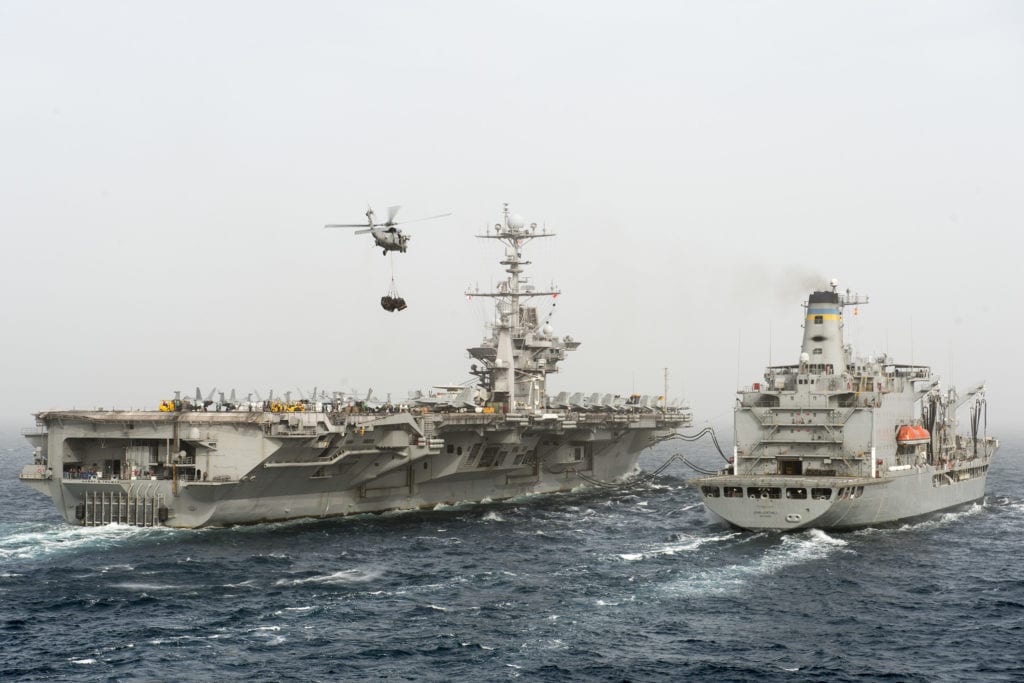
Aircraft carrier USS Harry S. Truman (CVN 75) performs a replenishment-at-sea with fleet replenishment oiler USNS John Lenthall (T-AO 189). The carrier is one of several to have had “double pumped” deployments in recent years. U.S. Navy / Mass Communication Specialist 3rd Class Jacob Richardson

ARLINGTON, Va. — The Navy’s recent practice of sending nuclear-powered aircraft carriers (CVNs) on back-to-back deployments — termed “double-pumped” — is not an example of a surge capability, a member of Congress said. 

“Surge is additional capability to respond in a time of crisis or for an unplanned operation,” said Elaine Luria, D- Virginia, vice chair of the House Armed Services Committee, speaking March 15 in a webinar sponsored by the Hudson Institute. “What we are doing now is we are double-deploying — I won’t even call it surging — double deploying these ships to fill a gap for other ships that should have been doing routine deployments at that time but are delayed in maintenance.” 

Under the Navy’s Optimized Fleet Optimization Plan, a carrier is planned to make one scheduled deployment in a 36-month cycle and be available for a surge deployment later in the cycle.  

At least three CVNs — USS Harry S. Truman, USS Dwight D. Eisenhower and USS Theodore Roosevelt — each have made double-pumped deployments in recent years, Luria said.  

Luria attributed the double-pumped deployments to a shortage of maintenance capacity in the Navy’s shipyards, where most maintenance of nuclear-powered ships and submarines takes place. 

She cited the current case of the USS George H.W. Bush, which has been in a maintenance availability for 27 months — more than 2.5 times the planned time — and still is not ready to sail.  

“That lengthening of that availability came about because of the capacity at [Norfolk Naval Shipyard], and there were decisions made that there were other priorities that need to be clocked up,” she said. 

The shortage of maintenance capacity has caused the Navy to contract out nuclear submarine maintenance availabilities to Newport News Shipbuilding, for example. 

“When did we get to this point where we really couldn’t keep up with carrier maintenance?” she asked rhetorically. “When you look at the point at where we got to all nuclear carriers — when we got rid of [oil-fired carriers] Kitty Hawk, Kennedy and Independence — we had less [maintenance capacity and fewer yards for in-depth maintenance on nuclear carriers.] If we’re operating an all-nuclear fleet, we need to have the ability to maintain those carriers.” 

Luria said the Navy’s Shipyard Integrated Optimization Plan, designed to upgrade the Navy’s shipyards over a 20-year period, which she said, “is way too long of a period for that and I think we should make that investment for those upgrades to our shipyards to be made more quickly.”  

She also said that Norfolk Naval Shipyard also needs upgrades just to perform routine maintenance on the Navy’s newest class of aircraft carrier, USS Gerald R. Ford.   


U.S. Navy Asserts Freedom to Navigate in International Waters

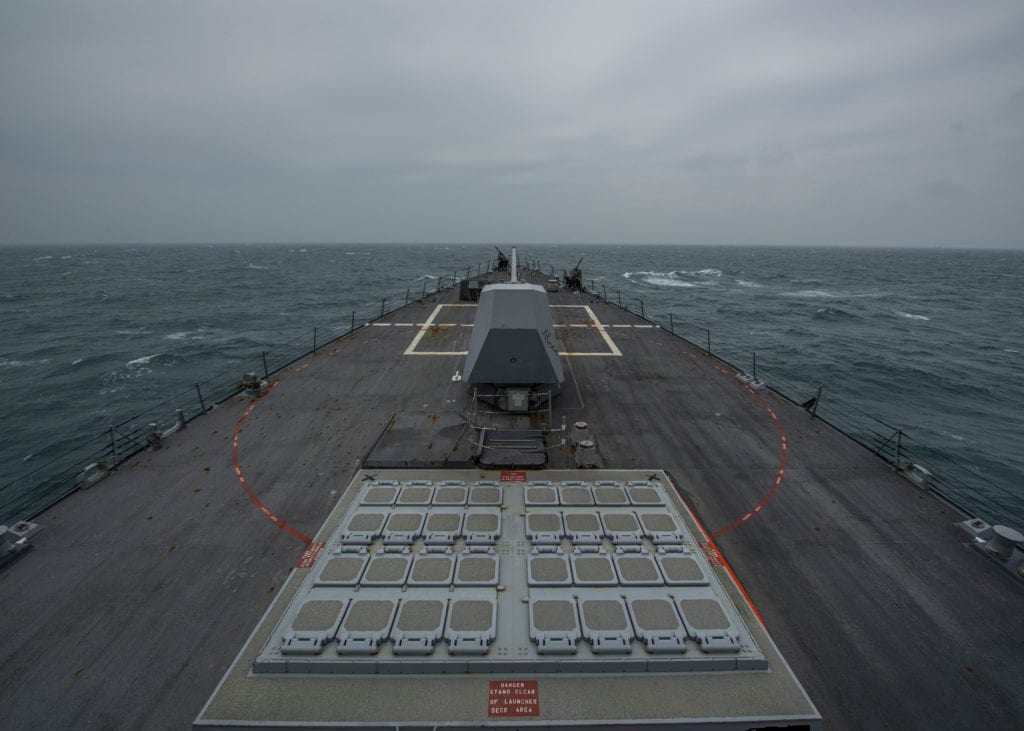
The Arleigh Burke-class guided-missile destroyer USS John Finn (DDG 113) transits the Taiwan Strait March 10, 2021. John Finn, part of the Theodore Roosevelt Carrier Strike Group, is on a scheduled deployment to the U.S. 7th Fleet area of operations. U.S. Navy / Mass Communication Specialist 3rd Class Jason Waite

The U.S. Navy continues to assert its right to operate freely in international waters with yet another Taiwan Strait transit, following several recent freedom of navigation operations (FONOPS) in the South China Sea, particularly in the vicinity of the Spratly and Paracel Islands. 

The Arleigh Burke-class guided missile destroyer USS John Finn (DDG 113) conducted a routine Taiwan Strait transit March 10 (local time) in accordance with international law.

According to a statement from the U.S. 7th Fleet, the ship’s transit through the Taiwan Strait “demonstrates the U.S. commitment to a free and open Indo-Pacific. The United States military will continue to fly, sail, and operate anywhere international law allows.”

China’s People’s Liberation Army officials said the USS John Finn transit was a provocation intended to undermine regional and cross-strait stability.

The John Finn transit isn’t the only one in recent weeks. The Arleigh Burke-class guided missile destroyer USS Curtis Wilbur (DDG 54) conducted a routine Taiwan Strait transit Feb. 24 in accordance with international law. On Feb. 17, USS Russell (DDG 59) “asserted navigational rights and freedoms in the Spratly Islands, consistent with international law.” And on Feb. 5, USS John S. McCain (DDG 56) asserted navigational rights and freedoms in the vicinity of the Paracel Islands, consistent with international law.

Each of these transits occurred in areas where nations have disputed claims regarding sovereignty.

“A Taiwan Strait transit is not a freedom of navigation operation. Freedom of navigation operations challenge excessive maritime claims, while Taiwan Strait transits simply exercise the rights of all ships to pass through an international waterway, said Lt. Mark Langford, deputy public affairs officer for the U.S. 7th Fleet.

According to statements from the 7th Fleet, the FONOP “upheld the rights, freedoms and lawful uses of the sea recognized in international law by challenging the unlawful restrictions on innocent passage imposed by China, Taiwan, and Vietnam and also by challenging China’s excessive straight baseline claims enclosing the Paracel Islands.”

The statement said China, Vietnam, Taiwan, Malaysia, Brunei and the Philippines each claim sovereignty over some or all of the Spratly Islands. China, Vietnam, and Taiwan require either permission or advance notification before a foreign military vessel engages in “innocent passage” through the territorial sea.

The 7th Fleet statement says, “Under international law as reflected in the Law of the Sea Convention, the ships of all states — including their warships — enjoy the right of innocent passage through the territorial sea. The unilateral imposition of any authorization or advance-notification requirement for innocent passage is not permitted by international law. By engaging in innocent passage without giving prior notification to or asking permission from any of the claimants, the United States challenged these unlawful restrictions imposed by China, Taiwan, and Vietnam. The United States demonstrated that innocent passage may not be subject to such restrictions.”

The 7th Fleet statement said U.S. forces have operated in the South China Sea on a daily basis, and have done so for more than a century. “They routinely operate in close coordination with like-minded allies and partners who share our commitment to uphold a free and open international order that promotes security and prosperity. All of our operations are designed to be conducted professionally and in accordance with international law and demonstrate that the United States will fly, sail, and operate wherever international law allows — regardless of the location of excessive maritime claims and regardless of current events.”

The Department of Defense’s annual Freedom of Navigation Fiscal Year 2020 Report to Congress, released March 10, said during the period from Oct. 1, 2019, through Sept. 30, 2020, U.S. forces operationally challenged 28 different excessive maritime claims made by 19 different claimants throughout the world. 


Naval Academy Makes More Room for Keeping Midshipmen Safe

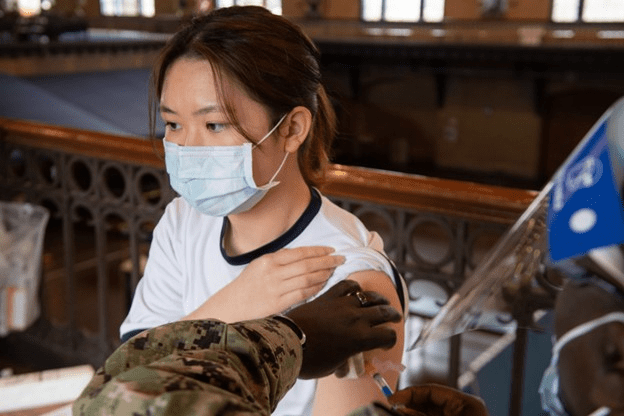
Midshipman 3rd Class Angelina Chan receives the COVID-19 vaccine, which is currently voluntary for active duty members, including midshipmen, while it is in an Emergency Use Authorization status. Vaccinating the midshipmen now will allow them to participate in summer training programs to meet Navy requirements. U.S. Navy/ MC2 Nathan Burke

Due to what Naval Academy officials are calling an “an uptick in positive cases within the Brigade of Midshipmen,” increased COVID-19 mitigation measures have been implemented, to include a full restriction of movement.

Ninety-eight midshipmen are now being housed in the Hilton Garden Inn, and an additional 98 midshipmen have been moved to the Graduate Hotel, both located on West Street in downtown Annapolis, to provide more quarantine and isolation space in Bancroft Hall, the Naval Academy’s dormitory.

The midshipmen in the hotels will attend classes virtually and be required to stay in their rooms except when “escorted outdoors at set times for wellness purposes.”

Meals are being served as “grab and go” via King Hall, as they have been since the midshipmen returned over the summer. Because food deliveries from off base are restricted, the Naval Academy Business Services Division is providing some complimentary menu items directly to the midshipmen currently in isolation.

“This is a dynamic situation and decisions are made on a daily basis in a way that prioritizes the healthcare needs of the midshipmen and well-being of our entire Naval Academy community,” said Superintendent Vice Adm. Sean Buck. “I am thankful for the flexibility and adaptability of the Brigade and our entire team here on the Yard and in the local community as we navigate this challenging period, especially the hotels for their responsiveness and hospitality.” 

During a virtual address on Feb. 28., Buck said, “The health and safety of our entire Naval Academy family is, and will remain, my highest priority while we continue to execute our mission of developing our future naval leaders.

“We need this to be an all-hands effort from our faculty, staff, coaches … this is not just a midshipman effort,” Buck said. “Additionally, those who may have approved credentials to access the Yard, such as sponsors, parents, active/reserve/retired military, shall refrain from visiting the Naval Academy, even to drop off deliveries, at this time in order to minimize the spread of this virus.”  

A shot in the arm

While the academy had already been inoculating staff and faculty, the midshipmen began receiving the vaccination on March 11.

“The Navy has prioritized vaccinating the operational forces first, and they’re developing very safe and healthy bubbles. For midshipmen to participate in summer training programs to meet Navy requirements, we need to begin vaccinating them now,” Buck said.

According to USNA Public Affairs Officer Cmdr. Alana Gara, “A total of 1,800 vaccines were administered to midshipmen, faculty, and staff last week, and will continue to vaccine this week based on the number of vaccines received.” 

Summer STEM Camp

USNA officials decided to host its 2021 Summer Seminar and Summer STEM Camp virtually. According to a statement from the academy, the decision was made “to protect the health and welfare of our summer program attendees, as well as our midshipmen, faculty and staff for each program. It is also necessary to move these programs to a virtual format for 2021 in order to enable the Naval Academy to safely prepare for the induction of the incoming Class of 2025.”

Due to the pandemic, last year’s Summer Seminar and STEM Camp were forced to be virtual events. Based on that experience, the 2021 event will “offer enhanced programming. “This year, STEM Camp participants will receive USNA STEM kits to support engagement during the academic modules. Additionally, participants for both programs will receive USNA apparel and promotional items specific to their program.”

The Summer Seminar is open to rising 12th graders. The STEM Camp is for rising 9th graders. Applications for both programs remain open until March 31, 2021, at https://www.usna.edu/Admissions/Programs/index.php.


Cobham Wins NAVAIR Contract for T-45 Fleet-Wide Oxygen Concentrator

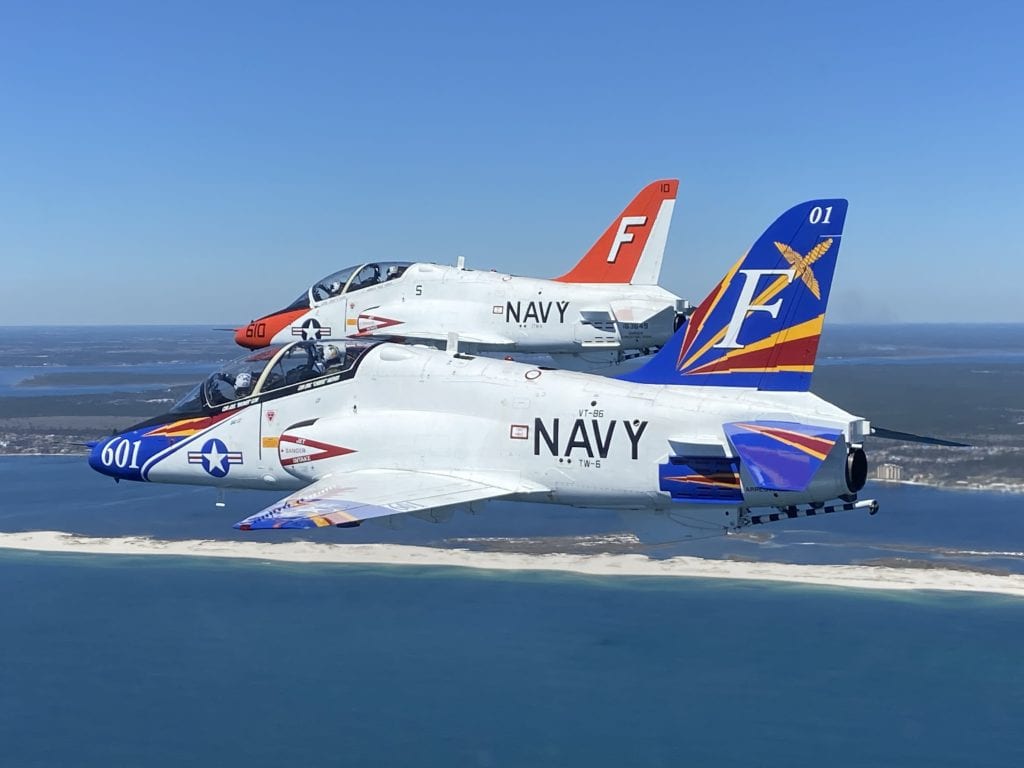
Cmdr. Eric Reeves (blue aircraft) relinquishes command of the “Sabrehawks” of Training Squadron (VT) 86 to Cmdr. George Zintak during an aerial change of command ceremony above Pensacola, Florida, Feb. 4. VT-86 conducts undergraduate strike naval flight officer training for the Navy, Marine Corps, and select international military partners. U.S. Navy photo by Capt. Scott Janik

DAVENPORT, Iowa — Cobham Mission Systems has been awarded a new contract from the U.S. Naval Air Systems Command (NAVAIR) for production and delivery of two lots of GGU-25 oxygen concentrators, the company announced in a March 9 release. This program includes delivery of a fleet-wide oxygen concentrator legacy system upgrade for U.S. Navy T-45 Goshawk jet trainers. Cobham Mission Systems’ enhanced smart concentrators will deliver optimal oxygen for pilots while also monitoring and recording necessary operational data.  

“We are honored to have the Navy’s ongoing confidence in our products and to be given this opportunity to continue serving the T-45 fleet,” said Jason Apelquist, senior vice president for business development and strategy, Cobham Mission Systems. “We have advanced our oxygen concentrator technologies and design standards significantly in the last decade to further support the warfighter and ensure critical operational data is monitored in real time. We’re excited to be delivering our GGU-25 to this fleet. It is an upgraded version of GGU-7, our legacy product on the T-45. This will ensure that Navy pilots in training are provided an environment for adequate breathing under all conditions.”  

GGU-25 is designed to be a smart concentrator that delivers the required amount of oxygen to the pilot and also records key operational parameters in real time. This data is extremely useful in troubleshooting any possible incidence of unexplained physiological episode during flight.  


Naval Technology Processes Misaligned, Research Admiral Says

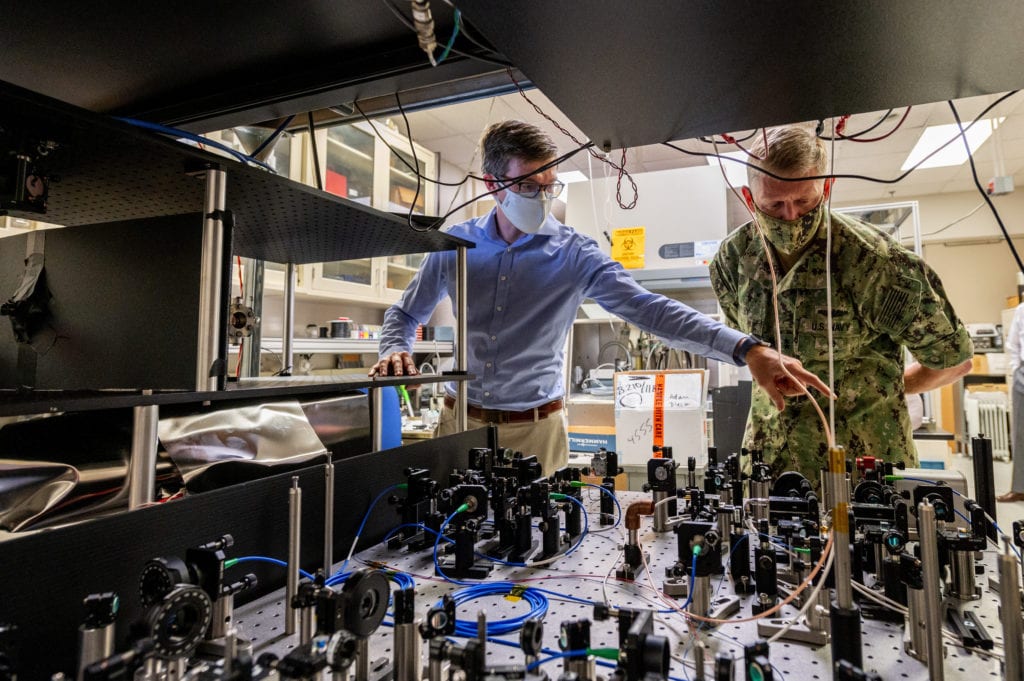
Jonathan Kwolek, Ph.D. (left), a U.S. Naval Research Laboratory research physicist, shows an atom interferometer to Chief of Naval Research Rear Adm. Lorin Selby (right) in 2020 at NRL facilities in Washington, D.C. U.S. Navy / Jonathan Steffen

ARLINGTON, Va. — The admiral in charge of naval technology research said he is looking hard at the processes of technology development to see how they can be refined to speed development.

“We are not structurally aligned to move that tech as fast as we need it moving,” said Rear Adm. Lorin Selby, chief of naval research (CNR), speaking March 8 in a webinar of the National Defense Industrial Association’s Pacific Operations Science and Technology Conference. “We’re going to develop the tech, and I’m convinced that more of this probably will happen on the industry side than the government. It will be a partnership but it’s primarily going to be driven by the dollar, the profit of these things coming down the pike. I get concerned about the structural alignment of our processes — that I think are misaligned, with the pace we’re trying to get at.”  

Selby said improvements can come through the budget and executive and legislative action, but “It’s in the way we insert tech in the acquisition pipeline from different places” that he is focused on.  

“Looking back over the last 20 years or so, we have tried to put in place ‘HOV lanes’ around the traffic, things like DIU [Defense Innovation Unit] are things primarily intended to go around the congestion,” he said. “The problem is they invariably have to start in the congestion or they totally merge back into it just because they have to; that’s the way it works. There are some structural issues there that we need to go after. 

“Let’s face it: we’re still operating like it’s 1985 or something,” Selby said. “It worked great in 1985. For the most part, for big high-ticket things, it still works pretty well today — aircraft carriers, submarines, fighter-bombers. Could you make some tweaks? Yeah, you could. Fundamentally, when you talk about high-tech payloads, the software, the things that are really going to be the game changers — that’s where we’ve really got to look hard at the structure and figure out ways to make some alterations.”  

Selby, said “there are some things that could be done within the existing lifelines, changing the way some of the A to B to C works. It has become so complex that it’s hard for any one program manager to figure out to manage all of this. There are so many relationships. We need to go back to a simpler, more linear approach. We’d actually go faster.”

The CNR, a submarine officer who has been a program manager, chief engineer for the Naval Sea Systems Command and head of a warfare center, said his experience give him a perspective of the whole life cycle of technological systems. 

“I’ve seen the entire flash of an idea all the way to the disposal of the thing at the end of its life,” he said. 


Navy Awards Logistics Support Contract for Advanced Helicopter Training Program

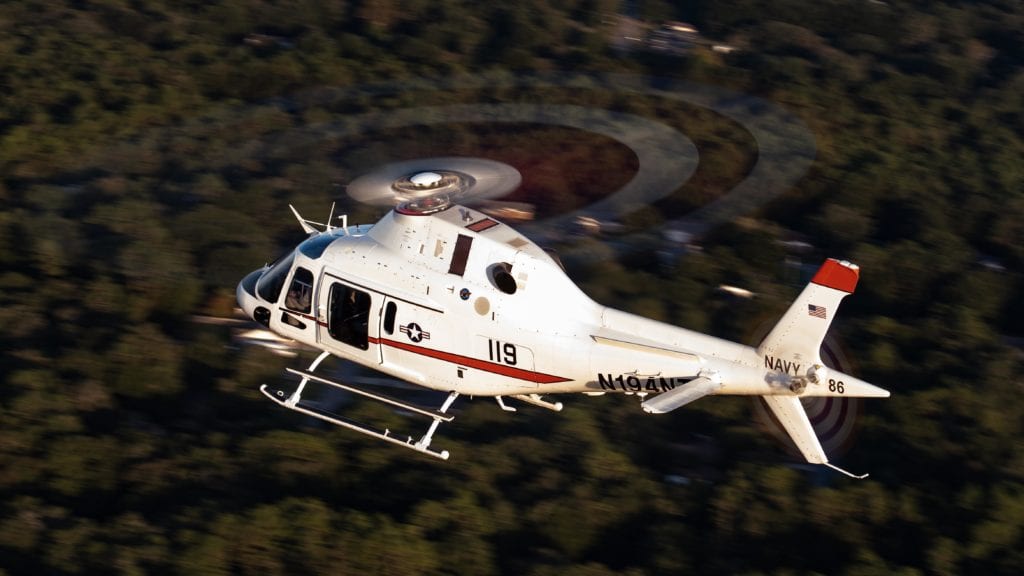
TH-73A Advanced Helicopter Training System. U.S. Naval Air Systems Command

PATUXENT RIVER, Md. — The U.S. Navy awarded Vertex Aerospace LLC (Vertex) a contract for $71.4 million on March 2 for the base year for the Contractor Logistics and Maintenance Support (CLS) in support of the Advanced Helicopter Training System (AHTS) program, with six options for a total contract value of more than $471 million, the Naval Air Systems Command said in a March 8 release. 

“The new Leonardo TH-73A helicopters are the cornerstone of AHTS, which is the planned replacement to address the capability and capacity gaps of the current aging TH-57 Sea Ranger helicopter training platform,” said Capt. Holly Shoger, Naval Undergraduate Flight Training Systems (PMA-273) program manager. “This contract ensures the Navy can successfully maintain the TH-57 helicopters until the TH-73A is operational in the fleet.  Vertex will ensure the Navy has capacity to train several hundred aviation students per year at Naval Air Station (NAS) Whiting Field in Milton, Florida.”  

The award comes following the Oct. 22, 2020 award to Vertex Aerospace, LLC., when a post-award protest was submitted to the Government Accountability Office (GAO) on Oct. 27, 2020.  

While reviewing information to respond to the protest, the government identified a matter which necessitated corrective action. The government notified the GAO of its intent to take corrective action and the GAO subsequently dismissed the protest as academic on Nov. 13, 2020. The government took corrective action by issuing an amendment and allowing offerors to submit revised proposals. Following its evaluation of the proposals, the government awarded the contract to Vertex Aerospace LLC on March 2. 

The task order contract for CLS was awarded on a best-value tradeoff basis with a base and six options. CLS availability is scheduled to begin in calendar year 2021 and continue through calendar year 2027. 

The procurement of this CLS includes logistics, maintenance and supply for both the TH-73A and the TH-57. The resultant task order award will provide services and materials necessary to provide aircraft maintenance and logistics aircraft support for both the TH-73A and the TH-57 platforms, to include the repair of airframe and aircraft subsystems, including engines; maintenance/repair and logistics support of support equipment, as required; and maintaining records and reporting for aircraft and associated systems. 

Using a combination of best industry and Navy practices, AHTS will ensure Chief of Naval Air Training efficiently produces rotary wing aviators who are prepared for advanced rotary wing and intermediate tilt-rotor training and who will meet the challenges faced in the fleet through 2050. 


Navy Accepts Delivery of Future USS Daniel Inouye

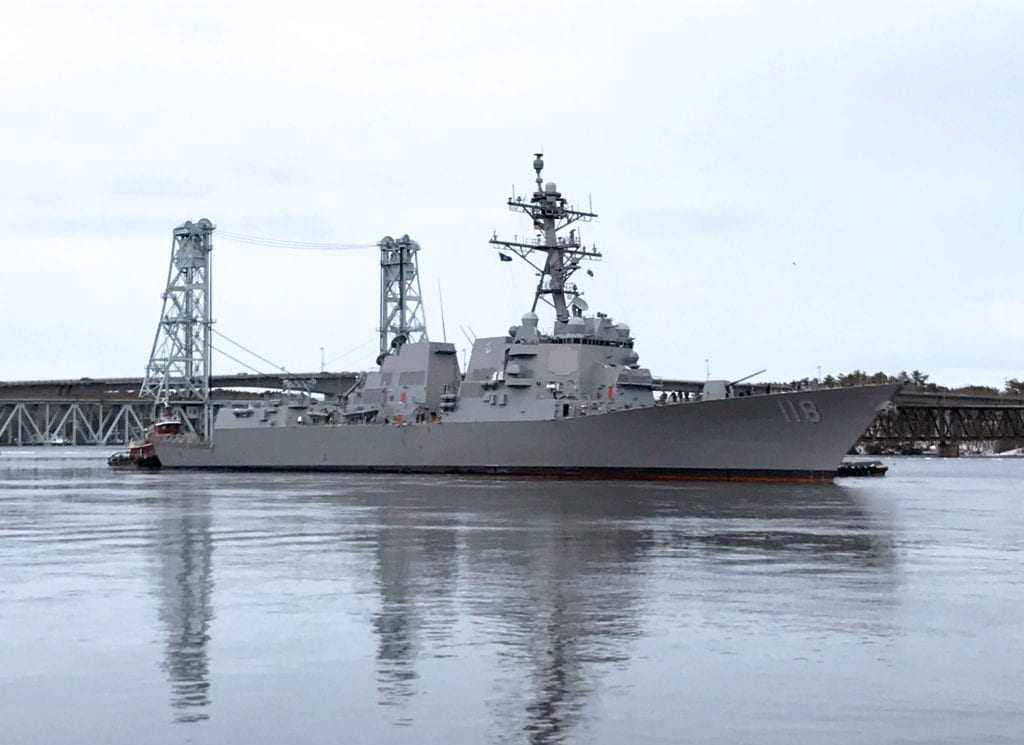
The future USS Daniel Inouye (DDG 118) departs General Dynamics Bath Iron Works shipyard on Feb. 3 for acceptance trials. SUPSHIP Bath

BATH, Maine – The Navy accepted delivery of the guided-missile destroyer Daniel Inouye (DDG 118) from shipbuilder General Dynamics Bath Iron Works, March 8, Team ships Public Affairs said in a release. 

Delivery of DDG 118 represents the official transfer of the ship from the shipbuilder to the Navy. Prior to delivery, the ship successfully conducted a series of at-sea and pier-side trials to demonstrate its material and operational readiness.  

The future USS Daniel Inouye is named in honor of Daniel Inouye, who served as a United States Senator for Hawaii from 1963 until his death in 2012. He received the Medal of Honor June 21, 2000 for his extraordinary heroism in action while serving with the 442nd Infantry Regimental Combat Team in Italy during World War II. 

“This highly capable platform will deliver the necessary combat power and proven capacity as the ship joins the world’s greatest Navy.” said Capt. Seth Miller, DDG 51 class program manager, Program Executive Office (PEO) Ships. “DDG 118 will continue to honor the legacy of its namesake and ‘Go For Broke’ for decades to come as it supports our country.” 

DDG 118 is a Flight IIA destroyer equipped with Aegis Baseline 9, which provides improved Integrated Air and Missile Defense capabilities, increased computing power, and radar upgrades that improve detection range and reaction time against modern air warfare and Ballistic Missile Defense threats. 

BIW is also in production on the future Arleigh Burke-class destroyers Carl M. Levin (DDG 120), John Basilone (DDG 122), Harvey C. Barnum (DDG 124), Patrick Gallagher (DDG 127), and Flight III ships, Louis H. Wilson, Jr. (DDG 126), and William Charette (DDG 130), as well as the future Zumwalt-class destroyer, Lyndon B. Johnson (DDG 1002). 


BMT to Conduct Industry Studies for Navy T-ARC(X) Cable Ship Program

The cable laying and repair ship USNS Zeus (T-ARC-7) operated by the Military Sealift Command. Military Sealift Command / Wikipedia

ARLINGTON, Va. — BMT has been awarded a prime contract to conduct industry studies for the U.S. Navy’s T-ARC(X) cable ship replacement program, the company said in a March 8 release. 

The contract consists of capability and cost trade studies in key areas, investigation of options to maximize affordability and producibility, and development of a concept design. BMT’s partners on this project include Fincantieri Marine Group (FMG), ABB Marine & Ports, and Noise Control Engineering. 

The industry studies are a key step in the Navy’s recapitalization of its undersea cable installation and repair capability, as the only operational ship, USNS Zeus (T-ARC 7), is nearly 40 years old and needs to be replaced. Additional missions include acoustic, hydrographic, and bathymetric survey; towing projectors; and deploying and recovering unmanned underwater vehicles and other packages through its moonpool. 

BMT will develop a T-ARC(X) design that integrates its team’s portfolio of operating cable ship designs with a newly tested hull form. BMT’s approach will apply the successful methodology employed on similar industry studies performed recently. The team also integrates producibility considerations in its approach through its shipbuilding partner, FMG. 

“We’re excited to continue our vessel design support to the U.S. Navy. This award demonstrates the strength of BMT as a trusted design partner of choice, the diversity of our vessel portfolio, and our global naval architecture capabilities,” said Rick Cox, vice president in BMT’s U.S. defense business. 

The award is the latest in a series of similar U.S. government industry studies contracts awarded to BMT, including the Navy’s T-AGOS(X) and U.S. Coast Guard’s Offshore Patrol Cutter programs. BMT continues to position itself as the leading independent ship design agent in the U.S., capable of working with shipyards of all sizes to deliver projects ranging from small commercial tasks to complex U.S. government shipbuilding programs. 


SECDEF Nominates Next INDOPACOM, PACFLEET Commanders

Adm. John Aquilino, commander, U.S. Pacific Fleet, speaks with Sailors assigned to Nimitz-class nuclear aircraft carrier USS Carl Vinson (CVN 70) in early February 2021. He has been nominated as commander, U.S. Indo-Pacific Command. U.S. Navy / Mass Communication Specialist Seaman Apprentice Mason Congleton

ARLINGTON, Va. — The Secretary of Defense Lloyd J. Austin III announced March 5 that the president has made the following nominations: 

Navy Adm. John C. Aquilino for appointment to the grade of admiral, and assignment as commander, U.S. Indo-Pacific Command, Pearl Harbor, Hawaii. Aquilino is currently serving as commander, U.S. Pacific Fleet, Pearl Harbor, Hawaii.  

Navy Vice Adm. Samuel J. Paparo Jr. for appointment to the grade of admiral, and assignment as commander, U.S. Pacific Fleet, Pearl Harbor, Hawaii.  Paparo is currently serving as commander, U.S. Naval Forces, Central Command; commander, Fifth Fleet; and commander, Combined Maritime Forces, Manama, Bahrain. 

If confirmed by the Senate, Aquilino, a naval aviator, would succeed Adm. Philip Davidson, a surface warfare officer. Paparo also is a naval aviator. 

Below are excerpts from the official biographies of both nominees:  

Adm. John Aquilino is a native to Huntington, New York. He graduated from the United States Naval Academy in 1984, earning a Bachelor of Science in Physics. He subsequently entered flight training and earned his wings in August 1986. 

Operationally, he has served in numerous fighter squadrons flying the F-14 A/B Tomcat and the F-18 C/E/F Hornet. His fleet assignments include the Ghost Riders of Fighter Squadron (VF) 142 and the Black Aces of VF-41. He commanded the World Famous Red Rippers of VF-11, Carrier Air Wing 2 and Carrier Strike Group (CSG) 2. He has made several extended deployments in support of Operation Deny Flight, Deliberate Force, Southern Watch, Noble Eagle, Enduring Freedom and Iraqi Freedom. 

Ashore, Aquilino’s assignments include duties as an adversary instructor pilot flying the A-4, F-5 and F-16N aircraft for the Challengers of VF-43; operations officer of Strike Weapons and Tactics School, Atlantic; flag aide to the vice chief of naval operations; special assistant for Weapons Systems and Advanced Development in the Office of the Legislative Affairs for the Secretary of Defense; director of Air Wing Readiness and Training, for Commander, Naval Air Forces, Atlantic Fleet; and executive assistant to the commander, U.S. Fleet Forces Command. 

His flag assignments include director of Strategy and Policy (J5), U.S. Joint Forces Command; deputy director, Joint Force Coordinator (J31), the Joint Staff; commander, CSG-2, director of Maritime Operations, U.S. Pacific Fleet (N04); deputy chief of naval operations for Operations, Plans and Strategy (N3/N5) and most recently, as commander, U.S. Naval Forces Central Command, U.S. 5th Fleet, Combined Maritime Forces.  

Aquilino graduated from the Navy Fighter Weapons School (TOPGUN), the Joint Forces Staff College and completed Harvard Kennedy School’s Executive Education Program in National and International Security. 

Aquilino assumed duties as commander, U.S.Pacific Fleet, May 17, 2018. He is the 36th commander since the fleet’s Pearl Harbor headquarters was established in February 1941. 

Vice Adm. Sam Paparo, a native of Morton, Pennsylvania graduated from Villanova University and was commissioned in 1987. He is the son of a former enlisted Marine and the grandson of a World War 2 enlisted Sailor. He has earned a Master of Arts in International Studies from Old Dominion University and a Master of Science in Systems Analysis from the Naval Postgraduate School. He is also a graduate of the Air Command and Staff College, the Air War College, the Naval War College and the Joint and Combined Warfighting School. A U.S. Naval Aviator, he is a TOPGUN graduate and has flown over 6,000 hours in the F-14, F-15 and F/A-18 and 1,100 carrier landings. 

Operational command tours at sea include Strike Fighter Squadron (VFA) 195 in the Forward Deployed Naval Forces, Yokosuka, Japan, deploying in Kitty Hawk Strike Group; Commander, Carrier Air Wing 7, embarked in Dwight D. Eisenhower Strike Group and Commander, Carrier Strike Group Ten. On the ground, he commanded Provincial Reconstruction Team, Nuristan Province, Afghanistan with the 3rd Brigade, 10th Mountain Division and the 173rd Airborne Brigade. Other operational assignments at sea include Fighter Squadron (VF) 14, flying the F-14 Tomcat with USS John F. Kennedy and USS Dwight D. Eisenhower Strike Groups and VFA-15, flying the F/A-18 Hornet with USS Theodore Roosevelt and USS Enterprise Strike Groups. He served also on exchange duty with the U.S. Air Force flying the F-15C Eagle with the 71st Fighter Squadron, deploying multiple times to Saudi Arabia and Keflavik, Iceland. In joint operational service, he was Battle Director at the Combined Air and Space Operations Center, Al Udeid, Qatar. 

His shore assignments include the staff of Commander, Naval Air Forces, as F/A-18 training, readiness and requirements officer. He served as commanding officer of VFA-106. He was Programming Division (OPNAV N80), Strategy and Resource and Requirements Review Board branch head. Executive staff tours include service as executive assistant to Commander, U.S. Fleet Forces Command, and executive assistant to the 31st Chief of Naval Operations. 

Paparo’s most recent assignment was Director of Operations, J3, U.S. Central Command from April 2018 to July 2020. He assumed command of U.S. Naval Forces Central Command/U.S. 5th Fleet/Combined Maritime Forces on August 19, 2020.