DMO is Navy’s Operational Approach to Winning the High-End Fight at Sea
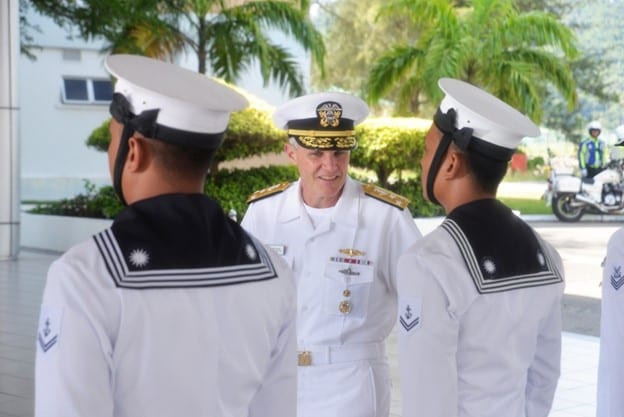
Vice Adm. Phil Sawyer inspects sailors of the Royal Malaysian Navy in this 2018 photo. U.S. Navy / Mass Communication Specialist 1st Class Chris Krucke

Navy Vice Adm. Phil Sawyer says the Chief of Naval Operation’s Navigation Plan 2020 and the Distributed Maritime Operations (DMO) concept are central for the Navy going forward and for the Navy and Marine Corps team’s ability to conduct enduring sea control and power projection missions.

Speaking at the NDIA Expeditionary Warfare Conference on Feb. 2, Sawyer, the deputy CNO for Operations, Plans and Strategy, said enduring means as a maritime nation, “the sea control and power projection mission hasn’t changed in 200 years, but the way we do it today has.”

The Navigation Plan 2020, released last month by CNO Adm. Mike Gilday, and the Tri-Service Maritime Strategy released last year, assert that the U.S. and Navy are “involved in a long-term competition that threatens our security and our way of life.  Russia and China are both undermining the free and open conditions that has enabled the world to largely prosper since the end of World War II.”

Both countries are attempting to unfairly control sea-based resources, intimidate their neighbors, and both are turning incremental gains into long-term advantages, with Crimea and the South China Sea as examples.

Although we must be clear-eyed about both Russia’s and China’s actions and intentions, Sawyer said China is the long-term strategic threat to the U.S.  “That is not to discount Russia, but it looks like China is our pacing threat.”

“The nation needs a larger hybrid fleet — consisting of manned and unmanned platforms,” Sawyer said  “But, it’s not just the number, but it’s about the composition of the fleet.”

Sawyer said unmanned platforms will play a very important role, from ISR above, on and below the sea, to platforms  that are large weapons batteries to aerial refuelers.

He said it’s easy to fixate on numbers, but the mix is also very important.  “Getting the right mix of platforms is just as important as the total number.”

The Navigation Plan calls for a lethal, better connected fleet — a fleet that is able to deliver synchronized lethal and nonlethal effects across all domains. That includes distributed weapons of increasing range and lethality Hypersonic and directed energy weapons are key R&D efforts for the Navy, he said.

Tying the Navigation Plan to  theme of the NDIA conference, “Distributed Maritime & Expeditionary Operations in a Peer Contested Environment,” Sawyer said, “DMO is principally a warfighting concept. It’s our operational approach to winning the high-end fight at sea.”

According to Sawyer, DMO is geographically distributed naval forces integrated to synchronize operations across all domains. “DMO is a combination of distributed forces, integration of effects, and maneuver. DMO will enhance battle space awareness and influence; it will generate opportunities for naval forces to achieve surprise, to neutralize threats and to overwhelm the adversary; and it will impose operational dilemmas on the adversary.”

A key capability to achieving DMO is the Naval Operational Architecture, which Sawyer said will enable decision superiority at speed in a high-end fight. “It’s the connective tissue between sensors, platforms and weapons, and its central to our DMO operating concept,” Sawyer said. It’s more than “every sensor connected to every shooter.”

It includes the infrastructure (computing power and data storage); the network (data links, antennas, routers, and protocols); a data architecture and a data strategy; and finally, the tool (tactical decision aids to help analyze and display data with understandable and actionable information to the operators). 

The ability to communicate and share information is critical in a contested environment, he said.

“In peacetime, or against lesser adversaries, we know how to C2 distributed forces. We do it all the time. We know how to synchronize effects in time. We know how to dynamically maneuver our forces. What we working on is how to do this — assuming every domain is contested, or denied — and with speed, such that we decision superiority.”

Another DMO imperative is logistics, and an enterprise to operate and sustain us in a contested space. That will require new platforms, manned and unmanned, to sustain small, dispersed units far to the front.

DMO is not a Navy or Marine Corps problem. “DMO is a naval concept.  Navy and Marine Corps integration is pivotal to us winning the high-end fight, particularly in the Pacific,” Sawyer said. “In the future, the Marine will be able to project power in order to support sea control or sea denial efforts.”

Sawyer said the Navigation Plan fully supports DMO, and fueling those capabilities necessary to fully realize the DMO concept. “New capabilities are important. But while the fleet waits for the introduction of these capabilities, we are moving out and exercising with what we have.”


Burke: Keflavik Important to North Atlantic Operations

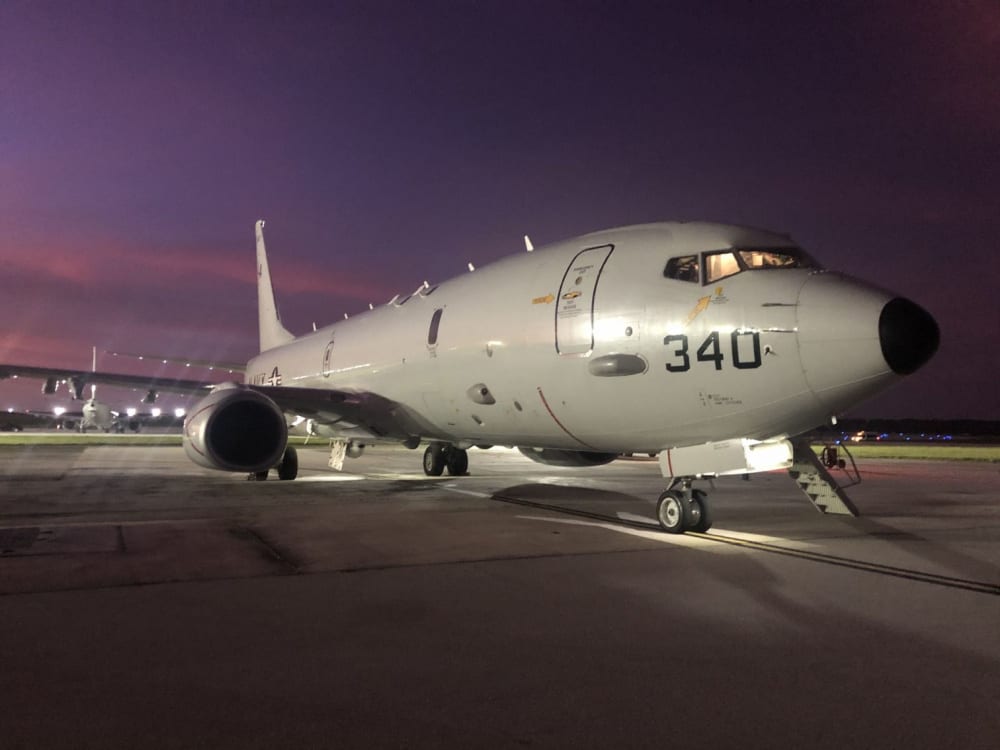
Sailors assigned to Patrol Squadron (VP) 4 shovel snow away from the port engine of a squadron P-8A Poseidon maritime patrol and reconnaissance aircraft on the the apron of Keflavik Air Base, Jan. 03, 2020. U.S. Navy / Lt. Cmdr. Ryan McFeely

ARLINGTON, Va. — The U.S. Navy’s top admiral in Europe highlighted the importance of using the airfield in Keflavik, Iceland, in the current era of great power competition, as a base for maritime patrol and anti-submarine warfare (ASW) aircraft. 

“We need to operate there,” said Adm. Robert Burke, commander, U.S. Naval Forces Europe/Africa, speaking Feb. 2 at a webinar sponsored by the U.S. Naval Institute and the Center for Strategic and International Studies, funded by Huntington Ingalls Industries. “There were 12 P-8s on the ground when I was there at the end of October. They were very busy. I can tell you it wasn’t an exercise and it’s not hard to imagine why.” 

Burke referred the listener to 2019 when “there were open-source reports of 10 Russian submarines operating in the Arctic and the North Atlantic. From there, they head into the Atlantic and they go there to exercise their ability to hold Europe and the continental United States at risk with land-attack cruise missiles.” 

The admiral pointed out that “[s]ome of those missiles, in the not-to-distant future, will be capable of hypersonic speeds. That’s a real threat and that’s something we have to be ready to address.” 

The international airport in Keflavik was the site of a U.S. naval air station during the Cold War, with an ASW operations center. A squadron of P-3 Orion maritime patrol aircraft was deployed there on a rotational basis. A detachment of U.S. Air Force F-15 Eagle fighters also was present to intercept Soviet bombers that ventured over the Atlantic. 

Iceland has no armed forces other than a coast guard, but Keflavik represents an important contribution to the U.S. and NATO’s capabilities with Keflavik’s airfield. 

With mobile operations command centers, the Navy rapidly can deploy one to Keflavik to stand up an ASW command, control, and analysis capability for deployed maritime patrol aircraft. 

Two other North Atlantic nations are acquiring P-8A aircraft. The U.K. Royal Air Force already is operating its new P-8s, having reconstituted a maritime patrol capability after the 2011 retirement of its Nimrod aircraft. The first P-8A for the Royal Norwegian Air Force is now under construction to replace its P-3 aircraft. Other NATO nations including Germany, Spain, Portugal and Greece operate P-3s, and France and Italy operate Atlantique aircraft. 

Burke praised the P-8 for its “incredible legs, incredible capabilities.” 

While the Russian submarine force is much smaller than its peak during the Soviet era, it has continued to push development of modern submarines, now in their sixth generation. 


HII Awarded $175M U.S. Navy CVN Support Contract

The USS Enterprise, left, passes the USS George H.W. Bush in this 2011 photo. Huntington Ingalls Industries’ Technical Solutions division has been awarded a contract for maintenance, training and planning support of U.S. Navy carriers. U.S. Navy

NEWPORT NEWS, Va. — Huntington Ingalls Industries’ Technical Solutions division was awarded a contract last week to provide maintenance, training and planning support for U.S. Navy aircraft carriers, the company said in a Feb. 1 release. The indefinite-delivery/indefinite-quantity contract includes a five-year ordering term, with a total potential value of $175 million. 

“We are very pleased the U.S. Navy has entrusted us to support the readiness of one of our nation’s most important power projection platforms,” said Garry Schwartz, president of Technical Solutions’ Defense and Federal Solutions business group. “For nearly four decades, we’ve partnered with the Navy on this critical program, and we look forward to continuing to advance our nation’s fleet sustainment for years to come.” 

HII will provide engineering services, maintenance and operator training as well as technical and repair services in support of maintenance and planning for the overhaul, modernization and repair of shipboard elevators, cargo-handling equipment and associated systems installed within U.S. Navy aircraft carriers. 

The work, contracted by Naval Sea Systems Command, will be performed on board U.S. Navy aircraft carriers in Norfolk, Virginia; San Diego, California; Bremerton and Everett, Washington; Japan, and other fleet concentration areas to be determined. 


BAE Systems to Sustain Air Traffic Control Systems Under $65.7M Navy Contract

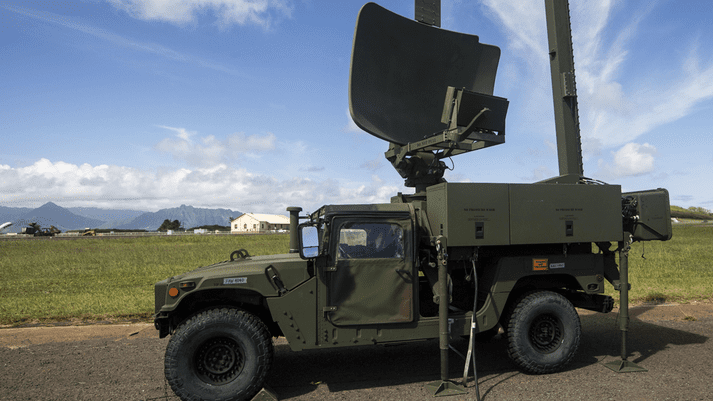
Under the new contract, BAE Systems will provide sustainment and engineering services for air traffic control platforms, similar to the expeditionary ATC radar shown here being carried by a Marine Corps Humvee. U.S. Marine Corps

MCLEAN, Virginia – The U.S. Navy selected BAE Systems for a five-year $65.7 million single-award indefinite delivery, indefinite quantity contract for air traffic control (ATC) platform sustainment and engineering services, the company said in a Feb. 1 release.

BAE Systems will continue to use its engineering, technical, and operational expertise to develop, produce, equip, test, evaluate, sustain, and update key expeditionary ATC aviation systems for the Naval Air Warfare Center Aircraft Division’s Webster Outlying Field.

“With this win, BAE Systems will provide expeditionary forces with the capability to quickly establish an airfield with the radar and communications systems to safely recover and launch aircraft,” said Lisa Hand, vice president and general manager of BAE Systems’ Integrated Defense Solutions business. “We serve as the automation expert and technical coordinator, responsible for development and improvement of real-time ATC computer systems. Our radar technicians deploy around the world to support the warfighter; their work is resulting in quicker turnover to the end user, improved hardware reliability, and more accurate installation and precision in the field.”

This new contract continues BAE Systems’ more than a decade of supporting critical work on key systems, including the Standard Terminal Automation Replacement System (STARS); Air Traffic Navigation, Integration, and Coordination System (ATNAVICS); Airfield Mobile Tactical Air Navigation System (AMTAC); and ATNAVICS Data Link System (ADLS). Under the contract, the company will develop and maintain operational software and supporting test beds, field change programs, and supplies for ATC systems. These systems are integral ATC tools that enhance platform flight safety, especially when end users are operating in new or rough terrain airfields with no existing military base.


Artificial Intelligence, Machine Learning Top Naval Intelligence Technology Needs, Director Says

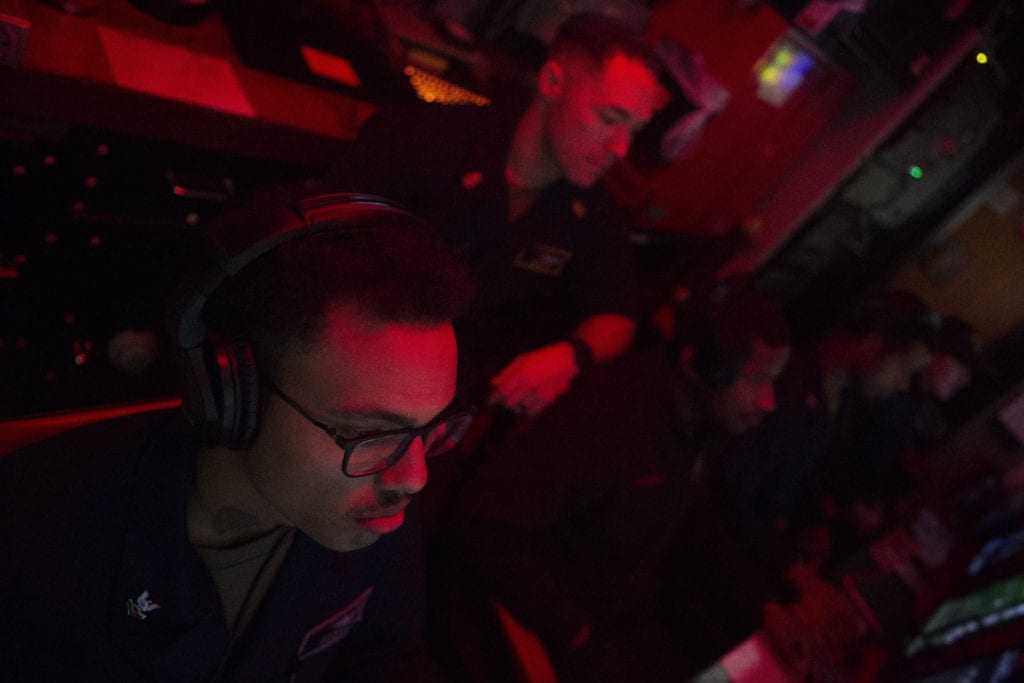
Sailors stand watch in the sonar room of the Los Angeles-class fast-attack submarine USS Chicago (SSN 721) in support of Valiant Shield 2020. Valiant Shield is a U.S. only, biennial field training exercise (FTX) with a focus on integration of joint training in a blue-water environment among U.S. forces. This training enables real-world proficiency in sustaining joint forces through detecting, locating, tracking, and engaging units at sea, in the air, on land and in cyberspace in response to a range of mission areas. U.S. Navy / Mass Communication Specialist 1st Class Derek Harkins

ARLINGTON, Va. — The U.S. Navy will need more help from artificial intelligence systems to answer the  technology challenge posed by vast amounts of data and information available from every domain, the deputy chief of naval operations for information warfare says.

The challenge is with “the amount of data and information that is out there,”  according to Vice Adm. Jeffrey Trussler, who is also director of Naval Intelligence. “We’re well beyond the point where rooms full of analysts” can handle digital information coming from open source, signals and acoustical intelligence, Trussler told a Jan. 27 webinar hosted by the Intelligence and National Security Alliance. “We’re going to have to put machines on that, with the algorithms in place to manage it.

 “Every advancement that exists for AI [artificial intelligence] and ML [machine learning], we need to suck in and learn from,” Trussler said when asked about the top Naval Intelligence technology needs. “I think across the board, AI/ML  is what is top.”

Trussler said there were already “some tremendous AI projects underway” at the acoustics intelligence agency. Of all the domains from seabed to space, only the U.S. Navy deals with intelligence gathering underseas, said Trussler, a submariner for most of his career. “And that is the domain where we still have a dominant margin. But we need to keep pressing and keep learning in that arena.”

He also urged industry to keep pressing the Navy.  “The innovations and ideas from industry are huge. Keep pressing us. Keep knocking on the door. Keep showing us what’s available and what you can do,” he said. However, the Navy isn’t looking for proprietary technology that can’t mesh with existing or future platforms. “We’re going to be more interested in ‘How is this going to link into the systems we have? How is this going to help us advance a collaborative web to close our kill chains?’”

In the future, Trussler said, the Navy Department won’t invest in “proprietary things that we can’t crack open. That aren’t open architecture, that we can link in with the rest of our systems.”


Sea Dragon Exercise Tests ASW Skills for Maritime Patrol Aircraft Crews

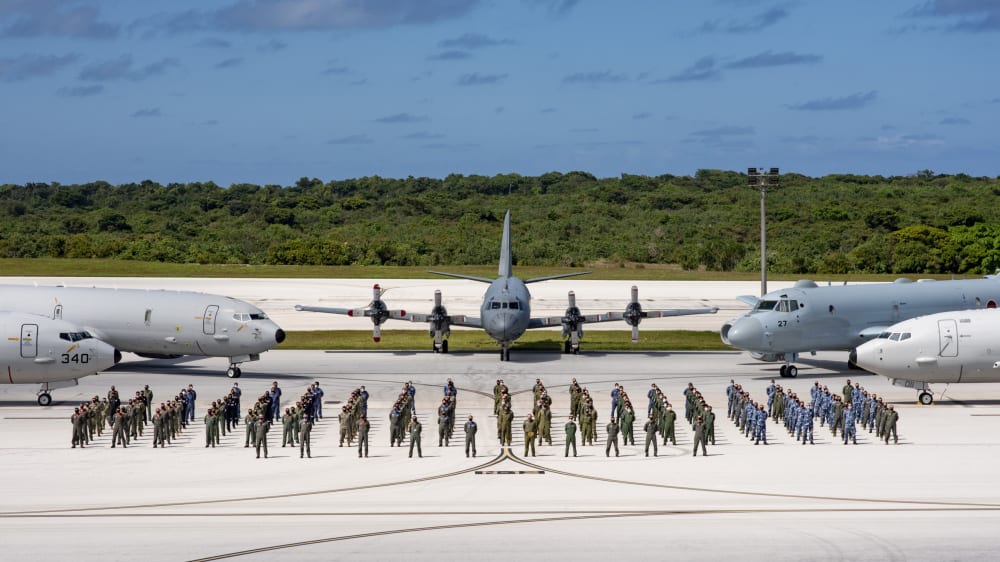
Members of the Royal Australian Air Force, Japan Maritime Self Defense Force, Indian navy and Royal Canadian Air Force, along with Patrol Squadron (VP) 5’s “Mad Foxes” and VP 8’s “Fighting Tigers,” pose for a photo at the conclusion of Exercise Sea Dragon. U.S. Navy / Lt. Cmdr. Kyle Hooker

Maritime Patrol aircraft and crews from five partner nations gathered at Andersen Air Force Base in Guam to participate in Sea Dragon 2021 Anti-Submarine Warfare (ASW) exercise. The exercise wrapped up Jan 27.

The Sea Dragon series of exercises are led by commander, Patrol & Reconnaissance Force, 7th Fleet (CTF-72), based out of Misawa, Japan. They are intended to demonstrate advanced ASW tactics, while at the same time continuing to build on multinational participation with U.S. allies and partners, as well as commitment to the security of the Pacific region.

This year, P-8A Poseidon Maritime patrol and reconnaissance aircraft and crews from Patrol and Reconnaissance Squadrons (VP) 5 and 8 trained together with the counterparts from the Royal Australian Air Force, Japan Maritime Self Defense Force, Indian navy and the Royal Canadian Air Force during the exercise.

The “Mad Foxes” of VP-5 are currently deployed to Kadena, Okinawa, and the “Fighting Tigers” of VP-8 are operating from Misawa, Japan. Both squadrons are based at Naval Air Station Jacksonville, Florida.

The U.S., Australia and India took part in the exercise with Boeing P-8 Poseidon aircraft. Japan flew the Kawasaki P-1, while Canada operated the CP-140 Aurora.

Sea Dragon 2021 centered on ASW training and excellence. The exercise included 250 hours of ground and classroom training and 125 hours of in-flight training ranging from tracking simulated targets to the final problem of finding and tracking Los Angeles-class nuclear submarine. The classroom training sessions helped the aircrews build plans and discuss how to incorporate tactics, capabilities and equipment for their respective nations into the exercise.

At the beginning of the exercise, Lt. Cmdr. Kyle Hooker, officer in charge of the VP-5 detachment, said he was eager for the opportunity to further develop our partnerships with Japan, India, Canada, and Australia during at Sea Dragon 2021.

“The COVID environment will be challenging for all our participants, but I know we will come together to adapt and overcome while executing our goal of anti-submarine warfare interoperability,” he said.

A P-8A Poseidon from Patrol Squadron (VP) 5 is prepared for its first training event of Sea Dragon 21. It involved tracking several Expendable Mobile Anti-Submarine Warfare Training Target’s (EMATT), which simulate the characteristics of a submarine. U.S. Navy / Lt. Cmdr. Kyle Hooker

VP-5 pilot Lt. Reed Arce said his squadron viewed Sea Dragon 2021 as an opportunity for both learning and competition.

“VP-5 was certainly looking forward to the opportunity to flex our ASW muscles and enjoy some friendly competition with our allied partners during Exercise Sea Dragon. We learned so much when comparing tactics between aircrews, and the ability to constantly improve our warfighting skills. We hope to leave Guam with all participants being at their peak performance in prosecuting sub-surface threats anywhere in the world,” he said.

VP-8 pilot Lt. Joseph Moralesvargas  said Sea Dragon 2021 gave his squadron the chance to coordinate and be on station with other crews and other countries.

“The opportunity to speak with other operators and hear their philosophy and insight on ASW has given me new perspective,” he said.  “I can’t think of any other exercise that would give us this chance,” he said.

Sea Dragon culminated with live tracking exercises with the nuclear-powered fast attack submarine, USS Providence (SSN-719) acting as the adversary.

The Sea Dragon events are graded, and the nation with the highest overall score wins the Dragon Belt award. The belt was awarded to the Royal New Zealand Air Force last year.  This year, Royal Canadian Air Force 407 Long Range Patrol Squadron, which operates the CP-140 Aurora, had the highest total point score, and will bring the coveted Dragon Belt home with them to Canadian Forces Base Comox in British Columbia.

The importance of ASW in the Indo-Pacific region cannot be understated, with growing numbers of Chinese, Russian and North Korean submarines. The ability for allies and partners to work together with capable MPA aircraft and crews to successfully conduct ASW is vital to counter this threat.


General Dynamics Receives $43.2M Contract for Columbia/Dreadnought-Class SSBN Fire Control Systems

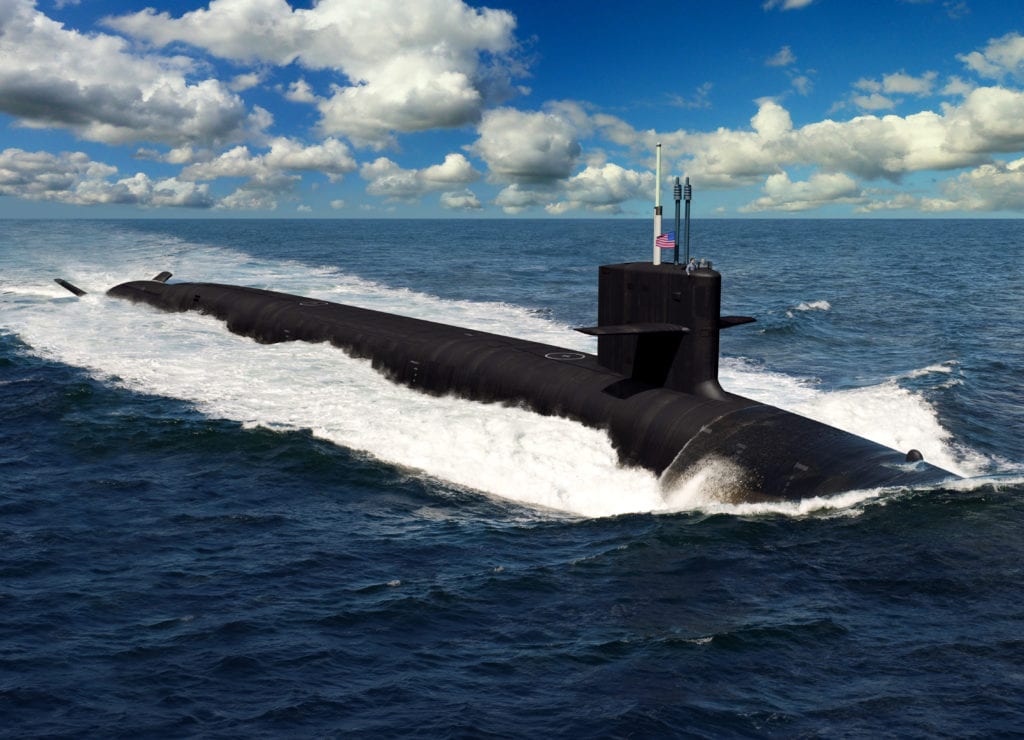
An artist’s rendering of the future Columbia-class ballistic missile submarines. The 12 submarines of the Columbia class are a shipbuilding priority and will replace the Ohio-class submarines reaching maximum extended service life. U.S. Navy

PITTSFIELD, Mass. – The U.S. Navy recently awarded a contract modification to General Dynamics Mission Systems that includes a broad scope of work for the Columbia and Dreadnought ballistic-missile submarine class to support development, production, and installation requirements.

This $43.2 million award is comprised of development, production, installation, and deployed-systems support exclusively for the Columbia/Dreadnaught (CLB/UKD) class of U.S. and U.K. submarine strategic weapons systems and subsystems and coincides with one of the largest manufacturing floor expansions at the Pittsfield, Massachusetts facility.  
 
General Dynamics Mission Systems’ Maritime and Strategic Systems line of business will deliver fire control systems for the U.S. Navy’s first Columbia class submarine (US01) and the first U.S. Columbia class training facility (Kings Bay Trident Training Facility, KB-TTF) as well as installation support and pre-deployment planning for both U.S. and U.K. sites. This contract also includes CLB/UKD design completion scope and continuation of design activities for the first planned refresh of the CLB/UKD fire control system, as well as design support for CLB/UKD planning at the KB-TTF and procurement of the infrastructure material to support the new Trident Training Facility labs. The majority of the work in support of this contract will take place in Pittsfield. 
 
“In November, we celebrated with our Navy partner, 65 years of outstanding support to our nation’s strategic deterrent mission,” said Laura Hooks, vice president of General Dynamics Mission Systems’ Strategic Systems business. “We are entering the next era of development and production for the Navy’s fire control system on the newest fleet of submarines that will extend this deterrent capability for another 65 years.”  


Leonardo DRS Awarded Navy Contract for Technical Insertion of Surface Fleet Combat Management Systems

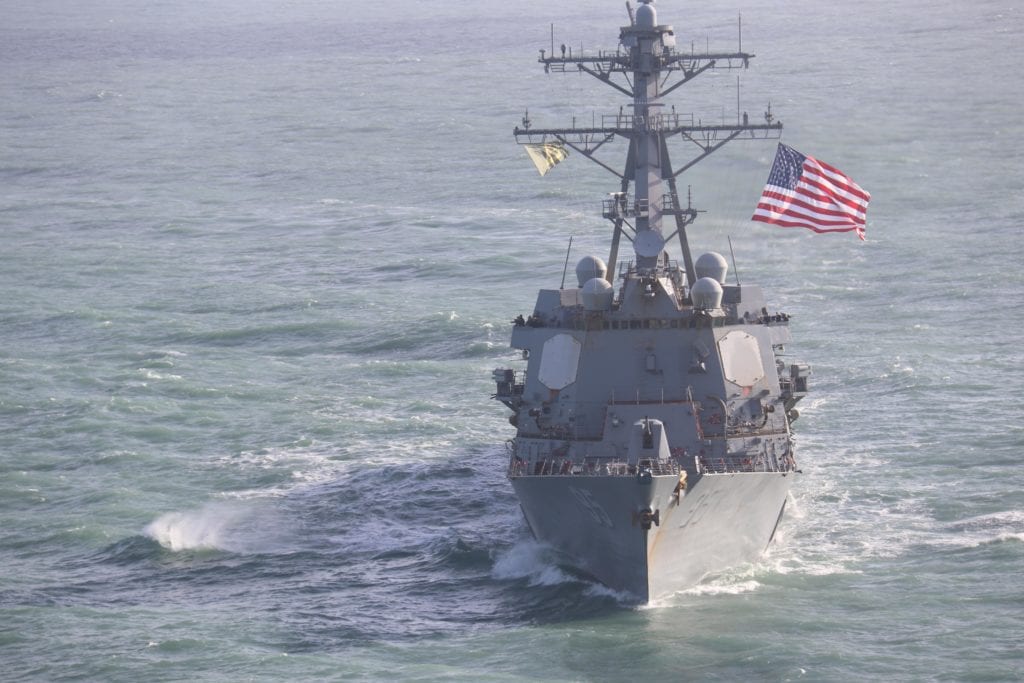
The Arleigh Burke-class guided missile destroyer USS James E. Williams (DDG 95) transits the Caribbean Sea, Jan. 16, 2021. Leonardo DRS has received a Navy contract to supply system hardware and life cycle support for Aegis and Ship Self-Defense Combat Management Systems, equipped on the Arleigh Burke class destroyers and other surface combatants. U.S. Navy / AW2 Timothy Hopkins

ARLINGTON, Va. — Leonardo DRS Inc. has received a contract from the U.S. Navy to supply critical system hardware and full life-cycle support for Aegis and Ship Self-Defense System Combat Management Systems, the company announced in a Jan. 27 release.

The cost-plus-fixed-fee and firm-fixed-price, indefinite-delivery/indefinite-quantity multiple award contract was awarded in December 2020 and is worth up to $211.5 million. 

Under the contract Leonardo DRS will provide sustainment of Technical Insertion (TI)-16 Combat Systems Processing, Network, Storage and Display Hardware fielded across the surface ship fleet. Included in the contract is the sustainment, manufacture, assembly, and testing of TI-16 hardware, spares; engineering services, procurement, and installation of ordinance alteration kits and related products. 

Leonardo DRS is the prime contractor for the surface navy, producing consoles, displays and peripherals (CDP) and the Common Processing System (CPS) TI-16 for the Navy’s surface combatants.   

“We are excited about this award and proud to provide full life-cycle combat system hardware support to ensure fleet readiness remains high,” said Tracy Howard, senior vice president and general manager of the Leonardo DRS Naval Electronics business. “Additionally, our extensive experience will bring increased capability to the Fleet as the Integrated Combat System is fielded over the next 5 years in support of these future U.S. Navy requirements,” he said. 

Work will be done at the Leonardo DRS Laurel Technologies facilities in Johnstown, Pennsylvania and Chesapeake, Virginia. 


U.S., Swedish Naval Leaders: Total Defense Requires a Maritime-Aware Society

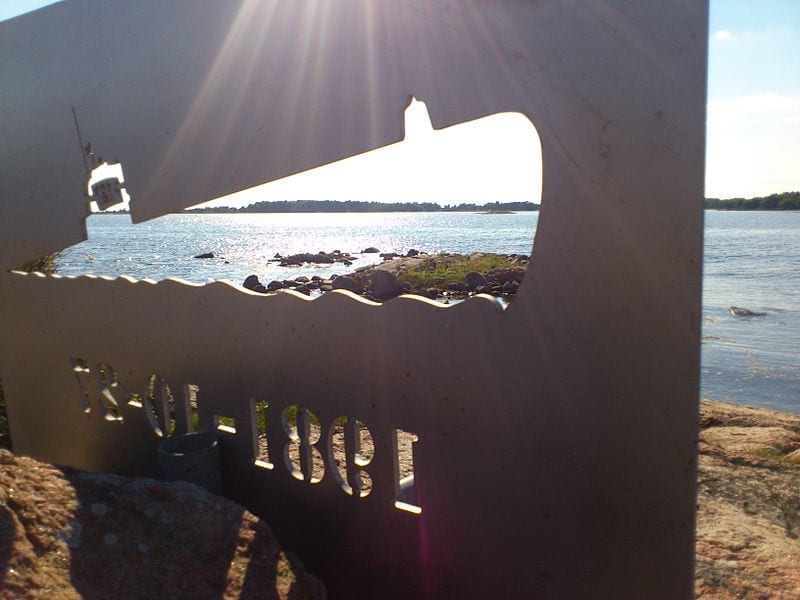
Artwork marks the spot in Sweden where a Soviet Whiskey-class submarine ran aground in 1981, and was spotted by a Swedish civilian. Wikipedia / Kallegauffin

ARLINGTON, Va. — Senior officers in the U.S. and Royal Swedish navies said that even with modern systems, maritime defense is enhanced by a maritime-aware society. Security is a function of a whole-of-society approach. 

Speaking Jan. 26 in an American Enterprise Institute (AEI) webinar, U.S. Navy Vice Adm. Andrew Lewis, commander, U.S. Second Fleet, and Rear Adm. Ewa Skoog Haslum, chief, Royal Swedish Navy, discussed “gray zone” threats in the maritime domain, with emphasis on the northern European waters.  

“We need to think this as a total defense task to solve, because it’s not only the military force that can provide security,” Haslum said. “In Sweden we are rebuilding the total defense. We are looking at civilian authorities together with the military and together we a rebuilding a new kind of defense that really includes the whole society, because all of the agencies need to work together.” 

Haslum stressed the importance of reliable and trustworthy information flow nationally and internationally, describing that flow as key to nations working together to maintain maritime security and a free flow of commerce. She also emphasized being ready to respond to unexpected scenarios, including being cut off from digital information or being subjected to manipulated information. 

The moderator, AEI Resident Fellow Elizabeth Braw, recalled the “whiskey on the rocks” incident, a surprise appearance of a Soviet navy Whiskey-class submarine that ran aground on the coast of Sweden in 1981. She noted that it was a Swedish civilian who spotted the submarine. 

Lewis praised the maritime awareness of Scandinavian societies.  

“We have a lot to learn, not just in our military but in our society writ large, as a seagoing nation,” Lewis said. “That’s something we can take away from our partners. That is not something quite as lost in Sweden or Norway. They are very much maritime nations.” 

He cited a loss of awareness in such institutions at coastwatchers and of the loss of skill such as celestial navigation, which the U.S. Naval Academy recently restored to is curricula.   

“When we lose Global Positioning [System], when we lose exquisite communications, or satellite communications — as we see in higher latitudes that’s very difficult to maintain — even when we lose line-of-sight electronic communications or digital capability, it goes back to a visual world, a world in which we need to rely upon [the] senses of our eyes and ears to do the things that we need to do.  

“More and more, as the electromagnetic spectrum is infringed upon, and manipulated by nefarious actors, we have to rely upon what I would call mission orders, the way to operate tactically, operationally and strategically on intent, where you have very young operators and civilians who understand what they’re seeing and know how to report it or how to defend themselves,” he said. “That’s something we could educate our entire societies on, the existential threat to our way of life.” 


Rolls-Royce Secures Navy Research Contract to Develop Innovative Debris Detection Technology

Rolls-Royce will further develop its engine FOD detection under a $1 million U.S. Navy contract. Rolls-Royce

RESTON, Va. — Rolls-Royce has been awarded $1 million of research funding from the U.S. government for digital foreign object debris (FOD) detection technology, the company said in a Jan. 20 release. 

The year-long research contract from the Navy will help further develop and validate Rolls-Royce’s FanSense debris monitoring system, which is currently supporting the Pegasus engine. 

FanSense works by analyzing the shaft speed signal of an engine and is able to detect any disruptions that arise as a result of a small object, such as stones or screws, striking an engine fan blade. The innovative technology will allow customers across civil and defense industries to detect much smaller debris entering the engine, enabling them to build a clearer picture of FOD damage and engine wear over time and help to identify airfields that need to improve their FOD prevention practices. 

“FanSense is an innovative and revolutionary Rolls-Royce digital technology being packaged and applied to our products,” said Paul Craig, president of the company’s Defence Services. “The research funding granted by the U.S. Navy will allow us to further enhance and build upon our pioneering technologies that will enhance safety, efficiency and deliver a cultural change for our customers.” 

FOD is estimated to cost the global aviation industry billions of dollars per year in damage and disruption. The vast majority of ingested debris currently goes undetected — only when very large items are ingested do operators have any indication that something has made its way into the engine. Rolls-Royce will continue to work with a long-standing industrial partner, Roke, to deliver the contract. 

Jonathan Sides, FOD chief engineer at Naval Air Systems Command, said, “Inlet debris monitoring technology is a critical element of the FOD mitigation portfolio, supporting the U.S. Navy’s initiative to save hundreds of millions in FOD repair costs.” 

The FanSense technology adds to Rolls-Royce’s portfolio of FOD prevention offerings, including the FOD App, the FOD cloud data analysis service and FOD officers. The vision for FOD technology is to build a digital system that is able to predict FOD events before they occur by analyzing data collected from the app and using vehicle tracking sensors and debris tracking radars. FanSense adds a key missing piece to this system, determining the exact time and location of historic FOD events, which will enable customers to predict the conditions in which ingestion of a harmful object is likely to occur.