Sea Dragon Exercise Tests ASW Skills for Maritime Patrol Aircraft Crews
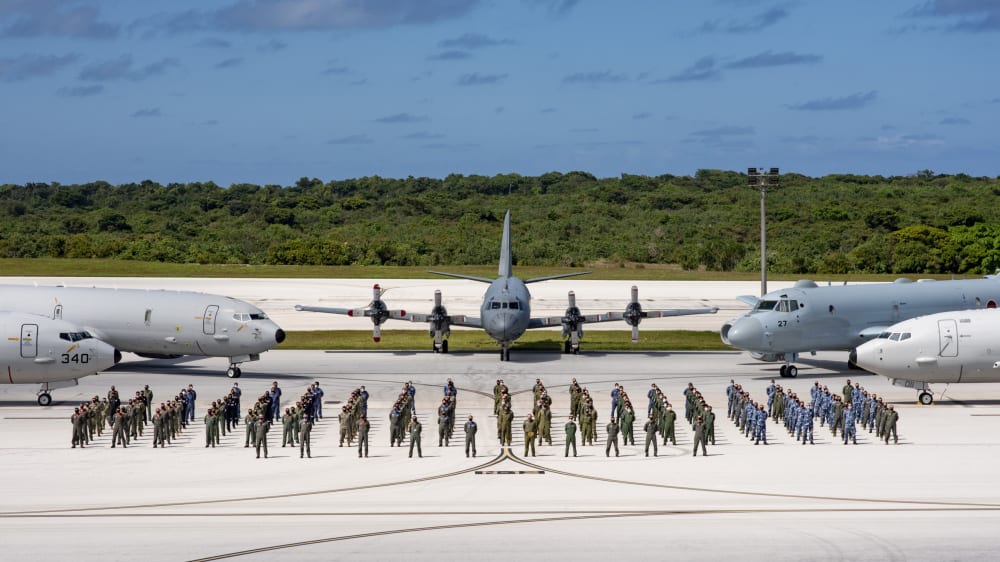
Members of the Royal Australian Air Force, Japan Maritime Self Defense Force, Indian navy and Royal Canadian Air Force, along with Patrol Squadron (VP) 5’s “Mad Foxes” and VP 8’s “Fighting Tigers,” pose for a photo at the conclusion of Exercise Sea Dragon. U.S. Navy / Lt. Cmdr. Kyle Hooker

Maritime Patrol aircraft and crews from five partner nations gathered at Andersen Air Force Base in Guam to participate in Sea Dragon 2021 Anti-Submarine Warfare (ASW) exercise. The exercise wrapped up Jan 27.

The Sea Dragon series of exercises are led by commander, Patrol & Reconnaissance Force, 7th Fleet (CTF-72), based out of Misawa, Japan. They are intended to demonstrate advanced ASW tactics, while at the same time continuing to build on multinational participation with U.S. allies and partners, as well as commitment to the security of the Pacific region.

This year, P-8A Poseidon Maritime patrol and reconnaissance aircraft and crews from Patrol and Reconnaissance Squadrons (VP) 5 and 8 trained together with the counterparts from the Royal Australian Air Force, Japan Maritime Self Defense Force, Indian navy and the Royal Canadian Air Force during the exercise.

The “Mad Foxes” of VP-5 are currently deployed to Kadena, Okinawa, and the “Fighting Tigers” of VP-8 are operating from Misawa, Japan. Both squadrons are based at Naval Air Station Jacksonville, Florida.

The U.S., Australia and India took part in the exercise with Boeing P-8 Poseidon aircraft. Japan flew the Kawasaki P-1, while Canada operated the CP-140 Aurora.

Sea Dragon 2021 centered on ASW training and excellence. The exercise included 250 hours of ground and classroom training and 125 hours of in-flight training ranging from tracking simulated targets to the final problem of finding and tracking Los Angeles-class nuclear submarine. The classroom training sessions helped the aircrews build plans and discuss how to incorporate tactics, capabilities and equipment for their respective nations into the exercise.

At the beginning of the exercise, Lt. Cmdr. Kyle Hooker, officer in charge of the VP-5 detachment, said he was eager for the opportunity to further develop our partnerships with Japan, India, Canada, and Australia during at Sea Dragon 2021.

“The COVID environment will be challenging for all our participants, but I know we will come together to adapt and overcome while executing our goal of anti-submarine warfare interoperability,” he said.
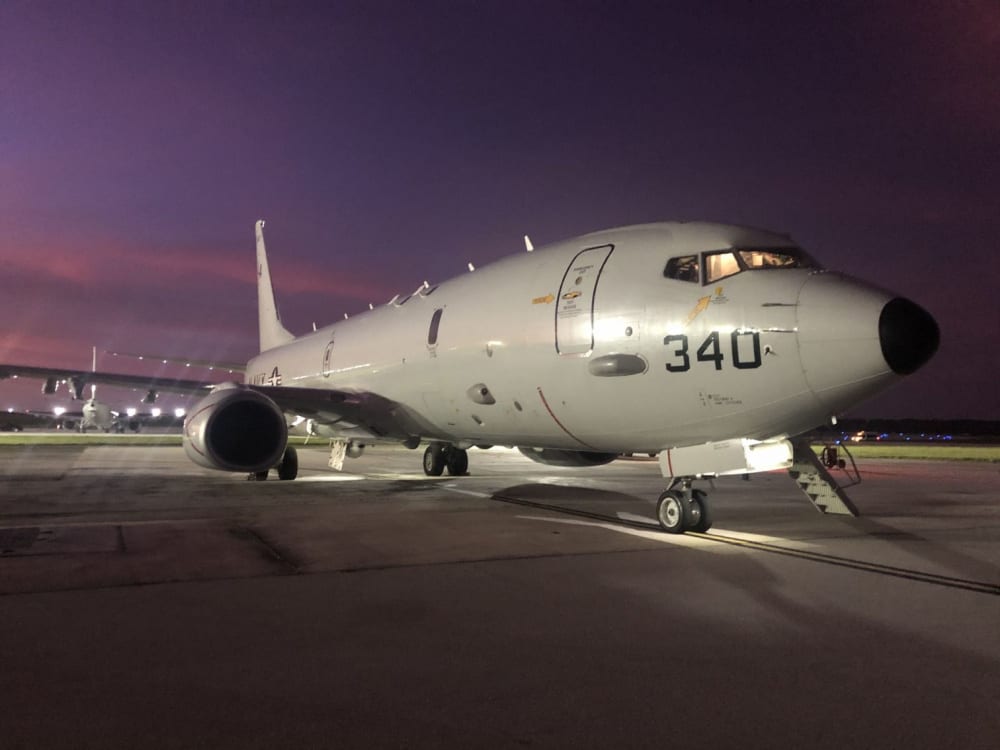
A P-8A Poseidon from Patrol Squadron (VP) 5 is prepared for its first training event of Sea Dragon 21. It involved tracking several Expendable Mobile Anti-Submarine Warfare Training Target’s (EMATT), which simulate the characteristics of a submarine. U.S. Navy / Lt. Cmdr. Kyle Hooker

VP-5 pilot Lt. Reed Arce said his squadron viewed Sea Dragon 2021 as an opportunity for both learning and competition.

“VP-5 was certainly looking forward to the opportunity to flex our ASW muscles and enjoy some friendly competition with our allied partners during Exercise Sea Dragon. We learned so much when comparing tactics between aircrews, and the ability to constantly improve our warfighting skills. We hope to leave Guam with all participants being at their peak performance in prosecuting sub-surface threats anywhere in the world,” he said.

VP-8 pilot Lt. Joseph Moralesvargas  said Sea Dragon 2021 gave his squadron the chance to coordinate and be on station with other crews and other countries.

“The opportunity to speak with other operators and hear their philosophy and insight on ASW has given me new perspective,” he said.  “I can’t think of any other exercise that would give us this chance,” he said.

Sea Dragon culminated with live tracking exercises with the nuclear-powered fast attack submarine, USS Providence (SSN-719) acting as the adversary.

The Sea Dragon events are graded, and the nation with the highest overall score wins the Dragon Belt award. The belt was awarded to the Royal New Zealand Air Force last year.  This year, Royal Canadian Air Force 407 Long Range Patrol Squadron, which operates the CP-140 Aurora, had the highest total point score, and will bring the coveted Dragon Belt home with them to Canadian Forces Base Comox in British Columbia.

The importance of ASW in the Indo-Pacific region cannot be understated, with growing numbers of Chinese, Russian and North Korean submarines. The ability for allies and partners to work together with capable MPA aircraft and crews to successfully conduct ASW is vital to counter this threat.

General Dynamics Receives $43.2M Contract for Columbia/Dreadnought-Class SSBN Fire Control Systems

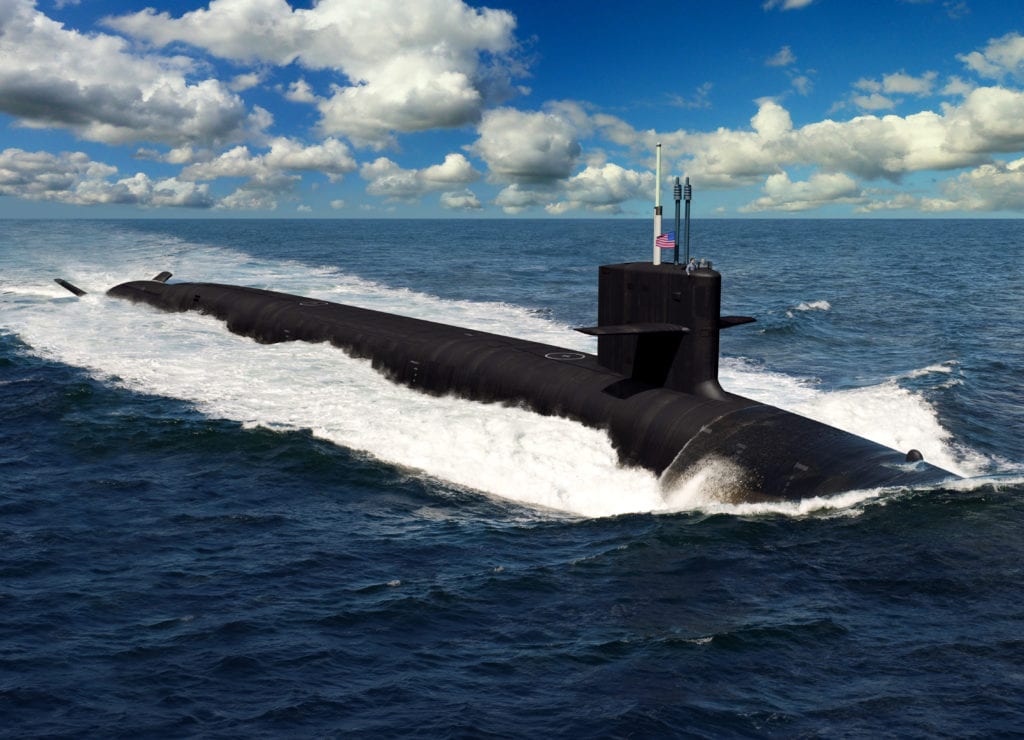
An artist’s rendering of the future Columbia-class ballistic missile submarines. The 12 submarines of the Columbia class are a shipbuilding priority and will replace the Ohio-class submarines reaching maximum extended service life. U.S. Navy

PITTSFIELD, Mass. – The U.S. Navy recently awarded a contract modification to General Dynamics Mission Systems that includes a broad scope of work for the Columbia and Dreadnought ballistic-missile submarine class to support development, production, and installation requirements.

This $43.2 million award is comprised of development, production, installation, and deployed-systems support exclusively for the Columbia/Dreadnaught (CLB/UKD) class of U.S. and U.K. submarine strategic weapons systems and subsystems and coincides with one of the largest manufacturing floor expansions at the Pittsfield, Massachusetts facility.  
 
General Dynamics Mission Systems’ Maritime and Strategic Systems line of business will deliver fire control systems for the U.S. Navy’s first Columbia class submarine (US01) and the first U.S. Columbia class training facility (Kings Bay Trident Training Facility, KB-TTF) as well as installation support and pre-deployment planning for both U.S. and U.K. sites. This contract also includes CLB/UKD design completion scope and continuation of design activities for the first planned refresh of the CLB/UKD fire control system, as well as design support for CLB/UKD planning at the KB-TTF and procurement of the infrastructure material to support the new Trident Training Facility labs. The majority of the work in support of this contract will take place in Pittsfield. 
 
“In November, we celebrated with our Navy partner, 65 years of outstanding support to our nation’s strategic deterrent mission,” said Laura Hooks, vice president of General Dynamics Mission Systems’ Strategic Systems business. “We are entering the next era of development and production for the Navy’s fire control system on the newest fleet of submarines that will extend this deterrent capability for another 65 years.”  


Leonardo DRS Awarded Navy Contract for Technical Insertion of Surface Fleet Combat Management Systems

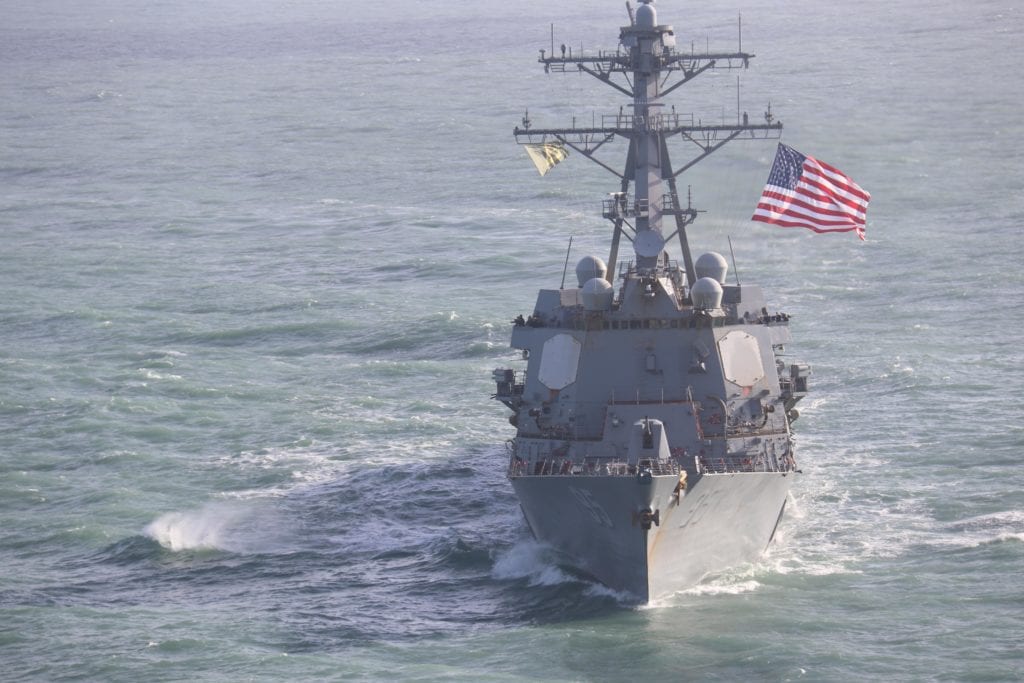
The Arleigh Burke-class guided missile destroyer USS James E. Williams (DDG 95) transits the Caribbean Sea, Jan. 16, 2021. Leonardo DRS has received a Navy contract to supply system hardware and life cycle support for Aegis and Ship Self-Defense Combat Management Systems, equipped on the Arleigh Burke class destroyers and other surface combatants. U.S. Navy / AW2 Timothy Hopkins

ARLINGTON, Va. — Leonardo DRS Inc. has received a contract from the U.S. Navy to supply critical system hardware and full life-cycle support for Aegis and Ship Self-Defense System Combat Management Systems, the company announced in a Jan. 27 release.

The cost-plus-fixed-fee and firm-fixed-price, indefinite-delivery/indefinite-quantity multiple award contract was awarded in December 2020 and is worth up to $211.5 million. 

Under the contract Leonardo DRS will provide sustainment of Technical Insertion (TI)-16 Combat Systems Processing, Network, Storage and Display Hardware fielded across the surface ship fleet. Included in the contract is the sustainment, manufacture, assembly, and testing of TI-16 hardware, spares; engineering services, procurement, and installation of ordinance alteration kits and related products. 

Leonardo DRS is the prime contractor for the surface navy, producing consoles, displays and peripherals (CDP) and the Common Processing System (CPS) TI-16 for the Navy’s surface combatants.   

“We are excited about this award and proud to provide full life-cycle combat system hardware support to ensure fleet readiness remains high,” said Tracy Howard, senior vice president and general manager of the Leonardo DRS Naval Electronics business. “Additionally, our extensive experience will bring increased capability to the Fleet as the Integrated Combat System is fielded over the next 5 years in support of these future U.S. Navy requirements,” he said. 

Work will be done at the Leonardo DRS Laurel Technologies facilities in Johnstown, Pennsylvania and Chesapeake, Virginia. 


U.S., Swedish Naval Leaders: Total Defense Requires a Maritime-Aware Society

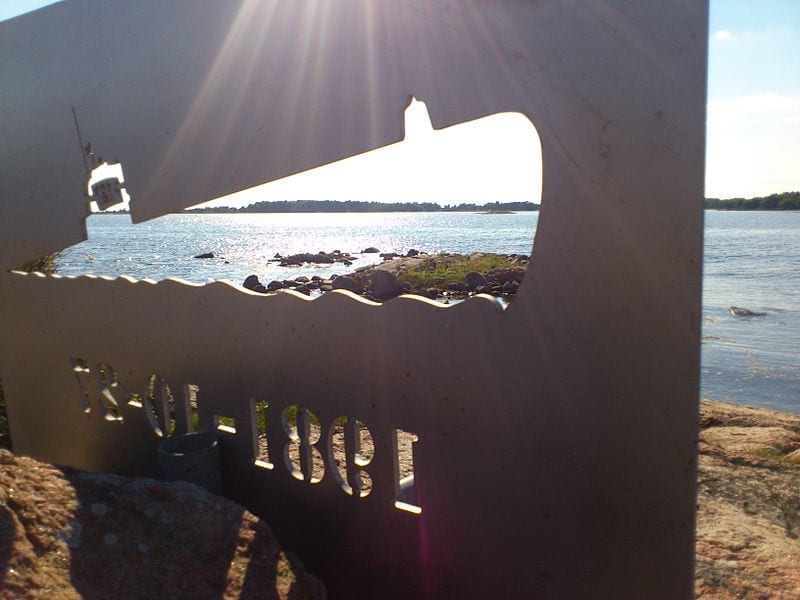
Artwork marks the spot in Sweden where a Soviet Whiskey-class submarine ran aground in 1981, and was spotted by a Swedish civilian. Wikipedia / Kallegauffin

ARLINGTON, Va. — Senior officers in the U.S. and Royal Swedish navies said that even with modern systems, maritime defense is enhanced by a maritime-aware society. Security is a function of a whole-of-society approach. 

Speaking Jan. 26 in an American Enterprise Institute (AEI) webinar, U.S. Navy Vice Adm. Andrew Lewis, commander, U.S. Second Fleet, and Rear Adm. Ewa Skoog Haslum, chief, Royal Swedish Navy, discussed “gray zone” threats in the maritime domain, with emphasis on the northern European waters.  

“We need to think this as a total defense task to solve, because it’s not only the military force that can provide security,” Haslum said. “In Sweden we are rebuilding the total defense. We are looking at civilian authorities together with the military and together we a rebuilding a new kind of defense that really includes the whole society, because all of the agencies need to work together.” 

Haslum stressed the importance of reliable and trustworthy information flow nationally and internationally, describing that flow as key to nations working together to maintain maritime security and a free flow of commerce. She also emphasized being ready to respond to unexpected scenarios, including being cut off from digital information or being subjected to manipulated information. 

The moderator, AEI Resident Fellow Elizabeth Braw, recalled the “whiskey on the rocks” incident, a surprise appearance of a Soviet navy Whiskey-class submarine that ran aground on the coast of Sweden in 1981. She noted that it was a Swedish civilian who spotted the submarine. 

Lewis praised the maritime awareness of Scandinavian societies.  

“We have a lot to learn, not just in our military but in our society writ large, as a seagoing nation,” Lewis said. “That’s something we can take away from our partners. That is not something quite as lost in Sweden or Norway. They are very much maritime nations.” 

He cited a loss of awareness in such institutions at coastwatchers and of the loss of skill such as celestial navigation, which the U.S. Naval Academy recently restored to is curricula.   

“When we lose Global Positioning [System], when we lose exquisite communications, or satellite communications — as we see in higher latitudes that’s very difficult to maintain — even when we lose line-of-sight electronic communications or digital capability, it goes back to a visual world, a world in which we need to rely upon [the] senses of our eyes and ears to do the things that we need to do.  

“More and more, as the electromagnetic spectrum is infringed upon, and manipulated by nefarious actors, we have to rely upon what I would call mission orders, the way to operate tactically, operationally and strategically on intent, where you have very young operators and civilians who understand what they’re seeing and know how to report it or how to defend themselves,” he said. “That’s something we could educate our entire societies on, the existential threat to our way of life.” 


Rolls-Royce Secures Navy Research Contract to Develop Innovative Debris Detection Technology

Rolls-Royce will further develop its engine FOD detection under a $1 million U.S. Navy contract. Rolls-Royce

RESTON, Va. — Rolls-Royce has been awarded $1 million of research funding from the U.S. government for digital foreign object debris (FOD) detection technology, the company said in a Jan. 20 release. 

The year-long research contract from the Navy will help further develop and validate Rolls-Royce’s FanSense debris monitoring system, which is currently supporting the Pegasus engine. 

FanSense works by analyzing the shaft speed signal of an engine and is able to detect any disruptions that arise as a result of a small object, such as stones or screws, striking an engine fan blade. The innovative technology will allow customers across civil and defense industries to detect much smaller debris entering the engine, enabling them to build a clearer picture of FOD damage and engine wear over time and help to identify airfields that need to improve their FOD prevention practices. 

“FanSense is an innovative and revolutionary Rolls-Royce digital technology being packaged and applied to our products,” said Paul Craig, president of the company’s Defence Services. “The research funding granted by the U.S. Navy will allow us to further enhance and build upon our pioneering technologies that will enhance safety, efficiency and deliver a cultural change for our customers.” 

FOD is estimated to cost the global aviation industry billions of dollars per year in damage and disruption. The vast majority of ingested debris currently goes undetected — only when very large items are ingested do operators have any indication that something has made its way into the engine. Rolls-Royce will continue to work with a long-standing industrial partner, Roke, to deliver the contract. 

Jonathan Sides, FOD chief engineer at Naval Air Systems Command, said, “Inlet debris monitoring technology is a critical element of the FOD mitigation portfolio, supporting the U.S. Navy’s initiative to save hundreds of millions in FOD repair costs.” 

The FanSense technology adds to Rolls-Royce’s portfolio of FOD prevention offerings, including the FOD App, the FOD cloud data analysis service and FOD officers. The vision for FOD technology is to build a digital system that is able to predict FOD events before they occur by analyzing data collected from the app and using vehicle tracking sensors and debris tracking radars. FanSense adds a key missing piece to this system, determining the exact time and location of historic FOD events, which will enable customers to predict the conditions in which ingestion of a harmful object is likely to occur. 


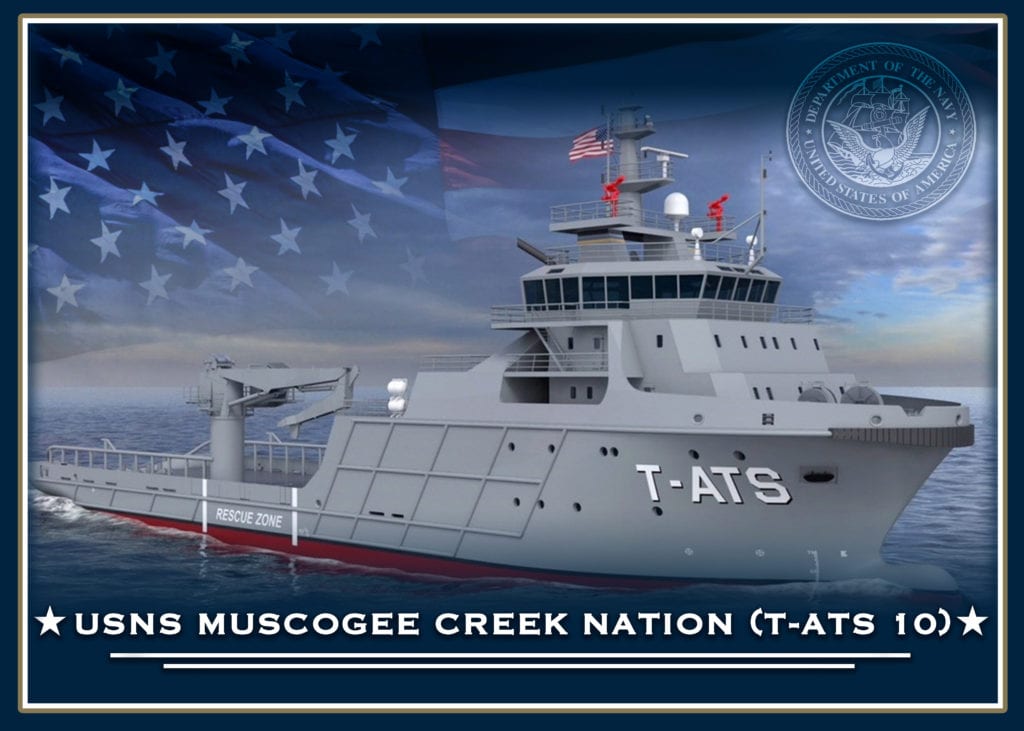
Navy Names Future Vessel to Honor Muscogee Creek Nation

A graphic illustration of the future Military Sealift Command Navajo-class towing and salvage ship USNS Muscogee Creek Nation (T-ATS 10). U.S. Navy

OKLAHOMA CITY, Okla. — The U.S. Navy will name a future Navajo-class towing, salvage, and rescue ship USNS Muscogee Creek Nation (T-ATS 10) to honor the self-governed Native American tribe located in Okmulgee, Oklahoma, the Navy said in a Jan. 15 release. 

Gregory J. Slavonic, performing the duties of the under secretary of the Navy, and an Oklahoma native, announced the name selection during a ceremony at the First Americans Museum in Oklahoma City. 

“I am sincerely honored, on behalf of the secretary of the Navy, to announce that this future naval vessel will carry the proud legacy of the people of the Muscogee Creek Nation and be cemented as part of Navy and Marine Corps history,” Slavonic said. “The future towing, salvage, and rescue ship honors the culturally distinct people of the state of Oklahoma and will join the fleet as a symbol of appreciation for the contributions of American Indians and the Muscogee Creek citizens to the defense of our nation.” 

The Muscogee people are descendants of not just one tribe, but a union of several. Muscogee Creek Nation is the largest of the federally recognized Muscogee tribes, the fourth largest tribe in the U.S. with more than 86,000 citizens — some of whom have or continue to serve across the U.S. armed forces. 

This will be the first Navy vessel to carry the name Muscogee Creek Nation. 

“Despite a complex and sometimes challenging history with the U.S., no race has answered the call of duty and served more than Native Americans, per capita,” said David Hill, principal chief of the Muscogee Creek Nation. “Today, we are joined together to once again strengthen our ties and recognize those efforts with this wonderful gesture by the Navy to respect that commitment. Myself, along with our tribal leadership, employees and citizens are so thrilled that for the first time, a United States Navy ship will be named after the Muscogee Creek Nation.” 

In early 2019, the Navy announced that T-ATS ships would be known as the Navajo class of ships to honor the contributions of the Navajo people to the armed forces. Vessels in this class are named for prominent Native Americans or Native American tribes. 

The Navajo-class T-ATS ships are designed to combine and replace the current capabilities of the Powhatan-class ocean tugs and Safeguard-class rescue and salvage ships in service with the Military Sealift Command. They will be capable of towing U.S. Navy ships and have 6,000 square feet of deck space for embarked systems. The platform will be 263 feet long, have a beam of 59 feet, and carry a load of nearly 2,000 tons. 

The future USNS Muscogee Creek Nation will join USNS Navajo (T-ATS 6), USNS Cherokee Nation (T-ATS 7), and USNS Saginaw Ojibwe Anishinabek (T-ATS 8) providing a wide range of missions including open ocean towing, oil spill response, humanitarian assistance and wide area search and surveillance.   


SECNAV Names Future Vessels while aboard Historic Navy Ship

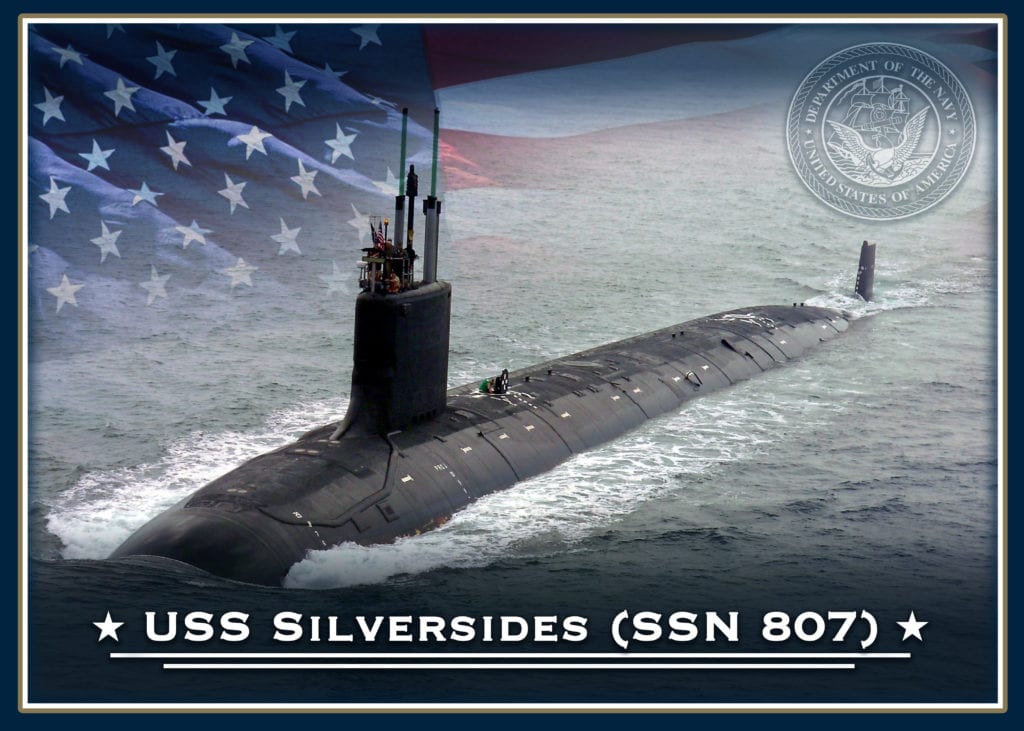
A graphic illustration of the future Virginia-class attack submarine USS Silversides (SSN 807). U.S. Navy

BOSTON – Secretary of the Navy Kenneth J. Braithwaite announced Jan. 15 that the Navy will name three future vessels after ships steeped in naval history and two others after a after a Medal of Honor recipient and a Native American tribe.  

Braithwaite detailed the announcement Jan. 8 during a visit to one of the Navy’s first heavy frigates and oldest commissioned ship afloat – USS Constitution. 

“The decks and lines of this proud ship speak to our storied past, and the Sailors who operate her reveal the strength of our future,” said Braithwaite. “We must always look to our wake to help chart our future course. Together, these future ships will strengthen our Navy and carry on our sacred mission to secure the sea lanes, stand by our allies, and protect our nation against all adversaries.” 

The future ships will bear the names and hull numbers: USS Chesapeake (FFG 64); USS Silversides (SSN 807); USS Pittsburgh (LPD 31); USNS Lenni Lenape (T-ATS 9); and USS Robert E. Simanek (ESB 7).

The future Constellation-class frigate USS Chesapeake (FFG 64) will be named for one of the first six Navy frigates authorized by the Naval Act of 1794. The first USS Chesapeake served with honor against the Barbary Pirates in the early 1800. Following an at-sea battle with HMS Shannon in 1813, the ship was captured by the Royal Navy and commissioned her HMS Chesapeake. Braithwaite recently travelled to England where he retrieved a piece of the original frigate from the Chesapeake Mill in Hampshire.   

“Like Constitution and Constellation, the first Chesapeake was a mighty sailing ship that declared our nation a maritime power,” said Braithwaite. “The new USS Chesapeake, FFG-64, will proudly carry on the legacy of that name into the new era of great power competition.” 

Last year, Braithwaite named future Constellation-class frigates USS Constellation (FFG 62) and USS Congress (FFG 63) to honor the first six heavy frigates. 

To honor the Silent Service, the future Virginia-class attack submarine USS Silversides (SSN 807) will carry the name of a WWII Gato-class submarine. The first Silversides (SS 236) completed 14 tours beneath the Pacific Ocean spanning the entire length of WWII. She inflicted heavy damage on enemy shipping, saved downed aviators, and even drew enemy fire to protect a fellow submarine. A second Silversides (SSN 679) was a Sturgeon-class submarine that served during the Cold War. This will be the third naval vessel to carry the name Silversides. The name comes from a small fish marked with a silvery stripe along each side of its body. 

“Those who run silent and deep in this new attack submarine will inherit a proud legacy, and the capabilities to forge a strong future for our nation and our allies,” said Braithwaite. 

The future San Antonio-class amphibious transport dock USS Pittsburgh (LPD 31) will be the fifth Navy vessel to bear the name. The first was an ironclad gunboat that served during the American Civil War. The second USS Pittsburgh (CA 4) was an armored cruiser that served during WWI, and a third USS Pittsburgh (CA 72) was a Baltimore-class cruiser that served during WWII, including supporting the landing at Iwo Jima. The fourth USS Pittsburgh (SSN 720) was a Los Angeles-class submarine that served the Navy from December 1984 to August 2019. 

To honor the Lenape Nation of Pennsylvania, a future Navajo-class towing, salvage, and rescue ship will be named USNS Lenni Lenape (T-ATS 9).  This will be the first naval vessel to carry the name of the Lenni Lenape tribe who are indigenous people of the Northeastern Woodlands, and the first tribe to sign a treaty with the United States in 1778. 

“As a resident of the Keystone State, I know that Pittsburgh is a proud city with a strong legacy of service. I am confident that the crew of the future Pittsburgh will demonstrate the same excellence in support of amphibious and littoral operations around the world,” said Braithwaite. “And, the future USS Lenni Lenape will carry the legacy of the Lenape people for generations to come. 

The future USNS Lenni Lenape will join USNS Muscogee Creek Nation (T-ATS 10), USNS Navajo (T-ATS 6), USNS Cherokee Nation (T-ATS 7), and USNS Saginaw Ojibwe Anishinabek (T-ATS 8) providing a wide range of missions including open ocean towing, oil spill response, humanitarian assistance and wide area search and surveillance. 

Also joining the fleet will be the first Expeditionary Sea Base USS Robert E. Simanek (ESB 7), carrying the name of Marine Corps Medal of Honor recipient Private First Class Robert Ernest Simanek, who earned the nation’s highest medal for valor for his actions during the Korean War when he unhesitatingly threw himself on a deadly missile to shield his fellow Marines from serious injury or death.   

“Private Simanek stands in the unbroken line of heroes extending from the early Marines who once stood in the fighting tops of our original frigates, to the Marines holding the line around the world today, and those who will deploy from the future USS Robert Simanek for years to come,” said Braithwaite. “This Expeditionary Sea Base continues the honored legacy of warriors from the sea, exemplified by her namesake.”   

Simanek, a Detroit, Michigan, native, joined the Marine Corps in August 1951. He was just 22 years old when he sailed for Korea, joining Company F, 2d Battalion, 5th Marines in May 1952 to serve as a rifleman and as a radioman when needed. In addition to the Medal of Honor and Purple Heart, he was also awarded the Korean Service Medal with two bronze stars. Simanek, now 90, lives in Farmington Hills, Michigan. 

Along with the ship names, Braithwaite also selected individuals who will be recognized as sponsors for several ships he recently named. The sponsor plays an important role in the life of each ship and is typically selected because of a relationship to the namesake or the ship’s current mission. The following individuals were identified as sponsors: 

Melissa Braithwaite will sponsor the future USS Constellation (FFG 62). 

Barbara Strasser will sponsor the future USS Chesapeake (FFG 64). 

Gail Fritsch will sponsor the future USS Barb (SSN 804). 

Mimi Donnelly will sponsor the future USS Tang (SSN 805). 

Michelle Rogeness will sponsor the future USS Wahoo (SSN 806). 

Cindy Foggo will sponsor the future USS Silversides (SSN 807). 

Kelly Geurts will sponsor the future USS Wisconsin (SSBN-827). 

Nancy Urban will sponsor the future USS Pittsburgh (LPD 31). 


Navy Planning Major Combat System Upgrades to Littoral Combat Ships

An MH-60S Sea Hawk assigned to the “Wildcards” of Helicopter Sea Combat Squadron 23 picks up pallets of food from Chilean Navy replenishment oiler CNS Almirante Montt (AO 52) to deliver to the Independence-class littoral combat ship USS Gabrielle Giffords (LCS 10) during a vertical replenishment Nov. 25, 2020. U.S. Marine Corps / Cpl. Camila Melendez

ARLINGTON, Va. — While grappling with reliability and maintainability of its littoral combat ships (LCSs), the Navy this year is planning major upgrades to the ships’ combat systems in 2023. 

Rear Adm. Casey Moton, program executive officer for Unmanned and Small Combatants, speaking Jan. 15 at a webinar in the Surface Navy Association virtual symposium, said the LCSs “right now are starting to get Over-the-Horizon [for the RGM-184 Naval Strike Weapon) but starting in [fiscal 2023] they will get a more comprehensive update to improve their lethality and survivability. Design efforts are proceeding in earnest this year along with PEO IWS [Integrated Warfare Systems].” 

The admiral said the current main focus of the LCS program is improving the reliability and maintainability of the ships. 

“The bottom line is that the availability of the ships to the fleet commanders has not been what it needs to be in reliability areas such as propulsion, cranes, radars and some other areas,” Moton said. “We set up a strike team that is a cross-functional mix of our shipbuilders and sustainers and they are working very hard going after specific problems, an effort first looks at reliability to makes sure that we have all the feedback from our recent deployments in terms of what systems need to be reworked.” 

The admiral said the program also is “working hard to reduce the amount of time once a system does go down how long it’s going to take to get that system up.” 

He said the team is “working with industry how to get the original equipment manufacturers out there where we need to get the repairs. The other aspect is to improve the Navy’s self-sufficiency.” 

A specific focus of the strike team is the Freedom-class LCS’s combining gear, which is being looked at as a material issue. 

“We’re very close to wrapping up a root-cause assessment,” he said. “Clearly, coming through hat is going to be critical.”  

Moton said the LCSs are proceeding well through trials. 

Fabrication has begun on all but two LSCs, both Independence-class ships being built at Austal USA in Mobile, Alabama. 


Admiral: Earlier Contract Awards to Help Shipyard Planning a ‘Sea Change’ for Navy

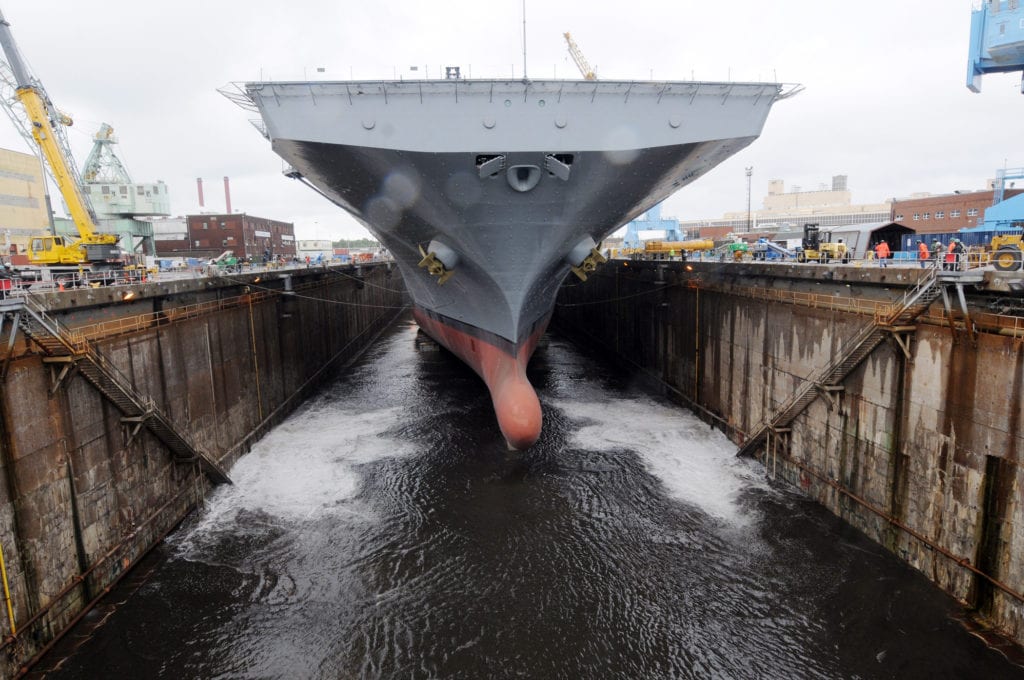
The amphibious assault ship USS Kearsarge is shown commencing a dry dock flooding operation at Norfolk Naval Shipyard in this 2009 photo. The Navy is moving to award ship maintenance contracts of at least 120 days in advance of the work, to help shipyards plan and order materials. U.S. Navy / Petty Officer 1st Class Emmitt Hawks Jr.

ARLINGTON, Va. — The Navy admiral in charge of maintenance of surface warships is pushing to award ship maintenance contracts at least 120 days in advance of the start of work in order to help shipyards plan the work and order materials and to improve the delivery time of ships back to the fleet.  

“We are on track this year to award at an average 120 days prior to avail [availability, or maintenance period] start,” said Rear Adm. Eric Ver Hage, commander, Regional Maintenance Centers, speaking Jan. 14 in a webinar of the Surface Navy Association convention. 

“That is a sea change for us,” Ver Hage said. “Just a couple of years ago we were averaging around 60 days. That time allows industry to plan, get subcontractors aboard, to develop a quality integrated master schedule, procure the materials that they need to execute the mission.” 

Ver Hage also praised the use of horizontal bundling, where the shipyard leadership is given planning funds and involved in planning for a subsequent availability well in advance. 

“The admiral said that as of Jan. 13, of the next 24 maintenance availabilities ahead, only one has long lead time material behind schedule “and we know by the use of data what corrective action we need to take.” 

Ver Hage said that best value criteria have been applied to awarding most contracts. 

“What that allows us to do is avoid a race to the lowest price that is technically acceptable,” he said. “That’s not always in our interests and it’s not always in industry’s interests. It’s harder to do; we have more training to take before we have all of the evaluation criteria.”    

Ver Hage also advocates expanding rotatable pools of large ship components, such as propeller shafts, main reduction gear components and major diesel overhaul kits that take a long time to procure.  

“We’d like to reduce time in dock and the time in the yard [overall],” he said. “If we can just pull out a shaft and stick a brand new one or a recently overhauled one in [the ship], vice including the overhaul time [of the shaft] in the overall project, that is where we want to be.” 


Wolfe: Navy Plans to Start Development of Nuclear Sea-Launched Cruise Missile in 2022

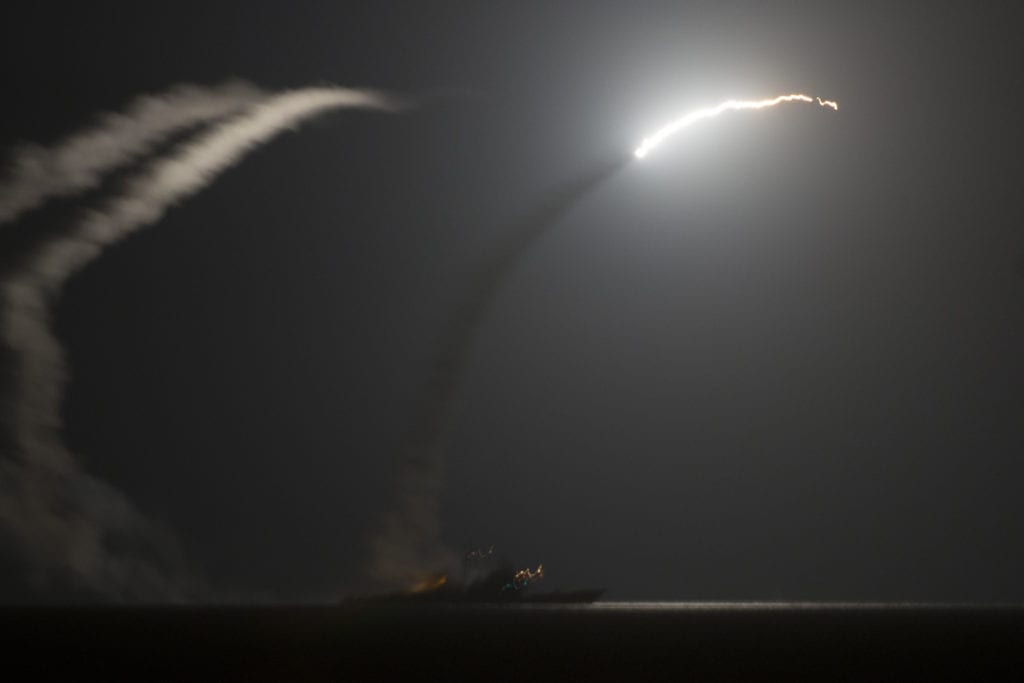
The USS Philippine Sea launches a Tomahawk cruise missile to conduct strikes against ISIL targets as seen from the aircraft carrier USS George H.W. Bush in this 2014 photo. The DoD’s previous nuclear-armed cruise missile was based on the Tomahawk, but development of a new one is expected to begin in 2022. U.S. Navy / Mass Communication Specialist 1st Class Eric Garst

ARLINGTON, Va. — The Navy plans to wrap up an analysis of alternatives (AoA) for a ship-launched nuclear-armed cruise missile in 2021 and begin development of the missile in 2022, said the admiral in charge of strategic weapons . 

“We will finish the AoA this year per what was required by the NDAA [National Defense Authorization Act],” said Vice Adm. Johnny Wolfe Jr., director, Strategic Systems Programs, speaking Jan. 14 in a Nuclear Deterrence Forum webinar sponsored by the Mitchell Institute for Aerospace Studies, a Washington think tank. “With that AoA, going forward and with the Department of Defense’s concurrence, design would start in [fiscal] ’22.” 

The Defense Department’s (DoD’s) 2018 Nuclear Posture Review (NPR) said the department would pursue a Sea-Launched Cruise Missile – Nuclear (SLCM-N), “leveraging existing technologies to help ensure its cost effectiveness. SLCM will provide a needed non-strategic regional presence, an assured response capability. It also will provide an arms-control compliant response to Russia’s non-compliance with the Intermediate-range Nuclear Forces Treaty, its non-strategic nuclear arsenal, and its other destabilizing behaviors.”   

The review asserted that a SLCM “will not require or rely on host nation support to provide deterrent effect. They will provide additional diversity in platforms, range, and survivability, and a valuable hedge against future nuclear ‘break out’ scenarios. 

“In the 2010 NPR, the United States announced the retirement of its previous nuclear-armed SLCM, which for decades had contributed to deterrence and the assurance of allies, particularly in Asia,” the 2018 NPR said. “We will immediately begin efforts to restore this capability by initiating a capability study leading to an Analysis of Alternatives (AoA) for the rapid development of a modern SLCM.”  

The previous nuclear-armed SLCM was a version of the Tomahawk cruise missile. 

Wolfe said the strategic Systems Program Office will be briefed “up through the Navy and OSD [Office of the Secretary of Defense] which will eventually go to the CAPE [Cost Assessment and Program Evaluation]. Based on what the AoA says would be the right course of action to have a sea-launched cruise missile, then we would start taking whatever the AoA said and then start to look how would I design it, how would I start to integrate it.” 

The Navy would request funds in the fiscal 2022 budget to develop the SLCM-N based on the decision of the DoD.