President Authorizes U.S. Atlantic Fleet Designation for Navy’s Fleet Forces Command
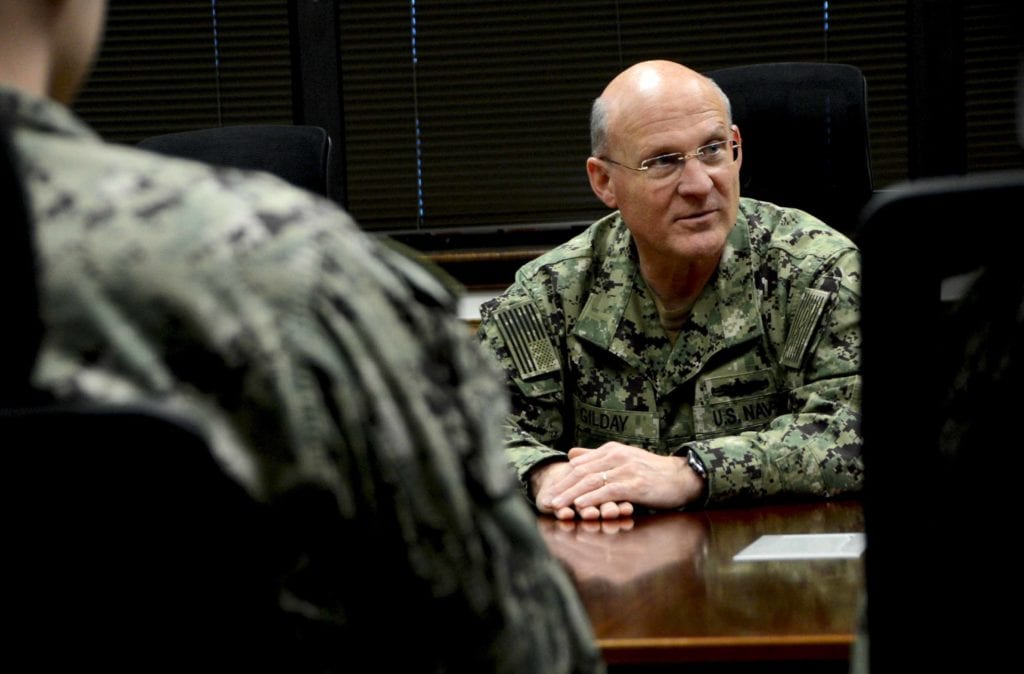
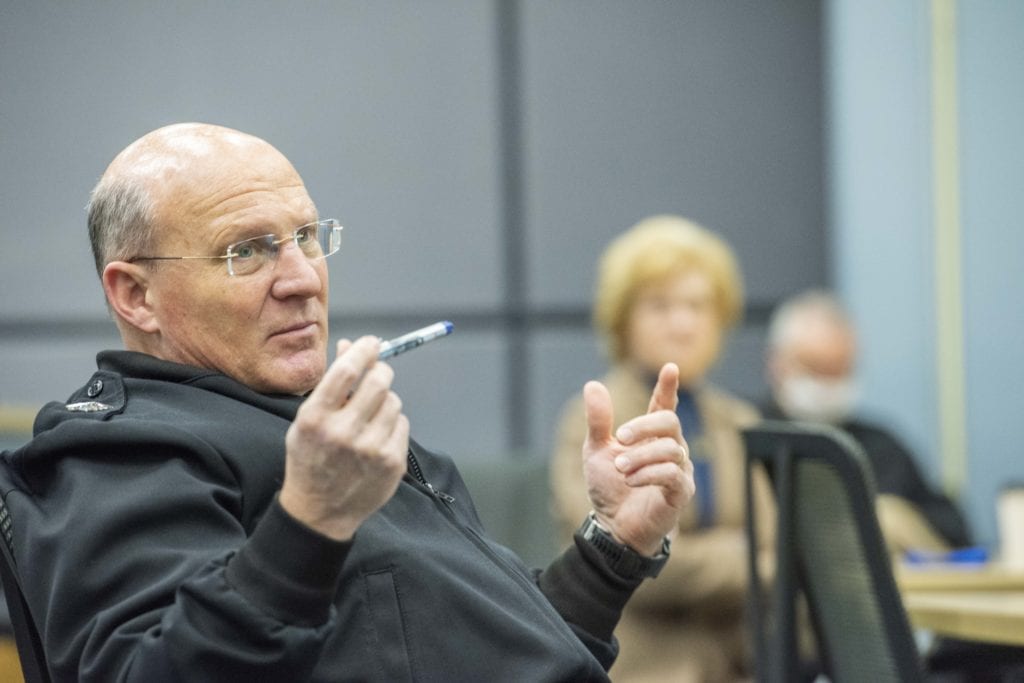
Chief of Naval Operations (CNO) Adm. Mike Gilday meets with Sailors during a 2020 visit to Naval Expeditionary Intelligence Command. U.S. Navy / Mass Communication Specialist 3rd Class Marissa Vermeulen

ARLINGTON, Va. — The chief of naval operations (CNO) said President Trump last week signed off on the secretary of the Navy’s proposed re-designation of U.S. Fleet Forces Command as the U.S. Atlantic Fleet. A timetable for the change has not been announced, but Fleet Forces Commander Adm. John Grady is proceeding with implementation. 

Speaking Jan. 11 in a webinar of the Surface Navy Association convention, CNO Adm. Michael Gilday discussed the pros of the redesignation. 

“It underscores the importance of the Atlantic in a way that the title ‘Fleet Forces’ doesn’t,” Gilday said. “It actually is a testament to recent tangible decisions that we made to increase our power in that body of water, to include bringing Second Fleet back, standing up SubGru 2 (Submarine Group Two). It will also include standing up [NATO’s] Joint Force Command Norfolk, which is focused on the Atlantic.” 

Gilday said, “in a day and age when the homeland is no longer a sanctuary, and homeland defense is at the fore of every plan the combatant commanders have put together, the name ‘Atlantic Fleet’ always carries some gravitas with respect to defense of the nation.” 

He noted the complexity of the re-designation, saying the command “also has responsibilities as a component [command] for [U.S.] Northern Command and the Eastern Pacific that extend up to the Arctic as well as their role as component of the [U.S] Strategic Command. They really have a global responsibility with respect to the command and control of our SSBNs [ballistic-missile submarines].”

Grady seconded the complexity in a Jan. 13 webinar at the convention, noting the “downside “might be that we would lose emphasis on what we do for the homeland. Indeed, I control forces in both the Pacific and down south [in U.S. Southern Command area of responsibility]. 

“So, we will balance all that, and in the end the name change is an important branding opportunity, and we will move out on that,” Grady said.  

“We are walking through this very methodically and deliberately before we finally execute,” Gilday said.  

The re-designation plan originally was announced by Navy Secretary Kenneth J. Braithwaite, testifying Dec. 2 before the Readiness and Management Support subcommittee of the Senate Armed Services Committee, noting that the changing world requires that the Navy must evolve to meet the threat.   

“Our existing structure operates on the premise that we still live in a post-9/11 state, where NATO’s flanks are secure, the Russian Fleet is tied to the pier, and terrorism is our biggest problem,” Braithwaite said. “That is not the world of today. As the world changes, we must be bold, evolved, and change with it. Instead of perpetuating a structure designed to support Joint Forces Command, we are aligning to today’s threat.  

“To meet the maritime challenges of the Atlantic Theater, we will rename Fleet Forces Command as the U.S. Atlantic Fleet and will refocus our naval forces in this important region on their original mission, to controlling the maritime approaches to the United States and those of our allies,” he said. “The Atlantic Fleet will confront the re-assertive Russian navy, which has been deploying closer and closer to our East Coast with a tailored maritime presence, capability and lethality.”  

The U.S. Atlantic Fleet commander will have two numbered fleets assigned, U.S. Second Fleet, headquartered in Norfolk, Virginia, and U.S. Fourth Fleet, headquartered in Mayport, Florida. The U.S Second Fleet was reestablished in August 2018 to confront the increasing Russian activity.    


Navy Discusses Plans for Limited Optional Manning for Large and Medium USVs

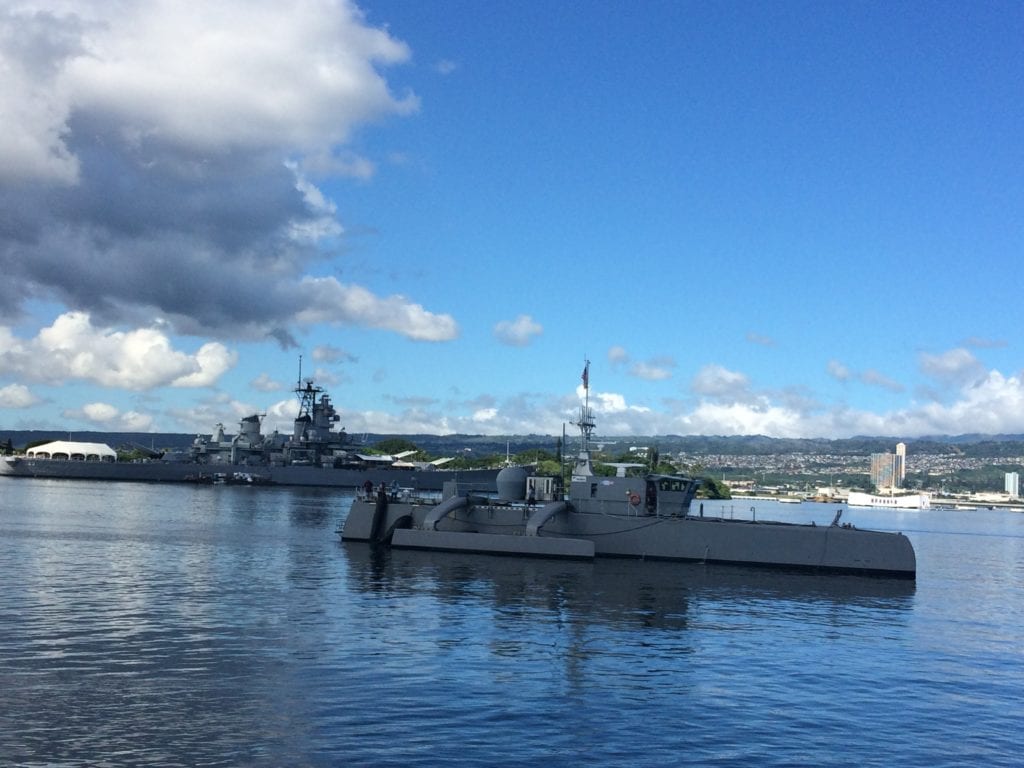
Sea Hunter, the developmental Medium Unmanned Surface Vehicle (MUSV), shown here in 2018. U.S. Navy photo

ARLINGTON, Va. — The Navy has discussed plans for its forthcoming large and medium unmanned surface vehicles (USVs) to be optionally manned for limited purposes. 

Capt. Pete Small, the Navy’s Unmanned Maritime Systems program manager, speaking Jan. 13 at a Surface Navy Association convention webinar on the Navy’s unmanned surface vehicles, said both the Large USV (LUSV) and Medium USV (MUSV) will have some capability for being manned for certain limited purposes, but not for their primary functions.  

Small said the MUSV will be “essentially unmanned,” but will be equipped with a pilot house for such short-term evolutions as getting underway from and returning to a pier, refueling and anchoring. However, the MUSV will have no berthing accommodations for personnel. 

The LUSV, Small said, will in its initial construct feature a pilot house and will have accommodations for personnel who “might need to be onboard for a variety of reasons that do not necessarily include vessel operations.” He said those reasons might include payload, security, test and evaluation, or in a CONOPS [concepts of operation]-driven environment.” 

The MUSV prototype now is under construction by L3Harris.  

The Navy has six studies under contract to develop concepts for the LUSV and also is developing government-furnished equipment to be installed in the ship. 

The primary role of the MUSV is envisioned to be intelligence, surveillance and reconnaissance. 

The LUSV is envisioned to be fitted with missile launchers. Small said the Navy in 2021 will begin an analysis of alternatives for offensive surface fires of the LUSV.  

The Navy’s Surface Development Squadron One is operating the Sea Hunter developmental MUSV for experimentation. A second Sea Hunter, the Sea Hawk, is scheduled for delivery in 2021. 

The service also is conducting experimentation with two optionally manned Project Overlord ships to develop and demonstrate autonomous operations at sea. Two more Overlord ships will be delivered in 2022 and 2023. Small said the Overlord USVs were “demonstrating increasingly autonomous operations.” 

“It is too early to say where we will end up across that portfolio, but we are investigating a range of options via our prototyping efforts,” Small said. 


Marine Heading Navy’s Expeditionary Warfare Unit Wants to Keep Amphibs Mobile and Enemies Guessing

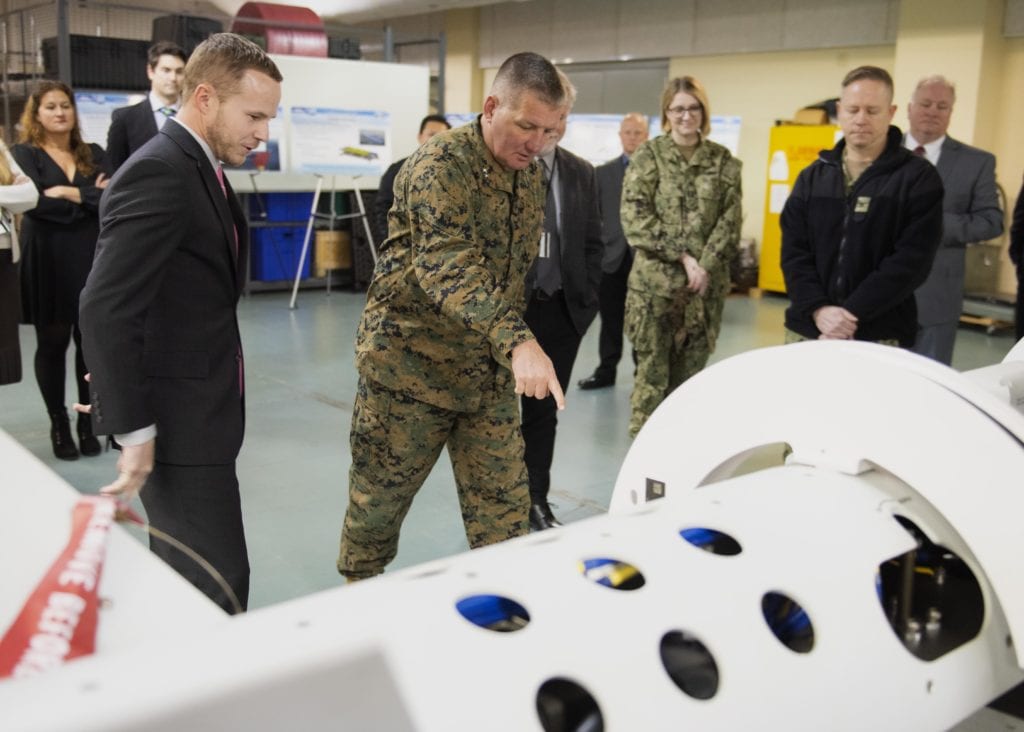
Jarred Kinder, an engineer at Naval Surface Warfare Center Panama City Division, discusses mine countermeasures technology with Maj. Gen Tracy W. King, director of expeditionary warfare (OPNAV N95) during a familiarization tour Jan. 22. U.S. Navy / Eddie Green

ARLINGTON, Va. — The Marine Corps general who heads the U.S. Navy’s expeditionary warfare directorate says his top priority is the acquisition of the Light Amphibious Warship (LAW) for future operations by a highly mobile and distributed deterrent force.

The LAW is designed to complement and fill a gap in capability between the Navy’s large, multi-purpose amphibious warships and shorter range landing craft, Maj. Gen. Tracy King said Jan. 12 at the Surface Navy Association’s virtual symposium.

King said the LAW will be a force multiplier allowing naval forces to maintain a persistent but mobile presence to deter adversaries . “We’re going to be able to stay there. Think of a lily pad,” he added.

LAW is being designed as an affordable, low signature, high endurance, shore-to-shore vessel that can run up on the beach, “capable of operating independently, or in collaboration with other service warships and platforms and naval task forces,” the general said.

He added that LAW was leveraging commercial support vessel design elements. The new amphib would resemble a 21st century version of the World War II Landing Ship Medium (LSM) landing craft. “Think 300-to-400 feet long, about 2,000 tons, long-range, endurance, with a mission bay full of whoop ass,” King said.

LAW is not an auxiliary, connector or forcible entry platform, said King. “It is a combatant that will enable persistent presence and enhanced tactical ability in the pursuit of sea denial,” he said, adding “We’re going to capitalize on the benefits of mass without the risk of concentration.”

On a related issue, arming large amphibious warships with anti-ship missiles to be fired by embarked Marines, King said “Do we need to put fixed launchers that look like something on an LCS? No, I don’t think so.” But he didn’t see why the containerized weapons systems traveling with the Marines couldn’t be made available to the ship’s captain. “To me, that’s what the future looks like. If we proliferate the battlefield and the battlespace with these systems, then we keep the enemy guessing as to who’s got what.”

The concept of a light amphibious warship has been gaining ground since Gen. David H. Berger, the commandant of the Marine Corps, said the Navy needed to broaden its family of amphibious warfare ships. A more distributed, survivable force was needed to operate in a future high-intensity conflict with a peer competitor, Berger maintained.

“It’s no secret the next fight is going to have a distinct maritime flavor,” King said during a joint appearance at the Surface Navy event with Rear Adm. Paul, Schlise, the director of the Navy’s surface warfare division.

Schlise said his top priority was completing the first Flight III Arleigh-Burke class guided missile destroyer, DDG-125, the USS Jack Lucas. The 75th ship in the Arleigh Burke line is “really the first ship of the future surface architecture,” Schlise said. The ship is 44% complete and on track to be commissioned in 2023. DDG-125 will serve as a bridging platform to a future large surface combatant, DDGX, the admiral said.


Naval Surface Force Grapples with Instability in Ship Manning

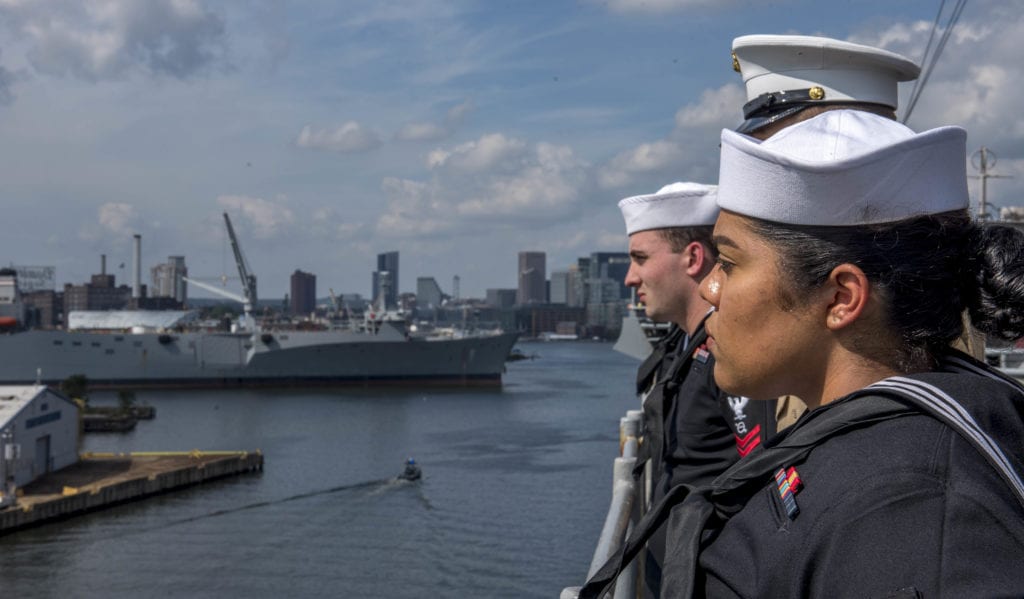
Sailors and Marines man the rails aboard the Harpers Ferry-class dock landing ship USS Oak Hill (LSD 51) during Maryland Fleet Week and Air Show Baltimore in this 2018 photo. U.S. Navy / Mass Communication Specialist 2nd Class Joseph E. Montemarano

ARLINGTON, Va. — The Navy is working hard to solve a persistent manning shortage in its surface fleet, the commander of that force said in an address to the force. 

“We need to man our ships to the right requirement across the OFRP [Optimized Fleet Readiness Plan], not just when they are ready to deploy,” said Vice Adm. Roy Kitchener, commander, Naval Surface Forces, speaking from San Diego in a video shown Jan. 12 during a webinar at the Surface Navy Association convention.  

“We’re making progress with our manning issues, but many challenges remain,” Kitchener said. “We continue to fund more DDG [guided-missile destroyer] billets but it will take time for those Sailors to arrive on the waterfront. Our sea-duty gaps have been reduced to below 11,000 and that reduction is projected to continue to 7,500 by September 2021. But in the last fiscal year, we still resorted to 1,760 temporary personnel assignments to fill the remaining gaps for deployers.  

“That is not a long-time solution,” Kitchener said. “It adds stress on our Sailors, and thereby the force.” 

He pointed out that the manning readiness of a ship “has always been the product of a complex interplay of requirements and funding, inventory and distribution policies, fleet policies and actions, and the frictions between them. Ultimately, this readiness starts with getting the readiness requirement correct. The requirement must consider both in-port and at-sea work, including all of the maintenance you do.”  

He added, “achieving an accurate distribution of manpower is not only important for the short-term ship employment but also to the long-term proficiency and experience of our technicians, operators and maintainers, which we need to better value.” 

Kitchener is implementing an analytics-based project called Surface Manning Experience (SURFMEX), which “will define standard methodology for quantifying and tracking a Sailor’s proficiency and experience as they progress through those career-spanning training continuums.” 

SURFMEX is intended to help assign Sailors “to the right places, first to learn, and then to perform.” 

The project is designed to help distinguish between Sailors who attended a training course years ago and a Sailor who just graduated who look on paper to seem equally prepared for a demanding shipboard billet and to tracking and evaluating their individual fleet experience and proficiency. 

Kitchener identified six ratings that will come under the SURFMEX project: sonar technician, Aegis fire controlman, gas turbine system technician (electrical and mechanical), quartermaster and engineman.   


Navy: Construction of New Frigate Starts in Early Fiscal 2022

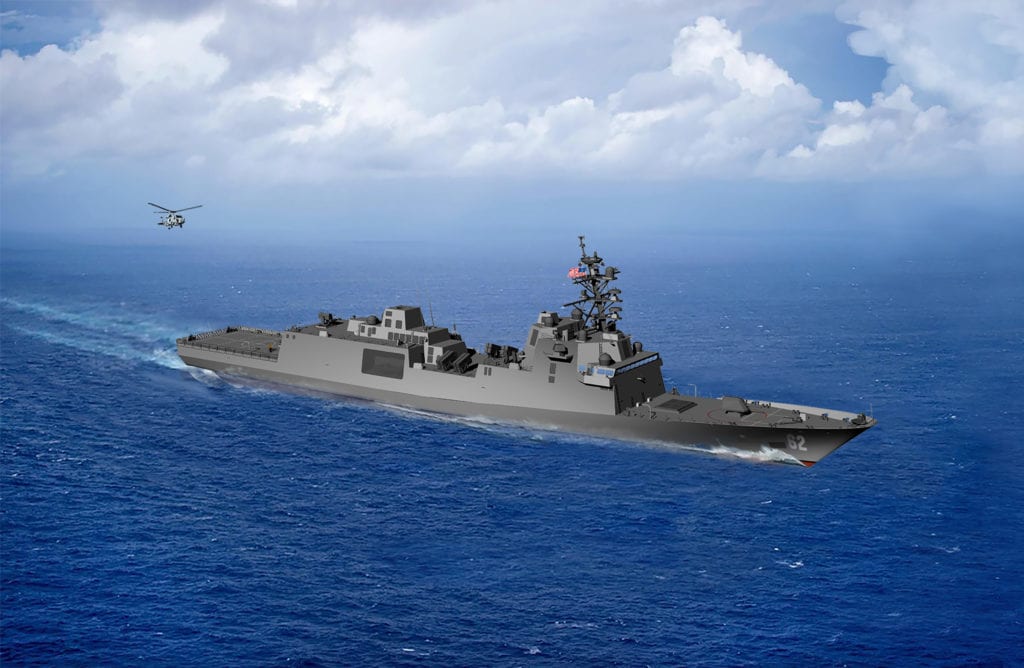
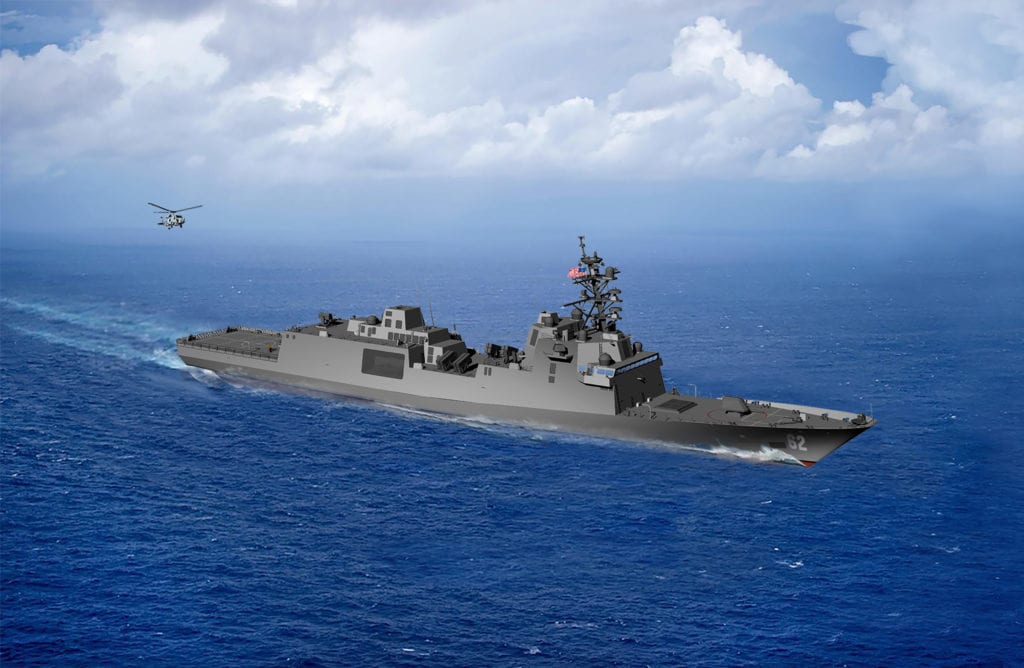
An artist’s rendering of the guided-missile frigate FFG(X). The new small surface combatant will have multi-mission capability to conduct air warfare, anti-submarine warfare, surface warfare, electronic warfare, and information operations. Construction on the lead ship is set to begin in the first quarter of fiscal 2022. U.S. Navy

ARLINGTON, Va. — The Navy plans to start construction of the lead ship of the Constellation-class guided-missile frigate (FFG) during the first quarter of fiscal 2022 (the fall of calendar 2021), a Navy official said. 

Speaking Jan. 12 at a webinar during the Surface Navy Association’s annual convention, Capt. Kevin Smith, the Navy’s program manager for the Constellation frigate, laid out a timeline for the FFG 62 program. The keel-laying of the Constellation is slated for the first quarter of fiscal 2023, and delivery of the ship to the Navy is scheduled for the third quarter of 2026. 

The Navy plans to build 20 Constellation-class FFGs. Under the initial Detailed Design and Construction contract, the first Constellation-class FFG will be built, with options for nine additional hulls. Plans Three are funded one each in fiscal 2020-2022; two each in 2023-2024; three in 2025; and two each in 2026-2030.   

The focus of the FFG 62 program office in 2021, Smith said, is on approval of the ship design; conducting the Critical Design Review and Production Readiness Review; and starting construction of the first ship. 

Smith said the cost of the lead FFG will be $1.28 billion, which includes $795 million for the fixed-price design and construction contract, with the remainder covering the cost of government-furnished equipment and support. The Navy is required by Congress to keep the average cost of each of the nine follow-on ships between $800 million to $950 million in fiscal 2018 dollars. He said the average cost of the next nine FFGs is estimated to be $781 million in 2018 dollars. 

Smith said the Navy is looking at potential need to extend production of the FFG to a second shipyard after the first 10 ships are delivered. With a second shipyard, the cost of a hull could change. He stressed the need to promote competition and affordability for a second order of 10 FFGs.  

A slide presented by Smith gave more detail to the characteristics of the Constellation. It will have a length overall of 496.1 feet, a beam of 64.6 feet, and a draft of 18 feet. Fully loaded displacement will be 7,291 long tons. 

The ship will have personnel accommodations of 200 personnel. The design crew will be 24 officers and 176 enlisted Sailors.  

Weapon systems on the ship will include one Mk110 gun; 32 Mk41 vertical launch system cells; 16 launchers for the Naval Strike Missile, a Mk49 launcher for the Rolling Airframe Missile; the Mk 53 decoy launching system; and the SLQ-32(V)6 electronic counter-measures system. 

Smith the FFG will have space, weight capacity, power and cooling for a future directed energy weapon, but not a railgun. 

Combat systems installed will include the Aegis Baseline 10; SPY-6(V)3 Enterprise Air Search Radar; Mk48 gun weapon system; SQQ-89(V)16 undersea warfare system; and Variable-Depth Sonar System. 

Aviation capability will include one MH-60R Seahawk and a vertical takeoff unmanned aerial vehicle. 

Smith said with the lead ship contract award, the Constellation will have greater than 96% of U.S.-made content in terms of value. 

The program manager said the Constellation will have tubes to launch 16 Naval Strike Missiles.


USS William P. Lawrence Returns from Drug-Busting Deployment

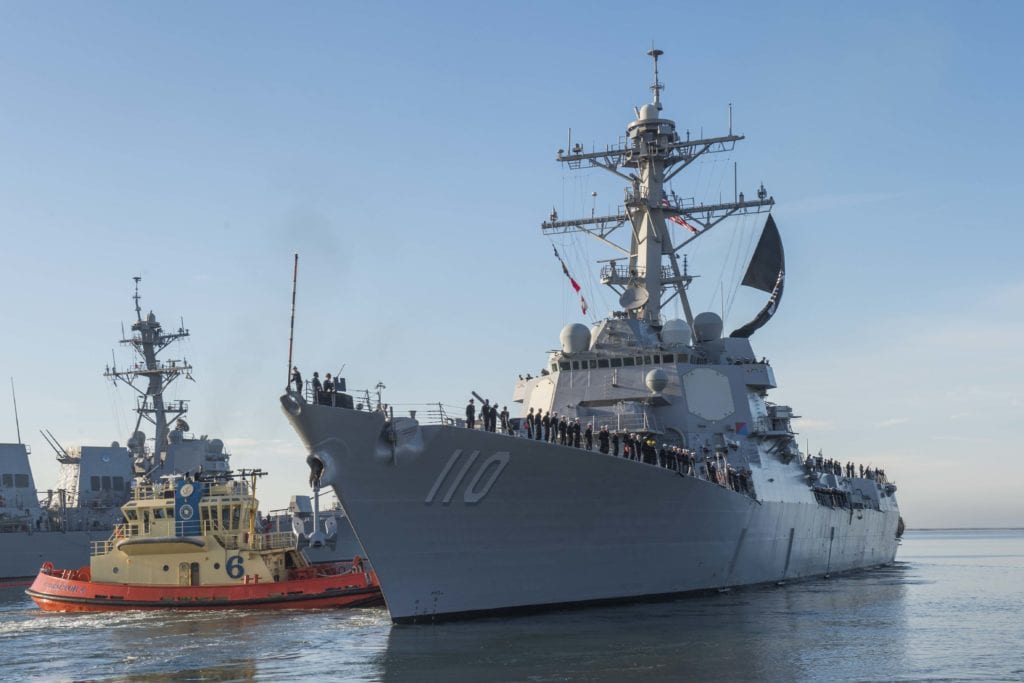
Arleigh Burke-class guided-missile destroyer USS William P. Lawrence (DDG 110) departs San Diego Bay in this 2016 photo. U.S. Navy / Mass Communication Specialist 3rd Class Chelsea Troy Milburn

SAN DIEGO — Arleigh Burke-class guided-missile destroyer USS William P. Lawrence (DDG 110) returned to Joint Base Pearl Harbor, Jan. 11, following a deployment to the U.S. 4th Fleet area of operations, the U.S. Third Fleet Public Affairs said in a release. 

William P. Lawrence, along with Helicopter Maritime Strike Squadron (HSM) 37 Detachment 7, deployed in September to conduct U.S. Southern Command and Joint Interagency Task Force South’s enhanced counter-narcotics operations missions in the Caribbean Sea and Eastern Pacific Ocean. 
 
“I am overcome with pride when I reflect on the accomplishments of the crew while we were deployed,” said Cmdr. Dawn Allen, the commanding officer of William P. Lawrence. “The crew executed a broad spectrum of missions over the past few months with unsurpassed professionalism.” 
 
Along with their embarked U.S. Coast Guard Law Enforcement Detachment 101, William P. Lawrence disrupted approximately 2,921 kilograms of cocaine which has an estimated street value of 204 million dollars. In addition, William P. Lawrence was instrumental in providing hurricane assistance and disaster relief in Honduras, collecting and delivering more than 25,600 pounds of supplies, conducting 19 rescues and two medical evacuations in support of U.S. Southern Command’s Hurricane Iota relief efforts in Central America. 
 
Additionally, William P. Lawrence participated in two passing exercises with the Brazilian training ship BNS Brazil (U 27), an air defense joint exercise with Colombian Air Force Kfir fighter jets and performed freedom of navigation operations off the coast of Venezuela. 
 
William P. Lawrence partnered with U.S. Navy and international warships, the U.S. Coast Guard, the Drug Enforcement Administration, FBI, and Immigration and Customs Enforcement, as well as other allied partners and international agencies, all of which are playing a role in counter-narcotics operations in the area. 


CNO: First Few New Frigates to Have Single Crews

An artist’s rendering of the guided-missile frigate FFG(X). The new small surface combatant will have multi-mission capability to conduct air warfare, anti-submarine warfare, surface warfare, electronic warfare, and information operations. U.S. Navy

ARLINGTON, Va. — The chief of naval operations (CNO) said the new first few Constellation guided-missile frigate (FFG 62) will have single crews, a plan that will be in place while the Navy assesses its crew concept. The lessons learned during the littoral combat ship (LCS) program and its Blue/Gold crew concept will be used to inform the crew concept for the frigate. 

“I’m going to move very deliberately and slowly in the crewing concept,” said CNO Adm. Michael Gilday, speaking Jan. 11 during a Surface Navy Association convention webinar. “I’m heading down the line of a single crew for that ship, at least for the first few ships. We’ve got to get that right. This is the Navy’s ‘Space-X.’”  

“When we started building [the] frigate, we looked a lot at LCS, for example, the way we train on LCS, a really good model we’re going to leverage for FFG 62,” said Vice Adm. Roy Kitchener, commander, Naval Surface Forces, speaking to reporters in a Jan. 8 teleconference. “We did look at what we did on LCS, the Blue/Gold concept and how we’re going to fit them [the ships] out, and we think that is probably the way to get the most presence as we usually do.”  

“The crew on a frigate will be larger, so there’s kind of inherently more capability in that crew,” said Rear Adm. Paul Schlise, director of Surface Warfare in the Office of the Chief of Naval Operations, also speaking at the teleconference. “It’s not a minimally manned platform as LCS was, so any margin for having a few extra people around was largely taken out of the LCS in our attempts to make that crew as minimally manned as possible.”  

Schlise said the new frigate’s crew “will support being able to do more multi-mission sorts of things, whereas the LCS is more a single-mission, one-mission-at-a-time platform. And there’s some more ability for the crew to do its own maintenance. Planned maintenance will be done much more so by the ship’s force crew on a frigate, on the ‘Connie’ class, than on LCS.” 

Schlise said the LCS Blue/Gold crew concept is informing the FFG 62 crew concept.  

“There’s some ability to potentially deploy the ships for longer with a rotational crew model, and we are still learning about how to do that and what that right rotation is. So, it’s a little bit pre-decisional still with Connie,” he said. “At least the first few hulls — and I’m not going to give you a number because we haven’t decided yet — we will probably single-crew the first few hulls because there’s a lot of test and evaluation to go through with a new platform like that, and wringing out the new systems, going through all the testing required to bring a new platform fully into this fleet, to get it to IOC [Initial Operational Capability] and FOC [Full Operational Capability]. If we do modify that crewing model farther down the road, that is something that’s under consideration, and we’re looking to of course give the best [availability for operations] to the fleet commander that we can with the platforms.” 

The first new frigate, Constellation, is planned for IOC in 2026.  


CNO: Divest Aegis Ashore Sites to Ground Forces

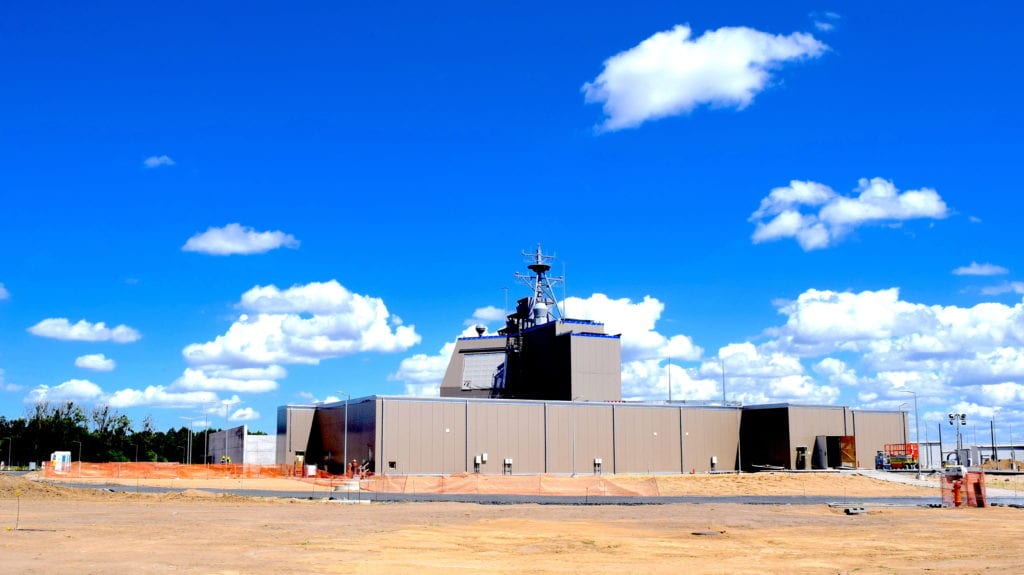
The new Naval Support Facility in Redzikowo, Poland, home to the Aegis Ashore Ballistic Missile Defense System. Pictured: the Aegis Ashore “Deckhouse” command and control center. U.S. Navy / Lt. Amy Forsythe

ARLINGTON, Va. — The chief of naval operations has proposed the U.S. Navy divest its Aegis Ashore ballistic-missile defense (BMD) sites to another service in order to focus on its core missions. 

In the Jan. 11 release of the Navigation Plan for the service, CNO Adm. Michael Gilday wrote of the need to divest capabilities to afford more lethality and sharpen focus. 

“To remain ahead of our competitors, we will divest ourselves of legacy capabilities that no longer bring sufficient lethality to the fight,” Gilday wrote in the document. “This includes divestment of experimental Littoral Combat Ship hulls, legacy Cruisers, and older Dock Landing Ships. It also includes divesting non-core Navy missions like Aegis Ashore. Transferring shore-based ballistic missile defense sites to ground forces enables Sailors to focus on their core missions at sea and frees up resources to increase our lethality.” 

Gilday also spoke of the need of the Navy to divest the Aegis Ashore sites during his Jan. 11 address to the Surface Navy Association convention webinar, without adding more detail.  

The Navy has built and operates two Aegis Ashore sites in Europe, one in Romania and the other in Poland. The sites include an Aegis Combat System and missile launchers that can fire Standard SM-3 missiles. The two sites, part of the European Defense Initiative to shield Europe from missile threats from such countries as Iran, are augmented by BMD patrols in the Mediterranean Sea by Arleigh Burke-class guided-missile ships based in Rota, Spain. 

Plans of Japan to base two Aegis Ashore sites in Japan to defend against missile threats from such nations as North Korea were canceled in 2020, ostensibly because of concerns that missile booster stages would fall on populated areas. Japan also operates guided-missile destroyers equipped with the Aegis Combat System and SM-3 missiles. 

In June 2018, then-CNO Adm. John Richardson advocated for the Navy to divest the BMD role in its cruisers and destroyers patrolling in the Sea of Japan to Aegis Ashore sites in Japan, saying the ships would be better used in more dynamic roles and the demands of geographically restricted patrols took a toll on ship maintenance and crew readiness. 

In 2020, Adm. Philip Davidson, commander, Indo Pacific Command, listed his top acquisition priority as being the installation of Aegis Ashore in Guam to defend the island and its facilities from ballistic missile launched from North Korea. 

“My No. 1 priority, and the most important action we can take to readily and most fully implement the National Defense Strategy, as a first step, is a 360-degree persistent integrated air defense capability of what I call Homeland Defense System Guam,” Davidson said.  

Davidson advocates deploying the Baseline 10 Aegis Ashore missile defense system to Guam to supplement the Terminal High-Altitude Area Defense, or THAAD, system already in place on the island.   

Gilday was not specific to which service — “ground forces’’ — the Aegis Ashore sites should be transferred, but the U.S. Army is the most likely candidate because it provides BMD with its Patriot and THAAD missiles.  


CNO Releases Navigation Plan 2021

Chief of Naval Operations Adm. Mike Gilday, shown here at the Naval Postgraduate School in December, has released his Navigation Plan to the fleet. U.S. Navy / Javier Chagoya

WASHINGTON — Chief of Naval Operations (CNO) Adm. Mike Gilday announced the release of his Navigation Plan to the fleet during virtual remarks at the Surface Navy Association Symposium Jan. 11. 
 
“America is a maritime nation — our security and stability depend on the seas,” Gilday said. “The U.S. Navy is America’s away team, and alongside our allies and partners, we defend freedom, preserve economic prosperity, and keep the seas open and free. Today, we are engaged in a long-term competition. China and Russia are rapidly modernizing their militaries to challenge the international order that has benefited so many for so long. To defend our nation and interests around the globe, we must be prepared to flawlessly execute our Navy’s timeless roles of sea control and power projection. Joining with the Marine Corps and Coast Guard, we will generate decisive integrated all-domain naval power. There is no time to waste; our actions in this decade will set the maritime balance of power for the rest of the century.” 

This Navigation Plan nests under the recently-released Tri-Service Maritime Strategy and outlines how the U.S. Navy will grow its naval power to control the seas and project power across all domains, both now and in the future. It builds off the progress made under FRAGO and lays out what must be done this decade to deliver the naval power America needs to compete and win. This will be done by focusing on four key areas: 

  • SailorsDevelop a Seasoned Team of Naval Warriors 
    Objective: A dominant naval force that can outthink and outfight any adversary. Our Sailors will remain the best trained and educated force in the world. We will cultivate a culture of warfighting excellence rooted in our core values. 
  • Readiness: Deliver a More Ready Fleet 
    Objective: A Navy that is manned, trained, and equipped to deploy forward and win in day-to-day competition, in crisis, and in conflict. We will consistently deliver maintenance on-time and in full, refurbish our critical readiness infrastructure, master all-domain fleet operations, and exercise with like-minded navies to enhance our collective strength. 
  • Capabilities: Delivering a More Lethal, Better-Connected Fleet 
    Objective: A Navy capable of projecting synchronized lethal and non-lethal effects across all domains. We will deploy the Naval Operational Architecture by the middle of this decade; an array of counter-C5ISRT capabilities; weapons of increasing range and speed; and a directed-energy system capable of defeating anti-ship cruise missiles. 
  • CapacityDeliver a Larger, Hybrid Fleet 
    Objective: A larger, hybrid fleet of manned and unmanned platforms — under, on, and above the sea — that meets the strategic and operational demands of our force. We will deliver the Columbia-class program on time; incorporate unmanned systems into the fleet; expand our undersea advantage, and field the platforms necessary for Distributed Maritime Operations. 

“For 245 years, in both calm and rough waters, our Navy has stood the watch to protect the homeland, preserve freedom of the seas, and defend our way of life,” Gilday said. “The decisions and investments we make this decade will set the maritime balance of power for the rest of this century. We can accept nothing less than success. I am counting on you to take in all lines and get us where we need to go — and to do so at a flank bell.” 

To read CNO’s Navigation Plan in its entirety, click here

To download a one-page infographic, click here


Lockheed Martin Delivers HELIOS Laser Weapon System to Navy for Testing

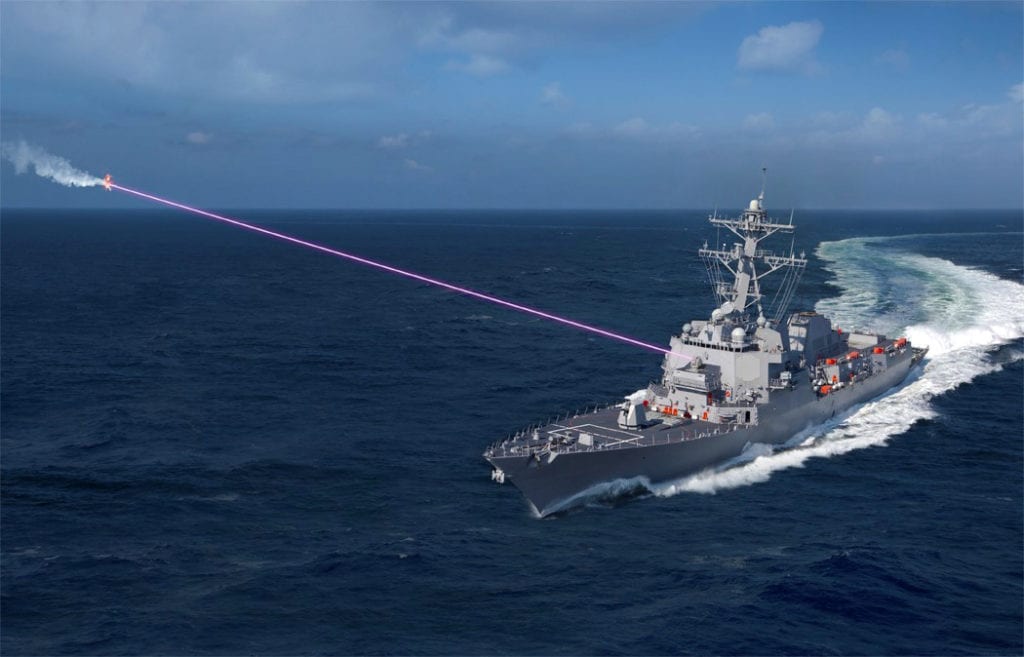
An artist’s rendering of Lockheed Martin’s HELIOS system. Lockheed Martin.

MOORESTOWN, N.J. — This year, the U.S. Navy will field the first acquisition program to deploy the High Energy Laser with Integrated Optical-dazzler and Surveillance, or HELIOS, a laser weapon system with high-energy fiber lasers for permanent fielding by the U.S. Department of Defense.

HELIOS will initially be integrated on a West Coast-based Flight IIA Arleigh Burke-class guided missile destroyer with the Aegis Combat System, but can be adapted to other types of ships and combat systems, says Lockheed Martin, which was awarded the HELIOS contract in 2018.

HELIOS is the first increment of the Surface Navy Laser Weapon System. The initial system features a laser of around 60 kilowatts to counter fast inshore attack craft or unmanned aircraft.

Increment two will boost the laser power to around 300 kilowatts, company business development analyst Kris Biggs said Jan. 13 in a presentation at the Surface Navy Association’s virtual annual conference, although he noted specifications haven’t been released to industry. Increment three will build off HELIOS “with an expected focus on even higher energy laser levels,” Biggs said.

Lockheed Martin completed the Critical Design Review and Navy Factory Qualification Test milestones for the system in 2020.