Blue Water Autonomy Taps Conrad Shipyard to Build Autonomous Surface Vessels

From Blue Water Autonomy, Sept. 24, 2025 

Post-Series A milestone marks shift from R&D to real-world scale and signals new life for American shipyards 

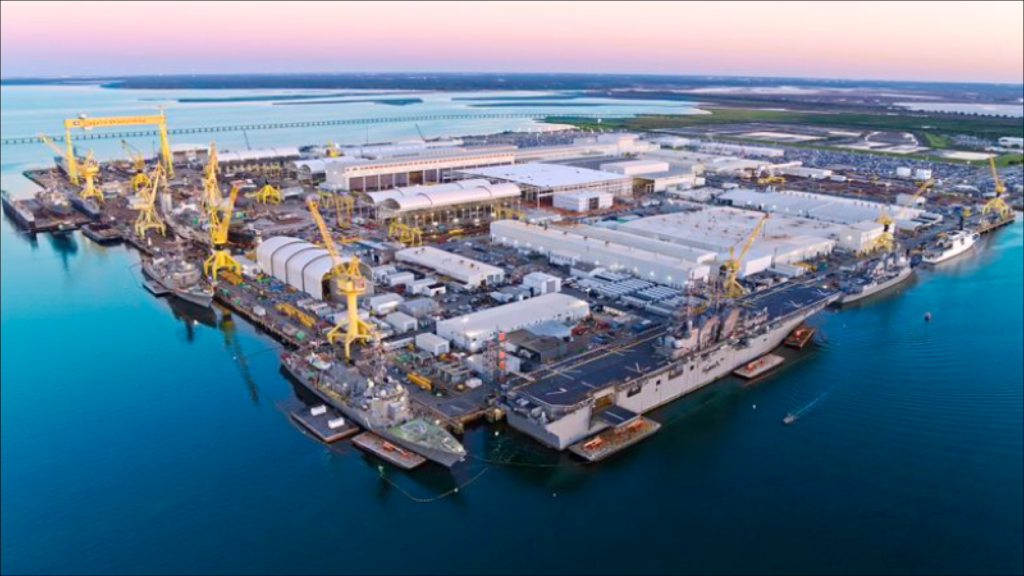
BOSTON, Sept. 24, 2025 /PRNewswire/ – Blue Water Autonomy, the Boston-based technology and shipbuilding company designing and building highly producible unmanned ships for the U.S. Navy, today announced it has entered into a production agreement with Conrad Shipyard, a premier Gulf Coast shipbuilder headquartered in Louisiana. The partnership marks a major step forward in Blue Water’s plan to deploy autonomous surface vessels at fleet scale. 

The news comes just weeks after Blue Water announced its Series A, bringing the company to $61 million raised to date, and reflects the company’s continued momentum in building operationally ready, scalable unmanned ships that meet near-term defense priorities. 

“We’re designing for deployment, not just demonstration,” said Rylan Hamilton, co-founder and CEO of Blue Water Autonomy. “Conrad is a world-class shipbuilder with proven capability, and this partnership puts us in a position to deliver ships quickly, while demonstrating the expertise and scale of existing U.S. shipbuilding capacity.” 

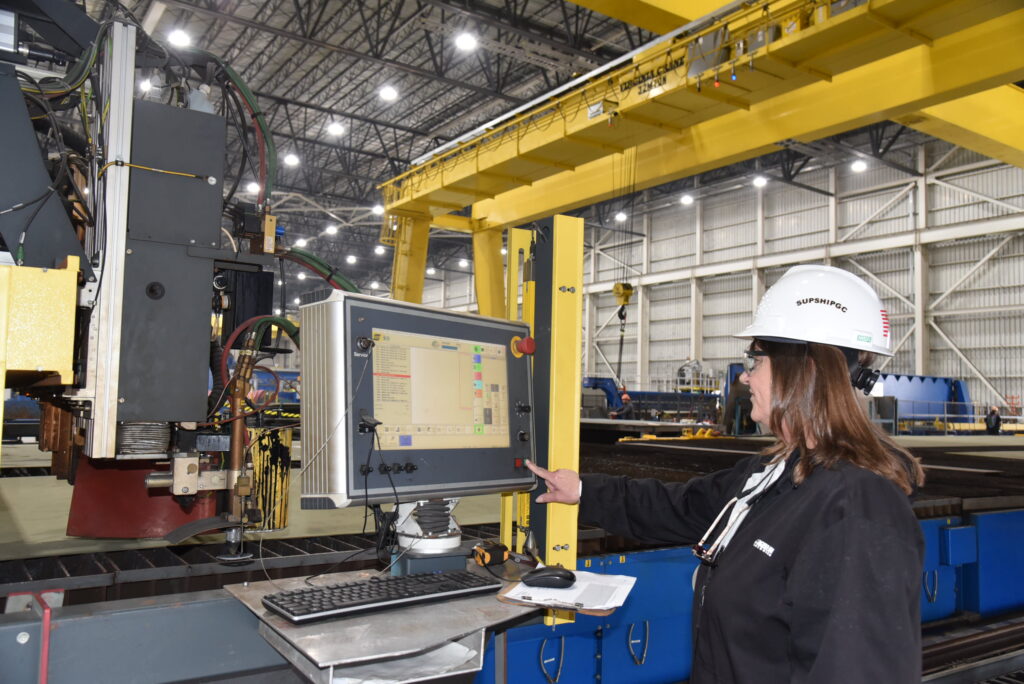
Under the agreement, Conrad will assemble Blue Water’s first class of autonomous ships. Conrad plans to use multiple facilities to take advantage of its advanced shipbuilding approach, including highly automated panel line and welding techniques, allowing for parallel builds and scalable throughput. 

“Blue Water Autonomy’s design reflects the kind of forward-looking innovation that U.S. shipbuilders are ready to deliver,” said Cecil Hernandez, President and CEO of Conrad Shipyard. “We’re proud to support this program and help bring autonomous naval capabilities to life with the speed, precision, and craftsmanship we’ve been trusted to deliver for over 75 years across commercial and military shipbuilding.” 

Blue Water’s partnership with Conrad comes on the heels of consecutive senior shipbuilding hires to build internal capability. Earlier this year, the company hired Tim Glinatsis, a 25-year veteran of General Dynamics NASSCO and Bath Iron Works, followed by multiple hires from the DARPA NOMARS autonomous ship program, including marine engineering lead Ryan Maatta. 

U.S. Industrial Base: Ready to Build 

This milestone also reflects the company’s broader strategy to activate underutilized U.S. shipyard capacity, particularly small and mid-tier yards that can adapt quickly to new platforms. 

“We’ve designed our vessels to be modular, producible, and buildable across the country,” said Hamilton. “What we’re proving with Conrad is just the start. We want to show that the U.S. has the infrastructure to support autonomy at scale, and the talent to build it.” 

Blue Water is focused on working with U.S. shipyards that are fully operational today, shipyards like Conrad, that are proven in both commercial and military shipbuilding and can deliver with speed, scale, and precision. Unlike manned warships, which often require years-long timelines and specialized build environments, Blue Water’s platform is intended to be produced, updated, and maintained with speed and flexibility in mind. 


U.S., ROK Navies Conduct CONSOL During Freedom Edge 25

AT SEA (Sept. 18, 2025) – Republic of Korea’s Cheonji-class fast combat support ship ROKS Daecheong (AOE-58) connects its fuel line to Military Sealift Command’s commercial charter oiler MT Allied Pacific during a consolidated cargo replenishment (CONSOL) at sea, Sept. 18, in support of Freedom Edge 2025. CONSOL capability is when a specially outfitted MSC-controlled tanker conducts underway refueling operations, transferring fuel and/or cargo to combat logistics-force ships at sea. (Courtesy photo) 
  

by Grady T. Fontana, Sept. 24, 2025 

AT SEA – Military Sealift Command’s (MSC) commercial charter oiler motor tanker (MT) Allied Pacific conducted a consolidated cargo replenishment (CONSOL) at sea with Republic of Korea’s (ROK) Cheonji-class fast combat support ship ROKS Daecheong (AOE-58), Sept. 18, in support of Freedom Edge 25. 
 
Freedom Edge highlights trilateral defense cooperation between the United States, Japan, and the Republic of Korea, demonstrating their ability to achieve peace through strength on the Korean Peninsula and across the Indo-Pacific. 

“Every CONSOL with allies and partners demonstrate not just technical proficiency, but the trust and interoperability at the heart of our alliance,” said U.S. Navy Capt. David L. Reyes, commodore, MSC Far East. “It’s important that we continue to build on these efforts—each evolution strengthens our ability to operate together and ensures the fleet remains lethal, resilient and ready in the Indo-Pacific.” 
 
A CONSOL allows a specially outfitted MSC-controlled tanker to conduct underway refueling and cargo transfer operations with combat logistics force (CLF) ships at sea. This capability reduces the need for CLF ships to return to shore for resupply, cutting costs and maximizing time on station to support the fleet. 
 
According to contracted mariner Capt. Edward Markuske, master of MT Allied Pacific, his crew appreciated the opportunity to work with ROK allies. 

“They were very professional and committed to completing the mission while alongside our vessel,” said Markuske. “I hope we get more opportunities to work together with our allies in the Far East, because these joint exercises are integral to our ability to work together going forward. Our ship’s crew appreciates the sense of purpose that comes from being on mission and a job well done.” 

This evolution builds on a previous CONSOL between Allied Pacific and Daecheong in June 2025, expanding the ROK Navy’s capacity to sustain fleet operations at sea with fuel, cargo, and stores. 
 
“Collaborating with our international partners to conduct CONSOL exercises enhances the training of our commercial chartered vessels,” said Peter P. Bok, marine transportation specialist, MSC Far East. “The professional development provided to civilian mariners ensures they are prepared to address any potential challenge and maintain peak operational readiness, thereby supporting our Navy’s effectiveness during times of conflict, and help ensure their lethality.” 
 
MSC Far East supports the U.S. 7th Fleet and ensures approximately 50 ships in the Indo-Pacific Region are manned, trained, and equipped to deliver essential supplies, fuel, cargo, and equipment to warfighters, both at sea and on shore. U.S. 7th Fleet is the U.S. Navy’s largest forward-deployed numbered fleet and routinely interacts and operates with allies and partners in preserving a free and open Indo-Pacific region. 


USS John L. Canley Arrives in Palau During Pacific Partnership 2025

KOROR, Palau (Sept. 22, 2025) The Lewis B. Puller-class expeditionary sea base USS John L. Canley (ESB 6), arrives in Koror, Palau in support of Pacific Partnership 2025, Sept. 22, 2025. Now, in its 21st iteration, the Pacific Partnership series is the largest annual multinational humanitarian assistance and disaster management preparedness mission conducted in the Indo-Pacific. Pacific Partnership works collaboratively with host and partner nations to enhance regional interoperability and disaster response capabilities, increased security and stability in the region, and foster new and enduring friendships in the Indo-Pacific. (U.S. Navy photo by Mass Communication Specialist 2nd Class Jordan Jennings)

KOROR, Palau — The Lewis B. Puller-class expeditionary sea base USS John L. Canley (ESB 6) arrived in Koror, Palau Sept. 22, 2025. 

“It’s wonderful for our mission to return to Palau, where we look forward to working alongside our multinational allies, partners, and friends as we prepare in calm for possible future time of crisis,” said Capt. Mark B. Stefanik, mission commander for Pacific Partnership. “It’s exciting to be here, as our nations share a rich history of collaboration and cultural ties. We look forward to strengthening that mutual cooperation and friendship in the days and years ahead.” 
 
Pacific Partnership mission includes stops in the Federated States of Micronesia, Papua New Guinea, Chuuk, Pohnpei, Palau, Samoa, Fiji, Vanuatu and the Philippines. 
“I’m excited to collaborate with the pharmacy staff in Palau, who are asking excellent clinical questions and showing strong engagement,” said Lt. Kamara Gray, pharmacist with the Pacific Partnership medical team. “One area I am particularly looking forward to is antimicrobial stewardship, training on how to use antibiotics appropriately, including knowing the right time to transition from oral to intravenous treatments. I’m also eager to learn about the antibiotics that are no longer effective here due to resistance.” 
 
Pacific Partnership fosters multilateral cooperation and emphasizes a multinational and whole-of-government approach by planning and executing operations with partner nation militaries, host nation civilian agencies, international organizations, non-governmental organizations, the U.S. State Department, U.S. interagency, and other U.S military service branches. This subsequently provides a strong foundation of trust and enhances our collective ability to respond in times of crisis. 
 
In the aftermath of the December 2004 tsunami that devastated parts of South and Southeast Asia, the United States mobilized numerous military assests and personnel to support the relief effort. Recognizing the opportunity to build on the goodwill and lessons learned from Pacific Partnership began as a military-led humanitarian response to one of the world’s most catastrophic natural disasters. Building on the success and goodwill and lessons learned from that initial mission, the U.S. Navy planned and executed the inaugural Pacific Partnership mission in 2006; its primary aim was to proactively prepare for a more effective response to natural disasters while strengthening relationships and security ties between nations. 
 
Pacific Partnership, now in its 21st iteration, is the largest multinational humanitarian and civic assistance mission conducted in the Indo-Pacific. Each year, the mission team works alongside partners and allies to strengthen relationships, bolster host nation capacity to provide essential humanitarian services, and support efforts to reduce the risk of, prepare for, and respond to disasters. The PP25 team is led by U.S. Navy Capt. Mark B. Stefanik, commander of Destroyer Squadron (DESRON) 31, serving as the mission commander. 


Navy Demonstrates AI Autonomy on BQM-177A Target 

The Navy’s Strike Planning and Execution (PMA-281) and Aerial Targets (PMA-208) programs demonstrate artificial intelligence-based autonomy on BQM-177A aerial target during a test event Aug. 5 at Point Mugu Sea Test Range, Calif. (Photo courtesy of Shield AI) 

From Naval Air Systems Command, Sep. 22, 2025 

NAS PATUXENT RIVER, Md. — The Navy’s Strike Planning and Execution (PMA-281) and Aerial Targets (PMA-208) programs recently partnered with Shield AI to demonstrate artificial intelligence-based autonomy on the BQM-177A aerial target.  

During the Aug. 5 event at Point Mugu Sea Test Range in California, Shield AI successfully flew two BQM-177As — one demonstrating Advanced Vehicle Control Laws (AVCL), a core capability for integrating autonomy, and the other incorporating additional autonomous behaviors.  

AVCL is a foundational software layer that enables aircraft to fly complex, dynamic maneuvers by translating high-level mission commands into real-time flight control inputs. For the BQM-177A, AVCL allows for more threat-representative flight profiles and the kind of maneuvering seen in adversary tactics.  

“The team has successfully demonstrated Advanced Vehicle Control Laws (AVCL) while adding some autonomy elements on our BQM-177A aerial target. When fully integrated, this capability will enhance the BQM-177A’s ability to execute more threat-representative maneuvers and simulate realistic interactions with fleet assets, providing more effective test and training scenarios for the Warfighter,” said Greg Crewse, PMA-208 program manager.  

The BQM-177A replicates modern subsonic anti-ship cruise missile threats and supports a range of missions with its internal and external payload options. It plays a key role in both developmental and operational testing for fleet training.  

Kratos, the BQM-177A’s manufacturer, integrated AVCL into the air vehicle as part of a broader development effort. Once fully implemented, AVCL will enable the BQM-177A to perform more advanced maneuvers and closer engagements, allowing the target to more accurately simulate interactions with manned ships.  

“This is a significant step in demonstrating how the Navy can plan and execute missions with a combination of manned and unmanned aircraft. The use of a combination of virtual and low-cost live air vehicles allows us to evaluate the effectiveness of multi-platform missions at a fraction of the cost of a full-scale live exercise,” said Capt. Toby Keith, PMA-281 program manager. “Integrating autonomy into existing systems allows us to fly and evolve how we plan and execute autonomous platform missions before the air vehicles are even built.”  

The Navy and Shield AI plan to conduct a second technology demonstration later this year, featuring up to two BQM-177As flying simultaneously. The event will test multi-platform coordination, mission planning, and human-machine interface integration to assess how operators interact with and direct multiple autonomous systems in real time.  

The Navy awarded a contract to Shield AI in August 2024 to integrate its Hivemind AI pilot software and deliver a robust prototype test bed using the BQM-177A to demonstrate autonomous operations during flight. Hivemind allows aircraft to operate independently using real-time sensor data and onboard processing to make decisions, plan routes and execute maneuvers without remote input. The software is designed as an open, modular platform that can be used across a range of DoD systems.  


Eastern Shipbuilding Group Inc. to Support Unit Production of U.S. Navy Destroyers 

A grand block for DDG 135 arrives by barge for final integration at HII’s Ingalls Shipbuilding division in August 2025 after being constructed, inspected and accepted at Eastern Shipbuilding Group’s Nelson Facility.

From Eastern Shipbuilding Group Inc. 

PANAMA CITY, Fla. – Eastern Shipbuilding Group, Inc. (ESG) is pleased to announce an agreement with HII’s Ingalls Shipbuilding Division to support the limited production of outfitted structural units for the U.S. Navy’s Flight III Arleigh Burke-class (DDG 51) guided missile destroyers. 

Building on the success of a recent pilot program in which ESG constructed a limited number of DDG units at its Nelson Street Facility in Panama City, Florida, the two companies have entered into an agreement that supports the expansion of the domestic industrial base and advances the U.S. Navy’s surface combatant fleet. 

“With nearly fifty years of experience delivering some of the most reliable and highest-performing steel and aluminum vessels, we’re proud to partner with HII to support production of the U.S. Navy’s destroyer fleet,” said Joey D’Isernia, CEO of Eastern Shipbuilding Group, Inc. “This collaboration strengthens our national shipbuilding capability—expanding industrial capacity and enhancing our nation’s competitive advantage.” 

The collaboration allows ESG to leverage the company’s expertise, resources, and capabilities, ensuring that the U.S. Navy receives the necessary vessels to maintain its global readiness and superiority. With the growing demand for advanced naval vessels, this alliance provides a much-needed boost to America’s shipbuilding capacity. 

ESG is making investments to support these goals and is scheduled to complete a significant infrastructure improvement project at its Nelson Street government shipbuilding facility this summer. The expansion will significantly increase ESG’s capability to construct and deliver multiple ships per year. 

About Eastern Shipbuilding Group, Inc. (ESG) 

Eastern Shipbuilding Group, Inc. is an American owned and operated shipbuilder with three shipyards on the Florida Gulf Coast. They build world class vessels for national defense and commercial clients, including the U.S. Coast Guard’s Heritage Class Offshore Patrol Cutters and the U.S. Army Corps’ new Medium Class Hopper Dredge. ESG is the largest private sector employer in Northwest Florida and is a 2017 recipient of the U.S. Department of Homeland Security Small Business of the Year award. With a portfolio of over 350 vessels and Defense Contract Management Agency (DCMA) and Defense Contract Audit Agency (DCAA) certified systems, ESG is known as one of the most diverse vessel construction companies in the country. www.easternshipbuilding.com 


Navy Determines Planned Ship Inactivations for Fiscal 2026 

Henry J. Kaiser-class underway replenishment oiler USNS Pecos (T-AO-197) sails during the at-sea phase of Exercise Rim of the Pacific (RIMPAC) 2024.  (U.S. Navy photo by MC2 Terrin Hartman)

By Richard R. Burgess, Senior Editor 

ARLINGTON, Va. — The U.S. Navy plans to inactivate or transfer eight ships during fiscal 2026, including two warships and six auxiliary ships, the service said in a Sept. 12 internal message to the force. 

The navy plans to inactivate two Los Angeles-class attack submarines, USS Newport News (SSN 750) on Jan. 31, 2026, and USS Alexandria (SSN 757) on Aug. 4, 2026. The two submarines will be scrapped in Puget Sound Naval Shipyard, Washington. 

Two Henry J. Kaiser-class fleet replenishment oilers will be withdrawn from service with Military Sealift Command by July 31, 2026. USNS John Ericsson (T-AO 194) will be retired but retained as a logistics support asset as a parts source for remaining ships of its class. USS Pecos (T-AO 197 will be transferred to the Maritime Administration (MARAD). 

Three Watson-class large, medium-speed roll-on/roll off ships will be transferred from the Military Sealift Command’s Prepositioning Force: USNS Pomeroy (T-AKR 316) by Apr. 1, 2026; USNS Watkins (T-AKR 315) by July 1, 2026; and USNS Red Cloud (T-AKR-313) by Sept. 30, 2026. 

Also being transferred to MARAD on July 1, 2026, is the USNS VADM K.R. Wheeler (T-AG 5001), a ship which uses an offshore petroleum distribution system to pump fuel ashore from a distance of eight miles to U.S. forces ashore.    


ABS, Eureka Naval Craft, AIRCAT Vessels Team to Advance High-Speed Autonomous Vessels

From Eureka Naval Craft, Sept. 18, 2025 

Eureka Naval Craft, AIRCAT Vessels S.A.S., and the American Bureau of Shipping (ABS) today announced a landmark agreement to accelerate safe development of high-speed Unmanned and Autonomous Surface Vessels (USVs/ASVs) for both naval defense and offshore energy operations. 

The collaboration is designed to set new international standards, which will support safety, reliability, and operational excellence for high-speed autonomous vessels deployed in high-risk civilian and military environments. 

The Memorandum of Understanding leverages Eureka’s advanced naval vessel innovation, AIRCAT’s commercial offshore pedigree, and ABS’ world-class classification expertise to bridge defense and energy industry needs.  

“Whether serving a naval mission or supporting offshore energy, high-speed unmanned craft face the same unforgiving risks. By combining our strengths under ABS’s safety leadership, we are building platforms that can be trusted across both worlds,” said Bo Jardine, CEO of Eureka Boats. 

“ABS is excited to work with Eureka and AIRCAT, leveraging our expertise with the world’s most advanced autonomous and remote-control technology to drive innovation while maintaining an unwavering commitment to safety. “, said Miguel Hernandez, Senior Vice President, Global Offshore of ABS. 

The teaming agreement will pursue initiatives aimed at achieving measurable, cross-sector impact: 

  • Modular Payload Integration – Develop and validate adaptable payload systems, such as Intelligence, Surveillance, Reconnaissance masts, mission modules, and spill response units for quick secure installation or swapping, ensuring critical ship functions like propulsion, communications, and navigation remain secure. 

  • Unified Safety Frameworks – Combine offshore energy’s rigorous operational standards with defense-grade redundancy to ensure autonomy systems can withstand harsh sea states, contested environments, and mission-critical demands. 

  • Trials and Demonstrations – Conduct defense and offshore trials to validate safety cases, including high-speed sea trials and failure testing. Use cases include naval patrol and interdiction, offshore resupply, offshore surveillance, and emergency logistics. 

  • International Standards Alignment – Set a global benchmark for autonomous operations by ensuring compliance with  

  • ABS Rules and Guides 

  • IMO’s Maritime Autonomous Surface Ships guidance  

  • International Electrotechnical Commission’s functional safety standards 

  • Oil Companies International Marine Forum’s vessel assurance practices. 

  • Safety and Cyber Assurance – Establish strict interlocks, redundancy, fail-safe protocols, and cyber protections to ensure secure and resilient autonomy. 

Jerome Arnold, Managing Director of AIRCAT Vessels, said: “This is more than technology development – it’s about harmonizing expectations across industries. Offshore energy demands the same level of resilience as the defense community, and, together, we are ensuring both can benefit from innovations in safety and autonomy.”  

Bo Jardine stressed: “By merging defense innovation with offshore practices, we will ensure that naval forces receive safe, resilient, autonomy-ready platforms, that energy operators benefit from defense-grade reliability in critical offshore missions, and that global regulators gain confidence that autonomous vessels can operate as safely, or even more safely, than manned ones.  

“This exciting collaboration revolutionizes the design, validation, and deployment of high-speed autonomous vessels, enhancing safety and operational trust at sea.” 


Navy Determines Planned Ship Inactivations for Fiscal 2026 

Henry J. Kaiser-class underway replenishment oiler USNS Pecos (T-AO-197) sails during the at-sea phase of Exercise Rim of the Pacific (RIMPAC) 2024.  (U.S. Navy photo by MC2 Terrin Hartman) 

By Richard R. Burgess, Senior Editor 

ARLINGTON, Va. — The U.S. Navy plans to inactivate or transfer eight ships during fiscal 2026, including two warships and six auxiliary ships, the service said in a Sept. 12 internal message to the force. 

The navy plans to inactivate two Los Angeles-class attack submarines, USS Newport News (SSN 750) on Jan. 31, 2026, and USS Alexandria (SSN 757) on Aug. 4, 2026. The two submarines will be scrapped in Puget Sound Naval Shipyard, Washington. 

Two Henry J. Kaiser-class fleet replenishment oilers will be withdrawn from service with Military Sealift Command by July 31, 2026. USNS John Ericsson (T-AO 194) will be retired but retained as a logistics support asset as a parts source for remaining ships of its class. USS Pecos (T-AO 197 will be transferred to the Maritime Administration (MARAD). 

Three Watson-class large, medium-speed roll-on/roll off ships will be transferred from the Military Sealift Command’s Prepositioning Force: USNS Pomeroy (T-AKR 316) by Apr. 1, 2026; USNS Watkins (T-AKR 315) by July 1, 2026; and USNS Red Cloud (T-AKR-313) by Sept. 30, 2026. 

Also being transferred to MARAD on July 1, 2026, is the USNS VADM K.R. Wheeler (T-AG 5001), a ship which uses an offshore petroleum distribution system to pump fuel ashore from a distance of eight miles to U.S. forces ashore.    


U.S., Australia Naval Forces Conduct Bilateral Training in the South China Sea

SOUTH CHINA SEA (Sept. 16, 2025) – Arleigh Burke-class guided-missile destroyer USS Dewey (DDG 105), left, sails alongside Anzac-class frigate HMAS Ballarat (FFH 155), right, during a bilateral training with the Royal Australian Navy in the South China Sea, Sept. 16, 2025. (U.S. Navy photo by Mass Communication Specialist 2nd Class Oscar Diaz) 

By Lt. Victor Murkowski, Destroyer Squadron 15

SOUTH CHINA SEA   –  The U.S. Navy and Royal Australian Navy (RAN) conducted bilateral training in support of a free and open Indo-Pacific through the South China Sea, Sept. 15-16. 
 
Participating ships included the Arleigh Burke-class guided-missile destroyer USS Dewey (DDG 105) and the RAN Anzac-class frigate HMAS Ballarat (FFH 155). 
 
Over the two days, the ships engaged in a formation sailing exercise, maritime communications training, and simulated fires exercises alongside information sharing and a combined transit through the South China Sea. 
 
“It was a fantastic opportunity to work alongside Ballarat and our Australian allies,” said Cmdr. Ivan Dobrev, commanding officer of Dewey. “Deepening our interoperability with our allies and partners here in the Indo-Pacific is the key to enhancing our collective deterrence against any adversary threatening peace and stability in the region.” 
 
The U.S. Navy regularly trains alongside our allies and partners in the Indo-Pacific region as a demonstration of our shared commitment to international law and a free and open Indo-Pacific. Bilateral training such as this provides valuable opportunities to exercise and develop tactical interoperability across allied navies in the Indo-Pacific. 
 
“This activity was a component of a planned routine deployment for Ballarat to the region,” said Cmdr. Dean Uren, commanding officer of Ballarat. “This activity is an important demonstration of the resolve that Australia has to supporting an open, stable, and prosperous Indo-Pacific, where international law is respected.” The Australian Defence Force routinely operates in the region and has done so for decades. 
 
The Dewey is forward deployed and assigned to DESRON 15, the Navy’s largest DESRON and the U.S. 7th Fleet’s principal surface force. 
 
U.S. 7th Fleet is the U.S. Navy’s largest forward-deployed numbered fleet and routinely interacts and operates with allies and partners in preserving a free and open Indo-Pacific region. 


USS America Enhances Joint Readiness with Army and Marine Corps Rotary-Wing Operations

PACIFIC OCEAN (Sept. 7, 2025) Two U.S. Marine Corps MV-22B Osprey assigned to Medium Tiltrotor Squadron (VMM) 268 takeoff from the flight deck of the amphibious assault ship USS America (LHA 6) while conducting flight operations in the Pacific Ocean, Sept. 7. (U.S. Navy photo by MCSN Nicholas Douglass) 

By Lt. Carolina Fernandez 

NORTH PACIFIC OCEAN —  Amphibious assault ship USS America (LHA 6) concluded joint aviation training with the U.S. Army and U.S. Marine Corps, boosting interoperability and readiness in the Indo-Pacific region. On Sept. 7 and 11, 2025, off the coast of Pearl Harbor, America served as a floating airfield for rotary-wing aircraft from the Army’s 25th Combat Aviation Brigade (CAB) and Marine Corps’ Marine Medium Tiltrotor Squadron (VMM) 268.  
  
“This joint training enhances interoperability amongst the Services and increases our capacity to project combat power from sea.” said Cmdr. Weideman, air officer, USS America. “By working together, we improve our collective readiness and ability to respond to any contingency.”  
  
Over two days, Army and Marine Corps pilots and crew members flew CH-47F Chinook, AH-64 Apache, and MV-22B Osprey aircraft, executing more than 200 deck landings on USS America. The training boosted their overwater operational proficiency and earned them valuable deck landing qualifications critical for maritime environments.  
  
“This training is extremely valuable for the 25th Infantry Division and the 25th CAB,” said Chief Warrant Officer 3 Michael James, senior standardization instructor pilot for 3-25 AVN Regiment. “It allows us to be proficient in deck landing operations which increases our lethality and operability with our Navy and Marine partners. Overall, it increases the U.S. Military’s combat power!”  
  
The exercise involved three types of rotary-wing aircraft: Marine Corps MV-22B Ospreys from VMM-268, along with Army CH-47F Chinook helicopters from the 3rd Battalion, 25th Aviation Regiment, and Army AH-64 Apache helicopters from the 2nd Squadron, 6th Cavalry Regiment, both assigned to the 25th CAB. This diverse participation highlighted the commitment of all services to joint operations.  
  
“My training goal for the 25th CAB was to increase our proficiency and build more competent air crews in an overwater environment,” said James. “Our crews need to be able to operate from ship to shore. During this training, we were able to learn more about LHA operations, their flight deck patterns and the ship’s capabilities.”  
  
Companies within the Army’s 25th CAB maintain proficiency in shipboard operations to be prepared to fight under all conditions. The brigade conducts Deck Landing Operations several times per year depending on the Navy’s availability, in order to maintain a high level of aviation preparedness.  
  
America is operating in the U.S. 3rd Fleet area of operations. An integral part of the U.S. Pacific Fleet, U.S. 3rd Fleet leads naval forces in the Indo-Pacific and provides the realistic, relevant training necessary to execute the U.S. Navy’s role across the full spectrum of military operations. U.S. 3rd Fleet works together with allies and partners to advance freedom of navigation and overflight, the rule of law and other principles that underpin security for the Indo-Pacific region.  
 
For more USS America news visit: https://www.surfpac.navy.mil/lha6/ and https://www.dvidshub.net/unit/USSA