Lockheed Martin Awarded $233M Contract to Deliver IRST Block II Systems
From Lockheed Martin 

ORLANDO, Fla., Oct. 20, 2025– Lockheed Martin (NYSE: LMT) has been awarded a $233 million firm-fixed-price contract to deliver IRST21® Block II systems and initial spares to the U.S. Navy and Air National Guard (ANG). 

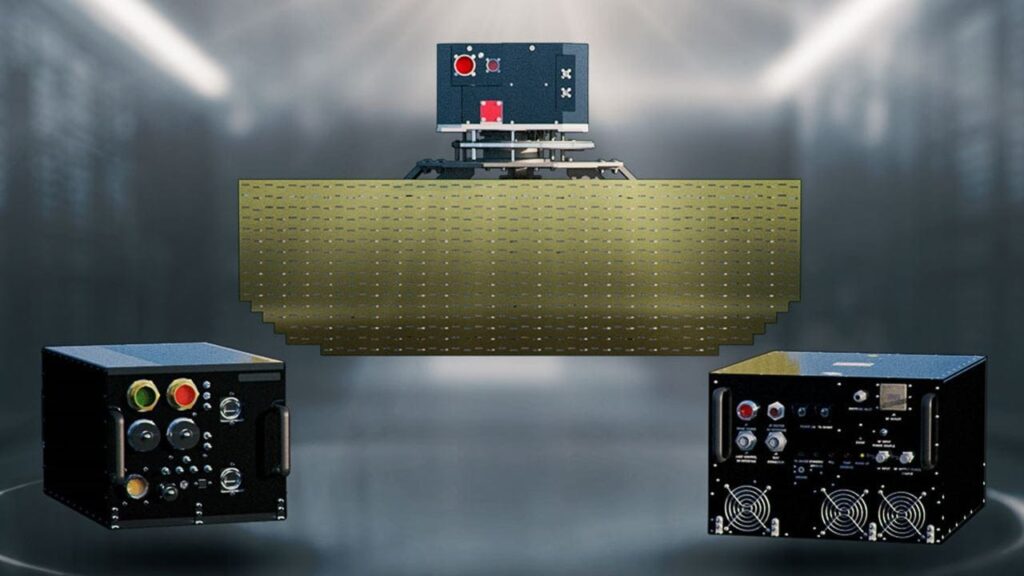
IRST21 is Lockheed Martin’s next-generation infrared search and track (IRST) sensor capability, a long-wave infrared system that passively detects and tracks airborne targets at extended ranges. By delivering longer range detection and faster target data, IRST21 Block II boosts warfighter situational awareness, cuts decision making time and keeps our armed forces mission ready to engage threats the instant they appear. 

The Block II variant, contracted under this award, features cutting edge optics, advanced processors and industry-leading algorithms that significantly increase threat-detection range and provide tracking and targeting data to support beyond-visual-range missile engagements. 

This award follows the U.S. Navy’s recent declaration of Initial Operational Capability for IRST21, which cleared the path for full-rate production of the Block II variant now entering fleet deployment. 

“IRST21 Block II delivers a game-changing leap in passive warfighting capabilities across multiple platforms,” said Cristin Stengel, IRST21 program director for Lockheed Martin. “By significantly enhancing the range and accuracy to enable weapon employment in challenging environments, this system ensures pilots remain ahead of evolving adversaries and mission-ready at all times.” 
 

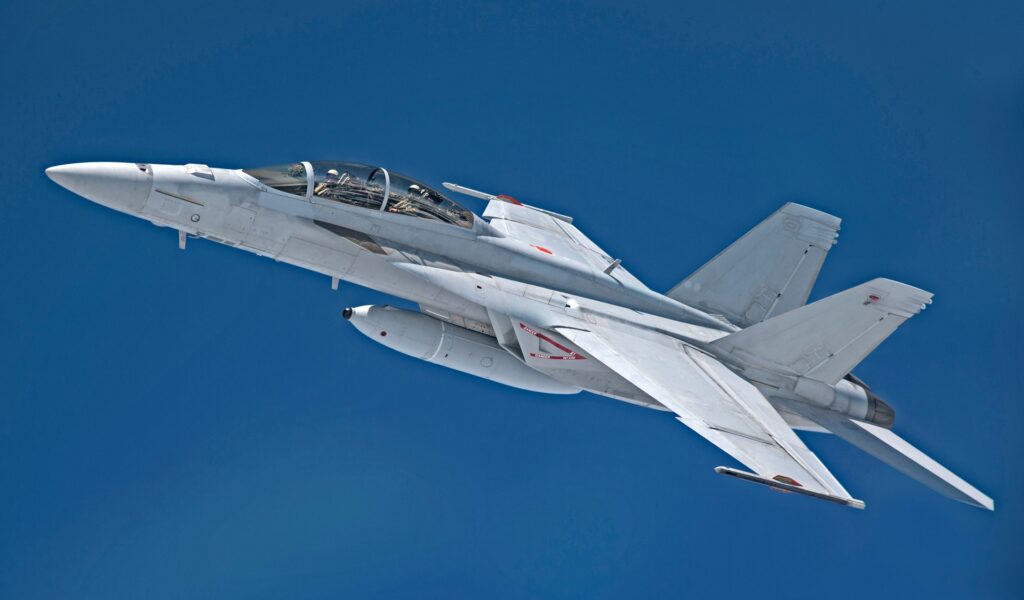
On the F/A-18E/F Super Hornet, IRST21 is mounted on the nose of the centerline fuel tank, complementing the aircraft’s AN/APG-79 radar to maintain effectiveness in radar-denied or heavy electronic attack environments. 

For F-15 and F-16s, IRST21 is embedded in a ready-now modular, externally mounted Legion Pod, providing ease of transportability and bringing 6th generation targeting capability to 4th generation aircraft. By operating passively without emitting a signal, the system is resistant to electronic jamming—ensuring warfighters maintain a critical advantage where survivability and reaction time are essential. 


Undersea Technology Innovation Consortium Facilitates 100th Undersea Prototype Award

From UTIC, Oct. 20,2025 

MIDDLETOWN, R.I. – The Undersea Technology Innovation Consortium (UTIC) announced today a significant milestone in its mission to advance undersea tech innovation. UTIC has now successfully facilitated the award of 100 prototype projects, with a value of over $1.4 billion.  

UTIC is the consortium for the U.S. Navy’s Other Transaction Agreement (OTA) for undersea and maritime technology, an agile and flexible procurement strategy for acquiring military technology. The OTA allows the Naval Undersea Warfare Center (NUWC) Newport to rapidly prototype and acquire leading-edge technologies from UTIC member organizations, accelerating innovation that meets the needs and mission of the U.S. Navy.  UTIC members represent small and large businesses, academia, and nonprofit research institutes with state-of-the-art undersea and maritime technology. 

“UTIC represents some of the most innovative organizations in the nation. Through this partnership, the Navy has fast and efficient access to leading edge undersea and maritime technology,” said Molly Donohue Magee, Chief Executive Officer at UTIC. “Our national defense is stronger thanks to this community of best-in-class experts, and our UTIC members continue to successfully compete for exciting and rewarding undersea and maritime technology opportunities in support of the Navy’s needs.” 

Since the OTA award in June 2018, prototype project awards have been distributed to 64 organizations, including 50 non-traditional defense contractors, demonstrating UTIC’s commitment to fostering innovation across diverse sectors. 

“Collaboration drives innovation, and speed is a collective imperative. Celebrating 100 prototype projects is not only as a numerical milestone—but a testament to the power of deep industry engagement,” added Mica Dolan, President and Chief Operating Officer of Advanced Technology International (ATI), UTIC’s consortium management firm. 

Successful prototypes developed under the OTA include sonar, autonomous, and communication systems essential for effective operations in the undersea environment. 

“I am pleased to note that the excellent partnership between UTIC and NUWC Newport has resulted in a milestone 100 awards through Other Transaction Authority. The continued success of this partnership has helped the Navy move forward in its mission to successfully get emerging technologies to the Fleet at a rapid pace,” said Marie Bussiere, Technical Director at NUWC, Newport. “We’ll continue to evolve and expand the undersea battlespace through the technologies that come forth through our industry partnerships.”   

About UTIC 
The Undersea Technology Innovation Consortium (UTIC) promotes the rapid development, prototyping, and commercialization of innovative undersea and maritime. UTIC represents a united undersea and maritime industry voice, breaking down barriers to growth by identifying and integrating undersea and maritime technology resources and opportunities, and providing the environment to collaborate on innovative solutions. For more information on UTIC,  visit https://www.underseatech.org/


Japan, U.S. Forces Begin Multilateral Exercise ANNUALEX 2025

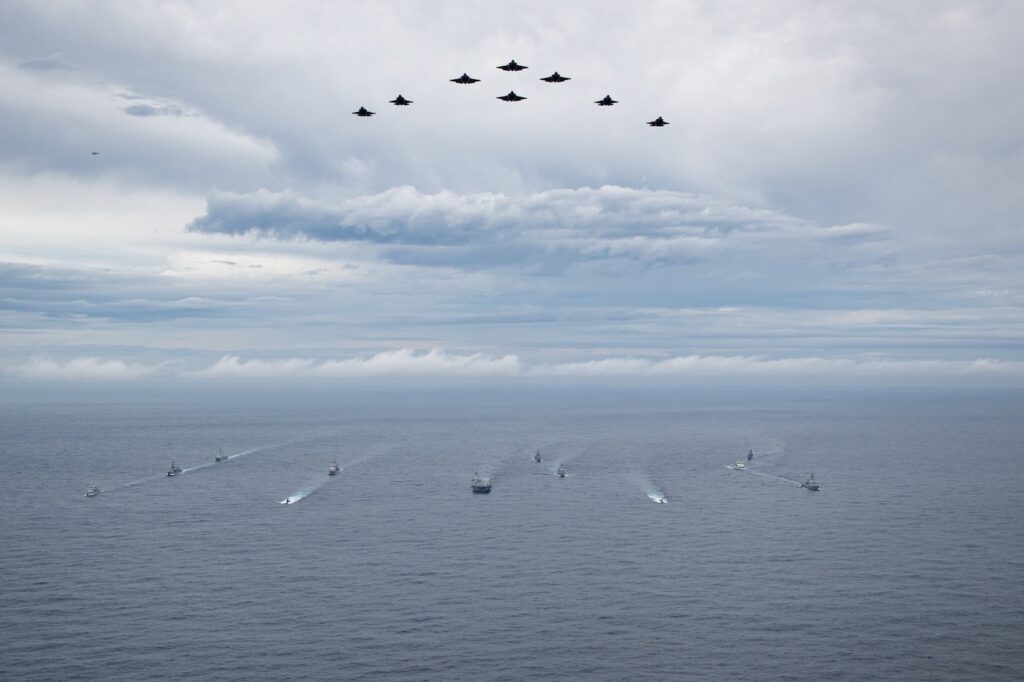
PHILIPPINE SEA (Oct. 20, 2025) – Japan Maritime Self-Defense Force, U.S. Navy and U.S. Marine Corps forces with Royal Australian Navy, Royal Canadian Navy, and French Navy sail and fly together in the Philippine Sea, Oct. 20, 2025 in support of Annual Exercise (ANNUALEX) 25. (U.S. Navy photo by Petty Officer 1st Class R. Ezekiel Duran) 

By Commander, U.S. 7th Fleet Public Affairs

PHILIPPINE SEA  –  The Japan Maritime Self-Defense Force (JMSDF), the U.S. Marine Corps, and U.S. Navy begin the multilateral exercise Annual Exercise (ANNUALEX) 2025 in the Philippine Sea, Oct. 20, 2025. 

This year’s ANNUALEX focuses on enhancing the Japan and U.S. bilateral alliance within a multilateral context through maritime communication tactics, anti-submarine warfare operations, air warfare operations, replenishment-at-sea, and more. JMSDF Izumo-class helicopter-capable, anti-submarine warfare destroyer JS Kaga (DDH 184) leads the JMSDF participation in this year’s ANNUALEX. 

Held every two years, ANNUALEX is led by the JMSDF to provide an opportunity to refine and build upon existing combat interoperability capabilities, enhancing readiness across all platforms. This serves as a deterrent against regional instability and aggression. 

U.S. participating assets include the U.S. Navy Arleigh Burke-class guided-missile destroyer USS Shoup (DDG 86), Ticonderoga-class guided missile cruiser USS Robert Smalls (CG 62), P-8A Poseidon, Lewis and Clark-class dry cargo ships USNS Amelia Earhart (T-AKE 6), USNS Wally Schirra (T-AKE 8), fleet replenishment oiler USNS Tippecanoe (T-AO 199), a U.S. submarine, and U.S. Marine Corps F-35B Lightning II is assigned to Marine Fighter Attack Squadron (VMFA) 242. 

Participating forces will also include the Royal Australian Navy (RAN) and Air Force (RAAF), Royal Canadian Navy (RCN) and Air Force (RCAF), French Navy (FN), and Royal New Zealand Air Force (RNZAF). 

The previous ANNUALEX, held in November 2023, featured Carrier Strike Group 1, represented by its flagship Nimitz-class aircraft carrier USS Carl Vinson (CVN 70), during operations in U.S. 7th Fleet. 

U.S. 7th Fleet is the U.S. Navy’s largest forward-deployed numbered fleet and routinely interacts and operates with allies and partners in preserving a free and open Indo-Pacific region. 


GA-ASI Selected to Support U.S. Navy CCA Design Effort 

From General Atomics Aeronautical Systems Inc. 

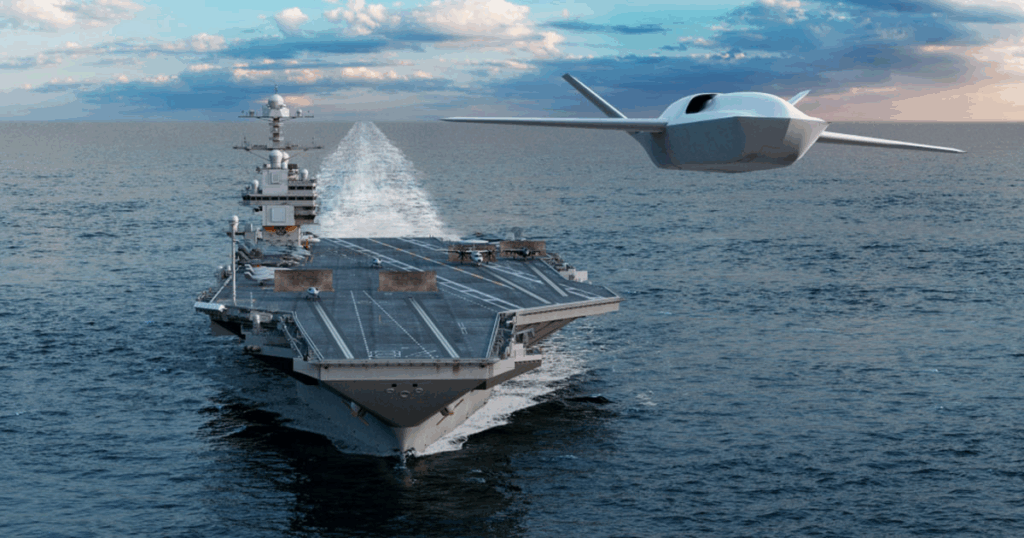
SAN DIEGO – 17 October 2025 – General Atomics Aeronautical Systems, Inc. (GA-ASI) has been contracted by the U.S. Navy to develop conceptual designs for a Collaborative Combat Aircraft (CCA) to support the carrier air wing of tomorrow. 

GA-ASI was selected to work on Navy CCA designs emphasizing a modular approach to platform selection, capable of being rapidly reconfigured and upgraded to meet changing mission requirements, including operations on and from aircraft carriers. GA-ASI’s approach supports the Navy’s revolutionary acquisition strategy of smaller, frequent purchases that enable rapid technology insertion rather than traditional long-lifecycle programs 

GA-ASI’s Navy CCA contract follows its selection to design and fly the U.S. Air Force’s first CCA, the YFQ-42A. A production-representative unmanned fighter, YFQ-42A was the first Air Force CCA to begin flight testing in August, another historic achievement for the company. 

“We’re honored by the vote of confidence from the U.S. Navy and we’re eager to put what we’ve built to work for the future fleet,” said GA-ASI President David R. Alexander. “No one has more experience than we do with unmanned combat aircraft and we’re leveraging that to help the Navy get this capability onto the flight deck fast.”  

CCAs are highly capable, semi-autonomous jet fighters that complement and enhance traditional, human-piloted combat aircraft. Produced in high quantities at comparatively low cost, they let commanders shift risk away from human flight crews, enhance the sensing and other capabilities of legacy aircraft formations, increase lethality of the air wing, and maximize operational flexibility across the board.  

GA-ASI has configured all its unmanned combat air vehicles (UCAV) to be AMS-GRA compliant, including XQ-67A, YFQ-42A and MQ-20 Avenger®. GA-ASI rapidly reconfigured and upgraded its modular XQ-67A Off-Board Sensing Station, an autonomous-capable unmanned jet built under contract from the Air Force Research Laboratory that achieved first flight in 2024. GA-ASI has pioneered unmanned jet operations for more than 17 years, beginning with the MQ-20 Avenger in 2008, and has extensive experience working with the U.S. Navy and other nations on carrier-based unmanned aircraft operations. 

The Navy’s CCA design will emphasize seamless coordination among manned fighters, uncrewed vehicles and support platforms; accommodate elevated risk profiles and reduce risk to crewed platforms; support and enhance 4th- and 5th-generation aircraft and complement 6th-generation aircraft; and maximize operational flexibility, cost efficiency and mission effectiveness. 

At the UK’s Farnborough Air Show in 2024, GA-ASI announced its company-developed concept for ship-based CCA operations, codenamed Gambit 5. GA-ASI’s Gambit Series envisions multiple CCA variants rapidly reconfigured from a common Gambit Core, enabling substantial commonality for rapid and affordable production at scale. 

GA-ASI has recorded numerous recent aviation milestones with its aircraft at sea. In 2023, the short takeoff and landing demonstrator known as Mojave launched from and landed aboard the British aircraft carrier HMS Prince of Wales. In 2024, Mojave took off from the South Korean amphibious assault ship Dokdo and flew to a naval base ashore. 

GA-ASI has developed more than two dozen different types of unmanned aircraft and delivered more than 1,200 units to customers, building more than 100 aircraft per year at its 5 million-square-foot manufacturing facility in Poway, Calif. GA-ASI aircraft have amassed 9 million total flight hours and more than 50 GA-ASI aircraft are aloft around the world every minute of every day. 


NATO’s Biggest Naval Exercise Proves Undetectable Ship-to-Ship Laser Communication 

Astrolight’s POLARIS laser communication terminal (Source: NATO DIANA)

At NATO’s largest unmanned maritime exercise, Astrolight’s POLARIS laser communication terminal kept a jam-proof ship-to-ship link through rain and fog over horizon-limited distances, proving a secure, undetectable solution for radio-silent, GPS-denied environments. 

October 17, 2025. Lithuanian space and defense tech company Astrolight has successfully demonstrated undetectable, unjammable, and high-bandwidth laser-based ship-to-ship communication with its POLARIS terminal during REPMUS’25, NATO’s largest unmanned maritime exercise recently. 

During the REPMUS (Robotic Experimentation and Prototyping using Maritime Uncrewed Systems)/Dynamic Messenger mission, hosted by the Portuguese Navy, POLARIS laser terminals maintained a stable, jam-proof horizon-limited laser-based link between two vessels: NRP Dom Francisco de Almeida and NRP Dom Carlos I. During testing, the link wasn’t detected by a single sensor of other participating ships, drones, and land assets. 

“With persistent and rising GPS jamming attacks in NATO territories, we needed to test it in real-life conditions as soon as possible. Exercise results showed that our laser technology is a reliable and operable alternative to radio frequency-based communication – now it’s time to scale,” said Dalius Petrulionis, CTO and co-founder of Astrolight, who led POLARIS’ testing at sea. 

Astrolight’s terminals also transmitted gigabytes of data at latencies and speeds that allow for more than 10 concurrent, real-time HD video streams, even through rain and fog, during the day and night. 

“Astrolight team spent two weeks living and working with the Portuguese Navy aboard two of their ship fleets, installing their POLARIS laser terminals. They established undetectable ship-to-ship laser communications, exceeding their initial targets by 200%, and proving that first-time experiments can go better than planned when the technology is well-developed,” NATO Defense Innovation Accelerator for the North Atlantic (DIANA) shared on its socials. 

Jamming is a serious problem at sea because it can distort satellite navigation, confuse radar and ship-tracking displays, and interrupt radio and satellite communications. In such cases, crews switch to less secure backup methods like noisy radio or signal lamps that increase a ship’s electromagnetic signature and make it easier to detect. 

“Participating in REPMUS, NATO’s largest naval exercise, marks an important milestone for innovators within the NATO DIANA programme. It is the perfect opportunity for these companies to demonstrate the value their solutions can provide in an operational context, while also making the most of end-user insights and feedback as they move closer to adoption and deployment. We were proud to see six different DIANA innovators participating this year, including Astrolight, and we are confident that they will all rise to the challenge. Their technologies exemplify the kind of innovation DIANA was created to support – cutting-edge technologies with real operational potential, positioned to deliver real-world impact,” said James Appathurai, Managing Director at NATO DIANA. 

The demonstration of Astrolight’s POLARIS in Portugal builds on prior tests with the Lithuanian Navy. 

NATO’s REPMUS/Dynamic Messenger exercise combines REPMUS, the top event for maritime robotics and unmanned tech, and Dynamic Messenger, a program for testing innovative naval systems. They bring together NATO Allies, partners, academia, and industry experts, and provide a realistic setting to evaluate new maritime capabilities and promote their integration into NATO operations. 

“Every technological breakthrough was once an innovation in testing. Running ours alongside NATO in a real, tactical setting proves that we already have top-tier defense tech. The REPMUS/Dynamic Messenger exercise is an important milestone on our path to delivering resilient, jam-resistant communications to NATO’s Navy in these turbulent times for national security,” concluded Dalius Petrulionis. 


Sev1Tech Awarded $49M U.S. Navy SeaPort NxG Contract

Support for NIWC Atlantic’s Expeditionary Enterprise Systems and Services (E2S2) Divisions will enable IT modernization, system efficiency and force readiness 

Release From Sev1Tech

WOODBRIDGE, Va., October 15, 2025 – Sev1Tech, a leader in providing information 

technology (IT), engineering, program management, C5ISR and cybersecurity systems 

integration and support services, was awarded a $49 million contract under SeaPort NxG by the U.S. Navy’s Naval Information Warfare Center Atlantic.  

Sev1Tech will provide full system lifecycle support including cyber engineering, network operations and security support services for NIWC Atlantic’s Expeditionary Enterprise Systems and Services (E2S2) Division. 

NIWC Atlantic delivers integrated information warfare solutions across all warfighting domains, safeguarding national security and empowering the Fleet and warfighter to succeed in today’s dynamic information warfare battlespace. 

Sev1Tech’s Maritime Division will provide C4ISR, Cyber and IT systems and engineering 

services to meet the information warfare needs of the U.S. Marine Corps. Sev1Tech will support the rapid development, delivery and operations of critical cloud and local infrastructure services, manpower systems, logistic and network implementation, monitoring, and sensor-based services to Garrison and forward-deployed units. These capabilities will significantly enhance warfighter operational readiness, ensuring they have the advanced technology and support necessary to maintain information superiority and achieve mission success. 

“Sev1Tech has proudly supported NIWC for over 20 years with reliable, mission-ready 

solutions,” said Joe Re, Maritime Division General Manager at Sev1Tech. “The cyber-secure 

systems and networks we support will enable naval information warfare superiority and drive modernization of enterprise infrastructure, cloud architectures and application migration across expeditionary systems and services.” 

Expanding Sev1Tech’s footprint in Charleston, South Carolina, the contract will equip NIWC Atlantic with a strategic advantage in challenging CONUS and OCONUS mission environments. The contract includes one base year with four option years. 


Royal Navy’s newest submarine goes under water for the first time 

From Andrew McDowell, BAE Systems, Oct. 13, 2025 

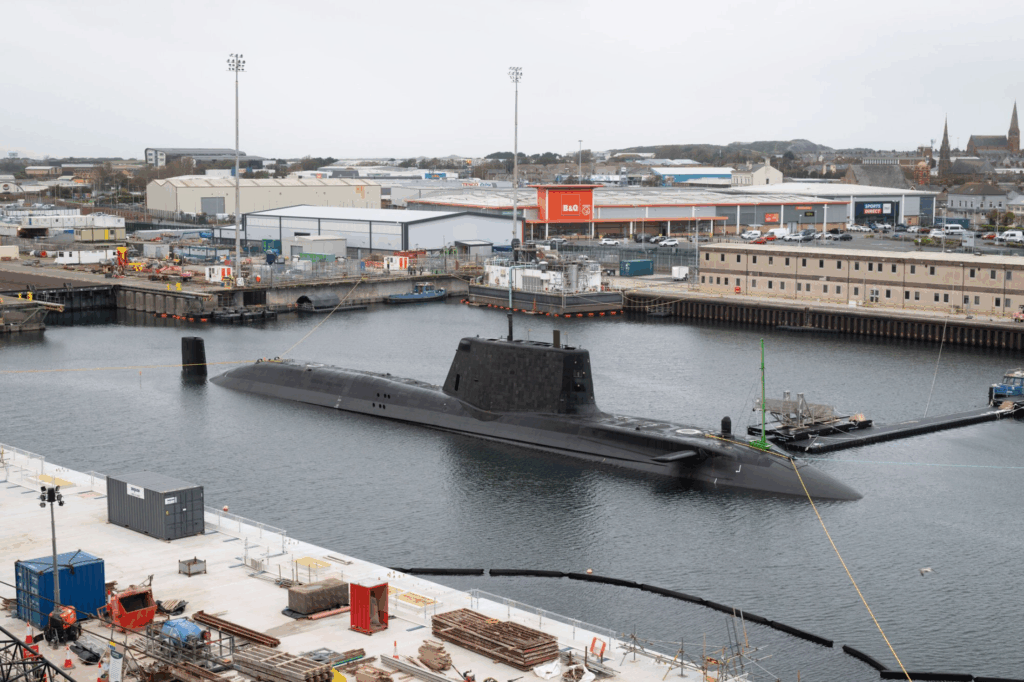
BARROW, Cumbria, United Kingdom — The UK’s newest nuclear submarine has successfully submerged for the first time at BAE Systems in Barrow, Cumbria.  

The Royal Navy crew achieved the major milestone as part of HMS Agamemnon’s ‘trim dive’, a three-day period of testing in the town’s Devonshire Dock to prove the 7,400-tonne, 97-metre-long attack vessel’s stability and safety.  

The process, which comes shortly after King Charles III officially commissioned the Astute class submarine into the Royal Navy, is a key moment in the lead up to its departure from Barrow to join her sister boats in the fleet, based at His Majesty’s Naval Base, Clyde.  

“This trim dive is the culmination of months of hard work. I’d like to thank all teams involved for their commitment and professionalism,” said Pete Tumelty, Astute Programme Director, BAE Systems’ Submarines business. “We’re incredibly proud of the contribution we’re making to the nation’s security and Barrow’s long and distinguished heritage as the home of UK submarine design and build.” 

“The trim and basin dive is a key step in the commissioning of HMS Agamemnon. This period enables us to set the boat’s internal weight, prove her water-tight integrity, test sensors and put some of our systems through their paces ahead of sailing for the first time,” said Commander David ‘Bing’ Crosby, HMS Agamemnon commanding officer. “It takes a great deal of planning and preparation to achieve this key step and all involved should be very proud of the part they have played.” 

Alongside the build of seven Astute class submarines – of which HMS Agamemnon is the sixth – BAE Systems is also constructing four Dreadnought class boats in partnership with the wider Defence Nuclear Enterprise. 

The Dreadnought vessels, due to enter service from the early 2030s, are the replacement for the Vanguard-class submarines, which currently deliver the Continuous At Sea Deterrent (CASD) for the Royal Navy. The critical role underpins the nation’s defence as the ultimate security guarantee and sees at least one of the boats deployed in an unknown location at sea every minute of every day. 

“The successful completion of HMS Agamemnon’s trim dive marks a pivotal milestone in our mission to safely deliver available and capable submarines to the Royal Navy in defence of our nation,” said Henry Musgrave, Head of Astute Delivery Team, Submarine Delivery Agency. “This achievement reflects the exceptional collaboration between the SDA and our partners across the Defence Nuclear Enterprise, demonstrating our unwavering commitment to supporting the UK’s nuclear deterrent as a national endeavor.” 

Design work is also continuing on the future nuclear-powered AUKUS attack submarines as part of an agreement between the UK, the US and Australia. 

BAE Systems has grown its submarines workforce from 10,700 in 2023 to 15,000 today to support the healthy order book and it is expected to reach 17,000 in the coming years.  


USS Roosevelt Visits Algiers, Algeria, Highlighting Defense Cooperation and Partnership 

By U.S. 6th Fleet Public Affairs, Oct. 13, 2025 

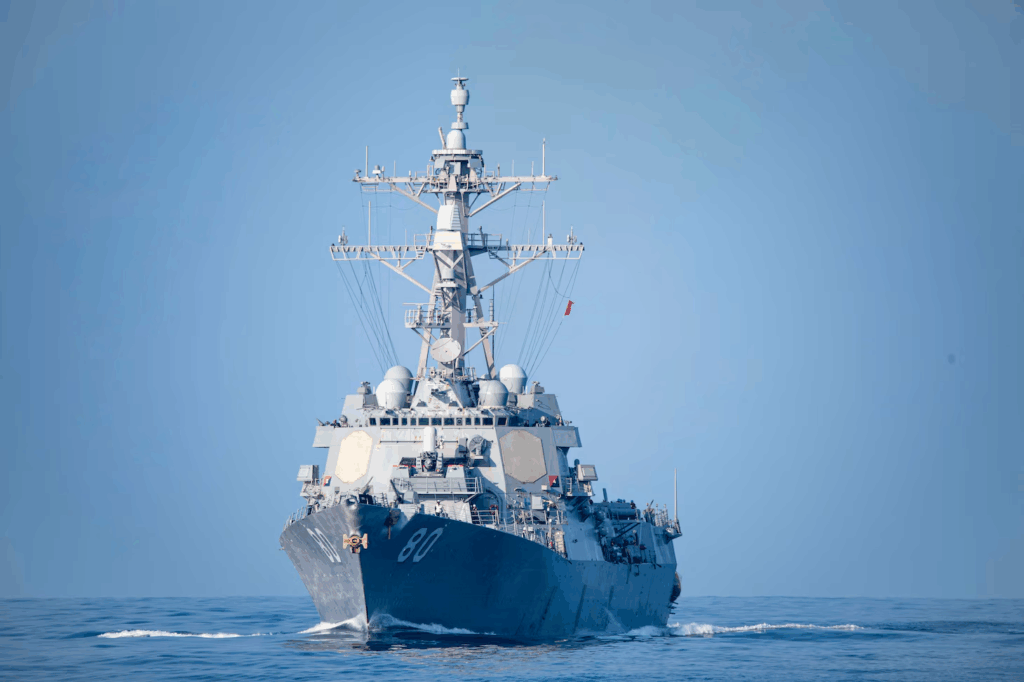
ALGIERS  –  USS Roosevelt (DDG 80) made a routine port visit in Algiers, Algeria on October 12, 2025. The port visit follows USS Forrest Sherman’s (DDG 98) port visit to Algiers in May 2025. 
 
Roosevelt and Algerian Navy’s multi-mission frigate Erradii (910) will also conduct a passing exercise in the Mediterranean Sea, demonstrating the ongoing friendship and security cooperation between the U.S. and Algeria. 
 
“This port visit underscores a shared interest in maritime security and stability in the Mediterranean Sea, a critical region for global trade and security,” said Cmdr. Jared Carlson, commanding officer of Roosevelt. “The more we can collaborate with partners like Algeria, the better we can ensure freedom of navigation and economic prosperity in North Africa. 
 
The visit will coincided with the 250th birthday of the U.S. Navy on October 13, 2025. Roosevelt hosted Algerian government and military officials in a reception Monday night to celebrate the occasion and ongoing naval cooperation. 
 
“For 250 years, our Navy has sailed the globe in defense of freedom and economic prosperity, including in the Mediterranean Sea,” said Ambassador Elizabeth Moore Aubin, U.S. Ambassador to Algeria. “Today, we welcome the crew of USS Roosevelt as we look forward to strengthening our relationship for decades to come.” 
 
Roosevelt is on a scheduled deployment in the U.S. 6th Fleet area of operations to support the warfighting effectiveness, lethality and readiness of U.S. Naval Forces Europe-Africa, and defend U.S., Allied and partner interests in the region. 
 
The U.S. 6th Fleet, headquartered in Naples, Italy, conducts the full spectrum of joint and naval operations, often in concert with allied and interagency partners to advance U.S. national interests, security, and stability in Europe and Africa. 


USS Minneapolis-Saint Paul Returns to Mayport Following Maiden Deployment to U.S. Fourth Fleet

Release From Littoral Combat Ship Squadron Two

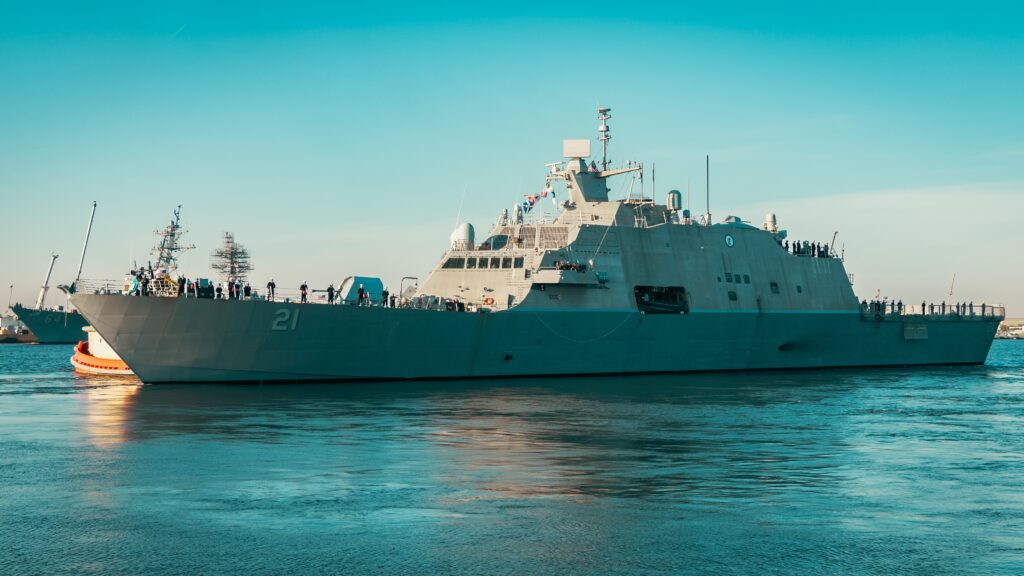
NAVAL STATION MAYPORT, Fla. - USS Minneapolis-Saint Paul (LCS 21), a Freedom-variant Littoral Combat Ship (LCS), returned to Naval Station Mayport, concluding its maiden deployment to the U.S. Fourth Fleet Area of Responsibility (AOR). 

“Over the past seven months, the Minneapolis-Saint Paul crew has demonstrated resilience, determination, and flexibility,” said Cmdr. Steven Fresse, commanding officer of Minneapolis-Saint Paul. “We successfully completed every assigned mission while also focusing on training and refining our skills, enabling us to become a cohesive unit. The keys to our success have been synergy, positivity, unity, and self-sufficiency. Teamwork and determination ensure success.” 

After a seven-month deployment, this marked an important chapter in the ship’s service history, showcasing the versatility and capabilities of the LCS class within the U.S. Navy’s surface fleet, while making an operational impact and achieved historic milestones. 

“I’m proud of the excellent execution demonstrated by Minneapolis-Saint Paul,” said Rear Adm. Joe Cahill, commander, Naval Surface Force Atlantic. “Underway for 130 of her 200 days deployed and maintaining an operational availability of more than 90 percent, Minneapolis-Saint Paul marked a decisive moment of self-sufficiency for the class, one we will continue to build upon. This signifies an important milestone as we continue the shift from contractors repairing the LCS to Sailors operating and fixing their own warships. Fielding innovative warfighting capability, including airborne tactical scouting, Minneapolis-Saint Paul and her crew were ready on arrival, delivering combat power for fleet commanders. They are a tremendously cohesive warfighting team.” 

While assigned to TASK FORCE 45/Destroyer Squadron 40, operating primarily in the Caribbean Sea, Minneapolis-Saint Paul achieved successful counter-narcotics interdictions upon arriving in the AOR. The crew seized an historic amount of over 7,153 kgs (15,737 lbs) of narcotics, worth a total of just under $195 million. This was executed with the embarked U.S. Coast Guard Law Enforcement Detachment 104 and 108, Helicopter Maritime Strike Squadron 50 Detachment 3, U.S. Coast Guard Maritime Patrol Aircraft, AEROSONDE sUAS, and the ship’s organic boat crew and partnered nations. 

During its first port visit to Curacao, Minneapolis-Saint Paul welcomed Rear Adm. Carlos Sardiello, commander, U.S. Naval Forces Southern Command/U.S. Fourth Fleet, for an official engagement with distinguished military and civic leaders. This engagement served to strengthen international relationships and advance regional maritime partnerships. 

While deployed, Minneapolis-Saint Paul conducted a bilateral anti-submarine warfare (ASW) exercise with the Colombian Navy. This collaborative training event significantly enhanced tactical interoperability, strengthened operational coordination, and laid the groundwork for future combined maritime security operations involving ship platforms. 

During operations off the coast of Jamaica, Minneapolis-Saint Paul, in partnership with the Jamaican Defense Force Coast Guard and utilizing its surface and airborne assets, conducted an interdiction demonstration aimed at fostering interagency training and enhancing interoperability. Upon conclusion of this training, Minneapolis-Saint Paul conducted a port visit in Kingston and participated in community relations initiatives and a key leader engagement commemorate the 62nd anniversary of the Jamaican Defense Force Coast Guard. 

Minneapolis-Saint Paul is assigned to Littoral Combat Ship Squadron Two (LCSRON TWO). Located in Mayport, Florida, LCSRON TWO oversees all operational and administrative tasking of nine independently-assigned LCSs. LCSs are a fast, agile, mission-focused platform designed to operate in near-shore environments and winning again 21st-century coastal threats. The LCS is capable of supporting forward presence, maritime security, sea control, and deterrence. 


RTX’s Raytheon Begins Initial Production of SharpSight Surveillance Radar

Radar will deliver unmatched search and track capabilities for both land and maritime surveillance missions 

Release From RTX

MCKINNEY, Texas (October 13, 2025) — Raytheon, an RTX (NYSE: RTX) business, has launched the initial production of its new SharpSight multi-domain surveillance radar. This next-generation system will provide high-altitude, real-time, high-resolution imaging with wide-area search and tracking for land and maritime surveillance, operating day or night in any weather condition. 

SharpSight fuses the capabilities of two of Raytheon’s proven radar families – the Highly Integrated Synthetic Aperture Radar (HISAR) and the SeaVue Multi-Role Radar (SVMR) – and can be rapidly integrated on a variety of manned and unmanned systems. Its open architecture enables inexpensive, rapid upgrades, ensuring operators remain ahead of emerging threats. 

“This radar represents the next step in Raytheon’s long legacy of intelligence, surveillance and reconnaissance innovation,” said Daniel Theisen, president of Advanced Products and Solutions at Raytheon. “By merging the proven capabilities of HISAR and SeaVue, we’re delivering a flexible, exportable and affordable radar system designed to outperform on the most demanding multi-domain surveillance missions.” 

SharpSight is designed for high-altitude precision and persistence, enabling critical missions such as anti-surface warfare, border protection, coastal monitoring, search and rescue, long-range surveillance, and more. It conforms with the latest U.S. Government export policy guidance enabling these advanced intelligence, surveillance and reconnaissance capabilities to be offered to global partners and allies.