Military Consumers React to Life During Pandemic
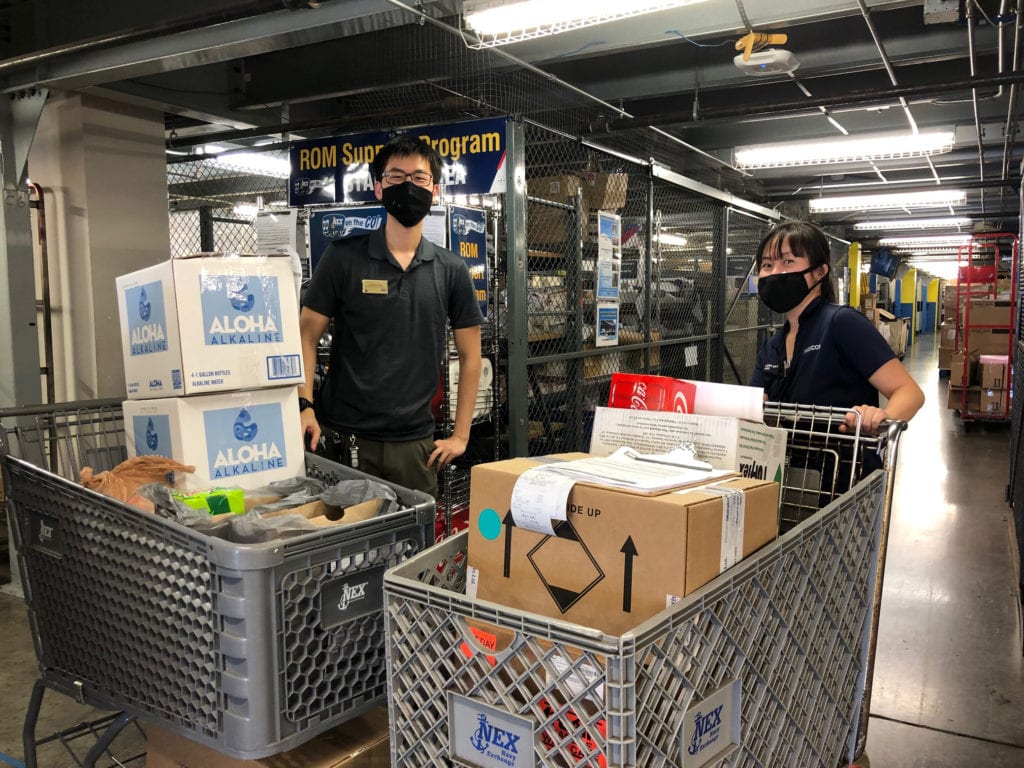
NEX Pearl Harbor launched its Quarantine Support Program by taking orders and delivering goods to military members on restriction of movement orders and quarantined in rooms on Joint Reserve Base Pearl Harbor-Hickam, Hawaii. U.S. Navy/NEXCOM Public Affairs

The COVID-19 crisis has cut back on time spent shopping for food and necessities, changing some military and dependent shopping habits and causing sales of some items — both essential and nonessential — to jump.

Kristine Sturkie, a spokesperson for the Navy Exchange Service Command, said the U.S. Navy Exchanges haven’t seen a rush to stockpile items, although there are limits on some essential items such as toilet paper, hand sanitizers and some cleaning products, so that more customers have access to these needed products. Sturkie said the stores have seen an increase in sales of personal items such as hair clippers.

NEX associates are accepting requests and delivering orders to military patrons who are in a restricted movement status or confined to quarters while under quarantine.

Since fewer people are commuting to work or venturing out, gasoline sales are down, as they are for civilians. Sturkie said the number of gallons sold at Navy Exchange gas stations was down about 21% worldwide compared to last year, and although the data is not available yet for April, she expects gallon purchases to be down for the month as well.

“Laptop and home office supply sales have spiked with more people teleworking, along with light fitness equipment to support home workouts,” Sturkie said. “Sales of outdoor items like bubbles, sidewalk chalk, basketballs and footballs and games, coloring books and playing cards are trending with the kids spending more time at home as well as home-organization and home-improvement type products.”

“Laptop and home office supply sales have spiked with more people teleworking, along with light fitness equipment to support home workouts.”

Kristine Sturkie, Navy Exchange Service Command spokesperson

Even though people are at home, many are conducting business in Zoom and other online platform meetings, where they must look presentable. As salons are closed, the health-and-beauty aids industry is seeing a sharp increase in the sale of do-it-yourself hair coloring products.

While online shopping has been strong, many more consumers are resorting to the web as a last resort. Online retailers like Amazon have seen dramatic increases in sales of both food and non-food items. While the nation is seeing huge unemployment numbers, parcel delivery companies like UPS and FedEx are hiring.

John Blythe, the Defense Commissary Activity Fort Belvoir store director, said there are no food shortages, but the commissary is having some challenges in replenishing merchandise from manufacturers during the novel coronavirus crisis. 

The commissary stores sell military Meals-Ready-to-Eat (MRE) year-round and for camping, hunting and for use in the event of adverse weather like blizzards or hurricanes. With the COVID-19 crisis, Blythe said some customers are worried and purchasing MREs at a higher rate than normal. Large pallets of MREs by the case are on display immediately as you enter the Fort Belvoir Commissary.
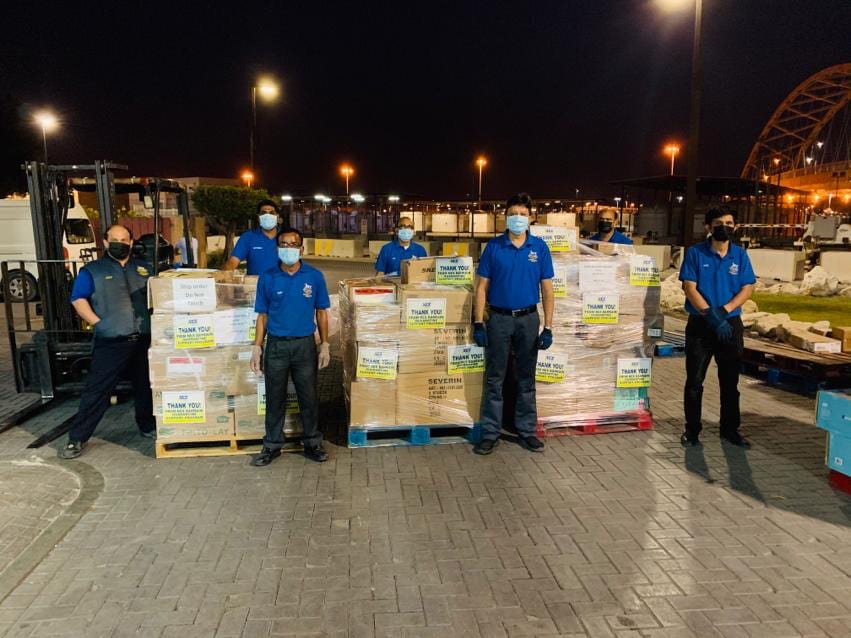
NEX Bahrain Distribution Center associates prepare NEX Quarantine Support Program orders for a portside delivery to a ship in port at Naval Support Activity Bahrain. U.S. Navy/NEXCOM Public Affairs

“In speaking with customers, many are concerned with food shortages and purchasing them for home use or shipping them to family members who are serving overseas,” Blythe said. “MRE sales usually peak in the summer months but we have never had such a demand for them as we had in the past 30 to 45 days.”

Hugo Ostreng of the Norwegian company DryTech, which makes Arctic rations for NATO forces, camping and backpacking as well as survival meals, said his company has seen an increase in the number of orders from both civilian as well as military customers. DryTech is a manufacturer of freeze-dried meals and as well an assembler of food rations for field applications for the military and outdoor markets.

“DryTech saw a sudden increase in the sale of freeze-dried meals for the civilian market,” said Jan Trondsen, key account manager for military sales.

“Many households thought it was a good idea to build up a little more food on stock in their own houses. We also had an increase in the orders to units and institutions because the system of distributing food from buffets and serving lines in not currently permitted. Our products proved very useful as they can be prepared, distributed and consumed without a kitchen or food-service personnel.”

Jessica Davis of Patagonia Provisions said sales of the company’s shelf-stable food products have seen a large spike. Backpacking food is usually expensive, but Davis said people are willing to pay a premium for lightweight, healthy, easy-to-prepare meals that are nutritious and taste good, especially after a long day of outdoor activities. 

“Our customer base is expanding due to COVID-19 with folks filling their pantries in preparation for what’s ahead. But our existing customers are also coming back and placing larger-than-normal orders. Our supply chain and distribution system are healthy and equipped to handle the increased demand,” Davis said.

“We’ve been selling a lot of selling a lot of buffalo jerky, soups and chilis, seafood and the gift boxes. High-protein freeze-dried meals last a long time and you can live off them, so people are stocking the pantry. Patagonia Provisions is certainly feeling those effects.”
Navy Awards Orders 9th Full-Rate Production Lot of AARGMs

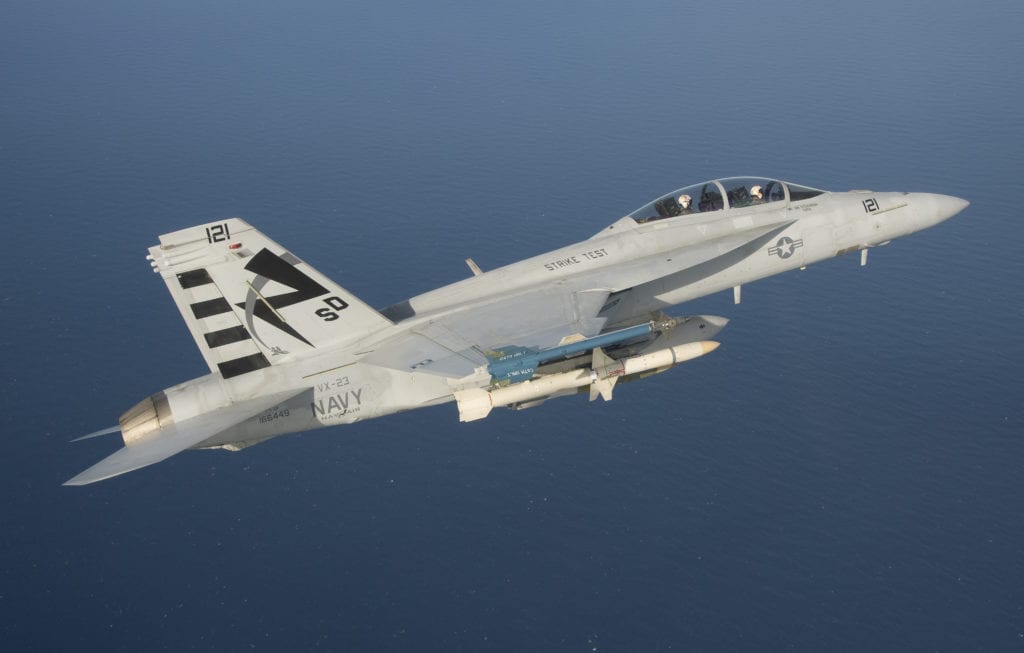
A 2012 photo of an F/A-18F Super Hornet assigned to the Salty Dogs of Air Test and Evaluation Squadron (VX) 23 conducting a captive carry flight test of an AGM-88E Advanced Anti-Radiation Guided Missile at Naval Air Station Patuxent River, Maryland. U.S. Navy / Greg L. Davis

LOS ANGELES — The U.S. Navy has awarded Northrop Grumman Corp. $165 million for Lot 9 full-rate production (FRP) of the AGM-88E Advanced Anti-Radiation Guided Missile (AARGM), the company said in an April 23 release. Assets will include all-up round missiles and captive air training missiles for the U.S. Navy and foreign military sales. 

“AARGM provides the U.S. Navy and allies unmatched protection to detect and defeat surface-to-air-threats regardless of threat tactics and capabilities,” said Gordon Turner, vice president, advanced weapons, Northrop Grumman. 

Northrop Grumman’s AARGM is a supersonic, air-launched tactical missile system, upgrading legacy AGM-88 HARM systems with advanced capability to perform suppression and destruction of enemy air defense missions. AARGM is the most advanced system for pilots against today’s modern surface-to-air threats, according to the company. It is able to engage land- and sea-based air-defense threats, as well as striking, time-sensitive targets. 

AARGM is a U.S. Navy and Italian air force international cooperative major defense acquisition program with the U.S. Navy as the executive agent. AARGM is currently deployed and supporting operational requirements for the U.S. Navy and U.S. Marine Corps. The missile is integrated into the weapons systems on the FA-18C/D Hornet, FA-18E/F Super Hornet, EA-18G Growler aircraft and the Tornado Electronic Combat and Reconnaissance aircraft utilized by the Italian air force. 


General Atomics’ EMALS and AAG Support Successful Ford Flight Deck Certification

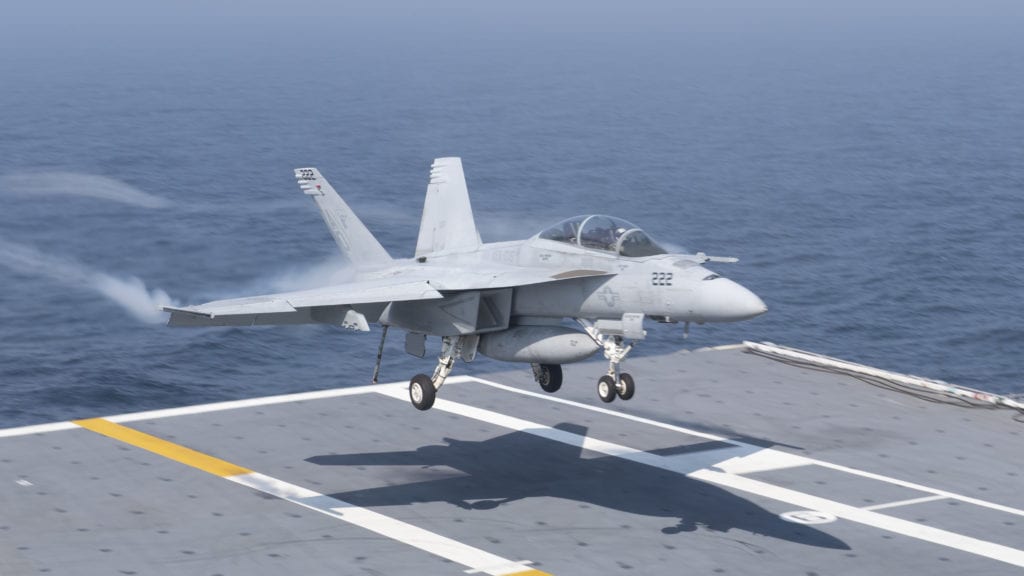
An F/A-18F Super Hornet, attached to the “Gladiators” of Strike Fighter Squadron (VFA) 106, lands on the flight deck of the aircraft carrier USS Gerald R. Ford (CVN 78) during flight operations, March 28, 2020. Ford is underway in the Atlantic Ocean conducting carrier qualifications. U.S. NAVY / Mass Communication Specialist Seaman Apprentice Sawyer Connally

SAN DIEGO — General Atomics Electromagnetic Systems (GA-EMS) announced April 23 that successful USS Gerald R. Ford (CVN 78) Flight Deck Certification (FDC) has been completed with the support of the electromagnetic aircraft launch system (EMALS) and advanced arresting gear (AAG) system. The number of aircraft to have landed and taken off from CVN 78 now totals more than 2,000. CVN 78 used fleet squadrons from Carrier Air Wing Eight, as well as pilots from Strike Fighter Squadron 106 and Carrier Airborne Early Warning Squadron 120 to obtain hundreds of sorties over a two-week period with all arrested landings and catapult launches completed safely.  

“We continue to see EMALS and AAG perform according to specifications to execute cats and traps with the objective of reaching the robust evolution rates necessary for combat,” stated Scott Forney, president of GA-EMS. “We are working closely with the Navy and CVN 78 crew to ensure operational performance is achieved. We remain extremely proud of our team, the squadrons’ pilots and the ship’s crew for all their hard work and dedication and look forward to continuing success as CVN 78 undergoes these continued at sea periods.” 

FDC is a qualification of the ship’s various aviation systems and includes the crews’ qualification to operate the numerous systems. FDC was completed March 20 following day and night launch and recovery exercises with F/A-18E/F Super Hornets. FDC is intended to qualify and prove ship and crew capabilities under operational conditions that can occur while on deployment. 

On Jan. 31, CVN 78 completed aircraft compatibility testing, a significant milestone that exhibited EMALS and AAG’s ability to launch and recover five types of aircraft in varying configurations — four of which for the first time. CVN 78 proved to accommodate the current naval air wing, including F/A-18E/F Super Hornet, E-2D Advanced Hawkeye, C-2A Greyhound, EA-18G Growler and T-45C Goshawk aircraft.  

GA-EMS is delivering EMALS and AAG for the future USS John F. Kennedy (CVN 79) and USS Enterprise (CVN 80).  


Senate Bill Would Fund Second Virginia-Class Sub in 2021

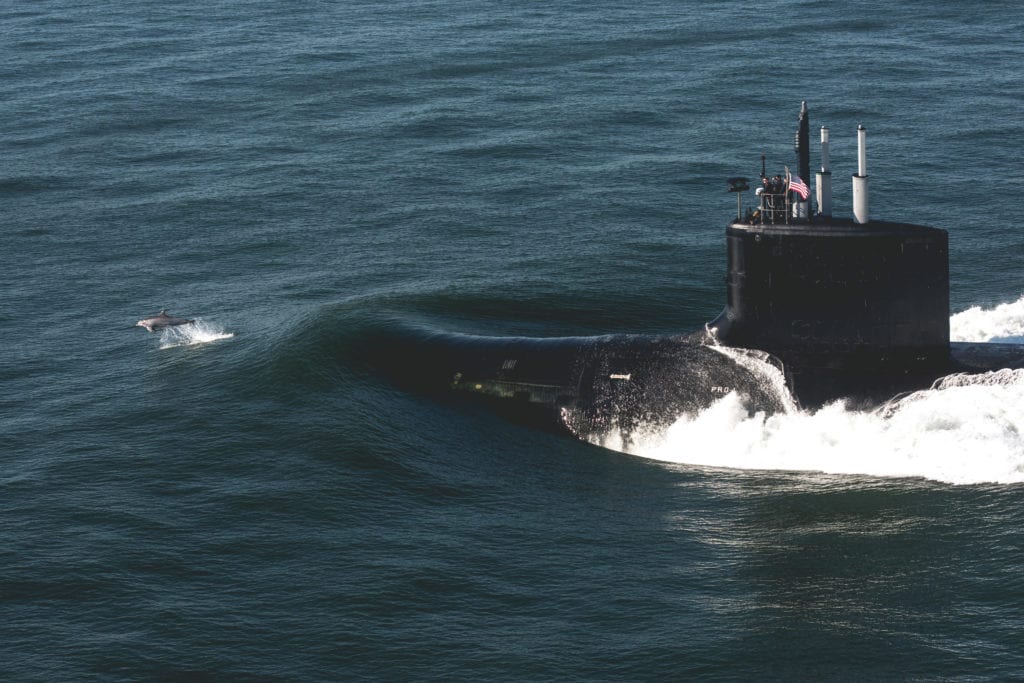
The Virginia-class fast-attack submarine USS North Carolina departs Joint Base Pearl Harbor-Hickam on March 25 for a regularly-scheduled deployment. A member of the Senate Armed Services Committee has introduced a $43 billion bill that would fund, among other things, a second Virginia-class sub in fiscal year 2021. U.S. Navy/Mass Communication Specialist 1st Class Michael B. Zingaro

ARLINGTON, Va. — A member of the Senate Armed Services Committee has introduced a $43 billion bill to strengthen U.S. forces in the Indo-Pacific to counter Chinese competition and that would fund, among other things, some of the U.S. Navy’s priorities on its unfunded list, including a second Virginia-class attack submarine. 

Sen. Tom Cotton (R-Ark.) introduced the Forging Operational Resistance to Chinese Expansion (FORCE) Act on April 22, which his office said is a “critical investment in the United States’ ability to compete with China.” 

The bill would include “$6.1 billion to regain the advantage in the Indo-Pacific region; $9.2 billion in capability increases for Great Power Competition; $11 billion for mitigating coronavirus impacts to procurement programs; $3.3 billion for mitigating coronavirus impacts to [the] defense industrial base; $1.5 billion for hospital ship recapitalization; [and] $12.0 billion to enhance national resilience and critical infrastructure.” 

The bill would provide $3.9 billion to upgrade naval lethality, a summary of the bill said, including funds for:  

  • A second fiscal 2021 Virginia-class submarine. 
  • Virginia-class submarine industrial base expansion. 
  • Subsea and seabed warfare capability for the Virginia class.   
  • Advanced procurement for the Columbia-class ballistic-missile submarine 
  • Additional Naval Strike Missiles and their launchers. 
  • Integration of the long-range air-to-surface missiles on all combat aircraft. 
  • Additional sonobuoys for anti-submarine warfare. 
  • Marine Corps modernization, including ground-based anti-ship missiles. 

The bill also would fund adding hypersonic weapons on compatible fighter aircraft and accelerating development of directed energy weapons and cyber offensive and defensive capabilities. 

Also provided in the bill would be $4.88 billion to the Navy and Marine Corps to “provide emergency aid for those programs that are most vulnerable” to mitigate the effects of the COVID-19 pandemic, including funds for shipbuilding and conversion; the Columbia-class submarine industrial base; aircraft procurement; operations and maintenance; and research, development, test and evaluation.  

Cotton’s bill also specifically provides “funding for the Navy to replace the [hospital ships] USNS Comfort and USNS Mercy with new American-built vessels. This would be an opportunity to provide American jobs and grow the American industrial base for the future,” the bill summary said. 

The summary of the bill can be found here.


Attack Submarine USS Vermont Commissioned

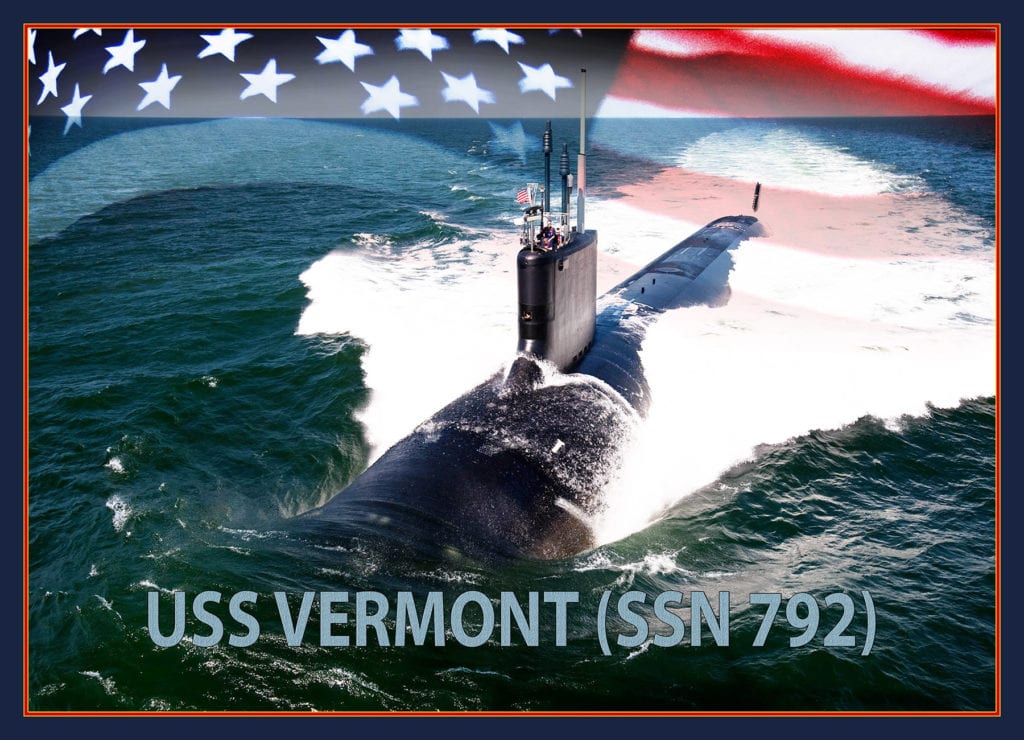
A photo illustration of the Virginia-class attack submarine USS Vermont. U.S. Navy

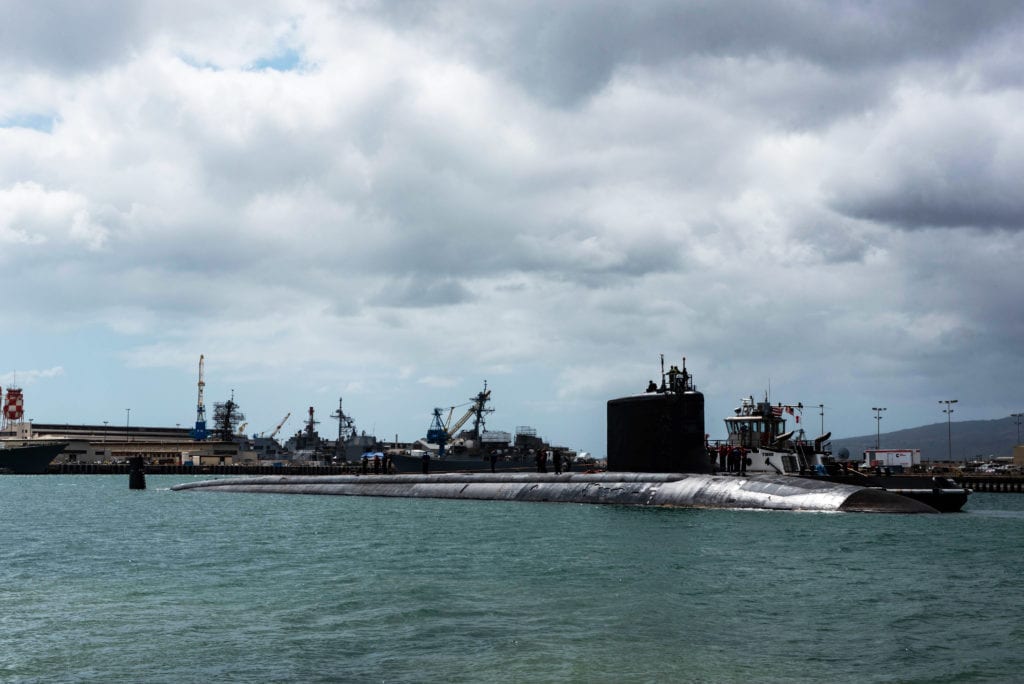
WASHINGTON — The U.S. Navy commissioned USS Vermont (SSN 792), the 19th Virginia-class attack submarine, on April 18, the Navy said in a release. 

Although the traditional public commissioning ceremony was canceled due to public health restrictions on large public gatherings, the Navy commissioned USS Vermont administratively and transitioned the boat to normal operations. Meanwhile, the Navy is looking at a future opportunity to commemorate the special event with the ship’s sponsor, crew and commissioning committee. 

“This Virginia-class fast-attack submarine will continue the proud naval legacy of the state of Vermont and the ships that have borne her name,” said acting Navy Secretary James E. McPherson.  

Vice Adm. Daryl Caudle, the Navy’s commander of submarine forces, said Vermont’s entry to service marks a new phase of American undersea warfare dominance for a global submarine force that is ready to deter, defend and defeat threats to our nation, allies and rules-based international order. 

“This warship carries on a proud Vermont legacy in naval warfare and unyielding determination stretching back to the birth of our nation,” Caudle said. 

“To her crew, congratulations on completing the arduous readiness training to enter sea trials and prepare this ship for battle. I am proud to serve with each of you! Stand ready to defend our nation wherever we are threatened — honoring your motto — FREEDOM AND UNITY. May God bless our Submarine Force, the people of Vermont, and our families! From the depths, we strike!” 

“This warship carries on a proud Vermont legacy in naval warfare and unyielding determination stretching back to the birth of our nation.”

Vice Adm. Daryl Caudle, commander of submarine forces

USS Vermont’s sponsor, Gloria Valdez, former deputy assistant secretary of the Navy (Ships), offered her gratitude to everyone who played a role in delivering USS Vermont to service. She said she is proud to represent the crew and the first Block IV Virginia-class submarine to enter service. 

“I am very proud of the Sailors and families of USS Vermont, who worked so hard to bring her to life, and also feel extremely grateful to everyone who played a role preparing her to defend our nation for generations to come,” Valdez said. “I look forward to commemorating this special occasion together with the crew in the future.” 

Vermont’s commanding officer, Cmdr. Charles W. Phillips III, highlighted Vermont’s accomplishments over the past several weeks getting through initial sea trials. The hard work and dedication of the entire team the past few years was evident in the successful execution of at-sea testing, he said. 

Phillips added he is especially thankful to the crew and their families, ship sponsor Valdez and the USS Vermont Commissioning Committee, led by Debra Martin, for all their hard work and support of the crew. 

“We recognize just how important the submarine force is during this era of Great Power Competition,” Phillips said. “As part of the nation’s maritime asymmetric advantage over our competitors, we are ready to perform whatever duty is most needed.” 

“The crew is hungry to hone our skills at-sea and become an effective fighting unit, and we will work tirelessly to justify the nation’s confidence in us,” he added. “Today marks the culmination of six years of dedicated work by the men and women who constructed the nation’s newest and most capable warship. We are all honored to be part of this historic moment.”  

USS Vermont is the third U.S. Navy vessel to bear the name of the Green Mountain State. The first Vermont was one of nine 74-gun warships authorized by Congress in 1816. The second Vermont, Battleship No. 20, was commissioned in 1907 and first deployed in December that year as part of the “Great White Fleet.” She was decommissioned in June 1920.  

The USS Vermont is 377 feet long, has a 34-foot beam and will be able to dive to depths greater than 800 feet and operate at speeds in excess of 25 knots submerged. The boat’s construction began in May 2014, and it will provide the Navy the capabilities required to maintain the nation’s undersea superiority well into the 21st century. 

Vermont is the first the first of 10 Virginia-class Block IV submarines. Block IV submarines incorporate design changes to reduce total ownership cost, as well as allow the Navy to increase the time between maintenance stops and the number of deployments.


Ford Weapons Elevators Set for Completion by Summer 2021 Shock Trials

Huntington Ingalls Industries-Newport News Shipbuilding division contractors aboard the aircraft carrier USS Gerald R. Ford test a lower-stage weapons elevator. U.S. Navy/Mass Communication Specialist Seaman Apprentice Riley McDowell

ARLINGTON, Va. — The installation and turnover of the advanced weapons elevators on the aircraft carrier USS Gerald R. Ford is proceeding well, with the goal to complete the work by summer 2021, a top U.S. Navy official said. 

“We need to get all of the elevators up and running prior to her full-ship shock trials planned for [summer 2021],” James. F. Geurts, assistant secretary for research, development and acquisition, told reporters during an April 16 teleconference.  

He said that the carrier had just returned from 32 days at sea where it conducted carrier qualifications for fleet and student pilots, logging 1,352 catapult launches and arrested landings — “generating readiness for the fleet” — and that one lower elevator had completed testing. 

“I’m pleased with the performance of the shipyard,” Geurts said. “Ford in the [post-delivery testing and trials] period deployed at least 50% of the time. I have been very proud of the shipbuilder’s creativeness in getting the elevators worked on while the ship is underway. We’re ahead slightly of the schedule. My main focus is getting these first two lower elevators turned over [to the crew] because that will allow full access from the magazine all the way to the flight deck.” 

Geurts said the priority is to give the crew access to the magazines and the second is adding redundancy and capacity. He said a lesson learned during the elevator installation was to have elevator specialists among the shipbuilder’s work force. 

“You can’t just have any trade work on the elevators,” he said. “What the shipbuilder has done is create essentially an elevator trade [with] a separate schoolhouse. We’re essentially using Ford to build the teams that will then continue and flow all the way through [the subsequent carriers, CVNs 79 through 81]. There is work being done on those follow-on carriers.  

“They’re also going to have to improve their efficiency at getting the work done.”


In Perhaps a First, USS Delaware Commissioned Underwater

The USS Delaware transits the Atlantic Ocean with some company after departing Huntington Ingalls Industries Newport News Shipbuilding division during sea trials last August. U.S. Navy via Ashley Cowan/Huntington Ingalls Industries

ARLINGTON, Va. — The COVID-19 pandemic is driving the U.S. Navy to adapt some of the ways it conducts business, but the commissioning of a submarine underwater is likely to be a first. 

The Virginia-class attack USS Delaware was commissioned into the Navy on April 4 while the sub was underwater, James F. Geurts, assistant secretary for research, development and acquisition, told reporters during an April 16 teleconference. 

Geurts said the Delaware’s crew replicated commissioning ceremony traditions that could be accomplished beneath the surface, including “bringing the ship to life” and sounding the claxon. The crew also fired water slugs through the Delaware’s torpedo tubes. 

“Due to public health safety and restrictions on large public events, the commissioning ceremonies for the future USS Delaware and future USS Vermont were canceled for April 4 and 18, respectively,” Bill Couch, a spokesman for Naval Sea Systems Command, told Seapower back on March 24. 

A Navy release added: “Although the traditional commissioning ceremony was canceled due to restrictions on large gatherings brought on by the COVID-19 pandemic, the Navy commissioned USS Delaware administratively on April 4 and transitioned the ship to normal operations. Meanwhile, the Navy is looking at an opportunity to commemorate the special event with the ship’s sponsor, crew and commissioning committee.” 

The Delaware is the eighth and last Block III Virginia-class SSN. The Vermont is the first of 10 Block IV Virginia-class subs. The two subs were built jointly by General Dynamics’ Electric Boat and Huntington Ingalls’ Newport News Shipbuilding.


SUPSHIP Turns to Fusion for Facemasks

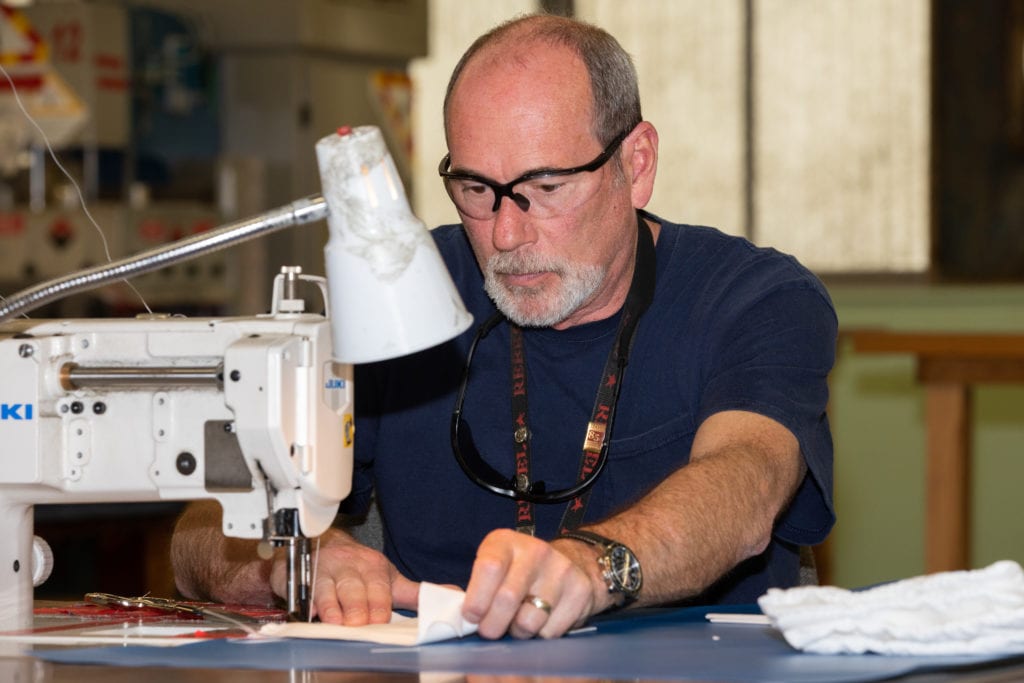
NNSY’s Sail Loft has begun making facemasks to further ensure the health and safety of workforce personnel, with a capacity to produce up to 900 daily. COVID-19-specific Personal Protective Equipment (PPE) has been distributed to the USS George H.W. Bush, USS Wyoming and USS San Francisco projects. NNSY/Danny De Angelis

WASHINGTON — When Supervisor of Shipbuilding, Conversion and Repair Newport News’ supply of protective facemasks to combat COVID-19 dwindled to 30 by the morning of April 9, SUPSHIPNN’s commanding officer, Capt. Jason Lloyd, turned to his staff for a solution, according to Naval Sea Systems Command (NAVSEA). 

An order for more masks had already been placed but they would not arrive until the following week. He needed a solution that would enable the command to continue its fleet support mission. 

His staff turned to Fusion, an internal Navy collaboration tool that is like Facebook and was developed by Naval Information Warfare Systems Command connecting NAVSEA employees virtually throughout the world. 

“As the SUPSHIPNN Command Process Improvement Champion, I have been a fan of the NAVSEA Fusion site since its inception,” said Greg Mitchell, SUPSHIP Newport News’ command process improvement champion. “I immediately posted a plea for help on Fusion early” on the morning of April 9. 

“Fusioneers” — as Mitchell termed his fellow collaborators — responded with numerous recommendations and offers to assist. One of those responses led to Norfolk Naval Shipyard (NNSY), co-located in Norfolk, a command already using its internal capability to sew cloth facemasks for its workforce. 

“I reached out to them,” Mitchell said. “By 1400 that same day, I had 100 brand-new masks made by Norfolk Naval Shipyard’s production resources group in their sail loft I could deliver to my command.” 

In an e-mail to the shipyard’s commanding Officer, Capt. Kai Torkelson, Lloyd thanked his NAVSEA colleague, calling the success of Fusion as a “perfect example of teamwork and knowledge sharing. … Fusion collaboration at its finest.” 

Mitchell said that in order to answer NAVSEA Commander, Vice Adm. [Thomas] Moore’s call to “Expand the Advantage” the command needs to become a High Velocity Learning (HVL) organization. “There is no better way to use HVL than Fusion,” he said. “Thanks to everyone involved who made this a complete Fusion success.  We are and will always be a “One Navy” Team!” 

Supervisor of Shipbuilding, Conversion and Repair, Newport News, is the liaison between the Department of the Navy and Huntington Ingalls Industries Newport News Shipbuilding, the company engaged in the design and construction of new nuclear-powered submarines and aircraft carriers as well as the repair and modernization of active subs and carriers in the fleet.


2nd Fleet Keeps Truman Strike Group at Sea as Ready Carrier Amid Pandemic

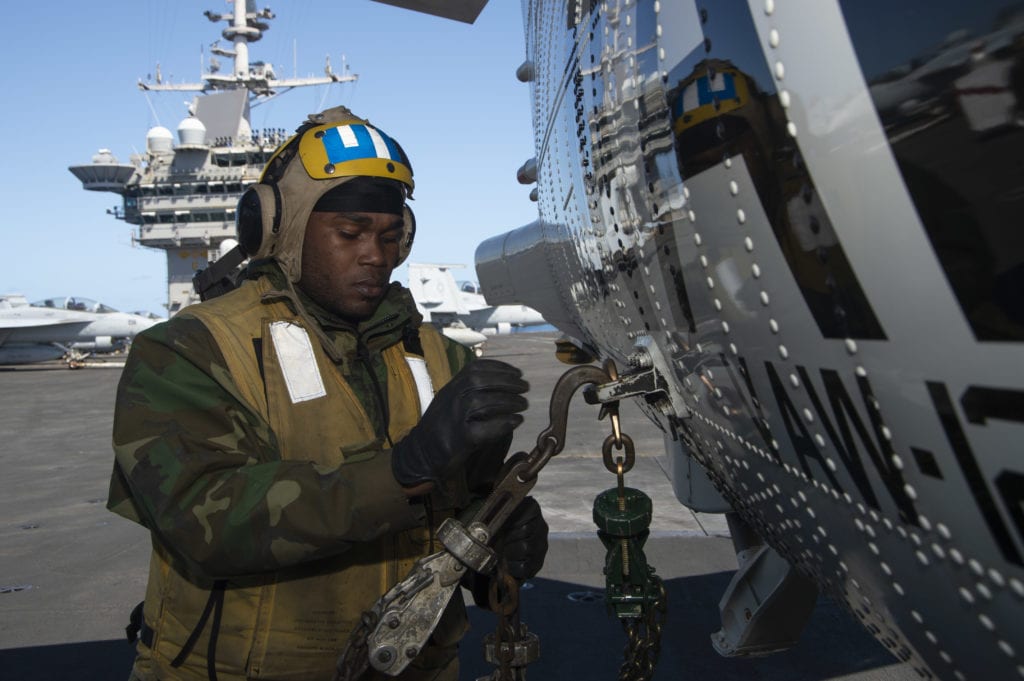
Aviation Boatswain’s Mate (Handling) 2nd Class Albert Gibson chains an E-2D Hawkeye to the flight deck of the USS Harry S. Truman in the Atlantic Ocean on April 11. The Truman Carrier Strike Group is conducting operations there. U.S. Navy/Mass Communication Specialist Seaman Bela Chambers

NORFOLK, Va. — The Harry S. Truman Carrier Strike Group remains at sea in the western Atlantic as a certified carrier strike group force ready for tasking to protect the crew from the risks posed by COVID-19, following their deployment to the U.S. 5th and 6th Fleet areas of operation, the U.S. 2nd Fleet said in a release. 

The Navy is taking this measure to maintain the strike group’s warfighting capability while ensuring the safety of the crew.

See: U.S. Military in All-New Territory in Fight Against Virus, Foggo Says 

The demand for naval assets remains high. Therefore, keeping the Truman strike group at sea as it remains in the sustainment phase of optimized fleet response plan (OFRP) allows the ship to maintain a high level of readiness for a potential rapid surge or forward deployment, providing options to the national command authority during the global pandemic. 

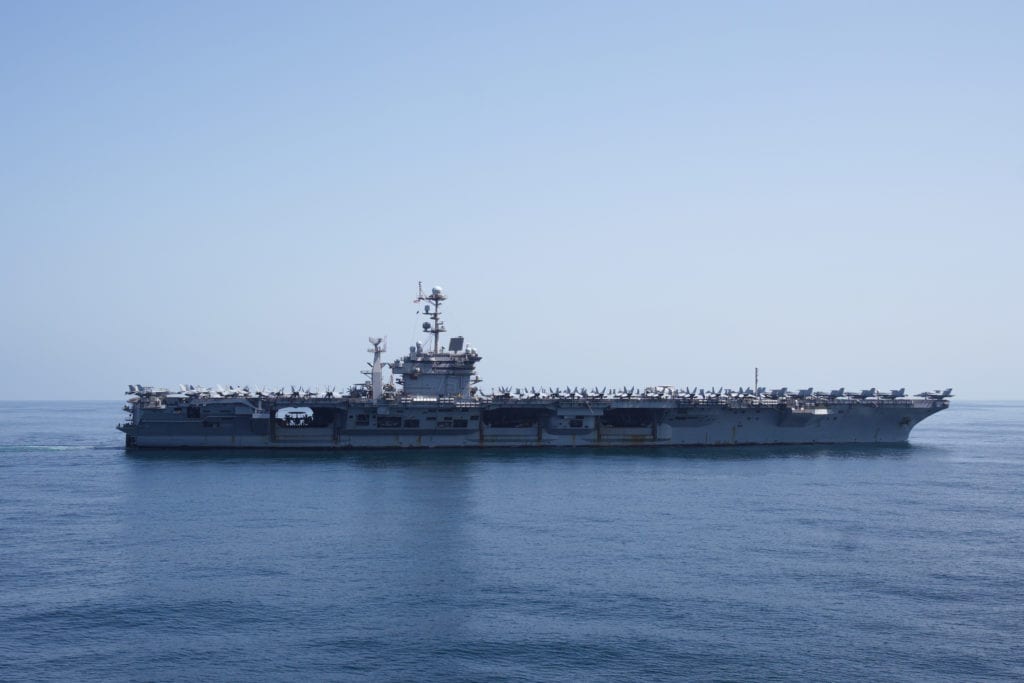
The Truman and its strike group remains at sea in the western Atlantic to protect the crew from the risks posed by COVID-19. U.S. Navy/Aircrew Survival Equipmentman 1st Class Brandon C. Cole

“The ship is entering a period in which it needs to be ready to respond and deploy at any time,” said Vice Adm. Andrew Lewis, commander of the 2nd Fleet. “Normally, we can do that pierside, but in the face of COVID-19, we need to protect our most valuable asset, our people, by keeping the ship out to sea.” 

The Navy will continue to evaluate the situation and will provide an update to the crew and their families in about three weeks. 

“After completing a successful deployment, we would love nothing more than to be reunited with our friends and families,” said Rear Adm. Andrew Loiselle, commander of Carrier Strike Group 8. 

“We recognize that these are unique circumstances and the responsible thing to do is to ensure we are able to answer our nation’s call while ensuring the health and safety of our Sailors. We thank you for your continued love and support as we remain focused on this important mission.”


Geurts: Accelerated Acquisitions Position Navy, Industry for Period After COVID-19 Crisis Wanes

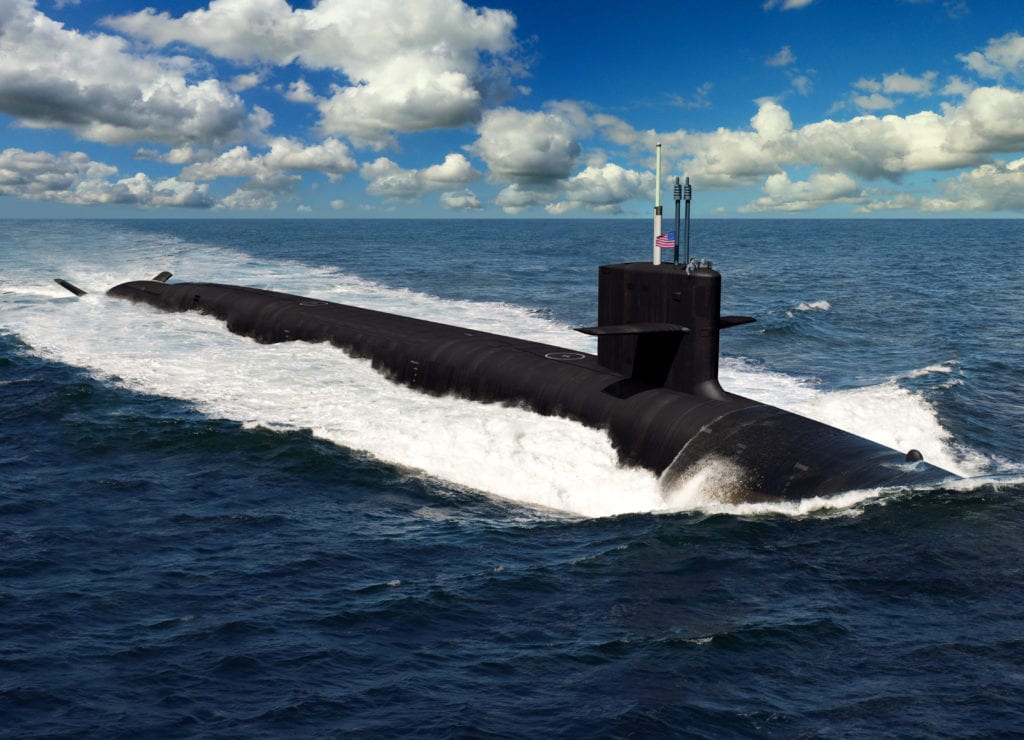
An artist rendering of the Columbia-class ballistic missile submarine. The Navy’s top acquisition official said April 15 during a Navy League Sea-Air-Space 2020: Virtual Edition webcast that work is proceeding on such programs as the Columbia SSBN and the next-generation guided-missile frigate, despite the disruption of COVID-19. U.S. Navy

ARLINGTON, Va. — The U.S. Navy’s top acquisition official said the service’s efforts to accelerate contract awards in the midst of the COVID-19 pandemic are helping the defense industry sustain its economic health at all levels and positioning the Navy and industry to emerge from the crisis without falling behind on work and ready to resume normal operations. 

James F. Geurts, assistant secretary of the Navy for research, development and acquisition, speaking during an April 15 webcast of the Navy League’s Sea-Air-Space: Virtual Edition, said the Navy and the defense industry are working to keep on task and be in a position to accelerate “out of the crisis.”

To register and then watch this Sea-Air-Space 2020: Virtual Edition webinar live online, click here. 

“Ships still have to come out on time,” Geurts said, noting that the Navy can’t afford to lag once the world starts to recover from the crisis. 

Geurts said the Navy has moved up the award of some contracts to inject “a lot of money in the system” to “get funds in the contractor hands” and “bring that work to the left” — meaning getting in started sooner. An example is the award last week — months early — of LPD 31, the second Flight II San Antonio-class amphibious transport dock ship. 

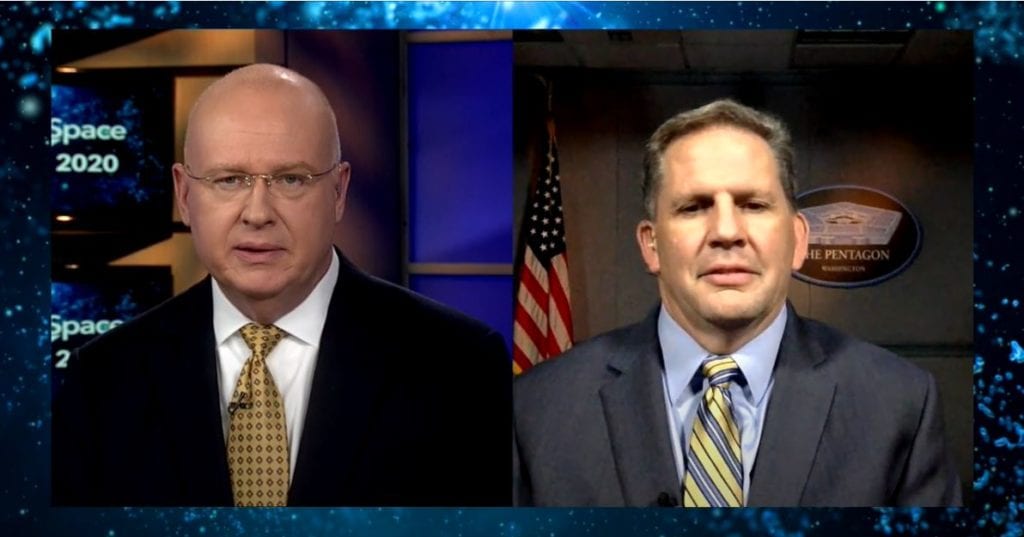
James F. Geurts (right), assistant secretary of the Navy for research, development and acquisition, and Sea-Air-Space 2020: Virtual Edition moderator Francis Rose discuss Navy and defense industry acquisitions preparedness during and after the pandemic.

Accelerating contract awards enables shipyards and other contractors to stack a backlog of work and keep their workers employed. The contractors also can push funds to their lower-tier subcontractors to the same effect. 

Geurts said it was “counterintuitive … that the best way to secure [the health of the defense industrial base] was to accelerate going into a crisis. Most folks would want to slow down, wait and see, and that would exactly create the wrong conditions.” 

“The risk is being too risk-averse in our approach. The other risk is being reckless in our approach.” 

“Ships still have to come out on time,” even as the Navy and industry weather but eventually recover from the pandemic.

James F. Geurts

He said that all of stakeholders are going at the situation “deliberately but urgently and thoughtfully. A challenge for us will be [that] it’s not a one-size-fits-all solution. This crisis hits different areas of the country, different sectors differently at different times. The key to success will be great networks, leveraging the data we have and building on a foundation of trust.”  

As the Navy worked to advance contract awards, Geurts said he saw his now “massively distributed,” largely teleworking work force shows greatly improved performance as it works to help the defense industry get though the pandemic. 

The Navy also is ordering spare parts sooner to build up the supply and to shore up the suppliers who provide them. 

Geurts said he confers with shipyard presidents or CEOs every other day to assess the status of work and provide opportunities to share lessons learned and to discuss best practices, ways to avoid disruption and how to speed up recovery.  

“It’s been awesome,” he said of the response from the defense industry.   

The assistant secretary said the Navy’s acquisition priorities have not changed in the pandemic, citing that work is proceeding on such programs as the Columbia-class ballistic-missile submarine and the next-generation guided-missile frigate. He stressed the Navy’s ongoing efforts to minimize delays and disruptions to the service’s programs.