Navy Selects Damen to Build New Medium Landing Ship
By Richard R. Burgess, Senior Editor
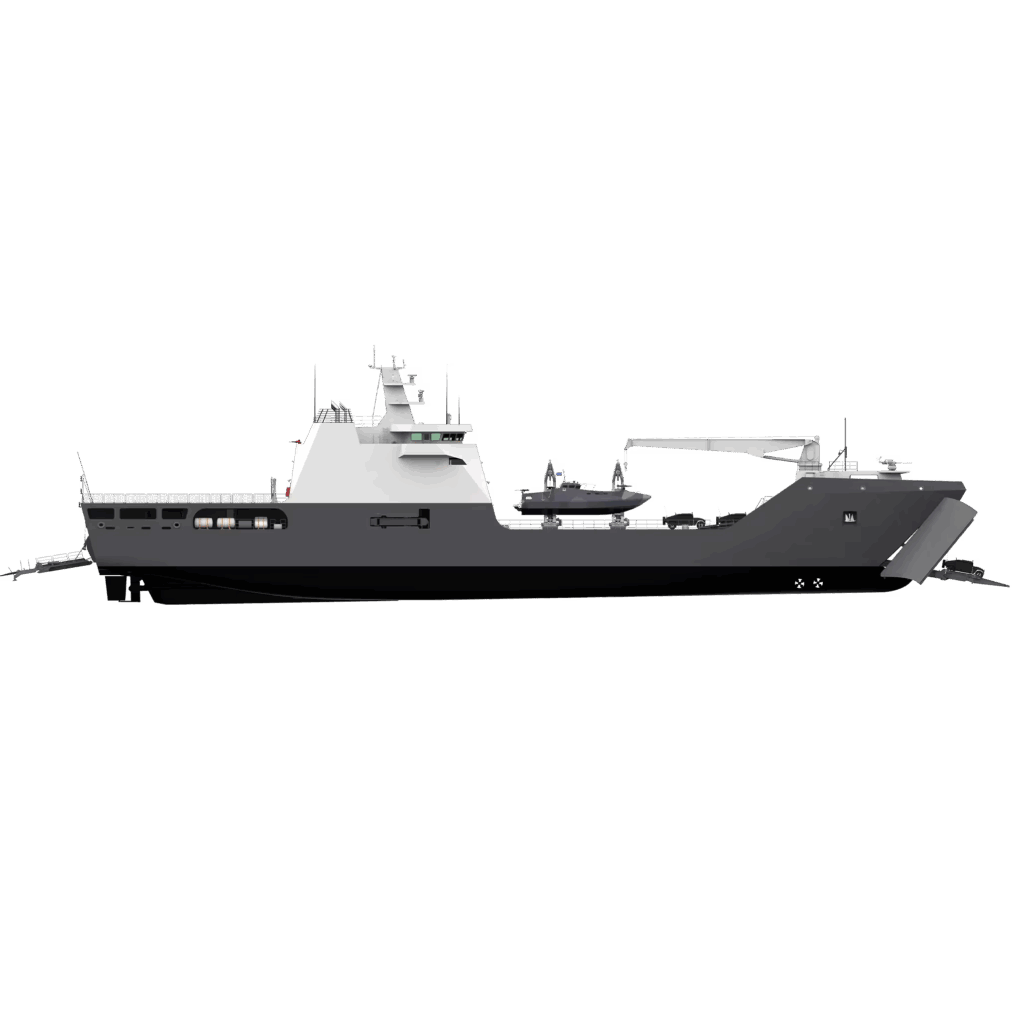
ARLINGTON, Va. — The U.S. Navy has selected Damen to build the new medium landing ship (LSM) for the service. The ship will be a version of Damen’s LST 100 class.
Damen is a shipbuilder headquartered in The Netherlands. Its LST 100 class is in production for Australia and other customers.
The selection was announced on Dec. 5 on X in a video of Navy Secretary John C. Phelan, who said that the move was the second initiative is support of re-designing the U.S. fleet. The first was the truncation of the Constellation-class guided-missile frigate program to only the two ships currently under construction. The truncation, announced a week earlier, was the result of delays in the program. Phelan announced that a new class of frigates will be designed to give the Navy the small surface combatants that it needs.
The Navy plans to build 35 LSMs to transport Marines and their equipment within theaters of war with an “organic, littoral mobility capability in the Indo-Pacific and around the world and provides with a critical intra-theater maneuver asset that is able to embark, transport, and land Marines, weapons supplies and equipment around the theater without requiring access to a pier,” said General Eric Smith, commandant of the Marine Corps, in the same X video. “The medium landing ships will enable our Marines to be more agile and flexible in austere where there are no ports … within the adversary’s engagement zone.”
The LST 100 resembles in concept the LSTs of World War II, equipped with bow doors and a ramp to discharge vehicles onto a beach. Damen’s design is an intra-theater transport that displaces approximately 4,000 tons. According to Damen’s website, the ship is 100 meters long and has a beam of 16 meters and a draft of 3.5 to 3.9 meters. The ship is designed with berthing for a landing force, cargo space of 1,020 square meters of roll-on/roll-off cargo space and to be operated by a crew of 18. The ship features a large crane and a helicopter landing pad. Phelan said the LSM would have a range of more than 3,400 nautical miles.
The selection of an “off-the-shelf” design came as the Navy determined that other proposals with new designs were too costly and would take too long to join the fleet. In the same video, Admiral Daryl Caudle, chief of naval operations, stressed producibility and maintainability after an era of shipbuilding in which the delivery of new ships took too long.
Navy Establishes First Information Warfare Squadron
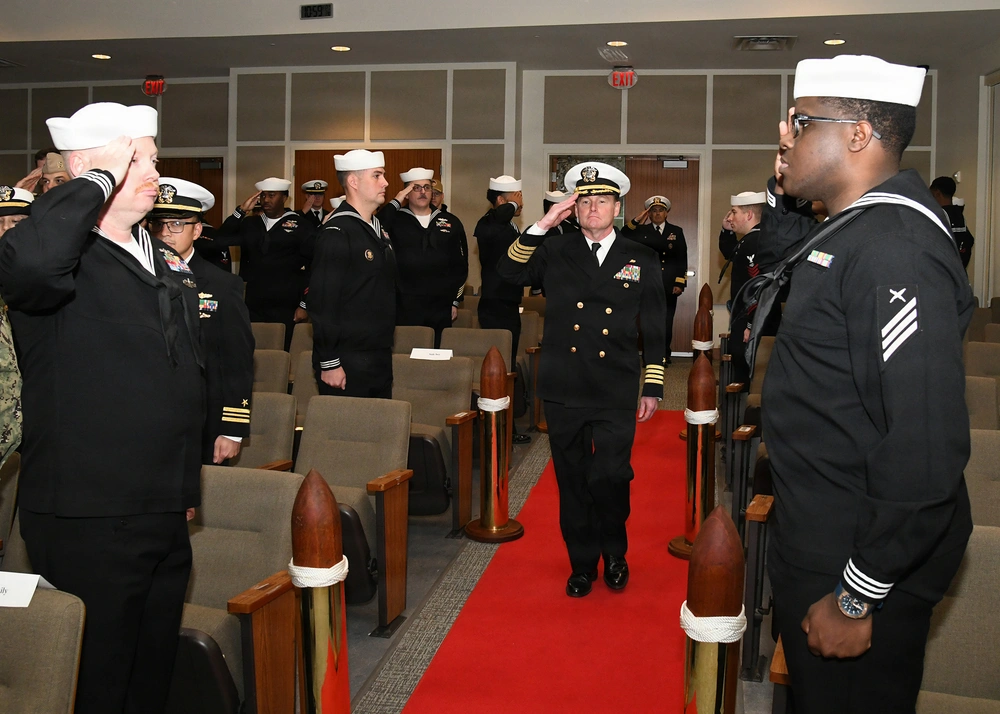
Capt. Jon O’Connor, prospective Commanding Officer, Information Warfare Squadron (IWRON) Two, renders a salute as he arrives with the official party during an assumption of command ceremony for IWRON Two in Norfolk, Virginia. (U.S. Navy photo by Robert Fluegel)
From Naval Information Forces, Dec. 5, 2025
NORFOLK, Va. – Information Warfare Squadron (IWRON) Two, a first-of-its-kind unit designed to operationalize Information Warfare (IW) capabilities and provide decisive decision advantage to Carrier Strike Group Commanders, was established, Dec. 5.
This command is being stood up as part of a 48-month pilot program that received unanimous approval at the Fleet Commanders’ Readiness Council (FCRC) in June of 2025. The FCRC is a forum where top Navy leaders develop integrated solutions to Fleet-wide issues necessary to support warfighting, mission effectiveness, and sustain readiness wholeness. This pilot program will be a period of learning, adaptation, and innovation, with a focus on improving readiness, refining doctrine, evaluating the effectiveness of integrated IW capabilities and increasing lethality across the Carrier Strike Group.
“This isn’t just another ceremony, this is a paradigm shift in how we fight and win in the 21st century,” said Vice Adm. Mike Vernazza, commander, Naval Information Forces. “For too long, Information Warfare has been a collection of vital but often disparate capabilities. Today, we change that. Today, we forge a unified force, a sharpened spear, ready to deliver the necessary decisive decision advantage to our Carrier Strike Group Commanders in any environment.”
The establishment of IWRON Two addresses the increasing complexity and sophistication of global threats, which actively seek to exploit vulnerabilities from seabed to space. The IWRON construct, modeled after the successes of Air Wings and Destroyer Squadrons, streamlines the chain of command, aligns warfare commander authorities, and consolidates responsibilities under a single accountable commander, thereby enhancing speed, agility, and decisive action.
“The IWRON construct represents a bold step forward,” said Vernazza. “We are integrating and employing advanced IW capabilities and delivering them as a unified force across the spectrum of conflict. We are employing IW warfighting effects in a way that has never been demonstrated before. To get to outcomes we haven’t had, we need to do things we haven’t done…this is one of them.”
IWRON TWO brings together talent from across the IW community, including the Carrier Strike Group staff, the Strike Group Oceanography Team, the Fleet Intelligence Detachment DC, the Navy Cyber Defense Operations Command, the Navy Information Operations Command, and the Naval Information Warfare Training Group.
CAPT Jon O’Connor assumed command of IWRON Two.
“IWRON-2 will not only meet, but exceed the standards of excellence because we must. Our mission demands it. We are here to strengthen the readiness, lethality, and survivability of our Carrier Strike Groups by integrating our advanced IW capabilities,” said O’Connor. “This is about warfighting, pure and simple.
The Sailors who comprise the initial cadre of IWRON Two were recognized for their pivotal part of this new command.
“Your willingness to embrace this challenge, to be pioneers in this new frontier of warfare, is a testament to your dedication and your commitment to our Navy. You are the lifeblood and decisive warfighting advantage of our Navy. Your work here will pave the way for future generations of Information Warfare professionals for years to come.” said Vernazza.
IWRON Two will serve as the pilot squadron on the East Coast, with another squadron being established on the West Coast in 2026.
The establishment of Information Warfare Squadron Two marks a crucial step forward in ensuring the U.S. Navy remains the premier warfighting force – ready, capable, and unmatched.
NAVIFOR’s mission is to generate, directly and through our leadership of the IW Enterprise, agile and technically superior manned, trained, equipped, and certified combat-ready IW forces to ensure our Navy will decisively DETER, COMPETE, and WIN.
For more information on NAVIFOR, visit the command Facebook page at https://www.facebook.com/NavalInformationForces/ or the public web page at https://www.navifor.usff.navy.mil.
BAE Systems secures $36 million contract to equip U.S. Navy submarines with Multifunction Modular Masts
Radio frequency antennas provide U.S. Navy submarines with enhanced situational awareness to carry out missions
MERRIMACK, N.H. — December 8, 2025 — BAE Systems has been awarded a $36 million production contract from Lockheed Martin to deliver Multifunction Modular Mast (MMM) systems for integration onto U.S. Navy submarines.
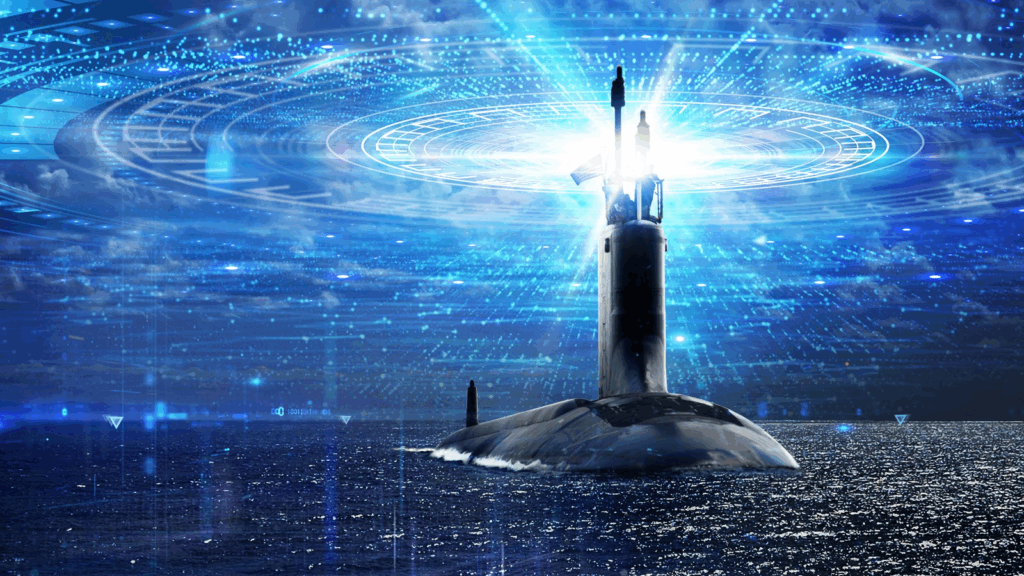
The MMM system is a radio frequency receiving antenna that provides U.S. Navy submarines the ability to detect, identify, and direction-find adversary communications signals before rising to the surface. The antennas will mount on new Virginia-class submarines and feed into Lockheed Martin’s AN/BLQ-10 electronic warfare (EW) system.
“In dynamic and contested environments, stealth is key, and submarines rely on accurate communications signal information to make decisions quickly,” said Michael Rottman, program area director for Maritime Sensors and Systems at BAE Systems. “The Multifunction Modular Mast system equips U.S. Navy submarines with critical capabilities to locate and identify potential threats, enabling them to analyze and respond accordingly.”
As network-centric naval warfare evolves, advanced sensors, data links, communications, and EW systems are needed to outpace threats. The MMM system plays a critical role in electromagnetic spectrum dominance and strategic situational awareness. It provides operators with a reliable secondary source to detect nearby adversaries, in addition to radar and sonar.
The tactical communications receiving antenna resides in a composite radome. Its pressure-rated and corrosion-resistant design allows the unit to survive the harsh undersea environment and maximize signal-gathering performance while minimizing visibility of the mast and platform. The system also includes a payload module that enables the U.S. Navy to incorporate additional sensors for other mission applications.
For more than 65 years, BAE Systems has developed and manufactured a range of maritime and communications solutions, including antennas, acoustic transducers, and sensors. Designed to withstand the depths of the ocean, these systems enable communication and remote sensing across the U.S submarine fleet.
Work on the MMM system is performed at BAE Systems’ New Hampshire facilities in Hudson, Merrimack, and Nashua.
NOAA Holds Keel-Laying Ceremony for 2nd New Charting and Mapping Vessel
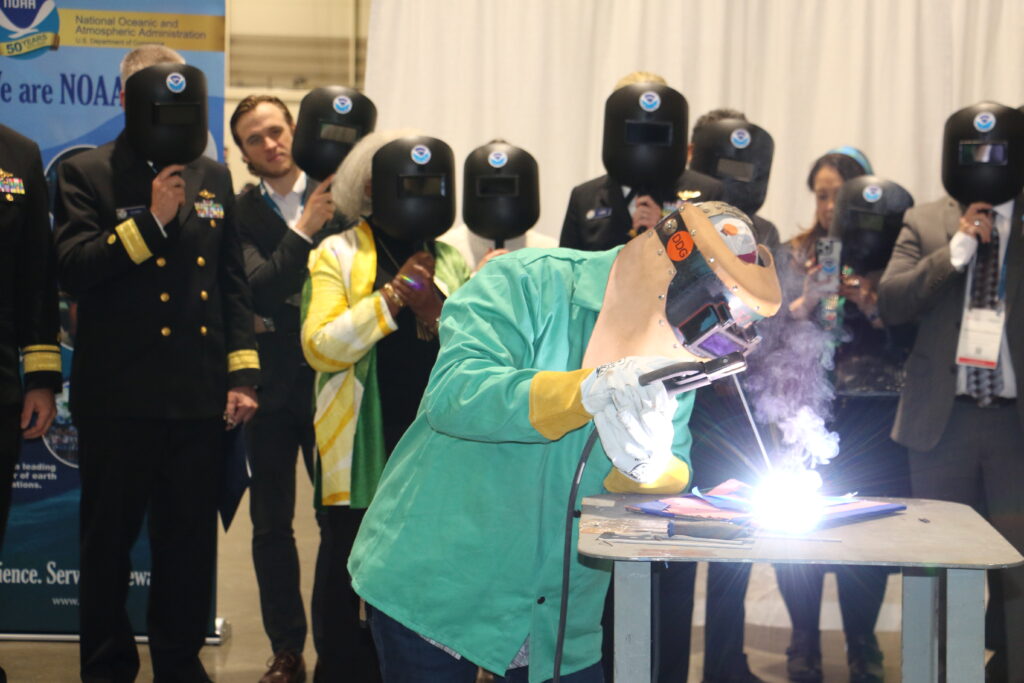
A welder from Thoma-Sea Marine Constructors, LLC, welds the initials of the Navigator’s sponsor, Rear Admiral (retired) Evelyn Fields, onto a steel plate that will be incorporated into the ship, in keeping with maritime tradition, at a keel-laying ceremony for the new ship on December 4, 2025, at the International WorkBoat Show in New Orleans, Louisiana. (Image credit: NOAA)
By Keely Belva, NOAA, Dec. 4, 2025
NOAA leadership was joined by partners today to celebrate the keel-laying for Navigator, a new charting and mapping vessel being constructed for NOAA. The vessel is being built by Thoma-Sea Marine Constructors, LLC., in Houma, Louisiana.
The keel-laying is a centuries-old maritime tradition that formally recognizes the start of a ship’s construction. During today’s ceremony, the initials of the ship’s sponsor, NOAA Corps Rear Adm. Evelyn Fields (ret.), were welded onto a steel plate that will be incorporated into the ship during construction.
“NOAA’s investments in data collection platforms, like Navigator, are integral to understanding and predicting our environment,” said Neil Jacobs, Ph.D., undersecretary of commerce for oceans and atmosphere and NOAA administrator. “NOAA, and our science mission, is also proud to support the Maritime Industrial Base and our nation’s shipbuilding economy. We look forward to Navigator’s completion and the ability to incorporate emerging technologies like uncrewed systems, to help NOAA meet its mission.”
In 2023, NOAA announced the addition of two new charting and mapping vessels to the NOAA fleet. Surveyor is expected to be completed in 2027 and Navigator in 2028. The ships will be used primarily for ocean mapping and nautical charting as part of NOAA’s mission to deliver tools and information to help mariners safely navigate the $2.3 trillion worth of cargo that comes in and out of the nation’s ports and harbors.
“Mariners navigating U.S. waters depend on NOAA charts,” said NOAA Corps Rear Adm. Chad Cary, director of the NOAA Commissioned Officer Corps and NOAA Marine and Aviation Operations. “These new, state-of-the-art ships will ensure that we can continue to meet our mission to support safe navigation in established waters as well as evolving regions like the Arctic for decades to come.”
The vessel’s name, Navigator, highlights one of NOAA’s central missions: facilitating the safe navigation of mariners throughout U.S. waters. The Navigator will be homeported in Newport, Oregon.
Recruit Training Command Graduates Final Class of FY 2025
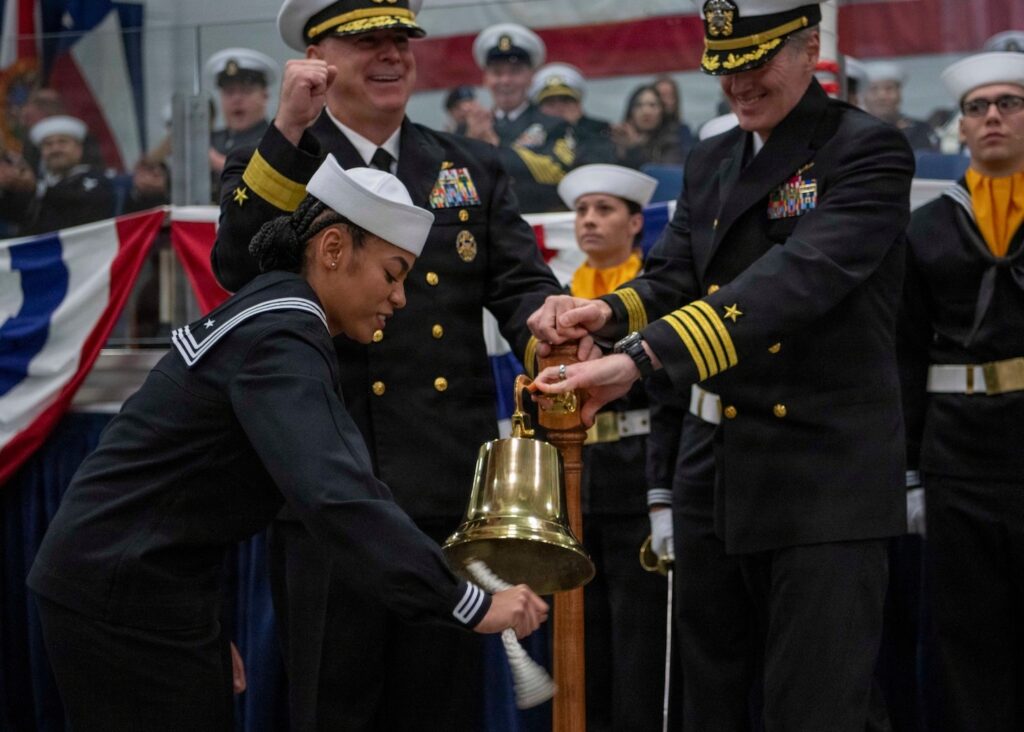
(Nov. 20, 2025) Rear Adm. Matthew Pottenburgh, commander, Naval Service Training Command (center), Capt. Kenneth Froberg, commanding officer, Recruit Training Command (RTC) (right) and Navy Club of the United States Military Excellence Award winner Seaman Yazmine Gaines ring a ceremonial bell during Recruit Training Command’s Pass-In-Review in Midway Ceremonial Drill Hall November, 20, 2025. (U.S. Navy photo by Mass Communication Specialist 2nd Class Stuart Posada)
From U.S. Navy Recruit Training Command, Dec. 5, 2025
NAVAL STATION GREAT LAKES, Ill – The final training group of Sailors who arrived at U.S. Navy Recruit Training Command (RTC) during the Navy’s record-breaking year for recruiting, training and retaining Sailors, graduated from basic military training, commonly known as “boot camp,” during a ceremony at Naval Station Great Lakes, Dec. 4, 2025.
With the graduation of Training Group 52, more than 42,000 Sailors completed initial training during Fiscal Year 2025 (FY25), marking the highest production year for RTC in the past decade—an increase of 10,000 Sailors over last fiscal year.
Today, more than 46,000 Sailors are enrolled in courses throughout the Navy’s accession pipeline to increase mastery of their craft before joining the fleet in defense of the nation. This level of force development is the highest in 20 years, sustaining a battle-ready force that is built to fight and win at sea. Every month, more and more of these Sailors report to commands around the globe.
“Future Sailors arrive at RTC, leaving home for the first time, taking that first critical step into the world seeking adventure,” said Capt. Ken Froberg, commanding officer, Recruit Training Command. “As these men and women mature through boot camp, they realize they are capable of so much more by embracing our professional values of honor, courage and commitment. It really is amazing week-to-week to see these new Sailors graduate and embark on their own journeys with our Navy, unified by a strong warrior ethos. I know the watch is in good hands!”
This milestone coincides with U.S. Navy Recruiting Command surpassing its FY25 recruiting goal for active component Sailors, beating its active duty, enlisted goal by nearly 3,500 future Sailors.
Recruit Division Commanders (RDC) are responsible for training new recruits during boot camp.
“Being an RDC has been one of the most rewarding experiences of my career,” said Master-at-Arms First Class Selena Barragan. “From the first day of training to Pass-In-Review, it’s a privilege to watch recruits grow through discipline, teamwork, and resilience. Seeing that growth firsthand—watching civilians become Sailors who carry themselves with confidence and integrity—is what makes this role so meaningful. Every division I train reminds me why this work matters and why preparing them for the Fleet is both an honor and a responsibility.”
FY25 also saw continued innovations to Navy boot camp, including the further development of the Future Sailor Prep Course (FSPC) and the optimization of training from 10 weeks to 9 weeks.
The FSPC is designed to physically and mentally prepare recruits before starting boot camp, reducing attrition and increasing career opportunities for Sailors after graduation.
To celebrate this achievement in production, commander, Naval Service Training Command, Rear Adm. Matthew Pottenburgh and Training Group 50 Top Sailor, Seaman Yazmine Gaines, rang the ship’s bell – a Navy tradition used to mark important occasions – at a recent RTC graduation.
“RTC is the foundry where Recruits are forged into battle-ready Sailors,” said Pottenburgh. “Here in Great Lakes, our success is measured by the quality of the Sailor who leaves boot camp, the ‘Quarterdeck of the Navy’, following graduation as total Sailors – fit to fight and ready to win tonight, tomorrow, and well into the future.”
The mission of RTC, the Navy’s only boot camp, is to transform civilians into smartly disciplined, physically fit, basically trained Sailors who are ready for follow-on training and service to the fleet, while instilling in them the highest standards of honor, courage, and commitment.
Navy Accepts Delivery of Final Freedom-Variant LCS, USS Cleveland
Release From Naval Sea Systems Command
Cleveland is the 16th and final ship of its class, marking the completion of the Freedom-variant littoral combat ship (LCS) construction phases – a sustained acquisition effort involving Navy personnel, industry partners, and program management teams for over two decades.
“The delivery of USS Cleveland, our final Freedom-variant LCS, symbolizes the U.S. Navy’s unwavering vigilance and a steadfast commitment to protecting national interest and ensuring global stability,” said Jay Iungerich, acting deputy program manager of the LCS Program Office (PMS 501).
Following commissioning in Cleveland, Ohio in early 2026, LCS 31 will be homeported in Mayport, Florida. She will support forward presence, maritime security, sea control, and deterrence in key operational theaters.
“With the final Freedom-variant LCS now delivered, we celebrate the successful outcome of years of innovation and commitment,” said Melissa Kirkendall, Program Executive Officer, Unmanned and Small Combatants (PEO USC). “This highly capable and lethal warship is ready to assert maritime dominance and protect global waters with unparalleled precision and power.”
LCS 31 honors the city of Cleveland, Ohio. She will be the fourth ship to bear the name. The lineage began with the Denver-class protected cruiser, USS Cleveland (C-19), later reclassified as CL-21, commissioned in 1903. She served prominently as flagship of the Atlantic Fleet. During World War I, she diligently escorted convoys and transported troops before her decommissioning in 1929.
The second USS Cleveland (CL-55), a Cleveland-class light cruiser, entered service in 1942, leaving her mark on history through extensive action in World War II’s Pacific theater. Her participation spanned numerous campaigns, including Guadalcanal, Bougainville, the Philippines, Iwo Jima, and Okinawa. CL-55 was decommissioned in 1947.
The third namesake, USS Cleveland (LPD-9), an Austin-class amphibious transport dock, was commissioned in 1976 and served a distinguished 30-year career. LPD-9 was a familiar presence in deployments and exercises around the world, notably contributing to Operation Desert Shield/Storm and Operation Iraqi Freedom. She was decommissioned in 2011.
Now, LCS 31 carries the legacy forward, embodying Cleveland’s spirit of service.
LCS is a fast, agile, mission-focused warship designed to operate in near-shore environments to counter 21st-century threats. It is a class of small surface combatants armed with capabilities to defeat challenges in the world’s littorals. LCS can operate independently or in high-threat scenarios as part of a networked battle force that includes larger, multi-mission surface combatants such as cruisers and destroyers.
PEO USC designs, develops, builds, maintains, and modernizes the Navy’s unmanned maritime systems; mine warfare systems; special warfare systems; expeditionary warfare systems; and small surface combatants. For more news from Program Executive Office, Unmanned and Small Combatants, visit: https://www.navsea.navy.mil/Media/News/
U.S., Bahrain Open New Bilateral Combined Command Post for Air Defense
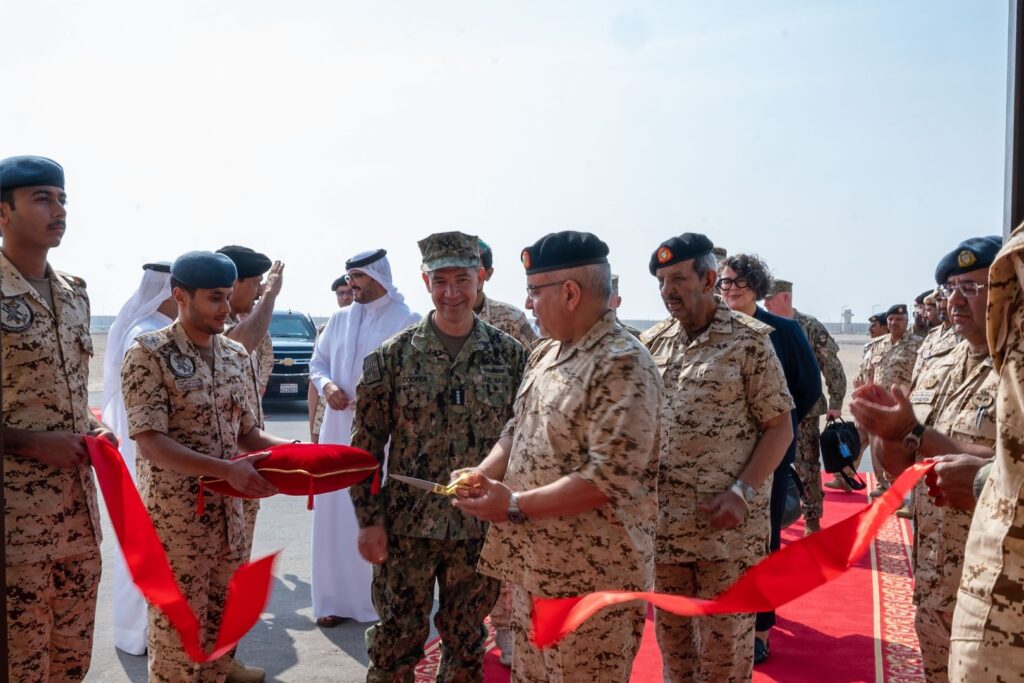
MANAMA, Bahrain (Dec. 1, 2025) His Royal Highness Prince Salman bin Hamad Al-Khalifa, Crown Prince, Deputy Supreme Commander and Prime Minister of Bahrain, cuts a ribbon with U.S. Navy Adm. Brad Cooper, commander of U.S. Central Command, commemorating the opening of the Combined Command Post at Ras Al Bar Camp. (U.S. Navy photo by MC2 Lindsay Lair)
Release From U.S. Central Command
TAMPA, Fla. – Officials from U.S Central Command (CENTCOM) and the Kingdom of Bahrain opened a new bilateral Combined Command Post for air defense during a ribbon-cutting ceremony in Bahrain, Dec. 1.
Adm. Brad Cooper, CENTCOM commander, joined His Royal Highness the Crown Prince, Deputy Supreme Commander of the Armed Forces, and Prime Minister Salman bin Hamad Al Khalifa opened the facility at Ras Al Bar Camp, underscoring the longstanding strategic defense partnership between the two countries.
“Bahrain has been an essential partner in regional security for decades,” said Cooper. “The new Combined Command Post marks a significant step forward in enhancing the regional air defense architecture.”
The new facility will be staffed by forces from the United States and Bahrain and serve as a hub for integrated air defense planning, coordination, and operations. This is CENTCOM’s second bilateral air defense command post in the region.
As a major non-NATO ally, Bahrain hosts the headquarters for the U.S. Navy’s 5th Fleet and the U.S.-led Combined Maritime Forces, which consists of 47 nations.
NORFOLK, Va. — Adm. Karl Thomas assumed command of U.S. Fleet Forces Command (USFFC) during a ceremony aboard the Nimitz-class aircraft carrier USS Harry S. Truman (CVN 75) at Naval Station Norfolk, Dec. 1.
Chief of Naval Operations Adm. Daryl Caudle presided over the ceremony.
“Admiral Thomas brings exceptional leadership experience and strategic vision to U.S. Fleet Forces Command at a critical time for our Navy,” said Caudle. “His distinguished career spanning information warfare, intelligence operations, and fleet leadership makes him uniquely qualified to lead our forces in maintaining maritime superiority and readiness. I have complete confidence in his ability to guide Fleet Forces Command as we navigate an increasingly complex global security environment and ensure our sailors are trained, equipped, and ready to defend our nation’s interests worldwide.”
Also attending the ceremony was Gen. Gregory M. Guillot, commander of U.S. Northern Command, who served as a guest speaker.
“The readiness of United States Naval Forces – Northern Command is critical to the defense of our homeland, and their support to southern border efforts has been tremendous” said Guillot. “Admiral Thomas’s experience will ensure continued seamless integration and cooperation between NAVNORTH and NORTHCOM, strengthening our ability to deter threats and respond effectively to any crisis.”
From the air to the sea and ashore, Thomas’ Navy career has taken him around the globe in a wide range of operational and leadership assignments.
“We are a global Navy – the world’s premier maritime force, protecting our homeland and forward deployed with the capability to project power across all domains of naval warfare,” said Thomas. “I am honored to work alongside our dedicated Fleet Forces team to continue to enhance fleet readiness, force generation and employment.”
Prior to assuming command of USFFC, Thomas served as the deputy chief of naval operations for Information Warfare (N2/N6) and as the 69th Director of Naval Intelligence.
U.S. Fleet Forces Command is responsible for manning, training, equipping, and employing 138,000 active duty Sailors, reservists, and civilians; more than 120 ships and submarines; 1,500 aircraft; seven task forces; and five carrier strike groups. USFFC directs training and readiness across the maritime domain, prepares forces for worldwide deployment, and provides combat-ready naval forces to combatant commanders.
Flank Speed Wireless Supports POTUS, Sailors, Sea Power Demonstration
Flank Speed Wireless, born as a Sailor quality-of-life upgrade, proved its strategic power when it quietly enabled secure, seamless communications for the President and First Lady during the Navy’s 250th Birthday celebration at sea.
When the President and First Lady of the United States stepped aboard USS George H. W. Bush (CVN 77) to celebrate the Navy’s 250th Birthday during a high-profile Sea Power Demonstration, much of the world was watching. Behind the scenes, ensuring seamless and secure communications for the Commander-in-Chief and his team was a quiet but powerful capability: Flank Speed Wireless (FSW), formerly known as Sailor Edge Afloat and Ashore (SEA2), a capability led and delivered by Program Executive Office for Digital and Enterprise Services (PEO Digital).
Originally developed to provide Sailors with reliable wireless connectivity at sea, FSW proved to be more than a quality-of-life initiative, it became a mission-critical enabler. During the President’s visit and subsequent speech aboard USS Harry S. Truman (CVN 75), FSW allowed the White House Communications Agency (WHCA) to integrate with shipboard technologies to maintain secure communications for the President, First Lady, White House Military Office, U.S. Secret Service, and senior Department of Defense leadership.
“This event proved that our investments in Sailor-focused digital infrastructure are also strategic assets,” Navy Enterprise Networks (NEN) Deputy Director, Capt. Frederick Crawford said. “Flank Speed Wireless was designed to serve Sailors, and it’s now proving itself mission-critical in high-stakes national operations.”
From MWR to Mission Enabler
FSW began as SEA2, an afloat connectivity initiative launched by PEO Digital as part of the “Get Real, Get Better” campaign. The aim: improve Sailor quality of life, especially during extended deployments, by providing secure, reliable internet access in shipboard environments.
This capability directly addressed persistent challenges related to Sailor isolation, morale, and mental health, and was shaped around the realities of life underway.
“This started as a pilot effort between our afloat Sailors and the engineering community,” said Capt. Kevin White, now Program Manager for PMW 770. “As the Combat Systems Officer aboard the USS Abraham Lincoln, I worked closely with our engineers to design a wireless capability that could actually function in the complex environment of a carrier. We designed Flank Speed Wireless from the deckplates up, built by Sailors for Sailors. Together, we ensured not only the design, but also the security and authorization needed to scale it rapidly across the fleet. What began on a single carrier quickly became a Navy-wide capability through the World Class Alignment Metrics [WAM] initiative.”
“We created Flank Speed Wireless to reduce barriers for Sailors trying to stay connected to family and support networks while deployed,” said FSW Architect, Damon Regan. “It’s a small capability with an outsized impact on mental resilience and readiness.” With installations now underway across the fleet, FSW’s infrastructure is not only improving quality of life, it is enabling fleet-wide operations at the highest level.
Engineering the Presidential Visit
Supporting the President’s embark required close collaboration across the fleet. PEO Digital, together with shipboard IT teams and mission partners, ensured that secure and resilient communications capabilities were in place throughout the event.
In a dynamic and time-constrained environment, the Flank Speed Wireless team executed a series of critical readiness activities to confirm that all necessary systems were prepared and functioning ahead of the Presidential party’s arrival.
“This kind of real-time responsiveness is only possible because of the groundwork we laid with Flank Speed Wireless,” said FSW Product Owner, Brad Terry. “We didn’t build this just to check a box, we built it to meet real-world mission demands, and that’s exactly what it did.”
A Blueprint for Fleet Modernization
PEO Digital’s success with FSW reflects a broader approach to digital modernization, one that starts with Sailors, scales for operations, and adapts to strategic demand.
“The Flank Speed Wireless story shows what happens when we focus on real user needs and deliver with urgency,” Program Executive Officer Louis Koplin said. “That’s what Get Real, Get Better is about, and it’s what digital modernization across the Navy must be.”
Whether enabling a Sailor to video call home or supporting secure comms for the Commander-in-Chief, PEO Digital’s Flank Speed Wireless stands as a powerful example of what agile, user-centered delivery can achieve for the Navy.
About PEO Digital
The Program Executive Office for Digital and Enterprise Services (PEO Digital) delivers services throughout the Department of the Navy that improve performance, security, mobility, and customer experience. PEO Digital embraces business agility to ensure quality, accelerate innovation, continuously deliver value, and meet the dynamic needs of the warfighter.
Our mission is to provide the Marine Corps and Navy with a decisive information advantage through a modern, innovative, and secure digital experience – any data, any time, anywhere.
Our vision is to deliver a world-class digital experience at the speed of mission.
CORAS Awarded ONR Contract to Advance Navy Leadership Assessment, Behavioral Modeling
MCLEAN, Va.– November 25, 2025: CORAS, the only IL5-authorized Agentic AI Decision Intelligence platform in the Department of War (DoW), announced today that it has been awarded a contract with the Office of Naval Research (ONR) to enhance and unify the Navy’s leadership assessment and behavioral modeling capabilities through the Talent Management Nexus effort in support of Naval Personnel Command’s Talent Management Center of Excellence.
This award expands CORAS’s growing portfolio of U.S. Navy partnerships, following its successful deployment of the “Leader’s Compass” application at the U.S. Naval Academy. Under the new ONR contract, CORAS will configure its secure, low-code platform to deliver a unified web application supporting leadership assessment, behavioral modeling, and performance tracking across the fleet.
“This CORAS collaboration will provide the U.S. Navy with a single, data-driven view of potential leadership and development across the force,” said Dan Naselius, President and CTO of CORAS. “By combining IL5-secure Decision Intelligence with behavioral science, the Navy can modernize and optimize how it nurtures, identifies, develops, and deploys its future officers and leaders.”
Through this effort, CORAS will enable ONR to orchestrate and integrate data across multiple Navy systems in real time; administering assessments, conducting automated analyses with built-in Agentic AI, natural language processing (NLP) and machine learning (ML), and visualizing Sailor performance through dynamic briefs. These features will allow the Navy to track leadership growth over time, refine behavioral models, challenge program efficiency and effectiveness, and continuously improve the development processes for all Sailors.
The CORAS platform built on a FedRAMP High and IL5 environments supports advanced security controls, multi-user access for administrators, panelists, and participants, and seamless integration with the Authoritative Data Environment (ADE) and other MyNavy HR data sources. As a Commercial-Off-The-Shelf (COTS) solution, CORAS is rapidly configured and deployed within days, providing immediate operational value to ONR and the Navy’s Manpower, Personnel, Training, and Education Information Sciences (MPTE-IS) portfolio.
“The ONR award underscores CORAS’s expanding role as a trusted enabler of data-driven decision and readiness SaaS platform within the Department of War,” said Moe Jafari, CEO of CORAS. “From the PMO to the Pentagon, CORAS empowers the U.S. Navy to harness its data, identify future leaders, and make faster, more informed decisions.”
CORAS and its Agentic Agent GARY operate at IL5 and FedRAMP High in government environments including NIPR and SIPR, offering profound ROI and 50+x productivity. Agencies can acquire CORAS and GARY through GSA, NASA SEWP, SBIR Phase III, Tradewinds AI Marketplace, Carahsoft, and AWS partner channels. Learn more at www.coras.ai.