Navy Determines Planned Ship Inactivations for Fiscal 2026
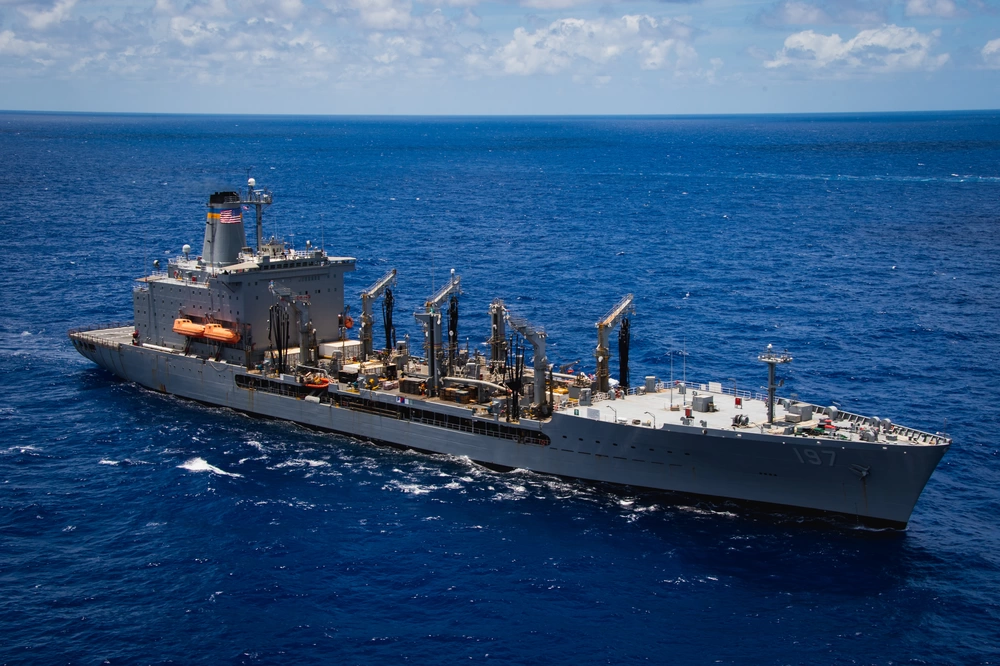
Henry J. Kaiser-class underway replenishment oiler USNS Pecos (T-AO-197) sails during the at-sea phase of Exercise Rim of the Pacific (RIMPAC) 2024. (U.S. Navy photo by MC2 Terrin Hartman)
By Richard R. Burgess, Senior Editor
ARLINGTON, Va. — The U.S. Navy plans to inactivate or transfer eight ships during fiscal 2026, including two warships and six auxiliary ships, the service said in a Sept. 12 internal message to the force.
The navy plans to inactivate two Los Angeles-class attack submarines, USS Newport News (SSN 750) on Jan. 31, 2026, and USS Alexandria (SSN 757) on Aug. 4, 2026. The two submarines will be scrapped in Puget Sound Naval Shipyard, Washington.
Two Henry J. Kaiser-class fleet replenishment oilers will be withdrawn from service with Military Sealift Command by July 31, 2026. USNS John Ericsson (T-AO 194) will be retired but retained as a logistics support asset as a parts source for remaining ships of its class. USS Pecos (T-AO 197 will be transferred to the Maritime Administration (MARAD).
Three Watson-class large, medium-speed roll-on/roll off ships will be transferred from the Military Sealift Command’s Prepositioning Force: USNS Pomeroy (T-AKR 316) by Apr. 1, 2026; USNS Watkins (T-AKR 315) by July 1, 2026; and USNS Red Cloud (T-AKR-313) by Sept. 30, 2026.
Also being transferred to MARAD on July 1, 2026, is the USNS VADM K.R. Wheeler (T-AG 5001), a ship which uses an offshore petroleum distribution system to pump fuel ashore from a distance of eight miles to U.S. forces ashore.
U.S., Australia Naval Forces Conduct Bilateral Training in the South China Sea
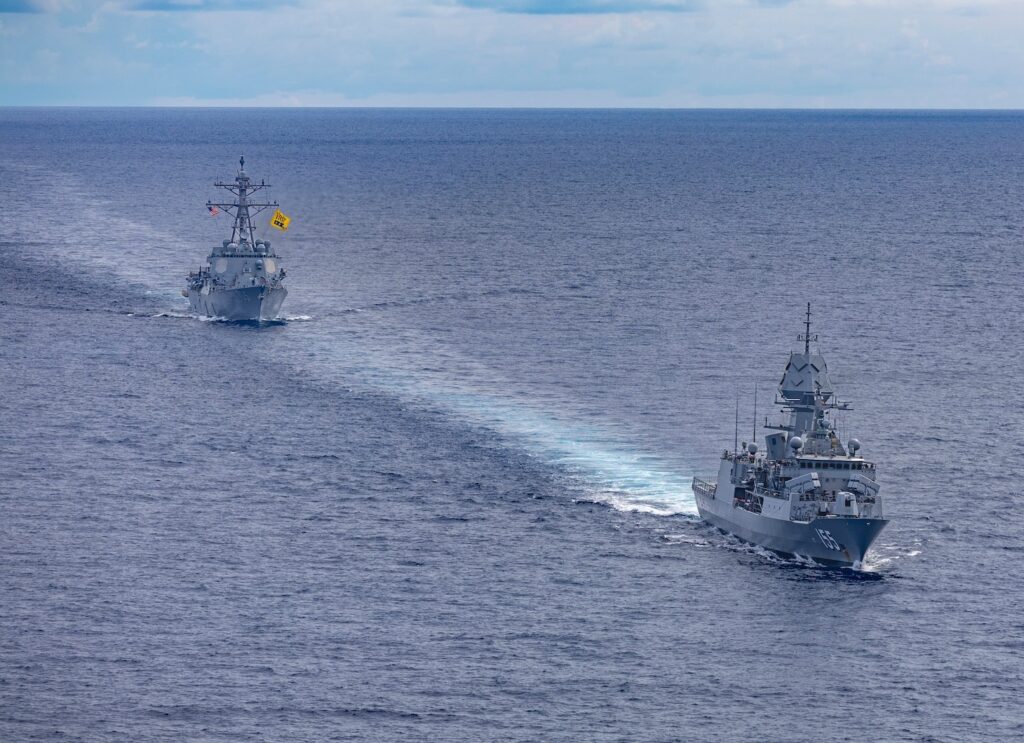
SOUTH CHINA SEA (Sept. 16, 2025) – Arleigh Burke-class guided-missile destroyer USS Dewey (DDG 105), left, sails alongside Anzac-class frigate HMAS Ballarat (FFH 155), right, during a bilateral training with the Royal Australian Navy in the South China Sea, Sept. 16, 2025. (U.S. Navy photo by Mass Communication Specialist 2nd Class Oscar Diaz)
SOUTH CHINA SEA – The U.S. Navy and Royal Australian Navy (RAN) conducted bilateral training in support of a free and open Indo-Pacific through the South China Sea, Sept. 15-16.
Participating ships included the Arleigh Burke-class guided-missile destroyer USS Dewey (DDG 105) and the RAN Anzac-class frigate HMAS Ballarat (FFH 155).
Over the two days, the ships engaged in a formation sailing exercise, maritime communications training, and simulated fires exercises alongside information sharing and a combined transit through the South China Sea.
“It was a fantastic opportunity to work alongside Ballarat and our Australian allies,” said Cmdr. Ivan Dobrev, commanding officer of Dewey. “Deepening our interoperability with our allies and partners here in the Indo-Pacific is the key to enhancing our collective deterrence against any adversary threatening peace and stability in the region.”
The U.S. Navy regularly trains alongside our allies and partners in the Indo-Pacific region as a demonstration of our shared commitment to international law and a free and open Indo-Pacific. Bilateral training such as this provides valuable opportunities to exercise and develop tactical interoperability across allied navies in the Indo-Pacific.
“This activity was a component of a planned routine deployment for Ballarat to the region,” said Cmdr. Dean Uren, commanding officer of Ballarat. “This activity is an important demonstration of the resolve that Australia has to supporting an open, stable, and prosperous Indo-Pacific, where international law is respected.” The Australian Defence Force routinely operates in the region and has done so for decades.
The Dewey is forward deployed and assigned to DESRON 15, the Navy’s largest DESRON and the U.S. 7th Fleet’s principal surface force.
U.S. 7th Fleet is the U.S. Navy’s largest forward-deployed numbered fleet and routinely interacts and operates with allies and partners in preserving a free and open Indo-Pacific region.
USS America Enhances Joint Readiness with Army and Marine Corps Rotary-Wing Operations
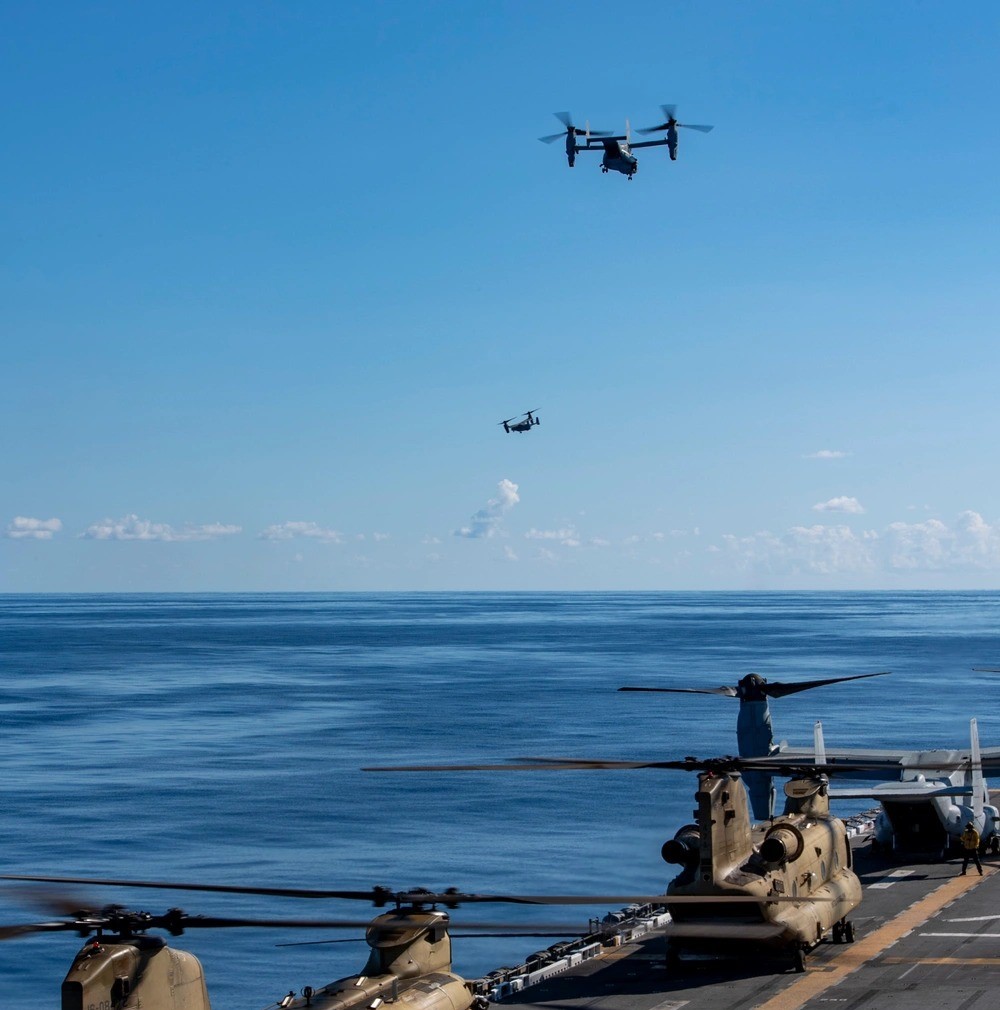
PACIFIC OCEAN (Sept. 7, 2025) Two U.S. Marine Corps MV-22B Osprey assigned to Medium Tiltrotor Squadron (VMM) 268 takeoff from the flight deck of the amphibious assault ship USS America (LHA 6) while conducting flight operations in the Pacific Ocean, Sept. 7. (U.S. Navy photo by MCSN Nicholas Douglass)
NORTH PACIFIC OCEAN — Amphibious assault ship USS America (LHA 6) concluded joint aviation training with the U.S. Army and U.S. Marine Corps, boosting interoperability and readiness in the Indo-Pacific region. On Sept. 7 and 11, 2025, off the coast of Pearl Harbor, America served as a floating airfield for rotary-wing aircraft from the Army’s 25th Combat Aviation Brigade (CAB) and Marine Corps’ Marine Medium Tiltrotor Squadron (VMM) 268.
“This joint training enhances interoperability amongst the Services and increases our capacity to project combat power from sea.” said Cmdr. Weideman, air officer, USS America. “By working together, we improve our collective readiness and ability to respond to any contingency.”
Over two days, Army and Marine Corps pilots and crew members flew CH-47F Chinook, AH-64 Apache, and MV-22B Osprey aircraft, executing more than 200 deck landings on USS America. The training boosted their overwater operational proficiency and earned them valuable deck landing qualifications critical for maritime environments.
“This training is extremely valuable for the 25th Infantry Division and the 25th CAB,” said Chief Warrant Officer 3 Michael James, senior standardization instructor pilot for 3-25 AVN Regiment. “It allows us to be proficient in deck landing operations which increases our lethality and operability with our Navy and Marine partners. Overall, it increases the U.S. Military’s combat power!”
The exercise involved three types of rotary-wing aircraft: Marine Corps MV-22B Ospreys from VMM-268, along with Army CH-47F Chinook helicopters from the 3rd Battalion, 25th Aviation Regiment, and Army AH-64 Apache helicopters from the 2nd Squadron, 6th Cavalry Regiment, both assigned to the 25th CAB. This diverse participation highlighted the commitment of all services to joint operations.
“My training goal for the 25th CAB was to increase our proficiency and build more competent air crews in an overwater environment,” said James. “Our crews need to be able to operate from ship to shore. During this training, we were able to learn more about LHA operations, their flight deck patterns and the ship’s capabilities.”
Companies within the Army’s 25th CAB maintain proficiency in shipboard operations to be prepared to fight under all conditions. The brigade conducts Deck Landing Operations several times per year depending on the Navy’s availability, in order to maintain a high level of aviation preparedness.
America is operating in the U.S. 3rd Fleet area of operations. An integral part of the U.S. Pacific Fleet, U.S. 3rd Fleet leads naval forces in the Indo-Pacific and provides the realistic, relevant training necessary to execute the U.S. Navy’s role across the full spectrum of military operations. U.S. 3rd Fleet works together with allies and partners to advance freedom of navigation and overflight, the rule of law and other principles that underpin security for the Indo-Pacific region.
For more USS America news visit: https://www.surfpac.navy.mil/lha6/ and https://www.dvidshub.net/unit/USSA
UNITAS 2025 Kicks off at Naval Station Mayport
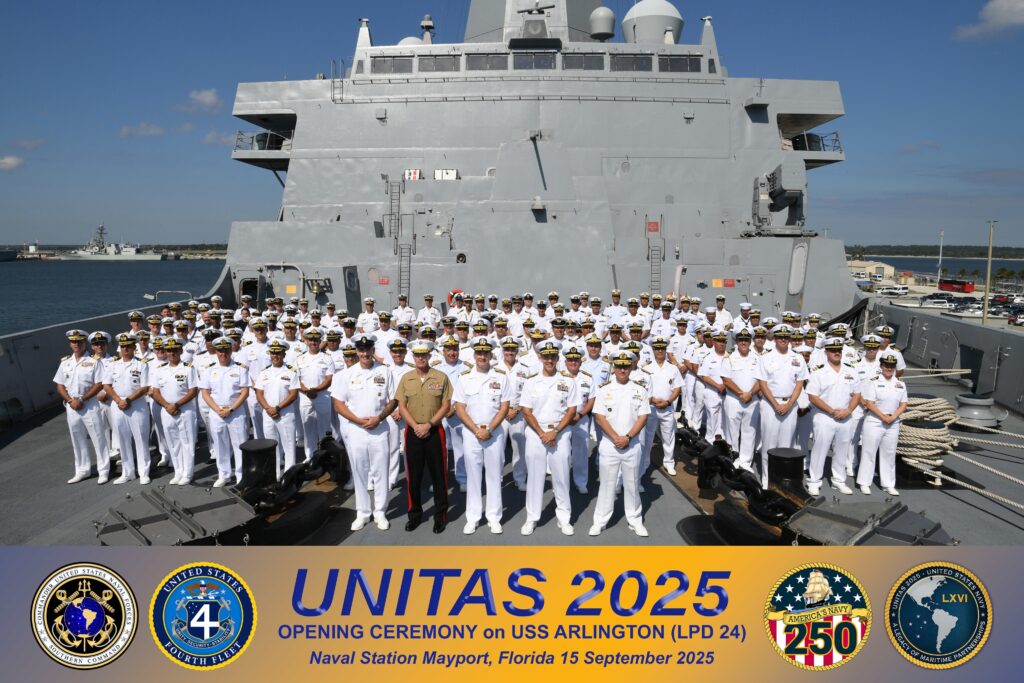
MAYPORT, Fla. (Sept. 15, 2025) Navy and Marine leaders celebrated the opening of UNITAS 2025 from onboard the San Antonio-class amphibious transport docking ship USS Arlington (LPD 24) at Naval Station Mayport September 15, 2025. (U.S. Navy photo illustration by MCSN Steven Khor)
NAVAL STATION MAYPORT, Fla. – UNITAS 2025 officially kicked off at an opening ceremony aboard Naval Station Mayport, Sept. 15. UNITAS, Latin for unity, united, or oneness, is the longest-running annual multinational maritime exercise in the world.
UNITAS is featuring approximately 8,000 personnel from 25 allied and partner nations, including multiple ships, submarines, and aircraft (fixed wing and rotary). Forces will conduct operations off the East Coast of the United States and ashore in the vicinity of Naval Station Mayport, Fla., Marine Corps Base Camp Lejeune, N.C., and Naval Station Norfolk, Va. through October 6.
Participating nations include Argentina, Belize, Brazil, Canada, Chile, Colombia, Dominican Republic, Ecuador, El Salvador, France, Germany, Greece, Guatemala, Honduras, Italy, Jamaica, Japan, Mexico, Morocco, Netherlands, Panama, Paraguay, Peru, Spain, and the United States.
“It is a distinct honor to stand before you today as we commence UNITAS 2025, the 66th iteration of the world’s longest-running multinational maritime exercise, which is a testament to enduring partnerships,” said Rear Adm. Carlos Sardiello, Commander, U.S. Naval Forces Southern Command/4th Fleet. “We have a rich history that began with the 1959 Inter-American Naval Conference in Panama, and we continue to grow each year. This year’s theme, ‘UNITAS Legacy of Maritime Partnerships’ celebrates the enduring strength of alliances and the upcoming 250th anniversary of the U.S. Navy.”
UNITAS is a comprehensive multinational exercise that aims at strengthening interoperability, enhancing operational readiness, and fostering enduring partnerships among the participating nations. Through a blend of advanced warfare training, cultural exchange, and historical commemoration, the goal for the exercise is to collaboratively demonstrate the commitment to maritime security, crisis response, and the shared values that unite all participating forces in the defense of freedom and global stability.
Following the UNITAS 2025 Opening Ceremony, the in-port phase of the exercise features subject matter expert exchanges, professional symposiums, ship rider exchanges, and operations meetings. During this time, Marines and Sailors will conduct training events in Mayport to include medical, cyber defense, and diving and salvage operations.
During the UNITAS 2025 Underway Phase, forces will participate in events testing all warfare operations, to include live-fire exercises such as a SINKEX, an amphibious ship-to-shore landing and force withdrawal in Camp Lejeune, North Carolina.
“Our combined efforts as a maritime sea service are critical to ensuring free and open seas,” explained Sardiello. “UNITAS is an extraordinary opportunity for us to unite, operate, enhance proficiency, and improve interoperability of participating forces to respond to common threats.”
Following the successful completion of UNITAS 2025, senior leaders from participating countries will join in a series of high-profile events along the East Coast, celebrating a historic milestone: the United States Navy 250th birthday. This commemoration honors a legacy of protecting American interests, deterring aggression, and promoting prosperity and security, while also showcasing the Navy’s enduring commitment to defending the American way of life.
UNITAS 2025 is just one of the major events in support of the U.S. Navy’s 250th birthday in 2025. UNITAS and other major leadership events will lead into 2026, the United States’ 250th birthday. In 2026, the Navy will again commemorate its contribution to the nation’s defense as part of a whole-of-government 250 celebration planned by the U.S. Semi quincentennial Commission. Navy-related events will include port calls and community outreach events in major U.S. cities.
U.S. Naval Forces Southern Command/U.S. 4th Fleet is the trusted maritime partner for Caribbean, Central and South America maritime forces leading to improved unity, security and stability.
Combat Craft Medium to Gain New, Improved Sibling
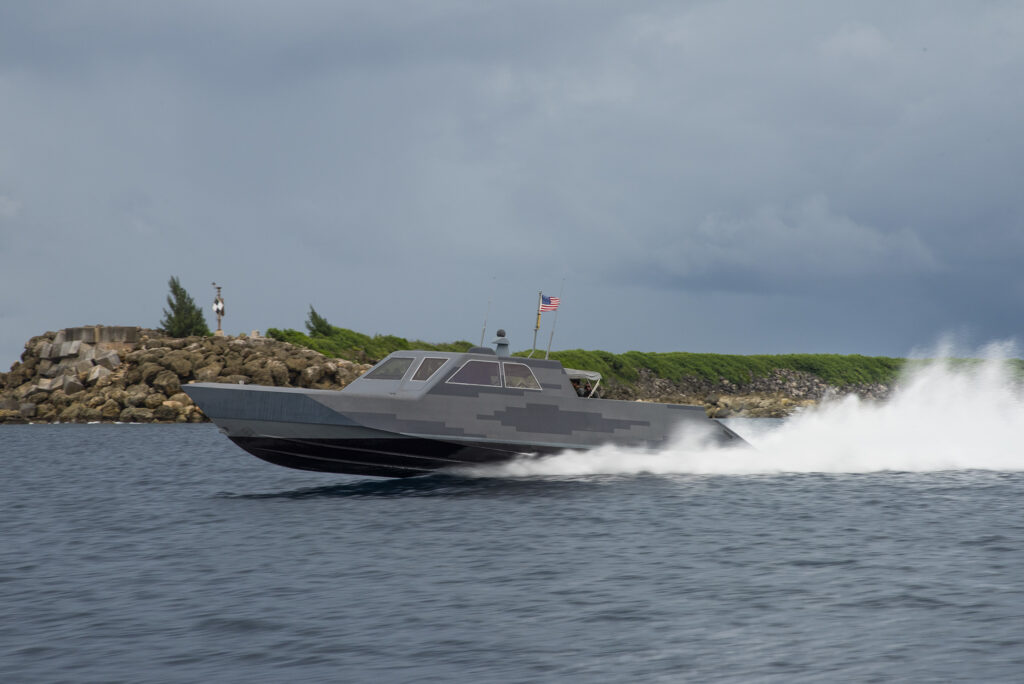
A Combatant Craft Medium assigned to a West-coast based Naval Special Warfare unit maneuvers in Apra Harbor, Guam, in 2021. Photo credit: U.S. Navy photo by Shaina O’Neal
The United States Special Operations Command’s Combat Craft Medium Mark 1 will get a new and improved next-generation sibling in the future called the Combat Craft Medium Mark 2. Currently, USSOCOM is working with Oregon-based company ReconCraft on the first completely new Naval Special Warfare boat design since 2015.
Built by Vigor Industrial, the CCM Mark 1 is a durable, stealthy, low-observable, armored double-hull aluminum boat used by Naval Special Boat Teams for infiltration and extraction of special operations forces in medium-threat environments. It is 60 feet long with a width (beam) of 13 feet and a draft of 3.3 feet, can travel at over 52 knots and can carry .50 caliber M2 heavy machine guns, Mark 19 automatic grenade launchers and 7.62mm M240G medium machine guns on the aft deck.
It has a crew of four and can carry 19 special operators. Range is 600 nautical miles at 40 knots. Vigor Industrial built 31 CCMs, which are transportable via trucks towing trailers and C-17 military cargo aircraft.
According to SAM.gov, the United States’ official federal contracting website, “The CCM Mk2 will replace the CCM Mk1 with a high-speed, aluminum-hulled craft designed to enhance USSOCOM’s maritime capabilities. It incorporates advanced materials and technologies to support multi-role capabilities for maritime missions. This effort includes the design consulting, prototyping, fabrication and outfitting of a single CCM Mk2 prototype, with the potential for a follow-on production contract or agreement.”
Fuel:Diesel, with a capacity of approximately 3,200 gallons.
Mobility: Configured for road and military aircraft transport.
Thus, the CCM Mark 2 is slightly longer, wider and deeper than the CCM Mark 1.
“In August 2025, U.S. Special Operations Command awarded an Other Transaction Authority agreement to ReconCraft LLC to produce the Combatant Craft Medium Mark 2 Engineering Development Model,” Lieutenant Commander Kassie Collins of USSOCOM replied in response to a question from Seapower. “CCM Mk2 will replace the CCM Mk1 fleet, providing Naval Special Warfare with an enhanced capability to conduct long-range, multi-mission operations in maritime environments. CCM Mk2 incorporates integrated survivability enhancements to support irregular warfare operations in maritime environments across the globe.”
Seapower asked if the CCM Mark 2 will replace the CCM Mark 1 on a one-for-one basis and if the CCM Mark 1s will be retired.
“The CCM Mk1 fleet continues to support the demand signal around the globe. The CCM Mk2 platform is being built from the ground up to include upgrades that the CCM Mk1 has incorporated throughout its service, while providing more space, power and opportunity to adapt to future payloads or systems. When the production of the CCM Mk2 begins, the CCM Mk1 will continue to support the force and we will evaluate boats on an individual basis to determine an informed service life, balancing commander’s needs and resources,” Collins responded.
ReconCraft declined to comment on the Combat Craft Medium, Mark 2, and USSOCOM and the company have no images or photos to share since the CCM Mark 2 is an entirely new design starting from the proverbial drawing boards. Questions on CCM Mark 2 armament and sensors were not provided at this early stage of the design process.
Textron Systems Awarded Next-generation Unmanned Maritime Solution
From Textron Systems, Sept. 10, 2025
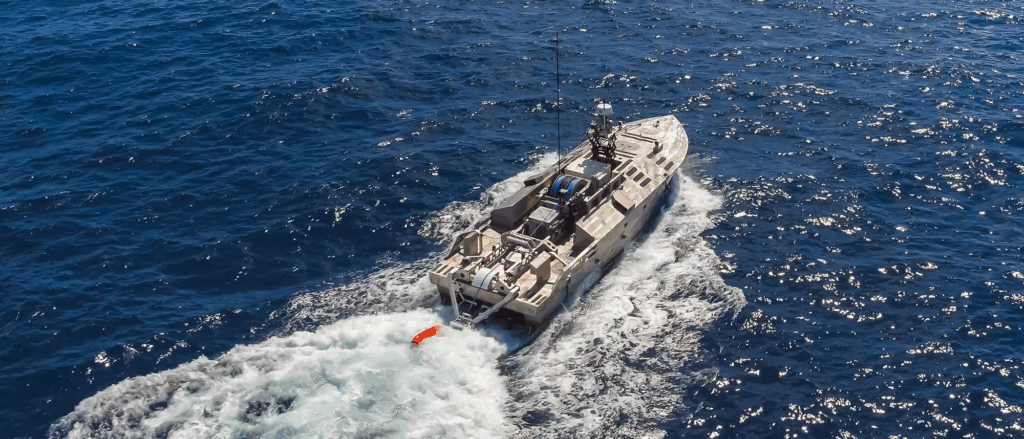
Textron Systems is excited to share that our team has been awarded the Low-Cost Unmanned Maritime Solution (Large) award through the Expeditionary Missions Consortium-Crane (EMC2) for the development, testing, and delivery of the next- generation CUSV® craft, the multi-mission USV (MMUSV). This 5th generation CUSV comes after years of development on the current CUSV craft, offering enhanced capabilities including longer range and higher endurance, while ensuring ease of maintenance and training for our sailors.
Textron Systems is the originator of the CUSV®, the Mine Countermeasure (MCM) USV for the U.S. Navy Unmanned Influence Sweep System (UISS) program of record. The business continues to support the Navy’s Littoral Combat Ship (LCS) Mine Countermeasures Mission Package efforts through
(1) multi-year support contracts, including fleet support and sustainment, engineering services and depot maintenance,
(2) a multi-year production contract for delivery of Mine Sweep Payload Delivery Systems (PDS), and
(3) a multi-year development and integration contract for a next generation Minesweeping payload called Magnetic and Acoustic Generation Next Unmanned Superconducting Sweep (MAGNUSS).
The team continues to support the US Navy’s advancements, providing innovative technology to keep our nation’s sailors safe, no matter the mission set. To learn more about the CUSV craft and the capabilities it brings to the Fleet please visit: https://www.textronsystems.com/products/cusv.
Serco Wins $97 M Contract to Continue Support for US Naval Submarines
From Serco, Sept. 10, 2025
Serco, the international provider of critical services to governments, has won a new indefinite-delivery/indefinite-quantity (IDIQ) contract to continue supporting the US Navy’s Submarine High Data Rate (SubHDR) antenna systems.
Under the single-award contract vehicle, with a ceiling value of $97 million (£72 million), Serco will provide maintenance, repair and upgrade services for the SubHDR Antenna Pedestal Group, a mission-critical system which enables the US naval fleet to send and receive information, such as secure wide-band communications, voice and data traffic, imagery and video conferencing.
Serco has supported the SubHDR programme for over 20 years, and the new contract extends this support by 10 years. Work will primarily take place at Serco’s production and repair facility in Ludlow, Massachusetts, with support services also taking place in Newport, Rhode Island.
Anthony Kirby, Serco Group Chief Executive, said: “We are delighted to continue our support for the US Navy’s SubHDR systems, which provide a critical communications capability to the US fleet. This recompete reflects Serco’s extensive capabilities in the maritime sector, and we are honoured to have been selected to help the US Navy maintain its competitive edge over the next decade.
“With defence and national security an increasing priority for many governments, I am proud of the role Serco plays in supporting the defence of nations and citizens, for the US Armed Forces and for other governments and militaries around the world.”
The award of this contract continues the recent strong momentum Serco has seen in defence, with the sector comprising over 80% of our order intake in the first half of 2025. Other successes in defense this year include:
Three contracts with a combined value of over £1bn to provide Maritime Services to the Royal Navy
A ten-year contract worth up to £1.5bn if all options are exercised, to run the Armed Forces Recruitment Service for all UK military personnel
A $96 million contract to provide technical services to modernise the US Navy’s guided missile frigates and ship systems
A $247 million to support soldier readiness and performance within the US Army’s Holistic Health and Fitness System
HII Completes 750th REMUS Unmanned Undersea Vehicle for German Navy
From HII
DSEI EXPO, LONDON (Sept. 10, 2025) — HII (NYSE: HII), America’s largest military shipbuilder, and a leader in advanced unmanned autonomous technology solutions, today announced the completion of production of the 750th REMUS unmanned undersea vehicle (UUV) for a customer.
The German navy will receive the 750th REMUS, a REMUS 300, produced at the HII unmanned facility in Pocasset, Massachusetts.
This marks the continued global adoption of REMUS systems to support national security and maritime operations.
The REMUS line of UUVs is fielded in more than 30 countries, including 14 NATO members. Known for modularity, endurance, and proven performance, REMUS vehicles are deployed across defense, commercial, and research sectors for critical missions including mine countermeasures, hydrographic survey, intelligence gathering, and environmental monitoring.
Over 90% of REMUS units delivered in the past 23 years remain in service, demonstrating platform durability and lifecycle value both critical in defense acquisition decision-making.
The REMUS open-architecture design allows rapid payload integration, enabling mission-specific configurations and future tech insertions, key factors in maintaining operational relevance and cost efficiency over time.
“The 750th REMUS order is an achievement that reflects both the trust of our international partners and the innovation of our teams,” said Duane Fotheringham, president of the Unmanned Systems business group in HII’s Mission Technologies division. “We are proud to support Germany as it strengthens its undersea capabilities and look forward to continuing to advance unmanned solutions that enhance security and operational readiness worldwide.”
The German navy selection of REMUS underscores HII’s role as a key partner in NATO’s collective defense efforts, providing allies with reliable and mission-proven technology for evolving undersea challenges.
The REMUS UUV family delivers critical advantages across modern naval operations and the autonomous systems have been proven to operate independently or in conjunction with crewed platforms. This includes the recent successful demonstration of the launch and recover of REMUS autonomous undersea vehicles from the torpedo tubes of Virginia-class nuclear submarines. This capability will significantly extend mission range, reduce detection risk, and limit personnel exposure.
HII, Babcock to Integrate UUVs with Submarine Weapon Handling and Launch Systems
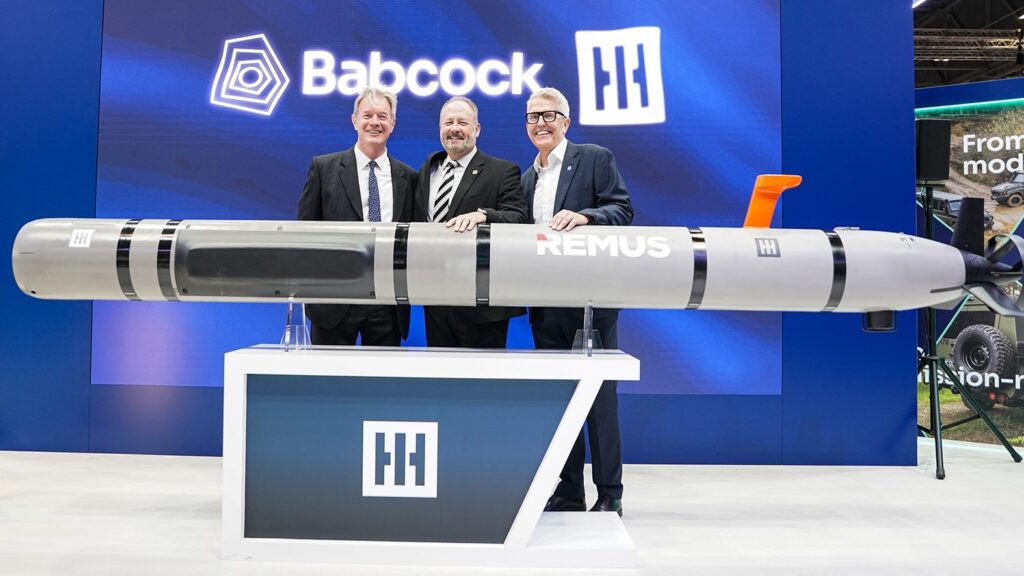
LONDON, Sept. 11, 2025 (GLOBE NEWSWIRE) — Today, Babcock International Group (Babcock) and HII (NYSE: HII), signed a memorandum of understanding to bring together HII’s REMUS unmanned underwater vehicles (UUVs) and Babcock’s world-leading submarine Weapon Handling and Launch Systems (WHLS). The goal of the collaboration is to deliver autonomous launch and recovery of UUVs via submarine torpedo tubes, strengthening the undersea advantage of allied navies. This is the first program of its kind within the Babcock Mission Systems business.
As UUVs become increasingly vital to future undersea operations, HII and Babcock seek to work together to jointly pursue future opportunities within the unmanned space. This joint initiative builds on Babcock and HII’s strategic partnership started in 2023, and the U.S. Navy’s first successful forward-deployed UUV launch and recovery via torpedo tube, using an HII REMUS. Babcock’s WHLS are currently in service with the submarine fleets of the United Kingdom, Canada, Australia, Spain and South Korea.
Chris Kastner, HII, president and chief executive officer, said: “This partnership demonstrates the promise of pairing Babcock’s handling and launch system technology with the capabilities of HII’s REMUS UUVs to strengthen the undersea advantage of our allies. I am proud of HII’s leadership in advancing autonomous maritime manned-unmanned teaming operations and excited about the opportunities this collaboration will unlock.”
Sir Nick Hine, Babcock, chief executive marine, said: “Partnering with HII, we’re combining over a century of expertise in surface and sub-surface systems to further explore marine technologies and strengthen defense capabilities — this is just the beginning of future collaborations across marine programs.”
Babcock has been responsible for the design, manufacture and support of submarine WHLS for the United Kingdom’s Royal Navy and overseas customers for more than 50 years. Together with HII’s autonomous REMUS, Babcock and HII can offer customers more capability through the integration of the latest UUV technology into existing and new build platforms.
The U.S. Navy’s milestone operation underscores a broader transformation in undersea warfare: the growing demand for integrated manned-autonomous operations that extend reach, enhance stealth, and reduce operational risk. HII and Babcock’s collaboration positions both companies, and their allied navy customers, to lead this transformation.
To date, HII has sold more than 700 REMUS vehicles to over 30 countries, including 14 NATO members. Notably, more than 90% of REMUS units delivered in the past 23 years remain in service, demonstrating platform durability and lifecycle value — critical in defense acquisition decision-making.
Eureka Naval Craft Strikes New Shipbuilding Agreement with Bordelon Marine Shipbuilders
Partnership targets US Navy Modular Attack Surface Craft program and counter narco-terrorism operations
From Eureka Naval Craft, Sept. 10, 2025
U.S. defense company Eureka Naval Craft is announcing a landmark agreement with Louisiana-based Bordelon Marine Shipbuilders to construct its state-of-the-art warships.
Both companies said the partnership is designed to support the administration’s shipbuilding agenda, significantly strengthening the nation’s military industrial base while aiming to create and safeguard thousands of highly skilled jobs. It directly supports the U.S Navy’s call, in July this year, for industry develop ideas for its Modular Attack Surface Craft (MASC) Program to adapt to evolving geopolitical and technological challenges (see notes to editors 1).
The memorandum of understanding will provide the production-ready AIRCAT Bengal-MC modular attack surface craft (MASC see notes to editors 2) and Jaguar landing craft to meet the requirements of the U.S. Navy, U.S. Army and U.S. Marine Corps. In addition, the vessel can be adapted to combat narco-terrorism for the Department of Homeland Security (DHS) and the Drug Enforcement Administration (DEA).
“The Bengal-MC is at the forefront of maritime technology, engineered for unmatched speed, extended range, exceptional payload capacity, and versatile modularity,” said Bo Jardine, CEO of Houston based Eureka Naval Craft. “As the US Navy has requested it is strategically designed to reinforce our defenses against China in the Indo-Pacific and counter Russian advances in the Baltic. Moreover the BengalMC’s speed, range, and payload capacity make it ideal for counter-narcotics operations. With the ability to chase down drug smuggling craft at 50 knots and carry boarding teams, vehicles, or relief supplies. The platform serves as a versatile homeland mission asset for the United States Southern Command (SOUTHCOM), DEA and DHS.”
Wes Bordelon, CEO of Bordelon Marine Shipbuilders, said: “This partnership brings a range of advantages to our country in line with the US Navy’s request for innovative ideas. This MoU can provide the rapid deployment and cost-effectiveness the Navy requires by using proven commercial technology Eureka has developed in the offshore market, with the AIRCAT vessels operating in West Africa. And we can do it right from our shipyard in Louisiana harnessing US suppliers nationwide ploughing investment back into the US economy.”
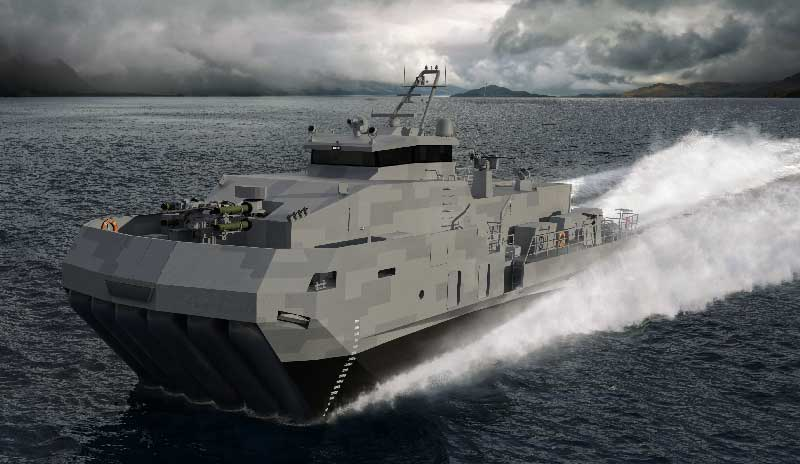
The 36-metre Bengal-MC’s versatile air-cushion catamaran design aligns directly with the U.S. Navy and Marine Corps’ MASC requirements. With a cruise speed of 38 knots and a sprint capability of up to 50 knots, it can carry heavy loads of troops, vehicles, and defense systems rapidly across long operational distances.
Jardine emphasized the importance of the vessel’s adaptable design, combined with SH Defence’s Cube modular mission deck system which allows operators to reconfigure the same hull within hours for anti-surface warfare, counterUAV, mine countermeasures, amphibious lift, humanitarian support, or counternarcotics patrols.
In addition, Jardine said the AIRCAT Bengal-MC has one of the most advanced autonomous navigation systems thanks to deploying technology developed with Australian defense company Greenroom Robotics. Greenroom has spent years developing its Advanced Maritime Autonomy (GAMA) Software system notably on a 57m decommissioned Armidale-class patrol boat, Sentinel, known as the Patrol Boat Autonomy Trial (PBAT) ensuring it is Unmanned Maritime Autonomy Architecture (UMAA) compliant.
“The Bengal-MC with its modular payload system, large aft deck, range and speed is ready to adapt to ever-evolving mission requirements to counter global threats. And it comes without the crippling costs and complex design requirements that have dogged naval shipbuilding programs for years,” said Mr. Jardine. “Unlike conceptual designs, these ships are mission-ready and production-ready now. They offer the services a proven and affordable path to fielding a MASC fleet. They will be built for America in America.”
The MoU with Bordelon Marine comes shortly after Eureka signed a similar deal with Singapore shipbuilder Strategic Marine (S) Pte Ltd to ramp up production of its AIRCAT Bengal-MC warship in Asia.