SECDEF to Replace Naval Academy Superintendent with Marine General
U.S. Naval Academy 65th Superintendent Vice Adm. Yvette Davids and Commandant of Midshipmen Capt. Gilbert Clark Jr. salute during morning colors during Induction Day at Alumni Hall. Photo credit: U.S. Navy | Stacy Godfrey
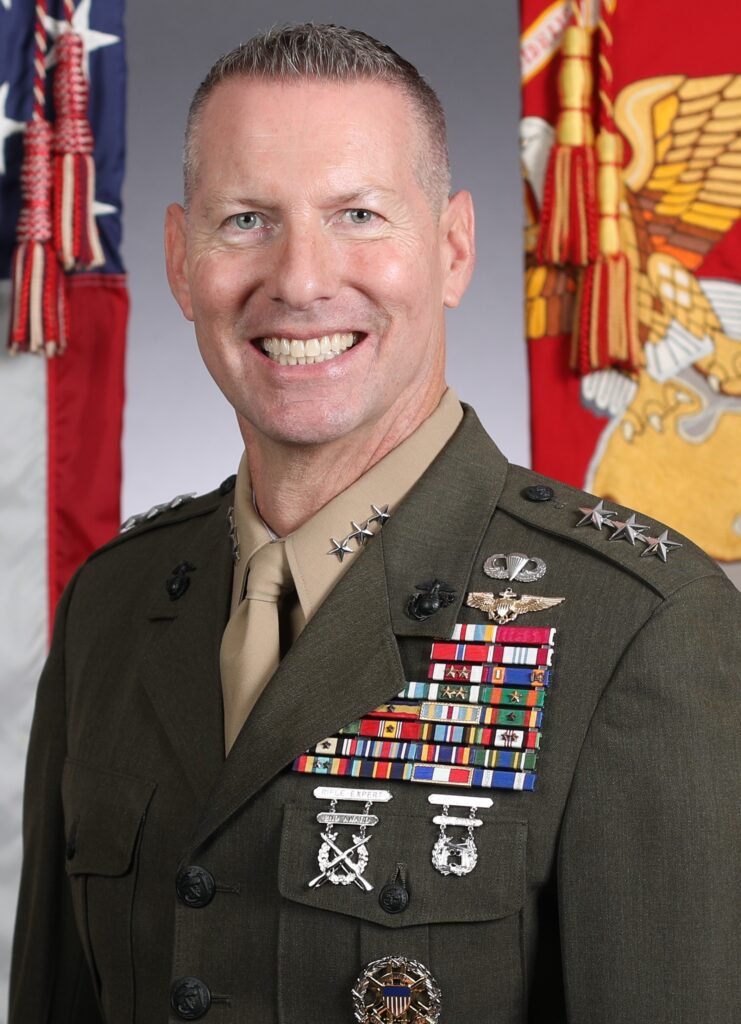
Defense Secretary Pete Hegseth plans to replace U.S. Naval Academy superintendent Vice Admiral Yvette Davids with Marine Corps Lt. Gen. Michael Borgschulte, according to reports from the Washington Post and the New York Times.
Davids was the first woman to head the prestigious academy, taking the post in January 2024. Borgschulte, if confirmed, would become the first Marine Corps general to head the 180-year-old academy.
Davids will be nominated as deputy chief of naval operations for operations, plans, strategy and warfighting development, sources told the newspapers. Borgschulte is currently serving as deputy commandant for manpower and reserve affairs.
The move comes in the wake of other Trump Administration decisions to replace high-ranking military officers, including Admiral Linda Fagan as commandant of the Coast Guard and Admiral Lisa Franchetti as chief of naval operations, although this situation is different as Davids is being transferred to another role rather than being retired.
Lt. Gen. Michael Borgschulte. Photo credit: U.S. Marine Corps
USS Santa Fe and JMSDF Submarine Conduct Bilateral Exercise
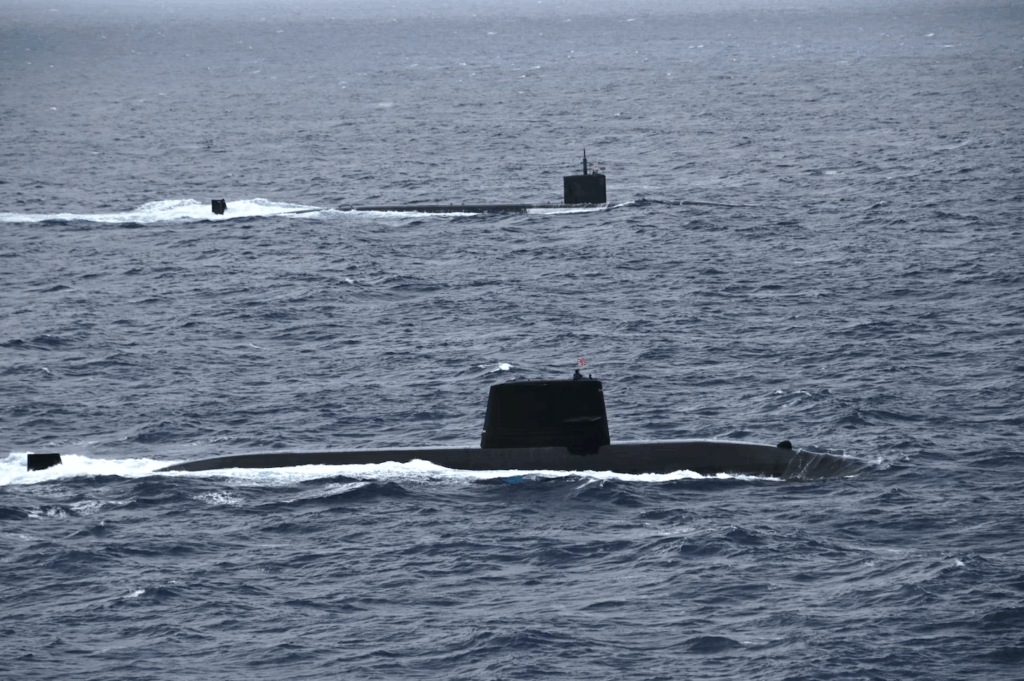
PACIFIC OCEAN (July 12, 2025) – The Los Angeles-class fast-attack submarine USS Santa Fe (SSN 763) and a Japan Maritime Self-Defense Force (JMSDF) submarine steam alongside one another during Submarine Exercise (SUBEX) 25-1, in the Pacific Ocean, July 12, 2025. (Photo courtesy of JMSDF.)
By MC2 Daniel Providakes
YOKOSUKA, Japan – The Los Angeles-class fast-attack submarine USS Santa Fe (SSN 763) and a Japan Maritime Self-Defense Force (JMSDF) submarine conducted Submarine Exercise 25-1 (SUBEX) in the Pacific Ocean, July 12, 2025.
This bilateral exercise portrayed the interoperability and cooperation between the U.S. Navy and JMSDF, showcasing Santa Fe and the JMSDF submarine’s capability to work together while underway in the Indo-Pacific.
“We enjoy a strong bond with our dear partners and friends in the Japanese Submarine Force,” said Rear Adm. Lincoln Reifsteck, commander, Submarine Group 7 (CSG 7). “This submarine exercise is just one of dozens of operations our combined forces are planning or executing day in and day out. We take every opportunity to enhance the integration of our undersea forces, reaffirming our commitment to a shared vision of peace and prosperity for our allies and partners in the Indo-Pacific region.”
SUBEX 25-1 was a two-day exercise conducted in the vicinity of Yokosuka between the U.S. Navy and JMSDF, in order to make significant advancements in the joint submarine capabilities and operations. Exercises like this bolster the U.S. and JMSDF momentum in critical undersea warfare and mutual defense.
Both submarine forces continue to work together and progress every day to seamlessly interoperate with each other. This dedication to mutual understanding and shared values of peace and security in the Indo-Pacific reflects the steadfast bonds between the two silent services.
Santa Fe, homeported in San Diego, California, and assigned to Submarine Squadron 11, is conducting routine operations in the U.S. 7th Fleet area of operations.
CSG 7 directs forward-deployed, combat capable forces across the full spectrum of undersea warfare throughout the Western Pacific, Indian Ocean, and Arabian Sea.
U.S. 7th Fleet is the U.S. Navy’s largest forward-deployed numbered fleet, and routinely interacts and operates with allies and partners in preserving a secure and prosperous Indo-Pacific region.
For more news from Commander, Submarine Group 7, visit www.csp.navy.mil/csg7/
Scientific Systems Introduces VENOM Autonomous Small USV
From Scientific Systems
VENOM Is Cost-Effective, Quickly Built With Rapidly Scalable Manufacturing, And Designed To Meet The U.S. Navy’s Need For sUSV Interceptors
BURLINGTON, Mass., July 15, 2025 – Scientific Systems, an industry leader in developing AI-powered autonomy for defense applications announced today the debut of its Vehicle for Expeditionary Naval Over-the-Horizon Missions (VENOM) small Unmanned Surface Vehicle (sUSV.) Designed to address the Navy’s operational need for sUSV interceptors, VENOM has effectively demonstrated its seakeeping performance and autonomy behaviors during sea trials and is available now for procurement by the Department of Defense and other government agencies.
VENOM is a multi-mission, 9-meter-long unmanned surface vehicle, featuring a rugged High-Density Polyethylene (HDPE) hull and a 300HP outboard diesel engine. The sUSV delivers over 35 knots of sprint speed, a greater than 500-nautical-mile range at 24 knots in moderate sea state, and a loiter capability of 130 hours, surpassing the expected requirements of the Navy. VENOM has demonstrated the ability to autonomously transit through contested water space, avoiding static and moving obstacles, loiter in an assigned operating area while monitoring for maritime surface threats, and then sprinting to interdict a noncooperative, maneuvering vessel, making it ideal for missions including force protection (kinetic and non-kinetic), persistent ISR, contested logistics, and maritime patrols & security.
As an innovative, non-traditional autonomy software company, Scientific Systems joined forces with best-in-class teammates Tideman Marine and Sea Machines to deliver this software-centric unmanned surface vehicle. With manufacturing readiness secured, the team is prepared to rapidly scale delivery of this affordable, unmanned surface vehicle to meet anticipated Department of Defense needs.
“Scientific Systems was honored to work with partners to successfully test and qualify our production-ready, low-cost, autonomous VENOM interceptor that can travel hundreds of miles though contested water space,” said Scientific Systems Chief Executive Officer Kunal Mehra. “The fact that Scientific Systems is leading a team of partners for this vehicle underscores the reality that the future of warfare is software driven. We are proud to continue to develop the type of cutting-edge autonomous solutions the U.S Navy needs to confront a new generation of threats at sea.”
VENOM features a hull made from high-density polyethylene (HDPE), providing exceptional durability and strong resistance to hull fouling. Partner Tideman Marine is the world leader in welded HDPE vessel construction in terms of total number of boats, total number of contracts, and pedigree of success.
Designed to meet future demands, VENOM is architected to enable mission-level collaboration amongst large numbers of autonomous vessels – a key enabler of the Navy’s vision for large scale USV operations.
Further information about the VENOM unmanned surface vehicle is available on the Scientific Systems website.
Integer Technologies, University of Southern Mississippi Announce $25M Defense Contract
Partnership will advance Navy’s decision-making tech for autonomous seabed warfare
Gulfport, Miss. — July 16, 2025 — Integer Technologies and the University of Southern Mississippi announce the Office of Naval Research has awarded their team a $25 million ceiling contract, with a fully funded initial base period of $4.3 million. The applied research contract supports the development of novel software to help the U.S. Navy maintain maritime dominance and increase its seabed warfare capabilities.
The program, titled Intelligent Autonomous Systems for Seabed Warfare, will enhance underwater missions and data collection for unmanned vessels by improving their decision-making capabilities at the edge. This will allow unmanned vessels to adapt more effectively to changing environmental conditions and improve their ability to identify objects on the seafloor.
This program will develop innovative technology for unmanned underwater systems that can autonomously make sense of large, high-dimensional data sets in real-time. This technology augments the Navy’s ability to conduct unattended missions with unmanned and autonomous platforms.
Increasing the independence, flexibility, and intelligence of these platforms provides the U.S. fleet with the reliable autonomous operations needed to achieve their mission and national security goals.
Integer and USM will work together to develop a full solution that includes edge-deployed software tools that can assess environmental, platform, and mission data to make decisions about how to best collect and process complex datasets. They will develop predictive tools that leverage advances in artificial intelligence and machine learning (AI/ML) that can enable unmanned platforms to adapt their missions in real-time.
The program combines USM’s strengths in ocean engineering and oceanography with Integer’s expertise in creating predictive software models for unmanned platforms that combine data, physics, and AI to deliver decision advantage in uncertain environments.
As part of this program, Integer has established an office at USM’s Roger F. Wicker Center for Ocean Enterprise Facility (Wicker Center) in Gulfport, Miss. This location allows for close collaboration between USM’s and Integer’s engineers and scientists, and convenient access for in-water testing in the Gulf of America.
“This is an ideal moment for this research on software for ocean sensing and seabed warfare. USM’s oceanography expertise will combine with Integer’s predictive technology to help us explore and master the ocean floor, earth’s last frontier. These unmanned, subsurface vessels will boost the United States’ edge in undersea warfare and support the bustling blue economy along Mississippi’s coast,” said U.S. Senator Roger Wicker, the Chairman of the Senate Armed Services Committee.
“The Navy’s investment in cutting-edge seabed warfare technology in Mississippi reflects well on the critical role our state continues to play in advancing our national security,” U.S. Senator Cindy Hyde-Smith said. “The partnership between Integer Technologies and the University of Southern Mississippi will not only strengthen the Navy’s capabilities, but also bring high-skill jobs and research opportunities to the Gulf Coast. I’m proud to support initiatives that position Mississippi as a leader in defense innovation and that create opportunities for our students, engineers, and scientists.”
“Integer’s presence in Gulfport will be the epicenter of our work to deploy and test AI-driven software on maritime unmanned systems,” said Duke Hartman, Chief Executive Officer & Cofounder at Integer. “We are grateful to Senators Wicker and Hyde-Smith, USM, and all those in the South Mississippi community who supported this investment in the state. The beautiful Wicker Center offers direct ocean access where our team of Gulfport-based engineers will work alongside USM’s ocean scientists to make unmanned systems more intelligent and effective for our military and commercial customers.”
“This award demonstrates The University of Southern Mississippi’s reputation as a leader in ocean research and blue economy innovation,” said Kelly Lucas, Ph.D., Vice President for Research at Southern Miss. “By establishing operations at the Roger F. Wicker Center for Ocean Enterprise, Integer Technologies is bringing high-skill jobs to the Gulf Coast and creating a technology ecosystem that will attract additional partners and investments. This program exemplifies how university-industry partnerships can drive both scientific advancement and economic development in Mississippi.”
Blue Water Autonomy Opens Office in DC, Hires Leader From DARPA’s NOMARS
BOSTON, July 17, 2025 /PRNewswire/ — Blue Water Autonomy, Inc., the technology company building autonomous ships for the U.S. Navy, today announced the opening of a Washington, D.C. office and the hiring of Ryan Maatta, a principal engineer with broad and recent experience delivering the most advanced autonomous ships.
“The establishment of Blue Water Autonomy’s Washington, D.C. office is a natural next step for us,” said CEO Rylan Hamilton. “This third location supports our growing company and increases our workforce options while improving Blue Water’s accessibility for our Navy customer.”
The expanded footprint in the capital comes as Blue Water Autonomy’s unmanned ship segment shows increased urgency and attention. The latest defense budget authorization includes $2.1B in Medium Unmanned Surface Vessel funding, and the U.S. Navy recently held a Future Unmanned Surface Vessel industry day to outline its plans for new vessel development.
Blue Water Autonomy also announced the addition of Ryan Maatta to its growing team. Ryan brings decades of marine engineering and operations experience, and most recently held a senior technical leadership on USX-1 Defiant – the vessel built for DARPA’s No Manning Required Ship (NOMARS) Program.
“We’re a team of hands-on builders, and his multiple shipboard tours as chief engineer makes him a great addition to the team,” said CTO Scott N. Miller. Miller, who has taken 100+ commercial products to market, including iRobot’s Roomba, leads Blue Water Autonomy’s growing technology team, many of them veterans of Boston’s robotics hub. Maatta’s arrival comes just weeks after Blue Water welcomed COO Tim Glinatsis, formerly of General Dynamics NASSCO and Bath Iron Works.
USS Toledo Arrives at Joint Base Pearl Harbor-Hickam
JOINT BASE PEARL HARBOR-HICKAM, Hawaii (July 12, 2025) – Los Angeles-class fast-attack submarine USS Toledo (SSN 769) arrives at Joint Base Pearl Harbor-Hickam during its change of homeport, July 12, 2025. (U.S. Navy photo by Mass Communication Specialist 1st Class Scott Barnes)
From MC1 Scott Barnes of Commander, Submarine Force, U.S. Pacific Fleet, July 12, 2025
The Los Angeles-class fast-attack submarine USS Toledo (SSN 769) arrived at its new homeport of Joint Base Pearl Harbor-Hickam, from its previous homeport of Portsmouth, Virginia, July 12, 2025. The Toledo joined Submarine Squadron 7 as their fourth Los Angeles-class fast-attack submarine.
“Our crew is excited to finally arrive in Pearl Harbor after completing an important maintenance period in Hampton Roads,” said Cmdr. Dustin Kraemer, commanding officer of the Toledo. “Our crew looks forward to the new chapter for Toledo and the opportunities while operating throughout the Indo-Pacific.”
The Toledo returned to the fleet April 19, 2025, following successful completion of its engineered overhaul at Norfolk Naval Shipyard. The maintenance period included refurbishment and modernization to extend the submarine’s operational life in support of operations throughout the Indo-Pacific.
Rear Adm. Chris Cavanaugh, commander, Submarine Force, U.S. Pacific Fleet, welcomed the Toledo to Pearl Harbor, stating, “The Toledo team has demonstrated professionalism and commitment in completing their extended maintenance and getting the ship back to sea. Toledo joins the Pacific Submarine Force as a tested and capable submarine for years to come.”
Capt. Corey Poorman, commander, Submarine Squadron 7, met the Toledo pierside upon arrival to welcome the crew to the island. “The Squadron 7 Ohana enthusiastically welcomes the crew and families of the Toledo with Hawaii’s enriched culture and spirit of aloha,” said Poorman. “Our team looks forward to continuing the training and certification of Toledo’s crew in defense of our nation and its allies and partners.”
Commissioned on Feb. 24, 1995, the Toledo was named for the city of Toledo, Ohio. The submarine has a crew of approximately 12 officers and 98 enlisted Sailors. The Toledo’s ability to support a multitude of missions, to include anti-submarine warfare, anti-surface ship warfare, intelligence, surveillance and reconnaissance, and strike warfare, makes Toledo one of the most capable submarines in the world.
Submarine Squadron 7 is responsible for providing training, material, and personnel readiness support to two Virginia-class submarines and four Los Angeles-class submarines.
The U.S. Pacific Fleet Submarine Force provides strategic deterrence, anti-submarine warfare, anti-surface warfare, precision land strike, intelligence, surveillance, reconnaissance, and early warning, and special warfare capabilities around the globe.
HASC Marks National Defense Authorization Bill
Edited by Richard R. Burgess, Senior Editor
Arlington, Va. — The House Armed Services Committee (HASC) filed the bill for the 2026 National Defense Authorization Act, the bill’s leaders, Committee Chairman Sen. Roger Wicker (R-Miss.) and Sen. Jack Reed (D- R.I.) announced in a July 16 release.
Some announced naval-related provisions are listed below:
Authorizes procurement for not more than five Columbia-class submarines.
Authorizes a block buy of up to 15 Medium Landing Ships (LSM) to support testing and experimentation of the Marine Littoral Regiment formation.
Limits funding for TAGOS Ship unless the Secretary of the Navy provides information on the Navy’s management of the program and an assessment of alternative solutions for the mission.
Requires the Navy, in implementing the Medium Landing Ship and Light Replenishment Oiler programs, to utilize a Vessel Construction Manager (VCM) acquisition strategy, employing commercial design standards, construction practices, and an external entity to contract for construction.
Exempts unmanned surface vessels and unmanned underwater vehicles from the Senior Technical Authority requirement and limits certain technical requirements from the Chief Engineer of the Naval Sea Systems Command without prior approval of the program manager.
Modifies certification requirements of operational demonstrations for propulsion and electrical systems of large and medium unmanned surface vessels to increase industrial base participation.
Limits funding to certain Navy-developed software for autonomy and command and control of unmanned surface vessels.
Directs a briefing to the congressional defense committees to prioritize innovative, commercially driven solutions to deliver a scalable medium unmanned surface vessel (MUSV) capability that meets the urgent needs of the fleet while fostering a competitive industrial base.
Requires the Navy to move leadership for conventional surface ship maintenance to the Type Commanders, delegates decision-making authority to project managers, port engineers, and ship commanding officers, and directs a new contracting strategy that emphasizes workload stability and collaborative planning.
Requires the Navy to investigate, and where feasible qualify and fully integrate, 23 advanced technologies and processes into Navy surface ship readiness.
Supports amphibious warship production and readiness by limiting funding of the Secretary of the Navy and the Secretary of Defense if the 30-year shipbuilding plan does not comply with the statutory requirement for 31 amphibious ships, 15 defines “temporarily unavailable” within the 31 amphibious ship requirements, and requires a plan to maintain and extend the service lives of amphibious ships
Requires DOD to develop a comprehensive plan to establish a government-controlled open mission systems computing environment for all variants and blocks of the F–35 aircraft operated by the DOD.
Directs the Navy and Air Force to conduct a comparative study, independent of the air vehicle manufacturer, on the two propeller systems on the C-130J platform.
Accelerates development of the nuclear-armed sea-launched cruise missile and creates a supplementary parallel pathway for rapid fielding.
Strongly encourages the Secretary of Defense to invite the naval forces of Taiwan to the Rim of the Pacific (RIMPAC) exercise, as appropriate, and requires a notification and justification if the Secretary chooses not to do so.
Requires the Navy to develop options for two sources of domestic solid rocket motors in the Navy Modular Missile program.
Directs a briefing on opportunities for the Irregular Warfare Technical Support Directorate to complement innovation efforts by Naval Special Warfare Command for research, experimentation, and prototyping of unmanned maritime vessels.
Authorizes personnel end strength for the active component at 344,600 for the Navy; 172,300 for the Marine Corps; 57,500 for the Navy Reserve; 33,600 for the Marine Corps Reserve; and 7,000 for the Coast Guard Reserve.
USNS Comfort Arrives in Dominican Republic for CP25
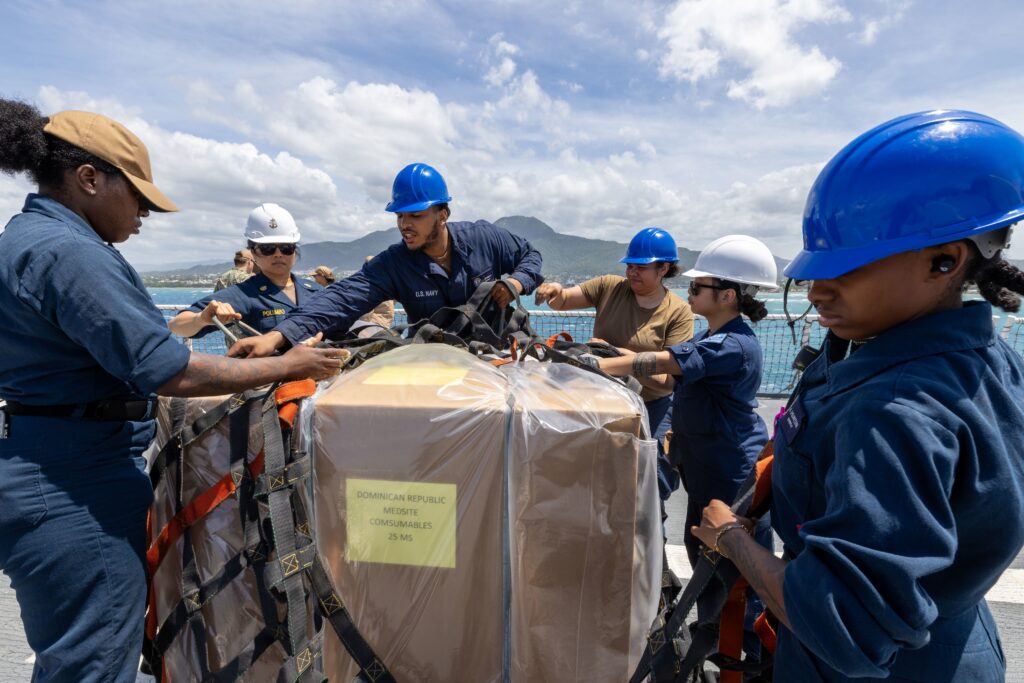
PUERTO PLATA, Dominican Republic (July 15, 2025) Sailors assigned to the Mercy-class hospital ship USNS Comfort (T-AH 20) load medical site cargo aboard Comfort in Puerto Plata, Dominican Republic during Continuing Promise 2025, July 15, 2025. (U.S. Navy photo by MC2 Alfredo Marron)
PUERTO PLATA, Dominican Republic – The Mercy-class hospital ship USNS Comfort (T-AH 20) arrived in Puerto Plata, Dominican Republic for the fourth mission stop of Continuing Promise 2025 (CP25), July 15, 2025.
“It is an honor and a privilege to leave our footprint in the Dominican Republic,” said Capt. Grace Key, commanding officer, Medical Treatment Facility aboard Comfort. “From the medical site and community relations, to the repairs the Seabees will make to the facilities, we will strengthen our partnership with the people of the Dominican Republic.”
Comfort and Dominican medical professionals will work side-by-side to provide medical care to the community of Puerto Plata. By working together and exchanging knowledge, the Dominican Republic and partners in the region can maintain regional stability as a team and work collectively in the event of natural disasters, medical catastrophes, or regional conflict.
“Throughout Continuing Promise, the clinical staff and personnel have welcomed us with open arms at every port visit,” said Lt. j.g. Althea Caraballo, the Puerto Plata medical site assistant officer in charge. “I am excited to be in Dominican Republic and very inspired by our partnerships and the opportunity to expand our professional and cultural horizons.”
Medical care during the Dominican Republic mission stop will be provided at Polideportivo, Puerto Plata and will include services in adult medicine, pediatrics, dental, optometry, women’s health, dermatology, cardiology, physical therapy, nutrition, preventative medicine, radiology, and pharmacy.
“This mission is a valuable opportunity to deepen cooperation between the United States and the Dominican Republic, particularly in the areas of security and humanitarian assistance,” said Lt. Col. Lowell D. Krusinger, senior defense official/defense attaché, U.S. Embassy Santo Domingo. “We’re proud to see U.S. and Dominican medical professionals working shoulder to shoulder aboard the USNS Comfort, including seven Dominican providers who are lending their expertise to benefit communities across six countries on the ship’s tour.”
Additionally, Comfort’s medical personnel will conduct subject matter expert exchanges (SMEE) with Dominican health professionals, to include tactical combat casualty care (TCCC) and round tables on preventative medicine, nutrition, and wound care. U.S. Army veterinarians embarked aboard Comfort from the 248th Medical Detachment Veterinary Service Support will conduct a dairy farming SMEE and K-9 tactical causality combat care.
This visit marks the sixth Continuing Promise visits the Dominican Republic and the fifth visit from Comfort. The last time Comfort visited the Dominican Republic was during Continuing Promise 2022, where the medical team treated 4,435 patients at sites in Santo Domingo and Azua, as well as conducted 87 surgeries aboard Comfort.
“I am excited to be here as we bring the same service offered to other countries to my home country,” said Dominican Republic 1st Lt. Luiz Rameriez, doctor of obstetrics and gynecology embarked aboard Comfort. “I am excited for the U.S. service members to tour our facilities and to see how we can improve and impact the overall health of the population.”
The CP25 mission in Dominican Republic also includes a Humanitarian Assistance and Disaster Relief (HA/DR) SMEE and a table-top exercise with local responders. Sailors aboard Comfort will also support the region through a variety of community relations events to include a beach clean-up and performances from the U.S. Fleet Forces band “Unchartered Waters.”
“This mission is a blessing, there are people not as fortunate to receive advanced medical care and we are able to provide it while we are here,” said Hospitalman Joseclaudia Garcia, a food service associate assigned to Comfort with Dominican heritage. “The Dominican people will really feel very appreciated that we get to share these engagements with them. I am very excited my fellow service members will get to experience my culture first hand!”
CP25 marks the 16th mission to the region since 2007 and the eighth aboard Comfort. The mission will foster goodwill, strengthen existing partnerships with partner nations, and encourage the establishment of new partnerships among countries, non-federal entities, and international organizations.
U.S. Naval Forces Southern Command/U.S. 4th Fleet supports U.S. Southern Command’s joint and combined military operations by employing maritime forces in cooperative maritime security operations to maintain access, enhance interoperability, and build enduring partnerships in order to enhance regional security and promote peace, stability and prosperity in the Caribbean, Central and South American region.
Learn more about USNAVSOUTH/4th Fleet news and photos, visit facebook.com/NAVSOUS4THFLT, https://www.fourthfleet.navy.mil/, X – @ NAVSOUS4THFLT, and https://www.linkedin.com/company/u-s-naval-forces-southern-command-u-s-4th-fleet
Fincantieri Brings Together Thought Leaders to Discuss U.S. Shipbuilding Renaissance
WASHINGTON, D.C. – July 16, 2025 – Fincantieri, the global leader in high-complexity shipbuilding, hosted “FULL SPEED AHEAD: The U.S. Shipbuilding Renaissance” yesterday in Washington, D.C., bringing together senior voices from government, industry, and the national security community to examine the strategic future of American maritime power.
The event opened with remarks from George Moutafis, newly appointed CEO of Fincantieri Marine Group (FMG), and Jan Allman, CEO of Fincantieri Marinette Marine, who reaffirmed the company’s long-term commitment to the United States through its unique “System of Shipyards” across Wisconsin. This advanced industrial network—operating in Marinette, Sturgeon Bay, Green Bay and Florida —employs more than 3,000 people and stands as a cornerstone of Midwest manufacturing resurgence.
Moderated by Vice Adm. Rick Hunt, President of FMG, the expert panel featured Dr. Cynthia Cook (Center for Strategic and International Studies), Hon. Russell Rumbaugh (Atlantic Council), and Dr. Stacie Pettyjohn (Center for a New American Security). The discussion focused on the evolving defense-industrial landscape and how the U.S. can rebuild a resilient, sovereign shipbuilding base.
Closing the event, Pierroberto Folgiero, CEO and Managing Director of Fincantieri, stated: “This is a defining moment for American shipbuilding—and Fincantieri is here to stay. We are not just investing in infrastructure; we are investing in the future of maritime security, industrial innovation, and the skilled workforce that powers it. With a new management team leading our U.S. operations, we are accelerating our commitment to deliver next-generation capabilities in full alignment with U.S. strategic priorities.”
Looking ahead, Fincantieri is focused on strengthening every dimension of its U.S. presence. The company is advancing innovation across its operations to deliver mission-driven platforms and digitalized shipyards. It is also expanding its supplier base to ensure long-term industrial sustainability while investing in the training and upskilling of the next generation of American shipbuilders. The company’s Sustainable Shipyards™ model is setting a new standard for environmental and operational excellence, making shipbuilding not only stronger, but cleaner and more future-ready.
With more than $800 million invested in U.S. facilities and over 900 suppliers across 43 states, Fincantieri brings to the table a proven industrial model, a resilient supply chain, and an experienced workforce of over 3,000 employees in Wisconsin. Leveraging its global expertise and advanced capabilities, Fincantieri stands ready to support the United States in strengthening its shipbuilding industrial base—through innovation, execution excellence, and long-term strategic partnership.
Yemeni Partners Successfully Interdict Iranian Weapons Shipment Bound for Houthis
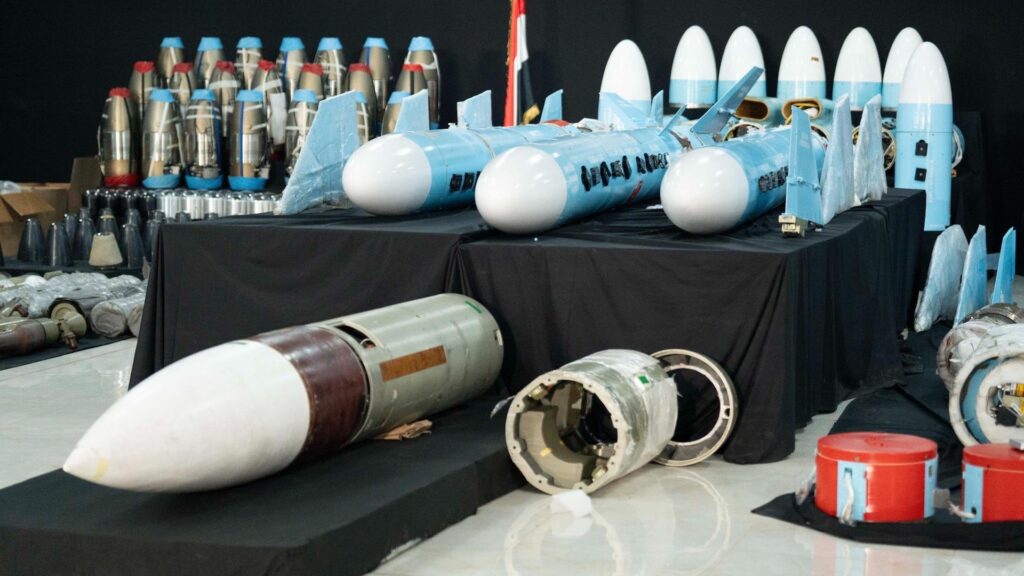
TAMPA, Fla. – Congratulations to the Yemeni National Resistance Forces (NRF), led by Gen. Tareq Saleh, for the largest seizure of Iranian advanced conventional weapons in their history.
The NRF intercepted and seized over 750 tons of munitions and hardware to include hundreds of advanced cruise, anti-ship, and anti-aircraft missiles, warheads and seekers, components as well as hundreds of drone engines, air defense equipment, radar systems, and communications equipment. According to the NRF, there were manuals in Farsi and many of the systems were manufactured by a company affiliated with the Iranian Ministry of Defense that is sanctioned by the United States. The illegal shipment was intended for use by the Iranian-backed Houthis
The actions of the NRF support the United Nations Security Council Resolution (UNSCR) and are a direct reflection of their commitment to a safe Yemen, Red Sea and Gulf of Aden.
Gen. Michael Erik Kurilla, commander of CENTCOM, praised the actions of the NRF saying, “We commend the legitimate government forces of Yemen who continue to interdict the flow of Iranian munitions bound for the Houthis. The interdiction of this massive Iranian shipment shows that Iran remains the most destabilizing actor in the region. Limiting the free flow of Iranian support to the Houthis is critical to regional security, stability, and freedom of navigation.”