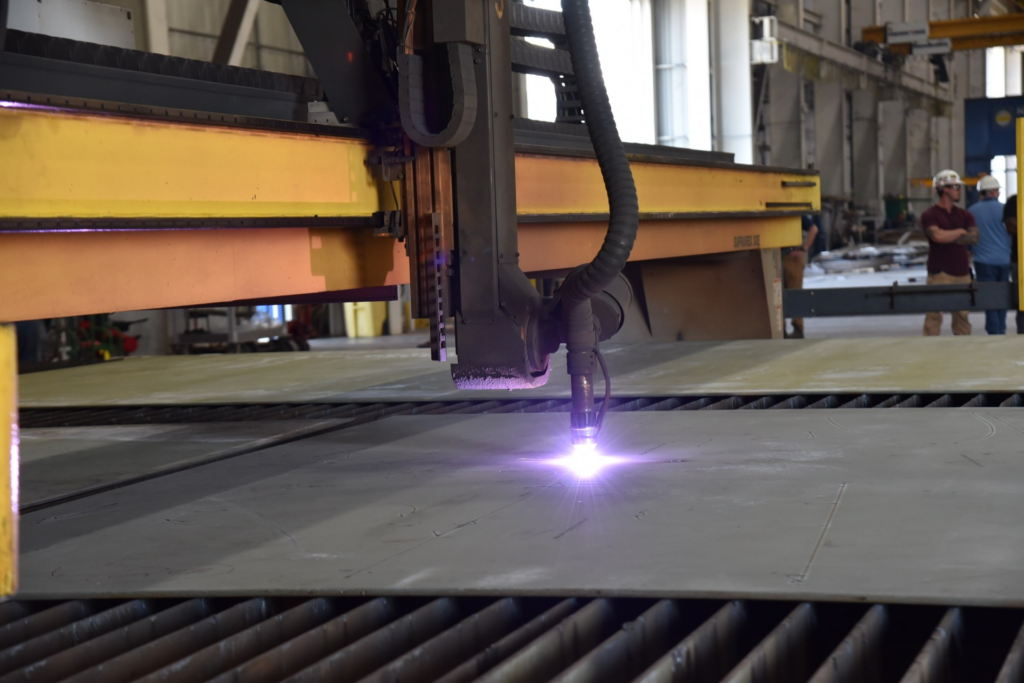
BlackSea Technologies Awarded $256 Million Navy Contract
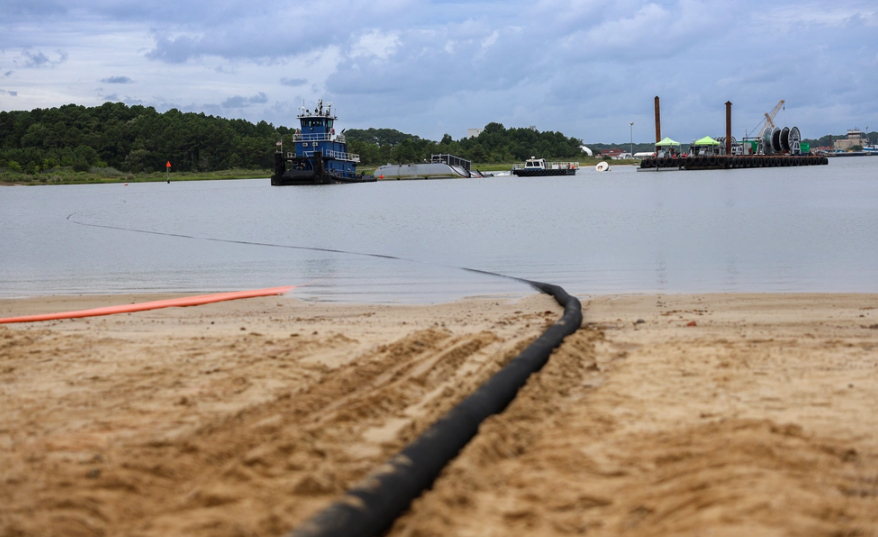
Designed to replace and significantly improve upon the legacy Offshore Petroleum Distribution System, SPDS will supply bulk fuel to land forces from the sea in expeditionary and contested environments.Photo from BlackSea Technologies
From BlackSea Technologies
BALTIMORE, Md., May 5th, 2026, BlackSea Technologies announced today that it was awarded a five-year, $256 million contract to build and support the Seabased Petroleum Distribution System (SPDS) program. Under the contract, BlackSea will construct up to five SPDS units and support equipment from May 2026 through March 2031. Primary production will be centered in Baltimore with additional work supported by partners along the Gulf Coast.
Managed by Navy PMO 314, Logistics Over the Shore, SPDS is a critical expeditionary fuel distribution capability designed to move bulk fuel from sea to shore in locations where traditional infrastructure does not exist. As demonstrated in Navy testing, the system supports the full mission profile of offshore deployment, fuel transfer, and distribution, giving joint and allied forces a more flexible and resilient means of sustaining operations ashore.
The Navy has described the system as a next generation solution that provides a more survivable bulk fuel storage solution and helps meet emerging operational requirements in contested and infrastructure limited environments.
“This award positions BlackSea Technologies to deliver a capability that directly supports expeditionary readiness and operational endurance in contested environments” said Charles Engstrom, BlackSea’s SPDS Program Manager. “SPDS answers a real logistics challenge for the joint force, getting fuel where it is needed, when fixed infrastructure is unavailable or at risk. We are proud to support Navy PMO 314 on a program that strengthens the nation’s ability to project and sustain power from the sea.”
BlackSea’s work under the contract will draw on the company’s maritime engineering, production, and integration expertise, while leveraging a trusted industrial base in Baltimore and partners along the Gulf Coast. Together, that team will help deliver a system that enhances flexibility, resilience, and readiness for future operations.
U.S. Forces Disable Vessel in Gulf of Oman Attempting to Violate Blockade
From U.S. Central Command, May 6, 2026
TAMPA, Fla. — U.S. forces operating in the Gulf of Oman enforced blockade measures by disabling an Iranian-flagged unladen oil tanker attempting to sail toward an Iranian port at 9 a.m. ET, May 6.
U.S. Central Command (CENTCOM) forces observed M/T Hasna as it transited international waters enroute to an Iranian port on the Gulf of Oman. American forces issued multiple warnings and informed the Iranian-flagged vessel it was in violation of the U.S. blockade.
After Hasna’s crew failed to comply with repeated warnings, U.S. forces disabled the tanker’s rudder by firing several rounds from the 20mm cannon gun of a U.S. Navy F/A-18 Super Hornet launched from USS Abraham Lincoln (CVN 72). Hasna is no longer transiting to Iran.
The U.S. blockade against ships attempting to enter or depart Iranian ports remains in full effect. CENTCOM forces continue to act deliberately and professionally to ensure compliance.
NOAA Awards $21.6M for Uncrewed Systems to Support New Charting, Mapping Vessels
From Keeley Belva, NOAA, May 6, 2026
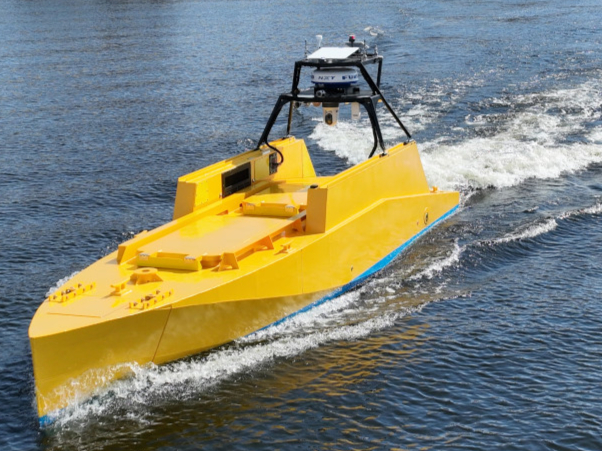
NOAA has announced a $21,600,909 million award for the purchase of uncrewed marine systems to be used on new charting and mapping vessels being built for the agency. This will support NOAA’s mission to deliver tools and information to help mariners safely transport the $2.3 trillion worth of cargo that comes in and out of the nation’s ports and harbors. The contract was awarded to Chance Maritime Technologies from Lafayette, Louisiana for up to eight total systems over five years.
The new systems offer a spectrum of command and control options. These include direct operator control, supervised control with semi-autonomous capabilities like collision avoidance and dynamic course tracking, and, for certain circumstances, fully autonomous operations. The collaborative design of the vessels and uncrewed marine systems ensure that NOAA is compliant with regulations and help to ensure safe operations.
“Uncrewed systems provide more efficiency in data collection, ensuring that our nation remains at the forefront of scientific innovation,” said Neil Jacobs, Ph.D., NOAA administrator. “The Administration’s focus on integrating emerging technologies into agency operations allows NOAA to serve the public more effectively and demonstrate our leadership in scientific collaboration on the world stage.”
In 2025, NOAA hosted the keel-layings for two new charting and mapping vessels to expand the NOAA fleet. The uncrewed systems will be used on those vessels, Surveyorand Navigator, to complement traditional seafloor mapping methods. The systems will also be equipped to support other data collection efforts such as fisheries acoustic surveys.
“NOAA is uniquely positioned to leverage cutting edge maritime technology to efficiently collect data in some of the ocean’s most challenging regions,” said Rear Adm. Chad M. Cary, NOAA Corps director and NOAA Marine and Aviation Operations assistant administrator. “Teaming these systems with Surveyor and Navigator achieves a major waypoint on the charted course to building the hybrid fleet of the future.”
NOAA Marine and Aviation Operations manages and operates NOAA’s fleet of 15 research and survey ships and 10 specialized environmental data-collecting aircraft. Operated and maintained by civilians and NOAA Commissioned Officer Corps officers, this fleet is one of the nation’s largest dedicated to federal research. The vessels—which range from large oceanographic research vessels to smaller charting ships—support a wide range of marine activities, including fisheries surveys, nautical charting, and ocean and marine studies.
Terradepth Mines Seabed Intelligence for Maritime Customers
By Richard R. Burgess, Senior Editor
ARLINGTON, Va. — The seabeds of the world’s oceans are becoming less mysterious, thanks to companies like Terradepth, a company that provides its clients with geospatial surveys of the seabed to meet their economic, defense, or scientific needs.
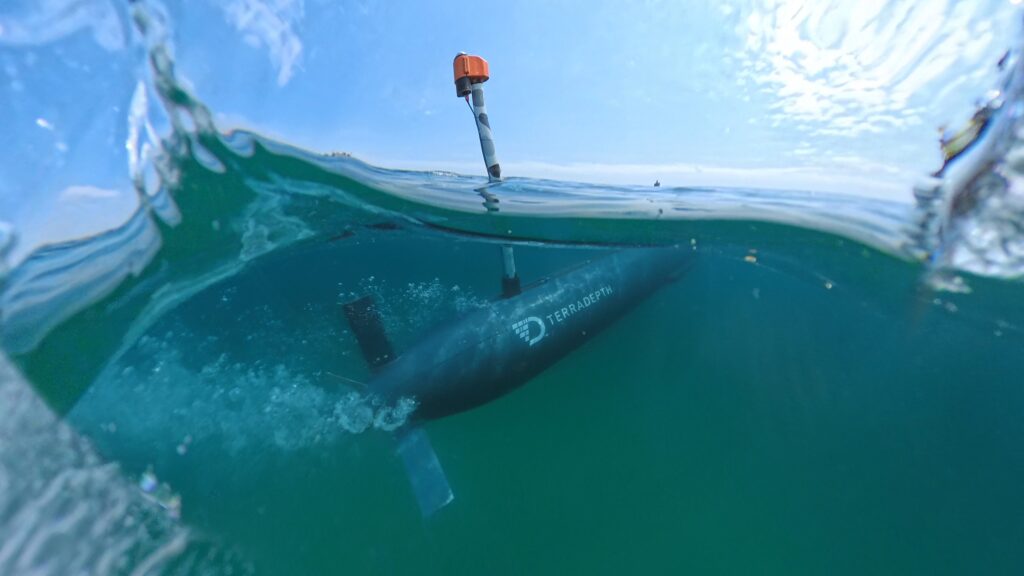
Terradepth Inc., founded in 2018 and based in Austin, Texas, with a facility in Panama Beach, Florida, provides customized robotic surveys of the seabed using autonomous unmanned underwater vehicles (AUVs) and provides data to its customers through its Absolute Ocean intelligence layer software platform for their awareness of their ocean systems and infrastructure.
“Absolute Ocean is a high-resolution map that pulls data from multiple information sources,” said Joe Wolfel, Terradepth founder and chief executive officer, in an interview with Seapower, noting that the data is collected and aggregated into one spot. “That ecosystem drives better and faster decision making [for customers] at scale.”
Wolfel explained that Terradepth takes some ocean data — from NOAA, for example — into the Absolute Ocean data platform that is publicly available to its customers.
“A lot of times customers want to keep their data private and secure, so they have access to al of the publicly available data and obviously their own data holdings in the geospatial platform, Absolute Ocean,” he said.
Wolfel told Seapower that his company builds and deploys its own AUVs and also uses AUVs built by other companies “to the extent that it makes sense.” The company deploys teams equipped with AUVs to areas to be surveyed. The teams can fly to ports worldwide and deploy on vessels of opportunity to execute their surveys. He said the “major cost driver of ocean data acquisition is the requirement for that surface vessel.”
Terradepth’s missions are varied: looking for mines, a leak in an oil pipeline, a break in a data transmission cable. Its data is used in sectors including defense and national security; maritime insurance, government; regulation; scientific research, offshore energy; and telecommunications, according to the company website.
Terradepth cooperates with other ocean technology companies such as Saildrone, Anduril, Kongsberg, and Oceaneering. Many of its customers and missions are not disclosable. Its customers have included NOAA. The U.S. Navy uses the company software for undersea applications.
Wolfel is a Naval Academy graduate, a former Navy SEAL officer who later worked for the McCrystal Group where he was exposed to a lot of emerging technologies, including Gate Technologies, that made “about half the world’s data storage,” he said. He recalled the 2005 collision of the attack submarine USS San Francisco with an uncharted seamount and how the incident highlighted the dearth of knowledge about the world’s seabeds.
“There was just a huge gap in our understanding of that environment,” he said. “That stuck with me … and gave me the opportunity to do something special.”
“We’re trying to drastically reduce human cognitive load with respect to high-resolution seabed data,” Wolfel said. “The amount of human involvement that occurs throughout that ocean operating system between data acquisition, data processing; before we built Absolute Ocean, we were keeping data on hard disk drives and Fedexing it around the world, or hand carrying them. We have to be able to reduce human in the loop, human on the loop with respect to that entire ecosystem,” referring to the ocean’s 310 billion square kilometers of seabed.
Coast Guard, Navy Interdict Suspected Drug Vessel off Haiti
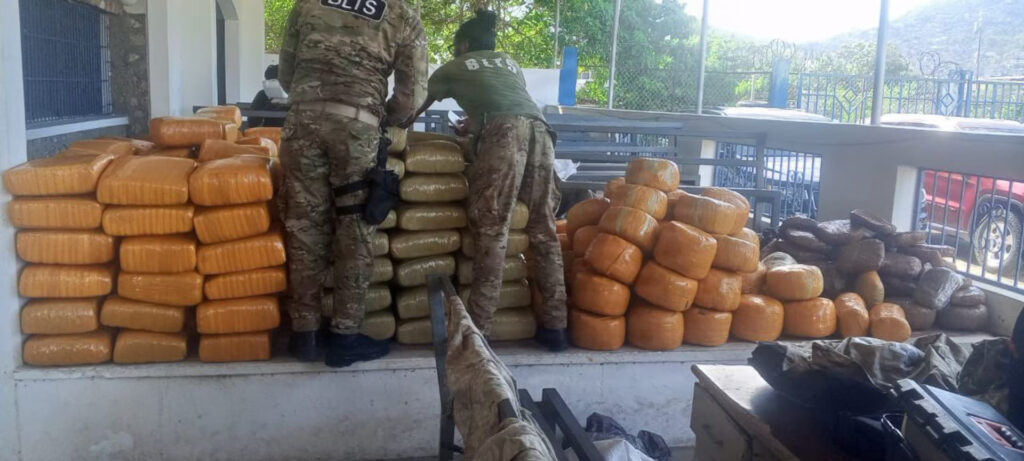
Haitian National Police members inspect interdicted drugs following a drug interdiction off Haiti, May 3, 2026. At the behest of the Haitian government, a U.S. Coast Guard law enforcement detachment deployed on the USS Billings stopped a suspected drug vessel carrying approximately 3,200 pounds of marijuana. (U.S. Coast Guard photo)
From U.S. Coast Guard Southeast District
MIAMI – A Coast Guard Cutter Venturous law enforcement boarding team and a USS Billings helicopter crew stopped a suspected drug smuggling vessel, Thursday, approximately 8 miles off Mole Saint-Nicolas, Haiti.
With the permission of the Haitian government, the boarding team’s investigation resulted in approximately 3,200 pounds of marijuana being found, worth approximately $3.8 million, and one person was detained. The contraband and suspected smuggler were transferred to Haitian authorities, Sunday.
“In close coordination with the Haitian government, the U.S. Coast Guard remains steadfast in our shared mission to safeguard the maritime approaches of the Caribbean,” said Lt. Cmdr. Cory Arsenault, the Coast Guard liaison officer for Haiti. “Together, we are strengthening joint operations to disrupt the illegal flow of narcotics, protect vulnerable communities, and uphold the security and stability of the region. Our partnership reflects a continued commitment to collaboration, vigilance, and the rule of law.”
The following assets and crews were involved in the interdiction operations:
80% of interdictions of U.S.-bound drugs occur at sea. This underscores the importance of maritime interdiction in combatting the flow of illegal narcotics and protecting American communities from this deadly threat. Detecting and interdicting illicit drug traffickers on the high seas involves significant interagency and international coordination. Joint Interagency Task Force South, in Key West, conducts the detection and monitoring of aerial and maritime transit of illegal drugs. Once an interdiction becomes imminent, the law enforcement phase of the operation begins, and control of the operation shifts to the U.S. Coast Guard for the interdiction and apprehension phases. Interdictions in the Caribbean Sea are performed by members of the U.S. Coast Guard under the authority and control of the Coast Guard Southeast District, headquartered in Miami.
Master Boat Builders Recently Began Module Fabrication for U.S. Navy T-ATS Program
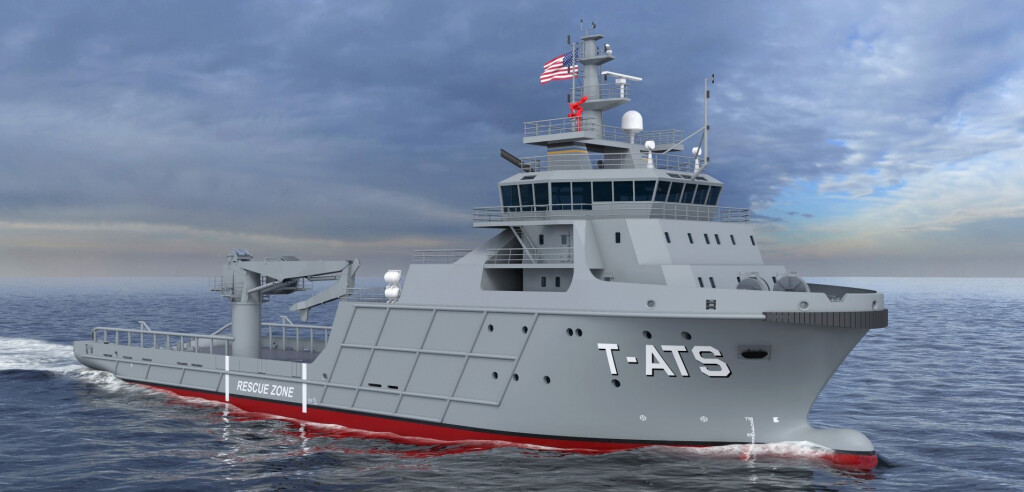
A rendering of a forthcoming U.S. Navy Towing, Salvage, And Rescue Ship. Photo courtesy of Master Boat Builders.
Marks production milestone in Gulf Coast partnership with Austal USA to strengthen naval shipbuilding capacity
From Master Boat Builders Inc.
CODEN, Ala. – Master Boat Builders, Inc. (“Master Boat”) recently announced the commencement of module fabrication for the U.S. Navy’s Navajo-class Towing, Salvage, and Rescue Ship (T-ATS) program under its partnership with Austal USA. The start of fabrication marks a significant milestone as Master Boat advances its role in the Navy’s effort to strengthen and diversify the domestic shipbuilding industrial base.
“Starting fabrication on these modules is an exciting and proud moment for our team,” said Garrett Rice, President of Master Boat Builders. “We said we were ready to take on complex Navy work, and now we’re proving it. This is exactly the kind of program that showcases what Gulf Coast shipbuilders can do.”
Master Boat is fabricating two T-ATS hull modules at its Coden shipyard, located approximately 30 minutes from Austal USA’s Mobile facility. Upon completion, the modules will be transported to Austal USA for final erection and outfitting.
The T-ATS program is designed to replace the aging fleet of ocean tugs and rescue and salvage ships with a modern, multi-mission platform capable of open-ocean towing, salvage and recovery operations, diving support, and humanitarian and disaster response. Master Boat’s participation in the program also supports workforce development and strengthens regional shipbuilding capacity along the Gulf Coast, where the company currently employs more than 400 people at its Coden shipyard.
FRCE Reaches Milestone with Global TransPark Lease Agreement
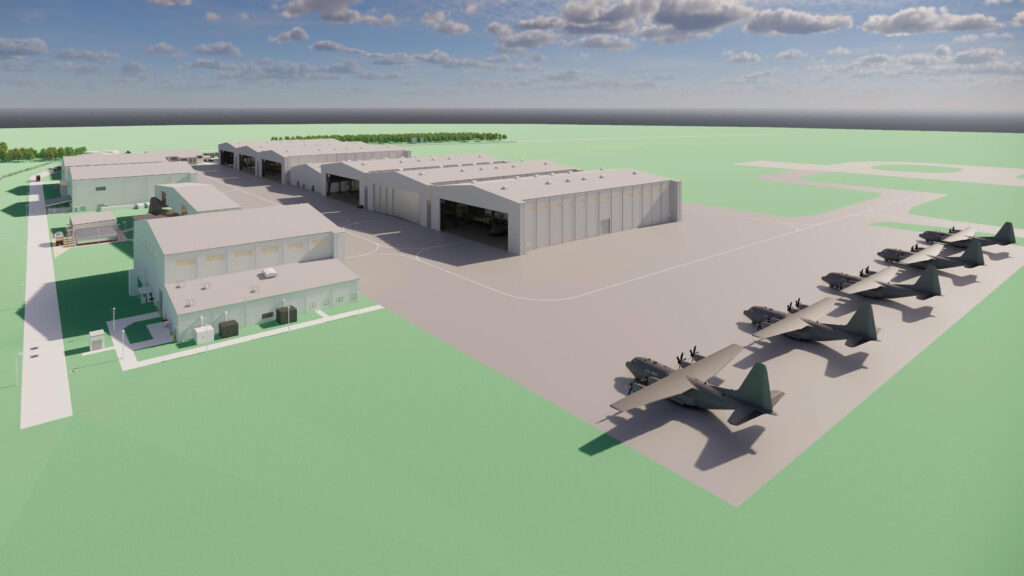
An artist rendering shows the planned completion of the Fleet Readiness Center East (FRCE) C-130 maintenance complex at the North Carolina Global TransPark in Kinston. The project hit a major milestone April 15 when the Navy officially signed a lease agreement for the property with the state of North Carolina, marking the first partnership of this type in the Department of War. (Photo illustration)
From Fleet Readiness Center East , May 4, 2026
MARINE CORPS AIR STATION CHERRY POINT, N.C. – The new Fleet Readiness Center East (FRCE) aircraft maintenance, repair and overhaul facility at the North Carolina Global TransPark in Kinston hit another milestone April 15 when the Navy officially signed a lease agreement for the property.
The agreement with the state of North Carolina provides FRCE with 65 acres at the Global TransPark, paving the way for the command’s maintenance support of Navy and Marine Corps C/KC-130 Hercules/Super Hercules transport aircraft and Air Force HH-60W Jolly Green II search and rescue helicopters, scheduled to begin in September.
“This historic initiative will increase the nation’s depot capacity for both the C-130 and HH-60W aircraft, significantly enhancing fleet readiness, while simultaneously creating hundreds of highly skilled technical jobs, providing a major economic boost to eastern North Carolina,” said FRCE Commanding Officer Capt. Randy J. Berti.
“We’re also anticipating that our team – working in this new, state-of-the-art facility – will provide unprecedented efficiency due to the thoughtful flow and design,” Berti continued.
The partnership between the Navy and the state of North Carolina is the first of its kind within the Department of War and represents an innovative collaboration. The idea for the project originated more than six years ago to address both the need for a C-130 maintenance facility on the east coast, and the lack of adequate space for such a facility.
In 2023, state lawmakers approved $350 million in funding for Global TransPark to conduct site improvements to accommodate the 750,000-square-foot FRCE facility. The Navy will operate the depot under a long-term lease executed by Naval Facilities Engineering Systems Command (NAVFAC). The arrangement resulted in an estimated $700 million cost avoidance for the U.S. government and cut the construction timeline by more than 50%.
“The acquisition strategy we executed in partnership with the State of North Carolina is just one example of how NAVFAC is delivering warfighting infrastructure in new and innovative ways while saving millions of dollars and shaving years off the delivery schedule,” said NAVFAC Commander Rear Adm. Jeff Kilian. “We know that traditional military construction isn’t always the best solution. At FRCE, we addressed a critical C-130 infrastructure gap on the east coast by combining unique authorities made available by Congress for real estate leases and intergovernmental support agreements.”
The Navy-North Carolina partnership is pioneering in its approach, Berti noted.
“This collaboration could serve as a repeatable, scalable model for future infrastructure projects across the Department of War, demonstrating how federal and state entities can partner to deliver critical capabilities faster and more cost-effectively,” he explained. “This groundbreaking solution could be a true game changer in the way the organic industrial base provides support to the warfighter.”
Along with enhanced aviation readiness for the nation’s warfighters, leaders anticipate the facility will bring growth to eastern North Carolina in the form of jobs and economic impact.
“The long-term agreement will bring economic prosperity to eastern North Carolina and support our nation’s military readiness,” North Carolina Gov. Josh Stein said in an official release. “North Carolina’s strong defense and aviation tradition and world-class workforce make this announcement a perfect partnership.”
FRCE is North Carolina’s largest maintenance, repair, overhaul and technical services provider, with more than 3,600 civilian, military and contract workers. Its annual revenue exceeds $865 million. The depot provides service to the fleet while functioning as an integral part of the greater U.S. Navy; Naval Air Systems Command; and Commander, Fleet Readiness Centers.
Demonstration Sets New Benchmark for Persistent USV Operations,Directly Supporting Evolving U.S. Government Concepts for Maritime Defense and Deterrence
From Maritime Tactical Systems Inc.
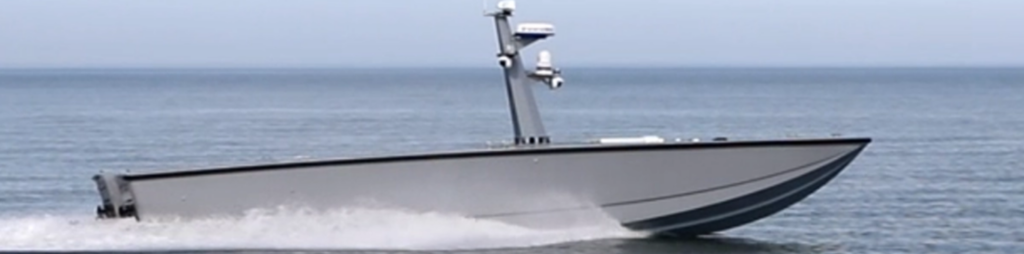
Melbourne, Florida, May 5, 2026 — Maritime Tactical Systems, Inc. (MARTAC) announced today that its T38 Devil Ray unmanned surface vessel (USV) has completed a record-setting 8-day, completely autonomous mission off the coast of California, demonstrating a level of endurance, reliability and operational control not previously achieved in its class.
The USV, owned and operated by Naval Air Warfare Center Weapons Division’s (NAWCWD) Point Mugu Sea Range through its Future Capabilities Office’s Blue Water Instrumentation (BWI), successfully demonstrated extended autonomous operations in open-ocean conditions. This is critical to BWI’s goal of advancing the Navy’s ability to conduct test and evaluation programs in challenging maritime environments where traditional, fixed position instrumentation is unavailable.
The demonstration highlighted the T38’s ability to operate autonomously for extended periods, maintain station in dynamic sea states, and support a range of mission profiles.
Unique from scripted government sponsored events, no chase boats or escorts were involved in the operation that mirrored real-world operational requirements. The T38 safely navigated around multiple static and mobile contacts during the underway period, further demonstrating that its autonomy stack is compliant with the International Regulations for Preventing Collisions at Sea 1972 (COLREG).
The mission emphasized persistence over speed, with the vessel averaging just over 4 knots per hour, validating its role as a long-endurance, forward-deployed asset capable of sustained presence rather than short-duration sprint operations. In short intervals where burst speed was required, the vessel demonstrated its trademark capability of 50+ knots per hour.
A defining element of the mission was a deliberate two-day alternating single-engine operational period conducted approximately 400 nautical miles offshore. This was not a failure scenario; it was an intentional maneuver to extend loiter time and evaluate endurance under reduced propulsion conditions. During this period, the T38 autonomously maintained its designated station, continued data collection, and executed mission objectives without degradation, reinforcing the platform’s efficiency, control logic and mission flexibility.
Sea conditions averaged Sea State 3, a slight sea condition with wave heights between 1.5 to 4 feet, with the vessel experiencing conditions up to Sea State 5 and wave heights reaching 10 feet, further stressing the platform across propulsion, autonomy and hull performance envelopes.
Critically, performance in these conditions underscored the inherent stability advantages of the T38’s catamaran hull design. The twin engine, twin-hull configuration provides a wide beam and reduced roll, enabling the platform to remain steady in higher sea states. This stability directly translates to improved mission effectiveness, whether collecting high-fidelity sensor data, maintaining precise station-keeping or supporting targeting and firing solutions where platform stability is essential.
The mission also validated extended range performance, confirming that the T38, when operating at 100% fuel capacity, is capable of exceeding 2,400 nautical miles of operational range under endurance-focused profiles.
“This mission was designed to test more than endurance, it validated how the system performs when pushed into extended, efficiency-driven operations at distance,” said Karl Van Deusen, Senior Vice President for Federal and Government Sales. “Intentional single-engine operations at 400 nautical miles offshore, combined with continuous autonomy over eight days, demonstrate a level of operational control and flexibility that is directly aligned with real-world mission demands.”
This milestone event establishes a new benchmark for persistent unmanned maritime operations, particularly in scenarios requiring extended loiter, distributed presence and reduced logistics dependency. The ability to sustain operations for over a week, and to intentionally modulate propulsion to extend mission duration, directly supports the emerging need for solutions in contested and remote maritime environments.
The carbon fiber T38 Devil Ray, a 38-foot autonomous surface vessel, is designed for intelligence, surveillance and reconnaissance (ISR), maritime domain awareness, logistics support and distributed fleet operations. Built on MARTAC’s open-architecture autonomy framework, the platform supports modular payloads and resilient communications, enabling mission execution in denied or degraded conditions.
USS Wichita Returns to Naval Station Mayport
May 5, 2026
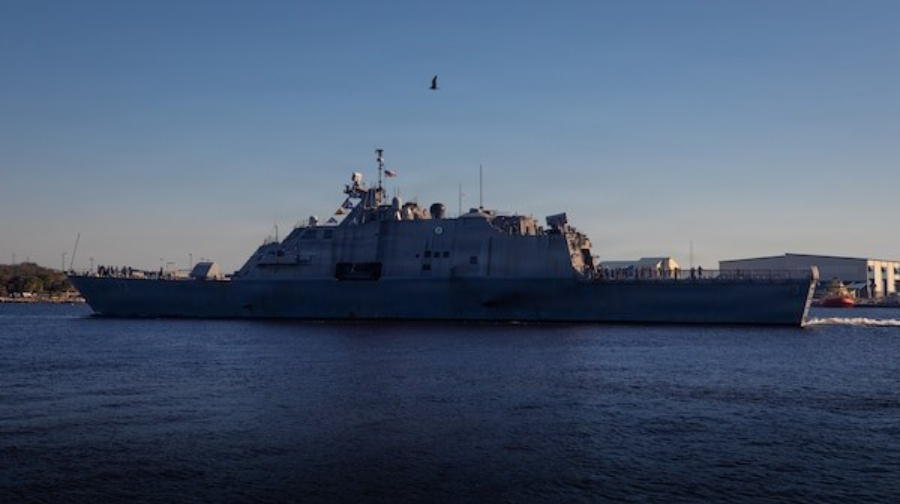
MAYPORT, Fla. – The Freedom-variant littoral combat ship USS Wichita (LCS 13), operating under U.S. Northern Command (USNORTHCOM) in the Gulf of America, returned to Naval Station Mayport after completing a six-month deployment on May 4, 2026.
Wichita assumed duties previously executed by the Freedom-variant littoral combat ship USS St. Louis (LCS 19) in support of USNORTHCOM’s border security objectives.
“The crew of Wichita is grateful for the opportunity to support and defend the homeland,” stated Cmdr. Travis Snover, Wichita’s commanding officer. “During the deployment we demonstrated the U.S. commitment to international cooperation and supporting regional security and prosperity. Our officers and Sailors onboard welcomed every opportunity to collaborate with our partners, strengthening our interoperability and shared goals in the area.”
In support of USNORTHCOM’s mission to restore territorial integrity at the U.S. southern border, Wichita reinforced the nation’s commitment to border security by enhancing maritime efforts and supporting interagency collaboration. The ship’s deployment highlights the Department of War and Navy’s dedication to national security priorities, contributing to a coordinated and robust response to combating maritime-related terrorism, weapons proliferation, transnational crime, piracy, environmental destruction, and illegal seaborne immigration.
Wichita brought maritime capabilities in response to Presidential executive orders and a national emergency declaration and clarification of the military’s role in protecting the territorial integrity of the United States.
Wichita is assigned to Littoral Combat Ship Squadron (LCSRON) 2 and homeported in Mayport, Fla. The Littoral Combat Ship (LCS) is a fast, agile, mission-focused warship designed to operate in near-shore environments to counter 21st-century threats. It is a class of small surface combatants armed with capabilities to defeat challenges in the world’s littorals. LCS can operate independently or in high-threat scenarios as part of a networked battle force that includes larger, multi-mission surface combatants such as cruisers and destroyers.
U.S. 2nd Fleet, reestablished in 2018 in response to the changing global security environment, develops and employs maritime ready forces to fight across multiple domains in the Atlantic and Arctic in order to ensure access, deter aggression and defend U.S., allied, and partner interests.
Austal USA Starts Construction on Fifth Navy Utility Landing Craft
From Austal USA, May 4, 2026
MOBILE, Ala. –Austal USA celebrated the start of construction on its fifth U.S. Navy Landing Craft Utility (LCU) 1700-class vessel, LCU 1714, at its Mobile, Ala. ship manufacturing facility on April 27, 2026.
This progress highlights continued momentum for the LCU program, a key component of the U.S. Navy and U.S. Marine Corps’ expeditionary capabilities. Austal USA was awarded a $91.5 million contract in September 2023 for the design and construction of up to 12 LCUs and associated support efforts. Currently, five construction contracts have been awarded to Austal USA.
“Austal USA is proud to continue advancing the LCU program with the start of construction on LCU 1714,” said Bill Bingle, acting vice president of surface ship programs. “This milestone reflects the strength of our serial production approach and the dedication of our workforce to delivering high-quality ships that support critical Navy and Marine Corps missions.”
LCU vessels are deployed from the Navy’s amphibious assault ships and operate across a wide range of missions, transporting Marine Corps vehicles, equipment and personnel from ship to shore and back. These platforms provide significant heavy-lift capability, carrying payloads comparable to multiple C-17 aircraft.
LCU 1710, the first vessel in the program constructed at Austal USA, recently conducted acceptance trials and will be delivered to the Navy soon. The program continues to scale as part of Austal USA’s growing steel shipbuilding portfolio.
The LCU program is one of three ship platforms under serial production at Austal USA. In total, 12 ships are under construction across the company’s programs with three vessels preparing for sea trials. This demonstrates the company’s ability to execute multiple programs simultaneously while maintaining production efficiency.
Austal USA continues to leverage its advanced manufacturing facilities, uniquely supporting both aluminum and steel shipbuilding, along with lean production techniques to meet the Navy’s evolving fleet requirements and deliver ships on schedule.