Secretary of Defense Lloyd J. Austin III announced today that the president has made the following nominations:
Navy Capt. Erin E. O. Acosta for appointment to the grade of rear admiral (lower half). Acosta is currently serving as chief of staff, Naval Meteorology and Oceanography Command, Stennis Space Center, Mississippi.
Navy Capt. Walter H. Allman III for appointment to the grade of rear admiral (lower half). Allman is currently serving as commandant, U.S. Naval Academy, Annapolis, Maryland.
Navy Capt. Andrew M. Biehn for appointment to the grade of rear admiral (lower half). Biehn is currently serving as director of Development and Integration, Program Executive Officer for Integrated Warfare Systems, Washington Navy Yard, Washington, D.C.
Navy Capt. Wesley P. Bringham for appointment to the grade of rear admiral (lower half). Bringham is currently serving as strategic integration group director for the vice chief of naval operations, Office of the Chief of Naval Operations, Pentagon, Washington, D.C.
Navy Capt. Kertreck V. Brooks for appointment to the grade of rear admiral (lower half). Brooks is currently serving as transformation integration branch head, N16, Office of the Chief of Naval Operations, Washington, D.C.
Navy Capt. Richard G. Burgess for appointment to the grade of rear admiral (lower half). Burgess is currently serving as commanding officer, USS Gerald R. Ford (CVN 78), Norfolk, Virginia.
Navy Capt. Daryle D. Cardone for appointment to the grade of rear admiral (lower half). Cardone is currently serving as aircraft carrier branch head, N98, Office of the Chief of Naval Operations, Pentagon, Washington, D.C.
Navy Capt. Cameron R. Chen for appointment to the grade of rear admiral (lower half). Chen is currently serving as branch head, N957, Office of the Chief of Naval Operations, Pentagon, Washington, D.C.
Navy Capt. Jereal E. Dorsey for appointment to the grade of rear admiral (lower half). Dorsey is currently serving as special assistant for public affairs to the Chairman of the Joint Chiefs of Staff, Joint Staff, Pentagon, Washington, D.C.
Navy Capt. Matthew J. Duffy for appointment to the grade of rear admiral (lower half). Duffy is currently serving as director, Operations Division, Fiscal Management and Budget, Office of the Secretary of the Navy, Pentagon, Washington, D.C.
Navy Capt. Reginald S. Ewing III for appointment to the grade of rear admiral (lower half). Ewing is currently serving as fleet surgeon, U.S. Fleet Forces Command, Norfolk, Virginia.
Navy Capt. Damian D. Flatt for appointment to the grade of rear admiral (lower half). Flatt is currently serving as assistant judge advocate general (operations and management), Office of the Judge Advocate General of the Navy, Washington Navy Yard, Washington, D.C.
Navy Capt. John P. Friedmann for appointment to the grade of rear admiral (lower half). Friedman is currently serving as executive assistant to the Director, Naval Reactors, Washington Navy Yard, Washington, D.C.
Navy Capt. William K. Gantt Jr. for appointment to the grade of rear admiral (lower half). Gantt is currently serving as director, Senate Liaison Office, Office of Legislative Affairs, Pentagon, Washington, D.C.
Navy Capt. Michael R. Jarrett Jr. for appointment to the grade of rear admiral (lower half). Jarrett is currently serving as chief of staff, Navy Installations Command, Washington Navy Yard, Washington, D.C.
Navy Capt. Daniel L. Lannamann for appointment to the grade of rear admiral (lower half). Lannamann is currently serving as officer in charge/program manager, Program Executive Office for Aircraft Carriers, Washington Navy Yard, Washington, D.C.
Navy Capt. David Loo for appointment to the grade of rear admiral (lower half). Loo is currently serving as division chief, Program and Budget Analysis Division, Joint Staff, Pentagon, Washington, D.C.
Navy Capt. Brian A. Metcalf Jr. for appointment to the grade of rear admiral (lower half). Metcalf is currently serving as acting vice commander, Naval Sea Systems Command, Washington Navy Yard, Washington, D.C.
Navy Capt. Gary G. Montalvo Jr. for appointment to the grade of rear admiral (lower half). Montalvo is currently serving as executive assistant to commander, U.S. Indo-Pacific Command, Camp H.M. Smith, Hawaii.
Navy Capt. Raymond P. Owens III for appointment to the grade of rear admiral (lower half). Owens is currently serving as branch head for Security Cooperation and International Affairs, N51, Office of the Chief of Naval Operations, Pentagon, Washington, D.C.
Navy Capt. Davidtavis M. Pollard for appointment to the grade of rear admiral (lower half). Pollard is currently serving as executive assistant to Commander Naval Air Forces/Naval Air Force, U.S. Pacific Fleet, San Diego, California.
Navy Capt. Matthew T. Pottenburgh for appointment to the grade of rear admiral (lower half). Pottenburgh is currently serving as executive assistant to the Chief of Naval Operations, Office of the Chief of Naval Operations, Pentagon, Washington, D.C.
Navy Capt. William R. Reed for appointment to the grade of rear admiral (lower half). Reed is currently serving as executive assistant to commander, U.S. Fleet Forces Command, Norfolk, Virginia.
Navy Capt. Karrey D. Sanders for appointment to the grade of rear admiral (lower half). Sanders is currently serving as executive assistant to the deputy chief of naval operations, Integration of Capabilities and Resources, N8, Office of the Chief of Naval Operations, Pentagon, Washington, D.C.
Navy Capt. Charles R. Sargeant for appointment to the grade of rear admiral (lower half). Sargeant is currently serving as executive assistant to the vice chief of naval operations, Office of the Chief of Naval Operations, Pentagon, Washington, D.C.
Navy Capt. Benjamin A. Snell for appointment to the grade of rear admiral (lower half). Snell is currently serving as chief of staff, Naval Information Warfighting Development Center, Norfolk, Virginia.
Navy Capt. John W. Stafford for appointment to the grade of rear admiral (lower half). Stafford is currently serving as chief of staff, Submarine Force, U.S. Atlantic Fleet, Norfolk, Virginia.
Navy Capt. Omarr E. Tobias for appointment to the grade of rear admiral (lower half). Tobias is currently serving as commanding officer, Naval Facilities, Washington, D.C.
Navy Capt. Thomas J. Zerr for appointment to the grade of rear admiral (lower half). Zerr is currently serving as chief of staff, Naval Surface Force, U.S. Pacific Fleet, San Diego, California.
Task Force 61/2: Strengthening Crisis Response and Amphibious Readiness Across Europe, Africa
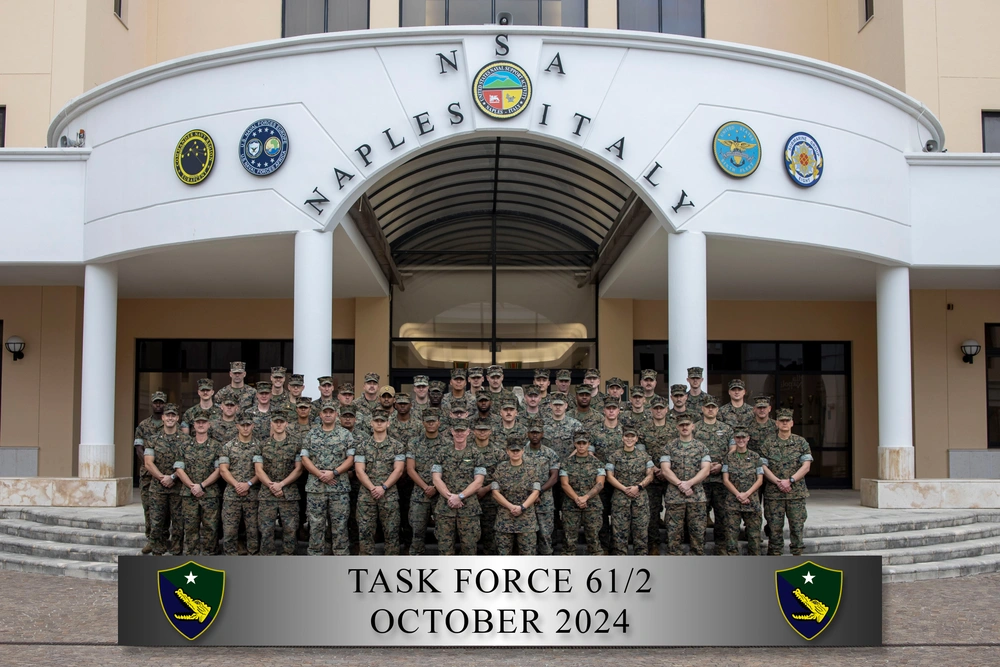
U.S. Marines and Sailors with Task Force 61/2 pose for a group photo at Naval Support Activity, Naples, Italy, Oct. 10, 2024. (U.S. Marine Corps photo by Cpl. Marc Imprevert)
From Task Force 61/2, Nov. 15, 2024
NAPLES, Italy –Task Force 61/2 (TF 61/2) stands at the forefront of the Marine Corps and Navy’s integration efforts in the Mediterranean, enhancing amphibious operations and ensuring that U.S. forces are always ready to respond to any crisis in the region. Based in Naples, Italy, TF 61/2 operates with a scalable presence, supporting Amphibious Ready Group (ARG) and Marine Expeditionary Unit (MEU) deployments in the U.S. European Command (EUCOM) and U.S. Africa Command (AFRICOM) theaters. When the ARG/MEU is not forward deployed in the EUCOM and AFRICOM areas of responsibilities, TF 61/2 maintains a smaller staff in Naples, ready to surge forward to command and control the ARG/MEU or respond to emerging crises in the European and African areas of responsibilities. TF 61/2 is currently staffed by Marines and Sailors from the 2nd Marine Expeditionary Brigade (2d MEB), a subordinate command of II Marine Expeditionary Force (II MEF). Currently, TF 61/2 is commanding and controlling the deployed Wasp Amphibious Ready Group (WSP ARG) composited with the 24th MEU Special Operations Capable (SOC), one of the Marine Corps’ most adaptable and responsive forces. In addition to the ARG/MEU, when forward deployed, TF 61/2 exercises tactical control of Fleet Anti-terrorism Security Team Company, Europe (FASTEUR), as well as reconnaissance and counter-reconnaissance (RXR) forces and other deployed II MEF units as part of Marine Rotational Forces-Europe (MRF-E). The task force maintains an unwavering focus on readiness to respond to crisis, providing swift, flexible options for U.S. Naval Forces Europe and Africa (NAVEUR-NAVAF), U.S. 6th Fleet and U.S. Marine Corps Forces, Europe and Africa (MFEA). TF 61/2 embodies the Marine Corps’ commitment to naval integration, ensuring that the ARG/MEU team is capable and ready to execute amphibious operations, humanitarian assistance, crisis operations, and joint missions with NATO Allies and partners.
The 39th Commandant of the Marine Corps’ Planning Guidance underscores the critical role of II MEF as the Marine Corps’ primary crisis-response force, designed to respond swiftly to emerging contingencies. II MEF is prepared to organize and deploy units through a Marine Air-Ground Task Force (MAGTF) construct, allowing for flexible, mission-tailored force deployment. While II MEF is not directly assigned to any combatant commander, it is structured to be responsive across multiple theaters, including U.S. European Command, Africa Command, Central Command, Southern Command, and Northern Command. This versatility allows II MEF to remain ready for an array of contingencies, acting as a first response for planned and emerging operations while remaining able to augment, reinforce, or even lead joint task force operations. Within this framework, when the 2d MEB, as a subordinate command of II MEF, deploys forward to Naples, Italy, it assumes the role of TF 61/2. As a forward-deployed extension of II MEF, 2d MEB serving as TF 61/2 embodies this readiness, seamlessly commanding and controlling the deployed ARG/MEU to ensure a crisis response capability is continuously available across Europe and Africa whenever needed.
The ARG/MEU is also prominently featured in the Commandant’s Planning Guidance, which underscores its role as the nation’s premier crisis response force, combining flexibility and responsiveness. The ARG/MEU provides the United States with a powerful seabasing capability, uniquely equipped to execute amphibious operations, which ensures it can respond to crises swiftly. TF 61/2, currently commanding and controlling the WSP ARG-24th MEU (SOC), is at the core of this mission, as the ARG/MEU brings forward-deployed, combat-credible forces into the Mediterranean and other high-priority regions. The ARG/MEU’s ability to execute complex operations, from humanitarian aid and crisis response to combat missions, aligns with the Commandant’s vision of a continuously modernizing force that adapts to geographic combatant commander requirements. TF 61/2, therefore, not only supports U.S. 6th Fleet but also enhances the Marine Corps’ ability to provide the crisis response that U.S. national defense strategy demands.
Since 2022, TF 61/2’s presence in Naples has been a critical element of the U.S. strategy to maintain a flexible and scalable forward-deployed amphibious force in the region, adjusting its staff as needed to support ARG/MEU operations and regional crises. Under the command of Brig. Gen. Samuel L. Meyer, who assumed leadership of 2d MEB and TF 61/2 in May 2024, the task force continues its mission of readiness and preparation for crisis response. The addition of Sgt. Maj. Elena M. Rodriguez marks the first time 2d MEB and TF 61/2 have had an appointed sergeant major, providing enhanced leadership across all levels, and ensuring that all Marines and Sailors in the task force are fully prepared to execute their missions.
“Our ability to remain forward deployed and ready to respond to crises, is built on the integration of the Navy and Marine Corps,” said Meyer. “TF 61/2, with the WSP ARG-24th MEU (SOC), is an adaptable force capable of executing a wide range of operations. We’re committed to maintaining the highest standards of readiness, ensuring that we’re prepared for any contingency.”
The initial deployment of TF 61/2 in the early spring of 2022 marked a new era in U.S. 6th Fleet’s approach to amphibious operations and forward presence in the Mediterranean. Since then, the task force has become a crucial element in real-world crisis response and joint training exercises with NATO Allies and partners. Notably, in early 2023, TF 61/2 was pivotal in humanitarian relief efforts following earthquakes in Turkey. U.S. military personnel assigned to TF 61/2 and the 39th Air Base Wing (ABW) were tasked with building a field hospital for citizens affected by the February earthquakes. Upon completion of the field hospital in March 2023, leaders from TF 61/2 and the 39th ABW conducted a final walk-through with Turkish officials before the Turkish Ministry of Health assumed operations of the facility. This mission underscored the U.S. commitment to NATO Allies and highlighted TF 61/2’s readiness to mobilize forces swiftly in support of humanitarian operations.
In July 2023, TF 61/2 provided wildfire support in Greece. An immediate response team from TF 61/2 deployed as a forward element to Greece to coordinate and exercise tactical control of U.S. European Command forces supporting firefighting and relief efforts. The Bataan ARG-26th MEU (SOC), forward deployed during this time, also worked closely with local authorities, assisting in firefighting and evacuation operations that demonstrated the versatility and responsiveness of U.S. amphibious forces.
“TF 61/2’s ability to respond to real-world crises, such as the earthquakes in Turkey, and wildfires in Greece, underscores the importance of maintaining a high level of readiness and rapid response posture,” said Col. Andrew Martinez, deputy commander, TF 61/2. “These operations demonstrate the importance of a forward-deployed TF 61/2 command element and ARG/MEU capable of executing missions that protect U.S. interests and assist our Allies and partners in times of need.” The experiences gained from these real-world operations have further strengthened TF 61/2’s preparedness and ability to command and control the ARG/MEU. The task force’s presence in Naples has ensured a continued close partnership with NATO Allies and partners, further enhancing interoperability and joint amphibious capabilities.
Under the command of Meyer and Rodriguez, TF 61/2 has continued to refine its capabilities and ensure the readiness of the WSP ARG-24th MEU (SOC). The task force’s involvement in Baltic Operations (BALTOPS) in June 2024, a NATO-led exercise in the Baltic Sea, exemplified its commitment to joint operations and amphibious warfare. During BALTOPS 24, key personnel from TF 61/2 operated aboard the Blue Ridge-class command and control ship USS Mount Whitney (LCC 20), successfully commanding and controlling amphibious forces while integrating in close coordination with NATO Allies. This exercise tested TF 61/2’s multi-domain reconnaissance and amphibious capabilities, reinforcing its role as a crucial command and control element in contested environments.
BALTOPS 24 enhanced interoperability and cooperation among NATO Allies, focusing on freedom of navigation and defending the Baltic Sea region. Throughout the exercise, TF 61/2 combined with Expeditionary Strike Group 2 (ESG-2) and became Commander Task Force 162 (CTF 162), with Meyer serving as Commander, Landing Forces (CLF) and Rear Adm. Benjamin Nicholson as Commander, Amphibious Task Force (CATF). During BALTOPS 24, TF 61/2 worked closely with the WSP ARG-24th MEU (SOC), as well as NATO Allies, including Spanish, French, and Dutch naval forces, and played a key role in each of the training phases. The training phases emphasized joint tactical operations and amphibious operations, culminating in a “free-play” scenario to simulate real-world contingencies and build on NATO’s interoperability.
“Our participation in BALTOPS 2024 aboard the Mount Whitney highlighted our ability to operate seamlessly with NATO Allies and lead amphibious operations in contested environments,” said Meyer. “We’ve taken those lessons and applied them to our day-to-day mission, ensuring that we’re ready to respond to any real-world crisis.”
TF 61/2 remains constantly prepared and vigilant, continuously planning for any potential real-world crisis that may arise within the region during its deployment. By maintaining a high state of readiness, TF 61/2 ensures it can swiftly respond to emerging situations, coordinating closely with NAVEUR-NAVAF, U.S. 6th Fleet, and MFEA to assess regional developments and adjust plans as needed. Through regular readiness exercises, crisis response drills, and joint planning sessions with NATO Allies and partners, TF 61/2 continually reinforces its ability to respond to crises at a moment’s notice. This commitment to proactive planning and scalable operational flexibility, positions TF 61/2 as a critical force ready to support stability and security across Europe, the Mediterranean, and Africa.
“Seamless coordination with our Navy counterparts and NATO Allies and partners is essential to maintaining readiness,” said Rodriguez. “The leadership team here at TF 61/2 ensures we stay focused on our mission and maintain the readiness needed to support U.S. 6th Fleet and MFEA. We stand ready to respond to any situation, anywhere in the region.”
This commitment to Marine Corps and Navy integration remains central to TF 61/2’s mission, providing U.S. 6th Fleet with a highly adaptable force that can rapidly respond to emerging crises. Regular participation in NATO exercises, such as BALTOPS, ensures TF 61/2’s ability to project power, enhance interoperability, and execute complex operations in collaboration with Allied and partner forces.
“Our ability to integrate with the Navy ensures that we can execute our mission and provide the rapid-response capability that our nation depends on,” added Martinez. “TF 61/2 and the ARG/MEU remain ready to forward deploy, whether it’s for combat operations, humanitarian aid, or supporting our NATO Allies and partners.”
As 2d MEB nears the end of its current deployment to Naples as TF 61/2, beginning in May 2024, the task force remains fully prepared to respond to real-world crises. Drawing on lessons from past operations, such as the Turkey earthquakes and Greek wildfires, TF 61/2 has played a crucial role in planning and preparing for potential crisis operations, building on its experience to ensure readiness for any emerging contingency. The task force’s command and control capabilities allow it to support NAVEUR-NAVAF, U.S. 6th Fleet, and MFEA, ensuring a vital forward presence that reinforces U.S. commitments to Allies and partners, and enhances stability in the region.
“Our focus is on integrating with the Navy, to ensure that we can respond to any crisis quickly and decisively,” said Meyer. “We have an amazing team here at TF 61/2, and I’m confident in our ability to meet any challenge.”
Since its initial deployment to Naples in 2022, TF 61/2 has cemented its role as an indispensable asset in the European and African theaters. Under the steadfast leadership of Meyer and Rodriguez, the task force has built on its amphibious operations legacy, continually enhancing its readiness, command and control capabilities, and integration with NATO Allies and partners. TF 61/2 scales back its presence in Naples once the ARG/MEU redeploys, but always maintains its readiness to surge forward as needed for crisis response. Whether participating in major exercises, responding to humanitarian needs, or maintaining its forward-deployed posture, TF 61/2 exemplifies the Marine Corps’ commitment to amphibious warfare and crisis response. As the task force looks ahead, it remains focused on its mission to be always ready, always prepared, and always poised to meet any challenge at any time.
Gray Eagle STOL Makes Historic First Flight from Ship to Land
Short Takeoff and Landing UAS Operates from South Korean Warship
From GA-ASI
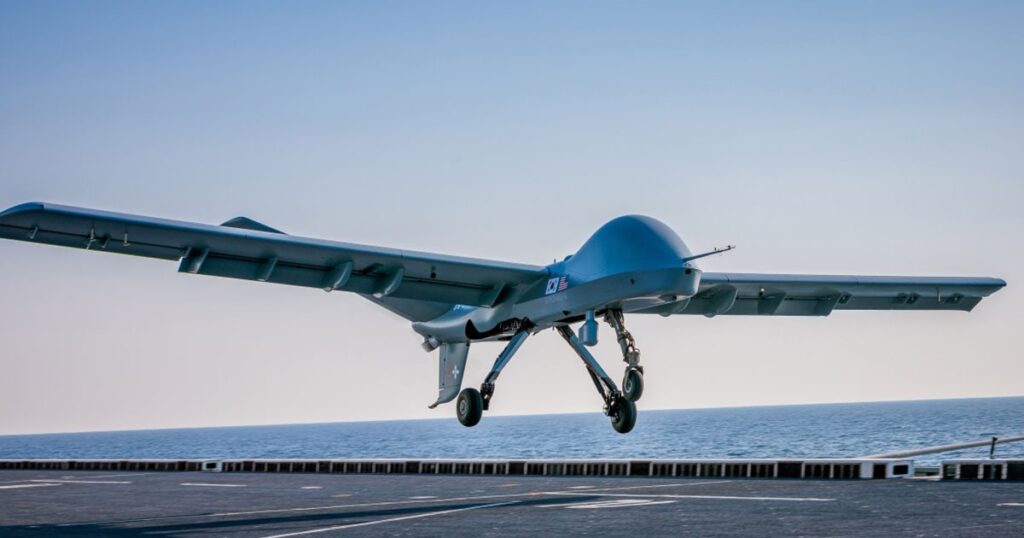
SAN DIEGO – 13 November 2024 – General Atomics Aeronautical Systems, Inc. (GA-ASI) logged another aviation milestone on Nov. 12, 2024, when its Gray Eagle STOL aircraft took off from a South Korean warship and landed at a ground base – the first-ever such mission for an aircraft of this type. Working with our GA-ASI’s in-country partner, Hanwha Aerospace, Gray Eagle STOL launched from the South Korean navy’s amphibious landing ship Dokdo underway at sea off the coast of Pohang, South Korea. The Unmanned Aircraft System (UAS) then flew to Pohang Navy Airfield and landed normally.
Gray Eagle STOL – which stands for short takeoff and landing – is the only medium-altitude, long-endurance aircraft of its kind with the ability to operate from large-deck warships such as amphibious ships and aircraft carriers, as well as short and unimproved fields on land. The test with the South Korean military further validates the aircraft’s capability and versatility.
“We applaud the South Korean navy for its foresight in examining the unique capability of GE STOL for its fleet. This demonstration illustrates the ability of the GE STOL to safely operate on many types of aircraft-capable ships, which opens myriad new ways our allies can use this UAS to support multi-domain naval operations,” said GA-ASI CEO Linden Blue.
Hanwha Aerospace is engaged with General Atomics to support national defense with proven, state-of-the-art technology suited for a multi-domain warfare environment, contributing to global security alongside allied nations in response to rapidly growing threats.
“The demonstration is a crucial step in verifying how the GE STOL can contribute to defense capabilities, and I am honored to witness this alongside the Republic of Korea Navy, to whom I extend my deepest gratitude for conducting the test,” said Hanwha Aerospace CEO and President Jae-il Son. “Hanwha is fully committed to making bold investments, fostering collaboration, and providing steadfast support in the Unmanned Aerial Vehicle (UAV) business.”
The Ministry of National Defense for the Republic of Korea is initially evaluating GE STOL for its ability to meet its emerging military requirements. South Korean navy, army and other officials were asked to evaluate Gray Eagle STOL and supported the test.
“The demo highlighted the versatility of STOL aboard a warship, in the Dokdo, designed not for fixed-wing aircraft but solely for helicopters. Gray Eagle STOL’s flight proves that navies can add significant new capability without costly major modifications to their existing warships,” said South Korean Chief of Naval Operations, Admiral Yang Yong-mo.
Gray Eagle STOL is highly common with the classic Gray Eagle aircraft, substituting a different engine, wings, control surfaces and landing gear. Gray Eagle STOL is General Atomics’ name for the production variant of the historic aircraft demonstrator known as Mojave.
In November 2023, GA-ASI and Mojave performed a demonstration of STOL takeoff and return landing aboard an aircraft carrier in an event with the UK Royal Navy’s HMS Prince of Wales, which is smaller than a typical U.S. aircraft carrier at 932 feet long (284m) and 240 feet wide (73m). The Dokdo class is considerably smaller than the Prince of Wales, only 653 feet long (199m) and 102 feet wide (31m).
U.S. Central Command Strikes Houthi Facilities and Weapons Systems
From U.S. Central Command, Nov. 13, 2024
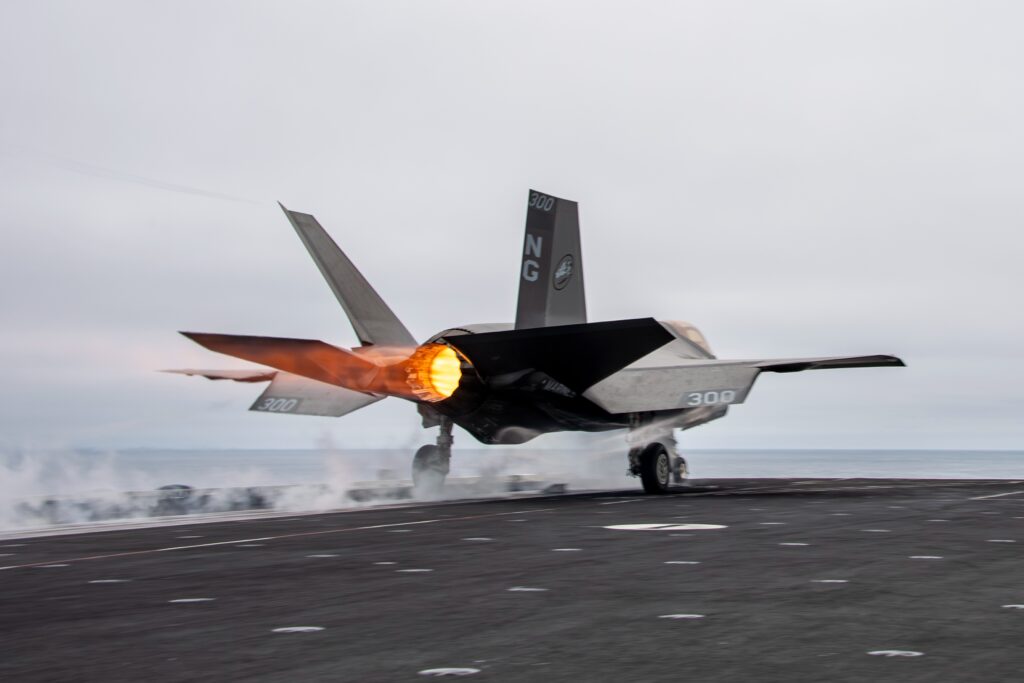
TAMPA, Fla. - U.S. Central Command (CENTCOM) forces executed a series of precise airstrikes on multiple Houthi weapons storage facilities situated within Houthi-controlled territories in Yemen, Nov. 9-10. These facilities housed a variety of advanced conventional weapons used by the Iran-backed Houthis to target U.S. and international military and civilian vessels navigating international waters in the Red Sea and Gulf of Aden. The operation involved U.S. Air Force and U.S. Navy assets to include the F-35C.
This targeted operation was conducted in response to the Houthi’s repeated and unlawful attacks on international commercial shipping, as well as U.S., coalition, and merchant vessels in the Red Sea, Bab al-Mandeb Strait, and the Gulf of Aden. It also aimed to degrade the Houthi’s ability to threaten regional partners.
Additionally, U.S. Navy destroyers USS Stockdale (DDG 106), USS Spruance (DDG 111), along with U.S. Air Force and U.S. Navy aircraft successfully defeated a range of Houthi-launched weapons while transiting the Bab al-Mandeb Strait. These forces successfully engaged and defeated eight one-way attack uncrewed aerial systems (OWA UAS), five anti-ship ballistic missiles (ASBMs), and four anti-ship cruise missiles (ASCMs), ensuring the safety of the ships and their personnel.
There were no injuries or damage to U.S. personnel or equipment. These actions reflect the ongoing commitment of CENTCOM forces to protect U.S. personnel, regional partners, and international shipping, while maintaining security and stability in the region.
CENTCOM remains vigilant in its efforts to safeguard maritime traffic in the Red Sea and Gulf of Aden, and will continue to take appropriate steps to address any threats to regional stability.
HII Redelivers USS Montana from Post-Shakedown Availability at Newport News Shipbuilding
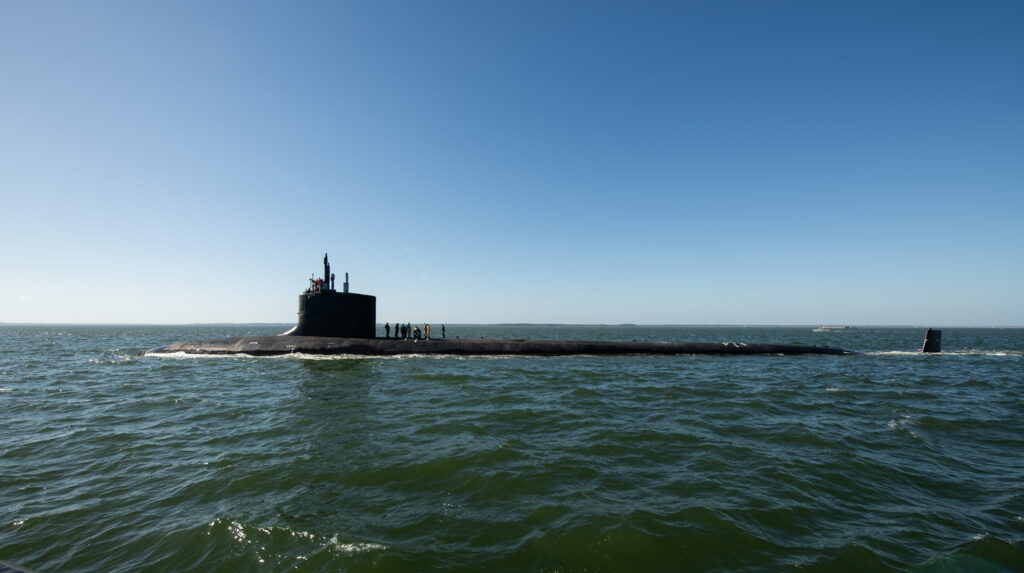
NEWPORT NEWS, Va., Nov. 13, 2024 (GLOBE NEWSWIRE) — HII’s (NYSE: HII) Newport News Shipbuilding division has completed post-shakedown availability (PSA) work on Virginia-class fast attack submarine USS Montana (SSN 794). The submarine was redelivered to the U.S. Navy on Nov. 12.
“Redelivering USS Montana back to the fleet reflects the tremendous teamwork and accomplishment by our shipbuilders and the crew,” said Jason Ward, NNS vice president of Virginia-class submarine construction. “This successful PSA demonstrates our commitment to building the finest submarines for the Navy and ensuring they are ready to carry out the mission defending our nation around the world.”
The PSA, a maintenance period that typically follows delivery of new ships, included combat systems and electronics upgrades, as well as general maintenance on the submarine.
USS Montana is the 21st Virginia-class submarine, and the 10th delivered by NNS. The Navy commissioned it on June 25, 2022, at Naval Station Norfolk.
Navy Makes Significant Investment in Munitions Capability, Awards Kongsberg Defence Multi-Year Over the Horizon – Weapons System Contract
By Program Executive Office Integrated Warfare Systems Public Affairs
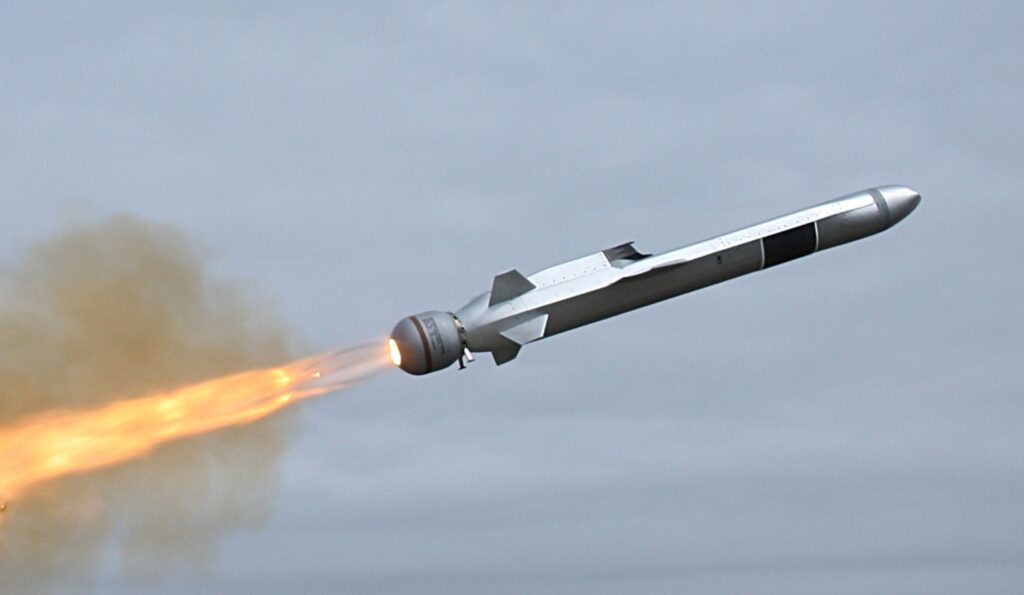
WASHINGTON – The Navy has awarded a $960.8 million firm-fixed-price multiyear contract to Kongsberg Defence and Aerospace (KDA) for the Over the Horizon – Weapons System (OTH-WS) Naval Strike Missile (NSM) requirement, Nov. 12.
The OTH NSM provides the U.S. and its allies with long range anti-surface offensive strike capability as well as increased coastline defense, deterrence, and interoperability.
“This multi-year procurement contract delivers on the Department of the Navy’s commitment to build capability and capacity in the near-term by making our platforms more lethal,” said Nickolas H. Guertin, Assistant Secretary of the Navy for Research, Development and Acquisition (ASN (RD&A)). “By making the right targeted investments, we ensure we deliver a balance of warfighter-ready capabilities at the right time, scale, and cost.”
Through use of a multiyear contract the Navy will achieve program savings of $206 million. The award helps provide stability of the munitions industrial base while enabling delivery of munitions critical to sustaining the Navy’s maritime dominance.
“This Over the Horizon – Weapons System contract will help ensure our Navy is ready to preserve the peace, respond in crisis, and win decisively in conflict if called,” said Rear Adm. Tom Dickinson, Program Executive Officer, Integrated Warfare Systems. “It supports ongoing efforts to put more munitions on more platforms in more places to prevail on a globalized battlefield.”
KDA recently announced plans to build a new production facility in the U.S. Located near key Navy facilities, the site in James City County, Virginia will provide additional production capacity, sustainment and in-country tech refresh capabilities for the Naval Strike Missile (NSM).
Centcom Conducts Strikes in Yemen, Syria
PACIFIC OCEAN (June 7, 2024) An F-35C Lightning II, assigned to Strike Fighter Squadron (VMFA) 314, launches from the flight deck of the Nimitz-class aircraft carrier USS Abraham Lincoln (CVN 72). (U.S. Navy photo by MCSN Mario Castro Gamez)
Nov. 12, 2024 | By C. Todd Lopez, DoD Public Affairs
Since Friday, U.S. Central Command has conducted strikes against Iranian-backed Houthi targets in Yemen and against targets in Syria as part of the defeat-ISIS mission there.
On Saturday and Sunday, Centcom forces executed airstrikes against multiple Houthi weapons storage facilities within Houthi-controlled areas of Yemen, said Pentagon Press Secretary Air Force Maj. Gen. Pat Ryder during a briefing today.
“These facilities housed a variety of advanced conventional weapons used by the Iran-backed Houthis to target U.S. and international military and civilian vessels navigating international waters in the Red Sea and Gulf of Aden,” Ryder said.
Both Air Force and Navy assets, including F-35C fighter aircraft, were involved in the strikes, which were in response to Houthi attacks on commercial, U.S. and coalition vessels in the Red Sea, Bab al-Mandab Strait and Gulf of Aden.
“As you’ve heard us say before, we will continue to make clear to the Houthis that there will be consequences for their illegal and reckless attacks,” Ryder said.
Yesterday, Ryder said, Centcom also conducted strikes against nine targets in two locations associated with Iranian groups in Syria. The strikes, he said, were in response to two attacks on U.S. personnel in Syria that happened Nov. 10 at Mission Support Site Green Village in northeast Syria.
One of those attacks involved a UAV, while the second attack involved an indirect fire incident with two rockets. There were no U.S. injuries involved with either attack.
Ryder said the U.S. strikes will degrade the ability of Iranian-backed groups to plan and launch future attacks on U.S and coalition forces who are in the region to conduct the defeat-ISIS operations.
Centcom commander Army Gen. Michael Erik Kurilla said the U.S. will do what’s needed to defend its personnel in the Centcom area of responsibility.
“Our message is clear. Attacks against U.S. and coalition partners in the region will not be tolerated,” said Kurilla. “We will continue to take every step necessary to protect our personnel and coalition partners and respond to reckless attacks.”
General Officer Announcements
From the U.S. Department of Defense, Nov. 13, 2024
Secretary of Defense Lloyd J. Austin III announced today that the president has made the following nominations:
Marine Corps Maj. Gen. Robert C. Fulford for appointment to the grade of lieutenant general, with assignment as deputy commander, U.S. European Command. Fulford is currently serving as commanding general, 1st Marine Division, Camp Pendleton, California.
Marine Corps Brig. Gen. Adam L. Chalkley for appointment to the grade of major general. Chalkley is currently serving as inspector general of the Marine Corps, Arlington, Virginia.
Marine Corps Brig. Gen. Joseph R. Clearfield for appointment to the grade of major general. Clearfield is currently serving as senior military assistant to the deputy secretary of defense, Pentagon, Washington, D.C.
Marine Corps Brig. Gen. Mark H. Clingan for appointment to the grade of major general. Clingan is currently serving as commanding general, Marine Air Ground Task Force Training Command and Marine Corps Air Ground Combat Center, Twentynine Palms, California.
Marine Corps Brig. Gen. Mark A. Cunningham for appointment to the grade of major general. Cunningham is currently serving as commanding general, Force Headquarters Group, New Orleans, Louisiana.
Marine Corps Brig. Gen. Kyle B. Ellison for appointment to the grade of major general. Ellison is currently serving as deputy director for Current and Integrated Operations, J-3, Joint Staff, Pentagon, Washington, D.C.
Marine Corps Brig. Gen. Walker M. Field for appointment to the grade of major general. Field is currently serving as deputy director for Operations, National Joint Operations Intelligence Center, Operations Team Three, J-3, Joint Staff, Pentagon, Washington, D.C.
Marine Corps Brig. Gen. Anthony M. Henderson for appointment to the grade of major general. Henderson is currently serving as commanding general, Training Command, Quantico, Virginia.
Marine Corps Brig. Gen. Valerie A. Jackson for appointment to the grade of major general. Jackson is currently serving as commanding general, 4th Marine Logistics Group, New Orleans, Louisiana.
Marine Corps Brig. Gen. Matthew T. Mowery for appointment to the grade of major general. Mowery is currently serving as deputy director, Requirements and Capability Development, J-8, Joint Staff, Pentagon, Washington, D.C.
Marine Corps Brig. Gen. Andrew M. Niebel for appointment to the grade of major general. Niebel is currently serving as commanding general, 1st Marine Logistics Group, Camp Pendleton, California.
Marine Corps Brig. Gen. Farrell J. Sullivan for appointment to the grade of major general. Sullivan is currently serving as director, Capabilities Development Directorate, Department of Combat Development and Integration, Headquarters, U.S. Marine Corps, Quantico, Virginia.
Marine Corps Brig. Gen. Jason G. Woodworth for appointment to the grade of major general. Woodworth is currently serving as commander, Marine Corps Installations Command; and assistant deputy commandant for Installations and Logistics, Pentagon, Washington, D.C.
Marine Corps Col. Joseph A. Katz for appointment to the grade of brigadier general. Katz is currently serving as chief of staff, Marine Forces Reserve, New Orleans, Louisiana.
Marine Corps Col. David K. Winnacker for appointment to the grade of brigadier general. Winnacker is currently serving as assistant chief of staff, G-7, Force Headquarters Group, Marine Forces Reserve, New Orleans, Louisiana.
First Royal Australian Navy Officer Graduates Engineering Duty Officer Basic Course under AUKUS Pillar 1
By NAVSEA Office of Corporate Communications and AUKUS I&A Public Affairs, Nov. 12,2024
PORT HUENEME, Calif. – A Royal Australian Navy Officer graduated for the first time from the U.S. Navy Engineering Duty Officer (EDO) School, during a ceremony at Naval Base Ventura County in Port Hueneme, Calif. on 7 Nov.
Royal Australian Navy (RAN) CMDR Stephen completed five weeks of training in support of the Australia, United Kingdom, United States (AUKUS) enhanced trilateral security partnership’s Optimal Pathway that will establish a sovereign conventionally armed, nuclear-powered submarine capability within the RAN.
Engineering duty officers are an integral part of acquiring and maintaining the U.S. Navy’s surface and sub-surface fleets. The Basic Course, which Stephen graduated from, provides the foundational knowledge through instruction on research and development, design, acquisition, construction, maintenance, and modernization of ships and systems. For Stephen, it was an experience unique to the U.S. Navy’s training pipeline.
“The Basic Course introduces officers into the EDO community and provides the training needed to understand the principles associated with how the United States Navy designs, builds, maintains, and modernizes our warships,” said Capt. Neil Sexton, EDO schoolhouse commanding officer. “I believe this course of study on acquisition and maintenance principles will aid Stephen in being one of Australia’s leading engineers for the sustainment of its future submarine fleet.”
“The Royal Australian Navy does not have an EDO school,” said Stephen, who is currently assigned to Pearl Harbor Naval Shipyard and Intermediate Maintenance Facility as AUKUS’ first Submarine Rotational Force – West liaison officer. “The knowledge I gained here will definitely enhance my Navy career moving forward and directly support Australia’s SSN force.”
A subordinate command under the Naval Education and Training Command (NETC), the school manages the continuum of training and, professional development opportunities, for the United State Navy’s EDO community. The Schoolhouse is as a focal point for these officer’s professional development, enabling EDOs to apply practical knowledge and experience to integrate science, technology and design into affordable ships and systems.
“As a career submarine operator, I know that our ships don’t sail without the direct support of the EDO community,” shared Rear Adm. Lincoln Reifsteck, AUKUS Integration & Acquisition Director. “Stephen’s training at the Schoolhouse benefits the program and, ultimately, contributes to Australia’s ability to maintain, operate, and support SSNs.”
“I’m exceptionally proud of the EDO School’s ability to support AUKUS and demonstrate its capabilities with one of our country’s closest allies,” said Vice Adm. James Downey, commander, Naval Sea Systems Command (NAVSEA) and the Navy’s senior EDO. “Within NAVSEA, we are dedicated to delivering on our country’s AUKUS commitments, to include training their civilian submarine maintainers at Pearl Harbor Naval Shipyard, creating opportunities to include our allies across the broad submarine design and maintenance portfolios.”
There are more than 50 Australian civilians training at Pearl Harbor Naval Shipyard and Intermediate Maintenance Facility and 65 uniformed Royal Australian Navy officers and enlisted personnel within the U.S. Navy’s Naval Nuclear Propulsion and submarine training pipelines.
The AUKUS Optimal Pathway consists of three interrelated phases that are in concurrent execution. Phase 1 involves establishing Submarine Rotational Force – West which will have up to four U.S. Virginia-class SSNs and one UK Astute-class SSN rotationally deploying out of HMAS Stirling in Western Australia. The U.S. submarines will be maintained primarily by Australian personnel trained at Pearl Harbor Naval Shipyard and Intermediate Maintenance Facility as a way to build Australia’s sovereign ability to maintain SSNs. In Phase 2, the U.S. sells Virginia-class SSNs to Australia as its first conventionally armed SSNs. Phase 3 is the design, construction, and delivery of SSN AUKUS based on the UK’s design that incorporates advanced technologies from the three partner nations. SSN AUKUS will serve as the sovereign, enduring SSN capability for both the Royal Navy and Royal Australian Navy.
AUKUS Pillar 1 will deliver a conventionally armed SSN capability to the RAN by the early 2030s. The Department of the Navy’s AUKUS I&A Program Office is the U.S. lead responsible for executing the trilateral partnership for Australia to acquire conventionally armed, nuclear-powered attack submarines at the earliest possible date while maintaining the highest nuclear stewardship standards and setting the highest standards for nuclear non-proliferation.
NETC is the U.S. Navy’s Force Development pillar and the service’s largest shore command with a mission to recruit, train, and deliver those who serve our Nation, taking them from street-to-fleet by transforming civilians into highly skilled, operational, and combat ready warfighters.
A Living Legacy, USS John Basilone is Commissioned
Amy Looney Heffernan and Ryan Manion give the command to “man our ship and bring her to life” during the commissioning ceremony for USS John Basilone (DDG 122) in New York City. (MC2 Colby A. Mothershead)
NEW YORK – On Saturday morning, nestled between the USS Intrepid, New York’s Hell’s Kitchen, and the cruise terminal, the Navy’s newest Arleigh Burke-class guided-missile destroyer, USS John Basilone, was brought to life.
Commissioning ceremonies, as described by Carlos Del Toro, Secretary of the Navy, are a time-honored tradition dating back to 1775. Now, 249 years later, the USS John Basilone became the 74th ship of her class and the second ship to bear the namesake of John Basilone.
Throughout the week leading up to commissioning, the crew of the USS John Basilone spent time learning about the life and legacy of Gunnery Sgt. John Basilone, the only Enlisted Marine to earn the Medal of Honor and the Navy Cross during World War II.
While John Basilone and his beloved wife Lenah Mae (Riggi) Basilone didn’t have children, GySgt Basilone’s niece, Diane Hawkins, has taken up the mantle of representing her uncle’s memory and his heroism. While exploring the history behind her uncle’s actions, a Marine Corps representative sent Hawkins a bottle of black sand, a vial taken from Iwo Jima, the beach where her uncle gave the ultimate sacrifice. That bottle included a recommendation to retrace her uncle’s footsteps. In her remarks, Hawkins recounted traveling to Guadalcanal, where Basilone and his regiment defeated a much larger Japanese force, to the Philippines, where he earned the nickname “Manilla John,” to Australia, where he received the Medal of Honor, and to Iwo Jima where he perished “with his boys.” Through her journey, Hawkins learned more about the man behind the myth and gained a deeper appreciation for his legacy. Most importantly, she recounted John’s love for his wife, Lenah Riggi, and how Basilone outranked Riggi: “It was Lenah who was in charge.” Hawkins closed her remarks by thanking the crew of DDG 122, saying that those who comprise John Basilone’s legacy are delighted to have this magnificent ship become part of his legacy “to the service to this nation.”
Unique to this Navy event was the presence of Marines from John Basilone’s historic 1st Battalion, 7th Regiment, and the references and speeches related to USMC culture throughout the event.
Continuing on themes of sacrifice, the ship’s sponsors Ryan Manion and Amy Looney Heffernen, both from Gold Star families, spoke to the grief that comes with loss and the responsibility to uphold the memory of the fallen. Heffernen notes that she believes her late husband, Navy Seal Brandon Looney, was “cut from the same cloth as John Basilone” making her presence and participation in the life of the USS John Basilone all the more meaningful and humbling. Standing before the crew, Manion, sister of fallen Marine Travis Manion, noted the towering shadow over the crew of the Basilone, the shadow of a man who made the ultimate sacrifice and built a profound “legacy of service” in his wake. Heffernen recounted moving her way through grief with a quote, “No one is dead until the ripples they cause in the world fade away.” It is evident from the passion, dedication to service, and commitment to excellence shown by the DDG 122 crew that John Basilone won’t fade for generations to come.
In his principal address, Secretary of the Navy Carlos Del Toro spoke about the role of the sponsors of a ship. According to naval tradition, a ship’s sponsor “guides her and her crew” through her time in service, offering his gratitude that Manion and Heffernen will forever be the connection between “this ship, her crew, and the nation.” He talked about his connection to New York, having grown up just blocks from where the ship sits today, the same pier where the USS Bunkley (DDG 84) commissioned under his command. Paying tribute to Basilone, Secretary Del Toro took a moment to spotlight Marine Sgt Dakota Meyer, a Medal of Honor recipient for his heroism in Iraq, resulting in a standing ovation to the Marine.
Del Toro recognizes the “rapidly evolving” global security environment for DDGs like the John Basilone. He remarked that today’s world differs from the American Revolution, World War II, or even his active duty tenure twenty-three years ago. Today, ships of the same class as the John Basilone are over the horizon, defending America and her allies from the threat of “Iranian-aligned Houthi attacks” in the Red Sea. Making it clear that there is “nothing ordinary” about what is being asked of America’s Sailors and Marines since the October 7, 2023 attacks in Israel, Del Toro reminded the crew of the USS John Basilone and event participants that “Service is not an obligation, it is a privilege, a chance to be part of something greater than ourselves and uphold the values that define us as a nation.”
Referencing a history of sacrifice, the perils of the future, and the hope for the present, the crew of the former USS Basilone (DDE 824) passed the torch as John Basilone’s living legacy as sponsors Ryan Manion and Amy Looney gave the order to “man our ship and bring her to life.”
Arleigh Burke-class guided-missile destroyers are the backbone of the U.S. Navy’s surface fleet. These highly capable, multi-mission ships conduct a variety of operations, from peacetime presence to national security, providing a wide range of warfighting capabilities in multi-threat air, surface, and subsurface. Flight IIA DDGs host dual helicopter hangers, allowing for expanded anti-submarine, anti-surface, and anti-air warfare capabilities through integrated operations with helicopter squadrons.
The mission of CNSP is to man, train, and equip the Surface Force to provide fleet commanders with credible naval power to control the sea and project power ashore.
For more news from Naval Surface Forces, visit DVIDS – Commander, Naval Surface Force, U.S. Pacific Fleet, https://www.dvidshub.net/unit/COMNAVSURFPAC or Commander, Naval Surface Force, U.S. Pacific Fleet, https://www.surfpac.navy.mil/.