MQ-25 IOC ‘As Soon as Possible,’ Navy’s Unmanned Aviation Chief Says
Rear Adm. Brian Corey, head of Navy unmanned aviation, speaks at the Naval Air Systems Command booth at Sea-Air-Space on May 6. Lisa Nipp
NATIONAL
HARBOR, Md. — The Navy’s admiral in charge of unmanned aviation said that the
Initial Operational Capability (IOC) of the MQ-25A aerial tanking unmanned
aerial vehicle is “as soon as possible.”
Speaking May
6 to an audience at the Navy League’s Sea-Air-Space exposition here, Rear Adm.
Brian Corey, program executive officer for unmanned aviation and strike
weapons, said that the MQ-25A program does not have a set IOC date but that it
was to be before 2026 “if we can.”
The
Boeing-owned MQ-25 prototype was trucked earlier this week from the factory in
St. Louis to Mid-America airport in Illinois for more ground testing and,
eventually, flight testing.
Corey said
the first flight of the prototype would take place later this year.
He also said that four
aircraft carriers initially will be equipped to operate the MQ-25A, but he
declined to speculate which carrier, citing the flexibility of schedules.
Orolia Working on GPS Jamming and Spoofing Solutions for DoD
NATIONAL HARBOR, Md. – As international incidents increase,
and the U.S. military begins an uptick in training exercises on global
positioning service (GPS) jamming, military leaders are looking more toward
industry for answers on how to combat the growing issue.
Paul Zweers, vice president of the global Aerospace, Defense
and Government business units for Orolia, said a few recent occurances are
putting a spotlight on the issue — including an incident last February, where
Finland and Norway suspected and accused Russia of GPS signal jamming during a
NATO-led drill.
“Operating in [a] Global Navigation Satellite System-denied
environment and GPS jamming and spoofing are the buzzwords everybody is talking
about,” he said.
GPS jamming occurs when radio frequency transmitters are
used to intentionally block or interfere with communication devices, such as a
GPS, cell phones and Wi-Fi networks. GPS spoofing involves the practice of
using fake GPS signals to trick equipment and send false location signals.
“We have more proof, beside incidental jamming, that there’s
active spoofing and jamming going on in certain parts of the world. Everybody
is painfully aware this exists, and they are asking how we can we overcome this
and what are the solutions,” Zweers said during an interview on the show floor of
the Navy League’s annual Sea-Air-Space exposition.
Orolia currently provides support for cybersecurity and
interoperability for the Department of Defense, and it is working on expanding its
SecureSync platform, which combines multi-GNSS signal synchronization options
BroadShield GPS anti-jamming/spoofing protection and superior low phase noise
capability for military systems.
“We have quite a broad portfolio, and in the coming years we
will be looking to expand our PNT [position navigation time] mission set,” he
said.
Naval Information Warfare Center Atlantic Finds Several Benefactors for C4ISR Help
Kevin Charlow, head of expeditionary warfare at the Naval Information Warfare Center Atlantic: “We’re focused on trying to deliver capability to the fleet faster — by leveraging our exercise and prototype efforts.” Lisa Nipp
NATIONAL HARBOR,
Md. — As head of expeditionary warfare at the Naval Information Warfare Center
Atlantic, Kevin Charlow constantly is on the lookout for ways to share good
results with as many potential users as possible.
“We’re focused on
trying to deliver capability to the fleet faster — by leveraging our exercise
and prototype efforts,” Charlow said during a May 7 interview at Sea-Air-Space
2019.
To that end,
Charlow pointed to a recent case involving a precision navigation unit developed
for a U.S. Special Operations Command (SOCOM) combat craft. It turned out that
the Marine Corps had a need for a similar unit, for use in its Amphibious
Assault Vehicles (AAV).
“We were able to
take that integrated navigation and control capability — one of our SOCOM
projects – and leverage that with the Marine Corps AAV,” Charlow said.
“Basically, one sponsor funded a solution we’re now sharing with another, and
we have a potential win for the warfighters.”
“Pressing forward, we want to deliver C4ISR, and its system and engineering services and solutions, to our major sponsors.”
Kevin charlow
The Marines are testing
the system now in Charleston, South Carolina, harbor.
“Pressing forward,
we want to deliver C4ISR [command, control, communications, computer,
intelligence, reconnaissance and surveillance], and its system and engineering
services and solutions, to our major sponsors,” Charlow said.
The Navy, Marine
Corps and SOCOM are primary benefactors, but the Naval Information Warfare center
has helped the U.S. Air Force and U.S. Army as well.
Besides
advances in development of C4ISR prototypes, the center has awarded some $9
million in funding for 20 innovation projects for fiscal year 2019, which began
Oct. 1. Its engineers also built and installed a more robust firewall in the
Marine Corps’ SIPR (secret internet protocol router) network. The center was
able to fulfill an urgent need for the Marines within 10 months.
Marine Corps Looking at Future Light Helicopter Replacement
The Marine Corps hopes to field the successor to the UH-1Y Venom, shown here, and the AH-1Z Viper in the late 2020s or early 2030s. MARINE CORPS / Cpl. Sabrina Candiaflores
NATIONAL
HARBOR, Md. — The Marine Corps and the Army are running an analysis of
alternatives (AOA) to see whether the two services can meet the same requirements
for Milestone A or B start in fiscal 2021, a Marine helicopter acquisition
official said. The AOA is expected to be complete in the “next couple of
months.”
Speaking May
6 to an audience at the Navy League’s Sea-Air-Space Expo in National Harbor,
Maryland, Marine Col. David C. Walsh, program manager for Marine light attack
helicopters, said the Marine Corps has begun studies for its Attack Utility
Replacement Aircraft to succeed the UH-1Y Venom and AH-1Z Viper helicopters.
The Corps
hopes to field the Future Vertical Lift Capabilities Set 3 by the late 2020s or
early 2030s, Walsh said.
A key
requirement for the Marine Corps is an aircraft that can keep up with or even
exceed the speed of an MV-22B Osprey, 310 knots.
Bell
Helicopter delivered the last of 160 UH-1Ys in April 2018 and has delivered 111
of 189 AH-1Zs to date. The last AH-1Z deliveries are scheduled for 2022.
Bahrain and Pakistan also have purchased AH-1Zs, while Turkey and Taiwan have
procured the older AH-1W.
Walsh said
that there is considerable foreign military sales potential for the UH-1Y and
AH-1Z. He listed potential for 88 AH-1Zs and 29 UH-1Ys in Europe, 129 AH-1Zs in
the Asia-Pacific region, and 44 AH-1Zs and 24 UH-1Ys in the Middle East and
North Africa.
Walsh also
said his office is working on capability upgrades to the Corps’ H-1 fleet,
including Link 16, full-motion video, the Joint Air-Ground Missile, and the
AIM-9X Sidewinder air-to-air missile, as well as some navigational upgrades.
Coast Guard, MARAD Budget Worries Still Acute While Navy, Marine Concerns Eased in 2018-19
Panelists at the Sea Service Update program May 7 at Sea-Air-Space 2019. Charles Fazio
NATIONAL HARBOR,
Md. — As the naval services tackle the overlapping challenges of trying to
restore their readiness while preparing for a new era of “Great Power Competition,”
perhaps their biggest concerns are receiving adequate funding and recruiting
and retaining the talented personnel they need in the midst of a robust
national economy with low unemployment.
While the money
concerns are high for the U.S. Navy and the Marine Corps, after several years
of constrained budgets, the problem is more acute for the U.S. Coast Guard and
the U.S. Maritime Administration, which have not benefited as much from the
last two years of increased funding, officials from those services said in a May
7 session at Navy League’s Sea-Air-Space exposition.
The Navy’s biggest
challenge is “maintaining stable and predictable budgets,” said Rear Adm. John
Nowell, director of military personnel plans and policy on the Navy staff.
Compared to low
readiness the Navy endured in 2017 after several lean years, “with the money
Congress has provided since then, we have been able to get at” the readiness low
with higher operating hours, more maintenance and beginning to fill the manning
gaps at sea, he said.
“I wish I had the budget environment you described.”
Rear Adm. Linda Fagan, commander, Coast Guard Pacific Region
Brig. Gen.
Christian Wortman, commander of the Marine Corps Warfighting Laboratory, said
the Corps was challenged in maintaining the high personnel readiness it needed
because of the intense deployment rate of its small force, but was “seeing the
results” in better equipment readiness due to the budget gains in fiscal years
2018 and 2019.
But sustained
funding improvement was needed to support the modernization that would provide
future readiness required to face the Great Power Competition, he said.
“I wish I had the
budget environment you described,” said Rear Adm. Linda Fagan, commander of the
Coast Guard Pacific Region. Because the Coast Guard is part of the U.S.
Department of Homeland Security, it hasn’t enjoyed the budget boost the branches
under the Defense Department received the last two years, Fagan noted.
She cited a $1.7 billion
backlog in facility repairs as a readiness issue and the “erosion of buying
power every year” from constrained funding. “It is absolutely critical to stop
the erosion of readiness we see today,” Fagan said.0
Shashi Kumar,
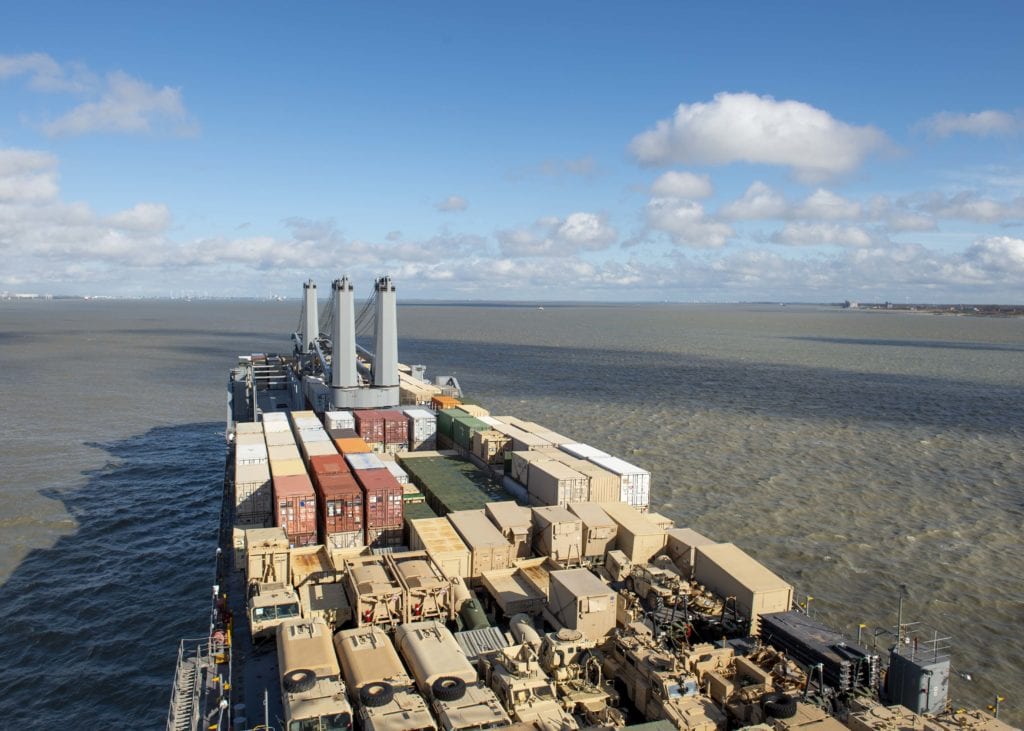
deputy administrator of the Maritime Administration, noted the badly aged fleet
of sealift ships that would be essential to supporting any major crisis
deployment of U.S. forces, a shrinking number of commercial vessels MARAD
leases and the growing shortage of qualified civilian mariners to operate those
ships. He also worried about the rising cost of maintaining the ancient ships
with limited funding.
All of the officials
expressed personnel concerns — which for the Navy, Marine Corps and Coast Guard
primarily involve attracting young Americans with the intelligence and
technical skills needed for the new era of high-tech warfare when the small
numbers of those who can qualify for military service are in high demand in the
private sector.
Fagan said the
Coast Guard can recruit the talented and diverse personnel it needs but has
trouble retaining its female workforce. Nowell said the Navy still needs to
fill 6,000 billets at sea, less than half its shortfall two years ago. Wortman
said the Marines Corps has been able to sign up the 38,000 recruits it needs
each year but is challenged to retain those with the unique skills — such as
cyber — because of the higher pay that private industry can offer.
Kumar said MARAD’s problems
in finding and keeping qualified civilian mariners is aggravated by the
shrinking American-flagged commercial fleet and the fact that much of the
government fleet was on standby most of the time, limiting the trained
personnel’s ability to stay current.
Nation’s Sealift Struggling, but Gaining Attention
Panelists at the Strategic Sealift discussion on May 7 at Sea-Air-Space 2019 talk about maintaining capability overseas. Charles Fazio
NATIONAL HARBOR,
Md. — The nation’s strategic sealift has languished for too many years, a panel
of experts told an audience May 7 at Sea-Air-Space 2019. And the panel,
representing the military and civilian sea services, told the morning program attendees
that the time for revitalizing sealift is now.
Countering the
somewhat bleak picture they drew, they all expressed optimism with the fact
that the issue is finally garnering the attention it deserves.
“We are facing one
of the greatest maritime challenges in U.S. history,” said Kevin Toharsky, the
associate administrator of the U.S. Maritime Administration, who moderated the
panel. “The good news is the sea power we need … is back on the radar screen.”
Toharsky outlined
the significant decline in the number of U.S.-flagged merchant ships, which
meant the loss of jobs for mariners. The commercial fleet is essential to the
nation’s commerce and national security, he said. Commercial cargo of fuel and
goods rely on it, as does the military. In contrast, potential adversaries like
China are bolstering their maritime industries — and their world presence in
the process, he said.
“I’m encouraged by
the greater awareness … and the conversation about the problem,” said Coast
Guard Rear Adm. John Nadeau, who is assistant commandant for prevention policy.
Resolution,
however, “won’t be easy,” Nadeau said. “The material condition [of the merchant
fleet] didn’t happen overnight and won’t be corrected overnight.”
Ensuring that the
parties involved — including military and commercial stakeholders — are
striking the right partnerships, engaging in transparency and carrying out open
and frank dialogues, will set the nation on the right track, Nadeau said.
“We need industry
support,” said Erica Plath, the Navy’s director of strategic mobility, as she
described the Navy’s plans to modernize its fleet of deep-sea transports through
the acquisition of both new and refurbished older vessels.
Chris Thayer, director
of ship management at Military Sealift Command, alluded to a downward trend in
available sealift capacity during the past two years.
The command is
implementing a “robust effort” to restore readiness that would require a
holistic approach to address aging ships and construction and refurbishment
efforts as well as crew-training requirements.
Capt. Christian Spain, vice president of government relations for the American Maritime Officers Union, said revitalization is essential if the nation intends to address the current shortage of 1,800 merchant seamen.
“It doesn’t affect
sealift at the initial [point],” Spain said. “But at four to six months, it
does.”
Similar to submarines, merchant ships require two crews that rotate sea tours, Spain said. The crew shortage figure has been steady since 2013, he said, but would increase to 2,000 within the next two to three years if not addressed.
“The time is now,” Spain said.
Navy Undersecretary Echoes February Report in Call for ‘Agile’ Education for Future Sailors
Undersecretary of the Navy Thomas Modly (right), with moderator Francis Rose, host of “Government Matters,” at a May 7 breakfast program at Sea-Air-Space 2019. Ian Herbst Photography.
NATIONAL HARBOR, Md. — Undersecretary of the Navy Thomas
Modly used much of his breakfast address here May 7 at Sea-Air-Space 2019 to
reinforce the results of an “Education for Seapower” study and report that
called for a more agile education infrastructure that develops Sailors and leaders
for “this era of uncertainty.”
“We cannot take our eye off the ball in developing people,”
he said, adding that young people come to U.S. Navy service with more
technological acumen and expecting a different experience and lifestyle than
prior generations. “We have to think of the kinds of kids we recruit.”
The undersecretary emphasized the February report’s findings
that called for a top-down review of how Sailors and future Navy leaders are
educated, from ROTC programs to basic training and beyond to continuing
education and leadership training. The interview-laden report also showed that
a naval university system should be created and that a new chief learning officer
(CLO) be appointed.
Rose and Modly at the Sea-Air-Space breakfast program May 7. Ian Herbst Photography.
“We need to get that key leader in place,” Modly told the
audience at the breakfast, which was moderated by Francis Rose, host of “Government
Matters.”
When questioned about the qualifications the new CLO should
possess, Modly mentioned the CLO’s background should include some U.S. military
service and experience in a large university system. He also emphasized that
the Navy’s budget for education is small and must be expanded.
Later when questioned, Modly veered off education and mentioned
the need to distribute “lethality” to even the smallest of U.S. Navy ships,
mentioning the frigate class, and even advocated for armed unmanned vessels. “We
need a lot more distributed lethality,” he said.
CNO Cites History, Recalls Founding Fathers in Reinforcing Message of a ‘Decisive’ Navy
Chief of Naval Operations Adm. John M. Richardson during his keynote address at the Sea Services Luncheon at Sea-Air-Space 2019 on May 6. Lisa Nipp
NATIONAL HARBOR, Md. — George Washington spoke May 6 at the Navy League’s Sea-Air-Space exposition — by way of Chief of Naval Operations Adm. John M. Richardson, who used a famous quote by the Founding Father from 1781 to remind the audience of the necessity today — more than ever — of a “decisive” U.S. Navy.
Washington’s quote is, “Without a decisive naval force we can do nothing definitive, and with it, everything honorable and glorious.”
“The Navy was there at the very beginning. We’re in the
nation’s DNA,” the 31st CNO told the audience, delivering a bit of a history
lesson during a keynote that also touched on Thomas Jefferson’s belief that a potent
Navy was essential to protect trade, commerce and the American economy.
“America depends on the seas,” Richardson said.
“The Navy was there at the very beginning. We’re in the nation’s DNA.”
CNO Adm. John M. Richardson
Much of the nation’s economy, he reminded the audience, runs through the Far East now. He talks often these days about the resurgent “Great Power Competition” — and the CNO wasted no time doing so again at Sea-Air-Space, reminding the audience of China’s naval expansion and mentioning such events as recent Chinese missile exercises in the Mediterranean and Baltic Sea.
“That’s where your Navy is going to be,” Richardson said,
adding that a third of world trade runs through the South China Sea. “That’s
why the United States Navy is there.”
He also mentioned Fleet Adm. Chester W. Nimitz, who believed
the Navy’s role is to deter conflict but still ensure prosperity.
The Fleet Admiral Chester W. Nimitz Award for 2019 went May 6 to James Herdt (second from left), CEO of Herdt Consulting and a retired Master Chief Petty Officer of the Navy. Helping to present the award were (from left) Navy League National President Alan Kaplan, Adm. Richardson, Herdt and Navy League Executive Director Mike Stevens. Lisa Nipp
Richardson took part in ceremonies before his keynote address to laud recipients of two Navy League awards — including one that is named after Nimitz and honors an industry leader who has made a major contribution to the nation’s maritime strength.
The Fleet Admiral Chester W. Nimitz Award for 2019 went to
James Herdt, CEO of Herdt Consulting and a retired Master Chief Petty Officer
of the Navy. “I know my name is on this award,” Herdt said, but in thanking
Navy League he accepted it on behalf of the people of his consulting firm.
The Albert A. Michelson Award went to Dr. Bruce G. Danly, director of research at the Naval Research Laboratory. Lisa Nipp
The second honor of the day, the Albert A. Michelson Award,
went to Dr. Bruce G. Danly, director of research at the Naval Research Laboratory
(NRL). He credited the men of women of NRL, “who ensure that our forces have
the best technology, unmatched by none.”
Navy League National President Alan Kaplan and Navy League Executive Director Mike Stevens, also a retired Master Chief Petty Officer of the Navy, the 13th, helped present the Nimitz and Michelson awards. Richardson also spoke about the Navy’s recruiting and retention in a recovering economy and added that the sea service has met its recruiting goals for more than 12 years in a row. “What is it that attracts people” to the Navy? the CNO asked. “Honorable and glorious, no better organization to join than the Navy to espouse those two ideals.”
AeroVironment, Kratos Partner on UAS Launched From Mother-Ship Drone
AeroVironment’s Switchblade UAS (shown here) would be able to tube-launch from a Kratos mothership. AeroVironment Inc.
NATIONAL HARBOR, Md. — Longtime unmanned aircraft provider
AeroVironment and Kratos Defense and Security Systems announced on March 7 that
they have formed a new partnership to jointly develop and demonstrate unmanned aircraft
systems that could launch from another UAS to tackle near-peer denied
environments — an increasingly important domain in light of the “Great Power
Competition” era, defined by Chief of Naval Operations Adm. John M. Richardson.
This collaboration aims at demonstrating the ability to launch,
communicate with and control a small, tube-launched loitering aircraft that
jettisons from a larger, runway-independent UAS. The goal of the is to
coordinate the effects of smaller AeroVironment systems and relay information
back to the mother UAS, developed by Kratos.
The systems-of-systems would communicate back their findings
to a ground-control station or be able to act upon the information they gather
to modify their mission tasks. Kratos has demonstrated the mothership, its Mako
Tactical UAS, which it developed and demonstrated in 2015, and AeroVironment
has made its tube-launched Switchblade since 2012.
“Together, we are developing and will demonstrate the
integration of tube-launched UAS and tactical missile systems into long-range,
high-speed and low-cost unmanned systems for their transport and delivery into
near-peer, denied environments,” said Trace Stevenson, vice president and
deputy general manager of AeroVironment’s UAS business.
“With sufficient onboard autonomy, sensors, payloads and an
integrated system design, we aim to demonstrate the deployment of large
quantities of smart systems that overwhelm and disable enemy systems, while
bending the cost curve to make it financially prohibitive for unfriendly
nations to challenge our armed forces.”
Coast Guard Outlines Process for Filling Mission Gaps
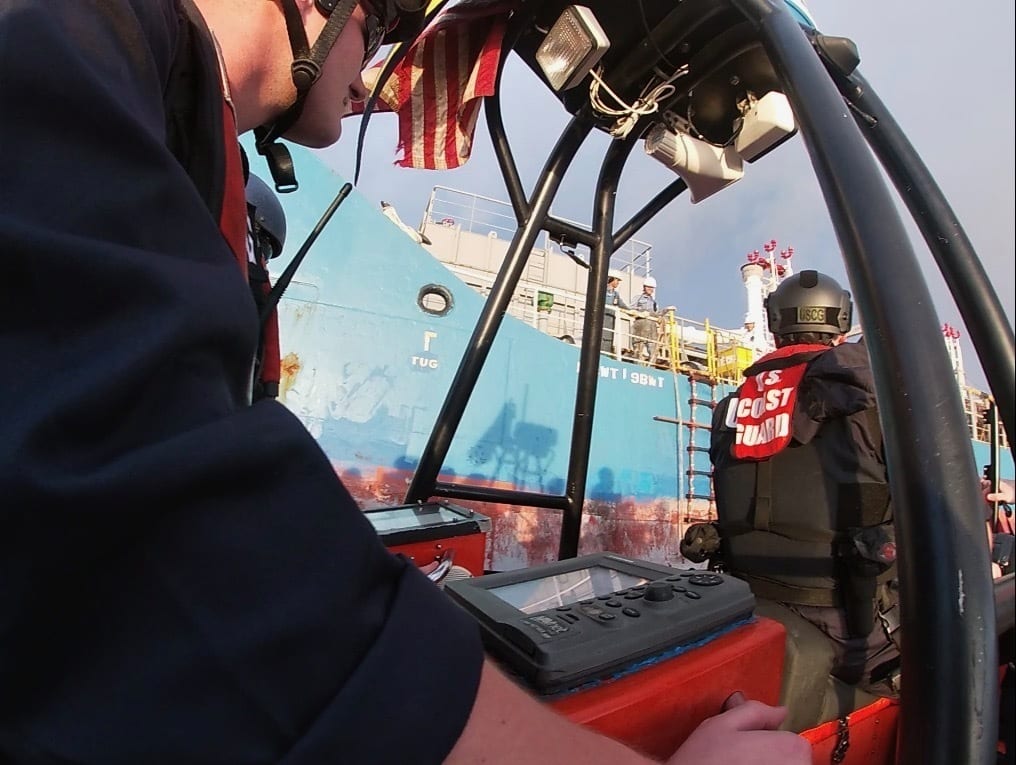
NATIONAL HARBOR, Md. — The Coast Guard has a four-step process for setting and making requirements on missions to prevent and mitigate mission gaps.
“We look at a problem and find the best way to solve it,” Capt. Michael MacMillan, chief of the office of requirements and analysis, said during a floor presentation here at Navy League’s Sea-Air-Space 2019.
The service accomplishes this by publishing four different
types of documents. The first is a capability and analysis report. The second,
which marks the beginning stages of the acquisition process, is drawing up a
mission needs statement. From there the service will put together a concept of
operations document, the primary purpose of which is coming up with ideas for
filling in capability. The final document produced is the operational
requirements document, which outlines specific requirements, such as how fast a
ship needs to go or how long an aircraft needs to stay airborne.
“We don’t get to make our own missions, but we make
requirements on the ones we have,” MacMillan said.
The Department of Homeland Security agency has 13 core
missions, with a bulk of those coming from search-and-rescue missions and drug
interdiction.
The
captain said that its important industry representatives understand the process
to help themselves and the Coast Guard.